
Crypto World
AMC CEO blasts Robinhood for stock token, putting synthetic shares in spotlight



Adam Aron said AMC has no connection to Robinhood’s tokenized shares, reviving questions around how stocks are brought onchain.



The United States and United Kingdom have formed a joint law enforcement alliance targeting scam centers involved in crypto and cyber-enabled investment fraud.
On Thursday, the US Department of Justice announced that the US Attorney’s Office for the District of Columbia, the Crown Prosecution Service of England and Wales and the UK National Crime Agency signed a memorandum of understanding. The DOJ described it as the “first-of-its-kind” international cooperation agreement aimed at disabling such scam centers.
Under the agreement, the agencies will conduct parallel investigations into common targets, share information on organized crime syndicates and discuss which jurisdictions should prosecute specific cases. The DOJ said the authorities have already identified overlapping cases and plan an in-person disruption operation with private-sector partners in London in early October.
The cross-border pact comes as reported US losses from crypto investment fraud continue to climb. Losses reported to the FBI’s Internet Crime Complaint Center rose 89% from $4.57 billion in 2023 to $8.65 billion in 2025, according to the DOJ.
International efforts target crypto scam compounds
The agreement expands the Scam Center Strike Force, which US Attorney Jeanine Ferris Pirro launched in November 2025 to target Chinese organized crime networks operating scam centers primarily in Southeast Asia. Their schemes include crypto investment fraud and are often linked to human trafficking and money laundering, according to the DOJ.
The task force includes the FBI, US Secret Service, Internal Revenue Service Criminal Investigation, Homeland Security Investigations and Justice Department offices. It also works with the US Treasury and State departments and private companies to disrupt scam operations and recover victims’ funds.
Related: Chinese newspaper warns of Bitcoin extortion scam using its name
International authorities have coordinated raids against similar operations. On April 29, the DOJ reported a Dubai police-led operation involving the FBI and China’s Ministry of Public Security, which resulted in 276 arrests and the closure of at least nine crypto scam centers. Six people were charged over schemes that allegedly used fake crypto investment platforms to solicit deposits from victims.
Governments in Southeast Asia have also pursued tougher domestic measures. On May 15, Myanmar’s military government had released draft legislation proposing sentences ranging from 10 years to life in prison for digital currency fraud, with the death penalty possible when people coerced into working at scam centers were killed.
On July 28, Parliament approved the bill, though presidential assent had not been confirmed.
Magazine: Recovery specialists crack $1B crypto wallet… but find just $10
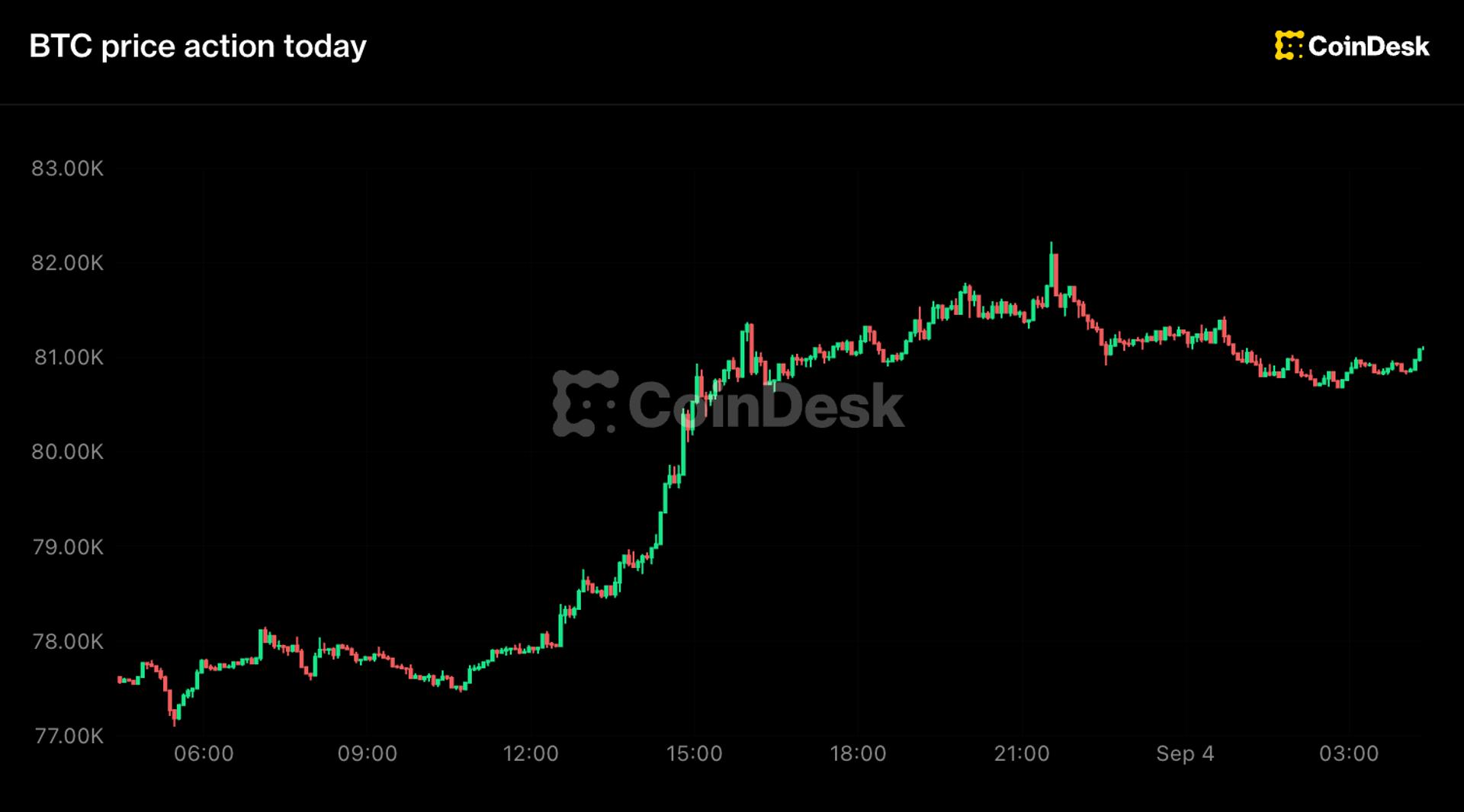
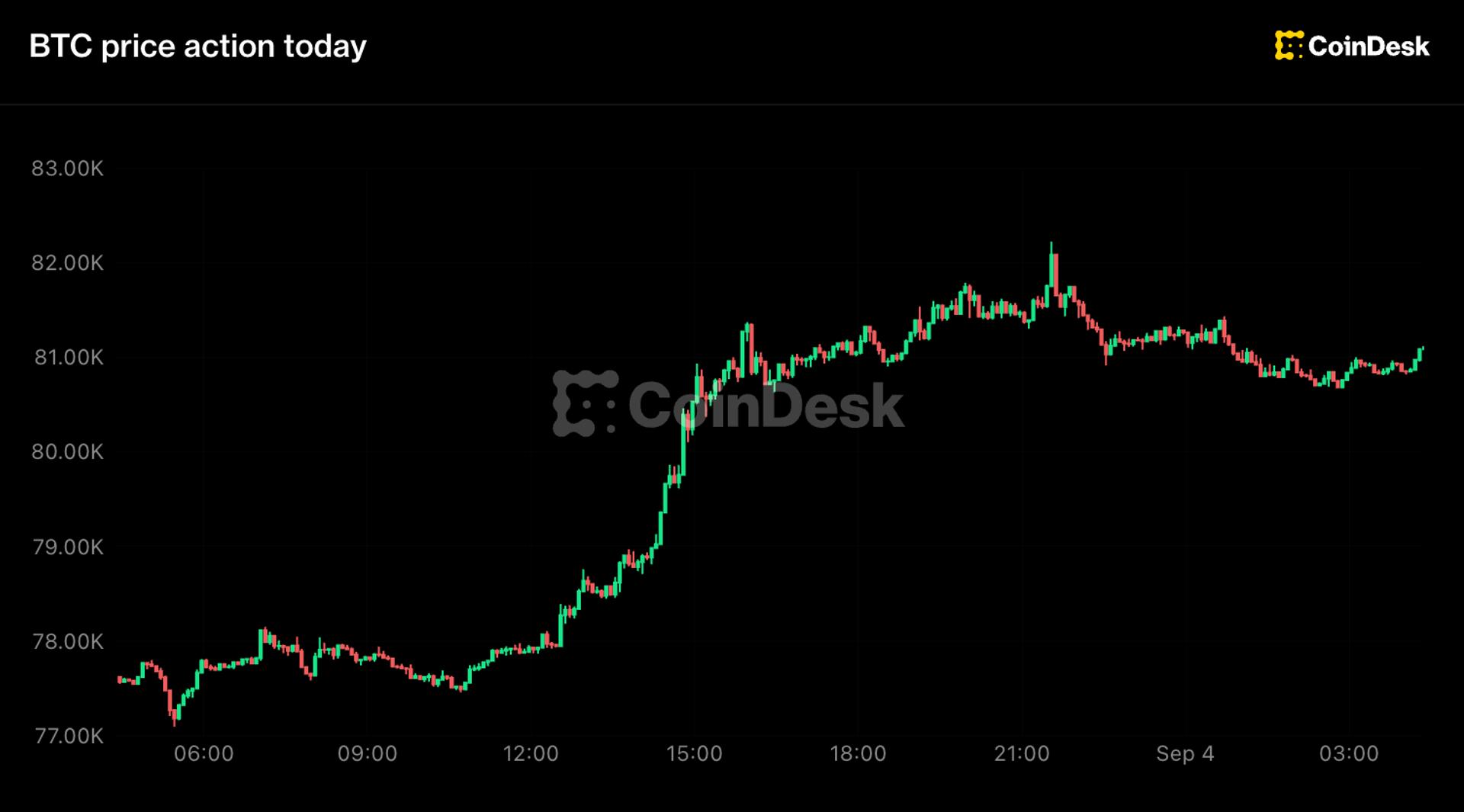
Every major token gained on Friday as traders cut bets on a September Federal Reserve rate increase to a coin flip, though most of the majors are barely changed on the week.

Remixpoint made ¥117.8 million ($746,800) from selling its altcoin holdings, and the gain is slated for recognition as business-segment revenue in the second quarter of fiscal 2027.
The company said its decision to dispose of all its altcoins and become a Bitcoin-only treasury was based on market conditions, the assets’ risk-return profiles, and its financial strategy.
Dogecoin Sale Ends in Loss
According to the official document shared by Remixpoint, Ethereum generated the largest profit at ¥60.2 million ($381,000), followed by Solana at ¥49.3 million ($312,000) and XRP at ¥11.5 million ($72,900). Dogecoin was the only outlier as the meme coin produced a ¥3.3 million ($21,000) loss.
Remixpoint still holds roughly 1,506 BTC, worth more than $115 million. Its Bitcoin strategy has also produced additional income through lending. The company reportedly earned 14.92 BTC in fees between February 24 and August 31. Those fees were valued at ¥164.2 million ($1 million) using the relevant month-end exchange rates.
The funds generated from this sale are being considered to expand assets in growth areas, including grid-scale battery storage, strengthen its financial foundation, and pursue other measures that contribute to increasing corporate value and shareholder value.
The Japanese energy consulting firm secured around ¥31.5 billion in financing back in July 2025, the proceeds of which were earmarked entirely for BTC purchases. Remixpoint had set an initial target of reaching 3,000 BTC.
During the same period, Remixpoint had also announced that its President and CEO would receive his full executive compensation in Bitcoin. The move made it the first listed company in Japan to adopt BTC-only compensation for its top executive. The company linked the decision to its goal of “shareholder-oriented management.” By paying the CEO in Bitcoin, Remixpoint said management would share economic risks and rewards with shareholders.
Fresh Pressure
Bitcoin has struggled to break above $79,000 over the past few days. The crypto asset briefly fell to around $76,500 earlier this week, its lowest level since August 23. It has since recovered and was trading near $77,700 on Thursday. Ethereum also faced pressure, falling 3.5% over the past week to around $2,400.
Meanwhile, Solana recovered slightly and was trading just above $100. Dogecoin also saw a small rebound. The meme coin gained 1.13% over the past 24 hours, which pushed its price to $0.083.
The post Remixpoint Cuts ETH, XRP Exposure After Market Review, Keeps 1,506 BTC in Treasury appeared first on CryptoPotato.
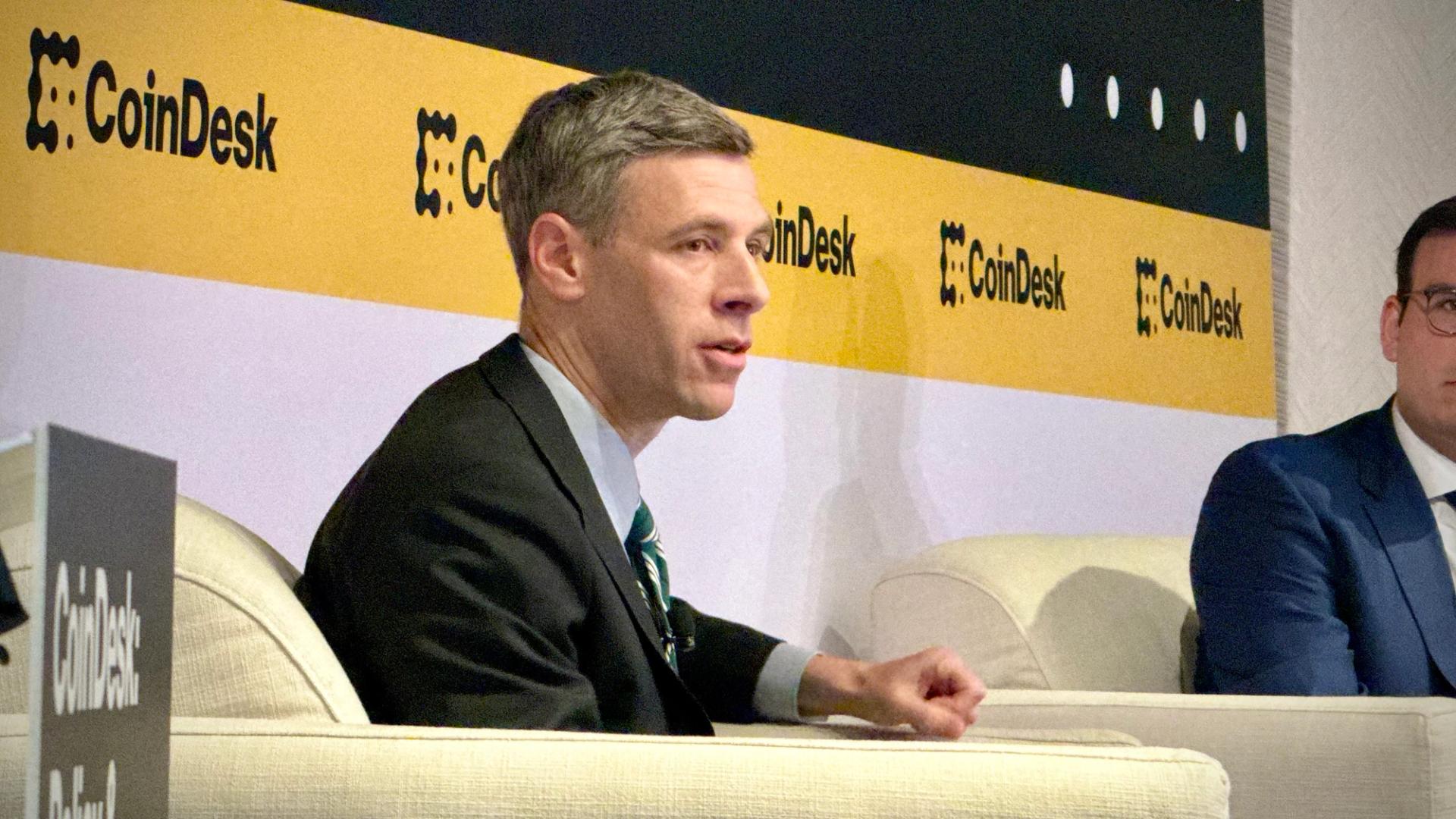
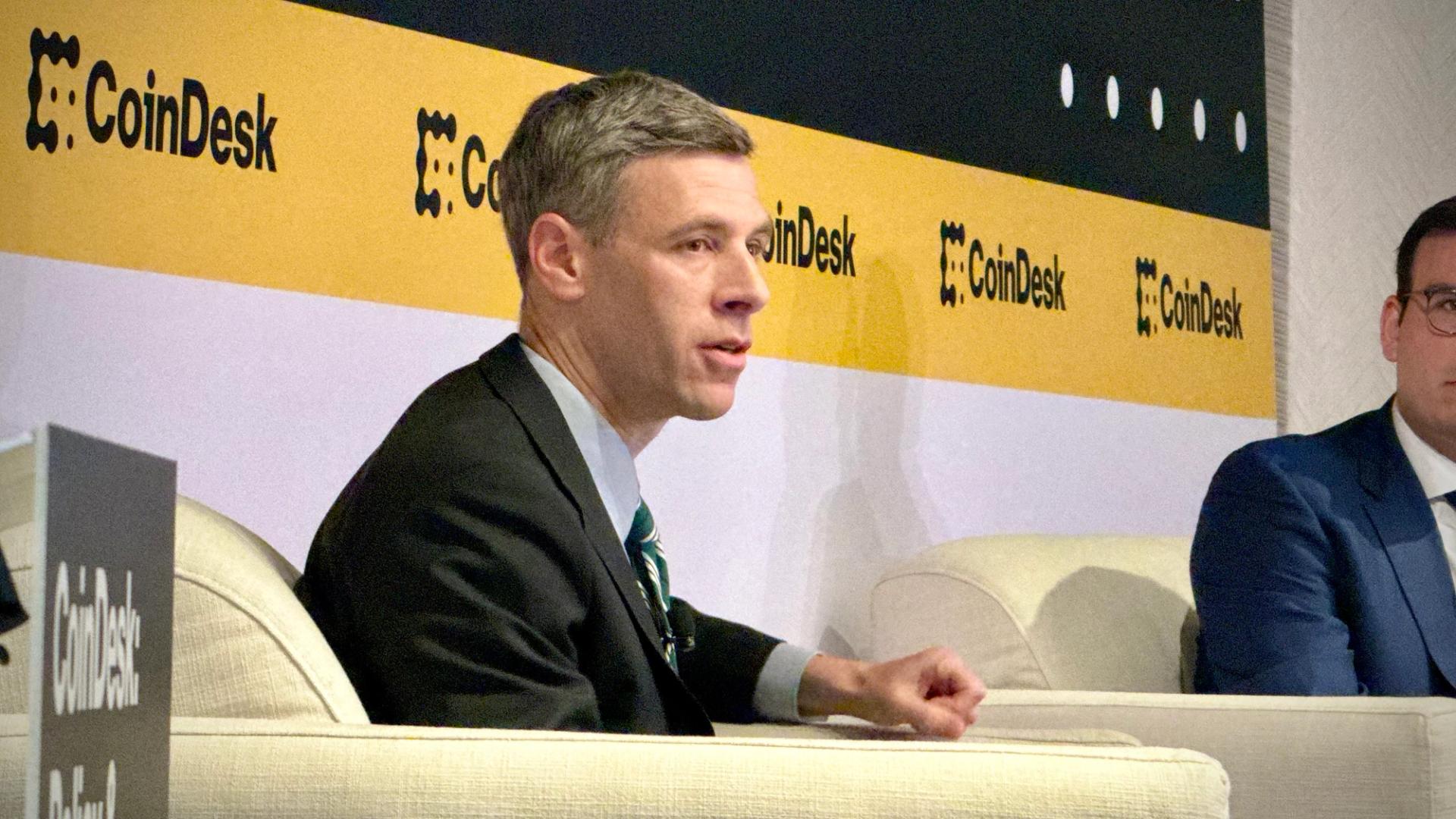
The Office of the Comptroller of the Currency granted a provisional charter to the new full-service bank, adding it to the growing mix of crypto-native institutions.
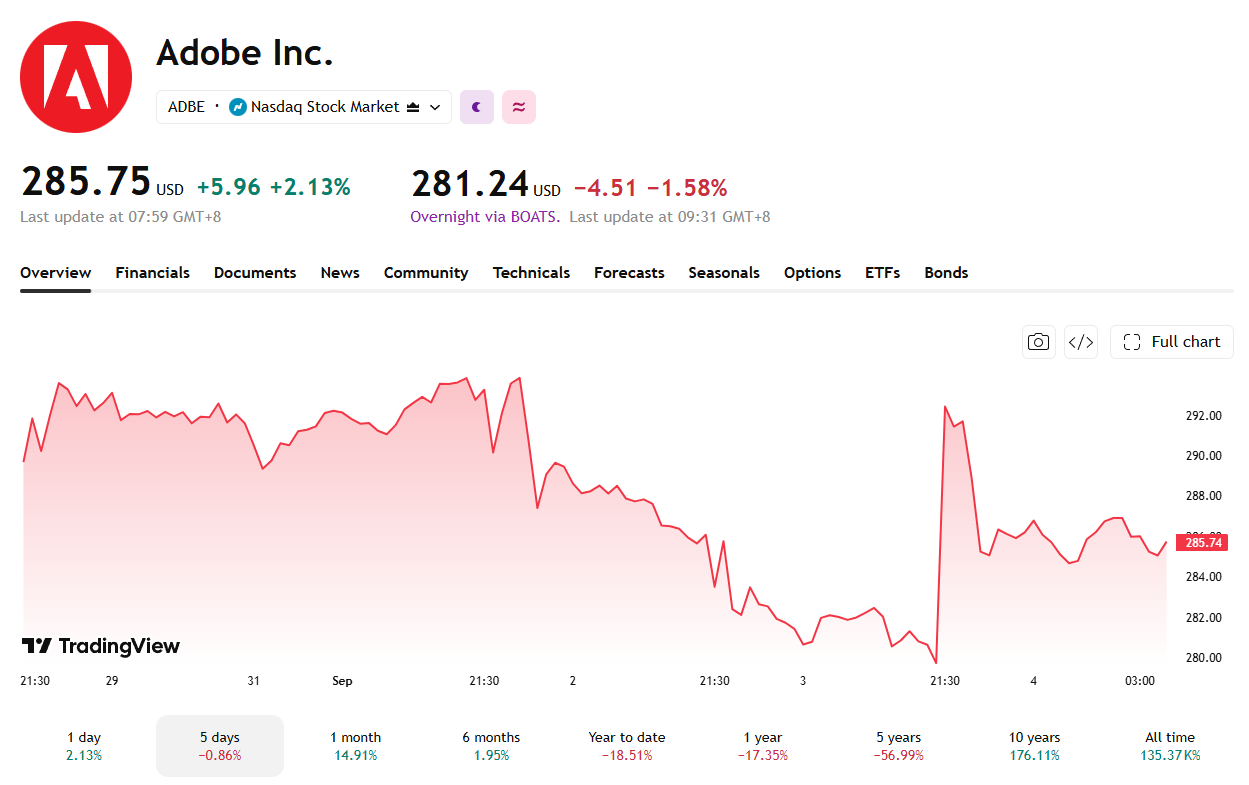
Adobe (ADBE) named Anil Chakravarthy as its next president and CEO on Thursday. He replaces Shantanu Narayen, who is stepping down after 18 years as AI concerns weigh on Adobe’s stock.
Narayen will become executive chair and support Chakravarthy through the handover, which takes effect Dec. 1. Chakravarthy will also join Adobe’s board at that time.
The Leadership Handoff
Chakravarthy most recently led Adobe’s customer experience orchestration unit and its worldwide field operations. He joined Adobe nearly seven years ago after serving as chief executive of Informatica, an enterprise data management company. That company had partnered with Adobe under Narayen.
“Adobe’s opportunity ahead is limitless with our track record in creating new market categories and world-class products. Anil is an experienced transformational leader who leads with values, integrity and a deep knowledge of our business.”
Shantanu Narayen, Adobe’s outgoing CEO, in a statement
“A lot of the reason I came was the opportunity to work with him and work with the leadership team at Adobe.”
Anil Chakravarthy, Adobe’s incoming CEO, in a 2021 interview with CNBC
In contrast, David Wadhwani announced he will leave Adobe after leading its creativity and productivity business for nearly five years.
Observers once viewed him as a top CEO contender for his role in Adobe’s bid to acquire design firm Figma. Regulators forced the companies to scrap that deal in 2023.
Why Adobe Stock Keeps Falling
The CEO change comes as Adobe shares remain under pressure. The stock fell 25% in 2024 and another 21% in 2025, and it is down 18% so far in 2026. Shares slipped roughly 2% in extended trading following Thursday’s announcement.

Meanwhile, the decline mirrors a wider retreat among software stocks slumping on AI fears. Investors worry generative AI tools could erode demand for subscription software.
Software peers have faced similar pressure as free or low-cost AI tools threaten legacy subscription models.
However, whether Chakravarthy can reverse the trend depends on Adobe’s own AI tools. He will need to show they can outpace cheaper rivals starting in December.
The post Adobe Names Anil Chakravarthy CEO But AI Fears Are Impacting the Stock appeared first on BeInCrypto.


Meta CEO Mark Zuckerberg and Senator Bernie Sanders staked out opposite ends of US AI regulation on Thursday. Zuckerberg called a national regulator flawed, while Sanders moved to ban advanced AI.
Those two positions now bracket the fight in Washington. One camp wants industry to police itself while the other wants the government to stop building.
Zuckerberg Says AI Regulation Would Hand China the Lead
Trump called Zuckerberg the week of August 17, POLITICO reported Thursday. Zuckerberg opposed a proposed watchdog modeled on the Financial Industry Regulatory Authority (FINRA).
FINRA polices US brokerages and is funded by the firms it oversees. The AI version would test frontier models for risk before release. Google DeepMind chief Demis Hassabis popularized the idea in July.
Zuckerberg had already argued that superintelligence should reach everyone rather than a few labs.
“Any policy that slows American model releases … could add significant risk to American leadership while letting foreign models race ahead,” Zuckerberg said in August.
Sanders Sets the Bar at Human Level
Sanders and Representative Greg Casar announced the Ban Artificial Superintelligence Act on Thursday. It would outlaw systems that match or exceed human cognitive performance.
That bar sits lower than the name suggests. Matching human performance would trigger the ban.
The bill would also freeze advanced AI work until a new federal regulator writes rules. Violators face up to 20 years in prison.
Sanders has pressed Congress on AI before without moving legislation.
“The future of humanity cannot be left in the hands of a handful of Big Tech oligarchs,” Sanders said in a statement.
Zuckerberg did not kill the proposal. Officials are still weighing the FINRA-style body against a voluntary industry group. Adviser David Sacks favors the lighter option and has dismissed AI safety fears as storytelling.
Both camps now accept some kind of referee. The fight is over whether anyone stops building while it gets built.
The post AI Regulation Showdown: Zuckerberg Wants Speed, Sanders Calls for a Pause appeared first on BeInCrypto.
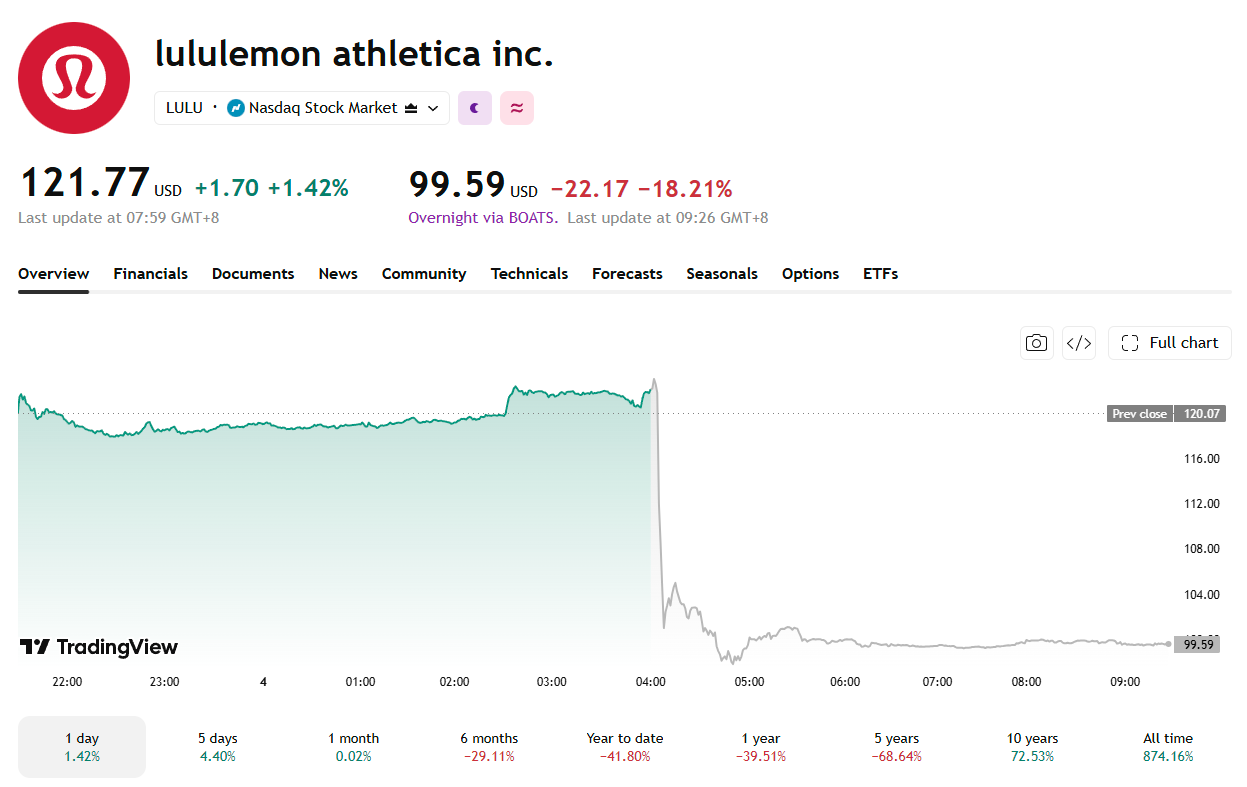
Nasdaq-listed Lululemon Athletica (LULU) stock dropped 18% in after-hours trading on September 3. Shares fell to under $100 after the company’s third guidance cut of 2026 overshadowed a profit beat.
The decline pushed shares to their lowest level in roughly eight years, below the 52-week low. LULU now trades about 80% under its all-time high of $511.29, set in December 2023.
Lululemon’s Third Guidance Cut of the Year
Lululemon has trimmed its full-year outlook three times since March. Each cut followed a quarter that beat earnings estimates but missed on sales.

March guidance called for $11.35 billion to $11.50 billion in revenue. June guidance was cut to $11.00 billion to $11.15 billion. September guidance now stands at $10.35 billion to $10.50 billion.
Second-quarter revenue fell 4% year over year to $2.42 billion, missing forecasts. Comparable sales dropped 10% globally and 12% in North America.
Lululemon Under Pressure
The repeated cuts have coincided with a turbulent year for the brand. Founder Chip Wilson waged a proxy fight against the board, and former chief executive Calvin McDonald departed in January.
In May, a Great Wall of China event featured a drum mistaken for a Japanese instrument, sparking backlash. Rivals Alo Yoga and Vuori have continued to take share in North America.
Interim co-chief executive and chief financial officer Meghan Frank pointed to reputational damage as a factor behind the latest slowdown.
“We faced negative commentary in the media and social channels, which impacted traffic and softer than planned response to some new product launches.”
(Meghan Frank, interim co-CEO and CFO, Lululemon Athletica)
Incoming chief executive Heidi O’Neill starts next week and inherits a turnaround plan that has yet to show results. Lululemon guided third-quarter revenue down 10% to 11% year over year.
The post Lululemon Stock Drops 18% to 8-Year Low After Third Guidance Cut appeared first on BeInCrypto.
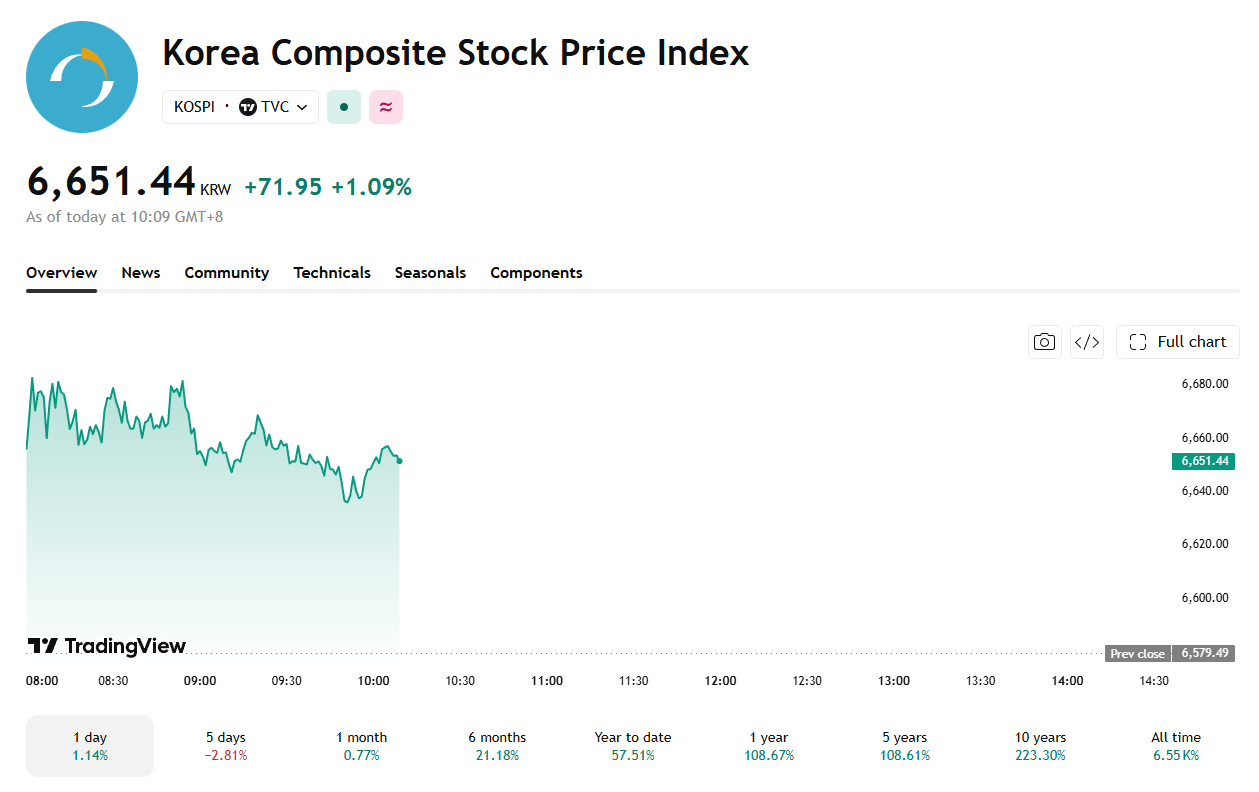
South Korea’s Kospi jumped 1.14 percent at Friday’s open. The rally tracked a broad Wall Street advance after Fed Governor Christopher Waller signaled a rate hold this month.
The benchmark index rose 74.88 points to 6,650. It extended a rebound after a sharp slide earlier this week tied to Middle East tensions.
Waller Comments Cool Rate Hike Worries
Waller made the remarks Thursday, saying he would be inclined to support a hold. He backed keeping rates in the current 3.5 percent to 3.75 percent range at the Fed’s Sept. 15-16 meeting.
Treasury yields eased on the remarks, feeding into falling rate hike odds tracked on prediction markets this week.
Japan’s Nikkei 225 and Hong Kong’s Hang Seng also opened higher. South Korea’s small-cap Kosdaq index advanced even more sharply.

Thursday’s rally set the tone across US markets. The Dow Jones Industrial Average gained 1.18 percent. It was the index’s best day since Aug. 4.
The S&P 500 added 1.06 percent, while the Nasdaq Composite rose 1.4 percent. All three indexes are on pace for a positive week.
Jobs Report Looms as Next Catalyst
Traders are now watching Friday’s August nonfarm payrolls report, the same data point that has repeatedly moved risk assets after recent monthly releases.
Economists polled by Dow Jones expect 53,000 jobs added. That compares with a loss of 23,000 jobs in July. Unemployment is expected to hold at 4.1 percent.
José Torres, senior economist at Interactive Brokers, said labor weakness should push the Fed toward easier policy.
Ongoing decreases in employment should be enough for the central bank to start considering the labor side of its mandate when prescribing policy.
— José Torres, Interactive Brokers, CNBC
Torres is also watching next week’s inflation reports. He flagged the consumer price index and producer price index.
The session rounded out a broadly positive day across the region. Friday’s jobs data could reinforce the dovish case or revive rate hike concerns. Either way, it will help set the tone heading into the Fed’s September meeting.
The post Kospi Jumps, Following Wall Street, as Fed's Waller Signals Rate Hold appeared first on BeInCrypto.
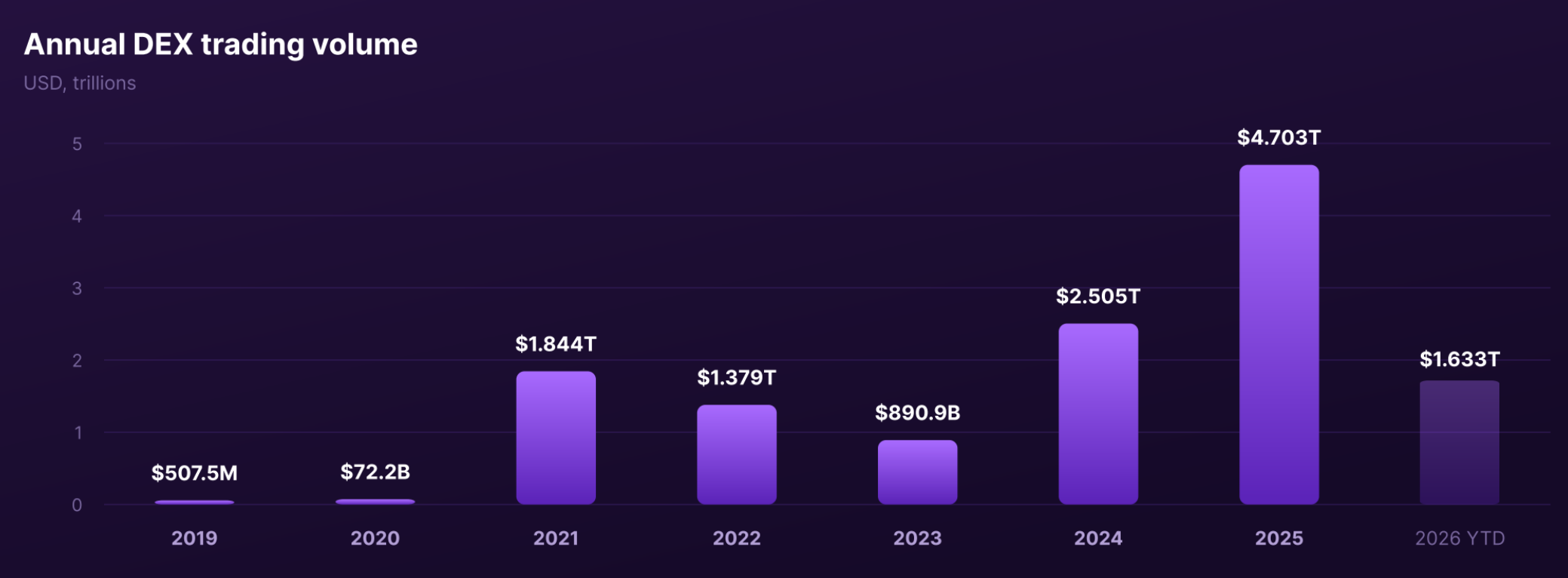
The crypto industry today is almost unrecognizable from 7 years ago, both in size and scale. Just for decentralized exchanges (DEX), trading volume grew roughly 9,260x from 2019 to a record $4.7 trillion in 2025. In 2026, however, activity moderated to $1.63 trillion year-to-date.
It’s not down to one chain or sector. Liquidity is now distributed across more blockchains, venue types, protocols, and execution environments, without one clearly replacing the others.
SwapSpace recently published its State of Crypto Swaps 2026 report, which shows the massive extent of this growth. One of the clearest findings comes from its own platform data. Over 90.12% of its users interacted with more than one blockchain network in 2026.
At the same time, survey respondents did not identify DEXs, CEXs, or aggregators as universally offering the best rates.
The findings clearly show that the market today offers more execution options, and no single venue, network, or liquidity source dominates every transaction.

90% of SwapSpace Users Are Multichain
SwapSpace is a crypto exchange aggregator that lets users compare rates across different swap services and exchange different crypto through a single interface. So, the platform has a notable vantage point of how users today interact across different chains.
Among SwapSpace users, multichain activity is not marginal. Between 2022 and 2026, the share of users interacting with more than one network ranged from 72.50% to 93.66%.
It reached its lowest point at 72.50% in 2024, before rising to 90.12% in 2026. Even at the low point of the observed period, nearly three-quarters of users interacted with more than one blockchain.
These figures provide a platform-level view of how users operate in a market where assets and liquidity are spread across multiple networks.
The broader DEX market shows a similar redistribution of activity. According to DeFiLlama data cited in the SwapSpace report, Ethereum accounted for 46.2% of global DEX volume in 2021, while BNB Chain represented another 39.6%.
By 2025, Ethereum’s share was 19.3% and BNB Chain’s 15.3%, while Solana accounted for 33.3% and other chains collectively represented 32.1%.

SwapSpace’s internal activity data shows a similar lack of a permanent leader. Ethereum led platform activity from 2020 through 2024, Solana moved into first place in 2025, and BNB Chain led in 2026.
Taken together, the data shows that multichain activity is taking place in a market where liquidity leadership continues to shift between ecosystems.

Fragmentation Does Not Stop at the Blockchain Level
The multichain picture captures only one layer of fragmentation. Liquidity is also distributed within individual blockchain ecosystems. The report cites DeFiLlama tracking of around 1,950 protocols on Ethereum, more than 1,200 on BNB Chain, and more than 1,000 each on Arbitrum and Base.
Those protocols can contain different pools, assets, and execution mechanisms. A user operating on Ethereum, for example, is not necessarily accessing one unified liquidity environment.
That creates two layers of complexity: liquidity is distributed between blockchain ecosystems and again between protocols and pools within them.
The distinction matters because the number of possible execution paths can expand even without adding another network. A transaction may involve not only choosing a chain, but also navigating several potential sources of liquidity within that chain.
In that sense, describing the market as simply “multichain” understates how fragmented the execution layer itself has become.
DEX Growth Has Produced a Hybrid Market
DEX trading has grown sharply, but it has not replaced centralized exchanges.
After reaching a record $4.7 trillion in 2025, DEX activity remains significant in 2026, even as the broader crypto market has cooled. Centralized exchanges still handle most spot trading, while DEXs are gaining ground in areas such as perpetual futures.
The result is a more hybrid market. Traders now move between centralized and decentralized venues depending on liquidity, asset availability, transaction size, and market conditions. Crypto trading is becoming more fragmented rather than shifting toward one dominant model.
Best Rate Still Matters — But It Is Not the Only Variable
Price remains central to how users evaluate swaps. Based on the report’s latent class analysis, SwapSpace estimates that 61.86% of survey respondents valued best rate, compared with 52.51% for multichain access and 39.91% for support for rare tokens.
The differences become clearer across user segments. Among crypto-native power users, 97% valued multichain access, 91% best rate, and 87% rare-token support. Traders and business users placed the greatest emphasis on best rate at 88%, while 61% valued multichain access and 52% rare-token support. Mainstream generalists were more balanced, with 76% valuing both best rate and multichain access.

The figures suggest that price remains important, but users can evaluate a transaction through several variables at once. The quoted rate may matter alongside access to a particular network or asset.
The same ambiguity appears when respondents are asked which venue type offers the best rates in their experience. Answers were distributed across DEXs, CEXs, aggregators, and “depends on the situation,” with no single category emerging as an overwhelming choice.
SwapSpace’s provider data adds another layer of context. Among users who completed at least two exchanges, 70% selected a different liquidity provider for their next transaction, while 30% returned to the same one.
The findings suggest that “best” can be transaction-specific rather than a permanent property of one venue or provider.
Swaps are Serving More Than Trading
The survey also shows that crypto swaps take place in different contexts.
Receiving funds and personal payments were the most common reported crypto use cases among respondents, followed by short-term and long-term trading, while business payments ranked lower.
When respondents were asked which additional platform capabilities they valued, payments for goods and services ranked highest, followed by cashback and automatic swaps. Fiat withdrawal, Telegram functionality, and lending and borrowing ranked lower.
Transaction triggers were similarly varied. Sudden price movements and portfolio rebalancing were the leading triggers for swaps, while news and emergency needs also appeared and influencer signals ranked last.
These findings mean that the same exchange infrastructure can support different objectives, from responding to price movements and managing a portfolio to receiving funds or making payments.
That also means execution requirements are not necessarily identical across transactions. A trader reacting to a sudden market move may prioritize different conditions from someone exchanging assets as part of a payment.

Intent-Based Execution Moves Complexity Behind the Interface
One emerging response to this fragmented environment is intent-based execution.
Instead of choosing an exchange, blockchain, or trading route, users simply state what they want to achieve. Competing systems then find a way to complete the trade.
Platforms such as UniswapX, 1inch Fusion, and NEAR Intents already use versions of this model. As crypto liquidity spreads across more venues and networks, this approach could make trading easier by moving routing decisions into the background.
The market can stay fragmented while the user experience becomes much simpler. But that means more of the complexity has to be handled behind the scenes.
How platforms handle that complexity may differ. Intent-based execution is one approach, but not the only one. Ultimately, what matters is whether users can access the networks and liquidity they need without having to navigate the underlying complexity themselves.
The post DEX Volume Exploded Over 9,000x. Now Crypto Has a New Problem appeared first on BeInCrypto.


U.S. Treasury Secretary Scott Bessent has said digital assets, airlines and the maritime industry could face new measures as the Trump administration prepares to increase economic pressure on Iran.
Summary
- Scott Bessent said digital assets, airlines and the maritime industry could face new U.S. measures targeting Iran.
- The Treasury secretary warned governments and businesses against providing economic support to Tehran.
- More sanctions against Iranian banks could come this week, while airline leasing companies are another possible target.
- The U.S. has already frozen or seized hundreds of millions of dollars in Iran linked cryptocurrency and sanctioned exchanges and wallets tied to Tehran.
Reuters reported Wednesday that Bessent identified the three areas as possible targets while Washington considers further action against Tehran, with Iranian banks and companies involved in aircraft leasing potentially facing new restrictions as well.
The comments came as the administration seeks to cut Iran off from companies and countries that continue to provide economic support. Asked about Russia’s backing for Tehran during an interview with Fox News following this week’s G20 gathering in North Carolina, Bessent warned governments and businesses against maintaining ties with Iran.
“My message to everyone is stay away. We all want this conflict to end, and the fastest way for the conflict to end is for no one to provide any support to this regime,” Bessent told Fox & Friends.
The warning followed Russian President Vladimir Putin’s expression of support for Iran a day earlier. Bessent did not limit the administration’s message to Moscow, saying U.S. officials were speaking with parties that continued to support Tehran.
“We are having very fulsome talks with anyone supporting the regime,” he said.
Digital assets could face further Iran sanctions
Bessent did not identify particular cryptocurrencies, exchanges, wallets or other digital asset businesses that could be targeted in the next round of measures.
Washington, however, has already expanded its authority to pursue Iran-linked cryptocurrency activity. On Aug. 24, the Treasury Department launched Operation Economic Outcast, covering digital assets alongside technology, gold, aviation, shipping and other financial channels used by Iran.
Under the measures, the Office of Foreign Assets Control was given authority to sanction people operating in Iran’s digital asset sector, including actors based outside the country. Treasury said at the time that Iran had used cryptocurrency to move funds connected to the government and the Islamic Revolutionary Guard Corps.
A subsequent sanctions package targeted nearly 60 entities, individuals and vessels across Iran-linked oil, nuclear, cyber and missile networks. Treasury accused Russian national Yuri Obukhov of processing more than $100 million in cryptocurrency linked to Iranian oil sales since 2023.
The department said Obukhov worked with an IRGC-linked network that converted proceeds from oil sales into digital assets. Foreign financial institutions facilitating significant transactions for sanctioned parties could face restrictions on their access to U.S. correspondent accounts under the measures.
Crypto.news previously reported in June that Treasury had sanctioned four Iranian exchanges, including Nobitex, Wallex, Bitpin and Ramzinex, as part of an earlier enforcement campaign. Nobitex CEO Seyed Ali Khoee and chairman Amir Hossein Rad were included in the sanctions.
Treasury accused the exchanges of providing sanctioned Iranian entities with access to cryptocurrency markets. Blockchain analytics firm Chainalysis has estimated that Nobitex handles roughly half of Iran’s crypto trading activity.
U.S. has frozen Iran-linked crypto assets
Digital assets have become a recurring part of Washington’s financial actions against Tehran this year.
In July, U.S. authorities froze more than $130 million in cryptocurrency held in wallets linked to Iran’s central bank. Four Tron wallets holding roughly $131 million in USDT were frozen as part of the action.
Bessent said at the time that Treasury remained committed to disrupting Iran’s use of digital assets. The July action followed a much larger freeze in April involving wallets tied to the IRGC.
Tether froze $344 million in USDT across two Tron addresses at the direction of U.S. authorities after OFAC targeted the wallets. One held roughly $213 million in USDT, while the other contained approximately $131 million.
By late July, Bessent said the amount of cryptocurrency seized or frozen from Iranian sources since the conflict began was approaching $1 billion.
The enforcement campaign has extended beyond wallets and domestic Iranian trading platforms. Treasury has targeted intermediaries and companies that it says help Tehran move funds outside conventional banking channels.
Iran’s use of cryptocurrency has drawn particular attention from U.S. authorities because digital assets have been incorporated into several state-linked payment channels. Iranian military export arrangements have permitted settlement through digital currencies, while maritime transactions have come under scrutiny as Washington targets revenue connected to the Strait of Hormuz.
Maritime networks remain under Treasury scrutiny
In July, Treasury sanctioned two Iranian maritime firms after accusing them of supporting an IRGC-linked system used to collect revenue from vessels traveling through the Strait of Hormuz.
OFAC designated HormuzSafe Marine Services Authority and Persian Gulf Marine Insurance Company. Treasury alleged HormuzSafe accepted Bitcoin as part of a payment structure intended to bypass financial restrictions.
Eight shipping companies and eight vessels were targeted in the same action over alleged involvement in transporting Iranian petroleum.
Treasury did not publish Bitcoin wallet addresses, transaction hashes or cryptocurrency payment totals when announcing those designations.
Shipping has remained a major part of U.S. sanctions enforcement because Iranian oil exports depend on networks of vessels, insurers, intermediaries and overseas buyers. Bessent’s latest comments leave the maritime sector among the areas Washington could target again as the administration seeks to restrict Iran’s remaining international financial connections.
Airlines and Iranian banks could face new measures
Aircraft-related businesses have emerged as another possible focus of the next sanctions package.
Bessent said Tuesday that airline leasing companies could be targeted, potentially extending the administration’s actions to businesses involved in providing aircraft or related services to Iran.
More sanctions against Iranian banks could arrive this week, according to the Treasury secretary. He did not identify the financial institutions being considered or provide a timetable for the measures.
The administration’s warning now covers companies and governments dealing with Tehran as Washington seeks to deter third parties from providing economic support. Bessent’s remarks came after the G20 gathering in North Carolina and followed Putin’s public support for Iran.
While questioned specifically about Russia, Bessent framed the warning as applying to any party maintaining support for Tehran.
“My message to everyone is stay away,” he said.

Man pointed shotgun at two brothers near Scarborough

Everest appoints strategic advisor for Mt Edon

US, UK Launch Joint Crypto Scam Center Alliance





-

 Fashion6 days ago
Weekend Open Thread: Maeve – Corporette.com
-

 Crypto World1 day ago
CLARITY Act could advance within weeks, Atkins says
-

 Business6 days ago
Onto Innovation Stock: AI’s Next Bottleneck Is Yield (NYSE:ONTO)
-

 Crypto World6 days ago
Bitcoin price tests $82K resistance as Brandt stays long
-
 Tech5 days ago
Hugging Face built a $4.5 billion empire on free AI models. Now Nvidia is buying it for $12.9 billion
-

 Business7 days ago
iPhone 18 Pro Pre-Orders Could Shift to Saturday as Apple Reportedly Avoids September 11 Anniversary
-

 Crypto World2 days ago
Elon Musk Says Grok 4.7 Lands in 10 Days and Will Beat Every Model
-
 Entertainment7 days ago
‘Adults’ Creators Break Down Season 2’s Most Shocking Moments and Tease a Potential Season 3
-

 News Videos5 days ago
Charlie Munger on Robinhood: No one should believe that Robinhood’s trades are free
-

 Tech6 days ago
PaperCut releases second emergency patch for exploited flaws
-
 Crypto World2 days ago
Bitcoin slips below $77.5K as macro pressure offsets ETF inflows
-

 Crypto World24 hours ago
Kalshi seeks CFTC approval for WTI perpetual
-

 Tech5 days ago
As the influencer economy drives retail sales, Seattle startup raises $22M to play matchmaker
-

 Tech5 days ago
Tamagotchi Ring Takes the 30-Year Digital Pet and Places it on Your Finger
-

 News Videos5 days ago
News kii Crypto ugu danbeeyey & Suuqa oo dhaqaaqey
-
 Entertainment4 days ago
Taylor Swift Reportedly ‘Frustrated’ With Travis Kelce After ‘Short’ Honeymoon
-
 Business2 days ago
Oil Price Today (September 2): Crude oil nears $97 as war tensions escalate. Will it hit $100 again?
-

 Business6 days ago
Apple Confirms September 9 iPhone Launch Event as Tim Cook Prepares to Hand CEO Reins to John Ternus
-
 NewsBeat5 days ago
Trump posts AI video of ‘Lake America’ being protected by an army of bequiffed ‘Donald Ducks’
-
 Entertainment6 days ago
Kendall Jenner’s Circle Concerned About Jacob Elordi Romance
You must be logged in to post a comment Login