
Business
Will BDL, HAL & other defence stocks deliver rocketing returns? Here’s why this brokerage remains bullish


India’s defence budget has soared multifold from Rs 2.53 trillion in FY14 to Rs 6.81 trillion in FY26, the brokerage said, adding that this reflects the Prime Minister Narendra Modi-led government’s strong commitment towards military modernisation and national security.
This sustained increase in capex, along with procurement preference for domestic manufacturers under the Atmanirbhar Bharat initiative, has created a robust multi-year opportunity across aircraft, helicopters, missiles, naval platforms, artillery systems, air-defence systems, defence electronics, radar systems and unmanned platforms, according to Bajaj Broking Prive’s report. It added that the Defence Acquisition Procedure (DAP), positive indigenisation lists, defence industrial corridors, and liberalised FDI norms have further boosted the domestic manufacturing ecosystem.
Why India’s defence sector remains structurally well-positioned
India’s defence production reached an all-time high of Rs 1.78 trillion in FY26, marking 15.6% YoY growth and more than doubling since FY21. At the same time, defence exports surged to a record Rs 38,424 crore, with Indian defence equipment being exported to over 80 countries, highlighting the increasing global acceptance of indigenous platforms and weapon systems.

Bajaj Broking noted that the defence sector is also seeing a gradual shift from PSU-led manufacturing toward a more diversified ecosystem with increasing participation from private companies, MSMEs, and defence startups. Emerging themes such as drones, loitering munitions, AI, autonomous systems, cybersecurity, electronic warfare, and space-based surveillance are expected to drive the next phase of growth, it added.
“Overall, India’s defence sector remains structurally well-positioned to benefit from long-term military modernisation requirements, rising localisation, a strong domestic order pipeline, growing exports, and sustained policy support,” the brokerage said.Also read | From diamonds to defence: India, Belgium target 2x trade in 5 years
Bajaj Broking on Bharat Dynamics share price
Bharat Dynamics is the primary manufacturing base for guided missile systems, underwater weapons, and allied equipment for the Indian armed forces, Bajaj Broking highlighted, adding that the company reported a robust revenue growth of 145% YoY in the seasonally weak Q1 FY27 after a challenging FY26, indicating that the execution delays witnessed over the past year may be gradually easing.
“ We believe the easing of supply chain constraints for missile components supported the strong revenue performance in Q1FY27. However, it would be prudent to await another quarter before concluding that execution challenges have been fully resolved, given BDL’s continued dependence on imported components and ongoing geopolitical uncertainties. Supported by a strong order pipeline and expected order inflows, BDL’s valuations remain reasonable relative to peers. While the recent large orders would contribute meaningfully from FY29 onwards, the existing order backlog of 10.8x FY26 revenue should drive healthy growth over the next 1-2 years,” Bajaj Broking said.
The domestic brokerage remains constructive on the stock, subject to continued improvement in supply conditions, but stays cautious amid persistent geopolitical risks in West Asia. It recommends a gradual accumulation while closely monitoring global developments. It has an ‘Add’ rating on the shares of the company.
Bajaj Broking on Hindustan Aeronautics share price
Hindustan Aeronautics (HAL) is India’s leading aerospace and defence manufacturer, having developed 17 aircraft platforms inhouse and produced 14 under licence, Bajaj Broking said, adding that as a key beneficiary of India’s indigenisation drive and rising domestic defence spending, HAL is strategically positioned at the centre of the country’s long-term aerospace manufacturing ecosystem.
“We view HAL as a compelling multi-year defence opportunity, with the investment thesis increasingly dependent on execution rather than demand visibility. The company’s record order book of Rs 2.54 lakh crore provides revenue visibility for the next 7-8 years, shifting investor focus towards production ramp-up and timely deliveries. With indigenous platforms gaining a larger share of defence procurement and import substitution remaining a key policy priority, HAL is well placed to sustain a long-term growth trajectory,” the domestic brokerage further said, while maintaining its ‘Add’ rating on the shares of the company.
Also read | HAL shares rise nearly 3% as GE Aerospace delivers 3 more F404 engines for Tejas Mk1A
(With inputs from agencies)
(Disclaimer: Recommendations, suggestions, views and opinions given by the experts are their own. These do not represent the views of The Economic Times)


A boost in hospitality and education employment drove the US economy to create tens of thousands more jobs than expected last month, latest figures suggest.
The number of roles added to the world’s biggest economy increased by 162,000 in August, almost triple the 56,000 forecast by analysts.
An increase in employment during the final month of the summer in restaurants and bars, as well as in local government education ahead of the new school year, was behind the rise.
The stronger jobs figures are likely to add to growing expectations that the Federal Reserve will increase interest rates later this month.
Weaker job figures released earlier in the summer were also revised up, revealing a stronger labour market than previously thought.


Humilis Investment Strategies CEO and CIO Brian Belski discusses the benefits of 401(k) investing, midterm market volatility, strong fundamentals and his surprise sector pick for the fourth quarter on ‘Varney & Co.’
This story about the August 2026 jobs report will be updated with further details.
The U.S. economy rebounded in August, adding jobs at a solid pace after a surprise decline in July amid economic uncertainty.
What are the key findings of the August 2026 jobs report?
The Bureau of Labor Statistics on Friday reported that employers added 162,000 jobs in August. That figure was well above the estimate of 56,000 made by economists polled by LSEG.
The unemployment rate held steady at 4.1% in August, which was also in line with the expectations of economists polled by LSEG.
What sectors added or lost the most jobs in August 2026?
What does the August 2026 jobs report mean for the workforce?
What experts are saying about the August 2026 jobs report
What does it mean for interest rates?
What did the August 2026 jobs report mean for the market?
Business
Nikkei 225 Jumps 1.3% As SoftBank Soars 12% Amid Global AI Rally Tracking Wall Street Gains Overnight

TOKYO — Japan’s benchmark Nikkei 225 index climbed 806.46 points, or 1.26%, to close at 65,020.94 Friday, as gains across real estate, banking and textile stocks lifted the broader market, while SoftBank Group led individual movers with an 11.78% surge amid continued global enthusiasm around artificial intelligence investments.
The Nikkei’s advance capped a session in which rising stocks significantly outnumbered decliners on the Tokyo Stock Exchange, with 1,989 gainers against 1,446 decliners and 296 issues finishing unchanged. The Nikkei Volatility Index, which measures the implied volatility of Nikkei 225 options, climbed 10.84% to 28.32, reflecting elevated uncertainty even amid the broader market’s upward move.
SoftBank Group Corp. was the standout performer of the session, rising 589 yen to close at 5,590 yen, extending a pattern of sharp swings that has characterized the technology investment giant’s stock throughout much of 2026. The Tokyo-based conglomerate, which holds significant stakes in chip designer Arm Holdings and has invested more than $30 billion in ChatGPT maker OpenAI, has repeatedly seen its share price swing in tandem with broader sentiment around artificial intelligence infrastructure spending and the performance of its underlying technology holdings.
Friday’s rally in SoftBank shares came a day after Nvidia confirmed a roughly $12.93 billion acquisition of AI platform Hugging Face, a deal that helped fuel a broader rally in AI-linked technology stocks on Wall Street overnight and appeared to carry through into Friday’s session in Tokyo. Other notable gainers on the Nikkei included Taiyo Yuden, which rose 6.42% to 9,426 yen, and Furukawa Electric, which climbed 6.39% to 3,844 yen.
Not all sectors participated in Friday’s advance. Sumitomo Chemical fell 5.11% to 594.70 yen, while trading house Mitsui & Co. declined 4.45% to 5,019 yen and Nissui Corp. dropped 4.24% to 1,229.50 yen, illustrating a mixed picture beneath the index’s overall gain.
Friday’s session followed a choppier trading pattern earlier in the week. On Thursday, the Nikkei fell 0.17% to close at 64,214, with Japanese shares lacking clear direction as the yen strengthened sharply amid market speculation that Japanese authorities had conducted an informal rate check, a move sometimes taken as a precursor to potential currency intervention. A stronger yen typically weighs on the earnings outlook for Japan’s export-heavy industries, given that it makes goods produced in Japan more expensive for foreign buyers and reduces the yen-converted value of overseas revenue for major exporters.
Despite Thursday’s softer session, Japanese equities found some support from a pullback in oil prices after President Donald Trump indicated that the latest U.S. military strikes on Iran would not be prolonged. That comment helped ease some of the inflation-related anxiety that had been weighing on both Japanese and global markets amid the ongoing conflict between the United States and Iran. Global government bond yields also retreated somewhat from recent highs during the same period, as investors continued weighing the outlook for interest rates in major economies including the United States and Japan.
Among individual movers earlier in the week, technology-linked names including Advantest, Fujikura and Ibiden Co. posted notable losses, while financial stocks including Mitsubishi UFJ, Sumitomo Mitsui and Mizuho Financial Group recorded gains, reflecting a rotation in investor positioning ahead of Friday’s broader market advance.
The Nikkei’s performance in 2026 has been marked by significant volatility even as the index has posted substantial gains for the year overall. The benchmark has traded within a 52-week range spanning roughly 41,835 to 72,831, with the upper end of that range representing a record high touched earlier this year. Japanese equities have been supported for much of the year by a combination of factors, including continued global enthusiasm for artificial intelligence-related investment, corporate governance reforms encouraging Japanese companies to improve capital efficiency, and periods of relative currency weakness that have benefited the country’s export-oriented industrial base.
Market attention in Japan has also remained focused on the Bank of Japan’s monetary policy path in recent weeks, with speculation building around the possibility of an interest rate increase as soon as this month. Any move by the central bank to raise rates would mark a continuation of Japan’s gradual exit from its long-standing ultra-loose monetary policy stance, a shift that has already contributed to notable currency volatility and periodic swings in Japanese equity markets throughout the year.
Friday’s advance in Tokyo came alongside a broadly positive session across global equity markets, with major U.S. indexes having posted gains overnight amid easing Treasury yields and continued optimism tied to artificial intelligence-related corporate developments, including Nvidia’s Hugging Face acquisition and a strong earnings report from cloud data company Snowflake that further buoyed sentiment toward AI-linked technology stocks worldwide.
With the Nikkei continuing to track closely alongside global risk sentiment and developments in the artificial intelligence sector, investors are likely to remain focused in the coming sessions on further signals from the Bank of Japan regarding its interest rate path, along with ongoing developments in the Middle East conflict and their implications for oil prices and broader inflation expectations. SoftBank’s outsized gain Friday, in particular, is likely to keep the conglomerate’s stock under close watch given its status as one of the most actively traded proxies for global AI investment sentiment among Japanese equities.

For UK SME owners considering a Dubai yacht charter for client hospitality or team use, the sustainability question is real and answerable.
A mid-size yacht burns 60 to 150 litres of diesel per hour depending on cruising speed and load; per-guest-per-hour emissions drop sharply as the guest count rises. Operators using HVO fuel, hybrid propulsion, or offering right-sized smaller vessels reduce the footprint meaningfully. Ask specific questions before booking rather than accepting generic sustainability claims.
Key Points
- A typical 55 to 65 foot Dubai yacht burns 60 to 150 litres of diesel per hour at cruising speed; the resulting CO2 output is a function of hours on the water, cruising speed, and guest count.
- Per-guest-per-hour emissions drop sharply as the boat fills; a 12-guest charter has roughly half the per-guest footprint of a 6-guest charter on the same vessel and route.
- Operator sustainability practices that make a measurable difference: HVO (Hydrotreated Vegetable Oil) drop-in fuel, hybrid diesel-electric propulsion, right-sized boat matching to group, and reduced-speed cruising for photographic runs.
- The offset question is genuine but often oversold; a well-priced carbon-offset add-on covers the marginal emissions of a single charter for a small per-head fee, but only offsets accredited by recognised standards (Gold Standard, Verra) carry real ESG weight.
- Smaller and self-drive charters have materially lower emissions per guest hour than large superyacht charters; UK business buyers weighing sustainability should consider whether the smaller format meets the hospitality need.
- The specific operator questions that separate ESG-serious operators from marketing-only claims: written fuel type, engine make and year, disclosed emissions estimate, third-party sustainability audit, and offset provider.
For UK SME owners weighing a Dubai yacht charter as client hospitality, a team-retreat venue, or a personal reward for a recent business milestone, the sustainability question has moved from a footnote to a genuine decision input. Boardrooms that would previously have signed off a yacht day without ESG discussion now ask whether the emissions profile is defensible if a client, an employee, or an investor asks about it later. The Dubai charter market has responded to this, but unevenly; some operators genuinely lead on sustainability practices, others use it as marketing language. Published rate cards from Dubai operators including dubaiyachtbooking.com and the wider market make the base costs easy to compare, but the sustainability layer requires specific questions that most first-time UK buyers do not think to ask. This framework covers what those questions are and what good answers look like.
Why Sustainability Now Comes Up When UK Businesses Book Dubai Yacht Charters
Three specific shifts in UK business practice have moved the sustainability question from optional to standard.
Board-level ESG oversight has reached SMEs. What used to be a listed-company concern has moved down-market. UK SMEs with over 50 employees, and even smaller businesses in regulated sectors, now report on sustainability in some form. A discretionary hospitality spend that shows up as a large single-day fuel invoice attracts questions it did not a few years ago.
Investor and client scrutiny has intensified. UK SMEs that raise from institutional investors or serve enterprise clients face standard ESG questionnaires that ask about hospitality practices. A yacht day is not disqualifying, but an unstructured yacht day with no sustainability due diligence increasingly reads as poor governance.
The team itself asks. UK SME employees, particularly under 35, notice when a company retreat is chartered without a sustainability question having been asked. The reputational cost inside the company is real, even when nothing shows up externally.
None of these shifts eliminates the yacht-charter option for UK businesses. They just move it into the category of decisions that need a defensible framework rather than an ad-hoc booking. This is broadly consistent with how companies focus on commercial sustainability more broadly, where discretionary spend increasingly needs a defensible rationale.
The Emissions Math: Fuel, Hours, Guests
The unavoidable starting point is diesel fuel consumption. A typical 55 to 65 foot Dubai charter yacht burns 60 to 150 litres of diesel per hour, depending on cruising speed and load. Larger yachts (75 to 100 feet) burn 200 to 400 litres per hour. Standard diesel produces roughly 2.68 kg of CO2 per litre, which puts a 4-hour mid-size charter at somewhere between 640 kg and 1,600 kg of CO2 for the vessel itself.
The per-guest-per-hour figure is where the analysis gets interesting for a business buyer:
- 6 guests on a 60-foot boat, 4 hours: roughly 25 to 55 kg CO2 per guest for the outing
- 12 guests on the same boat, same route: roughly 12 to 28 kg CO2 per guest
- 20 guests on a 75-foot boat, same route: roughly 12 to 22 kg CO2 per guest
The number that matters for the ESG case is per-guest-per-hour, not total. A half-full boat is worse than a full boat on this metric. For a UK business buyer, this argues for right-sizing the boat to the group rather than defaulting to a larger vessel “for comfort”.
For comparison, a return economy flight from London to Dubai is roughly 1,300 to 1,700 kg CO2 per passenger. The yacht charter, even at the worst end of the range, is a small fraction of the flight footprint. This does not eliminate the yacht emissions, but it does put them in perspective for a UK business buyer who has already accepted the flight.
Operator Sustainability Practices to Look For
Not all Dubai operators offer the same sustainability profile. Four specific practices make a measurable difference:
HVO (Hydrotreated Vegetable Oil) drop-in fuel. HVO is a paraffinic diesel made from waste vegetable oils and animal fats; it can be used in most modern diesel engines without modification. HVO produces up to 90 percent lower well-to-wheel CO2 emissions than standard diesel. Dubai charter operators offering HVO as a standard or optional fuel materially reduce the emissions of every charter they run.
Hybrid diesel-electric propulsion. Newer yachts use hybrid systems where the electric motor handles low-speed cruising and the diesel engine only kicks in for higher speeds. On a slow scenic route, this can reduce fuel consumption by 20 to 40 percent versus a pure diesel setup.
Right-sized boat matching. Operators who actively recommend a smaller boat when the guest count is small deliver a lower per-guest footprint than operators who up-sell to larger vessels. This is behavioural, not technological, but it is a real operator practice to check for.
Reduced-speed cruising for photographic runs. Fuel consumption rises sharply above cruising speed. Operators who plan the run at 8 to 12 knots (cruising) rather than 15 to 18 knots (fast) cut fuel use meaningfully with no impact on the guest experience.
What Genuine ESG-Friendly Booking Practices Look Like
Beyond the operator’s own practices, the booking itself can be structured to reduce impact:
- Book off-peak weekday charters (Sunday to Wednesday, 12:00 to 16:00): fewer weekend charters means less total fleet fuel burn in aggregate
- Consolidate multiple guest occasions into a single charter rather than running two separate half-day slots
- Choose closer marina destinations (Palm Jumeirah anchor stop rather than a longer run to the World Islands): shorter routes cut fuel proportionally
- Skip water-sport add-ons unless they are the point of the day (jet skis and tenders add fuel consumption)
- Ask the operator for a written emissions estimate for the specific booking: a serious operator can produce this; an operator who cannot is signalling limited sustainability literacy
The Offset Question: Does It Make Sense for a Yacht Charter?
Carbon offsets for a yacht charter are technically straightforward: multiply the estimated CO2 output by the offset price per tonne. A 1,000 kg (1 tonne) charter offset at a mid-market price is a modest per-head add-on for a group of ten.
The harder question is whether the offset is real. Offsets accredited by recognised standards (Gold Standard, Verra Verified Carbon Standard) carry genuine ESG weight because the underlying carbon-reduction projects are audited. Offsets from unverified providers may or may not deliver actual carbon reduction, and using them in a company sustainability report can create a governance problem later if the offset is challenged.
For UK SMEs, the correct answer is usually: buy accredited offsets, disclose them in the internal sustainability report, and avoid making offset-based claims in external marketing unless the offsets are audited. This is roughly the discipline covered in communicating ESG efforts through content marketing more generally.
Smaller Boats, Self-Drive, and Lower-Emissions Options
For UK business buyers where the sustainability profile is genuinely a decision constraint, the format itself can be selected for lower emissions:
- Smaller charter (40 to 50 feet, 6 to 8 guests): lower total fuel consumption, but higher per-guest-per-hour if not full
- Self-drive rental (20 to 30 feet, up to 6 guests): materially lower fuel consumption per hour; the self-drive boat rental format is the lowest-emissions option in the Dubai charter market for small groups
- Sailing catamaran with auxiliary engine: available in Dubai but limited; primary propulsion is wind, so on-the-water emissions during sailing portions are near zero
- Electric hybrid tender or day boat: available at higher price points; suitable for very short duration events
For a UK SME buyer whose sustainability threshold rules out a standard charter, the self-drive or small-boat format usually clears the bar for a small-group event, particularly if the group has a competent boat driver.
What to Ask the Operator Before Booking
Six specific questions that separate ESG-serious operators from marketing-only claims:
- What fuel type does the specific boat run on? Standard diesel, HVO, or biodiesel blend?
- What is the engine made and year? Newer engines (post-2020) are typically more fuel-efficient than older engines.
- Can the operator provide a written CO2 emissions estimate for the specific booking?
- Has the operator conducted a third-party sustainability audit? If yes, which auditor?
- Does the operator offer carbon offsets? If yes, which offset provider and under which standard (Gold Standard, Verra, other)?
- What speed will the boat cruise at during the charter? Slower cruising is more fuel-efficient.
An operator who can answer all six clearly is materially more ESG-serious than one who gives generic “we care about sustainability” responses.
Where the Sustainability Improvements Are Actually Coming From
The Dubai yacht market is not standing still on sustainability. Three specific improvements are visible in 2026:
- HVO fuel availability has grown across major Dubai charter operators, largely because global maritime pressure on emissions has made HVO commercially viable at Dubai scale
- New builds are increasingly hybrid: new yachts entering the Dubai fleet from 2024 onwards are more likely to have hybrid systems than pure diesel
- Guest expectations are shifting: Dubai charter operators report increased frequency of sustainability questions from UK and European guests, which is driving operator investment in disclosure
For a UK business buyer, this means the sustainability question is easier to answer well in 2026 than it was two years ago. The operators who lead on sustainability practices are also usually the operators who are more transparent on pricing, contracts, and other practices, a correlation worth noting when comparing operators.
Whether a Dubai yacht charter passes a specific UK SME’s internal ESG bar is a company-specific decision. But the framework above lets that decision be made deliberately rather than defensively, which is usually the piece that matters for a board or client conversation afterwards. It also aligns with the wider business-travel bleisure trend where discretionary hospitality spend is increasingly examined through a sustainability lens rather than a pure cost lens.
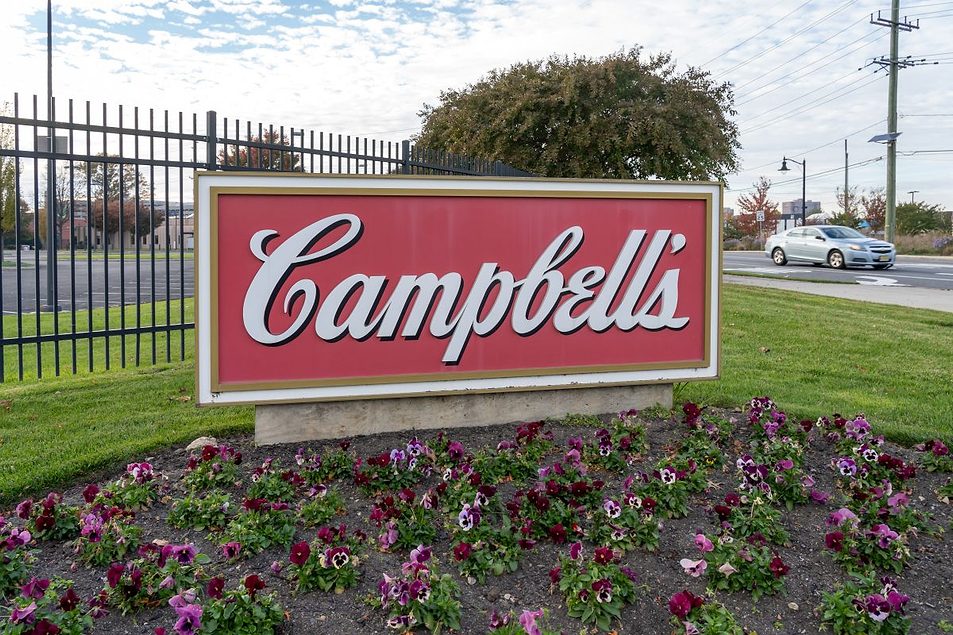

CAMDEN, NJ. — A challenging year culminating in a difficult fourth quarter that included a 12% decline in sales in the company’s Snacks unit has executives at The Campbell’s Co. searching for answers heading into 2027.
Net income in the fiscal year ended Aug. 2 totaled $403 million, equal to $1.34 per share on the common stock, which was down 33% from $602 million, or $2.02 per share, in the 2025 fiscal year. Net sales declined 5% to $9.74 billion from $10.25 billion. An additional week in the 2025 fiscal year impacted net sales by an estimated 2 percentage points. Organic sales were down 2%, primarily due to unfavorable volume/mix.
Mick Beekhuizen, president and chief executive officer of Camden-based Campbell’s Co., acknowledged the company’s performance “is not where it needs to be,” adding “we are taking decisive actions to improve it.”
Among those actions are a reset of the quarterly dividend. The company’s board of directors on Sept. 3 approved a quarterly dividend payment of 25¢ per share, or $1 on an annualized basis, a reduction of 36% from the prior quarterly dividend payment of 39¢ per share, or $1.56 on an annualized basis.
The company also is planning a $500 million cost-savings initiative and changing its marketing spend in fiscal-year 2027.
Campbell’s stock price on Sept. 3, the day fiscal-year results were presented, traded as low as $21.15 on the Nasdaq early in the afternoon, which was down 11% from a close of $23.78 on Sept. 2.
Highlighting Campell’s troubles were a fourth quarter loss of $69 million, which compared with net income of $145 million, or 49¢ per share, in the same period a year ago. Fourth-quarter net sales declined 8% to $2.14 billion from $2.32 billion in the same time of the previous year. An impact of 7 percentage points came from an extra week in the 2025 fourth quarter. Organic sales were down 1%.
Looking ahead to fiscal 2027, Campbell’s expects to face more challenges. The company said it expects net sales to be down 4% to 2% in fiscal 2027 and adjusted EPS to be down 24% to 17% when compared with fiscal 2026. Combined raw material and packaging inflation is expected to be 5% to 6%.
“Our fiscal 2027 outlook reflects an external environment that we expect will remain volatile, as well as another year of elevated inflation that will continue to pressure margins, particularly in the first half,” Beekhuizen said in pre-recorded remarks on Sept. 3. “However, our outlook also reflects the benefits of productivity, cost-savings initiatives and pricing that we expect to build throughout the year and increasingly support margin recovery.
“Make no mistake. Our results remain unacceptable, but instead of waiting for the environment to
improve around us, we are addressing reality head-on. The initiatives we are laying out today are designed to improve performance and put us on a path back to a sustainable long-term value-creation mode.”
$500 million in cost savings
Beginning in the 2027 fiscal year, Campbell’s is launching a program targeting $500 million in cost savings by fiscal 2030. The program will include initiatives remaining under a prior program, an overhead savings initiative announced in the third quarter of fiscal 2026 and an enterprise spend optimization that will change how Campbell’s manages and deploys its direct and indirect spending. Actions already underway are plant closures in Hyannis, Mass., and Jeffersonville, Ind., and approximately a 13% reduction in the workforce through a voluntary early-retirement program and involuntary reductions, said Todd Cunfer, chief financial officer.
Beekhuizen added that the company also is changing its approach to marketing support.
“Specifically, we will direct a majority of this year’s marketing budget toward our best opportunities, moving away from what has historically been a balanced approach across our portfolio,” he said. “Let me be clear: We are not walking away from any business or brand. However, our marketing investments must work harder for us.”
Campbell’s in fiscal 2027 has national advertising campaigns planned for Rao’s, Goldfish and Pepperidge Farm, he said. The use of social media, influencer and e-commerce channels will expand as well as platforms enabled by artificial intelligence (AI), he said.
Refocusing Goldfish
In Campbell’s Snacks business, fiscal 2026 operating earnings plunged 28% to $386 million from $538 million. Net sales fell 6% to $3.82 billion from $4.07 billion in the previous fiscal year.
Particularly troublesome for the Snacks business was a 12% decline in sales during the fourth quarter, including a 6% drop in organic net sales. Segment operating earnings, at $101 million, were down 34% from the previous year’s fourth quarter.
Campbell’s in fiscal 2026 refocused the Goldfish brand as a leader in snacking for families and children, but more work remains to be done, Beekhuizen said.
“Core consumption returned to growth, supported by double-digit e-commerce growth and our collaboration with Pokémon, reinforcing our confidence in the strategy,” he said.
In Meals & Beverage, fiscal 2027 earnings fell 14% to $943 million from $1.1 billion. Sales of $5.93 billion were down 4% from $6.18 billion in the previous year.
Semi-scratch cooking consumption increased by 5% in the fourth quarter, led by Swanson, Pacific and Rao’s, Beekhuizen said. Rao’s sauce consumption increased by 9.4% in the year and 8.9% in the fourth quarter, largely driven by sustained distribution and velocity growth, he said.
“Within eating soups, declines eased relative to Q3 for Chunky and Campbell’s red and white condensed,” Beekhuizen said. “At the same time, premium brands Pacific and Rao’s sustained strong double-digit growth, up 14% and 25.3%, respectively.”

Businesses are embracing digital tools to streamline and modernise signage processes. Real-time design platforms, online procurement, and standardised workflows are rapidly replacing outdated practices.
This shift is enabling stronger brand governance, faster turnaround times, and improved consistency across organisations.
The business signage landscape is experiencing a significant transformation as companies seek new ways to improve agility, accuracy, and brand visibility. Signomatic.co.uk is an example of a browser-based platform where users can design and order custom business signage online. The platform offers digital tools for creating, previewing, and specifying signage to help organisations manage updates, branding, and compliance across multiple locations efficiently. Integration of digital solutions is shifting signage from a slow, manual task to a dynamic, data-informed business function.
Growing business challenges drive efficiency needs
Signage is no longer just about putting a name on a building; it is a critical part of customer experience, safety, and brand consistency. Businesses face growing pressure to deliver accurate, up-to-date signs across multiple locations and channels, often with limited timeframes or local oversight.
These demands make rapid turnaround, consistent execution, and controlled costs essential. When a chain expands, rebrands, or must meet sudden compliance updates, signage must adapt without friction. As a result, many organisations are rethinking legacy procurement and design approaches in favour of more responsive, digital-first solutions.
Digitalisation transforms procurement and design practices
Shifting from traditional, offline procurement to digital-first workflows has redefined the operational possibilities of business signage. Where once orders involved local vendors, ad-hoc quotes, and manual proofs, today’s platforms centralise everything from design to approval to delivery.
Cloud-based tools allow users to select templates, modify designs to precise specifications, and preview final outputs before committing. This approach offers greater control over aesthetics and messaging, while avoiding unnecessary delays or inconsistencies across locations.
Capabilities unlocked by modern signage platforms
Modern digital tools bring features tailored to fast-paced business environments. Browser-based design enables on-the-spot customisation, letting users visualise signs with configurable sizes, finishes, and colours that match brand guidelines.
Version control and instant proofing features reduce the risk of errors, ensuring each sign produced aligns with standard requirements. Approval workflows make it easy for marketing and operations teams to collaborate before anything goes into production, facilitating rapid, confident decision-making.
Streamlined workflows and brand governance
Template libraries and permissions structures mean departments can order signs while maintaining central control over approved assets. Brand managers benefit from these features, as they encourage adherence to visual standards across diverse teams and locations.
This approach also reduces the risk of unauthorised customisations or off-brand variations. For companies handling multiple sites or launching regular campaigns, business signage has become a vital area for workflow automation and consistency. In this context, standardisation means both speed and quality are possible at scale.
By reducing reliance on manual checks and locally sourced solutions, business signage workflows are more resilient to errors and last-minute changes. Background detail on the history and technology of signage can further illustrate its evolution within business processes.
Balancing speed, quality, and sustainability
Even with automation, maintaining legibility, durability, and correct mounting for each environment requires careful specification. Businesses can encounter problems like low-contrast designs, mismatched materials, or unclear instructions if approval steps are skipped.
Modern platforms minimise these risks by guiding users towards best practices and providing feedback on their selections. Additionally, digital workflows support sustainability by enabling just-in-time ordering, reducing surplus inventory and misprints, and offering eco-friendly material options.
Practical considerations for choosing digital solutions
Evaluating a digital signage provider involves several critical criteria. Usability is key; interfaces must be intuitive for users across departments, supporting rapid onboarding and adoption.
Beyond interface design, material choices, proofing capabilities, and responsive customer support matter for operational success. When systems support flexible reordering and can adapt seamlessly for office, retail, and industrial settings, business signage fits naturally within broader workflow and strategic goals.

Ciena stock maintains Buy rating at Stifel on strong guidance

Thailand has launched “Thailand’s Offer to the World,” a new investment strategy aimed at moving the economy beyond its traditional manufacturing-base model and toward higher-value partnerships with global investors. Prime Minister Anutin Charnvirakul said the programme will focus on advanced technology and AI, the green transition, and the longevity economy, alongside a review of more than 7,000 regulations and efforts to advance OECD membership. (nationthailand)
Key figures / indicators: More than 7,000 regulations targeted for reform; three priority investment areas — AI/advanced technology, green transition, longevity economy; IMF–World Bank Annual Meetings to be hosted in Bangkok in October 2026. (Money & Banking Magazine
NEW
Thailand and Singapore have upgraded bilateral ties to a “Forward-Looking Strategic Partnership”, with both governments targeting closer cooperation in digital technology, AI, semiconductors, energy resilience, logistics and green finance. The leaders also agreed to strengthen trade and investment links and coordinate more closely as Singapore takes the ASEAN chair in 2027, followed by Thailand in 2028. (Prime Minister’s Office Singapore)

Key figures / indicators: Thailand will supply Singapore with 100,000 tonnes of rice over five years; cooperation to expand into AI, semiconductors, digital economy, low-carbon energy and logistics; both countries will coordinate their successive 2027–28 ASEAN chairmanships.
Why it matters: Singapore is one of Thailand’s major regional investment and financial partners, while Thailand offers manufacturing depth and access to the mainland Southeast Asian market. Closer integration could help Thailand attract Singapore-based capital into higher-value sectors while strengthening regional supply-chain and financial connectivity.
China deploys first tranche of 2026 policy financing to revive investment
NEW
China has begun deploying its 800 billion yuan policy-based financing programme, with China Development Bank disbursing 460 million yuan (US$68.47 million) in the first tranche. The initial projects cover battery manufacturing, high-end nickel-chromium materials and transport infrastructure, as Beijing seeks to counter weakening investment and slower economic growth. (Reuters)
Key figures / indicators: Policy-financing programme 800bn yuan; first disbursement 460m yuan; Q2 GDP growth 4.3%, down from 5.0% in Q1; programme increased from 500bn yuan in 2025. (Reuters)
Why it matters: The policy push could support demand for industrial equipment, batteries and infrastructure across China’s supply chains, with spillovers into ASEAN manufacturing. For Thailand, the key issue is whether Chinese stimulus generates more demand for Thai exports or accelerates competition from Chinese producers in regional markets.
Reuters — China deploys first 2026 policy-financing funds
India’s record FX inflows give the rupee greater protection against oil shocks
NEW
India’s rupee rose to a two-month high after the country secured an unexpectedly large US$136.4 billion through one-off funding measures, giving the Reserve Bank of India substantially greater capacity to manage currency volatility. Foreign-exchange reserves reached a record US$729.3 billion, although the RBI’s forward dollar liabilities have also climbed to about US$137 billion. (Reuters)

Key figures / indicators: FX inflows US$136.4bn; reserves US$729.3bn; rupee around 94.30/USD at the latest reported opening; RBI forward book US$137bn; Brent crude up about 7% this week. (Reuters)
Why it matters: India now has a much larger external buffer to absorb higher oil prices and global capital-market volatility. Thailand faces similar exposure to imported energy and currency swings, making India’s reserve strategy a useful regional benchmark for managing external shocks.
Reuters — India’s $136 billion FX inflow and rupee outlook
Oil rises toward $100 as Middle East supply risks intensify
NEW
Brent crude rose to US$97.29 a barrel on Thursday after renewed US strikes on Iran and fresh Israeli threats increased concerns over disruptions to Middle Eastern supply. Shipping through the Strait of Hormuz fell sharply, with only six commodity vessels recorded crossing on Wednesday compared with a 10-day average of around 13. (Reuters)

Key figures / indicators: Brent US$97.29/barrel, +1.7%; WTI US$93.04, +2.2%; Brent on a fourth consecutive day of gains; Hormuz commodity-vessel crossings 6 vs 13 10-day average; Iraq’s August oil exports rose to 2.34 million barrels/day from 1.35m bpd in July. (Reuters)
Why it matters: Thailand remains highly exposed to imported energy, making another sustained oil spike a direct threat to inflation, transport costs, household purchasing power and the trade balance. Higher oil prices could also complicate monetary policy across Asia by forcing central banks to balance inflation risks against slowing domestic demand.

A battery sized for today’s evening load may look small after a heat pump, vehicle, or extension arrives. Solar battery storage therefore needs an upgrade path, together with a credible starting capacity, power rating, and seasonal charging plan.
Modular home battery storage reduces the need to buy the final system on day one. Households can start from measured demand, then add approved battery modules when monitoring shows that new loads or backup goals justify expansion.
Modularity is not automatic compatibility. Firmware, inverter limits, tower layout, network approval, warranty, and installer support affect later additions. The upgrade route belongs in the original quotation, not a verbal promise.
Start With the Next Two Household Changes
Map likely changes over five to ten years before choosing the first battery. Include equipment already ordered, such as a heat pump, and plausible additions, such as an electric vehicle. Do not inflate demand for appliances that have no budget or installation plan.
The solar battery storage decision should still begin with half-hourly consumption and solar export data. Future loads are added as transparent scenarios. This keeps the starting design grounded while showing whether switchgear, inverter power, communications, and physical space need preparation now.
A well-sized solar battery system should also have a clear trigger for future expansion. Expansion is justified when repeated monitoring shows usable solar surplus and evening shortfalls after scheduling, reserve settings, and power limits have already been checked.
- Build a current-load case from one year of meter and solar data.
- Add each planned appliance with a stated power, run time, season, and control schedule.
- Compare the cost of enabling later expansion with installing unused battery capacity immediately.
Separate Capacity Growth From Power Growth
Adding kilowatt-hours extends how long loads can run. It does not always increase the maximum simultaneous output, because inverter, battery-module, backup, and grid-connection limits remain. Every upgrade scenario should therefore carry an energy calculation and a separate power calculation.
Model Evening Energy
Energy Saving Trust notes that UK solar batteries commonly range from 1 to 16 kWh, with around 5 kWh common in fossil-heated homes and 9 kWh more common with electric heating. These are context figures, not universal sizing rules.
Model Peak Demand
An electric vehicle charger and heat pump may overlap with cooking even if their daily energy fits the battery. The home battery storage proposal should show continuous output, short-duration response, and the control sequence used when high-power loads compete.
Protect a Backup Reserve
A 20% reserve leaves only 80% of nominal energy for routine tariff shifting before conversion losses. Increasing reserve improves outage readiness but reduces daily usable energy. The owner should see both outcomes rather than one optimistic savings figure.
Check Seasonal Refill
More modules add little value if winter solar rarely fills the existing battery and the tariff does not support planned grid charging. Model monthly surplus, not annual generation alone, and include household demand at the times when low-cost energy is actually available.
Read the Product Expansion Limits Correctly
The UK product page describes 5.02 kWh LFP battery modules, up to six packs per tower, a dual-tower configuration reaching 60 kWh with one inverter, and up to five cascaded inverters reaching 300 kWh in grid-connected scenarios.
Module Count Is Not the Whole Design
Physical pack capacity must remain within approved tower, inverter, firmware, and installation rules. Floor loading, wall clearances, cable routes, fire guidance, outdoor exposure, and service access can constrain an upgrade even when the datasheet permits more modules.
One Inverter Creates a Defined Ceiling
The 60 kWh figure is a product maximum, not a normal household target. A home using 12 kWh overnight would carry several nights of nominal energy at that scale, but winter refill and the inverter’s output still govern practical operation.
Cascading Changes the Project
Moving toward 300 kWh involves multiple inverters and a larger electrical design. It may suit large homes or small commercial loads, yet network studies, protection, metering, space, and cost become more important. Treat it as a separate project stage.
| Upgrade stage | Illustrative change | Energy effect | Power question |
| Current home | Evening demand only | Establish measured baseline | What overlaps after sunset? |
| Heat pump | Add winter heating hours | Higher seasonal discharge | Can compressor and cooking overlap? |
| Electric vehicle | Add scheduled charging | Flexible energy target | Can charging pause at peak load? |
| Longer backup | Raise protected duration | More reserved capacity | Which circuits remain protected? |
Use Monitoring to Trigger Expansion
Home battery storage should expand because the evidence supports it, not simply because additional capacity is available. Review state of charge, imports, exports, clipping, reserve events, and unmet flexible loads over several months. Separate control problems from genuine capacity shortages before ordering modules.
Look for Repeatable Shortfalls
Frequent evening depletion followed by significant grid imports can support expansion when the battery had enough charging opportunity. A single winter week proves little. Use repeated patterns under comparable weather, tariff, and household behaviour.
- Check whether the battery regularly reaches full charge before the observed shortfall.
- Confirm the inverter is not limiting discharge while unused energy remains.
- Re-run the model with updated loads, tariff periods, reserve, and measured system losses.
Plan Compatibility and Service From Day One
An upgrade-friendly quotation should name the current battery generation, supported future packs, maximum modules, inverter ceiling, firmware process, warranty effect, and who will commission additions. It should also reserve physical space and document safe isolation and cable capacity.
Keep an Upgrade Record
Store serial numbers, firmware versions, settings, network approvals, single-line diagrams, commissioning results, and warranty documents. That record helps an installer confirm whether new modules can join the existing system without resetting protections or invalidating support conditions.
Preserve Control Flexibility
Solar battery storage may perform better after tariff or household changes through scheduling rather than expansion. Keep access to reserve, charging windows, export control, and load priorities. A rigid configuration can make a capable battery appear too small.
Before adding modules, compare at least one winter month and one high-generation month. If similar shortfalls appear in both periods while sufficient charging opportunity remains, additional capacity becomes a more credible explanation than seasonal conditions alone. If only winter fails, tariff control or seasonal expectations may deserve attention first.
Expand Only When the Data Supports It
Modular architecture can avoid premature oversizing, but only when the original design preserves electrical, physical, and support options. Start with measured demand and one credible future-load case, then monitor performance through meaningful seasonal conditions.
When evidence shows repeatable energy shortfalls rather than power or control limits, home battery storage can add capacity without discarding the whole system. The strongest plan defines that decision rule before installation, records every assumption the household will revisit, and keeps later decisions auditable.
Business
Yosemite Warns Visitors After Rabid Bat Found Near Curry Village Showers In May Sparking Health Precautions

YOSEMITE NATIONAL PARK, Calif. — Yosemite National Park officials are urging visitors to seek medical guidance if they had contact with a bat near one of the park’s busiest lodging areas earlier this year, after a dead bat found outside a shower facility tested positive for rabies.
The park announced the finding in a news release Wednesday, more than three months after the bat was initially discovered. The big brown bat was found dead outside the Curry Village Showerhouse on May 18, according to Yosemite National Park, with the delay in announcing the result attributed to the time required to complete laboratory testing.
“No known human contact with the bat has been reported,” Yosemite National Park said in its release.
Despite the absence of any confirmed reports of human contact, park officials asked anyone who may have had direct contact with a bat in the Curry Village area on or around May 18 to contact the California Department of Public Health and reach out to a health care provider promptly to determine whether preventive treatment is necessary.
Officials emphasized that direct contact with a bat does not need to involve an obvious bite to warrant medical evaluation. Contact can also include a bat landing on clothing or a wing brushing against skin or hair, interactions that may not be immediately noticeable or painful but can still pose an exposure risk given how small bat bites and scratches can be.
Curry Village, tucked into the eastern corner of Yosemite Valley, is one of the park’s most heavily trafficked lodging areas, featuring restaurants, shops and a range of accommodation options spanning canvas tent cabins to standard hotel rooms. The area has been described by the Yosemite Mariposa County Tourism Bureau as offering a “distinct close-to-nature campground vibe,” a characterization that also underscores the close proximity many visitors have to the park’s surrounding wildlife during their stay.
Rabies is a fatal but preventable viral disease that primarily affects the central nervous system, according to the U.S. Centers for Disease Control and Prevention. The disease spreads through bites and scratches from infected animals and is most commonly carried by bats, foxes, raccoons and skunks. People almost always die once symptoms of the disease begin to appear, but the illness can be effectively prevented if a person receives appropriate medical care promptly after a potential exposure, before symptoms develop.
Individuals whose jobs regularly involve contact with animals, including agricultural workers, animal control personnel and veterinarians, face elevated risk of rabies exposure compared with the general public, according to the CDC. In California specifically, the disease is identified in roughly 200 animals each year, the vast majority of them wild animals rather than domesticated pets, according to figures from the California Department of Public Health.
Despite that annual animal case count, human rabies infections remain exceedingly rare in both California and the broader United States. The California Department of Public Health has reported that rabies infects very few humans within the state, with a total of 17 confirmed human cases recorded in California since 1980, and the most recent case occurring in 2024.
Yosemite officials noted that Wednesday’s finding, while concerning, is not unusual for the park given its extensive bat population. According to the park, a very small percentage of bats tested at Yosemite are found to be positive for rabies in any given year, as part of routine wildlife disease surveillance conducted by park staff.
“As part of routine park operations, deceased bats with no known human contact are collected and later tested to monitor wildlife disease that circulates naturally within bat populations,” park officials said in their statement. “A very small percentage of bats tested from Yosemite National Park are positive for rabies each year.”
Wednesday’s confirmed case was not the park’s first this year, according to officials, who noted that the last rabies-positive bat discovered in Yosemite prior to this finding was recorded in July 2025, indicating that such cases, while infrequent, do occur on a roughly annual basis within the park’s extensive bat population.
Yosemite is home to 17 different species of bats, which park officials say provide significant ecological and economic benefits to the broader park ecosystem, including natural pest control through the consumption of large quantities of flying insects. Despite those ecological benefits, park officials stressed the importance of maintaining strict distance from bats and other wildlife encountered within the park, regardless of whether the animal appears alive, injured or already deceased.
“Visitors should never touch or handle bats or other wild animals,” the National Park Service said in guidance accompanying the announcement. “If you encounter a bat, dead or alive, keep your distance and notify park staff.”
Park officials confirmed they are actively coordinating with the California Department of Public Health, along with the National Park Service’s Office of Health and Safety and its Wildlife Health Branch, regarding the case, as part of the broader effort to identify any visitors who may have had contact with the affected bat and connect them with appropriate medical guidance.
The announcement adds to a broader body of public health guidance surrounding wildlife encounters at national parks nationwide, where visitors frequently come into close proximity with a wide range of wild animals, including species capable of transmitting rabies and other zoonotic diseases. Public health officials continue to emphasize that any physical contact with a bat, whether the animal is alive or already dead, should be discussed promptly with a health care provider given the severity and preventability of the disease when treatment begins before symptoms appear.
For visitors planning trips to Yosemite or other national parks with significant bat populations, officials recommend maintaining a safe distance from any bat encountered during a visit and reporting sightings directly to park staff rather than attempting to handle, move or dispose of the animal independently, regardless of whether it appears to be alive, injured or deceased.

Put three foods in your garden now and have robins visiting by Christmas

Hospitality and education boosts US job creation in August

Kalshi US Visits Jump 1,500% as Regulatory Scrutiny Intensifies





-

 Fashion7 days ago
Weekend Open Thread: Maeve – Corporette.com
-

 Crypto World2 days ago
CLARITY Act could advance within weeks, Atkins says
-

 Business6 days ago
Onto Innovation Stock: AI’s Next Bottleneck Is Yield (NYSE:ONTO)
-

 Crypto World2 days ago
Elon Musk Says Grok 4.7 Lands in 10 Days and Will Beat Every Model
-

 Crypto World7 days ago
Bitcoin price tests $82K resistance as Brandt stays long
-
 Tech6 days ago
Hugging Face built a $4.5 billion empire on free AI models. Now Nvidia is buying it for $12.9 billion
-

 Business7 days ago
iPhone 18 Pro Pre-Orders Could Shift to Saturday as Apple Reportedly Avoids September 11 Anniversary
-

 Sports8 hours ago
Devon Dampier throws for 3 TDs as No. 21 Utah demolishes Idaho
-
Crypto World7 hours ago
XRP Trading Activity Hits Highest Level Since February as Price Jumps 8%
-

 Tech6 days ago
PaperCut releases second emergency patch for exploited flaws
-

 News Videos5 days ago
Charlie Munger on Robinhood: No one should believe that Robinhood’s trades are free
-

 Crypto World1 day ago
Kalshi seeks CFTC approval for WTI perpetual
-

 Tech6 days ago
As the influencer economy drives retail sales, Seattle startup raises $22M to play matchmaker
-
 Crypto World2 days ago
Bitcoin slips below $77.5K as macro pressure offsets ETF inflows
-

 Tech6 days ago
Tamagotchi Ring Takes the 30-Year Digital Pet and Places it on Your Finger
-
 Business2 days ago
Oil Price Today (September 2): Crude oil nears $97 as war tensions escalate. Will it hit $100 again?
-
 Entertainment5 days ago
Taylor Swift Reportedly ‘Frustrated’ With Travis Kelce After ‘Short’ Honeymoon
-

 Business7 days ago
Apple Confirms September 9 iPhone Launch Event as Tim Cook Prepares to Hand CEO Reins to John Ternus
-

 News Videos5 days ago
News kii Crypto ugu danbeeyey & Suuqa oo dhaqaaqey
-
 NewsBeat5 days ago
Trump posts AI video of ‘Lake America’ being protected by an army of bequiffed ‘Donald Ducks’
You must be logged in to post a comment Login