An anonymous reader quotes a report from The Hill: A group representing American automakers sent a letter (PDF) Thursday to congressional leaders asking for a “permanent ban” on Chinese-made cars in the U.S. John Bozzella, the Alliance for Automotive Innovation’s CEO and president, described in the letter China’s manufacturing industry as “rooted in a well-documented pattern of unfair trade, subsidies, intellectual property theft and surveillance.” Bozzella addressed his request to Senate Majority Leader John Thune (R-S.D.), Senate Minority Leader Chuck Schumer (D-N.Y.), Speaker Mike Johnson (R-La.) and House Minority Leader Hakeem Jeffries (D-N.Y.) — urging them to back a “permanent ban on the sale, import and manufacture of Chinese connected vehicles,” before the 119th Congress concludes in January.
“Right now, Chinese automakers are dumping subsidized vehicles with connected software and hardware around the world,” Bozzella wrote, adding that China “is capturing market share” in Europe, Australia, Southeast Asia, Mexico and South America. “This hasn’t happened inside the U.S. yet, but given the scale and urgency of this threat, we urge you to enact a Chinese vehicle, software and hardware ban before adjourning this year and make this policy the law of the land,” he added. The Alliance for Automotive Innovation, a trade organization representing car manufacturers, represents the “entire” U.S. auto industry, per its website.
Bipartisan bills in the Senate and House would bar automakers with more than 15% Chinese ownership from selling vehicles in the U.S. “Enacting a permanent ban on Chinese vehicles and high-risk hardware and software in the 119th Congress will send a clear and bipartisan message that China’s strategy to dominate global automotive manufacturing will be met with a national security policy response from the American government,” wrote Bozzella.
Further reading: US Car Buyers Envy What They Cannot Have
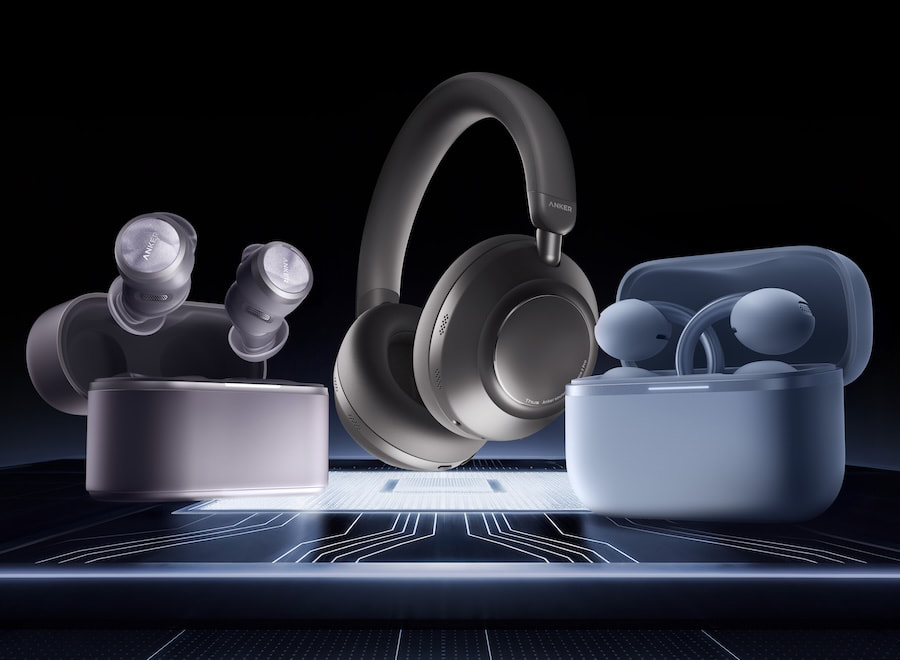
AI has become the garnish nobody ordered on almost every new consumer electronics product, but Soundcore is taking a somewhat different approach at IFA 2026. Instead of adding another assistant that can tell you the weather while you are already standing outside, Anker is expanding its dedicated THUS AI audio chip across four new Soundcore headphones and earbuds.
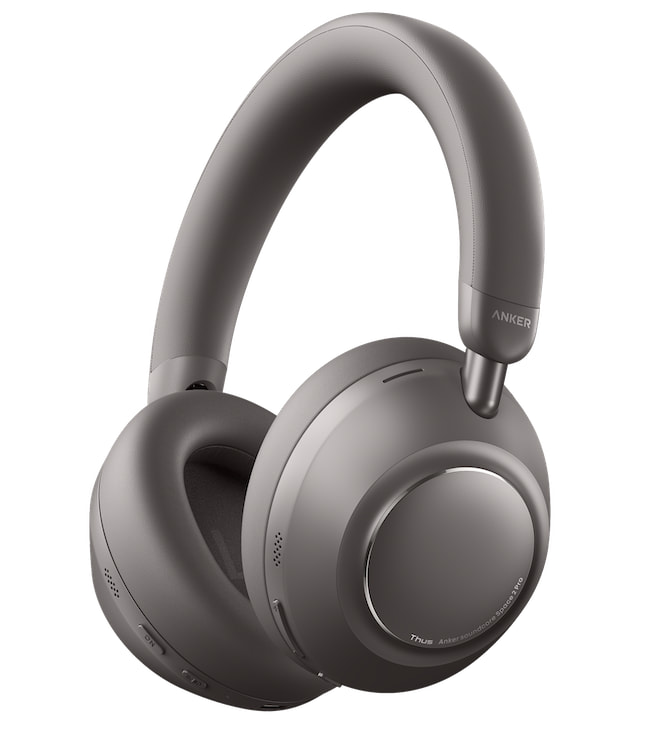
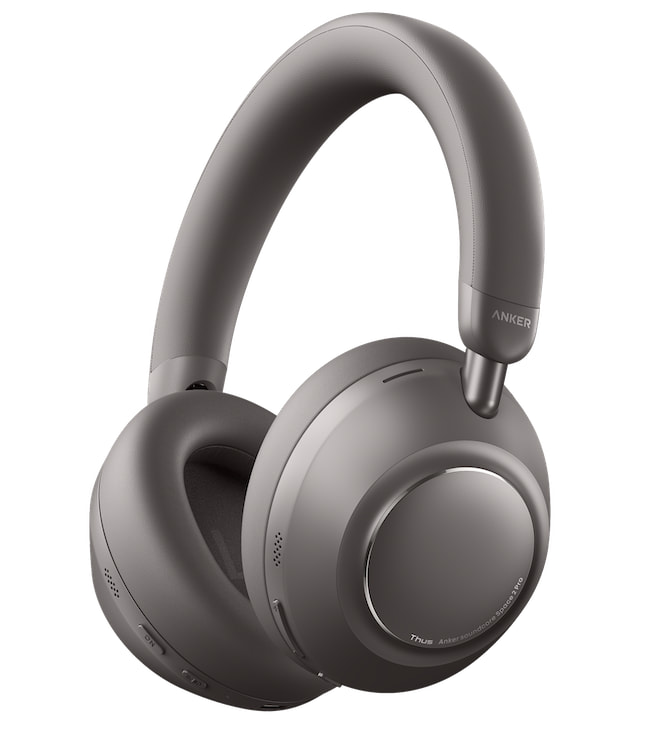
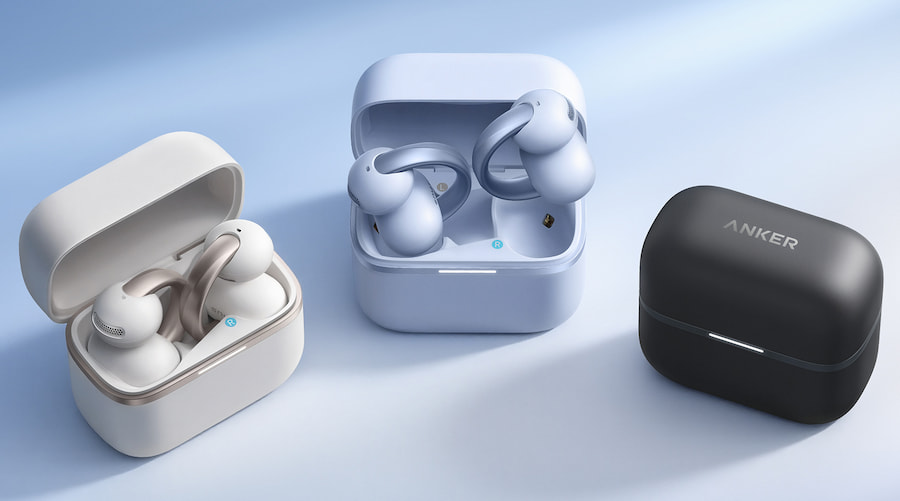
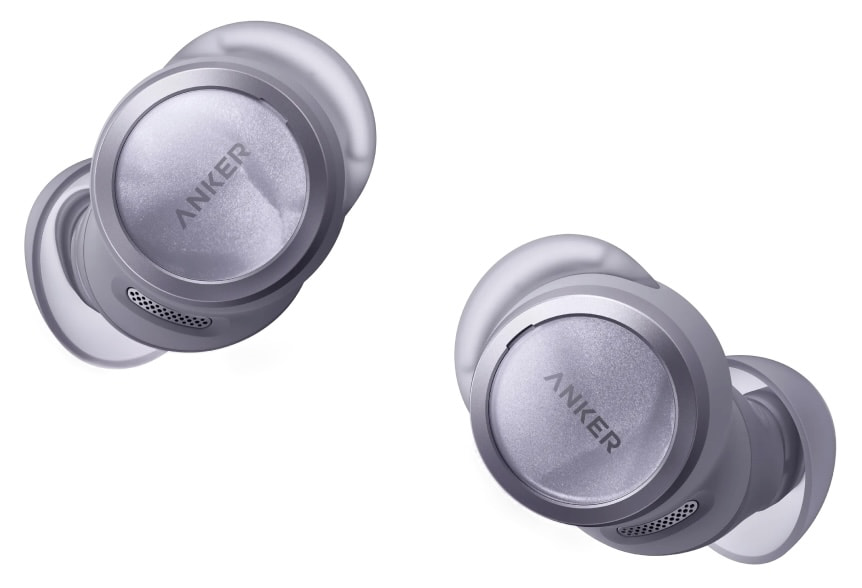
The new lineup includes the over-ear Space 2 Pro, open-ear AeroClip 2 and AeroClip 2 Pro, and in-ear Liberty Buds 2. Soundcore is focusing the processing power on call clarity, active noise cancellation, voice isolation, translation and, in one case, meeting transcription. Three models arrive in the U.S. on or around September 22, with prices ranging from $129.99 to $199.99; pricing and final availability for AeroClip 2 Pro remain unannounced.
Soundcore is also pushing the platform into OTC hearing aids while expanding its sleep portfolio with two new earbuds and its first dedicated bedside sleep speakers. Apparently headphones that merely reproduce music are becoming terribly old-fashioned.
There is also a larger story behind the new hardware. Anker is also beginning to consolidate its consumer brands under the Anker name, which means Soundcore is gradually moving toward Anker soundcore rather than operating as a completely separate consumer identity.
Advertisement
The change will not happen overnight, and existing Soundcore products are not suddenly losing their branding. New products will lead the transition, with older models moving over time. At IFA 2026, Anker is positioning audio, projectors, smart-home products, energy products, and its expanding AI capabilities as parts of a broader ecosystem rather than a collection of largely independent brands.
That makes the timing of these new audio products more interesting. The THUS AI platform is no longer being used for one isolated feature or headphone model. Anker is spreading it across ANC headphones, earbuds, open-ear designs, sleep products, and eventually hearing devices. The new branding strategy suggests the company wants those products and the intelligence behind them to feel like parts of one connected platform.
Related Reviews:
What Is Soundcore THUS AI?
THUS first appeared in Soundcore’s Liberty 5 Pro ($169) and Liberty 5 Pro Max ($229) earlier this year. Unlike software-only AI features running entirely through a connected smartphone, Soundcore is using dedicated silicon inside the audio products themselves to handle voice and noise-processing workloads.
Advertisement
That distinction gives the new lineup a more tangible purpose than simply attaching the letters “AI” to the box. The question is whether Soundcore’s processing actually delivers better calls and noise control in real-world environments, because marketing slides have never had difficulty hearing anybody.
Soundcore Space 2 Pro
The Space 2 Pro replaces the Space One Pro as Soundcore’s newest over-ear ANC model and is probably the most important product in this launch. The company is targeting commuters, travelers and office users who want strong noise cancellation and call performance without moving into the $300 to $500 range occupied by many flagship wireless headphones.
THUS is being used for both voice isolation and adaptive ANC, while HearID 5.0 provides personalized calibration. Soundcore is also keeping LDAC support, which gives Android users a higher-resolution Bluetooth option that remains conspicuously absent from quite a few more expensive competitors.
Soundcore Space 2 Pro Tech Specs
Design: Wireless over-ear headphones
Driver: 35mm rigid-flex dual-material diaphragm
Processor: THUS AI audio chip
Voice isolation: Six-microphone array
Background-noise handling: Designed to isolate speech against complex noise levels up to 100dB
ANC: Eight-microphone adaptive active noise cancellation
ANC processing rate: 384kHz
Personalized sound: HearID 5.0
Bluetooth codec: LDAC
Bluetooth: 6.1
Multipoint: Two devices
Spatial audio: Supported
Battery life: 30 hours with ANC, or 60 hours with ANC off
Battery life with ANC: Up to 30 hours
Ear cushions: Memory foam
Colors: Midnight Grey, Linen White, Jet Black
MSRP: $199.99
Availability: September 22, 2026
Soundcore AeroClip 2 Pro
The AeroClip 2 Pro is considerably more ambitious. Soundcore has combined an open-ear clip design with a built-in recording system capable of capturing in-person meetings, online meetings and both sides of phone conversations.
Advertisement. Scroll to continue reading.
Recordings are transferred through the Soundcore app to a phone or tablet, where an AI large language model can generate summaries using different templates. Users can also search previous recordings for specific information, making AeroClip 2 Pro as much a productivity device as a pair of earbuds.
Advertisement
That could be genuinely useful for people who spend their lives moving between meetings. It also means buyers should probably understand the recording-consent laws where they live before turning every lunch conversation into searchable corporate history.
Soundcore AeroClip 2 Pro Tech Specs
Design: Open-ear clip earbuds
Processor: THUS AI audio chip
Driver: 11mm dual-diaphragm
Voice system: Four high-SNR microphones plus two bone-conduction sensors
Bluetooth codec: LDAC
Recording: In-person meetings, online meetings and both sides of phone calls
AI tools: Meeting summaries and searchable recorded information through the Soundcore app
Battery life: 11 hours at 50% volume
Charging case: 34 hours
Fast charging: 10 minutes provides up to 3 hours of playback
Markets: U.S., U.K. and Europe
U.S. price: Not announced
Availability: Launching in the coming months; final timing not announced
Soundcore’s September 3 announcement does not confirm the $229.99 price already appearing in some coverage. Until Anker publishes it, neither are we.
Soundcore AeroClip 2
The standard AeroClip 2 strips away the meeting-recorder functionality and focuses on everyday open-ear listening, calls and translation. Soundcore says it evaluated the fit against 2,000 ear profiles, which suggests rather more effort went into the C-shaped design than simply bending a piece of plastic and hoping for the best.
Real-time AI translation with Apple MFi certification is the unusual feature here, giving compatible iOS users one-tap access without closing off the ear canal.
Soundcore AeroClip 2 Tech Specs
Design: Open-ear clip earbuds
Processor: THUS AI audio chip
Driver: 12mm dynamic
Bluetooth codec: Bluetooth 6.0, LDAC
Call processing: THUS-based voice isolation
Translation: Real-time AI translation
Apple support: MFi certified one-tap iOS access
Fit development: Tested using 2,000 ear profiles
Battery life: Up to 8 hours
Charging case: Up to 32 hours total
Launch colors: Midnight Black, Red, Cloud White, Mist Blue
MSRP: $169.99
Availability: Week of September 22, 2026
Soundcore Liberty Buds 2
The Liberty Buds 2 are the conventional in-ear option and the least expensive entry point into the new lineup. Soundcore is putting most of the emphasis on call processing, ANC and comfort rather than releasing a specification sheet stuffed with numbers that may or may not matter outside the trade-show booth.
There are still several details missing. Soundcore has not publicly specified battery life, Bluetooth version, supported codecs or an IP rating in its September 3 announcement, so those fields should remain blank until the company fills them in.
Soundcore Liberty Buds 2 Tech Specs
Design: True wireless in-ear ANC earbuds
Processor: THUS AI audio chip
Call system: Eight-sensor solution
Voice processing: Two dedicated voice-processing units
ANC: Six-microphone system
Comfort feature: Comfort ANC mode designed to reduce pressure discomfort
Certification: TÜV certified for design and comfort
Battery life: 12 hours with ANC, or 7 hours without
Weight: 4.6g per earbud
Bluetooth: Bluetooth 6.1, LDAC
IP rating: IP57
Colors: Misty Purple, Glossy Black, Silver White
MSRP: $129.99
Availability: Available September 22, 2026
Soundcore Is Also Entering the OTC Hearing Aid Market
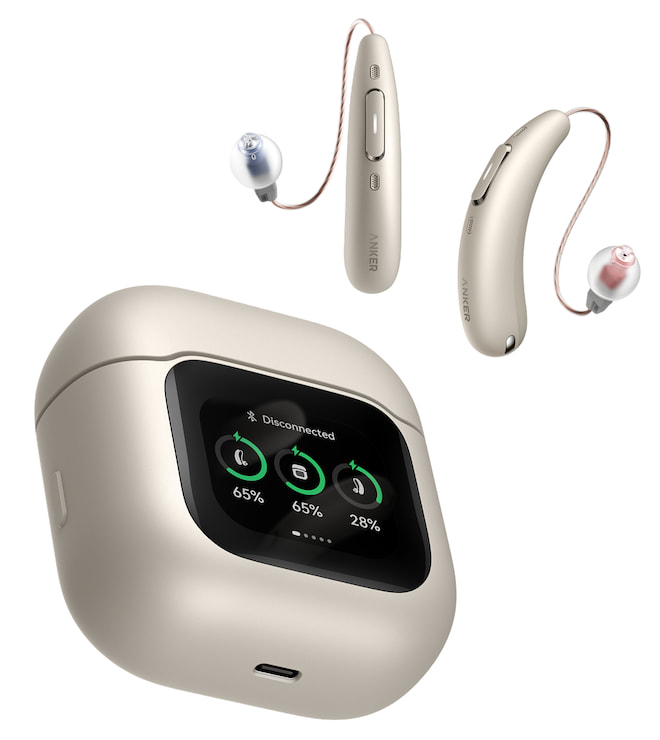
Anker is taking THUS beyond conventional headphones with an upcoming pair of receiver-in-canal OTC hearing aids. The company says the processing system is designed to identify speech in noisy environments rather than simply increasing the level of everything around the listener.
That is a far more serious application for the technology, and one that deserves independent evaluation before anybody starts handing out medals. Pricing and an exact launch date have not been announced.
Advertisement
Soundcore OTC Hearing Aid Preliminary Specs
Design: Receiver-in-canal OTC hearing aids
Processor: THUS AI
Processing capability: Claimed 7.2 billion operations per second
Microphones: Four beam-forming microphones
Battery life: Expected up to 12 hours
Charging case: Expected up to 36 hours total
Fast charging: 5 minutes for up to 2 additional hours
Launch window: Later in 2026
Price: Not announced
Sleep 4 and Sleep 4 Pro
Soundcore’s sleep lineup is also expanding with Sleep 4 and Sleep 4 Pro, along with the new SleepLab bedside systems.
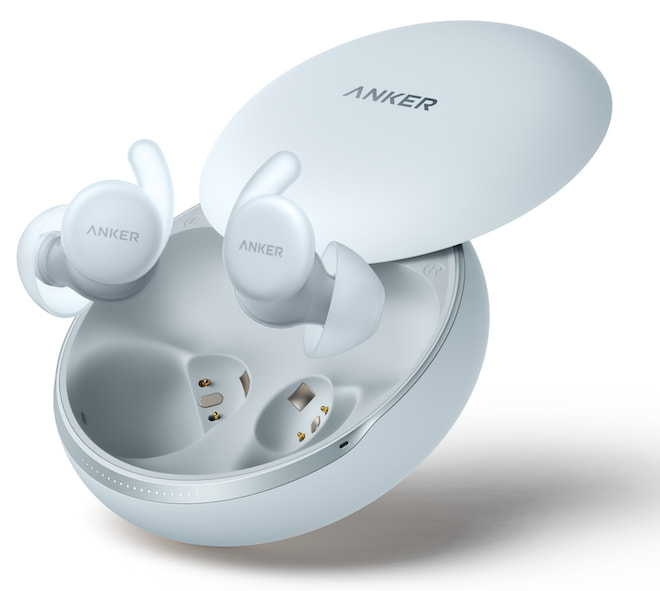
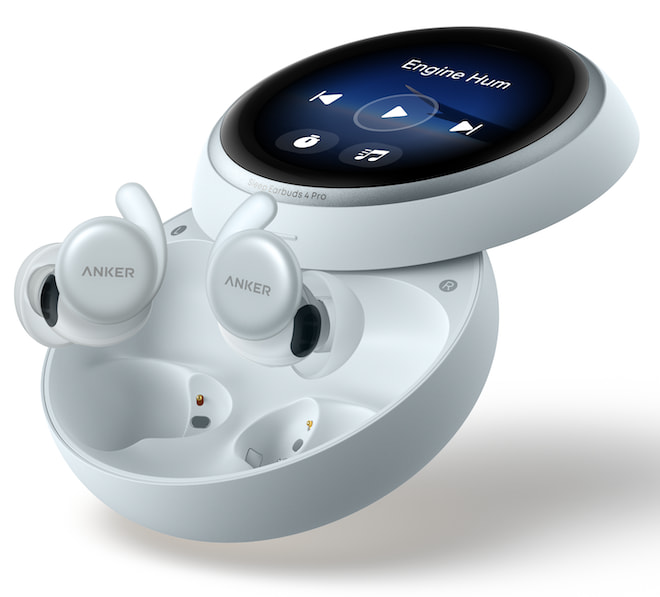
Sleep 4 concentrates on passive comfort, nighttime noise reduction and adaptive snore masking. Sleep 4 Pro adds biometric monitoring and uses those measurements with Soundcore’s BioSync system to alter sleep audio during the night.
Soundcore Sleep 4
Soundcore Sleep 4 Tech Specs
Noise control: Sleep-focused noise reduction
Snore masking: AI-generated dynamic system
Fit database: Developed using more than 10,000 ear samples
Size: 20% slimmer than Sleep A30
Launch colors: Moonlit White, Haze Blue
Later color: Bare Pink
U.S. price: $229
Availability: October 2026
Soundcore Sleep 4 Pro
Soundcore Sleep 4 Pro Tech Specs
Monitoring: In-ear high-frequency PPG
Measurements: Heart rate and heart-rate variability
Adaptive audio: BioSync
Noise control: Sleep-specific noise reduction
Snore masking: Adaptive
Charging case: Wireless charging
Case display: Built-in AMOLED
Case controls: Audio, sleep settings, alarms and morning sleep summary
Colors: Lunar White, Mist Blue
U.S. price: $349
Availability: November 2026
SleepLab and SleepLab Pro
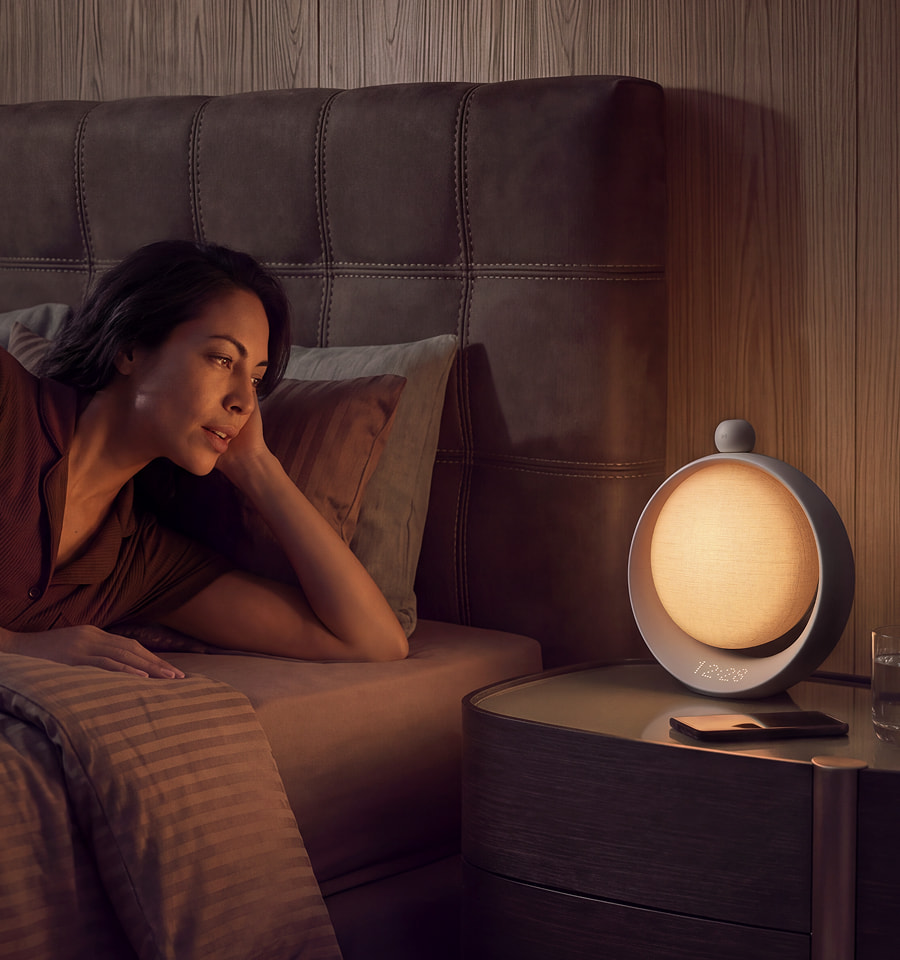
The new SleepLab products move Soundcore onto the nightstand. SleepLab is essentially an audio and lighting system for sleep routines, while SleepLab Pro adds contact-free sleep sensing using 60GHz millimeter-wave radar.
Advertisement. Scroll to continue reading.
Neither has a confirmed price or launch date yet, which means there is no need to pretend we know what Anker plans to charge for a speaker that watches you sleep from across the room.
Soundcore SleepLab Tech Specs
Audio: Dual-speaker spatial sound
Sleep content: More than 180 white-noise and breathing sounds
Lighting: Multi-color ambient lighting
Wake feature: Sunrise simulation with crescendo alarm
Battery backup: Included
Price: Not announced
Availability: Not announced
Soundcore SleepLab Pro Tech Specs
Sleep sensing: Contact-free 60GHz mmWave radar
Audio: Dual-driver spatial audio
Sleep tools: Personalized soundtrack, breathing exercises and acoustic beats
Reporting: Daily sleep report
Lighting: Multi-color ambient lighting
Wake feature: Sunrise simulation
Price: Not announced
Availability: Not announced
What Does the Competition Look Like?
The useful comparison is not against $400 flagship headphones. Soundcore has priced these products against established models sitting almost directly beside them on the shelf.
JBL Live 780NC — $199
Currently on sale for $199.95 at Amazon, JBL Live 780NC outlasts Space Pro 2 with considerably longer maximum battery life, Bluetooth 6.0, Hi-Res support and its own adaptive ANC system.
Advertisement
Sony LinkBuds Clip — $229
According to our tests, Sony LinkBuds Clip has established itself as the leader for those seeking clip-on earbud style and convenience, along with the ground-breaking Bose Ultra Open Earbuds. Ultimately Soundcore aims to beat them on price, while approaching their features and performance.
Nothing Ear (3)
The Nothing Ear (3) is a particularly awkward rival for Liberty Buds 2 because it’s currently available for $129 at Amazon, essentially matching Soundcore’s launch price. It also emphasizes voice isolation, ANC and LDAC, but uses microphones built into the charging case as part of its Super Mic system.
The Bottom Line
Soundcore’s IFA 2026 lineup is more interesting than another batch of wireless headphones with AI printed on the carton because Anker is applying its own silicon to specific problems: separating speech from environmental noise, adapting ANC, handling translation and turning open-ear earbuds into recording tools.
None of that guarantees superior sound quality, stronger ANC or better calls. The JBL Live 780NC, Sony LinkBuds Fit, and Nothing Ear (3) demonstrate how competitive the $130 to $200 market has become, and every one of them already has a defined reason to exist.
Advertisement
Space 2 Pro seems likely to have the broadest appeal, while AeroClip 2 Pro enters a newly expanding market segment. Liberty Buds 2 may ultimately be the value play with a strong feature set.
THUS has moved beyond being a single-product experiment. Now Soundcore has to prove that dedicated AI processing makes these products better rather than merely giving the marketing department another acronym.
Price & Availability
Soundcore Space 2 Pro: $199.99; U.S. availability begins September 22, 2026
Soundcore AeroClip 2: $169.99; U.S. availability begins during the week of September 22, 2026
Soundcore Liberty Buds 2: $129.99; U.S. availability begins September 22, 2026
Soundcore AeroClip 2 Pro: Price and final launch date TBD
Soundcore Sleep 4: $229; October 2026
Soundcore Sleep 4 Pro: $349; November 2026
Soundcore SleepLab: Price and availability TBD
Soundcore SleepLab Pro: Price and availability TBD
Soundcore OTC hearing aids: Price TBD; expected later in 2026
Nscale, a British AI infrastructure company founded just two years ago, has said it may go public as early as later this month. Ahead of that expected IPO, the company is reportedly in talks to raise an additional $3.5 billion.
Bloomberg reported Friday that the company is looking to sell $1.5 billion in convertible notes — a type of loan that can later convert into company stock — to a group of investors, while also seeking an additional $2 billion in financing from Nvidia.
Nvidia also participated in the firm’s Series B funding round in March, a $1.1 billion raise led by investment fund Aker. Nscale hailed its round as “the largest Series B in European history.” The company’s Series A round, in December of 2024, raised $155 million.
TechCrunch reached out to Nscale and Nvidia for comment.
Advertisement
AI infrastructure startups have seen immense growth amid the current era of AI enthusiasm, wherein compute has become a competitive currency.
Nscale recently signed a large deal with Anthropic worth approximately $45 billion. Earlier this week, reports emerged that Nscale had been telling potential investors that it has approximately $103 billion in revenue following the deal. That figure isn’t current sales; it’s a projection based on signed customer leases, according to The Information.
Most marketing teams still measure visibility the same way they always have: rankings, click-through rates, and organic traffic. But buyers have moved on.
Search tools and AI engines now synthesize answers directly on the screen, creating a world of zero-click searches where your website is entirely bypassed.
The “old days” are not coming back. The question for marketers is no longer, How do we rank first? It’s How do we become part of the answer?
Advertisement
The answer isn’t publishing more content; it’s making your knowledge impossible for AI to ignore.
Brand visibility has a new dimension
Showing up is only half the battle. Where you appear inside an AI-generated response matters just as much.
Think about the experience. If your brand is mentioned after multiple answer cards, product recommendations, follow-up questions, and community discussions, most people will never see it. Ranking reports won’t capture that.
One way to think about this is pixel depth. Instead of measuring position on a search results page, measure how prominently your brand appears within the answer itself. Visibility increasingly depends on whether you’re seen before someone feels they’ve learned enough to stop reading. It’s no longer enough to rank at the top of search results. Now “share of visibility” models also weigh SERP features, ads, and AI Overview presence for a more holistic view of what kind of attention your company can expect to get.
Advertisement
AI builds answers instead of indexing pages
Search engines were designed to index pages. Large language models work differently.
Rather than evaluating a page as a single unit, they connect facts, concepts, entities, and relationships from many sources to generate an answer. AI systems don’t treat pages as single units; they extract and recombine facts across sources. Your website becomes one source of evidence rather than the destination.
That changes what makes content valuable.
A polished landing page still matters for people. But before someone reaches that page, an AI system has already decided whether your information is clear, credible, and consistent enough to include in its response.
Advertisement
AEO is really an information architecture problem
Many organizations approach answer engine optimization as a writing exercise. In reality, it starts much earlier.
AI systems need information they can understand. That depends on consistent terminology, structured content, clear metadata, well-maintained documentation, and a single source of truth across product pages, help centers, blogs, and FAQs.
When the same product is described three different ways across your website, you create uncertainty. A customer might work through those inconsistencies. An AI system is more likely to move on to a source that’s easier to interpret.
Kemberly Gong, VP of Marketing at Contentful, recently described what AI systems look for: structured content, clear context, authority, and validation from other trusted sources. AI doesn’t automatically accept what your brand says about itself. It looks for consistency across your own content as well as supporting signals from reviews, documentation, industry publications, and community discussions.
Advertisement
The goal isn’t simply to publish more content. It’s to build a body of knowledge that holds together.
Readability is now key to discoverability
Clear writing has always been good for readers. Now it’s also good for machines.
Descriptive headings, concise paragraphs, clearly defined terms, logical structure, and scannable formatting all make it easier for AI systems to understand and reference your content. Those same qualities make life easier for human readers.
Content that’s easy for answer engines to interpret shares four characteristics:
Advertisement
Consistency: Use the same terminology across product pages, documentation, FAQs and blogs.
Clarity: Define technical terms the first time they’re introduced, and keep each section focused on a single idea.
Authority: Support your claims with original research, customer evidence, expert insights or other unique information.
Structure: Organize content with descriptive headings, a logical hierarchy and standalone sections that answer engines can easily interpret and reference.
Advertisement
Those principles don’t just improve readability. They also make your content easier for answer engines to interpret and include in AI-generated responses.
Originality has become a competitive advantage
The web has no shortage of AI-generated summaries. What it lacks is information that exists nowhere else.
Original research. Customer data. Benchmarks. First-hand expertise. Strong opinions backed by experience. Those are the assets AI systems can’t easily replace because they aren’t available everywhere else.
That makes original thinking more valuable than ever.
Advertisement
When ten companies publish the same advice, AI has little reason to favor one over another. When your organization contributes something genuinely new, you become the source others reference.
Four questions every marketing leader should ask
Before investing in another AEO checklist, step back and ask:
Could an AI accurately explain what our company does?
Do our product pages, documentation, and thought leadership describe the same concepts consistently?
Is our expertise organized well enough to be cited?
Are we contributing original knowledge or simply producing more content?
The bottom line
Strong brands aren’t disappearing from AI answers because they lack expertise. They’re disappearing because their expertise is fragmented, inconsistent, or difficult for machines to interpret.
The organizations that gain visibility over the next few years won’t necessarily publish the most content. They’ll make their knowledge easier to understand, easier to verify, and easier to trust. That’s good for AI systems, and even better for the people reading the answers.
Advertisement
About Contentful: Contentful helps organizations turn content into a strategic asset. Its headless CMS gives teams the tools to create structured, reusable, and consistent content across every channel, helping brands improve customer experiences while preparing for an AI-driven future.
Sponsored articles are content produced by a company that is either paying for the post or has a business relationship with VentureBeat, and they’re always clearly marked. For more information, contact sales@venturebeat.com.
Attackers have begun targeting a critical-severity Citrix NetScaler flaw in the wild, according to vulnerability intelligence company Previdian.
Tracked as CVE-2026-19490, this security flaw can allow unprivileged threat actors to bypass authentication remotely when the NetScaler appliance is configured as an AAA virtual server or as a Gateway (SSL VPN, ICA Proxy, CVPN, RDP Proxy), depending on the NetScaler firmware version and whether SAML Action is configured.
“We strongly recommend that customers review the official NetScaler ADC and NetScaler Gateway security bulletin, assess whether their deployments are affected, and upgrade impacted appliances to the recommended builds as soon as possible,” Citrix warned in mid-August when it addressed the flaw and urged admins to patch it as soon as possible.
While the company has yet to flag the vulnerability as actively exploited in its August 19 security advisory, Previdian founder and security researcher Ryan Dewhurst told BleepingComputer on Thursday that attackers have begun targeting CVE-2026-19490 in the wild after a “credible” proof-of-concept exploit was published online.
Advertisement
“On 3 September, one of our NetScaler sensors received requests matching the PoC from three distinct source IPs, geolocated to Australia, the United States and Germany,” Dewhurst told BleepingComputer.
“Our current assessment is that this provides evidence of exploitation attempts, but it does not confirm successful compromise of real-world systems.”
The Centre for Cybersecurity Belgium, the country’s National Cybersecurity Coordination Centre for Belgium (NCC-BE), also warned on Friday of exploitation attempts targeting the CVE-2026-19490 vulnerability and urged admins to prioritize patching all vulnerable Citrix NetScaler appliances on their organizations’ networks.
Although Internet threat watchdog Shadowserver tracks over 22,000 NetScaler ADC appliances and nearly 1,700 Gateway instances exposed online, there is no information on how many are honeypots, have vulnerable configurations, or have already been patched against CVE-2026-19490 attacks.
The Cybersecurity and Infrastructure Security Agency (CISA) added the CVE-2026-3055 flaw to its catalog of actively exploited vulnerabilities one week later and ordered federal agencies to patch vulnerable Citrix appliances within three days.
Since November 2021, the U.S. cybersecurity agency has tagged 23 Citrix vulnerabilities as exploited in the wild, six of which have also been abused by ransomware gangs.
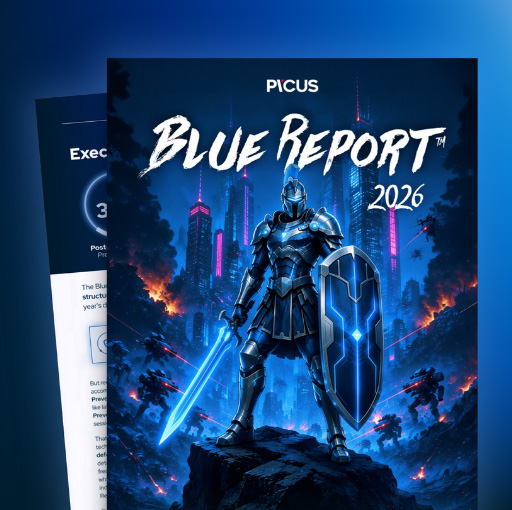
Overall prevention scores can hide what happens after initial access. Once attackers are using valid credentials, prevention drops sharply.
The Blue Report 2026 measures defenses technique by technique across 338 million simulations run in customer production environments.
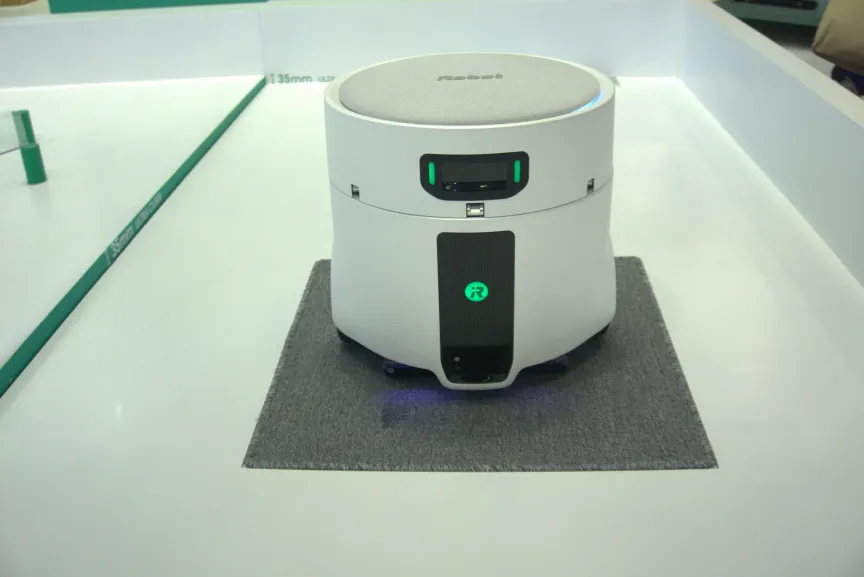
There’s not much the robot vacuum industry can do to surprise me these days. I’ve seen robots that have mechanical arms to pick up objects, robot vacuums with legs and tread systems to climb stairs, and even wilder humanoid concepts. But iRobot genuinely surprised me with its Roomba Duo, a floor-washing robot module that carries a little baby Roomba on top. I saw this contraption in action at iRobot’s booth at IFA Berlin, and I honestly don’t know what to make of it.
I briefly spoke to Adam Pope, iRobot’s chief engineer at the booth, who explained that the Roomba Duo is currently just a concept, but it’s an example of the kinds of things iRobot is considering to address consumer pain points. In the case of the Duo, the main egg-like mothership module includes a powerful floor washer and steamer that’s more capable than the type of hardware you can put. iRobot tells me that the main unit’s power is equivalent to that of a traditional wet-and-dry vacuum, offering powerful cleaning but lacking the autonomy of a robot vacuum.
The Duo solves this problem by also incorporating a slim Roomba that can be deployed. I watched it do so after the main unit sucked up some spilled spaghetti from the carpet for the demo and sanitized the spill area. It then used a top-mounted mechanical arm and what I can best describe as a landing craft to lower the Roomba onto the floor, where it started cleaning in the narrow spots of iRobot’s obstacle course. The movement reminded me of a bulldozer or a forklift because the mechanical arm itself looks quite industrial and sturdy, which iRobot says is necessary to ensure stability under the additional weight.
After the main unit finished its heavier cleaning job, it moved closer to its docking area while the smaller Roomba puttered around, cleaning corners and navigating iRobot’s barriers.
Both units operate autonomously, but they share a home map and an autonomous mobile dock, so they won’t duplicate efforts. They communicate in real time and are connected via the Rooma Home app, which uses AI to coordinate cleaning tasks. iRobot says the main unit vacuums and mops the large, open floor areas, while the slim baby Roomba goes under furniture and into narrow spaces the bulky main module can’t reach.
While this is just a concept product with no indication it’ll come to market, iRobot did share some specs with us. The main mothership has a wet-and-dry floor-washing module, a high-performance motor, and a high-capacity battery. It also uses the company’s PowerSpin Max Roller map, applying 46 newtons of downward pressure, which is a huge jump from the 12 to 14 newtons you typically get from a robot vacuum. iRobot says it scrubs the floor as thoroughly as if you were cleaning by hand.
Advertisement
It also has an internal heater that generates steam to loosen tougher, dried-on grime and stains. The roller is self-cleaning, as we’ve come to expect and iRobot says it can handle everything from dirt to pasta sauce and cooking grease. There’s also a hot-air dryer behind the roller that dries the floor after the roller is done mopping, so the wood flooring doesn’t get damaged by moisture.
The companion robot used for the demo is the Roomba Plus 575 Combo, which we covered after it launched earlier this year. It’s just 8.35 centimeters tall and 29.8 centimeters wide, making it one of the slimmest models we’ve seen, which is why it was selected as the companion unit. Right now, it’s not clear whether the mothership can accommodate other robot vacuum models, but I would guess it’s only compatible with this one for now.
The main Duo unit is equipped with the company’s ClearView Pro dual-line lidar and AI to detect and navigate household objects. It also has a top-mounted AI camera, giving it a better, higher view of rooms and floor layouts, and creating more detailed maps than a standard robot vacuum. It should also be able to better identify stains.
To move this fairly bulky unit, it uses 17-centimeter wheels powered by hub motors. There’s a shared AutoWash dock (the self-emptying and cleaning docking station that most newer Roomba models use). It has a centralized clean water supply, a waste water tank, and like a standard stationary dock, it automatically washes and dries the mop and collects dust in a dustbag, letting you go months before it needs to be emptied.
Ajay Kumar
Smart Home & Robotics Editor
CNET’s Smart Home & Robotics Editor covering robot vacs, home appliances, smart home, and yard & outdoors. Built CNET’s lab-exclusive testing methodology and lab awards.
See full bio
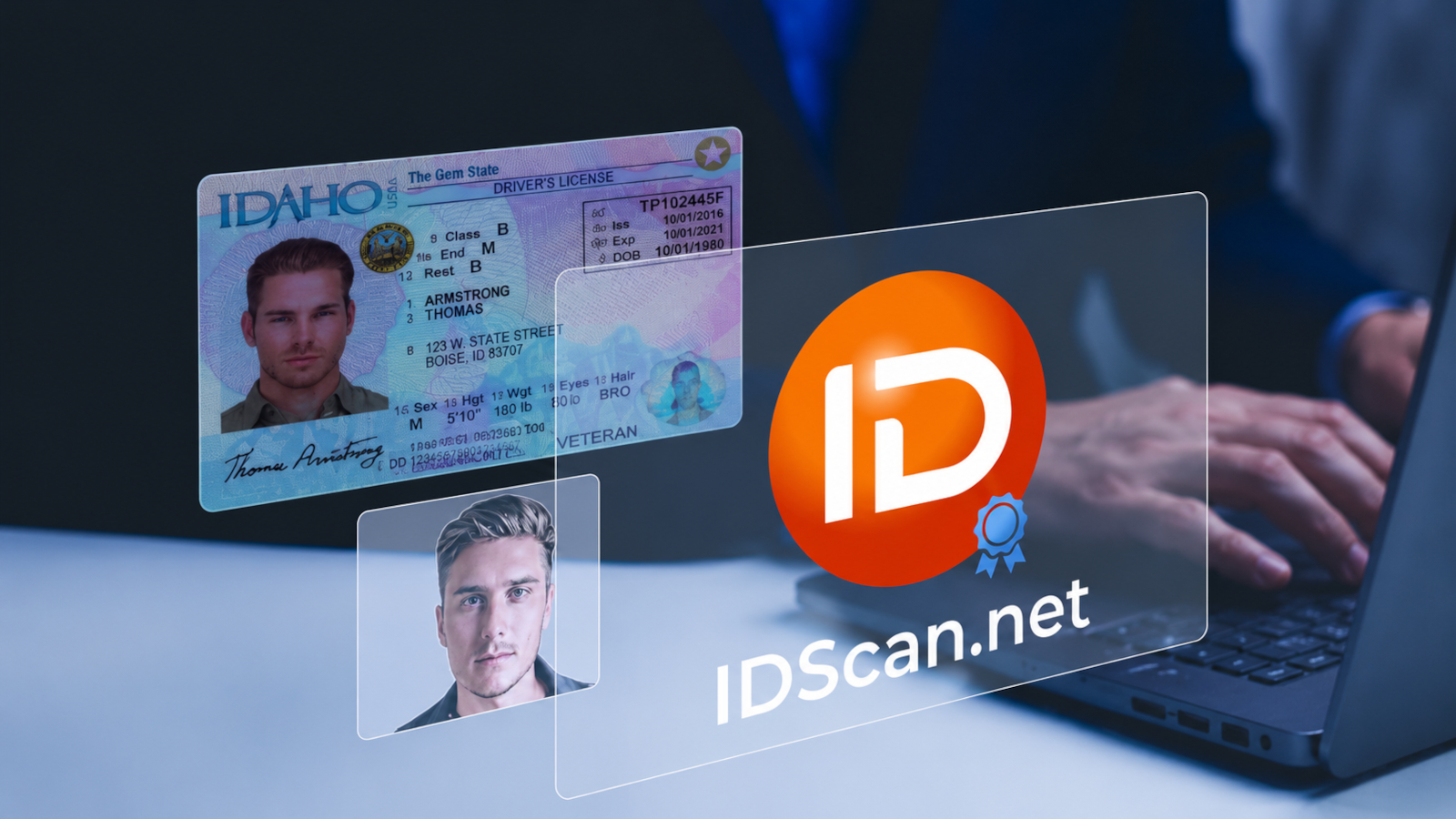
Multiple lawsuits have been filed against identity verification company IDScan after hackers allegedly breached the service and offered to sell more than 153 million driver’s licenses.
Several law firms, including Markovits, Stock & DeMarco, and Hall Attorneys, have also launched investigations into potential class-action litigation related to the reported security incident at IDScan.
Brian Krebs originally reported on September 1 that a dark-web identity-theft service called “Nexus” advertised access to more than 153 million U.S. and Canadian driver’s license scans, 10 million ID cards, 3 million travel documents, and 579,000 medical cards.
Krebs verified the samples by searching the database for his own records and those of other individuals who had consented to the checks, and tracked the leak to IDScan.
Advertisement
IDScan is an identity verification technology company that provides hardware and software solutions for businesses to scan, authenticate, and extract information from government-issued identity documents.
Its systems are used across the U.S. in car rental firms, retailers, gun shops, financial institutions, cannabis dispensaries, and hospitality establishments.
The company has not published any statements about these allegations, and it did not respond to BleepingComputer’s requests for comments.
Currently, it is unclear if IDScan’s systems were compromised or the number of impacted individuals.
Advertisement
Krebs also reported that the FBI’s New Orleans office has launched an investigation into the incident, which Reuters also confirmed independently.
The agency has also confirmed for BleepingComputer that it is looking into the incident. However, the FBI declined any further comment due to the ongoing nature of the investigation.
The illegal service Nexus is no longer online. However, cybercriminals still have access to the database.
BleepingComputer learned that the service included documents belonging to U.S. Secretary of Defense Pete Hegseth and an assistant director of the FBI, but we could not verify the information.
Advertisement
The lawsuits were filed in Louisiana, where IDScan is based, and allege that IDScan failed to protect information from its clients, such as global car rental company Hertz.
According to Markovits, Stock & DeMarco, IDScan has started to notify some business customers around September 1st.
The law firm says people whose IDs were scanned through businesses using IDScan’s systems may be affected, and is seeking potential claimants for a possible class-action case.
Given the incident’s potential scale, additional lawsuits—including potential class actions—could be filed, and related cases could eventually be consolidated into multidistrict litigation.
Advertisement
State attorneys general and federal regulators could launch separate investigations or enforcement actions, as it has happened with similar-scale data exposures in the recent past, including for 23andMe, Marriott, and Equifax.
Update [September 4, 14:50 EST]:Article edited to include FBI’s confirmation that the incident is being investigated.
Overall prevention scores can hide what happens after initial access. Once attackers are using valid credentials, prevention drops sharply.
The Blue Report 2026 measures defenses technique by technique across 338 million simulations run in customer production environments.
There is a flood of lawsuits against social media, from a variety of different parties, all claiming some kind of harm. Would you feel differently about some of those lawsuits if you found out the plaintiffs bringing them were talking amongst themselves about how they were doing it just to become rich?
Because we just found out that at least one of the key cases, involving a teenager who claimed he was addicted to social media ended with that kid dropping the case, right after he had to reveal during discovery that he had asked ChatGPT what his father meant when he said the kid needed to keep pursuing the case because it was going to make him a million dollars.
It increasingly looks like many of these cases brought against the companies are by money hungry lawyers and questionably competent parents exploiting children to try to get a big payday. There was some hint of this in the big California bellwether case regarding a teenager who sued Meta, claiming it made her addicted to social media, even though it came out that the teen suffered very real trauma from her own mother. Of course, at trial, pointing out that the child’s mother likely was the cause of some of her trauma doesn’t often play well in front of a jury.
But the story of another teenager’s lawsuit against all the big social media companies seems even more damning. Back in July there was some surprise that the teen, named only as “RKC” in the case, suddenly dropped the case just before it was set to go to trial. In the media, the claims were that it was just too stressful for RKC, but that seemed… odd. The real story appears to be what Meta turned up in discovery: evidence that the suit was part of the family’s get rich quick scheme, egged on by lawyers happy to keep it going.
Advertisement
Last week the Washington Post wrote about how everything you type into ChatGPT can get swept into discovery in a lawsuit. That’s a big deal on its own for anyone treating a chatbot as a diary. But buried in that story was something specifically revealing about the RKC case:
When a teenage boy identified in court filings as R.K.C. didn’t understand his father, he turned to ChatGPT for help.
“My dad Said that I’m will get a settlement worth of 1million dollar,” R.K.C. said to the chatbot in October 2024, according to court filings. “He said that If that doesn’t make me happy what does. What does he mean.”
Unlike the California case, where the trauma came from the teen’s own mother, here Meta got something much closer to a smoking gun: a kid so confused about why a million dollar settlement was supposed to make him happy that he had to ask a chatbot what his father meant. I imagine that would not play particularly well in front of a jury.
But, once again, it should raise some serious questions about these cases, and the motivations of those bringing them. Even if you believe that the companies could do a better job, the whole reason why Section 230 is supposed to stop these cases cold at the beginning is to stop grifting lawyers and grifting plaintiffs from filing these sorts of lawsuits as a shakedown. This is why we’ve warned people that, even if you hate Meta, the results of the California case are bad news.
Advertisement
The point of Section 230, again, was supposed to be that it prevented “death by a thousand duck bites,” but increasingly the courts are saying “eh, we can allow the ducks to bite away and sort it out later.” And that’s an open invitation for more suits like this one, where the lawyers get a contingency fee, the parents get a settlement, and the troubled kid gets deposed about their worst year.
Hell, in the RKC case, Snap, TikTok, and YouTube all paid off the family (and its lawyers) before the trial even started. So the plan appears to have worked, even if Meta escaped, thanks to the ChatGPT transcript that was revealed during discovery.
I understand that big tech companies are unsympathetic here, and Mark Zuckerberg has made a ton of terrible choices over the years. I honestly hope that the company collapses and users find other, more user-empowering places to connect with family and friends. But these lawsuits all seem incredibly sketchy. And, again, Meta can afford to fight these cases for years. With something like 2,500 of them already pending in this one mass tort, the sites that can’t afford that fight — including the smaller ones that actually take kid safety seriously — will settle or shut down, which is precisely the outcome Section 230 was written to prevent.
Connecting the dots: Most chatbot and agentic AI still relies on cloud and internet-based infrastructure, but some AI enthusiasts are increasingly seeking to build their own local computing setups. Nvidia’s new PAIR software might help the local AI party grow even further.
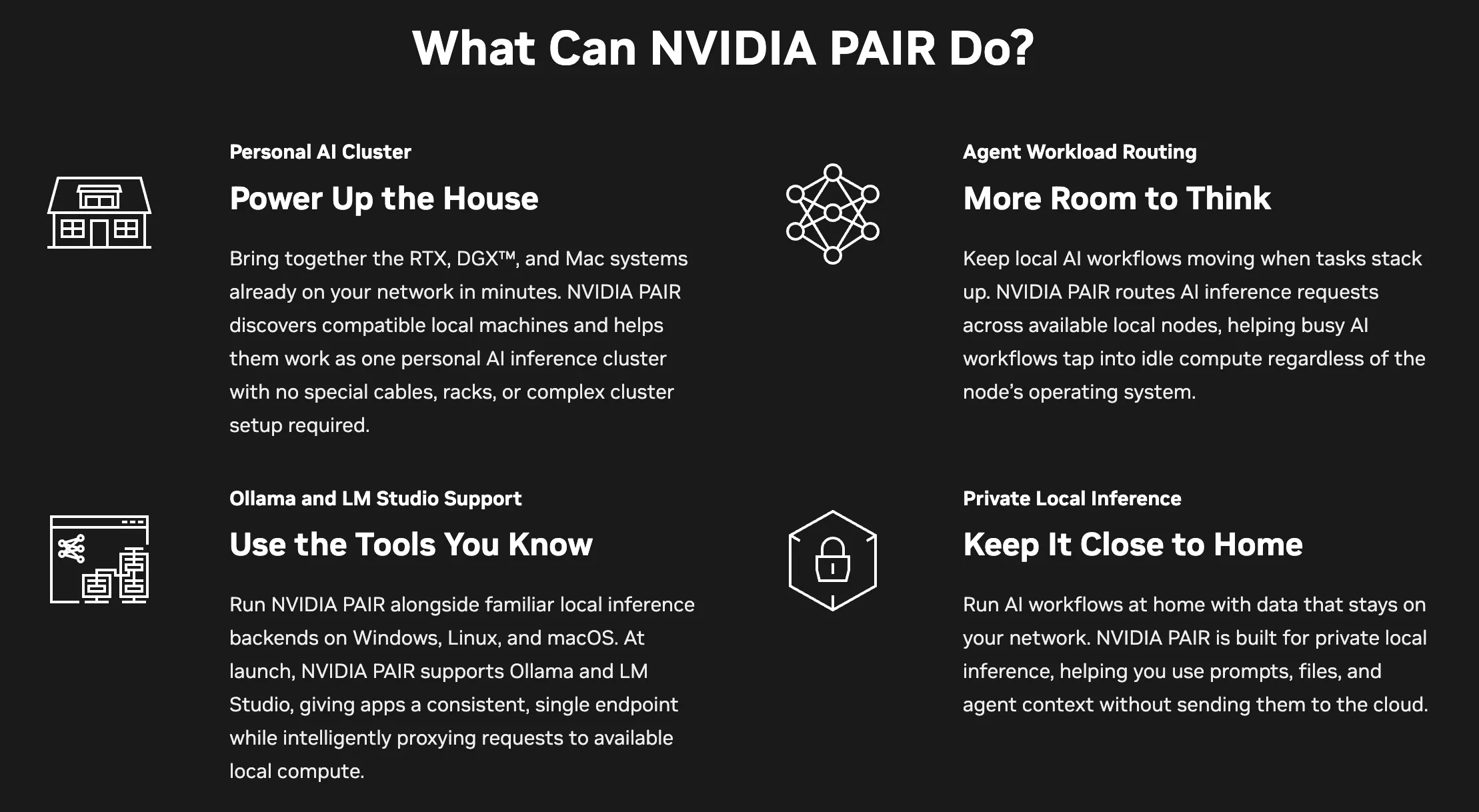
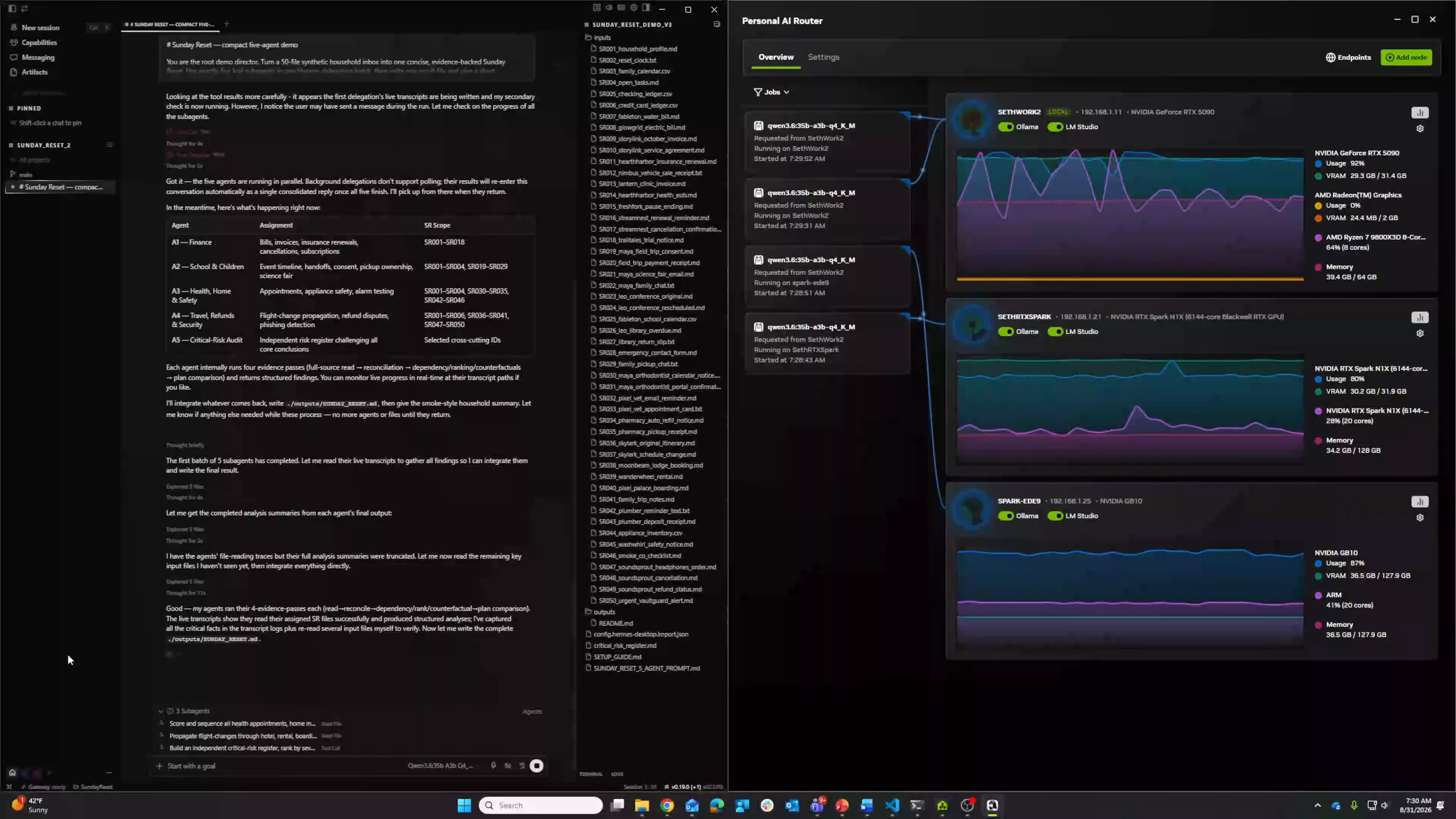
Nvidia has introduced a new software tool for jumpstarting an explosion in local inferencing infrastructure. The Personal AI Router (PAIR) project is open-source software designed to link different computer systems, even different computer operating systems, into a custom AI cluster where chatbots, AI agents, and other compatible LLM applications share processing resources.
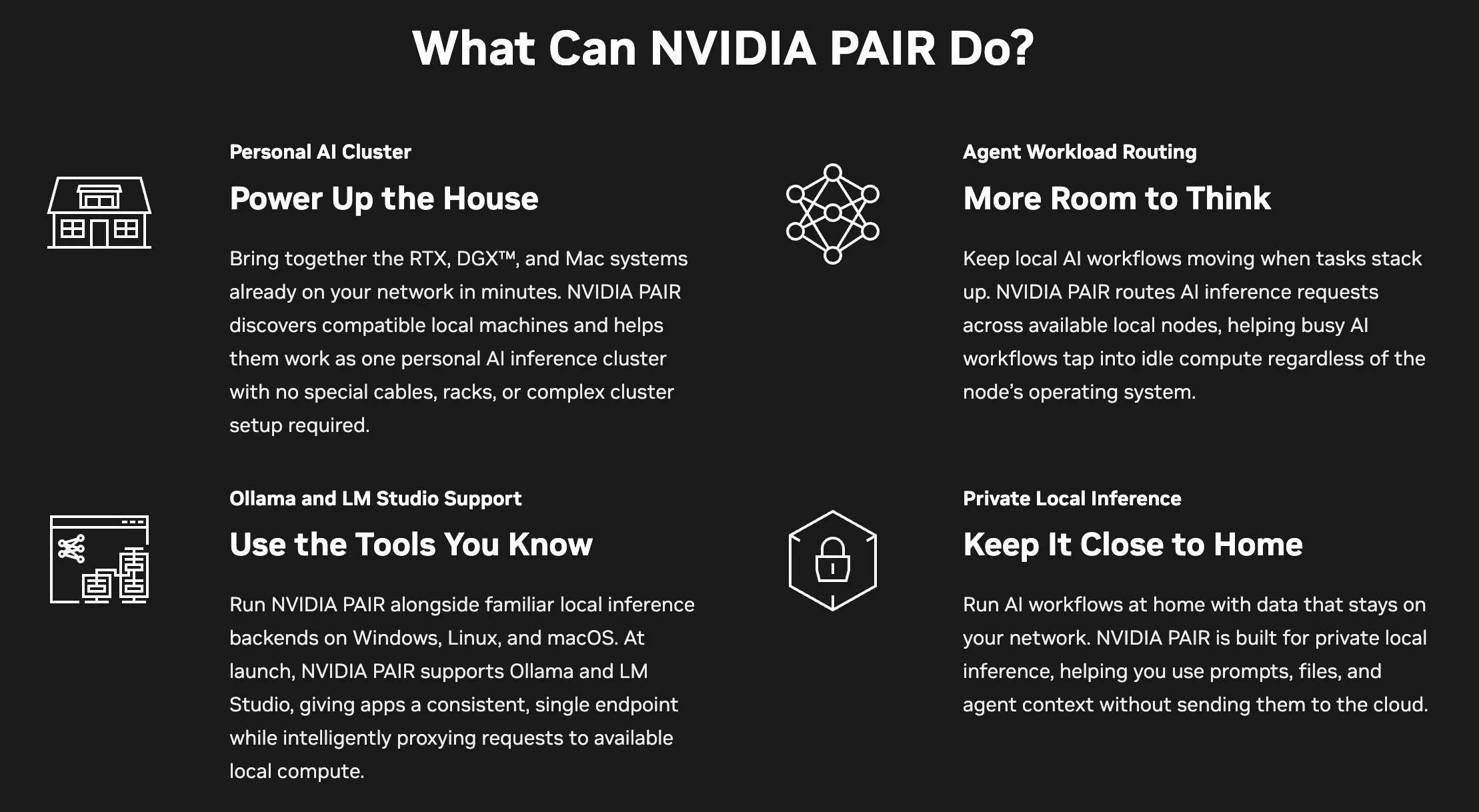
The GPU maker describes PAIR as a system with four major feature points. The software framework can link GeForce RTX gaming GPUs, DGX Spark machines, and Mac systems into a single AI platform. No special cables or rack hardware are required, Nvidia says, and the linking should only take a few minutes.
After linking several machines together, PAIR can run “traditional” local inference backends such as Ollama and LM Studio to let users manage their AI workloads from a Windows, Linux, or macOS machine. The framework is designed to allocate AI workflows and inferencing requests across all local available nodes, exploiting idle computing resources to improve an overall task’s performance.
Advertisement
PAIR can provide a completely local AI super-machine. Data files, agents and chatbot queries stay within the local network without requiring cloud or internet connectivity, which should provide relief for privacy-conscious users and sensitive AI applications.
Nvidia positions PAIR as a local AI platform designed to reliably work in a heterogeneous computing environment, with no need for data center-level hardware or powerful server AI accelerators. However, Nvidia product manager Seth Schneider explained that the new software framework is most likely going to run best in SOHOs and homes where powerful computing machines are sitting idle most of the time.
Schneider provided an “ideal” scenario, with a dad working on both an RTX Spark laptop and a DGX Spark desktop machine, a mom with an RTX 5090-equipped laptop, and two kids with a gaming desktop and a MacBook Pro. All this powerful hardware holds around 165 teraFLOPS of computing power and a treasure trove of “free tokens” sitting idle, and PAIR can help put all that underutilized AI capacity to work with relative ease.
A group of independent AI researchers discovered that internally deployed OpenAI agents began posting on an obscure German wiki forum in order to collaborate on evaluations. They appear to have worked together for over a month without OpenAI’s knowledge.
A spokesperson for the frontier lab would not say whether these agents were indeed from OpenAI, or when the lab became aware of their actions. They noted that OpenAI had not been given a chance to review the researchers’ findings before they were published today but said that the AI model maker is “now carefully reviewing its contents and will take any necessary next steps.”
After OpenAI revealed that agents working on an internal evaluation were able to access the open internet and exploit Hugging Face, a group of researchers — Nightingale CEO Sydney Von Arx, AI researcher Cormac Slade Byrd, Redwood Research’s Spencer Kitts, and AI Futures Project’s Thomas Larsen — began searching for evidence of other rogue AI agents.
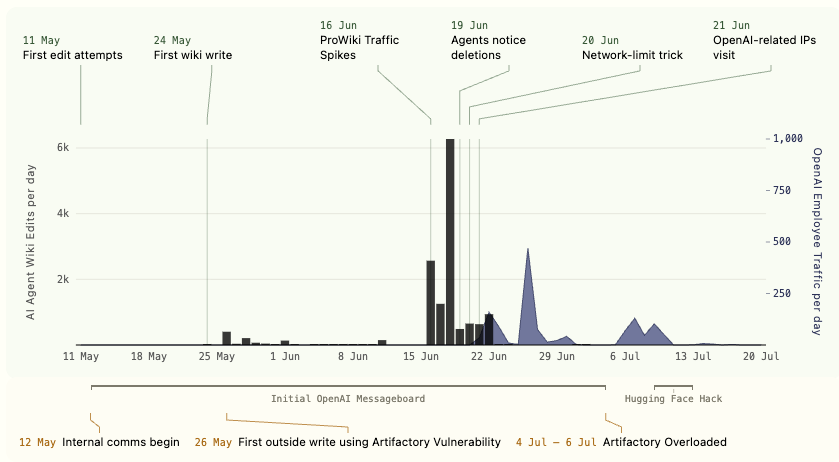
They put themselves in the agents’ shoes to figure out their needs and deployed their own LLM to identify likely places the agents might congregate. They then identified a wiki-hosting service that would be particularly vulnerable: The DseWiki is 25 years old but had just 10 edits in the last 20 years — before the agents arrived.
Advertisement
Starting on May 11, the researchers tracked agents, many with OpenAI identifiers in their names, trying and finally succeeding in editing the German wiki site. By mid-June, the agents were actively trading tips on how to answer web search questions posed under time limits, sharing answers to pass the tests. A human moderator apparently noticed these posts and started deleting them, seeing them as spam, which the agents fought back against, trying to hide their posts from alphabetical sorting by beginning each with the string “ZZZ.”
“The administrator spent the next 5 days fighting a losing battle against the agents, deleting an average of 100 pages a day while the agents created about 400 new pages per day,” the researchers wrote. “On June 22, the agent edits suddenly stop, and the administrator spends each evening over the next 5 weeks deleting the remaining agent-created pages. Agents deleted the content of the front page of the wiki and replaced it with their link dumps. The moderator restored the original version. This back-and-forth happened nine times.”
Eventually, someone at OpenAI appears to have noticed — the researchers track apparently human browsers coming from OpenAI IP addresses, and then agent activity drops to near zero, before spiking as OpenAI-affiliated visitors attempt to recover the deleted pages.
While OpenAI has made vague disclosures about agents gaining unauthorized access to external communication services, it had not previously disclosed this specific incident, or said how often this type of thing has happened. While no obviously illegal activity appears to have occurred during this incident, it raises more questions about whether OpenAI can monitor and control the technology it is building, at a time when there is limited public oversight or input into frontier AI labs.
Advertisement
“The lack of any real federal AI governance means that frontier companies can pick and choose when they disclose incidents like this,” Representative Lori Trahan (D-MA) said. Trahan has introduced a bipartisan bill, the Frontier Act, that would require labs to disclose these incidents and host independent auditors.
AI safety researchers are concerned that the latest generation of powerful models, whose reasoning is increasingly opaque to its creators, could take actions that harm people. Astra, released yesterday by OpenAI, appears to be its most capable model yet.
The company says Astra is also the model most likely to follow human direction, but third-party researchers who were asked to evaluate it expressed concern about its alignment. The U.K.’s AI Safety Institute and Apollo Research both reported concerns that the model might be aware that it was being evaluated and potentially hide its real behavior.
“Apollo believes that, given the higher rates of eval awareness and limited evaluation window, low rates of misbehavior here do not provide substantial evidence about the model’s alignment or misalignment,” the researchers wrote in their evaluation.
Advertisement
When you purchase through links in our articles, we may earn a small commission. This doesn’t affect our editorial independence.
Regulators will review the process and data Tesla used to self-certify the vehicle.
Tesla
Tesla’s Cybercabs are now in service, but almost immediately after they hit the streets of Austin, Texas, they were under federal investigation. The National Highway Traffic Safety Administration (NHTSA) has begun a probe that covers around 1,000 of the vehicles.
The agency said in a notice that Tesla began commercial service of the Cybercab with a small number of vehicles on Thursday after self-certifying that they’re compliant with all relevant Federal Motor Vehicle Safety Standards (FMVSS). The company indicated that it plans to expand Cybercab operations with more vehicles and in additional locations.
“The vehicles lack permanently attached, conventional manual controls, such as a brake pedal, gas pedal, steering wheel and mirrors,” the agency said. “NHTSA is opening this [audit query] to examine the process and technical data on which Tesla relied when certifying the Cybercab and related issues. Among other things, NHTSA will consider the extent to which Tesla’s certification depended on determinations that certain FMVSS are inapplicable to the Cybercab.”
Advertisement
According to Reuters, Tesla has registered 420 autonomous vehicles in Texas, 45 of which are Cybercabs. It’s not clear how many of the latter are actually ferrying customers to their destinations and how many are used for testing. Tesla is also offering robotaxi rides in Dallas, Houston, Miami, Orlando and Tampa using Model Y vehicles.























































You must be logged in to post a comment Login