
Business
Farage turmoil gives UK PM Burnham breathing room ahead of budget




Barclays sees a $3.6 trillion annual investment opportunity in this sector

Franklin Resources, Inc. [NYSE:BEN] is a global investment management organization with subsidiaries operating as Franklin Templeton and serving clients in over 150 countries. Franklin Templeton’s mission is to help clients achieve better outcomes through investment management expertise, wealth management and technology solutions. Through its specialist investment managers, the company offers specialization on a global scale, bringing extensive capabilities in fixed income, equity, alternatives and multi-asset solutions. With more than 1,300 investment professionals, and offices in major financial markets around the world, the California-based company has over 75 years of investment experience and over $1.4 trillion in assets under management as of June 30, 2023. For more information, please visit franklintempleton.com and follow us on LinkedIn, Twitter and Facebook.

South Korea exports surpass full-year record, hit $709.4 billion YTD
Business
F&O Talk: Nifty indicating little evidence of sustained recovery, says Sudeep Shah; outlines BSE, Groww strategy amid CAS

Sensex gained 363 points to close at 76,515 while Nifty 50 rose over 24 points to end the session below 23,898 on Friday. Broader markets closed mixed, with Nifty Midcap 100 slipping into the red, while Nifty Smallcap 100 closed in the green.
Analyst Sudeep Shah, Vice President and Head of Technical & Derivatives Research at SBI Securities, interacted with ETMarkets regarding the outlook for the Nifty, options data as well as an index strategy for the upcoming week. The following are the edited excerpts from his chat:
1.) Sensex, Nifty have fallen 1% this week as CAS lingers. What are levels that traders need to keep in mind?
For the fourth consecutive week, the benchmark Nifty ended in negative territory. During the week, the index broke down from its rising channel on the daily chart, signaling a shift in the short-term trend. Escalating geopolitical tensions, rising US 10-year bond yields, and higher Brent crude prices continued to weigh on market sentiment. However, the index staged a minor pullback after testing 23,786, leaving the bulls with one crucial question: is this merely a pause, or the beginning of a meaningful recovery?
The technical picture provides little evidence of a sustained recovery at this stage. Nifty is comfortably trading below its short and long-term moving averages, while the 20, 50, and 100-day EMAs have started edging lower, indicating increasing bearish pressure. The daily RSI is hovering around 40 and remains below its 9-day average, while the daily ADX has moved above 20 and is rising, suggesting that the prevailing trend is gaining strength. With momentum and trend indicators weakening, the spotlight now shifts to a crucial support zone.

That support zone lies in the 23,750-23,700 region. The zone is important as the 61.8% Fibonacci retracement of the previous upmove from 23,070 to 24,774 is placed around this region. A sustained break below 23700 could intensify the correction towards 23,500, followed by 23,300.
On the upside, the hurdle is placed in the zone of 24,150-24,200 as it is the confluence of 50 and 100-day EMA levels. A sustained move above this range would be required to ease the prevailing bearish bias and bring stability back to the index.Sensex View: The benchmark index, Sensex, extended its weakness for the fourth consecutive week and has breached its rising channel formation on the daily chart, indicating a deterioration in short-term trend structure. However, after registering a low of 76,135, the index witnessed a modest pullback. On the weekly timeframe, Sensex formed a bearish candle with a minor lower shadow, reflecting continued selling pressure despite some buying interest at lower levels.
Technically, the index is trading comfortably below its key moving averages, while the short-term moving averages have started to slope downward, reinforcing the negative bias. The daily RSI is hovering near the 43 mark and remains below its 9-day average, suggesting subdued momentum. Meanwhile, the daily MACD histogram has stayed in negative territory for the past 16 trading sessions, highlighting persistent bearish undertones.
Going forward, the 76,200-76,000 zone is expected to provide crucial support. A decisive move below the 76,000 mark could accelerate the corrective phase, exposing the index to lower levels of 75,400 and subsequently 74,800 in the near term. On the upside, the 20-day EMA region of 77,100-77,200 is likely to act as a strong resistance zone.
2.) What is your view on India Vix and what is it indicating after a 11% fall in one month?
India VIX has been in a declining trend since hitting a high of 28.90 on March 30. Since then, implied volatility (IV) has remained in a falling mode, keeping the market in a low-volatility environment.
The current IVP for Nifty stands at 28.57%, indicating that over the past one year, Nifty’s current IV of 11.34 has been at or below this level for only 28.57% of the time. This suggests that the current IV is at the lower end of its historical range.
The 12–12.5 zone is likely to act as an immediate resistance. Volatility is likely to remain subdued as long as India VIX stays below this zone.
However, the key risk in such a low-volatility environment is that any significant overnight development could trigger a sudden spike in volatility, potentially catching option sellers off guard.
3.) Where are you seeing strong option position right now and which Nifty strikes could act as immediate support or resistance zones going into next expiry?
For the current weekly expiry, the 24,200 level is likely to act as a strong resistance on the upside. Call writing at this strike is nearly six times stronger than put writing. Moreover, Nifty’s 100-day EMA is placed around the 24,180–24,200 zone, making this a crucial resistance to watch.
On the downside, the 23,700 level is likely to act as an immediate support, with put writing nearly six times stronger than call writing at this strike. The 23,800–23,780 zone also coincides with Nifty’s immediate swing low. A decisive breach below this zone could trigger unwinding of put-writing positions, potentially dragging Nifty towards the 23,500 mark in the near term.
4.) What is your view on Bank Nifty ?
The banking benchmark index, Bank Nifty, has remained range-bound over the last 23 trading sessions, oscillating within a narrow band of nearly 1254 points. This prolonged consolidation has resulted in a significant contraction in the Bollinger Bands, indicating a sharp decline in volatility and hinting at the possibility of a decisive move once the current range is breached.
From a technical perspective, all key moving averages are largely flat, underscoring the absence of a clear directional trend. Momentum indicators also reflect the ongoing consolidation phase. The daily RSI has been moving sideways for the past 42 trading sessions, while both the Stochastic Oscillator and MACD continue to fluctuate within a narrow range without providing a strong directional signal. Additionally, the trend strength indicator is positioned at 7.19, suggesting a lack of meaningful strength from either bulls or bears.
Going forward, the 57,800-58,000 zone is expected to act as a critical resistance area for the index. A sustained breakout above this hurdle could trigger a fresh directional upmove. On the downside, the 56,900-56,700 zone remains an important support region. A decisive breakdown below this support band may lead to increased selling pressure.
Overall, Bank Nifty continues to trade in a consolidation phase, and a convincing move beyond either end of the current range is likely to set the stage for the next trending move.
5.) What’s is your view on BSE, Groww, Angel One ?
BSE has been consolidating within a Rs 3,474–3,132 range since August 17. The falling ADX indicates a lack of volatility, while the MACD line has flattened out and remains below the zero line, pointing to weak momentum. A decisive breakout on either side of the range will provide further directional cues.
Groww has largely been consolidating within a Rs 221–180 range since May 12. The moving averages have flattened out, reflecting a sideways bias. The ADX is also flat, further indicating the absence of strong directional momentum. A decisive breakout on either side of the range will provide further directional cues.
Angel One has been consolidating within a Rs 308–275 range since the beginning of August. The stock recently moved above its 50-day EMA but failed to sustain above it. On the weekly timeframe, the stock has been oscillating between the 20-week and 50-week EMAs, reflecting a sideways bias. A decisive breakout on either side of the range will provide further directional cues.
(Disclaimer: Recommendations, suggestions, views and opinions given by the experts are their own. These do not represent the views of The Economic Times)

Another false dawn? China’s luxury spending revival seems to be fading: Bernstein


Stephen Simpson is a freelance financial writer and investor.Spent close to 15 years on the Street (sell-side, buy-side, equities, bonds).
Analyst’s Disclosure: I/we have a beneficial long position in the shares of HURC either through stock ownership, options, or other derivatives. I wrote this article myself, and it expresses my own opinions. I am not receiving compensation for it (other than from Seeking Alpha). I have no business relationship with any company whose stock is mentioned in this article.
Seeking Alpha’s Disclosure: Past performance is no guarantee of future results. No recommendation or advice is being given as to whether any investment is suitable for a particular investor. Any views or opinions expressed above may not reflect those of Seeking Alpha as a whole. Seeking Alpha is not a licensed securities dealer, broker or US investment adviser or investment bank. Our analysts are third party authors that include both professional investors and individual investors who may not be licensed or certified by any institute or regulatory body.
Business
Jeff Bezos’ Blue Origin Hires 47 Amazon Satellite Engineers To Build Rival TeraWave Network This Year
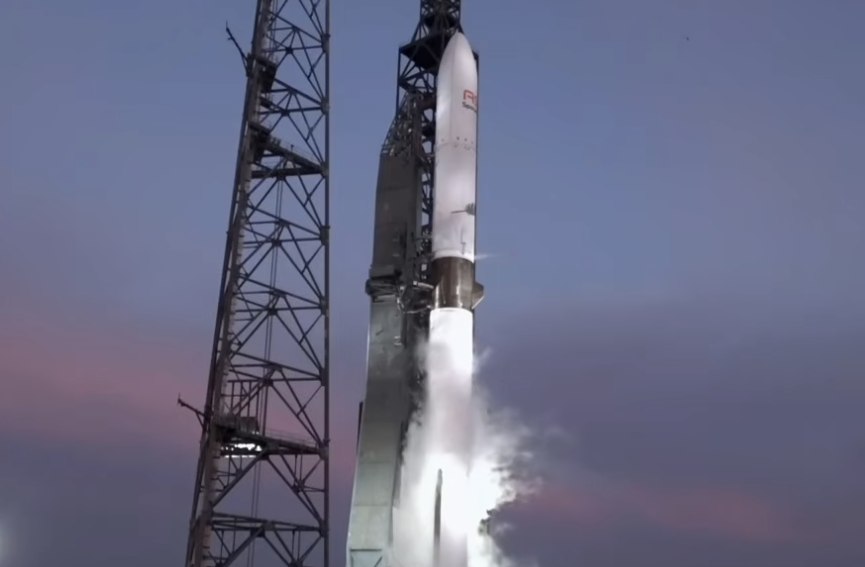
KENT, Wash. — Jeff Bezos’ space company Blue Origin has hired at least 47 engineers away from Amazon’s Leo satellite venture over the past year, according to a Bloomberg review of LinkedIn profiles, staffing a rival satellite communications project with talent originally trained inside the e-commerce giant Bezos still chairs.
Many of the engineers who have moved from Amazon Leo to Blue Origin are now reportedly working on TeraWave, Blue Origin’s own emerging satellite communications initiative, which the company unveiled in January. TeraWave is currently seeking regulatory approval to build a constellation of thousands of satellites designed to serve businesses and governments with substantial data needs, positioning the network as a competitor not only to SpaceX’s Starlink but also to Amazon’s own Leo satellite service.
Bezos occupies a distinct legal and financial relationship with each of the two companies involved. He serves as chairman of Amazon and remains its largest individual shareholder, though he does not personally own the publicly traded company outright. Blue Origin, by contrast, is a privately held company that Bezos owns directly, meaning any commercial success TeraWave eventually achieves would flow to Bezos personally rather than to Amazon’s broader shareholder base.
Amazon Leo, formerly known as Project Kuiper before its recent rebranding, aims to begin selling broadband internet service to customers by the end of this year, with plans to eventually market the service to households, businesses and governments around the world. The company has launched 180 satellites since April through a series of rocket launches handled by partners including United Launch Alliance and SpaceX. Amazon is legally required under its Federal Communications Commission license to deploy at least half of its planned 3,232-satellite constellation by the middle of 2026, a mandate that has pushed the company to build a 100,000-square-foot satellite processing facility at Kennedy Space Center to support high-volume launch integration.
Blue Origin’s TeraWave project, by contrast, is pursuing a different market segment. Regulatory filings indicate the network is designed to avoid competing directly in the mass-market broadband space where Amazon Leo and Starlink primarily operate, instead targeting a smaller set of business and government customers seeking large volumes of data transfer that would previously have required a dedicated fiber-optic connection. The planned network calls for more than 5,000 satellites in low Earth orbit, supplemented by an additional layer of satellites in medium orbit, with the system designed to deliver up to six terabits per second of capacity across point-to-point ground links. Blue Origin has said it aims to begin deploying TeraWave satellites by the end of 2027.
There is no indication that Blue Origin’s hiring of former Amazon Leo employees involves any legal violation, and no complaint or legal action has been reported in connection with the personnel movement. Engineers in the United States are generally free to move between employers, including between two companies founded or controlled by the same individual.
Still, the timing of the hiring wave has drawn scrutiny given Amazon’s own substantial financial commitments to its Leo satellite business. Under current chief executive Andy Jassy, Amazon agreed this year to acquire satellite communications company Globalstar in a deal valued at $11.57 billion, a purchase intended to secure spectrum rights and operational infrastructure that would help position Leo as a legitimate rival to Starlink. Amazon Leo’s commercial launch had originally been targeted for the middle of this year, even as dozens of engineers with direct experience building the company’s satellite systems have since departed for Bezos’ separately owned venture.
The talent shift accelerated following the December 2023 appointment of Dave Limp as Blue Origin’s chief executive. Limp previously served as Amazon’s senior vice president of devices and services, where he oversaw the initial development, manufacturing setup and regulatory strategy for what was then known as Project Kuiper, giving him direct familiarity with the technical and business challenges of building a large-scale satellite constellation before moving to lead Blue Origin.
Blue Origin has faced its own significant operational setbacks this year even as it works to build out TeraWave. The company’s New Glenn heavy-lift rocket, central to its broader launch ambitions, has experienced years of development delays. An explosion during preflight testing in May forced the cancellation of a launch that had been intended to carry Amazon Leo satellites into orbit, and the rocket has remained grounded since that incident. Despite those setbacks, Amazon remains one of Blue Origin’s largest commercial customers, having secured contracts for up to 27 New Glenn launches as part of a broader, multi-provider launch procurement strategy that also includes United Launch Alliance, Arianespace and SpaceX.
Bezos has continued dividing his attention across multiple ventures since stepping down from Amazon’s chief executive role roughly five years ago. He remains an active member of Amazon’s board and holds recurring meetings with senior company leadership, including teams focused on artificial intelligence initiatives, while also devoting significant time to Blue Origin’s operations. Bezos has additionally invested in an artificial intelligence startup called Prometheus, where he holds the title of co-chief executive, focused on applying AI models to real-world engineering tasks.
The broader competitive dynamics surrounding the satellite hiring have particular significance for markets like East Africa, where Amazon has separately applied through a subsidiary, Kuiper Kenya, for a satellite internet license. That application would place Bezos’ publicly traded company in direct competition with Starlink across the region, even as his privately held Blue Origin simultaneously builds out its own competing satellite capability using engineers drawn from Amazon’s own satellite division. Given the comparatively thin terrestrial broadband infrastructure across much of the region, satellite-based internet service has emerged as one of the more realistic paths toward expanded connectivity for many African markets, making the competitive positioning between Amazon Leo and other satellite providers, including Bezos’ own TeraWave project, a matter of practical significance for the region’s broader digital infrastructure development.
Neither Amazon nor Blue Origin has issued a detailed public statement addressing the specific pattern of engineer movement between the two companies. As TeraWave continues moving through the regulatory approval process ahead of its planned satellite deployment beginning in late 2027, the extent to which its engineering team’s Amazon Leo experience shapes the network’s eventual technical capabilities, and how the two Bezos-linked satellite ventures ultimately compete for customers and market position, remains an evolving storyline likely to draw continued attention from industry analysts and regulators alike.
Business
Jeff Bezos Tells William Shatner How Star Trek, Paper Toys and the Moon Landing Built Blue Origin
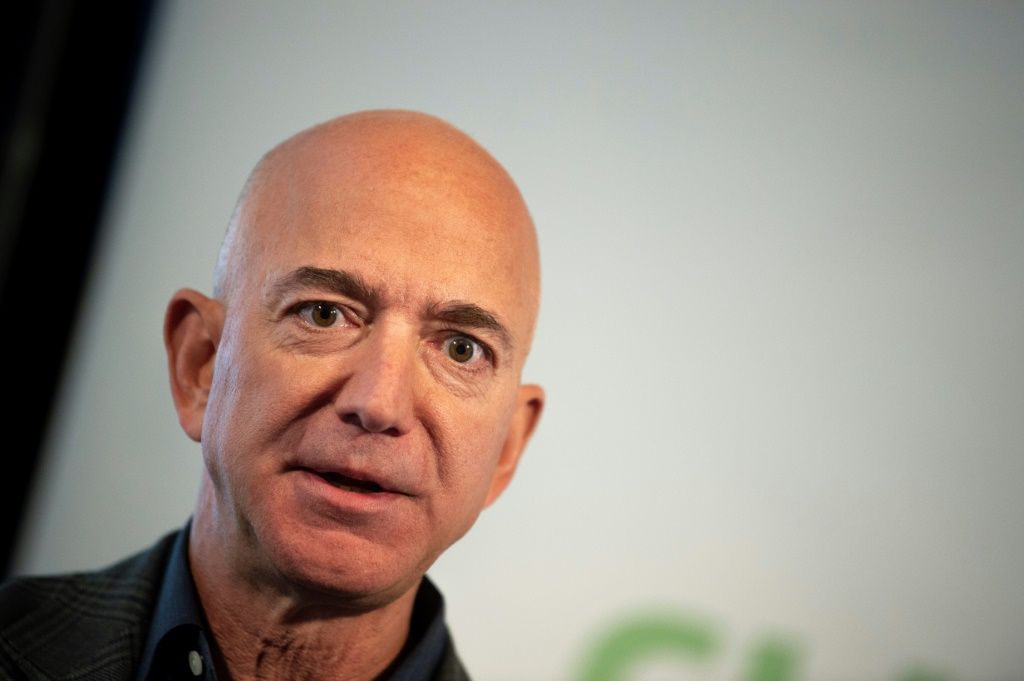
LOS ANGELES — Jeff Bezos has told William Shatner, in the actor’s own new memoir, that the cardboard “Star Trek” toys of a Houston childhood, the books on his nightstand and the night Neil Armstrong walked on the Moon were not separate hobbies. They were the same line that later became Blue Origin.
“All those things are linked,” Bezos told Shatner. “The ten-year-old boy playing with his friends and making paper tricorders, reading all this science fiction, seeing Neil Armstrong step onto the Moon. Somehow, those things all came together and made Blue Origin.”
The exchange appears in an excerpt from “William Shatner … and You,” published Friday by Variety. Shatner, 95, uses the book to interview people who say his work changed their lives. The guest list includes Ben Stiller, Josh Groban, “Weird” Al Yankovic, Jeri Ryan, Seth MacFarlane and Jason Alexander. Bezos is the one who closed the circle in hardware. In 2021 his company flew Shatner, then 90, on a New Shepard capsule from West Texas — the man who played Capt. James T. Kirk, riding a real rocket built by a fan who once fought over who got to be Kirk.
Shatner writes that Bezos discovered “Star Trek” in 1974, in fourth grade, in a Houston suburb. After school he raced home with two friends, Dean and Kyle, to watch reruns. Then they went outside and built a starship out of furniture.
“The three of us would round up other friends and younger siblings and assign them the lesser roles,” Bezos said. “The two roles that got fought over the most were Kirk and Spock. I often played Kirk, and I often played Spock. From there, we’d work our way down. Someone would even play the computer!”
That account matches what Bezos told The Washington Post in 2016, when he described the same backyard games: cardboard phasers, cardboard tricorders, daily arguments over the bridge chairs. “Good days,” he said then.
The toys survived because his mother kept them. Before Shatner’s flight, Bezos posted photographs of the homemade communicators and tricorders. “I made these tricorders and communicator to play ‘Star Trek’ with my friends when I was 9 years old, and my incredible mom saved them for 48 years,” he wrote. Shatner carried the pieces into space as a favor. Bezos asked the public not to judge the artwork.
Blue Origin was founded in 2000, after Bezos had already built Amazon. He has said for years that the long-term aim is to move heavy industry off Earth so the planet can remain livable — a “Star Trek” future in the language of an engineer rather than a television writer. Shatner, in the new book, describes that goal as helping humanity on its journey toward the world the series imagined. The excerpt does not present a new corporate timeline. It presents a personal one: play, reading, the Moon, then a company that puts paying passengers and invited guests on a suborbital hop.
Bezos flew first. On July 20, 2021, the 52nd anniversary of the Apollo 11 landing, he rode New Shepard with his brother and two other passengers. Shatner wanted a seat on that first crewed flight and did not get one. He has said he later accepted a place on the second. On Oct. 13, 2021, he lifted off with Glen de Vries, Audrey Powers and Chris Boshuizen. The automated capsule reached about 66.5 miles, crossed the line often used to mark space, and parachuted back after a little more than 10 minutes.
What happened on the desert floor is now as famous as the flight. While others hugged family and opened champagne, Shatner talked to Bezos about the thin blue sheet of atmosphere and the black beyond it.
“What you have given me is the most profound experience,” he said that day. “I hope I never recover from this. I hope that I can maintain what I feel now. I don’t want to lose it.”
He described the sky as a comforter that vanished in an instant. “You look down, there’s the blue down there, and the black up there,” he said. “There is Mother and Earth and comfort and there is … Is there death? I don’t know. Was that death? Is that the way death is? Whoop and it’s gone.” He added, “In an instant you go, ‘Whoa, that’s death.’ That’s what I saw.”
Bezos answered, “That’s amazing. That’s amazing.”
Shatner later wrote in “Boldly Go,” his 2022 book about the flight, that the contrast between the cold of space and the warmth of Earth filled him with “overwhelming sadness.” The trip “was supposed to be a celebration; instead, it felt like a funeral.” He identified the feeling with the overview effect described by other astronauts. In an interview with NPR he said he realized he was in grief. “I wept for the Earth because I realized it’s dying.”
The new memoir treats that day as one chapter in a longer fan story rather than as a product launch. Shatner has said the book is built around the people who watched him. “My greatest joy has been the connection I’ve shared with fans over the years,” he told PEOPLE when the project was announced. “William Shatner…And You is a celebration of them: their stories, their passion and the bond we’ve built together.” In the text he writes that he was “astonished by the complexity” of what those conversations uncovered.
The Bezos interview is the most literal version of that bond. A boy in Houston assigns the computer part to a younger sibling. Decades later he owns a rocket company and a model of the Enterprise in a lobby. The actor who sat in the original captain’s chair becomes a passenger. The paper tricorders go along for the ride.
None of that resolves the arguments that have followed billionaire spaceflight — cost, climate, whether a 10-minute hop counts as exploration. Bezos has not used the memoir excerpt to answer those criticisms. He has used it to draw a straight line from a fourth-grade rerun schedule to a launch pad in West Texas.
Shatner, closing the excerpt, puts the same line in plainer language. As a child, Bezos and his friends arranged chairs outside and pretended they were on the bridge of the Enterprise. Years later, Bezos built a rocket and took Captain Kirk with him. What comes next, Shatner writes, is bound only by imagination.
The book is on sale through Shatner’s site and Amazon. The flight it circles happened almost five years ago. The toys in the capsule were made when Bezos was 9. The television series that started the whole chain premiered in 1966. In the account Bezos gave Shatner, those dates are not trivia. They are the working parts of a single sentence: a kid playing Kirk, a man watching Armstrong, a company named for a blue planet, and an actor who finally left the set.
Business
7 Public Figures Who Have Openly Criticized Elon Musk, In Their Own Words Over The Years In Public Spats
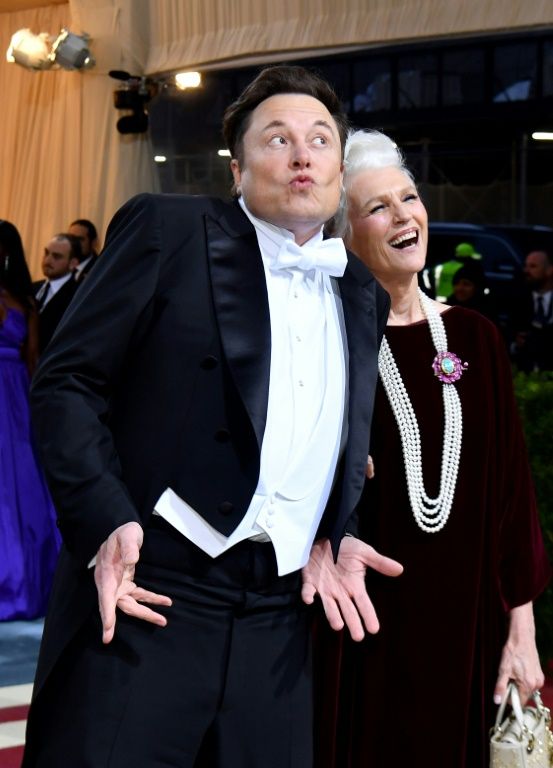
Elon Musk‘s high public profile as owner of X, Tesla and SpaceX has made him a frequent target of criticism from celebrities, authors and fellow business figures, many of whom have taken to social media to voice their objections directly to Musk or about his conduct. Here are seven public figures who have openly criticized Musk in recent years.
- Stephen King. The bestselling horror author has repeatedly criticized Musk’s leadership of X since Musk’s 2022 acquisition of the platform, taking issue with a range of content policy decisions and political stances over time. King has continued using his own presence on social media to publicly push back on Musk’s positions, including commenting on Musk’s growing political influence following the 2024 presidential election. On the social media platform Bluesky, King suggested that Musk, rather than officials in elected office, held disproportionate sway over American politics at the time.
- Mark Cuban. The billionaire investor and Dallas Mavericks owner has used his own X account to challenge Musk directly on multiple occasions. After Musk once asked users to “please post a bit more positive, beautiful or informative content,” Cuban pushed back sharply, and separately responded to a post from Musk questioning critics’ mental state by writing, “From the man who said anything to get him elected,” a jab referencing Musk’s role backing Donald Trump’s 2024 campaign. That post drew significant attention, garnering more than 1.9 million views.
- Doja Cat. The Grammy-winning singer sparked a public dispute with Musk in June 2026 after posting a message on X asking him to restore a removed audio feature, paired with a pointed insult calling him a “frog build looking b****” and a “barrel chested Ewok.” Doja Cat had previously criticized X more broadly, describing the platform as “poison” and “a prison,” and had separately expressed concern over child privacy after Musk brought his young son to Oval Office events for political purposes.
- Robyn. The Swedish pop singer has been direct and unambiguous in her criticism of Musk, telling interviewers she has held a negative view of him for years, predating the more recent wave of public criticism he has faced. “I always hated him, way before it was cool to hate him,” Robyn has said, distinguishing her longstanding skepticism of Musk from more recent critics who have turned against him only after his more overtly political activities in recent years.
- Elton John. The legendary musician left X in protest of Musk’s leadership and content policies, walking away from an account with more than a million followers in the process. When Musk publicly asked John for specific examples justifying his departure, the singer did not respond and remained off the platform. John later took a more direct verbal jab at Musk during a public appearance at the 2024 Attitude Awards, delivering a pointed remark from the stage before largely declining to comment further on the tech mogul in the time since.
- Joyce Carol Oates. The prolific novelist, known for works including “Blonde,” found herself in a heated public exchange with Musk in 2025 after he responded to one of her posts by calling it “demonstrably false.” Musk went further, labeling Oates a “lazy liar” and “an abuser of semicolons,” and joked that she would be “a real downer at parties.” Oates responded in kind, defending her original comments and offering her own critique of Musk’s broader influence, a back-and-forth that quickly drew attention from literary fans and social media users on both sides of the exchange.
- Kara Swisher. The veteran technology journalist, who has covered Musk extensively throughout her career and authored the book “Burn Book,” publicly reacted to the dramatic public falling-out between Musk and President Trump, which unfolded in real time on social media in mid-2025 after Musk criticized Trump’s signature spending legislation. Swisher noted on Bluesky that she had anticipated the rupture between the two men, referencing an earlier CNN interview in which she had predicted the two prominent, strong-willed figures would eventually be unable to coexist as allies.
“Called it — there can be only one,” Swisher wrote at the time, linking back to her earlier prediction.
Beyond these seven figures, Musk’s public disputes have extended to a wide range of other prominent individuals over the years, including musicians Grimes and Billie Eilish, fellow billionaires Bill Gates and Warren Buffett, and, most notably, President Trump himself, whose alliance with Musk collapsed publicly in June 2025 following disagreements over federal spending legislation and Musk’s departure from his brief role leading the Department of Government Efficiency. That falling-out prompted commentary from numerous entertainment and political figures, including “Today” co-host Savannah Guthrie, who described the public back-and-forth between Musk and Trump as resembling behavior more typical of adolescents than of a sitting president and the world’s wealthiest businessman.
Musk’s willingness to respond directly and often pointedly to public criticism, frequently escalating rather than de-escalating disputes with those who challenge him, has become a recurring feature of his presence on X, the platform he owns and where the majority of these public exchanges have played out. Neither Musk nor representatives for his companies have publicly indicated any change in that approach, and public disputes involving Musk and various celebrities, authors, journalists and political figures have continued to emerge regularly in the years since his 2022 acquisition of Twitter and its subsequent rebranding as X.

Commodities Are Inexpensive, But No One Owns Them
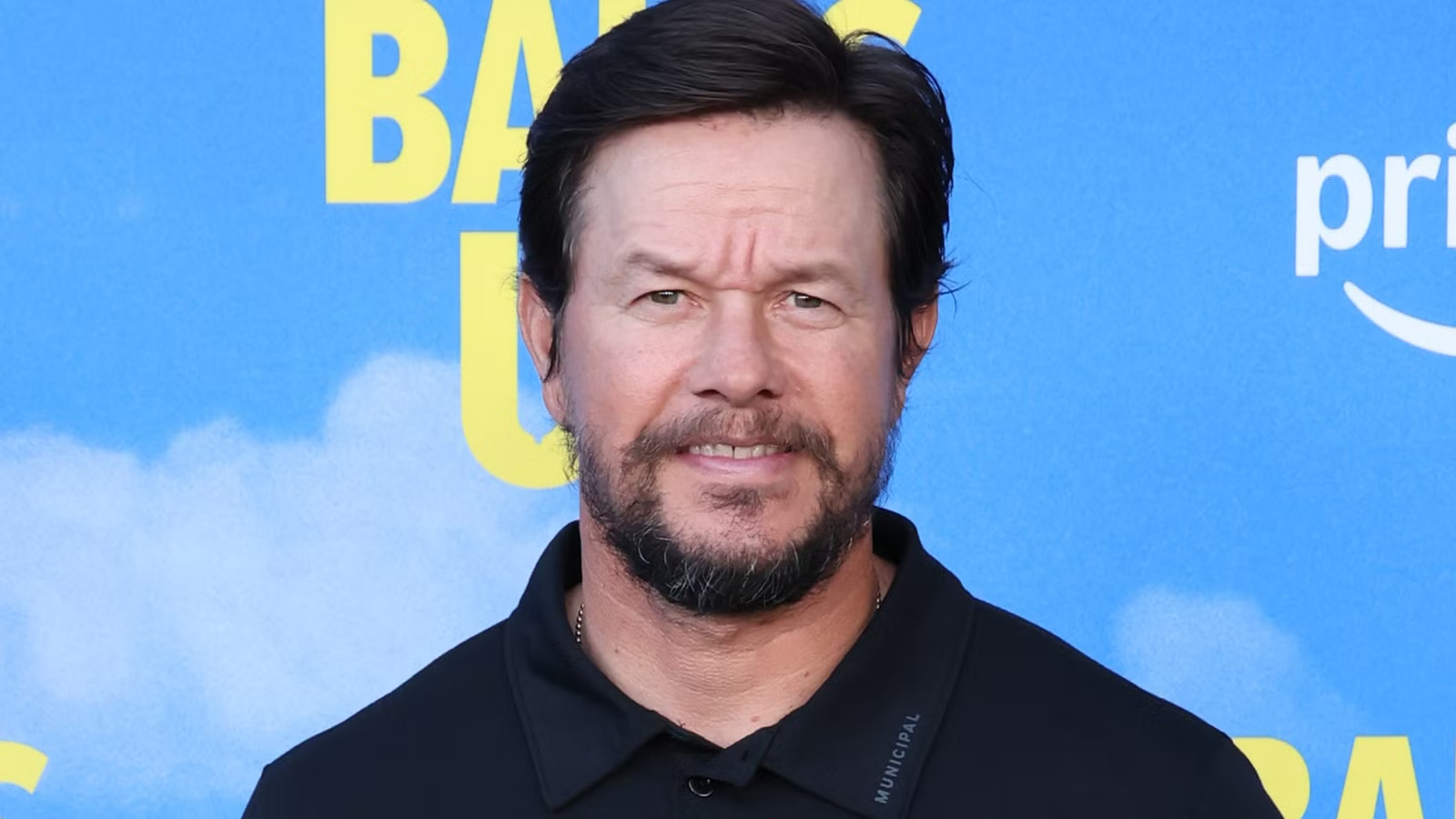
Mark Wahlberg’s ‘Reacher’-Style Action Hit Officially Scores Big on Streaming

Martin Lewis says typing one code into your phone will cut your bill
Barclays sees a $3.6 trillion annual investment opportunity in this sector





-
 Crypto World19 hours ago
Bitcoin price stalls near $82K as key resistance holds
-

 Politics19 hours ago
Best Gaming Laptops, CPUs, TVs, And Keyboards To Upgrade Your Set Up For GTA VI
-

 Tech20 hours ago
The Birds Outside, Drawn For You Automatically
-

 Crypto World23 hours ago
IMF Says El Salvador’s Post-Review Bitcoin Purchases Used No Public Funds
-
 Crypto World19 hours ago
U.S. added stronger than expected 162,000 jobs in August as labor market bounced back
-

 Sports23 hours ago
Alexandre Pato consortium’s Northampton Town investment approved
-

 Sports18 hours ago
Golden Eaglets Drawn in Group B for 2026 WAFU B U17 Championship
-
 Sports23 hours ago
Commanders’ Chig Okonkwo is a top breakout fantasy football candidate
-
 Crypto World18 hours ago
XRP price breaks falling channel as bulls target $1.53
-

 Politics1 day ago
A new European chapter for Gibraltar
-

 Politics21 hours ago
The House | Bin the lectures, bring gossip and be ready to banter: how the new PM should prepare for his Trump encounter
-

 Politics18 hours ago
How To Avoid Winter Colds: 4 Everyday Habits That Spread Germs, Says Pharmacist
-

 Crypto World18 hours ago
From warning to listing: UK’s largest retail investment platform opens access to crypto ETNs
-

 Tech20 hours ago
A Worthy Android Ereader, With Some Tradeoffs
-

 Crypto World18 hours ago
FinCEN flags $12.7B tied to Southeast Asia crypto investment scams
-

 Crypto World18 hours ago
Trezor Data Breach Impacts 67,000 More US Customers
-

 Politics23 hours ago
33 Cosy Autumn Home Decor Ideas: Blankets, Pumpkin Decorations, And Candles
-

 Sports24 hours ago
Seven wickets in 21 balls: Sri Lanka’s Chamari Athapaththu scripts history with record-breaking spell
-
 Tech19 hours ago
How To Edit Claude’s Memory
-

 Tech18 hours ago
beyerdynamic AVENTHO Y Debuts at IFA 2026 and Makes Wireless Headphones Less Disposable
You must be logged in to post a comment Login