
Business
Bill Gates Warns AI Could Erase Jobs Permanently, Proposes Robot Tax And ‘Human Reserved’ Work In New Essay

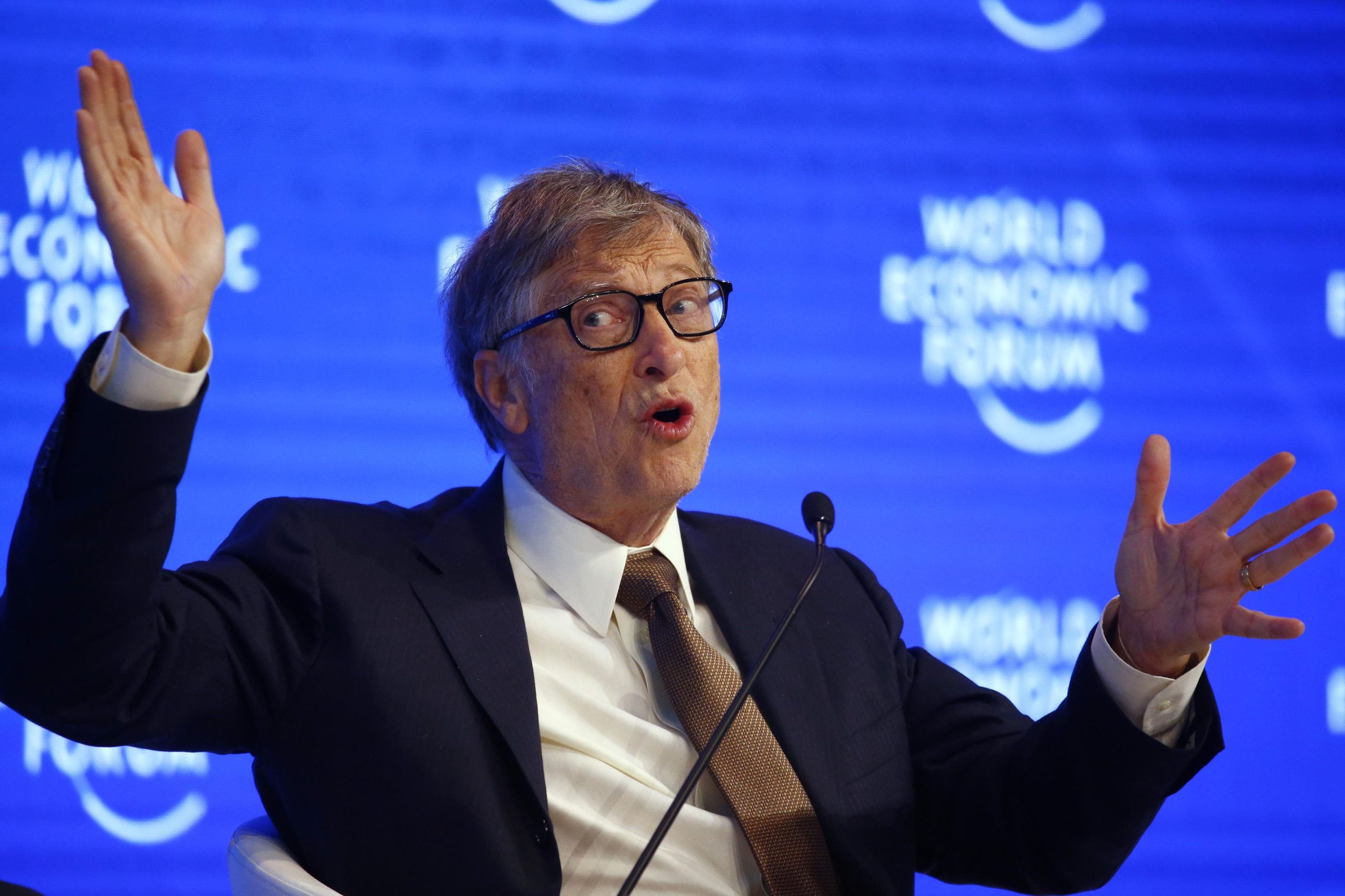
SEATTLE — Microsoft co-founder Bill Gates has issued a stark warning about artificial intelligence’s potential to permanently eliminate large numbers of jobs, calling on governments to prepare now for widespread labor disruption rather than waiting for the market to sort out the fallout on its own.
In a nearly 5,900-word essay titled “The turbulent AI era is here,” published last month on his personal website, Gates Notes, Gates argued that AI differs fundamentally from earlier labor-saving technologies because it threatens to substitute for the very cognitive work that historically created new jobs as older ones disappeared, such as when workers moved away from farms and factories over the past century.
“We have to think now about how to reduce job losses so that everyone can share in the prosperity that AI creates,” Gates wrote in the essay.
Gates identified sales, customer support, software engineering and paralegal work among the white-collar occupations most likely to face early disruption from AI systems, alongside tasks such as assessing loan applications, analyzing data and triaging patients. He expressed particular concern for younger workers entering a labor market with fewer entry-level openings than previous generations encountered.
“I worry about my grandkids, as robots increasingly take on entry-level functions,” Gates wrote, according to CNBC’s account of the essay. “It’s hard to move up the ladder when there is no bottom step to help you get on that ladder.”
Beyond white-collar work, Gates said he expects increasingly capable robots to begin competing for physical tasks in construction and hospitality by the end of the decade, extending AI’s disruptive potential well beyond office-based cognitive work. He acknowledged that public skepticism about robotics may currently be shaped by viral videos of robots performing clumsily, but argued that underlying capability is advancing faster than casual observers might assume.
To address the coming disruption, Gates outlined three central proposals in his essay. The first calls for new governance institutions, both domestic and international, capable of coordinating AI policy across employment, education, taxation, health, security and energy simultaneously, rather than leaving individual government agencies to manage separate pieces of the transition independently. Gates has pointed to elements of nuclear inspection regimes, international aviation regulation and environmental treaties as potential models for the kind of international cooperation he believes will ultimately be necessary, while acknowledging that building such a framework would take years and require difficult cooperation among major world powers.
Gates’s second proposal, which he calls “Human Reserved,” suggests that societies should deliberately set aside certain jobs or tasks for humans even in cases where machines become technically capable of performing them. Gates has compared the concept to a nature reserve, land that could technically be developed but is deliberately left alone because the long-term cost of development would outweigh any short-term benefit.
Gates cited caregiving as a clear example of work he believes should remain human-reserved, drawing directly on his own family’s experience. His father received round-the-clock care before dying of Alzheimer’s disease in 2020, an experience Gates said shaped his thinking on the issue significantly.
“Something in the care they gave my dad was irreplaceably human,” Gates wrote. “No robot could or should have done it.”
Gates offered a similar example involving the delivery of difficult medical news, arguing that certain moments carry human significance beyond pure technical efficiency.
“There’s no technical reason why it couldn’t,” Gates wrote regarding the prospect of a robot delivering a terminal diagnosis. “Yet it shouldn’t.”
Gates has acknowledged significant unresolved questions surrounding how a Human Reserved system would actually function in practice, including who would decide which jobs qualify for protection and how authorities would prevent companies from circumventing such restrictions. According to reporting from GeekWire, Gates said these details “will need to be worked out in public,” and revealed he has been actively discussing potential implementation approaches with Anthropic’s Claude chatbot, including exploring ways to reserve as much as 40% of overall work for humans through measures such as shorter workdays and earlier retirement to help redistribute remaining employment.
Gates’s third major proposal involves shifting a portion of the tax burden away from human labor and toward automation, specifically by taxing AI computing usage, sometimes referred to as tokens, along with robots themselves.
“I believe we should tax AI tokens and robots,” Gates wrote, according to HR Executive’s coverage of the essay.
Gates argued that the current tax structure creates a built-in incentive favoring automation over human employment, since employers pay payroll taxes when hiring workers but can typically write off the cost of a robot as an immediate business expense. He said a targeted tax on AI and robotic labor could help modestly slow the pace of substitution while generating revenue to fund worker retraining programs and a stronger social safety net, though he specified that such a tax should not impede AI applications that make medicine and education more affordable.
Gates was careful throughout the essay to frame his proposals as starting points for public debate rather than fully developed policy plans. He did not specify a tax rate, a taxable unit, or a collection mechanism for his proposed automation tax, and acknowledged that measuring AI usage across cloud services, internally developed models and mixed human-machine workflows would present significant practical challenges.
Independent labor market research offers a narrower and more preliminary picture than Gates’s broader forecast. A Stanford Digital Economy Lab paper, revised Aug. 12, analyzed ADP payroll records covering millions of U.S. workers through June and found that employment among workers ages 22 to 25 in AI-exposed occupations ran 19% below where it would have been expected to track based on less-exposed peers, while experienced workers in the same fields showed no comparable employment gap. The researchers characterized their findings as early descriptive indicators rather than definitive proof of AI-driven job losses, noting that the divergence occurred primarily through reduced hiring rather than increased layoffs, and that similar effects appeared less pronounced in broader national survey data.
Critics of Gates’s automation tax proposal have raised concerns about potential unintended economic consequences. Robert Seamans, an associate professor of management at New York University, has argued that existing empirical evidence suggests robots generally boost productivity growth, meaning a tax specifically targeting robotic automation could inadvertently limit broader productivity gains at a time when many economies are already grappling with sluggish growth.
Gates has characterized the overall stakes of the current moment in stark terms, describing the odds of a net negative outcome from the ongoing AI transition as “very high” absent meaningful policy intervention. As of early September, his proposals remain firmly in the realm of public debate rather than enacted policy, with the central open questions being whether governments will translate his ideas into concrete legislative proposals, and whether broader employment data in the months ahead will eventually confirm the kind of structural labor market disruption Gates has warned is coming.



Stephen Simpson is a freelance financial writer and investor.Spent close to 15 years on the Street (sell-side, buy-side, equities, bonds).
Analyst’s Disclosure: I/we have a beneficial long position in the shares of HURC either through stock ownership, options, or other derivatives. I wrote this article myself, and it expresses my own opinions. I am not receiving compensation for it (other than from Seeking Alpha). I have no business relationship with any company whose stock is mentioned in this article.
Seeking Alpha’s Disclosure: Past performance is no guarantee of future results. No recommendation or advice is being given as to whether any investment is suitable for a particular investor. Any views or opinions expressed above may not reflect those of Seeking Alpha as a whole. Seeking Alpha is not a licensed securities dealer, broker or US investment adviser or investment bank. Our analysts are third party authors that include both professional investors and individual investors who may not be licensed or certified by any institute or regulatory body.
Business
Jeff Bezos’ Blue Origin Hires 47 Amazon Satellite Engineers To Build Rival TeraWave Network This Year
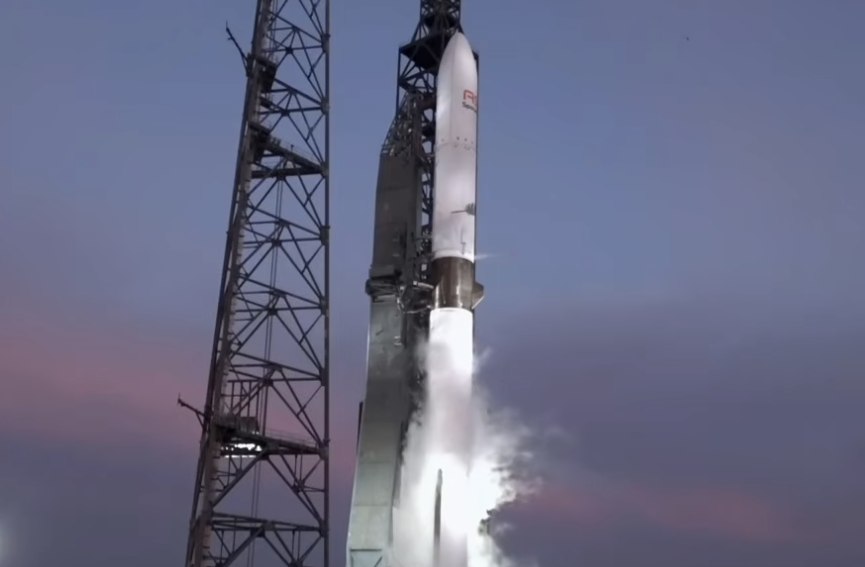
KENT, Wash. — Jeff Bezos’ space company Blue Origin has hired at least 47 engineers away from Amazon’s Leo satellite venture over the past year, according to a Bloomberg review of LinkedIn profiles, staffing a rival satellite communications project with talent originally trained inside the e-commerce giant Bezos still chairs.
Many of the engineers who have moved from Amazon Leo to Blue Origin are now reportedly working on TeraWave, Blue Origin’s own emerging satellite communications initiative, which the company unveiled in January. TeraWave is currently seeking regulatory approval to build a constellation of thousands of satellites designed to serve businesses and governments with substantial data needs, positioning the network as a competitor not only to SpaceX’s Starlink but also to Amazon’s own Leo satellite service.
Bezos occupies a distinct legal and financial relationship with each of the two companies involved. He serves as chairman of Amazon and remains its largest individual shareholder, though he does not personally own the publicly traded company outright. Blue Origin, by contrast, is a privately held company that Bezos owns directly, meaning any commercial success TeraWave eventually achieves would flow to Bezos personally rather than to Amazon’s broader shareholder base.
Amazon Leo, formerly known as Project Kuiper before its recent rebranding, aims to begin selling broadband internet service to customers by the end of this year, with plans to eventually market the service to households, businesses and governments around the world. The company has launched 180 satellites since April through a series of rocket launches handled by partners including United Launch Alliance and SpaceX. Amazon is legally required under its Federal Communications Commission license to deploy at least half of its planned 3,232-satellite constellation by the middle of 2026, a mandate that has pushed the company to build a 100,000-square-foot satellite processing facility at Kennedy Space Center to support high-volume launch integration.
Blue Origin’s TeraWave project, by contrast, is pursuing a different market segment. Regulatory filings indicate the network is designed to avoid competing directly in the mass-market broadband space where Amazon Leo and Starlink primarily operate, instead targeting a smaller set of business and government customers seeking large volumes of data transfer that would previously have required a dedicated fiber-optic connection. The planned network calls for more than 5,000 satellites in low Earth orbit, supplemented by an additional layer of satellites in medium orbit, with the system designed to deliver up to six terabits per second of capacity across point-to-point ground links. Blue Origin has said it aims to begin deploying TeraWave satellites by the end of 2027.
There is no indication that Blue Origin’s hiring of former Amazon Leo employees involves any legal violation, and no complaint or legal action has been reported in connection with the personnel movement. Engineers in the United States are generally free to move between employers, including between two companies founded or controlled by the same individual.
Still, the timing of the hiring wave has drawn scrutiny given Amazon’s own substantial financial commitments to its Leo satellite business. Under current chief executive Andy Jassy, Amazon agreed this year to acquire satellite communications company Globalstar in a deal valued at $11.57 billion, a purchase intended to secure spectrum rights and operational infrastructure that would help position Leo as a legitimate rival to Starlink. Amazon Leo’s commercial launch had originally been targeted for the middle of this year, even as dozens of engineers with direct experience building the company’s satellite systems have since departed for Bezos’ separately owned venture.
The talent shift accelerated following the December 2023 appointment of Dave Limp as Blue Origin’s chief executive. Limp previously served as Amazon’s senior vice president of devices and services, where he oversaw the initial development, manufacturing setup and regulatory strategy for what was then known as Project Kuiper, giving him direct familiarity with the technical and business challenges of building a large-scale satellite constellation before moving to lead Blue Origin.
Blue Origin has faced its own significant operational setbacks this year even as it works to build out TeraWave. The company’s New Glenn heavy-lift rocket, central to its broader launch ambitions, has experienced years of development delays. An explosion during preflight testing in May forced the cancellation of a launch that had been intended to carry Amazon Leo satellites into orbit, and the rocket has remained grounded since that incident. Despite those setbacks, Amazon remains one of Blue Origin’s largest commercial customers, having secured contracts for up to 27 New Glenn launches as part of a broader, multi-provider launch procurement strategy that also includes United Launch Alliance, Arianespace and SpaceX.
Bezos has continued dividing his attention across multiple ventures since stepping down from Amazon’s chief executive role roughly five years ago. He remains an active member of Amazon’s board and holds recurring meetings with senior company leadership, including teams focused on artificial intelligence initiatives, while also devoting significant time to Blue Origin’s operations. Bezos has additionally invested in an artificial intelligence startup called Prometheus, where he holds the title of co-chief executive, focused on applying AI models to real-world engineering tasks.
The broader competitive dynamics surrounding the satellite hiring have particular significance for markets like East Africa, where Amazon has separately applied through a subsidiary, Kuiper Kenya, for a satellite internet license. That application would place Bezos’ publicly traded company in direct competition with Starlink across the region, even as his privately held Blue Origin simultaneously builds out its own competing satellite capability using engineers drawn from Amazon’s own satellite division. Given the comparatively thin terrestrial broadband infrastructure across much of the region, satellite-based internet service has emerged as one of the more realistic paths toward expanded connectivity for many African markets, making the competitive positioning between Amazon Leo and other satellite providers, including Bezos’ own TeraWave project, a matter of practical significance for the region’s broader digital infrastructure development.
Neither Amazon nor Blue Origin has issued a detailed public statement addressing the specific pattern of engineer movement between the two companies. As TeraWave continues moving through the regulatory approval process ahead of its planned satellite deployment beginning in late 2027, the extent to which its engineering team’s Amazon Leo experience shapes the network’s eventual technical capabilities, and how the two Bezos-linked satellite ventures ultimately compete for customers and market position, remains an evolving storyline likely to draw continued attention from industry analysts and regulators alike.
Business
Jeff Bezos Tells William Shatner How Star Trek, Paper Toys and the Moon Landing Built Blue Origin
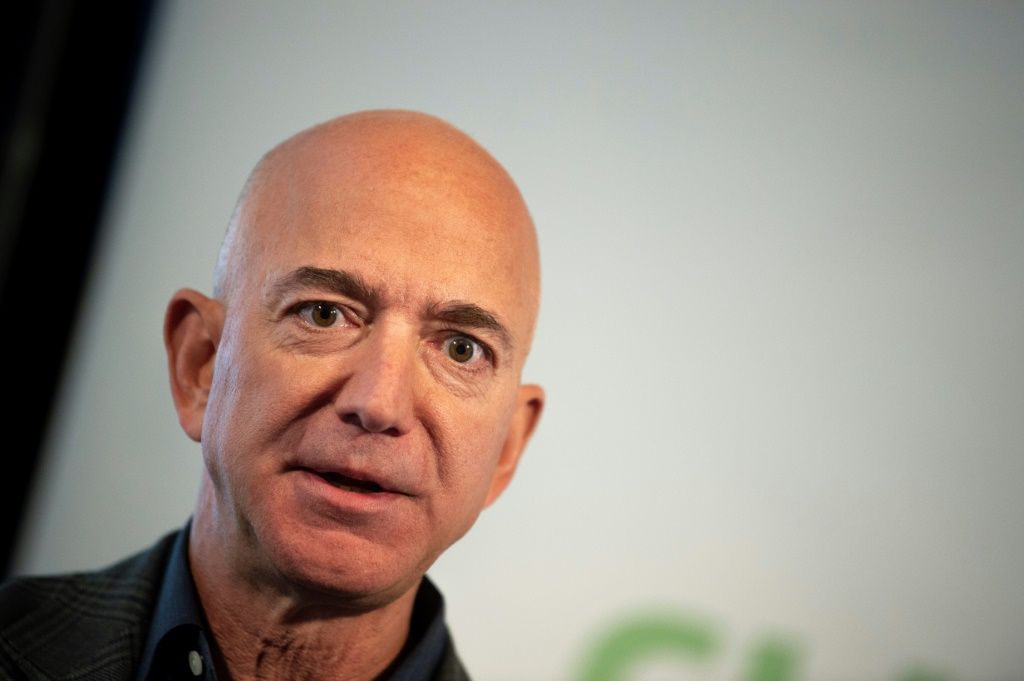
LOS ANGELES — Jeff Bezos has told William Shatner, in the actor’s own new memoir, that the cardboard “Star Trek” toys of a Houston childhood, the books on his nightstand and the night Neil Armstrong walked on the Moon were not separate hobbies. They were the same line that later became Blue Origin.
“All those things are linked,” Bezos told Shatner. “The ten-year-old boy playing with his friends and making paper tricorders, reading all this science fiction, seeing Neil Armstrong step onto the Moon. Somehow, those things all came together and made Blue Origin.”
The exchange appears in an excerpt from “William Shatner … and You,” published Friday by Variety. Shatner, 95, uses the book to interview people who say his work changed their lives. The guest list includes Ben Stiller, Josh Groban, “Weird” Al Yankovic, Jeri Ryan, Seth MacFarlane and Jason Alexander. Bezos is the one who closed the circle in hardware. In 2021 his company flew Shatner, then 90, on a New Shepard capsule from West Texas — the man who played Capt. James T. Kirk, riding a real rocket built by a fan who once fought over who got to be Kirk.
Shatner writes that Bezos discovered “Star Trek” in 1974, in fourth grade, in a Houston suburb. After school he raced home with two friends, Dean and Kyle, to watch reruns. Then they went outside and built a starship out of furniture.
“The three of us would round up other friends and younger siblings and assign them the lesser roles,” Bezos said. “The two roles that got fought over the most were Kirk and Spock. I often played Kirk, and I often played Spock. From there, we’d work our way down. Someone would even play the computer!”
That account matches what Bezos told The Washington Post in 2016, when he described the same backyard games: cardboard phasers, cardboard tricorders, daily arguments over the bridge chairs. “Good days,” he said then.
The toys survived because his mother kept them. Before Shatner’s flight, Bezos posted photographs of the homemade communicators and tricorders. “I made these tricorders and communicator to play ‘Star Trek’ with my friends when I was 9 years old, and my incredible mom saved them for 48 years,” he wrote. Shatner carried the pieces into space as a favor. Bezos asked the public not to judge the artwork.
Blue Origin was founded in 2000, after Bezos had already built Amazon. He has said for years that the long-term aim is to move heavy industry off Earth so the planet can remain livable — a “Star Trek” future in the language of an engineer rather than a television writer. Shatner, in the new book, describes that goal as helping humanity on its journey toward the world the series imagined. The excerpt does not present a new corporate timeline. It presents a personal one: play, reading, the Moon, then a company that puts paying passengers and invited guests on a suborbital hop.
Bezos flew first. On July 20, 2021, the 52nd anniversary of the Apollo 11 landing, he rode New Shepard with his brother and two other passengers. Shatner wanted a seat on that first crewed flight and did not get one. He has said he later accepted a place on the second. On Oct. 13, 2021, he lifted off with Glen de Vries, Audrey Powers and Chris Boshuizen. The automated capsule reached about 66.5 miles, crossed the line often used to mark space, and parachuted back after a little more than 10 minutes.
What happened on the desert floor is now as famous as the flight. While others hugged family and opened champagne, Shatner talked to Bezos about the thin blue sheet of atmosphere and the black beyond it.
“What you have given me is the most profound experience,” he said that day. “I hope I never recover from this. I hope that I can maintain what I feel now. I don’t want to lose it.”
He described the sky as a comforter that vanished in an instant. “You look down, there’s the blue down there, and the black up there,” he said. “There is Mother and Earth and comfort and there is … Is there death? I don’t know. Was that death? Is that the way death is? Whoop and it’s gone.” He added, “In an instant you go, ‘Whoa, that’s death.’ That’s what I saw.”
Bezos answered, “That’s amazing. That’s amazing.”
Shatner later wrote in “Boldly Go,” his 2022 book about the flight, that the contrast between the cold of space and the warmth of Earth filled him with “overwhelming sadness.” The trip “was supposed to be a celebration; instead, it felt like a funeral.” He identified the feeling with the overview effect described by other astronauts. In an interview with NPR he said he realized he was in grief. “I wept for the Earth because I realized it’s dying.”
The new memoir treats that day as one chapter in a longer fan story rather than as a product launch. Shatner has said the book is built around the people who watched him. “My greatest joy has been the connection I’ve shared with fans over the years,” he told PEOPLE when the project was announced. “William Shatner…And You is a celebration of them: their stories, their passion and the bond we’ve built together.” In the text he writes that he was “astonished by the complexity” of what those conversations uncovered.
The Bezos interview is the most literal version of that bond. A boy in Houston assigns the computer part to a younger sibling. Decades later he owns a rocket company and a model of the Enterprise in a lobby. The actor who sat in the original captain’s chair becomes a passenger. The paper tricorders go along for the ride.
None of that resolves the arguments that have followed billionaire spaceflight — cost, climate, whether a 10-minute hop counts as exploration. Bezos has not used the memoir excerpt to answer those criticisms. He has used it to draw a straight line from a fourth-grade rerun schedule to a launch pad in West Texas.
Shatner, closing the excerpt, puts the same line in plainer language. As a child, Bezos and his friends arranged chairs outside and pretended they were on the bridge of the Enterprise. Years later, Bezos built a rocket and took Captain Kirk with him. What comes next, Shatner writes, is bound only by imagination.
The book is on sale through Shatner’s site and Amazon. The flight it circles happened almost five years ago. The toys in the capsule were made when Bezos was 9. The television series that started the whole chain premiered in 1966. In the account Bezos gave Shatner, those dates are not trivia. They are the working parts of a single sentence: a kid playing Kirk, a man watching Armstrong, a company named for a blue planet, and an actor who finally left the set.
Business
7 Public Figures Who Have Openly Criticized Elon Musk, In Their Own Words Over The Years In Public Spats
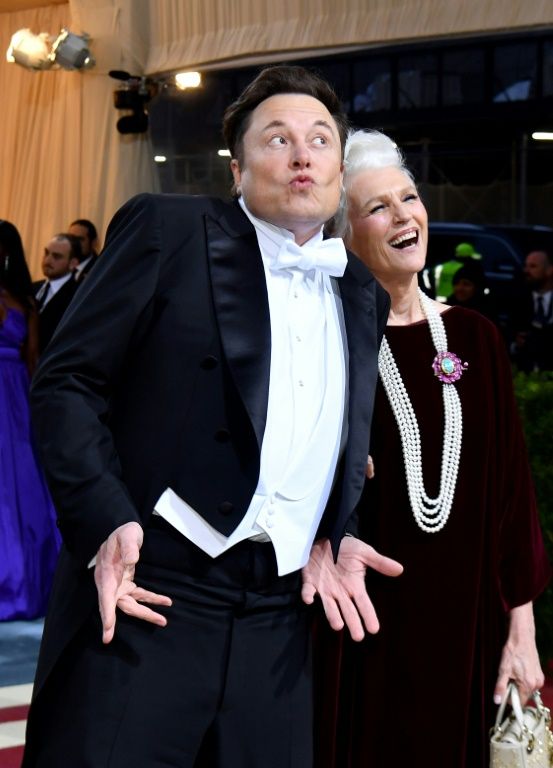
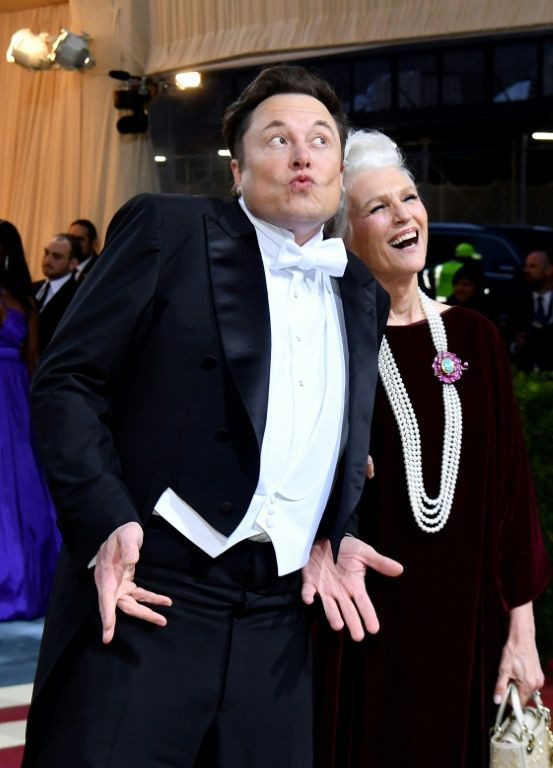
Elon Musk‘s high public profile as owner of X, Tesla and SpaceX has made him a frequent target of criticism from celebrities, authors and fellow business figures, many of whom have taken to social media to voice their objections directly to Musk or about his conduct. Here are seven public figures who have openly criticized Musk in recent years.
- Stephen King. The bestselling horror author has repeatedly criticized Musk’s leadership of X since Musk’s 2022 acquisition of the platform, taking issue with a range of content policy decisions and political stances over time. King has continued using his own presence on social media to publicly push back on Musk’s positions, including commenting on Musk’s growing political influence following the 2024 presidential election. On the social media platform Bluesky, King suggested that Musk, rather than officials in elected office, held disproportionate sway over American politics at the time.
- Mark Cuban. The billionaire investor and Dallas Mavericks owner has used his own X account to challenge Musk directly on multiple occasions. After Musk once asked users to “please post a bit more positive, beautiful or informative content,” Cuban pushed back sharply, and separately responded to a post from Musk questioning critics’ mental state by writing, “From the man who said anything to get him elected,” a jab referencing Musk’s role backing Donald Trump’s 2024 campaign. That post drew significant attention, garnering more than 1.9 million views.
- Doja Cat. The Grammy-winning singer sparked a public dispute with Musk in June 2026 after posting a message on X asking him to restore a removed audio feature, paired with a pointed insult calling him a “frog build looking b****” and a “barrel chested Ewok.” Doja Cat had previously criticized X more broadly, describing the platform as “poison” and “a prison,” and had separately expressed concern over child privacy after Musk brought his young son to Oval Office events for political purposes.
- Robyn. The Swedish pop singer has been direct and unambiguous in her criticism of Musk, telling interviewers she has held a negative view of him for years, predating the more recent wave of public criticism he has faced. “I always hated him, way before it was cool to hate him,” Robyn has said, distinguishing her longstanding skepticism of Musk from more recent critics who have turned against him only after his more overtly political activities in recent years.
- Elton John. The legendary musician left X in protest of Musk’s leadership and content policies, walking away from an account with more than a million followers in the process. When Musk publicly asked John for specific examples justifying his departure, the singer did not respond and remained off the platform. John later took a more direct verbal jab at Musk during a public appearance at the 2024 Attitude Awards, delivering a pointed remark from the stage before largely declining to comment further on the tech mogul in the time since.
- Joyce Carol Oates. The prolific novelist, known for works including “Blonde,” found herself in a heated public exchange with Musk in 2025 after he responded to one of her posts by calling it “demonstrably false.” Musk went further, labeling Oates a “lazy liar” and “an abuser of semicolons,” and joked that she would be “a real downer at parties.” Oates responded in kind, defending her original comments and offering her own critique of Musk’s broader influence, a back-and-forth that quickly drew attention from literary fans and social media users on both sides of the exchange.
- Kara Swisher. The veteran technology journalist, who has covered Musk extensively throughout her career and authored the book “Burn Book,” publicly reacted to the dramatic public falling-out between Musk and President Trump, which unfolded in real time on social media in mid-2025 after Musk criticized Trump’s signature spending legislation. Swisher noted on Bluesky that she had anticipated the rupture between the two men, referencing an earlier CNN interview in which she had predicted the two prominent, strong-willed figures would eventually be unable to coexist as allies.
“Called it — there can be only one,” Swisher wrote at the time, linking back to her earlier prediction.
Beyond these seven figures, Musk’s public disputes have extended to a wide range of other prominent individuals over the years, including musicians Grimes and Billie Eilish, fellow billionaires Bill Gates and Warren Buffett, and, most notably, President Trump himself, whose alliance with Musk collapsed publicly in June 2025 following disagreements over federal spending legislation and Musk’s departure from his brief role leading the Department of Government Efficiency. That falling-out prompted commentary from numerous entertainment and political figures, including “Today” co-host Savannah Guthrie, who described the public back-and-forth between Musk and Trump as resembling behavior more typical of adolescents than of a sitting president and the world’s wealthiest businessman.
Musk’s willingness to respond directly and often pointedly to public criticism, frequently escalating rather than de-escalating disputes with those who challenge him, has become a recurring feature of his presence on X, the platform he owns and where the majority of these public exchanges have played out. Neither Musk nor representatives for his companies have publicly indicated any change in that approach, and public disputes involving Musk and various celebrities, authors, journalists and political figures have continued to emerge regularly in the years since his 2022 acquisition of Twitter and its subsequent rebranding as X.

Commodities Are Inexpensive, But No One Owns Them
Business
NSE IPO gets Sebi approval: 10 important points investors should know as D-Street debut inches closer

The approval clears a key regulatory step for the proposed listing. This comes as activity in India’s IPO market has picked up following a subdued first half of the year.
Here’s everything investors should know:
1.) IPO Details
The proposed IPO is entirely an offer-for-sale (OFS) of up to 14.89 crore equity shares with a face value of Re 1 each, representing nearly 6% of NSE’s paid-up equity capital. The issue size has been fixed at 6% of the exchange’s paid-up capital.
The Economic Times reported citing sources that National Stock Exchange is likely to price its IPO at around Rs 1,800 per share or slightly above.
The company will likely announce the price band on September 15, according to a person aware of the development.

If everything goes as per the schedule, the IPO is likely to open around September 18, while listing may occur around September 25.
2.) Where will the NSE shares be listed?
NSE’s shares will be listed on BSE, mirroring the arrangement under which BSE’s own shares are listed on NSE.
3.) NSE Valuation
Analysts say the exchange is already commanding premium valuations in the unlisted market. “NSE remains a capital-light near-monopoly. At around Rs 1,970-2,000 in the unlisted market, it trades near 45x FY26 earnings.
That’s rich, but below BSE at around 70x and MCX at around 80x,” Nitant Darekar, research analyst at Bonanza had said earlier.
4.) 7 PSUs sell stake
Seven public sector entities, including State Bank of India (SBI), Bank of Baroda, Stock Holding Corporation, GIC, New India Assurance, National Insurance Company, and United Insurance Company, are set to partially monetise their holdings in the National Stock Exchange (NSE) through the bourse’s long-awaited initial public offering (IPO).
According to NSE’s Draft Red Herring Prospectus (DRHP) filed with market regulator SEBI, the seven government-owned entities together hold approximately 7.97 crore shares that are part of the proposed offer for sale (OFS).
Other shareholders include MS Strategic (Mauritius), Canada Pension Plan Investment Board, and Aranda Investments (Mauritius) Ptd.
5.) LIC, others retain stake
Life Insurance Corporation of India (LIC), one of NSE’s key shareholders, will not be participating in the share sale. Premji Invest, which holds a 2.35% stake, and investor Radhakishan Damani, who owns 1.58%, are also not selling any shares, according to the DRHP.
6.) NSE financials
NSE reported a 7% year-on-year increase in profit for the June quarter, supported by higher transaction charges and strong operating margins. Net income stood at Rs 3,120 crore in Q1, while total income rose 9% YoY to Rs 5,252 crore.
Analysts, however, have cautioned investors about the exchange’s dependence on derivatives trading volumes. Earnings remain closely linked to activity in the derivatives segment, which can be volatile, particularly following regulatory changes in the futures and options market.
NSE’s IPO is expected to be one of the marquee issues of 2026, alongside Jio Platforms. Investment bankers expect September to remain a busy month for primary markets, with IPOs worth nearly $4 billion lined up, including the anticipated NSE offering.
7.) World’s largest derivatives exchange
According to the World Federation of Exchanges, NSE retained its position as the world’s largest equity derivatives exchange, with more than 36.99 billion contracts traded during Fiscal 2026, including activity on NSE International Exchange (NSEIX).
As of March 31, 2026, the exchange was also the largest in India by total cash market turnover and the third-largest globally by number of cash equity trades, according to the World Federation of Exchanges.
8.) NSE IPO history
The filing marks the culmination of a listing process first initiated in December 2016, when NSE filed its first DRHP for a Rs 10,000-crore issue.
The process was subsequently stalled due to the co-location controversy.
9.) NSE unilisted market share price
NSE currently trades in the unlisted market at around Rs 1,975-2,000 per share, implying a valuation of roughly Rs 5 lakh crore.
That would make it one of the most valuable listed financial institutions in India once the public issue is completed.
10.) NSE dividend history
NSE is India’s largest stock exchange in terms of cash market turnover, equity derivatives turnover and exchange-traded currency derivatives turnover. NSE’s strong and consistent cash generation is reflected in its shareholder payouts.
The exchange paid a dividend of Rs 35 per share in both FY25 and FY26, while the FY24 dividend stood at Rs 18 per share on a bonus-adjusted basis.
(Disclaimer: Recommendations, suggestions, views and opinions given by the experts are their own. These do not represent the views of The Economic Times)

Farage turmoil gives UK PM Burnham breathing room ahead of budget

Envision Research, aka Lucas Ma, has over 20+ years of investment experience and holds a Masters with in Quantitative Investment and a PhD in Mechanical Engineering with a focus on renewable energy, both from Stanford University. He also has 30+ years of hands-on experience in high-tech R&D and consulting, housing sector, credit sector, and actual portfolio management.He leads the investing group Envision Early Retirement along with Sensor Unlimited where they offer proven solutions to generate both high income and high growth with isolated risks through dynamic asset allocation. Features include: two model portfolios – one for short-term survival/withdrawal and one for aggressive long-term growth, direct access via chat to discuss ideas, monthly updates on all holdings, tax discussions, and ticker critiques by request.
Analyst’s Disclosure: I/we have no stock, option or similar derivative position in any of the companies mentioned, and no plans to initiate any such positions within the next 72 hours. I wrote this article myself, and it expresses my own opinions. I am not receiving compensation for it (other than from Seeking Alpha). I have no business relationship with any company whose stock is mentioned in this article.
Seeking Alpha’s Disclosure: Past performance is no guarantee of future results. No recommendation or advice is being given as to whether any investment is suitable for a particular investor. Any views or opinions expressed above may not reflect those of Seeking Alpha as a whole. Seeking Alpha is not a licensed securities dealer, broker or US investment adviser or investment bank. Our analysts are third party authors that include both professional investors and individual investors who may not be licensed or certified by any institute or regulatory body.

Ten BSE SmallCap stocks gained across all five sessions through September 4, outperforming a falling Sensex. The strongest performers delivered cumulative gains of up to 57%, highlighting resilience amid broader market weakness.

“Such periods of extreme calm have not necessarily indicated whether the next major move would be upward or downward, but they have often preceded a meaningful increase in market movement,” said Raj Gaikar, equity research analyst at SAMCO Securities.
Gaikar analysed 6,630 trading days across 320 calendar months since January 2000 and found only eight months in which the Nifty did not record a single daily move of plus or minus 1% or more.
That makes August’s market behaviour a rare event, occurring roughly once in every 40 months.
The previous instances were June 2017, July 2018, December 2019, June 2021, April 2023, and July, September and December 2025. All eight occurred after 2017, with no similar episode recorded during the first 17 years of the dataset.
Also Read | Value stocks are making a comeback in India. These 10 stocks could benefit
Big move, uncertain direction
The immediate aftermath of these calm periods was not necessarily dramatic. The Nifty’s average one-month forward return was 1.22%, with the index ending higher in five of the eight instances.The three-month performance, however, was far more volatile. Returns ranged from a decline of 29.34% to a gain of 12.06%. Six of the eight episodes were followed by a move of more than 5% in either direction.
That historical pattern makes the current setup less a bullish or bearish signal than a warning about the market’s compressed trading range.
“With August 2026 now joining this rare list, the data suggests that the Nifty may be entering another phase where volatility could return after an extended period of consolidation,” Gaikar said.
 ETMarkets.com
The August calculation excludes the 1.60% market move on Aug. 3, which was attributed to the introduction of the new Closing Auction Session and occurred during the closing auction.
The subdued index performance comes as strategists increasingly expect returns to become more dependent on earnings delivery and individual stock performance.
Axis Securities said its investment strategy for September should shift “from index-level positioning towards earnings-led stock selection.” The brokerage said the broader market had already benefited from domestic liquidity and better-than-expected earnings growth.
Going forward, it expects companies with visible earnings growth, strong cash flows, credible capital-expenditure plans and improving return ratios to outperform.
Axis Securities raised its December 2026 Nifty target to 27,360 after upgrading its Nifty earnings estimates for FY27 and FY28 by 0.3% each. Its target is based on 19.5 times December 2027 estimated earnings.
The brokerage remains constructive on Indian equities, citing macroeconomic fundamentals, government capital expenditure, GST 2.0 reforms and an improving corporate earnings cycle. But it also advised investors to maintain diversified portfolios and reduce concentration in expensive stocks.
Anand Shah, CIO – PMS & AIF, ICICI Prudential Alternate Investments, echoed that view. “We expect returns to become increasingly earnings-led and stock-specific rather than driven by broad-based multiple expansion,” Shah said.
His concerns include higher crude oil prices and currency weakness, which could create imported inflationary pressures. The investment approach, he said, remains focused on companies with visible earnings growth, resilient balance sheets, cash-generative operations and reasonable valuations.
Foreign investor activity has also improved after a prolonged period of selling. Arihant Bardia, CIO and founder of Valtrust, said foreign portfolio investors turned buyers in July after four consecutive months of selling and continued buying in August. FPIs bought ₹20,200 crore in July and ₹29,631 crore in August, he said.
“If the recent improvement in FPI flows sustains, we could see a meaningful rerating of select large caps, particularly private banks,” Bardia said.
That potential return of foreign demand could provide support to parts of the large-cap market. But Bardia also expects earnings delivery, rather than liquidity alone, to drive returns.
The same shift is visible across the broader market strategy. While Axis Securities expects Nifty earnings to grow at a 13% compound annual rate between FY23 and FY28, it warned that geopolitical tensions, crude oil volatility and currency movements could still generate near-term turbulence.
The message from the market’s unusual August calm is therefore straightforward: the Nifty may be quiet, but the risk environment is not. History does not reveal whether the next move will be higher or lower. It does suggest that the current lack of movement may not last.
(Disclaimer: Recommendations, suggestions, views and opinions given by the experts are their own. These do not represent the views of The Economic Times)

Aryna Sabalenka halts US Open match over ‘strong’ smell of marijuana

“Trust, not features, is the real deficit”: VMware tries to appease SMBs

Transfer news LIVE: Arsenal FC January targets; Richarlison Turkey deadline; Chelsea, Man Utd, Liverpool latest





-
 Crypto World18 hours ago
Bitcoin price stalls near $82K as key resistance holds
-

 Politics18 hours ago
Best Gaming Laptops, CPUs, TVs, And Keyboards To Upgrade Your Set Up For GTA VI
-

 Tech19 hours ago
The Birds Outside, Drawn For You Automatically
-

 Crypto World22 hours ago
IMF Says El Salvador’s Post-Review Bitcoin Purchases Used No Public Funds
-
 Crypto World18 hours ago
U.S. added stronger than expected 162,000 jobs in August as labor market bounced back
-

 Sports22 hours ago
Alexandre Pato consortium’s Northampton Town investment approved
-

 Sports17 hours ago
Golden Eaglets Drawn in Group B for 2026 WAFU B U17 Championship
-

 Sports23 hours ago
Commanders’ Chig Okonkwo is a top breakout fantasy football candidate
-
 Crypto World17 hours ago
XRP price breaks falling channel as bulls target $1.53
-

 Politics1 day ago
A new European chapter for Gibraltar
-

 Politics17 hours ago
How To Avoid Winter Colds: 4 Everyday Habits That Spread Germs, Says Pharmacist
-
 Politics20 hours ago
The House | Bin the lectures, bring gossip and be ready to banter: how the new PM should prepare for his Trump encounter
-

 Crypto World17 hours ago
From warning to listing: UK’s largest retail investment platform opens access to crypto ETNs
-

 Tech19 hours ago
A Worthy Android Ereader, With Some Tradeoffs
-

 Crypto World18 hours ago
FinCEN flags $12.7B tied to Southeast Asia crypto investment scams
-

 Crypto World18 hours ago
Trezor Data Breach Impacts 67,000 More US Customers
-

 Politics22 hours ago
33 Cosy Autumn Home Decor Ideas: Blankets, Pumpkin Decorations, And Candles
-

 Sports23 hours ago
Seven wickets in 21 balls: Sri Lanka’s Chamari Athapaththu scripts history with record-breaking spell
-

 Tech18 hours ago
How To Edit Claude’s Memory
-

 Tech17 hours ago
beyerdynamic AVENTHO Y Debuts at IFA 2026 and Makes Wireless Headphones Less Disposable
You must be logged in to post a comment Login