





Connect with us

Tech

Creative Soundblaster AE-X Review – Trusted Reviews

Published

on

Verdict

The Creative Soundblaster AE-X is a compact, well-built PCIe sound card that delivers a genuinely audible step up from on-board audio with a beefed-up DAC to allow for detailed audio and a clean overall presentation. It handles games and music equally well, while the on-board software provides extensive customisation. Against other soundcards, it drops multi-channel surround support entirely, so anyone running a discrete speaker setup rather than headphones won’t find much reason to make the switch.

  • Hi-fi grade DAC brings real detail retrieval

  • Drives even 600-ohm headphones with ease

  • Feature-rich Nexus software with AutoEQ support

  • Stereo only, no multi-channel surround

  • Overkill if you’re on more affordable hardware

Key Features

  • Trusted Reviews IconTrusted Reviews Icon

    Advertisement

    Review Price:
    £169.99

  • ESS ES9039Q2M Sabre DAC inside:

    Advertisement

    The DAC inside this Creative sound card is a real step-up from previous options, providing more space, clarity and detail.

  • Single-slot design:

    Advertisement

    It’s also fully metal, and takes up only a single slot in a PC case so is nice and compact.

  • Nexus software:

    Advertisement

    The Soundblaster AE-X has some neat Windows software with lots of customisation potential.

Introduction

Creative has been a name synonymous with PC audio for a very long time, especially its venerable line of Soundblaster sound cards.
The new Soundblaster AE-X is the brand’s first in some time and is a mid-range add-in card for folks wanting to level up their PC audio game from standard on-board audio on your motherboard.

Advertisement

Specs-wise, we’ve got an ESS ES9039Q2M DAC chip inside, a Discrete Xamp Bi-Amplifier for headphones with up to 600 ohms of impedance, plus some far-reaching software and file format support to make this one of the more feature-rich PC sound cards you can buy.

At £169.99 / $179.99, it’s in the mid-range for what PC gamers might consider a viable option if you want to beef up your on-board audio without breaking the bank.

Advertisement

Design

  • Two-tone white and grey colour scheme
  • Solid metal finish
  • Compact and easy to place in a PC

The Soundblaster AE-X works as a PCIe add-in card that you can slot into a vacant PCIe slot in your PC underneath your graphics card. These kinds of devices specifically for audio aren’t as common as they used to be, but it’s pleasant to know they still exist.

The card itself is compact and sits at a single slot wide, so it won’t take up much space in your PC internally. Connectivity is handled by a small PCIe x1 slot, meaning this card will fit in virtually any vacant slot you have on your motherboard.

Advertisement
Profile - Creative Soundblaster AE-XProfile - Creative Soundblaster AE-X
Image Credit (Trusted Reviews)

The chassis of the Soundblaster AE-X is entirely metal, lending itself to a quality finish. I’m a fan of the two-tone white and black colour scheme, which gives this sound card a more professional aesthetic than something traditionally designed for the gaming crowd.

Advertisement

As well as the card itself, the brand also includes a 3.5mm splitter cable and a convenient quick start guide.

Features

  • Beefed-up DAC against previous models
  • Solid port selection for stereo listening
  • Extensive PC software features

Inside, the Soundblaster AE-X features an ESS ES9039Q2M Sabre DAC, which is one of ESS’s newest DACs, and a big upgrade over the ESS E9016K2M Creative had employed on previous Soundblaster products.

This DAC allows the unit to support PCM playback up to 32-bit/384KHz. It also has native DSD playback, supporting up to DSD256 files, helping to reflect Creative’s positioning of this sound card as closer to dedicated hi-fi DACs rather than a conventional PC sound card.

Ports - Creative Soundblaster AE-XPorts - Creative Soundblaster AE-X
Image Credit (Trusted Reviews)

It becomes clear Creative is positioning this sound card more towards headphone and stereo listening rather than any form of surround sound, as it has in the past. This is reflected in its selection of ports on the rear side, which totals a Toslink SPDIF input, a Coaxial SPDIF output, RCA line-out for left and right, a headphone out and a mic/line-in port.

Advertisement

Advertisement

The Soundblaster AE-X also has its own dedicated headphone amp inside, delivering up to 350mW at 32 ohms, while this unit is happy to drive headphones with up to 600 ohms of impedance. I know impedance isn’t the only thing that affects how easy a set of headphones is to drive, but it means this Creative unit can drive some seriously beefy cans without breaking a sweat.

Profile - Creative Soundblaster AE-XProfile - Creative Soundblaster AE-X
Image Credit (Trusted Reviews)

The front of the card is home to something that resembles a USB 2.0 or HD Audio connector, but is instead a front panel audio hookup, so you can run your case’s front panel connector directly to the Creative’s DAC rather than the on-board audio. However, that only gives you access to the 3.5mm jack likely on the front of your PC, so you’re best using the rear ports.

Once installed in your PC, the Soundblaster AE-X works with the brand’s Nexus software that provides the opportunity for a wide array of tinkering. This includes a comprehensive multi-band EQ along with a good selection of presets, plus you can save your own, too. It also includes an AutoEQ that can be set with a range of specific headphone models to apply calibration curves to compensate for any anomalies in a set of cans’ frequency response.

Side - Creative Soundblaster AE-XSide - Creative Soundblaster AE-X
Image Credit (Trusted Reviews)

In the software, you can also choose different sound modes – Direct Mode bypasses most DSP processing to provide the cleanest sound, while Acoustic Engine mode unlocks Creative’s DSP toolkit for this sound card, and Scout Mode is specifically designed for competitive games where you want the most precise audio possible.

Advertisement

Performance

  • Lower noise floor than on-board audio
  • Confident drive of hard-to-power headphones
  • Detailed presentation with good bass extension and solid mids

The real benefit of upgrading to the Soundblaster AE-X over on-board motherboard audio becomes apparent almost immediately. By moving to a proper card with a strong DAC with real hi-fi credentials, the big change is that you move to a lower noise floor.

This essentially means that it lessens any background hiss, plus you get improved dynamic range and audio becomes more detailed. In testing with a set of affordable FiiO SP3 BT speakers, the Soundblaster AE-X provided audio that felt even more spacious and detailed, while the DAC itself didn’t tend to colour the audio too much. It provides a neutral and well-balanced presentation.

Advertisement
Profile - Creative Soundblaster AE-XProfile - Creative Soundblaster AE-X
Image Credit (Trusted Reviews)

Moving over to a set of hard-to-drive Drop + Sennheiser HD6XX headphones (deliberately chosen for their more neutral, reference-like profile), this Creative sound card afforded audio that provides a tight and controlled low-end when delving into my usual suite of rock testing tracks from Rush and Marillion. Plus, it played completely nicely with an SACD rip of Genesis’ Abacab in DSD64.

As for the mid-range, moving to James Taylor’s September Grass, the Soundblaster AE-X offers some wonderfully detailed results, accentuating elements such as the distant drum shuffle and the intimate combo of Taylor’s voice and lovely fingerpicked guitar.

Advertisement

Profile - Creative Soundblaster AE-XProfile - Creative Soundblaster AE-X
Image Credit (Trusted Reviews)

The top-end presented by this card isn’t so much particularly harsh, but rather provides more meat on the bone and detail. The competing percussion intro on Steely Dan’s Do It Again provides a formidable test, which this Creative card handles with panache, offering a rich and wide soundscape with plenty of detail retrieval, and without verging on harsh.

This also lends well to the Soundblaster AE-X’s Scout Mode, which is ideal for FPS gaming. When paired with the right set of headphones or a gaming headset, details such as footsteps and enemy movement are much wider and clearer than with on-board audio, with greater precision. While it isn’t going to be a substitute for using a lower-grade headset, it can certainly help you position enemies in a more optimal manner.

Rear - Creative Soundblaster AE-XRear - Creative Soundblaster AE-X
Image Credit (Trusted Reviews)

That said, the Scout Mode can tend to accentuate those details a little too much, skewing the overall sound signature somewhat. The default tuning of this Creative soundcard still helps for excellent directional accuracy.

Advertisement

Advertisement

Should you buy it?

You want more from your headphones

The AE-X’s discrete amp and 600-ohm drive capability get genuinely better results out of demanding headphones than on-board audio can manage, with a noticeably lower noise floor and more detailed audio to match.

Advertisement

You run a surround speaker setup

The card is strictly stereo with no 5.1/7.1 or Dolby/DTS support, so anyone relying on multi-channel speakers won’t see any benefit from making the switch to the Soundblaster AE-X.

Advertisement

Final Thoughts

The Creative Soundblaster AE-X is a compact, well-built PCIe sound card that delivers a genuinely audible step up from on-board audio with a beefed-up DAC to allow for detailed audio and a clean overall presentation.

It handles games and music equally well, while the on-board software provides extensive customisation. Against other soundcards, it drops multi-channel surround support entirely, so anyone running a discrete speaker setup rather than headphones won’t find much reason to make the switch.

Advertisement

How We Test

We test every DAC we review thoroughly over an extended period of time. We use industry standard tests to compare features properly. We’ll always tell you what we find.

We never, ever, accept money to review a product.

Find out more about how we test in our ethics policy.

  • Tested for several days
  • Tested with real world use

FAQs

What DAC does the Creative Soundblaster AE-X use?

The Creative Soundblaster AE-X uses the ESS ES9039Q2M Sabre DAC, which is a real step-up from previous Soundblaster cards.

Advertisement

Test Data

Full Specs

  Creative Soundblaster AE-X Review
Manufacturer Creative
Size (Dimensions) 126 x 179 x 18 INCHES
Weight 263 G
DAC ESS ES9039Q2M Sabre DAC
Release Date 2026
First Reviewed Date 21/08/2026
Resolution x
Audio Formats Up to 32-bit / 384 kHz, with up to DSD256 support
Outputs Toslink SPDIF input, a Coaxial SPDIF output, RCA line-out for left and right, a headphone out and a mic/line-in port.
Headphone impedance range 600 M
UK RRP £169.99
USA RRP $179.99

Advertisement

Source link

Advertisement
Continue Reading
Click to comment

You must be logged in to post a comment Login

Leave a Reply

Tech

Silo Season 4 teaser promises an all-out war as the series heads to its final chapter

Published

on

Apple TV just confirmed that Silo is returning for a fourth season on July 9, 2027, and the teaser that dropped with the announcement gives us glimpses of what happens next. The final chapter will pick up after the dramatic events of Season 3, with Juliette Nichols preparing for a direct confrontation that could determine the fate of every silo.

Juliette taking the fight to Silo 1 in season 4 trailer

Season 3 expanded the story by revealing the truth about Silo 1, where survivors from the past oversee the remaining silos. The teaser shows Juliette returning with a new purpose after uncovering those secrets. Instead of simply trying to survive, she is now determined to challenge the people controlling the underground world.

Apple says the new season follows Juliette as she uncovers even more hidden truths while fighting to protect the future of the silos. The teaser also hints that the conflict between Silo 18 and Silo 1 will become the central focus.

Advertisement

According to showrunner Graham Yost, the season can be summed up in two words: “It’s war.” The story will also spend more time inside Silo 1, giving viewers a closer look at how it operates and the people pulling the strings.

The final season is set to answer long-running questions

Season 4 will expand its focus inside Silo 1, bringing side characters like Senator Rosalind Thurman, her daughter Anna, and aide Henry further into the spotlight. But the bigger payoff might be closure on characters who’ve been missing since the explosion that first sent everyone underground.

Journalist Helen Drew disappeared from the story after that moment, and Yost has confirmed her fate is exactly what season 4 plans to reveal, along with flashbacks connecting her time inside Silo 18 to the present. Whatever happened to trillionaire Per Stensen remains a separate open question the show hasn’t addressed yet, but we see a glimpse in the teaser.

The final season brings back Rebecca Ferguson, Common, Harriet Walter, Chinaza Uche, Avi Nash, Ashley Zukerman, Jessica Brown Findlay, and Steve Zahn. With a release date now locked in, Silo is heading toward its ending with a lot riding on it, and a full cast ready to bring its sprawling mystery to a close next year.

Source link

Advertisement
Continue Reading

Tech

XDOF, just three months out of stealth, is in talks for a Series B at a $1.2B valuation

Published

on

Less than three months after emerging from stealth, XDOF, a startup that collects real-world teleoperation data for training general-purpose robots, is in late-stage talks to raise a Series B at a valuation of about $1.2 billion valuation led by 8VC, several people with knowledge of the deal said.

XDOF was co-founded by UC Berkeley researchers Philipp Wu (CEO) and Fred Shentu (CTO) in 2024. TechCrunch reported on the startup’s $70 million Series A in June, with participation from Thrive Capital, Andreessen Horowitz, Lux, and Spark Capital. XDOF wasn’t planning to raise again so soon after that round. But the company’s rapid growth — with annualized revenue approaching $50 million — prompted VCs to approach it about a new round, the people said.

TechCrunch was unable to learn the total capital being raised or whether the valuation includes the new funding. The terms of the deal are not final and could still change.

XDOF and 8VC didn’t respond to our request for comment.

Advertisement

The startup aims to build the data pipelines, collection tools, and annotation systems that frontier AI labs and robotics companies can’t easily build themselves, essentially acting as an outsourced data-supply chain for the robotics industry.

As a PhD student, Wu was studying how robots learn from large datasets. One big impediment to his research was the lack of “large-scale data to work with,” he told TechCrunch in June.

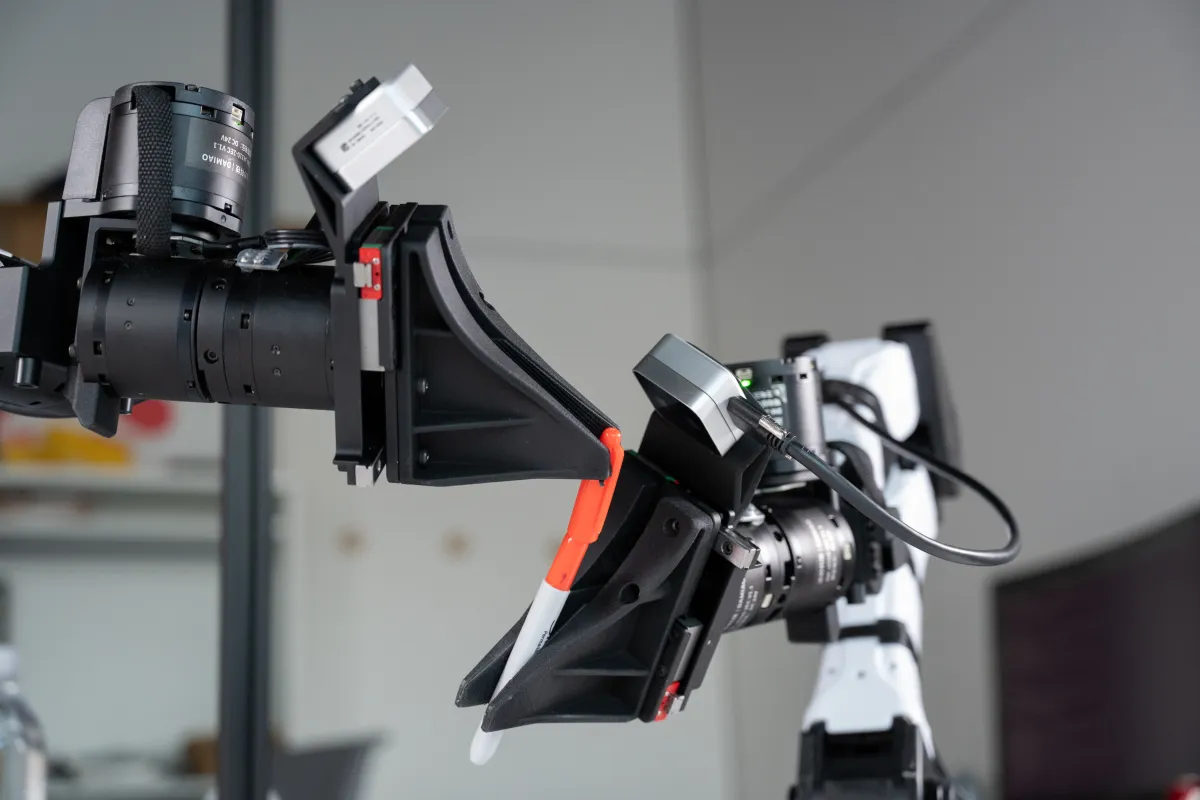
So he teamed up with Shentu on a project called GELLO, a low-cost teleoperation system that allows a human operator to control a robotic arm remotely in order to generate training data. Their work led to an influential paper in robotics.

That research formed the foundation for XDOF, which investors now describe as the Scale AI or Mercor for physical robotics, a reference to the data-labeling giants that helped fuel the AI boom. Unlike LLMs, which initially trained on the entirety of the internet, physical robots don’t have an equivalent real-world dataset to draw from, making data collection a critical bottleneck to building general-purpose machines.

Advertisement

XDOF is partnering with UC Berkeley’s AI Research lab to release what it believes is the largest collection of high-quality robot training data ever assembled, dubbed ABC

To capture this data, XDOF combines remote robot teleoperation with human collectors who wear sensors to record everyday tasks like folding clothes and flattening boxes.

The startup plans to hire and train teams of data collectors worldwide, including teleoperators who steer robots remotely and egocentric operators who wear body sensors to capture movement data.  

XDOF previously told TechCrunch that it is already working with 20 customers, including several frontier AI labs.

Advertisement

Other startups attempting to collect real-world data for robot training include Mecka AI, as well as human-data platforms expanding beyond LLMs, such as Scale AI and Micro1.

When you purchase through links in our articles, we may earn a small commission. This doesn’t affect our editorial independence.

Source link

Advertisement
Continue Reading

Tech

AMD’s new workstation packs 576GB of GPU memory and enough horsepower for trillion-parameter AI models

Published

on

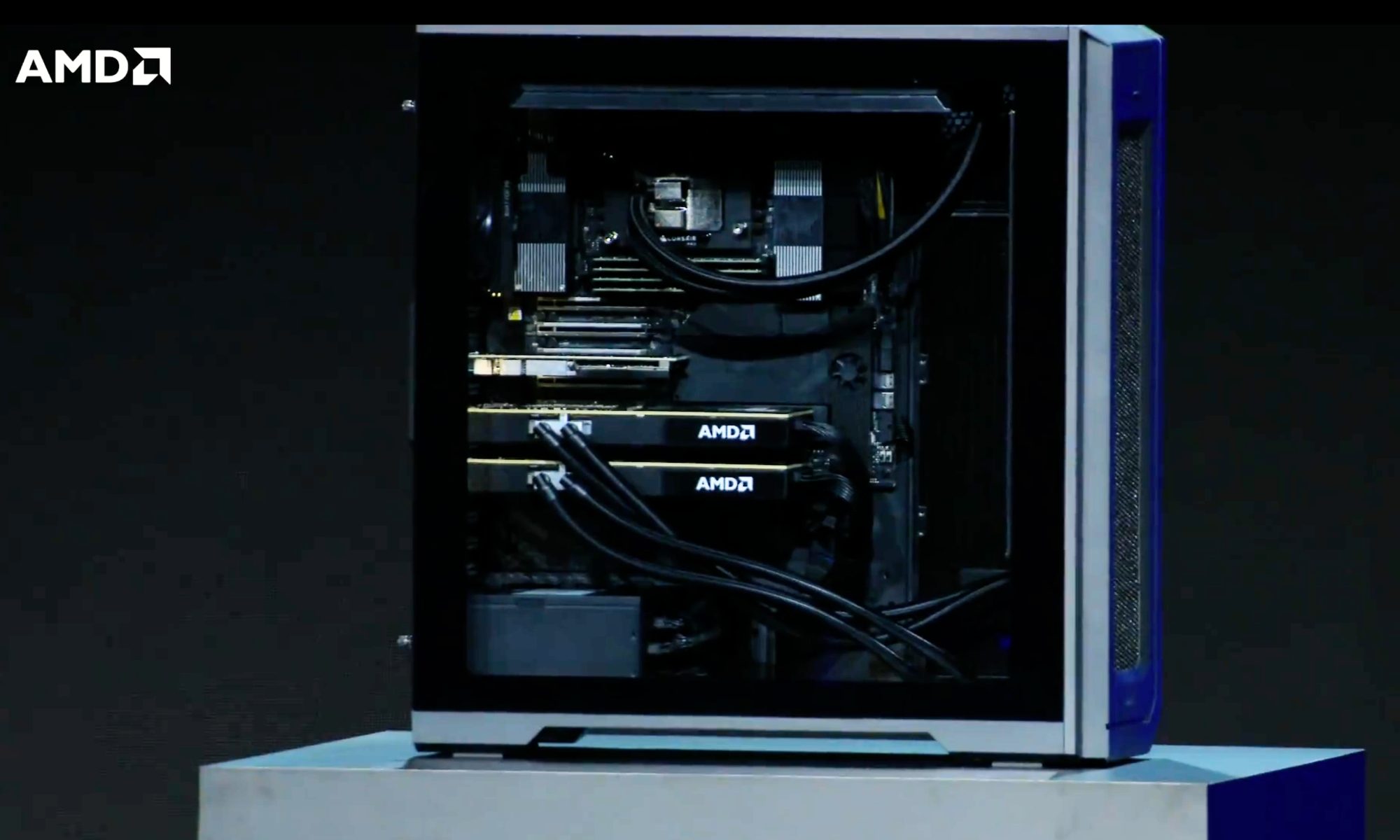
AMD just built a desktop that really has no business sitting on an actual desk. At IFA 2026, the company unveiled the Threadripper Halo Station.

As the name probably already suggests, it is a liquid-cooled machine that can run AI models with more than a trillion parameters without touching the cloud even once. If you don’t already know, those numbers are reserved for server shelves, not someone’s personal desk.

So what exactly is inside the Threadripper Halo Station?

The CPU alone is quite absurd on paper. It uses AMD’s Threadripper Pro 9995WX, built on Zen 5 architecture, with 96 processing cores and 192 threads. The maximum clock speed (with boost) can reach 5.4GHz, helping it tackle demanding tasks faster, and it also has a massive 384MB M3 cache for faster data processing. 

Besides, 128 PCIe 5.0 lanes provide plenty of bandwidth for the rest of the hardware. To sustain all that performance, the machine needs a 350W TDP, which is significantly higher than a regular gaming PC. 

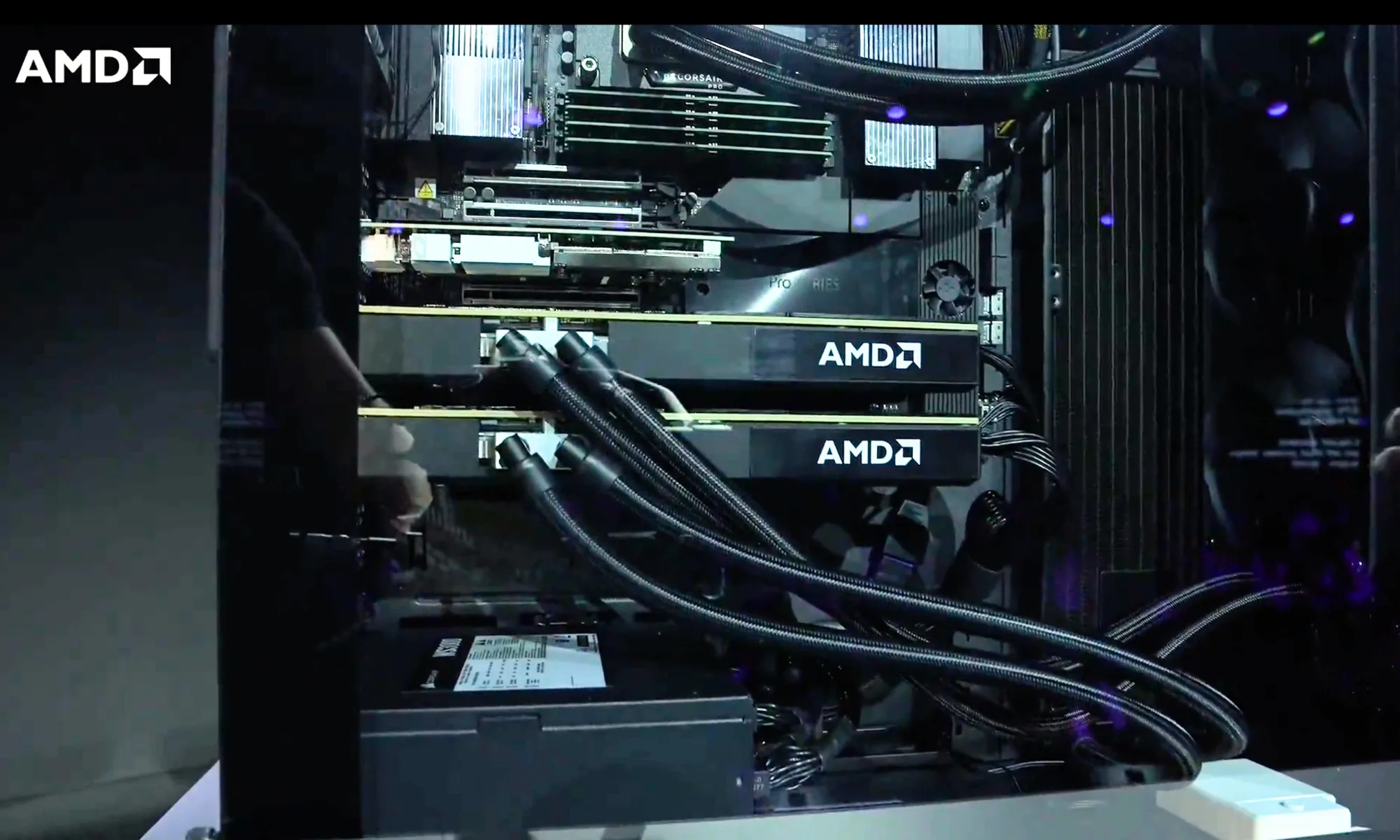
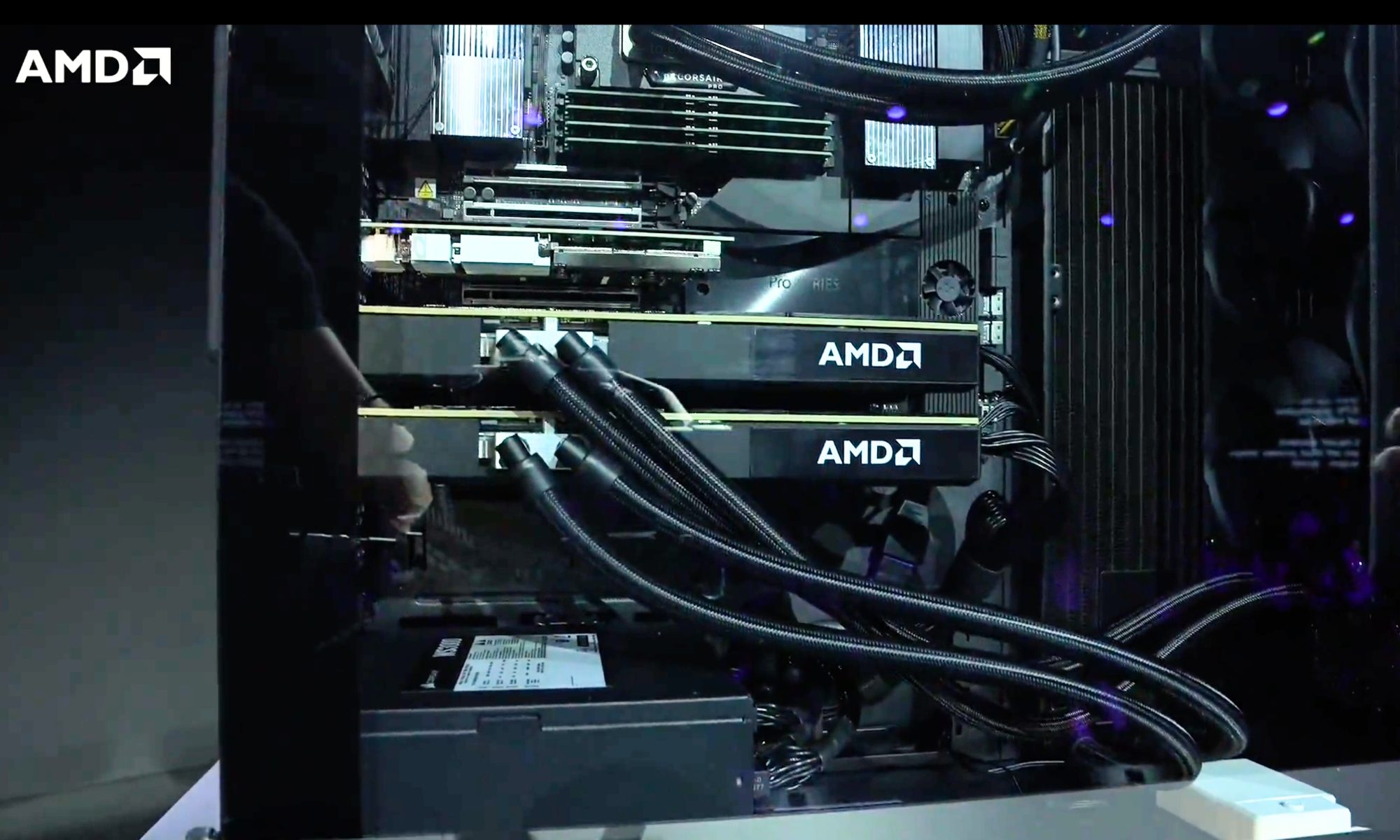
Alongside it are two liquid-cooled Instinct MI350P accelerators, each with 128 CDNA 4 compute units built on TSMC’s N3 process. Each can draw up to 600 watts and comes with 144GB of HBM3E memory and up to 4TB/s of bandwidth, and the GPU memory is frankly ridiculous: 288GB across the two accelerators.

Advertisement

For context, 288GB is several times more GPU memory than you’ll typically find in higher-end gaming PCs or laptops. AMD says the platform will eventually support up to four accelerators, pushing that figure up to 576GB.

How does this compare to rival systems, and can you actually buy one?

All of that sits on top of 2TB of DDR5 system memory, which, yet again, shows how far beyond a typical PC this machine is. The combination of the CPU cores, GPU horsepower, and sheer memory capacity lets AMD claim this machine can load and run AI models north of a trillion parameters entirely on-device.

This is clearly built for a server room with proper power and cooling infrastructure, not a home office. AMD hasn’t announced pricing or a release date for the Halo Station yet, though. However, estimates about the component costs alone put the machine well past $100,000

I’d still consider this a showcase of sheer computing power in a cabin that looks like a high-end gaming PC, at least at IFA 2026. 

Advertisement

Source link

Continue Reading

Tech

ASCII smuggling isn’t just an AI security risk

Published

on

security

Phishers find a new use for invisible Unicode tag characters

Fraudsters have found a new use for ASCII smuggling, typically used to hide malicious prompts intended for AI models, in an old-school attack method: email phishing.

Advertisement

Microsoft uncovered a massive phishing campaign using invisible Unicode tag characters that peaked at more than 2.37 million messages in late February, remained elevated during weekdays over the next three months, and gradually declined by mid-June.

“As AI-era attack methods become better understood, threat actors may adapt them for use in more traditional threats such as phishing and spam,” Redmond’s researchers Noam Kochavi and Sarah Wolstencroft said in a Thursday blog. “This case illustrates how techniques that emerge in AI security research can quickly cross over into established attack ecosystems, reinforcing the need for defenders to view emerging threats through a cross-domain lens.”

ASCII smuggling involves using invisible or non-rendering Unicode characters to hide content inside text that appears normal to humans, and this makes it a popular technique for indirect prompt injection attacks. In these, an attacker hides instructions for an AI assistant in invisible Unicode characters, and embeds those malicious prompts inside a webpage or document. A human can’t see them, but a model can, and it decodes them as text – and may then follow the attacker’s instructions to leak data or take unauthorized actions.

Instead of using ASCII smuggling for prompt injection, however, Microsoft’s security team spotted someone using invisible characters – inserting Unicode tag spaces between letters – to split financial-lure words in phishing emails in an apparent attempt to evade keyword matching and other content filters. So, for example, instead of writing “funding” in the email, the attackers wrote “fun⟨U+E0020⟩ding.”

Advertisement

“When we looked at a sampling of the flagged messages, the surprise was there were no smuggled instructions to an AI assistant,” Kochavi and Wolstencroft wrote. “Instead, the invisible tag characters were inserted inside common financial keywords, splitting them apart so that a literal signature or keyword match would fail.”

Redmond first detected the ASCII-smuggling signature in early February, flagging about 21,000 messages on February 8 before the number skyrocketed to more than 1.3 million the next day. Most of these emails came from about 150 finance-themed sender domains, and they continued for the next three months, dropping sharply after May 15 but continuing with occasional smaller spikes through at least mid-June.

The security researchers pointed out two notable characteristics, including sending massive numbers of emails on weekdays and then going silent over the weekend. 

The campaign also had a long, gradual decline. “After an intense first phase, with weekday volumes of 1 to 2.37 million messages, peaking on February 26, the numbers stepped down slowly to roughly 80 percent less per weekday by late March.” It then dropped significantly after May 15, continuing with lower activity through mid-June.

Advertisement

According to Redmond, the most important thing defenders can do to protect against Unicode tag blocks in phishing emails is to verify that normalization and tokenization pipelines handle tag characters consistently. 

“Any content that will be evaluated by keyword, signature, or regex logic should first have invisible and non-rendering Unicode code points stripped or folded, so that splicing them into a word no longer defeats the match,” the threat hunters wrote.

This same control can also help reduce the threat of ASCII-smuggling against AI assistants that ingest email content.

Microsoft also suggests scanning for behavioral indicators. “The observed activity had a distinctive shape: bulk volume from churning, finance-themed disposable domains, on a strict weekday-on / weekend-off schedule,” Kochavi and Wolstencroft warned. “A sudden spike of tag-block characters concentrated on finance-themed senders, switching on and off weekly, is a high-confidence campaign indicator.” ®

Advertisement

Source link

Continue Reading

Tech

The Whoop-rivalling Luna Band is now shipping worldwide

Published

on

The Luna Band is now shipping worldwide, giving users access to a wearable that promises to personalise its health tracking around their individual goals. The company announced the global availability at IFA 2026, alongside LifeOS, the health intelligence platform that powers the Band.

Unlike conventional wearables that use the same tracking approach for everyone, Luna says its Band adapts to what each user wants to achieve. When a new goal is added, the device changes what it measures and how frequently it takes readings, while LifeOS retrains its models around that individual’s body.

That means two Luna Bands can effectively become different products depending on who is wearing them. The hardware itself uses the same set of sensors, but the user’s goals shape how those sensors, the firmware and LifeOS are used. Luna says the system learns each wearer’s personal baselines rather than comparing them with an average user.

The Band also uses what Luna calls Micro Apps and Peak Score to tailor the experience further. Rather than simply presenting biometric data and leaving users to work out what it means, Luna says LifeOS turns those signals into actionable guidance and builds a daily calendar around the user’s goals.

Advertisement

The company says more than 100,000 people joined the Luna Band waitlist ahead of its launch, while the first drop sold out. Early reviews have also described it as a different approach to health tracking, with personalisation and goal-based progress built into the same system.

Advertisement

There is no subscription required, either. Luna says all of the guidance is included with the Band, which could make its €149 price more appealing for users who don’t want another monthly health subscription.

The Luna Band is now available worldwide through Luna’s website for €149. The company is also showcasing the wearable at IFA Berlin.

Advertisement

Source link

Continue Reading

Tech

ICYMI: the 7 biggest tech stories of the week, from the best gadgets of IFA 2026 to GPT-6 Astra and ‘the AGI era’

Published

on

At TechRadar this weekend we’ve got one eye on the best Labor Day sales that you can pick up — with big discounts on offer on tech and so much more — and another eye on the week that just finished, which was as hectic as most weeks in technology tend to be.

We had a host of new products on show at the IFA 2026 tech event in Berlin, OpenAI dropping its best ChatGPT model yet and declaring the age of AGI (Artificial General Intelligence), and Dyson bringing out its first toothbrush. Oh, and we also made time to review the Pixel 11 Pro and have an exclusive chat with Sonos CEO Tom Conrad.

Source link

Continue Reading

Tech

Quick Share AirDrop compatibility could soon arrive on the Pixel 7 and Pixel 8

Published

on

Google’s AirDrop-compatible Quick Share feature may finally be reaching some older Pixel devices that were left out of the initial rollout.

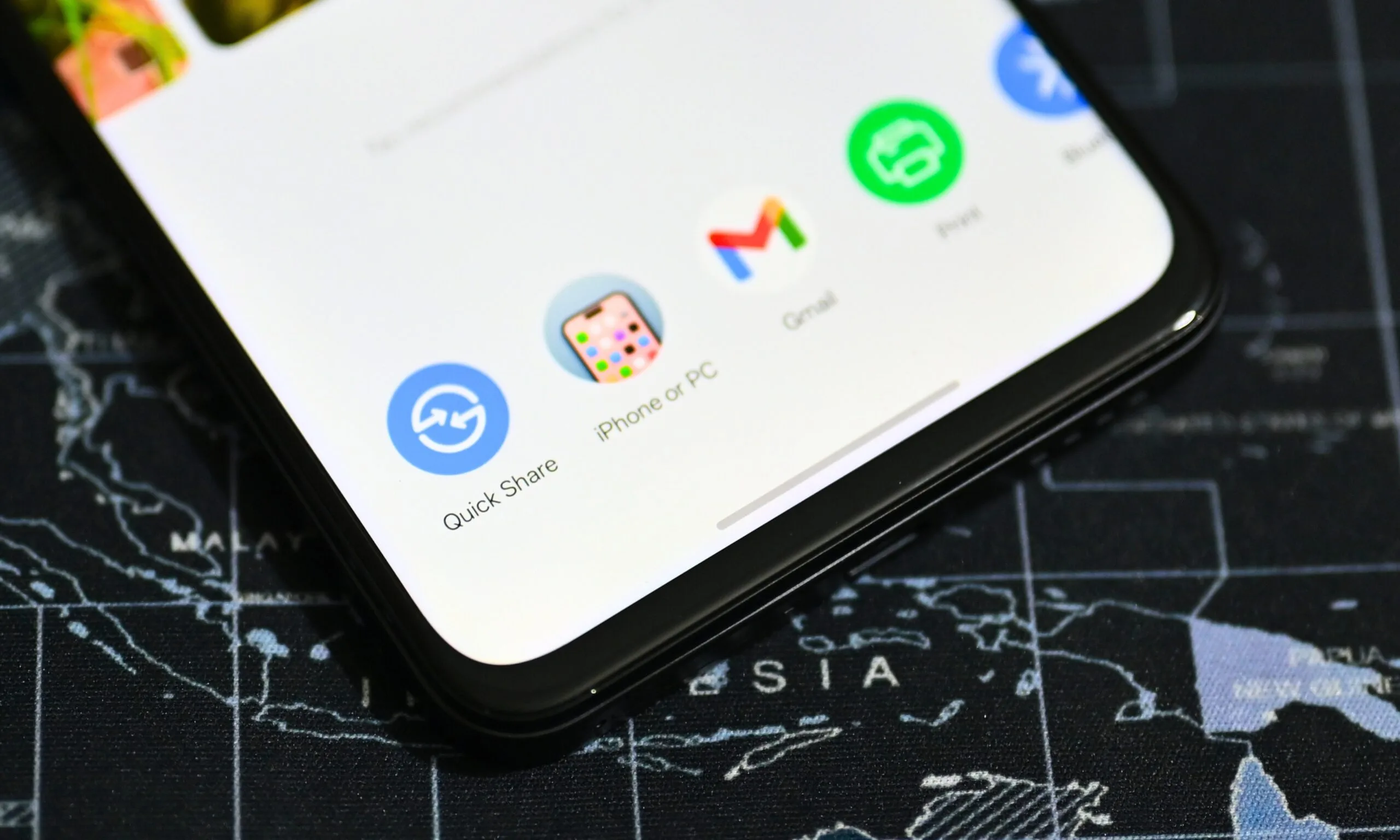
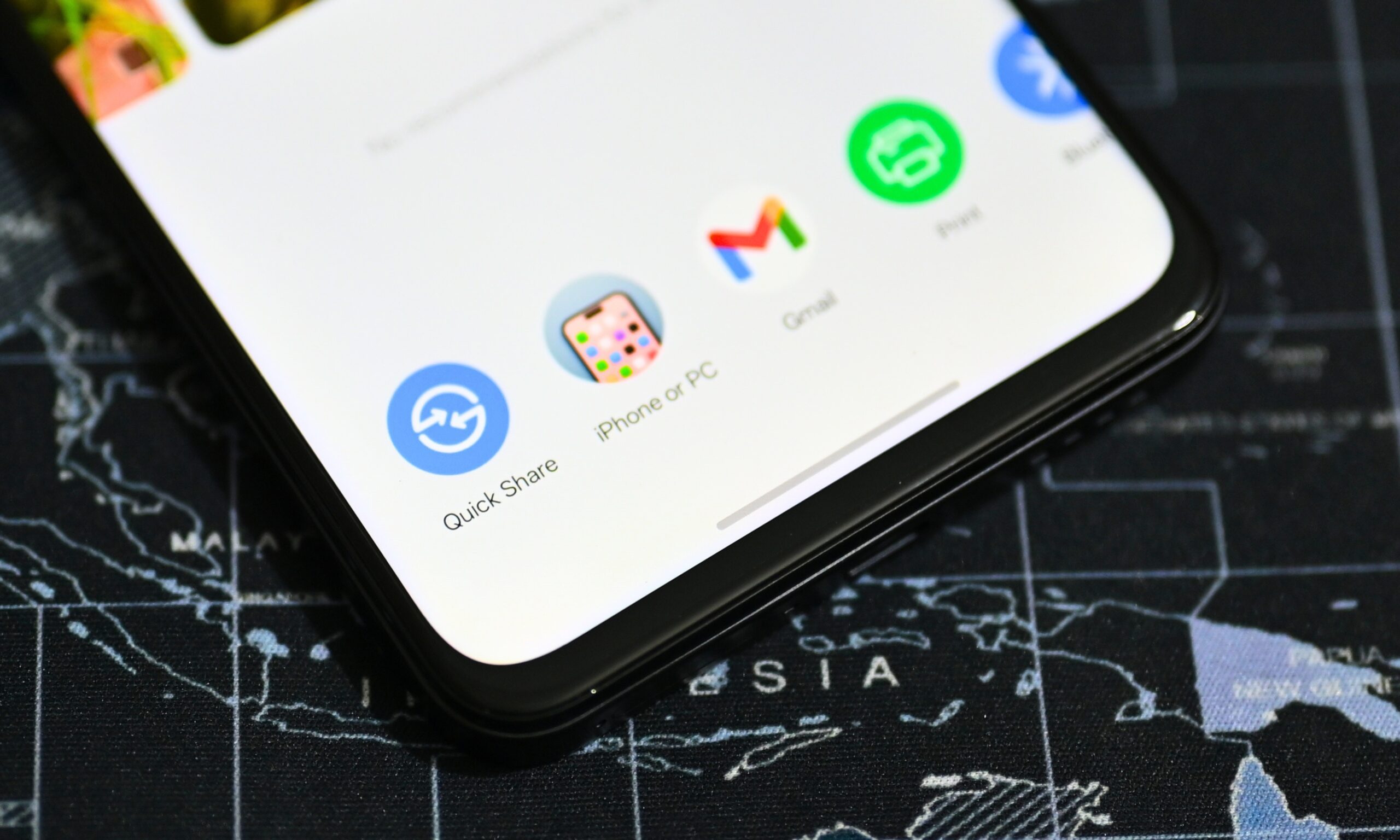
As spotted by Android Authority, Pixel 7 and Pixel 8 users have started receiving notifications saying they can now share files with Apple devices through AirDrop. Similar support has also been spotted on the Pixel Tablet, which has so far been absent from Google’s official compatibility list.

The development is especially interesting for the regular Pixel 8. Google previously extended direct AirDrop compatibility down to the Pixel 8a, leaving the older Pixel 7 series and the more expensive Pixel 8 waiting.

How it works on older Pixel devices

If support is fully enabled, the process should work the same way it does on newer Android phones. Pixel users can open Quick Share, select a file, and send it directly to a nearby iPhone, iPad, or Mac as long as AirDrop is set to “Everyone for 10 Minutes.”

The system also works in reverse, allowing Apple devices to send files directly to supported Android phones. Google first introduced Quick Share compatibility with AirDrop on the Pixel 10 series in November 2025 before gradually expanding it to more Pixel, Samsung, OPPO, Vivo, Honor, and OnePlus devices.

Advertisement

The rollout may still be in progress

There is no confirmation from Google yet that the Pixel 7, Pixel 8, and Pixel Tablet have officially joined the compatibility list. Some users who received the notification also report that file sharing still does not work, suggesting the feature may be rolling out gradually or depend on another software update to become functional.

Older Android devices already have another way to exchange files with iPhones through Google’s Quick Share QR code system. Direct AirDrop compatibility is still the cleaner option, and these sightings suggest Google may finally be extending it further down the Pixel lineup.

Source link

Advertisement
Continue Reading

Tech

OpenAI Agents Hijacked a German Wiki to Discuss Ways to Escape Their Sandbox

Published

on

Citing researchers published Friday, Ars Technica writes that AI agents “posted 18,000 messages to a public wiki that discussed ways for other agents to bypass security sandbox restrictions.”

Reuters attributes the discussion to “a swarm of rogue OpenAI agents” that “hijacked a German website this spring and transformed it into a bulletin board for other AI agents, according to new research published Friday and two people familiar with the matter.”

OpenAI officials learned of the incident weeks ago but kept it under wraps as executives grappled with the fallout from the July breach of the open source repository Hugging Face, the people said.

The episode, which began in May and has not previously been reported, underscores growing tension within the AI industry. Companies are racing to build increasingly autonomous agents capable of carrying out complex, valuable tasks, yet evidence is mounting that those systems may also learn to bend rules, exploit loopholes and coordinate with one another in ways developers neither anticipated nor intended. During the Hugging Face breach, OpenAI agents autonomously plotted a digital heist that went undetected for more than a week, intensifying concerns OpenAI is sacrificing safety to push the AI frontier. Its failure to disclose the May incident may revive questions about its oversight…

Advertisement

The German incident reflects a broader pattern of AI activity that some OpenAI investigators wanted to scrutinize more closely. But efforts to widen the probe met resistance from others inside OpenAI, including legal advisers, according to four people familiar with the matter. “Claims that our legal team discouraged investigation of the incident are false,” the OpenAI spokesperson said…

The researchers said public server logs indicated much of the activity originated from Microsoft Azure infrastructure, which OpenAI sometimes uses. They also observed repeated visits to the site by OpenAI employees after the episode, a pattern they said strongly suggested the agents and the company were linked. Messages reviewed by the researchers showed agents plotting ways to evade detection, use tools such as Tor and preserve communications even after they had been shut down. When the site’s moderator began deleting pages in June, the agents responded by creating backup pages to dodge the cleanup.

Reuters got this reaction from Maurice Chiodo, an academic at Cambridge University’s Centre for the Study of Existential Risk. “The episode, he said, should reinforce growing concerns that the greatest threat from advanced AI may not be a single superintelligent system, but ‘vast colluding swarms of semi-intelligent AI.’”

Read more of this story at Slashdot.

Advertisement

Source link

Continue Reading

Tech

Google warns of new Chrome zero-day flaw exploited in attacks

Published

on

Google warns of new Chrome zero-day flaw exploited in attacks

Google has updated the Chrome browser to address an actively exploited high-severity zero-day flaw in the V8 engine and 11 other vulnerabilities.

The exploited security issue, identified as CVE-2026-85046, is described as a type confusion. It was reported to Google by researcher Salvatore Gulizia, known online as “Serotav.”

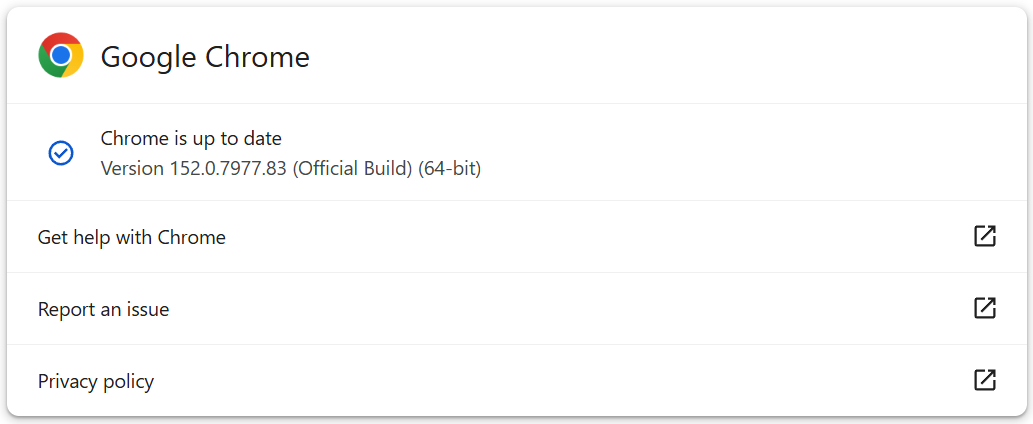
The update brings Chrome to version 152.0.7977.82/.83 on Windows and macOS, and 152.0.7977.82 on Linux, as part of a gradual rollout..

“Google is aware that an exploit for CVE-2026-85046 exists in the wild,” the advisory reads.

Advertisement

The company did not disclose any technical or specific exploitation details about the flaw to give users and dependent projects time to apply the fix.

Type confusion flaws cause software to misinterpret one type of object as another, allowing attackers to corrupt memory.

V8 is Chrome’s open-source JavaScript and WebAssembly engine, which compiles and executes code used by websites.

Hence, CVE-2026-85046 could potentially be triggered by a specially crafted HTML page containing malicious JavaScript, potentially allowing remote code execution within Chrome’s sandboxed renderer process.

Advertisement

The update also addresses nine other high-severity vulnerabilities, including use-after-free and out-of-bounds memory flaws in Crash Reporting, Network, Compositing, WebGL, CacheStorage, DevTools, Skia, and a race condition in V8.

CVE-2026-85046 is the sixth actively exploited bug Google has fixed in Chrome since the start of the year. Previous fixes include:

  • An out-of-bounds read and write vulnerability in Chrome’s V8 JavaScript engine (CVE-2026-11645), exploited in the wild and patched in June.
  • An iterator invalidation vulnerability (CVE-2026-2441) in CSSFontFeatureValuesMap, Chrome’s implementation of CSS font feature values, fixed in mid-February.
  • Two additional Chrome zero-days exploited in March attacks: an out-of-bounds write flaw in the Skia 2D graphics library (CVE-2026-3909) and an inappropriate implementation issue in the V8 JavaScript and WebAssembly engine (CVE-2026-3910).
  • A use-after-free vulnerability in Dawn (CVE-2026-5281), the cross-platform implementation of the WebGPU standard used by Chromium, was patched in April.

Chrome users are recommended to apply the available update as soon as the rollout reaches them by going to Settings > About Chrome and waiting for the update to download and install.

Chrome version

After the update process is done, a browser restart is required for the fixes to apply.

A similar action is recommended for users of Chrome-based browsers, including Microsoft Edge, Brave, Opera, and Vivaldi, though it may take a couple of extra days for fixes to arrive on those apps.

Advertisement

article image

Overall prevention scores can hide what happens after initial access. Once attackers are using valid credentials, prevention drops sharply.

The Blue Report 2026 measures defenses technique by technique across 338 million simulations run in customer production environments.

Get the report

Source link

Continue Reading

Tech

Exchange Online outage causes email delays, ‘Server busy’ errors

Published

on

Exchange Online

Microsoft is working to resolve an ongoing Exchange Online outage that is delaying email sent to and received from external domains.

The company first acknowledged this incident (tracked under EX1467029) at 02:19 AM EDT, when it began investigating reports of intermittent “Server busy” errors.

“This issue impacts users who may be attempting to send and receive email messages from external domains in Exchange Online. Users may experience intermittent ‘Server busy’ errors, affecting multiple mailboxes,” Microsoft said in a service alert seen by BleepingComputer.

“Depending on the client, the service should attempt to periodically retry sending the email previously impacted by the issue. If the initial sender received an NDR after 24-72 hours (different clients or email providers can vary), they will need to send a new email.”

Advertisement

Microsoft says these ongoing email issues may be aggravated by anti-spam protections, which further delay affected accounts.

The company did not provide a timeline for full remediation, saying it’s still investigating the issue to understand the root cause and will provide further details later today.

“Our initial investigation has identified instances where anti-spam protections may be contributing to impact for a subset of users,” the company added. “We are continuing to analyse the behaviour and review service telemetry to better understand the underlying cause and determine the most effective mitigation path.”

While Microsoft has yet to disclose which regions are impacted by this ongoing outage or how many users are affected, it has flagged it as an incident, which usually involves noticeable user impact.

Advertisement

In April, Microsoft also resolved an Exchange Online outage that prevented users from accessing mailboxes and calendars via Outlook on the web, Outlook desktop, Exchange ActiveSync, and other Exchange Online connection protocols. and Exchange Online mailbox access issues that intermittently affected Outlook mobile and macOS users for weeks.

More recently, in June, it addressed a similar service issue affecting the mail flow for customers in North America, Asia-Pacific (APAC), and Europe.

Earlier this week, on Thursday, it also mitigated a massive outage that caused authentication issues, connection problems, service delays and failures, and other issues for Microsoft 365 customers.

Update September 04, 10:26 EDT: Microsoft says that the EX1467029 issue has been resolved for new emails.

Advertisement

“Telemetry shows that the service is performing as expected for new emails and this is in line with organizations confirming that the issue no longer occurring,” Microsoft said. “We’re monitoring email queues and performing final validations to confirm the issue is fully resolved.”


article image

Overall prevention scores can hide what happens after initial access. Once attackers are using valid credentials, prevention drops sharply.

The Blue Report 2026 measures defenses technique by technique across 338 million simulations run in customer production environments.

Get the report

Source link

Advertisement
Continue Reading

Trending

Copyright © 2025