
Crypto World
Dollar stablecoins can weaken local currencies, BOK finds



Demand for dollar-backed stablecoins can place downward pressure on national currencies when investors receive direct access through fiat trading pairs, according to research published by the Bank of Korea on Sept. 3. The effect appeared after Binance introduced trading between selected local currencies and stablecoins such as USDT and USDC.
Summary
- Dollar-backed stablecoins transmitted buying pressure into exchange rates after Binance introduced direct fiat pairs globally.
- Local stablecoin premiums declined between 0.33 and 0.38 percentage points following Binance pair introductions overall.
- Korea showed higher stablecoin premiums but no measurable exchange-rate response without direct Binance pairing access.
- Market makers can sell received local currencies for dollars while balancing stablecoin trading positions afterward.
- Researchers examined 12 currencies using pairing events between 2019 and 2025 to identify transmission effects.
The Bank of Korea study, written by Jihyun Kim and Sangheum Cho, examined 12 currencies with enough local and global exchange data. Pair introductions covered the period from 2019 through 2025.
The researchers found that direct fiat-stablecoin markets strengthened the connection between crypto demand and foreign exchange markets. Stablecoin premiums became smaller, but demand shocks also gained a route into conventional currency trading.
The findings do not establish that stablecoin demand always causes currency depreciation. The measured relationship depended on market structure, access to global intermediaries and the availability of direct trading pairs.
Binance pairs connected stablecoin demand with FX markets
Dollar stablecoins trade globally, but investors in many countries cannot always purchase them directly with local currency on a large international exchange. They may instead buy stablecoins through domestic platforms, peer-to-peer markets or intermediaries.
That separation can create a local premium. The price of USDT or USDC on a domestic exchange may rise above the conventional dollar exchange rate when demand exceeds the available supply. Capital controls, transfer costs and restrictions on international exchanges can prevent arbitrageurs from closing the difference immediately.
Binance’s introduction of direct fiat-stablecoin pairs changed this structure for the currencies examined. Global market makers could sell stablecoins directly to investors paying with local currency. Those firms could then manage the resulting fiat exposure through conventional FX markets.
For example, a market maker selling USDT for Brazilian reais receives reais while giving up a dollar-linked asset. To rebalance, it can sell the reais and buy dollars in the FX market. Stablecoin buying demand can therefore generate an accompanying sale of the local currency.
The researchers described this as a shock-transmission channel. Before direct pairing, buying pressure mainly affected the domestic stablecoin premium. After pairing, some of the pressure passed into the exchange rate.
Net buyer-initiated stablecoin order flow was associated with depreciation among paired currencies. The result indicates that the direction of trading activity mattered, not only the difference between local and global stablecoin prices.
The findings support concerns that digital dollar demand may affect national currencies through new channels. An International Monetary Fund official similarly warned that local tokens could ease conversion into dollar stablecoins, particularly when on-chain markets allow users to move between currencies without conventional banking routes.
Stablecoin premiums fell after direct trading opened
The study also found stronger price integration between global and domestic stablecoin markets. Local premiums declined by approximately 0.33 to 0.38 percentage points following the introduction of Binance fiat pairs.
This decline means the local stablecoin price moved closer to the corresponding spot exchange rate. Global liquidity providers could respond when domestic demand pushed stablecoins above prices available elsewhere.
On-chain and exchange flows provided further support for this result. Stablecoins tended to move from Binance into local exchanges when domestic premiums exceeded prices on Binance. Traders could purchase the tokens in the lower-priced market, transfer them and sell where the premium was higher.
The process improves price consistency across venues, but it also links markets that were previously more separated. A demand shock that once remained within a domestic crypto exchange can prompt global market makers to trade the underlying national currency.
The paper’s result is therefore not simply that exchange listings reduced trading costs. Greater integration came with stronger transmission between digital-asset demand and foreign exchange prices.
In a separate weekly test, the researchers used Google searches for Bitcoin as a proxy for crypto investment interest. A one-standard-deviation increase in search activity was associated with a 0.118% depreciation of the Brazilian real and a 0.109-percentage-point increase in Brazil’s stablecoin premium.
These figures describe statistical relationships within the study’s sample. They do not mean every increase in Bitcoin searches will produce an equivalent currency move. Search activity may also capture broader risk sentiment, political developments or financial stress.
Korea’s unpaired market absorbed demand through premiums
South Korea provided a useful comparison because Binance did not offer a direct won-stablecoin pair during the period examined. Korean investors mainly accessed stablecoins through domestic exchanges or other indirect channels.
The researchers found no statistically measurable relationship between stablecoin buying pressure and the won’s exchange rate. Instead, stronger demand mainly raised the price premium for stablecoins inside the Korean market.
This contrast supports the study’s market-structure argument. Where global intermediaries could not directly accept won in exchange for stablecoins, they had no equivalent position to unwind through the conventional FX market.
The result does not show that Korean stablecoin activity has no connection with the won. It shows that the specific exchange-rate transmission identified among Binance-paired currencies was not measurable in Korea under the market structure studied.
Korean demand is already large. Won-denominated purchases of stablecoins reached about $64 billion during the 12 months through June 2025, according to Chainalysis data. The firm described South Korea as Asia-Pacific’s largest local-currency stablecoin market during that period.
The Bank of Korea said the relationship could change if the country expands access for corporations and foreign investors. That view remains forward-looking because Korea has not yet developed the same direct trading structure used in the study’s paired markets.
South Korea is also considering wider digital-asset rules. Lawmakers have been working on legislation covering stablecoin issuers, reserve standards and supervision. The central bank has supported a model in which banks lead won-backed issuance during the market’s early stages, citing monetary and financial stability concerns.
That position was reinforced when the Bank of Korea supported bank-led stablecoin consortiums while discussions over the Digital Asset Basic Act remained unresolved.
Dollar stablecoins create a new capital-flow channel
Traditional capital flows move through banks, securities markets and regulated foreign exchange dealers. Stablecoins add another route because investors can acquire dollar-linked assets through cryptocurrency exchanges and transfer them across borders.
The Bank of Korea researchers described these movements as a form of non-traditional capital flow. The asset remains a blockchain token, but the market maker’s decision to hedge its exposure can produce a conventional dollar purchase and local-currency sale.
This mechanism may be especially relevant in countries where households use stablecoins to preserve purchasing power. Demand often rises during inflation, currency depreciation or limited access to conventional dollar accounts.
Tether has pointed to Venezuela, Argentina, Bolivia and Turkey as markets where USDT adoption has grown amid currency instability and restricted dollar access. Those are company claims rather than independent measurements, but they align with the broader pattern examined in crypto.news coverage of stablecoin use during local currency stress.
The mechanism can work in both directions. Existing currency weakness may encourage investors to buy stablecoins, while the transactions used to fulfil that demand may add selling pressure to the local currency. Separating those effects is difficult because demand for digital dollars often increases when confidence in domestic money is already declining.
The study used the timing of Binance pair introductions to identify changes in market structure. This approach helped the researchers compare conditions before and after global intermediaries gained direct access. It does not remove every outside factor affecting exchange rates.
The researchers argued that deeper FX liquidity could improve a market’s ability to absorb stablecoin-related flows. Wider international use of the won could also create more counterparties and reduce the effect of individual demand shocks.
Korea’s stablecoin rules may shape future FX exposure
The findings arrive while South Korea is developing a broader regulatory framework for stablecoins, tokenized securities and digital-asset markets. Changes allowing greater corporate or foreign participation could increase liquidity, but they could also strengthen the link between crypto demand and the won.
Authorities are considering how won-backed stablecoins should be issued and supervised. The Bank of Korea prefers bank-led issuance, while some lawmakers and technology companies have supported broader access for licensed non-bank firms.
The government has also outlined plans to expand offshore won settlement and modernize foreign exchange rules. Those measures could make the currency more accessible internationally, potentially increasing the market’s capacity to absorb cross-border flows.
South Korea’s roadmap combines won stablecoins with foreign exchange reforms, reflecting the same policy connection identified in the Bank of Korea paper. Stablecoin regulation cannot be separated entirely from currency-market structure when tokens trade directly against national money.
No new rule or trading pair was announced alongside the study. The paper is research rather than a regulatory order. Its main contribution is evidence that exchange design determines whether stablecoin demand remains a crypto-market premium or enters the conventional FX market.
For Korean policymakers, the central question is not only whether local investors will use stablecoins. It is whether future market access will give global intermediaries a direct route to hedge won positions through foreign exchange markets.
FAQs
Why can stablecoin purchases weaken a local currency?
A market maker selling dollar stablecoins for local currency may later sell that currency and purchase dollars to rebalance its position. Those FX transactions can add depreciation pressure.
Did the researchers find that stablecoins always weaken currencies?
No. The relationship appeared among currencies with direct Binance fiat-stablecoin pairs. Korea showed higher local premiums but no measurable exchange-rate response under its different structure.
Why did local stablecoin premiums decline?
Direct Binance pairs allowed global market makers to supply stablecoins and arbitrage price differences. That liquidity brought local prices closer to conventional dollar exchange rates.
What does the research mean for South Korea?
Future corporate participation, foreign access or direct global exchange pairs could strengthen links between stablecoin demand and the won. The study did not predict the size of any future effect.



A British investor has recovered 61 bitcoin worth approximately £3.3 million, or about $4.5 million, more than 12 years after losing access to the cryptocurrency.
Summary
- British investor recovered 61 BTC after proving ownership of funds held through collapsed exchange Intersango.
- His £1,500 investment produced recovered bitcoin valued around £3.3m after more than twelve years inaccessible.
- CEL Solicitors says it identified over 5,500 BTC potentially connected to other former Intersango customers.
- Claimants need historic bank statements, emails or exchange records demonstrating their individual bitcoin ownership rights.
- The law firm has not publicly disclosed the identified wallet address or complete recovery methodology yet.
The investor originally spent around £1,500, then worth about $2,000, through the early U.K. exchange Britcoin in December 2011.
The investor, identified only as “Chris,” purchased bitcoin when it traded below $4, according to the law firm that handled the recovery. Britcoin later became Intersango, which stopped providing trading services before disappearing from the internet.
Chris said his holdings were worth about £4,000 when he lost access. He had a young family and a new home at the time, making the apparent loss particularly difficult.
“The worst thing was seeing Bitcoin grow and knowing what I could have done with the money,” Chris said in an account of the recovery.
Bitcoin ownership was proved with old banking records
CEL Solicitors said it recovered the assets after combining cryptocurrency tracing technology with documents showing that Chris had purchased the bitcoin. The firm publicly announced that the case was completed in about four months without law-enforcement intervention.
Ryan Sweetnam, director of financial litigation at CEL, said the evidence included banking documents dating back almost 15 years. Other useful records can include exchange emails, account-registration messages, deposit confirmations and customer-support correspondence.
Blockchain records can identify transactions between cryptocurrency addresses, but they do not contain customers’ legal names. A transaction showing bitcoin entering an exchange wallet does not by itself establish which customer owned the corresponding account balance.
Investigators therefore need to connect on-chain transfers with off-chain evidence. Bank statements may show payments to an exchange, while emails can establish the account holder’s identity and transaction history.
CEL has not disclosed all the documents used in Chris’s case. It also has not published a court judgment, settlement agreement or detailed tracing report. The result should therefore be presented as a recovery reported by the law firm rather than one independently confirmed through public court records.
The recovered amount was 61 BTC, according to the firm and subsequent reports. Its dollar value depends on bitcoin’s price. At $76,500 per coin, the holding would be worth approximately $4.67 million, while a slightly lower reference price produces the reported $4.5 million valuation.
Intersango shut down during Bitcoin’s early years
Britcoin was among the earliest platforms allowing customers to trade bitcoin against the British pound. It was later renamed Intersango and expanded its services while the cryptocurrency market remained small and lightly regulated.
Intersango announced that it would stop U.S. dollar trading in October 2012, according to a contemporary report. Its wider services later stopped, and the platform’s website was offline by early 2014.
The exchange operated before present-day cryptocurrency custody standards became common. Customers frequently left assets in exchange-controlled wallets without the detailed statements, segregated custody arrangements or recovery procedures expected from regulated financial firms.
This meant users depended on the exchange to maintain wallet access and accurate internal account records. When an early platform disappeared, customers could retain evidence that they had deposited money without possessing the private keys controlling the resulting bitcoin.
Chris’s case concerns custodial access rather than a forgotten personal seed phrase. He reportedly bought the bitcoin through an exchange and later lost access when the platform closed. The lawyers therefore had to establish an ownership claim instead of reconstructing a lost private key.
That distinction matters. No tracing company can derive a private key from a public Bitcoin address or reverse a properly confirmed transaction. Legal recovery generally requires access to a custodian, exchange account, identifiable counterparty or person controlling the relevant assets.
The case shares some features with other failed-exchange recoveries. Former Mt. Gox customers also had to prove account balances before receiving distributions. However, Mt. Gox repayments proceeded through a formal rehabilitation process involving a court-appointed trustee.
CEL has not identified an equivalent public insolvency process behind the Intersango recovery. The firm said it reclaimed the assets without law-enforcement involvement, but it has not disclosed who transferred the bitcoin or the legal mechanism used.
Another 5,500 BTC may be connected to Intersango
CEL Solicitors said its sister company, The Crypto Tracing Experts, identified a wallet containing more than 5,500 BTC that it believes is linked to former Intersango users.
At $76,500 per bitcoin, 5,500 BTC would be worth approximately $420.75 million. At higher market prices, the valuation could exceed $430 million.
That figure does not mean CEL has recovered a $421 million pool for distribution. It represents the balance of a wallet the firm says may contain bitcoin connected to former users.
The firm has not published the wallet address. Independent analysts therefore cannot confirm its current balance, examine its complete transaction history or verify the alleged connection to Intersango.
It is also unclear who controls the wallet’s private keys. Identifying an address through blockchain analysis does not provide the ability to transfer its funds.
CEL has not disclosed how many former Intersango users may hold valid claims. The total could also include assets belonging to exchange operators, customers who later withdrew their funds or parties unrelated to the platform’s unresolved balances.
Any former user seeking recovery would need to demonstrate individual ownership. Evidence that someone once opened an Intersango account would not be enough. The claimant would also need to show deposits, purchases and a balance that remained on the platform when access ended.
The age of the records could present the largest obstacle. Banks, email providers and customers may no longer retain documents from 2011 or 2012. Account holders may also have changed names, addresses or financial institutions.
The firm’s claim that other customers could recover funds remains untested publicly. The next reliable evidence would be another completed recovery, disclosure of the wallet address or publication of court documents supporting ownership and control.
The recovery shows why custody records matter
Bitcoin’s blockchain preserves transaction records indefinitely. Investigators can still examine transfers made more than a decade ago, even after the company operating the original exchange has disappeared.
However, blockchain transparency solves only part of the problem. A claimant still needs traditional documents connecting their identity to the relevant transactions and exchange account.
The case illustrates the difference between tracing and recovery. Tracing identifies where cryptocurrency moved. Recovery requires technical access, voluntary cooperation, a legal settlement, an insolvency distribution or an enforceable court order.
Investors should remain cautious when dealing with services promising to retrieve lost cryptocurrency. A legitimate investigator cannot guarantee the recovery of assets held in a wallet whose owner is unidentified or uncooperative.
Recovery firms also do not need a customer’s seed phrase to analyze public blockchain transactions. Requests for private keys or recovery phrases can expose users to further losses.
For current holdings, self-custody removes dependence on an exchange but makes the owner responsible for protecting the keys. Multisignature arrangements can reduce reliance on one credential by requiring several approvals, as explained in crypto.news’ guide to securing cryptocurrency with multisignature wallets.
Chris said he plans to use part of the recovered value to help his family, including buying a larger home and helping his son repay housing debt. He also intends to retain some bitcoin.
“I want to keep some Bitcoin to see if the value rises again,” he said. He added that price declines and theft remain concerns. Any future increase in value remains uncertain.
No formal deadline has been announced for former Intersango users to submit records. There is also no published distribution timetable for the 5,500 BTC that CEL says it traced.
For now, the completed 61 BTC recovery stands as evidence that some old custodial claims can be resolved when transaction data and ownership records survive. It does not establish that all former Intersango customers will recover their holdings.
As with most previous weekends, this one is also quite sluggish for bitcoin, which continues to fight for $80,000 without making any major moves.
The same cannot be said for some altcoins, though. ZEC, for example, has skyrocketed by 17% daily, while ARB has stolen the show with a massive 42% surge.
BTC Fights for $80K
The primary cryptocurrency closed August (on Monday) in the green for the first time in a bear market, surging by over 25% for the month. This came even after its early Monday retracement from $79,000 to $77,000 as the US and Iran resumed the strikes against each other.
Bitcoin rebounded to $79,000 rather quickly, but it was rejected on Tuesday and driven south to under $76,500 by Wednesday. That’s when the bulls returned in full force, initiating a major leg up that drove the asset to $82,400. This became BTC’s highest price tag since mid-May.
However, the strong US jobs report from Friday led to a major decline, as bitcoin slipped by three grand as the odds for the Fed to hike the rates skyrocketed. Nevertheless, BTC managed to rebound from the drop to $78,600 and jumped to around $80,000, where it spent most of the weekend, even though the amount of bearish news that should push it south has risen significantly in the past week.
Its market capitalization is back at $1.6 trillion on CMC, while its dominance over the alts has declined slightly to 59.1%.

ZEC, ARB on a Roll
Ethereum has neared $2,500 again after a 1.75% increase daily. BNB, which touched $770 yesterday, is below $760 now, while XRP has defended the $1.40 support. SOL is well above $100 once again, and similar gains are evident from the likes of HYPE, DOGE, RAIN, XMR, LINK, and ADA.
Uniswap’s UNI has jumped to $7 after a 10% increase, while ZEC is close to $1,200 for the first time in almost a decade following a major 17% jump. Arbitrum’s native token has stolen the show, surging by 42% to over $0.19.
The total crypto market cap remains at just over $2.7 trillion on CMC after a 0.8% increase since yesterday.

The post Arbitrum (ARB) Rockets by 42% Daily, Bitcoin (BTC) Fights for $80K: Weekend Watch appeared first on CryptoPotato.


Ethereum co-founder Vitalik Buterin outlined a longer-term transaction model on Sept. 6 that could allow the network to process some validation work in parallel.
Summary
- Buterin proposed separating transaction actions from dependencies so Ethereum can optimize each component independently later.
- Dependencies include signatures, state proofs and validity conditions that transactions must satisfy before execution begins.
- Pure dependencies could be checked once by mempools and later compressed into recursive STARK proofs.
- EIP-8141 proposes frame transactions with programmable validation, execution and gas payment inside one transaction format.
- Ethereum developers have not approved EIP-8141 for a mainnet upgrade or published deployment dates yet.
His proposal separates the effects produced by transactions from the conditions that must be satisfied before those effects can occur.
Buterin described the two components as “actions” and “dependencies” in a detailed post. Actions change Ethereum’s state, such as transferring ETH or calling a contract. Dependencies cover the information required to establish that a transaction is valid.
A digital signature is one example of a dependency. Other examples include Merkle proofs showing that an unspent output exists, zero-knowledge proofs and state conditions that must remain true when a transaction enters a block.
Buterin argued that making this distinction explicit could help Ethereum scale without abandoning its flexible execution environment. However, the proposal remains part of continuing protocol research. Ethereum developers have not approved the full design for deployment.
Ethereum could process transaction dependencies in parallel
Ethereum transactions currently combine authorization, fee payment and execution within a common processing flow. Nodes check whether a transaction is properly signed, whether the sender can pay for it and whether its instructions execute successfully.
Some of these checks do not depend on the transaction’s final state changes. Buterin said such dependencies could be processed separately and, in many cases, simultaneously.
For example, a validator may need to confirm a signature before accepting a transaction. That verification does not necessarily need to wait for unrelated signatures attached to other transactions. If multiple independent checks are known in advance, clients can distribute the work across available processing resources.
State-dependent checks require greater care. A condition tied to an account balance or storage slot may become invalid if an earlier transaction changes the same state. Buterin said mempools could reason about these conditions more effectively when transactions declare which parts of the state they access.
The approach would reward predictable transactions. Operations that specify their dependencies clearly could receive lower gas costs because clients could verify them more efficiently. Transactions requiring dynamic calls and unpredictable state access would remain possible but could cost more.
Buterin estimated that more than 90% of Ethereum activity by volume does not require the network’s full level of dynamic flexibility. That figure is his assessment rather than a published network measurement within the post. The broader argument is that common transfers and routine contract interactions could use more restrictive formats without limiting specialized applications.
The proposed model would preserve Ethereum’s flexible account system for transactions that need it. More predictable activity could use statically analyzable structures resembling parts of Bitcoin’s transaction model.
Bitcoin uses an unspent transaction output model in which a transaction identifies the outputs it intends to spend. Ethereum normally uses accounts with balances, nonces and programmable contract storage. Buterin is not proposing that Ethereum replace its account model with Bitcoin’s architecture. He described a spectrum combining ideas from both systems.
EIP-8141 provides a general transaction framework
EIP-8141 is a draft Ethereum Improvement Proposal for a new transaction type known as a Frame Transaction. It divides a transaction into contract-call frames that can validate authority, approve gas payment and perform user operations.
The official proposal says transaction validity and fee payment would no longer depend solely on a standard signature attached to the outer transaction. Account code could instead define the necessary authorization and payment rules.
Frame Transactions could support sponsored fees, payments in tokens other than ETH, key rotation and transaction batching. They could also allow externally owned accounts to receive account-abstraction features without relying on the same contract deployment across every compatible network.
Under the proposed structure, verification frames would determine whether the sender authorized the transaction. Separate frames could establish who pays the fees and then execute the requested operations.
This structure aligns with Buterin’s division between dependencies and actions. Verification frames handle conditions that must be satisfied. Sender frames handle the operations that alter state.
The format could also improve interoperability between Ethereum Virtual Machine networks. Different chains could support the same minimal transaction structure while applying their own verification tools, precompiles or account features.
Buterin described the potential format as a basic list of calls with flags identifying their function. A call could be marked as a pure dependency, a state-dependent verification or an action. The transaction would also contain standard information such as its origin and nonce.
EIP-8141 remains classified as a draft Core proposal. Its current specification includes detailed rules for mempool admission, frame execution, receipts, signatures, gas accounting and transaction propagation. Those details can change during review.
Ethereum developers have also debated technical concerns. These include denial-of-service risks, transaction replacement rules, tooling changes, pending-transaction limits and restrictions placed on verification frames.
One discussion noted that the proposed public mempool would normally keep only one pending Frame Transaction for each sender. Developers have questioned how that rule would affect accounts that regularly submit several transactions within one block.
Other participants have examined whether the format introduces additional complexity for wallets, block builders and Ethereum’s remote procedure call interfaces. These questions must be resolved before client teams can implement a stable specification.
Recursive STARKs could remove repeated verification
Buterin’s longer-term model goes beyond EIP-8141. He suggested that dependencies requiring no state access could be checked once at the mempool layer instead of being repeated by every validator.
A pure dependency might include a cryptographic signature or proof whose validity does not change with Ethereum’s state. After checking it, the network could replace multiple pieces of verification work with a recursive STARK confirming that all checks were completed correctly.
A STARK is a cryptographic proof that allows one party to demonstrate that a computation was performed correctly. Recursive proofs can verify other proofs, making it possible to combine many checks into a smaller verification task.
The proposed mempool could aggregate transaction signatures, validity proofs and other dependencies before block execution. Validators would then verify the aggregated proof instead of independently repeating each original computation.
Buterin suggested that this approach might also reduce the amount of verification data placed on-chain. If the recursive proof establishes that all dependencies were valid, some of the original data could potentially be omitted.
That outcome is not part of the current EIP-8141 specification. It would require additional research covering proof generation, mempool coordination, data availability and protections against invalid aggregation.
The design also relates to Ethereum’s preparation for post-quantum cryptography. Quantum-resistant signatures are generally larger and more expensive to verify than the ECDSA signatures used by ordinary Ethereum accounts.
EIP-8141 could allow accounts to define new authorization schemes without waiting for Ethereum to replace a single fixed signature standard. Recursive proof aggregation could then reduce the cost of verifying large post-quantum signatures.
EIP-8141 could help Ethereum accounts adopt post-quantum authorization if practical signature systems become available. That remains a longer-term security path rather than an immediate response to an active quantum threat.
Keyed nonces could remove transaction bottlenecks
Ethereum accounts use sequential nonces to prevent transaction replay. If an account submits transactions numbered 10, 11 and 12, the network normally processes them in that order.
The sequence can create a bottleneck. If transaction 10 becomes stuck or invalid, later transactions from the same account may also wait, even when their operations are unrelated.
Keyed nonces would give an account several independent nonce sequences. Transactions assigned to different keys could proceed without waiting for another sequence to advance.
This could help smart accounts, privacy systems and applications that submit several independent operations simultaneously. Each workflow could receive its own nonce domain while retaining replay protection.
Crypto.news previously reported that keyed nonces could prevent independent private transactions from blocking each other. The feature is part of a broader effort to improve privacy transactions, flexible accounts and censorship resistance.
Buterin also connected the transaction work with alternative state models, including native UTXO designs and proof-based state structures. These projects explore whether some assets or operations can use predictable state rules while complex contracts retain Ethereum’s existing flexibility.
The approach could create several processing levels. Simple, declared operations would be easier to analyze and could receive lower fees. Dynamic contract calls would continue to work but would consume more resources because clients cannot prepare their execution in the same way.
Such differentiated pricing would attempt to align fees with the actual scaling constraints created by each transaction. It would not guarantee lower fees for every user or application.
EIP-8141 still requires developer approval and testing
EIP-8141 must pass several stages before it can affect Ethereum users. Core developers first need to agree that Frame Transactions offer a better path than competing account-abstraction designs.
The proposal would then require client implementations, development networks, interoperability testing, wallet support and security review. Developers would also need to test how Frame Transactions interact with block builders, mempools, fee markets and existing smart contracts.
Earlier developer discussions considered EIP-8141 for Ethereum’s future Hegotá upgrade. However, crypto.news reported that Frame Transactions remained under consideration rather than formally scheduled.
FOCIL, a separate proposal intended to improve censorship resistance through transaction inclusion lists, has also been discussed alongside EIP-8141. The two proposals address different problems. Frame Transactions concern authorization and execution structure, while FOCIL concerns the inclusion of eligible transactions in blocks.
Developers have argued that using them together could provide native account abstraction with stronger censorship resistance. That combination is still a proposed package, not an approved Ethereum roadmap commitment.
Buterin’s Sept. 6 comments therefore describe a possible direction for Ethereum transaction design. They do not announce a completed upgrade, activation date or confirmed change to mainnet gas fees.
The next verifiable milestones would be formal developer support, inclusion in an upgrade scope and working implementations on development networks. Until then, EIP-8141 and recursive STARK mempools remain active research and engineering proposals.
FAQs
What is EIP-8141?
EIP-8141 proposes Frame Transactions that divide validation, fee approval and execution into separate contract-call frames.
It is currently a draft Core proposal. Ethereum developers can still change or reject its specification.
What is the difference between an action and a dependency?
An action changes Ethereum’s state, such as sending ETH or calling a contract. A dependency is a condition that must be valid, such as a signature or state proof.
Separating them could allow independent dependencies to be processed simultaneously before state-changing operations are executed.
Will EIP-8141 lower Ethereum transaction fees?
It could make predictable transactions cheaper to process if developers adopt gas pricing that rewards statically analyzable operations.
No fee reduction is confirmed. Costs would depend on the final specification, client implementation and future upgrade decisions.

The extra time it takes to figure out exactly where to send help, even if it’s a few extra seconds, costs lives. But the United States has let our 911 emergency response system languish for decades, failing to make the necessary investments to bring it into the digital age. That inaction should be unacceptable to every American. Upgrading 911 technology should be a national priority, and Congress must provide sufficient funding to ensure it works in every community.
When America’s 911 system launched in 1968, it was built to serve people calling from landlines at fixed locations. Callers were tracked using address directories that listed the location of the phone they were calling from. As a result, emergency personnel could be dispatched almost immediately. It made sense, and it worked fast.
Nearly 60 years later, we are living in a completely different era. In 2024, more than three-quarters of 911 calls came via either cellphones or Voice over Internet Protocol (VoIP) and other wireless voice services. Since some states do not break down calls by service type, that number is likely even higher. By contrast, only about 7% came from landlines. In many states, landlines now account for less than 5% of 911 calls. That number is likely to decline further in the years ahead.
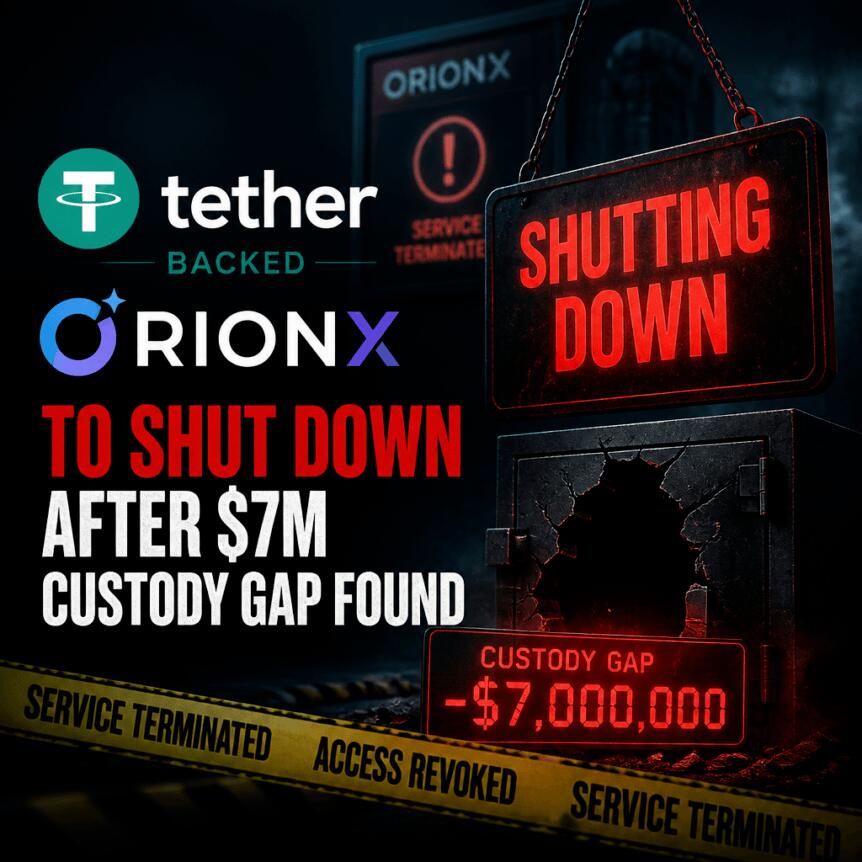
Orionx, a Chile-based cryptocurrency exchange backed by Tether, is shutting down after a forensic review flagged a multimillion-dollar custody discrepancy, according to statements shared by the company on X. The exchange said it is moving into a permanent closure process and has temporarily suspended withdrawals as it works to return client funds.
Orionx said the audit identified more than $7 million in assets recorded in its custodial records that had been transferred to wallets it does not manage. The announcement arrives against a broader backdrop of increased scrutiny around custody controls and regulatory compliance for crypto firms operating in Latin America.
Key takeaways
- Orionx is initiating a permanent shutdown after a forensic audit found a custody mismatch involving more than $7 million.
- The exchange says withdrawals are temporarily suspended while it prioritizes returning client assets.
- Orionx has not disclosed when the transfers occurred, but a criminal complaint alleges outflows from custody between 2018 and 2021.
- Former co-founders Roberto Zibert and Joaquín Díaz deny allegations tied to unauthorized access to custody systems.
- Tether led Orionx’s Series A in 2025 as part of an expansion push, with the funding announcement later removed from Tether’s website.
A forensic finding triggers a withdrawal pause
Orionx announced that it began the process of permanently closing the platform after uncovering what it described as evidence of a custody-related issue. In its X post, the exchange said withdrawals have been paused in the interim while it attempts to return as much as possible to clients.
At the center of Orionx’s case is the discrepancy identified between the balances shown in its systems and the assets it holds at its custody addresses. Orionx attributed the issue to more than $7 million in custodial assets having moved to wallets the exchange does not manage, according to the company announcement.
While Orionx said it commissioned a forensic audit that compared internal records with verifiable on-chain data, the exchange did not specify in its post when the transfers took place or how the mismatch was first detected. That timing detail is important for investors and users trying to understand exposure windows, but the available reporting points to a longer period of alleged activity.
Timeline and alleged custody gaps cited in a Chilean complaint
According to reporting by Chilean newspaper La Tercera, Orionx undertook internal efforts to comply with Chile’s Fintech Law, conducting a review of its operations in 2025 and bringing in financial professionals. The publication tied Orionx’s actions to a criminal complaint involving former executives.
Reportedly, on Aug. 27, Orionx’s chief operating officer Thomas Mac Millan noticed a “significant mismatch” between the balances recorded in Orionx’s systems and what was actually held in custody, as described in the complaint. Orionx then ran an internal review and later commissioned an external forensic audit that matched its records with data that can be checked on-chain.
The forensic audit findings, as described through the complaint and reported by La Tercera, indicate that balances tracked within Orionx’s systems were higher than the assets held at its custody addresses for Bitcoin (BTC), Ether (ETH), XRP, and Polygon (POL). That kind of gap can be especially consequential for users because it suggests the platform’s accounting and custody reality did not align across multiple major assets.
La Tercera further reports that the complaint alleges assets were transferred out of Orionx’s custody between 2018 and 2021, including to accounts hosted on other crypto platforms. Although the exchange’s public announcement did not spell out the period, the complaint points to a multi-year span, which could influence how authorities and affected customers evaluate responsibility and timing.
Criminal complaint targets former co-founders; denials follow
Orionx said it filed a criminal complaint on Wednesday against former executives Roberto Zibert and Joaquín Díaz—both co-founders—whom it alleges had access to the company’s crypto custody systems. In the complaint as reported by La Tercera, an account associated with Díaz allegedly received more than $1.5 million across 14 transfers. The report also cites allegations that another wallet received 187 Ether, more than 4.1 million USDt (USDT), and 200,000 USDC from Orionx.
Zibert and Díaz denied wrongdoing, according to La Cuarta. They said they never acted against customers’ interests and argued that the cause of Orionx’s asset shortfall remains unclear.
For Orionx customers, the competing narratives—Orionx’s custody-mismatch claims versus the co-founders’ denials—are likely to shape what happens next. But the practical impact is immediate: Orionx is prioritizing asset recovery efforts while keeping withdrawals suspended, meaning users cannot rely on normal exchange liquidity during the shutdown process.
Tether’s 2025 backing and the question of what changed
Orionx was founded in Chile in 2017 and expanded from a retail crypto exchange into a broader platform that offered crypto payment and financial services across Chile, Peru, Colombia, and Mexico.
In June 2025, Tether invested in Orionx, exclusively leading Orionx’s Series A round, according to an archived version of Tether’s announcement. That announcement is no longer available on Tether’s website, but the archived copy attributes the investment to Tether’s stated aim of expanding digital-asset adoption across Latin America.
Cointelegraph reported that it contacted Tether and Orionx for comment but had not received a response by publication. The episode raises an investor question that often comes up in crypto custody failures: even when an exchange secures prominent strategic backing, custody controls and operational integrity still require continuous verification, particularly as regulatory expectations rise.
What remains uncertain is how the alleged custody shortfall ties to Orionx’s later operations and compliance efforts. The complaint reporting points to transfers between 2018 and 2021, while Orionx’s public review and forensic steps occurred later. Until more details emerge from the criminal process and the ongoing closure and restitution efforts, the exact mechanics of the gap—along with the responsibility chain—may remain disputed.
Over the coming weeks, clients and observers will likely watch for updates on whether Orionx can identify and recover missing assets from the wallets it says it does not control, as well as what authorities uncover regarding access, internal controls, and the alleged timeline of transfers.

Orionx, a Chilean crypto exchange backed by USDt stablecoin issuer Tether, is shutting down after uncovering a multimillion-dollar issue linked to asset custody.
The exchange said it began a permanent closure process after a forensic audit found more than $7 million in custodial assets had moved to wallets it did not manage, according to a company announcement shared on X on Thursday.
“Our sole priority now is to return as much of our clients’ assets as possible,” Orionx said, adding that withdrawals are temporarily suspended.
The closure comes just 15 months after Tether led Orionx’s Series A as part of its push to expand digital asset adoption in Latin America.
Orionx leaves timing of $7 million transfers unclear
Orionx’s post did not specify when the more than $7 million in transfers occurred or how the discrepancy was initially uncovered.
As part of its efforts to comply with Chile’s Fintech Law, Orionx conducted a review of its operations in 2025 and brought in financial professionals, according to the major Chilean newspaper La Tercera, citing the company’s criminal complaint.
On Aug. 27, chief operating officer Thomas Mac Millan detected a “significant mismatch” between balances recorded in Orionx’s systems and assets actually held in custody, according to the complaint.
Related: BitMEX co-founder contributed 75% of Reform UK’s donations in Q2 2026
An internal review followed, and Orionx later commissioned an external forensic audit that compared its records with data verifiable onchain. The audit found that balances recorded in Orionx’s systems exceeded the assets held at its custody addresses for Bitcoin (BTC), Ether (ETH), XRP and Polygon (POL).
The criminal complaint reportedly alleges that assets were transferred out of Orionx’s custody between 2018 and 2021, including to accounts on other crypto platforms.
Orionx accuses co-founders, who deny wrongdoing
Orionx said it filed a criminal complaint on Wednesday against former executives Roberto Zibert and Joaquín Díaz, both co-founders who allegedly had access to the company’s crypto custody systems.
The complaint alleges that an account associated with Díaz received more than $1.5 million across 14 transfers, while another wallet allegedly received 187 Ether, more than 4.1 million USDt (USDT) and 200,000 USDC from Orionx, La Tercera reported.

Former executive and Orionx co-founder Roberto Zibert. Source: LinkedIn
Zibert and Díaz denied the allegations, saying they never acted against customers’ interests and that the cause of Orionx’s asset shortfall remains unclear.
Tether backed Orionx in 2025
Founded in Chile in 2017, Orionx grew from a retail crypto exchange into a platform offering crypto payment and financial services in Chile, Peru, Colombia and Mexico.
Tether invested in Orionx in June 2025, exclusively leading the exchange’s Series A funding round, according to an archived version of Tether’s announcement. The announcement is no longer available on Tether’s website.
Cointelegraph contacted Tether and Orionx for comment but had not received a response by publication.
Magazine: Tether sued over $42M in frozen coins, 6,600 students get crypto loans: Asia Express


Federal Reserve researchers proposed a framework on Sept. 4 for deciding how stablecoins and other blockchain-based financial products could fit within U.S. money supply statistics.
Summary
- Federal Reserve researchers said payment stablecoins could eventually qualify for inclusion within M1 or M2.
- Everyday payment use would support M1 classification, while short-term value storage would point toward M2.
- Tokenized bank deposits already appear within existing monetary aggregates because they remain legally conventional deposits.
- Retail tokenized money market funds are already included within M2 alongside traditional retail funds today.
- Stablecoin measurement still faces reporting, reserve double-counting and global circulation problems before any statistical inclusion.
Payment stablecoins are not currently included in M1 or M2, but their future classification could depend on how households and businesses use them.
The authors, Kristen Payne and Mary-Frances Styczynski, examined payment stablecoins, tokenized bank deposits and tokenized money market funds in a Federal Reserve study. They considered both the economic function of each asset and whether reliable data could be collected without counting the same money twice.
The authors stressed that the paper reflects their personal views. It does not represent a Federal Reserve policy decision or an active deliberation over changing the monetary aggregates.
Payment stablecoins could fit in M1 or M2
The Federal Reserve publishes three monetary aggregates. The monetary base covers physical currency and bank reserves. M1 includes highly liquid money that can be spent on demand. M2 includes M1 plus less liquid savings products, such as small time deposits and retail money market funds.
Under the researchers’ framework, an asset used mainly as a medium of exchange would normally belong in M1. An asset used primarily for short-term savings would be more consistent with the non-M1 portion of M2.
Payment stablecoins could fall into either category. Tokens used for household purchases, business payments or instant transfers would share the transactional features of M1. Stablecoins used primarily to trade cryptocurrencies or store value temporarily would resemble assets placed in M2.
The researchers used USDC as the closest existing comparison, while noting that few payment stablecoins currently operate under the GENIUS Act framework. USDC is widely used as an on-chain settlement asset, but users also hold it between trades or place it in products offering indirect rewards.
The distinction cannot be settled by the technology alone. A dollar token can move instantly while still functioning mainly as a savings or trading instrument. The researchers therefore proposed observing its dominant use before assigning a classification.
This functional approach also explains why the Federal Reserve previously changed its definitions. In 2020, savings deposits moved into M1 after regulatory changes made them more readily transferable. The latest H.6 release continues to measure M1 and M2 according to liquidity and economic use.
Stablecoin reserves create a double-counting risk
Adding stablecoins to M1 or M2 would not be as simple as counting every token in circulation. Issuers hold reserve assets supporting those tokens. Some of those assets may already appear elsewhere in the monetary aggregates.
A stablecoin reserve can contain bank deposits, Treasury bills and other permitted liquid instruments. Bank deposits already appear in M1 or M2. Retail government money market funds may also form part of M2. Counting the stablecoin alongside those reserve holdings could inflate the measured money supply unless statisticians make an adjustment.
Treasury bills do not form part of M1 or M2. As a result, the size of the adjustment would depend on each issuer’s reserve composition rather than the stablecoin’s total circulation alone.
The GENIUS Act’s disclosure requirements could provide part of the necessary data. The law requires permitted issuers to publish information about their reserve holdings. However, regulators still need common reporting standards that identify circulating supply, reserve composition and potentially inaccessible or frozen tokens.
Implementation remains unfinished. The OCC’s proposed regulations address reserves, redemptions, risk management and issuer supervision. The agency has not completed the final rule, as covered in crypto.news’ report on the delayed GENIUS Act rulemaking process.
Stablecoin circulation also extends beyond U.S. borders. A token issued by a regulated U.S. company can pass between wallets anywhere. Public blockchains normally reveal addresses and transactions, but not the holder’s reliable geographic location. The researchers said separating domestic circulation from international use may therefore require additional reporting.
Tokenized deposits are already counted as money
Tokenized deposits require different treatment because they remain liabilities of regulated banks. Tokenization changes how the deposit is recorded and transferred, but does not automatically change its legal or economic character.
A tokenized checking deposit remains immediately accessible and can function as a medium of exchange. It is therefore included in M1 alongside conventional checking deposits. A tokenized small time deposit would remain a savings product and enter the non-M1 portion of M2.
However, banks already report these balances through the same regulatory forms used for traditional deposits. The Federal Reserve does not currently separate tokenized balances from deposits maintained through conventional banking systems.
The researchers found no additional double-counting problem for tokenized deposits. Their underlying bank assets, including loans and securities, are generally outside the monetary aggregates. Vault cash is already adjusted when the Federal Reserve calculates currency held by the public.
Separate reporting could still become useful. Tracking tokenized deposits independently would give researchers a clearer view of how quickly banks and customers are adopting blockchain settlement. Several institutions are already testing this model, including projects covered in crypto.news’ examination of the differences between tokenized deposits and stablecoins.
More recent banking initiatives have also explored shared networks for programmable deposits and corporate payments. Unlike stablecoins, these instruments represent direct claims against an issuing bank, as explained in related coverage of U.S. banks developing shared deposit tokens.
Tokenized money market funds remain in M2
Tokenized money market funds represent shares in regulated investment funds rather than bank deposits or payment stablecoins. Investors hold a security backed by short-term assets and receive the income produced by the portfolio.
Retail money market funds already form part of M2. Tokenizing their shares does not remove them from that category. They remain commingled with traditional fund shares in data supplied through the Investment Company Institute.
The researchers classified these funds mainly as stores of value. Although blockchain transfers can occur quickly, converting fund shares into cash still requires redemption. That process typically takes one or two business days.
Tokenized funds are increasingly used as collateral, in cross-border transactions and for on-chain lending. If direct payment use eventually becomes their main function, the authors said their classification could be reconsidered. That is a conditional assessment, not a planned change.
The products also differ from stablecoins in who receives the return. Tokenized money market funds generally pass portfolio income to shareholders, while payment stablecoin issuers retain reserve income under the model examined by the researchers. Crypto.news has further explained the legal and economic structure of tokenized money market funds.
Any change requires data standards and a Fed decision
The research does not create a timetable for adding stablecoins to M1 or M2. It instead identifies the tests that would need to be satisfied before the Federal Reserve could publish reliable figures.
Officials would need standardized circulation data, a consistent reporting channel and a method for deducting reserve assets already captured elsewhere. They would also need to decide whether the statistics should include global holdings of U.S.-issued tokens or only holdings associated with domestic users.
Stablecoin use would then need to be assessed over time. Predominantly transactional use would support M1, while trading and savings behavior would support M2. A mixed pattern could require a more detailed statistical treatment.
Until those questions are resolved and the Federal Reserve formally changes its methodology, payment stablecoins remain outside the published U.S. monetary aggregates. The Sept. 4 paper offers an analytical path, but it does not establish new policy.


LeBron James teased an upcoming partnership with Polymarket on Sept. 5, placing the NBA star alongside a growing group of athletes and professional leagues working with prediction-market companies.
Summary
- LeBron James confirmed an upcoming Polymarket partnership through a 14-second social media teaser Saturday publicly.
- CNBC reported the initial campaign will focus on American football, not rugby, citing one source.
- Neither James nor Polymarket has disclosed payment terms, ownership interests or campaign responsibilities yet publicly.
- NBA rules permit non-basketball endorsements while restricting player ownership stakes in NBA-related wagering companies directly.
- Polymarket has expanded sports partnerships across MLB, MLS, NHL, ATP Tour and individual teams recently.
James shared a 14-second video showing him entering a fictional Polymarket headquarters and selecting a floor marked for sports. “Welcome to Polymarket HQ. Coming soon,” he wrote.
The post confirms that a partnership exists but provides no details about James’s role. Neither James nor Polymarket has disclosed the duration, compensation, ownership terms or specific promotional commitments.
CNBC reported that the companies are preparing a larger marketing campaign focused initially on American football. The outlet cited one person familiar with the plans who was not authorized to speak publicly.
The campaign is therefore not confirmed as rugby-related. The available report specifically identifies American football, while James’s public teaser refers only to Polymarket’s broader sports business.
The confirmed announcement remains limited to a teaser
James’s post is the only direct public confirmation from either party. Representatives for James and Polymarket declined to provide CNBC with further comments beyond the video.
The anonymous source said additional details could emerge during the week beginning Sept. 7. Until then, descriptions of James as a shareholder, brand ambassador or permanent spokesperson would go beyond the available evidence.
The video shows James arriving at “Polymarket HQ” before entering the sports section. It does not display a particular league, team, contract or market.
An American football campaign would let James promote Polymarket without directly advertising markets connected to NBA games. That distinction matters because the NBA’s collective bargaining rules place tighter limits around wagering businesses offering basketball-related products.
The partnership arrives before the start of the 2026–2027 NBA season in mid-October. James is preparing for his 24th NBA season after joining the Philadelphia 76ers, according to CNBC’s report.
Polymarket has hosted markets related to James, including contracts tied to his next team and retirement. No available statement explains whether those markets will change or whether James’s agreement restricts his involvement with NBA-related contracts.
NBA rules restrict how players can join wagering companies
The NBA’s current collective bargaining framework allows active players to endorse sports-betting and fantasy-sports companies through general brand campaigns or promotions focused on non-NBA sports.
Players may also hold passive, non-controlling interests in companies offering NBA-related wagers, but such ownership is generally limited to less than 1%. James has not said that his Polymarket agreement includes equity.
The undisclosed structure is important because prediction markets offer event contracts tied to sports outcomes. Polymarket describes these instruments as tradable contracts, while state gaming regulators have argued that many sports markets function like conventional wagers.
James is not the first NBA player to work with a prediction-market company. Giannis Antetokounmpo became a passive shareholder in Kalshi in February and agreed to participate in marketing and live events.
Kalshi said Antetokounmpo would not trade contracts tied to NBA outcomes. James and Polymarket have not announced comparable restrictions, although existing NBA gambling rules continue to apply.
Prediction markets also create a possible conflict when platforms offer contracts about their own athlete partners. Polymarket previously listed a market tied to James’s next team that attracted substantial trading activity. The company has not said whether it will introduce additional markets concerning James during the partnership.
The NBA has separately asked federal regulators to address sports event contracts. In a submission to the Commodity Futures Trading Commission, the league called for stronger integrity protections and raised concerns about products tied to individual player performance.
Polymarket is expanding before the football season
Polymarket has been reorganizing its marketing operation ahead of the fall sports calendar. The company hired Bird founder Travis VanderZanden as chief growth officer during the summer.
VanderZanden previously worked at Uber and Lyft before founding the electric-scooter company. In announcing his new role, he said many people still viewed prediction markets mainly as tools for elections and sports, while he saw a broader opportunity.
The LeBron campaign could give Polymarket access to an audience beyond active prediction-market traders. James had more than 50 million followers on X, and his teaser attracted millions of views after publication.
The marketing push follows strong growth across the wider prediction-market sector. Combined monthly volume across Polymarket and Kalshi had risen from less than $5 billion in September 2025 to around $24 billion by April 2026. Coinbase later described event contracts as its fastest-growing product, with prediction-market volume expanding faster than its earlier services.
Polymarket is also reportedly seeking approximately $1 billion from investors at a valuation near $21 billion. The proposed round is not complete, and its final valuation could differ. A Donald Trump Jr.-linked investment firm reportedly plans to lead the round.
Intercontinental Exchange, the owner of the New York Stock Exchange, is already Polymarket’s largest institutional backer. ICE has invested in the platform and indicated it could participate again if its involvement assists a future financing.
Sports partnerships now cover leagues and teams
Polymarket has expanded beyond individual marketing campaigns by signing agreements with sports leagues, data providers and professional teams.
Its partnerships include Major League Baseball, Major League Soccer, the National Hockey League, UFC and the ATP Tour. It has also worked with the New York Yankees and New York Rangers.
The platform’s MLB agreement was followed by a broader data partnership with Sportradar covering around 300,000 matches annually across more than 20 leagues and competitions. The arrangement expanded Polymarket’s access to official data used for pricing and resolving sports contracts.
Polymarket’s recent growth included an estimated $1 billion annualized revenue rate and wider distribution across U.S. sports. However, at least 20 states have challenged sports prediction markets as forms of unlicensed gambling.
State regulators argue that federal derivatives oversight should not override local gaming laws. Prediction-market operators maintain that event contracts fall under the CFTC’s exclusive jurisdiction when offered through federally regulated infrastructure.
Congress has also examined proposals that could restrict sports event contracts. Gaming groups urged U.S. lawmakers to stop platforms from offering products resembling sportsbook wagers, while industry representatives defended the federal framework. A House hearing examined whether sports contracts require tighter restrictions.
The regulatory dispute does not invalidate James’s partnership. It does mean the campaign will operate while courts, states and federal regulators are still determining where prediction markets may offer sports contracts.
More partnership details are expected this week
The next confirmed milestone is the release of the broader campaign. CNBC’s source said details were expected during the coming week, but neither company announced a precise date.
The disclosure could clarify whether James is serving as a general ambassador, participating in specific football promotions or receiving an ownership interest. It may also explain any restrictions involving basketball markets.
Polymarket must balance the campaign’s reach against the integrity concerns created when active athletes promote platforms that offer contracts tied to professional sports.
The choice of American football would provide some separation between James’s NBA role and the first promotional events. However, only the final agreement and campaign materials can establish the scope of that separation.
Until those details arrive, the confirmed news remains narrow: James publicly announced an upcoming Polymarket partnership, and CNBC reported that its first major campaign is expected to focus on American football.
Crypto World
Bitcoin at $80K Is Stronger Than It Looks: BTC Is Surviving a Perfect Storm of Bearish News

Bitcoin tried and failed on several occasions to decisively break above the crucial $80,000 level, but perhaps the more important question is why it hasn’t dumped much further.
After all, the macro landscape is anything but bullish given the renewed attacks between the US and Iran, the hawkish Fed, and the surprisingly strong jobs data.
BTC Should Be Hurting
The latest geopolitical developments arrived this weekend as the two warring parties exchanged fresh attacks after Iran’s Revolutionary Guard launched ballistic missiles against two US Navy vessels. The US subsequently struck three Iranian crude oil carriers, while the Middle Eastern country also targeted tankers and US-linked vessels in waters around the Strait of Hormuz.
The escalation matters far beyond geopolitics as Brent crude climbed toward $100 per barrel again amid renewed concerns about energy supplies. Higher oil prices can directly feed into inflation, making the Federal Reserve’s decision next week even harder.
The US central bank has become another issue for BTC. Chair Kevin Warsh adopted a distinctly more hawkish tone at Jackson Hole last week, emphasizing that inflation remains too high and that the Fed could still have “work to do.”
The odds for a September rate hike jumped after the speech and went even higher after Friday’s jobs report. It showed that the US economy added 162,000 jobs in August, almost triple expectations of 56,000, while unemployment remained unchanged at 4.1%.
Although that’s good news for the economy, risk assets do not benefit as the hope for easier monetary policy fades given the higher inflation.
September rate hike odds jumped to 65% at their peak. The two-year Treasury yield reached its highest level since January 2025, the greenback strengthened, and stocks came under pressure.
Bitcoin dropped by $3,000 initially, but rebounded swiftly.
Absorbing Bad News
All of the above creates an atmosphere highly unfavorable for risk-on assets like BTC. Yet it remains at $80,000 even during the weekend when the attacks in the Middle East resumed, and it’s up roughly 25% over the past month.
Part of the explanation for why the cryptocurrency has performed so well comes from the ETF performance. The funds continue to attract significant amounts, with Thursday being a prime example. Over $730 million entered the ETFs, the highest single-day level since January.
What’s even more impressive is that gold has lost a significant portion of its gains charted after the mid-August rally, while BTC holds strong. However, this doesn’t guarantee that BTC cannot fall. In fact, there are two major threats in the next 10 days or so.
First, it’s the CPI, which arrives on September 11. A hotter-than-expected inflation reading, especially after the rise in oil prices, could push expectations for a rate hike even further.
Then it’s the conclusion of the FOMC meeting on September 16. An increase in the rates combined with hawkish guidance from Warsh could finally push BTC through key support levels, as discussed yesterday.
The post Bitcoin at $80K Is Stronger Than It Looks: BTC Is Surviving a Perfect Storm of Bearish News appeared first on CryptoPotato.


Offchain Labs co-founder Steven Goldfeder and Solana co-founder Anatoly Yakovenko exchanged competing views on Sept. 6 over why Robinhood built its blockchain using Arbitrum technology instead of operating applications directly on Solana.
Summary
- Offchain Labs co-founder Steven Goldfeder said Robinhood retains roughly 90% of net chain revenue generated.
- Solana co-founder Anatoly Yakovenko argued Robinhood could instead monetize users through application-level fees directly itself.
- Robinhood Chain routes 10% of net protocol revenue to the broader Arbitrum ecosystem under agreements.
- Eight percentage points go to Arbitrum DAO, while two support its developer guild funding program.
- Robinhood Chain recorded $6.04 million daily fees, retaining approximately $5.44 million after costs and sharing.
Goldfeder argued that Robinhood can retain roughly 90% of its chain revenue under the Arbitrum Expansion Program. A Solana-based application would pay network fees without receiving the underlying chain’s revenue, he said.
“Robinhood chose Arbitrum so they could be a landlord and not a tenant,” Goldfeder wrote. His comment responded to Yakovenko’s position that Robinhood could subsidize Solana transaction fees while charging users through its own application.
The debate followed a sharp rise in Robinhood Chain activity. The network recently collected $6.04 million in daily transaction fees and retained about $5.44 million after expenses and its Arbitrum revenue-sharing obligation.
Robinhood keeps 90% of net revenue, not gross fees
Goldfeder’s 90% figure reflects the Arbitrum Expansion Program’s share of net protocol revenue. It should not be interpreted as Robinhood automatically retaining 90% of every gross fee paid by users.
Under the program, Robinhood Chain sends 10% of its net protocol revenue to the Arbitrum ecosystem. Eight percentage points go to the Arbitrum DAO treasury, while two percentage points fund the Arbitrum Developer Guild.
Net revenue is calculated after relevant network expenses, including the cost of posting transaction data to Ethereum. Robinhood’s actual retained amount therefore depends on gross transaction fees, Ethereum data costs, infrastructure expenses and the Arbitrum payment.
The arrangement has already produced measurable results. Robinhood Chain collected a record $6.04 million in transaction fees during its latest 24-hour reporting period and retained approximately $5.44 million. The figures show the network keeping about 90% after associated costs and allocations.
The network also generated $20.33 million in revenue over seven days. Maintaining that rate for a full year would produce approximately $1.06 billion, but such annualization is only a projection based on a brief period of unusually high activity.
The latest Robinhood Chain fee record followed rapid growth in memecoin trading, token launches and decentralized exchange volume. GMGN, Pons and Uniswap accounted for much of the application activity.
Yakovenko says applications can collect fees on Solana
Yakovenko’s argument focuses on the application layer. Robinhood could deploy its services on Solana, subsidize transaction costs and charge customers through its interface, avoiding the expense of operating a separate Layer 2 network.
This approach could work for transactions initiated through Robinhood’s application. Brokerages can charge commissions, spreads, subscription fees or service fees without controlling the blockchain underneath their products.
Goldfeder countered that this model would not capture value from activity occurring outside Robinhood’s interface. Third-party wallets, trading bots, decentralized exchanges and token launchpads can interact directly with blockchain contracts.
Robinhood would pay to subsidize transactions initiated by its customers on Solana but would receive none of the network fees produced by independent users. Solana validators and stakers would receive those fees instead.
On Robinhood Chain, the company operates the network’s sequencing infrastructure. This allows it to collect transaction fees from activity across the chain, including transactions that bypass Robinhood’s front end.
Recent data supports Goldfeder’s point about outside activity. Memecoin launchpad Pons and trading platform GMGN have become large contributors to Robinhood Chain’s traffic. Many transactions generated by those applications do not originate through Robinhood’s brokerage interface.
The economic distinction is therefore broader than the cost of individual transactions. Yakovenko’s model lets Robinhood monetize its customers at the application level. Goldfeder’s model lets Robinhood capture revenue generated across an entire network.
Robinhood Chain still pays Ethereum and Arbitrum
Robinhood does not retain all the value generated by its blockchain. Robinhood Chain is an Ethereum Layer 2 built using Arbitrum Orbit, rather than an independent Layer 1.
The network uses ETH as its native gas token and posts transaction data to Ethereum using blobs, according to Robinhood’s documentation. Each transaction includes an execution component and a data-availability component.
The L2 execution fee covers computation performed on Robinhood Chain. The L1 data fee pays for publishing transaction information to Ethereum. Both components are bundled into the amount presented to users.
Robinhood also pays the Arbitrum ecosystem’s 10% share of net protocol revenue. Consequently, the “landlord” description refers to Robinhood’s control over its own chain and sequencer, not complete independence from outside infrastructure.
As an earlier examination of the revenue-sharing arrangement reported, Robinhood received a branded network, EVM compatibility, existing Ethereum tools and technical support in exchange for part of its net revenue.
Building a new Layer 1 could theoretically allow Robinhood to retain more revenue. It would also require the company to develop and maintain its own execution, consensus, bridging and security infrastructure.
Using Solana would remove the need to operate those components. However, Robinhood would become an application on infrastructure it did not control and would not collect the network’s transaction fees.
Gas subsidies complicate the revenue comparison
Robinhood launched its chain with a 90-day gas subsidy for transactions conducted through Robinhood Wallet. The subsidy is scheduled to expire on Sept. 29.
The promotion means eligible wallet users do not directly pay gas during the subsidy period. Robinhood covers those costs. However, the subsidy does not necessarily cover every transaction conducted by independent applications and wallets across the network.
That distinction is central to the founders’ debate. Goldfeder argued that much of Robinhood Chain’s activity now occurs beyond the Robinhood front end. The company can collect fees from those transactions because it operates the underlying chain.
Robinhood Chain’s activity increased rapidly during the subsidy. Its daily decentralized exchange volume recently reached approximately $1.71 billion, while total value locked in native protocols stood near $1.17 billion.
The network has also exceeded Solana in daily chain revenue during some reporting periods. However, direct comparisons require caution because the networks have different cost structures, subsidies, fee markets and validator arrangements.
The Robinhood Chain and Solana comparison identified the subsidy’s expiration as a major test. User activity could fall when customers begin paying gas, or Robinhood could extend or restructure the program.
The fee debate will become clearer after Sept. 29
The first major test arrives when the gas subsidy expires. Post-subsidy data will show how many Robinhood Wallet users continue transacting when they must pay their own network costs.
It will also show whether independent activity from Pons, GMGN, Uniswap and other applications remains strong. These applications have contributed heavily to the network’s recent fee growth.
A detailed onchain investigation by Bitquery found that Robinhood Chain’s gas price increased roughly 25-fold within 11 days. The report attributed much of the additional demand to a limited group of heavily active wallets.
The concentration creates uncertainty over whether current fee revenue is sustainable. A decline in activity from several large addresses could reduce transaction fees even if total user numbers continue rising.
Robinhood has not publicly announced whether it will extend the subsidy beyond Sept. 29. It also has not disclosed how network revenue will appear in its financial reporting.
There was no verified movement in HOOD, SOL, ETH or ARB directly attributable to the founders’ exchange. Linking broader market fluctuations to their comments without additional evidence would be speculative.
The commercial question will remain whether owning a Layer 2 produces more value than deploying an application on an existing Layer 1. Robinhood Chain’s first unsubsidized operating period will provide the clearest evidence.

SAD……JOE JOYCE ADMITS HE CAN’T RETIRE DUE TO FINANCIAL ISSUES

Victorian Bayeux Tapestry casts to go on display at Rievaulx
Turkey expects inflation to drop to 28.4% in 2026

Weekend Open Thread – Corporette.com

Weekend Open Thread: Brooks Brothers

London Mayor Sadiq Khan handed a peerage by Keir Starmer alongside 15 other Labour figures… just days before the PM leaves No10
SAD……JOE JOYCE ADMITS HE CAN’T RETIRE DUE TO FINANCIAL ISSUES

Bitcoin Started the Move – These Altcoins Could Deliver the REAL Returns | Ran Neuner

Are salaries in France too low? #france #french #finance #livingabroad #money #expat #learnfrench
-

 Fashion2 days ago
Weekend Open Thread: Beyond Yoga
-

 Crypto World2 days ago
Bitcoin price stalls near $82K as key resistance holds
-

 Politics2 days ago
Best Gaming Laptops, CPUs, TVs, And Keyboards To Upgrade Your Set Up For GTA VI
-

 Tech2 days ago
The Birds Outside, Drawn For You Automatically
-

 Crypto World2 days ago
IMF Says El Salvador’s Post-Review Bitcoin Purchases Used No Public Funds
-

 Crypto World2 days ago
U.S. added stronger than expected 162,000 jobs in August as labor market bounced back
-

 Sports2 days ago
Alexandre Pato consortium’s Northampton Town investment approved
-

 Sports2 days ago
Commanders’ Chig Okonkwo is a top breakout fantasy football candidate
-

 Sports2 days ago
Golden Eaglets Drawn in Group B for 2026 WAFU B U17 Championship
-

 Crypto World2 days ago
XRP price breaks falling channel as bulls target $1.53
-

 Politics2 days ago
A new European chapter for Gibraltar
-

 Politics2 days ago
How To Avoid Winter Colds: 4 Everyday Habits That Spread Germs, Says Pharmacist
-

 Politics2 days ago
The House | Bin the lectures, bring gossip and be ready to banter: how the new PM should prepare for his Trump encounter
-

 Crypto World2 days ago
From warning to listing: UK’s largest retail investment platform opens access to crypto ETNs
-

 Crypto World2 days ago
FinCEN flags $12.7B tied to Southeast Asia crypto investment scams
-

 Tech2 days ago
A Worthy Android Ereader, With Some Tradeoffs
-

 Crypto World2 days ago
Trezor Data Breach Impacts 67,000 More US Customers
-

 Tech2 days ago
How To Edit Claude’s Memory
-

 Politics2 days ago
33 Cosy Autumn Home Decor Ideas: Blankets, Pumpkin Decorations, And Candles
-

 Sports2 days ago
Seven wickets in 21 balls: Sri Lanka’s Chamari Athapaththu scripts history with record-breaking spell
You must be logged in to post a comment Login