
Business
Invesco Mortgage Capital Remains A High-Yield REIT Idea, As MBS Portfolio Grows (NYSE:IVR)


Albert Anthony is the pen name of a business author on Amazon and his newest book is “How To Pick Stocks: 8 Steps For Long-Term Investing with Fundamental & Technical Analysis,” now available as a 2026 edition paperback and Kindle ebook in several regions including the US, UK, Canada, and Europe. The author is an analyst & contributor for investing platform Seeking Alpha since 2023, where he has nearly 2,000 followers and has covered hundreds of stocks in multiple sectors including banks/financials, REITs, insurance, pharma, and more. He has also written for platforms like Investing dot com, and has taken part in many business conferences includes Bloomberg Adria’s Investment Outlook 2026 as well as Money Motion 2026. Albert Anthony has Croatian-American roots, having grown up in the US and living in the NYC/New Jersey area as well as the Austin Texas area while working in enterprise IT roles at several prominent companies, including a top 10 financial firm. The author earned a B.A. from Drew University, and also completed certifications from Microsoft, CompTIA, and Corporate Finance Institute where he earned the specialization in risk management. He is founder of a boutique equities research firm, Albert Anthony & Company, which is a trade name both in the US and Croatia. Besides his writing and analyst work, the author has been active on camera as well, as a film/TV extra for casting agencies in Croatia/Europe, and also took part in roundtable panel discussions and appeared in several media stories in that region. You can also check out the author’s video content on the Albert Anthony channel on YouTube where he discusses investing topics, @author.albertanthony Please note: The author does not write about non-publicly traded companies, small cap stocks, crypto, or startup CEOs, so any such mail received and pitches from PR agencies will be deleted. Any official mail to the author should be sent to albertanthony.info@gmail.com. *Author Disclaimer: Albert Anthony and Albert Anthony & Co, is a US-based sole proprietorship registered as a trade name in Austin, Texas, and a sole proprietor registered in Croatia. The author nor his company are registered financial advisors and do not provide personalized financial advisory services to clients and do not manage client assets but provide general markets commentary and research as well as actionable insights based on publicly-available data and their own analysis. The author does not sell or market financial products and services, nor is compensated by any company for rating them. The author does not hold any material position in any stock he rates at the time of writing, unless otherwise disclosed. All investment is assumed to be at risk and readers are expected to do their due diligence beyond the scope of this author’s commentary, agreeing to indemnify the author of any liability for potential investment losses.
Analyst’s Disclosure: I/we have a beneficial long position in the shares of IVR either through stock ownership, options, or other derivatives. I wrote this article myself, and it expresses my own opinions. I am not receiving compensation for it (other than from Seeking Alpha). I have no business relationship with any company whose stock is mentioned in this article.
author invests in a diversified portfolio of REITs, which include IVR also.
Seeking Alpha’s Disclosure: Past performance is no guarantee of future results. No recommendation or advice is being given as to whether any investment is suitable for a particular investor. Any views or opinions expressed above may not reflect those of Seeking Alpha as a whole. Seeking Alpha is not a licensed securities dealer, broker or US investment adviser or investment bank. Our analysts are third party authors that include both professional investors and individual investors who may not be licensed or certified by any institute or regulatory body.


Italy could grow by up to 1% this year, minister says
DRAM: We May Be At The Start Of The Second Memory Rally
Business
AI Pioneer Ray Kurzweil Joins Startup Building Brain Interface You Access By Snorting Nanoparticles Instead

PALO ALTO, Calif. — Ray Kurzweil, the pioneering AI scientist and longtime Google researcher known for predicting a future merger between humans and machines, has joined Subsense, a Silicon Valley startup developing a non-surgical brain-computer interface that works by having users snort specially engineered nanoparticles.
Subsense, a four-year-old company based in Palo Alto, announced Kurzweil’s addition as a product and vision advisor at an event held at its headquarters Wednesday evening, called The Subsense Annual Forum, which brought together leaders across artificial intelligence, neuroscience, brain-computer interfaces and investing to discuss the direction of the field.
“Ultimately, we want to merge the smartphone with the brain,” Kurzweil said at the event, describing external devices like smartphones as a barrier that currently slows down humans’ ability to access the full power of artificial intelligence.
Kurzweil framed the effort in terms consistent with the broader technological philosophy he has articulated for decades.
“The whole point of humans is to go to greater frontiers, expand who we are,” Kurzweil said.
Subsense is one of a growing number of neurotechnology companies working to develop brain-computer interfaces, a field in which Elon Musk’s Neuralink remains the most prominent and well-funded player. Neuralink has implanted wireless chips in the brains of roughly a dozen people to date, enabling patients paralyzed by spinal cord injuries to control computers using only their thoughts. That approach, however, requires drilling through the skull to surgically implant electrodes directly into brain tissue.
Subsense is pursuing a fundamentally different, nonsurgical approach, though one still considered quite invasive. The company’s technology involves introducing charged nanoparticles into the brain intranasally, a process the company has compared to inhaling allergy medication through a nasal spray. Once inside the brain, the nanoparticles would be controlled through a specialized cap or headset containing magnetic coils, allowing the system to either stimulate neurons in specific brain regions or read neural activity directly. At Wednesday’s event, Subsense displayed a nonfunctional mock-up of the proposed headset, which the company described as resembling a cross between a baseball cap and a bicycle helmet.
Subsense chief executive Tetiana Aleksandrova described the company’s long-term ambition for the technology in sweeping terms.
“I believe the brain-computer interface eventually may become one of the most intimate technologies that human beings ever created,” Aleksandrova said at the event.
In a separate statement announcing Kurzweil’s involvement, Kurzweil elaborated on why he chose to align himself with Subsense specifically, rather than one of the field’s other, more heavily funded competitors.
“For years, I have believed that the convergence of AI, nanotechnology and neuroscience could fundamentally change how humans interact with technology,” Kurzweil said. “Subsense is pursuing an approach that brings those fields together in a particularly compelling way, with the potential to move brain-computer interfaces beyond today’s surgical constraints and, over time, toward much broader applications.”
Aleksandrova, addressing Kurzweil’s specific role at the company, suggested his contributions would extend beyond the company’s current technical roadmap into more speculative, longer-term territory.
“Some of the ideas Ray has spent his career thinking about still belong to the future,” Aleksandrova said.
As a product and vision advisor, Kurzweil’s formal responsibilities at Subsense will center on providing perspective on the company’s long-term technology roadmap and on how the broader convergence of artificial intelligence and neural interface technology could reshape human-computer interaction over time, according to the company.
Kurzweil, 78, has worked as a principal AI researcher at Google since 2012 and remains one of the most influential and widely cited thinkers in the artificial intelligence field. He is a recipient of the National Medal of Technology and Innovation, and his books, including “The Age of Intelligent Machines” and “The Singularity Is Near,” have accurately predicted numerous technological developments well ahead of their eventual arrival. His central theory, often referred to as the technological singularity, holds that artificial intelligence will reach human-level intelligence by 2029, before humans begin merging with machines around 2045, ultimately triggering a runaway acceleration of intelligence.
Subsense’s underlying technology, which the company calls NanoBCI, is still in a relatively early stage of development. According to the company, its immediate clinical focus is on treating neurological disorders, with Parkinson’s disease and epilepsy identified as the top potential initial applications for the nanoparticle-based interface, working in conjunction with a wearable headset capable of both reading and stimulating neural activity.
Subsense has raised $27 million in seed funding to date, a relatively modest sum compared with rivals in the broader brain-computer interface space; Neuralink has raised hundreds of millions of dollars, while competitor Synchron has raised more than $100 million. Subsense is currently focused on preclinical work, conducting experiments on various elements of the underlying technology, including tests involving mice, as it works toward eventually pursuing human clinical trials, which the company has said it hopes to begin as soon as 2027.
The company’s stated long-term ambition extends well beyond its initial medical applications. Subsense has said it eventually hopes to move the underlying nanoparticle-based interface technology from a medical treatment tool into a broader consumer product, following a trajectory similar to the one Neuralink has pursued in publicly discussing its own eventual consumer ambitions beyond its current focus on patients with severe paralysis.
Despite the significant attention Kurzweil’s involvement has generated for the relatively small startup, some industry commentary has noted that his role as a “product and vision advisor” is a notably broad title, and that Kurzweil himself is not directly serving as an engineer on the underlying technical development of the nanoparticle system. Observers have suggested that beyond any specific technical contributions, Kurzweil’s participation offers Subsense substantial name recognition and credibility within a field that much of the general public still primarily associates with speculative science fiction rather than active laboratory research.
Founded around 2021 or 2022 by Aleksandrova and co-founder Artem Sokolov, Subsense remains years away, at minimum, from bringing its nanoparticle-based brain-computer interface to market for any application, whether medical or consumer-facing, with the technology still requiring substantial additional preclinical validation before it can advance toward human trials. Even so, Kurzweil’s decision to formally align himself with the company adds a prominent, widely recognized voice to a rapidly growing field of companies racing to develop increasingly direct and intimate connections between human brains and computing systems.

RBC Bearings Has Fallen Enough To Shift Gears (Rating Upgrade)
Business
McDonald’s India X Account Hijacked With Viral Unpaid Intern Salary Claims, Posts Later Deleted Sparking Memes

NEW DELHI — McDonald’s India’s verified account on X was apparently compromised over the weekend and used to post a series of unusual messages alleging an intern had gone unpaid for months, triggering widespread online speculation, viral memes and workplace debates before the posts were quietly deleted.
The unusual sequence of posts appeared on Sept. 6 on the verified McDonald’s India X handle, which is associated with the company’s operations in western and southern India. One post claimed that an intern managing several of McDonald’s Asian accounts had not received a salary since December 2025 and named a supervisor, identified as Amit Joshi, as the person responsible for the alleged non-payment. The post further claimed the alleged non-payment had forced the intern to take on two additional jobs to make ends meet.
Follow-up posts on the account went into further detail about the intern’s alleged circumstances, describing them as working in customer support and delivery roles alongside trading memecoins, with the account claiming that financial losses from that trading activity had left the person struggling to afford food. A subsequent post appeared to shift the timeline of the alleged non-payment, claiming the unpaid period actually stretched back to May rather than December, creating some confusion online over the exact details being alleged. That post also directly appealed to the online community for support and, according to one report, claimed the unpaid dues exceeded 60,000 rupees.
The account also reportedly included a photograph identified by the poster as depicting Amit Joshi, though the identity of the individual behind the messages and the accuracy of the claims made against him have not been independently confirmed.
In an especially unusual turn, the account subsequently posted a brief message reading, “Thanks, I have claimed fees!” a line that added to the confusion and fueled further speculation online about what had actually taken place. Screenshots of the original posts circulated widely on X after the messages were removed from the account, with the sequence gaining significant traction and prompting a wave of memes and commentary about the incident.
The episode drew heightened attention specifically because official corporate brand accounts rarely, if ever, post personal employment grievances, references to informal side jobs, or discussions of cryptocurrency trading tied to an individual staff member’s personal finances, making the posts stand out sharply from McDonald’s India’s typical marketing and customer-engagement content on the platform.
As of the most recent reporting on the incident, McDonald’s India had not issued a public statement addressing the posts, the alleged hijacking of its account, or the underlying claims made about an unpaid intern. No independent confirmation of the intern’s identity, employment status, or the named manager’s actual role within the company had been publicly established in connection with the specific allegations made in the posts.
This is not the first time a major McDonald’s social media account has been compromised and used to post content far outside the company’s typical messaging. In 2024, McDonald’s Instagram account was hacked in a scheme tied to a cryptocurrency named after Grimace, the fast-food chain’s purple mascot character, with the incident tied to a broader scam that reportedly cost participants approximately $700,000. Separately, in 2017, McDonald’s official Twitter account was hijacked and used to post a message directly attacking then-President Donald Trump, calling him “a disgusting excuse of a President” in a tweet that was quickly deleted after the company confirmed its account had been compromised despite having two-factor authentication enabled at the time.
Corporate social media accounts, particularly those belonging to globally recognized brands with millions of followers, have become recurring targets for hijacking attempts precisely because of the scale of attention any unusual or provocative post from a verified account can generate almost instantly. Security researchers have long noted that large corporate accounts represent attractive targets both for financially motivated scammers, such as those behind cryptocurrency-related hijackings, and for individuals seeking to draw attention to a personal grievance by exploiting a brand’s built-in audience and credibility.
The McDonald’s India incident adds to that broader pattern, though the underlying motivation behind this particular incident, whether tied to a genuine unpaid intern seeking public attention for a legitimate workplace dispute, an external hacker exploiting the account for unrelated reasons, or some other explanation entirely, remains unclear given the lack of an official response from the company.
Online reaction to the incident has been extensive, with many social media users treating the posts as a source of dark comedy given the unusual mix of specific, seemingly personal financial details, references to memecoin trading losses, and the corporate brand voice through which the allegations were delivered. The rapid deletion of the posts, followed by the cryptic “Thanks, I have claimed fees!” message, further fueled public speculation and commentary, with many users questioning whether the entire sequence represented a genuine cry for help from an underpaid employee or a more elaborate hoax or hacking incident designed to generate viral attention.
McDonald’s India has faced a string of other public controversies and social media incidents in recent months, adding to the broader scrutiny the company has faced in the Indian market. In August 2026, Maharashtra’s Food and Drug Administration suspended the license of a McDonald’s outlet in Mumbai’s Colaba neighborhood after an inspection reportedly found the location failed 18 of 20 required safety parameters, with inspectors said to have discovered live cockroaches and rotting food waste on the kitchen floor. A similar hygiene-related issue was reported at a separate McDonald’s outlet in Jaipur earlier in the year. Separately, McDonald’s global chief executive Chris Kempczinski faced online mockery earlier this year after a promotional video in which he sampled the company’s new Big Arch burger went viral, with viewers and rival brands poking fun at both his presentation style and his choice to repeatedly refer to the burger as a “product.” In May 2026, the company also faced customer backlash after changes to its MyMcDonald’s Rewards loyalty program significantly increased the number of points required to redeem several rewards, effectively reducing the value of points customers had already accumulated.
With McDonald’s India yet to publicly address the intern salary allegations or confirm whether its X account was genuinely compromised, the incident remains unresolved, leaving open questions about the identity and employment status of the person behind the original posts, the accuracy of the claims made against the named supervisor, and whether the company plans to investigate or respond to the matter as public attention around the episode continues to grow.

SpaceX’s European rival Isar Aerospace plans rapid expansion after first orbital launch
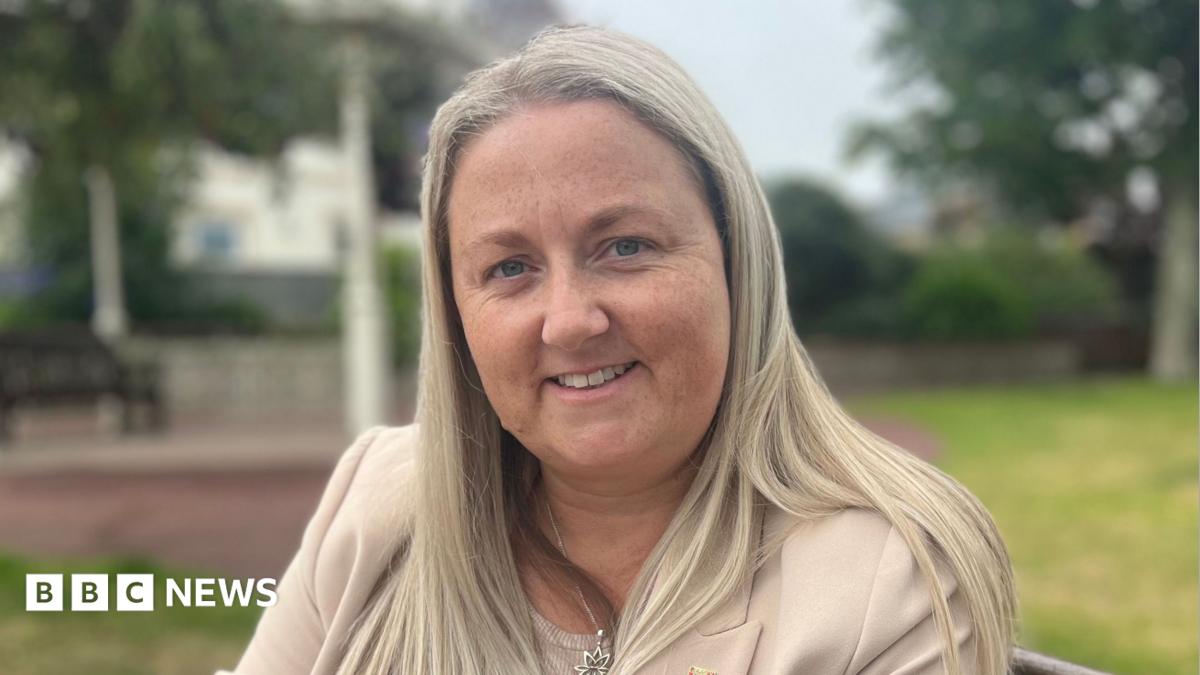
When Stephenson lodged her proposition in June, external, the St Mary, St Ouen and St Peter deputy said the ongoing conflict in the Middle East, which led to limited traffic moving through the Strait of Hormuz, had exacerbated “spiralling costs” for Jersey residents.
She said her discussions with Maclean and other colleagues at the States had left her satisfied the issue was being taken seriously.
“I think there were very clear messages at the recent election from voters about the cost of living,” Stephenson said.
“It’s obvious people are struggling and we have heard that loud and clear.”
The budget is due to be lodged by the government later in September before being debated by the States in December.
Follow BBC Jersey on X, external and Facebook, external. Send your story ideas to channel.islands@bbc.co.uk, external.
Business
Scientists Complete Second Full Map Of Fruit Fly Brain, Charting 300 Million Connections In New Study

ASHBURN, Va. — Researchers have completed a full map of every neuron and connection in the brain of a male fruit fly, marking the second complete “connectome” of the species and giving scientists an unprecedented tool for understanding how brains process information at the most fundamental level.
The project, announced Friday, was a collaboration between biologists at the Howard Hughes Medical Institute’s Janelia Research Campus and computer scientists at Google. Both teams have said neither could have completed the effort without the other. The new male fly connectome follows the completion of a female Drosophila connectome earlier this year by university-based researchers, giving scientists their first opportunity to compare complete neural wiring diagrams between the sexes of the same species.
A connectome is a comprehensive catalog of every neuron in a brain, including its precise location in three-dimensional space and every connection, or synapse, it forms with other neurons. While the fruit fly’s entire nervous system contains roughly 150,000 neurons, with only a fraction of those located in the brain itself, the new research identified more than 300 million individual synaptic connections within that relatively small structure, illustrating just how densely interconnected even a comparatively simple nervous system can be.
Gerry Rubin, a senior group leader at the Janelia Research Campus and one of the senior authors on the new study, described how dramatically the tools available for this kind of work have changed since he began his career studying an even simpler organism.
“I was a graduate student at the UK’s Laboratory of Molecular Biology … and when I got there in ’71, they already bought this giant computer, and they had the idea that they were going to use machine vision and computers to assemble the C. elegans connectome,” Rubin said. C. elegans is a small, transparent worm with just over 300 neurons.
“It took them about two years to realize that the computers were nowhere near powerful enough,” Rubin said, “and so they went with printing everything out on photographic prints and colored magic markers and circling neurons and tracing it by hand.”
That painstaking manual approach would have been entirely impractical for the fruit fly, a species that is both far more complex than C. elegans and, unlike the transparent worm, opaque, making its neurons far more difficult to image directly. To build the new connectome, researchers dissected a fruit fly brain along with part of its ventral nerve cord and sliced it into an enormous series of evenly spaced sections, which were then imaged using electron microscopy at a resolution fine enough to identify small cellular structures. From there, the reconstruction of the brain’s three-dimensional architecture depended almost entirely on artificial intelligence.
Michal Januszewski, a staff scientist at Google Research, told Ars Technica that the first computational step involves using a form of generative AI to seamlessly reconnect the tissue across the boundaries created by each physical slice.
“When you take those blocks and you stitch them back together computationally, there’s a little bit of a gap in between them so the tissue doesn’t completely smoothen,” Januszewski said. “We use a generative model to make the tissue look as if the seams were not there, and that then makes all the downstream processing easier because you can basically ignore the problem to a large degree.”
A separate AI model then works to fill in the spaces defined by cellular membranes, allowing the system to track individual neurons continuously across three-dimensional space. Januszewski described that model as functioning differently than many people typically imagine when they think about artificial intelligence.
“It is different in a number of ways from what people commonly think when they talk about AI,” Januszewski said. “One is that it is actually a recurrent process, so it literally moves through space as it makes the outline of the neurons, and it is a visual model, so it converts voxels out of the images from the microscope, converting them into a 3D presentation of the neurons.”
Additional models were used to identify synapses and classify their specific type once detected, with their sensitivity levels adjustable based on ongoing feedback from human proofreaders reviewing the AI’s output. Rubin described the process as a continuous back-and-forth between researchers and engineers.
“This has to be tuned by going back and forth between the proofreaders and Mikhail to say, ‘Oh, give us a version where you were less greedy because it’s harder to disassemble than it is to assemble,’” Rubin said. “So it’s an iterative process between the humans giving feedback and the algorithms getting tuned.”
The full project took roughly four years to complete, from the initial dissection of an intact fly brain to the finished connectome. Rubin said the techniques and software developed along the way are intended to scale toward far more complex nervous systems in the future, potentially including those of vertebrates such as mice.
“Our view is we did Drosophila with a team of 50 people,” Rubin said. “The hope is, by the time someone does a mouse, they’ll also need a team of 50 people, even though there are a thousand times more neurons in there. The people will never go away, but the people will not need to scale with the number of neurons, which would be economically not feasible.”
Januszewski said the scale and difficulty of the challenge is precisely what drew Google into the collaboration in the first place.
“The reason I think Google and we were interested in this is because this is this type of grand challenge that just cannot be done in any other way,” Januszewski said. “We knew we need AI for this. This cannot be solved by having more humans or by any other technology. And it’s important.”
Beyond serving as a foundational tool for future neuroscience research, the completed male connectome, when compared against the earlier female connectome, has already yielded new insight into how sex differences are wired into the fly brain. Building on decades of prior genetic research identifying two genes, doublesex and fruitless, as key regulators converting chromosomal sex into behavioral differences, researchers identified 289 neurons unique to males, 71 unique to females, and 138 present in both sexes but differing in shape and connectivity. Notably, roughly 90% of the male-specific neurons expressed the doublesex or fruitless genes, but 10% did not, suggesting some neurons may acquire sex-specific characteristics indirectly, through interactions with neighboring cells that do express those genes.
Researchers also found that sex-specific neurons tended to cluster together and operate at higher levels of neural processing, rather than directly within basic sensory detection or motor control circuits, with a few notable exceptions such as neurons that detect sex-specific pheromones. As the research team wrote in their published paper, the pattern suggests “a hierarchy in which sex differences primarily modify integrative and decision-making areas while sensory detection and the highly tuned motor interface remain more constant.”
Rubin said the completed connectome has already begun reshaping theoretical neuroscience by giving researchers a concrete wiring diagram to test their models against, rather than working from open-ended speculation about how a brain might function.
“Before this, most neuro theorists were very much like, ‘How could a brain work?’” Rubin said. “And they didn’t have a constraint. Once they had the connectome, they could say, ‘The brain does this and here’s the wiring diagram. How can this wiring diagram allow this function?’ So this has been a major — I’d say this is the biggest change in having the connectome.”
Looking ahead, researchers say a key open question is whether the cost and time required to build additional connectomes will fall sharply as techniques continue to improve, similar to the trajectory seen in genome sequencing over the past two decades. With only two complete fly connectomes currently available, including one notable case in which a specific neuron found in the female fly was entirely missing from one hemisphere of the male fly’s brain, researchers say dozens of additional connectomes will likely be needed before scientists can draw statistically meaningful conclusions about how much natural variability exists between individual brains, even within the same species.

China to inject $54 billion into state banks and insurers

Which TSX stocks investors will be watching next week?

Is Alabama Standout Ryan Coleman-Williams Dealing With A Case Of ‘The Yips?’
Console makers say buyers are owed nothing from their tariff refunds

CURRENT FINANCIAL SYSTEM WILL BE REPLACED BY XRP!?!?!?!! (MAJOR NEWS?!)





-
 Fashion2 days ago
Weekend Open Thread: Beyond Yoga
-
 Crypto World2 days ago
Bitcoin price stalls near $82K as key resistance holds
-
 Politics2 days ago
Best Gaming Laptops, CPUs, TVs, And Keyboards To Upgrade Your Set Up For GTA VI
-

 Tech2 days ago
The Birds Outside, Drawn For You Automatically
-

 Crypto World2 days ago
IMF Says El Salvador’s Post-Review Bitcoin Purchases Used No Public Funds
-
 Crypto World2 days ago
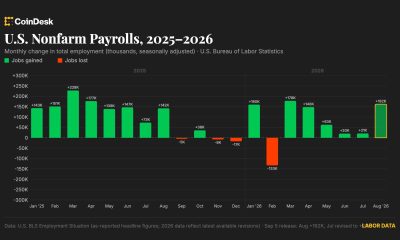
U.S. added stronger than expected 162,000 jobs in August as labor market bounced back
-

 Sports2 days ago
Alexandre Pato consortium’s Northampton Town investment approved
-

 Sports2 days ago
Commanders’ Chig Okonkwo is a top breakout fantasy football candidate
-

 Sports2 days ago
Golden Eaglets Drawn in Group B for 2026 WAFU B U17 Championship
-
 Crypto World2 days ago
XRP price breaks falling channel as bulls target $1.53
-

 Politics2 days ago
A new European chapter for Gibraltar
-

 Politics2 days ago
How To Avoid Winter Colds: 4 Everyday Habits That Spread Germs, Says Pharmacist
-

 Politics2 days ago
The House | Bin the lectures, bring gossip and be ready to banter: how the new PM should prepare for his Trump encounter
-

 Crypto World2 days ago
From warning to listing: UK’s largest retail investment platform opens access to crypto ETNs
-

 Crypto World2 days ago
FinCEN flags $12.7B tied to Southeast Asia crypto investment scams
-

 Tech2 days ago
A Worthy Android Ereader, With Some Tradeoffs
-

 Crypto World2 days ago
Trezor Data Breach Impacts 67,000 More US Customers
-
 Tech2 days ago
How To Edit Claude’s Memory
-
 Politics2 days ago
33 Cosy Autumn Home Decor Ideas: Blankets, Pumpkin Decorations, And Candles
-
 Tech2 days ago
beyerdynamic AVENTHO Y Debuts at IFA 2026 and Makes Wireless Headphones Less Disposable
You must be logged in to post a comment Login