Rehearsals are underway for this year’s Strictly (Picture: BBC)
Rehearsals for the upcoming series of Strictly Come Dancing have been thrown into chaos with two professional dancers both reportedly suffering injuries.
Katya Jones and ex-husband Neil were injured in what is being described as a ‘crisis’ on set.
Both dancers joined the BBC competition in 2016, as a married couple. The pair split in 2019, but remain an active part of the series.
Their recent injuries meant that neither Neil, 44, nor Katya, 37, were able to attend several pre-recorded group dances ahead of the new series launching on September 19th.
Advertisement
Which, in turn, may mean that they risk not being paired with one of the new celebrities when the series returns.
Get personalised updates on Strictly
Wake up to find news on your TV shows in your inbox every morning with Metro’s TV Newsletter.
Sign up to our newsletter and then select your show in the link we’ll send you so we can get TV news tailored to you.
Advertisement
With five new professional dancers having joined the show, there is increased competition among the cast to score a celebrity partner.
Neil and Katya Jones have both sustained injuries during rehearsals (Picture: Shutterstock Fisher/Shutterstock)
The pair fear that their injuries may cost them a celebrity partner (Picture: ITV/Shutterstock)
A source told The Sun: ‘The pro dancers are under the cosh for filming the group dances, which are played throughout the series, and have a hectic schedule.
‘There was a real crisis on set when both Neil and Katya were injured at the same time and there were concerns they wouldn’t be able to recover in time for the series start in two weeks.’
Both Neil and Katya were back on the dance floor by Friday, but by then, the damage had already been done.
Advertisement
‘They were gutted to miss out on the group dances as it guarantees them screen time if they don’t get a partner, which Neil often doesn’t,’ the tabloid’s source continued.
Neil’s last celebrity partner on the show was in 2024, when he was paired with singer Toyah Wilcox.
As for Katya, she danced with Emmerdale star Lewis Cope last year, until his quarter-final exit in 11.
Katya reached fifth place with Emmerdale star Lewis Cope (Picture: ITV/Shutterstock)
Earlier this year, it was confirmed that Karen Hauer would be leaving the Strictly after a record-breaking 14-years its longest-serving female professional.
Advertisement
Leaving after ten years was Gorka Márquez and Luba Mushtuk, with Nadiya Bychkova not far behind after nine years.
Five new professionals were subsequently announced by the BBC – Aleksandra Isaeva, Cristian Priori, Lethabo Monametsi, Maddie Ingoldsby and Mark Karmalita.
Sarah James, Executive Producer, BBC Studios said: ‘Aleksandra, Cristian, Lethabo, Maddie and Mark are all outstanding world class dancers and we can’t wait to see them shine under the Strictly glitterball this September.’
Advertisement
Johannes Radebe, Emma Willis and Josh Widdicombe front this year’s Strictly (Picture: BBC)
Lacey Turner is among the big names confirmed for this year’s competition (Picture: BBC)
Police were first alerted to reports that a Vauxhall Mokka had collided with a lamp post and fence on Bruce Road in Glenrothes at around 7.45am on Sunday.
A man has been arrested and is in hospital after officers were forced to use spike strips following a police chase in Fife.
Advertisement
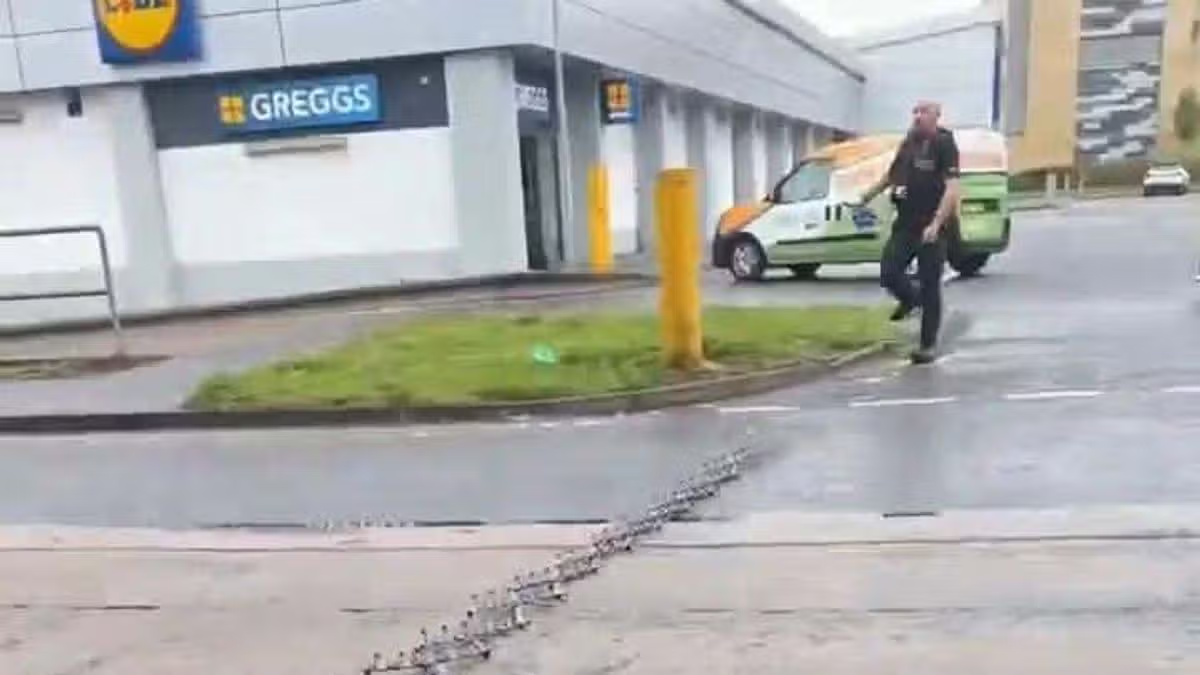
Cops were first alerted to reports that a Vauxhall Mokka had collided with a lamp post and fence on Bruce Road in Glenrothes at around 7.45am on Sunday, September 6. As officers approached, the vehicle made off, sparking a dramatic pursuit throughout the town.
Footage shared with the Record showed police throwing down spike strips outside the Lidl store on Leslie Road as the car was eventually brought to a halt. Cops could then be seen grabbing the driver and pulling him out of the vehicle before he was arrested.
The man was also taken to hospital, where he currently remains. His condition is not yet known.
Advertisement
Dozens of police could be seen in attendance and the black Vauxhall Mokka was spotted with a large dent at the front as it was later recovered. Detectives say their enquires into establishing the full circumstances of the incident remain ongoing.
A Police Scotland spokesperson said: “Around 7.45am on Sunday, September 6, 2206, a Vauxhall Mokka collided with a lamp post and fence on Bruce Road, Glenrothes.
“As officers approached, the vehicle made off and a pursuit took place until the car was brought to a stop by officers in Leslie Road and the driver, a 45-year-old man, was arrested. The 45-year-old was taken to hospital where he remains. Enquiries are ongoing.”
Advertisement
Get more Daily Record exclusives by signing up for free to Google’s preferred sources. Click HERE.
A lifeboat was launched after a person fell overboard from a dinghy near the Menai Bridge.
At 3.06pm on Thursday, September 3, HM Coastguard volunteers at Beaumaris received a page relating to a report of a person having fallen into the water.
The Beaumaris Atlantic 85 inshore lifeboat and the Mobile Coastguard Rescue team from Bangor attended the scene and discovered the casualty and his craft had been recovered to the shore by a passing vessel.
Advertisement
The casualty refused medical treatment but was advised to be alert for secondary drowning symptoms.
The lifeboat was then stood down by the Coastguard.
A planning application has been submitted to North Yorkshire Council for the development of 18 homes on land at Carr House, Snainton, near Scarborough.
The proposal, put forward by Mulgrave Developments Ltd, outlines plans to construct 16 new houses and convert an existing dwelling into two homes.
The site, which is located off Green Lane, about 13km southwest of Scarborough, includes an agricultural barn, which would be demolished under the new plans.
The application also includes associated access and drainage works, with a focus on improving the existing conditions of Green Lane.
Advertisement
This application follows a previous proposal for 19 homes on the same site, which was refused by the council in 2024.
Proposed Elevations Plot Two. Housing Plan For Land Off Carr House, North Of Green Lane And East Of Station Road In Snainton, Scarborough. Courtesy Of Applicant
The refusal was based on concerns about insufficient information regarding the impact on protected species and biodiversity, inadequate highway safety measures, and failure to provide affordable housing. An appeal against the decision was also later dismissed.
According to submitted plans, the new application includes a revised layout to improve safety and the character of Green Lane, a reduction in the density of housing, and an increase in soft landscaping and public open space.
The housing mix has also been adjusted, with the new proposal consisting of eleven two-bed properties, four three-bed properties, and three four-bed dwellings.
Advertisement
Each plot would come with parking for two vehicles and “the majority of plots” would benefit from access to a garage.
“To reflect the local vernacular, the dwellings would be constructed of artificial stone with concrete double pantile roofs in either rustic or cayenne red, thereby reinforcing the more modern development theme present on either side of Station Road and reflecting the palette of materials used with the settlement,” the submitted plans state.
North Yorkshire Council has not set a date for deciding on the plans, which are open to representations from members of the public.
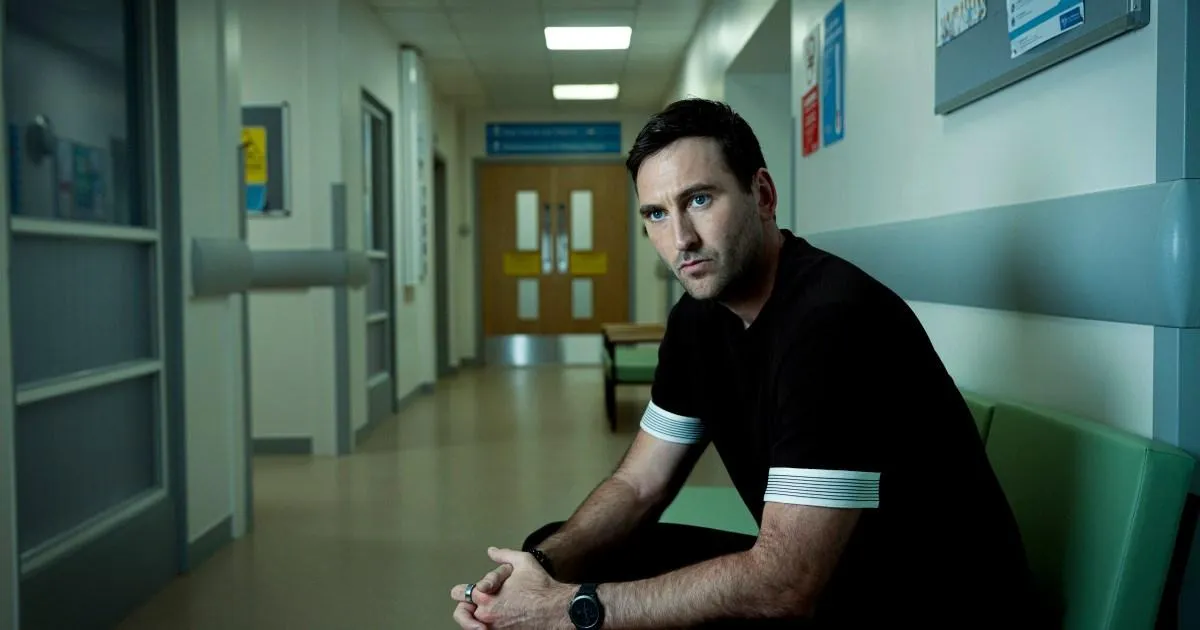
A life-changing diagnosis is causing Kit Green (Jacob Roberts) to rapidly unravel on Coronation Street… and he wasn’t particularly known for his restraint to begin with.
Advertisement
The Cobbles copper Kit Green was blown away when his sister Gemma Winter-Brown (Dolly-Rose Campbell) learned that due to a death of their estranged aunt from cancer, the BRCA gene runs in their family.
Both she and their mother Bernie Winter (Jane Hazlegrove) decided to get tested, while Kit started to wonder if the gene could be linked to some of his current health concerns. This, of course, could also mean that Brody (Ryan Mulvey), Kit’s biological son, could be at risk too.
Kit was totally blindsided to realise that his family carried the BRACA gene. (Picture: ITV)
In this video, we see Kit at his lowest when Todd finds him in the backyard brooding. Drawing on his own experience suffering Theo’s abuse in silence,Todd wrongly assumes that Kit is still not over Sarah Platt (Tina O’Brien) splitting up with him from prison and encourages him to unburden. However, Todd gets the shock of his life when Kit reveals that he has cancer.
In a recent interview, actor Jacob Roberts, who portrays Kit, shared some insight into Kit’s decision to share this deeply personal news with Todd.
‘I think that happens in real life as well. You end up telling people who are not actually connected with you,’ Jacob reckoned.
Advertisement
Ask Metro
Use AI to go deeper into the stories you care about – powered by Metro and trusted publications.
‘He feels safe with Todd because I also feel like Todd has his back,’ Jacob said.’ He can tell Todd certain things that won’t go further, as it does on the street. It catches like wildfire. But with Todd, I think he’ll keep his secrets.
Advertisement
‘And it’s just to offload why he’s being a certain way. And maybe Todd gets him in that certain situation.’
Breast cancer in males
Common symptoms can include
A painless lump or swelling under the nipple or areola.
An inverted or retracted nipple that turns inward.
Nipple discharge or bleeding.
Skin dimpling, puckering, or scaling on the chest.
Sores (ulcers) on the chest or nipple area.
Risk factors include
Older age, most frequently diagnosed in men in their 60s.
Inherited BRCA1 or BRCA2 gene mutations.
High oestrogen levels linked to obesity or liver disease.
Genetic conditions such as Klinefelter syndrome.
Statistics
Around 400 to 420 men are diagnosed with breast cancer in the UK every year. For comparison, roughly 59,000 women are diagnosed annually.
Approximately 1 in 870 men in the UK will be diagnosed with breast cancer during their lifetime.
There are around 85 deaths from male breast cancer each year in the UK. Since the early 1970s, male breast cancer mortality rates have decreased by about 47%.
While breast cancer diagnoses in UK women have risen by roughly a quarter since the early 1990s, incidence rates in men have remained stable.
Sadly, Kit’s week only gets worse from there. After all the pent-up rage and fear of suffering in silence becomes too much to bear… with violent results.
In next week’s trip to Coronation Street, Kit ends up colliding with Ross Wilkes (Ian Burfield), the sleazy no-good dad of Tyrone Dobbs (Alan Halsall)
Advertisement
When Kit accidentally bumps into Ross in the pub, it causes him to spill his drinks. Suddenly Kit doubles over clutching his chest in pain, prompting Ross to accuse him of making a mountain out of a molehill.
Finally snapping, Kit completely loses his rag at Ross. I won’t spoil exactly what he does… but it ain’t pretty.
Has Kit just put his job as a police officer at risk?
Cambridgeshire County Council is considering using ANPR cameras to enforce school streets, which restrict car movements at drop-off and pick-up times to reduce pollution and encourage walking and other active travel methods
Claire Elliott and Cambridgeshire Live readers
16:00, 06 Sep 2026
CambridgeshireLive readers have heard that Cambridgeshire County Council is considering using cameras to enforce school street restrictions, which limit vehicle access during school drop off and pick up times. The measures are designed to reduce traffic and pollution around schools while encouraging walking and other forms of active travel.
The council’s highways and transport committee has been asked to approve a report setting out plans to use cameras to enforce traffic restrictions. Officers said “initial planning work” had already begun on installing Automatic Number Plate Recognition (ANPR) cameras to enforce turning restrictions on roads including Downing Street.
Advertisement
They are also exploring whether the same technology could be used to enforce school streets, although further assessment would be needed before any decision is made.
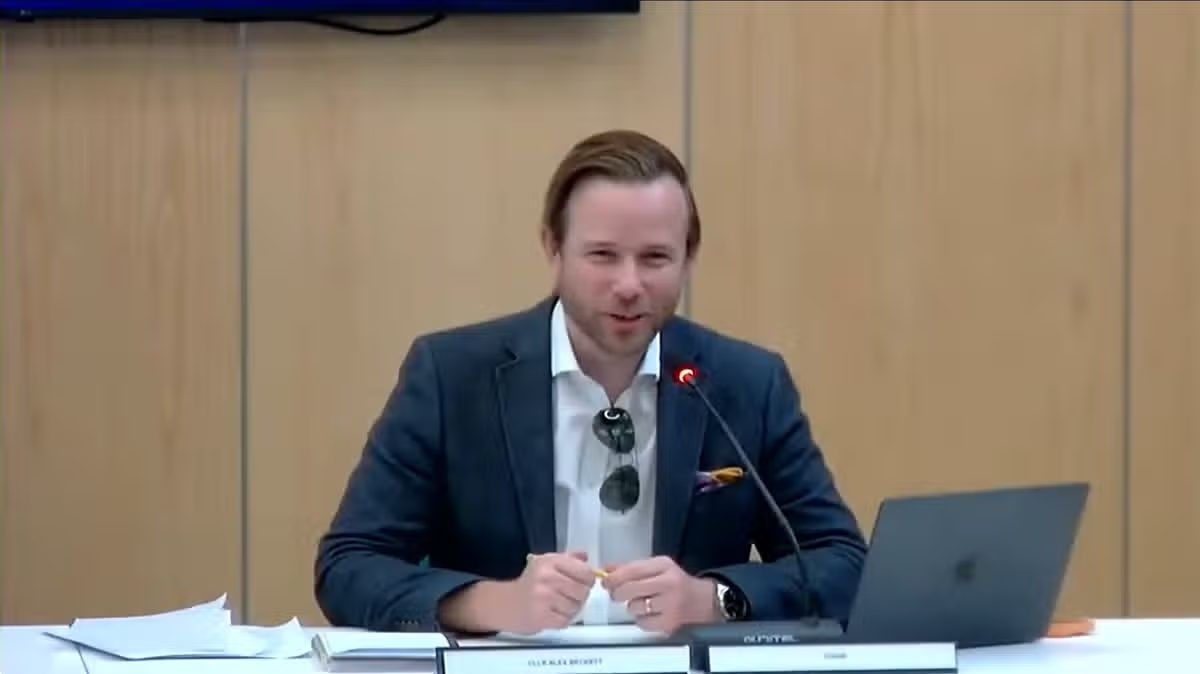
Cllr Darren Green, who represents Romsey, said he was “very, very happy” that the council was considering the move. He said: “We know already that school streets can be very fragile and rely on a lot of volunteer work, and best practice would be to back this all up with a camera system. “I hope going forward, once this is in place, that we can prioritise using cameras on school streets.”
However, Cllr Alex Beckett, chair of the committee, stressed that volunteers would continue to play an important role even if cameras were introduced. He said seeing members of the community volunteering to protect their local school can have a greater impact than relying solely on cameras operated by the council. He added that volunteers at some school streets had faced harassment, meaning cameras could ultimately prove a better option in those locations.
Commenter Poppythecat thinks: “This is a very sensible move, ANPR cameras should also be monitoring cycle lanes and fining any drivers driving in or parking on them. They should be sent a copy of the highway code with every fine handed out.”
Advertisement
Dragon33 disagrees: “I don’t get it. There is a swing gate in Norfolk st near St Matthew’s that stops cars going through anyway during school drop off isn’t there? So why have ANPR cameras? Seems like another Vinery Rd LTN in the making.”
Cotonboy48 adds: “In principle this is a good thing, but it will need greater resources to administrate any enforcements and will they be mandatory? Where is the financing coming from? The County Council seems to have little money for urgent road matters, let alone for another scheme. Perhaps have offenders’ cars impounded?”
Click2018 says: “So can you get in touch with my employers and tell them I won’t be in work till 10am and that all front line calls need to be on hold?! Ever think parents have to work and schools have strict drop off times? No, OK I’ll claim housing benefit from the council when I’m jobless!”
Lycralad90 suggests: “Why not get them to walk to school? If they need dropping off in a car you live too far from the school and your kids are in the wrong catchment area.”
Advertisement
Throatwobblermangrove thinks: “Another foregone decision masquerading as safety improvements. Monitoring school drop-off and pick-up times is one thing. But how long before the cameras and restrictions are quietly imposed 24/7, to feed the council’s mindless crusade against convenient transport?”
Tartan53 agrees: “Are the council up to their usual smoking mirror routine? Surely this is the first step in getting the hardware installed for a future congestion charge?”
Marty S adds: “Won’t be long before you’re having to pay just to pick your kids up from school in your car.”
Dominic G asks: “What is the legal basis for ‘school streets?’ I believe there isn’t one? So how can restrictions be enforced if they are not legal?”
Advertisement
Emma W replies: “Schools can apply to the council to close the street for a short while for drop off and pick up time. Usually monitored by either school staff or volunteer parents. Obviously the streets are not through roads. My previous school applied and as they were towards the beginning of a cul-de-sac, it was approved. Residents were able to go in and out, but tended to avoid the closed times just to make it easier for everyone.”
Cambridgeshire Live readers, what do you think? Should cameras be used to enforce school streets, or is this just another way of penalising parents who need to drive their children to school? Have your say in our comments section.
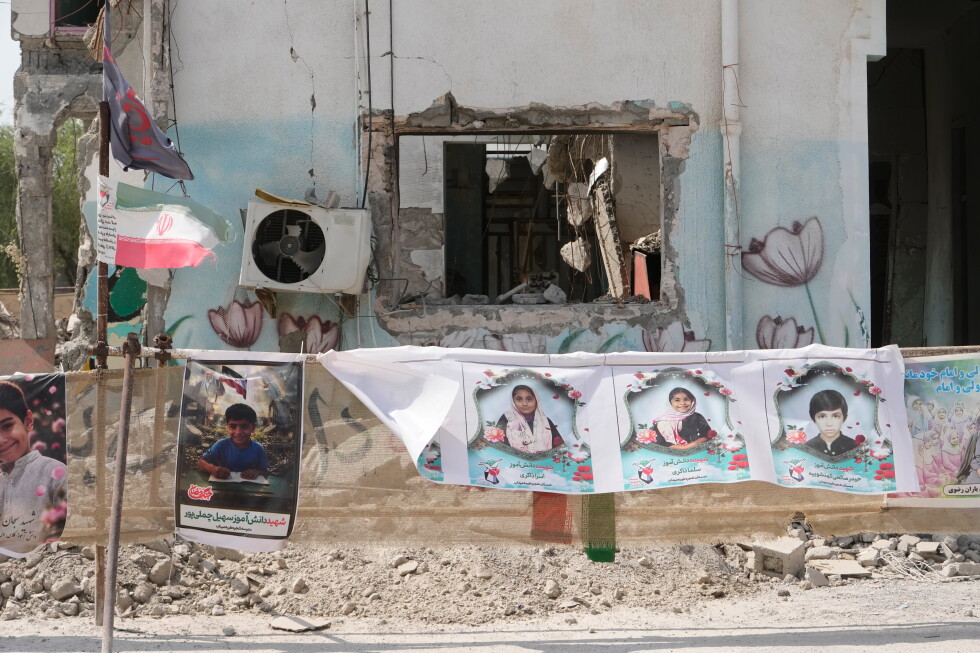
MINAB, Iran (AP) — This will never be a school again.
Its bright blue gate is still painted with the symbols that once welcomed children: Iran’s map, oversized pencils and portraits of legends in science and literature.
But now, the walkway beyond it guides visitors past rows of photographs. They show children busy living, at birthday parties and more. Then come the same small faces on black banners of mourning.
This is the emerging memorial to the schoolchildren killed in the attack in the earliest moments of the war that the United States and Israel began across Iran on Feb. 28. Strikes hit the Shajareh Tayyebeh school in Minab.
Advertisement
Iranian officials said more than 100 students were killed. Months later, the Trump administration still has not directly accepted responsibility for the strike or released the Pentagon’s findings, even as an Associated Press investigation found evidence that at least one U.S. missile hit the school.
Attention turned to Minab again in the past week when a new round of U.S. strikes along Iran’s southern coast struck a wedding and other areas, sending some of the injured to a hospital in the community.
The AP visited the badly damaged two-story building whose classrooms remain frozen mid-lesson, with desks half buried and ceilings collapsed.
There have been calls to preserve the ruins as a historical record. Hormozgan Gov. Mohammad Ashouri Taziani has said the building would be turned into a war museum and memorial.
Advertisement
Nearby, a section of Minab’s cemetery has been dedicated to those killed. Families and others move quietly across the grave-marked artificial grass.
Residents said three bodies still have not been found.
EXCLUSIVE We go inside the mind of Liam Gallagher as he gives thoughts on a range of subjects in Disney+ documentary Don’t Look Back In Anger
16:49, 06 Sep 2026Updated 16:50, 06 Sep 2026
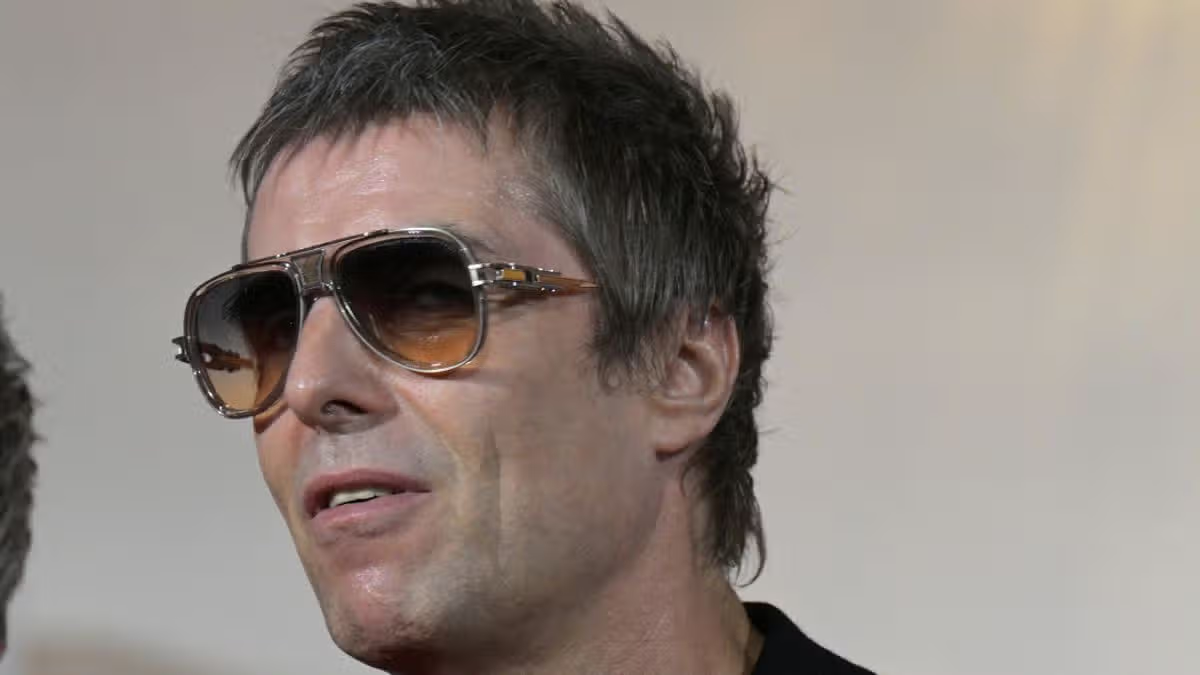
The new Oasis film gives fans a real insight in Liam Gallagher ’s mind in a way they have never seen before – giving his verdict on dancing, drinking and even going to bed early. The 53-year-old is always highly entertaining on social media platform ‘X’ but his opinions are often laced in humour.
In Don’t Look Back In Anger sat alongside his brother Noel, the singer gives his views on a range of issues. Giving some life rules to younger Oasis fans, Liam says: “You ain’t gonna get through this f**king life, by not making mistakes. Because you are not f**king robots, d’you know what I mean?
“So go out and have fun, get up in the morning, do your day’s graft and don’t be a c***. And if you are going to be a c*** be a funny one. Live your life and have a good f**king time. Try not to listen to those the doom gloomers, like the politicians and that. Some people can’t be helped. That is what life is about.
Advertisement
“If there is any of that to come from it[the tour] I’m all for it. But the main thing is put the phones down, that’s a start. Sing your hearts out and have a good time. Get drunk and fall over and p**s your pants. Who gives a s**t.
“There is always tomorrow to clean that mess up. Y’know what I mean?”
However, despite telling younger people to party hard, Liam’s days of drinking to those levels of excess seem to be mainly beyond him. He gave up cigarettes for the 2025 tour.
Advertisement
When Noel says he can no longer drink Guinness until 4am, Liam says: “The thing is you get sick of the same s*** that comes out of your mouth. Years ago everything that came out of your mouth was mega. Or come out your mate’s mouth was mega.
“After a while a bit you just go ‘Im full of s***, he’s full of s***. He knows I’m full of s*** and I know he’s full of s***. It’s just like ‘I’m going to bed’. I’ve heard these conversations a million times. But when you’re 20 its the gospel.”
Turning to his stage persona and offering his thoughts on another iconic frontman, Rolling Stones singer Mick Jagger, Liam says: “Another little bit of magic is someone goes stand still.
“Because you are gonna be doing this when you’re f**king 60 and you’re gonna have two double hip operations.
Advertisement
“You don’t wanna be doing that Mick Jagger s***. Mick Jagger must sit there and go ‘I can’t be f**king arsed with this Jumping Jack Flash nonsense. I just wanna stand there and of my thing. But he has gotta go out there and do kung fu kicks and splits and all that. He must sit there and go ‘I can’t be arsed tonight’. All I have gotta do is just stand there. It is genius.”
This comment makes his brother crack up laughing, as will some of the cinema audiences no doubt. The pair were also seen laughing and joking again at the weekend in Venice. Noel compares Liam’s life to the opening line of Oasis song Supersonic ‘I need to be myself, I can’t be no one else’. Noel says: “That’s what he lives his life by, he is who he is and that’s the end of that, and he’s not going to change. I forgot how funny he was.”
He later adds: “There’s two Liams, the one that turns up at rehearsals and there’s the guy on stage who bounces a tambourine on his head. And makes it look cool. You know if I did that I’d look like a utter c****. But somehow he does it and it’s the greatest thing I’ve ever seen. I’d forgotten what he means to people.”
Liam also shows a more mature side in the film when he discusses the death of close friend Gary ‘Mani’ Mounfield in November. This loss weighs heavily on both Gallagher brothers but it has even made Liam reassess things. He says: “Very sad man, very sad. Makes you realise life is precious. The penny dropped, no more bulls*** anymore.”
Advertisement
Welcome to the Liam Gallagher of 2026. In bed early, protecting his vocal chords between gigs and still as hilarious as ever. Fans – and his brother Noel – will hope things continue and he doesn’t let things slide away again.
* Oasis: Don’t Look Back In Anger opens in IMAX and UK Cinema on September 9.
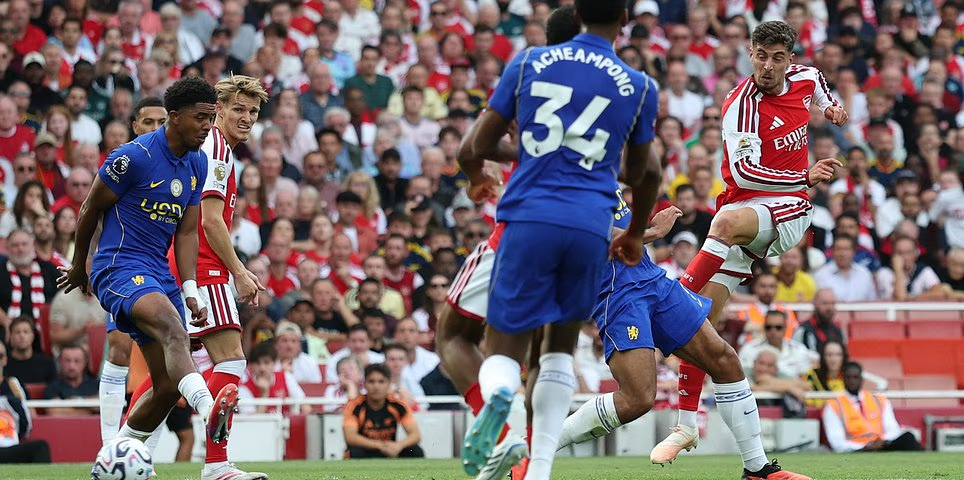
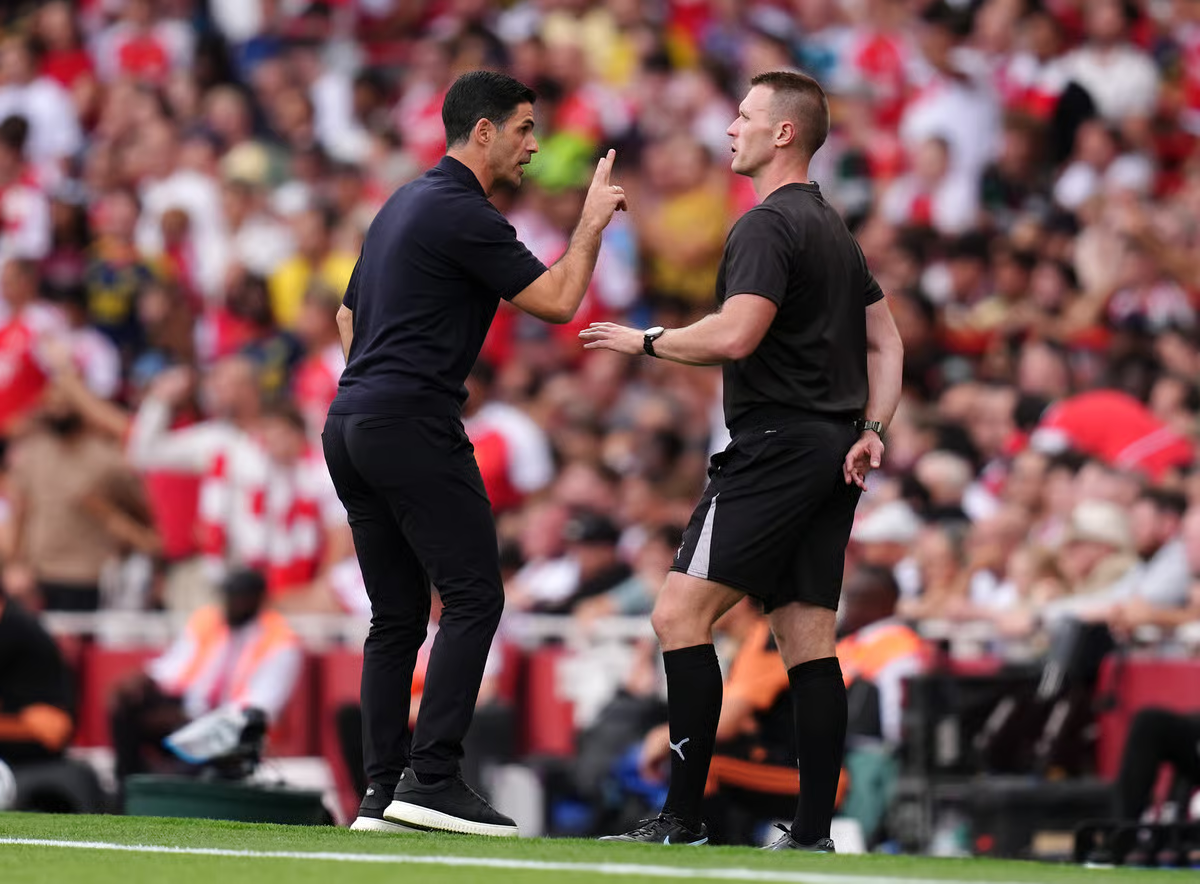
The biggest game of the new Premier League so far sees the two London rivals face off in a game which promises early clues to this campaign’s title race. The champions host Xabi Alonso’s new-look side as both put their 100 per cent starts to the season on the line. The Gunners, arguably, have more to lose, but have not tasted defeat against the Blues in five years.
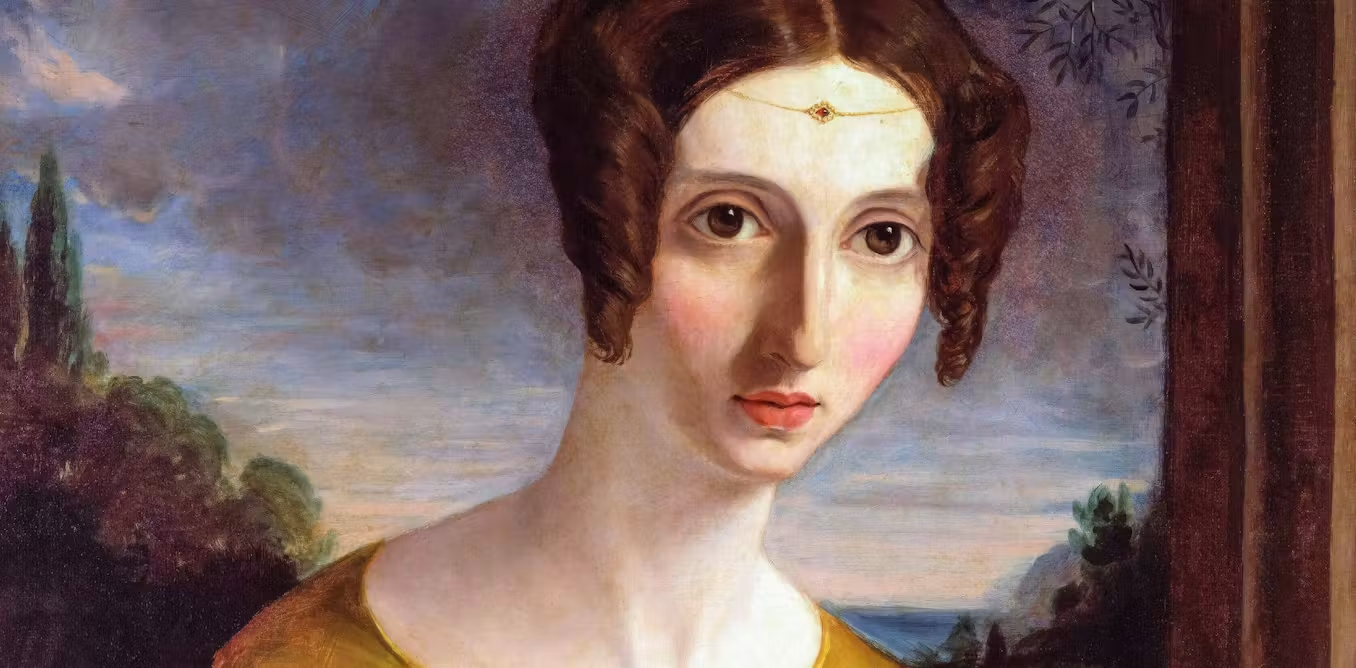
I first heard about Harriet Taylor Mill when reading about her much more famous collaborator and future husband, the British philosopher and politician John Stuart Mill.
Appropriately for someone who remains in the margins of history despite her enormous contribution – including to her husband’s status – Taylor Mill was deeply angered by injustice. Throughout her life, she railed against the way society made it impossible for women to freely develop their individuality, arguing this was important for everybody – not just men.
In Enfranchisement of Women (1851), Taylor Mill’s only solo-authored essay published during her lifetime, she asked why women were still regarded as “mere appendages” to men without interests of their own. Her answer was characteristically blunt: “The only reason which can be given is that men like it.”
More than 20 years before her husband’s best-known work, On Liberty (1859) was published without any credit for her contribution, she had outlined what would become famous in that book as the “harm principle”: “Every human being has the right to all personal freedom which does not interfere with the happiness of some other.”
Her arguments were always on the side of independence, her sympathies with the powerless and oppressed. She astutely diagnosed the key political and economic question posed by the industrial revolution as being whether “the lot of the poor should be regulated for them, or by them”.
Taylor Mill was also a ferocious defender of “the pleasure of self-dependence” and the right to free speech. Her views were summarised in a programme of reform she outlined in the late 1840s that would be radical if instituted today, never mind two centuries ago.
She called for the establishment of secular educational schools and universities, complete freedom of speech, all occupations to be equally open to men and women, radical limits to the amount people could inherit – and for marriage “to be like any other partnership: dissoluble at pleasure”.
Advertisement
With words that were often witty and pithy, Taylor Mill cut to the heart of issues in political thought such as patriarchy, socio-economic justice and freedom. In my view, she is long overdue a more significant place in the canon of western social philosophy.
Vulnerable to abuse and exploitation
In the 1830s, while tending to three young children from her first marriage, Taylor Mill wrote for the Westminster Review on a variety of political and philosophical subjects, from colonialism in Australia to Plato via political biographies. Her critiques were always pro-democratic and anti-aristocratic.
Portrait of John Stuart Mill by George Frederic Watts (1892). Wikimedia Commons
She also wrote many unpublished articles on the social, political and economic structures which rendered women vulnerable to abuse and exploitation by their spouses – and on the ethics of love, marriage and divorce. Her invocation of the principle that “the higher the kind of enjoyment, the greater the degree” foreshadowed Mill’s distinction between higher and lower pleasures in his book Utilitarianism, three decades later.
In the 1840s and ’50s, the Mills co-authored a series of excoriating newspaper articles on violence, especially domestic abuse. They railed at the unwillingness of the judicial system and police to tackle this issue, and the power inequalities which rendered people – especially women and those in subordinate positions – so vulnerable to brutality. Many of these arguments still resonate today.
Advertisement
Perfect equality was Taylor Mill’s ideal – in politics, the workplace and the home. But by this she did not mean equality of outcome. In their writings, the Mills endorsed a merit-based system of reward based on people’s efforts and talents, rather than what they had inherited.
They called for a “higher standard of justice” which would enable everyone to “work according to their capacity, and receive according to their wants”.
Ignored and even denied
Despite her lifelong commitment to fighting injustice and inequality, Taylor Mill’s immense contribution to her own husband’s work has largely been ignored – and even denied.
To be fair, Mill often sought to give authorial credit where it was due. But his earliest attempts were stymied by Harriet’s first husband, who felt it would draw too much attention to the Mills’ unconventional relationship.
Advertisement
When they eventually married in 1851, Mill tried to divest himself of the “power and control” over his wife which their marriage would legally grant him. He wrote: “I put on record a formal protest against the existing law of marriage … [and] repudiate all pretension to have acquired any rights whatever by virtue of [it].”
Later, Mill carefully catalogued in his autobiography how many of the works published as “his” were, in fact, his efforts as “a mediator” between Taylor Mill and the public. He highlighted his “interpretations” of her ideas – often combined with inputs from the many fields in which he was a scholar.
Extract from Enfanchisement of Women by Harriet Taylor Mill. Video: History Hub.
Mill also re-published the celebrated essay Enfranchisement of Women, which had originally been published anonymously, under Taylor Mill’s name – and set correspondents straight about its authorship when they wrote to congratulate him, thinking it was his work.
Advertisement
But curiously, Mill’s desire to sing her praises for her work was used as an excuse to ignore her. According to one 1874 essay, published shortly after Mill’s death: “Men have been blinded by affection and bewitched by womankind … [but] John Stuart Mill out-Herods them all.”
In the view of this and many other critics, Mill’s love for his friend and eventual wife completely clouded his judgment of her intellectual capacities, about which he had been entirely deceived – or, at the very least, been “myopic”.
A hundred years after this “Harriet Taylor Mill myth” emerged, it was given a Freudian twist. Mill was said to have chosen her as a partner because she had the same first name as his mother, but the personality of his father.
This view was echoed as recently as 2022 when a biography argued that Mill – brought up in a “totalitarian micro-state” by his father – needed someone else from whom to take “orders” after his death. Other academics such as Jo Ellen Jacobs have refuted such perspectives as misogynistic.
Advertisement
Taylor Mill may well have expected such shoddy treatment in the years after her death in Avignon, France in 1858. But in the 21st century, it is high time she were recognised as an incisive, influential thinker in her own right.












































You must be logged in to post a comment Login