Connect with us

Business

More children under 12 in US are being prescribed weight-loss drugs, study finds

Published

on

Continue Reading
Click to comment

You must be logged in to post a comment Login

Leave a Reply

Business

Bitcoin-based Liquid Network says $320 million withdrawn in hack

Published

on


Bitcoin-based Liquid Network says $320 million withdrawn in hack

Continue Reading

Business

Cook backs Labor to deliver Karnup station

Published

on

Cook backs Labor to deliver Karnup station

Premier Roger Cook has declared his government can build the long-awaited Karnup train station, after One Nation claimed it wouldn’t be built until after 2029.

Continue Reading

Business

Australia’s Pacific Current shares rise after rejecting a buyout proposal

Published

on


Australia’s Pacific Current shares rise after rejecting a buyout proposal

Continue Reading

Business

China to issue $45 billion in bonds to recapitalize major banks, insurers

Published

on


China to issue $45 billion in bonds to recapitalize major banks, insurers

Continue Reading

Business

Public consultation on plans for state-owned Welsh national energy company

Published

on

Business Live

The aim is to reduce energy costs for consumers

Adam Price(Image: Senedd Cymru)

A public consultation has been launched by the Welsh Government over its plans for a new national energy company.

The publicly-owned company would aim to increase Welsh ownership of energy projects and help communities, businesses and public services make better use of energy produced in Wales.

It would not replace existing energy suppliers or directly set household energy prices. However, increasing Welsh ownership of energy projects, says the Plaid Cymru administration, could help reduce energy costs over time and ensure more money is reinvested in Welsh communities and public services.

Cabinet Minister for Enterprise, Connectivity and Energy, Adam Price, said: “Wales has huge potential to generate clean energy from our natural resources.

Advertisement

“We want to make sure the benefits of that energy are felt by people and communities across Wales, both in jobs and growth but eventually in lower bills too.

“Wales is on the verge of a second (or another) energy revolution and this time we want to make sure we keep more of the benefits here.

“This consultation is about how we can build a stronger Welsh energy sector, support local ownership and create lasting value for future generations. It’s about cheaper, cleaner energy that is made and owned in Wales.

“We want to hear from people, communities, businesses and organisations across Wales about how this company should work and what it should deliver.”

Advertisement

The consultation is open to November 30th this year.

Continue Reading

Business

Allogene Stock: If MRD Holds, This Becomes A Completely Different Company (NASDAQ:ALLO)

Published

on

Allogene Stock: If MRD Holds, This Becomes A Completely Different Company (NASDAQ:ALLO)

This article was written by

I hold a Master’s degree in Cell Biology and began my career working for several years as a lab technician in a drug discovery clinic, where I gained extensive hands-on experience in cell culture, assay development, and therapeutic research. That scientific foundation gave me an appreciation for the rigor and challenges behind drug development, which I now bring into my work as an investor and analyst. For the past five years, I have been active in the investing space, with the last four years dedicated to working as a biotech equity analyst alongside my lab work. My focus is on identifying promising biotechnology companies that are innovating in unique and differentiated ways, whether through novel mechanisms of action, first-in-class therapies, or platform technologies with the potential to reshape treatment paradigms. By combining my lab-based scientific expertise with financial and market analysis, I aim to deliver research that is both technically sound and investment-driven. On Seeking Alpha, I plan to write primarily about the biotech sector, covering companies at different stages of development, from early clinical pipelines to commercial-stage biotechs. My approach emphasizes evaluating the science behind drug candidates, the competitive landscape, clinical trial design, and the potential market opportunity, all while balancing financial fundamentals and valuation. My goal in publishing here is to share some insights that help investors better understand both the opportunities and of course the many risks in biotech. This is a sector where breakthrough science can translate into outsized returns, but also where careful scrutiny is essential. I look forward to contributing thoughtful analysis and engaging with readers who share an interest in this dynamic and rapidly evolving space.

Analyst’s Disclosure: I/we have no stock, option or similar derivative position in any of the companies mentioned, and no plans to initiate any such positions within the next 72 hours. I wrote this article myself, and it expresses my own opinions. I am not receiving compensation for it (other than from Seeking Alpha). I have no business relationship with any company whose stock is mentioned in this article.

Seeking Alpha’s Disclosure: Past performance is no guarantee of future results. No recommendation or advice is being given as to whether any investment is suitable for a particular investor. Any views or opinions expressed above may not reflect those of Seeking Alpha as a whole. Seeking Alpha is not a licensed securities dealer, broker or US investment adviser or investment bank. Our analysts are third party authors that include both professional investors and individual investors who may not be licensed or certified by any institute or regulatory body.

Advertisement
Continue Reading

Business

A Focus On High Net Worth Clients Is Paying Off For Truxton Corporation

Published

on

A Focus On High Net Worth Clients Is Paying Off For Truxton Corporation

A Focus On High Net Worth Clients Is Paying Off For Truxton Corporation

Continue Reading

Business

Politics And The Markets 09/07/26

Published

on

OneWater Marine Inc. (ONEW) Q1 2026 Earnings Call Transcript

This is the forum for daily political discussion on Seeking Alpha. A new version is published every market day.

Please don’t leave political comments on other articles or posts on the site.

The comments below are not regulated with the same rigor as the rest of the site, and this is an ‘enter at your own risk’ area as discussion can get very heated. If you can’t stand the heat… you know what they say…

More on Today’s Markets:

Advertisement

Moderation Guidelines:

We remove comments under the following categories:

  • Personal attacks on another user account
  • Anti-Vaxxer or covid related misinformation
  • Stereotyping, prejudiced or racist language about individuals or the topic under discussion.
  • Inciting violence messages, encouraging hate groups and political violence.

Regardless of which side of the political divide you find yourself, please be courteous and don’t direct abuse at other users.

For any issue with regards to comments please email us at : moderation@seekingalpha.com.

Seeking Alpha’s Disclosure: Past performance is no guarantee of future results. No recommendation or advice is being given as to whether any investment is suitable for a particular investor. Any views or opinions expressed above may not reflect those of Seeking Alpha as a whole. Seeking Alpha is not a licensed securities dealer, broker or US investment adviser or investment bank. Our analysts are third party authors that include both professional investors and individual investors who may not be licensed or certified by any institute or regulatory body.

Advertisement
Continue Reading

Business

I’m Buying Consumer Experience Like Delta, Carnival, And Avoiding Discretionary Stocks

Published

on

Delta Air Lines: My Buy Thesis Played Out, But Growing Risks Are A Real Concern (Rating Downgrade)

This article was written by

David H. Lerner is an analyst with a decade of experience utilizing his professional background in software consulting and technology to identify market trends and provide long and short trade ideas. David employs a combination of technical analysis and market psychology to capitalize on narratives for outsized returns. He also utilizes “Cash Management Discipline,” a simple trading style to hedge against the volatility of today’s market climate.He leads the investing group Active Investors Forum where he uncovers actionable trading and investing ideas nearly every day. Other features include: long and short swing trade alerts, daily macro analysis, weekly articles, and chat for community interaction and questions. Learn More.

Analyst’s Disclosure: I/we have a beneficial long position in the shares of DAL either through stock ownership, options, or other derivatives. I wrote this article myself, and it expresses my own opinions. I am not receiving compensation for it (other than from Seeking Alpha). I have no business relationship with any company whose stock is mentioned in this article.

Seeking Alpha’s Disclosure: Past performance is no guarantee of future results. No recommendation or advice is being given as to whether any investment is suitable for a particular investor. Any views or opinions expressed above may not reflect those of Seeking Alpha as a whole. Seeking Alpha is not a licensed securities dealer, broker or US investment adviser or investment bank. Our analysts are third party authors that include both professional investors and individual investors who may not be licensed or certified by any institute or regulatory body.

Advertisement
Continue Reading

Business

Feasibility Study Examines Onshore Spinning Mills to Revive Australian Textile Manufacturing

Published

on

Textile Manufacturing

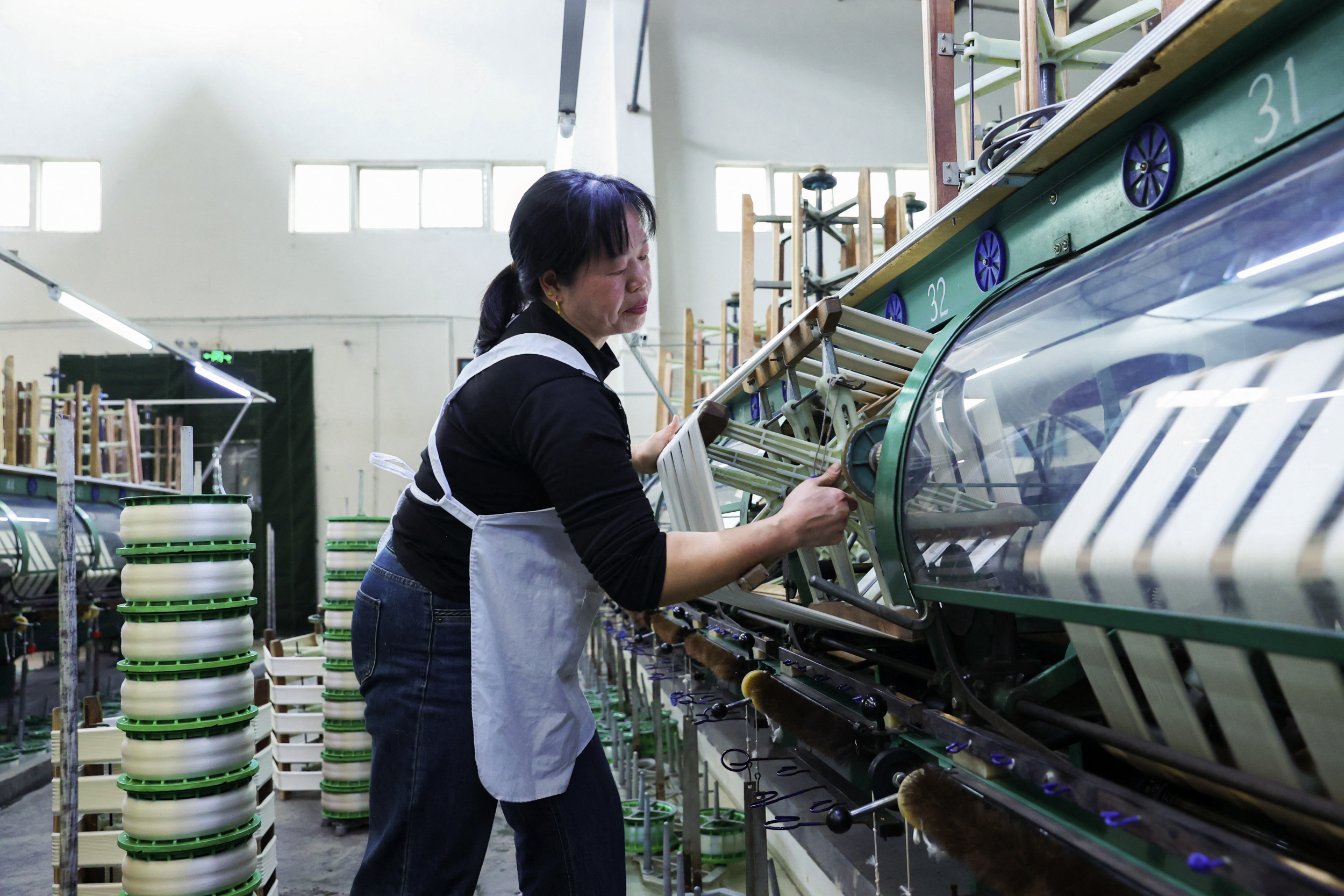
CANBERRA, AustraliaAustralian textile spinning mills feasibility studyinitiatives have gained major momentum following the release of a comprehensive landmark report assessing the economic, technological, and operational viability of rebuilding domestic cotton and wool processing facilities across regional Australia.

The research initiative, spearheaded by national scientific agency CSIRO alongside agricultural research bodies and regional development councils, examines actionable business models to re-establish onshore yarn spinning capacity for the first time in over two decades. Since the closure of Australia’s last commercial spinning mills during the early 2000s, approximately 97 percent of the nation’s raw cotton and greasy wool has been exported overseas for early-stage processing before being imported back as finished apparel and industrial textiles.

With global supply chains facing heightened geopolitical volatility, ocean freight disruptions, and shifting international trade regulations, Australian industry leaders are seeking to bridge the missing link in the domestic natural fibre value chain through advanced, highly automated regional processing hubs.

Addressing Historic Cost Barriers Through Automation and Renewables

Advertisement

Historically, Australian textile manufacturing struggled to compete against low-cost Asian processing hubs due to elevated domestic labor rates, high utility tariffs, and outdated processing technology. However, the new feasibility study highlights how structural shifts in energy generation and manufacturing technology have fundamentally altered economic viability calculations.

By co-locating modular, automated spinning mills adjacent to existing cotton gins, wool scouring facilities, and regional renewable energy assets, operational overheads can be reduced dramatically. Automated spinning machinery significantly lowers direct labor requirements per tonne of yarn produced, while direct power purchase agreements tied to regional solar, wind, and bioenergy microgrids help insulate processing plants from retail electricity price spikes.

The technical and economic pillars identified in the onshore processing framework include:

  • Regional Co-Location Strategy: Placing spinning facilities near agricultural production hubs in New South Wales and Queensland to minimize raw material freight costs.
  • Renewable Energy Integration: Utilizing dedicated solar and bioenergy power systems to achieve internationally competitive operational energy tariffs.
  • Advanced Modular Automation: Deploying modern ring and open-end spinning technologies that maximize output while reducing manual labor dependency.
  • Circular Fibre Recycling: Integrating post-consumer textile recycling capabilities with virgin cotton and wool streams to produce sustainable blended yarns.

Industry analysts note that combining onshore processing with renewable energy allows Australian growers to market a 100 percent domestically grown and manufactured product with verifiable low-carbon credentials.

Capturing Economic Value and Meeting Consumer Demand

Advertisement

The drive to re-establish domestic spinning mills aligns closely with the Australian Fashion Council’s broader National Manufacturing Strategy for Australian Fashion and Textiles. Independent economic modeling demonstrates that capturing early-stage processing onshore could unlock hundreds of millions of dollars in direct economic value while insulating local brands from external supply shocks.

Under current export dynamics, Australia exports raw cotton and wool at commodity prices, relinquishing high-value transformation margins to international spinning mills in Asia and Europe. By processing raw fibres locally into premium spun yarn, regional agricultural communities can retain a far greater share of the ultimate retail value chain.

Furthermore, major national fashion retailers and corporate uniform procurement networks have expressed growing interest in securing sovereign supply chains. Heightened consumer demand for transparent supply origins, non-mulesed wool, and sustainably grown cotton has created a lucrative market niche for fully traceable, Australian-made yarns.

“Re-establishing onshore fibre processing and spinning capability restores the missing link in our domestic value chain,” stated a representative from the Australian Fashion Council. “Australian agricultural producers grow world-class natural fibres, and having local processing capacity gives our manufacturing sector a distinct competitive advantage in the global ethical fashion landscape.”

Advertisement

Regional Job Creation and Long-Term Sovereign Capability

In addition to industrial value creation, the establishment of regional spinning plants offers substantial economic development benefits for rural and regional communities

.

The feasibility assessment projects that a network of modular spinning facilities across key agricultural corridors could create over 1,000 skilled advanced manufacturing jobs. Because regional processing hubs operate year-round, they provide stable, full-time employment opportunities that complement seasonal agricultural employment in cotton ginning and wool harvesting.

Advertisement

Government representatives across federal and state parliaments have voiced support for co-investing in shared manufacturing infrastructure, emphasizing that sovereign industrial capability extends beyond heavy defense and steel industries into basic consumer staples and textiles.

As the feasibility study moves into its final commercial consultation phase with private investors, agricultural cooperatives, and technology partners, Australia’s textile sector stands at a critical juncture. If commercial pilot projects secure final investment decisions, regional Australia could soon see the return of a modern, low-emissions spinning sector capable of transforming raw natural bounty into high-value yarn on home soil.

Continue Reading

Trending

Copyright © 2025