
Politics
Andi Peters Addresses Miriam Margolyes This Morning Interview

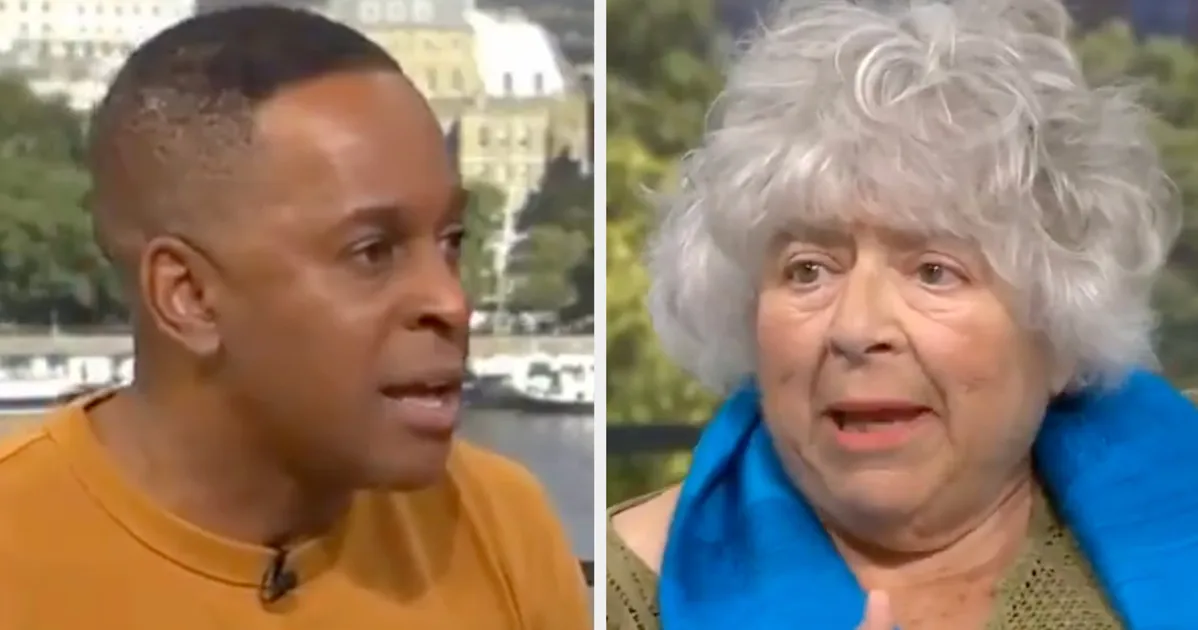
Last week, Andi and co-host Christine Lampard interviewed the Harry Potter star live on This Morning about her new book Miriam’s Full English, in which she reflects on modern British society.
After imitating Christine’s Northern Irish accent, Miriam asked Andi: “What accent would be normal for you? What are you?”
She then clarified that she was referring to the presenter’s race, remarking: “You’re a mix, aren’t you? You’ve got a Black daddy and a white mummy?”
When Andi clarified that both of his parents are Black, and tried to make light of the situation by questioning if the show’s make-up team had made him a “lighter shade than normal”, Miriam continued: “I think you’re what I would call ‘high yella’. That’s what they call it in America when someone isn’t deeply Black.”
“High yellow” is described by the Merriam Webster dictionary as a “dated” and “often offensive” term, historically used to refer to Black people with a light complexion.
Andi then interrupted to say that the producers in his earpiece were “getting nervous now”, to which Miriam responded: “Don’t be nervous. We [in Britain] welcome everybody. And that’s what I want to write about in my book!”
When footage of the interview became more widespread, Miriam faced a lot of criticism on social media.
Broadcaster Jeremy Vine then shared a clip of it on Instagram, writing: “This is seriously nerve-wracking. No filter. [Andi Peters] dealt with it brilliantly but note at the end — ‘they’re getting nervous’.”
“Thanks JV,” he wrote in the comments. “As you know we have to be ready for ANYTHING!!!”
HuffPost UK contacted reps for This Morning, Andi Peters and Miriam Margolyes last week, but did not receive a response.
Although Miriam’s candid and unfiltered approach to interviews has made her something of a modern-day national treasure, it has landed her in trouble in the past.
Just two years ago, she ruffled feathers in the same way, when she, again, asked an interviewer “what are you?” while speaking live on an Australian panel show.


Award-winning filmmaker Sir Ridley Scott has dismissed the suggestion he fired Paul Mescal from his latest film due to concerns that he wasn’t “masculine” enough in their previous collaboration.
Last week, the Puck newsletter What I’m Hearing alleged that Sir Ridley was unhappy with Paul’s performance in the movie Gladiator II, and had blamed the Oscar nominee for the film’s lukewarm box office takings.
The newsletter claimed that the director’s dissatisfaction stemmed from his belief that the Normal People star wasn’t “masculine” enough for the role he’d created, leading to them no longer working together on the new film The Dog Stars.

“Not true,” a spokesperson for the filmmaker told Entertainment Weekly. “Ridley loves Paul and was excited to work with him on Dog Stars after having [enjoyed] such a great collaboration on Gladiator II.
“Sadly, Paul’s rehearsal schedule for another film prevented him from ultimately doing Ridley’s film.”
Originally, Paul was supposed to play the lead in the post-apocalyptic thriller The Dog Stars, but was eventually replaced by Jacob Elordi due to what was reported at the time to be “scheduling issues” involving Sam Mendes’ upcoming Beatles movies, in which the Irish star will appear as a young Sir Paul McCartney.
The rep added that “while he was disappointed to lose Paul”, Sir Ridley was “thrilled to get the chance to work with” Jacob, describing his performance as “excellent”.

Evan Agostini/AP/Millie Turner/
Unfortunately, The Dog Stars – which also stars Josh Brollin, Margaret Qualley, Guy Pearce and Oscar winner Allison Janney – received something of a lukewarm response from fans and critics, with a Letterboxd rating of just 2.8 stars and a Rotten Tomatoes score of 40%.
Sir Ridley previously shrugged off naysayers of Paul’s credentials to play the lead in Gladiator II, insisting to Entertainment Weekly in 2024: “In my job, I’ve got constant doubting Thomases driving me fucking crazy.
“But when you’ve done the Formula 1 car around the track so many times, I do know how to take those bends.”
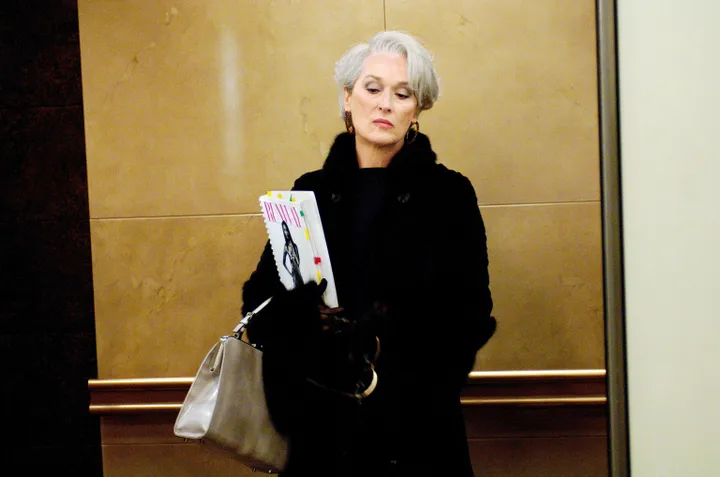
After two years treading the boards as Miranda Priestly in the West End musical The Devil Wears Prada, Vanessa Williams is getting ready to hand over the mantle to someone else.
But it turns out her replacement is someone she knows very well.
On Monday morning, it was confirmed that Teri Hatcher – with whom Vanessa starred in multiple seasons of the hit US series Desperate Housewives – will take over as the iconic villainous character from next month.
Vanessa’s final performance is scheduled for 19 September, with Teri taking over a month later, on 20 September.
Besides playing Susan Mayer in Desperate Housewives, a role which earned her a Golden Globe win and an Emmy nomination, Teri also played the titular heroine in Lois & Clark: The New Adventures of Superman and starred alongside Pierce Brosnan in the James Bond movie Tomorrow Never Dies.
More recently, she’s appeared in a number of Christmassy rom-coms, and was named Star Baker for her appearance on Channel 4’s Great Celebrity Bake Off in 2018.
The Devil Wears Prada, of course, was inspired by the hit 2006 film of the same name, itself an adaptation of Lauren Weisberger’s novel.

Barry Wetcher/20th Century Fox/Kobal/Shutterstock
In the original movie, Meryl Streep originated the role of Miranda Priestly, earning herself an Oscar nomination for her efforts.
Earlier this year, Meryl reprised the role in the hit sequel The Devil Wears Prada 2, which reunited her with former co-stars Anne Hathaway, Emily Blunt and Stanley Tucci, as well as introducing new characters played by Sir Kenneth Branagh, Bridgerton’s Simone Ashley and Emmy winner Justin Theroux.
The Devil Wears Prada musical, which features original songs by Sir Elton John, originally premiered in Chicago in 2022, but was retooled after being slated by critics.
It was met with a somewhat more positive response when it debuted on the West End in 2024, with cast member Amy Di Bartolomeo even receiving an Olivier nomination for her work as Emily, the character played by Emily Blunt in the movie.
The Devil Wears Prada is due to play at London’s Dominion Theatre until September 2027.

Joy Blizzard, Policy and Communications Officer
| Field Studies Council
Outdoor learning’s many benefits are being increasingly recognised. At Field Studies Council we’ve long argued for not just joined up thinking but joined up policies to truly maximise those benefits.
The inclusion of outdoor learning, nature and adventure in the new school Enrichment Framework is very welcome. As are the references to access to nature, outdoor spaces and adventure activities in the new Youth Strategy.
There isn’t a subject on the curriculum that can’t be enhanced by outdoor learning because learning in and about nature can re-engage learners with education itself, especially those that struggle in a traditional classroom environment.
 Outdoor and adventure learning can simultaneously deliver curriculum outcomes, whilst building employability skills, supporting wellbeing, and connecting young people to real-world contexts and environments.
Outdoor learning works. Numerous government funded projects over many years have demonstrated the benefits time and time again. From London Challenge through to Nature Friendly Schools and more recently Generation Green 1 and 2 we’ve seen life changing results.
However, these benefits are still not a guaranteed part of every child or young person’s education. Funded projects are always welcome, as is their focus on the most disadvantaged learners, but piecemeal funding cannot meet the demand.
Those that would benefit the most are often at the highest risk of missing out. There is a risk that outdoor learning experiences are rapidly becoming the preserve of only those who can afford it. That’s why this charity fully supports Caroline Voaden’s Outdoor Education Bill which aims to guarantee outdoor learning residentials as has happened in Scotland.
The bill is timely as we await Milburn’s recommendations from his Young People and Work review, following his stark warning of a lost generation unless urgent, systemic reform is undertaken.
 That’s because outdoor, nature-based adventure learning also has a distinctive role to play in reducing NEETs. It rebuilds confidence and reduces anxiety whilst re-establishing a sense of competence and belonging. Confidence, resilience, and real-world capability matter to those taking their first steps on the career ladder as they transition to adulthood. “I didn’t learn to avoid uncertainty. I learned how to move through it” said a Year 10 Pupil.
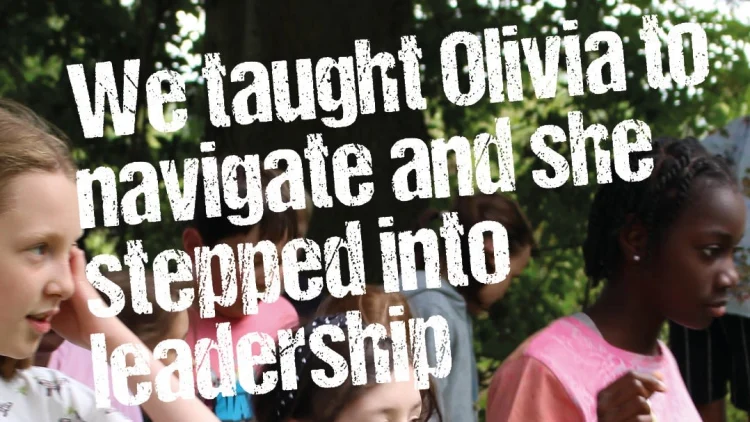
It is also, by design, relational. It relies on trusted adults, peer collaboration, and shared challenges. In a system described by Milburn as fragmented and impersonal, that relational dimension is essential. As one student put it “It wasn’t a teaching leading us, it was a teacher helping us lead ourselves”.
Across our network of field centres, we are already delivering the kind of integrated, skills-focused provision that Milburn’s review calls for.
Outdoor and adventure learning must move from the margins to the mainstream – an entitlement, not an optional extra.
This charity is asking Government to publish the delayed Access to Nature Strategy from DEFRA and then work with DfE and DCMS and any Milburn recommendations to pull the policy threads together into a coherent outdoor adventure learning offer for all young people. Yes it will cost. Our 2 night +Adventure residentials start at less than £200, but if we are serious about tackling the truly staggering financial and social cost of rising NEETs, bold action will be needed.
Find out more at https://www.field-studies-council.org/adventure-residential-trips/ or contact [email protected]

Dolly Parton’s sister Stella has spoken out against AI-generated content depicting the late country music legend, after Donald Trump shared an image of himself and the Jolene singer in the wake of her death.
In an Instagram post shared on Friday, Stella thanked those who have shown her family “‘genuine’ support and love”, before noting that she and her loved ones have been subjected to “incredible pressure and insensitivity from strangers”.
“There is a tremendous amount of AI and endless garbage being posted everyday and it’s been challenging to absorb and or ignore,” wrote Stella, a vocal Trump critic who – unlike her late sister – is outspoken in the political arena.
She continued: “As time passes, those who are in the business of exploiting the loss and tragedies of others on a daily basis will move on to the next stampede of endless misinformation.”

Later in the post, she called on people to “show more compassion and wisdom” towards her and her family, requesting that fans use Dolly’s life and legacy as an example of “tolerance and respect”.
“It’s not about the most clever comments, fake AI garbage or snarky tweets,” she concluded. “At the end of the day or the end of a life, how will you feel about yourself? It’s not about what other individuals you will never meet think!”
While it’s unclear exactly which posts sparked Stella’s the comments, Trump had used AI after Dolly Parton’s death to make the case that the largely politics-free singer quietly liked him.
Trump, who had previously called for US flags to be lowered in Dolly’s honour, shared an AI-generated illustration on Truth Social showing the Grammy winner holding onto his arm as they walked a White House colonnade. (Note: No images have surfaced of the two appearing with one another in real life.)
He also used Glenn Beck’s talk show to claim that Dolly Parton “really liked” him, adding that she never supported him publicly because she would have lost “20% of her fans”.

It’s difficult to flag intersections between Trump’s policies and the few issues Dolly was happy to publicly weigh in on.
Dolly was known to have championed LGBTQ+ rights during her legendary career, calling for “everybody to be treated [equally]” in response to anti-transgender laws in Tennessee in 2023.
Similarly, in 2020, Dolly Parton underscored that “of course Black Lives Matter”, referencing the movement that Trump has repeatedly criticised and once described as “toxic propaganda”.
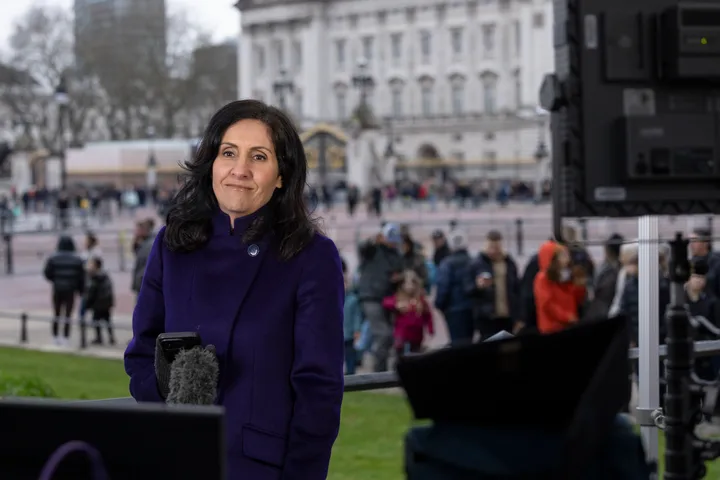
BBC News presenter Maryam Moshiri has spoken for the first time about being diagnosed with blood cancer.
In a new interview with the broadcaster, Maryam disclosed that in November 2024, she was told she had polycythaemia vera (PV), a rare and treatable form of the disease.
She explained: “It’s been two years since my diagnosis and I’ve felt that I’ve started to understand the disease a lot better and the way it affects my life.
“I’ve got a handle on it to a degree now, so I felt it was really important to raise awareness.”
Maryam continued: “I’m going to have to spend the rest of my life being treated for this.”
The NHS website describes PV as a “slow-growing type of blood cancer”, which can be treated with medicine “to slow down the production of red blood cells”.
It can also present an increased risk of other conditions such as heart attacks and strokes.
Per the BBC, “symptoms can include headaches, confusion, dizziness and blurred vision”.
“I was told by my consultant that I have this incurable blood cancer,” she recalled. “Mostly I had no symptoms and that’s one of the problems with this disease.
“The only reason mine was caught was because my GP was so fastidious in the way she did my routine blood tests and immediately sent them for further diagnosis.”

Simon Ackerman via Getty Images
She added: “I think it’s really important people understand that this blood cancer is incurable but it’s manageable with the right treatment and you can lead a relatively healthy life.
“It’s just a question of finding the right treatment and making sure it works for you.”
Maryam has been with the BBC since 2003, and in 2024, began fronting her own show on weekday evenings, The World Today With Maryam Moshiri.
Recent years have seen Maryam commentating on major stories, including reporting on the death of Pope Francis, and subsequent papal conclave, from the Vatican, as well as the arrest of Andrew Mountbatten-Windsor earlier this year.
Maryam and her husband, fellow journalist Jonathan Farmer, have three children.

The president posted an image of the supposed “next generation” design on his Truth Social feed:
Trump shared the image during a massive day-long posting spree, and it’s not clear if this is a real design for a new uniform or just one of the many images, memes and AI slop creations he likes to throw into his feed.
The image states that the design was inspired by the “discipline and functionality” of the uniforms in the 1997 film “Starship Troopers.”
Critics also pointed out that the design looked a lot like the evil Imperial uniforms seen in the “Star Wars” films.

On Tuesday, Andy Burnham addressed MPs on the direction in which he hopes to lead the country, which appears to be back to the halcyon days of the 1970s.
The new prime minister argued that the UK began taking wrong turns in the 1980s under his distant predecessor, Margaret Thatcher, whose influence apparently persists from beyond the grave. ‘Austerity’ followed, and then Brexit ‘compounded the damage, ushering in a decade of low growth’.
These might be good soundbites. But a much better take is that so-called austerity – in other words, sound money and fiscal discipline – and Brexit – leaving the failing EU behind – are part of the solution to the UK’s economic problems, not their cause.
Let us start with austerity. Critics have long argued that ‘savage cuts’ in public spending, especially under the Coalition government between 2010 and 2015, weakened the foundations of both the economy and society.
There are many problems with this narrative. Most obviously, public spending was not, in fact, ‘cut’, let alone ‘savagely’. Even allowing for inflation, total spending was little changed in real terms between 2010/11 and 2019/20.
It could still be argued that spending failed to keep pace with a growing and ageing population, or that the burden fell disproportionately on capital budgets, on local authorities and on core government functions, such as the justice system.
Perhaps the mix was indeed wrong in some areas. But in aggregate, the spending restraint of the early 2010s did help to stabilise the public finances after the explosion of borrowing in the wake of the Global Financial Crisis.
The 2010s were also a rare period of relatively rapid growth in productivity in public services, meaning that money was better spent.
The spending restraint was also necessary. Britain may not have been facing a Greek-style financial meltdown, thanks to retaining monetary sovereignty outside the euro. But UK interest rates could not have been expected to remain low indefinitely.
We only have to roll the clock forward to 2026 to see what happens when fiscal credibility is lost. The cost of government borrowing is now surging almost everywhere, due to global worries about inflation, interest rates and bond issuance. But yields are far higher in the UK than in other countries – even Greece. This is at least partly due to specific investor concerns about the Labour government’s fiscal plans.
Blaming Brexit for the UK’s economic problems does not make a lot of sense either. A decade ago, the British people voted to leave the EU and restore more sovereignty to the UK government. Westminster has since regained control over laws and borders, run its own trade policy and saved tens of billions of pounds in contributions to the EU budget. On this basis, Brexit has been a success.
Indeed, multiple polls show that support for rejoining the EU crumbles when people are presented with the costs and conditions of membership, and that most still want key decisions to be made by politicians who they can actually vote out.
This democratic choice has also laid the foundations for a stronger economy. Benefits can already be seen in those (sadly, too few) areas where the government has begun to use the Brexit freedoms. Examples include agriculture, where subsidies are now better targeted, and animal welfare, with UK bans on live animal exports and industrial sand eel fishing. The financial-services sector was nervous about Brexit. But after seeing the benefits from pro-growth reforms, the City is now campaigning against closer alignment with EU rules.
Outside the Customs Union, the UK has used its independence to secure faster, better trade deals worldwide and to cut tariffs unilaterally. Just this week, the Labour government was trumpeting the benefits of securing full access to the £13 trillion CPTPP trading bloc of Asia-Pacific nations.
Outside the Single Market, the UK has gained greater freedoms to ‘buy British’ and provide state aid for UK industries, for good or ill, and to reduce VAT on domestic energy bills.
Looking ahead, there is enormous potential to benefit from smarter regulation of new technologies, including AI, outside the EU. There have already been important Brexit wins in fields such as gene editing – crucial for raising drought-resistant crops. The savings on contributions to the EU budget will also only grow.
It is nearly impossible to isolate Brexit’s impact from other factors, notably the UK’s relatively high energy costs. But studies claiming that the UK economy has taken a hit of ‘as much as eight per cent’ fail miserably to do so.
The bewildering array of zombie statistics includes the Office for Budget Responsibility’s assumption of a four per cent Brexit hit to long-run productivity. This was based on a crude average of the results of external studies, mostly done a decade ago, before the final shape of the exit deal was even known.
The OBR also assumed that the UK’s global trade in goods and services would be 15 per cent lower than otherwise. This hit simply has not happened.
Worse still are the ‘top down’ or ‘doppelgänger’ models. These assume that any divergence in the UK’s economic performance since 2016, compared with mismatched groups of other countries, can only be due to Brexit. This is a tragic case of ‘confirmation bias’.
The ‘bottom up’ models, which attempt to isolate the impact of Brexit on particular sectors, are not much better. These typically fail to recognise the temporary nature of the adjustment costs. In particular, business investment was initially held back in the years after the vote to leave, but it has since rebounded as Brexit uncertainty has eased.
A more balanced view is that Brexit has had little overall impact on the economy, so far. Whether it ultimately leaves the economy weaker or stronger will depend on the choices made by the UK government – which is as it should be.
Some still describe Brexit as a slow puncture for the British economy. In reality, it may turn out to be little more than a bump in the road. And if that road leads us further from the EU’s continuing failures, so much the better.
Julian Jessop is an independent economist. Follow him on X: @julianhjessop
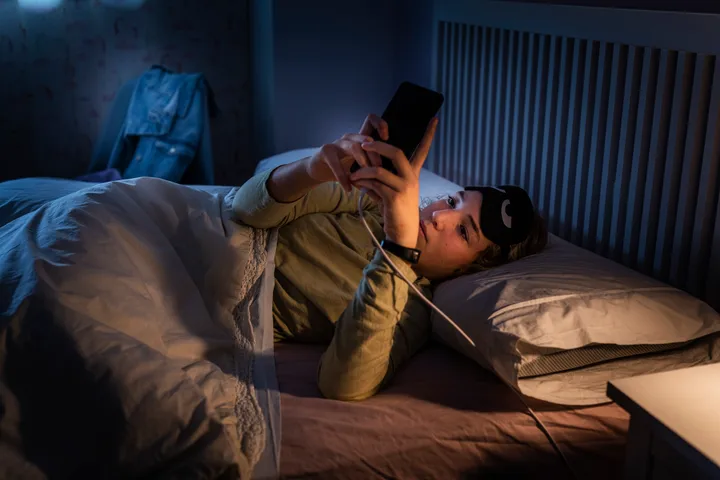
You probably don’t feel your best when you stay up until the wee hours of the night. But beyond waking up groggy, new research says late bedtimes can actually harm your mental health.
In a recent study published in Psychiatry Research, experts analyzed sleep and health data from 73,888 people in the U.K. Biobank. Those who regularly went to bed after 1 a.m. were more likely to experience mental health disorders like depression and anxiety than those who went to bed before 1 a.m.
It didn’t matter if subjects classified themselves as early birds normally or night owls (this is also known as your chronotype) ― going to bed after 1 a.m. hurt people mentally, the study found. In fact, night owls who went to bed after 1 a.m. were most likely to have mental health impacts. People who went to bed before 1 a.m. had the lowest amount of mental health diagnoses.
This study has some limitations: The people who make up the U.K. Biobank are mostly white and middle-aged or older, according to Dr. Indira Gurubhagavatula, a professor of medicine in the division of Sleep Medicine at the University of Pennsylvania, who is not affiliated with the study.
“And the way they decided which chronotype you are came from a single question, although they did use one that has been validated. But typically how we assess morningness or eveningness is with a much more thorough questionnaire that has a lot more detailed questions,” said Gurubhagavatula. Meaning, whether folks are really morning people or night owls may not be totally accurate in this study.
Additionally, researchers relied on mental health diagnoses data added by doctors. This type of reported data can be inaccurate or doctors can miss a diagnosis, Gurubhagavatula said. That said, she noted that the findings align with what she’d expect and said this study should be recreated in other populations, too.
Going to sleep late has many negative impacts on your mental health — and overall health.
“Generally speaking, if you’re not going to bed until after 1 in the morning or 2 in the morning, it’s very likely you’re not waking up until several hours after the sun has come up. And you’re not going to bed for several hours after the sun has gone down, so I think it gets that this issue … being out of alignment with the environmental light-dark cycle as potentially problematic,” said Matthew Lehrer, an assistant professor in the University of Pittsburgh Department of Psychiatry, who is not affiliated with the study.
It’s important for our bodies to get strong signals that it’s daytime, which can come in the form of morning sun. If you aren’t getting those signals or are getting mixed signals, it can cause issues with your biology, which could also affect your brain, said Lehrer.

fcafotodigital via Getty Images
“The authors also mentioned that there are some brain-related mechanisms beyond circadian misalignment. Greater nighttime activity is associated with more impulsive and maladaptive behavior,” Lehrer said. “There are some mechanisms in the brain related to behavior and impulsiveness and inhibition … when you’re awake for longer and later, those things tend to decrease and so that could be associated also with poor mental health.”
Gurubhagavatula noted that some brain functions are more vulnerable to sleep loss than others.
“So, for example, maybe you can chew gum, you can talk, you can walk, but the frontal lobe of the brain is very vulnerable to sleep deprivation,” said Gurubhagavatula. The frontal lobe is responsible for a lot of our brain’s functioning, including mood and emotional regulation.
“So, our ability to not swing wildly from one emotion to the other ― that ability to inhibit ourselves ― becomes impaired under conditions of sleep deprivation or staying up very late at night,” Gurubhagavatula said. “Then it can lead to more negativity, more anxiety … because the higher brain functions that would regulate those emotions are more dulled.”
What about people — like shift workers — who have to go to bed after 1 a.m.?
This can all sound pretty disheartening, especially if you have a job that requires you to go to bed after 1 a.m. Both experts said there are things you can do to minimize the negative impact of a late bedtime and get more sleep, too.
Napping is the first step. “One type of nap is called a strategic nap, which happens during the shift when you know that you have a slump period where it’s so hard to stay awake, your eyes are just going to close. It will be very efficient to use that time to grab a nap if you can,” Gurubhagavatula said.
“And then the other thing is what’s called a preemptive nap. So before the shift even starts, you go into the shift as well rested as you can be,” Gurubhagavatula said, noting that it’s best to keep your naps to 20 or 30 minutes.
Another strategy for night shift workers is “appropriately timed bright light exposure during working hours, if possible,” said Lehrer. “This would be artificial light, such as light boxes for individuals with seasonal affective disorder … they’re very bright, they do have fatigue-reducing and mood-boosting properties.”
Following a specific eating schedule is important, too. “Maintaining more of a daytime-oriented eating schedule can also be helpful, potentially for mood. It’s been shown in simulated night shift work. People in the lab ate their meals during the daytime and they had better improvements in mood relative to those who ate at nighttime,” Lehrer said.
Having a cool, dark and quiet bedroom can help you get better sleep, too, according to both experts.
Beyond this, if you just can’t seem to get the recommended seven to nine hours of sleep, Gurubhagavatula said it’s important to be aware that you could have a sleep disorder. In this case, going to a sleep specialist is a good idea.
“I think that most people by now are starting to understand that as much as we treat sleep like it’s a bonus, it’s actually essential. It’s a biologic necessity,” said Gurubhagavatula. “And we can’t go without it similar to air, food and water.”
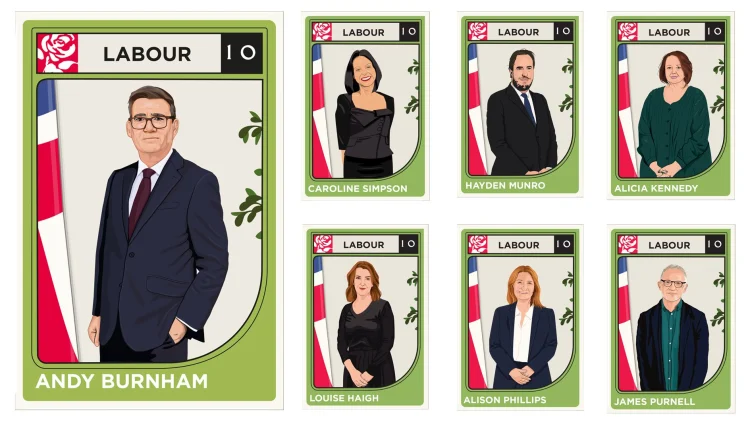
Illustrations by Tracy Worrall

17 min read
Andy Burnham’s backroom is taking shape. Sienna Rodgers gives a rundown of which movers and shakers in Labour politics have been appointed to the new No 10
It was not just that Sir Keir Starmer was fundamentally unsuited to the role of prime minister, say many senior people behind the scenes in Labour, but that his No 10 did not function properly – and indeed that the centre of government had not been working for some time.
The new Prime Minister thus began his tenure with major machinery of government changes, creating ‘the Office of the Prime Minister and Cabinet’ to assert authority over the Cabinet Office. This was a much-needed reform in the eyes of many including the Institute for Government, though the think tank is concerned it did not go far enough given that the Cabinet Office “lives on, in a hollowed-out form”.
Under Burnham, the top task now for the Cabinet Office is said to be answering the question: how can it be set up so that it has a clear purpose and delivers on the Prime Minister’s priorities? To this end, First Secretary of State Louise Haigh is “reconfiguring” the Cabinet Office and has established task forces on the cost of living; stronger public control of essentials; and communities and place. All three cross-cutting priorities are vitally important to Burnham and the reforms are being sold as a “gamechanger”.
Alongside empowering No 10 in Downing Street, Burnham has – to much fanfare – set up an outpost in Manchester, ‘No 10 North’, which has symbolic value but will also need to deliver clear results for his devolution agenda. A No 10 source says the arrangement has worked better than expected, with Burnham making it clear that No 10 North “can’t be a gimmick” and must genuinely change how the country is run. He has been working there at least one day a week, as promised, and takes every opportunity to emphasise the priority he places on No 10 North, driving through his agenda on putting power in the hands of communities. “He doesn’t want it to be an office where officials and spads are doing what’s always been done before. He wants it to be transformational and different,” says a source.
The fear that No 10 North could duplicate the work of Downing Street has not been borne out, say insiders, because North has a new and different remit, focused on devolution and acting as a front door for local leaders around the country. Whether tensions arise in future between No 10 North and the Ministry of Housing, Communities and Local Government (MHCLG) remains to be seen. For now, No 10 sources stress that their Manchester branch is helping to navigate relationships, taking away the burden of linking up local authorities with the Treasury for example, and that No 10 North makes it easier for MHCLG to focus on its own work.
Over the summer, No 10’s ranks have swelled. One impressed Starmer-era official says the appointments represent “a step change in the calibre and experience of the new people”, though adds: “They need to show some of the retained the door.” The reaction to the hires from within Labour has been overwhelmingly positive. “They’re rewarding experience and skill within specific areas,” says an insider. “These are people with really strong reputations in the fields they’re now leading.”
No 10
James Purnell – chief of staff
A close friend of Burnham, this 56-year-old former Blairite minister was chosen by the new Prime Minister to head his Downing Street operation. James Purnell is probably best-known for quitting the Cabinet in 2009 as part of a failed bid to overthrow Gordon Brown as PM (an effort in which Burnham refused to partake).
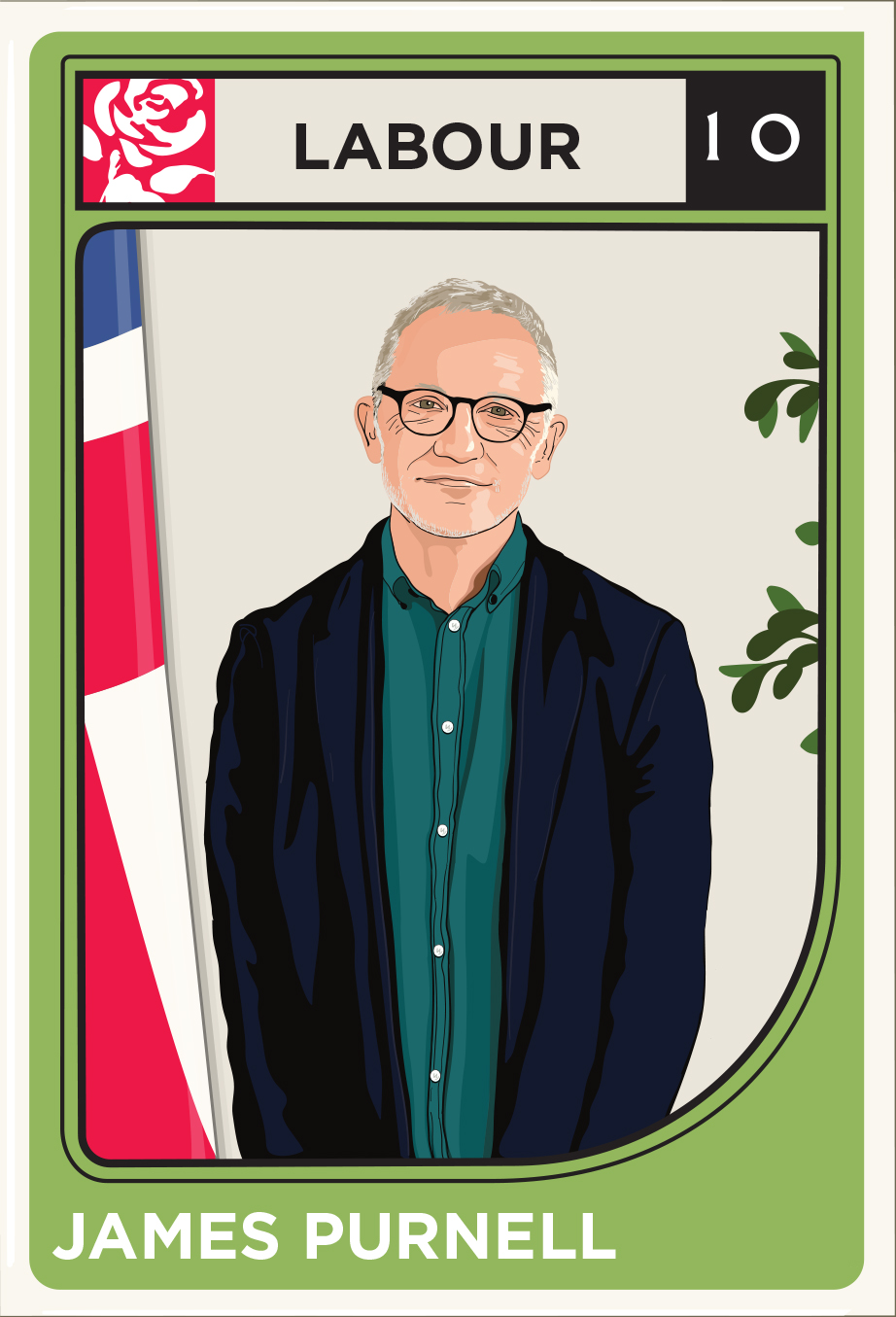 Purnell has experience of working in No 10, having worked as a spad there from 1997 to 2001.
He was then picked as a parliamentary candidate and became the Labour MP for Stalybridge and Hyde in 2001 – the same intake as Burnham. He went on to be culture and later work and pensions secretary.
As a privately educated southerner, who graduated from Oxford with a first-class PPE degree before serving as an Islington councillor, on paper Purnell may not be the clearest embodiment of Burnham’s agenda. But the two men have a shared history as spads under Tony Blair, flatmates, football teammates (the amateur ‘Demon Eyes’ team in the 90s) and occupants of the same parliamentary office as MPs.
Head North, the part-memoir, part-manifesto Burnham co-wrote with Steve Rotheram, includes an acknowledgement to Purnell – “for believing in me and seeing things others didn’t”. Burnham also recalls how his friend, “one of the clearest political thinkers I have ever met”, was instrumental in persuading him to stand for Parliament the first time.
A former Institute For Public Policy Research (IPPR) think tank chair and director of the BBC, where one of his roles was to argue for the corporation’s continued existence, Purnell is regarded as a strategist with managerial experience who also has the benefit of understanding government from both the perspective of a spad and a secretary of state.
Those more sceptical of his appointment, which include figures on the Labour left, express concern over his more recent work as chief executive of lobbying firm Flint Global. Its clients have included Thames Water, BP, Apple and Amazon. Burnham’s team has said Purnell will have no ongoing financial interest in the company and future conflicts of interest would be managed appropriately.
Critics have also pointed to his closeness to Starmer’s short-lived comms director Tim Allan as evidence the new chief of staff does not represent a clear enough break from the last leadership. Allan attended Guildford Grammar alongside Purnell (as well as Liz Lloyd, now a peer and minister) and was best man at his wedding.
Purnell’s own politics have been described as “Blue meets New”: Blairism combined with the Blue Labour tradition that emphasises communitarianism and civic duty.
Alison Phillips – deputy chief of staff
As transition director during Burnham’s leadership campaign (the PM’s allies insist there was one even if nobody noticed it), Alison Phillips, 56, then took up that same role in No 10 and was picked to be Purnell’s deputy too.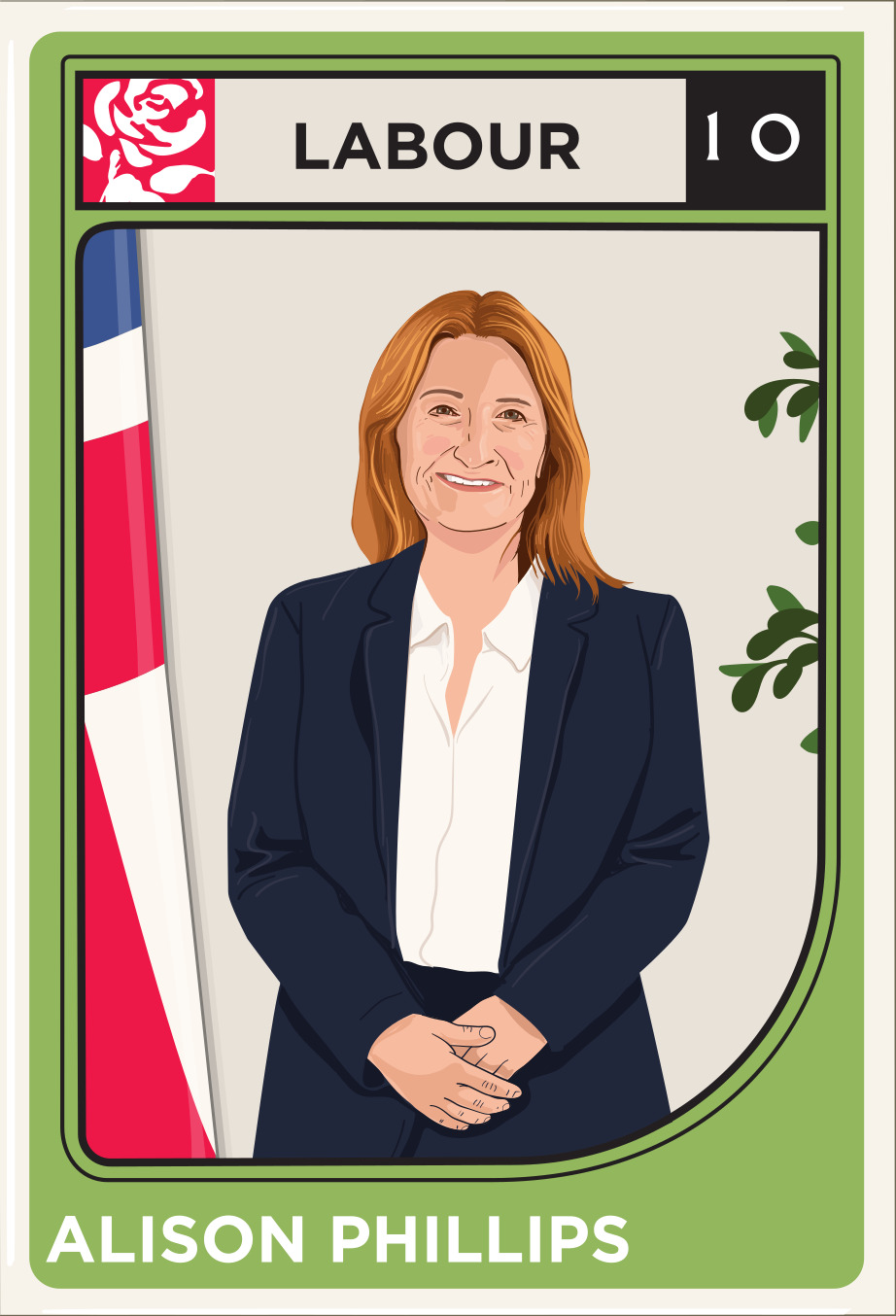
Essex-born Phillips was always a journalist, climbing the ranks from local newspapers to national tabloids, until she stepped down as editor-in-chief of the Daily Mirror in 2024. She soon replaced ex-MP Jonathan Ashworth as chief executive of the Labour Together think tank, which was rebranded as ThinkLabour under her leadership. She steered the organisation through the scandal that revealed Phillips’ predecessor Josh Simons had commissioned PR firm Apco to compile a dossier investigating journalists who had reported on the group’s undeclared donations. It led to Simons resigning as a minister before later quitting as an MP altogether to allow Burnham to stand for Parliament.
When confirming Phillips’ appointment to No 10, a source suggested the way she navigated Labour Together through the tumultuous period and turned it around was seen as a key selling point, saying: “She has led large and complex organisations, delivering results and overseeing cultural change.”
She has been commended already for engaging well with stakeholders and being unflappable amid the sometimes-chaotic start to the new government. The calm demeanour shared by Phillips and Hayden Munro (see next page) is thought to balance out Burnham’s own bouncy energy.
The highly regarded Emma Norris of the Institute for Government took a temporary spad role helping Phillips with the transition and is thought likely to be kept on. Parna Taylor, who was an aide to Purnell back when he was an MP, is also working with Phillips; she is director of leadership and talent, looking at spad appointments across government.
Politics
Matthew McGregor – director of political strategy
In what was taken as an encouraging sign by the left of Burnham’s camp, the chief executive of political activism organisation 38 Degrees was picked to head up political strategy. The not-for-profit, which he led for five years, runs campaigns such as demanding the government “get Palantir out of our NHS” and bring Thames Water into public ownership.
Matthew McGregor, 47, is also a former director of campaigns and communications for Hope Not Hate. The anti-fascism advocacy group is lauded by the left for its work infiltrating and exposing far-right activities, while being criticised by those on the right who argue that its output is itself divisive. (Phillips was also briefly a director, appointed in 2025.)
On entering Downing Street, McGregor has stepped down from his trustee roles at IPPR think tank and human rights charity Reprieve. The Conservatives criticised the latter on the basis Reprieve has opposed citizenship-stripping from people such as Shamima Begum.
McGregor is well-liked in Labour circles. One Labour source outside of Burnham’s team welcomed the hire, taking it as “a signal that things will change”.
The new head of political strategy has worked on elections in Britain and overseas, including Barack Obama’s 2012 campaign.
“I think he will help Labour’s chances at the next election,” the same source adds. “He is analytical but in a very human way. Lots of international political knowledge, not just UK and US. He has strong values and ethics without ever being pious. They drive him. He is kind and decent and very hard-working. And funny.”
Hayden Munro – political director
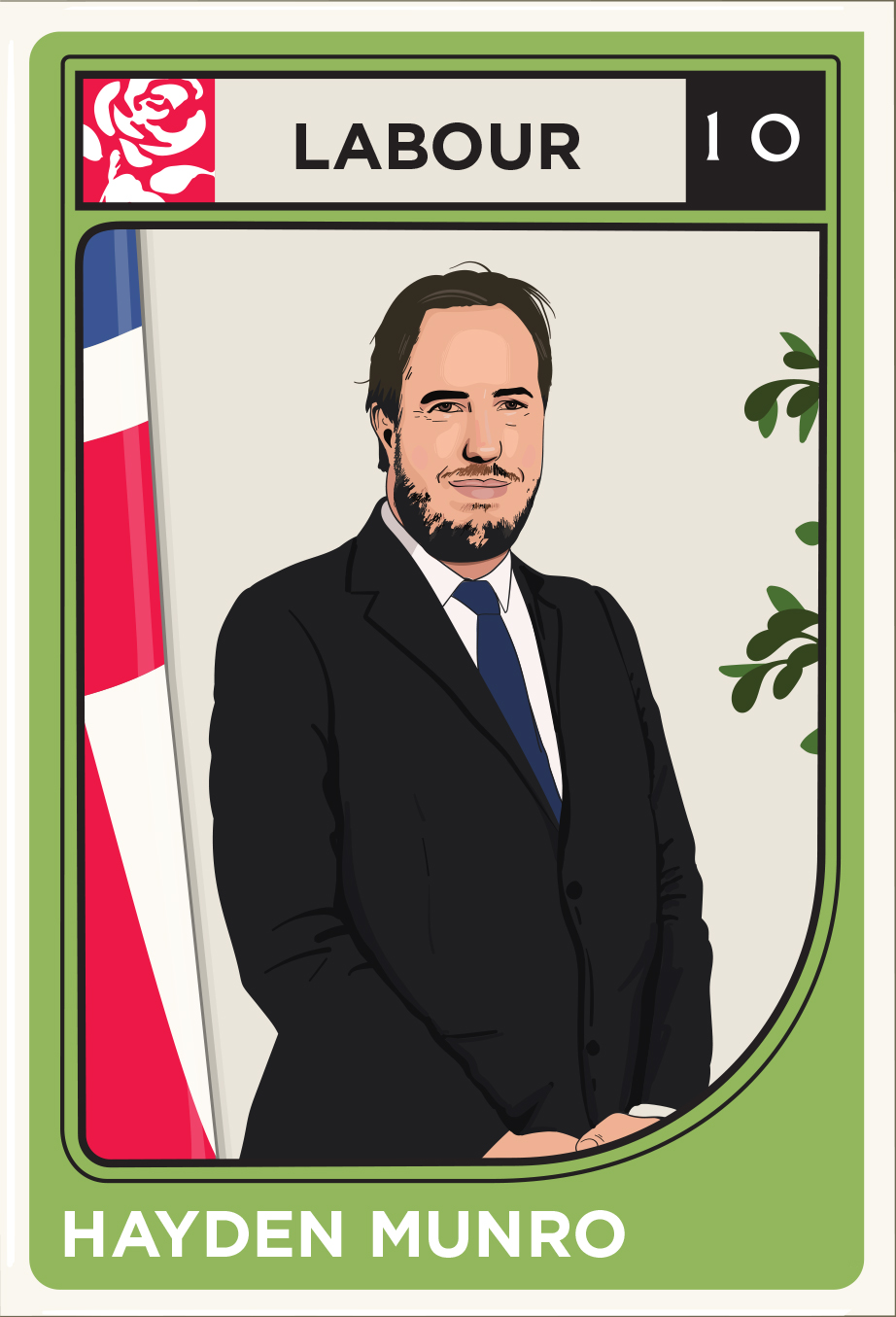 After co-ordinating the Burnham leadership campaign, Hayden Munro, 37, was given the big No 10 job of political director. Like Purnell, he comes directly from a lobbying firm – Arden Strategies, owned by former MP and Scottish Labour leader Jim Murphy.
Before moving to London two years ago, the Kiwi strategist worked as campaign director for New Zealand Labour PM Jacinda Ardern in the 2020 effort that saw her win a landslide victory.
Munro has quickly gained a reputation among Burnham allies for being “strategic, calm and tight-lipped”, as one source put it. A key weakness is that he does not have the depth of knowledge about the UK party usually expected of a political director, which means the team underneath him will need to be able to fill that knowledge gap.
The House hears he has been making diligent efforts to gen up quickly by talking to well-versed Labour insiders, however. He has also made a positive early impression on the unions.
Luke Sullivan – spad to the PM and chief of staff to the chief whip
It was a surprise to many when Starmer’s political director in opposition, Luke Sullivan, was not brought into his government and in 2024 he headed to the private sector instead, working in public affairs at Headland. He has now been brought back into the fold by Burnham, performing a dual role that stretches across both No 10’s political team and the whips’ office, working under new chief whip Anneliese Midgley. Previously a spad to chief whip Nick Brown under Gordon Brown, Sullivan is popular and seen as experienced.
Danny Coyne has joined Burnham’s No 10 as Munro’s deputy in the political team, leading on work related to the Parliamentary Labour Party. A former political adviser to Louise Haigh, he moved to advise Sue (now Baroness) Gray as Starmer’s chief of staff and subsequently spadded for John Healey and Angela Rayner in government.
Harjeet Sahota has become a No 10 spad, after working in the Department for Culture, Media and Sport in spad and chief of staff jobs, following a job managing stakeholders for Starmer in opposition. And Kate Robson, previously of MHCLG under Angela Rayner and Steve Reed, has secured a No 10 job liaising with mayors, taking over from Starmer’s director of local government and devolution Pete Robbins.
Cerys Way – director of trade union engagement
Claire Stewart, who came from Unison and was close to its previous general secretary Christina McAnea, left as No 10’s trade union whisperer earlier this year. Under Burnham, the post has been filled by Cerys Way. She hails from the small Labour-affiliated train drivers’ union Aslef, where she was political adviser, and previously worked as a GMB regional political officer.
Aslef was sorry to lose Way, who has made the jump to government despite having a job for life at the union if she had wanted to stay. She is widely known as an effective operator and is praised by a former colleague as “non-factional” in her dealings with all unions. A different union source reports that she is active in LGBTQ politics, “loathes misogynists” and plays in a rock band.
The unions are hopeful that Way’s appointment signals a major shift in approach from No 10 towards them, after Starmer’s hands-off style. “The vibe has been entirely different since Andy came in,” says a cheerful union official. “We’re not going to get everything we want, but we now have someone in No 10 who will listen to us and might even pick up the phone every so often.” They are delighted with the reset instigated by Munro.
Policy
Graeme Cooke – head of No 10 policy unit
A holdover from Starmer’s No 10, Graeme Cooke has been promoted from policy adviser to leading the policy unit. He is another IPPR alumnus, a former senior staffer at the Joseph Rowntree Foundation and two London councils, and a close friend of Purnell, having advised him back when he was work and pensions secretary. The pair are regarded as intellectual allies.
Cooke is popular with the Blue Labour crowd, and he and Purnell acknowledged Maurice Glasman’s influence on their thinking in a 2010 paper for Demos think tank. Their joint introduction, which invoked RH Tawney, Amartya Sen and father of community organising Saul Alinsky, argued for ‘reciprocism’, including contribution-based welfare. It specifically backed an elected Upper Chamber, public funding for political parties and self-governance in areas such as schools.
Harvey Redgrave, another Blue Labour-linked adviser, has stepped down as head of the policy unit under Starmer to take up a spad role focused on state reform, security, migration and crime.
Nathan Yeowell is the former director of Progressive Britain and founder of the Future Governance Forum, the think tank that recommended machinery of government changes worked on by Purnell and taken up by Burnham. He is working across No 10 North and South, though currently based in Wales, where he is a Labour councillor.
Isabel Abbs, who was a No 10 health spad under Starmer, has been lost to Yvette Cooper’s team where she will work alongside Damian McBride.
The policy team has a fair amount of continuity for now, with Burnham hires slower to get going here. Jonathan Powell has remained in post as national security adviser and Henna Shah has stayed as foreign policy spad assisting him.
Comms
Sarah Brown – director of communications
Moving from City Hall, where for five years she has been directing comms and strategy for Sadiq Khan, Sarah Brown has been hired to lead Burnham’s comms in No 10. Her role has been changed from the equivalent under Starmer: it is now integrated, which means social, digital, press, news, media and strategic comms have all been pulled together under one person, with senior staff leading on each area under Brown.
Before joining Khan, initially in 2016 as deputy mayoral comms director, she was a Labour Party press officer. Brown is responsive and well-liked by colleagues and journalists alike.
Grace Pritchard – director of news and the PM’s spokesperson
Previously a junior spad in Ed Miliband’s Desnz, Grace Pritchard left such a positive impression when she was seconded to work on Burnham’s by-election campaign that she has made a quick rise to become one of the most senior comms people in No 10. She started her career as a journalist before working at anti-Brexit group Best for Britain and then the Labour Party, followed by Yvette Cooper’s office.
Downing Street press secretary John Stevens, formerly of the Mirror and Mail, and head of broadcast Calum Masters have been held over from Starmer’s No 10. Abby Tomlinson of ‘Milifandom’ fame, who has spent recent years working for the party and then No 10, is also in Brown’s team; she has been promoted to deputy director of digital and head of content.
At the time of writing, No 10 is in the process of hiring a head of strategic comms to work under Brown and a briefing spad, and there is no news yet on whether they will be getting in a chief speechwriter (Burnham has mostly been writing his own).
Over in the business team, Varun Chandra has stayed as chief business adviser to the Prime Minister, despite one source describing him as the “least Andy person you’ll meet”.
Elsewhere, Anna Wright has been hired to manage events and visits, looking at how to use Burnham’s time outside of the office and the politics of those engagements. And former Home Office official Joy Johnston, who was Starmer’s spad for faith, communities and civil society, is now director of the Prime Minister’s partnerships unit.
No 10 North
Caroline Simpson – deputy chief of staff
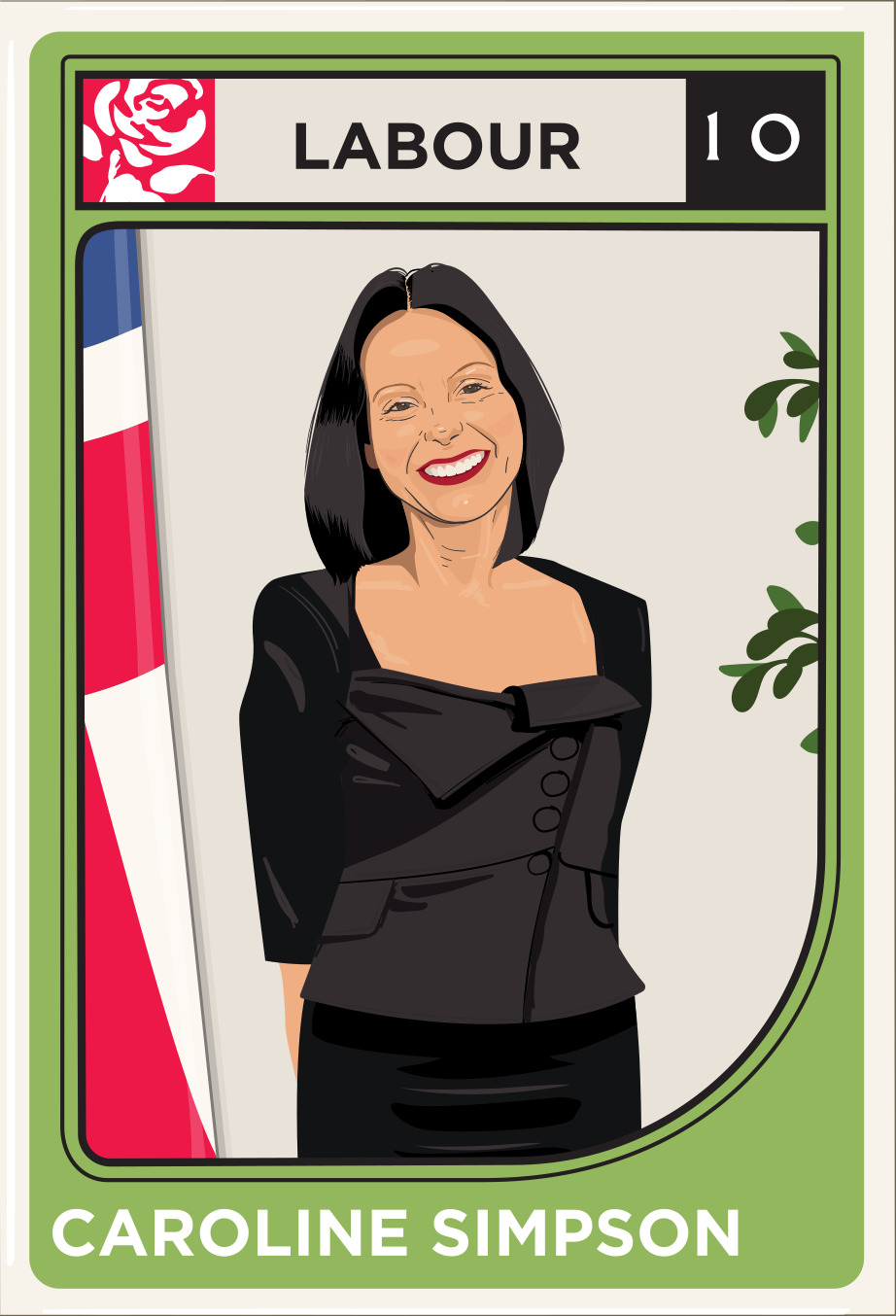 Leaving her role as chief executive of Greater Manchester Combined Authority to head up No 10 North is Caroline Simpson, a career civil servant in local government and Burnham’s “right-hand woman”.
Simpson, 54, has the tricky task of making a success of the No 10 North project. Its work must be co-ordinated with No 10 South, Whitehall departments and mayoral authorities to avoid duplication and function cohesively, all in the pursuit of devolving power in Britain.
A staffer described Simpson to the Times as “smiley and personable and a competent bureaucrat”, though added that “some wonder if she’s good at standing up to [Burnham]”, while Manchester property developer Tim Heatley called her a “tough negotiator”.
Kate Groucutt, the former deputy leader of St Helens council who was active on Burnham’s Makerfield campaign, has secured a No 10 role linking up North and South. She is the wife of Conor McGinn, the ex-MP charged with sexual assault earlier this year who has pleaded not guilty and awaits trial.
Burnham’s longtime friend and mayoral chief of staff Kevin Lee is, naturally, a spad in No 10 North. Tom Whitney, who advised Burnham and Steve Rotheram before going to the Department for Transport, is working as a spad between North and South. JP Spencer, previously leading on devolution at ThinkLabour and subsequently The Productivity Institute at the University of Manchester, also has a spad role across the policy unit and No 10 North.
First Secretary of State, Chancellor of the Duchy of Lancaster and minister for the Cabinet Office Louise Haigh also has a role overseeing No 10’s work. She has quickly put her own team together.
Alicia Kennedy – chief of staff to Louise Haigh
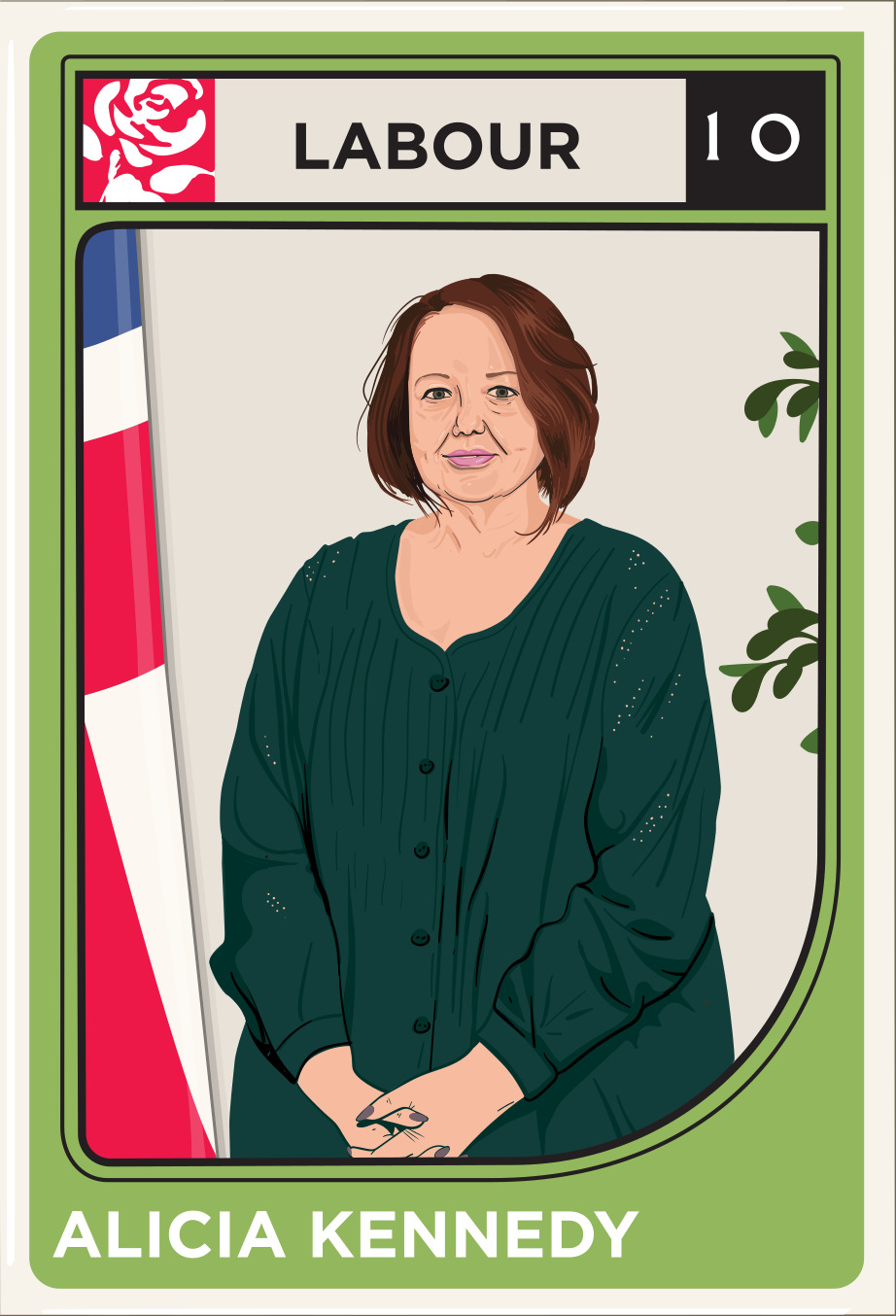 Veteran Labour staffer Alicia Kennedy, a former deputy general secretary and adviser to Ed Miliband, established her status as a renowned ‘fixer’ during her time serving Tom Watson as chief of staff. In 2013 she became Baroness Kennedy and was non-affiliated for a period while working as director of Generation Rent UK. Her husband Roy Kennedy is Labour chief whip in the Lords.
Kennedy and Haigh are “not natural political allies”, one Labour insider notes. But a source close to Haigh insists they work together very well, both being stalwarts of the labour movement, and says Kennedy’s wealth of experience makes her appointment a savvy one. Certainly, the hire of such a well-connected figure has been taken as a sign that the de facto deputy PM is intent on being ultra-effective in government – and ruthless. The dynamic between Haigh and deputy leader Lucy Powell is one to watch.
Returning to the Labour fold is Luke Francis, the former Lisa Nandy adviser and Sadiq Khan mayoral campaign aide who was by Burnham’s side throughout the Makerfield campaign and afterwards. After a stint at comms firms Concilio and Pagefield, he is Haigh’s comms spad.
Former Unite the Union and City Hall official Jenny Killin, who was also integral to the Makerfield by-election, is returning to Haigh’s team, having worked for her at DfT. Other Haigh spads include Maria Herron, who was with Nick Thomas-Symonds at the Cabinet Office, and Neil Foster, the GMB officer who joined Rachel Reeves in the Treasury, and Nick Williams, the former infrastructure spad who left Starmer’s No 10 following a spat with Morgan McSweeney.
The autumn political season has well and truly begun, with Andy Burnham facing his first parliamentary tests and the Reform UK conference having just happened. I’ll come to Reform’s travails in a moment, but let’s first have a word about Andy Burnham.
No one could accuse the prime minister of ducking questions when he came to Parliament to make a statement on the future direction of the government. He answered 126 questions from MPs over three hours. He certainly deserved his gravy on his chips after that. Having said that, did any of us emerge any the wiser about his policy direction? I don’t think so. There were lots of people/MP pleasing moments, but scant little about actual meaningful policy.
The next day he faced Kemi Badenoch again for PMQs. It’s interesting how divided opinion was about his performance. He didn’t do badly, but frankly the whole thing was quite boring, as evidenced by the lack of cheering from the Labour benches. Having told us he wanted to do politics differently, he did the exact opposite with repeated jibes towards the Conservatives, and particularly the new shadow chancellor, Andrew Griffith. Apparently, as the No 3 minister in the Treasury under Liz Truss, the mini budget was entirely his creation! I mean, who knew?! Kemi Badenoch treated him quite gently on his first outing, which was wise. He shouldn’t count on that happening for too long though.
My prediction that the Conservatives would overtake Reform in the polls by Christmas has come true a few months early. Reform have been having a wretched time, largely due to financial issues or scandals. Their conference was almost wrecked by the Channel Four News expose. Convincing answers were largely absent from the interviews given by their senior spokespeople. I rarely think this sort of issue resonates with voters but coming on top of the £5 million donation issue, it’s difficult to think of any other explanation for the decline in Reform’s polling from 30 per cent to 20-22 per cent.
I expected Reform to announce further members of their so-called Shadow Cabinet during their conference, but they didn’t. It’s ridiculous that they don’t have a Health or Defence spokesperson.
As a spectacle, the Reform conference was unrivalled. Brilliant staging, a huge venue, with more than 8,000 delegates attending. Businesses were well represented. The media were there in full force. It had the potential to be a brilliantly successful event. However, the organisation was shambolic. Ever session started massively late and overran. There were only two security people letting people in the hall. If you can’t organise the logistics of a conference, people could be forgiven for wondering how they could run a government.
Sadly for them, all their policy announcements were overshadowed by the donor scandal and Zia Yusuf’s borderline racist comments about the Somali born leader of Camden Council, who may be the Labour candidate in the Holborn & St Pancras by-election.
The Conservatives start the autumn season in good heart, despite their opinion poll ratings, which are still stuck in the 20-22 per cent range. Still, this time last year it was 16-18 per cent, so it’s progress of sorts. The difference is that Kemi Badenoch’s position is now unassailable and that was demonstrated this week by a fairly brutal reshuffle of her front bench, in which two of the top three positions got new appointees. Mel Stride took his removal as well as he could. Harriet Cross and Rebecca Paul are two new additions to the Shadow Cabinet who, I think, will make quite an impact.
The Greens are in a strange position. Zack Polanski announced he wants to fight the by-election for the Greens, but his selection is by no means cut and dried. If he failed to win the selection, that would be a huge blow for him and weaken his leadership. I believe if he gets the nomination, he could well be the constituency’s next MP.
The week after next, the LibDems meet for their annual conference. It’s a very important one for them, as there are many in their party – and their parliamentary party – who are growing increasingly impatient with their lack of breakthrough. Apart from their views on PR, Brexit and sewerage, voters don’t really know anything more about their national policies. That needs to change if the whispers against Ed Davey’s leadership are not to increase in volume.
There is also increasing chatter about Andy Burnham doing a screeching u-turn and calling an early election in October or November. The logic is that Reform are languishing, the Tories show few signs of a big revival, and the Greens are also seemingly in reverse gear. It will never get better for Burnham than this, so the reasoning goes. Labour MPs would be furious, as many of them would lose their seats, although it’s more than likely Burnham, on current polling, would get a majority, albeit reduced, and with it, a five year mandate. He, of course, was in Gordon Brown’s cabinet, when he faced a similar dilemma in September 2007. And we all know what happened when he wimped out of calling an election after only three months as prime minister. My prediction is that Burnham probably should call an election, but won’t. And by the start of 2027 he may well already live to regret it.

Ripple unlocked a billion XRP and the price kept climbing

Ridley Scott Addresses Rumours About Paul Mescal, Gladiator II And The Dog Stars

Two far-right activists go on trial in Paris over 2022 killing of Argentine rugby star Aramburu





-
 Fashion3 days ago
Weekend Open Thread: Beyond Yoga
-
 Crypto World3 days ago
Bitcoin price stalls near $82K as key resistance holds
-

 Politics3 days ago
Best Gaming Laptops, CPUs, TVs, And Keyboards To Upgrade Your Set Up For GTA VI
-

 Tech3 days ago
The Birds Outside, Drawn For You Automatically
-

 Crypto World3 days ago
IMF Says El Salvador’s Post-Review Bitcoin Purchases Used No Public Funds
-
 Crypto World3 days ago
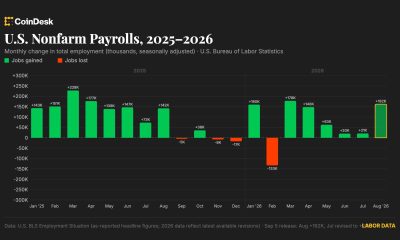
U.S. added stronger than expected 162,000 jobs in August as labor market bounced back
-
 Sports3 days ago
Alexandre Pato consortium’s Northampton Town investment approved
-

 Sports3 days ago
Commanders’ Chig Okonkwo is a top breakout fantasy football candidate
-

 Sports3 days ago
Golden Eaglets Drawn in Group B for 2026 WAFU B U17 Championship
-
 Crypto World3 days ago
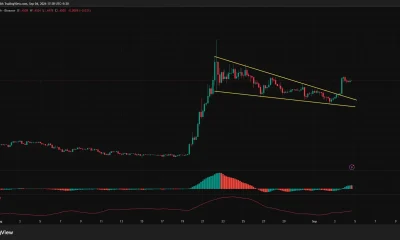
XRP price breaks falling channel as bulls target $1.53
-
 Politics3 days ago
A new European chapter for Gibraltar
-

 Politics3 days ago
How To Avoid Winter Colds: 4 Everyday Habits That Spread Germs, Says Pharmacist
-
 Politics3 days ago
The House | Bin the lectures, bring gossip and be ready to banter: how the new PM should prepare for his Trump encounter
-

 Crypto World3 days ago
From warning to listing: UK’s largest retail investment platform opens access to crypto ETNs
-

 Crypto World3 days ago
FinCEN flags $12.7B tied to Southeast Asia crypto investment scams
-

 Tech3 days ago
A Worthy Android Ereader, With Some Tradeoffs
-

 Politics3 days ago
33 Cosy Autumn Home Decor Ideas: Blankets, Pumpkin Decorations, And Candles
-

 Tech3 days ago
How To Edit Claude’s Memory
-

 Crypto World3 days ago
Trezor Data Breach Impacts 67,000 More US Customers
-
 Tech3 days ago
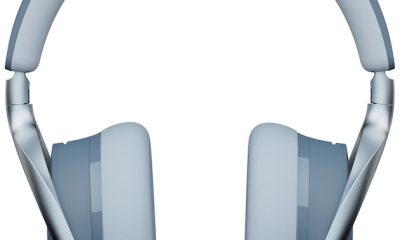
beyerdynamic AVENTHO Y Debuts at IFA 2026 and Makes Wireless Headphones Less Disposable
You must be logged in to post a comment Login