
Business
Teva plans senior notes offering to refinance existing debt



Business
Infosys, HCLTech, TCS, other IT stocks drop up to 3% as Fed rate hike worries return. Here’s why

The Nifty IT index dropped over 2% to trade at 30,082 on Monday, leading losses among all the major sectoral indices on the stock market. Infosys, LTI Mindtree and Mphasis shares dropped around 3% each, while those of Tech Mahindra, OFSS, Coforge, HCL Technologies, Wipro, Persistent Systems and TCS fell 1-2%.
US job growth accelerated sharply in August while the unemployment rate remained steady at 4.1%, implying an improvement in the labour market after recent struggles, data released on Friday showed. US nonfarm payrolls increased by 1.62 lakh in August, well above economists’ expectations of a gain of 56,000.
The sharp growth boosted hopes for a rate hike by the Federal Reserve in September, with traders now pricing in approximately 57% chance of a rate increase this month. Higher US rates could curb client spending, weighing on Indian IT firms that generate a significant share of their revenue from the United States.

What lies ahead for IT stocks?
IT stocks on Dalal Street have seen sharp upswings and downswings recently. Earlier this year, the sector witnessed a sharp selloff after breakthroughs by AI startups fuelled concerns about potential disruption to the traditional IT services business model. Later, a sharp selloff in global tech leaders proved to be a blessing in disguise for Indian IT stocks, which emerged resilient amid the global tech rout.
HSBC said India can serve as an “anti-AI” diversifier as sharp swings in technology-exposed markets encourage foreign investors to broaden their portfolios. HSBC strategists Prerna Garg, Herald van der Linde and Yogesh Aggarwal said in a report that AI-rotation outflows from India have “largely played out.”While AI jitters continue to keep IT investors on the edge, CLSA downgraded several heavyweight stocks and revised their target prices, although it remains bullish on several mid-tier IT vendors.
Indian IT has gone through a near three-year spending recession, on the back of weak discretionary budgets, elongated deal cycles, H-1B headwinds, AI driven revenue deflation and a selloff triggered by fears that agentic tooling (Claude Cowork, COBOL modernisation) would automate the legacy stack directly, Anand Rathi said in August. However, it thinks that fear inverts the actual set-up.
“Our core thesis is that the AI cycle is pivoting from “building capacity” to “proving payback“ — a transition that is inherently services-heavy and plays squarely to Indian IT’s strengths in deployment, integration, governance and legacy modernisation. Value is migrating from the layer that funds the AI build to the layer that deploys it: first to the enterprise software platforms — Systems of Record and Systems of Action that hold the data, permissions and approvals — then to the services firms that integrate and run them. This is the cloud playbook rerun: capex builds first and the returns arrive later, to different players, as railways, fibre and the 2015-19 cloud J-curve all showed,” it added.
The brokerage feels near-term weakness is real, due to AI-led pricing deflation compounded by geopolitics. But AI is expanding the TAM, not compressing it, opening deployment, AI FinOps, governance, managed agent operations, legacy modernisation, sovereign AI and SLM pools, it said. “Indian IT offers this without the balance-sheet and funding-duration risk the infra layer carries — the “safe AI” trade,” it added.
Also read | Bigger market crash ahead? Analysts weigh how Sensex, Nifty may react if US 10-year bond yield touches 5%
(With inputs from agencies)
Disclosure: This article has been written by Debaroti Adhikary, who is not a SEBI-registered Research Analyst or an investment advisor. Debaroti Adhikary does not hold any financial interest in the company named in the article as of the date of publication. The views/recommendations mentioned in this article, wherever applicable, are those of the respective SEBI-registered Research Analyst/brokerage and have been reproduced/reported with due attribution. They should not be construed as the views or recommendations of the EconomicTimes Digital or the journalist. Readers are advised to consider the original research report and make their investment decisions based on their own assessment.
Business
Uber Executives Predict No One Will Own A Car Within 15 To 20 Years As Robotaxis Take Over, Musk Agrees
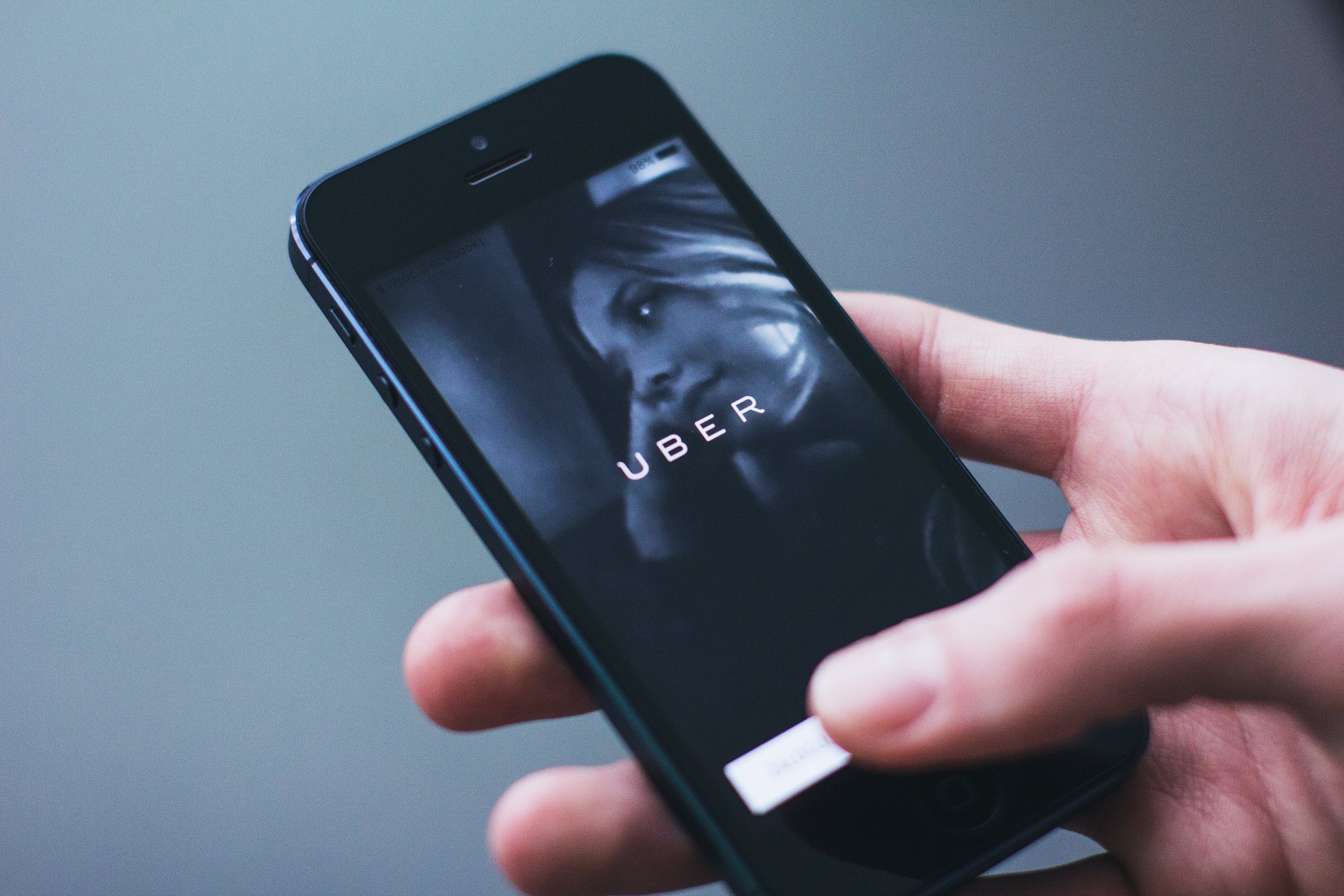
SAN FRANCISCO — Top Uber executives are predicting that private car ownership and driver’s licenses will become largely obsolete within the next 15 to 20 years, as autonomous vehicles, bikes, scooters and public transit reshape how Americans get around, a vision that echoes similar long-term predictions from Tesla CEO Elon Musk about the future of driving.
Uber President and Chief Operating Officer Andrew Macdonald outlined the prediction during a recent appearance on entrepreneur Harry Stebbings’ 20VC podcast, describing a future in which car ownership becomes an increasingly rare choice rather than a default necessity.
“In some future world, maybe not five years, but 15 or 20 years, everyone’s going to be like Harry — nobody’s going to own a car,” Macdonald said, referring to podcast host Stebbings. “Nobody’s going to have their driver’s license because you’ll be able to get around. And I think bikes and scooters will be part of that. I think autonomous vehicles will be part of that. I think public transportation will be a big part of that, but I don’t think you need to own a car.”
Macdonald was particularly critical of the economics behind personal vehicle ownership, describing the private automobile in stark terms.
“The most inefficient asset that anyone owns,” Macdonald said of the personal car, noting that a typical vehicle sits idle roughly 98% of the day while continuing to depreciate and generate ongoing insurance costs even when parked in a driveway. He pointed to rising vehicle costs as compounding the inefficiency, noting that new vehicle prices have climbed roughly 30% over the past six years, with the average transaction price now hovering near $50,000.
Uber CEO Dara Khosrowshahi has offered a similarly ambitious timeline for the shift toward autonomous, shared transportation. Speaking on “The Diary of a CEO” podcast earlier this year, Khosrowshahi described a future increasingly dominated by robot-driven rides.
“You can imagine the majority of our trips being fulfilled by robots of some kind,” Khosrowshahi said. “Probably not 10 years from now, but you go 15 to 20 years from now, you’re going to start getting there.”
Khosrowshahi has separately detailed how he expects vehicle ownership structures to shift during that transition, describing a future in which large institutional investors, rather than individual drivers, own the underlying autonomous vehicle fleets. He suggested major financial firms could eventually own large fleets of self-driving cars generating steady investment yields, comparing the model to how firms such as Blackstone currently manage other large asset portfolios. Khosrowshahi has acknowledged, however, that the transition raises difficult unresolved questions, including how displaced human drivers will be affected.
“I think 10-15 years from now this is going to be a real issue and I don’t have a neat answer for it,” Khosrowshahi has said regarding the broader disruption autonomous vehicles could bring to the ride-hailing workforce.
Speaking separately at the Semafor World Economy Summit in Washington, D.C., Khosrowshahi framed the eventual dominance of autonomous vehicles as effectively inevitable given the safety case for removing human error from driving.
“If you fast-forward 15, 20 years, I think eventually the cars are going to be autonomous,” Khosrowshahi said. “There’s very strong evidence to believe that robot drivers are going to be safer than human drivers.” He identified California and Texas as currently the most open regulatory markets for expanding autonomous ride-hailing services.
Elon Musk has voiced comparable predictions about the long-term trajectory of autonomous driving technology, dating back several years. Speaking during a Tesla earnings call, Musk said he expects “all cars will go fully autonomous in the long-term,” predicting it would eventually become “quite unusual to see cars that don’t have full autonomy” within a similar 15-to-20-year window, with Tesla vehicles specifically reaching that point even sooner than the broader industry.
Musk has also offered a broader, more sweeping vision of how automation and artificial intelligence could reshape the economics of daily life more generally, extending well beyond transportation. Speaking earlier this year at the U.S.-Saudi Investment Forum, Musk suggested that traditional employment could eventually become optional for most people as AI-driven productivity gains generate what he described as unprecedented material abundance.
“My prediction is that work will be optional,” Musk said. “It’ll be like playing sports or a video game or something like that. If you want to work, it’s the same way you can go to the store and just buy some vegetables, or you can grow vegetables in your backyard. It’s much harder to grow vegetables in your backyard, and some people still do it because they like growing vegetables.”
The convergence of predictions from Uber’s leadership and Musk reflects a broader alignment among major technology executives around the eventual dominance of autonomous vehicle technology, even as the specific business models and ownership structures each company envisions differ somewhat in their details. Uber has continued expanding its own autonomous vehicle partnerships in the meantime, reportedly working with roughly 20 different autonomous vehicle partners and aiming to operate driverless vehicles across 15 cities by the end of the year. Khosrowshahi has said Uber aims to facilitate more autonomous and robotaxi rides than any other company in the world by 2029.
In the near term, Uber has taken incremental steps toward that longer-term vision, including compensating some human drivers to help train the artificial intelligence systems expected to eventually power its autonomous fleets. Rival ride-hailing company Lyft has adopted a similar approach, paying some former drivers to maintain and clean self-driving vehicles as those vehicles gradually take on a larger share of rides previously handled by human drivers.
Despite the confident long-term predictions from Uber’s leadership and Musk alike, both companies have acknowledged that significant technical, regulatory and workforce-related challenges remain before autonomous vehicles can realistically displace private car ownership and human-driven ride-hailing at the scale envisioned. Whether the 15-to-20-year timeline offered by Macdonald, Khosrowshahi and Musk ultimately proves accurate remains to be seen, though the shared conviction among leaders at two of the industry’s most influential companies suggests the broader shift toward autonomous, shared mobility is likely to remain a defining storyline across the transportation and technology sectors in the years ahead.

Boeing And Airbus: A Surprisingly Close Race

Sonida Senior Living: Macro Drivers Fuel Growth
Business
Prince William, Kate Won’t Get Involved In Harry And Meghan ‘Circus,’ Royal Insiders Say This Autumn
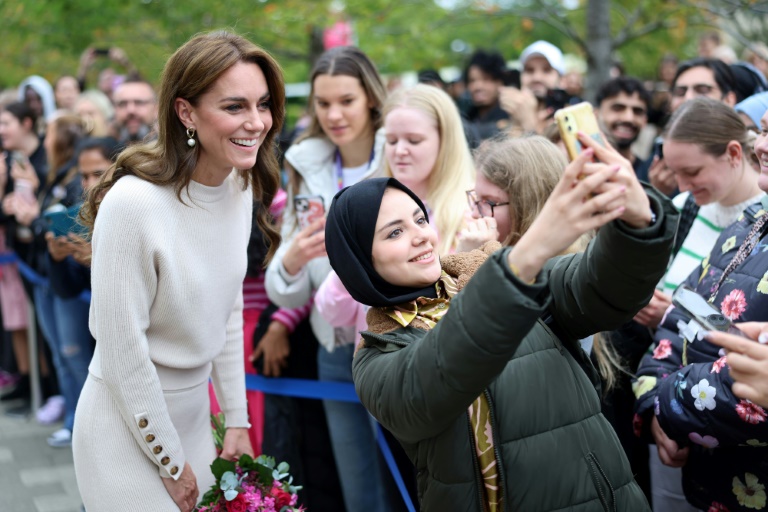
LONDON — Prince William and Princess Kate are entering a pivotal new season determined not to let Prince Harry and Meghan Markle’s return to Britain distract them from their own path forward, according to royal insiders, even as the Sussexes’ presence in the country promises to complicate the family’s public calendar in the months ahead.
The comments come as William and Kate say a poignant farewell to Prince George this week, marking his first day at Eton College, the prestigious Berkshire boarding school William himself attended as a teenager. The milestone arrives alongside what royal sources describe as a broader shift for the couple, who appear more united than ever as they resume official duties following their summer break, and just weeks after Harry and Meghan’s unexpected return to the U.K.
Robert Jobson, author of “The Windsor Legacy,” told Hello! that William and Kate remain firmly focused on their long-term trajectory rather than reacting to developments involving the Sussexes.
“They are on a clear path and they’re thinking about what their future is going to be,” Jobson said. “They’re focused on the kids and their projects. They are on a steady path which leads to the ultimate job, the top job. Now they’re next in line, they’re facing what their position will be, and that will be essentially to prepare the reign that they want and how they want to do it. William will take the lead, but it’s going to be a team effort.”
Jobson pointed to the couple’s public unity as evidence of their strengthened partnership.
“I think they’re certainly stronger as a couple, but also as a family unit,” Jobson said. “You only have to look at them in public; they are very much a united couple and they’re very much doing their job. They really haven’t put a foot wrong. The way that Catherine has come back into the public eye was perfectly handled. They’ve got their image right, they’ve got their engagement at the level they want and they’re spending enough time with their kids.”
Addressing the Sussexes’ return directly, Jobson said he does not expect it to change William and Kate’s approach.
“I don’t think that, because Harry and Meghan are here making a bit of noise, that’s going to necessarily make them do anything,” Jobson said. “They’ll probably think, well, we’ve been down this road before; it creates a circus and we’re not going to get involved.”
Still, Harry and Meghan’s presence will be difficult to entirely avoid. The couple, believed to be living in the Cotswolds, flew into Birmingham last month in time for their children, Prince Archie, 7, and Princess Lilibet, 5, to begin school. William and Kate have their own busy autumn schedule of engagements planned, including William’s continued work on homelessness and mental health and Kate’s focus on young children and families, while Harry is expected to appear in London later this month at the WellChild Awards, an annual charity event for seriously ill children of which he remains patron.
Hello! royal editor Emily Nash said Meghan’s specific plans remain the more uncertain variable in the equation.
“What really fascinates me is what Meghan is going to do,” Nash said. “She’s essentially a private citizen here in the UK. Will she pop up with or for Harry? If she does, does that make it look more like they’re sort of imitating royal engagements? I think this could become a bit of a problem for them.”
Nash also flagged conflicting reports about Meghan’s potential return to acting, after British actor Theo James dismissed rumors that Meghan would join the third season of the Netflix series “The Gentlemen,” in which he stars, calling the speculation “hot air.”
“The other thing that I found fascinating was Theo James saying that all the rumours around her starring in The Gentlemen are hot air,” Nash said. “That whole sort of PR bombshell about her returning to acting very specifically linked her to that production in particular, and now, people at the heart of it are saying it’s not right. What is going on there?”
Based on her own sourcing, Nash said she expects Meghan to largely continue her existing pattern of activity.
“From the people I’ve been speaking to, I think Meghan’s plan is to carry on doing what she’s been doing,” Nash said. “I’m sure they’re working on some of the things they were doing with Archewell Philanthropies — the work she was doing around online harm, for example, I’m sure we’ll see more of that kind of thing. But do they really want to return to the kind of engagements that they turned their back on? And if they do, how are people going to react to it?”
Meghan is also continuing to build her lifestyle brand, As Ever, and remains patron of Smart Works, a U.K.-wide charity offering coaching and clothing to unemployed women and those on zero-hours contracts. Smart Works told Hello! it is “very excited to welcome the Duchess and her family back to the UK.”
One date likely to underscore the ongoing divisions within the family is the National Service of Remembrance on Nov. 8, when senior royals traditionally gather at the Cenotaph in central London. Having stepped down as working royals in 2020, Harry and Meghan will not be invited to join King Charles and other relatives at the official service, though Harry may choose to mark the occasion elsewhere, as he has done in Los Angeles in past years.
Jobson said any separate observance by Harry would risk highlighting the rift rather than easing it.
“That’s a problem, because if Harry goes somewhere in Oxford and does it, it’s going to look very odd, because it’s going to be an alternative moment,” Jobson said. “As a veteran, he will probably want to do that, so unless they invite them into the fold, which I don’t think they will at this moment in time, it creates an alternative which makes them look divided. You’ve got two conflicting households on the same patch, and that can’t possibly work. I think something has to give along the way. It’s whether they invite Harry back inside, and if that’s the case, then a lot of people won’t be very happy.”
Questions also remain over whether Harry and Meghan will be invited to Kate’s annual Together at Christmas carol concert at Westminster Abbey, or to join the wider family for festive celebrations at Sandringham.
For William and Kate, Jobson said the pair are more likely to stay focused on their own upcoming milestones, including a potential state dinner next month for the Sultan of Oman’s visit to the U.K., hosted by the King and Queen. There is also renewed talk of Kate rejoining William for international travel, with speculation she could accompany him to Mumbai in November for the Earthshot Prize Summit and Awards, which would mark their first major joint overseas trip since visiting the Caribbean in 2022, and Kate’s first appearance at one of William’s environmental events since Boston that same year.
“I think if she’s well enough to go, she will go,” Jobson said. “All the indications are that she probably will. It’s about time that she did.”
Jobson said he ultimately expects William and Kate to rise above any distraction posed by the Sussexes’ return.
“I think they’re going to rise above all this,” Jobson said. “I don’t think they’re going to be involved in a tit for tat. Harry has turned up and put the ball back in their court, but it doesn’t necessarily mean that they’re going to play.”

Australian shares have had a shaky session as oil prices continued to weigh on confidence and select miners jumped after China announced fiscal stimulus.
Business
Retired FBI Agent Theorizes Nancy Guthrie Died Days After Kidnapping-For-Ransom Plot Went Wrong

TUCSON, Ariz. — A retired FBI agent has laid out a new theory about the disappearance of Nancy Guthrie, suggesting the 84-year-old mother of “Today” co-anchor Savannah Guthrie was taken in a kidnapping-for-ransom plot that unraveled within days, possibly ending in her death from natural causes.
Frank Storey outlined the theory during an appearance on “True Crime With Jen Coffindaffer,” a podcast hosted by fellow retired FBI special agent Jennifer Coffindaffer, on Sept. 2, seven months after Guthrie vanished from her Catalina Foothills home near Tucson. Storey suggested Guthrie may have suffered a fatal heart attack a day or two after being seized, though he stressed his account remains speculation rather than a confirmed finding, and investigators have not endorsed it. No suspects have been named, and authorities have not said whether Guthrie is alive or dead.
Storey pushed back against suggestions that the case has gone cold, arguing that senior bureau agents remain actively assigned to it and that a resolution is likely given his belief that more than one person was involved in the abduction. He said he expects the case to eventually break through the plea-bargaining system, predicting that if one of the participants is later arrested on an unrelated charge carrying a lengthy sentence, that person could offer investigators information about Guthrie in exchange for leniency.
“Somebody always talks,” Storey told Coffindaffer.
Storey is one of several former agents who have offered public theories about the case in recent months, though none of them is directly involved in the active investigation.
The known timeline of Guthrie’s disappearance remains short and largely unresolved. She was last seen alive on the evening of Jan. 31, 2026, at her Catalina Foothills home, after relatives dropped her off. The following morning, a friend contacted Guthrie’s family when she failed to arrive at church; relatives reached the property before noon and called the Pima County Sheriff’s Department.
Sheriff Chris Nanos moved quickly to treat the case as a crime, saying publicly that he believed Guthrie had been abducted and later telling NBC News she was taken from the home against her will. Investigators found drops of blood outside the front door that were subsequently confirmed to be hers.
Footage from a home security system initially yielded nothing, with Nanos saying the system may have been set to automatically delete recordings, leaving detectives to attempt a forensic recovery. Forensic evidence has since become both the center of the investigation and a source of friction among those involved. A mixed DNA sample recovered from the house has not been matched to anyone, and hair analysis failed to identify a suspect, with the sheriff saying several laboratories are working to separate the material found at the scene. FBI Director Kash Patel publicly criticized Nanos for sending samples to a private laboratory rather than the bureau’s own facility, a decision the sheriff has defended as an operational choice. Two men have been detained and questioned at separate points in the investigation, and both were released without charge.
Two ransom notes purporting to come from Guthrie’s kidnappers have also shaped the investigation. The sheriff’s department released both publicly on July 31 to mark six months since the disappearance. The first note was sent to Tucson CBS affiliate KOLD-TV on Feb. 2, one day after Guthrie was reported missing, and was addressed directly to her daughter. It described Guthrie as “safe but scared” and demanded $4 million in bitcoin, a figure that rose to $6 million depending on the timing of payment. The writer set a deadline, stated Guthrie would be held no longer than seven days, warned she would be killed if the ransom did not arrive, and said there would be no negotiation. Nanos said the note contained specific details about the house and about what Guthrie had been wearing at the time of her disappearance.
The second note struck a markedly different tone, claiming Guthrie had died shortly after being taken. The FBI has said some of the numerous messages received throughout the investigation were unserious extortion attempts, while others remain under active review, and the bureau has not specified which category either published note falls into.
Nanos said the department chose to release the notes publicly in hopes that their specific wording or phrasing might jog someone’s memory. Anyone who recognizes distinctive language from the notes has been asked to contact the FBI at 1-800-CALL-FBI or the sheriff’s department’s tip line at 520-351-4900. A reward of $1.2 million remains available for information leading to Guthrie’s recovery, and Nanos has said he continues to expect an eventual arrest.
Seven months into the investigation, theories continue to outnumber confirmed facts, and the people who know what actually happened to Nancy Guthrie have yet to come forward.

European shares dip as rise in oil prices weighs; Novartis slips
Business
10 Things To Know About The History Of Labor Day, From Its Contested Founder To A Deadly 1894 Railroad Strike
10 Things To Know About The History Of Labor Day, From Its Contested Founder To A Deadly 1894 Railroad Strike
As Americans mark another Labor Day, the holiday’s origins remain far more complicated, and far more dramatic, than the barbecues and end-of-summer sales that now define it for most people. Here are 10 things to know about the history behind the holiday honoring American workers.
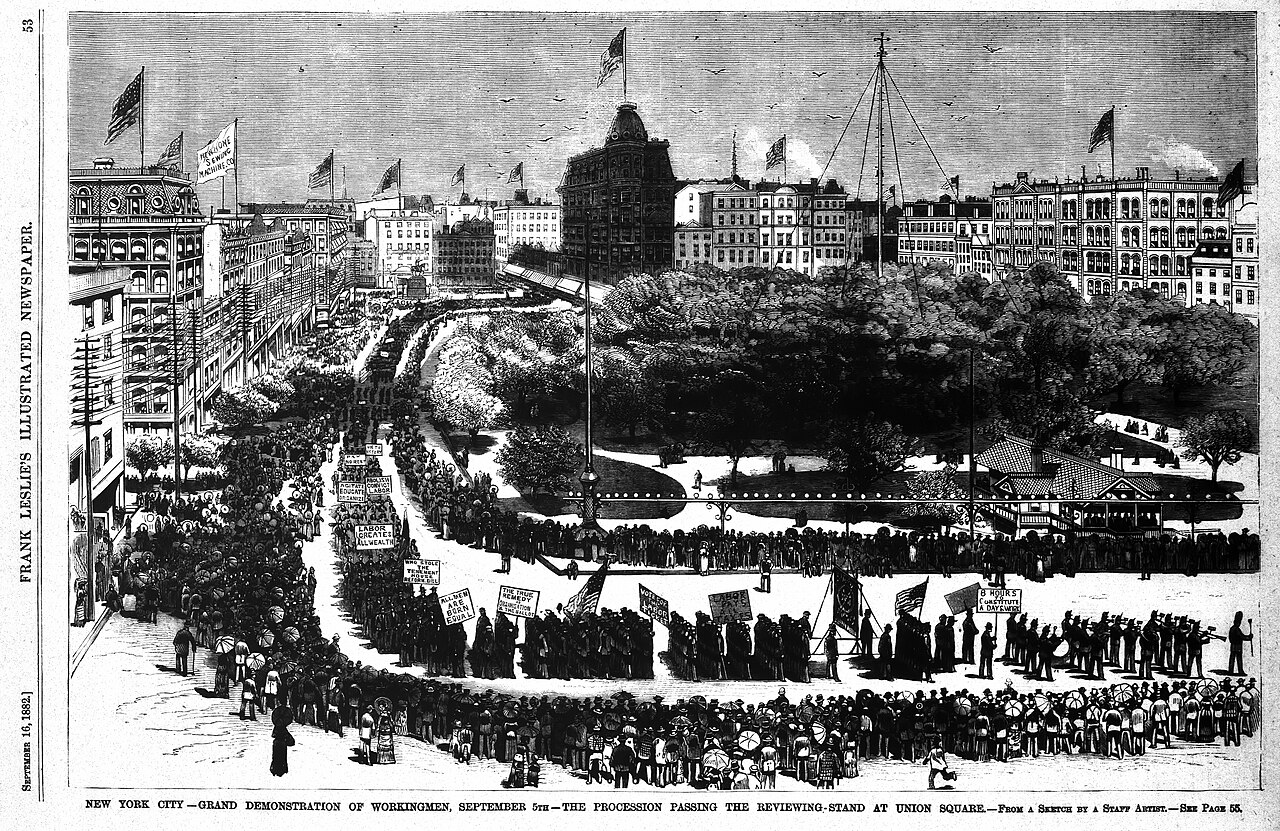
- The first Labor Day was a New York City parade in 1882. On Sept. 5, 1882, an estimated 10,000 to 20,000 workers marched through Lower Manhattan in a parade organized by New York City’s Central Labor Union. One contemporary account described the scene vividly, noting that “the windows and roofs and even the lamp posts and awning frames were occupied by persons anxious to get a good view” of the procession of workingmen from various trades marching together under one banner.
- Two men are credited, and neither is fully certain. Union leader Peter J. McGuire, who founded the United Brotherhood of Carpenters in 1881 and later helped establish the American Federation of Labor, has long been called the “father of Labor Day.” McGuire reportedly proposed the idea to the Central Labor Union on May 12, 1882, suggesting the day “be celebrated by a street parade which would publicly show the strength and esprit de corps of the trade and labor organizations.” His gravestone and a statue in Pennsauken, New Jersey, both bear that title.
- A machinist named Matthew Maguire may be the real founder. Historical evidence uncovered by the New Jersey Historical Society suggests it was actually Matthew Maguire, a machinist and secretary of the Central Labor Union, who first proposed the holiday, not Peter McGuire. Following passage of the federal Labor Day law, the Paterson Morning Call published an opinion piece asserting that “the souvenir pen should go to Alderman Matthew Maguire of this city, who is the undisputed author of Labor Day as a holiday.” Both men attended that first 1882 parade.
- The September date has no deep symbolic meaning. Unlike many American holidays tied to specific historical events, Labor Day’s placement in early September was largely arbitrary. Peter McGuire said the date was chosen because it fell roughly halfway between Independence Day and Thanksgiving, giving workers a break during that stretch of the calendar without competing with any other major holiday.
- States adopted the holiday years before the federal government did. By 1885, Labor Day celebrations were being held in a number of states, with momentum building steadily throughout the mid-1880s as more state legislatures formally recognized the day, even though it would take another decade for Congress to establish it as a national holiday.
- A deadly railroad strike ultimately pushed Congress to act. In May 1894, the Pullman Palace Car Company, facing the effects of a severe economic depression, cut factory workers’ wages by roughly 25% while refusing to lower rents or prices at its company-owned town near Chicago. When a worker delegation presented grievances to company owner George Pullman, he had three committee members fired, prompting employees to walk off the job on May 11, 1894. The American Railway Union, led by Eugene V. Debs, soon joined with a nationwide boycott of trains carrying Pullman cars, crippling rail traffic across much of the country.
- Federal troops and deadly violence followed. U.S. Attorney General Richard Olney, a former railroad attorney, secured a federal injunction against the strike on July 2, 1894, and President Grover Cleveland deployed federal troops to Chicago the following day, citing the need to keep mail moving. The resulting clashes turned violent, with rioters destroying hundreds of railroad cars in South Chicago and National Guard troops firing into crowds, leaving an estimated 30 people dead. Debs was later jailed for six months for contempt of court, an experience that helped shape him into one of the country’s most prominent labor and socialist political figures in the years that followed.
- Cleveland signed the Labor Day law in the middle of that very crisis. On June 28, 1894, just days before dispatching federal troops to Chicago, Cleveland signed legislation making the first Monday in September a federal legal holiday. Historians have widely characterized the move as a conciliatory gesture toward the American labor movement at a moment of intense national unrest, an effort by Cleveland’s administration to repair its standing with working-class voters even as it simultaneously moved to crush the Pullman strike by force.
- Cleveland deliberately avoided the more radical May Day. Labor Day and May Day both emerged as holidays honoring workers, but Cleveland was reportedly uneasy with May Day’s socialist and international labor-movement origins, which trace back to the 1886 Haymarket affair in Chicago. By instead formalizing the more moderate, homegrown September date as the official U.S. holiday, Cleveland aligned the country with a distinctly American labor tradition rather than the more politically charged international observance embraced by many other nations.
- The holiday’s original law applied only to federal workers in Washington. The 1894 legislation initially designated the first Monday in September as a legal public holiday specifically within the District of Columbia, before the recognition was extended more broadly to federal employees nationwide. It took additional years for individual states to align their own labor laws and private employers to broadly adopt the holiday as the near-universal day off it represents for most American workers today.
Labor Day has since evolved considerably from its origins in 19th-century union organizing and deadly labor unrest. For most Americans today, the holiday marks the unofficial end of summer, a long weekend for travel, shopping and family gatherings, with many people unaware of the contested founders and violent national crisis that led directly to its creation as a federal holiday. Even so, the day’s underlying purpose, honoring the economic and social contributions of American workers, remains rooted in the same labor movement that first marched through the streets of Lower Manhattan more than 140 years ago.

Copper overbought at $6.68 with weak ADX: Live levels

Liquid Sidechain Halts After ‘White Hats’ Allegedly Move $320M BTC

Why The Victory Of Far-Right Party AfD In 1 German State Matters

Sleeper pitchers Week 25: Rankings, sleepers and start/sit





-

 Fashion3 days ago
Weekend Open Thread: Beyond Yoga
-
 Crypto World3 days ago
Bitcoin price stalls near $82K as key resistance holds
-

 Politics3 days ago
Best Gaming Laptops, CPUs, TVs, And Keyboards To Upgrade Your Set Up For GTA VI
-

 Tech3 days ago
The Birds Outside, Drawn For You Automatically
-

 Crypto World3 days ago
IMF Says El Salvador’s Post-Review Bitcoin Purchases Used No Public Funds
-
 Crypto World3 days ago
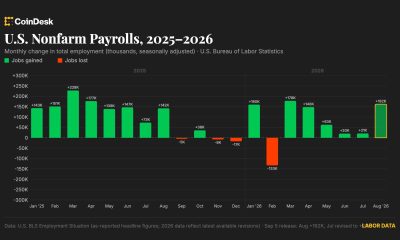
U.S. added stronger than expected 162,000 jobs in August as labor market bounced back
-

 Sports3 days ago
Alexandre Pato consortium’s Northampton Town investment approved
-
 Sports3 days ago
Commanders’ Chig Okonkwo is a top breakout fantasy football candidate
-
 Sports3 days ago
Golden Eaglets Drawn in Group B for 2026 WAFU B U17 Championship
-
 Crypto World3 days ago
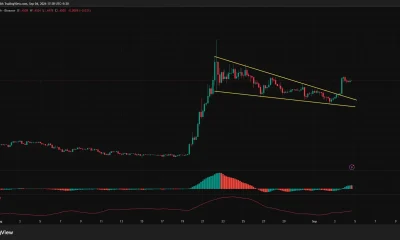
XRP price breaks falling channel as bulls target $1.53
-
 Politics3 days ago
A new European chapter for Gibraltar
-

 Politics3 days ago
How To Avoid Winter Colds: 4 Everyday Habits That Spread Germs, Says Pharmacist
-
 Politics3 days ago
The House | Bin the lectures, bring gossip and be ready to banter: how the new PM should prepare for his Trump encounter
-

 Crypto World3 days ago
From warning to listing: UK’s largest retail investment platform opens access to crypto ETNs
-

 Crypto World3 days ago
FinCEN flags $12.7B tied to Southeast Asia crypto investment scams
-

 Tech3 days ago
A Worthy Android Ereader, With Some Tradeoffs
-

 Politics3 days ago
33 Cosy Autumn Home Decor Ideas: Blankets, Pumpkin Decorations, And Candles
-
 Tech3 days ago
How To Edit Claude’s Memory
-

 Crypto World3 days ago
Trezor Data Breach Impacts 67,000 More US Customers
-

 Tech3 days ago
beyerdynamic AVENTHO Y Debuts at IFA 2026 and Makes Wireless Headphones Less Disposable
You must be logged in to post a comment Login