
Politics
Dolly Parton’s Sister Slams AI Posts After Donald Trump Tribute


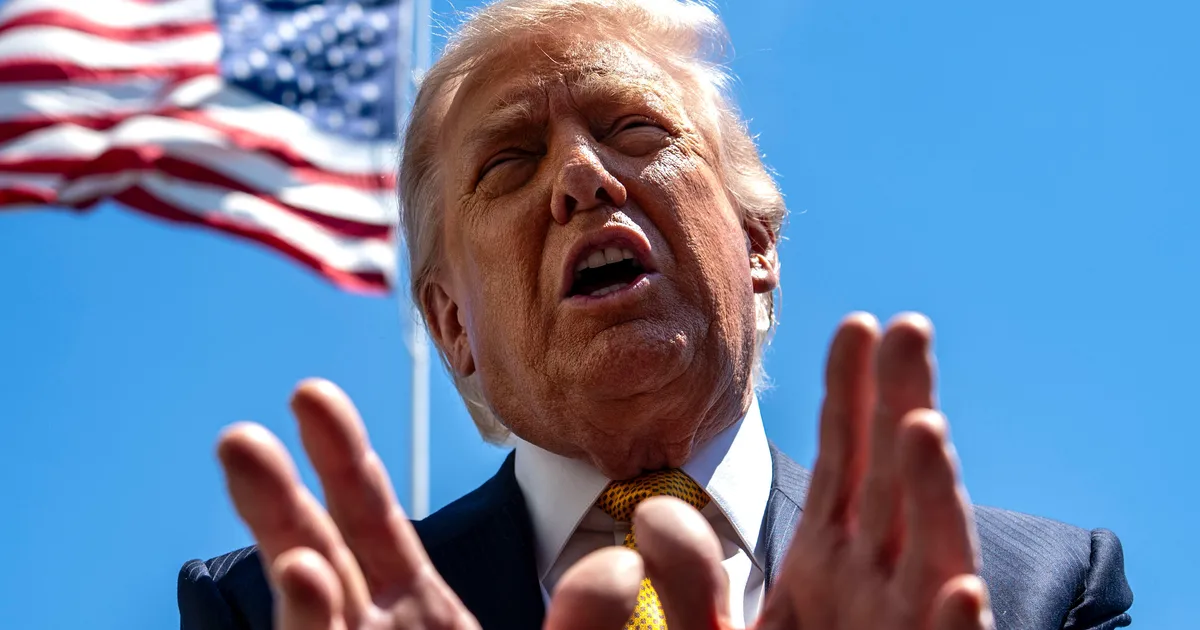
Dolly Parton’s sister Stella has spoken out against AI-generated content depicting the late country music legend, after Donald Trump shared an image of himself and the Jolene singer in the wake of her death.
In an Instagram post shared on Friday, Stella thanked those who have shown her family “‘genuine’ support and love”, before noting that she and her loved ones have been subjected to “incredible pressure and insensitivity from strangers”.
“There is a tremendous amount of AI and endless garbage being posted everyday and it’s been challenging to absorb and or ignore,” wrote Stella, a vocal Trump critic who – unlike her late sister – is outspoken in the political arena.
She continued: “As time passes, those who are in the business of exploiting the loss and tragedies of others on a daily basis will move on to the next stampede of endless misinformation.”

Later in the post, she called on people to “show more compassion and wisdom” towards her and her family, requesting that fans use Dolly’s life and legacy as an example of “tolerance and respect”.
“It’s not about the most clever comments, fake AI garbage or snarky tweets,” she concluded. “At the end of the day or the end of a life, how will you feel about yourself? It’s not about what other individuals you will never meet think!”
While it’s unclear exactly which posts sparked Stella’s the comments, Trump had used AI after Dolly Parton’s death to make the case that the largely politics-free singer quietly liked him.
Trump, who had previously called for US flags to be lowered in Dolly’s honour, shared an AI-generated illustration on Truth Social showing the Grammy winner holding onto his arm as they walked a White House colonnade. (Note: No images have surfaced of the two appearing with one another in real life.)
He also used Glenn Beck’s talk show to claim that Dolly Parton “really liked” him, adding that she never supported him publicly because she would have lost “20% of her fans”.

It’s difficult to flag intersections between Trump’s policies and the few issues Dolly was happy to publicly weigh in on.
Dolly was known to have championed LGBTQ+ rights during her legendary career, calling for “everybody to be treated [equally]” in response to anti-transgender laws in Tennessee in 2023.
Similarly, in 2020, Dolly Parton underscored that “of course Black Lives Matter”, referencing the movement that Trump has repeatedly criticised and once described as “toxic propaganda”.

Politics
Politics Home Article | MPs’ Staff “Struggling To Survive” With “Stagnating” Pay, Union Warns
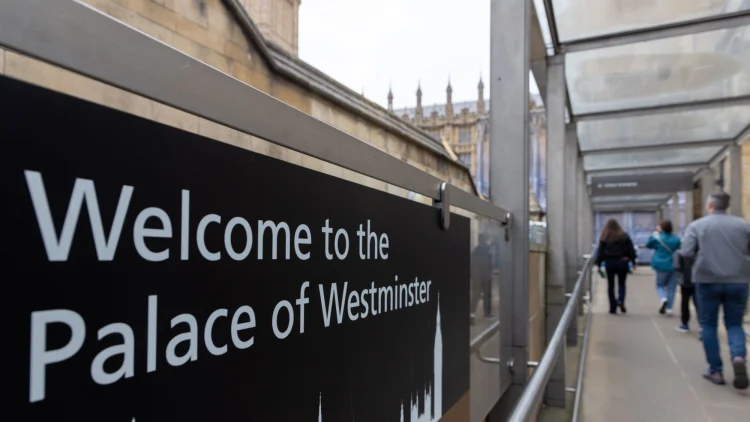

(Jonathan Goldberg / Alamy)

4 min read
Parliamentary staffers are being squeezed by stagnating wages, damaging their mental health and forcing many to “cut back on essentials”, according to Unite.
A new survey by Unite’s Parliamentary Staff Branch found that 70 per cent of staff respondents reported having to dig into savings or use credit to cover everyday expenses in the last year. A total of 96 per cent said their financial situation was causing them stress and anxiety.
One MP’s staffer told Unite in their April 2026 survey that they “struggle to afford to eat, especially near the end of the month”, while others reported keeping their home heating switched off and taking cold showers to keep their bills down.
The Independent Parliamentary Standards Authority (IPSA), which allocates the budgets through which MPs pay their staff, insisted they “recognise the dedication” of staff and “continue to work closely with and respond positively to recommendations from unions”.
Unite’s survey was circulated to the office of every MP in Parliament, with 346 responses received from staff from every region and nation.
The survey found that staffers aged 18–24 have an estimated average salary of £32,229, compared with £39,676 among those aged 31–35. One staffer told Unite: “There is a complete lack of awareness of how difficult it is for younger people these days… little recognition of how low these salaries are in a time of high inflation and cost-of-living.”
Unite warned that low pay was having a “severe impact on work that staff are able to deliver”, and that there was also a “cost of high turnover to the public purse”, as MP employees seek better paid and less stressful jobs.
“Unpaid overtime is how offices keep going,” another staffer told the union. “We all do it, we do it because we care, but we do it because we have to as well, as so many of us are overwhelmed.”
According to Unite, an automatic pay uplift for MPs’ staff was successfully negotiated in 2021, but since then inflation when measured using RPI “has consistently outstripped the annual pay awards”. Unite claims that on average, MPs’ staff would now require a 10.57 per cent pay increase simply to restore the purchasing power of their salaries to 2021 levels.
Earlier this year, Unite’s Parliamentary Staff Branch overwhelmingly voted to reject a 3.5 per cent pay offer, but Ipsa refused to improve it. Ipsa points out that MPs employ their staff – not Ipsa – and Ipsa therefore does not have the power to set exactly how much they are paid.
Ipsa instead provides an automatic uplift to MPs’ staff pay, unless an MP opts out from it, though MPs can also choose to award higher increases if their staff budget – set by Ipsa – allows.
Staff were angry that MPs were themselves awarded a higher pay increase of five per cent, with one staffer telling Unite: “It is not the MP answering the phone to angry constituents, it’s not the MP sitting in the constituency office all day where people may drop round unannounced and it’s not the MP managing huge levels of casework and correspondence.
“Our pay is no longer reflective of the difficulties and pressures experienced by those of us in public facing roles.”
Fintan McDonnell, vice chair of the Unite Parliamentary Staff Branch, said the union’s survey “should shame Parliament into action”, adding: “Behind every constituency office and parliamentary office are workers who keep our democracy functioning and support constituents through some of the most difficult moments of their lives. Yet many of those workers are now struggling to survive themselves.”
Responding to Unite’s findings, an Ipsa spokesperson told PoliticsHome: “We recognise the dedication of MPs and their staff, and continue to work closely with and respond positively to recommendations from unions, the Wellness Working Group, and other staff representative bodies to ensure we understand how we can best-support the people who work in MPs’ offices.
“We have recently consulted on the framework for setting MPs’ budgets, seeking feedback on the principles which should guide our decisions. The feedback we have received will be considered as we put together MPs’ budgets for the next financial year.”
They added: “We have also received feedback from some offices about the impact of rising and increasingly complex casework, alongside safety and security concerns, on the wellbeing of MPs’ staff. In response we have introduced additional, dedicated funding to support those offices facing particular pressures, alongside a ring-fenced training and wellbeing budget.
“We also have a separate budget which funds workplace adjustments for MPs’ staff in constituencies, as well as for MPs, volunteers, job applicants, or constituents visiting offices or surgeries.
“Ipsa’s role is to balance the resources MPs and their staff need with public confidence in how those resources are used.”
Politics
The House | Our unwritten constitution leaves us vulnerable to a future authoritarian government



5 min read
The greatest chronicler of the British state, Lord Hennessy, warns of the need to bolster constitutional defences against a future authoritarian government
It is early 2011, a few months after I had joined the crossbenches in the House of Lords. The place? The grand staircase linking the cloakroom with the Principal Floor. The company? A pair of young naval officers who had come in for a cup of coffee and a chat.
The conversation ran like this.
Naval officer: “What makes the House of Lords run?”
PH: “I’m too new to answer that?”
At that moment Maurice Peston (old friend, Labour peer, distinguished economist, Robert’s dad) passes us in the opposite direction.
PH: “Ask Maurice. He’s been here for years.”
Maurice obliges without hesitation.
MP: “The House of Lords runs on gossip and the exchange of symptoms.”
Perfect. To the point, accurate, very Maurice.
I shall miss all that this autumn. I retired at the end of June. The Parkinson’s sapping and mining the old cognitive powers means I can no longer manage the reading and thinking required to do the job properly. The ‘symptoms’ have put paid to the ‘gossip’ – though I live in hope of the occasional weapons-grade morsel coming over the phone.
The job? Lawmaking plus scrutiny, plus running commentary on the government of the day.
Room for improvement? Certainly – one activity in particular. The Lords’ use of their select committees. The red benches are brimming with men and women who have been around the block a bit. It is vital for the country – never more so than in these anxious times – that the accumulated wisdom of the past is applied to the needs of the present and placed at the disposal of the future.
There are at least five previous political generations stockpiled in the Lords. That is a great deal of experience on which to draw. For a political historian of modern Britain, it was pretty close to heaven. You could even have lunch with your exhibits. On these fronts, not least as a provider of continuity and context, the Lords provides in some abundance, but rarely is there a flicker of it reflected in the media coverage of Westminster. The output brims with insight and utility, but what use is that if it is also shrouded in invisibility?
An institution that could be a very fine rolling think-tank for the nation, especially on the many knotty intractable problems and on scientific and technological matters in particular (we have many more experts here than in the House of Commons), the output is not, I fear, reaching those parts of policy, analysis and remedy that it could do. It’s as if the institution has become a slightly embarrassing relic of a past age. Alf Dubs warned me about this in, I think, my first week as a crossbencher. “Remember,” he said, “we’re all on a farewell tour in here.”
We have lived all our lives so far inside a comforting cocoon
There is nothing more irritating than hearing a retiree preaching to those he has just left behind. But I went one step further in my valedictory speech when I asked the members of the Constitution Committee on which I once sat to undertake a special inquiry into the vulnerable points of our unwritten constitution to a future authoritarian government uncaring of – or hostile to – the conventions that enable our constitution to work, day in day out.
Especially pertinent are those human ones that are not written down but together comprise a ‘good chaps theory of government’ (to quote the phrase minted by an old Cabinet Office friend, the late Clive Priestley). To my great relief and intense appreciation, the Constitution Committee is already at work on this under the leadership of Lord Strathclyde.
In my farewell speech, and in a BBC Radio 4 programme I subsequently made with Giles Edwards, I linked the work of the Constitution Committee with a ‘politics of decency’ which we need to succour as our great protection against any future creeping authoritarianism in our politics should, heaven forbid, a politics of pessimism deteriorate still further into a politics of despair.
I think such a descent into darkness is highly unlikely as the future course of our politics and our conduct of public life. But it could happen here. We have lived all our lives so far inside a comforting cocoon – a conviction that our host of often informal, usually unwritten conventions, took care of all this as it if were a state of nature that would see off any such threats that, for the first time in my life, I am not so sure.
We owe it to our children – and to that now gone early postwar British generation that gave my age group (born in 1947) such a splendid start in life – not to let it happen here through insouciance or indifference.
And that is why, in the end, I am optimistic. Most of the time, constitutional questions languish in a deep torpor in terms of public attention. Now is the moment for them to move into the front line of our concerns with the House of Lords and its Constitution Committee in the vanguard.
Lord Hennessy is a former Crossbench peer
Peter Hennessy, with Giles Edwards and Andrew Blick, The Politics Of Decency, Haus publishing (forthcoming)
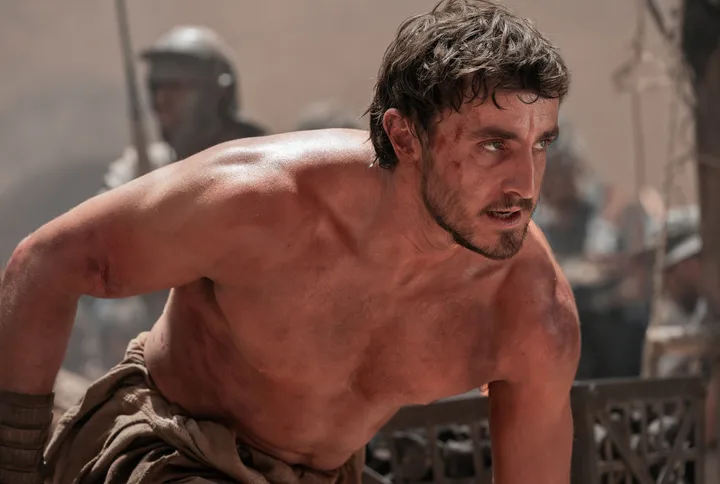
Award-winning filmmaker Sir Ridley Scott has dismissed the suggestion he fired Paul Mescal from his latest film due to concerns that he wasn’t “masculine” enough in their previous collaboration.
Last week, the Puck newsletter What I’m Hearing alleged that Sir Ridley was unhappy with Paul’s performance in the movie Gladiator II, and had blamed the Oscar nominee for the film’s lukewarm box office takings.
The newsletter claimed that the director’s dissatisfaction stemmed from his belief that the Normal People star wasn’t “masculine” enough for the role he’d created, leading to them no longer working together on the new film The Dog Stars.

“Not true,” a spokesperson for the filmmaker told Entertainment Weekly. “Ridley loves Paul and was excited to work with him on Dog Stars after having [enjoyed] such a great collaboration on Gladiator II.
“Sadly, Paul’s rehearsal schedule for another film prevented him from ultimately doing Ridley’s film.”
Originally, Paul was supposed to play the lead in the post-apocalyptic thriller The Dog Stars, but was eventually replaced by Jacob Elordi due to what was reported at the time to be “scheduling issues” involving Sam Mendes’ upcoming Beatles movies, in which the Irish star will appear as a young Sir Paul McCartney.
The rep added that “while he was disappointed to lose Paul”, Sir Ridley was “thrilled to get the chance to work with” Jacob, describing his performance as “excellent”.

Evan Agostini/AP/Millie Turner/
Unfortunately, The Dog Stars – which also stars Josh Brollin, Margaret Qualley, Guy Pearce and Oscar winner Allison Janney – received something of a lukewarm response from fans and critics, with a Letterboxd rating of just 2.8 stars and a Rotten Tomatoes score of 40%.
Sir Ridley previously shrugged off naysayers of Paul’s credentials to play the lead in Gladiator II, insisting to Entertainment Weekly in 2024: “In my job, I’ve got constant doubting Thomases driving me fucking crazy.
“But when you’ve done the Formula 1 car around the track so many times, I do know how to take those bends.”
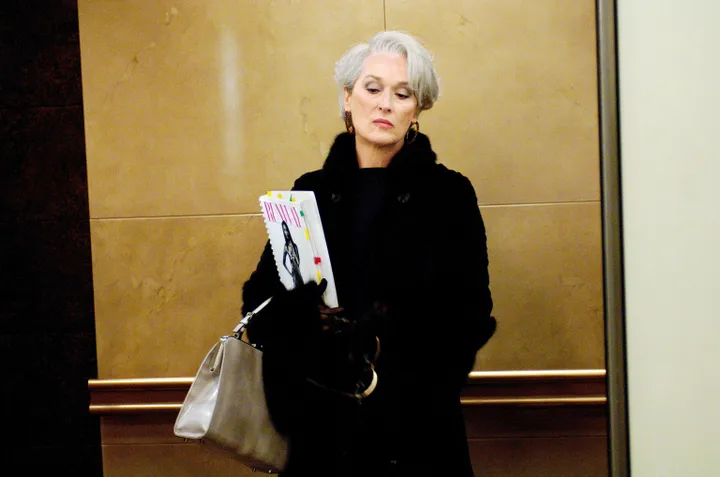
After two years treading the boards as Miranda Priestly in the West End musical The Devil Wears Prada, Vanessa Williams is getting ready to hand over the mantle to someone else.
But it turns out her replacement is someone she knows very well.
On Monday morning, it was confirmed that Teri Hatcher – with whom Vanessa starred in multiple seasons of the hit US series Desperate Housewives – will take over as the iconic villainous character from next month.
Vanessa’s final performance is scheduled for 19 September, with Teri taking over a month later, on 20 September.
Besides playing Susan Mayer in Desperate Housewives, a role which earned her a Golden Globe win and an Emmy nomination, Teri also played the titular heroine in Lois & Clark: The New Adventures of Superman and starred alongside Pierce Brosnan in the James Bond movie Tomorrow Never Dies.
More recently, she’s appeared in a number of Christmassy rom-coms, and was named Star Baker for her appearance on Channel 4’s Great Celebrity Bake Off in 2018.
The Devil Wears Prada, of course, was inspired by the hit 2006 film of the same name, itself an adaptation of Lauren Weisberger’s novel.

Barry Wetcher/20th Century Fox/Kobal/Shutterstock
In the original movie, Meryl Streep originated the role of Miranda Priestly, earning herself an Oscar nomination for her efforts.
Earlier this year, Meryl reprised the role in the hit sequel The Devil Wears Prada 2, which reunited her with former co-stars Anne Hathaway, Emily Blunt and Stanley Tucci, as well as introducing new characters played by Sir Kenneth Branagh, Bridgerton’s Simone Ashley and Emmy winner Justin Theroux.
The Devil Wears Prada musical, which features original songs by Sir Elton John, originally premiered in Chicago in 2022, but was retooled after being slated by critics.
It was met with a somewhat more positive response when it debuted on the West End in 2024, with cast member Amy Di Bartolomeo even receiving an Olivier nomination for her work as Emily, the character played by Emily Blunt in the movie.
The Devil Wears Prada is due to play at London’s Dominion Theatre until September 2027.
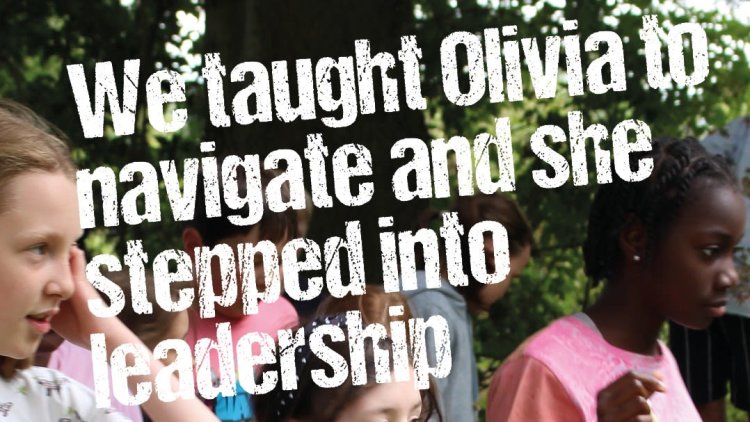

Joy Blizzard, Policy and Communications Officer
| Field Studies Council
Outdoor learning’s many benefits are being increasingly recognised. At Field Studies Council we’ve long argued for not just joined up thinking but joined up policies to truly maximise those benefits.
The inclusion of outdoor learning, nature and adventure in the new school Enrichment Framework is very welcome. As are the references to access to nature, outdoor spaces and adventure activities in the new Youth Strategy.
There isn’t a subject on the curriculum that can’t be enhanced by outdoor learning because learning in and about nature can re-engage learners with education itself, especially those that struggle in a traditional classroom environment.
 Outdoor and adventure learning can simultaneously deliver curriculum outcomes, whilst building employability skills, supporting wellbeing, and connecting young people to real-world contexts and environments.
Outdoor learning works. Numerous government funded projects over many years have demonstrated the benefits time and time again. From London Challenge through to Nature Friendly Schools and more recently Generation Green 1 and 2 we’ve seen life changing results.
However, these benefits are still not a guaranteed part of every child or young person’s education. Funded projects are always welcome, as is their focus on the most disadvantaged learners, but piecemeal funding cannot meet the demand.
Those that would benefit the most are often at the highest risk of missing out. There is a risk that outdoor learning experiences are rapidly becoming the preserve of only those who can afford it. That’s why this charity fully supports Caroline Voaden’s Outdoor Education Bill which aims to guarantee outdoor learning residentials as has happened in Scotland.
The bill is timely as we await Milburn’s recommendations from his Young People and Work review, following his stark warning of a lost generation unless urgent, systemic reform is undertaken.
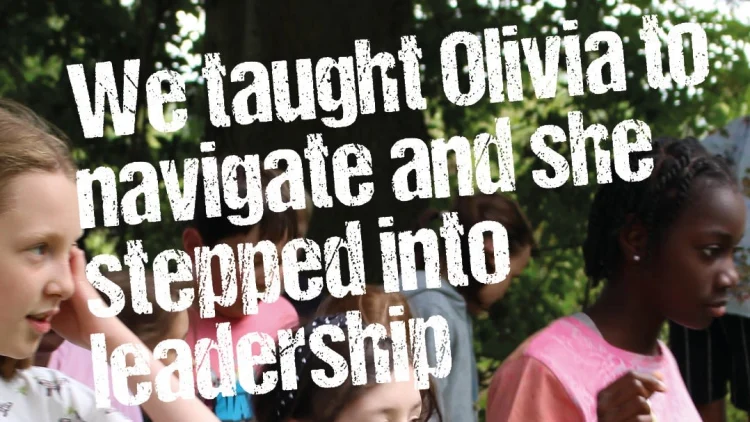
 That’s because outdoor, nature-based adventure learning also has a distinctive role to play in reducing NEETs. It rebuilds confidence and reduces anxiety whilst re-establishing a sense of competence and belonging. Confidence, resilience, and real-world capability matter to those taking their first steps on the career ladder as they transition to adulthood. “I didn’t learn to avoid uncertainty. I learned how to move through it” said a Year 10 Pupil.
It is also, by design, relational. It relies on trusted adults, peer collaboration, and shared challenges. In a system described by Milburn as fragmented and impersonal, that relational dimension is essential. As one student put it “It wasn’t a teaching leading us, it was a teacher helping us lead ourselves”.
Across our network of field centres, we are already delivering the kind of integrated, skills-focused provision that Milburn’s review calls for.
Outdoor and adventure learning must move from the margins to the mainstream – an entitlement, not an optional extra.
This charity is asking Government to publish the delayed Access to Nature Strategy from DEFRA and then work with DfE and DCMS and any Milburn recommendations to pull the policy threads together into a coherent outdoor adventure learning offer for all young people. Yes it will cost. Our 2 night +Adventure residentials start at less than £200, but if we are serious about tackling the truly staggering financial and social cost of rising NEETs, bold action will be needed.
Find out more at https://www.field-studies-council.org/adventure-residential-trips/ or contact [email protected]
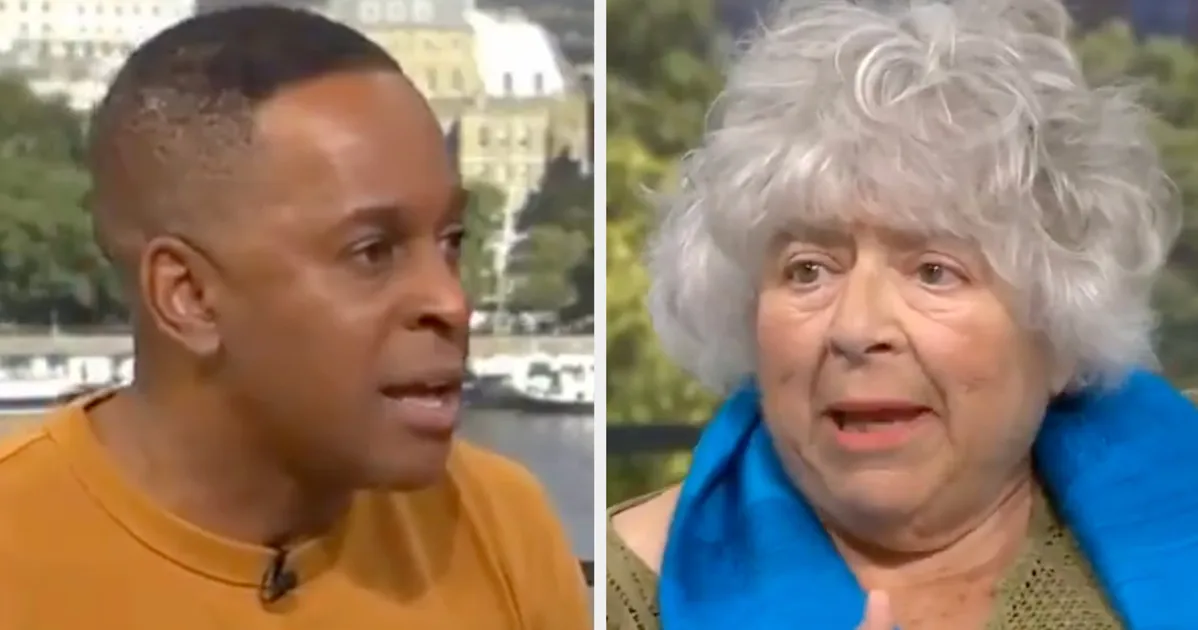
Last week, Andi and co-host Christine Lampard interviewed the Harry Potter star live on This Morning about her new book Miriam’s Full English, in which she reflects on modern British society.
After imitating Christine’s Northern Irish accent, Miriam asked Andi: “What accent would be normal for you? What are you?”
She then clarified that she was referring to the presenter’s race, remarking: “You’re a mix, aren’t you? You’ve got a Black daddy and a white mummy?”
When Andi clarified that both of his parents are Black, and tried to make light of the situation by questioning if the show’s make-up team had made him a “lighter shade than normal”, Miriam continued: “I think you’re what I would call ‘high yella’. That’s what they call it in America when someone isn’t deeply Black.”
“High yellow” is described by the Merriam Webster dictionary as a “dated” and “often offensive” term, historically used to refer to Black people with a light complexion.
Andi then interrupted to say that the producers in his earpiece were “getting nervous now”, to which Miriam responded: “Don’t be nervous. We [in Britain] welcome everybody. And that’s what I want to write about in my book!”
When footage of the interview became more widespread, Miriam faced a lot of criticism on social media.
Broadcaster Jeremy Vine then shared a clip of it on Instagram, writing: “This is seriously nerve-wracking. No filter. [Andi Peters] dealt with it brilliantly but note at the end — ‘they’re getting nervous’.”
“Thanks JV,” he wrote in the comments. “As you know we have to be ready for ANYTHING!!!”
HuffPost UK contacted reps for This Morning, Andi Peters and Miriam Margolyes last week, but did not receive a response.
Although Miriam’s candid and unfiltered approach to interviews has made her something of a modern-day national treasure, it has landed her in trouble in the past.
Just two years ago, she ruffled feathers in the same way, when she, again, asked an interviewer “what are you?” while speaking live on an Australian panel show.
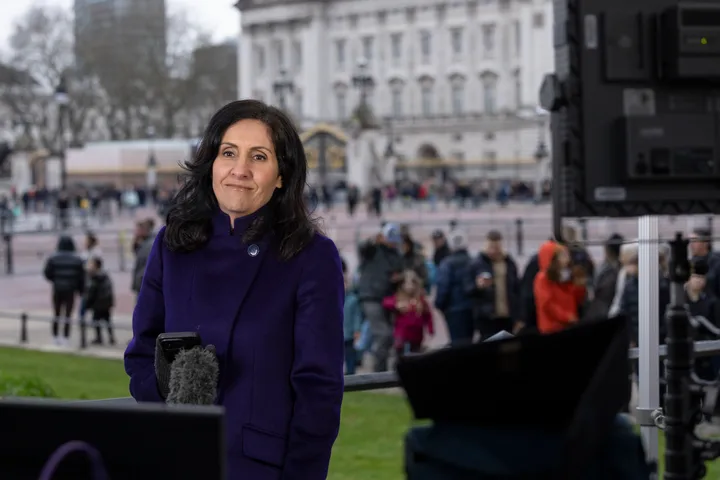
BBC News presenter Maryam Moshiri has spoken for the first time about being diagnosed with blood cancer.
In a new interview with the broadcaster, Maryam disclosed that in November 2024, she was told she had polycythaemia vera (PV), a rare and treatable form of the disease.
She explained: “It’s been two years since my diagnosis and I’ve felt that I’ve started to understand the disease a lot better and the way it affects my life.
“I’ve got a handle on it to a degree now, so I felt it was really important to raise awareness.”
Maryam continued: “I’m going to have to spend the rest of my life being treated for this.”
The NHS website describes PV as a “slow-growing type of blood cancer”, which can be treated with medicine “to slow down the production of red blood cells”.
It can also present an increased risk of other conditions such as heart attacks and strokes.
Per the BBC, “symptoms can include headaches, confusion, dizziness and blurred vision”.
“I was told by my consultant that I have this incurable blood cancer,” she recalled. “Mostly I had no symptoms and that’s one of the problems with this disease.
“The only reason mine was caught was because my GP was so fastidious in the way she did my routine blood tests and immediately sent them for further diagnosis.”

Simon Ackerman via Getty Images
She added: “I think it’s really important people understand that this blood cancer is incurable but it’s manageable with the right treatment and you can lead a relatively healthy life.
“It’s just a question of finding the right treatment and making sure it works for you.”
Maryam has been with the BBC since 2003, and in 2024, began fronting her own show on weekday evenings, The World Today With Maryam Moshiri.
Recent years have seen Maryam commentating on major stories, including reporting on the death of Pope Francis, and subsequent papal conclave, from the Vatican, as well as the arrest of Andrew Mountbatten-Windsor earlier this year.
Maryam and her husband, fellow journalist Jonathan Farmer, have three children.
The president posted an image of the supposed “next generation” design on his Truth Social feed:
Trump shared the image during a massive day-long posting spree, and it’s not clear if this is a real design for a new uniform or just one of the many images, memes and AI slop creations he likes to throw into his feed.
The image states that the design was inspired by the “discipline and functionality” of the uniforms in the 1997 film “Starship Troopers.”
Critics also pointed out that the design looked a lot like the evil Imperial uniforms seen in the “Star Wars” films.
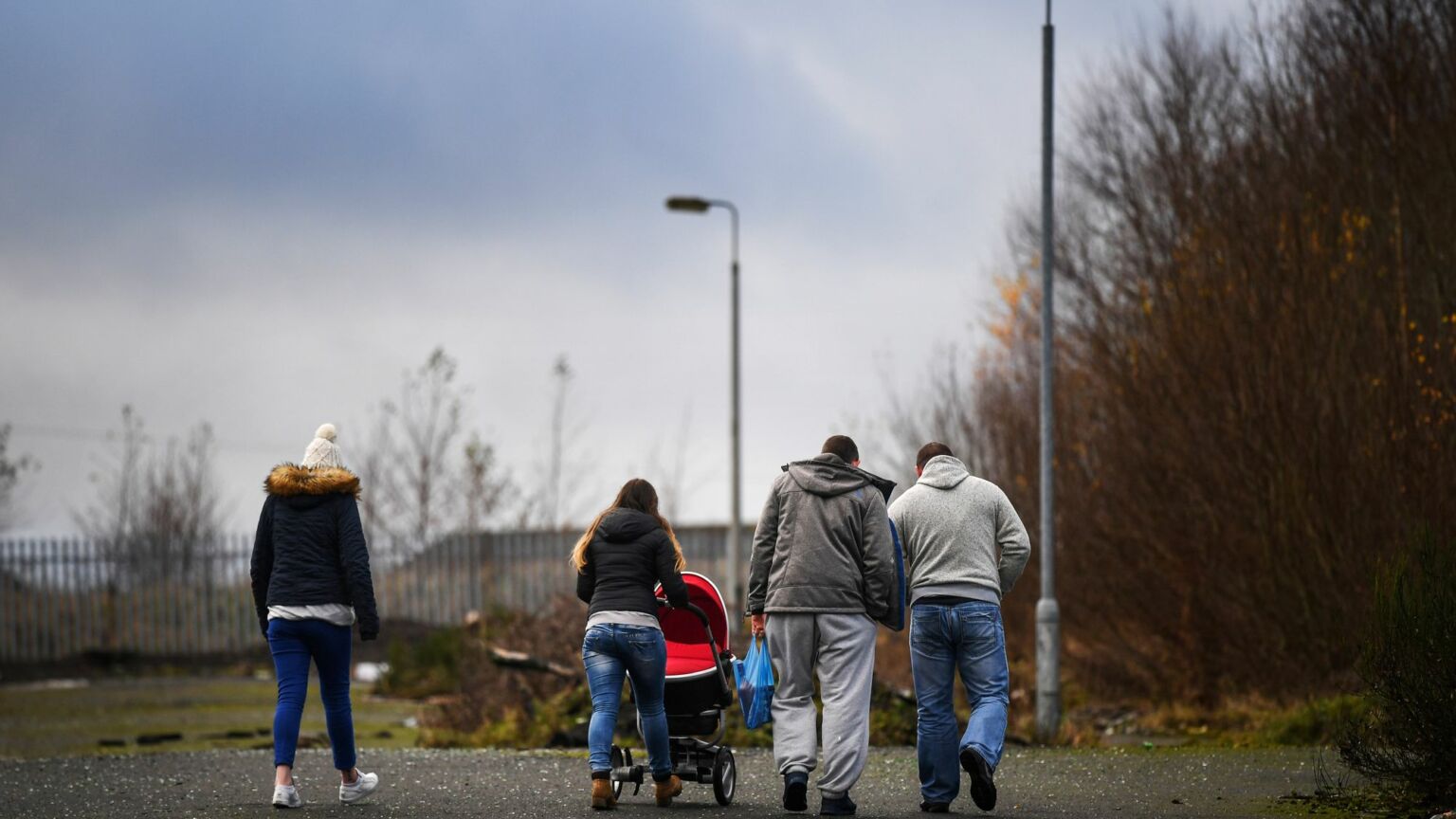
On Tuesday, Andy Burnham addressed MPs on the direction in which he hopes to lead the country, which appears to be back to the halcyon days of the 1970s.
The new prime minister argued that the UK began taking wrong turns in the 1980s under his distant predecessor, Margaret Thatcher, whose influence apparently persists from beyond the grave. ‘Austerity’ followed, and then Brexit ‘compounded the damage, ushering in a decade of low growth’.
These might be good soundbites. But a much better take is that so-called austerity – in other words, sound money and fiscal discipline – and Brexit – leaving the failing EU behind – are part of the solution to the UK’s economic problems, not their cause.
Let us start with austerity. Critics have long argued that ‘savage cuts’ in public spending, especially under the Coalition government between 2010 and 2015, weakened the foundations of both the economy and society.
There are many problems with this narrative. Most obviously, public spending was not, in fact, ‘cut’, let alone ‘savagely’. Even allowing for inflation, total spending was little changed in real terms between 2010/11 and 2019/20.
It could still be argued that spending failed to keep pace with a growing and ageing population, or that the burden fell disproportionately on capital budgets, on local authorities and on core government functions, such as the justice system.
Perhaps the mix was indeed wrong in some areas. But in aggregate, the spending restraint of the early 2010s did help to stabilise the public finances after the explosion of borrowing in the wake of the Global Financial Crisis.
The 2010s were also a rare period of relatively rapid growth in productivity in public services, meaning that money was better spent.
The spending restraint was also necessary. Britain may not have been facing a Greek-style financial meltdown, thanks to retaining monetary sovereignty outside the euro. But UK interest rates could not have been expected to remain low indefinitely.
We only have to roll the clock forward to 2026 to see what happens when fiscal credibility is lost. The cost of government borrowing is now surging almost everywhere, due to global worries about inflation, interest rates and bond issuance. But yields are far higher in the UK than in other countries – even Greece. This is at least partly due to specific investor concerns about the Labour government’s fiscal plans.
Blaming Brexit for the UK’s economic problems does not make a lot of sense either. A decade ago, the British people voted to leave the EU and restore more sovereignty to the UK government. Westminster has since regained control over laws and borders, run its own trade policy and saved tens of billions of pounds in contributions to the EU budget. On this basis, Brexit has been a success.
Indeed, multiple polls show that support for rejoining the EU crumbles when people are presented with the costs and conditions of membership, and that most still want key decisions to be made by politicians who they can actually vote out.
This democratic choice has also laid the foundations for a stronger economy. Benefits can already be seen in those (sadly, too few) areas where the government has begun to use the Brexit freedoms. Examples include agriculture, where subsidies are now better targeted, and animal welfare, with UK bans on live animal exports and industrial sand eel fishing. The financial-services sector was nervous about Brexit. But after seeing the benefits from pro-growth reforms, the City is now campaigning against closer alignment with EU rules.
Outside the Customs Union, the UK has used its independence to secure faster, better trade deals worldwide and to cut tariffs unilaterally. Just this week, the Labour government was trumpeting the benefits of securing full access to the £13 trillion CPTPP trading bloc of Asia-Pacific nations.
Outside the Single Market, the UK has gained greater freedoms to ‘buy British’ and provide state aid for UK industries, for good or ill, and to reduce VAT on domestic energy bills.
Looking ahead, there is enormous potential to benefit from smarter regulation of new technologies, including AI, outside the EU. There have already been important Brexit wins in fields such as gene editing – crucial for raising drought-resistant crops. The savings on contributions to the EU budget will also only grow.
It is nearly impossible to isolate Brexit’s impact from other factors, notably the UK’s relatively high energy costs. But studies claiming that the UK economy has taken a hit of ‘as much as eight per cent’ fail miserably to do so.
The bewildering array of zombie statistics includes the Office for Budget Responsibility’s assumption of a four per cent Brexit hit to long-run productivity. This was based on a crude average of the results of external studies, mostly done a decade ago, before the final shape of the exit deal was even known.
The OBR also assumed that the UK’s global trade in goods and services would be 15 per cent lower than otherwise. This hit simply has not happened.
Worse still are the ‘top down’ or ‘doppelgänger’ models. These assume that any divergence in the UK’s economic performance since 2016, compared with mismatched groups of other countries, can only be due to Brexit. This is a tragic case of ‘confirmation bias’.
The ‘bottom up’ models, which attempt to isolate the impact of Brexit on particular sectors, are not much better. These typically fail to recognise the temporary nature of the adjustment costs. In particular, business investment was initially held back in the years after the vote to leave, but it has since rebounded as Brexit uncertainty has eased.
A more balanced view is that Brexit has had little overall impact on the economy, so far. Whether it ultimately leaves the economy weaker or stronger will depend on the choices made by the UK government – which is as it should be.
Some still describe Brexit as a slow puncture for the British economy. In reality, it may turn out to be little more than a bump in the road. And if that road leads us further from the EU’s continuing failures, so much the better.
Julian Jessop is an independent economist. Follow him on X: @julianhjessop
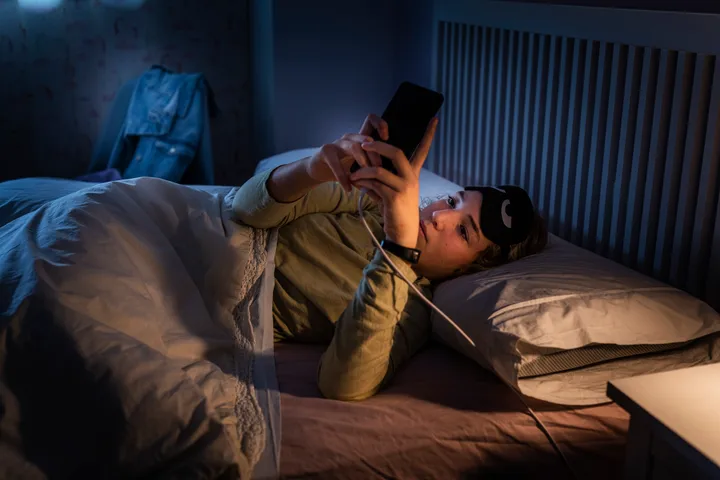
You probably don’t feel your best when you stay up until the wee hours of the night. But beyond waking up groggy, new research says late bedtimes can actually harm your mental health.
In a recent study published in Psychiatry Research, experts analyzed sleep and health data from 73,888 people in the U.K. Biobank. Those who regularly went to bed after 1 a.m. were more likely to experience mental health disorders like depression and anxiety than those who went to bed before 1 a.m.
It didn’t matter if subjects classified themselves as early birds normally or night owls (this is also known as your chronotype) ― going to bed after 1 a.m. hurt people mentally, the study found. In fact, night owls who went to bed after 1 a.m. were most likely to have mental health impacts. People who went to bed before 1 a.m. had the lowest amount of mental health diagnoses.
This study has some limitations: The people who make up the U.K. Biobank are mostly white and middle-aged or older, according to Dr. Indira Gurubhagavatula, a professor of medicine in the division of Sleep Medicine at the University of Pennsylvania, who is not affiliated with the study.
“And the way they decided which chronotype you are came from a single question, although they did use one that has been validated. But typically how we assess morningness or eveningness is with a much more thorough questionnaire that has a lot more detailed questions,” said Gurubhagavatula. Meaning, whether folks are really morning people or night owls may not be totally accurate in this study.
Additionally, researchers relied on mental health diagnoses data added by doctors. This type of reported data can be inaccurate or doctors can miss a diagnosis, Gurubhagavatula said. That said, she noted that the findings align with what she’d expect and said this study should be recreated in other populations, too.
Going to sleep late has many negative impacts on your mental health — and overall health.
“Generally speaking, if you’re not going to bed until after 1 in the morning or 2 in the morning, it’s very likely you’re not waking up until several hours after the sun has come up. And you’re not going to bed for several hours after the sun has gone down, so I think it gets that this issue … being out of alignment with the environmental light-dark cycle as potentially problematic,” said Matthew Lehrer, an assistant professor in the University of Pittsburgh Department of Psychiatry, who is not affiliated with the study.
It’s important for our bodies to get strong signals that it’s daytime, which can come in the form of morning sun. If you aren’t getting those signals or are getting mixed signals, it can cause issues with your biology, which could also affect your brain, said Lehrer.

fcafotodigital via Getty Images
“The authors also mentioned that there are some brain-related mechanisms beyond circadian misalignment. Greater nighttime activity is associated with more impulsive and maladaptive behavior,” Lehrer said. “There are some mechanisms in the brain related to behavior and impulsiveness and inhibition … when you’re awake for longer and later, those things tend to decrease and so that could be associated also with poor mental health.”
Gurubhagavatula noted that some brain functions are more vulnerable to sleep loss than others.
“So, for example, maybe you can chew gum, you can talk, you can walk, but the frontal lobe of the brain is very vulnerable to sleep deprivation,” said Gurubhagavatula. The frontal lobe is responsible for a lot of our brain’s functioning, including mood and emotional regulation.
“So, our ability to not swing wildly from one emotion to the other ― that ability to inhibit ourselves ― becomes impaired under conditions of sleep deprivation or staying up very late at night,” Gurubhagavatula said. “Then it can lead to more negativity, more anxiety … because the higher brain functions that would regulate those emotions are more dulled.”
What about people — like shift workers — who have to go to bed after 1 a.m.?
This can all sound pretty disheartening, especially if you have a job that requires you to go to bed after 1 a.m. Both experts said there are things you can do to minimize the negative impact of a late bedtime and get more sleep, too.
Napping is the first step. “One type of nap is called a strategic nap, which happens during the shift when you know that you have a slump period where it’s so hard to stay awake, your eyes are just going to close. It will be very efficient to use that time to grab a nap if you can,” Gurubhagavatula said.
“And then the other thing is what’s called a preemptive nap. So before the shift even starts, you go into the shift as well rested as you can be,” Gurubhagavatula said, noting that it’s best to keep your naps to 20 or 30 minutes.
Another strategy for night shift workers is “appropriately timed bright light exposure during working hours, if possible,” said Lehrer. “This would be artificial light, such as light boxes for individuals with seasonal affective disorder … they’re very bright, they do have fatigue-reducing and mood-boosting properties.”
Following a specific eating schedule is important, too. “Maintaining more of a daytime-oriented eating schedule can also be helpful, potentially for mood. It’s been shown in simulated night shift work. People in the lab ate their meals during the daytime and they had better improvements in mood relative to those who ate at nighttime,” Lehrer said.
Having a cool, dark and quiet bedroom can help you get better sleep, too, according to both experts.
Beyond this, if you just can’t seem to get the recommended seven to nine hours of sleep, Gurubhagavatula said it’s important to be aware that you could have a sleep disorder. In this case, going to a sleep specialist is a good idea.
“I think that most people by now are starting to understand that as much as we treat sleep like it’s a bonus, it’s actually essential. It’s a biologic necessity,” said Gurubhagavatula. “And we can’t go without it similar to air, food and water.”

Warning as deadly listeria found in Sainsbury’s olives – supermarket issues ‘do not eat’ alert

Infosys, HCLTech, TCS, other IT stocks drop up to 3% as Fed rate hike worries return. Here’s why

Harmony Is Shutting Down. ONE Holders Get Ethereum Tokens Automatically





-
 Fashion3 days ago
Weekend Open Thread: Beyond Yoga
-
 Crypto World3 days ago
Bitcoin price stalls near $82K as key resistance holds
-

 Politics3 days ago
Best Gaming Laptops, CPUs, TVs, And Keyboards To Upgrade Your Set Up For GTA VI
-
 Tech3 days ago
The Birds Outside, Drawn For You Automatically
-

 Crypto World3 days ago
IMF Says El Salvador’s Post-Review Bitcoin Purchases Used No Public Funds
-
 Crypto World3 days ago
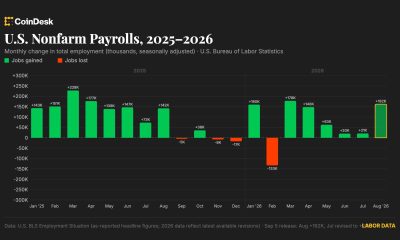
U.S. added stronger than expected 162,000 jobs in August as labor market bounced back
-

 Sports3 days ago
Alexandre Pato consortium’s Northampton Town investment approved
-

 Sports3 days ago
Commanders’ Chig Okonkwo is a top breakout fantasy football candidate
-

 Sports3 days ago
Golden Eaglets Drawn in Group B for 2026 WAFU B U17 Championship
-
 Crypto World3 days ago
XRP price breaks falling channel as bulls target $1.53
-
 Politics3 days ago
A new European chapter for Gibraltar
-

 Politics3 days ago
How To Avoid Winter Colds: 4 Everyday Habits That Spread Germs, Says Pharmacist
-
 Politics3 days ago
The House | Bin the lectures, bring gossip and be ready to banter: how the new PM should prepare for his Trump encounter
-

 Crypto World3 days ago
From warning to listing: UK’s largest retail investment platform opens access to crypto ETNs
-

 Crypto World3 days ago
FinCEN flags $12.7B tied to Southeast Asia crypto investment scams
-

 Tech3 days ago
A Worthy Android Ereader, With Some Tradeoffs
-
 Politics3 days ago
33 Cosy Autumn Home Decor Ideas: Blankets, Pumpkin Decorations, And Candles
-
 Tech3 days ago
How To Edit Claude’s Memory
-

 Crypto World3 days ago
Trezor Data Breach Impacts 67,000 More US Customers
-
 Tech3 days ago
beyerdynamic AVENTHO Y Debuts at IFA 2026 and Makes Wireless Headphones Less Disposable
You must be logged in to post a comment Login