
Business
Meghan Markle Stays Out Of Public Eye As Harry Prepares For WellChild Awards Appearance In UK


LONDON — Nearly two weeks after Prince Harry and Meghan Markle relocated to the United Kingdom with their two children, the Duchess of Sussex has yet to make a public appearance in Britain, even as her husband prepares to step into the spotlight for a longstanding charity commitment.
Harry is set to attend the WellChild Awards in London in the coming days, continuing a patronage he has held since 2007. The annual ceremony celebrates the achievements of seriously ill children and honors the caregivers and medical professionals who support them, and Harry has attended nearly every year of the event’s run, typically delivering a speech and presenting an award to a young honoree.
While Harry’s appearance at the charity event has become something of an annual fixture, reports indicate it could be some time before Meghan is seen in public in Britain. According to reporting from Express UK, the Duchess is currently focused on helping the couple’s children, Prince Archie, 7, and Princess Lilibet, 5, settle into their new life in the country, following the family’s move from their home in Montecito, California.
That reasoning has not stopped speculation from building over the broader purpose and direction of the family’s relocation. With Meghan keeping a low public profile since the family’s return, questions have persisted over why the couple chose to move back to Britain in the first place, and what their longer-term plans might look like now that they are settled on British soil.
Harry’s connection to the country runs deep, having spent nearly his entire life there before stepping back from royal duties and relocating to the United States in 2020. He retains family ties, longstanding charitable commitments and, as supporters of the move have noted, a fundamental sense of belonging in Britain that predates his marriage to Meghan by decades.
Meghan’s own ties to the country are considerably less established. Her personal and professional life, including her mother and much of her broader social circle, remains rooted in the United States, raising questions among royal watchers over what specific role or activities she intends to pursue now that the family has relocated across the Atlantic.
Some charitable organizations in Britain have publicly welcomed the prospect of Meghan’s renewed presence in the country. She has previously served as patron of charities including Smart Works, a group that helps women prepare for job interviews, and Mayhew, an animal welfare organization operating in London and internationally. Both organizations have expressed enthusiasm about the possibility of deeper engagement with Meghan now that she and her family are based in the U.K.
Even so, questions remain over whether renewed charitable involvement alone will be sufficient to explain the scope of the family’s relocation, or whether Meghan has a more defined plan for her public role in Britain that has not yet been disclosed. It remains unclear whether her current absence from public view reflects a temporary period of settling in, or a longer-term pattern that could persist well beyond the family’s initial adjustment period.
What does appear clear, according to those following the family’s move, is that the relocation was driven primarily by a desire to keep the family unit together and to give Archie and Lilibet an opportunity to spend more time in their father’s home country, connecting them more directly with Harry’s British roots and extended family. That consideration, observers note, is consistent with the priority both parents have consistently placed on their children throughout their public statements since stepping back from royal life.
Beyond that underlying rationale, however, much of the broader commentary surrounding the family’s return has remained speculative, with various theories about the couple’s motivations and plans circulating without clear confirmation from Harry, Meghan or their representatives. Some reports have suggested tensions or disagreements behind different explanations for the move, with various royal-watching outlets offering competing, and at times contradictory, accounts that have subsequently been challenged or walked back by other sources close to the couple.
Harry’s upcoming WellChild Awards appearance continues a pattern he has maintained for nearly two decades, having become one of the few official patronages he retained following the family’s 2020 departure from senior royal duties. In past years, Harry has typically attended the ceremony without Meghan, delivering remarks reflecting on the resilience of the children and families the charity supports, and reflecting on his own experience as a parent in relating to the challenges those families face.
The timing of Harry’s appearance, coming so soon after the family’s broader relocation to Britain, is likely to draw continued attention from royal commentators and media outlets, both for what it reveals about Harry’s individual public engagements going forward and for what it does not yet reveal about Meghan’s own plans. With Meghan remaining out of the public eye for now, her first public appearance in Britain since the family’s return remains an open question, one that royal watchers are likely to continue speculating about until she reemerges publicly, whether through a charity engagement, a social media announcement, or some other means of reintroducing herself to British public life.
For now, the family’s return to the United Kingdom appears to be unfolding gradually, with Harry resuming familiar public commitments while Meghan continues working behind the scenes to settle the family into its new home. Whether that pattern continues, or whether Meghan steps into a more visible public role in the weeks ahead, remains to be seen, leaving much of the broader narrative around the family’s relocation still very much in progress.


Earnings call transcript: CPI Property Group posts stable H1 2026 results, shares slip

IHS Holding validates Fair Value analysis with 84% return over 29 months

More than one in five family-owned manufacturers are considering a sale to overseas buyers in response to changes to inheritance tax, according to a report from Make UK, the manufacturers’ organisation, and the accountancy firm Bishop Fleming.
The report, based on responses from companies surveyed in May and June 2026, found that 22 per cent of family-owned manufacturers were weighing a sale to a foreign buyer because of the tax changes, with a further 18 per cent considering a sale to a UK buyer.
Among family-owned businesses, 78 per cent said they were worried about the effect of recent inheritance tax (IHT) reforms on succession planning. The 2024 budget changed the IHT regime to bring more assets within the scope of the tax, including a cap on business property relief.
Of the companies surveyed, 65 per cent identified as family-owned, and 89 per cent of those were also managed by a family member. From this the report extrapolated that family-owned businesses contribute an estimated £94bn to the UK economy and support about a million jobs.
The report said the tax changes raised the concern that “ownership and investment decisions become driven primarily by tax considerations rather than commercial objectives”.
It added: “This could lead some manufacturers to sell their businesses to third parties, alter ownership structures, or divert capital away from productive investment in order to manage future IHT liabilities.
“While the full long-term impact is difficult to quantify, such decisions risk weakening productivity growth and increasing the transfer of strategically important manufacturing assets to owners whose long-term priorities may not align with the UK’s economic interests.”
Across all manufacturers surveyed, high energy costs were the most commonly cited barrier to growth, mentioned by 59 per cent of respondents. The report said UK industrial electricity prices are the highest in the G7 and that 90 per cent of manufacturers have seen energy prices rise since 2022.
Economic uncertainty was cited by 53 per cent, while 47 per cent pointed to taxation. Make UK has previously warned that rising employment and energy costs were putting manufacturing investment at risk.
Fhaheen Khan, senior economist at Make UK, said: “Reducing energy costs, reviewing inheritance tax changes, strengthening apprenticeship funding and turning the Industrial Strategy into practical support on the ground are now essential if Britain is serious about securing the future of its manufacturing base.
“Family-owned manufacturers are not a niche part of the economy. They anchor skilled jobs, long-term investment and the industrial know-how Britain needs to make reindustrialisation a reality, something the prime minister is right to put back at the centre of the economic debate.”
Neil Davy, chief executive of Family Business UK, said the research added to “a growing body of evidence showing that changes to business property relief are having real-world consequences for family-owned businesses and the wider economy”.
Business groups have argued since the reforms were announced that the cut in business property relief to 50 per cent could force some families to sell their companies.
“Family Business UK has consistently warned that these reforms risk undermining the very businesses that drive long-term investment, create skilled jobs and sustain local economies,” Davy said.
“It is particularly concerning to see so many family-owned manufacturers reporting that succession plans are being disrupted and that investment decisions are being delayed as a result.”
Analysis published by CBI Economics has separately argued that the reforms could cost the exchequer more than they raise. The government has said the changes will affect about 2,000 estates a year, and in December 2025 it raised the combined relief threshold to £2.5m ahead of the reforms taking effect on 6 April 2026.
A government spokesperson said: “The chancellor is prioritising giving businesses breathing space to invest, grow and manage cost pressures.
“On Monday the chancellor will be setting out his vision for growth and how he will work with business to unlock their latent potential.
“We have cut business rates, saving thousands of businesses over £1,000 a year, capped corporation tax, are providing a £4 billion access to finance boost for SMEs and taking action to tackle late payments to help businesses invest and hire across the UK.”

Amy Ingham
Amy Ingham is a reporter at Business Matters, covering UK business news with a focus on breaking news, business policy, late payments and insolvency. She joined the magazine in 2026 after completing the NCTJ Diploma in Journalism at Harlow College’s journalism school. Her recent reporting includes British Steel’s nationalisation and its impact on SME suppliers, the decline in late payments by large firms, and Insolvency Service director disqualifications. Reach her at aingham@cbmeg.co.uk.

The asset marks the second purchase in the private credit provider’s alternative accommodation fund.

Jackie DeAngelis reports on parents campaigning lawmakers to restore and increase recess time in schools across the country. They raise concerns over student burnout, social development, and the benefits of outdoor play.
School districts across the country continue to struggle to recruit and retain enough school bus drivers, forcing them to compete with other employers for a limited pool of qualified workers despite higher wages.
School bus driver employment remained 9.5% below 2019 levels in August 2025, even as inflation-adjusted hourly wages rose 4.2% over the previous year, according to an Economic Policy Institute analysis. The employment figures are based on 12-month rolling averages of federal survey data.
“The wages are simply too low,” Hilary Wething, an economist at the Economic Policy Institute told FOX Business, identifying pay as the primary reason the workforce has not returned to pre-pandemic levels.
The job can also present scheduling challenges. School bus drivers often work split shifts, with an early-morning route followed by several hours off before an afternoon route, making the position less attractive than trucking, delivery, transit or other jobs offering higher pay or more predictable hours.
AI INFRASTRUCTURE INVESTMENT PROJECTED TO TOP $31T BY 2050

School buses are lined up in the bus yard after the first day of school on August 12, 2026. (Gina Ferazzi / Los Angeles Times via Getty Images)
Wething also cautioned against assuming that people classified as outside the labor force are available to fill those positions. The category can include retirees, students, caregivers and people with disabilities.
The East Greenbush Central School District in New York experienced those staffing pressures firsthand during the 2025-2026 school year.

East Greenbush Central School District Superintendent Kurtis Kotes sits in the driver’s seat of a school bus after completing training for his commercial driver’s license. (East Greenbush Central School District)
When Superintendent Kurtis Kotes took over in July 2025, the district was short nearly 14 bus runs. Mechanics, dispatchers and other employees with the required licenses had to help cover routes.
“We had to consolidate runs,” Kotes told FOX Business. “It meant students were late being picked up from home. Sometimes it meant they were late getting back home again, and it would impact instructional time.”
JOB GROWTH REBOUNDED IN AUGUST WITH SOLID GAINS
The district responded with a “bus rodeo” recruitment event that allowed prospective drivers to try operating a school bus with trainers, even if they did not yet have a commercial driver’s license. Kotes said the event resulted in approximately five to eight hires.

East Greenbush Central School District Superintendent Kurtis Kotes helps students aboard a school bus during a route after earning his commercial driver’s license. (East Greenbush Central School District)
East Greenbush pays drivers approximately $28 an hour and offers health benefits, which Kotes said can be an important recruiting and retention tool as the district competes with an Amazon warehouse, other public-sector employers and seasonal work such as snowplowing.
“The issue becomes… health benefits behind that for people that are looking at this as a primary source of income,” he said.
The district also tries to provide drivers with opportunities for additional hours during the middle of the day, including field trips and custodial or cleaning assignments. Some drivers take other part-time jobs to supplement their income.
UBER TO CUT THOUSANDS OF JOBS IN SWEEPING RESTRUCTURING EFFORT
The district has also sought to give administrators a better understanding of the job. Kotes and the district’s interim human resources director obtained their own licenses to support the transportation department and better understand the work.
Kotes spent five weeks training before earning a Class B CDL with school bus and passenger endorsements. His training covered defensive driving, student management, safety procedures, emergency response and vehicle inspections before he completed a road test. He drove his first student route in December 2025.

East Greenbush Central School District Superintendent Kurtis Kotes, who earned his commercial driver’s license, stands with school transportation staff in front of a school bus. (East Greenbush Central School District)
LOWE’S LAUNCHES MAJOR EFFORT TO HELP CLOSE AMERICA’S SKILLED TRADES GAP
Kotes does not drive a daily route but helps cover sports and after-school runs when needed. He said the district is now in a better staffing position, though competition for workers remains.
Wething said the expiration of federal pandemic-relief funding has put additional pressure on school systems. The funding helped districts hire support staff, including bus drivers, but districts now must maintain transportation services with tighter budgets.
For families, a shortage of drivers can mean late pickups, longer rides, consolidated routes and other transportation disruptions. For districts, filling the gap may require more than higher hourly wages, with benefits, additional hours, training support and retention efforts all playing a role in competing for workers.
CLICK HERE TO GET FOX BUSINESS ON THE GO
Kotes said compensation is only part of the equation, with workplace culture also playing a role in keeping drivers on staff.
“When people feel like they’re valued, they’re going to want to work here,” he said.

Business News has expanded its political coverage with the appointment of experienced journalist Adrian Rollins as its first reporter based at Parliament House in Canberra.
Rollins started with Business News today and will cover federal politics with a particular focus on decisions in Canberra that affect Western Australian businesses and the state’s economy.
He will also play a key role in expanding Business News’ coverage of defence, an industry expected to become increasingly important to WA as spending associated with AUKUS and the federal government’s broader defence strategy flows through the economy.
That coverage will extend beyond defence policy to the companies, contracts, investment, infrastructure and supply chains associated with the sector, as well as the opportunities for WA businesses seeking to participate in it.
Rollins brings extensive experience covering federal politics and economics, including two stints at The Canberra Times and six years as economics correspondent for The Australian Financial Review. At the AFR he covered federal politics, Treasury, the Reserve Bank, federal budgets and the economic and political response to the Global Financial Crisis.
Earlier in his career, Rollins spent several years in The Age’s Canberra bureau, including as a federal political reporter and later chief of staff, where he managed the newspaper’s 11-person federal politics bureau.
More recently, he returned to The Canberra Times as economics correspondent, covering economics, politics, monetary and fiscal policy, Treasury, the Reserve Bank and federal budgets.
His experience outside journalism includes a stint last year as a speechwriter in government. He has also worked on Australian government programs in Papua New Guinea and Indonesia.
Business News executive editor Sean Cowan said establishing a permanent reporting presence in Canberra was a significant step in the publication’s continued growth.
“Western Australia is enormously exposed to decisions made in Canberra, whether they relate to resources, tax, energy, infrastructure, trade or defence,” he said.
“We want to be much closer to those decisions and the people making them, rather than looking at federal politics solely through a Perth lens.
“Adrian has spent much of his career covering politics and economics in Canberra and understands how government policy translates into consequences for businesses and the economy.
“Defence will be a particularly important part of his brief. The scale of investment planned through AUKUS and the broader build-up of Australia’s defence capability has the potential to create substantial opportunities for WA businesses.
“We will be following that investment closely; who is winning the contracts, where the money is being spent, what infrastructure is being built and which Australian businesses are positioning themselves to participate.”
Rollins holds a PhD in politics, trade and public policy from the Australian National University’s Crawford School of Public Policy, as well as a Master of International Business from the University of Melbourne.
His appointment continues a period of significant investment in Business News’ journalism, data and intelligence capabilities.
Veteran journalists Gary Adshead and Neale Prior joined the newsroom last year, adding to a reporting team that includes former editors Mark Beyer and Mark Pownall, deputy editor Jack McGinn and senior journalists Claire Tyrrell and Tom Zaunmayr.
The expansion has occurred at a time when many commercial media organisations have reduced editorial staffing, with Business News continuing to invest in journalism and data as its subscription business has grown.
The publication has also increasingly expanded its coverage beyond traditional WA business sectors, including greater reporting on defence, technology, local government, property and federal policy.
Business News was this year recognised with three Alliance of Area Business Publishers awards in the United States, including being named the best website among more than 60 business publishers across Australia, Canada and the US.

The renewed buying spree comes after the capital markets regulator, the Securities and Exchange Board of India (Sebi), issued a circular last week on the newly implemented Closing Auction Session (CAS).
On Thursday, Sebi said it would review the methodology used to determine settlement prices for derivative contracts on expiry, following feedback from market participants after the rollout of the new CAS in the equity cash market.
Also read: CAS effect: Pre-open session rules to change from today. What changes for investors?
“Having considered the experience of the initial period of CAS implementation and the feedback received from various stakeholders, Sebi may be proposing certain changes in the methodology for determining settlement prices of derivative contracts, for which a consultation paper will be issued in about a week,” Sebi said in a statement.

Among the issues raised, Sebi said, a significant area of feedback relates to the determination of settlement prices for derivative contracts on expiry, based on the closing price determined through CAS. CAS is a call auction mechanism used to determine the closing price of stocks in the cash segment with derivative contracts available on them.
Why this matters
The development gains significance as stock exchanges acknowledged that the newly introduced Closing Auction Session (CAS) had resulted in lower trading volumes.According to an ET report, equity derivatives turnover on the NSE and BSE fell to multi-month lows in August, with analysts attributing the decline to heightened volatility under the new CAS mechanism. The volatility prompted several market participants to scale back derivatives activity, particularly during the final half-hour of trading.
Last month, NSE’s total monthly equity derivative turnover stood at Rs 34.48 lakh crore, the lowest since November 2023. BSE’s August turnover stood at Rs 32.2 lakh crore, the lowest since June 2025.
Wall Street brokerage Jefferies, in a report earlier this week, said the key challenge with CAS has been the uncertainty on expiry day, forcing option writers to stay away from the market. This has reduced the profitability of proprietary traders. Jefferies said Sebi could address the challenges with CAS through three measures: delinking options expiry from the CAS window, improving the stock lending and borrowing mechanism, and deepening the auction pool.
BSE to feel the pinch in Q2?
Domestic brokerage firm ICICI Securities suggests that BSE’s premium ADTV stood at Rs 18,700 crore in August, down 26.5% from Rs 25,400 crore in July. For the second quarter, premium ADTV stood at Rs 22,000 crore, down 25.7% from Rs 29,700 crore in the first quarter.
Read more: One month of CAS: How 4 expiry days turned into a 6,000-point Sensex scare for investors
BSE’s average daily option contracts traded stood at 98 million in August, down 34.5% from 150 million in July. BSE’s average daily option contracts traded in the second quarter stood at 124 million, down 20.2% from the Q1FY27 average of 156 million.
The systemic average daily option contracts traded across BSE and NSE stood at 223 million in August, down 22.9% from 289 million in July. For the second quarter, the metric stood at 256 million, down 20% from the Q1FY27 average of 320 million.
The regulator did not specify what changes may be proposed. The consultation paper expected to be issued next week will be watched closely by brokers, proprietary desks, institutional investors and active derivatives traders.
Any change in methodology could be important for expiry-day risk management. If the settlement price is less directly linked to short-term CAS movements, it may reduce the chance of sudden option price spikes in the final minutes.
(Disclaimer: Recommendations, suggestions, views and opinions given by the experts are their own. These do not represent the views of The Economic Times)

Novo Nordisk trial shows semaglutide helped 40% of children

Jack McGinn speaks to Nadia Budihardjo about why inflationary pressure has started to impact the gold sector.

A consulting group that withdrew from reviewing the City of Perth’s council has cited “reputational grounds” for exiting the project, internal emails reveal.

Shiba Inu gains Japan access, but no SHIB ETF exists

The 7 Most Influential Adventure Movies of the Last 25 Years

Ovary Function Post Menopause: Scientists Discover New Health Role After Menopause





-

 Fashion3 days ago
Weekend Open Thread: Beyond Yoga
-

 Crypto World3 days ago
Bitcoin price stalls near $82K as key resistance holds
-

 Politics3 days ago
Best Gaming Laptops, CPUs, TVs, And Keyboards To Upgrade Your Set Up For GTA VI
-

 Tech3 days ago
The Birds Outside, Drawn For You Automatically
-

 Crypto World3 days ago
IMF Says El Salvador’s Post-Review Bitcoin Purchases Used No Public Funds
-
 Crypto World3 days ago
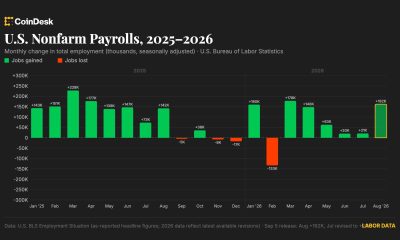
U.S. added stronger than expected 162,000 jobs in August as labor market bounced back
-

 Sports3 days ago
Alexandre Pato consortium’s Northampton Town investment approved
-

 Sports3 days ago
Commanders’ Chig Okonkwo is a top breakout fantasy football candidate
-

 Sports3 days ago
Golden Eaglets Drawn in Group B for 2026 WAFU B U17 Championship
-
 Crypto World3 days ago
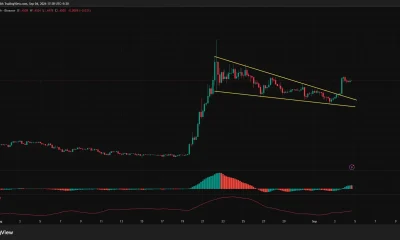
XRP price breaks falling channel as bulls target $1.53
-

 Politics3 days ago
A new European chapter for Gibraltar
-

 Politics3 days ago
How To Avoid Winter Colds: 4 Everyday Habits That Spread Germs, Says Pharmacist
-

 Politics3 days ago
The House | Bin the lectures, bring gossip and be ready to banter: how the new PM should prepare for his Trump encounter
-

 Crypto World3 days ago
From warning to listing: UK’s largest retail investment platform opens access to crypto ETNs
-

 Crypto World3 days ago
FinCEN flags $12.7B tied to Southeast Asia crypto investment scams
-

 Tech3 days ago
A Worthy Android Ereader, With Some Tradeoffs
-

 Tech3 days ago
How To Edit Claude’s Memory
-

 Crypto World3 days ago
Trezor Data Breach Impacts 67,000 More US Customers
-

 Politics3 days ago
33 Cosy Autumn Home Decor Ideas: Blankets, Pumpkin Decorations, And Candles
-

 Tech3 days ago
beyerdynamic AVENTHO Y Debuts at IFA 2026 and Makes Wireless Headphones Less Disposable
You must be logged in to post a comment Login