
Crypto World
How to Read the Room


Every room has a parallel conversation running underneath what appears on the surface. It’s a pulse, a vibe, a temperature. This undercurrent of unspoken behavior delivers data instantly, but only if you can decipher it.
Neuroscientists, psychologists, anthropologists, and linguists have studied subtle behaviors for years in a quest to unravel the mystery of how humans create meaning together. I’ve spent the last decade training others how to spot invisible signals, detect who holds power, identify which relationship will influence a decision, spot who has already made up their mind, and decipher who is lying.

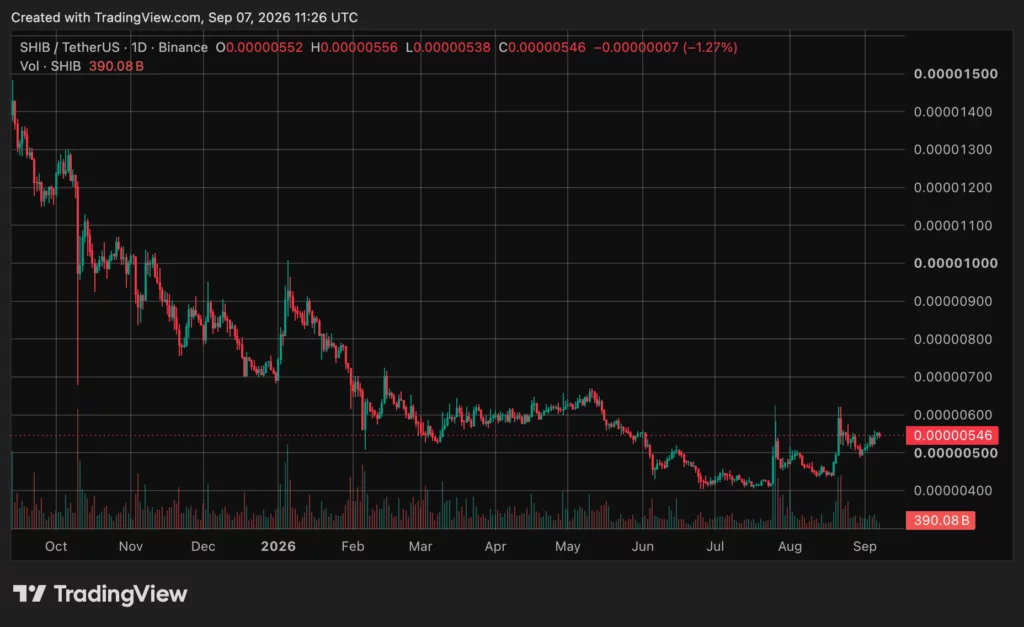
Japan’s changing crypto framework has strengthened Shiba Inu’s position in the country, but as of September 7 no regulator, exchange or asset manager has filed for or approved a Japanese SHIB exchange-traded fund.
Summary
- Japan’s parliament passed crypto-market legislation July 15, but regulators approved no Shiba Inu exchange-traded fund.
- The amended framework moves crypto oversight toward FIEA rules covering disclosures, trading conduct and intermediaries.
- Japan promulgated the legislation July 23, with detailed implementation rules still requiring regulatory development afterward.
- JVCEA’s Green List includes SHIB, which nine member exchanges handled as of September 1, 2026.
- Mercari added SHIB trading through Coincheck on June 8, expanding access inside its mobile application.
Japan’s parliament passed legislation on July 15 that brings crypto assets closer to the regulatory system used for financial products. The official legislative record shows that the upper house approved the bill that day. The government promulgated it as Law No. 64 on July 23.
The legislation strengthens disclosure, trading and intermediary rules under the Financial Instruments and Exchange Act. It provides a possible legal foundation for regulated crypto funds. However, it does not approve an ETF for Bitcoin, Shiba Inu or any other individual asset.
The distinction matters because an ETF also requires detailed regulations, an eligible structure, an asset manager, an exchange listing process and regulatory clearance. None of those steps has been announced for SHIB.
Shiba Inu’s Green List status covers exchange reviews
Shiba Inu does appear on the Japan Virtual and Crypto Assets Exchange Association’s official Green List. The list identifies crypto assets that are widely handled by the association’s Japanese members and satisfy four stated conditions.
Those conditions include handling by at least three member companies and a trading history of at least six months. The asset must also have no special conditions imposed by the association or another reason making its inclusion unsuitable.
The September 1 list shows nine member companies handling SHIB. That compares with 29 for Bitcoin, 28 for Ether and 19 for XRP. Green List inclusion can simplify parts of an exchange’s review process, but it does not create automatic ETF eligibility.
A community commentator described the designation as giving SHIB a “head start.” That remains an interpretation rather than a conclusion published by the Financial Services Agency or JVCEA.
Mercari expanded retail access to SHIB in June
Mercari subsidiary Mercoin officially added access to SHIB and 11 other assets on June 8. The service allows eligible customers to trade the assets with Coincheck through the Mercari application, according to the company’s announcement.
Mercoin said its crypto service had passed four million cumulative account openings by March 2026. About 90% of surveyed users had no previous crypto-trading experience, although that figure covers Mercoin’s broader customer base rather than SHIB buyers specifically.
The integration therefore expands SHIB’s retail availability in Japan. It does not mean Mercari has issued an investment fund, applied for an ETF or endorsed a future SHIB product.
Japan still needs ETF and tax implementation rules
Japan’s legislation advances a regulatory process that began with Financial Services Agency discussions about moving crypto toward securities-style oversight. As crypto.news previously reported, earlier policy discussions focused primarily on Bitcoin and Ether as potential initial ETF assets.
A Japanese SHIB ETF would require an identifiable sponsor to submit a product, regulators to establish listing and custody requirements, and an exchange to accept the fund. No such application appears in the official materials reviewed for this report.
Tax reform also remains incomplete. In related coverage, crypto.news reported that the proposed 20% separate tax rate is targeted for 2028. It is not currently available merely because an asset appears on the Green List.
The next confirmed step is regulatory implementation of the amended legislation. Claims that Japanese crypto ETFs could arrive in 2027 remain forecasts. SHIB has gained broader regulated exchange access, but its ETF prospects remain unconfirmed.
Meanwhile, SHIB traded at $0.0000055 at press time, indicating a 8% increase in in the past 7 days and 17% in the past month.
Crypto World
XRP is Facing a Great $1.43 Wall It Needs to Break: Mid-September Will Be Huge for Ripple

XRP is still stuck below the ceiling that’s capped every rally attempt for over a week. The $1.43 level is the exact zone where sellers have shown up three separate times since late August. What happens over the next nine days could determine whether that wall finally cracks.
Ripple unlocked 1 billion XRP on September 1 across three transactions: 500 million, 400 million, and 100 million tokens. It was a routine escrow release that nonetheless added fresh supply into a market already testing resistance.
Meanwhile, the XRPL 3.3.0 upgrade window could activate as early as September 11, and the Senate has scheduled its CLARITY Act vote for September 15, the single biggest regulatory catalyst on XRP’s calendar this month.
— Skipper | XRPL (@skipper_xrp) September 6, 2026
 $XRP has broken out of its triangle pattern, and the market could be getting ready for a bigger rally.
What if traders are already pricing in the CLARITY Act before it’s even approved? pic.twitter.com/L9YfJ2prQ1
Volatility has been the theme, not direction. Data point showed XRP up 40% over a prior week, and that whiplash sets the stage for what could be a decisive two-week stretch for Ripple’s token.
Discover: The Best Token Presales
Can XRP Price Hit $1.50 This Week?
At $1.41, XRP sits inside a tight consolidation band, holding above the $1.40 support line but unable to convert momentum into a clean breakout. Volume data around this resistance zone suggests buyers are present but not yet aggressive enough to force a decisive move.

Immediate support sits at $1.40–$1.41, with a deeper floor near $1.33–$1.35 should momentum fail. The bull case is when a break above $1.43 opens the door to $1.47–$1.50, with stretch targets near $1.55, $1.60, and eventually $1.68 if the CLARITY Act vote lands favorably.
The September 15 Senate vote is the wildcard here; a positive outcome could be the catalyst that finally clears the wall. The base case is continued chop between $1.35 and $1.43 while the market waits for clarity. However, a failure to hold $1.40 sends the price back toward $1.30–$1.32, invalidating the current setup.
Earn $50 and Enter $300K Prize Draw on EdgeX
LiquidChain Targets Early Mover Upside as Ripple Tests Key Levels
XRP’s setup rewards patience more than conviction right now. Holders are essentially betting on a Senate vote and an escrow supply digest playing out favorably within a two-week window. Even a clean breakout to $1.68 represents roughly 20% upside from current levels for a token with an already massive circulating supply.
That math is fine for a core holding. It’s less exciting for traders chasing asymmetric returns, which is where earlier-stage infrastructure plays start looking more interesting.
A little of this chain. A little of that chain. — LiquidChain (@getliquidchain) September 7, 2026
Then things get interesting.  pic.twitter.com/ybu9a1L0o0
LiquidChain ($LIQUID) is building a Layer 3 execution environment that fuses Bitcoin, Ethereum, and Solana liquidity into a single unified layer. With Liquid, developers deploy once and access all three ecosystems rather than fragmenting liquidity across chains.
The presale is currently priced at $0.014953 with $960K raised so far. Core features include Single-Step Execution, Verifiable Settlement, and a Deploy-Once Architecture designed to eliminate cross-chain friction.
Research LiquidChain before the next pricing tier kicks in.
Discover: The Best Crypto to Diversify Your Portfolio
The post XRP is Facing a Great $1.43 Wall It Needs to Break: Mid-September Will Be Huge for Ripple appeared first on Cryptonews.

XRP futures trading had a much busier August as volume climbed to its highest level in six months. This marked the strongest activity since February, according to data shared by CryptoQuant.
The jump was not limited to one exchange.
August Volume Surges
Activity increased across some of the biggest names in crypto, which brought more liquidity and interest back into the XRP derivatives market. CryptoQuant found that Binance dominated the market. The exchange recorded roughly $37 billion in XRP futures volume during August. Bybit was a distant second at around $14.54 billion, followed by OKX at approximately $12.88 billion.
These three exchanges alone handled more than $64.6 billion worth of XRP futures trades during the month.
The change is especially noticeable as XRP futures activity had been running at lower levels, but August brought traders back in a much bigger way. The stronger price action around the crypto asset likely played a role here. It climbed nearly 30%, rising from $1.06 at the start of the month to a high of $1.50 on August 24 before ending at $1.35.
Alongside futures, spot trading volume also reached its highest level since February. Binance, as usual, accounted for the biggest share, posting around $7.28 billion in XRP trades. Next up was Upbit with $4.68 billion, while Bithumb Korea posted nearly $2.59 billion. Bybit, Gate.io, and KuCoin trailed with roughly $1.4 billion, $1.33 billion, and $1.23 billion, respectively. Bitget and Coinbase each came in just below the $1 billion mark.
However, the technical picture is less convincing. Crypto analyst ChartNerd noted that XRP has stayed below its 50-week WEMA for three straight weeks, while the weekly Stoch RSI remains overbought. The 20-week WEMA at $1.29 is now the support level. A continued break below the 50 could lead to a deeper correction.
Weekly Slowdown
On the institutional front, the XRP ETF market remained positive for another week, but the pace of inflows clearly slowed. The funds attracted nearly $19 million over the latest period, and extended their winning streak to eight consecutive weeks.
That result was a sharp step down from the previous week, when inflows topped $110 million and were the strongest weekly performance of 2026.
After $5.64 million entered the funds on August 31, inflows jumped to $14.38 million on September 1. The momentum then broke on Wednesday, when investors pulled $7.2 million from the products. It was the first day of net outflows since August 5. Thursday brought some relief as another $6.14 million flowed into the funds. Friday, however, produced no movement at all.
The post XRP Futures Just Posted Their Biggest Month in 6 Months: Here’s What Changed appeared first on CryptoPotato.


Singapore-based financial services group DBS and American financial services giant Citi completed the first weekend tokenized cross-border payment between Singapore and the US on Saturday.
The two companies executed the transaction using tokenized deposits via the Swift Digital Ledger to bypass the constraints of traditional banking hours, DBS announced on Monday.
The deposit was finalized in minutes, which DBS called a “significant improvement” from the industry norm of as long as two business days for traditional cross-border transfers.
The transaction demonstrates how traditional banks are exploring blockchain rails for more efficient cross-border transactions while aiming to keep deposits inside banking channels. Standard Chartered and HSBC were the first to complete a tokenized cross-border transaction on Swift’s blockchain ledger in August.
In July, Swift, the world’s largest financial messaging network, said that its blockchain-based ledger was ready for initial use and that it was preparing to pilot tokenized cross-border payments with 17 major banks, including Citi and DBS, as well as HSBC, BNP Paribas, UBS, ANZ and Standard Chartered.
Citi is also one of a group of the largest US banks that plan to launch a separate tokenized deposit network in the first half of 2027 operated by The Clearing House, David Watson, CEO of the bank-owned payments operator, told The Wall Street Journal in June.
In November 2025, DBS and JPMorgan revealed plans to develop a blockchain-based tokenization framework to enable onchain transfers between their deposit token ecosystems, aiming to set an industry standard for cross-bank payments.
Related: VARA, Securitize sign MoU for tokenization innovation in Dubai


Citi and DBS completed a tokenized U.S. dollar payment between Singapore and New York on Sept. 5, processing the weekend transaction within minutes through Swift’s blockchain-based ledger.
Summary
- Citi and DBS completed a live tokenized dollar payment between Singapore and New York Saturday.
- The weekend transaction used Swift’s Digital Ledger and reached completion within several minutes on Saturday.
- Swift’s ledger coordinates tokenized bank deposits while final settlement still uses established financial infrastructure systems.
- Seventeen banks across six continents joined Swift’s initial live transaction pilot announced in July 2026.
- Citi separately plans to join a U.S. tokenized deposit network targeting 2027, reports previously indicated.
DBS announced the transaction on Monday, describing it as the first successful weekend U.S. dollar payment between Singapore and the United States using Swift’s Digital Ledger.
The payment connected DBS with Citi’s New York office. Neither bank disclosed the transaction’s value, participating customer or applicable fees. The lack of those details limits comparisons with existing cross-border payment products.
DBS said the transaction took minutes, compared with an industry norm of up to two business days. That comparison is the bank’s assessment. Processing times for conventional payments vary by corridor, participating institutions, compliance checks and payment method.
The Saturday transfer demonstrated that participating banks can coordinate tokenized deposit instructions outside conventional operating hours. It did not establish that the service is broadly available to corporate customers across every market.
Swift’s ledger coordinates separate bank systems
Tokenized deposits represent claims against commercial banks. They remain bank liabilities rather than privately issued stablecoins backed by separate reserve portfolios.
Swift’s ledger acts as an orchestration layer between deposits issued on participating banks’ own systems. It records, sequences and validates payment obligations while applying transaction rules through smart contracts.
Final settlement still occurs through established banking systems. The design therefore uses blockchain to coordinate value between institutions without placing every part of the transaction or final conventional settlement onchain.
As crypto.news previously explained, the platform coordinates bank-issued money rather than public stablecoins. This distinction allows banks to preserve existing compliance, credit and risk controls while extending payment availability beyond normal cut-off times.
The Citi-DBS payment followed the first live interbank transaction between HSBC and Standard Chartered in August. That transaction also connected independently operated tokenized deposit systems through Swift’s shared ledger.
Citi expands its live Swift payment tests
Citi had already completed live transactions with First Abu Dhabi Bank and Singapore-based OCBC before working with DBS. The bank said it became the first U.S. bank to conduct live native transactions on Swift’s ledger.
Citi expected to conduct additional transactions with DBS and United Overseas Bank during September. The completed weekend payment confirms the DBS portion of that schedule.
The tests complement Citi’s existing digital payment services. The bank said Citi Token Services processes approximately $1 billion in transactions through its blockchain platform, while its round-the-clock dollar clearing service supports more than 300 banking clients.
Those figures come from Citi and have not been independently audited within the transaction announcement. Citi also did not provide a commercial launch date for customer access to Swift’s ledger.
Citi is separately involved in a bank-owned U.S. tokenized deposit project. As previously reported, major U.S. banks are targeting a 2027 network launch through The Clearing House.
DBS and Swift prepare for wider deployment
DBS introduced its own blockchain-powered Token Services platform in 2024. Its products include Treasury Tokens, which support programmable transfers and liquidity management on the bank’s permissioned blockchain.
The bank is also the only Asian-headquartered institution in Swift’s 12-member core design group. Rachel Chew, DBS’s group chief operating officer and co-head of digital assets, said the transaction showed tokenized money moving from experimentation toward “real-world adoption.” Wider adoption, however, will require more corridors, banks and production customers.
Swift opened its ledger for initial use in July after developing the first version in nine months. Seventeen banks across six continents joined the initial live transaction program.
The participating institutions include Citi, DBS, HSBC, BNP Paribas, BNY, Standard Chartered, UBS, Wells Fargo, ANZ and MUFG. Crypto.news reported at the time that Swift’s initial rollout targeted continuous cross-border payments.
The next test is whether banks can move beyond controlled institutional transactions to recurring customer payments at commercial scale. Swift and the participating banks have not disclosed a full production timetable, pricing model or expected transaction capacity.

Vitalik Buterin has rejected a forecast that artificial intelligence could cut Bitcoin price by more than half within two years. The Ethereum co-founder said his existing crypto holdings already place roughly 90% of his net worth on the opposite side of that view.
Bitcoin is at just under $80,000 after reaching a three-month high of $82,500 on September 3. Using a price near $80,000 as a reference point, a 50% decline would place Bitcoin at $40,000.
Shapira, a Silicon Valley investor and host of the Doom Debates podcast, said he had 50% confidence that Bitcoin would lose more than half its value within two years because AI could undermine the security or robustness guarantees that investors expect from the network.
His concern is that faster AI could eventually create new attacks against the technology protecting Bitcoin. The wording of Shapira’s claim focuses on the security guarantees people expect from Bitcoin, while the report describes the possible impact of AI on those assumptions.
For the crypto market, the debate separates concerns about Bitcoin’s technical foundations from concerns about how participants could react to a perceived threat. A discussion of AI-related risks does not by itself establish that Bitcoin’s cryptography has been broken, but it has placed attention on the network’s ability to address new security challenges.
Discover: The Best Token Presales
Buterin’s Reply and The Size of The Bet
Buterin responded that he takes the opposite side of Shapira’s forecast. He said he is optimistic about cybersecurity in the long term and expects Bitcoin to handle issues that do not require a broad social consensus.
His explanation distinguished between network-level issues and a genuine break of Bitcoin’s underlying cryptography. Developers, node operators, and mining pools could upgrade clients or infrastructure to address some network-level attacks. Buterin described the probability of actual breaks in Bitcoin’s hash algorithms or proof-of-work as tiny.
Buterin also said he would offer a bet, but that his existing holdings already amount to taking this position with about 90% of his net worth. He noted that the same question could apply to Ethereum, reflecting the relevance of cryptographic assumptions across crypto networks.
In a separate discussion, Buterin pointed to advances in succinct proofs and fully homomorphic encryption in 2026. The same report said Ethereum’s roadmap overhaul on August 10 elevated quantum safety as a priority.
Earn $50 and Enter $300K Prize Draw on EdgeX
Three competing AI vs. Bitcoin theses
Shapira is not the only figure to link AI with potential pressure on Bitcoin. BitMEX co-founder Arthur Hayes has warned that AI-driven credit stress could prompt a market sell-off and push Bitcoin below $60,000. Bitcoin critic Peter Schiff has argued that AI could compete with Bitcoin for investment capital, electricity, and data-center resources.
These positions address different potential pressures. Shapira’s concern centers on security expectations around the Bitcoin network. Hayes’ warning concerns a wider market sell-off, while Schiff’s argument focuses on competition for resources and investment capital. None of these views establishes that an AI-driven event will occur.
Discover: The Best Crypto to Diversify Your Portfolio
What Bitcoin Price Action Currently Says?
Bitcoin had stalled below an $80,000 to $82,200 resistance band over the weekend, trading between $79,750 and $80,100 during Saturday activity. The same report is showing that wallets holding at least 100 BTC added about 60,000 BTC in August, while smaller wallets sold a similar amount.

That reported accumulation does not settle the disagreement between Shapira and Buterin. It is one market data point alongside a debate that is primarily about potential AI-related security risks and the ability of Bitcoin’s ecosystem to respond to them.
The disagreement leaves several issues at the center of the discussion. Shapira’s claim concerns the possibility that AI could undermine Bitcoin’s expected security guarantees and coincide with a decline of more than 50% over two years. At a Bitcoin price near $80,000, that scale of decline would equate to a level around $40,000.
The available reporting presents these as competing views about AI, security, and market pressure. It does not establish which view will prove correct over the two-year period discussed by Shapira.
Trade Crypto on Bybit and Get a Chance to Win Our $1,000 USDT Airdrop
The post Bitcoin Crash? 90% of Buterin’s Net Worth Opposes AI appeared first on Cryptonews.

The Bangko Sentral ng Pilipinas (BSP) has proposed a temporary pause on new registrations for payment-system operators as part of a broader effort to tighten integrity and risk controls around payments connected to virtual asset service providers (VASPs). In a draft circular released for consultation, the central bank also outlined stricter requirements for BSP-supervised institutions when merchant acquisition involves regulated crypto-related businesses.
While the proposal is still subject to feedback and finalization, it signals the regulator’s intent to slow down parts of the payment authorization pipeline and to tighten how regulated VASPs are routed into payments and settlement processes in the Philippines.
Key takeaways
- The BSP proposes suspending acceptance and processing of new applications for operators of payment systems for 12 months, pending a “holistic review” of its licensing framework.
- Applications already submitted before the suspension would continue to be assessed, but BSP would not approve or deny them until the pause ends.
- BSP-supervised merchants and acquiring services would need to structure arrangements with regulated VASPs through direct merchant relationships subject to enhanced due diligence and monitoring.
- The draft expands the control net to VASPs that are licensed, registered, or authorized by the BSP, the Philippine Securities and Exchange Commission (SEC), or another competent authority.
- If finalized, the draft circular would take effect 15 days after publication, though the BSP is currently collecting public comments.
12-month pause on new payment-system operator registrations
In the draft circular, the BSP states that it will suspend acceptance and processing of applications from entities seeking to operate payment systems. The regulator said the move is intended to allow a “holistic review” of its taxonomy and licensing framework for payment-system oversight.
Importantly, the suspension would not necessarily erase earlier applications. According to the draft, applications submitted before the pause could still be evaluated, but the BSP would delay any approval or denial decision until the 12-month review period concludes.
The proposal also introduces a practical constraint for market participants: entities would be barred from beginning activities that require payment-system operator registration unless the BSP authorizes them through other channels. That means applicants and related service providers may face timing uncertainty even if they have already passed initial steps in the process.
Merchant acquisition rules tightened when VASPs are involved
Beyond the operator-registration pause, the BSP’s draft circular focuses on how payments are structured when BSP-supervised institutions offer merchant acquisition services that involve VASPs. The central bank proposes that such relationships must be handled through direct merchant arrangements with regulated VASPs.
Under the draft, these arrangements would come with enhanced due diligence and ongoing monitoring obligations. The BSP also points to additional risk-based controls, including transaction and settlement limits, aimed at reducing exposure in payment flows linked to virtual asset activity.
For investors, traders, and payment-adjacent businesses, this shift matters because it targets the mechanics of how crypto-related counterparties enter payment rails—not just licensing status. If implemented as drafted, it could affect onboarding processes for merchants, payment service providers, and any intermediary layers that currently sit between VASPs and merchants.
Which crypto firms are covered by the controls
The BSP’s enhanced requirements would apply to VASPs, but the draft clarifies that the obligation is tied to entities that are licensed, registered, or authorized by the BSP, the Philippine SEC, or another authority. In other words, the rules appear designed for counterparties that have already obtained some form of regulatory recognition, rather than treating all crypto activity as equivalent.
The circular also places VASPs in the broader category of businesses subject to scrutiny under the BSP’s integrity and control approach. The draft lists VASPs alongside other sectors such as gambling businesses, gaming providers, adult-oriented businesses, and money service businesses—suggesting a risk-assessment framework that groups activities by perceived operational and compliance sensitivity rather than by industry alone.
The classification has implications for compliance programs: institutions providing merchant acquisition will likely need to revisit their vendor and counterparty screening policies and ensure they can demonstrate heightened controls for the relevant categories.
Timing, consultation, and what to watch next
The draft circular would take effect 15 days after publication if finalized. The BSP is currently accepting feedback, and Cointelegraph reported reaching out to the BSP for more information without receiving a response before publication.
Readers and market participants should watch for two outcomes as the consultation progresses. First, whether the BSP’s 12-month pause remains unchanged in scope or duration, and whether it introduces clarifications on how pending applications will be handled during the review window. Second, how the final text implements the direct merchant-arrangement requirement and what “enhanced due diligence,” monitoring, and limits will look like in practice for BSP-supervised institutions working with regulated VASPs.
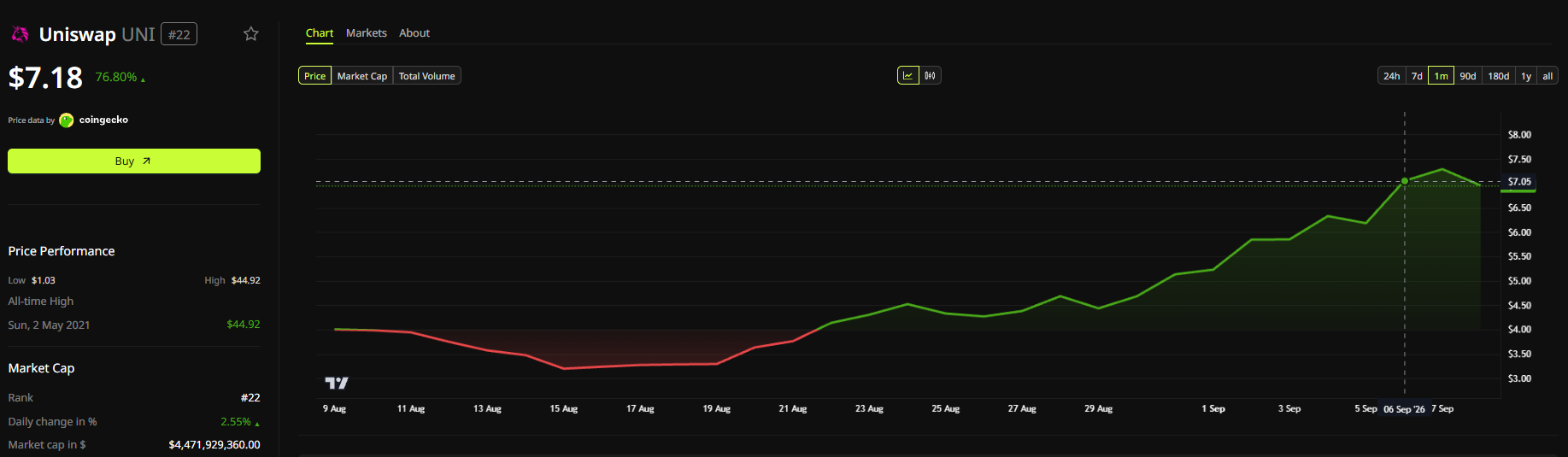
The Arthur Hayes UNI position topped $2 million on Monday. A wallet that Etherscan labels as his now holds 284,102 tokens after two days of buying.
Onchain Lens put the split at roughly 244,400 UNI on Sunday and 39,700 on Monday. No governance vote, no protocol upgrade, and no obvious market trigger accompanied either order.
Arthur Hayes UNI Buying Ran Across 2 Days
A tracker flagged the second tranche early Monday. It named an address that Etherscan labels “Arthur Hayes 4.”
Etherscan values that stake just above $2 million. The same address also carries roughly 8,013 Ethereum.
Hayes keeps large orders away from open markets. The same wallet has pulled Ethereum and stablecoins from Galaxy Digital, Cumberland and FalconX. That habit predates this trade.
In August he paid up to rebuild an Ether.fi position he had exited earlier in the year.
Hayes made the case himself on X. “Time to run it back turbo,” he posted, recalling the profits he made during the 2020 decentralized finance (DeFi) boom.
He also called UNI his favourite type of sushi. Uni is the Japanese name for sea urchin, a premium sushi topping.
He bought more the next day.
Uniswap Still Trades Far Below Its Record
UNI traded near $7.18 on Monday, up 2.55% over 24 hours. Its market value sits near $4.47 billion, which ranks the token 22nd.
The token has gained 76.8% in a month. However, it remains 84% below the record of $44.92 it set in May 2021.

Robinhood Chain drove most of that climb. One August fee breakdown put the Arbitrum Orbit network, launched in July, at 66% of everything Uniswap earned across 47 chains.
That gain came against a softer crypto market, which slipped 0.73% early Monday while US exchanges stayed shut for Labor Day.
Other large holders show mixed intent. Nansen-labelled whales lifted UNI holdings from 3.20 million to 3.46 million on September 2. However, the same wallets turned net sellers of $130,256 on decentralized exchanges, which reads as partial profit taking.
Uniswap captures more of that flow than any rival. Whether Hayes timed this entry well will depend on how September closes.
The post Arthur Hayes Buys $2 Million in Uniswap (UNI) Over Two Days With No Catalyst in Sight appeared first on BeInCrypto.
USD/JPY is caught in a genuine crossfire this week, and Thursday’s move said it all: the yen surged nearly 2% in a single session, touching a one-month high near 155.28, as traders simultaneously priced in higher odds of a Bank of Japan hike and stayed alert to fresh intervention risk following July’s joint US-Japan operation. BOJ board member Hajime Takata has even floated the possibility of outsized or back-to-back hikes to contain inflation, while Governor Ueda’s comments this week reinforced expectations of a move as early as this month.
The dollar side offers no clean counter-narrative either. August’s jobs report reshaped the Fed debate almost overnight, with payrolls coming in well above the 55,000 consensus, briefly reviving September hike bets that had cooled sharply after Fed Governor Waller signalled comfort with holding rates if inflation keeps easing. Markets are now split roughly 50–60% on a September move, leaving Chair Kevin Warsh’s guidance, alongside the CPI and PPI prints later this week, as the real tie-breakers.
The result: a yen gaining genuine independent strength from hawkish BOJ signals, against a dollar whose own rate path remains stuck between conflicting data, leaving USD/JPY’s next move hostage to whichever central bank commits first.
Technical Analysis of USD/JPY
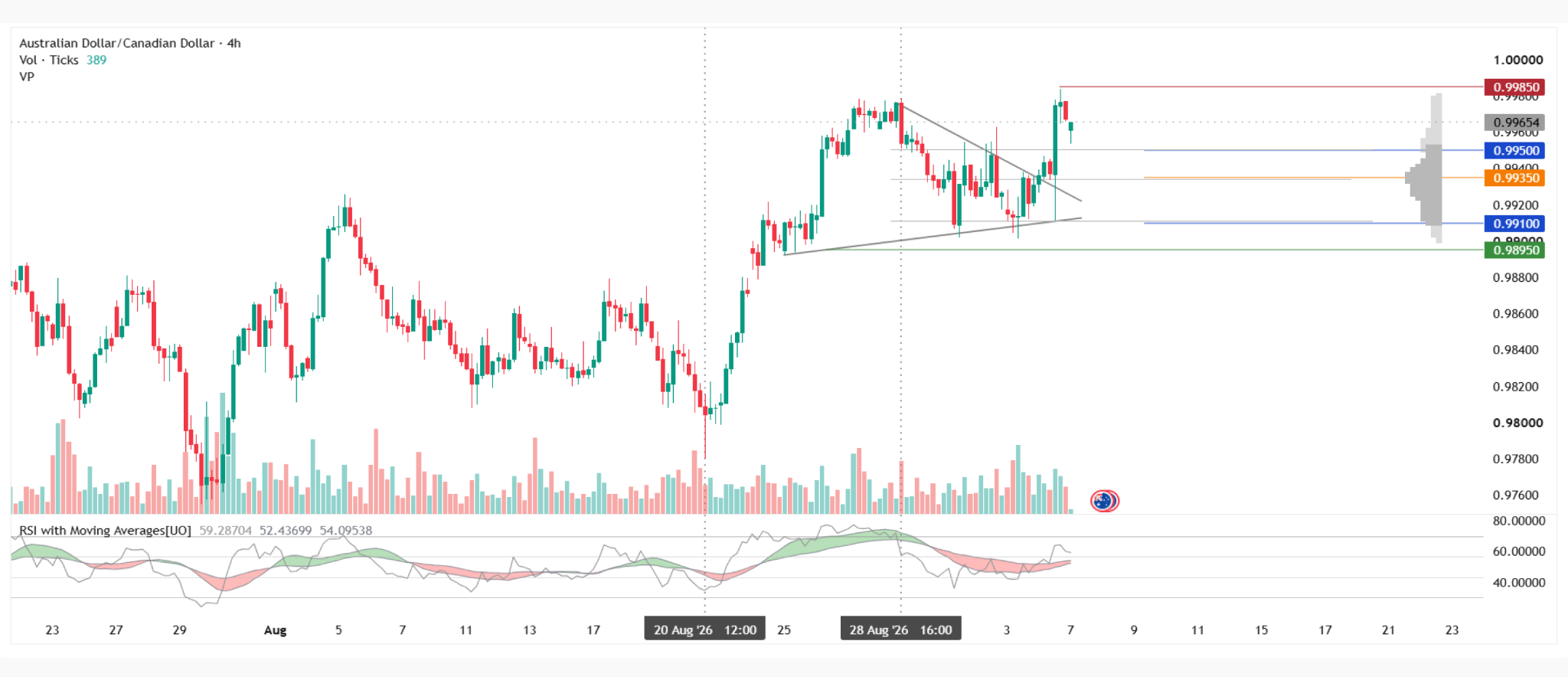
As the USD/JPY chart shows, the pair has broken sharply below its long-term ascending trendline following Thursday’s yen surge, with price now sitting right at the 155.00 support zone after decisively rejecting the confluence of the descending trendline, the 100 EMA and the resistance zone at the crucial 160.00 level.
Bullish Scenario
Should buyers defend the 155.00–156.00 support and reclaim the descending trendline, the path would open towards a retest of the 100-period EMA near 159.50, with a stronger recovery potentially targeting the 160.00–161.00 resistance zone that has capped rallies since May.
Bearish Scenario
Conversely, a confirmed break below the 155.00–156.00 support would expose the pair to the next crucial level, with a deeper slide risking a retest of the 152.00–153.00 zone, the low that anchored the entire 2026 uptrend.
With price having just lost its long-term ascending trendline and now testing critical support directly beneath the 100-period EMA, USD/JPY looks poised for a decisive move. Will the BoJ’s hawkish momentum drag the pair into a genuine trend reversal, or will the dollar find its footing first?
Trade over 50 forex markets 24 hours a day with FXOpen. Take advantage of low commissions, deep liquidity, and spreads from 0.0 pips (additional fees may apply). Open your FXOpen account now or learn more about trading forex with FXOpen.
This article represents the opinion of the Companies operating under the FXOpen brand only. It is not to be construed as an offer, solicitation, or recommendation with respect to products and services provided by the Companies operating under the FXOpen brand, nor is it to be considered financial advice.
Crypto World
Bitcoin Price Prediction: Crypto Experts Say Buying and Holding Bitcoin Easily Beats Trying to Time the Market
Today’s Bitcoin price prediction has BTC USD price trading at $79,500, down -0.5% on the day, sitting just below the psychologically loaded $80k line. That’s the boring part. The interesting part, the part most traders never check, is how much of any given year’s return comes from a handful of days most people miss while they’re busy “waiting for confirmation.”
Bitwise Europe’s Andre Dragosch calls bitcoin “a relatively boring asset” for exactly this reason: most days are sideways noise, and the real performance loads into a few violent sessions.
History backs him up: strip the 10 best days from 2019, and a +94% gain becomes a -40% loss. Do the same to 2011’s +1,474% run, and it collapses to essentially nothing.
That asymmetry matters more right now, with price consolidating in a tight band and every headline tempting traders to guess the next move. Sustained institutional ETF inflows suggest the smart money isn’t trying to time this chop at all.
Bitcoin Price Prediction: Can BTC Reclaim $80,000 This Week?
Bitcoin is trading near $79,134, down almost 1% over the past 24 hours after briefly testing levels above $80,500. Range-bound trading has dominated recent sessions, with the market unable to decisively clear resistance stacked between $80,000 and $82,000.
Reuters’ technical mapping flags $82,793 as the key Fibonacci resistance, with support levels layered at $75,674 and $71,781 beneath current price action.
The bull case: a reclaim of the $79,730–$79,920 cluster confirms the reversal attempt from the $77,000 zone and opens a path toward $81,000+.
The base case: continued consolidation between $77,165 and $80,000 while the market digests macro noise, including fallout from recent jobs data and shifting ETF demand.
The bear case: a clean break below $77,165 reactivates downside risk toward the mid-$70,000s.
Bitcoin Hyper Targets Early Mover Upside as Bitcoin Tests Key Levels
Holding through chop like this is precisely the strategy the data above rewards. Bitcoin’s gains cluster into days nobody can predict in advance, which is the whole argument against trying to trade around them.
But holding spot BTC near $80k also means accepting that a trillion-dollar-plus asset isn’t going to double overnight. That’s where earlier-stage infrastructure plays start pulling attention away from the majors.
Bitcoin Hyper (HYPER) is building the first Bitcoin Layer 2 with full SVM integration, smart contracts running at speeds it claims outpace Solana itself, settled through a Decentralized Canonical Bridge back to Bitcoin.
The presale token sits at $0.0136858, with $33,112,509.12 raised so far, and staking rewards are now live for early holders. The pitch is straightforward: Bitcoin’s security, none of its programmability limits.
Gain Access to New Bitcoin Layer 2 Early Here
Don’t Miss: The Hottest Meme Coin Opportunities Silently Climbing the Crypto Ranks in September 2026
This article is not financial advice. Crypto markets are volatile and presale tokens carry elevated risk. Always do independent research before investing.
The post Bitcoin Price Prediction: Crypto Experts Say Buying and Holding Bitcoin Easily Beats Trying to Time the Market appeared first on Cryptonews.

Shiba Inu gains Japan access, but no SHIB ETF exists

The 7 Most Influential Adventure Movies of the Last 25 Years

Ovary Function Post Menopause: Scientists Discover New Health Role After Menopause





-

 Fashion3 days ago
Weekend Open Thread: Beyond Yoga
-
 Crypto World3 days ago
Bitcoin price stalls near $82K as key resistance holds
-

 Politics3 days ago
Best Gaming Laptops, CPUs, TVs, And Keyboards To Upgrade Your Set Up For GTA VI
-

 Tech3 days ago
The Birds Outside, Drawn For You Automatically
-

 Crypto World3 days ago
IMF Says El Salvador’s Post-Review Bitcoin Purchases Used No Public Funds
-
 Crypto World3 days ago
U.S. added stronger than expected 162,000 jobs in August as labor market bounced back
-

 Sports3 days ago
Alexandre Pato consortium’s Northampton Town investment approved
-

 Sports3 days ago
Commanders’ Chig Okonkwo is a top breakout fantasy football candidate
-

 Sports3 days ago
Golden Eaglets Drawn in Group B for 2026 WAFU B U17 Championship
-
 Crypto World3 days ago
XRP price breaks falling channel as bulls target $1.53
-

 Politics3 days ago
A new European chapter for Gibraltar
-

 Politics3 days ago
How To Avoid Winter Colds: 4 Everyday Habits That Spread Germs, Says Pharmacist
-

 Politics3 days ago
The House | Bin the lectures, bring gossip and be ready to banter: how the new PM should prepare for his Trump encounter
-

 Crypto World3 days ago
From warning to listing: UK’s largest retail investment platform opens access to crypto ETNs
-

 Crypto World3 days ago
FinCEN flags $12.7B tied to Southeast Asia crypto investment scams
-

 Tech3 days ago
A Worthy Android Ereader, With Some Tradeoffs
-

 Tech3 days ago
How To Edit Claude’s Memory
-

 Crypto World3 days ago
Trezor Data Breach Impacts 67,000 More US Customers
-

 Politics3 days ago
33 Cosy Autumn Home Decor Ideas: Blankets, Pumpkin Decorations, And Candles
-

 Tech3 days ago
beyerdynamic AVENTHO Y Debuts at IFA 2026 and Makes Wireless Headphones Less Disposable
You must be logged in to post a comment Login