
Business
Thailand’s economy in July saw growth, boosted by the momentum of the global technology and AI cycle


Thai economy in July grew with support from global technology and AI cycle, calm from Middle East conflict, and government stimulus. Exports, tourism, consumption, manufacturing, and government spending showed positive trends. Key issues to watch are technology cycle sustainability, geopolitical conflicts, tourism recovery, government measures, and El Niño impact.
Summary
- The Thai economy in July expanded from the previous month, supported by the ongoing global technology and artificial intelligence (AI) cycle, the easing of disruptions from the Middle East conflict, and government stimulus measures.
o Merchandise exports continued to expand, driven primarily by electronics products. Meanwhile, private investment softened following strong growth in the previous period.
o Tourism receipts and foreign tourist arrivals increased, mainly supported by the gradual recovery in flight capacity, particularly on long-haul routes.
o Private consumption increased, driven by higher spending on services, supported by government measures and improved domestic tourism activity during the extended holiday period.
o Manufacturing and service activities improved, in line with higher merchandise exports and tourism activity.
o Government expenditure expanded, driven by higher disbursements by both the central government and state-owned enterprises.
- Headline inflation declined, mainly due to lower energy prices, while core inflation increased slightly, reflecting the gradual pass-through of higher costs to consumer prices.
- Key issues to monitor: (1) the sustainability of the global technology and artificial intelligence cycle, (2) developments in geopolitical conflicts and international trade protectionist policies, (3) the recovery of the tourism sector, (4) the impact of government measures, and (5) El Niño developments.
Source : https://www.bot.or.th/en/news-and-media/news/news-20260831.html

Business
More Than A Million Suncorp Customers To Be Moved To ANZ By June 2027, Bank Brand Retires In Big Shift

BRISBANE, Australia — More than 1.2 million customers, brokers and aggregators will be moved onto ANZ’s banking systems by June 2027, with the Suncorp Bank brand set to be officially retired as part of one of the largest banking mergers in Australian history.
In a joint statement released Monday, ANZ and Suncorp confirmed that customers currently banking with Suncorp would begin transitioning to ANZ’s network and branches, marking a significant step forward in ANZ’s $4.9 billion takeover of the Queensland-based bank, more than two years after the acquisition was first completed.
David Koch, a finance commentator with Compare the Market, described the scale of the transition as one of the most significant shifts in Australian banking history.
“[It] could impact everyone from general banking customers to those with mortgages and other types of loans,” Koch said, noting the change surpasses even Westpac’s high-profile acquisition of St George Bank back in 2008 in terms of overall significance for the sector.
Koch urged affected customers to use the transition as an opportunity to review their broader financial arrangements.
“Whenever there’s a major banking merger or migration, it’s a good reminder for customers to take stock of their finances,” Koch said, adding a caution that scammers could attempt to exploit the migration period by sending fake communications designed to trick customers into handing over sensitive financial information during the transition.
According to Mortgage Professional Australia, nothing is expected to change immediately for Suncorp Bank customers. Account holders will continue banking with Suncorp as normal until they are contacted individually ahead of their specific migration date, with the full transition expected to be completed by June 2027. Once individual accounts do move, customers will gain access to ANZ’s broader branch network, its digital banking platform and its fraud-monitoring technology, while, according to the companies, continuing to interact with many of the same local staff they currently deal with at Suncorp.
ANZ Queensland managing director and Suncorp Bank chief executive Bruce Rush emphasized that customer experience would remain a central focus throughout the transition.
“We are committed to making this move straightforward, safe and well-supported, and ensuring customers still see familiar faces and continue to be part of a bank that helps communities thrive,” Rush said.
Rush added that the shift would ultimately expand the resources available to former Suncorp customers.
“As customers join ANZ, they’ll have access to a larger network of banking specialists and branches, leading anti-fraud technology, specialist expertise and investments in the communities we serve,” Rush said.
The path to this stage of the merger has been a lengthy one. ANZ first agreed to acquire Suncorp Bank in July 2022, but the deal was initially blocked by the Australian Competition and Consumer Commission on competition grounds in 2023, before the Australian Competition Tribunal overturned that decision in February 2024. Treasurer Jim Chalmers subsequently approved the takeover later that year, subject to several key conditions. Those conditions included a commitment that neither ANZ nor Suncorp would close branches in regional areas for three years following the transaction, a guarantee of no net job losses across Australia tied to the deal over that same three-year period, and a requirement that ANZ make “best endeavours” to join Australia Post’s banking network.
ANZ formally completed the acquisition at the end of July 2024, bringing approximately 3,000 Suncorp Bank employees and 1.2 million customers into the ANZ Group. At the time, ANZ had licensed the Suncorp brand for an initial period of five to seven years, with the current announcement now setting a concrete timeline for the brand’s eventual retirement well within that window.
According to Business News Australia, the Suncorp migration is being pursued alongside a broader acceleration of ANZ’s digital banking strategy under chief executive Nuno Matos, who has pushed forward the integration timeline since taking the helm. ANZ has separately committed to extending its ANZ Plus digital banking platform to all of its roughly 8 million retail customers by September 2027, three years earlier than the bank had originally planned.
The Suncorp integration is unfolding alongside other significant organizational changes at ANZ. The bank has separately announced plans to cut 3,500 jobs, along with roughly 1,000 outsourced contractor roles, by September of next year, moves ANZ has framed as part of a broader effort to streamline its operations, even as it maintains its commitment to no net job losses specifically tied to the Suncorp acquisition itself.
Financial details of the integration process point to a costly, multiyear undertaking. ANZ estimated total integration costs at approximately 745 million Australian dollars as of November 2025, with roughly 300 million dollars already spent by that point and an additional 200 million dollars planned for each of fiscal 2026 and 2027. Those costs are tied to retiring duplicated banking systems, project spending, and consolidating property and head-office functions between the two organizations. Suncorp Bank itself generated 258 million Australian dollars in cash profit during the March half of this year, according to figures cited in reporting on the transition.
Customers affected by the migration are not able to choose their own transition date, delay the process, or opt out of the move to ANZ entirely, according to details of the transition timetable. Some Suncorp products may also carry different terms or features once matched with an equivalent ANZ product, a detail that industry observers have said creates a natural test of customer retention, since dissatisfied customers retain the option to refinance loans or move deposits elsewhere if they are unhappy with the replacement product they are offered.
Suncorp Bank has established a dedicated page on its website where customers can find additional information about the migration process, with the companies indicating that detailed instructions for individual account holders will be distributed later this year and into early 2027, ahead of the broader account migration expected to conclude by June of that year.
With the transition still more than a year away from completion, ANZ and Suncorp have both emphasized that the coming months will focus primarily on customer communication and preparation, as the two banks work through what remains one of the most significant banking mergers Australia has seen in nearly two decades, ultimately consolidating more than a million additional customers under the ANZ brand once the Suncorp name is formally retired.


I am a stock analyst with over 20 years of experience in quantitative research, financial modeling, and risk management. My focus is on equity valuation, market trends, and portfolio optimization to uncover high-growth investment opportunities. As a former Vice President at Barclays, I led teams in model validation, stress testing, and regulatory finance, developing a deep expertise in both fundamental and technical analysis. Alongside my research partner (also my wife), I co-author investment research, combining our complementary strengths to deliver high-quality, data-driven insights. Our approach blends rigorous risk management with a long-term perspective on value creation. We have a particular interest in macroeconomic trends, corporate earnings, and financial statement analysis, aiming to provide actionable ideas for investors seeking to outperform the market.
Analyst’s Disclosure: I/we have no stock, option or similar derivative position in any of the companies mentioned, and no plans to initiate any such positions within the next 72 hours. I wrote this article myself, and it expresses my own opinions. I am not receiving compensation for it (other than from Seeking Alpha). I have no business relationship with any company whose stock is mentioned in this article.
Seeking Alpha’s Disclosure: Past performance is no guarantee of future results. No recommendation or advice is being given as to whether any investment is suitable for a particular investor. Any views or opinions expressed above may not reflect those of Seeking Alpha as a whole. Seeking Alpha is not a licensed securities dealer, broker or US investment adviser or investment bank. Our analysts are third party authors that include both professional investors and individual investors who may not be licensed or certified by any institute or regulatory body.


“AWS Certified AI Practitioner Early Adopter”I am a DevOps Engineer for a major, wholly owned subsidiary of a large-cap Fortune 500. I have been the primary driver of Anthropic-based tooling in our company’s division, and have successfully pushed for the division-wide integration of tools like Claude Code via AWS Bedrock. I am currently spearheading the implementation of AI-infrastructure in our division.I am a true subject-matter expert on the actual buildout, deployment, and maintenance of AI tools and applications. I have increasingly deep knowledge on the science behind generative AI systems as a result of first-hand experience with machine learning algorithms, model training, and model deployment.I contribute to Seeking Alpha as an outlet to share my AI and machine learning insights through an investment-focused lens.Closely associated with LL InsightsPer TipRanks (6/26/25) – 2 Year Timeframe#716 out of 31,463 Financial Bloggers #1,222 out of 41,143 experts
Analyst’s Disclosure: I/we have no stock, option or similar derivative position in any of the companies mentioned, and no plans to initiate any such positions within the next 72 hours. I wrote this article myself, and it expresses my own opinions. I am not receiving compensation for it (other than from Seeking Alpha). I have no business relationship with any company whose stock is mentioned in this article.
Seeking Alpha’s Disclosure: Past performance is no guarantee of future results. No recommendation or advice is being given as to whether any investment is suitable for a particular investor. Any views or opinions expressed above may not reflect those of Seeking Alpha as a whole. Seeking Alpha is not a licensed securities dealer, broker or US investment adviser or investment bank. Our analysts are third party authors that include both professional investors and individual investors who may not be licensed or certified by any institute or regulatory body.

After securing triple-digit profits, where does smart capital go next?


MARSHALL, MINN. — The Schwan’s Co., a US-based subsidiary of South Korean food manufacturer CJ CheilJedang, has debuted Crunchtime pizza as part of its Red Baron brand.
The 10-inch, multi-serve microwavable pizza may be prepared in 5 minutes. The pizza is available in multiple varieties, including pepperoni, meat trio, and four cheese.
“At Red Baron, we’re focused on bringing consumers the flavors and convenience they’re looking for,” said Katie Hagen, senior marketing manager for Red Baron pizza. “Crunchtime pizza is an exciting addition to our lineup — giving families a new way to enjoy a full-size pizza in just 5 minutes.”
Red Baron Crunchtime pizza is available now at major retailers and grocers across the United States for a suggested retail price of $5.99.

AMRO’s September 2026 assessment following its Annual Consultation Visit reports that Thailand’s economy has performed better than expected despite Middle East-related energy shocks, driven by investment, fiscal spending, and technology exports. Growth remains uneven, with technology sectors expanding while traditional industries and SMEs stay weak, presenting an opportunity to broaden economic transformation.
Growth is projected at 2.4 percent for both 2026 and 2027, with inflation expected at 1.6 percent and 1.3 percent respectively. Risks remain tilted downward due to reliance on narrow growth drivers, potential AI/tech slowdowns, weak household incomes, and energy or weather shocks, though stronger demand could lift growth above baseline projections.
SINGAPORE, September 07, 2026 – Despite the Middle East energy shock, growth of the Thailand’s economy has been better than expected, supported by investment, fiscal spending and technology exports. However, growth remains uneven; technology-linked sectors have expanded strongly while traditional industries, particularly the SME segments, remain weak.
The current wave of FDI- and technology-driven investment offers Thailand a major opportunity to lift its growth potential and accelerate its economic transformation. Realizing this opportunity will require proactive measures to broaden its spillovers to productivity, employment and income across the economy.
This preliminary assessment follows AMRO’s Annual Consultation Visit to Thailand from August 24 to September 4, 2026. The mission was led by Group Head and Lead Economist Allen Ng, with AMRO Director/CEO Yasuto Watanabe and Chief Economist Dong He joining policy meetings with the authorities.
Economic developments and outlook
“Growth is projected at 2.4 percent in both 2026 and 2027, supported by continued private investment, fiscal spending and technology-related exports,” said Ng. “The priority now is to harness the current investment wave to drive broader economic transformation by deepening domestic linkages, boosting productivity, creating jobs, and raising incomes.”
FDI-backed projects, particularly in digital infrastructure and electronics, continued to strengthen the investment cycle in the first half of 2026. The investment pipeline could support medium-term growth, but the benefits have yet to spread widely across domestic firms and workers.
Headline inflation is projected at 1.6 percent in 2026 and 1.3 percent in 2027. Price pressures should remain contained as the energy price increase following the Middle East conflict recedes, although cost pass-through and food prices warrant monitoring.
Risks and vulnerabilities
Risks remain tilted to the downside, as reliance on a narrow set of drivers leaves the outlook vulnerable to external and domestic shocks. A sharp slowdown in global AI and technology-related activity could weaken exports, FDI and investment, while further weakness in household incomes and vulnerable sectors could become self-reinforcing. Energy, trade and weather shocks would pose additional headwinds.
On the upside, stronger external demand and investment activity, alongside wider domestic spillovers could lift growth above the baseline.
Source : Thailand: From Investment-Led Growth to Broad-Based Transformation – ASEAN+3 Macroeconomic Research Office – AMRO ASIA

Vice President JD Vance blames high gas prices on Iranian attacks on commercial shipping and urges the Federal Reserve to lower interest rates. Vance emphasizes energy dominance and the need to protect global shipping lines.
Just as the summer travel season comes to a close, Americans are facing the most expensive Labor Day gas prices on record, extending the squeeze on household budgets for millions hitting the road over the holiday weekend.
AAA says nearly 40 million Americans are expected to drive over the holiday, but they’ll be paying unprecedented prices at the pump.
The national average for regular gasoline reached $4.14 per gallon on Monday, up about 4 cents from last week and nearly 95 cents higher than a year ago.
FORGET GASOLINE: THIS OVERLOOKED FUEL COULD RAISE THE PRICE OF NEARLY EVERYTHING YOU BUY

Americans are facing the highest Labor Day gas prices on record as millions travel over the holiday weekend. (Kevin Carter/Getty Images / Getty Images)
If that average holds, it will shatter the previous Labor Day record of $3.82, set in 2012, and mark the first time the national average has exceeded $4 per gallon during the holiday weekend.
The unusually high prices come even though gasoline demand typically falls after the peak summer driving season.
Normally, motorists begin to see relief at the pump after Labor Day as vacation travel winds down and fuel demand eases. This year, however, elevated crude oil prices tied to the conflict involving Iran have largely offset that seasonal trend.
Fighting in the region has raised concerns about disruptions to oil shipments through the Strait of Hormuz, a narrow waterway between Iran and Oman that carries roughly one-fifth of the world’s crude oil.
Those concerns have kept crude oil prices near $90 a barrel, preventing the seasonal decline in gas prices motorists usually see after Labor Day.
TRUMP’S AMBITIOUS ENERGY BET COULD BE A WINNING HAND AS THE WORLD BURNS MORE OIL, GAS THAN EVER

A satellite image shows the Strait of Hormuz, a key maritime passage connecting the Persian Gulf to the Gulf of Oman, vital for global energy supply. (Amanda Macias/Fox News Digital / Getty Images)
A satellite view of the Strait of Hormuz, a critical choke point for global energy supply, connecting the Persian Gulf to the Gulf of Oman. (Gallo Images/Orbital Horizon/Copernicus Sentinel Data 2025/Amanda Macias/Fox News Digital)
While the national average is $4.14, prices vary significantly by state.
California continues to have the nation’s highest average gas prices at $5.78 per gallon, followed by Washington at $5.47, Hawaii at $5.41, Oregon at $4.98, Alaska at $4.96, Nevada at $4.91, Idaho at $4.62, Arizona at $4.52, Utah at $4.42 and Montana at $4.38.

Concerns about global oil supplies have kept gasoline prices elevated, making this the most expensive Labor Day on record at the pump. (Brandon Bell/Getty Images / Getty Images)
At the other end of the spectrum, Indiana has the nation’s cheapest gas at $3.44 per gallon.
It is followed by Texas at $3.69, Oklahoma and Mississippi at $3.71, Louisiana at $3.75, Arkansas at $3.77, South Carolina and Kansas at $3.78, Alabama at $3.79 and Wisconsin at $3.80.
GET FOX BUSINESS ON THE GO BY CLICKING HERE
Whether motorists finally see relief in the weeks ahead will depend largely on crude oil prices. If tensions in the Middle East ease and oil prices retreat, drivers could begin to see the seasonal decline in gasoline prices that typically follows Labor Day.
FOX Business Ashley Webster and Liz Claman analyze Nvidias blowout earnings report and the broader artificial intelligence sector.
The Bureau of Labor Statistics (BLS) recently released a report projecting how the U.S. workforce will grow from 2025 to 2035 and what professions will see the largest increases in jobs as the economy evolves.
Employment projections from the BLS estimate that the U.S. economy will add a total of 5.9 million jobs from 2025 to 2035, lifting total employment from 170.3 million to 176.2 million in that period. That would amount to a 3.5% growth rate, which is slower than the 10.9% growth rate from 2015 to 2025.
The report also detailed what it projects as the 10 fastest-growing occupations from 2025 to 2035, with the list dominated by roles in the healthcare industry, as well as some in the energy sector.
“Because the likelihood of experiencing health complications increases with age, the aging population is expected to boost demand for a wide variety of healthcare and social services, including home health and personal care services,” the BLS wrote.
PRIVATE SECTOR ADDED 38,000 JOBS IN AUGUST, BELOW EXPECTATIONS, ADP SAYS

Nurse practitioners are projected as the fastest-growing occupation over the next 10 years. (iStock)
Nurse practitioners were at the top of the list, with the profession’s employment expected to grow by 41% over the 2025 to 2035 period. That growth rate represents an estimated gain of about 137,800 nurse practitioner jobs.
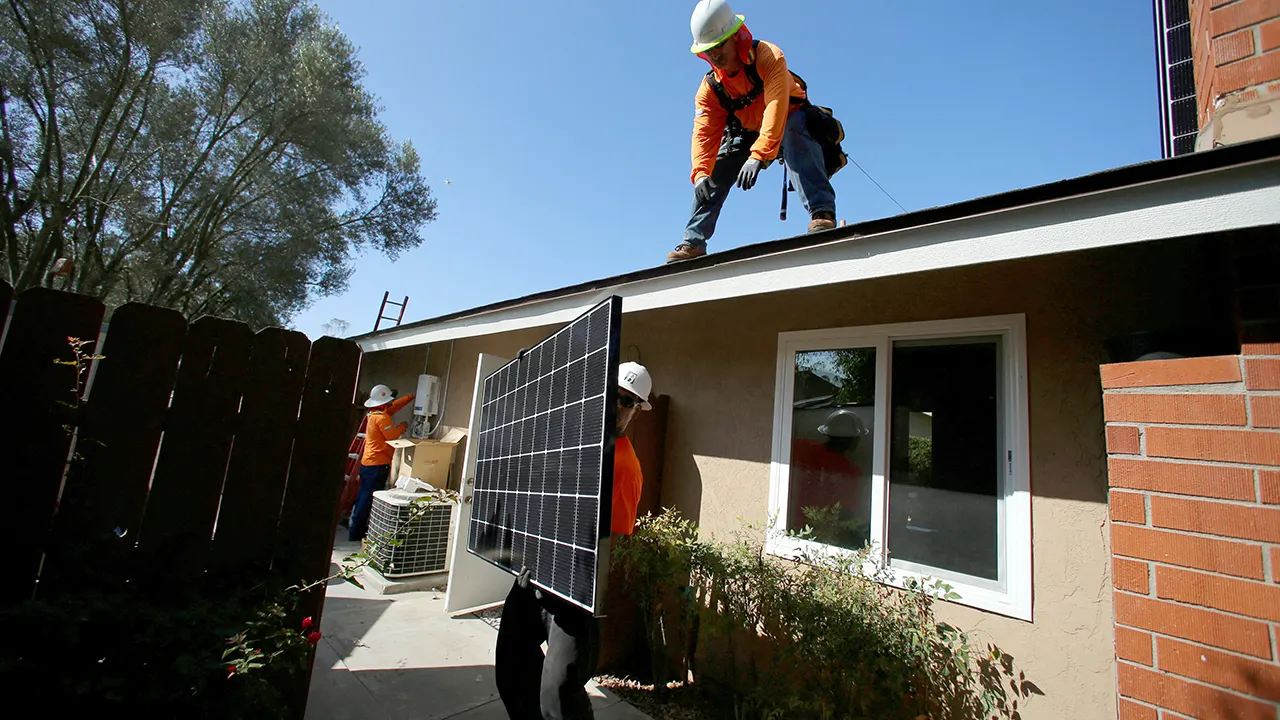
The second-fastest growing occupation in the report is solar photovoltaic panel installer, with the role expected to grow 36.5%, or about 11,300 jobs added through 2035.
BLS noted that demand for electricity “is expected to grow significantly” over that period, boosting demand for roles like solar panel installers and another role ranked further down the list.
LOWE’S LAUNCHES MAJOR EFFORT TO HELP CLOSE AMERICA’S SKILLED TRADES GAP
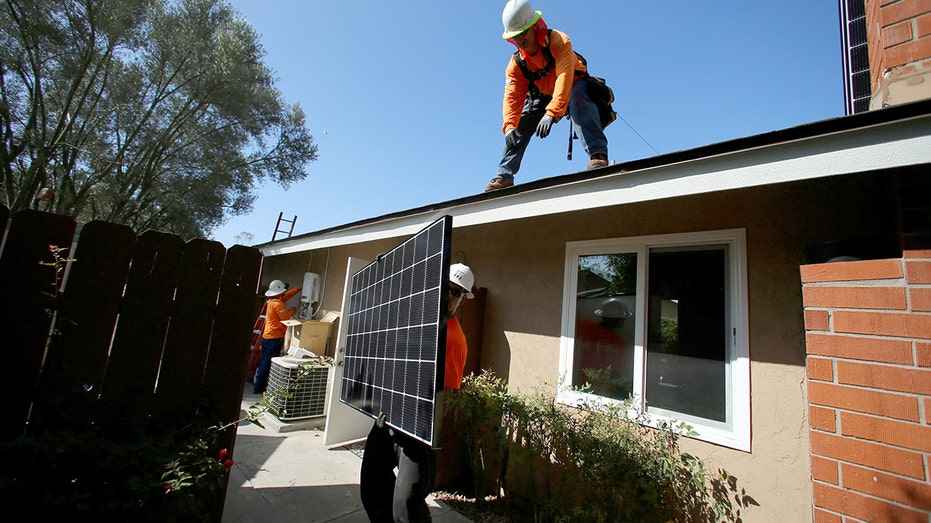
Solar panel installers are projected as the second-fastest growing role in percentage terms in the BLS report. (Reuters/Mike Blake/File Photo)
Data scientists ranked third, with employment growing by 34.6%, or 95,400 jobs, while wind turbine technicians were projected as the fourth-fastest growing role with a growth rate of 29.5%, or 3,500 jobs in the 2025-2035 period.
Medical and health services manager roles were projected to grow by 24.2%, with the largest nominal employment growth of 155,100 jobs added in that time.
Physical therapist assistants were the sixth-fastest growing role in the BLS report, with projected growth of 23%, or 26,200 jobs, through 2035.
BILL GATES OUTLINES THE STAKES OF THE AI ERA: ‘GREATEST EQUALIZER… OR WORST SOURCE OF INJUSTICE’

Wind turbine technicians ranked as the fourth-fastest growing job in the BLS projections. (Jim West/UCG/Universal Images Group via Getty Images)
Continuing the trend of healthcare roles dominating the 10 fastest-growing roles over the next decade, psychiatric technicians ranked seventh on the list at a 22.3% growth rate and 36,000 jobs added in the next decade.
The three roles that rounded out the list of the 10 fastest growing occupations from 2025 to 2035 were computer and information research scientists, with growth of 21.8% and 8,400 jobs; occupational therapy assistants, with a 21.5% growth rate and 11,200 jobs; and ophthalmic medical technicians, with a 21.4% growth rate and 15,500 jobs.

Gold edges down as strong payrolls revive Fed hike bets

Jaguar Land Rover’s decision to shed 4,000 jobs comes after the carmaker has travelled down a very rough road.
The company has seen sales fall in all of its major markets and it has been dealing with the consequences of a devastating cyber-attack that paralysed production last year.
At the same time, it has been investing billions in an effort to reinvent itself for an electric future, in which it is likely to face intense competition from aggressively expanding Chinese brands.
Executives have now decided a major overhaul is needed.
One of the main concerns for JLR is China. Not so long ago, it was seen as a land of opportunity for western carmakers, where the rapidly expanding middle classes seemed to have an inexhaustible appetite for upmarket foreign-badged vehicles.
JLR, along with other European brands such as BMW, Audi and Mercedes Benz, was all too willing to meet that demand, at a time when the European market was extremely crowded and growth hard to find.
Today, things are very different. The past decade has seen rapid growth among domestic Chinese carmakers, firmly backed by their government, which has been determined to make the country a leading player in electric vehicles.
This has created an environment of intense competition, in which local manufacturers have rapidly raised the bar in terms of technology and development speed.
That, combined with a slowdown in the Chinese economy, has made China a much more difficult market for European brands.
JLR’s sales in China fell from a high water mark of 146,000 cars in 2017 to just 62,400 in the last financial year. At the same time, competition and a new luxury car tax have hit profit margins.
All of this has resulted in a sharp fall in revenues from the region. JLR is not alone in this; the Volkswagen Group, for example, has also seen its earnings in China pummeled – a major factor in its decision to axe 100,000 jobs by the end of the decade.
The state of the Chinese market has had another consequence for European carmakers, including JLR. Faced with cut-throat competition, they have been flexing their muscles abroad.
Companies such as BYD and Chery have been rapidly gaining market share in the UK and Europe – with the Jaecoo 7 the third best-selling car in this country over the first half of the year.
Analysts say traditional brands will face an uphill struggle to compete with new rivals, who can sell cars more cheaply and develop them more quickly.

Explained: How Poo Was Key In The Cambrian Explosion

Microsoft promises faster Windows 11 boot times and better performance on 8GB PCs

Man arrested after fleeing scene of Derry crash





-

 Fashion3 days ago
Weekend Open Thread: Beyond Yoga
-
 Crypto World3 days ago
Bitcoin price stalls near $82K as key resistance holds
-

 Politics3 days ago
Best Gaming Laptops, CPUs, TVs, And Keyboards To Upgrade Your Set Up For GTA VI
-

 Tech3 days ago
The Birds Outside, Drawn For You Automatically
-

 Crypto World3 days ago
IMF Says El Salvador’s Post-Review Bitcoin Purchases Used No Public Funds
-
 Crypto World3 days ago
U.S. added stronger than expected 162,000 jobs in August as labor market bounced back
-

 Sports3 days ago
Alexandre Pato consortium’s Northampton Town investment approved
-

 Sports3 days ago
Commanders’ Chig Okonkwo is a top breakout fantasy football candidate
-

 Sports3 days ago
Golden Eaglets Drawn in Group B for 2026 WAFU B U17 Championship
-
 Crypto World3 days ago
XRP price breaks falling channel as bulls target $1.53
-

 Politics3 days ago
A new European chapter for Gibraltar
-

 Politics3 days ago
How To Avoid Winter Colds: 4 Everyday Habits That Spread Germs, Says Pharmacist
-

 Politics3 days ago
The House | Bin the lectures, bring gossip and be ready to banter: how the new PM should prepare for his Trump encounter
-

 Crypto World3 days ago
From warning to listing: UK’s largest retail investment platform opens access to crypto ETNs
-

 Crypto World3 days ago
FinCEN flags $12.7B tied to Southeast Asia crypto investment scams
-

 Tech3 days ago
A Worthy Android Ereader, With Some Tradeoffs
-

 Crypto World3 days ago
Trezor Data Breach Impacts 67,000 More US Customers
-

 Tech3 days ago
How To Edit Claude’s Memory
-

 Politics3 days ago
33 Cosy Autumn Home Decor Ideas: Blankets, Pumpkin Decorations, And Candles
-

 Tech3 days ago
beyerdynamic AVENTHO Y Debuts at IFA 2026 and Makes Wireless Headphones Less Disposable
You must be logged in to post a comment Login