







Connect with us

Business

Jaguar Land Rover: Why the carmaker is seeking an overhaul

Published

on

A woman with short reddish hair with a neutral expression faces the camera while sitting a room with black and brown wallpaper.

Jaguar Land Rover’s decision to shed 4,000 jobs comes after the carmaker has travelled down a very rough road.

The company has seen sales fall in all of its major markets and it has been dealing with the consequences of a devastating cyber-attack that paralysed production last year.

At the same time, it has been investing billions in an effort to reinvent itself for an electric future, in which it is likely to face intense competition from aggressively expanding Chinese brands.

Executives have now decided a major overhaul is needed.

Advertisement

One of the main concerns for JLR is China. Not so long ago, it was seen as a land of opportunity for western carmakers, where the rapidly expanding middle classes seemed to have an inexhaustible appetite for upmarket foreign-badged vehicles.

JLR, along with other European brands such as BMW, Audi and Mercedes Benz, was all too willing to meet that demand, at a time when the European market was extremely crowded and growth hard to find.

Today, things are very different. The past decade has seen rapid growth among domestic Chinese carmakers, firmly backed by their government, which has been determined to make the country a leading player in electric vehicles.

This has created an environment of intense competition, in which local manufacturers have rapidly raised the bar in terms of technology and development speed.

Advertisement

That, combined with a slowdown in the Chinese economy, has made China a much more difficult market for European brands.

JLR’s sales in China fell from a high water mark of 146,000 cars in 2017 to just 62,400 in the last financial year. At the same time, competition and a new luxury car tax have hit profit margins.

All of this has resulted in a sharp fall in revenues from the region. JLR is not alone in this; the Volkswagen Group, for example, has also seen its earnings in China pummeled – a major factor in its decision to axe 100,000 jobs by the end of the decade.

The state of the Chinese market has had another consequence for European carmakers, including JLR. Faced with cut-throat competition, they have been flexing their muscles abroad.

Advertisement

Companies such as BYD and Chery have been rapidly gaining market share in the UK and Europe – with the Jaecoo 7 the third best-selling car in this country over the first half of the year.

Analysts say traditional brands will face an uphill struggle to compete with new rivals, who can sell cars more cheaply and develop them more quickly.

Continue Reading
Click to comment

You must be logged in to post a comment Login

Leave a Reply

Business

Thailand: Shifting from Investment-Driven Growth to Inclusive Transformation

Published

on

Thailand: Shifting from Investment-Driven Growth to Inclusive Transformation

AMRO’s September 2026 assessment following its Annual Consultation Visit reports that Thailand’s economy has performed better than expected despite Middle East-related energy shocks, driven by investment, fiscal spending, and technology exports. Growth remains uneven, with technology sectors expanding while traditional industries and SMEs stay weak, presenting an opportunity to broaden economic transformation.

Growth is projected at 2.4 percent for both 2026 and 2027, with inflation expected at 1.6 percent and 1.3 percent respectively. Risks remain tilted downward due to reliance on narrow growth drivers, potential AI/tech slowdowns, weak household incomes, and energy or weather shocks, though stronger demand could lift growth above baseline projections.

SINGAPORE, September 07, 2026 – Despite the Middle East energy shock, growth of the Thailand’s economy has been better than expected, supported by investment, fiscal spending and technology exports. However, growth remains uneven; technology-linked sectors have expanded strongly while traditional industries, particularly the SME segments, remain weak.

The current wave of FDI- and technology-driven investment offers Thailand a major opportunity to lift its growth potential and accelerate its economic transformation. Realizing this opportunity will require proactive measures to broaden its spillovers to productivity, employment and income across the economy.

Advertisement

This preliminary assessment follows AMRO’s Annual Consultation Visit to Thailand from August 24 to September 4, 2026. The mission was led by Group Head and Lead Economist Allen Ng, with AMRO Director/CEO Yasuto Watanabe and Chief Economist Dong He joining policy meetings with the authorities.

Economic developments and outlook

“Growth is projected at 2.4 percent in both 2026 and 2027, supported by continued private investment, fiscal spending and technology-related exports,” said Ng. “The priority now is to harness the current investment wave to drive broader economic transformation by deepening domestic linkages, boosting productivity, creating jobs, and raising incomes.”

FDI-backed projects, particularly in digital infrastructure and electronics, continued to strengthen the investment cycle in the first half of 2026. The investment pipeline could support medium-term growth, but the benefits have yet to spread widely across domestic firms and workers.

Advertisement

Headline inflation is projected at 1.6 percent in 2026 and 1.3 percent in 2027. Price pressures should remain contained as the energy price increase following the Middle East conflict recedes, although cost pass-through and food prices warrant monitoring.

Risks and vulnerabilities

Risks remain tilted to the downside, as reliance on a narrow set of drivers leaves the outlook vulnerable to external and domestic shocks. A sharp slowdown in global AI and technology-related activity could weaken exports, FDI and investment, while further weakness in household incomes and vulnerable sectors could become self-reinforcing. Energy, trade and weather shocks would pose additional headwinds.

On the upside, stronger external demand and investment activity, alongside wider domestic spillovers could lift growth above the baseline.

Advertisement

Source : Thailand: From Investment-Led Growth to Broad-Based Transformation – ASEAN+3 Macroeconomic Research Office – AMRO ASIA

Continue Reading

Business

Labor Day gas prices hit record $4.14 per gallon nationwide, AAA says

Published

on

Labor Day gas prices hit record $4.14 per gallon nationwide, AAA says

Just as the summer travel season comes to a close, Americans are facing the most expensive Labor Day gas prices on record, extending the squeeze on household budgets for millions hitting the road over the holiday weekend.

AAA says nearly 40 million Americans are expected to drive over the holiday, but they’ll be paying unprecedented prices at the pump.

Advertisement

The national average for regular gasoline reached $4.14 per gallon on Monday, up about 4 cents from last week and nearly 95 cents higher than a year ago.

FORGET GASOLINE: THIS OVERLOOKED FUEL COULD RAISE THE PRICE OF NEARLY EVERYTHING YOU BUY

Cars are seen in traffic in California

Americans are facing the highest Labor Day gas prices on record as millions travel over the holiday weekend. (Kevin Carter/Getty Images / Getty Images)

If that average holds, it will shatter the previous Labor Day record of $3.82, set in 2012, and mark the first time the national average has exceeded $4 per gallon during the holiday weekend.

The unusually high prices come even though gasoline demand typically falls after the peak summer driving season.

Advertisement

Normally, motorists begin to see relief at the pump after Labor Day as vacation travel winds down and fuel demand eases. This year, however, elevated crude oil prices tied to the conflict involving Iran have largely offset that seasonal trend.

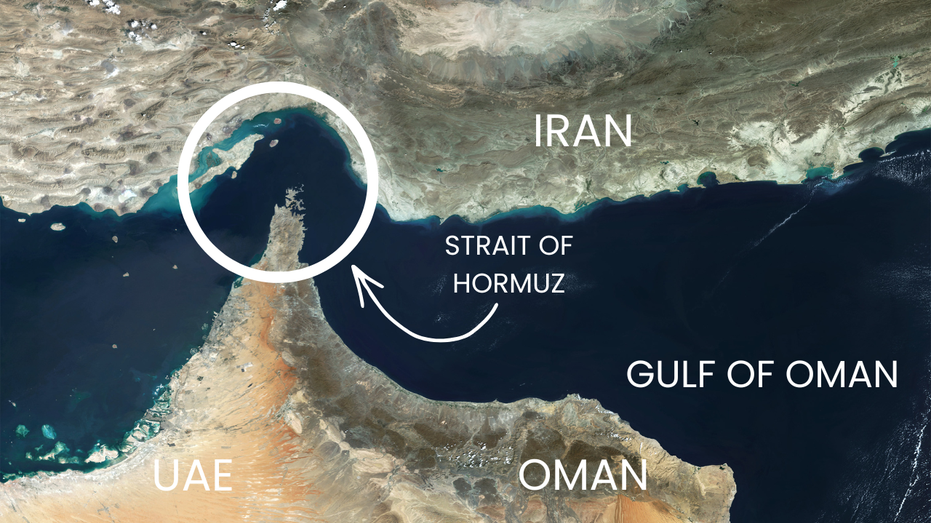
Fighting in the region has raised concerns about disruptions to oil shipments through the Strait of Hormuz, a narrow waterway between Iran and Oman that carries roughly one-fifth of the world’s crude oil.

Those concerns have kept crude oil prices near $90 a barrel, preventing the seasonal decline in gas prices motorists usually see after Labor Day.

TRUMP’S AMBITIOUS ENERGY BET COULD BE A WINNING HAND AS THE WORLD BURNS MORE OIL, GAS THAN EVER

Advertisement
map of strait of hormuz

A satellite image shows the Strait of Hormuz, a key maritime passage connecting the Persian Gulf to the Gulf of Oman, vital for global energy supply. (Amanda Macias/Fox News Digital / Getty Images)

A satellite view of the Strait of Hormuz, a critical choke point for global energy supply, connecting the Persian Gulf to the Gulf of Oman. (Gallo Images/Orbital Horizon/Copernicus Sentinel Data 2025/Amanda Macias/Fox News Digital)

While the national average is $4.14, prices vary significantly by state.

California continues to have the nation’s highest average gas prices at $5.78 per gallon, followed by Washington at $5.47, Hawaii at $5.41, Oregon at $4.98, Alaska at $4.96, Nevada at $4.91, Idaho at $4.62, Arizona at $4.52, Utah at $4.42 and Montana at $4.38.

BESSENT PREDICTS OIL PRICES COULD DROP AS LOW AS $40 AFTER IRAN CONFLICT ENDS AND SUPPLY FLOODS MARKET

Advertisement
Person's hand pulls for gas station pump

Concerns about global oil supplies have kept gasoline prices elevated, making this the most expensive Labor Day on record at the pump. (Brandon Bell/Getty Images / Getty Images)

At the other end of the spectrum, Indiana has the nation’s cheapest gas at $3.44 per gallon. 

It is followed by Texas at $3.69, Oklahoma and Mississippi at $3.71, Louisiana at $3.75, Arkansas at $3.77, South Carolina and Kansas at $3.78, Alabama at $3.79 and Wisconsin at $3.80.

GET FOX BUSINESS ON THE GO BY CLICKING HERE

Whether motorists finally see relief in the weeks ahead will depend largely on crude oil prices. If tensions in the Middle East ease and oil prices retreat, drivers could begin to see the seasonal decline in gasoline prices that typically follows Labor Day.

Advertisement
Continue Reading

Business

BLS projects nurse practitioners as the fastest-growing job by 41%

Published

on

BLS projects nurse practitioners as the fastest-growing job by 41%

The Bureau of Labor Statistics (BLS) recently released a report projecting how the U.S. workforce will grow from 2025 to 2035 and what professions will see the largest increases in jobs as the economy evolves.

Employment projections from the BLS estimate that the U.S. economy will add a total of 5.9 million jobs from 2025 to 2035, lifting total employment from 170.3 million to 176.2 million in that period. That would amount to a 3.5% growth rate, which is slower than the 10.9% growth rate from 2015 to 2025.

Advertisement

The report also detailed what it projects as the 10 fastest-growing occupations from 2025 to 2035, with the list dominated by roles in the healthcare industry, as well as some in the energy sector.

“Because the likelihood of experiencing health complications increases with age, the aging population is expected to boost demand for a wide variety of healthcare and social services, including home health and personal care services,” the BLS wrote.

PRIVATE SECTOR ADDED 38,000 JOBS IN AUGUST, BELOW EXPECTATIONS, ADP SAYS

Nurse elderly patient hospital

Nurse practitioners are projected as the fastest-growing occupation over the next 10 years. (iStock)

Nurse practitioners were at the top of the list, with the profession’s employment expected to grow by 41% over the 2025 to 2035 period. That growth rate represents an estimated gain of about 137,800 nurse practitioner jobs.

Advertisement

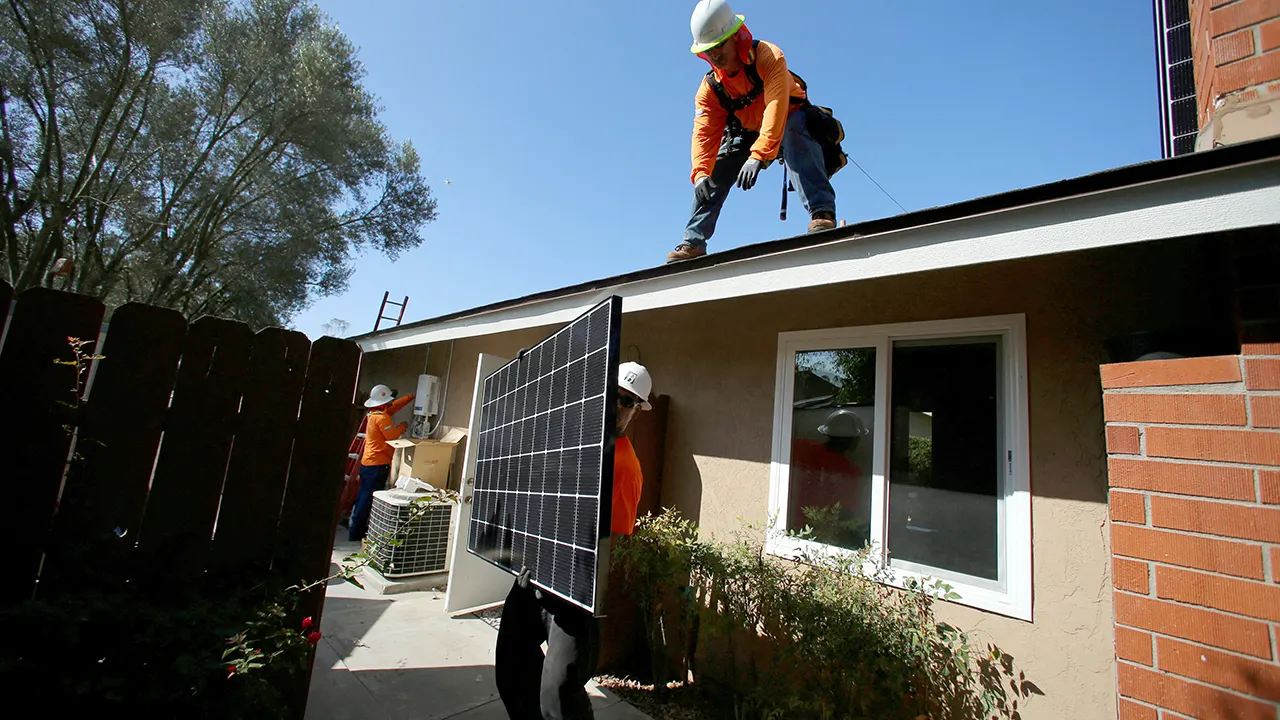
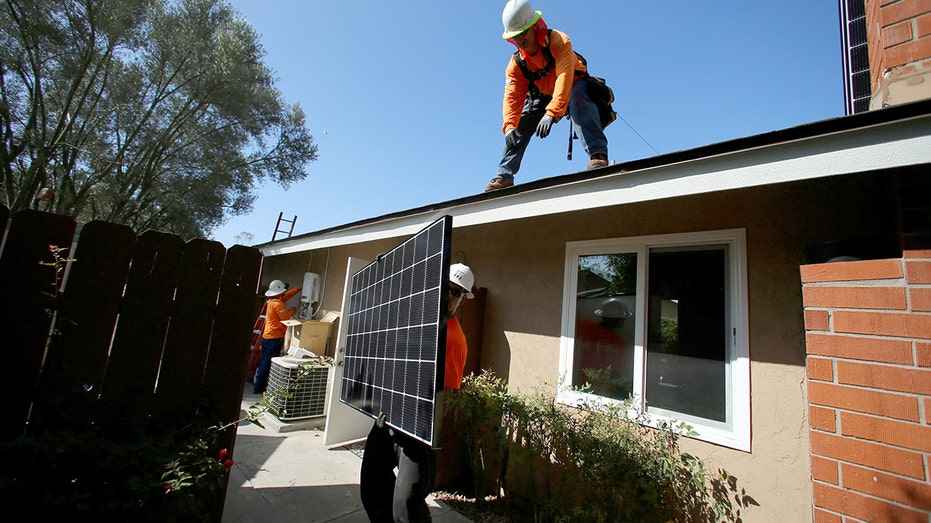
The second-fastest growing occupation in the report is solar photovoltaic panel installer, with the role expected to grow 36.5%, or about 11,300 jobs added through 2035.

BLS noted that demand for electricity “is expected to grow significantly” over that period, boosting demand for roles like solar panel installers and another role ranked further down the list.

LOWE’S LAUNCHES MAJOR EFFORT TO HELP CLOSE AMERICA’S SKILLED TRADES GAP

Installing panels

Solar panel installers are projected as the second-fastest growing role in percentage terms in the BLS report. (Reuters/Mike Blake/File Photo)

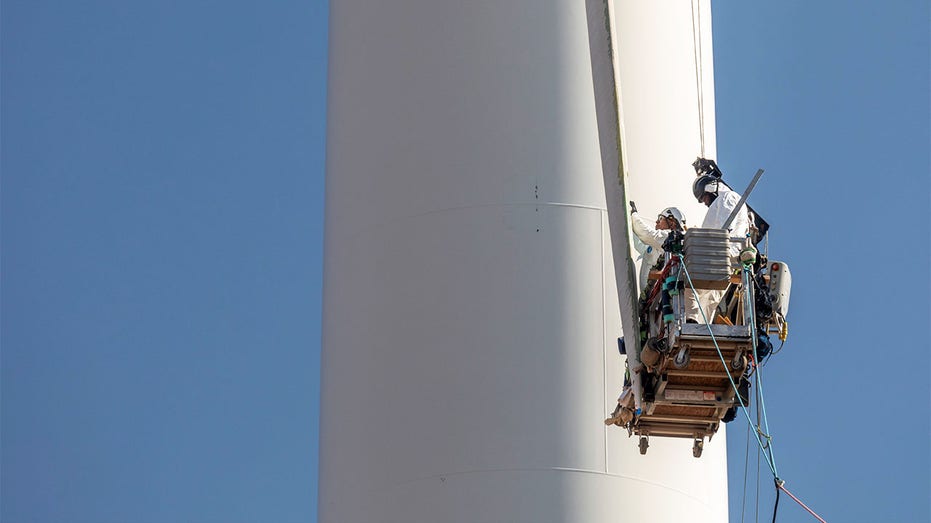
Data scientists ranked third, with employment growing by 34.6%, or 95,400 jobs, while wind turbine technicians were projected as the fourth-fastest growing role with a growth rate of 29.5%, or 3,500 jobs in the 2025-2035 period.

Advertisement

Medical and health services manager roles were projected to grow by 24.2%, with the largest nominal employment growth of 155,100 jobs added in that time.

Physical therapist assistants were the sixth-fastest growing role in the BLS report, with projected growth of 23%, or 26,200 jobs, through 2035.

BILL GATES OUTLINES THE STAKES OF THE AI ERA: ‘GREATEST EQUALIZER… OR WORST SOURCE OF INJUSTICE’

minnesota wind turbines

Wind turbine technicians ranked as the fourth-fastest growing job in the BLS projections. (Jim West/UCG/Universal Images Group via Getty Images)

Continuing the trend of healthcare roles dominating the 10 fastest-growing roles over the next decade, psychiatric technicians ranked seventh on the list at a 22.3% growth rate and 36,000 jobs added in the next decade.

Advertisement

The three roles that rounded out the list of the 10 fastest growing occupations from 2025 to 2035 were computer and information research scientists, with growth of 21.8% and 8,400 jobs; occupational therapy assistants, with a 21.5% growth rate and 11,200 jobs; and ophthalmic medical technicians, with a 21.4% growth rate and 15,500 jobs.

GET FOX BUSINESS ON THE GO BY CLICKING HERE

Continue Reading

Business

Thailand’s economy in July saw growth, boosted by the momentum of the global technology and AI cycle

Published

on

Thailand’s economy in July saw growth, boosted by the momentum of the global technology and AI cycle

Thai economy in July grew with support from global technology and AI cycle, calm from Middle East conflict, and government stimulus. Exports, tourism, consumption, manufacturing, and government spending showed positive trends. Key issues to watch are technology cycle sustainability, geopolitical conflicts, tourism recovery, government measures, and El Niño impact.


Summary

  • The Thai economy in July expanded from the previous month, supported by the ongoing global technology and artificial intelligence (AI) cycle, the easing of disruptions from the Middle East conflict, and government stimulus measures.

    o Merchandise exports continued to expand, driven primarily by electronics products. Meanwhile, private investment softened following strong growth in the previous period.

    o Tourism receipts and foreign tourist arrivals increased, mainly supported by the gradual recovery in flight capacity, particularly on long-haul routes.

    o Private consumption increased, driven by higher spending on services, supported by government measures and improved domestic tourism activity during the extended holiday period.

    Advertisement

    o Manufacturing and service activities improved, in line with higher merchandise exports and tourism activity.

    o Government expenditure expanded, driven by higher disbursements by both the central government and state-owned enterprises.

  • Headline inflation declined, mainly due to lower energy prices, while core inflation increased slightly, reflecting the gradual pass-through of higher costs to consumer prices.
  • Key issues to monitor: (1) the sustainability of the global technology and artificial intelligence cycle, (2) developments in geopolitical conflicts and international trade protectionist policies, (3) the recovery of the tourism sector, (4) the impact of government measures, and (5) El Niño developments.

Source : https://www.bot.or.th/en/news-and-media/news/news-20260831.html

Continue Reading

Business

Gold edges down as strong payrolls revive Fed hike bets

Published

on


Gold edges down as strong payrolls revive Fed hike bets

Continue Reading

Business

Tech Rally Surges in Asia as Kospi Soars

Published

on

Tech Rally Surges in Asia as Kospi Soars

Tech Rally Surges in Asia as Kospi Soars

Continue Reading

Business

Tech firm IQE planning move to main London Stock Exchange

Published

on

Business Live

The Cardiff headquartered firm has reported strong revenues for the first half of this year

IQE(Image: RICHARD DAVIES 2022)

One of Wales’ leading tech firms, IQE, have reported a more than 40% rise in half year revenues while reaffirming a positive trading outlook in part supported by strong growth in AI and data centre related markets.

The Cardiff headquartered firm, a leading global supplier of compound semiconductor wafer products and advanced material solution, said that trading had exceeded management expectations.

Advertisement

It has also confirmed it plans to move from the Alternative Investment Market to the main London Stock Exchange in the first half of next year. This should increase its visibility with institutional investors.

Earlier this year IQE confirmed a £81m investment package to support its growth plans following a strategic review of the business.

The funding included a £30m investment by US semiconductor manufacturer MACOM Technology Solutions – which has increased its position as a key customer – which also providing a further £15m in convertible loan notes.

In its first half to the end of June IQE revenues climbed 43% a year earlier from £45.3m to £64.6m. It posted an Ebitda of £6m compared to an Ebitda loss of £400,000 in the first half of 2025. Losses before tax were down from £18.3m to £12.6m with an improved cash and cash equivalent position of £41.6m.

Advertisement

It sees the potential for upside opportunities in optical communications for data centre and AI infrastructure, underpinned by recently signed supply agreements.

IQE chief executive Jutta Meier said: “I am pleased to report a strong first half performance, with more than 40% revenue growth year-on-year across our core markets driving profitability. This reflects the strong momentum we are seeing across AI-driven data centre infrastructure, advanced sensing, wireless and defence applications, alongside improved operational execution and a more favourable product mix.

“During the period, we have demonstrated our ability to capture long-term growth opportunities across these critical markets, underpinned by a number of key supply agreements. IQE is uniquely positioned to meet customer needs and will be converting existing capacity in H2 to support the increasing demand for indium phosphide solutions.

“Looking ahead, we have initiated a move to the main market of the London Stock Exchange, marking an important next step in IQE’s development and reflecting the board’s ambition to broaden support for the business and position IQE for the future.”


Advertisement
Continue Reading

Business

Money Box – Numeracy Review and Petrol Prices

Published

on

Money Box - Numeracy Review and Petrol Prices

Available for over a year

A new survey has suggested nearly a third of people in the UK believe they lost money last year because of their poor maths skills. One estimate puts the cost of innumeracy at £25 billion per year. To try and tackle this the government has asked a House of Lords committee to investigate. We’ll hear from its chair, Lord Agnew.

The price of petrol is the highest it has been for almost four years. It was autumn 2022 when petrol last topped 160p a litre. We’ll look at why that is and what you can do try and bring the costs down.

It’s 50 years since the creation of the first index fund for ordinary investors – spearheaded by John Bogle, the founder of the American investment company The Vanguard Group. What was its impact on investing today?

Advertisement

And, why more than £1.5 billion languishing in unclaimed, government-backed Child Trust Funds will be the focus of a new review by the Financial Conduct Authority.

Presenter: Paul Lewis
Reporters: Dan Whitworth and Catherine Lund
Editor: Jess Quayle
Senior News Editor: Sara Wadeson

(First broadcast 12pm on Saturday 5th September 2026)

Programme Website

Advertisement
Continue Reading

Business

Americans cut lodging and food costs to offset gas prices this summer

Published

on

Americans cut lodging and food costs to offset gas prices this summer

Labor Day weekend marks the end of the summer travel season and new data shows American households were conscious of finding ways to save money even as they forged ahead with travel and entertainment plans this summer.

Bank of America’s summer travel survey found that consumers’ desire to travel remained strong and that people have been focused on getting the most value out of their trip.

Advertisement

“People aren’t cutting travel out. Instead, they’re being intentional about where the money goes,” Mary Hines Droesch, head of consumer and small business products and analytics at Bank of America, told FOX Business.

“They’ll splurge on the one thing that makes a trip memorable, whether that’s a great meal, a well-located hotel, or a unique experience and then scale back elsewhere, like a more affordable flight or skipping premium add-ons, without feeling like they gave up what mattered,” Droesch said.

LABOR DAY TRAVEL COSTS CLIMB AS AIRFARE, HOTEL PRICES MOVE HIGHER

travelers at airport

Americans stuck with travel plans this summer, though some looked to shorten their trips or “travel stack” vacations on top of other trips to save, Bank of America found. ( Taylor Glascock/Bloomberg via Getty Images)

Droesch noted that the Bank of America data showed that shorter “micro-vacations” have given travelers “a reset without the price tag of a longer getaway,” and that about one in five members of Gen Z planned shorter trips this year than in past years.

Advertisement

Additionally, over half of Americans “planned to stay closer to home, crossing state lines rather than booking a costlier long-haul flight,” she added.

Consumers have also engaged in “travel stacking,” which Droesch said is “extending a trip already planned around a concert, wedding, or sporting event rather than paying for a separate vacation later.” The firm found that nearly one-third of Americans traveling to live events opted to extend the trip to spend more time exploring their destination.

NATIONAL AVERAGE PRICE FOR DIESEL HITS NEW RECORD HIGH AMID IRAN CONFLICT

A man is seen pumping gas into his truck at a fuel station.

Elevated gas prices have had some impact on consumer behavior this summer. (M. Scott Brauer/Bloomberg via Getty Images)

“Rising costs, particularly gas prices, are having a mixed impact this summer. About 23% of survey respondents planned to reduce the number of trips they take, while 31% said fuel costs had no impact on their plans at all. Rather than skip travel entirely, 22% said they planned to cut back on accommodations to offset higher gas prices,” Droesch said.

Advertisement

About one in four Americans, or 22%, who were traveling this summer said they are scaling back their spending on their lodging accommodations and food to offset their fuel costs, the firm’s research revealed.

Among consumers who aren’t traveling, the top reasons cited for staying home are that they can’t afford to travel right now (56%), are holding off on big purchases amid economic uncertainty (25%) and don’t like traveling (20%).

FED’S FAVORED INFLATION GAUGE ROSE MORE THAN EXPECTED IN JULY

France fans celebrate a goal at a New York abr

The World Cup helped drive the summer travel season in June and July. (Michael M. Santiago/Getty Images)

Bank of America found that 61% of Americans were willing to make some sort of financial trade-off to afford to travel to a live entertainment event, such as cutting back on dining out (26%), taking on extra work or a side hustle (18%) and using credit cards (18%).

Advertisement

About half of consumers (46%) said they plan to redeem financial rewards this summer – such as credit card rewards, banking loyalty program offers and similar rewards. Members of Gen Z are the most likely to do so, at 80%, compared with 60% among millennials, 35% of Gen X and 19% of baby boomers.

GET FOX BUSINESS ON THE GO BY CLICKING HERE

The Bank of America analysis also found that consumers are mindful of financial institutions’ benefits and other offerings when planning their travel, such as credit card rewards bonuses above baseline rewards (37%), personalized cash-back deals (30%), enhanced fraud monitoring while traveling (28%) and exclusive offers for travel and premium experiences (26%).

Advertisement
Continue Reading

Business

John Healey praises UK business and vows to support more ‘unicorns’ as he says economy is turning a corner

Published

on

Business Live

Chancellor promised to address the rising burden on businesses ahead of next month’s Budget

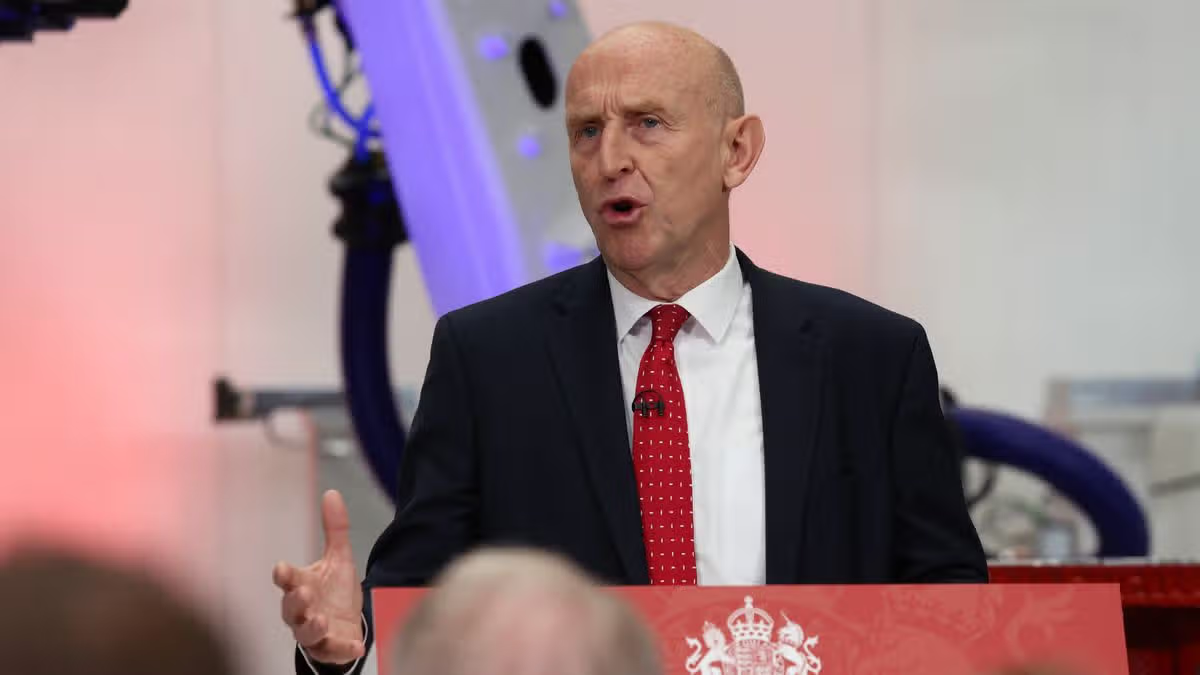
Chancellor of the Exchequer John Healey delivers a speech on economic growth at at the Manufacturing Technology Centre in Coventry, as he unveils a £150 million fund for fast-growing northern firms.

Chancellor of the Exchequer John Healey delivering his speech on economic growth at at the Manufacturing Technology Centre in Coventry(Image: Betty Laura Zapata/PA Wire)

Chancellor John Healey said the UK economy was “turning a corner” as he pledged to rein in public expenditure ahead of next month’s Budget.

Delivering his first major address since taking charge at the Treasury, Mr Healey acknowledged the strain of high government borrowing costs and vowed to ease the growing pressure on businesses.

Advertisement

Mr Healey sought to strike an upbeat tone about the UK’s economic outlook, despite the ongoing turbulence caused by global crises including the conflict in the Middle East and Russia’s invasion of Ukraine.

Speaking in Coventry ahead of next month’s Budget — the first since Andy Burnham moved into 10 Downing Street — Mr Healey said: “The Prime Minister and I are in lockstep in our commitment to meeting the fiscal rules at the upcoming Budget, to balancing the books with a buffer to protect against uncertainty.

“To controlling borrowing to bear down on inflation and reducing long-term pressures on our public finances.”

He argued that the mounting cost of debt interest demonstrated that “staying true to our values means being honest about the need to control government spending”.

Advertisement

Yet he maintained there remained an “optimistic story” to be told about the UK economy, which he said possessed “huge latent potential”.

It was, he said, “a country turning a corner, a country whose people, businesses and communities are ready to seize the opportunity of new technologies and new ideas”. Outlining his vision for the economy, Mr Healey confirmed the Government would extend its overhaul of judicial review from energy projects to encompass all major infrastructure schemes.

He stated the reforms would ensure “vexatious litigation and challenge can’t block economic growth”.

The Chancellor also reaffirmed the Government’s pledge to devolve power away from Whitehall, announcing he would unveil a “roadmap to fiscal devolution” at next month’s Budget.

Advertisement

He said: “London, of course, is our powerhouse, but if our city regions could emulate the success of those in France or Germany, growth in our country would be transformed.”

In advance of that, he revealed the British Business Bank would be injecting £150 million into high-growth firms across the North of England, while also announcing the establishment of a “Northern 500” collective of “the North’s most ambitious mid-sized businesses”, to be led by regional mayors.

Mr Healey said he wanted twice as many “unicorn” firms in the UK and to make it easier for businesses to test new technology.

Mr Healey said: “So, I’m setting an ambition now to double the number of unicorn firms in this country.”

Advertisement

He said he would also aim to have “sandboxing” powers in place so businesses and innovators can test technology from pavement robots to drones to life-saving medical equipment, which he said regulation currently prevents.

Continue Reading

Trending

Copyright © 2025