
Business
The yen’s sudden surge is upsetting the carry trade faithful



Business
GE Vernova shares surge 8% as firm declared lowest bidder for Power Grid project; Nomura raises target price

The company said it received a letter from Power Grid on September 7 informing it that it had emerged as the L1 bidder for the project. L1 status means GE Vernova T&D India’s bid was the lowest among those submitted for the project. The company, however, did not disclose the value of the contract in its filing.
The project involves setting up two 3,000 MW HVDC terminal stations using line-commutated converter (LCC) technology. GE Vernova T&D India will undertake the design, supply and execution of the project.
The Barmer II-South Kalamb corridor is part of India’s planned expansion of high-capacity transmission infrastructure aimed at moving renewable power from generation-heavy regions to major consumption centres. The 6 GW, 800 kV project was approved by the National Committee on Transmission in May 2025.
Buy, sell or hold GE Vernova stock?
Nomura raised the target price to Rs 6,000, implying an upside of 37.5% from current levels. “We remain constructive on GVTD’s long-term earnings growth, driven by its robust order book position and increased adoption of grid automation technologies,” the brokerage said in a note.

It said the company’s order win came as a positive surprise, as it had not factored in an HVDC order win for GE Vernova in FY27.
“While our FY27 and FY28 EBITDA margin estimates are largely unchanged, we cut our FY29F EBITDA margin estimate by 56 bp to factor in the likely execution mix, thereby partly offsetting the upward revisions to revenue estimates.”Emkay has maintained a Buy rating on GE Vernova T&D India with a target price of Rs 5,300, citing strong prospects in the power transmission sector across both domestic and export markets.
The brokerage said the company is well positioned to benefit from structural growth in the transmission sector, supported by around Rs 1,000 crore of capacity expansion planned through FY28, which should improve its ability to meet rising demand. It also highlighted strong support from parent GE, which provides access to new technologies and helps accelerate localisation for the Indian market.
Emkay also pointed to the company’s robust balance sheet, with a net cash position of Rs 2,930 crore as of the end of Q1FY27, along with healthy three-year cash-flow generation averaging around Rs 1,000 crore annually. Favourable working-capital dynamics, with net working capital maintained at around 50 days over the past three years, are another positive. The brokerage expects these factors to support a 25% earnings CAGR over FY26-29E.
(Disclaimer: Recommendations, suggestions, views and opinions given by the experts are their own. These do not represent the views of The Economic Times)

News that Jaguar Land Rover (JLR) was to cut 4,000 jobs was a cause for uncertainty and stress for company workers and those in the wider supply chain, experts have said.
Prof David Bailey from the Birmingham Business School said he worried it could limit the company’s ability to innovate in the future while David Roberts, chairman of Coventry-based Evtec Group, said up to 200,000 jobs could be tied to JLR.
The cuts will happen over the next two years and will mostly affect the head office in Whitley, Coventry.
But there are concerns about the impact the job cuts will have on the West Midlands’ skill base.
“The danger there is, in part, if they cut for example too many workers in research and development that could affect their future ability to develop new cars,” Bailey said.
“So it’s a really critical phase for the company and there’s going to be real concern at the firm about what’s happening.”
He said he understood JLR was facing a range of issues, but cutting the workforce was risky.
“When margins are squeezed, companies cut costs and investment; when investment is delayed, the UK becomes less competitive; and when competitiveness falls, future investment increasingly goes elsewhere,” he said.
Bailey said the British motor industry needed government help to compete in the electric car market and it was crucial to more than jobs on the factory floor.
He said: “It anchors research and development, engineering capability, component suppliers and regional economies.
“Once those capabilities disappear, they are extremely difficult to recreate.”
Business
Why Is Nike Stock Falling? China Sales Slump, S&P 100 Exit Drive 78% Plunge From 2021 Peak This Year

BEAVERTON, Ore. — Nike shares have collapsed nearly 80% from their 2021 all-time high, and the decline has only accelerated in recent weeks, driven by a combination of persistent weakness in China, a slower-than-expected turnaround, and the company’s pending removal from the prestigious S&P 100 index later this month.
Nike stock closed at $38.40 on Sept. 4, according to historical market data, putting the shares roughly 50% below their own 52-week high of $76.97 and about 78.6% below the intraday record of $179.10 the stock set on Nov. 5, 2021. The stock briefly touched a fresh 52-week low of $37.95 on Sept. 3, and its market value has fallen to roughly $56.9 billion, down from approximately $281 billion at its 2021 peak.
S&P Dow Jones Indices announced Sept. 4 that Nike will be removed from the S&P 100 index before trading opens Sept. 21, replaced by cybersecurity firm Palo Alto Networks. Dell Technologies, Arista Networks and Sandisk are also joining the index in the same reshuffling, while Honeywell Aerospace, Simon Property Group and Colgate-Palmolive are being removed alongside Nike.
Importantly, analysts have stressed that the index removal is a consequence of Nike’s decline rather than a cause of it. A business once priced by investors as a nearly flawless growth story is now being valued as a difficult turnaround situation, following years of weaker product innovation, a disrupted wholesale network, falling digital sales and deep, sustained problems in China.
China has emerged as the single biggest source of pressure on Nike’s business. According to Reuters, Nike’s Greater China revenue fell 17% on a constant-currency basis in the fourth quarter of fiscal 2026, a steep acceleration from the 10% decline recorded in the prior quarter. The company continues facing intensifying competition in that market from domestic Chinese brands including Anta and Li Ning, which have steadily eroded Nike’s market share in one of its most important international markets.
Nike’s direct-to-consumer strategy, once viewed as a key pillar of the company’s long-term growth plan, has also weakened considerably. In the fourth quarter of fiscal 2026, Nike Direct revenue fell 7% year over year, while digital sales specifically declined 12%. For the full fiscal year, which ended May 31, Nike Direct revenue fell 6% to $17.7 billion, while Nike Brand digital revenue dropped 12%. In response, the company has shifted back toward emphasizing its wholesale retail partnerships, with Nike Brand wholesale revenue rising 6% to $27.5 billion over the same period, a reversal of the strategy Nike had pursued for much of the past decade.
For the full 2026 fiscal year, Nike reported $46.4 billion in total revenue, essentially flat compared with the prior year and down 2% on a currency-neutral basis. Net income declined to $3.1 billion from $3.2 billion in fiscal 2025. Underlying earnings per share came in at just $1.58 for the year, once a one-time $0.52 per share benefit tied to an expected tariff recovery was excluded, reflecting a 55.6% decline in underlying profitability compared with fiscal 2021.
Nike’s fourth-quarter earnings report, released June 30, initially sent shares plunging double digits in after-hours trading, though the stock recovered to finish up 5% the following session, a move some investors interpreted as a sign the stock might be bottoming out. That optimism proved short-lived. Investors grew increasingly concerned about the company’s guidance for continued revenue declines in the first half of fiscal 2027, along with comments on the earnings call indicating gross margins were not expected to return to growth until the second quarter of fiscal 2027, later than many investors had hoped.
Broader macroeconomic and geopolitical pressures have compounded Nike’s company-specific challenges. The stock sank further in March amid the outbreak of war involving Iran, which weighed on consumer discretionary stocks broadly, given Nike’s sensitivity to inflation and the potential for the conflict to disrupt global supply chains, particularly given the company’s heavy reliance on manufacturing hubs across Southeast Asia. Tariff-related costs stemming from trade policies implemented in 2025 have added further pressure to Nike’s already strained profit margins throughout 2026.
Nike CEO Elliott Hill, who returned to lead the company in October 2024 in an effort to reverse its declining fortunes, has continued working to rebuild the company’s product pipeline and repair relationships with wholesale retailers following years of emphasis on direct-to-consumer sales. Despite those efforts, Nike’s market share has continued declining for three consecutive years, facing intensifying competition from rivals including Hoka and On Holding, alongside the mounting pressure from Chinese domestic brands.
Insider trading activity has also drawn scrutiny amid the stock’s continued decline. According to a Securities and Exchange Commission filing, Hill disposed of 9,462 shares of Nike Class B common stock on Sept. 1, though the transaction resulted from shares withheld by the company to cover tax obligations tied to a vesting restricted stock unit award, rather than a discretionary open-market sale. Hill’s remaining direct equity stake in Nike was valued at approximately $14.25 million as of the Sept. 1 market close.
Nike’s footwear business, its largest and most closely watched category, generated approximately $29.5 billion in revenue during fiscal 2026, remaining the primary focus of the company’s turnaround efforts. Wall Street analysts have warned that Nike could face an additional $1 billion headwind tied to planned changes to its digital strategy specifically in China, a factor that has further contributed to the stock’s continued decline in recent weeks.
Despite the severity of the stock’s collapse, some analysts have suggested Nike’s departure from the S&P 100 could ultimately mark a form of capitulation, potentially signaling that the worst of the stock’s decline has been priced in by the market. Others remain more cautious, noting that Nike’s valuation reset from roughly 50 times earnings at its 2021 peak to around 24 times earnings today reflects a fundamentally different, more challenged business rather than simply a temporarily depressed stock price. Whether Nike’s ongoing turnaround under Hill can eventually translate into renewed sales growth, particularly in China, remains the central question determining whether the stock’s current depressed valuation ultimately represents a buying opportunity or a continuation of the company’s multiyear decline.
Business
LIC, HDFC Life, other stocks rise up to 3% as Aug new business premium jumps 33% YoY. What Nuvama, others are saying

HDFC Life Insurance Company shares jumped nearly 3% to trade at Rs 547.80 apiece on Tuesday morning, while those of insurance behemoth LIC rose nearly 1%. ICICI Prudential Life Insurance Company shares rose nearly 2% but SBI Life shares slipped into the red.
While total new business premium recorded a sharp growth, the underlying retail business expanded at less than half the speed of total income, as the industry depended on single-premium and group business for growth. Retail-weighted premium, calculated by giving full weight to individual non-single premium and 10% weight to individual single premium, grew around 14% last month, according to data released by the Life Insurance Council.
Also read | Life insurers’ new business premium up 33% in August
The August surge was mostly driven by group single-premium business, which jumped over 56% YoY to Rs 23,887 crore. Individual non-single premium, which shows growth in regular retail business, meanwhile rose more than 13% YoY to Rs 10,349 crore, while individual single premium increased around 35% to Rs 5,512 crore.
Insurance behemoth Life Insurance Corporation of India (LIC) reported more than 45% YoY jump in total new business premium to Rs 23,275 crore in August. The increase was largely driven by group single-premium business, which rose more than 70% to Rs 17,141 crore. LIC’s retail-weighted premium increased around 13% YoY in August. For April-August, its total new business premium increased 19%, while retail-weighted premium grew 15.3%.
Among the large listed private insurers, SBI Life reported around 3% YoY growth in its total new business premium in August, while retail-weighted premium increased around 22% YoY. For April-August, SBI Life’s total new business premium grew 12.73%, with retail-weighted premium up 16%.HDFC Life also recorded a strong numbers for August, with total new business premium rising nearly 18% and retail-weighted premium increasing by more than 17%. However, its April-August income was lower, with total premium up 14% and retail-weighted premium also around 6%.
Also read | Indians opt for higher life insurance cover as average premium rises 43%
Nuvama on life insurers
Nuvama noted that LIC’s 13% growth in retail-weighted premium has outpaced private peers, but total APE growth slowed sharply to 3% YoY. It maintained its ‘Buy’ ratings on shares of SBI Life, HDFC Life, Axis Max Life and ICICI Prudential Life.
For SBI Life, Nuvama has a target price of Rs 2,600 apiece, implying more than 50% upside potential from the stock’s previous closing price of Rs 1,732 apiece. For HDFC Life, it has a target price of Rs 790 apiece, implying over 48% upside.
Nuvama has a target price of Rs 1,870 apiece for Axis Max Life, and Rs 700 apiece for ICICI Prudential Life Insurance.
Motilal Oswal on life insurers
Motilal Oswal Financial Services expects the growth momentum to be largely stable going forward, supported by a continued focus on traditional products, improved affordability from GST exemptions, and expanded geographical reach by private insurers.
SBI Life and LIC are the domestic brokerage’s top picks within the sector.
Also read | Festive stock picks: 10 stocks to buy ahead of the festive season. Do you own any?
Disclosure: This article is written by Debaroti Adhikary, who is not a SEBI-registered Research Analyst or an Investment Adviser. Debaroti Adhikary and her ‘relative(s)’ (as defined under Section 2(77) of the Companies Act, 2013) do not hold any financial interest in the companies mentioned in this article as of the date of publication. The views/recommendations mentioned in this article, wherever applicable, are those of the respective SEBI-registered Research Analyst/brokerage and have been reproduced/reported with due attribution. They should not be construed as the views or recommendations of The EconomicTimes Digital or the journalist. Readers are advised to consider the original research report and make their investment decisions based on their own assessment.

BHP, union talks for Port Hedland iron ore workers to stretch on into next week

Analysis-Why the BOJ will bet small on rate hikes now to avoid a bigger shock later

Invesco is an independent investment management firm dedicated to delivering an investment experience that helps people get more out of life.Be the first to know! Sign up for Invesco US Blog and get expert investment views as they post.Disclosure for all Invesco US articles: Before investing, carefully read the prospectus and/or summary prospectus and carefully consider the investment objectives, risks, charges and expenses. The information provided is for educational purposes only and does not constitute a recommendation of the suitability of any investment strategy for a particular investor. Invesco does not provide tax advice. The tax information contained herein is general and is not exhaustive by nature. Federal and state tax laws are complex and constantly changing. Investors should always consult their own legal or tax professional for information concerning their individual situation. The opinions expressed are those of the authors, are based on current market conditions and are subject to change without notice. These opinions may differ from those of other Invesco investment professionals. NOT FDIC INSURED MAY LOSE VALUE NO BANK GUARANTEE All data provided by Invesco unless otherwise noted. Invesco Distributors, Inc. is the US distributor for Invesco Ltd.’s retail products and collective trust funds. Invesco Advisers, Inc. and other affiliated investment advisers mentioned provide investment advisory services and do not sell securities. Invesco Unit Investment Trusts are distributed by the sponsor, Invesco Capital Markets, Inc., and broker-dealers including Invesco Distributors, Inc. PowerShares® is a registered trademark of Invesco PowerShares Capital Management LLC (Invesco PowerShares). Each entity is an indirect, wholly owned subsidiary of Invesco Ltd. ©2015 Invesco Ltd. All rights reserved.
Business
ASX 200 Slides To Six-Week Low As Rate Hike Fears, Housing Warning Rattle Investors Amid Middle East
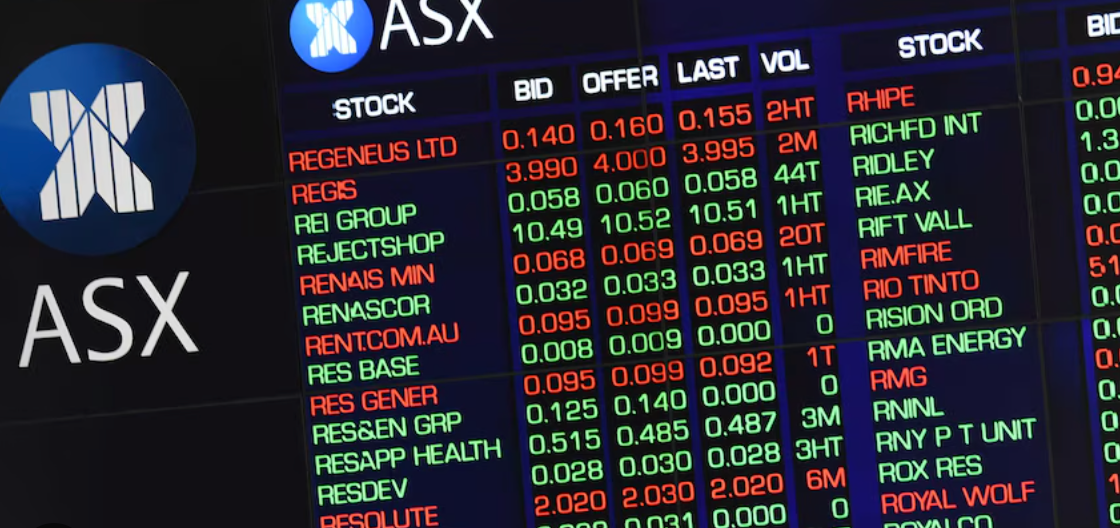
SYDNEY — Australian shares extended their losing run Tuesday, with the benchmark S&P/ASX 200 index falling 65.9 points, or 0.73%, to 8,945.0 by early afternoon, sliding to its lowest level in six weeks as renewed Reserve Bank rate hike fears, a stark new housing downturn warning and continued Middle East tensions weighed heavily on sentiment.
The decline dragged the index back below the psychologically significant 9,000-point level, wiping out Monday’s modest gain of just five points, which had left the ASX 200 at 9,010.9 to start the week. Selling pressure was broad-based throughout Tuesday’s session, with roughly 115 ASX 200 constituents trading lower compared with around 70 advancers and 15 stocks unchanged, according to data from The Motley Fool Australia.
All major sectors were firmly in negative territory as the session progressed. According to ABC News’ live market coverage, consumer staples fell 1.2%, technology dropped 1.1% and financials shed 1.1% by mid-morning. Notably, even materials and energy, sectors that would typically be expected to benefit from stronger oil and copper prices, traded lower, down 0.7% and 0.1%, respectively, underscoring the breadth of Tuesday’s selloff.
A grim new forecast on Australia’s housing market added to the day’s cautious tone. According to a report from HSBC cited in ABC’s live coverage, the bank’s central case now anticipates further declines in national home prices, warning that values, already down nearly 5% from their August peak, could fall by a further 8 percentage points by mid-2027.
“Our central case sees housing prices in Australia falling further yet,” the HSBC report said. “With housing prices already down nearly 5% from their peak in August, we see a further fall of around 8ppts by mid-2027. This would see a peak-to-trough fall of 13%. If our central case eventuates, it would be the largest decline in housing prices in at least the last three decades.”
The housing warning compounded existing pressure on the banking sector, which has already been grappling with elevated bond yields and growing expectations that the Reserve Bank of Australia could move to raise interest rates again as soon as this month. Interest rate markets have continued pricing in the likelihood of tightening, following stronger-than-expected second-quarter GDP data released last week that reignited fears of further RBA action.
Oil markets remained a significant point of focus for investors Tuesday, following another escalation in the ongoing conflict between the United States and Iran. Brent crude settled at $97.31 a barrel Monday, after briefly touching $98.06, its highest level since late July, before easing to trade around $96.80 Tuesday morning. The latest price moves followed fresh clashes between the U.S. and Iran, including attacks involving oil tankers and warships in and around the Strait of Hormuz over the weekend, extending a pattern of volatility that has gripped global oil markets throughout the ongoing conflict.
Despite the elevated oil prices, energy and resource stocks failed to provide the offsetting support they had delivered in some earlier sessions this year, reflecting broader risk-off sentiment across the local market that overwhelmed the usual dynamic in which higher commodity prices lift resource-heavy Australian shares.
Tuesday’s session also brought a fresh batch of companies trading ex-dividend, a mechanical factor that typically weighs on individual share prices and, by extension, the broader index. Stocks trading without entitlement to their latest dividend payout included AUB Group, BlueScope Steel, Mineral Resources, News Corporation and Smartgroup Corporation. Mineral Resources is set to reward shareholders with a fully franked dividend of 83 cents per share, payable Sept. 30.
Consumer sentiment data released Tuesday added a further layer of caution to the day’s trading, with confidence readings reportedly declining amid the combination of rate hike fears and ongoing cost-of-living pressures facing Australian households. That weaker sentiment reading contributed to the pronounced weakness seen specifically in consumer-facing sectors including staples and discretionary retail during the session.
Tuesday’s losses extend a difficult run for the ASX 200 stretching back through the first week of September. According to Trading Economics, the index has now declined 3.33% over the past month, even as it remains up 0.86% compared with a year earlier. The benchmark had touched a record high in early August before paring gains to finish that month up 1.1%, with the market’s tone souring considerably since the calendar turned to September amid the combination of geopolitical, monetary policy and housing-related pressures now weighing on investor sentiment.
Petrol prices have also continued climbing alongside the broader energy market volatility, with the national average price of unleaded fuel rising 0.7 cents to 205.5 cents per liter in the week to Sunday, according to data from the Australian Institute of Petroleum, adding a further tangible cost pressure for Australian consumers already grappling with elevated interest rates and a weakening housing market.
Looking ahead, market attention is expected to remain focused on key economic data due from China later this week, including August consumer and producer price figures along with trade performance numbers, which could offer further signals on demand conditions in Australia’s largest trading partner. Locally, investors will continue watching for any further commentary from the Reserve Bank ahead of its coming policy decision, along with ongoing developments in the Middle East conflict and their implications for global oil markets, as the ASX 200 looks to stabilize following its slide to a six-week low.

Earnings call transcript: Shiprocket Q1 2026 revenue growth accelerates on margin gains

Yes. Corporate subscriptions are available for teams and organisations, with discounted rates as user numbers increase. Pricing starts from $1,625 + GST per user.
Get in touch
to discuss the right option for your organisation.
Business News subscriptions are used by executives, investors, consultants and professionals who need to stay informed and make better decisions about the WA market. When you subscribe you’ll get
- Unlimited access to WA’s most trusted business journalism
- Data & Insights — detailed profiles of WA companies, people, projects and deals
- MyBN — a personalised feed based on the companies, people and sectors you follow
- Special publications and industry reports
- Daily and weekly email newsletters
Data & Insights is a research tool built specifically for the WA market. It draws on more than 30 years of Business News reporting, updated regularly to reflect what’s happening now. Use it to:
- Look up detailed profiles of WA companies, including financials, directors and ownership
- Find decision-makers and track their career movements
- Research live and completed projects across WA industries
- Monitor deals, appointments and market activity
- Access industry rankings and league tables
Data & Insights is updated daily by our dedicated research team, which uses the latest announcements, ASX filings and editorial coverage to keep our person, company, list and project records up to date.
Business News welcome all opportunities to make our dataset accurate, complete and current, so if you have an update request, please email the team at
general@businessnews.com.au, and we’d be happy to assist.
MyBN
is part of every subscription. It’s your personalised view of Business News. You can follow the companies, people, sectors and projects that matter to you, and get a news feed and alerts tailored to your interests. You can save articles to read later and retain only what you need.
Only subscribers have full access to all content on the Business News website.
If staying informed about the WA economy is part of your job, and/or you’re looking for networking opportunities in WA, Business News is built for you.
Business News subscribers are:
- Executives and directors tracking competitors, clients and market movements
- Investors and advisers researching companies, deals and industry trends
- Consultants and professionals staying across sectors relevant to their clients
- Business owners looking for leads, context and market intelligence
Most Business News publications cover national or global markets. Business News is focused entirely on Western Australia, which means the journalism, the data and the intelligence are all built around WA companies, people and projects — not adapted from a national feed. Data & Insights, included with every subscription, combines more than 30 years of WA-specific editorial research with live business data. There’s no comparable product for the WA market.
The Morning Digest Email provides a comprehensive wrap of the major headlines, relevant to WA business, and includes with a snapshot of the overnight news covering oil, gold and ASX-listed companies.
The Afternoon Wrap Email focuses on the news covered by our team of journalists during the course of the working day, including exclusive stories and analysis, all of which relates to WA business and the local economy.
The BN Weekender Email contains a wrap of the Business News from the week that was, highlighting the top stories in each area of WA business.
Sign up for free.
We’re happy to help.
Get in touch
and our team will come back to you.

Taylor Swift Dazzles in Metallic Dress on Travis Kelce Date Night
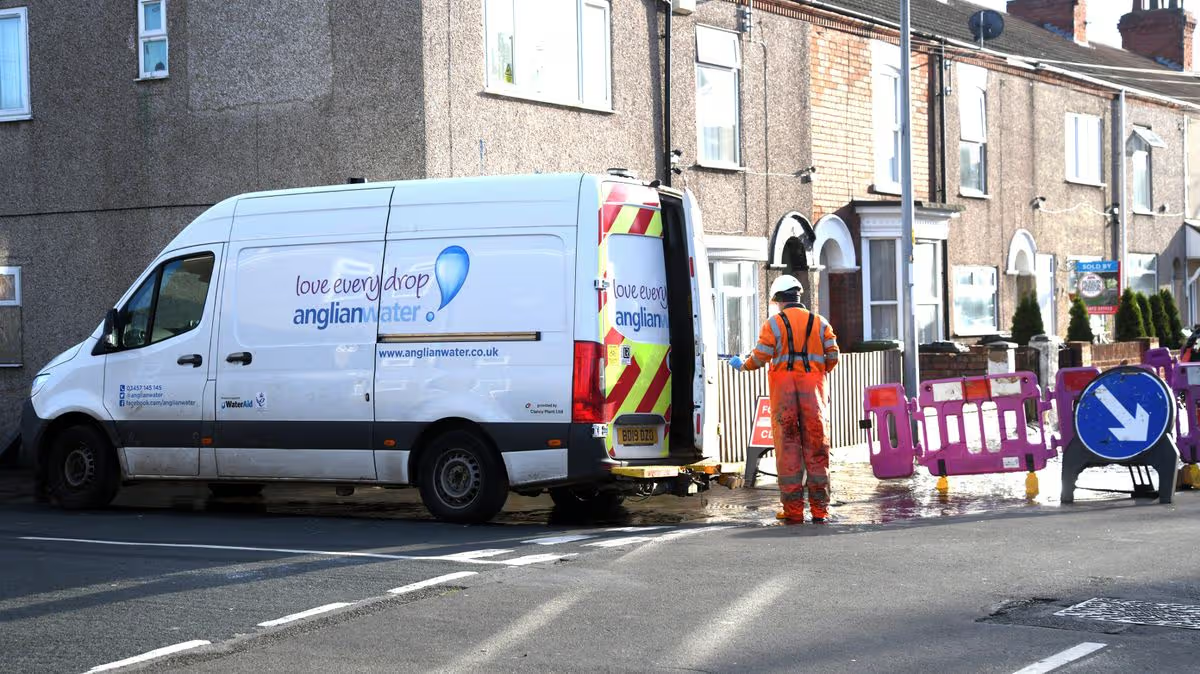
Anglian Water and Fenland District council call for major change to avoid sewage spilling into homes
GE Vernova shares surge 8% as firm declared lowest bidder for Power Grid project; Nomura raises target price





-

 Fashion4 days ago
Weekend Open Thread: Beyond Yoga
-
 Crypto World4 days ago
Bitcoin price stalls near $82K as key resistance holds
-

 Politics4 days ago
Best Gaming Laptops, CPUs, TVs, And Keyboards To Upgrade Your Set Up For GTA VI
-

 Tech4 days ago
The Birds Outside, Drawn For You Automatically
-

 Crypto World4 days ago
IMF Says El Salvador’s Post-Review Bitcoin Purchases Used No Public Funds
-
 Crypto World4 days ago
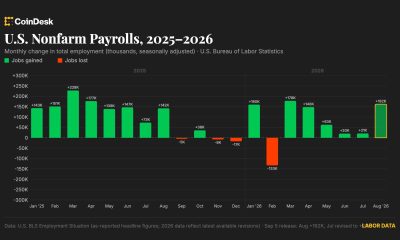
U.S. added stronger than expected 162,000 jobs in August as labor market bounced back
-

 Sports4 days ago
Alexandre Pato consortium’s Northampton Town investment approved
-

 Sports4 days ago
Commanders’ Chig Okonkwo is a top breakout fantasy football candidate
-

 Sports4 days ago
Golden Eaglets Drawn in Group B for 2026 WAFU B U17 Championship
-
 Crypto World4 days ago
XRP price breaks falling channel as bulls target $1.53
-

 Politics4 days ago
A new European chapter for Gibraltar
-

 Politics4 days ago
How To Avoid Winter Colds: 4 Everyday Habits That Spread Germs, Says Pharmacist
-

 Politics4 days ago
The House | Bin the lectures, bring gossip and be ready to banter: how the new PM should prepare for his Trump encounter
-

 Crypto World4 days ago
From warning to listing: UK’s largest retail investment platform opens access to crypto ETNs
-

 Crypto World4 days ago
FinCEN flags $12.7B tied to Southeast Asia crypto investment scams
-

 Tech4 days ago
A Worthy Android Ereader, With Some Tradeoffs
-

 Crypto World4 days ago
Trezor Data Breach Impacts 67,000 More US Customers
-

 Tech4 days ago
How To Edit Claude’s Memory
-

 Politics4 days ago
33 Cosy Autumn Home Decor Ideas: Blankets, Pumpkin Decorations, And Candles
-

 Tech4 days ago
beyerdynamic AVENTHO Y Debuts at IFA 2026 and Makes Wireless Headphones Less Disposable
You must be logged in to post a comment Login