
Politics
Portsmouth, Dover and the fury of the masses

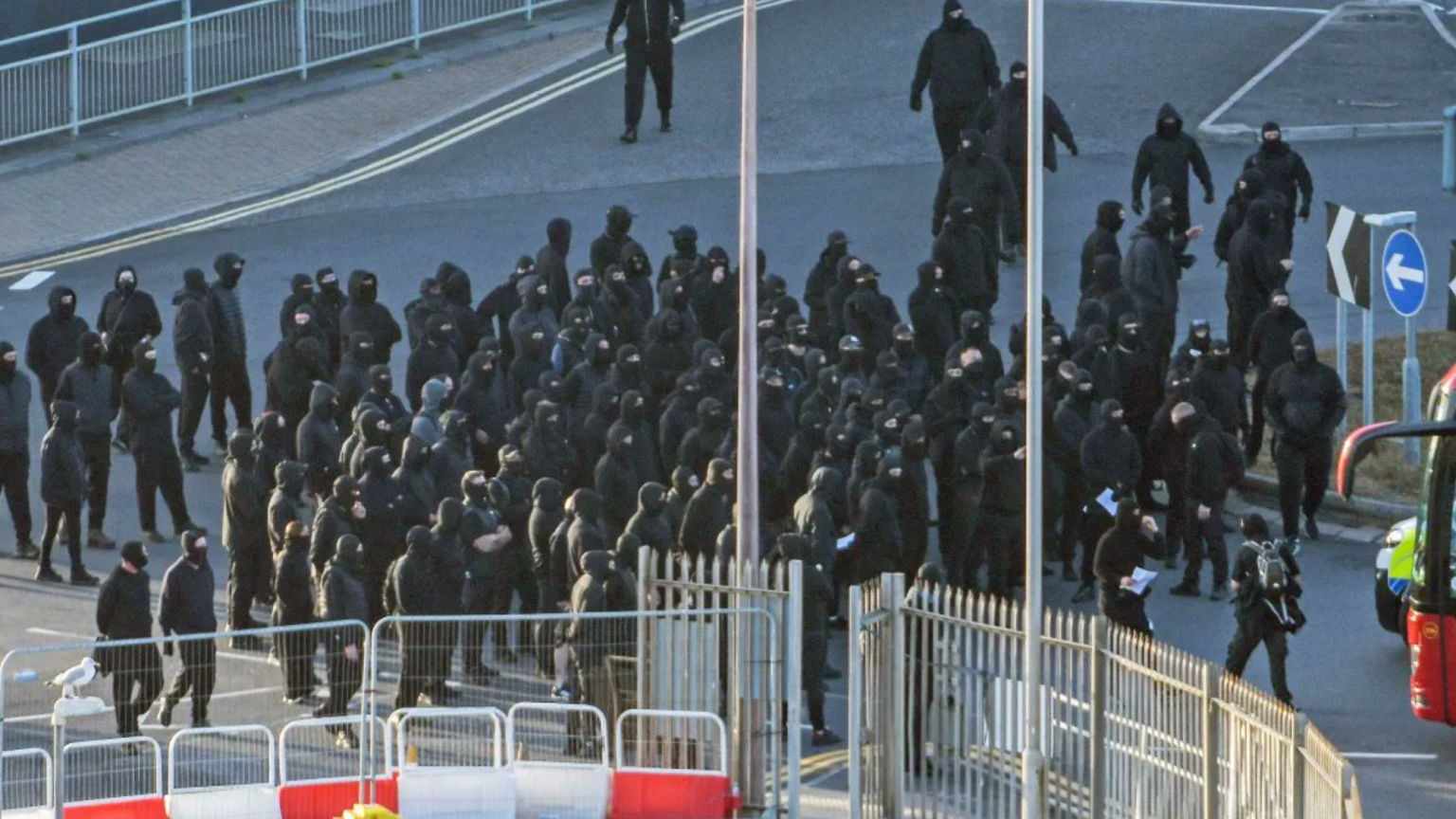
The summer of 2024 brought riots. The summer of 2025 brought protests outside of migrant hotels. Now the summer of 2026 ends with hundreds of masked men in Dover, stopping traffic and chanting ‘Stop the boats’, and hundreds more in Portsmouth, blocking bus-loads of illegal migrants bound for processing centres. Welcome to broken-borders Britain, where the long-fraying patience of the public appears to have snapped.
We need to talk about what happened last night in Portsmouth. What really happened. It is already being slurred as ‘far right’ by the newspapers and ‘thuggish’ by the government. But the truth, if anything, should be more alarming for the powers-that-be. Here was an organic, spur-of-the-moment uprising against illegal migration that could be a taste of things to come.
Word got out on Sunday that a dinghy, carrying 140 migrants, had arrived in Portsmouth’s Eastney Landing. Nationalist activist Danny Tommo (real name Daniel Thomas), an acolyte of Tommy Robinson, showed up. Tommo and a few others hopped into the water, refusing to move, while he called out over a livestream for ‘lads’ from across the country to descend on the ferry port and stop the buses, carrying the migrants, from leaving.
It worked. Hundreds arrived outside. On his livestream, Tommo shouted impromptu speeches at the police, berating them for their cowardice, and joked with port volunteers who brought him and his friends water and blankets. When his phone battery began to run low, he asked for anyone with a boat to deliver him a power bank. An older woman named Joy obliged, showing up on a kayak, leading a million memes to fly on right-wing social media. Tommo told the crowd to leave at around 3am, after the police issued a dispersal order, insisting this was never about violence or getting arrested.
This came only a day after the black-clad blockade in Dover, where a large group of activists, all in balaclavas, shut down the Kent port for hours on end, leaving a trail of traffic and stranded ferries in its wake. This was also the work of Tommo, the first flexing of muscles by his new group, Patriot Platform. Going by his X account, Tommo has spent months meeting people in parks and car parks, cultivating regional groups reminiscent of Robinson’s long-defunct English Defence League, which called on the nation’s football firms to gather in city centres for provocative demonstrations in the 2010s.
The street-protest wing of the radical right, once a byword for geared-up brawling and disorganisation, appears to have developed a measure of revolutionary discipline. In Dover, they assembled early, marching in neat lines. The only beverages consumed appeared to be bottled water, handed out at the roadside by well-wishers. It all took Kent Police entirely by surprise: a statement insisted the protest was ‘spontaneous’, despite the visible evidence to the contrary.
Dover’s finest were caught so unawares they were reduced to standing back before escorting the masked men back to the train station, despite having new legal powers at their disposal allowing them to ban face coverings at demos and crack down on those obstructing critical infrastructure. With no riot police or counter-protesters to clash with, this flash blockade came and went without any violence or arrests.
Robinson praised the masked Dover men as ‘patriots’, and posted regular updates from Portsmouth, hailing his old understudy. This itself is significant. Robinson has spent the past few years organising his Unite the Kingdom demonstrations, purposefully cultivating a more family friendly vibe, where attendees fly flags and masking up is explicitly discouraged. Tommo, a key figure in the Operation Raise the Colours movement that has taken the nation’s lampposts by storm, now says flag-raising is no longer enough. As public attitudes towards illegal migration are hardening, so are the tactics of these right-wing activist-influencers.
Dover was an act of almost cosplay paramilitarism, for the delectation of the smartphone streaming cameras – echoing the aesthetics of Ulster loyalism, to which Tommyworld has long had links. Portsmouth, by contrast, was more haphazard, on-the-fly, suggesting Tommo – and Robinson – can now call non-trivial numbers of people out on to the streets at will.
The images from Dover flushed out more than a little hypocrisy. Left-wingers who turned a blind eye to masked-up Islamic sectarians marching up and down east London, or scrawny antifa types menacing gender-critical women for daring to gather in public, were suddenly clutching their pearls now that white working-class blokes were donning the same clobber. Meanwhile, right-wingers who all of five seconds ago were calling for face-coverings to be banned suddenly seemed to have found an exception, pretending that the sight of hundreds of men ballied up in public wasn’t menacing at all and was purely about evading facial-recognition cameras and state persecution. But this weekend’s remarkable scenes demand more than a discussion about the boundaries of permissible protest.
The state clearly views these demos primarily as a public-order problem, as a new ‘far right’ threat to be crushed rather than understood. But if these protesters were paid-up fascists, they’d have struggled to fill a minibus. The government would do well to ask why there is a growing appetite for this new breed of street nationalism; why working-class people, from Epping to Dover to Portsmouth, many of whom will never have been on a demonstration before in their lives, are now answering the call. Our rulers are obsessing over the symptoms rather than the cause – the deep sense of injustice over illegal migration that is now compelling some to take matters into their own hands. Vigilante border control is only the regrettable, but entirely predictable, consequence of catastrophic state failure.
‘Blood is on your hands.’ Those words were sprayed on the ground in Dover on Saturday, outside of a holding facility for migrants – a clear nod to the string of sexual assaults and murders committed by those who should never have been here, and the authorities’ inability to deport these scumbags even after they have inflicted horror on Brits. Last night in Portsmouth, the sister of Rhiannon Whyte, stabbed to death by a Sudanese man who was staying at the migrant hotel Whyte worked in, was reportedly among the crowd. These are, by definition, preventable crimes that have been inflicted on working-class towns disproportionately, purely because the migrant hotels and HMOs there are cheaper.
These are also the places that, at every opportunity, have voted for parties promising to make it stop, which voted for Brexit to take back control of our borders, only for migration to soar and Britain to become borderless. When they spoke up, they were smeared as racists and xenophobes. When voting never seems to work, and when reasonable concerns are met with a hailstorm of vitriol, what are you left with? Despair, or the streets.
The number of migrants crossing the channel might be down 43 per cent this year, as the government never tires of telling us – taking credit for what appears to be a Europe-wide dip in illegal entrants. But it is far from over. The pull factors remain. The ECHR hamstrings deportations. The boats are getting bigger and the routes are getting more perilous, spreading across the English south coast. The 140 migrants who arrived in Portsmouth yesterday set off from the Bay of the Seine, 170 miles from Calais, where small boats usually launch from given it looks out over the narrowest part of the English Channel. French vessels shadowed the dinghy for 10 hours before it reached UK waters and was picked up by lifeboats from the Isle of Wight. A reception centre was hastily erected in Portsmouth, complete with blankets, clothes and buses to spirit the newcomers away to the Manston processing centre in Kent.
The political class can burble on about our humanitarian commitments or the legal complexity of the situation as much as it likes. What ordinary people see is migrants not only violating our sovereign borders but also being assisted in doing so – escorted into British waters before being picked up by British vessels and delivered on to British soil. The fact we have become accustomed to all this doesn’t make it any more normal. And now here they are, coming ashore in Portsmouth, historic home of the Royal Navy. The symbolism couldn’t be more potent if Tommy Robinson had scripted it all himself.
This should all go without saying, but here goes anyway. Peaceful protest is a right, violent or disruptive protest is not. Wearing balaclavas is a funny way to make women and children feel safer in their communities. But above all, opening your borders to anyone, from anywhere, so long as they have the cash to pay a people smuggler and the willingness to endure the crossing, is a recipe for crime, tension and fury. If the government wants to stop these protests, it should try stopping the boats.

The post The hypocrisy of the Greens’ Mothin Ali appeared first on spiked.
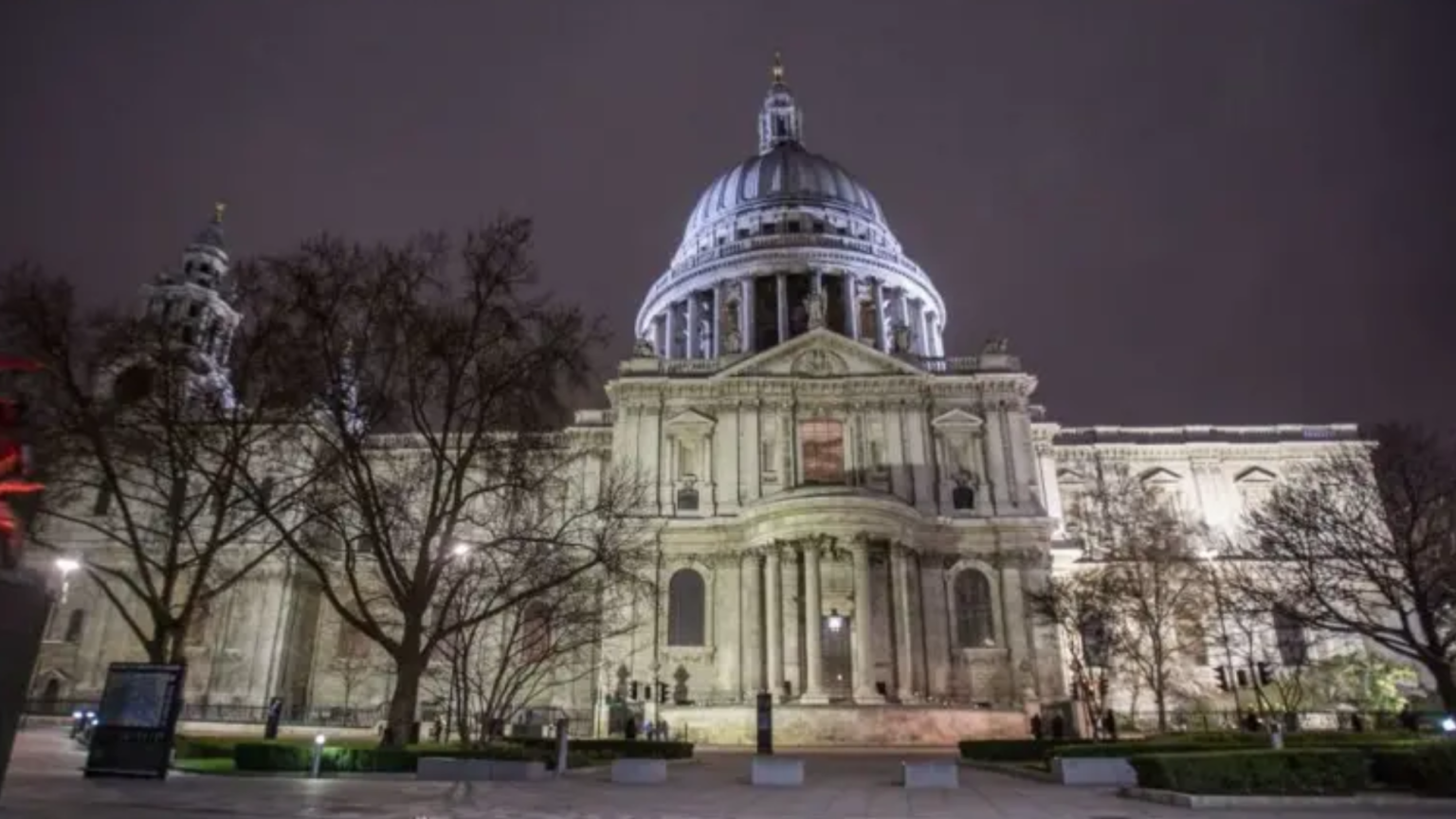
Si monumentum requiris, circumspice. (‘If you seek his monument, look around you.’) The famous epitaph inscribed on the tomb of Sir Christopher Wren inside St Paul’s Cathedral never fails to set my nape hairs a-tingle.
But in the eyes of some, a new epitaph has recently been drafted, this time for the centrality of Christianity in British public life. This comes in the form of a contract drawn up between St Paul’s and the notorious nightclub, Fabric, which lost its licence 10 years ago following the drug-related deaths of two teenagers. That was until an intervention by London mayor Sadiq Khan among others overturned the verdict on condition of improved security and surveillance.
The St Paul’s agreement was heralded, not by trumpeting archangels but by Sandra Lynes Timbrell, the cathedral’s ‘director of visitor engagement’. Her announcement anticipated a ‘carefully curated programme of exceptional concerts’ which will ‘showcase world-class talent and create unforgettable experiences for audiences within one of London’s most iconic spaces’. Come friendly bombs and fall, if not on St Paul’s then at least on the entry-level AI that drafted that slice of undifferentiated guff.
Fabric co-founder Cameron Leslie at least had the decency to acknowledge the somewhat eyebrow-hoisting nature of the proposal, as ‘an extraordinary and unexpected coming together of two very different parts of London’. Khan himself has said something similar, praising the deal for ‘bringing together these two institutions [to] create a one-of-a-kind experience, pairing world-class music with one of our most special landmarks’.
One mustn’t despair. St Paul’s famously survived the Blitz, and I dare say it will survive this – although the Blitz was a much smaller nightclub, in Great Queen Street, that lasted less than 18 months. Besides, it seems to have escaped most of X that St Paul’s has already hosted nights in partnership with Fabric before – in 2023 with a techno DJ called Ry Xand 2024 with Patti Smith – and the sky did not fall in.
I must resist the temptation to huff and puff and lament impotently as I did not so long ago in this very column when Canterbury Cathedral decided to create an ‘unforgettable experience for audiences’ by plastering its interior walls with decals in the style of NYC subway graffiti. I now realise that this type of response only encourages them.
And besides, though the Fabric brand is hardly selected to reassure the traditional congregation, it has not yet been established what kind of acts Fabric will be ‘curating’. It might at least turn out to be a curate’s egg – good in parts. Just because Fabric is mainly famous outside of its own devotees for drug deaths and an entire floor that operates as a deep subwoofer, that doesn’t mean it doesn’t have the Hilliard Ensemble on speed dial.
I mention this vocal quartet, which disbanded in 2014, advisedly. Aside from the Hilliard Ensemble’s independent fame, especially as interpreters of the Medieval and Renaissance liturgical canon, the quartet collaborated to great effect with contemporary voices of various kinds, including the notable 1994 album, Officium, with Norwegian saxophonist Jan Garbarek. I saw them all perform this album live on an unforgettable night in 2009 in an extremely august venue… St Paul’s Cathedral.
It is without a doubt one of the most extraordinary venues I’ve ever heard music in. With Garbarek’s improvised lines responding to the ensemble’s chants across the full width of the available space, the music seemed almost created for that specific occasion. St Paul’s is, I’m sure, capable of replicating that experience, in many possible forms. And perhaps other audiences will leave with, if not a Damascene conversion, at least some of their spiritual pores opened up to further possibilities. I certainly did.
Long before Marshall McLuhan observed that ‘the medium is the message’, the likes of Wren had realised that the architectural space determines the mind’s inner state, regardless of the nature of the sermon. That needn’t be ungodly, even if it isn’t explicitly so dedicated.
So I am a little torn. Does this deal with Fabric merely introduce the wonder of St Paul’s to new audiences? Or is it a desecration of one of the great covered spaces in Christendom? Perhaps the fear is justified. As are the grumblings that Islam would never allow its holy places to be so contaminated.
But until the worst is confirmed, I am determined to remain optimistic. The cathedral costs over £40,000 per day to maintain, and this kind of deal is surely better than seeing it fall into decay. If the management of St Paul’s can get John McLaughlin to host a few nights, and perhaps Peter Gabriel and whoever is the new Nusrat Fateh Ali Khan, then I will be sanguine about the odd drift into techno or grime.
Is this a chance to bridge the gap between the secular and sacred in a mutually acceptable way? I think so. That small transubstantiation occurs in us all, to some extent, every time we enter St Paul’s. We register the change, the pressure drop, the sudden quieting of the traffic, the grift and the graft and our own hearts, even while we are making our contactless offering at the till. A chance to dance, even, inside truly great architecture? It could, just possibly, be rather marvellous after all.
To mark the publication of the latest edition of the Policy Landscape 2026, Anand Menon and Ruth Curtice reflect on the key policy challenges confronting the UK.
Andy Burnham has got off to a decent start as Prime Minister. Yet this early success has been largely ‘vibes based’. To be credible, the Budget and the ten year plan coming this Autumn will have to face the much more difficult challenge of telling us how the Government will navigate the big trade-offs it will confront, challenges spelled out in detail in our new report.
Those challenges are many. Not merely sluggish growth – GDP per person is still broadly where it was in 2019 – but also a weakening labour market and a parlous fiscal situation exacerbated by recent bond market turmoil. In addition, there is the poor state of public services, the need to fund pre-existing pledges (notably on defence spending), the question as to whether to provide greater cost of living support, and (presumably) how to meet the Prime Minister’s many other ambitions – from social care to council house building.
On the former, the cost of a comprehensive, NHS-style model could run to some £18.5bn by 2035/36. As for the latter, only 1,970 council houses were built in 2025 – against the near-200,000 built annually in the early 1950s. Which gives some sense of the scale of the PMs pledge to deliver the biggest council house-building programme since the Second World War.
All of this is in a context in which public services confront a number of wicked problems. Criminal justice is a case in point. Prisons, probation and the courts form one interlinked crisis. A probation staffing gap means thinner supervision, more breaches of licence conditions and, for the first time on record, more prisoners recalled than released in a single quarter. Meanwhile, a Crown Court backlog of over 80,000 cases and a magistrates’ court backlog of over 370,000 are keeping more defendants on remand, compounding the pressure on prison places.
And of course, money to address these issues is in short supply. Health was the big winner in the 2025 Spending Review, with real-terms growth averaging 3% for day-to-day NHS spending up to 2028/29. Yet it’s worth bearing in mind that this settlement was below the long-run average for health spending and well below the 2000s Labour-era increases. The Spending Review coming in 2027 currently has much tighter growth rates, and 3% for health again would be hard to achieve without cuts elsewhere.
Absent significant funds, the key to improvement is increased productivity – not least given the need to fund social care and the longer-term demographic pressures. These latter will see health spending, according to OBR forecasts, account for 14.5% of GDP by the mid-2070s, up from 8.3% in 2022–23. Yet the necessary steps – the shift from analogue to digital, for instance – themselves require sustained capital investment.
And then there’s the new agenda sketched out by the Prime Minister himself. We are yet to see the details of the complete rethink of the education system that Mr Burnham has called for, involving the introduction of technical pathways for all young people from age 14 from September 2028. This raises enough questions in and of itself, including the relationship between education, skills and economic growth, and the balance between academic and technical education. But the Prime Minister’s initiative also raises questions about how it might interact with implementation of the Starmer-era Curriculum and Assessment Review and SEND reforms.
And of course, none of these policies exist in neat silos. The health service reorganisation – including the abolition of NHS England – might simply increase ministerial control and reduce local autonomy, in stark contrast to the Prime Minister’s rhetoric about devolution. As immigration numbers fall, the government will need to think about the implications for health and social care, where migrants have long been used to plug staff shortages. More broadly, falls in legal migration will weaken the government’s fiscal position, since the decline has come mainly from workers and students – the groups that make the most positive economic contribution.
It’s worth stressing too that Mr Burnham’s fate will depend partly on forces outside his control. The cost-of-living crisis has been driven by international factors. Overall prices are up a quarter since the invasion of Ukraine, and it is global events that will most strongly determine their future path. Meanwhile, the EU’s ‘Made in Europe’ local content rules – not aimed at the UK, but liable to catch British firms embedded in EU supply chains regardless – pose a further threat to exporters and hence to UK growth prospects.
Obviously no Government can tackle all of these issues at once. But we do not yet know which of the priorities will give if the money is not available to improve public services, reduce the cost of living and stick to the manifesto tax pledges. That is the question, in the end, that both the bond markets and the voters want to know the answer to.
The Prime Minister seems to be pinning his fate on his ability to show real progress on the cost of living and the state of public services before the next election. The spending plans bequeathed by Rachel Reeves – involving tax rises and spending cuts towards end of this parliament – provide a strong incentive to go to the people before July 2029. Time, then, is pressing if the Government really wants to deliver. It really needs to start spelling out how it intends to do so.
By Ruth Curtice, Chief Executive of the Resolution Foundation, and Anand Menon, Director of UK in a Changing Europe.
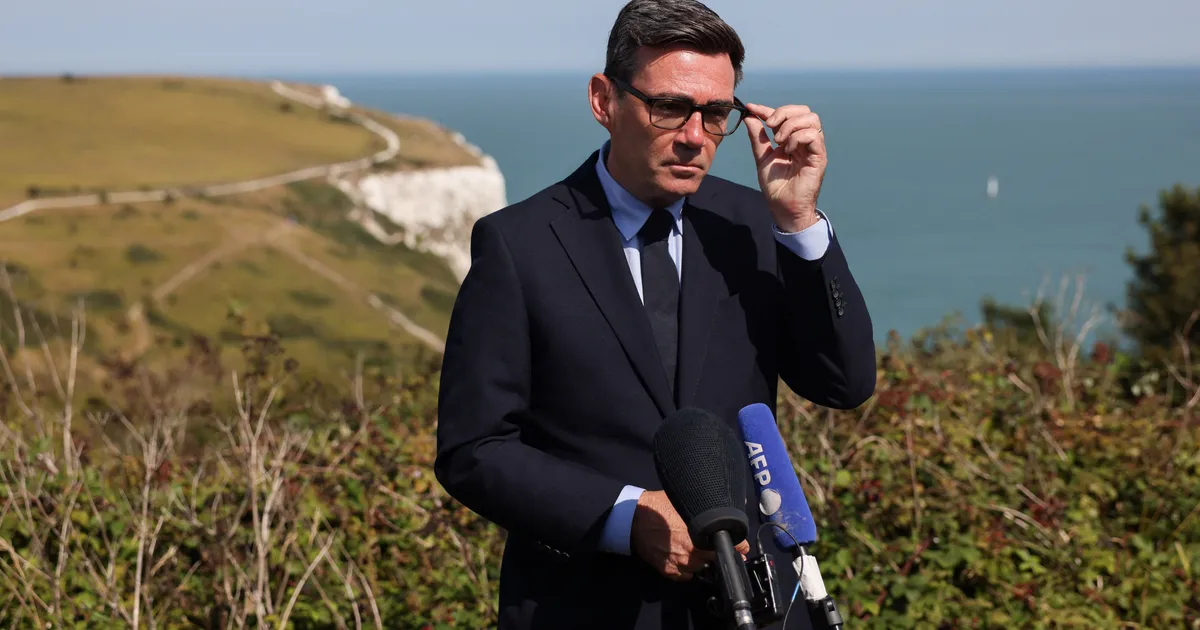
Andy Burnham has accused anti-migrant protesters who took to the streets of Dover and Portsmouth at the weekend of representing “the politics of poison”.
The prime minister told a meeting of Labour MPs and peers that the party must “bring hope to a divided country”.
His comments are the strongest yet in response to the demonstrations against asylum seekers crossing the English Channel from France.
Large crowds of masked, black-clad men blocked road access to the Port of Dover on Saturday, in scenes which have been condemned by politicians, including Reform UK leader Nigel Farage.
On Sunday night, another protest took place after around 140 migrants in a single dinghy were rescued in the English Channel as it headed for the Hampshire coast.
The protesters, many of them wearing masks, said they were determined to prevent authorities from transporting the migrants to the Manston processing centre in Kent.
They blocked traffic along the road leading away from Eastney Marina, with photos showing police carrying riot shields forming a line and protecting a number of coaches that were parked up.
Addressing a meeting of the Parliamentary Labour Party (PLP), Burnham said: “There’s a lot at stake and it requires us to counter fear with positivity and hope. We have a responsibility in the times that we’re living in. It’s a solemn responsibility to prevent the politics of poison seeping into our streets.
“We are here to speak to the politics of hope and of positivity.”
He added: “We have to fulfil our historic mission all over again and bring hope to a divided country. To lift people and make them feel that things are possible. That we can make people’s lives better. Make them feel that politics can work.
“We can give people a sense of positivity again. We can change this country for the better. Never accept the narrative that there’s nothing we can do.”
Listen to Commons People, the podcast that makes politics easy. Every week, Kevin Schofield and Kate Nicholson unpack the week’s biggest stories to keep you informed. Join us for straightforward analysis of what’s going on at Westminster.

The Great British Bake Off casting team has knocked it out of the park once again.
With just two weeks to go until the tent reopens for another season – with new judge Nigella Lawson at the helm for the first time – Channel 4 has introduced us to the 12 new contestants, and they’re as eclectic a bunch as ever.
Among them are a Bhangra-dancing paediatric doctor, a former-podium-dancer-turned-advertising-exec, an aspiring competitive sprinter and a polyamorous drag king.
In other words, yes, there are plenty of different flavours in the mix this time around.
Get to know the 12 new bakers being put through their paces by Paul and Nigella, ahead of the show’s return later this month…
Clara

Occupation: Marketing graduate
Interesting fact: Originally hailing from Aveiro, Portugal, Clara is an animal lover, who says she’s happiest around her pets Gigi the spaniel and Pecan the hedgehog.
Connie

Occupation: NHS hospital discharge lead
Interesting fact: In addition to her decades-spanning career in the NHS, Connie and her music teacher husband run a music centre in London.
Danni

Occupation: HGB service centre administrator
Interesting fact: Danni is a tech enthusiast who tinkers with web design and game development, and says their bakes are often inspired by the worlds of video games, fantasy and animation.
Gabe

Occupation: Artist and drag king
Interesting fact: Those on the Birmingham drag scene might be familiar with Gabe’s drag king alter-ego Blü Romantic. A creative force, they’re also a costume designer, theatre producer and keen gardener, who moved from Grimsby to the West Midlands, where they now live with partners Ellis and Tyler, and their two sausage dogs, Dill and Sage.
Gary

Occupation: Retired garment technologist
Interesting fact: Gary discovered baking late in life, just five years ago, and is another animal lover, who looks after sheep, horses, chickens and miniature pygmy goats and Shetland ponies, among others. A prostate cancer survivor, he is keen to raise awareness of the condition, as well as taking part in fundraising.
Molly

Occupation: Accessibility co-ordinator
Interesting fact: Molly says her love of baking helped her through a difficult period in her health back in 2020. A cross-stitcher and F1 lover, she is currently mixing these two hobbies with a 350,000-stich landscape of Rivendell.
Moyin

Occupation: Political economy student
Interesting fact: Moyin has been baking since the age of five, and is a competitive sprinter, having previously been crowned the under-20s County Champion in the 100m.
Mo

Interesting fact: Mo says we need to prepare ourselves for his “chaotic and random” personality when he steps into the tent, and has been fascinated by baking ever since discovering Play-Doh at the age of three.
Nikki

Occupation: Advertising post-producer
Interesting fact: A former podium dancer at Basingstone’s Ziggy’s Night Club in the 90s, Nikki says her bakes are often inspired by the music she’s listening to at the time, whether that’s “nostalgic R&B” or more classical pieces.
Shannon

Occupation: Project planner
Interesting fact: Shannon’s biggest love is the great outdoors and nature, which includes her two dogs and pet tortoise. She says she wants to bring “forest magic” to the tent – and once rode a horse through a fast food drive-through.
Tom

Interesting fact: Tom fell in love with baking at a child, preferring to spend time honing his skills with his Nan while the rest of his family were at football matches. He recently completed a seven-month travelling stint around South-East Asia, and describes himself as a bit of an over-sharer. Consider us sat.
Yannis

Interesting fact: Born in Vienna before moving to the UK as a child, he says watching Bake Off helped him hone his English skills, and is also a Bhangra dancer.
The Great British Bake Off returns on Tuesday 22 September at 8pm.

Finally, we’re starting to get real about menopause. It might have happened to women and people with vulvas for, well, ever but it’s only been over the last few decades that we’ve started to open up about what that actually means.
There’s still one criminally under-discussed aspect of menopause we think is due for a revisiting: bladder leaks.
It might be embarrassing, but around half of women experience urinary incontinence during menopause.
During this time, a decrease in oestrogen results in thinning of the urethra wall, as well as your pelvic floor muscles becoming weaker.
At the same time, bladder elasticity declines as you might gain weight, which could cause the pelvic floor muscles to become weaker, and you to need to pee more regularly.
No one wants to be caught short, and while there are exercises you can do if you want to reduce the likelihood of having to run to the nearest toilet at a moment’s notice (see: my round-up of the best pelvic floor trainers) we don’t need another form of exercise to add to ours lives that we won’t do.
So I’ve found an easier solution: Jude Bladder Care Supplements.

Say goodbye to bulky menopause pads forever, because this supplement is designed specifically to improve bladder health for women going through menopause.
Formulated with pumpkin seed extract, soy germ extract, vitamins B and D, and rosemary and sage extract, the supplements are a research-backed solution to improved bladder confidence.
And it’s not just another supplement that won’t work: after just 12 weeks of taking the supplement, 77% say they feel more in control, while 90% say they feel less held back by their bladder.
Emma Skeates, author of Confessions of The Menopausal Mayhem Mother, tried Jude. She says: “For about three years into my menopause I was wearing big bulky pads, because every time I laughed or I sneezed, there was leakage.
“Since taking Jude, I don’t have to worry about that anymore. I can now laugh, wherever I want, worry free!”
But she’s not the only one: Jude currently has over 3,500 five-star Trustpilot reviews, as well as 1,200 on its website – and we can see why.
A 12-week subscription comes in at £75, or less than £0.83 per day (which is nothing when you really think about it). That’s not all: we’ve bagged HuffPost readers 20% off with the code BABY20.
That means better bladder health in 12 weeks for just £60. Run, don’t walk!

!function(n){if(!window.cnx){window.cnx={},window.cnx.cmd=[];var t=n.createElement(‘iframe’);t.display=’none’,t.onload=function(){var n=t.contentWindow.document,c=n.createElement(‘script’);c.src=”//cd.connatix.com/connatix.player.js”,c.setAttribute(‘async’,’1′),c.setAttribute(‘type’,’text/javascript’),n.body.appendChild(c)},n.head.appendChild(t)}}(document);(new Image()).src=”https://capi.connatix.com/tr/si?token=19654b65-409c-4b38-90db-80cbdea02cf4″;cnx.cmd.push(function(){cnx({“playerId”:”19654b65-409c-4b38-90db-80cbdea02cf4″,”mediaId”:”bf11b992-719c-4c1d-8731-e813f0ff5b6b”}).render(“6a9efe13e4b03901c958f309”);});
The day after Tory conference wraps up. Mark the calendar… ICYMI: Who Will Win in Holborn and St Pancras?

A GP has opened up about how a strong vaginal odour could signal a fairly common tampon error.
In an Instagram post, Dr Nada Hassan spoke of “the smell every GP recognises instantly” – the strong odour emitted from a retained tampon.
A retained tampon is pretty much what you’d expect it to be: a tampon which isn’t removed from the body and either gets stuck or seemingly gets forgotten about. Per the Women’s Health Practice, retained tampons are “fairly common”.
Dr Hassan noted that sometimes she can tell if a patient has a retained tampon as soon as they’ve walked into the consulting room.
“It’s more common to forget it than people think. Tampons shrink down with moisture, they migrate higher than expected, and it’s genuinely easy to forget one is there,” she said.
“I’ve had to remove one (sometimes multiple) many a time from patients who had no idea it was in there.”

Malte Mueller via Getty Images/fStop
According to NHS Inform, tampons can’t get lost inside the body. That said, sometimes the tampon can move high up in the vagina or become squashed sideways or the string can end up inside the vagina, too.
Some people might forget they’ve got a tampon in and then insert another one or have sex, which can push the original further up. consigning it to ancient history.
The internet is full of horror stories from women who hadn’t noticed they’d retained tampons – some for months – and noticed unpleasant symptoms as a result, namely foul smells and grey or brown discharge.
Tampons should typically be changed every four to six hours. If they aren’t, there’s a risk of rare tampon-related toxic shock syndrome (TSS) developing, which can be fatal.
“The risk increases the longer a tampon is left in, and research has found it rises significantly after six or more hours, especially with overnight use,” said Dr Hassan.
Toxic shock syndrome requires urgent treatment as it can prove life-threatening. Symptoms include: a high temperature; muscle aches; a raised skin rash that feels like sandpaper and flu-like symptoms. It can also trigger dizziness, confusion, swollen or peeling skin, and vomiting.
How to remove a retained tampon
If you think you might have a retained tampon, NHS Inform advises the following steps to try removing it at home:
- Wash your hands.
- Squat and bear down (like you would if you had to poo or give birth). This can help bring the tampon towards the vaginal opening, making it easier to remove.
- Insert your finger into your vagina.
- Move your finger around in a circle. You’ll probably be able to feel the tampon. Try to remove the tampon.
- If you cant remove the tampon using one finger, try inserting two fingers into your vagina to grip the tampon instead.
If this doesn’t work, you notice sudden foul-smelling discharge or you think you might have a tampon that’s MIA, book in to see your GP who can help to locate and remove it.
And if you experience symptoms of TSS, call NHS 111.

According to the Met Office, the UK has a rainy week ahead with showers set to start tonight across England and Wales. Additionally, the largest El Niño event is heading our way in Autumn, bringing with it heavy showers and storms.
Now, experts are urging homeowners to ensure that garden drainage is in place ahead of the coming months to prevent waterlogged lawns, pooling driveways and damage to plant life.
We spoke with Andy McLaughlin, Sales & Operations Director at RF Paving to learn more about the best drainage solutions for gardens in the UK.
The best drainage solutions for UK gardens
For water pooling too close to your home: French drain
McLaughlin explains: “A French drain is a sloped, trench-like drain that combines gravel and a drainage pipe to distribute surface water elsewhere, such as a soakaway. This method is best for large areas of oversaturated soil or water which is pooling too close to your home.
“First, plan and mark the area where water accumulates and mark the path for the drain, ensuring it slopes away from your patio. Then, dig a trench approximately 15-25 cm wide and 60 cm deep along the marked path.”
Then, he explains, you need to lay a 5-10cm layer of coarse gravel at the bottom of the trench and position a perforated pipe on top of the gravel, ensuring the perforations face downwards.
Finally, cover the pipe with more gravel, filling the trench up to ground level and cover with decorative stones or turf for a seamless finish.
For dense soil and landscaped gardens: Aggregate drainage
McLaughlin says: “Aggregate drainage is best for garden spaces with dense, clay-heavy soil or landscaped gardens with patios and paths, which prevent water from naturally soaking beneath the surface.
“Aggregate drainage, such as crushed stone or pea gravel, allows water to percolate through the soil and away from critical areas, providing excellent natural drainage to maintain soil health, prevent erosion and ensure a slip-free environment.”
As aggregates aren’t compact, the gaps between the stones allow water to flow through easily, reducing the risk of flooding or waterlogging.
For poorly draining driveways and patios: Channel drainage
McLaughlin says: “Sometimes referred to as linear drains, channel drains are sleek and discreet, seamlessly integrating with your paving. They efficiently collect and divert surface water to an appropriate outlet to prevent pooling, especially around driveways and patios.
“You’ll require a space wide enough for your channel drain, plus 100mm of concrete is required on either side. Excavate the marked trench to the depth of the channel drain, allowing an additional 50mm for the compacted mortar base and a 2mm clearance at the top.”
If this all sounds a little out of your scope, McLaughlin recommends hiring a professional.
He adds: “Assemble the channel as a dry run and make any necessary cuts at the end opposite the outlet, then install it from the lowest point upwards, fit the end caps, connect it to the main drain or soakaway with a 110mm pipe, and test the flow with water before protecting the grating with masking tape, pouring the concrete and allowing it to set for 72 hours.”

Man punched in the face several times in York city centre

Step-by-step guide to registering a company in Thailand for foreign investors

Knots Landing’s Donna Mills Shares Fitness Secrets at 85



![Patoranking - Money [Official Video] ft. Phyno](https://wordupnews.com/wp-content/uploads/2026/02/1770183278_hqdefault-80x80.jpg)


-
 Fashion3 days ago
Weekend Open Thread: Beyond Yoga
-

 Crypto World4 days ago
Bitcoin price stalls near $82K as key resistance holds
-

 Politics4 days ago
Best Gaming Laptops, CPUs, TVs, And Keyboards To Upgrade Your Set Up For GTA VI
-

 Tech4 days ago
The Birds Outside, Drawn For You Automatically
-

 Crypto World4 days ago
IMF Says El Salvador’s Post-Review Bitcoin Purchases Used No Public Funds
-

 Crypto World4 days ago
U.S. added stronger than expected 162,000 jobs in August as labor market bounced back
-

 Sports4 days ago
Alexandre Pato consortium’s Northampton Town investment approved
-

 Sports4 days ago
Commanders’ Chig Okonkwo is a top breakout fantasy football candidate
-

 Sports4 days ago
Golden Eaglets Drawn in Group B for 2026 WAFU B U17 Championship
-

 Crypto World4 days ago
XRP price breaks falling channel as bulls target $1.53
-
 Politics4 days ago
A new European chapter for Gibraltar
-

 Politics4 days ago
How To Avoid Winter Colds: 4 Everyday Habits That Spread Germs, Says Pharmacist
-

 Politics4 days ago
The House | Bin the lectures, bring gossip and be ready to banter: how the new PM should prepare for his Trump encounter
-

 Crypto World4 days ago
From warning to listing: UK’s largest retail investment platform opens access to crypto ETNs
-

 Crypto World4 days ago
FinCEN flags $12.7B tied to Southeast Asia crypto investment scams
-

 Tech4 days ago
A Worthy Android Ereader, With Some Tradeoffs
-

 Tech4 days ago
How To Edit Claude’s Memory
-

 Crypto World4 days ago
Trezor Data Breach Impacts 67,000 More US Customers
-

 Politics4 days ago
33 Cosy Autumn Home Decor Ideas: Blankets, Pumpkin Decorations, And Candles
-
 Tech4 days ago
beyerdynamic AVENTHO Y Debuts at IFA 2026 and Makes Wireless Headphones Less Disposable
You must be logged in to post a comment Login