
Business
IFCI shares slide 7% after stellar 30% monthly surge amid NSE IPO buzz


The recent uptick comes after the much-awaited IPO of the National Stock Exchange (NSE) received market regulator Sebi’s approval, clearing a key hurdle to become India’s second listed stock exchange.
Sebi approved NSE’s draft offer document on Friday, according to the regulator’s website. The initial public offering of the stock exchange, expected to raise around Rs 30,000 crore, will entirely comprise an offer-for-sale (OFS) of up to 14.89 crore equity shares.
Also read: NSE IPO set to deliver massive gains of Rs 7,200 crore to state-run insurance firms
IFCI owns more than a 50% stake in Stock Holding Corporation of India (SHCIL), which, in turn, holds over 4% of NSE. Through its controlling interest in SHCIL, IFCI enjoys indirect exposure to NSE, making its stock particularly sensitive to developments related to the exchange’s IPO.

Important things to know about NSE IPO
The Economic Times reported, citing sources, that National Stock Exchange is likely to price its IPO at around Rs 1,800 per share or slightly above. The company will likely announce the price band on September 15, according to a person aware of the development. If everything goes as per the schedule, the IPO is likely to open around September 18, while listing may occur around September 25.
Analysts say the exchange is already commanding premium valuations in the unlisted market. “NSE remains a capital-light near-monopoly. At around Rs 1,970-2,000 in the unlisted market, it trades near 45x FY26 earnings. That’s rich, but below BSE at around 70x and MCX at around 80x,” Nitant Darekar, research analyst at Bonanza, had said earlier.Seven public sector entities, including State Bank of India (SBI), Bank of Baroda, Stock Holding Corporation, GIC, New India Assurance, National Insurance Company, and United Insurance Company, are set to partially monetise their holdings in the National Stock Exchange (NSE) through the bourse’s long-awaited initial public offering (IPO).
Also read: NSE grey market premium soars on Sebi’s IPO approval
According to NSE’s Draft Red Herring Prospectus (DRHP) filed with market regulator SEBI, the seven government-owned entities together hold approximately 7.97 crore shares, part of the proposed offer for sale (OFS). Other shareholders include MS Strategic (Mauritius), Canada Pension Plan Investment Board, and Aranda Investments (Mauritius).
Disclaimer: This article has been written by Veer Sharma, who is not a SEBI-registered Research Analyst or an Investment Adviser. Veer Sharma and his/her ‘relative(s)’ (as defined under Section 2(77) of the Companies Act, 2013) do not hold any financial interest in the companies mentioned in this article as of the date of publication. The views/recommendations mentioned in this article, wherever applicable, are those of the respective SEBI-registered Research Analyst/brokerage and have been reproduced/reported with due attribution. They should not be construed as the views or recommendations of The EconomicTimes Digital or the journalist. Readers are advised to consider the original research report and make their investment decisions based on their own assessment.


South Africa’s economy shrinks 0.2% in second quarter

Private capital often avoids infrastructure and development projects in Asia and the Pacific not because of poor project quality but due to weak financial reporting and auditing systems. Drawing on an Asian Development Bank essay, the piece argues that investors require trustworthy financial data to assess risk, and without reliable accounting standards and independent audits, they demand higher returns or avoid investment entirely.
Weak financial trust causes banks to lend against physical collateral rather than business performance, excluding smaller viable firms. This creates a gap between countries adopting international accounting standards legally and implementing them meaningfully. The piece concludes that credible financial reporting serves broader public functions beyond attracting investment, including tax collection and government accountability, and that such trust must be earned gradually rather than legislated.
Every development strategist in Asia and the Pacific knows the arithmetic. Public budgets cannot cover the region’s infrastructure and social needs, so private capital must fill the gap.
What gets less attention is why that capital so often stays on the sidelines even when the need is obvious, and the projects are sound.
A recent essay from the Asian Development Bank, written by financial management officer Deewas Khadka, makes the case plainly. Investors do not fund a project because it is important. They fund it because they trust the numbers behind it.
When that trust is absent, even a technically excellent power plant, road or water system can struggle to find backers.
Why the “boring” part of finance matters most
Before capital moves, three conditions usually need to be satisfied: a project must be bankable, its risks must be identifiable, and the environment around it must be dependable.
It is the third condition that gets waved through as a formality, and it is the one Khadka argues deserves the closest scrutiny.
Reliable financial reporting and independent audits are what allow investors to believe that the people managing a project can account for its resources and report results honestly.
This is easy to dismiss as a back-office concern. It is not. Accounting standards define what must be disclosed.
Audits test whether that disclosure can be believed. Strip either one out, and investors are left pricing uncertainty instead of risk, which almost always means demanding higher returns or simply walking away.
The hidden cost of weak financial trust
The clearest evidence of this problem shows up in ordinary lending behavior. In many developing markets, banks still lend against land and buildings rather than against a company’s actual financial performance, because collateral feels safer than a balance sheet.
That habit quietly excludes smaller businesses that lack property to pledge but have viable, revenue-generating operations.
These are often the firms most responsible for local employment and innovation, and they are also the ones locked out by a system that does not trust financial statements enough to lend against them.
The gap between law and practice compounds the problem. Many countries have adopted international accounting standards in legislation.
Far fewer have made those standards work in practice. Audits in some markets have become a compliance ritual rather than genuine independent scrutiny, and financial statements fall short of what they claim to represent.
Reform on paper does not automatically produce trust in the field, and businesses that need financing the most often see the least benefit from it.
Five fixes worth taking seriously
Khadka’s essay outlines a practical agenda for governments willing to treat this as a priority rather than a technicality:
Reporting obligations should scale with risk, so large companies and banks face full requirements while smaller firms face proportionate ones, preserving scrutiny without burying small business in paperwork.
Financial information should be genuinely accessible. A report filed away and never seen again helps no one. Central filing systems and digital, open reporting make information usable by lenders, regulators and tax authorities alike.
The accounting and auditing profession should be funded and staffed like infrastructure, because universities, professional qualifications and continuing education are what make standards function rather than merely exist on paper.
Reform needs a clear owner. Too many countries support better reporting in principle while responsibility for delivering it is scattered across agencies with no single body accountable for results.
And countries should diagnose their own weaknesses honestly, using tools such as the World Bank’s Report on the Observance of Standards and Codes to identify where trust is strong and where it is not, then build a plan with real deadlines and accountability behind it.
A public good, not just an investor courtesy
The value of credible financial reporting extends well beyond any single deal. Reliable accounting records help tax authorities collect revenue they are owed.
They give journalists, lawmakers and citizens the ability to follow public money. They give regulators the evidence they need to catch abuse before it spreads.
A country that neglects its reporting and audit systems is not only less attractive to foreign capital. It is also weakening the domestic institutions that accountability depends on.
Trust cannot be legislated, only earned
The uncomfortable conclusion is that none of this can be manufactured by decree. Trust is built slowly, through years of consistent reporting and institutions that behave the way they claim to. There is no ribbon cutting for a more rigorous audit regime, which is precisely why governments tend to underinvest in it.
But the logic Khadka lays out is hard to argue with. Development needs will keep growing faster than public budgets.
Private capital will not arrive simply because a project deserves it. It arrives when risk can be measured, and institutions can be believed.
For governments across the region serious about closing their financing gap, credible financial reporting is not a technical afterthought to development strategy. It is the foundation the rest of the strategy stands on.
Mark Beyer speaks to Justin Fris about a long-term technology partnership that is considered to be key to Lotterywest’s business.
Plus: Rio strikes Ngarlawangga deal; Premier updates on defence bids; and WA providers respond to aged care funding decision.

Almost half of UK small business owners are now using artificial intelligence tools, according to research released on 8 September by the insurance provider Simply Business, which found adoption has more than doubled from 22 per cent in 2025 to 47 per cent.
A further 13 per cent of owners plan to start using AI within the next six to 12 months, meaning 61 per cent are either using the technology already or expect to be soon, according to the company’s 2026 SME Insights Report. The report draws on a survey of UK small business owners carried out between 30 July and 7 August 2026, alongside earlier studies conducted this year, Simply Business said.
Among businesses using AI, the most common applications are creating content, cited by 63 per cent, problem solving on 53 per cent and generating ideas on 50 per cent. Some 46 per cent say the technology is helping them save time on administration.
Research published in March by the Centre for Economics and Business Research for HSBC UK found that 55 per cent of mid-sized companies were using AI in some form by the end of 2025, up from about 35 per cent two years earlier.
Confidence gap
Confidence has not kept pace with adoption, the report found. Just 19 per cent of small business owners describe themselves as “very confident” using AI day to day, and 33 per cent say they use it only for routine administrative tasks.
Security and privacy concerns are the most commonly cited barrier, mentioned by 44 per cent of owners. Not seeing a clear use for AI is second on 39 per cent, ahead of concerns about accuracy on 36 per cent. Simply Business said the findings indicated that for many small businesses the obstacle was not access to the technology itself but a lack of clarity about its practical application.
Nearly one in three owners, 31 per cent, say they do not understand how to use AI or are wary of integrating it into their work, which the insurer said pointed to a wider skills gap. A Business Matters analysis published in June identified thin margins, scarce digital skills and a shortage of time to experiment among the reasons AI adoption is not spread evenly across the economy.
Calls for guidance
Julie Fisher, chief executive of Simply Business, said: “Adaptability and resilience are central to the DNA of small business owners and time and again they have proven they are drivers of innovation, finding new ways to grow even in the face of challenging trading conditions.”
She said the rise in AI adoption was one of the most significant shifts tracked in this year’s report, but that many owners remained wary of security and privacy around AI tools and unsure how the technology could be useful to them.
“To help unlock even greater levels of innovation and productivity, small businesses need tailored guidance on how AI can be used, accessible tools, and time to discover how it can work for them on their terms,” Fisher said.
Google launched its AI Works for Business programme of free workshops for small firms with the Department for Business & Trade and NatWest in 2025, after its research found UK small businesses lagging US counterparts on adoption.
Fay Phillips-Jones, founder and HR career coach at Coaching With Fay, said: “AI has played an important role in accelerating my business. As a sole founder, I use it to challenge my thinking, support business planning, organise information and develop more efficient systems. However, I treat AI as a thinking partner, not a substitute for thinking.”
She added: “I would welcome greater access to practical, funded education on responsible AI adoption. The opportunity for sole traders and microbusinesses is enormous, but the technology is evolving at an extraordinary pace.”
Ideja Bajra, founder of Edvance AI, said: “The biggest benefit to using AI is speed and efficiency; automating your processes means you can reach clients faster and more consistently. It’s also been a huge help in personal workload for me. There are already some encouraging government initiatives focusing on upskilling and AI integration, but from the perspective of a small specialist advisory firm, the support can sometimes feel fragmented.”

Jamie Young
Jamie Young is Senior Reporter at Business Matters, covering SME finance, employment law and Westminster policy since 2016. He has reported on every Budget and Autumn Statement since 2018, helped make sense of the ‘covid era’ and the bounce-back loan scheme from launch through the fraud investigations, and broke the magazine’s coverage of the 2024 late-payment reforms. He joined Business Matters straight from completing his BA in Administration from Exeter University and is NCTJ-qualified. Reach him at jyoung@cbmeg.co.uk


Seeking Alpha’s transcripts team is responsible for the development of all of our transcript-related projects. We currently publish thousands of quarterly earnings calls per quarter on our site and are continuing to grow and expand our coverage. The purpose of this profile is to allow us to share with our readers new transcript-related developments. Thanks, SA Transcripts Team

Salford has been named the UK’s most entrepreneurial city after its concentration of small businesses grew by 15.4 per cent in 12 months, according to rankings released by GoDaddy, which found satellite cities taking four of the top five places.
The Most Entrepreneurial Cities ranking, published by GoDaddy, with data from the company’s Small Business Research Lab. Each place with city status in the UK is given a microbusiness density growth score, based on the number of new start-ups for every 100 people. GoDaddy said the list identifies the key locations fuelling the UK’s small business economy.
Salford, with a population of about 130,000, is two miles from Manchester, home to about 550,000 people. Ely, 14 miles north of Cambridge, was second, with density growth of 14.9 per cent, more than double the 7.1 per cent recorded by its larger neighbour.
Bangor in Northern Ireland grew by 12.9 per cent, four times Belfast’s 3.2 per cent, while Milton Keynes, on 11.7 per cent, outpaced London’s 9.8 per cent. The full top 10 also includes Stirling, Londonderry, Manchester, Sunderland, Preston and Lisburn..
Investment in Salford
The company linked Salford’s first place to sustained local investment. The city has developed a digital and innovation-focused enterprise hub anchored by HOST Salford at MediaCity, backed by Salford City Council and public funding that includes £846,900 from the UK Shared Prosperity Fund. According to GoDaddy, the hub has supported more than 300 businesses and helped upskill more than 5,000 people, alongside programmes such as EnterprisingYou and Build a Business, which support people launching new ventures.
Yvonne Sampson, director of enterprise at GM Business Growth Hub, which delivers the EnterprisingYou programme, said: “The growth in Salford has been over a decade in the making, leveraging commercial and residential investment to create an environment for thriving entrepreneurship. The City has fantastic strengths, from the University to MediaCity and the longstanding partnerships between Salford Council and support organisations like ours, GM Business Growth Hub.”
She added: “Not only does it have a well-established digital, creative and technology sector, but recent investment in the City’s high streets has meant there has been some incredible growth in the everyday business economy.”
Zwi Meisner, 48, who has run the New York Laundrette in Salford with his brother for seven years, said: “Salford has a real sense of community. It’s a diverse place where people from different backgrounds support each other and genuinely want to see local businesses succeed. It doesn’t surprise me that so many new businesses are starting up in the area. Finding the right location is everything, and Salford can offer lower premise costs that would be harder to find in Manchester.”
Rents, AI and start-up costs
The research points to costs as one factor behind the shift. Average rent in Salford is about £2,500 a year cheaper than in Manchester, according to the Office for National Statistics.
Technology is another, GoDaddy said. More than half of entrepreneurs, 52 per cent, use generative AI to support their business, with the biggest time savings reported in content creation, cited by 62 per cent, marketing, at 40 per cent, and business advice, at 39 per cent.
The amount of capital needed to launch has also shrunk. In the latest survey by the Small Business Research Lab, 53 per cent of UK entrepreneurs said they had created a new venture with under £1,000 of initial investment.
Alexandra Rosen, economist and head of the GoDaddy Small Business Research Lab, said: “Entrepreneurship is no longer tied to major city centres. Better digital infrastructure, the rise of AI tools and lower start-up costs have changed the economics of building a business, making it possible for founders to launch and scale from places that may previously have been overlooked.”
She added: “What we are seeing is a more distributed model of growth, where smaller cities and towns are becoming increasingly important parts of the UK’s entrepreneurial ecosystem.”

Amy Ingham
Amy Ingham is a reporter at Business Matters, covering UK business news with a focus on breaking news, business policy, late payments and insolvency. She joined the magazine in 2026 after completing the NCTJ Diploma in Journalism at Harlow College’s journalism school. Her recent reporting includes British Steel’s nationalisation and its impact on SME suppliers, the decline in late payments by large firms, and Insolvency Service director disqualifications. Reach her at aingham@cbmeg.co.uk.

Rates Spark: Growth Disappointments Would Still Build A Bullish Case


Marty Popoff has over 20 years of capital markets experience, as a trader, marketer and in a pinch, structurer, primarily in the fields of Government and Corporate Bonds, Interest Rate Derivatives, Credit Derivatives, and Securitization. He has spoken at many conferences and taught Risk Management at the graduate level. From time to time he writes about topics that interest him. He often feels that investing in the markets takes a leap of faith.
Analyst’s Disclosure: I/we have no stock, option or similar derivative position in any of the companies mentioned, and no plans to initiate any such positions within the next 72 hours. I wrote this article myself, and it expresses my own opinions. I am not receiving compensation for it (other than from Seeking Alpha). I have no business relationship with any company whose stock is mentioned in this article.
Seeking Alpha’s Disclosure: Past performance is no guarantee of future results. No recommendation or advice is being given as to whether any investment is suitable for a particular investor. Any views or opinions expressed above may not reflect those of Seeking Alpha as a whole. Seeking Alpha is not a licensed securities dealer, broker or US investment adviser or investment bank. Our analysts are third party authors that include both professional investors and individual investors who may not be licensed or certified by any institute or regulatory body.
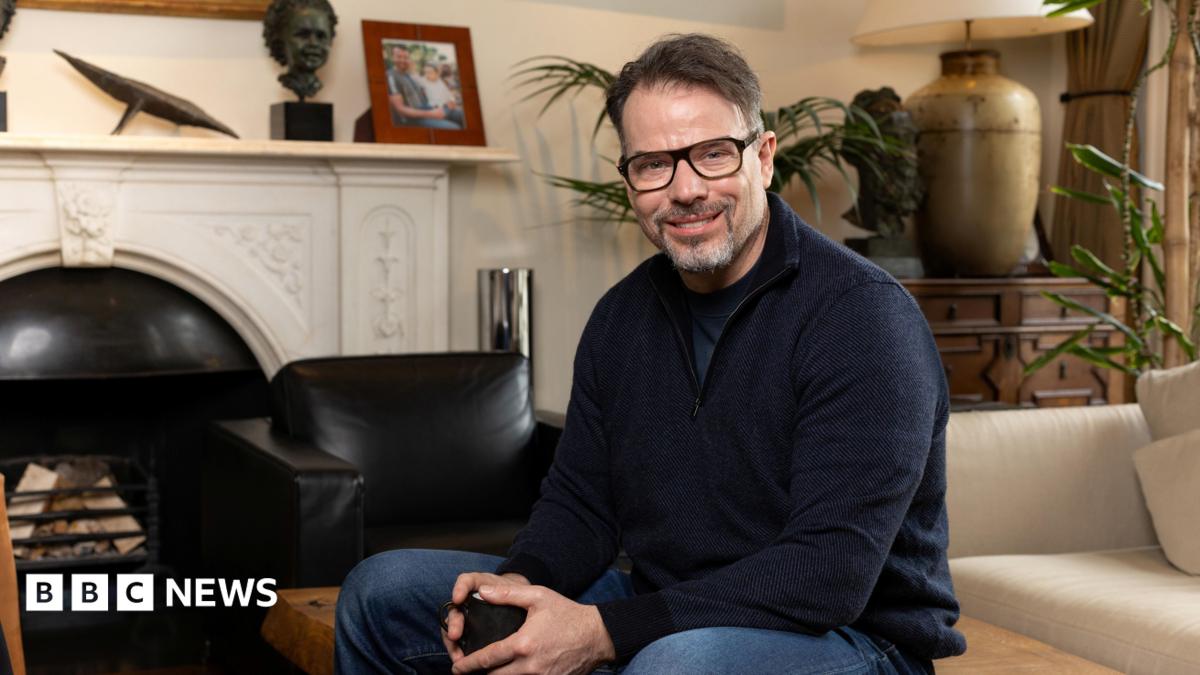
A hedge-fund billionaire and one of the UK’s richest taxpayers has decided to leave the UK for Greece, the BBC understands.
Chris Rokos plans to open an office in Athens, according to reports. Greece has generous tax rules for wealthy foreigners earning overseas income.
Rokos was ranked third in The Sunday Times list of Britain’s top taxpayers, having paid £330m last year, and in March said he would donate £190m to Cambridge University.
Rokos’s representatives declined to comment. A government spokesperson said: “The UK remains an attractive destination for talent and investment”.
“The chancellor has made wealth creation one of his top priorities,” the spokesperson said, adding that the UK has “a competitive and stable tax system, deep capital markets, world-class universities and a highly skilled workforce”.
It is not publicly known why Rokos has made the decision, which was first reported by Bloomberg, but Greece’s tax-rules are seen as attractive to the ultra-wealthy.
They allow foreigners who meet certain criteria to pay a flat yearly tax of €100,000 (£86,000) on all overseas income.
Rokos’s decision comes ahead of UK Chancellor John Healey’s first Budget on 28 October.
In an interview with the BBC on Monday, Healey did not rule out tax increases in the Budget, with a recent increase in government borrowing costs piling pressure on the public finances.
He refused to comment on any decisions about tax, promising only to “balance the books” and “control public spending”.

The stock’s stunning rally comes after a blockbuster debut on the exchanges. ESDS Software Solution listed at Rs 757 on the NSE, commanding a premium of around 76.5% over its issue price.
Strong investor appetite was also evident during the IPO subscription period. The issue was subscribed 136 times overall, reflecting exceptionally strong demand across investor categories. Qualified institutional buyers (QIBs) subscribed to their reserved portion more than 261 times, while the non-institutional investor and retail portions were subscribed around 193 times and 40 times, respectively.
The ESDS Software IPO was entirely a fresh issue, with a price band of Rs 408–429 per share. Ahead of the public offering, the company raised Rs 216 crore from anchor investors, allotting 50.34 lakh shares at Rs 429 apiece.
A significant portion of the IPO proceeds will be directed towards expanding and strengthening ESDS Software’s data-centre infrastructure. Around Rs 576 crore is proposed to be used to purchase and install cloud-computing equipment and other data-centre infrastructure. The remaining funds will be deployed towards general corporate purposes, giving the company greater flexibility to support its broader business and operational needs.
ESDS Software Solution operates in the digital infrastructure space, offering Infrastructure-as-a-Service (IaaS), Managed Services and Software-as-a-Service (SaaS) solutions. The company serves customers in India and overseas across key segments, including banking and financial services, government and enterprises. Its focus on cloud infrastructure and data-centre services positions it to benefit from the continued growth in digitalisation and cloud adoption.
The company’s financial performance also showed a significant improvement in FY26. Total income rose 28% year-on-year to Rs 480.65 crore in FY26, compared with Rs 376.64 crore in FY25. More notably, profitability surged. Profit after tax (PAT) more than doubled to Rs 120.82 crore, marking a 117% increase from Rs 55.61 crore in the previous financial year.With a 76.5% listing premium followed by a near-195% surge from the IPO price in just three sessions, ESDS Software Solution has emerged as one of the most closely watched newly listed stocks. The extraordinary rally highlights the intense investor interest surrounding the company’s growth prospects, cloud infrastructure business and improving profitability.
(Disclaimer: Recommendations, suggestions, views and opinions given by the experts are their own. These do not represent the views of Economic Times)

AL wild-card roundup: Blue Jays remain stuck behind Guardians

Microsoft Edge’s latest Chrome-inspired feature could tame your tab chaos

Auf Wiedersehen, Pet star Georgina Lightning dead aged 63: Actor and director passes away after ‘equestrian accident at a rodeo event’ as co-star Tim Healy pays tribute

Weekend Open Thread – Corporette.com

Weekend Open Thread: Brooks Brothers

London Mayor Sadiq Khan handed a peerage by Keir Starmer alongside 15 other Labour figures… just days before the PM leaves No10

XRP & XLM “Please Tell Your Family Before It’s Too Late” – Catherine Austin

Ripple XRP Is Going To $32 A Coin This Is Going To Shock The Daylights Out Of You

Jangan pernah Menyerah sampai Kalian Berhasil! #timothyronald #motivasikaya #cryptocurrency
-

 Fashion4 days ago
Weekend Open Thread: Beyond Yoga
-

 Crypto World4 days ago
Bitcoin price stalls near $82K as key resistance holds
-

 Politics4 days ago
Best Gaming Laptops, CPUs, TVs, And Keyboards To Upgrade Your Set Up For GTA VI
-

 Tech4 days ago
The Birds Outside, Drawn For You Automatically
-

 Crypto World4 days ago
IMF Says El Salvador’s Post-Review Bitcoin Purchases Used No Public Funds
-
 Crypto World4 days ago
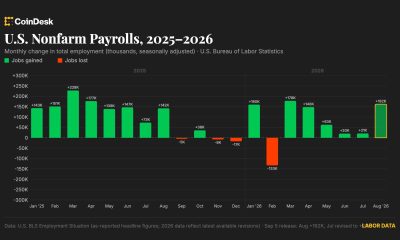
U.S. added stronger than expected 162,000 jobs in August as labor market bounced back
-

 Sports4 days ago
Alexandre Pato consortium’s Northampton Town investment approved
-

 Sports4 days ago
Commanders’ Chig Okonkwo is a top breakout fantasy football candidate
-

 Sports4 days ago
Golden Eaglets Drawn in Group B for 2026 WAFU B U17 Championship
-

 Crypto World4 days ago
XRP price breaks falling channel as bulls target $1.53
-

 Politics4 days ago
A new European chapter for Gibraltar
-

 Politics4 days ago
How To Avoid Winter Colds: 4 Everyday Habits That Spread Germs, Says Pharmacist
-

 Politics4 days ago
The House | Bin the lectures, bring gossip and be ready to banter: how the new PM should prepare for his Trump encounter
-

 Crypto World4 days ago
From warning to listing: UK’s largest retail investment platform opens access to crypto ETNs
-

 Crypto World4 days ago
FinCEN flags $12.7B tied to Southeast Asia crypto investment scams
-

 Tech4 days ago
A Worthy Android Ereader, With Some Tradeoffs
-

 Crypto World4 days ago
Trezor Data Breach Impacts 67,000 More US Customers
-

 Tech4 days ago
How To Edit Claude’s Memory
-

 Politics4 days ago
33 Cosy Autumn Home Decor Ideas: Blankets, Pumpkin Decorations, And Candles
-

 Tech4 days ago
beyerdynamic AVENTHO Y Debuts at IFA 2026 and Makes Wireless Headphones Less Disposable
You must be logged in to post a comment Login