










Connect with us

Tech

Modders have already found two ways to make DLSS 5 playable, and neither one is Nvidia’s

Published

on

When we benchmarked DLSS 5 across the entire RTX 50 series last week with no frame generation inflating the charts, the numbers were bleak enough on their own. An RTX 5090 fell from 192 FPS to 76 FPS at 4K. An RTX 5060 Ti dropped from 129 FPS to 46 FPS at 1440p.

But another key detail was that enabling upscaling brought back a mere 9% in performance, and that’s because DLSS 5’s neural rendering pass runs after upscaling, on the final output frame, so its cost scales with your monitor’s resolution rather than your render resolution. It’s taking the modding community less than two weeks to produce two independent attacks on that problem, with caveats. One moves the neural pass earlier in the pipeline. The other moves it off the graphics card entirely.

Running the neural rendering before the upscaler

The first is Neural Upstream, a ReShade add-on now installable through the DLSS5-Autopilot tool. The idea is a single reordering: instead of render > DLSS Super Resolution > neural rendering at output resolution, it does render > neural rendering at render resolution > DLSS Super Resolution > output.

Because the neural network only enhances a frame and never upscales it, running it on the smaller image is where the saving comes from. At 4K with DLSS Quality, the model chews through roughly 2.7 million pixels instead of 8.3 million.

Advertisement

The numbers posted to r/nvidia are striking – even if they don’t represent the Nvidia’s original take on DLSS 5, it’s all about experimentation at this point: on an RTX 4080 in Assassin’s Creed Shadows at 4K the feature’s cost dropped from roughly 32 FPS to 13 FPS, making the upstream route around 61% faster. Testers have since reported similar behavior in Stalker 2, Cyberpunk 2077, and GTA V Enhanced. OptiScaler has an experimental feature doing something comparable through its own hooking system.

The catch is obvious though. If you feed a neural network less image data, then you get less out of it. Nvidia almost certainly placed the pass last because that’s where fidelity is best, and DLSS 5 already has an uncanny-valley problem it could not afford to make worse.

Take two: Give neural rendering its own graphics card

The second approach comes from Marcelo Guibout who published MGPU Bridge, a ReShade add-on that renders the game on one GPU and executes the neural pass on a second one.

Neural rendering is a terminal stage, so it takes a finished frame and hands back a finished frame. Nothing about it requires the same device that drew the frame. Let’s not forget the first time Nvidia showcased DLSS 5, it was way less optimized and it took two RTX 5090s to run properly, with a single card dedicated to neural rendering.

Advertisement

Measured on two RTX 5060 Ti 16GB cards in The Blood of Dawnwalker at 1080p:

DLSS mode DLSS 5 off On the render card On the second card
DLAA 67-70 44 67-70
Quality 98-99 54-55 91
Performance 127-131 59 106-107
Ultra Performance 172 69-71 157

The neural stage takes 35% to 60% of the frame rate when it runs on the render card, and 0% to 17% when it runs on the other one. The render card also ran 21 °C cooler with the load moved off. The comparison people keep reaching for is the old dedicated PhysX card.

The asterisks are substantial, however. MGPU Bridge requires two GPUs and two monitors, one per card, because the neural output is displayed by the card that produced it. Image quality may not be exactly the same as the original DLSS 5 pipeline, too. However it does present the question/idea that an official way to do this in two GPUs would be interesting (albeit very expensive proposition in this state of the GPU market).

Advertisement

Everything else, bundled for RTX 20, 30 and 40

Running parallel to modders’ performance work is compatibility work, which has reached the point where somebody had to build an installer for the installers. DLSS Unlocked, from developer ShyVortex, combines OptiScaler_DLSSNR with DLSS Enabler to deliver neural rendering and multi-frame generation on Turing, Ampere and Ada, on both Windows and Linux.

On RTX 20 and 30 cards, every generated frame comes from AMD’s FSR 3.1 rather than Nvidia’s pipeline. On RTX 40, the first generated frame goes through DLSS-G and the rest are handed to FSR 3.1. You supply your own patched DLSS 5 DLL, which the project won’t distribute for legal reasons.

A must-have warning with all this DLL injection… keep it away from anything with anti-cheat, and be careful where you source DLLs from after the malware warning DLSS Swapper’s creator issued earlier this year.

Advertisement

Source link

Continue Reading
Click to comment

You must be logged in to post a comment Login

Leave a Reply

Tech

World’s Largest Gun Aims to Shoot Satellites Into Space

Published

on

The World's Largest Gun Aims to Shoot Satellites Into Space

When a rocket launches a payload into orbit, the overwhelming majority of its weight at launch is just fuel. After decades of space travel, a company called Longshot Space hopes to unlock a more efficient way to launch satellites into orbit.

The plan: Shoot satellites into space with the world’s biggest gun. To accomplish this, Longshot is designing its cannons to accelerate payloads using compressed gas. Unlike regular guns, which use one sudden burst, Longshot uses multiple bursts of gas to accelerate its projectiles through a barrel that, in its final form, will be miles long.

Launching satellites this way also requires satellites capable of withstanding the shock. The company believes it is possible, but indicates that traveling by gunshot is probably not feasible for sensitive cargo, especially human beings.

That didn’t stop our contributor Andy Altman from climbing inside the barrel of one of these guns. To see his in-depth tour of Longshot Space, check out the video in this article.

Source link

Advertisement
Continue Reading

Tech

India has been so good for S’pore that 50% of Singtel’s value comes from its Indian holdings

Published

on

Disclaimer: Unless otherwise stated, any opinions expressed below belong solely to the author. All figures come from official and public sources.

The controversy over Air India’s performance, which weighs on its shareholder, Singapore Airlines, has dominated the media over the past few weeks. This issue has even sparked political controversy and accusations of racism, following comments posted by angry netizens on the Internet.

But as many people are questioning Temasek’s (which owns half of Singapore Airlines) investments in India, I thought it would be good to remind people just how important—and profitable—the country has been for Singapore.

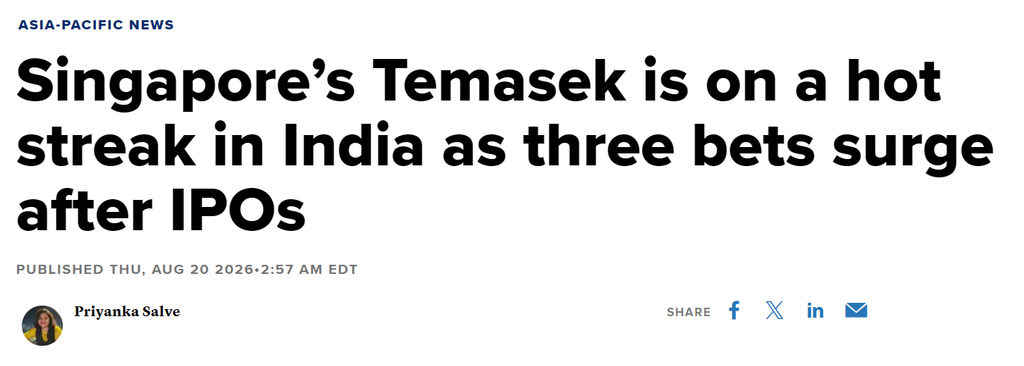
Here’s a headline from a story published by CNBC three weeks ago, about the blowout performance of Temasek’s recent investments, which have just entered public trading in the stock market:

Advertisement

Today, nearly a month later, the three stocks have only increased their gains, with Molbio Diagnostics and Shiprocket trading at a +40% premium, while Milky Mist Dairy Foods is up by nearly +100%.

But these are just recent successes.

Last year, Temasek realised one of its largest exits in the country when it sold its 35% stake in Schneider Electric India for a whopping S$8.18 billion, after buying it for around S$860 million in 2020. That’s a nearly 10x return in just five years.

It’s easy to understand, then, when Temasek’s spokesperson told CNBC:

“India is our best-performing market on a 10-year basis.”

The country accounts for just 7% of Temasek’s S$518 billion portfolio, but it is certainly going to attract more money in the coming years, given how well it is paying off.

Advertisement

However, some of the longest-running—and most successful—investments started more than 25 years ago, when Temasek-owned Singtel purchased a stake in Airtel, which is now India’s second-largest telecommunications company.

Singtel is almost an Indian company

Today, Singapore’s dominant telecom is worth around S$73.5 billion, making it the fourth-largest company on the Singapore Exchange by market capitalisation.

But its high value does not come from local operations—the city-state is far too small to generate enough business for a telecommunications company of this size.

You see, Singtel also owns shares in similar companies abroad, including 26.9% in Indian Bharti Airtel, which serves 360 million customers in India, and another 160 million in Africa.

Advertisement

That stake is now worth S$41.7 billion on its own. It is equal to 56.6% of Singtel’s entire market cap.

This means that more than half of Singtel’s current value comes from its prudent investment in India, which started in 2000 and has cost the company a bit over S$5 billion since then.

This shows why India is so important as a destination for Singaporean capital.

There’s a limit to returns on investments made within Singapore. A country of 6 million people cannot produce multibillion-dollar enterprises that are focused on the domestic market. They have to seek opportunities abroad early or risk stagnation.

Advertisement

India is the largest developing economy in the world. It needs expertise, and it needs money—things that Singapore has in abundance.

Those investments aren’t always easy, and the road may be bumpy occasionally, but many of them have already paid off big for Temasek, eventually making their way into the national budget through the National Investment Returns Contribution, which is currently approaching S$30 billion per year.

  • Read other articles we’ve written on Singaporean businesses here.

Featured Image Credit: Getty Images

Advertisement

Source link

Continue Reading

Tech

Why this month’s Microsoft patch release is a doozy

Published

on

Microsoft’s patch for September is a doozy, with a record number of roughly 972 vulnerabilities fixed and 112 of them meeting the high critical-severity threshold.

It was only two months ago that Microsoft patched a then-record 570 vulnerabilities. Then, last month, Microsoft patched some 620 of them. Google and other companies have also published record numbers of vulnerabilities in recent months. Two weeks ago, OpenAI, Anthropic, Amazon Web Services, Google, Microsoft, and 100 companies and organizations published an open letter warning of a narrowing window for patching vulnerabilities ahead of an expected tsunami of AI-enabled attacks that actively exploit them first. The industry is taking the threat seriously by pumping out unprecedented numbers of patches in their software.

Welcome to the new normal

Dustin Childs, a researcher at the Zero Day Initiative, calls the spikes the “new normal” and also cautions that despite them, the damage that’s likely to result from AI-assisted attacks could eventually be substantial.

“On the one hand, congrats to the security gnomes at Microsoft for being able to patch bugs at this rate,” Childs wrote Tuesday. “On the other hand, AI-assisted vulnerability discovery shows no signs of slowing down. However, we have not seen a correlating spike in active exploits—yet.”

Advertisement

Counting the precise number of vulnerabilities fixed in a monthly patch release for Microsoft is never an exact science. In some cases, the bugs were previously addressed or affected non-Microsoft products. By Childs’s count, Tuesday’s release patches 972 vulnerabilities, and 997 when counting the porting of fixes for the Chromium browser incorporated into Edge. Of the new vulnerabilities, 112 of them are rated critical, with the remainder carrying the important designation. Already this year, Microsoft has fixed 2,760 vulnerabilities, more than double the number from last year. At this rate, Microsoft will complete the year having fixed more bugs than all of 2023, 2024, and 2025 combined.

Source link

Advertisement
Continue Reading

Tech

White House takes down ‘Build the Wall’ game after the Tetris Company complains

Published

on

A video game posted to the Trump administration’s website — one that closely resembled Tetris — has been taken down after the Tetris Company complained.

The White House recently took the unusual step of posting a number of arcade-style video games to its website. One of the more controversial was a game called “Build the Wall,” which reportedly mirrored Tetris’ gameplay, tasking players with stacking blocks of various shapes and sizes. Widely criticized as racist, the stated goal of the game was to build a wall in order to keep out a “zombie border siege.”

Not long after Build the Wall’s existence became public, the Tetris Company — which owns the rights to the original Tetris game — spoke out about it, clarifying that it had no role in its creation. “The Tetris Company was not involved in the creation of ‘Build the Wall,’” it said in an Instagram post, adding: “We take copyright infringement very seriously.”

The page for Build the Wall now returns a 404 error, meaning the page no longer exists. Kotaku first spotted that the game was no longer visible on the White House’s website. TechCrunch has reached out to the Trump administration for comment.

Advertisement

Still visible on the government’s website is a game called Rio Run, where players control a white male character whose goal is to deport as many immigrant characters as possible.

Source link

Advertisement
Continue Reading

Tech

Some Tech Companies Have Privately Pushed Back On ICE Subpoenas. They Should All Do More.

Published

on

from the protect-the-rights-of-your-users dept

In a handful of known cases, large social media companies have privately pushed back against Immigration and Customs Enforcement (ICE) subpoenas when the agency tried to unmask anonymous users who tracked immigration activities or criticized the government.

As ICE engages in a pattern of illegal and chilling investigations, any resistance is welcome. But social media companies can do more. When companies receive these unlawful subpoenas, they should be clear with the public that they will not hand over the data unless a court compels them to do so. In addition, companies themselves can take the government to court to challenge these unlawful subpoenas on behalf of their users.

Publicly challenging these unlawful subpoenas in court has the dual purpose of protecting individual users who may lack the resources or know-how to challenge a subpoena on their own, while also discouraging ICE from issuing similarly unlawful subpoenas in the future.

Companies have a responsibility to protect the privacy of their users. That responsibility does not end simply because companies wish to avoid the ire of this administration—which has sought to chill other powerful institutions like news outletslaw firmsuniversities, and non-profits.

Advertisement

ICE Has Issued Many Unlawful Subpoenas

ICE has sent hundreds of subpoenas to large technology companies like Google, Meta, and Reddit seeking basic subscriber information like name, email address, IP address, and session times.

Some of these subpoenas have targeted people who engaged in protected activity—like tracking immigration actions, criticizing the government, or attending a protest. People have a First Amendment right to document law enforcement activities and criticize the government online, without retaliatory government investigations. This right has become more important as immigration agents have engaged in invasiveunconstitutional, and sometimes violent conduct.

In a handful of cases, users themselves have successfully pushed back. After receiving notice of these subpoenas, users have challenged them in court, relying on pro-bono lawyers from groups like the ACLU or Civil Liberties Defense Center. Companies have been largely absent from these court proceedings.

Private Pushback from Meta and Reddit

While not appearing in court, companies like Meta and Reddit have sometimes pushed back behind the scenes.

Advertisement

For example, on September 11, 2025, ICE sent administrative subpoenas to Meta seeking to unmask users who ran Instagram and Facebook accounts that tracked immigration activity in Pennsylvania. On September 19, 2025, Meta’s Law Enforcement Response Team told ICE that the agency did not have the “statutory authorization” to seek the records. It asked for more detail about the investigation and said “Meta will take no further action with respect to this summons until it receives this information.” Later, Meta informed ICE that it planned to notify the users about the subpoenas, since no gag order had been obtained. The government disclosed this information in one of EFF’s Freedom of Information Act lawsuits against ICE and other agencies.

On October 3, 2025, Meta notified the user about the subpoena. Despite its private pushback, Meta told the users it would comply with the subpoenas unless they mounted a court challenge within 10 days—which they did with the help of the ACLU. Ultimately, ICE withdrew the subpoenas when it became likely that ICE would lose the case in court.

In another example, Reddit documented its pushback in a transparency report released a few months ago. Reddit reported that in the second half of 2025, the company received three Department of Homeland Security (DHS) subpoenas seeking account information from 11 users who posted content critical of ICE. In the report, the company stated that “Reddit objected to these legal demands because the users appeared to be engaged in protected activity under the First Amendment, and law enforcement withdrew their requests.” The company reported that most other DHS subpoenas it received appeared to be routine.

A Tech Company Model for Public Resistance

EFF’s demand that technology companies do more to protect their users is not unprecedented. Twitter (now X) did so successfully in the first Trump administration.

Advertisement

On April 6 2017, Twitter went to court to challenge a DHS subpoena that sought to unmask a Twitter account named “@ALT_USCIS,” which frequently criticized the administration’s immigration policies. Twitter challenged the subpoena on both statutory and First Amendment grounds. A day later, DHS withdrew the subpoena and Twitter dismissed the case. The incident led to an inspector general investigation, which criticized a tactic that DHS is still engaged in.

In other circumstances, companies have also gone to court to protect their users and shield themselves from burdensome legal process. In 2013, Microsoft challenged a search warrant for the content of emails stored on servers outside the United States. In 2015, Apple challenged a court order to break the security of its iPhone during an investigation into the San Bernardino shootings. And in 2007, Yahoo challenged the constitutionality of government requests at the Foreign Intelligence Surveillance Court.

Republished from the EFF’s Deeplinks blog.

Filed Under: ice, privacy, subpoenas

Companies: meta, reddit, twitter, x

Advertisement

Source link

Continue Reading

Tech

CloudNC raises $20M to automate manufacturing’s most pressing bottlenecks

Published

on

UK-based manufacturing software startup CloudNC announced a $20 million B extension round on Wednesday, bringing its lifetime total raised amount to $128 million. The company’s last major raise was four years ago, its co-founder and CEO Theo Saville told TechCrunch.

Saville launched CloudNC in 2015 with Chris Emery, now the company’s chief science officer, and offers AI-powered CAM Assist software that automates parts of Computer Numerical Control (CNC) machining. CNC is the process of using computer-controlled machines to cut or shape materials precisely into the parts that are then used in automotive, defense, or consumer hardware industries.

Before a part can be cut, Saville said, a machinist or a computer-aided manufacturing programmer has to decide issues like how a part should be held or what tools should be used, Saville said.

They typically use powerful CAM software to help with this ideation phase, and although some of these tools can help users create part features or known part patterns, that’s different from looking at the part and generating an execution strategy an expert would actually want to use. 

Advertisement

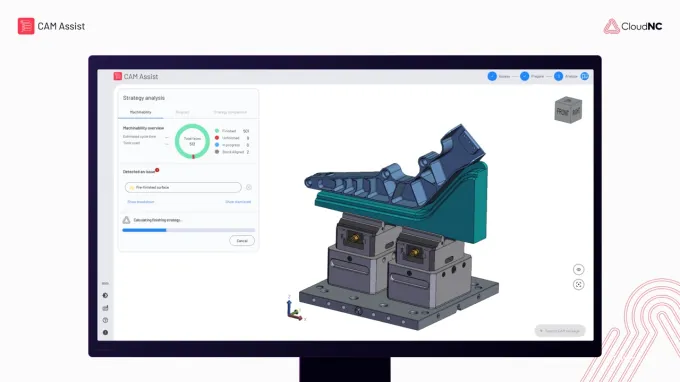
“Traditional CAM systems are powerful, but in most workflows, they are still tools that allow programmers to manually specify how a part should be machined,” Saville said. This is where his CAM Assist comes in, a software that plugs into traditional CAM systems, like Autodesk Fusion or Mastercam, to help machinists and programmers make more efficient strategic manufacturing decisions. 

“It selects suitable tools, approach directions, and cutting feeds and speeds, and then drafts the code required to tell the CNC machine what to do,” Saville said. 

Image Credits:CloudNC

From there, the user reviews, edits, and approves the results. Saville said the goal was to help skilled workers be more “efficient and productive,” rather than removing expert judgment from the process. If “traditional CAM is a powerful toolkit,” he said, then “CAM Assist is more like an expert assistant sitting alongside the programmer, automating much of the first-pass thinking and repetitive setup so the human can review, improve, and approve the approach.” 

Saville said more than 1,000 machine shops worldwide use CAM Assist, and 80% of the company’s customer base, which includes both manufacturers and companies, is in the U.S. With a team of 80 employees, the company’s biggest goal is scaling adoption. 

“This makes this the right time to raise additional capital,” he said. Investors in the round include Nimble Ventures, which led the round, Calculus Venture Capital, Entrepreneur First, and LM Capital, Lockheed Martin’s venture arm. “The funding allows us to support wider take-up of CAM Assist, strengthen our go-to-market operations, expand in existing and new markets, and develop new products such as Quote Agent.” 

Advertisement

The premise behind Quote Agent, which targets manufacturers, is similar to CAM Assist. It helps shops assess the estimated cost and risk of a new project so they can move faster to accept — or reject — new work. He tied this somewhat back to geopolitics, pointing to, for example, how machine shops in the U.S. are looking to reshore and how, at the same time, there is a shortage of skilled workers in manufacturing. 

“Machine shops need to quote faster, program faster, and deliver more with the people and machines they already have,” he said, adding that Quote Agent is set to launch next month. 

“There are more ways to machine a typical CNC part than there are atoms in the universe,” he continued. “We have spent years attacking that specific problem, with our own factory, our own software team, and a lot of hard lessons from real machining. It’s been a long process to get to where we are today.”

When you purchase through links in our articles, we may earn a small commission. This doesn’t affect our editorial independence.

Advertisement

Source link

Continue Reading

Tech

Meta’s New AI Agent Wants to Get Personal With You

Published

on

This seems to be the year of AI agents, and Meta is diving into the game. The company on Tuesday announced a new agent program called Muse, which CEO Mark Zuckerberg describes as a “personal agent” that understands your habits and goals. It’s available now in the US.

Agentic AI is a type of generative AI based on a large language model where agents, or bots, are meant to take actions autonomously on your behalf. Meta’s Muse, for example, can do online shopping (with your permission), create documents, fill out forms and respond to emails.

Meta says that Muse is a more general-purpose agent, not limited to specific tasks like coding. (If you want agentic coding help, you can use Muse Code, also recently released by the company.) You have to give Muse permission to access your apps and data, which you can revoke at any time. Like a lot of agentic AI tools, the more info you give it, the more personalized your results will be.

Advertisement
Audio Deepfakes Are Here: How to Protect Yourself From AI-Impersonation Scams

Muse runs “on its own dedicated computer in the cloud,” according to a Meta blog post, in what the company calls a “virtual machine.” The tool also has a separate Sentinel agent — you can think of it as a virtual traffic cop, giving Muse a red or green light before letting it out onto the internet to complete tasks.

Agentic AI can be risky. Over the summer, agents from Meta, OpenAI and Anthropic each slipped out of their testing environments and hacked outside websites, casting increased scrutiny on the potentially disastrous harm AI can do to our cybersecurity.

Meta’s vice president of Superintelligence Labs, Tarek Sheasha, said in a blog post: “The harness runs in its own isolated cell, it doesn’t see real credentials, and every interaction with the outside world runs through a Sentinel which the agent can’t override.”

Muse is available now on iOS and Android and on the muse.ai website. The company says it will be bringing the AI to its controversial smart glasses soon. According to Zuckerberg, it will be free for people to use “up to 100 million tokens per week” (one token is roughly equivalent to four characters). So unless you’re constantly running Muse on complex tasks, you should be able to use it for a while before running into a paywall.

Source link

Advertisement
Continue Reading

Tech

What Are The Major Changes Coming To Apple HomeKit In iOS 27?

Published

on

The Home app is getting some great AI upgrades, along with other cool tweaks.

iOS 27 is focused on features like Siri AI, along with making overall improvements. But there’s much more to this update, especially for those with HomeKit accessories. No, Apple isn’t bringing the revamped Siri to the HomePod just yet — though that might happen soon. Instead, HomeKit and the Home app are getting some great new features. 

Apple Intelligence is being further integrated into the Home app for smarter notifications. Plus, security camera footage will be much clearer now with 4K support. These features on their own may not seem like a big deal, but they definitely make the HomeKit experience better.

Advertisement

HomeKit now integrates with Apple Intelligence

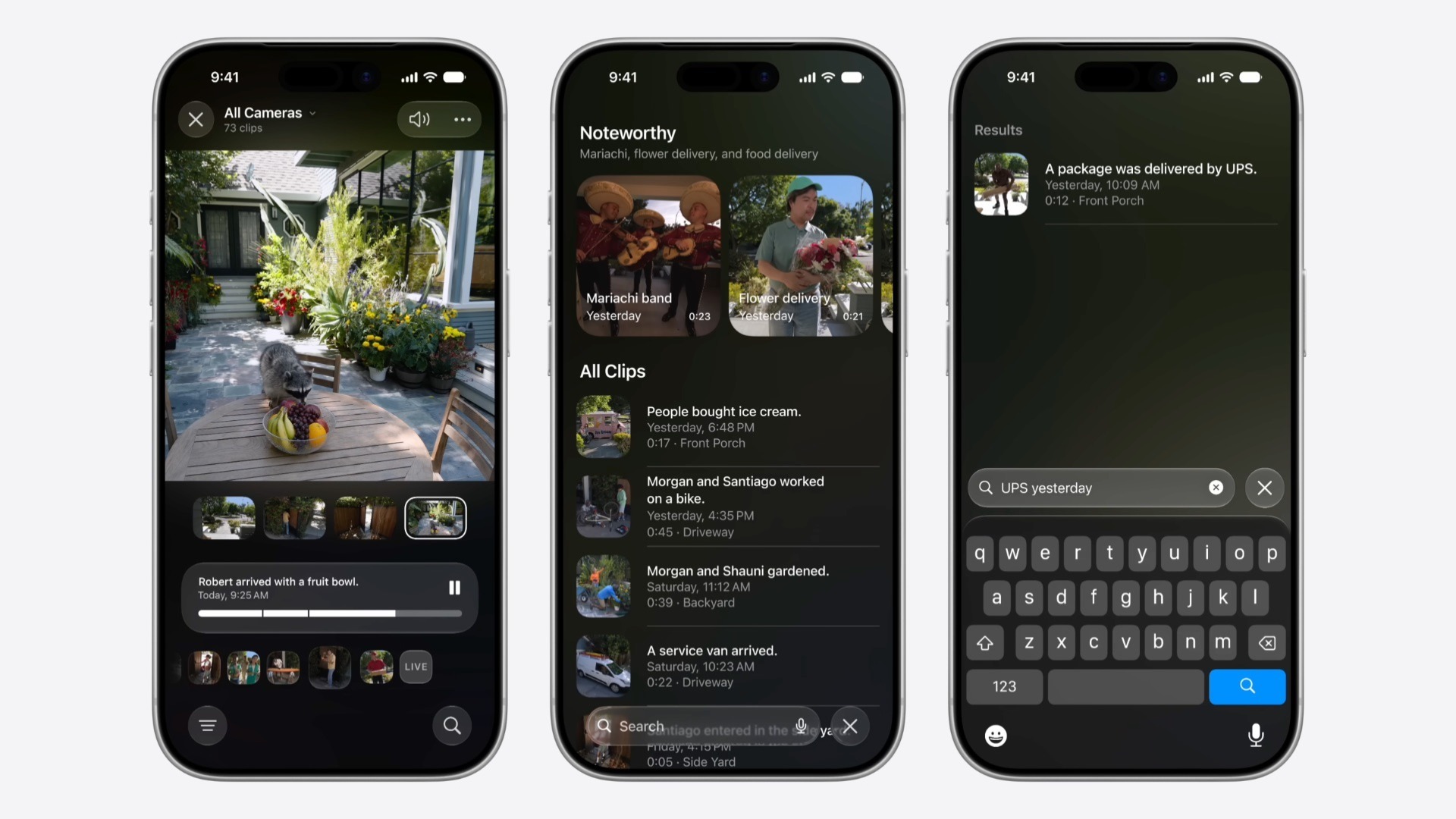
Perhaps the most notable change this year is deeper integration with Apple Intelligence. HomeKit has never really taken advantage of AI features until now, but that changes with iOS 27. The Home app can now summarize important notifications, such as when someone was seen at your door or when smoke is detected. This is especially useful for people who have multiple cameras and smart doorbells at home, as it should prevent you having your lock screen flooded with Home app notifications.

Speaking of cameras, they can now use AI to better detect faces or animals. Not only that, but the Home app combines footage from multiple cameras to show you the same event from a different angle. Say someone is moving around your house: the app will show you a sequence of footage of that person in every room equipped with a camera. 

The videos also come with a short AI-generated description, so you don’t have to spend minutes watching the whole clip to find out what happened. You can even search for events captured by your cameras, plus videos are now recorded in 4K.

Advertisement

Apple TV owners have another reason to update to iOS 27, as the Home app can now update the software on all your Apple TVs at once. Plus, the app’s reliability has been improved overall, which is always appreciated.

New home accessories from Apple are coming soon

Some new releases haven’t been officially announced, but are likely coming soon. These are related to upcoming hardware, such as the rumored HomePad. If the rumors are true — and they probably are, based on internal code leaked by Apple itself — there are many new home accessories underway.

This includes a new generation of the HomePod mini, as well as a new product called the “HomePad.” As you might have guessed, this product is expected to combine the HomePod and the iPad into a single device. This would make it akin to Apple’s take on an Amazon Echo Show. It appears that this HomePad will have its own “Faces” gallery, just like an Apple Watch. The company has also been working on a tabletop robot, but this one probably won’t be ready for a while.

As for the features mentioned earlier, they’re all part of iOS 27. If you really want to try out the latest features ahead of time, you can always sign up for the Apple Beta Program. But since betas can be unstable, you should only install them on a spare device in case something goes wrong. 

Advertisement

Source link

Advertisement
Continue Reading

Tech

Reporting Indicates RFK Jr. Directly Intervened To Keep PA Deaths Off CDC Measles Report

Published

on

from the vanishing-act dept

The measles outbreak, that began in America nearly two years ago, has only increased in velocity. We recently talked about the deaths of two children in Pennsylvania who both died while infected with measles. I’m altering my language slightly here from that original post in which I described those children as having died of measles purely to acknowledge that there are some, including RFK Jr., who are trying to dispute the cause of those deaths. I’m comfortable stating that they died of measles, as are state officials in Pennsylvania, and as are competent local health professionals like Paul Offit. As explained in a previous post, the ruptured spleen that one newborn died from is an expected symptom of measles in newborns. Kennedy is trying to claim that the cause of death is the spleen, as though the measles infection played no role. That’s dumb, and he’s dumb and a liar, but here we are.

Well, when it comes to CDC reporting on the measles outbreak, the dedicated public page for tracking the numbers was last updated the day of this writing, September 4th. The data generally demonstrates just how shit of a job Kennedy and his crackerjack group of assclowns in government are doing in combating the outbreak. Keep in mind that Kennedy has publicly claimed that he’s doing an awesome job in all of this.

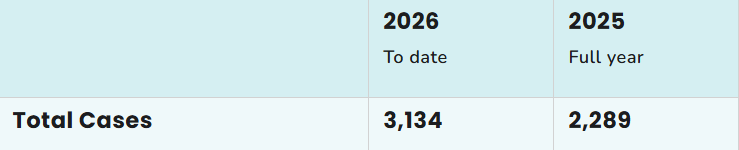
Cases? Up with 4 months left in the year.

Total number of hospitalizations? Up with 4 months left in the year.

Deaths? Well…

The page didn’t always read that way. For a brief moment several days ago, the death count simply stood at 2. Why? Because the CDC questioning state reporting on any statistic surrounding a medical outbreak like this is pretty much unheard of. It’s not how this works. And there was no explanation for why that change was made, other than it was done so on orders from newly confirmed CDC Director Erica Schwartz. Schwartz, you should recall, raised many eyebrows during her confirmation hearings when she was asked if she would refuse the influence of RFK Jr. if he wanted her to deviate from science and factual information, as he did with Susan Monarez on the topic of vaccines previously. She avoided the question entirely by stating she didn’t believe Trump or Kennedy would ever try to exert that kind of influence upon her.

Perhaps the most disturbing aspect of Schwartz’s testimony came when senators repeatedly asked her what she would do if (or when) she’s put in the same position as Monarez. Schwartz responded as if it hadn’t happened and would never happen. “I do not believe that the president or the secretary would ever do what you just mentioned,” she told Sen. Bernie Sanders (I-Vt.) at one point, prompting him to reply: “Really?”

We can be done with Schwartz entirely at this point. While she entered into her confirmation hearings with a good reputation and the cautious approval of all kinds of national medical groups, it’s clear that her failure to answer the above question is of consequence. That’s because new reporting indicates it was Kennedy himself who told her to keep those two Pennsylvania deaths off the CDC measles report.

Advertisement

The Centers for Disease Control and Prevention is still secretly counting two measles deaths that were deleted from the agency’s public measles data—a deletion that occurred at the direct request of anti-vaccine Health Secretary Robert F. Kennedy Jr., according to two reports released today.

Early today, Reuters reported that Kennedy instructed new CDC director Erica Schwartz to delete the two deaths from the agency’s website. CDC staff had reportedly already reviewed information about the deaths and accepted the characterization that they were measles-related. Still, Schwartz deleted the deaths without objection, insiders told Reuters. According to previous reporting, the two deaths were added and then removed from the CDC’s website within hours on August 30.

Now, I will deign to note that Kennedy has disputed this report. But who really gives a shit, considering that Kennedy has demonstrated a willingness to both fudge the facts when it comes to medical data and that he’s been perfectly happy to lie directly to Congress. If he’ll lie to senators, there’s no doubt he’s willing to lie to you and the rest of the public. I personally have no doubt that this is yet another lie being told by someone with no conscience. And I’ll note that we typically call those people sociopaths.

As I mentioned above, this is not how CDC statistical reporting has traditionally worked. State health officials send the data in, having done their own due diligence, and the CDC reports on the data. In this case, CDC is suddenly disputing the data and claiming that the state hasn’t provided all the documentation needed to associate the deaths with measles. The state, unsurprisingly, is calling bullshit.

In an earlier statement to Ars Technica, HHS said that the two deaths in Pennsylvania “have not been confirmed based on the information currently available to CDC.” A spokesperson did not respond to a follow-up question about what information the CDC was lacking and/or awaiting from the state.

Pennsylvania’s state health department has said that it has provided the CDC with all the required information.

Advertisement

I’m sure they have. Just as I’m sure that Kennedy is attempting to save face here by pulling this nonsense. Meanwhile, while Kennedy is primarily concerned with his own ego, I’ll remind our dear readers that there are two tiny fucking coffins in the ground from children who died as a result of Kennedy’s incompetence. He’s worried about him, not about you, your children, or your community.

Get his ass out of HHS. Get him out of government. The same goes for Schwartz and any other officials Kennedy has put in place in government. They all must go, as they are poisoned by Kennedy’s mere presence. Burn it all down and let’s start again.

Or else we’ll have more deaths, no matter how the government tries to hide them from view.

Filed Under: anti-vaxxers, cdc, hhs, measles, pennsylvania, rfk jr., vaccines

Advertisement

Source link

Continue Reading

Tech

Alogic’s new 6K monitor hides a 12MP webcam that only pops up when you’re on a video call

Published

on


  • Alogic Clarity Touch 6K monitor packs 6016 by 3384 pixels into one massive display
  • The webcam retracts fully into the monitor when not in use
  • Thunderbolt 5 support is missing from this new flagship monitor

Alogic has upgraded its Clarity monitor range with a new 32-inch 6K model featuring an integrated 12MP webcam.

The company announced the display at IFA 2026 in Berlin, where it also showed several other new desktop products.

Source link

Advertisement
Continue Reading

Trending

Copyright © 2025