
Crypto World
Visa expands stablecoin card network to 160 programs



Visa said on Sept. 8 that more than 160 stablecoin-linked card programs were operating globally during its fiscal second quarter of 2026, while their payment volume increased nearly 200% year over year.
Summary
- 160 stablecoin-linked Visa card programs were live globally during the company’s fiscal second quarter 2026.
- Payment volume across Visa’s stablecoin-linked card programs increased nearly 200% from the previous year globally.
- Visa’s stablecoin settlement volume surpassed a $20 billion annualized rate, rising more than fifteenfold year-over-year.
- Credit Coop says its platform financed $2.5 billion cumulatively since 2023 without recording any defaults.
- Participating card programs reduced borrowing costs by up to 30%, according to Visa’s published figures.
The payments company also reported that its stablecoin settlement volume had surpassed a $20 billion annualized run rate. That represents growth of more than 15 times from the corresponding period one year earlier.
Visa disclosed the figures while announcing expanded work with Credit Coop. The companies are using stablecoin-denominated revolving credit facilities to help card programs finance daily settlement obligations.
The statistics come from Visa and Credit Coop rather than independently audited transaction reports. An annualized run rate also projects recent activity over a full year. It does not mean Visa has already processed $20 billion in stablecoin settlement during 2026.
Visa stablecoin cards reach 160 live programs
Stablecoin-linked cards connect a customer’s crypto wallet or stablecoin account with Visa’s existing merchant network. The digital assets are converted or used to fund the transaction while the merchant receives payment through familiar card infrastructure.
Visa said payment volume across these programs grew nearly 200% year over year. The company did not publish the underlying dollar value, regional breakdown or transaction count in its announcement.
The latest disclosure updates figures Visa presented in June. At the time, it said more than 160 programs were either live or in development and that stablecoin settlement had reached a $7 billion annualized rate as of March.
The latest $20 billion figure suggests the settlement run rate has nearly tripled since March. However, the two figures cover Visa’s stablecoin settlement activity, not necessarily consumer purchases made through stablecoin-linked cards alone.
Card payment volume and settlement volume measure different processes. Payment volume covers purchases initiated by cardholders. Settlement volume covers money transferred between Visa and participating financial institutions or program operators. Visa previously placed its stablecoin settlement run rate near $7 billion while expanding pilots across more regions, blockchains and currencies.
Credit Coop finances the daily settlement gap
Visa’s announcement focused on a working-capital problem facing new stablecoin card programs. Operators must fund settlement obligations before receiving all corresponding payments from cardholders.
Large, established card portfolios can use warehouse credit lines or securitizations. Smaller programs may need only several million dollars, drawn and repaid daily. Legal and administrative costs can make conventional facilities uneconomical at that scale.
Credit Coop’s structure uses a stablecoin-denominated revolving credit facility secured by settlement receivables. Borrowers draw from the facility to meet their daily Visa obligations and repay the credit line as cardholder proceeds arrive.
Incoming receivables pass through Credit Coop’s Spigot smart contract. The contract automatically directs part of the proceeds toward principal and interest before transferring the remaining funds to the borrower’s operating account.
The process resembles a controlled bank lockbox. The difference is that the routing and repayment instructions execute through smart contracts, creating publicly visible transaction records.
Visa said Credit Coop receives authorized programs’ daily settlement files through a secure data connection. Credit decisions, facility sizes and repayment checks can therefore use both Visa records and onchain transaction history.
According to Visa, stronger access to settlement data helped reduce borrowing costs for some participating programs by as much as 30%. The company did not disclose individual interest rates or identify every program that received lower pricing.
Rain provides the first operating case
Rain, a Visa principal member offering stablecoin card infrastructure, has used a Credit Coop revolving facility since August 2023. The facility finances Rain’s daily Visa settlement requirements.
Credit Coop transfers funds to Rain based on the relevant Visa settlement file. Rain then funds its settlement obligation. Cardholder payments subsequently pass through smart contracts that service interest and replenish the facility.
Visa said every settlement obligation covered by the facility had been funded on time. Credit Coop reported more than $2.5 billion in cumulative financing since 2023, covering over 3,000 borrowing events and 9,000 repayment events.
Credit Coop also reported zero defaults across the platform. Those performance figures are company claims and have not been supported by a published independent audit.
Rain accounted for approximately $2 billion of the reported cumulative settlement financing. Visa said the arrangement had processed more than 2,000 borrowing events and 7,000 repayment events for Rain, generating at least $1.58 million in interest.
Rain previously confirmed that it joined Visa’s stablecoin settlement pilot. The company said it settles Visa card obligations in USDC seven days a week, including weekends and holidays.
Visa has also described Rain’s use of USDC-backed receivables financing in its broader work on onchain credit. The structure is intended to reduce the need for issuers to hold idle settlement capital.
U.S. card programs test the financing route
Karta, a U.S.-issued premium Visa card operating under Rain’s bank identification number, also launched using Credit Coop financing while developing its performance record.
Visa said Karta later announced $140 million in financing in June 2026. The package included a $15 million Series A led by Galaxy Ventures and a $125 million institutional credit facility from Community Investment Management.
Visa presented Karta as an example of an early card program moving from a smaller revolving facility to institutional financing. The company said Karta’s daily settlement history contributed to the record available to larger lenders.
Moto and Xplace also use Credit Coop financing under Rain’s issuing infrastructure, according to the announcement. Visa did not disclose their facility sizes, borrowing costs or settlement volumes.
The partnership adds a credit layer to Visa’s wider stablecoin strategy. In March, Visa and Stripe-owned Bridge announced that their card programs were live in 18 countries and planned to reach more than 100 countries by the end of 2026.
Bridge-enabled cards can be used through platforms including Phantom and MetaMask. Visa said customers could spend their balances across more than 175 million merchant locations, while merchants continue receiving conventional payments.
Visa linked cards and stablecoins with its wider programmable commerce strategy, including settlement pilots and payment tools for AI agents.
Visa plans just-in-time settlement funding
Visa and Credit Coop are now working toward just-in-time funding. Under the planned model, a program’s daily settlement file would trigger a stablecoin disbursement matching the exact net amount owed.
The funds would move directly to the relevant Visa settlement address. Programs would avoid drawing a full facility in advance and holding unused capital between settlement cycles.
Visa said this model could shorten borrowing periods from days to hours. Lenders could also align their exposure more closely with actual daily obligations instead of committing the entire credit line continuously.
The model remains dependent on accurate settlement data, reliable smart contracts and sufficient stablecoin liquidity. Operational failures could prevent a program from meeting a settlement deadline even when the credit facility remains adequately funded.
Credit Coop’s zero-default record does not guarantee future performance. Stablecoin depegging, contract vulnerabilities, borrower failures and changing regulations remain potential risks.
Visa has not announced a deadline for launching just-in-time funding across all 160 programs. It also has not disclosed which stablecoins or blockchains future facilities will support.
The next stage will involve extending the model to additional issuers and determining whether their onchain repayment records can support larger institutional facilities. Visa said it expects more programs to follow Karta’s path, but that remains a company forecast.

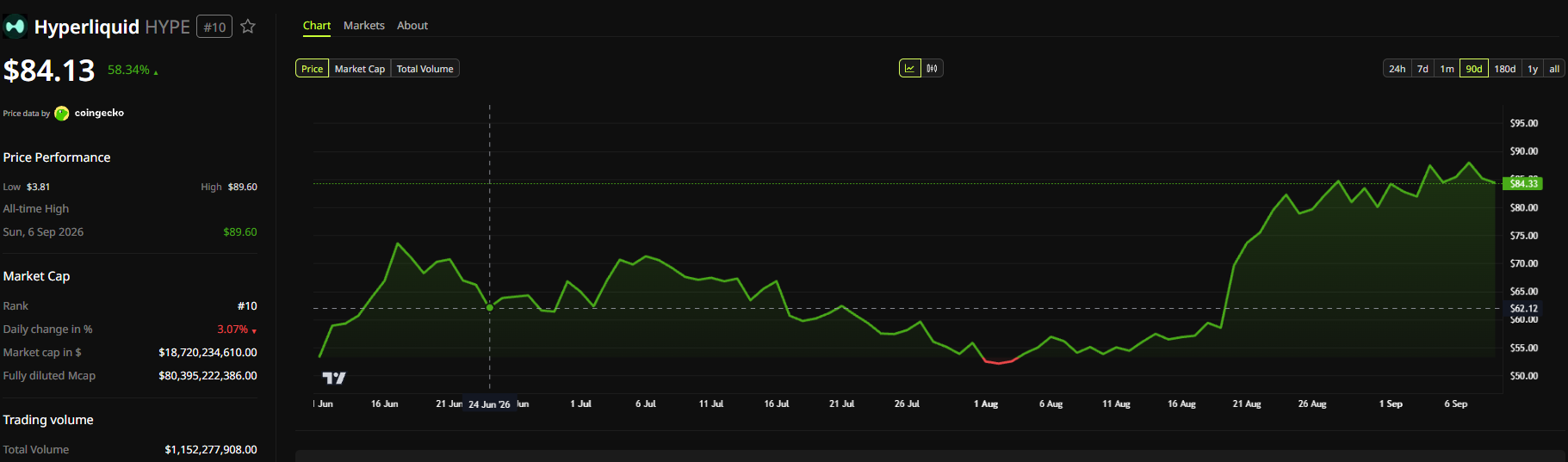
Everyone is waiting for the Hyperliquid Season 3 airdrop, Machi Big Brother posted on Monday. His fix is a Solana meme coin called Season 3 (S3), and he says it pays HYPE to holders.
Jeffrey Huang is the Taiwanese-American entrepreneur behind the account. His pick spiked early Tuesday, then gave back about three-quarters of the move within hours.
Machi Big Brother Says He Is Not the Dev
Huang framed the coin as a way to skip the wait. He also borrowed a phrase, “let’s dance,” from trader Ansem, who had used it days earlier for a different coin. Then he stepped back from the project itself.
That disclaimer matters given his record. In March, he absorbed roughly $75 million in liquidations on Hyperliquid. Days ago, he pulled his $1M Friend.tech offer.
The Hyperliquid Season 3 Airdrop Nobody Announced
Hyperliquid ran two-point phases, both before its Genesis Event. Farmers label them Season 1 and Season 2. The protocol never used the word season.
Nobody learned the exact rules either. Hyperliquid said only that its criteria changed on a recurring basis, and it never confirmed that points set the payouts.
That event released 310 million HYPE, or 31% of supply. No campaign and no payout have followed it.
Hope rests on the treasury. Another 388.88 million HYPE stays unminted for future emissions and community rewards.
HYPE itself trades around $84 after approaching record highs last weekend. Season 3 buyers are pricing a distribution that has no schedule.

The payout pitch does have a mechanism. Raydium lets token creators claim a cut of trading fees once liquidity reaches its main pools. Fees on the HYPE-quoted launchpad pool, therefore, arrive in HYPE.
S3 copies a template that is already running. Anonymous Cat, a Solana coin quoted in Zcash, opened on August 30 and now carries a $95 million market cap. Zcash, meanwhile, crossed $1,000 last week. Ansem promoted that one.
Neither coin runs on the chain it borrows from. S3 sits on Solana, not HyperEVM.
Liquidity stays thin. The HYPE pool carries about three-quarters of all S3 trading, near $3.6 million over 24 hours. It holds just $175,000 of depth. Total liquidity across every pool sits near $500,000.
Pools disagree on the price by more than 60%. Buyers are paying up for a claim that no named developer has confirmed.
The post Hyperliquid Season 3 Airdrop Wait Fuels a Meme Coin Machi Big Brother Promotes appeared first on BeInCrypto.

To generate and scale innovative AI solutions, leaders rely on a repertoire of interrelated roles, what we refer to as the “ABCs” of leadership: architects, bridgers, and catalysts.
Architects know they cannot mandate innovation; they foster the culture and capabilities that enable co-creation. These leaders start by raising their organization’s collective aspirations through a shared sense of purpose and values. By re-shaping the social environment of their organizations, these leaders encourage their colleagues to work through the inevitable conflicts of collaborating with others and the fear of failure. They reward thoughtful risk-taking, treat intelligent failures as learning opportunities, and provide people the tools, data, and perhaps most importantly, the permission to try.
Bridgers work at the boundaries of their enterprises, building trust-based partnerships with those outside their walls. No company, no matter how well-resourced, has all the talent and tools they need for innovation given the unprecedented pace at which technology is advancing. With AI, I hear that there is a shortage of individuals who know how to translate and work across technology and business. Technical experts who are developing AI solutions typically do not have the contextual intelligence about the realities of business and what customers want, while the businesspeople do not appreciate the opportunities and risks of implementing the technology.


The firms say their combination of physical authentication, digital traceability and enterprise process design has no precedent in supply chains, and cocoa is just the start.
Crypto World
Stablecoins could save South Korean merchants up to $3.8 billion a year, budget office says


South Korea’s budget office warned that stablecoin adoption could reduce banks’ roles as credit intermediaries and potentially destabilize token pegs during mass redemptions.

Each week, Investors Intelligence, an independent provider of market research and technical analysis, tracks more than 100 stock market newsletters and measures how many are making bullish calls and how many are advising against owning stocks. When the number of bulls reaches irrationally high levels — you guessed it — the market is often near a significant top. When fear…
Copyright ©2026 Investor’s Business Daily, LLC. All rights reserved. 87990cbe856818d5eddac44c7b1cdeb8
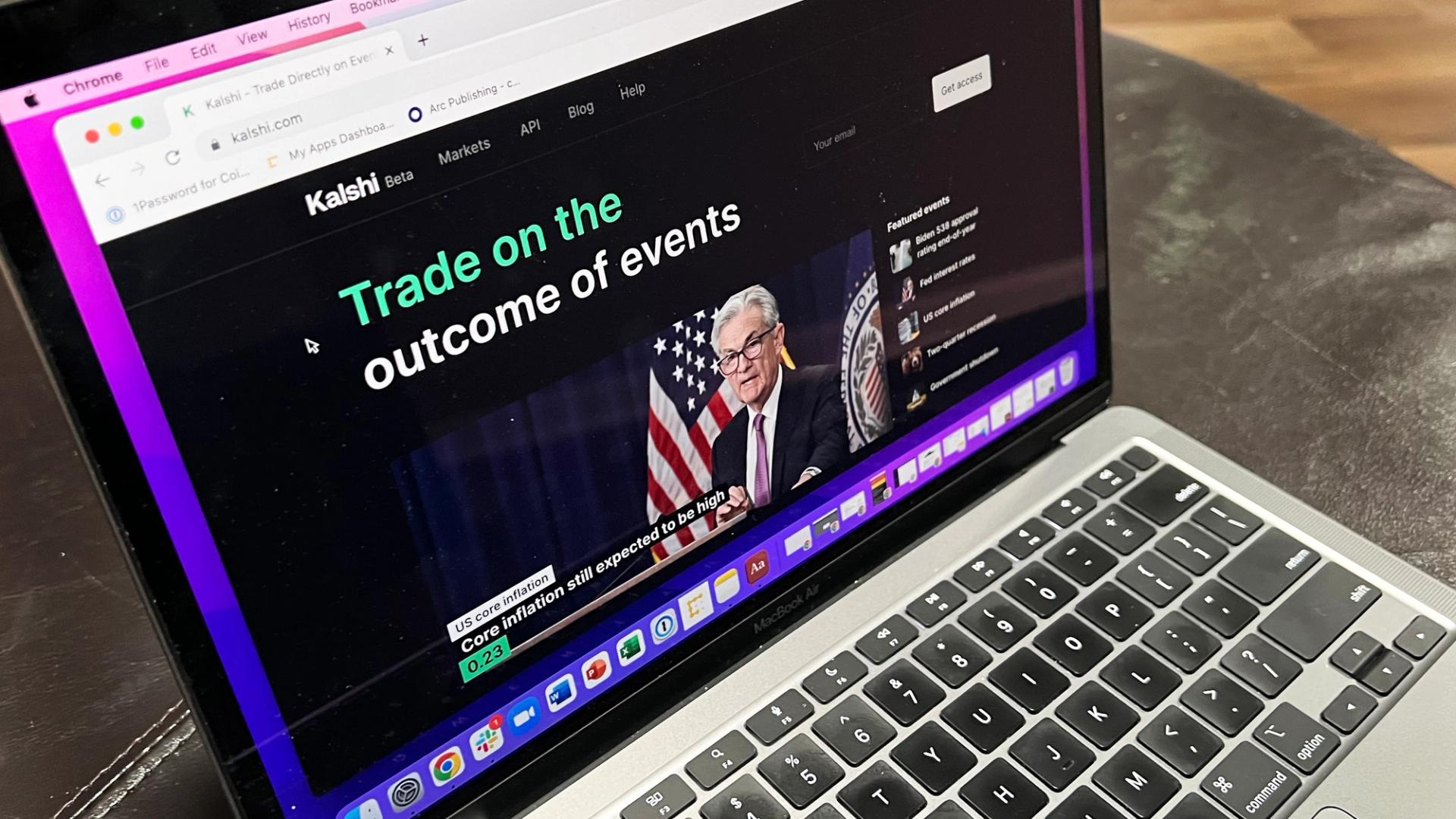
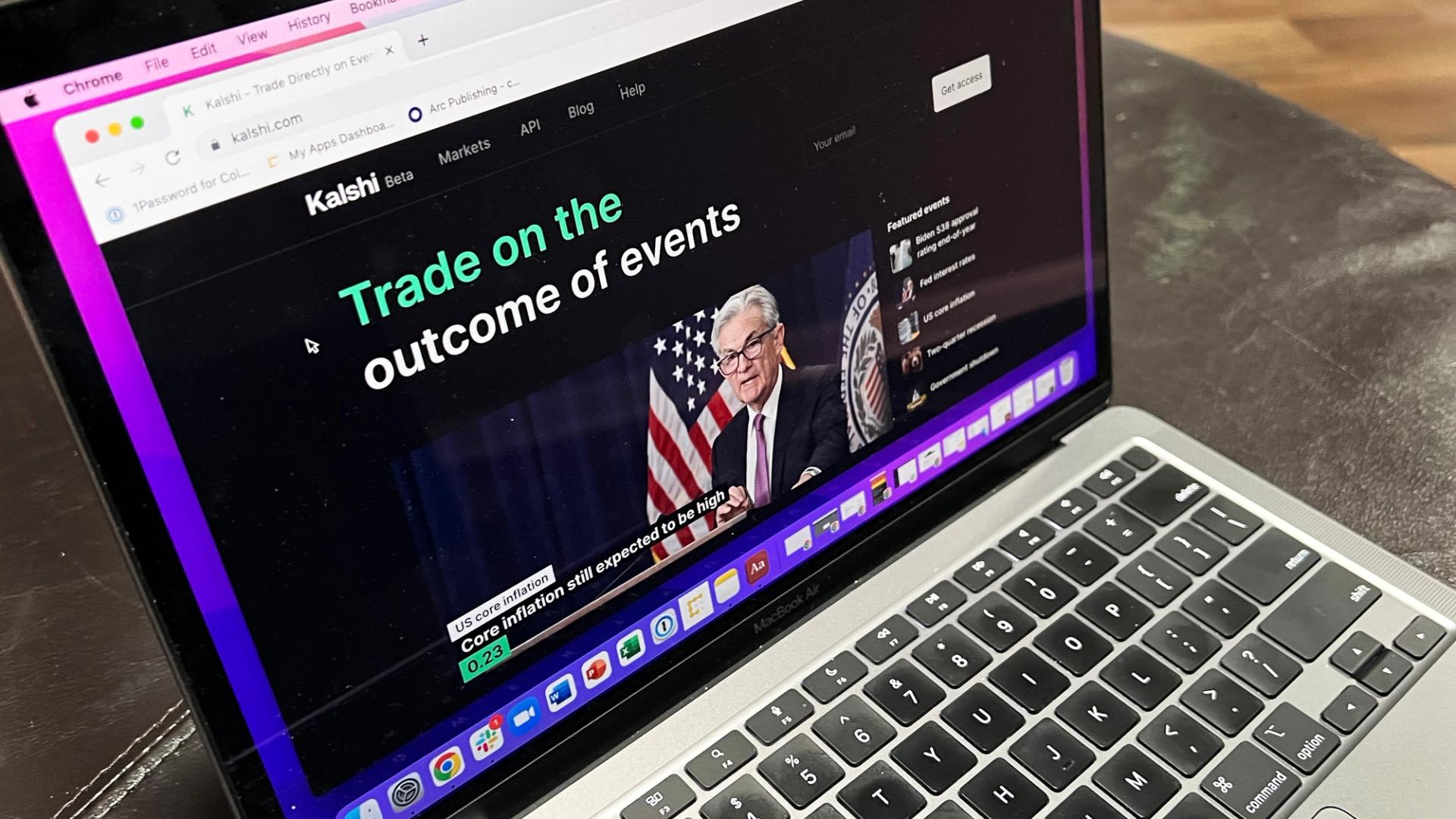
Washington state is cut off for Kalshi customers while the company combats the development in court and its federal regulator keeps pursuing new rules.

Dow Jones futures rose modestly early Friday, along with S&P 500 futures and Nasdaq futures. Bitcoin continued to surge. The stock market rally resumed a recent slide Thursday as crude oil prices kept rising and bond yields recouped Wednesday’s declines on an unusual Treasury move. The key indexes undercut key short-term levels while the Nasdaq also triggered a highly bearish…
Copyright ©2026 Investor’s Business Daily, LLC. All rights reserved. 87990cbe856818d5eddac44c7b1cdeb8

Tired of collecting the S&P 500’s paltry 0.9% dividend? Prepare to take your money overseas. The rising weight of low-yielding tech giants in the S&P 500 — and rising stock prices — are pushing the index’s yield lower. One way to fight back is by expanding your portfolio’s geographic horizons. “Dividend yields provide a partial offset to the risk of…
Copyright ©2026 Investor’s Business Daily, LLC. All rights reserved. 87990cbe856818d5eddac44c7b1cdeb8

Dow Jones futures will open Sunday evening, along with S&P 500 futures and Nasdaq futures. Nvidia earnings take center stage with CrowdStrike leading several cybersecurity reports. Federal Reserve Chairman Kevin Warsh will give his first Jackson Hole speech. The stock market rally took damage this past week, but did a little repair work on Friday. Mining stocks and crypto plans…
Copyright ©2026 Investor’s Business Daily, LLC. All rights reserved. 87990cbe856818d5eddac44c7b1cdeb8


South Korea has advanced a three-part digital-finance program covering crypto accounts for about 3,500 companies, legal recognition for tokenized securities, and deposit-token trials involving nine banks.
Summary
- About 3,500 listed companies and professional investors are eligible for South Korea’s corporate crypto pilot.
- Tokenized-securities laws were passed in January and will take effect in February 2027.
- Project Hangang Phase II has expanded deposit-token testing from seven banks to nine.
- Deposit tokens will support government payments, AI-agent transactions and tokenized-asset settlement.
FACTBLOCK CEO and Korea Blockchain Week organizer Andrew Park said South Korea’s crypto market is moving away from its long reliance on retail trading as financial institutions focus on custody, tokenization, stablecoins, settlement systems and regulatory compliance.
The change covers three connected areas of financial activity. Corporate investors are preparing to enter the crypto market under Financial Services Commission rules, securities firms are building systems for tokenized assets, and the Bank of Korea is testing digital bank deposits that can carry programmable payment conditions.
South Korea prepares crypto accounts for 3,500 companies
Under a roadmap released by the Financial Services Commission in February 2025, South Korea planned to let about 2,500 listed companies and approximately 1,000 corporations registered as professional investors open real-name bank accounts linked to crypto exchanges.
Financial companies were excluded from the group, while access for the eligible corporations was designed as a controlled pilot rather than unrestricted participation.
Since 2017, Korean companies have been unable to trade virtual assets through local exchanges because banks have not provided the required real-name accounts. Although the restriction was not written as a direct statutory ban, the account rules effectively kept corporate money out of the market.
The FSC first opened limited account access to nonprofit organizations, universities, law-enforcement agencies, and crypto exchanges. Eligible institutions could sell virtual assets received through donations, criminal seizures, or exchange fees, but the first stage did not allow general investment.
Listed companies and registered professional investors formed the second group in the FSC’s roadmap because the regulator considered them better equipped to assess investment risk. Officials also cited corporate demand for blockchain businesses and digital-asset investments when choosing the pilot participants.
Subsequent guidelines considered an annual investment ceiling equal to 5% of a company’s equity capital, according to Korean media reports. Eligible purchases would be limited to the 20 largest cryptocurrencies by market value across South Korea’s five major exchanges, although regulators were still considering whether dollar-backed stablecoins such as Tether’s USDT should qualify.
Corporate access also creates demand for regulated custody. On Aug. 18, BitGo Korea secured VASP registration from the Korea Financial Intelligence Unit, allowing the company to develop crypto custody and transfer services for institutions and businesses.
Hana Financial Group owns 25% of BitGo Korea, while SK Telecom holds 10%. BitGo has not disclosed a service launch date, supported assets, custody fees, or named clients.
Tokenized securities enter South Korean law
Alongside corporate crypto access, South Korea has established a legal route for issuing and trading tokenized securities.
The National Assembly passed amendments to the Electronic Securities Act and Capital Markets Act on Jan. 15, 2026. The measures were promulgated on Feb. 3 and are scheduled to take effect on Feb. 4, 2027, according to a legal summary from Kim & Chang.
Under the amended Electronic Securities Act, distributed ledgers can serve as legally recognized records for securities issuance. Issuers must follow registration procedures involving the Korea Securities Depository, rather than treating blockchain records as a separate and unregulated ownership system.
Changes to the Capital Markets Act also bring investment-contract securities and fractional investment products into the regulated market. Licensed intermediaries will be able to handle distribution, while over-the-counter trading will operate under rules prepared by financial authorities.
Infrastructure work has proceeded before the law takes effect. As crypto.news reported in May, Samsung SDS won a contract to turn the Korea Securities Depository’s test system into a production-ready token-securities platform.
KSD expects the system to connect distributed-ledger data with its existing electronic securities accounts. The planned functions include issuance records, circulation checks, rights management and real-time monitoring of token volumes, with completion expected by February 2027.
In August, Shinhan Bank and Plume also began an offshore proof of concept involving a won-denominated tokenized fund backed by ultra-short-term bonds. The test excludes Korean residents and will not issue or distribute tokens, but the companies are examining whitelist controls, know-your-customer checks, anti-money-laundering procedures, and onchain operations before the domestic law begins.
For U.S. readers, the Korean structure differs in administration but follows the U.S. Securities and Exchange Commission’s position that putting a financial instrument on a blockchain does not remove it from securities law. In a January 2026 staff statement, the SEC divided tokenized securities into issuer-backed and third-party models and said market participants may still need registrations, proposals or regulatory relief.
SEC Commissioner Hester Peirce previously said “tokenized securities are still securities,” adding that distributors, buyers and trading platforms must consider federal disclosure and market rules. South Korea’s framework similarly places tokenized instruments inside its existing securities system, with KSD handling formal registration.
Project Hangang expands deposit-token testing
The Bank of Korea has developed a separate payment layer through Project Hangang, which combines wholesale central-bank money with deposit tokens issued by commercial banks.
Deposit tokens are digital versions of bank deposits rather than cryptocurrencies issued directly by the central bank to consumers. Participating banks issue the tokens to customers, while tokenized central-bank money settles transfers between the banks.
During Phase I, which began in April 2025, about 80,000 of the 100,000 invited users opened wallets. Participants completed approximately 118,000 payment transactions, although the total value remained below 700 million won.
In March 2026, the Bank of Korea launched Phase II with nine banks, adding BNK Kyongnam Bank and iM Bank to KB Kookmin, Shinhan, Woori, Hana, NH Nonghyup, IBK Industrial Bank and BNK Busan Bank.
Phase II includes person-to-person transfers, biometric payment approval, and automatic conversion between ordinary deposits and deposit tokens. The central bank is also extending digital vouchers and testing programmable controls on government spending.
Electric-vehicle charging infrastructure grants and public-sector operating expenses are among the first public-payment uses. Payment conditions can restrict which recipient spends the funds, where the money is accepted, and how long it remains available, according to the Bank of Korea.
A separate 9.6 billion won, or roughly $6.9 million, deposit-token payment program began in July under the Korea Internet & Security Agency and the Ministry of Science and ICT. Nine banks, eight payment companies, and two major merchants joined the consortium led by the Korea Financial Telecommunications and Clearings Institute.
The program will connect deposit tokens with existing payment networks, allowing merchants to process transactions without replacing all their terminals. Participating agencies said the test would examine whether the system can lower processing fees for small businesses.
AI agents gain a programmable payment method
Project Hangang’s technical work has also covered payments initiated by AI agents.
LG CNS demonstrated an agentic payment service in January 2026 using deposit tokens on the Bank of Korea’s infrastructure. Under the model, an AI agent can search for a product or service, check user-defined conditions, and complete a payment through a tokenized bank deposit.
The Bank of Korea said it would continue studying deposit tokens as a payment method for AI-agent services and as settlement money for tokenized bonds and shares. Because payment conditions can be written into the system, a transaction can execute only after a specified action or market condition occurs.
At the European Central Bank Forum in July, Bank of Korea Governor Hyun Song Shin said “the big prize is tokenizing government bonds.” Shin described a unified ledger where tokenized bonds, commercial-bank deposit tokens, and wholesale central-bank money could operate on the same platform.
The central bank has also connected Project Hangang with the Bank for International Settlements’ Project Agorá. In 2026, South Korea completed tests linking its digital-currency system with the cross-border platform, including real-value transactions using tokenized central-bank reserves across six currencies.

The 10 Most Influential Books of the 20th Century, Ranked

Financial Freedom, When to Say ‘Go Live Your Life!’ – Morgan Lemaitre on The Dean’s List Podcast

US Open 2026: Carlos Alcaraz can end American dreams by beating Ben Shelton, plus Frances Tiafoe or Alex Michelsen, in New York




-
 Tech23 minutes ago
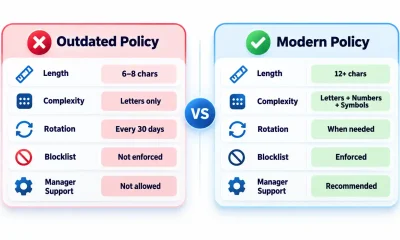
Strong Password Policy and Password Manager Guide
-

 Business5 minutes ago
Egyptian TV Presenter Sarah Khalifa, 11 Others Sentenced To Death In Major Drug Trafficking Case In Cairo
-
 NewsBeat31 minutes ago
‘Shocking, disappointing, woeful’: Reaction to Wales’ fall in the global schools Pisa scores – live
-

 Business32 minutes ago
model backs CBD drinks brand
-

 Entertainment28 minutes ago
Chiefs Reporter Reveals Patrick Mahomes Message After Dad’s Death
-

 Crypto World27 minutes ago
Tracking cocoa may be just the beginning for PwC, Merck, Hashgraph provenance system
-

 Crypto World33 minutes ago
Stablecoins could save South Korean merchants up to $3.8 billion a year, budget office says
-
 News Videos17 minutes ago
MASSIVE XRP RECORD SET! EVERYTHING CHANGES TODAY!!!
-
 Sports21 minutes ago
India’s para archers shine with twin golds, silver at World Archery Para Series | More sports News
-
 NewsBeat25 minutes ago
I’ve spotted this luxury luggage brand in The Gentleman season 2
-
 NewsBeat18 minutes ago
Manchester United fans announce ticket protest before Manchester derby
-
 Entertainment15 minutes ago
5 Artists Who Need to Sing the Next James Bond Theme Song
-

 NewsBeat11 minutes ago
They’re resilient, low-effort and beautiful: how to plant a rubble garden
-

 Sports8 minutes ago
Lindermann back to his best in 2026 Chelmsford Stakes
-
 Crypto World6 minutes ago
Hyperliquid Season 3 Airdrop Wait Fuels a Meme Coin Machi Big Brother Promotes
-

 Crypto World13 minutes ago
The Leaders AI Innovation Needs
-

 Tech10 minutes ago
AMD GPUs are climbing the sales charts as Radeon beats Nvidia on Amazon and in Germany
-
 NewsBeat4 minutes ago
US Open 2026: Carlos Alcaraz can end American dreams by beating Ben Shelton, plus Frances Tiafoe or Alex Michelsen, in New York
-
 News Videos3 minutes ago
Financial Freedom, When to Say ‘Go Live Your Life!’ – Morgan Lemaitre on The Dean’s List Podcast
-

 Business19 minutes ago
Qatar Warns Of ‘Industrial Catastrophe’ As Hormuz Crisis Deepens Amid Houthi Attacks On Saudi Arabia
You must be logged in to post a comment Login