
Crypto World
Singaporean 22-year old pleads guilty to being the ringleader in $245 million crypto fraud case



Malone Lam, a Miami resident charged with stealing 4,100 bitcoin, led a ring of fraudsters who stole crypto via online scams and home invasions.


Ethereum is trading above $2,500, sitting right in the price line that determines whether this consolidation turns into a breakout or a fade. Meanwhile, Tom Lee just put a $6,000 target on the table for December. There’s a catch, though, and it’s a big one.
Lee’s formula requires Bitcoin to do something it has never done in a single quarter. A specific magnitude move that would need to happen before ETH’s own chart even gets a fair shot at that number.
As of now, the more immediate story is playing out on lower timeframes: ETH has been consolidating just above $2,450 after an August rally that took it from roughly $1,900 to above $2,500, one of its stronger monthly runs since mid-2025. Recent technical work shows the asset boxed inside a rising wedge beneath a $2,500–$2,550 resistance band, with analysts flagging that level as the trigger for the next leg.
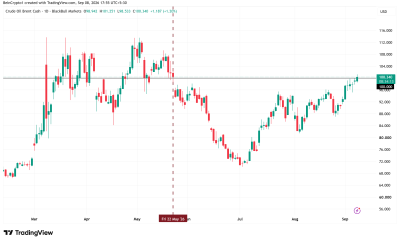
Macro conditions aren’t helping clarify things. Oil prices pushing toward $100 a barrel rattled equities this week, and the Fed’s next move remains a live variable for risk assets. That backdrop matters for what comes next.
Earn $50 and Enter $300K Prize Draw on EdgeX
Can Ethereum Price Hit $2,800 This Week?
ETH’s price action right now is a study in patience. At $2,500, it’s parked just above the $2,438 weekly Fibonacci support and directly beneath the $2,550 ceiling that’s capped every recent attempt higher.
Barchart and other trackers show volume holding steady rather than spiking, which tends to precede a decisive move rather than confirm one already underway.
The scenario map is fairly clean. The best case is a weekly close above $2,550, which opens the door to $2,800, then potentially $3,000–$3,200 if the wedge breakout holds. Bybit data puts current volume near $12B, enough to support a genuine breakout attempt.

The more likely scenario is that ETH continues grinding between $2,438 and $2,550 while the market waits on a catalyst. However, a rejection at resistance sends ETH back toward the 20-day EMA near $2,320, with $2,161 as the deeper invalidation zone.
None of those paths gets Ethereum near $6,000 without Bitcoin doing its part first, but upcoming network developments could help the narrative, but they won’t override price action.
Discover: The Best Token Presales
LiquidChain Targets Early Mover Upside as Ethereum Tests Key Levels
Anyone holding ETH from the $1,900 lows is sitting on solid gains, and that’s worth acknowledging. But here’s the uncomfortable math: a move from $2,503 to $6,000 is roughly 2.4x, on an asset with a market cap already in the hundreds of billions.
It needs the kind of multiple gets harder to generate at scale as capital increasingly looks for smaller-cap infrastructure plays where the same percentage move requires far less volume to materialize.
A little of this chain. A little of that chain.
Then things get interesting.pic.twitter.com/ybu9a1L0o0
— LiquidChain (@getliquidchain) September 7, 2026
That’s the gap LiquidChain ($LIQUID) is positioning to fill. It’s a Layer 3 infrastructure project built to fuse Bitcoin, Ethereum, and Solana liquidity into one execution environment, with Liquid, developers deploying once and getting access to all three ecosystems, rather than fragmenting liquidity across chains.
The presale is priced at $0.014953 with $963K raised so far. Core features include a Unified Liquidity Layer, Single-Step Execution, and Verifiable Settlement.
Research LiquidChain before the raise moves further.
Trade Crypto on Bybit and Get a Chance to Win Our $1,000 USDT Airdrop
The post Ethereum Price Has a New $6,000 Target, But There’s a Catch appeared first on Cryptonews.

Matches offer a clear metric of success and an immediate burst of validation, even when neither person intends to begin a conversation. Because they arrive unpredictably, they can operate as intermittent rewards: each disappointing swipe carries the possibility that the next one will produce a match.
That uncertainty keeps us returning. But it can also separate the immediate reward of receiving a match from the longer-term goal of forming a relationship.
I see this every time I open dating apps. Yesterday, I matched with 12 men. Only two messaged me. The others remain in dating app purgatory, neither rejected nor pursued. When I message matches first, I often receive no response. For many users, it seems, getting the match is enough. The person on the other side becomes secondary to the proof that someone chose them.
Despite the exhaustion and cynicism, the game continues. We open the app almost automatically, swipe for a few minutes, and wait for a small reward. The behavior starts to resemble playing Candy Crush more than looking for a partner.

Coinbase policy chief Faryar Shirzad told crypto advocate Scott Melker that he remains cautiously optimistic the CLARITY Act can clear a critical Senate procedural vote scheduled for September 15. Coinbase is not assuming all 53 Senate Republicans will back the CLARITY Act, which means Democratic votes are essential to reach the 60-vote cloture threshold.
The vote in question is a cloture motion on the bill’s path to full Senate consideration, not a final passage vote. Clearing cloture opens debate and amendments, but the bill still needs to survive a later floor vote before it becomes law.
Shirzad described the years the industry has spent building bipartisan support as finally putting comprehensive Senate crypto regulation within reach, calling the legislative package a powerful one. He laid out two possible outcomes on September 15: the bill stalls just short of 60 votes, or enough Democrats cross over to trigger what Washington insiders term a jailbreak, where additional undecided senators feel safe voting yes once bipartisan momentum is visible.
Discover: The Best Token Presales
The Ethics Fight Tied to Trump’s Crypto Interests
Shirzad identified the ethics language connected to President Trump’s crypto holdings as the single biggest risk to the bill’s advance. Senate Democrats continue to argue that the proposed ethics provisions fall short, while Republicans maintain that the legislation already contains meaningful safeguards.
Per Shirzad, the White House has accepted restrictions that apply specifically to the president, but Democrats may still demand further concessions before supplying the votes needed for cloture. Remaining disputes over DeFi provisions and exchange rules are, in his view, more likely to get resolved than the ethics standoff.
Stablecoin-related banking concerns add another layer of friction on the Republican side. Shirzad expects the White House to push lawmakers toward a compromise on that front, a dynamic that has already shaped how the industry frames the bill’s impact on bank deposits, a subject covered in detail regarding the CLARITY Act’s effect on the US banking sector.
Earn $50 and Enter $300K Prize Draw on EdgeX
What The CLARITY Act Would Actually Do Beyond Coinbase
The bill would split oversight of digital assets between the SEC and CFTC and bar government officials, including Trump, from operating crypto businesses, according to Reuters reporting. Trump reported more than $1.4 billion in income from his family’s crypto ventures last year, which is precisely why the ethics carve-outs have become the bill’s most contested section.
Democrats have pushed for stronger anti-money-laundering controls and for state attorneys general to have independent enforcement power over the presidential ban, per Reuters. Community bankers, meanwhile, have lobbied against provisions letting exchanges pay rewards on stablecoin holdings, arguing it would pull deposits away from traditional lenders.
BREAKING: — The Bitcoin Historian (@pete_rizzo_) September 8, 2026
 A NEW AD JUST EXPOSED WHY THE BIG BANKS ARE TRYING TO KILL THE #BITCOIN CLARITY ACT
THEY RAKED IN RECORD PROFITS OF $300 BILLION LAST YEAR BY “SQUEEZING CONSUMERS AND SMALL BUSINESSES”
AND NOW THEY WANT TO “KILL THE BIPARTISAN CLARITY ACT”
THEY WANT "TO PREVENT… pic.twitter.com/eCvVpjIFHo
Failure at the procedural stage would not stop crypto regulation, according to Shirzad, who argued regulators would move to implement well over 100 individual rules through agency action to replicate much of the framework Congress failed to pass.
He expects crypto’s integration with traditional finance to keep advancing regardless, through tokenization, stablecoins, perpetual futures, and 24/7 markets. This is the CLARITY Act outcome Coinbase is positioning itself for by building toward a wider financial platform spanning investing, lending, and borrowing across asset classes.
Make Your Prediction Count With $25 For Free on Kalshi
Prediction markets are pricing skepticism into that timeline. Kalshi traders have assigned a low probability to major crypto legislation becoming law this year. A signal worth weighing against Coinbase’s public optimism heading into September 15.
Traders positioning around the vote should treat September 15 as a gauge of momentum, not a resolution. A cloture win still leaves debate, amendments, and a final floor vote ahead.
Discover: The Best Token Presales
The post Coinbase CLARITY Act Optimistic as Cloture Vote Faces Ethics Fight appeared first on Cryptonews.


Germany has prepared a 25% flat tax on cryptocurrency gains from 2028, potentially ending the country’s long-standing exemption for Bitcoin and other digital assets held for more than one year.
Summary
- Germany plans to tax crypto gains at a flat 25% rate from 2028, replacing the current system that exempts assets held for more than one year.
- The proposed rules would cover crypto assets bought after Jan. 1, 2027, while the treatment of previously purchased holdings has yet to be decided.
- The Finance Ministry expects the measure to generate roughly €350 million in additional tax revenue.
- Crypto gains could be offset against losses from stocks and other securities once digital assets are brought under the capital income tax system.
Der Spiegel reported that Germany’s Federal Ministry of Finance has drafted legislation that would bring crypto gains under the country’s capital income tax, or Abgeltungsteuer, putting them under the same 25% rate currently applied to gains from stocks and other securities.
The planned rules would apply to crypto assets acquired after Jan. 1, 2027, while the tax itself would take effect in 2028. The draft has already been circulated among other federal ministries for review, according to the report.
A personal allowance is expected to remain available. Germany currently provides a €1,000 exemption threshold for private disposal transactions.
Germany’s crypto tax would remove the one-year exemption
Under the current system, privately held cryptocurrencies do not fall under Germany’s flat capital income tax. Bitcoin, Ether and other crypto assets are instead treated as private assets, with gains potentially subject to an investor’s personal income tax rate when sold within 12 months of purchase.
Individual income tax rates can reach 45%, but crypto assets sold after more than one year are generally exempt from tax.
The proposed 25% rate would remove that holding-period benefit for assets covered by the new system. It would simultaneously reduce the potential tax rate for some shorter-term investors who currently face their personal income tax rate.
Germany had already been considering changes to crypto taxation for several months. As crypto.news previously reported in May, Finance Minister Lars Klingbeil said during an April presentation of the 2027 federal budget that the government intended to “tax cryptocurrencies differently.”
At the time, the government had not disclosed how it intended to change the system. Klingbeil linked the planned crypto changes to a package expected to raise an extra €2 billion in tax revenue while strengthening enforcement against financial and tax crime.
The latest draft provides a more specific mechanism. The Finance Ministry expects the crypto measure itself to generate roughly €350 million in additional revenue, according to Der Spiegel.
Moving crypto under the Abgeltungsteuer could create another change for taxpayers. Gains from digital assets could be offset against losses from stocks and other securities under the planned system.
People whose personal tax rate falls below 25% could request a Günstigerprüfung, a tax assessment used to determine whether applying their lower personal rate would result in a smaller tax bill.
Earlier attempt to remove the crypto tax break failed
The proposal follows an unsuccessful attempt in parliament to remove the same long-term holding exemption earlier this year.
Germany’s Finance Committee rejected a Green Party proposal in May that called for crypto assets to lose their tax-free treatment after the one-year holding period.
CDU/CSU, the Social Democratic Party and Alternative for Germany opposed the proposal, though their reasons differed. Die Linke supported it with reservations.
The SPD argued at the time that the government was already working on a separate legislative proposal covering crypto taxation, while CDU/CSU lawmakers said changes should be considered as part of a coordinated government approach.
Klingbeil’s ministry has since continued work on that legislation. During a July press conference, the finance minister confirmed that officials were preparing a concrete bill but declined to disclose its provisions while coordination within the government was still underway.
Political opposition to removing the exemption has remained visible. The AfD has backed preserving the 12-month holding period and previously submitted a Bundestag proposal calling for the rule to be maintained.
The issue returned to attention this week after the party won nearly 44% of the vote in Saxony-Anhalt. Germany’s Bitcoin tax debate remains a federal matter, meaning changes to the tax treatment cannot be made by a state government.
Chainalysis estimated Germany generated $24.1 billion in potentially taxable on-chain crypto activity during 2025. The figure included $15.6 billion in payments, $6.1 billion in realized gains and $2.4 billion in income, though the analytics company cautioned that the estimate represented activity that could potentially fall under common tax rules rather than unpaid taxes.
New rules would target crypto bought from 2027
The draft would apply the new capital income tax treatment to crypto assets purchased after Jan. 1, 2027.
Whether assets bought before that date would retain their existing tax treatment has not been settled and will need to be decided as the proposal moves through the legislative process.
The change forms part of Klingbeil’s action plan targeting tax fraud and undeclared economic activity. Ministry sources quoted by Der Spiegel argued that taxing earned income and investment returns while allowing many speculative crypto gains to remain tax-free was unfair.
Germany has been increasing oversight of digital assets on other fronts. Since January, the country has enforced the European Union’s Crypto Asset Tax Transparency Act, implementing reporting requirements that require crypto service providers to transmit customer transaction information to tax authorities.
Regulated crypto services have expanded at the same time. Germany had become the EU’s leading jurisdiction for Markets in Crypto-Assets authorizations by August, when six more cooperative banks entered the European Securities and Markets Authority register.
Their addition brought Germany to 79 authorized crypto asset service providers, ahead of France with 35 and the Netherlands with 29 at the time.
Klingbeil presented Germany’s 2027 federal budget to the Bundestag on Tuesday morning, outlining approximately €550 billion in spending alongside special funds and total new borrowing of roughly €120 billion.
Crypto taxation is one of several revenue measures being considered by the government. The governing coalition has reportedly agreed on new or higher levies in areas including alcohol and tobacco, while a tax on sugary drinks remains under discussion.
An earlier version of the drinks tax proposal was withdrawn after criticism that it would cover beverages containing sugar substitutes.
The crypto tax draft must now be reviewed by the other federal ministries before it can advance to the cabinet and then through Germany’s parliamentary process.

XRP is bouncing as fresh commentary from a major asset manager reignites debate over who actually controls the Ripple network. The bigger story here isn’t the price; it’s what was clarified about governance and why it matters more than most holders realize.
21Shares AG, which manages $11 billion in assets globally, published a guide dismantling several long-running misconceptions about XRP, chief among them the claim that Ripple controls the XRP Ledger. The firm points out that Ripple operates just one of 35 validators on the XRPL’s default Unique Node List.
Also, according to 21Shares, more than 150 known validators from universities, exchanges, businesses, and individuals run across the network. As 21Shares put it, “Inventing the road is not the same as controlling the traffic.”
This lands at a moment when XRP’s price action is anything but dramatic. The market is consolidating, and traders are parsing whether governance clarity translates into renewed institutional confidence, or just noise that fades by next week.
Discover: The Best Token Presales
Can XRP Price Hit $1.50 This Week?
XRP is sitting at $1.44, confined to a tight range between a 24-hour low of $1.4107 and a high of $1.4447. Daily volume north of $2.3 billion suggests real participation rather than a quiet drift, per CoinGecko data. The token is up by 5% over seven days, a steadier gain than the daily chart implies.
Support sits at $1.38, with a secondary floor around $1.41-$1.42 where multiple price snapshots cluster. Resistance is $1.45, the 24-hour high, and a decisive close above it would mark the first real breakout attempt out of this band. Recent XRP resistance analysis flags this same zone as the line in the sand.

Bull case: a break above $1.45 on volume opens a run toward $1.55-$1.60. Base case: XRP grinds sideways in the $1.38-$1.45 band while the market digests the governance narrative. Bear case: a break below $1.38 invalidates the near-term structure and drags price back toward $1.30.
Earn $50 and Enter $300K Prize Draw on EdgeX
Bitcoin Hyper Targets Early Mover Upside as Ripple Tests Key Levels
XRP’s governance clarity is a legitimate long-term positive, but let’s be honest about the math: a token with a market cap in the tens of billions moving from $1.44 to $1.60 is a solid trade, not a life-changing one. For traders chasing asymmetric upside, that ceiling is exactly why attention keeps rotating toward earlier-stage infrastructure plays.
Bitcoin Hyper is refining the developer experience with clearer documentation, familiar tooling, predictable APIs, and better feedback for builders. — Bitcoin Hyper (@BTC_Hyper2) September 2, 2026
The goal: make the network easier to understand, connect existing tools, and start building with less friction. 

Read the… pic.twitter.com/kAo1w7Xa06
Bitcoin Hyper ($HYPER) is building the first Bitcoin Layer 2 with full Solana Virtual Machine integration, targeting execution speeds faster than Solana while settling back to Bitcoin’s base layer.
The presale has raised $33.1 million at a current token price of just $0.0136859, with staking rewards offered at a high 35% APY. Its core pitch: Bitcoin’s security, without the slow transactions, high fees, or lack of programmability that have kept BTC on the sidelines of DeFi.
A decentralized canonical bridge handles BTC transfers, aiming to make Bitcoin’s liquidity usable for smart contracts for the first time.
Research Bitcoin Hyper before the presale window closes.
Trade Crypto on Bybit and Get a Chance to Win Our $1,000 USDT Airdrop
The post XRP Myths Debunked as 21Shares Sets the Record Straight appeared first on Cryptonews.


India’s Financial Intelligence Unit has issued non-compliance notices to 15 crypto service providers and ordered action to take down their apps and URLs in India for operating without meeting the country’s anti-money laundering requirements.
Summary
- India’s FIU issued non compliance notices to 15 offshore crypto platforms, including Weex, Blofin, WOO X and WhiteBIT.
- The watchdog sought takedown action against the platforms’ apps and URLs for operating without meeting PMLA requirements.
- Crypto platforms serving Indian customers must register with FIU IND regardless of whether they have a physical presence in the country.
- The action follows earlier enforcement against major offshore exchanges, including Binance, which later registered and paid a 188.2 million rupee penalty.
The Financial Intelligence Unit-India said Tuesday that the notices were issued under Section 13 of the Prevention of Money Laundering Act, naming Weex, Blofin, Rezorex, Bitunix, DigiFinex, Toobit, XT.com, Latoken, WOO X, Pionex, ChangeNow, SimpleSwap, Fixedfloat, WhiteBIT and Guardarian.
FIU targets 15 crypto platforms over PMLA compliance
Alongside the compliance notices, FIU-IND issued takedown notices covering the applications and URLs used by the 15 platforms after finding that they were operating illegally without complying with provisions of the PMLA.
The action was taken under powers linked to Section 79(3)(b) of the Information Technology Act and the Information Technology rules amended in 2025.
India brought virtual digital asset service providers under its anti-money laundering and counter-financing of terrorism framework in March 2023. The requirements apply to businesses offering crypto-to-fiat exchange, digital asset transfers, custody and other services that provide control over virtual assets.
Platforms carrying out those activities for Indian users must register with FIU-IND as reporting entities and follow requirements covering record keeping, reporting and other compliance obligations under the PMLA.
Physical presence in India does not determine whether the rules apply. An offshore company serving Indian customers can fall within the framework even if it has no office or legal entity in the country.
The latest action follows a series of measures that have expanded FIU oversight of crypto transactions. In June, the watchdog sought OTC transaction records exceeding $10,000 from at least three major exchanges, with platforms required to preserve relevant records dating back to January 2026.
The requested information included beneficial ownership details, intermediaries involved in private transactions and information about the entities behind the deals.
Earlier this year, FIU-IND tightened crypto KYC rules for service providers operating in the country. The framework included stronger identity checks, record-keeping requirements and suspicious transaction reporting obligations.
Offshore crypto activity remains under scrutiny in India
The enforcement action comes days after The Economic Times reported that some Indian crypto users were moving stablecoins such as Tether’s USDT to overseas gift card services.
According to the report, platforms based in countries including Sweden, Germany and Singapore allow users to convert cryptocurrency into gift cards that can then be spent in India on goods including groceries, fuel and gold.
Such transactions can take place without users first moving their crypto through a domestic exchange, according to the report.
Offshore trading has remained a concern for Indian authorities as they try to track crypto transactions for tax and compliance purposes. In July, crypto.news previously reported that Indian tax authorities had raised concerns over trading through offshore exchanges, private wallets and peer-to-peer transactions.
India has since expanded parts of its international tax reporting framework to cover specified crypto assets, central bank digital currencies and some digital money products. Under updated tax reporting rules, financial institutions face revised account identification and tax residency verification requirements.
The measures form part of a regulatory structure in which India taxes crypto transactions while requiring platforms serving local customers to meet financial crime and reporting rules.
Crypto gains are subject to a 30% tax, while a 1% tax deducted at source applies to qualifying virtual digital asset transactions.
India has previously blocked major offshore exchanges
FIU-IND used a similar enforcement route against larger offshore exchanges in December 2023, when it issued show-cause notices to nine platforms for failing to comply with the country’s registration requirements.
Binance, KuCoin, Huobi, Kraken, Gate.io, Bittrex, Bitstamp, MEXC Global and Bitfinex were among the exchanges targeted at the time.
Authorities subsequently sought restrictions on access to their websites. By January 2024, access to several exchanges had been blocked in India, while their apps faced restrictions on major mobile app stores.
KuCoin later registered with FIU-IND and resolved its earlier non-compliance after paying a penalty. Binance followed after months of regulatory discussions.
In June 2024, FIU-IND imposed a 188.2 million rupee penalty, equivalent to roughly $2.25 million at the time, on Binance for operating in India without meeting its anti-money laundering obligations.
The exchange later completed its FIU registration in August 2024 and resumed operations in India after a seven-month restriction. Its registration made the platform subject to the reporting and compliance requirements applied to other registered crypto businesses serving the country.
Bybit later went through a similar process. The exchange paid a 92.7 million rupee penalty after authorities cited persistent non-compliance and subsequently secured FIU registration.
FIU warns users about crypto and NFT risks
The latest notice extends enforcement to a group dominated by smaller and medium-sized offshore platforms, including exchanges as well as services that facilitate swaps and other digital asset transactions.
FIU-IND did not announce financial penalties against the 15 companies in Tuesday’s release. Its action covered non-compliance notices and requests to take down public access to their applications and URLs.
The watchdog separately cautioned users about the risks associated with cryptocurrency products and non-fungible tokens, noting that such products remain unregulated in India.
“It is pertinent to mention for the safety and awareness of general public that the Crypto products and NFTs are unregulated and can be highly risky,” FIU-IND said. “There may be no regulatory recourse for any loss from such transactions.”

Donald Trump’s TRUMP token reached a market cap of nearly $15Bn before its value declined as internet enthusiasm faded. Meanwhile, the Hunter Biden LAPTOP launch is today (September 9), a meme coin named after the laptop controversy that dominated political headlines before the 2020 election.
This project is a humorous response to Trump’s own ventures into meme coins, turning a long-standing political liability into a tradable asset, with Joe Biden’s son planning to airdrop LAPTOP to wallets that lost on TRUMP.
Biden promoted the coin’s launch with a video montage featuring conservative politicians and commentators discussing the laptop, including clips of Trump using phrases closely associated with conservative critiques of the Biden family.
The coin’s premise is rooted in this political history and online notoriety. However, the allocation plan has drawn significant backlash from traders ahead of the launch.
Why Are Investors Dubious About the Hunter Biden LAPTOP Meme Coin Launch?
The Hunter Biden LAPTOP team plans to issue 1 billion tokens and launch on Base. The stated distribution allocates tokens to airdrops, founders, conditional token destruction, charity, and launch costs.
Founders, including Hunter Biden, will retain 30% of the supply. That allocation is central to the token’s structure, alongside the 20% airdrop intended for people who lost money on TRUMP and other selected recipients.
The airdrop plan includes Hunter Biden’s Substack subscribers and people on a mailing list curated by Andrew Callaghan, the host of Channel 5.
Another 30% is earmarked for burning if a Democrat wins the 2028 presidential election or if LAPTOP’s valuation exceeds TRUMP’s, according to reporting first published by The Wall Street Journal.
The remaining 20% is intended for charity and launch costs. The project has also described founder tokens as subject to lockups and vesting rules, while a separate account described tokens tied to political, crypto, and cultural predictions, with different outcomes affecting whether tokens are burned or sent to charity.
Make Your Prediction Count With $25 For Free on Kalshi
The Backlash Arrived Before the First Trade as Investors Believe LAPTOP is Another Celebrity Cashgrab
Threadguy SHITS on Kraken posting $LAPTOP and then DEPOSITS money on Kraken — Vi Lo (@Viliam__) September 8, 2026

Everyone who hated his take is supporting the token
“Hunter Biden LAPTOP September 9th I was like ok whatever, but then I see Kraken Listings”
“I honestly couldn't believe the Kraken post”
“Why… https://t.co/yh3kLQsEzL pic.twitter.com/sBQEQBzuKq
The Hunter Biden LAPTOP launch has drawn mixed reactions from the cryptocurrency community. Callaghan distanced himself from the project after his mailing list was included in the planned distribution.
He said that he and his team were not involved in the venture beyond providing the subscriber list to help Hunter Biden expand his audience.
Kraken deleted a promotional post about LAPTOP after traders criticized it. Reports also said Base officials stressed that they did not help design or promote the token. Base founder Jesse Pollak said the project had approached his team, but Base chose not to participate in its design or promotion.
Those responses highlight the distinction between a token launching on a network and formal support from the network or other crypto companies.
They also underscore how quickly distribution partners and promotional activity can become part of the discussion around a political meme-coin launch.
Earn $50 and Enter $300K Prize Draw on EdgeX
What the LAPTOP Launch Will Actually Test

The available information does not establish what LAPTOP will be worth once trading begins. Its political branding, viral backstory, and planned distribution to some TRUMP holders may draw attention, but the token’s market reception will depend on how participants respond after it becomes available.
The launch will bring several elements of the project’s design into focus at once: founder-held supply, the planned airdrop, the conditional burn arrangement, and the allocation for charity and launch costs.
The project’s stated structure tells prospective participants where the 1 billion-token supply is intended to go, while the reaction from traders and associated parties has already become part of its public rollout.
LAPTOP follows the pattern of politically themed digital tokens whose public appeal is closely tied to recognizable figures and current narratives.
In this case, Biden is seeking to recast the laptop controversy as the basis for a meme coin, while the project’s distribution plan and pre-launch criticism remain central to the conversation around its debut.
Discover: The Best Token Presales
The post Why is the Hunter Biden LAPTOP Launch Facing Backlash from Investors? appeared first on Cryptonews.
Crypto World
Missile Defense to 25-Minute Flights, Dan Held Explains Why SpaceX Will Hit $100 Trillion


Early Bitcoin investor Dan Held says SpaceX could reach a $100 trillion valuation within two decades. He points to falling launch costs opening markets in missile defense, satellite internet and rocket travel.
His bull case rests on one number, the cost of sending a kilogram of cargo to orbit. Historically about $20,000 during the Space Shuttle era, Held says that figure could fall to $10 under Starship.
Betting on Starship
Held made the case on The Rollup, a crypto and macro podcast. He also said he sold most of his stake in cryptocurrency exchange Kraken to invest in SpaceX five years ago.
He compared the bet to his early conviction in Bitcoin (BTC). Held has studied the asset’s fixed 21 million supply since 2012.
Starlink, missile defense and orbital data centers
Held pointed to Starlink as an early proof point. He said it is not simply a fiber alternative. In contrast, it is scaling into a business that could rival telecom carriers, not just internet providers.
Meanwhile, he also linked the technology to missile defense. Detecting rocket launches from orbit could let the U.S. intercept threats with little warning. He compared the idea to the Golden Dome missile shield concept.
Other use cases include orbital data centers, which trade higher launch costs for near-zero operating costs. Held also cited point-to-point travel, which could cut a New York-to-Tokyo flight to 25 minutes.
Therefore, Held said the total addressable market for space infrastructure could eventually exceed global economic output.
A $10 trillion milestone
Held predicted SpaceX’s valuation could reach $10 trillion within three years if Starship production keeps scaling. He expects $100 trillion by the time he reaches his late fifties.
Other prominent investors share the conviction. Cathie Wood recently called SpaceX her favorite stock and predicted it could become the most important company in history.
However, SpaceX shares have been volatile since going public, falling 35% from their peak despite joining the Nasdaq-100.
Elon Musk’s own long-term revenue targets have also run years ahead of Wall Street’s estimates, underscoring how uncertain multi-decade forecasts remain.
The post Missile Defense to 25-Minute Flights, Dan Held Explains Why SpaceX Will Hit $100 Trillion appeared first on BeInCrypto.


Federal authorities charged two Jacksonville brothers with allegedly operating a darknet narcotics vendor whose counterfeit pills were connected to at least 12 overdoses, including three deaths.
Summary
- U.S. prosecutors charged two Florida brothers with allegedly distributing nitazene-laced counterfeit pills through darknet markets.
- Investigators traced Bitcoin withdrawals from three darknet marketplaces toward accounts associated with Stanislav Chernyshov allegedly.
- Target wallets received approximately $220,000 and sent $230,000, according to the FBI affidavit reviewed publicly.
- BarbaraWhite shipments were linked to twelve overdoses, including three deaths, Chainalysis reported from records reviewed.
- Both defendants face at least twenty years imprisonment if convicted under federal law, prosecutors said.
Vladislav Chernyshov, 35, and Stanislav Chernyshov, 30, were arrested on Aug. 28 on charges of conspiring to distribute nitazenes. The U.S. Attorney’s Office for the Eastern District of Virginia announced the case on Sept. 2.
An FBI affidavit alleges that the brothers operated under the vendor name “BarbaraWhite.” Investigators used blockchain analysis alongside postal records, undercover purchases, surveillance and darknet marketplace data to identify the alleged operators.
FBI traced Bitcoin from three darknet markets
Investigators identified Bitcoin addresses allegedly used by BarbaraWhite to withdraw proceeds from Nemesis, Bohemia and Abacus. All three platforms operated as darknet marketplaces before being shut down or disappearing.
The wallet network received approximately $220,000 from darknet markets and sent around $230,000 in cryptocurrency, according to a Sept. 8 analysis by Chainalysis that cited the affidavit.
The total amount sent can exceed direct marketplace receipts because wallets can receive funds from other sources, transfer the same funds through several addresses or contain balances acquired before the period under review. The figures should not be treated as net profit or total drug-sale revenue.
Investigators allegedly linked the wallet activity to Stanislav by identifying transactions involving other wallets connected to his mobile payment account. Chainalysis said investigators used its Reactor software to reconstruct part of the transaction network.
The court record, rather than Chainalysis’s commercial description, forms the evidentiary basis for the prosecution. The criminal complaint remains an accusation, and neither brother has been convicted.
Crypto payments allegedly reached a chemical supplier
The traced wallets allegedly sent money to a postage provider, another drug vendor and a China-based chemical supplier. Approximately $7,210 reached the supplier, according to Chainalysis’s account of the affidavit.
Investigators allege that the supplier provided chemicals connected to the nitazenes sold by BarbaraWhite. The payment trail helped agents connect alleged drug procurement with marketplace sales and shipping activity.
Blockchain records alone do not identify the person controlling a wallet. Investigators must combine transaction patterns with exchange records, account information, communications, device evidence or other records before linking an address to an individual.
That combined approach has appeared in other narcotics prosecutions. In related coverage, six defendants received sentences after a Texas drug network laundered cryptocurrency proceeds from counterfeit pills sold through darknet markets.
Counterfeit pills were marketed as “fent free”
Prosecutors allege that BarbaraWhite sold counterfeit oxycodone pills containing several nitazenes. The identified substances included protonitazene, metonitazene, N-pyrrolidino etonitazene and N-pyrrolidino isotonitazene.
The pills carried markings designed to resemble pharmaceutical oxycodone. Some listings described them as “fent free,” but laboratory tests allegedly found nitazenes that can match or exceed fentanyl’s potency.
The investigation began after a fatal overdose in Arlington, Virginia. According to local reporting based on the affidavit, the victim died on Aug. 28, 2023, four days after receiving a parcel connected to a BarbaraWhite purchase.
Chainalysis said investigators associated BarbaraWhite shipments with at least 12 overdoses across the U.S., including three fatalities. Records from three marketplaces allegedly showed sales exceeding 95,000 counterfeit pills. Those figures are prosecutorial allegations derived from the investigation, not findings reached at trial.
The defendants face federal prosecution in Virginia
The brothers face a charge of conspiracy to distribute nitazenes. Prosecutors said each could receive a maximum penalty of at least 20 years in prison if convicted.
A federal judge would determine any sentence after considering the applicable statutes, U.S. Sentencing Guidelines and case-specific factors. The defendants retain the presumption of innocence.
The FBI, Drug Enforcement Administration, U.S. Postal Inspection Service and several local and regional offices participated in the investigation. Assistant U.S. Attorneys Heather Call and Catherine Rosenberg are prosecuting the case.
The matter is filed in the Eastern District of Virginia as case number 1:26-mj-336. The next procedural steps may include preliminary hearings, detention proceedings, indictment decisions and evidence disclosures. No trial date or plea agreement had been announced publicly at the time of reporting.


Key takeaways
- Chainlink has gained 51% over seven days amid improving regulatory sentiment and project-specific developments.
- Chainlink’s total value secured rose from $43 billion in June to nearly $57 billion by the end of August—an increase of approximately 33%.
- A partnership with Bottomline could connect payment infrastructure serving more than 600 banks to multiple blockchains.
Chainlink has gained approximately 51% over the past seven days, outperforming much of the cryptocurrency market following new regulatory proposals from the U.S. Securities and Exchange Commission.
The rally has also been supported by improving Chainlink network fundamentals and several significant adoption announcements.
Chainlink’s total value secured increased from approximately $43 billion in June to nearly $57 billion by the end of August. This represents growth of about 33%, indicating that more value is relying on Chainlink-powered services across decentralized finance and other blockchain applications.
LINK has also broken above an important technical resistance, creating a potential path toward $18 if buyers maintain control.
Chainlink’s total value secured approaches $57 billion
Chainlink’s total value secured has recovered steadily since June, climbing by approximately $14 billion in two months.
TVS measures the value of assets supported or protected by Chainlink services. Rising TVS can indicate growing demand for the network’s oracle infrastructure, cross-chain communication tools, and asset-verification products.
The recovery strengthens the fundamental case for LINK by showing that the network’s usage is improving alongside its token price.
However, TVS does not represent revenue or assets directly owned by Chainlink. It measures the value dependent on its infrastructure and should therefore be viewed as an adoption indicator.
Continued growth could support LINK’s longer-term outlook, particularly if Chainlink expands further into institutional payments and tokenized assets.
Chainlink recently announced a partnership with Bottomline, a payment technology company that facilitates SWIFT transfers for more than 600 banks worldwide.
The collaboration is intended to connect Bottomline’s existing offchain payment infrastructure with multiple blockchain networks.
This could allow banks and financial institutions already using Bottomline to interact with digital assets without replacing their existing payment systems.
Chainlink’s Cross-Chain Interoperability Protocol could provide the communication layer connecting traditional financial infrastructure with public and private blockchains.
If successful, the partnership could increase Chainlink’s relevance as banks explore stablecoins, tokenized deposits and blockchain-based settlement.
The Wyoming Stable Token Commission has also selected Chainlink to provide reserve verification for the state’s Frontier Stable Token.
Chainlink Proof of Reserve will serve as Wyoming’s exclusive onchain asset-verification system for the token. The technology will publish verifiable information showing whether the stablecoin is fully supported by its underlying reserve assets.
Proof-of-reserve infrastructure is particularly important for stablecoins because users need confidence that the number of tokens in circulation does not exceed the assets backing them.
The Wyoming selection gives Chainlink a government-level use case and could strengthen its position in the U.S. stablecoin market.
If other states or jurisdictions adopt similar systems, demand for Chainlink’s verification and interoperability products could increase.
LINK breaks above the 200-day EMA
LINK moved above its 200-day exponential moving average in late August, alongside a broader recovery among altcoins.
A sustained move above the 200-day EMA is often interpreted as evidence of improving long-term momentum. It indicates that the current price has risen above its average level over a significant period.
The breakout suggests that LINK’s previous bearish cycle may be ending. However, confirmation will depend on the token holding above the moving average during future pullbacks.
The Relative Strength Index stands at 64, showing strong bullish momentum without yet entering the conventionally overbought region above 70.
This gives LINK some room to extend its rally, although the rapid 51% weekly gain increases the possibility of short-term profit-taking.
LINK’s move above the $12 resistance level confirmed a breakout from a bullish flag pattern that had been forming since the August 21 rally.
A bullish flag develops when an asset consolidates after a strong upward move. Early buyers take profits during this phase, while new buyers gradually enter in anticipation of the next advance.
A breakout above the flag’s resistance signals that buyers may have regained control.

Based on the size of LINK’s preceding rally, the technical pattern projects a target of approximately $18. This would represent around 44% upside from the $12 breakout area.
LINK must hold above $12 to preserve the bullish setup. A decisive drop back below the breakout level could indicate that the move was false and delay the projected rally.
Chainlink’s strengthening fundamentals provide additional support for the technical outlook. Rising TVS, institutional payment partnerships, and government stablecoin adoption could help sustain demand beyond short-term speculation.

Mo Gilligan draws gasps from the NTAs audience as he takes a swipe at Miriam Margolyes amid Andi Peters ‘racism row’ live on stage

70% stock surge ‘is the beginning of the momentum’
Ethereum Price Has a New $6,000 Target, But There’s a Catch

Memory prices are slowing because buyers ran out of money

England up in reading, maths and science rankings as Scotland and Wales dip

Phones confiscated, players sent home: Pakistan’s England tour turmoil revives memories of Mohammad Amir, Salman Butt and Mohammad Asif’s 2010 Lord’s spot-fixing scandal | Cricket News


-
Tech22 hours ago
Memory prices are slowing because buyers ran out of money
-
 NewsBeat20 hours ago
England up in reading, maths and science rankings as Scotland and Wales dip
-
Sports23 hours ago
Phones confiscated, players sent home: Pakistan’s England tour turmoil revives memories of Mohammad Amir, Salman Butt and Mohammad Asif’s 2010 Lord’s spot-fixing scandal | Cricket News
-

 Business1 day ago
Egyptian TV Presenter Sarah Khalifa, 11 Others Sentenced To Death In Major Drug Trafficking Case In Cairo
-

 Crypto World1 day ago
Visa expands stablecoin card network to 160 programs
-
 Tech1 day ago
Strong Password Policy and Password Manager Guide
-
 NewsBeat19 hours ago
Tehran’s assertive rhetoric signals a new and dangerous phase in conflict
-

 Tech19 hours ago
Google’s revived nuclear power plant gets $1.9B loan from US government
-

 Crypto World10 hours ago
Ethereum price stalls below $2,500 as ADX drops to 11
-

 Sports16 hours ago
Ballon d’Or 2026 Nominees: Lionel Messi In, Cristiano Ronaldo Out; Erling Haaland Included In Top 30
-
 Business13 hours ago
Oil Higher on Hormuz Escalation, Weighing on Sentiment
-
 Politics23 hours ago
Critics Rip Trump After He Revives His Most Dubious 9/11 Claim
-
 Crypto World20 hours ago
Brent Crude Oil Moves Above $100 for the First Time in 3 Months
-

 Politics19 hours ago
The Ultimate September Reset Guide: How To Refresh Your Mind And Life This Autumn
-

 Crypto World18 hours ago
Robinhood Stock: How To Take Advantage With Reduced Risk
-

 Tech14 hours ago
Meta debuts its Muse AI agent. Will consumers trust it?
-

 Business24 hours ago
Claim Your Share Of $50 Million Disney Streaming Price Settlement By Sept. 8 Tonight
-

 Crypto World23 hours ago
Arm Stock: Arm Extends Reach To Physical AI
-
 Business18 hours ago
Copper hits record high, UltraTech’s Ultravolt on the offensive: A double whammy for cable makers in FY27?
-

 Fashion18 hours ago
Phia Is the Shopping App That Styles You From Your Own Closet
You must be logged in to post a comment Login