Connect with us

NewsBeat

Flooring firm closing 28 branches with 154 jobs to go

Published

on

Wales Online

It will shut a third of its counters

Flooring firm Headlam has cut 154 jobs after tumbling into administration. The Birmingham-based company said it has also closed 28 trade counters – a store within a factory to sell products to tradespeople – across the UK as a result.

Headlam hired administrators from advisory firm Interpath on Tuesday but said it will continue to trade while a restructuring takes place. The company, which currently employs around 1,300 workers, said it will undertake a Company Voluntary Arrangement (CVA) restructuring, which will close more than a third of its 76 trade counters.

Advertisement

The remaining 17 distribution centres and 48 trade counters will remain open, it said. Administrators said the business will also launch a refinancing of its debt facilities and cost reduction measures in order to help make its finances “sustainable” for the longer term.

Headlam, which specialises in floor coverings, saw its shares suspended at the start of September after warning that it expected to hire administrators due to a shortage of liquidity. The administrators said the firm was knocked by recent economic challenges, including cost inflation and fragile consumer confidence.

On Wednesday, Will Wright, UK chief executive at Interpath and joint administrator to Headlam Group, said: “Our immediate priority is to those employees whose roles have been lost as a result of today’s site closures. We understand this is devastating news and we are committed to ensuring that everyone impacted receives the support and information they need as quickly as possible.

“For the rest of the business, our focus is on implementing a restructuring that will give Headlam the best chance possible of recovery.

Advertisement

“Subject to the ongoing support of the group’s key stakeholders, including customers and suppliers, we believe the proposed plan provides a credible path to stabilising the business.”

Source link

Continue Reading
Click to comment

You must be logged in to post a comment Login

Leave a Reply

NewsBeat

private prescribing is lowest where need is greatest

Published

on

private prescribing is lowest where need is greatest

For many people living with obesity, Wegovy and Mounjaro offer the possibility of substantial weight loss without surgery. Yet data from one private provider points to a troubling divide: prescription rates of these drugs in England are lowest in communities where obesity is most common.

Wegovy contains semaglutide, which acts on the GLP-1 hormone pathway involved in appetite. Mounjaro contains tirzepatide, which targets both GLP-1 and another hormone pathway called GIP. In trials involving adults without diabetes, participants taking semaglutide lost an average of 14.9% of their starting weight after 68 weeks. Those receiving the highest dose of tirzepatide lost an average of 20.9% after 72 weeks. Both trials also provided support with diet and physical activity.

The 2026 analysis of 113,630 patients found that private prescribing rates were 32% lower in England’s most deprived areas than in the least deprived. Once the higher prevalence of obesity in deprived areas was taken into account, the estimated prescribing rate per person living with obesity was 120% higher in the least deprived areas.

The analysis cannot show that cost caused this difference. It covered one provider and estimated deprivation from patients’ postcodes rather than their individual incomes. It also examined access rather than treatment outcomes.

Advertisement

Even so, the findings bring a difficult question into focus: while NHS access to these treatments is still being rolled out, does the ability to pay influence who can access treatment sooner?

Obesity and deprivation

Obesity is sometimes presented as the result of personal choices, although evidence is clear that body weight is influenced by genetic and biological processes alongside income, education, food prices and the environments in which people live. A review of the socioeconomic evidence found that, in high-income countries, lower socioeconomic status is generally associated with a greater likelihood of obesity, particularly among women.

Cost can affect what people are able to eat. A meta-analysis covering ten countries found that healthier dietary patterns generally cost more than less healthy ones, although the difference varied according to the foods and methods being compared.

Despite this, England’s obesity policy has often concentrated on encouraging individuals to change their behaviour, rather than addressing systemic causes.

Advertisement

An analysis of 14 government strategies published between 1992 and 2020 found that many proposed policies placed high demands on individual agency, and were unlikely to be effective or reduce inequalities. Medication can improve treatment for individuals, but it does not remove the conditions that make obesity more likely.

NHS access is being phased in

England’s National Institute for Health and Care Excellence (Nice) recommends tirzepatide for adults with a body mass index of at least 35 and at least one weight-related health condition. Lower BMI thresholds apply to people from some ethnic backgrounds because their risk of weight-related illness can increase at a lower BMI.

NHS England estimates that around 3.4 million adults meet the Nice criteria. Tirzepatide is available to eligible patients through specialist weight-management services, subject to a clinician’s decision. Access through primary care is narrower and is being introduced according to BMI and the number of related health conditions.

The phased primary-care rollout is expected to cover around 220,000 people during its first three years. The approved funding variation allows up to 12 years to make treatment available to the full eligible population. Many people who meet the wider Nice criteria may therefore wait years for primary-care access.

Advertisement

Private prescriptions provide another route for people who meet the relevant clinical requirements and can afford treatment.

Although this analysis cannot establish exactly why uptake differs between areas, its results are consistent with affordability influencing access. While NHS prescribing is still being phased in, people who can pay for private treatment may be able to access these medicines sooner than those who cannot, making cost a potential additional barrier for those living in more deprived areas.

Treatment may involve continuing costs

The financial divide could become greater if people need prolonged treatment. A 2026 systematic review found that participants regained around 60% of the weight they had lost within a year of stopping GLP-1 receptor agonists.

Longer-term evidence remains limited, and people will not all have the same experience. But these findings suggest that some patients may need continued treatment or another maintenance plan to preserve much of their weight loss.

Advertisement

For people paying privately, maintaining treatment over months or years could involve substantial ongoing costs. And the benefits of treatment may also depend on the support available alongside the prescription.

These medicines reduce appetite and food intake, which can make it harder to obtain adequate nutrition from a smaller amount of food. Clinical guidance recommends assessing diet quality and the risk of nutrient deficiencies and muscle loss, while providing individual advice during treatment. A recent article in Nature Medicine warned that unequal access to nutritious food and professional support could lead to unequal treatment outcomes.

NHS England requires nutritional and behavioural support to accompany tirzepatide prescriptions. Ensuring that this support is available in practice will be particularly important for patients already experiencing food insecurity, or who have difficulty accessing healthcare.

Advertisement

GLP-1-based medicines could improve health for many people living with obesity. Their wider effect on health inequalities will depend on how quickly NHS access expands, and whether treatment reaches communities with the greatest clinical need.

Appropriate continuing support will also influence how safely and effectively people can use them. Without an equitable system, population health could improve while the gap between socioeconomic groups grows wider.

Source link

Advertisement
Continue Reading

NewsBeat

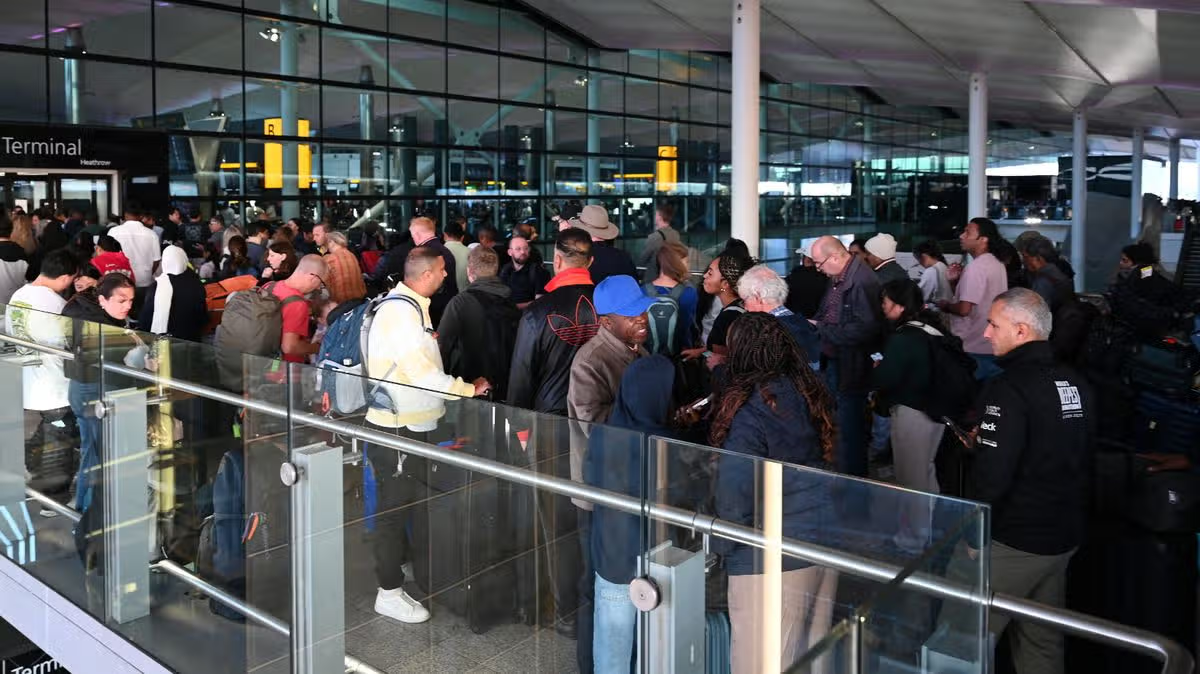
Mass disruption at airports continues as 1,900 flights to and from UK cancelled – live updates

Published

on

Wales Online

Tim Riley, Managing Director of travel insurer True Traveller and Chairman of the UK Travel Industry Association, representing all the major UK travel insurers, has issued the following guidance for UK travellers affected by the current Air Traffic Control disruption:

“The current air traffic control disruption is understandably frustrating for travellers, but there are a number of practical steps people can take.

The first port of call should be the airline. Depending on the circumstances, passengers may be entitled to rerouting, a refund and, where appropriate, meals, refreshments and accommodation.”

Advertisement

Tim advises passengers to keep confirmation of the reason for the disruption, together with receipts for any additional expenses, as airlines may still have responsibilities under passenger rights legislation.

“Travel insurance is there to provide valuable protection when things go wrong, but it is not intended to replace the responsibilities of airlines.”

He explains that cover will usually depend on both the cause of the disruption and the length of the delay. Air traffic control failure is commonly excluded, although travellers should always check their policy wording rather than assume they are not covered.

“Our advice is straightforward: speak to your airline first, establish exactly what has caused the disruption and keep all relevant documentation and receipts. If a later delay is caused by a genuinely separate insured event, such as an unrelated technical problem with the aircraft, the travel insurance position may be different.

Advertisement

Most importantly, don’t assume that a delay automatically means you are either covered or not covered. Check the reason, check your policy, and ask your insurer if you are unsure.”

Source link

Continue Reading

NewsBeat

The right to play: displaced by conflict

Published

on

The right to play: displaced by conflict

With nearly 50 million children displaced by conflict and violence, charities are finding ways to give young people something often lost in war: the chance to play

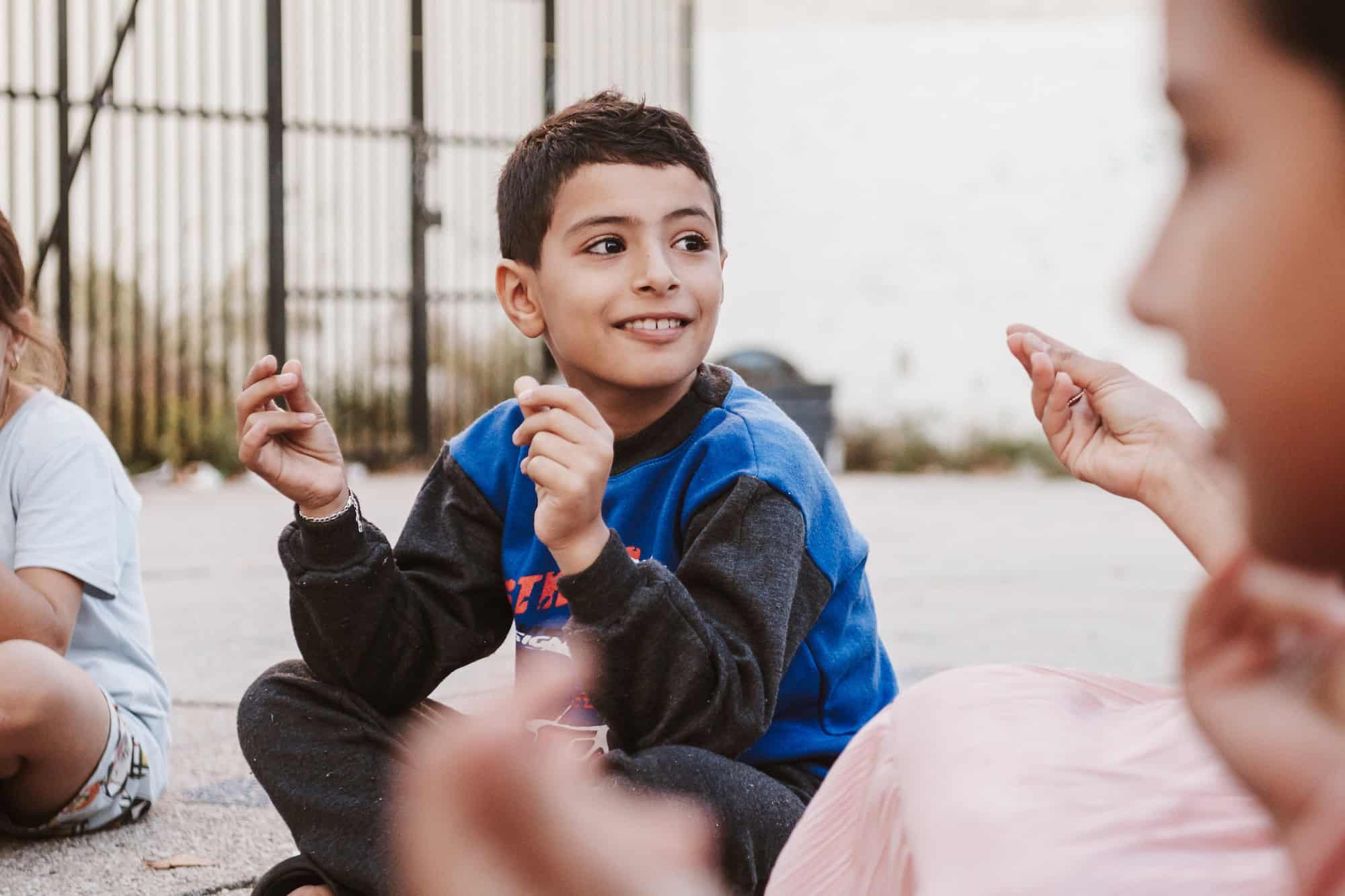
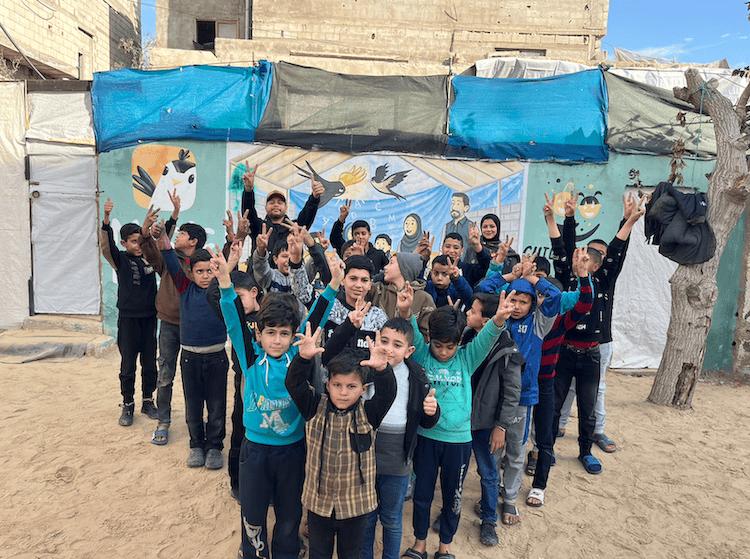
Hamza, a 10-year-old Palestinian boy who had spent his whole life in the overcrowded Nahr el-Bared refugee camp in northern Lebanon, used to be withdrawn and shy. He rarely spoke and avoided interacting with other children. When he started school aged six, he had never held a pencil or opened a book.

But then he began taking part in the Enhancing Quality and Inclusive Education (EQIE) programme, run by the global NGO Right To Play. Alongside receiving speech therapy, he took part in group activities, which helped him start expressing his emotions through drawing, storytelling and roleplay. His favourite game was “guess the emotion”, where one child would act out a feeling and the others had to guess it.

Advertisement

His confidence grew. One year later, he could write his own name, recognise letters and had made friends. After four years, he was a thriving, joyful child who proactively took part in class. He told his teacher his dream was to become a dentist.

Solutions every Saturday
Uplift your inbox with our weekly newsletter. Positive News editors select the week’s top stories of progress, bringing you the essential briefing about what’s going right.
Sign up

Hamza’s story is just one example of how play-based interventions can positively impact children who have experienced displacement or war-related trauma. Play, which comes in multiple forms, is integral to teaching children core skills and boosting self-esteem, explains Racha Nasreddine, country director for Lebanon at the charity.

“It’s not always moving and playing and causing chaos,” she says. “It’s more about how you transfer specific knowledge in a very interactive way, and how you make that child an active actor in their learning process. For a child, what is always important is creating a routine. In war, children lose a sense of control over their lives, so play can bring some of that back.”

Advertisement

Interventions like these are urgently needed. Conflicts across the Middle East, Ukraine and Sudan have caused immense suffering, with children heavily impacted. According to Unicef, nearly 50 million children had been displaced due to conflict and violence by the end of 2024, almost triple the figure in 2010.

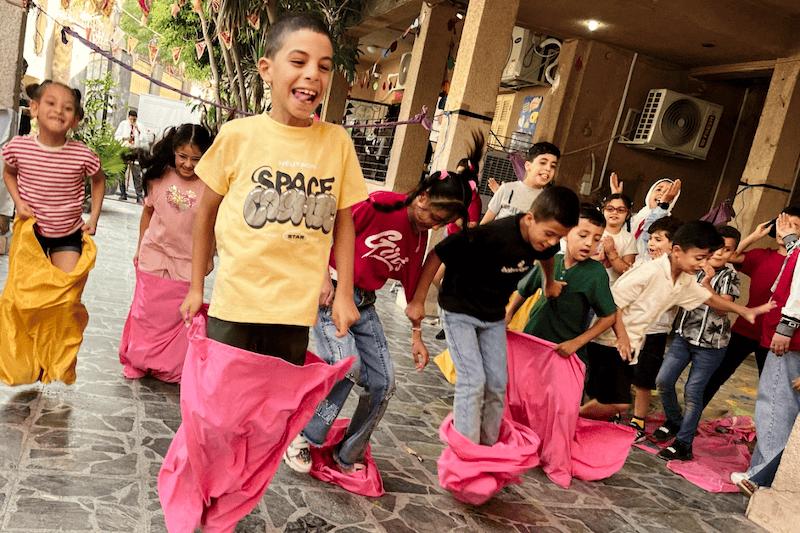
Children in Lebanon take part in Right to Play’s programme, learning to express themselves through drawing, storytelling and group activities. Image: Right to Play / Ralph Azar

Advertisement

As well as experiencing physical trauma, many of these children experience psychological distress, including post-traumatic stress disorder, anxiety, depression, selective mutism, sleep problems and behaviours such as aggression or withdrawal. Play can form a crucial part of psychosocial therapy, but opportunities are limited due to the closure of schools, a lack of access to playgrounds and green spaces, and cramped conditions in camps.

Children have a fundamental right to play enshrined in Article 31 of the UN Convention on the Rights of the Child, yet many are denied this right.

In response, global play organisations are stepping up to this challenge. Catalytic Action is another international charity that uses design and architecture to create empowering play spaces for children in conflict and disaster zones.

Organised play can be critical in helping children recover from trauma by enabling them to reprocess their memories in a healthier way

An integral part of trauma recovery is the co-design process, explains co-founder Joana Dabaj. Local children imagine their dream playgrounds through drawings and workshops, giving them a sense of agency. “The process is as important as the final result, because we’re enabling sharing of feelings, of experiences, of visions,” she says. “It acknowledges their needs, their rights, and translates their ideas into reality.”

Advertisement

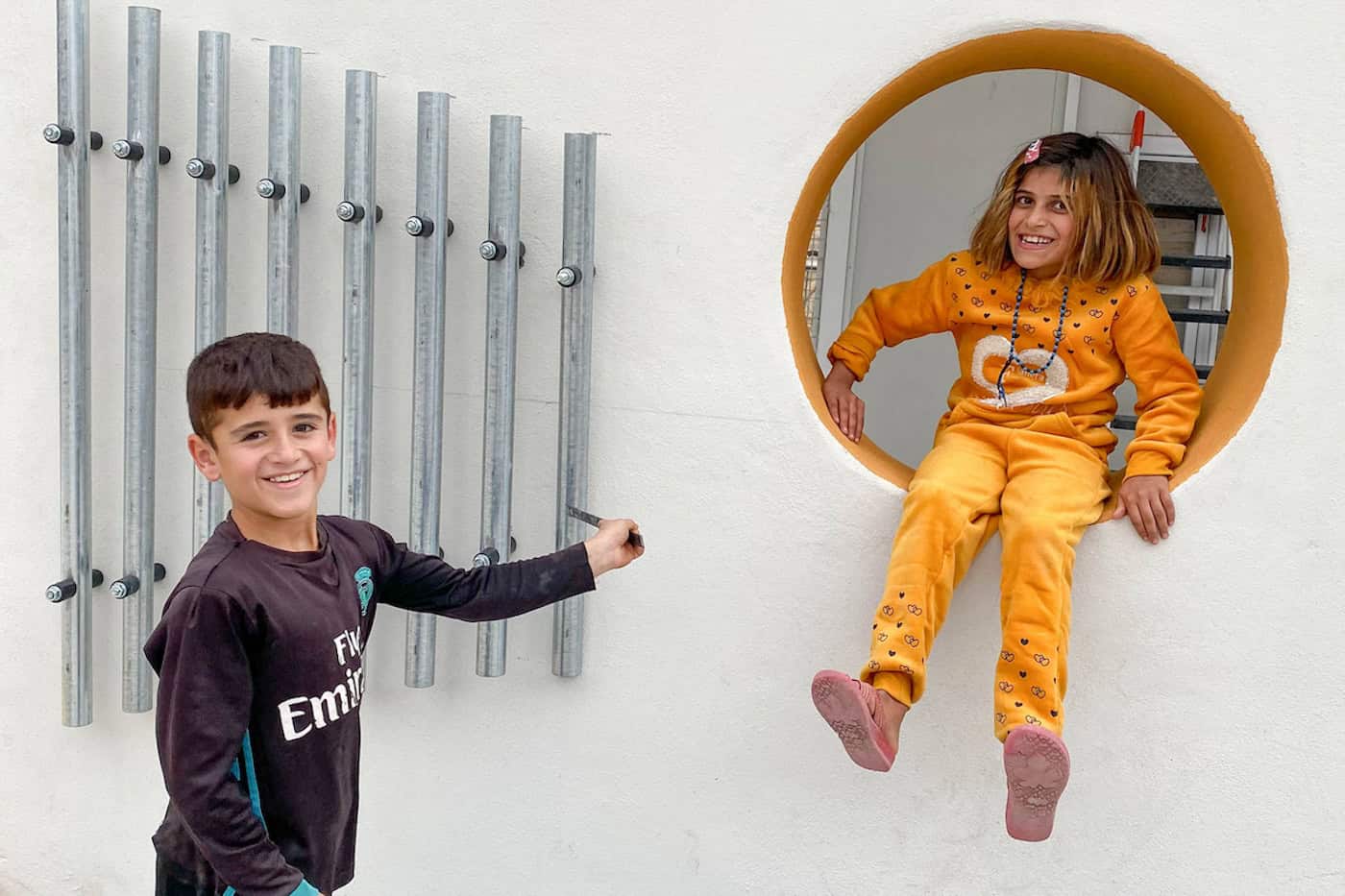
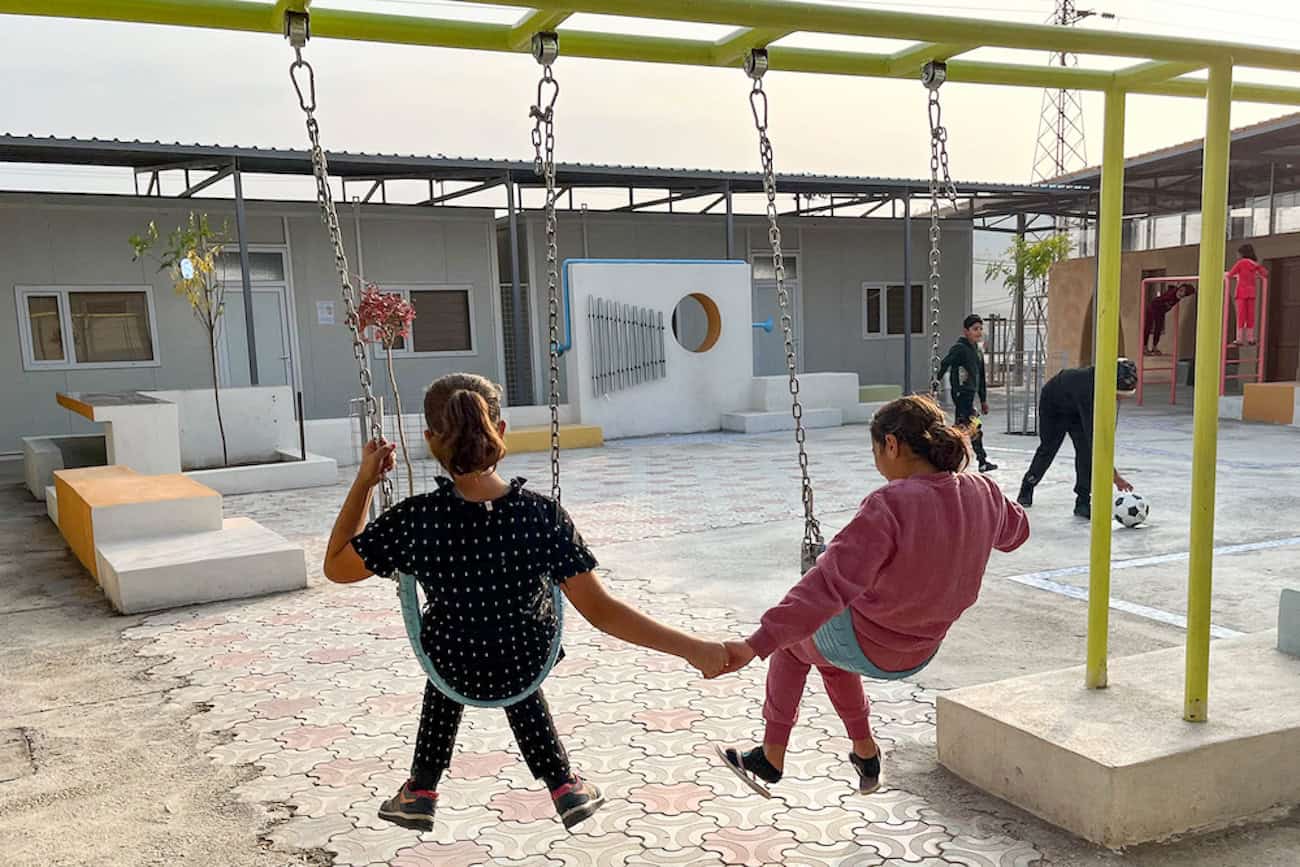
One such playground was created in collaboration with non-profit Habibi International, in a courtyard in the Bersive refugee camp in the Kurdistan region of Iraq, home to many internally displaced people. The playground’s unique features have multiple uses: staggered benches around the perimeter serve as both seats and jumping-off platforms, while holes in the outer wall enable younger children to peek through and play hide-and-seek. Others can play ball sports in a central open space, while the perimeter features swings, monkey bars, hopscotch markings and sensory toys, such as speaking pipes, a xylophone and a steering wheel.

Spaces like this are built to last, so the benefit can stretch over years rather than weeks. Other organisations focus on makeshift structures, which can respond to the volatility of war by being easy to transport and install. That is the thinking behind the modular playgrounds recently launched by UK-based charity Playrise.

These play structures can be easily dismantled and modified with different attachments, from hammocks and swings to monkey bars and musical instruments like drums, generating a flexible design that can meet the preferences of different communities. The designs were created in collaboration with children in Ethiopia and Egypt, and the first prototype will go to a camp in Aysaita, Ethiopia.

Children often get sidelined in war, explains co-founder Ariana Mouyiaris Meininger, and projects like Playrise aim to centre them again.

“In environments where there is conflict, [children] get adultified early,” she says. “They have to take on a lot of roles that shouldn’t fall on their shoulders. So it’s trying to communicate both to a global audience and to communities themselves how important play is for children.”

Organised play can be critical in helping children recover from psychological trauma by enabling them to “reprocess” their memories in a healthier way, explains Kieran King, head of humanitarian at charity War Child UK. But it cannot rely solely on well-designed structures, he says. Play should be integrated within child protection programmes, which take into account safeguarding issues and ideally involve trained facilitators.

Advertisement

In war, children lose a sense of control over their lives, so play can bring some of that back

Play may not involve a physical structure at all, but simply children’s imagination. Helen Christie, a clinical psychologist and trainer for the charity Children & War Foundation, explains that integrating “fantasy” into psychosocial therapy is crucial for trauma recovery. Activities based around re-enacting traumatic events, such as bombings, shootings or displacement, should move to a new, reparative narrative, she says, rather than simply repeating the trauma. For example, when children have recurrent nightmares about past events,“rehearsing” a new ending to their dream through role play can help them heal.

Palestine Play Projects is a UK-based volunteer-led charity that relies heavily on imaginative play. While it used to set up physical playgrounds, since the start of the Israel-Gaza war in October 2023, it has pivoted to hosting play sessions in refugee camps in Khan Yunis, working with a youth theatre group called Child Smile.

“It’s about the temporary spaces, the liminal spaces, the leftover spaces – being able to go to where children are, and then creating the conditions where play is possible,” says Theresa Casey, a volunteer and consultant on play and children’s human rights.

Workers with Child Smile arrive at camps with just a “backpack of resources”. Using methods such as Magic Mitten, a psychosocial support app and storytelling toolkit for children with war-related trauma, originally created for children in Ukraine, facilitators do group activities such as storytelling using make-believe animal characters, talking about emotions, and journalling. The most crucial part is building trust with the children.

Advertisement

Yara*, an 11-year-old girl displaced from northern Gaza, experienced severe trauma after her entire immediate family was killed. She became withdrawn, emotionally shut down and sometimes aggressive. After taking part in the Child Smile sessions for two weeks, she showed a “remarkable transformation”, the charity says, becoming more confident, actively taking part and supporting other children. She was finally able to write about her loss, and how she missed her family, marking a significant emotional turning point.

With the world in such a volatile state, more and more children are being deprived of a childhood. Only 3% of humanitarian aid goes towards education, according to the World Bank, with just a fraction of that reaching play-based support.

Advertisement

While food, shelter, medical care and water will always be the essentials, play is also vital for children’s physical and mental wellbeing, learning and development, and for bringing them small moments of normality in unfathomably difficult circumstances.

Play cannot protect children from displacement or airstrikes, but as the eminent child psychotherapist Garry Landreth says, play is “the child’s language” – and without it, they have no voice.

* Names have been changed to protect identities

Main image: Right to Play / Ralph Azar 

Advertisement

Be part of the solution

At Positive News, we’re not chasing clicks or profits for media moguls – we’re here to serve you and have a positive social impact. We can’t do this unless enough people like you choose to support our journalism.

Give once from just £1, or join 1,800+ others who contribute an average of £3 or more per month. Together, we can build a healthier form of media – one that focuses on solutions, progress and possibilities, and empowers people to create positive change.

Support Positive News

Advertisement

Source link

Continue Reading

NewsBeat

‘Gisele Pelicot 2.0’ wife who was ‘drugged by husband so other men could rape her’ dies ‘after sexual abuse caused fatal injuries’

Published

on

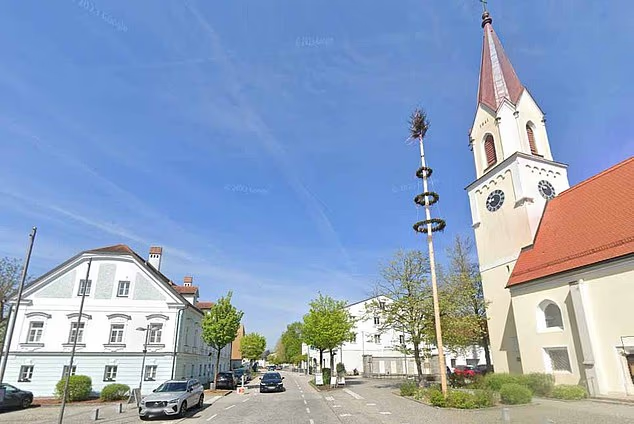
A woman from the Austrian town of Marchtrenk has died after her husband allegedly drugged her so that other men could rape her. Pictured: General view of the town of Marchtrenk

Advertisement

An Austrian woman who was allegedly drugged by her husband so that other men could rape her has died of the injuries she sustained while being sexually abused. 

The disturbing case draws comparisons with that of Gisele Pelicot in France, who was raped by dozens of men on numerous occasions after being drugged by her husband, Dominique. 

On June 25, emergency services were called to the couple’s home in Marchtrenk, Austria, after the 39-year-old woman was found lifeless and covered in blood on a waterbed by her teenage daughter. 

Her husband, who was intoxicated, initially told first responders his wife had had an accident while having ‘rough sex’, news outlet 20 Minuten reports. 

Advertisement

Police did not initially suspect the 51-year-old husband; however, an autopsy and a search of his phone revealed that the woman’s death was linked to something more sinister. 

Following his wife’s death, police found that the man disposed of the waterbed and deleted an app on his phone.

Cops discovered that just days before his wife’s death, the man had allegedly looked up how to drug someone on his phone. 

He subsequently drugged his wife repeatedly over an extended period and handed her unconscious to men for payment, including on the night she died, local media reports. 

Advertisement

A woman from the Austrian town of Marchtrenk has died after her husband allegedly drugged her so that other men could rape her. Pictured: General view of the town of Marchtrenk

The woman’s husband was paid up to 500 Euros per session and would refer to his wife as ‘dead meat’ in text messages.  

Her husband has been arrested alongside a neighbour, who is accused of sexually assaulting the woman twice, including on the night of her death. 

Advertisement

He is understood to have left the house before she died. 

Text messages between the two men were found to mention the alleged abuse of the woman, newspaper Krone reports. 

In one text, the woman’s husband wrote: ‘I’ll get her properly drunk. Then you can have sex with her again. The way she was whining the other day was amazing.’

His neighbour responded: ‘She almost screamed. You cover her mouth again.’

Advertisement

He also thanked the woman’s husband for ‘allowing me to use her’.  

In one text, the husband revealed his wife had not consented to the acts. He wrote: ‘She’s not participating willingly.’

He also said: ‘If it worked, if I had date rape drugs, I would regularly make her available for you to rape.’ 

More suspects remain under investigation as a police probe continues. 

Advertisement

The case follows the high-profile trial that shocked France in 2024, in which Dominique Pelicot admitted to drugging his wife Gisele for almost a decade and inviting dozens of men to rape her while she was unconscious. 

He was found guilty on all charges last year and sentenced to 20 years in prison, which was the maximum possible.

He admitted his role and did not appeal.

All 50 of his co-defendants were also found guilty of various charges related to the case.

Advertisement
The case has been likened to that of Gisele Pelicot (pictured in October 2025) who was raped by dozens of men on numerous occasions after being drugged by her husband

The case has been likened to that of Gisele Pelicot (pictured in October 2025) who was raped by dozens of men on numerous occasions after being drugged by her husband

The trial drew international attention after Gisele opposed a closed hearing, a demand made by several defendants.

The court sided with her. Her courage inspired campaigners against sexual and sexist violence and the shocking case spurred a national reckoning over rape culture in France.

The evidence included stomach-churning homemade videos of rapes and assaults that Dominique Pelicot filmed in the couple’s home in the small Provence town of Mazan and elsewhere.

Advertisement

Advertisement

Source link

Continue Reading

NewsBeat

‘Peaceful’ Sweden once sought nuclear weapons. That legacy still shapes defence planning

Published

on

‘Peaceful’ Sweden once sought nuclear weapons. That legacy still shapes defence planning

For decades, Sweden has fostered a self-image as something of a world record-holder for peace, celebrating more than two centuries since it was last at war. But this record involves some creative accounting. The narrative, for example, excludes Sweden’s participation in modern-day military operations in Afghanistan and Libya.

Nor has Swedish “peacefulness” been entirely pacifist. The country operated one of the world’s largest air forces during the cold war, for example. But less well known is how far Sweden progressed towards developing nuclear weapons of its own. Despite never producing a bomb, the history of its unrealised nuclear weapons programme offers important insights for understanding security policy today.

Back in 1945, just months after the US had dropped nuclear bombs on the Japanese cities of Hiroshima and Nagasaki, Swedish military researchers began investigating this new weapon. In 1948, the defence staff asked the Swedish National Defence Research Institute (FOA) to examine the possibility of producing atomic bombs in Sweden.


Advertisement

We think we know Sweden – a peaceful nation grounded in social democracy, natural beauty, IKEA and Abba. But in 2026, is this still the real Sweden? Ahead of the country’s general election on September 13, The Conversation UK has teamed up with its Swedish partner universities for a series of articles examining why this small nation remains so fascinating.


The plans progressed rapidly. During the 1950s, FOA – with assistance from the state-owned nuclear energy company AB Atomenergi – conducted detailed studies of nuclear reactions and bomb design. Experimental facilities were built. By the mid-1950s, Swedish researchers believed they knew enough to construct a bomb.

Historian Thomas Jonter has argued that Sweden achieved a “latent” nuclear weapon capability. The main obstacle was access to weapons-grade plutonium and the industrial infrastructure needed to produce it.

Why would Sweden want nuclear weapons?

Behind Sweden’s determination was deterrence. Since the country’s principal strategic threat came from the Soviet Union, and since Sweden could never match Soviet conventional forces, nuclear weapons seemed to offer something compelling for a small state: the possibility to inflict disproportionate damage on a much stronger enemy.

Advertisement

By the end of the 1950s, the commander of the armed forces and much of the military establishment supported the idea. The defence minister and large parts of the political opposition were also in favour. Prime minister Tage Erlander was (cautiously) in favour but for years the issue was deliberately left unresolved. The government refrained from making a commitment, while the military kept its research and technical competence up to scratch in order to to keep the door open.

Opposition, however, grew rapidly. The Federation of Social Democratic Women and the party’s youth wing (SSU) were staunch critics, and foreign minister Östen Undén opposed the programme from within government. Writers, academics and peace activists mobilised external opposition.

Their campaign exposed what many saw as the dark logic of deterrence. If Sweden intended to use nuclear weapons, it had to assume that nuclear weapons would also be used against it, perhaps in a pre-emptive strike.

By the early 1960s, domestic opposition was reinforced by a changing international environment. Negotiations for arms control advanced, and the US opposed proliferation. At the same time, Swedish leaders received informal guarantees from the US in the event of a Soviet attack, which reduced the strategic case for a Swedish bomb. By the mid-1960s, the plans had effectively been abandoned, and when Sweden signed the Nuclear Non-Proliferation Treaty in 1968, the door finally closed.

Advertisement

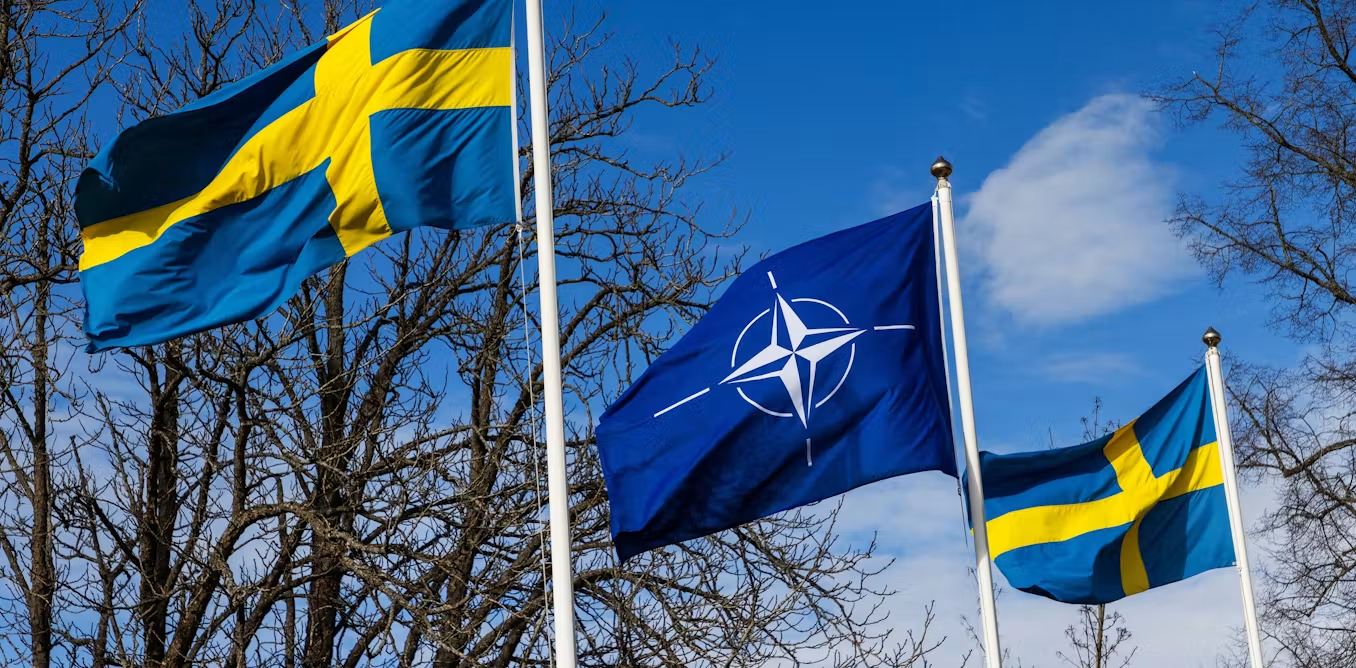
But Russia’s full-scale invasion of Ukraine in 2022 transformed Swedish security policy, culminating in Nato membership in 2024 along with rapidly rising military expenditure. It has also changed Sweden’s relationship to nuclear deterrence. For Nato, nuclear weapons are a central component of its deterrence strategy.

swedish woman holding up a placard showing a child being pulled by a dark figure, protesting at swedish accession to nato

Not everyone was in favour of Nato membership.
Jeppe Gustafsson/Shutterstock

The consequences are already noticeable in Swedish defence planning. The government’s defence policy for 2025–2030 states that Sweden is now part of Nato’s nuclear deterrence and must participate actively in the alliance’s work in this field. It also calls for Sweden to build knowledge about the role and function of nuclear weapons, echoing the build-up of knowledge from the early cold war.

This time, Sweden has no plans to build its own nuclear weapons – but the developments bring renewed attention to that dark logic of deterrence. After all, nuclear weapons promise security by threatening potential enemies with destruction.

One particularly sensitive question concerns the possibility of stationing nuclear weapons on Swedish territory. Sweden joined Nato without a formal domestic decision on this matter, although the government has stated that it sees no reason to do so in peacetime. For now, the issue is hypothetical.

Advertisement

But history suggests that it may not remain so forever. Seventy years ago, the prospect of Swedish nuclear weapons provoked fierce political conflict and public protest. If nuclear weapons were ever to be based on Swedish territory, the controversial idea of deterrence might stir emotions once again. Provided, of course, that the plans become known to the public.

Source link

Advertisement
Continue Reading

NewsBeat

Body found in search for missing Peterborough man who hadn’t been seen for months

Published

on

Cambridgeshire Live

He was reported missing nearly two months ago

A body has been found in the search for a man who was missing for months. Police have confirmed a body was found on Friday in fields near Peterborough.

Advertisement

Lewis Winter, from Eye, near Peterborough was reported missing on July 16 but he had not been seen for some time prior to this date. CCTV previously released by Cambridgeshire Police showed Lewis leaving the Tasman Caravan Park in Eye at around 7pm on July 5.

The force has now confirmed a body was found in the fields off Eyebury Road in Eye on Friday (September 4). A spokesperson for the force said: “The death is being treated as unexplained at this time.”

As well as our website, CambridgeshireLive has a Facebook page, a Twitter feed, @Cambslive, and for a daily snapshot of the top stories, you can sign up to receive our newsletter.

For updates on where you live there’s also InYourArea.co.uk, a service that is customised to provide information and new from near you, both from us and from other sources.

Advertisement

In Your Area also has an app that you can sign up for.

Source link

Advertisement
Continue Reading

NewsBeat

Mo Gilligan draws gasps from the NTAs audience as he takes a swipe at Miriam Margolyes amid Andi Peters ‘racism row’ live on stage

Published

on

Mo Gilligan took a swipe at Miriam Margolyes as he presented an award at the National Television Awards in London

Comedian and TV presenter Mo Gilligan took a swipe at Miriam Margolyes as he presented an award at the National Television Awards in London last night. 

The outspoken actress, 85, used an offensive term to describe ITV presenter Andi Peters’s skin colour during an appearance on This Morning last week. 

And in reference to the comment Gilligan, 38, introduced himself to the audience by quipping: ‘If you know me, I’m Mo Gilligan. And if you don’t know me, then I’m Andi Peters.’

Gilligan drew gasps and nervous laughter from the audience before he then announced the Factual Entertainment award had gone to Channel 4‘s Gogglebox. 

Advertisement

The reference to the ‘racism’ row sparked debate on social media, with some branding the joke ‘funny’ while others said it ‘fell as flat as a pancake’. 

Last Thursday ITV bosses were forced to intervene after the actress referred to Peters, 56, as ‘high yalla’. 

The clip, which was removed from the ITVX recording of the show, has since gone viral, with many viewers taking to X to express their outrage over Miriam’s comments. 

Advertisement

Mo Gilligan took a swipe at Miriam Margolyes as he presented an award at the National Television Awards in London

Outspoken Margolyes, 85, used an offensive term to describe ITV presenter Andi Peter's skin colour during an appearance on This Morning last week

Outspoken Margolyes, 85, used an offensive term to describe ITV presenter Andi Peter’s skin colour during an appearance on This Morning last week

The term, which can also be spelled ‘high yaller’ or ‘high yellow’ is an outdated and offensive slang term used in the US to describe a black person with a light complexion.

After first impersonating presenter Christine Lampard‘s Northern Irish accent, Miriam turned to Peters and asked: ‘But what accent would be normal for you?’

Advertisement

‘This is normal. This is what I am,’ replied Peters, as Miriam continued: ‘Oh, you’re a mix, aren’t you? You’ve got a black daddy and a white mummy.’ 

‘No, no, no. Both my parents are black,’ confirmed Peters, before he joked: ‘What have they put on me, am I a lighter shade than normal?’ 

Miriam continued: ‘Both parents are I think you’re what I would call a “high yalla.” That’s what they call it in America. Oh, when someone isn’t deeply black, right?’

‘I didn’t even know there were shades,’ said Peters, as Miriam added: ‘There are shades.’

Advertisement

Worried about the direction of the conversation, producers are thought to have issued a warning to Andi through his earpiece – with him then saying out loud: ‘Oh, okay. They’re getting nervous now. They’re getting nervous now.’

Join the discussion

Did Mo Gilligan’s NTA joke make you laugh or leave you cringing?

Making reference to the shocking comment, comedian Mo introduced himself to the audience and said: 'If you know me, I¿m Mo Gilligan. And if you don¿t know me, then I¿m Andi Peters'

Making reference to the shocking comment, comedian Mo introduced himself to the audience and said: ‘If you know me, I’m Mo Gilligan. And if you don’t know me, then I’m Andi Peters’ 

Advertisement
The reference to the 'racism' row sparked debate on social media, with some branding the joke 'funny' while others said it 'fell as flat as a pancake'

The reference to the ‘racism’ row sparked debate on social media, with some branding the joke ‘funny’ while others said it ‘fell as flat as a pancake’

Advertisement

‘Don’t be nervous,’ reassured Miriam, ‘We welcome everybody. That’s what I want to write about in my book. It’s about inclusion.’

Miriam later addressed the backlash as she said: ‘I didn’t want to embarrass or hurt Andi because he seems very nice.

‘I’d never met him before; I didn’t know who he was and I didn’t know he was black until I saw him. When you see someone, of course you know they’re black. 

‘I wanted to know what he thought about it because that’s what interests me.’

Advertisement

Miriam then used an offensive term for disabled people as she continued: ‘How do black people feel? How do brown people feel? How do cripples feel? How do fat people feel?

‘You see what I mean? All of us feel something about who we are and how people see us, what they think of us.’

The host interjected to clarify that ‘in other words you wanted to discuss his identity with him’, to which the actress was in full agreement.

‘I am fascinated by other people,’ she continued. ‘They are the people that interest me, not the celebrities so much. It’s everybody. What their story is, what made them who they are, why you are the way you are.’

Advertisement

National Television Awards 2026: The Winners

Reality Competition

I’m A Celebrity… Get Me Out of Here!

I’m A Celebrity… South Africa

Advertisement

Race Across the World 

The Celebrity Traitors – WINNER

 The Traitors

Quiz Show

Advertisement

Ant & Dec’s Limitless Win

Michael McIntyre’s The Wheel

Richard Osman’s House of Games

The 1% Club – WINNER

Advertisement

The Chase

Returning Drama

Blue Lights

Bridgerton

Advertisement

Call the Midwife – WINNER

Stranger Things 

Trigger Point

Reality Docuseries

Advertisement

At Home With The Furys

Clarkson’s Farm – WINNER

Fletchers’ Family Farm

Mortimer & Whitehouse: Gone Fishing

Advertisement

Stacey & Joe

Drama Performance

Ella Bruccoleri as Mary Bennet, The Other Bennet Sister

Judy Parfitt as Sister Monica Joan, Call the Midwife

Advertisement

Ruth Jones as Elena Ravenscroft, Run Away 

Sheridan Smith as Ann Ming, I Fought The Law

Vicky McClure as Lana Washington, Trigger Point – WINNER

Serial Drama

Advertisement

Casualty

Coronation Street

EastEnders

Emmerdale – WINNER

Advertisement

Hollyoaks

Factual Entertainment

24 Hours in Police Custody

Gogglebox – WINNER

Advertisement

Secret Garden

Sort Your Life Out

The Martin Lewis Money Show Live

Advertisement

New Drama 

A Woman of Substance

Believe Me

Advertisement

Heated Rivalry

I Fought The Law – WINNER

The Other Bennet Sister

Authored Documentary

Advertisement

Caroline Flack: Search for the Truth

Jesy Nelson: Life After Little Mix

Our Girls: The Southport Families – WINNER

Sharon & Ozzy Osbourne: Coming Home

Advertisement

Sir Chris Hoy: Cancer, Courage and Me

TV Presenter

Alison Hammond

Ant & Dec

Advertisement

Claudia Winkleman

David Attenborough – WINNER

Stacey Solomon

Comedy

Advertisement

Amandaland

Changing Ends

Last One Laughing

Mrs Brown’s Boys – WINNER

Advertisement

Not Going Out

The Bruce Forsyth Entertainment Award

Gladiators

Michael McIntyre’s Big Show – WINNER

Advertisement

The Graham Norton Show

The Masked Singer

Would I Lie to You?

Serial Drama Performance

Advertisement

Aaron Thiara as Ravi Gulati, EastEnders

Gareth Pierce as Todd Grimshaw, Coronation Street

Jeff Hordley as Cain Dingle, Emmerdale – WINNER

Paul Bradley as Nigel Bates, EastEnders

Advertisement

Sue Devaney as Debbie Webster, Coronation Street

Daytime

Good Morning Britain

James Martin’s Saturday Morning

Advertisement

Loose Women

Scam Interceptors 

This Morning – WINNER

Talent Show

Advertisement

Britain’s Got Talent

Strictly Come Dancing – WINNER

The Great British Bake Off

The Great Celebrity Bake Off for Stand Up To Cancer

Advertisement

The Great Pottery Throw Down

Advertisement


Source link

Continue Reading

NewsBeat

‘Superhero’ officer killed in A66 crash to be laid to rest today with procession through his home town

Published

on

The devastated wife and sons of PC Matthew Blades will pay a heartbreaking final farewell to him today after he was killed in a head-on smash on August 22

The devastated wife and sons of one of the police officers killed in the A66 tragedy will pay a heartbreaking final farewell to him today.

The family of PC Matthew Blades, 37, – who described him as their ‘superhero’ – saw their world turned upside down on August 22 when he and his colleague PC Tom Clough, 38, were killed in a head-on smash with a car full of youths. 

PC Blades’ funeral takes place with full police honours and a procession through his home town of Hartlepool, County Durham, attended by his wife and sons aged just eight and six. Road closures will be in place. 

The boys’ plight tore at the hearts of football fans when they were mascots for Manchester United in their opening home fixture against Ipswich on August 30, attending Old Trafford with their mother, Sarah.

Advertisement

Ahead of today’s ceremony, Cleveland Police Federation paid tribute to PC Blades, who was known as Matty, and to the courage of his family.

Lauren Somerville, Chair of Cleveland Police Federation, said: ‘Matthew was a best friend, a husband, a father, a brother, a son and his family have said that words aren’t powerful enough to describe how they feel right now.

‘He has been described as the heart of the family and he will be remembered beyond words, today, tomorrow and always.

‘He would be so proud of all the support that has been shown from the public and from his colleagues to his family.’

Advertisement

The devastated wife and sons of PC Matthew Blades will pay a heartbreaking final farewell to him today after he was killed in a head-on smash on August 22

PC Tom Clough, 38, also died in the crash, which occurred around 10 seconds after a police pursuit of the Volkswagen was called off

PC Tom Clough, 38, also died in the crash, which occurred around 10 seconds after a police pursuit of the Volkswagen was called off 

A police officer leaves flowers at the Cleveland Police HQ Memorial Garden in Middlesbrough

A police officer leaves flowers at the Cleveland Police HQ Memorial Garden in Middlesbrough

Advertisement

Lauren added: ‘Matt’s family have shown incredible dignity and courage since those awful events in August and it is our honour to play our small part in honouring his memory. 

‘The support and love we offer them does not end today. We will always be there to take care of them.’

She concluded: ‘His family have said they’re going to miss everything about him more than words can say and his laughter and silly jokes made them smile even when they least expected it. He’s been described as bringing light and laughter into every room and now life feels unbearably quiet without him.’

A GoFundMe page set up by the federation raised £1.2million in donations to be split between the families of PCs Blades and Clough.

Advertisement

Sarah Blades paid tribute to her husband the day after the tragedy which claimed his life.

She said: ‘No words will ever feel like the right words to honour our Matt – my beloved husband, my best friend, and the most devoted father to our two young boys.

‘He was an adored son and brother, a perfect son-in-law, and the most fun uncle. He was loved beyond words by all his family and friends, and his loss has left a space that can never be filled.

‘He gave his life in the line of duty, protecting and serving others with courage, dedication and selflessness.

Advertisement
Jakub Matusiak, 23, Makai Saddington, 18, Michael Cahill, 23, Cole Worthy, 17, (right) and Theo Rae, 17, (left) were also killed in the smash. Cole's funeral also takes place today

Jakub Matusiak, 23, Makai Saddington, 18, Michael Cahill, 23, Cole Worthy, 17, (right) and Theo Rae, 17, (left) were also killed in the smash. Cole’s funeral also takes place today

‘The pain of losing him is beyond words, and our lives will never be the same. Neither will the love he gave us ever fade.

‘Our children will grow up knowing what an incredible father he was and will always be, and I will carry his love, his memory and everything we shared with me always.

‘He may have left this world committed to the duty he believed in, but his greatest legacy will always be the love he gave to his family.

Advertisement

‘We would also like to express our deepest gratitude and heartfelt thanks to all of the emergency services and to our police family who have stood beside us through the most difficult time of our lives.

‘The kindness, compassion, love and unwavering support we have received as a family has meant more to us than words could ever express. Every message, visit, gesture of support and every person who has stood alongside us will never be forgotten.

‘Forever loved. Forever missed. Forever our superhero. Our Matt and Dad.’

The two officers were killed at 3.39am on Saturday August 22nd when their armed response vehicle was struck at South Bank, near Middlesbrough, by a speeding VW Passat containing five youths and young men aged between 17 and 23.

Advertisement

Jakub Matusiak, 23, Makai Saddington, 18, Michael Cahill, 23, Cole Worthy, 17, and Theo Rae, 17, were also killed in the smash. Cole Worthy’s funeral also takes place today in Middlesbrough.

Police said the five all had links to organised crime and had been trying to flee police when they drove the wrong way up the A66 into the police vehicle.

The VW Passat had set out in pursuit of a Volvo XC60 which had rammed the homes of relatives of Worthy and Rae as part of a tit for tat gangland turf war over the supply of drugs on Teesside.

PCs Matthew Blades with his two children and a Manchester mascot

PCs Matthew Blades with his two children and a Manchester mascot 

Advertisement
PC Blades' sons led out the Manchester United team as mascots for Premier League match against Ipswich Town on August 30

PC Blades’ sons led out the Manchester United team as mascots for Premier League match against Ipswich Town on August 30

PC Clough and Blades died from severe head and neck injuries at the scene.

Away from his work as a Cleveland police response officer, PC Blades was heavily involved in the Hartlepool football scene, inspiring his own children and other youngsters as a much-loved coach.

He worked at two clubs in the town – FC Hartlepool and, more recently, Seaton Carew. Both clubs have paid tributes, with FC Hartlepool under 10s to become known as FC Blades.

Advertisement

The club said: ‘Some things in football mean far more than the result. The FC U10 Reds have changed their name to FC Blades in tribute to coach Matt, whose influence on the team and everyone around it will never be forgotten.

‘Yesterday marked the beginning of that new chapter, with The Blades taking to the pitch for the first time under their new name. And the boys started the season brightly, playing some good football to win their opening game.

‘A new name and a new season, but one that will always carry Matt’s influence and memory with it. FC Blades.’

A spokesperson for the club added: ‘Matty was so much more than a coach. He was a role model, a mentor, a friend, and someone the children looked up to and admired. He was able to share his love of football with his son while inspiring and supporting every child on the team.

Advertisement

‘Matty gave his time, energy, and heart to the team. He encouraged the boys, believed in them, supported them, and helped them grow – not only as footballers but as young people. His kindness, patience, and infectious personality made him loved by all who had the privilege of knowing him.’

Source link

Continue Reading

NewsBeat

Jeremy Clarkson leaves Kaleb Cooper in tears after mistake

Published

on

Jeremy Clarkson leaves Kaleb Cooper in tears after mistake

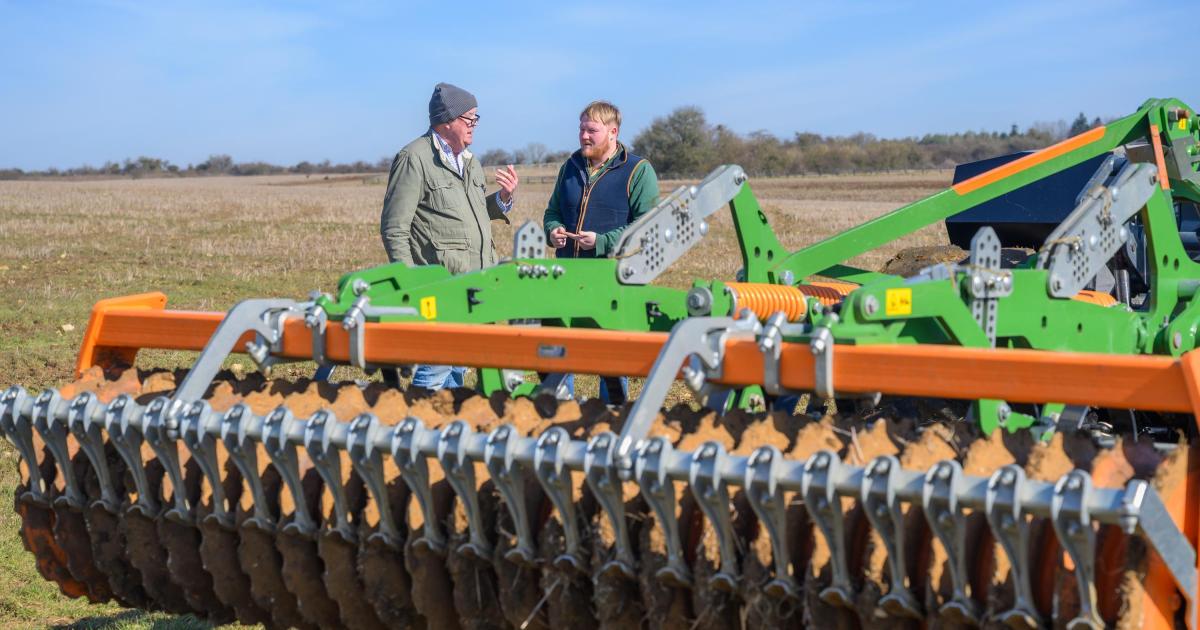
Diddly Squat Farm has become one of Britain’s best‑known farms thanks to the Amazon Prime Video series Clarkson’s Farm.

The popular Amazon series documents the former Top Gear and Grand Tour presenter’s efforts to manage the 1,000-acre Oxfordshire site.


Jeremy Clarkson says farming has changed his outlook on life

Clarkson opened up about his life on Diddly Squat Farm during the first-ever Hawkstone Festival, held at his Farmer’s Dog pub.

Advertisement

The former Top Gear and Grand Tour presenter revealed how farming has changed his outlook on life, according to The Mirror, especially when it comes to working with animals.

Clarkson explained: “With the animals it’s the weirdest relationship.

“I know I’m going to eat them.

“I know they are going to be sold in the pub and other people are going to eat them.

Advertisement

“I know that but you don’t half love them when you’ve got them on the farm and when they die or they get TB or they get Bluetongue or whatever it might be, it’s properly heartbreaking.

“And that’s the worst thing for me.

“I’m a little softy at heart.”

He added: “When it comes to animals I could watch James May being run over all day but a piglet, I can’t.

“I get wobbly.”

Advertisement

“Worst mistake” on Diddly Squat Farm that left Kaleb Cooper close to tears

Clarkson, 66, also revealed the “worst mistake” he has made on Diddly Squat Farm.

He explained that he sold the publishing rights to finance buying the farm “without doing a soil test”, which left co-star Kaleb Cooper close to tears.


Clarkson explained: “Kaleb does a speech where he’s almost in tears, saying ‘I’m not from a farming background.

Advertisement

“‘Lots of farmers don’t think I’m a proper farmer.

“‘You’ve completely messed this up.

“‘They are all going to think I can’t farm.’

“And it’s one of the most heartfelt, tragic things you’ve ever seen.

Advertisement

“I felt so ashamed, genuinely ashamed.

“I had to go home and have 42 pints of Hawkstone to make myself feel better.

“I think that was probably my worst mistake genuinely.”

The mistake is set to feature in the upcoming series of Clarkson’s Farm.

Advertisement

Clarkson described Cooper as an essential part of the Diddly Squat Farm journey, saying: “He’s the stupidest cleverest person I’ve ever met or the cleverest stupid person.

“He doesn’t know anything, but when he does learn something, my God, he’s clever at working it through.

“I couldn’t have done any of it without him, really.”

What is your favourite Clarkson’s Farm moment? Let us know in the comments below.

Advertisement

Source link

Continue Reading

NewsBeat

Weather chaos at Barcelona Airport with over 50 flights cancelled

Published

on

Belfast Live

More than 50 flights at Barcelona have been cancelled while 194 are delayed

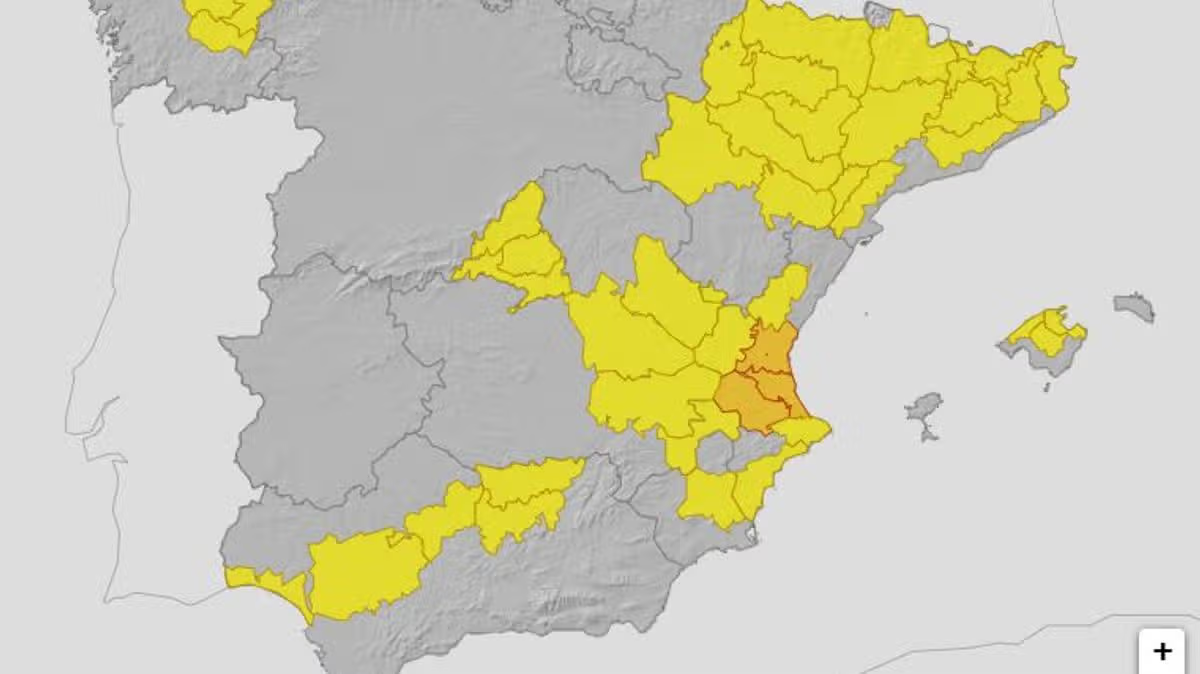
Holiday-makers are being warned ‘check your airlines’ as Barcelona Airport cancels several flights due to extreme weather. Northeastern Spain is battling torrential rain, heavy gusts and hail to the city’s coastline.

The Mirror reports Barcelona-El Prat Airport has grounded over 50 flights from the holiday hotspot, while 194 are delayed, FlightRadar data shows. It comes as the Catalan meteorological agency issued a severe thunderstorm and rain alert this morning, with those in Barcelona warned to expect “hail and very strong wind gusts”.

Advertisement

Travellers flying to and from the airport have been urged to check the status of their flights due to “adverse weather” in the region.

A warning message on the website reads: “Adverse weather. If you are planning to fly to/from Josep Tarradellas Barcelona-El Prat Airport, please check with your airline for the status of your flight.”

Want to see more of the stories you love from Belfast Live? Making us your preferred source on Google means you’ll get more of our exclusives… To add Belfast Live as a preferred source, simply click here.

Source link

Advertisement
Continue Reading

Trending

Copyright © 2025