
Tech
Suno replaces its AI models with a new one trained on licensed music as copyright suits pile up


AI music model maker Suno on Wednesday unveiled a new model family called Suno v6, which it says was developed using licensed data from music labels and distributors such as Warner Music Group, BMG and Believe.
Suno has faced multiple lawsuits from record labels, which accused the startup of using copyrighted data to train its AI models, which let you generate music with prompts. Suno settled with Warner Music Group last year, and struck a deal with BMG last month.
The company said Suno v6 is not trained using the data it used to train previous versions of its music-generating model.
The startup is releasing three versions of the model: The base Suno v6 model is available to paying users, and is said to be reliable and steerable for controlled outputs; Suno v6 wild is an experimental model, also available to paying users, that’s meant to be used for ideation and getting unexpected results. Lastly, Suno v6 mini is a faster version available to all users. The company plans to retire its older models.
Suno says the new model lineup offers greater flexibility in how you use them. Suno v6 lets you edit a part of a song using a prompt or a word in the lyrics, and even lets you use text, images or video as references to create tracks. You can separate an instrument from a sample and create a new beat with it.
The startup also said it plans to add new features such as letting users remix songs — provided the respective artists opt-in to a new program it is setting up with music labels that lets Suno use their songs for AI-generated features.
Jack Brody, Suno’s chief product officer, said through derivative work, there is more opportunity for revenue generation for all stakeholders
“I think the music ecosystem and our partners are always looking for ways to create more revenue opportunities for their rights holders and artists. So a big part of this release is creating additional revenue streams there,” Brody told TechCrunch in an interview.
Last month, Suno said it plans to add a watermark to songs generated using its platform. It also recently also introduced new download limits based on the account’s tier.
“We can help manage some of the broader ecosystem challenges like streaming fraud and kind of mass exportation and uploading to distributors that are low intent. At the end of the day, we think it is up to the distributors and the platforms to govern what content goes on there,” he said.
Suno is still facing lawsuits from labels like Sony and Universal Music Group, artists like Jason Isbell, and users alleging it ignored security while chasing profits. The model announcement comes a day after the company admitted to training its models using YouTube videos.
Despite these controversies, Suno has raised over $819 million in funding to date, according to PitchBook data.
When you purchase through links in our articles, we may earn a small commission. This doesn’t affect our editorial independence.


ASUS is getting ready to give its Vivobook lineup a major style refresh in India. The company has confirmed that its next-generation Vivobook laptops will launch on September 16 at 12 PM, bringing new colors, premium all-metal builds, and up to 38 hours of battery life under the campaign tagline “Your Vibe. Your Color.” The lineup will span both traditional clamshell and 2-in-1 convertible models powered by AMD, Intel, and Snapdragon processors.
Fun Asus Vivobook Colors and Design

The biggest visual change is the introduction of three new finishes: Light Blue, Cool Silver, and Matte Gray. While Silver and Gray cater to users who prefer understated, professional-looking machines, the new Light Blue variant adds a more youthful and lifestyle-oriented option to the lineup. All models will feature an all-metal chassis with a refined metallic finish, giving the laptops a more premium feel than traditional plastic-bodied notebooks. ASUS also claims the new Vivobooks can deliver up to 38 hours of battery life, though the exact endurance will depend on the processor and configuration.
The refreshed portfolio will include the Vivobook 14 Flip, Vivobook S14 Flip, Vivobook S14, Vivobook S16, and Vivobook 16. ASUS has confirmed that the lineup will span AMD, Intel, and Snapdragon-powered configurations, giving buyers a wider choice across traditional laptops and 2-in-1 convertibles. While the company has yet to reveal detailed specifications, the teaser suggests the new Vivobooks will continue to target users looking for everyday performance across work, studying, entertainment, and creative tasks.
ASUS is also bundling an introductory protection offer alongside the launch. Buyers will be able to purchase a package that includes two years of extended warranty and three years of accidental damage protection for just ₹99, despite the bundle being valued at ₹5,599.
Small and medium-sized business owners can lack the time and budget required to keep their audience engaged. If you work to fill in the gap and offer related services, getting things done in the right and professional way for your clients can be an easy flow at the onset, but it can become complex over time. From keeping the audience engaged with graphics, videos, and catchy captions, social media content requires extra effort.
However, using AI on the side changes the equation and makes it easier to handle these tasks for SMB clients. You can generate consistent visuals across platforms with a professional finish. Here is how you can scale the content production process.
Outline the Brand Details
Creating professional social media content for small and medium-sized business clients requires outlining and clearly defining the brand details. It is the first step, and it determines how the audience embraces the information. This ranges from the visuals to other elements. For your visuals, outline the colour codes, font families, and logo placement rules. In addition to your image style preferences, languages and audience engagement styles are extra details to state clearly and put forward. However, these details must be convertible into AI parameters.
Set up your Social Media Pages Guidelines
Social media platforms are more than one, with different rules applying to their use. To create professional content with AI, you need to set up approaches that will fit into any of the usage and aid your brand’s consistency. For instance, X is well-suited for short messaging, and you can easily engage in real-time conversations. LinkedIn comes in as more professional, usually best suited for long-form explanations and business-focused visuals. Facebook and Instagram present a broader channel for visual and text-based posts as well as community-driven conversations.
Select and Train the AI Tool
There are various available AI tools for content creation, both free and paid. Whether you are choosing any, the initial setup is essential for the overall content you want to create. You can make adjustments or refine your assets to match the auto-processing. This step-by-step process to set up these tools includes
- Upload brand assets, including logos, fonts, and colour palettes, to the AI tool you are using.
- Layout your preferred post types, themes, and message formats.
- You can generate professional sample posts that meet your brand standards.
- Make your custom adjustments from the feedback received from the tool.
Create Your Content Workflow
With assets and setup all in place, you can build a structured process for creating and managing social media content posts. For instance, you can generate multiple posts for SMB clients’ media platforms and schedule them for the day or week. Creating a professional content workflow also revolves around mapping out themes and campaign priorities.
Ways You Can Use AI for Social Media Content for Small Businesses
There are several ways of using AI to create professional social media content for small and medium-sized businesses. These help SMB clients cut work hours, improve work standards, and maintain brand consistency across platforms.
If there is multiple content to brainstorm before sharing across social media pages, AI tools are handy for breaking them down. Rather than going on long deliberations with a blank slate, you can input a few ideas on AI tools for suggestions. These include ideas about the business, production, and target audience.
- Repurpose Long-form Content
Aside from expanding ideas, you can repurpose and cut down long-form content with AI to match the demands of social media pages. Turn blog posts or newsletter articles into guides for X posts or Instagram carousel headings. You can also convert this content to generate Facebook reels.
- Schedule Posts and Hashtags
You can inquire from AI on the best posting time and lead on non-saturated hashtags that match your niches.
With an AI, you can generate alt-texts for photos and social media content to make it more professional. It helps patch product details like material, colours, and size that social media platforms can index.
- Automated Response Templates
Beyond creating content, one of the leverages of AI is automated professional responses. You can easily create polite and human-like reply templates for common questions. Training your AI tool over time best positions it to act on your behalf when you’re absent.
What are the Best AI Tools for Professional Social Media Content
Zawa
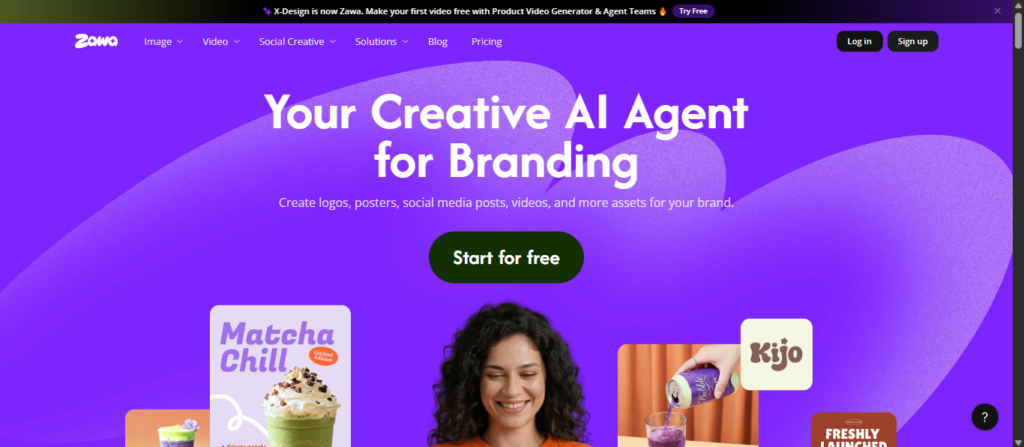
Zawa offers a worksuite for creating and coordinating social media content. The AI branding agent is an ideal tool for small and medium-sized business owners. And you can leverage it for content creation and marketing. Outline your business details and create an ideal brand kit – from logos to flyers and social media posts. Zawa AI image upscaler is a plus for enhancing image quality and conveying your content in all shades of professionalism.

Zawa AI Agent for Creating Social Media Content and SMB Clients
Zawa is a professional branding tool that helps designers serve SMB clients faster. The AI agent comprises a full-featured worksuite with various tools to plan, modify, and adjust brand content from scratch. Simply put, it is an add-on for creativity and branding. From logos to posters to social media posts, you can incorporate it into a small business’s workflow, especially if you are particular about professionalism. It allows you to establish a consistent visual identity without a design team and to bring your ideas to life across channels in high-quality formats.
With the Zawa AI Product Video Generator, you can easily create videos with your product image. The AI supports shoppable videos and UGC-style, ready-to-use videos in a few minutes while you select your preferred avatar. Also in the worksuite are smart social media tools that you can use to create standard captions and images for your page. Other tools, like the video text remover, video remix and logo generator, video enhancer, come in handy for your media creations.

Buffer
One of the best AI tools to share your content in a professional format is Buffer AI. Social media comprises multiple channels with different rules. And going through all of it at a time can be taxing. Buffer puts you in the mainstream by running multi-channel campaigns. You can bring together content topics, promotions, and schedule your posts. It helps adapt the content calendar with social channels, making feeds more valuable.

Canva
Canva is handy for creating professional social media content and images – for yourself and clients. You can generate media designs using AI-powered template suggestions and image placement. The tool features an extensive template library. As a small business owner, you can adopt the background removal, image enhancement, and text-to-image generation features.

Content Studio
For small business owners, following online leads and updates is essential for tracking and modifying media content. However, you cannot stay there all day. Content Studio reduces the scroll work and lets you track preferred topics. In addition to adding preferred topics, you can view metrics for each content piece, including your post. These range from news articles to social media posts.
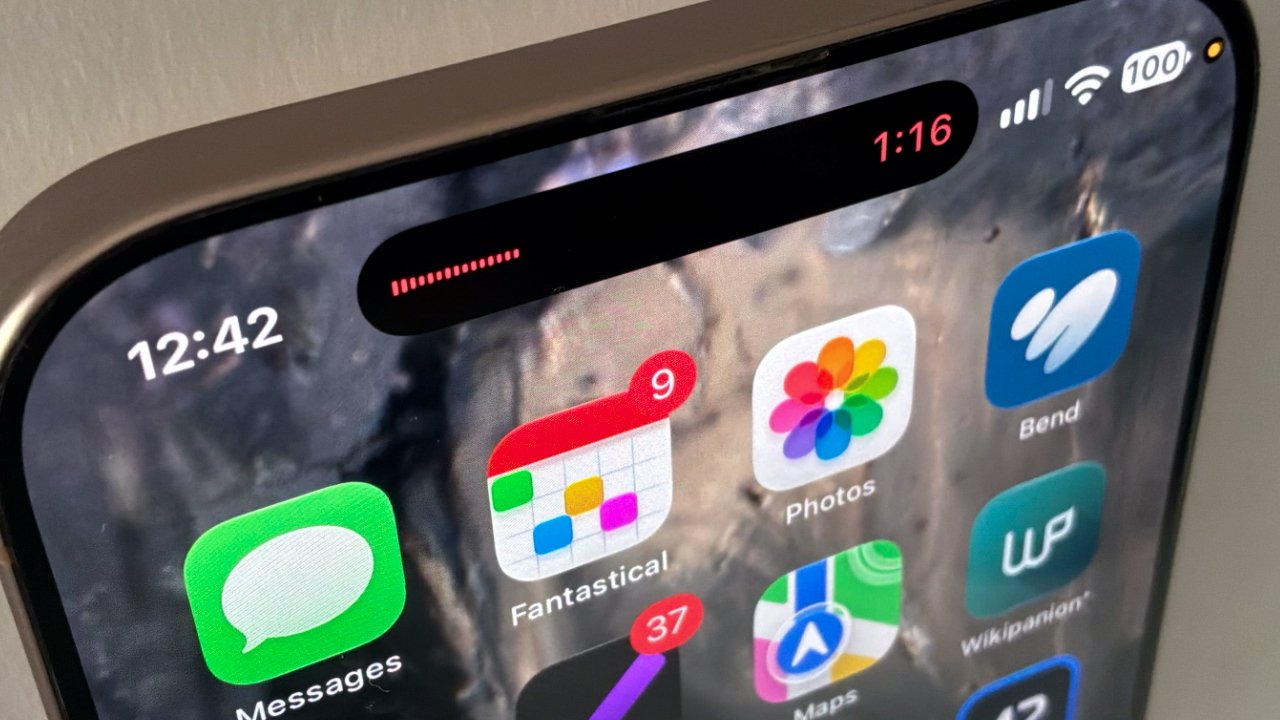
A last-minute report ahead of Apple’s iPhone 18 Pro unveiling says that the Dynamic Island will let users display more Live Activities.
It’s been regularly reported that Apple has reduced the size of the Dynamic Island on the iPhone 18 Pro, despite clear limits on what it can do. But now according to Bloomberg, Apple is adding a little more functionality even as it cuts back on the size of the feature.
Specifically, it’s claimed that the reduced Dynamic Island will display three ongoing tasks as Live Activities. At present, two can be displayed and it’s possible that will continue, but the new version will let users toggle between three.
Live Activities were added to the iPhone 14 Pro in 2022, and provide at-a-glance information. Flight details can be displayed there, for instance, or sports scores, or the time until an Uber arrives.
Originally this was Apple making the most of the cutout necessary for Face ID. By adding black pixels either side of the cutout, it could switch to displaying icons or text in that space when wanted.
Users could see continuously what was happening with an activity. Then they could tap on the Dynamic Island to have a pop-up showing more detail
It was a clever move that, as ever with Apple’s design, has been copied by Android. But as useful as Live Activities are in their present form, they may be changing soon.
That’s because Apple is reportedly still working toward removing the cutout entirely. It would do so by having the Face ID sensor entirely under the display, and may even do so by 2027.
Live Activities have proven too useful to be abandoned, so Apple will surely still display them. Apple is unveiling the iPhone 18 Pro during its September 9, 2026 event.

I’ve spent years reviewing smartphones, and if there’s one aspect where Honor never fails to impress, it’s the bold design experiments. Earlier today, Honor gave us our first glimpse at the Magic 9 Pro Max flagship phone with ARRI camera imaging tech. The phone is scheduled for launch later this month in China, followed by wider availability in other markets.
Before we dig into the hardware specs, let’s talk about the design. The phone borrows inspiration from the iPhone 17 Pro, specifically the large camera island at the back and the dual-tone finish on the rear shell that combines glass and metal. Where the phone actually stands out is a separate circular camera bump that also houses the periscope-style telephoto zoom camera.

Another standout aspect, of course, is the paint job. This is the first time that I’m seeing a distinctively grass-inspired green shade on a smartphone. And I have to say, it looks fresh. The only other brand that has tried something similar is Google, which is offering a shade of olive green on its Pixel 11 Pro Fold foldable and the Pixel 11 Pro smartphones.
Honors China division, through a series of teasers, has already confirmed that the Honor Magic9 Pro Max will come equipped with two 200-megapixel camera sensors at the back. The main snapper employs a 200MP 1/1.28-inch sensor, while the telephoto camera relies on a 1/1.4-inch sensor with a matching resolution.
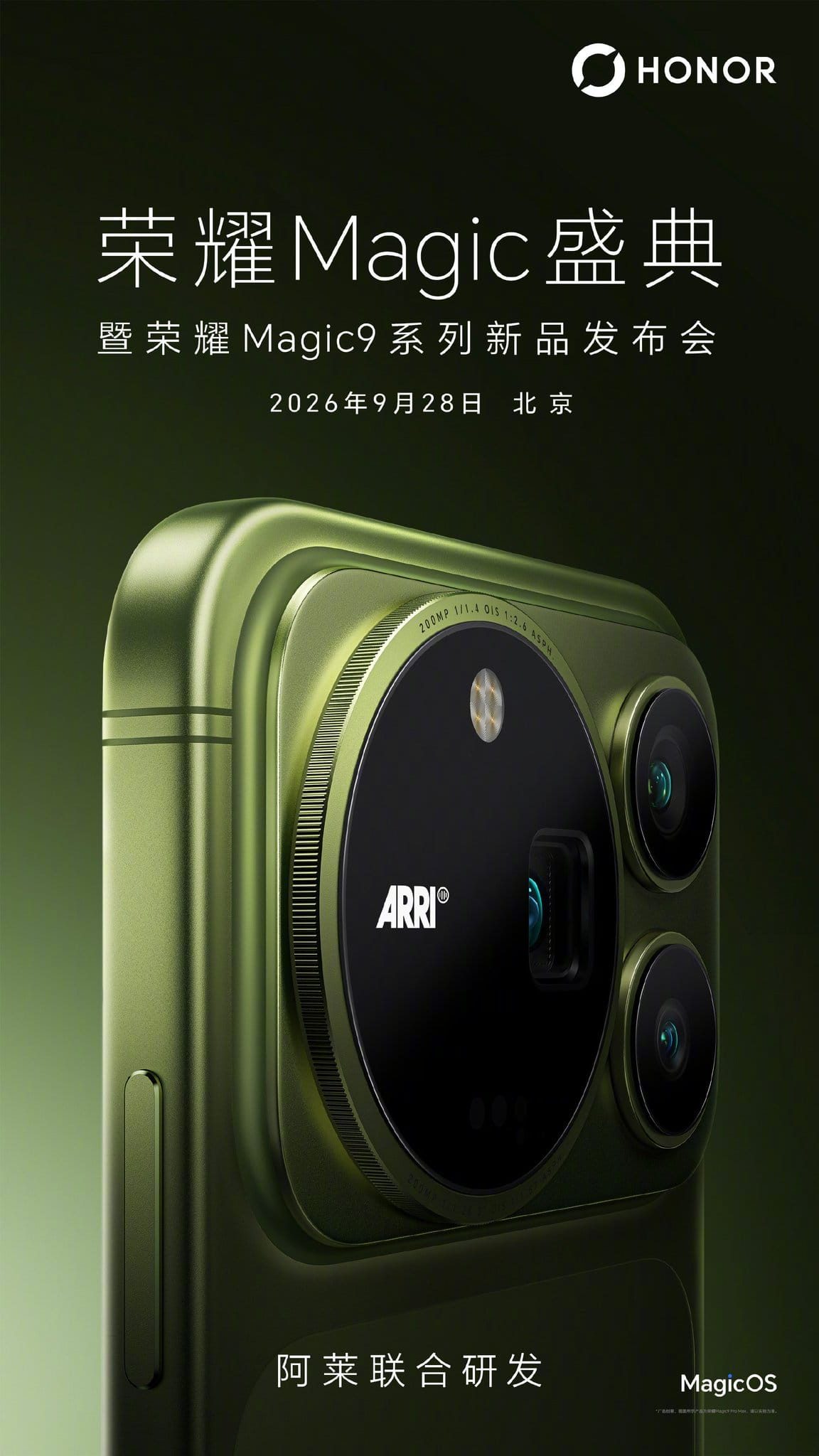
Taking the zoom output to the next level is a new 500mm teleconverter kit, tagging alongside the 200mm teleconverter hardware. Dedicated zoom extender kits are all the rage these days, as we have seen with the likes of Oppo Find X9 Ultra and the Vivo X300 Ultra. Over the front, you get a pill-shaped cutout for the front camera. It is significantly smaller than what you see on Apple’s current crop of smartphones.
Notably, the iPhone 18 Pro is expected to feature a smaller Face ID cutout, with some improvements to the underlying Live Activities system, as well. As far as the partnership goes, Honor is promising some big upgrades for creators. “For creators, ARRI LogC3 preserves more highlight and shadow information for post-production, while ARRI Wide Gamut 3 provides a broader color space and ARRI Looks offer controlled cinematic color styles,” says the company.
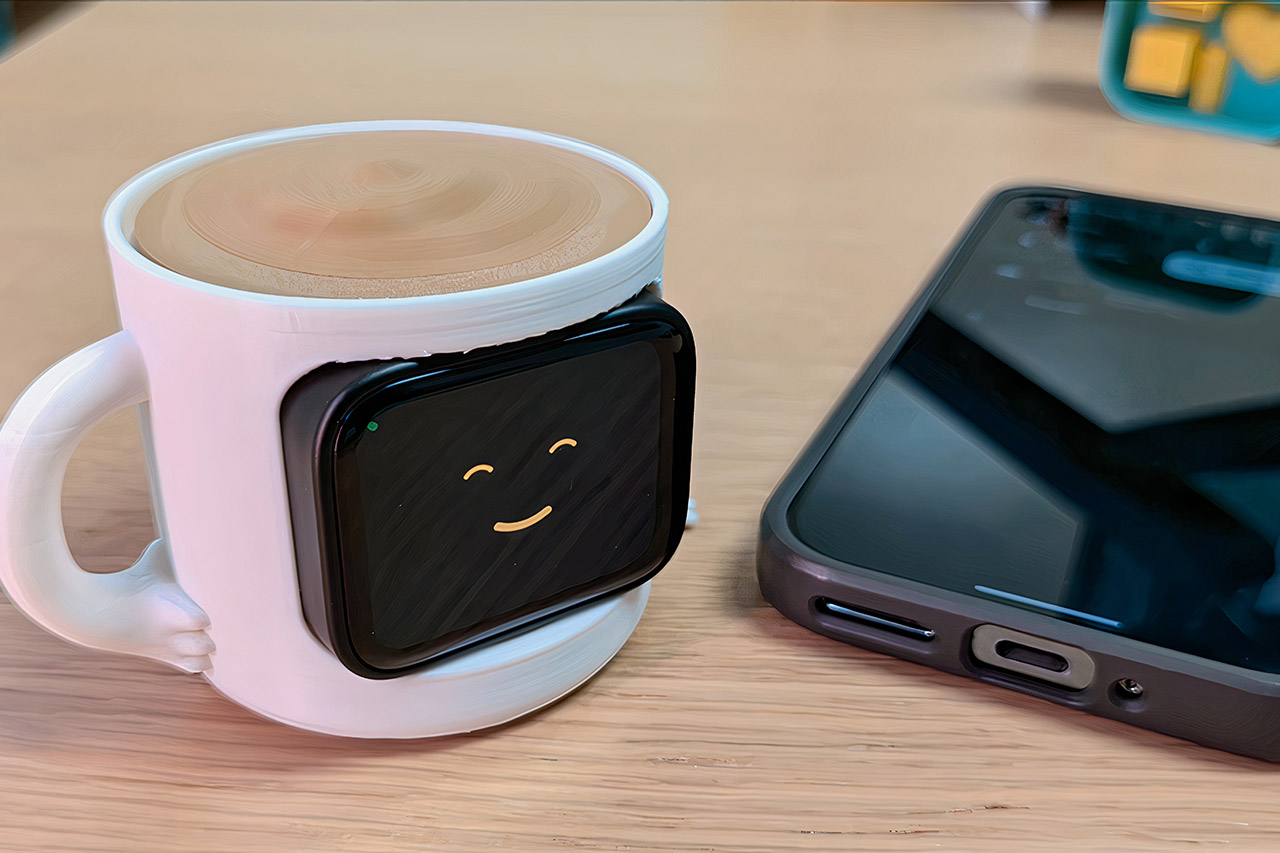
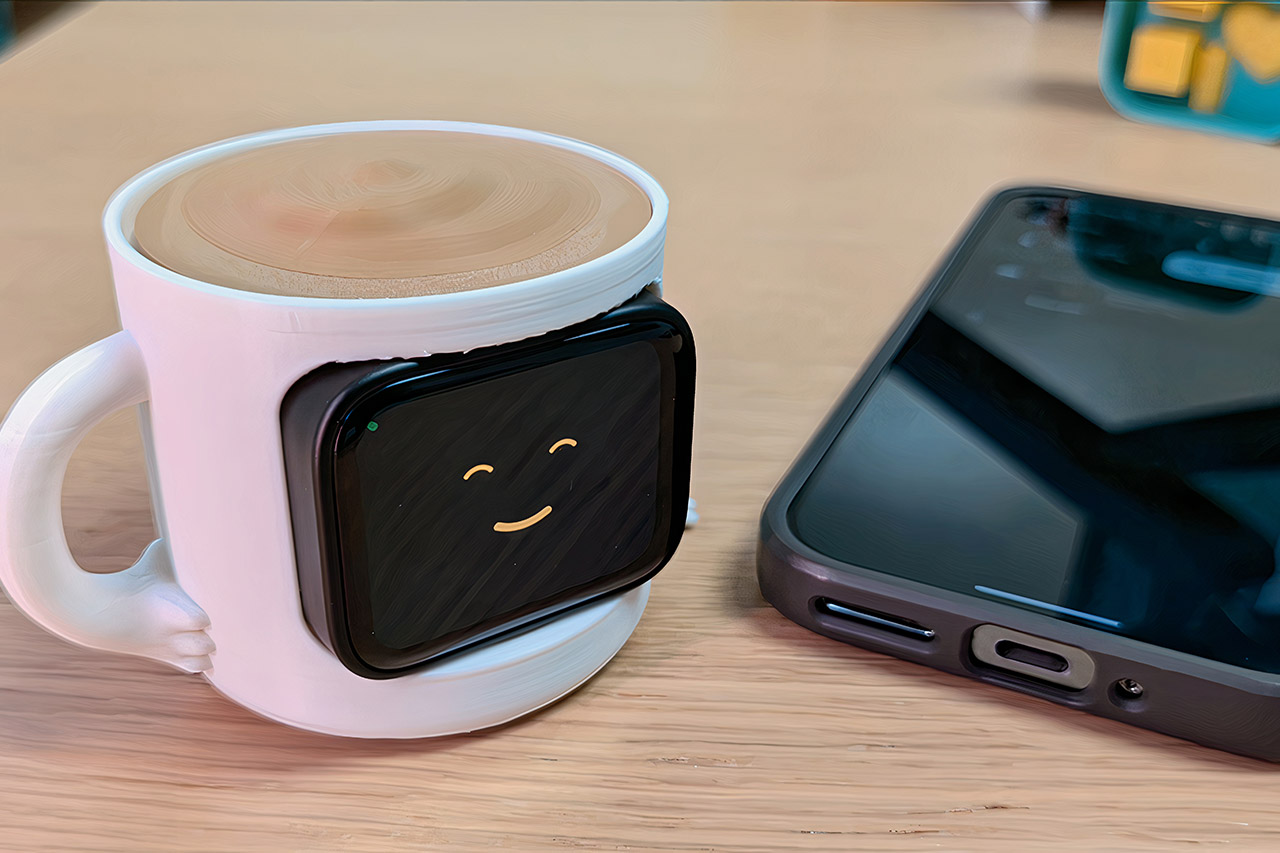
Brenpoly’s PolyMO is a palm-sized desk creature with a bright 1.8-inch AMOLED face, a microphone, a speaker, and a capacitive screen, and its health is bound to how long you stay inside the apps that eat an evening. Sit it on a table, pair it over Bluetooth to an Android phone, and the little face blinks, grows hungry, gets bored, and moves through life stages on its own clock. Spend too long on flagged feeds and it falls ill. Leave the illness untreated long enough and it dies for good. That is the whole contract.
The hardware is a Waveshare ESP32-S3 Touch AMOLED 1.8 board with 368 x 448 pixels and a built-in microphone and speaker. Any of the V1 or V2 panel variants will suffice, as the firmware is intelligent enough to detect which driver you’re using on the fly. 3D printable shells are available in the repository, allowing you to simply put your board into a nice little body to make it appear less like a development kit and more like a finished product. All of the simulation logic for hunger, happiness, age, sickness, and death is executed on the ESP32, which is saved in flash memory and timed using the board’s internal clock. Pull the power cable, and PolyMO will continue to tick without saying anything.
Sale

Bitzee Interactive Toy & Digital Pet, Ages 5+
- DIGITAL PET YOU CAN TOUCH: Bitzee goes beyond the 2D screen; it’s the virtual pet you can really touch and feel in our 3D world. Each Bitzee toy pet…
- NURTURE & PLAY: Bitzee pets need your love and care. Each Bitzee starts as a baby – feed and play with them, rock them to sleep and give them love…
- 15 TOY PETS IN 1 POD: The more you play, the more Bitzee pets you’ll unlock. Use treats to attract a new Bitzee pet. Collect all 15 interactive…
To communicate with PolyMO, simply speak toward the case, and the board will stream Opus audio via BLE. The Android companion app handles the rest, transcribes the footage with Whisper, transmits it to a local language model for analysis, and finally provides the response back via radio. There is no chat window on your phone for the conversation to take place in; instead, you complete all of your setup, select your models, and monitor screen time from there. The models aren’t even provided with the software; you have to extract them from the file system using the system file picker. The program isn’t even asking for an INTERNET permission; if that happens, the build would fail the unit tests. That’s sort of the point of having a device that can hear you and read notifications.
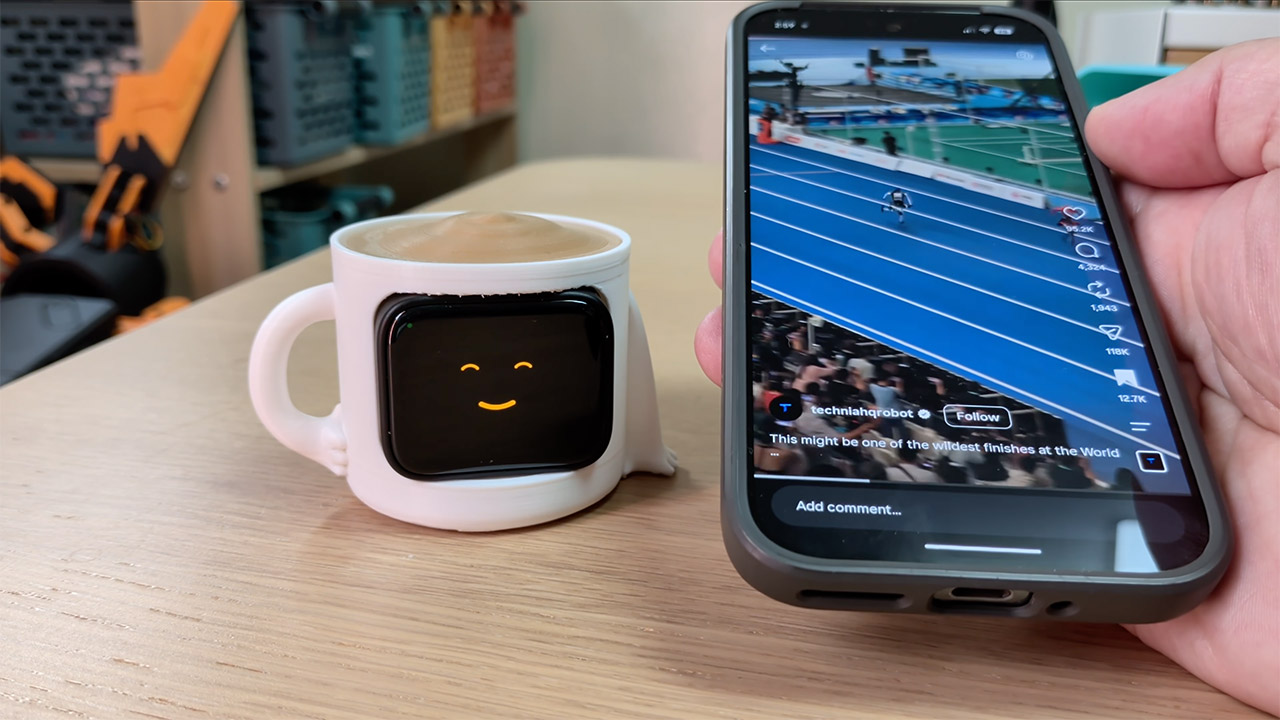
Screen time is more of a variable that changes depending on the weather (which, of course, you have no influence over) than a setting that you can turn on or off. You have a basic allocation for each sitting, which is set to roughly five minutes on the applications you’ve identified as favorites, and you may adjust it in small increments. Crossing the line causes the pet to become ill, not death. Satiety and happiness scores (all of which are integer values ranging from 0 to 4) will decrease faster when the pet is sick. Simply close the app that was making it sick or give it a slap (aka, tap the face), and the illness will be gone. Leave both scores at zero for long enough (approximately 12 hours, unless you muck things up and speed up the process), and death becomes a state that must be willingly restored. Quiet hours from 9 p.m. to 9 a.m. will pause the death timer and most calls, but late-night scrolling may still make your pet sick.
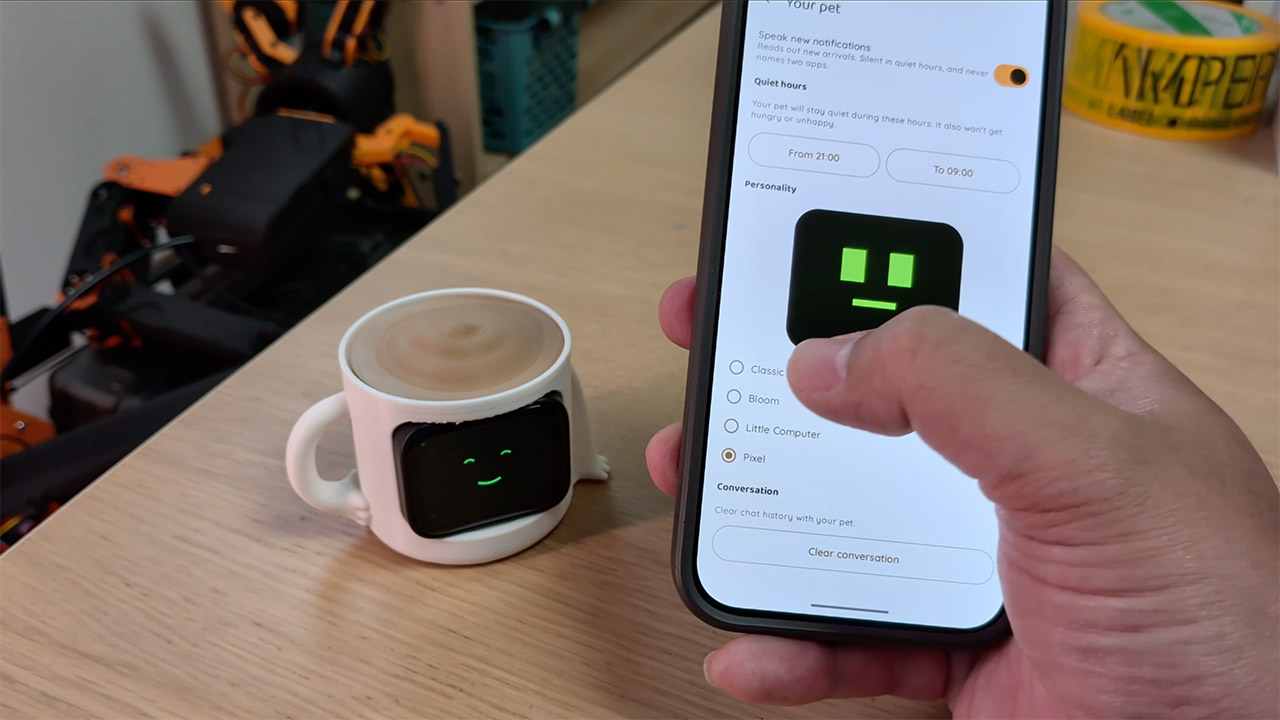
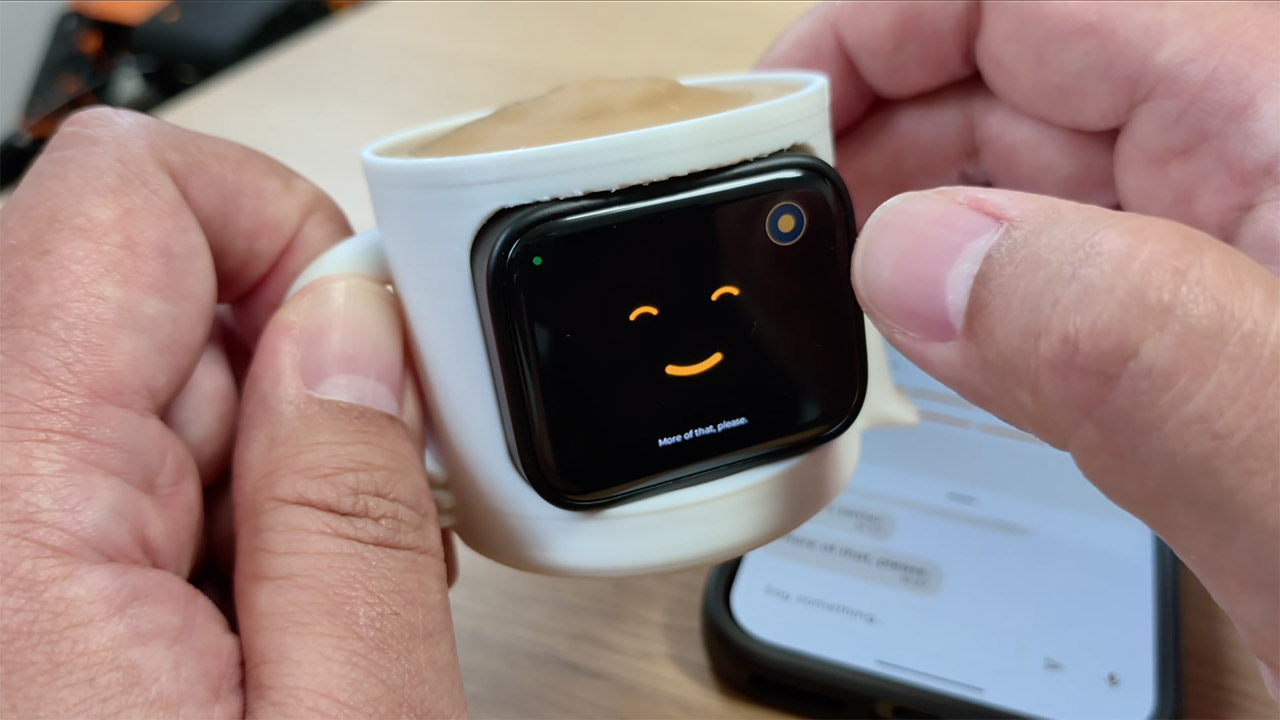
Care is an action-based game; a few touches on the screen or a brisk shake of the case for around three seconds will initiate play. A simple tap on the face can cure a lot of ailments. Simply ignore a call when your score reaches zero and the firmware believes you committed a mistake, as this counts against your lifespan. Life stages progress from egg to kid to teen to adult around every 12, 36, and 72 hours, after which older stages begin to degrade much faster. Facial expressions and personas are all derived from JSON files, so a joyful face must smile, while a stiff face lacks a mouth. Your responses are concise, employ sentence case, and are all influenced by the present situation, so your hungry pet speaks like, well, a hungry pet. You may even set it to describe a notice aloud so you don’t have to glance down.
Firmware is built with ESP-IDF, and on the phone side, we utilize Kotlin with BLE, Opus, Whisper.cpp, Llama.cpp, Piper, and espeak-ng for phonemes, all because we need them. The source code is released under the Apache 2.0 license. Unfortunately, because of the phoneme connection, the released APK becomes GPL-3.0, thus if you ship tagged binaries, you must also supply the matching source. To build, you must flash the board, assemble the program using JDK 21, retrieve all native source, drop prebuilt libraries into place, and keep your firmware and app on the same commit to ensure that the wire protocol matches. If you receive a black screen after a flash, a simple power cycle will generally fix it.
[Source]

The U.S. Department of Energy has approved a $1.9 billion loan to NextEra Energy to restart Iowa’s shuttered Duane Arnold nuclear plant, which Google has backed as a power source for its growing AI infrastructure. “The sizable loan is the second of its kind, suggesting that the Trump administration views revived nuclear power as a key source of electricity for tech companies seeking to power their AI data centers,” notes TechCrunch. From the report: James Danly, Deputy Secretary of Energy, said that the Iowa power plant’s restart in 2029 will “drive down electricity costs,” though he did not explain how. Just 50 megawatts will be set aside for the local power cooperative, NextEra CEO John Ketchum said during an earnings call (PDF) last year. That capacity would cover 18% of Iowa’s demand growth since 2021, the year before ChatGPT was released.
Google is reportedly looking to build up to six data centers near the Duane Arnold Energy Center, which hasn’t operated since 2020 when an intense rainstorm damaged the power plant. Rather than repair it, NextEra decided to mothball it. At the time, cheap natural gas was flooding the market, making nuclear power economically unappealing. A lot has changed in the last six years, though. After decades of little growth in demand, the sudden rise of AI coupled with broader electrification of the economy meant that utilities and power providers were suddenly scrambling to find new generating sources of electricity. New data centers are expected to nearly triple the sector’s electricity demand by 2035.


Read more of this story at Slashdot.


There are numerous sensors installed in your vehicle that measure conditions within the engine and exhaust system. Each sensor plays a role in monitoring a specific process. In the case of oxygen sensors (also known as O2 sensors), they detect how much oxygen is in the exhaust system. Modern vehicles generally have at least two oxygen sensors: one before the catalytic converter and one after. However, with many V6 and V8 engines, which have one exhaust manifold for each set of cylinders, you’ll likely see four oxygen sensors.
Measuring the level of oxygen in the exhaust system helps detect imbalances in the combustion mix and ensure a critical emissions reduction component is doing its job. For a combustion engine to run optimally, it needs the correct mix of air and fuel, which will differ depending on the type of fuel and what the engine’s intended for. Either way, the upstream oxygen sensor(s) before the catalytic converter will catch irregularities in this mixture, so that the vehicle’s ECU (engine control unit) can quickly make the necessary adjustments.
The downstream oxygen sensor(s) lie beyond the catalytic converter. Nearly every car is required to have a catalytic converter, which helps control vehicle emissions. Without that downstream oxygen sensor(s), it may not be clear if the catalytic converter is performing optimally or if there’s a problem.
Upstream and downstream oxygen sensors aren’t interchangeable

While upstream and downstream O2 sensors basically do the same thing, mixing them up will cause you problems. A downstream oxygen sensor emits a consistent voltage level to the ECU when the catalytic converter is working properly; it isn’t intended to feed the ECU varying voltage levels to help it adjust the fueling. Unlike the upstream sensor, which actively varies voltage to indicate whether your car is running lean or rich, the downstream oxygen sensor should be relatively unchanged in terms of output voltage.
So, if you accidentally install a downstream sensor in the place of an upstream, your ECU will get confused. The consistent voltage from a mistakenly installed downstream sensor will likely result in the car’s computer declaring it a failed sensor. This could also cause the vehicle’s computer to change the combustion mixture in an attempt to correct for the strange readings.
The combustion mixture is important to balance performance with fuel economy. Rich (more fuel and less oxygen) and lean (more oxygen and less fuel) mixtures negatively affect the engine and its emissions. If you run rich, your fuel economy may drop, and your car’s emissions can increase. The excess unburnt fuel may reach the catalytic converter, causing it to overheat and destroy the sensitive internals. Conversely, if you run too lean, you can get engine knock, which may damage it in the long run.
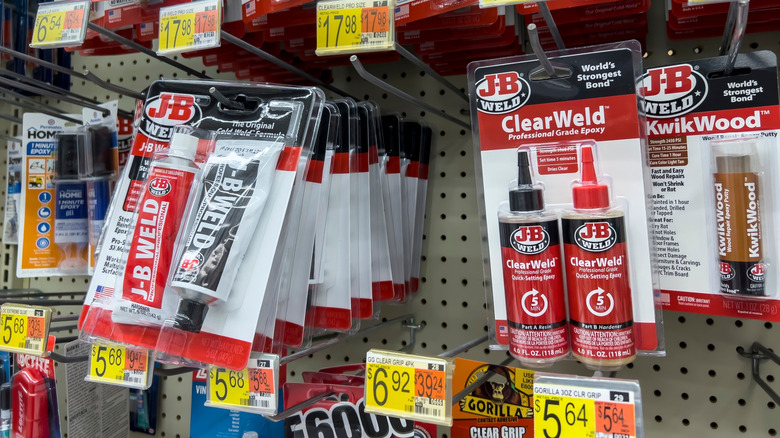
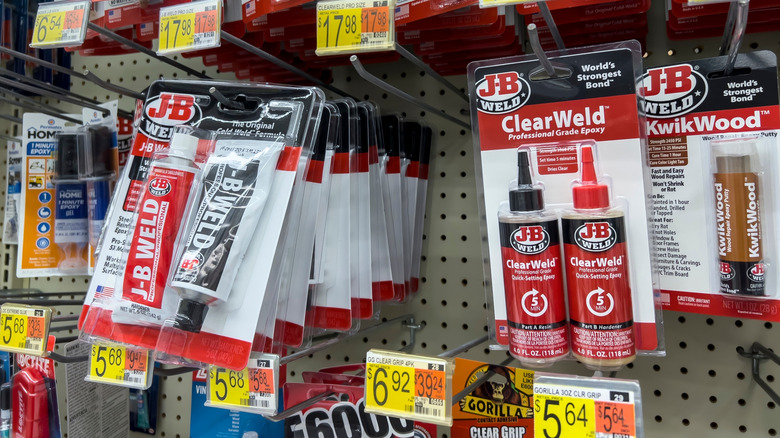
Few things sound the death knell of an engine as clearly as a cracked engine block. The signs are usually obvious – daily puddles of coolant spreading across a garage floor, the tell-tale rainbow sheen of oil appearing where it shouldn’t, or a worrying trail of sounds and smells — the sweet tang of burning coolant, or the staccato beat of rough idling and misfires. All represent symptoms pointing toward impending breakdown, a very expensive repair, or complete replacement. It is no surprise, then, that when facing that impending expense, a five-dollar tube of J-B Weld starts looking surprisingly attractive.
J-B Weld has an extensive product range, covering everything from simple metal repairs to high-temperature compounds and automotive sealants. The standard J-B Weld formula is a two-part epoxy designed for metal, including cast iron and aluminum, and is rated to 550 degrees Fahrenheit (288 degrees Celsius) once fully cured. A promising claim, especially when a cursory Google search will tell you that apart from the combustion chamber and exhaust manifold, the majority of a block doesn’t get hotter than around 427 degrees Fahrenheit.
The appeal is obvious. Avoid the hassle of a full engine replacement, or an expensive TIG welding bill, while still getting a vehicle mobile again. However, an engine block is an exceptionally volatile environment. That crack formed in that spot for a reason; repeated heating and cooling, vibration, fluid pressure, and potentially enormous combustion forces. So, much like a space-saver spare, epoxying an engine block should be considered a stopgap. Will it hold? Probably, for a while, but stay out of the fast lane and get a real fix on ASAP.
Where J-B Weld can work, and where it won’t

Why put epoxy on an engine block at all? The same reason you would carry a spare tire or a set of jumper cables. Disaster tends to strike at the most inopportune moments. A carefully applied epoxy repair can temporarily patch a crippling fracture or fault, buying you valuable time or miles to get to somewhere you can effect a permanent fix.
Ultimately, the location of the damage is going to be the critical factor. A small crack in a non-structural area or away from a gasket is a great candidate for an epoxy repair. Conversely, an epoxy-patch over a crack that exposes an oil gallery, cylinder wall, head sealing surface, or combustion chamber is unlikely to withstand the heat and pressure of a running engine for the long term.
Other issues that may arise include thermal expansion. As they heat and cool, metal and cured epoxy expand and contract at different rates. Because the epoxy will deform much faster than the base metal, the joint can suffer from delamination, cracking, or even complete debonding. A second issue is epoxy contamination. Trace chemicals within the epoxy itself can taint metal, while having to grind away cured epoxy can complicate welding and expose internal chambers to contamination, leading to future damage.
How to make an epoxy repair work

If you do decide that epoxy is the way to go, correct preparation is critical, and is going to be what separates a trustworthy patch from a botched mess. Epoxy cannot compensate for a contaminated surface, so start with a completely cold engine and remove every trace of oil, coolant, grease, rust, and loose material. A repair can be also be strengthened by drilling small holes to stop the crack’s progression at both ends, a technique known as stop drilling.
Routing, the use of a grinder or rotary tool to open the crack into a shallow V-shaped groove, can provide a larger surface area of substrate for the epoxy to bind to. Remember, epoxy is more effective when applied as a broad patch extending beyond the damaged area. Unlike cyanoacrylate and anaerobic adhesives, like superglue and thread-lockers, epoxy doesn’t adhere to the “less is more” rule.
Finally, exercise patience. Epoxy requires about 15–24 hours to fully cure. Rushing the curing process and driving a car that is held together with uncured, pre-polymer epoxy is just going to end with a Jackson Pollock-esque splatter of B-stage resin across the inside of the engine bay.
So if the crack involves combustion pressure, a major structural area, an important oil passage, or a rapidly growing fracture, epoxy should only represent a short-term substitute for professional repair or replacement. It might get you somewhere. It might even work surprisingly well. But you probably shouldn’t plan your next road trip around it.

The queue to send objects into orbit is growing, but space infrastructure isn’t keeping up with demand. As the realization sinks in that Elon Musk’s SpaceX can’t be the sole answer, other companies are raising their hand — and money.
These include The Exploration Company (TEC), which operates out of Germany, France, Luxembourg, Spain, and Italy, and which has raised $450 million in what it describes as “the largest-ever Series C by a European space company.” But the race is global, with U.S.-based rival Stoke Space currently raising a $1 billion Series E round.
Rivalry aside, these rounds show that investors on both sides of the Atlantic are willing to back companies seeking to build reusable spacecraft. That’s a category pioneered by SpaceX, but that many players, both public and private, now believe it shouldn’t solely control as space gains strategic importance.
These sovereignty-related concerns create extra tailwinds for an EU-headquartered company like TEC. Led by Hélène Huby, a French national who spent two decades at Airbus and ArianeGroup, the company intends to use its funding to build the foundation for a reusable European heavy-lift launcher offering an affordable alternative to SpaceX.
SpaceX itself may have no other choice but to loosen its nascent monopoly on low-earth-orbit launches to prioritize its own payloads; reports suggest that its Falcon rockets are already increasingly reserved for its Starlink satellites, amid uncertainty as to what will happen when these get retired in favor of Starship.
This creates demand that TEC won’t be able to meet for years, even if it sticks to its self-admittedly ambitious timeline. According to Atomico, “10 Nyx missions are booked,” with “more than $2 billion in contracts and commitments.”
Some of these commitments come from institutional partners, including the European Space Agency, but also NASA. Its Series C was also transatlantic, with Atomico, and the EQT-managed Scaleup Europe Fund co-leading the round alongside Bessemer Venture Partners, whose partner Alex Ferrara will join TEC’s board of directors.
This latest round also consolidates TEC’s status as a company mostly funded by private investors, and one that plans accordingly. In a press conference earlier today, Huby said that she’d love to see Europe add human space flight to its roadmap, but wouldn’t be able to convince VCs to spend $4 billion towards a crew capsule, “then wait 10 years.”
So, TEC’s timeline is more pragmatic, but it is tight. Its most immediate focus is Nyx, a reusable capsule akin to SpaceX’s Dragon and capable of carrying cargo, then people. The company intends to get Nyx to dock with the soon-to-be-retired International Space Station and return safely to Earth by November 2028.
According to Huby, funding from the Series C will stretch to also fund Storm, a rocket engine program paving the way for further developments, at least initially. “Where we need more money is to build a launch pad, and to build the rocket itself,” she told journalists.
TEC wouldn’t be the first European commercial space company to launch a rocket — German startup Isar Aerospace crossed that milestone out of Norway last weekend. Huby praised the feat as “great news for the whole ecosystem,” but said that TEC intends to build a much bigger rocket than Isar’s expandable Spectrum vehicle.
However, Isar also has “a much bigger” launch vehicle in its roadmap, Ars Technica reported — presumably for the same reason Huby gave as to why TEC does. “In the next five to 10 years, half of our broadband communication could come from space, data centers could be in space; […] and if this is the case, we need massive rockets and cadence.”
That cadence will rely on reusability, which TEC plans to reach by using the same technology as SpaceX and Stoke: full-flow stage combustion “It’s the most difficult, but also the most efficient engine cycle in the world. It is the first time ever in Europe that a company develops such a rocket engine,” Huby said.
TEC’s advances haven’t gone unnoticed in Europe, with French president Macron and the European Commission’s president Ursula von der Leyen both praising its Series C. It is also not a coincidence that it was disclosed on the eve of the International Space Summit in Paris, where Huby hinted that related announcements will be made.
When you purchase through links in our articles, we may earn a small commission. This doesn’t affect our editorial independence.
Tech
Cognition hits $48B valuation, signaling investors believe AI coding is far from a winner-take-all market
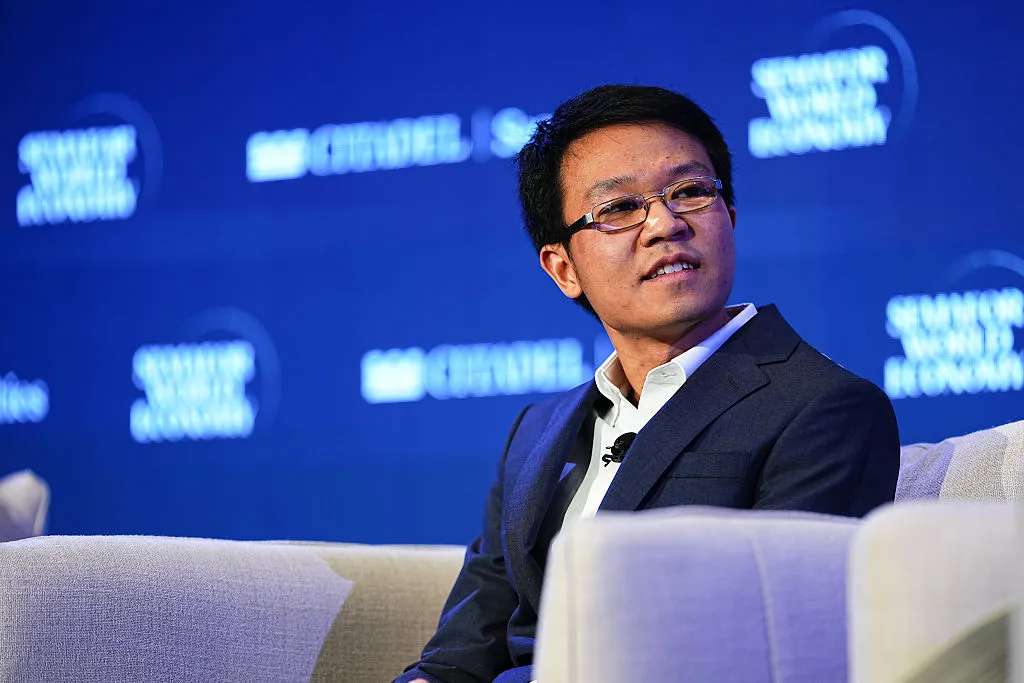
Cognition, the startup developing coding assistant Devin, announced it raised $2 billion at a $48 billion valuation. The round, which comes just four months after Cognition’s previous fundraise at a $26 billion valuation, was led by Andreessen Horowitz, Accel, Founders Fund, General Catalyst, and Avenir.
The startup’s soaring valuation signals that VCs still see room for multiple major players to capture meaningful market share in AI coding, one of the technology’s most significant applications. Cognition said that since announcing its last fundraise in May, its annualized run-rate revenue has grown from $492 million to $900 million. While the startup didn’t explain how it calculates that run-rate revenue, the metric is usually defined as a month’s top line multiplied by 12.
Cursor, another popular coding assistant, was in talks in April to raise capital at a $50 billion valuation before agreeing to sell to SpaceX for $60 billion later that month. At the time of the funding talks, Cursor’s annualized revenue had surpassed $2 billion. This means Cognition currently commands a higher revenue multiple than Cursor did in the spring.
Cursor ultimately sold to SpaceX largely because it was severely compute-constrained, according to investors familiar with its financials. It is unclear whether Cognition will face similar compute shortages.
Cognition leases an Nvidia server cluster that costs hundreds of millions of dollars annually, which could push its total cash burn to $800 million this year, The Information reported.
Like Cursor did before joining SpaceX, Cognition is training its own model based on open source alternatives. Over time, reducing its reliance on expensive third-party models from OpenAI and Anthropic will help cut costs and bring the company closer to breakeven.
Cognition is expected to reach $4 billion to $5 billion in annualized revenue by the end of 2026, according to The Information. By comparison, TechCrunch reported in the spring that Cursor was on track to surpass $6 billion by year-end. Still, it’s notable that a16z, a major backer of Cursor, which made a killing when it sold to SpaceX, is back to lead a round in a Cursor competitor.
Founded in 2024 by math prodigy Scott Wu, Cognition counts Mercedes-Benz, NASA, Goldman Sachs, and Citi among its major enterprise customers.
When you purchase through links in our articles, we may earn a small commission. This doesn’t affect our editorial independence.

2026 NFL predictions: Projecting the 14 teams that will make the playoffs and Super Bowl LXI winner

ASUS Is Launching Colorful New Vivobook Laptops in India on September 16

Cardi B – Money | Lyrics

Memory prices are slowing because buyers ran out of money

Phones confiscated, players sent home: Pakistan’s England tour turmoil revives memories of Mohammad Amir, Salman Butt and Mohammad Asif’s 2010 Lord’s spot-fixing scandal | Cricket News

England up in reading, maths and science rankings as Scotland and Wales dip


-
Tech1 day ago
Memory prices are slowing because buyers ran out of money
-
Sports1 day ago
Phones confiscated, players sent home: Pakistan’s England tour turmoil revives memories of Mohammad Amir, Salman Butt and Mohammad Asif’s 2010 Lord’s spot-fixing scandal | Cricket News
-
 NewsBeat23 hours ago
England up in reading, maths and science rankings as Scotland and Wales dip
-

 Business1 day ago
Egyptian TV Presenter Sarah Khalifa, 11 Others Sentenced To Death In Major Drug Trafficking Case In Cairo
-

 Crypto World12 hours ago
Bitcoin price risks $76K drop as $78K support weakens
-

 Crypto World12 hours ago
Ethereum price stalls below $2,500 as ADX drops to 11
-

 Crypto World1 day ago
Visa expands stablecoin card network to 160 programs
-
 Tech1 day ago
Strong Password Policy and Password Manager Guide
-

 Crypto World20 hours ago
Robinhood Stock: How To Take Advantage With Reduced Risk
-

 Crypto World22 hours ago
Brent Crude Oil Moves Above $100 for the First Time in 3 Months
-
 NewsBeat22 hours ago
Tehran’s assertive rhetoric signals a new and dangerous phase in conflict
-

 Tech21 hours ago
Google’s revived nuclear power plant gets $1.9B loan from US government
-

 Sports18 hours ago
Ballon d’Or 2026 Nominees: Lionel Messi In, Cristiano Ronaldo Out; Erling Haaland Included In Top 30
-

 Business10 hours ago
Meta debuts long-awaited personal AI agent, Muse
-
 Business15 hours ago
Oil Higher on Hormuz Escalation, Weighing on Sentiment
-
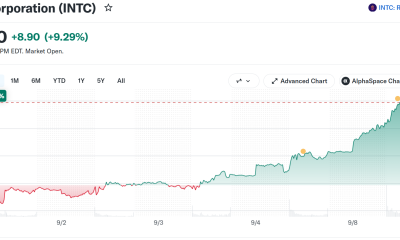
 Crypto World20 hours ago
Intel Stock Jumps 9% on Chip Price Hike Report, US Stake Gains $36 Billion
-

 Business1 day ago
Claim Your Share Of $50 Million Disney Streaming Price Settlement By Sept. 8 Tonight
-

 Politics1 day ago
Critics Rip Trump After He Revives His Most Dubious 9/11 Claim
-

 Politics21 hours ago
The Ultimate September Reset Guide: How To Refresh Your Mind And Life This Autumn
-

 Fashion20 hours ago
How to Safeguard Your Small Business Against Emerging Cyber Threats
You must be logged in to post a comment Login