
Business
OpenAI pushes for mandatory national AI safety rules



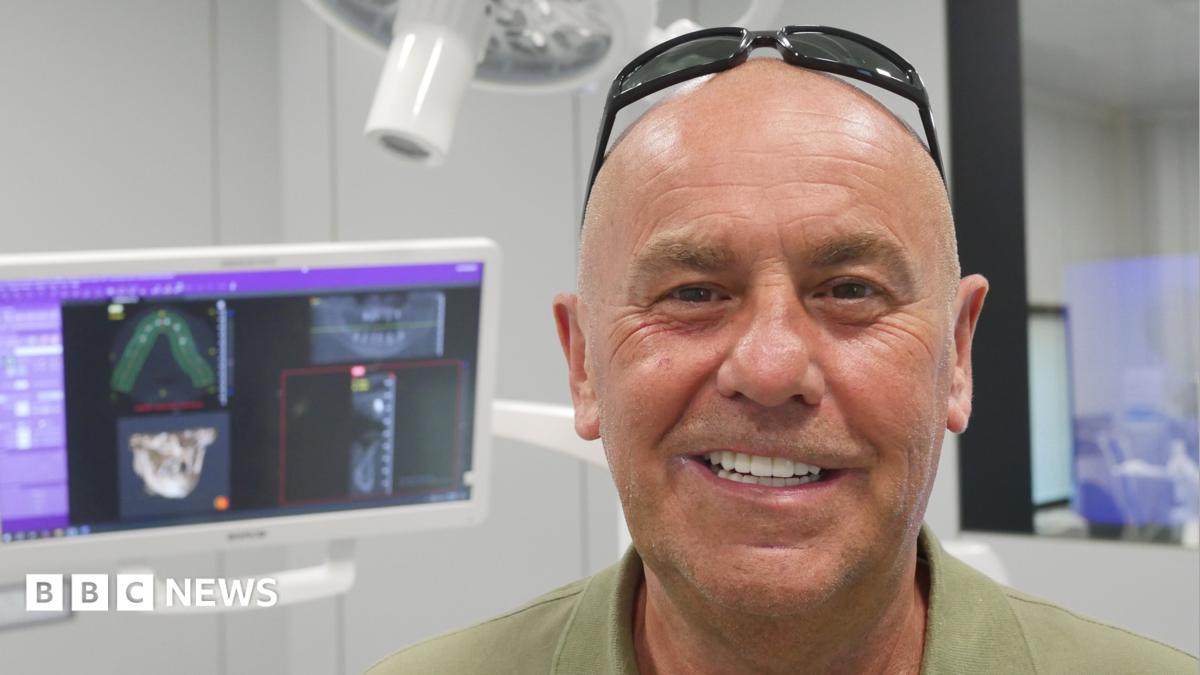
Dental implants in Albania are typically around €600 ($700; £516) per tooth, similar in price to what is charged in Turkey, which has long been the main overseas destination for people in western Europe who are seeking much cheaper dental work than they can get at home.
The same treatment in the UK, France or German can easily cost four times as much.
For Hook the appeal was irresistible. He made his first visit to Tirana to watch England’s footballers play Albania last year – but then found himself intrigued by all the signs for dentists. That nudged him into doing something about his missing teeth.
He thought he’d go to Albania rather than Turkey, because he was concerned by media coverage of dental or hair transplant work in Turkey that had gone wrong.
In fact, even the UK Foreign Office warns that it is “aware of seven British nationals having died in Turkey in 2025 following medical procedures”., external It adds that “some British nationals have also experienced complications [after surgery in Turkey], and needed further treatment or surgery following their procedure.”
Hook says he wouldn’t go to Turkey “because I have heard so many bad things”, adding that he investigated thoroughly before taking the plunge in Tirana.
“I went onto the internet and looked into it properly. It took me two days to research it because I’m not one for jumping into anything.”
Several return trips later, Anthony now has a mouthful of impressive implants – and, unsurprisingly, he is all smiles. “I’d come here once a month for a holiday if I could,” he chuckles.
Elite Dental is one of the biggest clinics in Tirana. It is fully licensed by the Albanian health authorities – and so are all of its 15 resident dentists.
The man who runs the place, Ardtur Dema, says he is “not in favour of damaging proper teeth for aesthetics”. Instead he says the priority is “changing people’s lives” through restoring their ability to chew, and indeed – to smile.
Dema believes that as long as Albania remains outside the EU, prices for treatment are likely to remain low. At the same time, low-cost airlines have greatly expanded their flight network to and from Tirana, meaning that he is as likely to see a patient from Turin as he is from Tirana.
But Dema is concerned that the explosion of tourism could lead to less scrupulous operators ruining the business for everyone. He is a member of the newly-established Albanian Medical Tourism Association – but many others are not, at least not yet.
Albania’s Prime Minister, Edi Rama, tells the BBC that the government is playing catch-up after five years that have seen overall international arrivals to Albania more than double. Some sort of official seal of approval for medical tourism facilities is a possibility – but the government has yet to sort out the details.
“It’s a new industry that is within the tourism industry umbrella that is showing a big potential and where there are very good people,” says Rama.
He adds that the government wants to help all the reputable providers “survive”, and to guard against any informal “bad competition”.


Wolf Report is a senior analyst and private portfolio manager with over 10 years of generating value ideas in European and North American markets, and the owner of Wolf of Value, a service focusing on international dividend-paying value investments.He further covers the markets of Scandinavia, Germany, France, UK, Italy, Spain, Portugal and Eastern Europe in search of reasonably valued stock ideas.
Analyst’s Disclosure: I/we have no stock, option or similar derivative position in any of the companies mentioned, and no plans to initiate any such positions within the next 72 hours. I wrote this article myself, and it expresses my own opinions. I am not receiving compensation for it (other than from Seeking Alpha). I have no business relationship with any company whose stock is mentioned in this article.
While this article may sound like financial advice, please observe that the author is not a CFA or in any way licensed to give financial advice. It may be structured as such, but it is not financial advice. Investors are required and expected to do their own due diligence and research prior to any investment.
Short-term trading, options trading/investment, and futures trading are potentially extremely risky investment styles. They generally are not appropriate for someone with limited capital, limited investment experience, or a lack of understanding for the necessary risk tolerance involved.
I own the European/Scandinavian tickers (not the ADRs) of all European/Scandinavian companies listed in my articles. I own the Canadian tickers of all Canadian stocks I write about.
Please note that investing in European/Non-US stocks comes with withholding tax risks specific to the company’s domicile as well as your personal situation. Investors should always consult a tax professional as to the overall impact of dividend withholding taxes and ways to mitigate these.
Seeking Alpha’s Disclosure: Past performance is no guarantee of future results. No recommendation or advice is being given as to whether any investment is suitable for a particular investor. Any views or opinions expressed above may not reflect those of Seeking Alpha as a whole. Seeking Alpha is not a licensed securities dealer, broker or US investment adviser or investment bank. Our analysts are third party authors that include both professional investors and individual investors who may not be licensed or certified by any institute or regulatory body.


Seeking Alpha’s transcripts team is responsible for the development of all of our transcript-related projects. We currently publish thousands of quarterly earnings calls per quarter on our site and are continuing to grow and expand our coverage. The purpose of this profile is to allow us to share with our readers new transcript-related developments. Thanks, SA Transcripts Team

A virtual CFO in Singapore helps foreign companies analyze financial performance, translate accounting results into actionable insights, and adapt budgets for accurate management decisions without full-time employment.
Understanding the Role of a Virtual CFO
A virtual CFO acts as a senior finance partner for Singapore companies, bridging the gap between accounting operations and management. For foreign investors, this role leverages financial data to evaluate performance, liquidity, and financial commitments without the need to hire a full-time CFO, making it a cost-effective solution.
Enhancing Management Accountability Through Financial Analysis
Management accounts enable companies to compare actual results against budgets and identify key performance areas by business line, customer, product, or project. This detailed insight allows for a better understanding of profitability factors and operational efficiency, guiding strategic decisions and resource allocation.
From Accounting Results to Strategic Management
In Singapore subsidiaries, annual budgets often tie into broader group planning, setting targets for revenue, staffing, and investments. The CFO’s role becomes crucial when actual results diverge from plans, prompting adjustments in forecasts and strategic responses to revenue dips, hiring delays, or increased costs, ensuring proactive financial management.
Read the original article : What Does a Virtual CFO Actually Do for a Singapore Company?

A UK organisation deploying AI in 2026 answers to three regimes at once, and they don’t agree on a method. Westminster has passed no AI statute; it asks existing regulators to apply a set of principles within their current remits.
Brussels legislated, and the EU AI Act follows UK firms across the Channel whenever their systems reach EU users. Alongside both sits the ICO, which treats most corporate AI as personal-data processing under UK GDPR. A credible list of the best AI governance tools for the UK has to start from that split, because a platform that shines against one regime can leave you exposed under the other two.
Most published advice on this subject comes from the US and treats Brussels as the one regulator worth naming. The five picks below face a different test: do they map controls to the rules a British firm answers to, and can they show a regulator or an enterprise buyer the evidence? The list opens with Scytale, whose answer to all three regimes is the same: turn AI governance into certifiable audit evidence rather than a shelf of policy PDFs.
Three regimes, one governance programme
Tool selection follows from the ground rules, so the ground rules come first.
- The UK’s principles-based approach. The 2023 white paper from the Department for Science, Innovation and Technology (DSIT) chose supervision through existing regulators over a new statute. Five cross-sector principles, from safety through to contestability and redress, guide how bodies such as the ICO and the FCA police AI within their current powers. The FCA, for its part, supervises AI in financial services through its existing rulebook, which means firms under its scrutiny should prioritise audit-trail depth when they shortlist.
- The EU AI Act’s extraterritorial reach. Brexit didn’t put UK firms outside the Act. It binds any provider placing an AI system on the EU market, and it reaches UK firms whose system outputs land in front of EU users. A Manchester SaaS company with customers in Dublin carries EU AI Act obligations, and for high-risk systems the duties in force from 2026 include technical documentation and human-oversight records that an assessor can inspect.
- ICO expectations under UK GDPR. Where AI consumes personal data, the ICO’s guidance on AI and data protection applies. It expects a lawful basis settled before processing begins and a data protection impact assessment (DPIA) wherever the risk runs high. It also expects organisations to explain automated decisions to the people on the receiving end.
One standard cuts across the whole picture. ISO/IEC 42001 defines an AI management system an organisation can certify against, and the certificate travels: it demonstrates the accountability the UK’s principles ask for while supporting the documentation the EU AI Act demands. That’s why certifiable-framework support carries so much weight in the order below.
The best AI governance tools for the UK at a glance
The table gives the short version; the entries that follow give the reasoning.
| Tool | Governance focus | Suited to
|
| Scytale | Certifiable AI compliance with automated evidence | UK firms proving AI governance to auditors and enterprise buyers |
| Credo AI | Policy packs and AI registries | Regulated enterprises running many AI initiatives |
| Holistic AI | Lifecycle oversight with regulatory change tracking | Multi-jurisdiction portfolios; London-founded vendor |
| OneTrust | AI governance layered on privacy workflows | Teams running OneTrust for UK GDPR work |
| IBM watsonx.governance | Enterprise model risk management | Regulated giants with hybrid or on-premise estates |
The 5 best AI governance tools for UK organisations in 2026
Capability and pricing notes draw on vendor documentation and published third-party coverage, current as of July 2026, with sources named wherever a claim rests on someone else’s reporting. Few vendors here publish prices; the Cost lines say so when that’s the case.
1. Scytale
Scytale approaches AI governance as compliance work with a finish line; the AI GRC platform treats a framework as something you evidence, not something you file. It covers the EU AI Act and ISO/IEC 42001 within a catalogue of more than 80 supported frameworks, and it automates the evidence those obligations generate: the platform gathers proof from connected systems and holds it against the relevant controls, so audit preparation stops being a screenshot exercise.
Two capabilities matter most for the UK buyer. The first is AI security questionnaires: when an enterprise customer sends an AI assurance questionnaire during procurement, the platform drafts responses from compliance data it holds, with human review before anything goes out. The second is evidence automation for EU AI Act obligations. Scytale maps the Act’s requirements as controls and collects supporting evidence through the same connectors, so a UK firm selling into the EU can show its conformity work rather than describe it. Controls mapped for one framework serve the next, which shortens the road from an existing ISO 27001 certification to ISO 42001 readiness, with dedicated GRC professionals on hand across the programme.
Scytale operates on frameworks and evidence rather than live model telemetry, so teams with high-risk systems in production will want an observability partner from further down this page. Budget holders should know the company keeps pricing off its website, and that certain capabilities sit in the upper plans.
Suited to: UK organisations that need to demonstrate AI governance to someone else, whether an auditor or an enterprise customer, and want the evidence gathered for them.
Cost: On application; budgeting starts with a scoping conversation rather than a public rate card.
2. Credo AI
Credo AI runs governance from a central registry that logs every model and AI initiative an enterprise operates. Policy Intelligence Packs translate regulation into ready-made requirements, with mappings that span the EU AI Act and ISO/IEC 42001 among others, and netwrix.com describes a policy-as-code engine that stops a non-compliant model from shipping. domo.com credits GAIA with putting autonomous agents under the same oversight, agent inventories and tool-use permissions included.
For a UK buyer the appeal is documentation depth. The platform outputs the documents assessors ask for first, impact assessments and model cards among them, per reco.ai, which is the paperwork an EU AI Act conformity review or an ICO enquiry will want to see. Deployment options stretch from public cloud to self-hosting for data-sensitive environments.
The scope has edges. netwrix.com reports that coverage extends to models an organisation builds and manages itself, leaving third-party vendor AI outside the fence, and that full deployment wants a capable technical team behind it. strac.io adds that it sits at the expensive end next to usage-focused alternatives.
Suited to: Regulated enterprises coordinating AI oversight across legal and data science teams at once.
Cost: Contract terms only; reco.ai reports procurement through AWS Marketplace or direct agreements.
3. Holistic AI
Holistic AI began in London, which makes it the nearest thing this category has to a home-grown UK option, though the product aims at multinationals rather than the domestic mid-market. Its command centre gives one view of an organisation’s AI estate, with an inventory that sweeps up shadow deployments and a risk-classification engine that sorts systems into EU AI Act tiers, as domo.com describes.
Regulation is the product’s organising idea. It watches rulebooks across jurisdictions and flags what’s coming before it lands, a capability domo.com singles out, and its bias auditing draws on a bank of validated fairness metrics, per reco.ai, which speaks to the fairness principle UK regulators supervise. Automated model cards and audit evidence round out the compliance output, per netwrix.com.
netwrix.com sounds two cautions. The audit tooling assumes technical depth, so governance teams without it face a slower start, and newer jurisdictions can need custom configuration before the mappings fit.
Suited to: Enterprises holding AI portfolios across several jurisdictions, with the technical staff to match.
Cost: On application; reco.ai notes a demo stands between you and a number.
4. OneTrust
OneTrust extends a privacy platform many UK compliance teams know well into AI territory. The AI governance module inventories AI systems and records what sits behind each one, down to the models and third-party APIs involved. Ready-made assessments align with the EU AI Act and with ISO 42001, netwrix.com reports, and regulatory mapping flags documentation gaps before an assessor finds them.
The strongest UK argument is the assessment machinery. DPIAs sit alongside the AI risk templates, per domo.com, so a team that owes the ICO an impact assessment for high-risk processing can produce it from the same system that inventories the AI estate. Privacy and AI oversight end up on one surface instead of two.
domo.com notes the AI module is younger than the privacy core it grew from, and that buyers get the most from it inside OneTrust’s wider platform. truefoundry.com draws a sharper line: with no model access controls or inference logging, it serves legal and privacy teams better than engineering ones.
Suited to: UK teams running OneTrust for UK GDPR compliance who’d rather extend one platform than buy a second.
Cost: On application; the vendor routes every pricing enquiry through sales, per zapier.com.
5. IBM watsonx.governance
IBM watsonx.governance treats the category as model risk management at industrial scale. One catalogue holds every model together with its lifecycle stage, and automated mapping lines systems up against ISO/IEC 42001, with EU AI Act coverage alongside; IBM’s own product pages claim more than 200 frameworks in total. netwrix.com describes a Guardrail Manager that scans prompts for injection and leakage attempts, plus monitoring for agentic AI workloads.
The deployment story travels well in the UK. Banks and insurers that keep workloads on-premise can run governance there too, since the platform spans SaaS, on-premise and hybrid setups. For a firm under FCA scrutiny, the documentation output anchors the audit trail existing rules expect, and a FedRAMP option exists for the US side of a transatlantic estate, per netwrix.com.
The costs of that depth are the usual IBM ones. domo.com calls implementation complex, with real ecosystem investment assumed, and finds the platform over-engineered where needs run simpler. truefoundry.com adds that capability thins once workloads leave IBM’s stack, with a steep learning curve on the way in.
Suited to: Large regulated enterprises, above all existing IBM shops with hybrid estates and formal model-risk teams.
Cost: IBM prices the software by virtual processor core; reco.ai records an Essentials SaaS plan billed at USD 0.60 for each resource unit.
Which AI governance tools serve UK organisations best in 2026
Match the tool to the regime that binds you. An engineering team with models in production needs specialized observability whatever else it buys. For the larger group of UK firms whose exposure arrives through enterprise procurement, EU market access and regulator scrutiny, the best AI governance tools for the UK are the ones that convert principles into evidence, and on that ground the strongest answer is Scytale: certifiable frameworks, automated proof and questionnaire answers drawn from real compliance data. The UK’s principles-based experiment won’t stand still, and Westminster has kept the option of legislation open. Every rule added from here raises the value of governance you can prove rather than describe, so buy the evidence engine first and the dashboards second.
AI governance in the UK: your questions
Does the UK have an AI law equivalent to the EU AI Act?
No. The UK chose a principles-based route: the DSIT white paper asks existing regulators, the ICO and FCA among them, to supervise AI within their current powers instead of creating a single statute or a new AI regulator. UK obligations therefore sit spread across regimes firms know, UK GDPR first among them, rather than gathered in one act. The approach can change, and ministers have kept legislation on the table, but as of 2026 no UK equivalent of the EU AI Act exists.
Do UK companies need to comply with the EU AI Act?
Many do. The Act reaches beyond EU borders: a UK provider placing an AI system on the EU market falls in scope, and so does a UK firm whose system output ends up in front of EU users. Brexit changed nothing about that reach. Firms in scope face documentation and oversight duties for high-risk systems, and an AI GRC platform like Scytale turns those duties into mapped controls with evidence collected against them, which is easier to show a conformity assessor than a folder of policies.
What does the ICO expect from companies using AI under UK GDPR?
The ICO treats AI that processes personal data as its own business. Its guidance on AI and data protection expects a lawful basis settled before processing begins, and a DPIA wherever the risk runs high. It also expects organisations to explain automated decisions to the people on the receiving end, and to show their working when asked. Documented controls and retained evidence keep that conversation short; improvised answers stretch it out, and the ICO’s enforcement powers under UK GDPR give it the last word.
What does ISO 42001 mean for UK firms?
ISO/IEC 42001 is the international standard for AI management systems, and what sets it apart for UK firms is that an accredited body can certify against it. The certificate demonstrates the accountability the UK’s principles call for while supporting EU AI Act conformity work in the same stroke, and it shortens enterprise security reviews because a certificate answers what a questionnaire would otherwise ask. Scytale supports ISO 42001 readiness with automated evidence collection and GRC expert support, so a UK team can reach certification without building a governance department first.
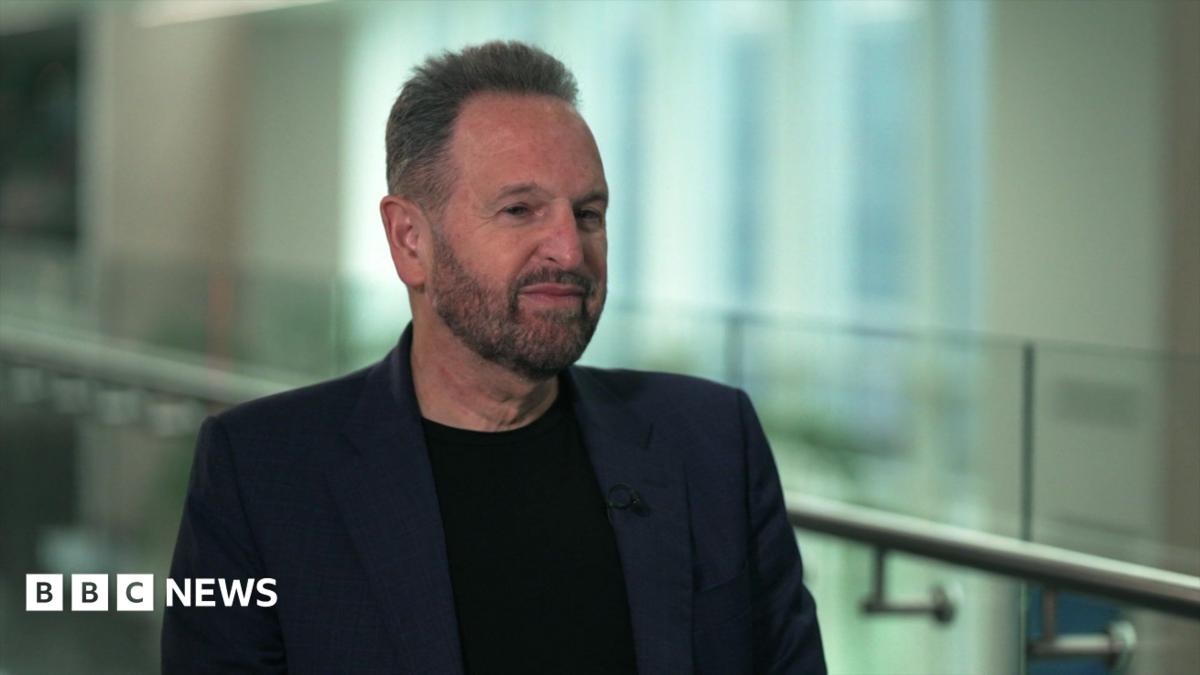
The boss of the biggest UK-headquartered tech firm has said that artificial intelligence will find a cure for cancer that humans cannot in our lifetimes.
Rene Haas, chief executive of Cambridge-based chip designer Arm Holdings, said while modelling how a DNA marker is impacted by cancer was currently “too complex” a problem, computers are “going to solve it” in the future.
Haas also told the BBC that AI would lead to widespread humanoid robots in the next five years, but that its current rapid growth was being held up by a shortage of chips needed to build data centres.
However, he was sceptical about the idea chips could be manufactured in the UK in the future.
Arm designs the brains or CPUs of microchips already used in hundreds of billions of phones, cars, smartwatches and gadgets across the globe.
Earlier this summer, the company’s peak share price amid the AI boom made it, in cash terms, the most valuable UK-based company in history.
Haas, who stepped down from the board of British pharmaceutical giant AstraZeneca in April, told the BBC’s Big Boss Interview podcast: “AI is going to… find a cure for cancer that today you and I, other humans [could] not in our lifetimes. I believe in our lifetime, AI will help cure cancer.
“Modelling a cell, modelling a human, modelling how a DNA marker is impacted by cancer – it’s too complex a problem, not only for humans today, but the computers that run AI.
“However, going forward, as we feed more and more of the models into these computers, and the computers get more sophisticated to run the models, they’re going to solve it,” said Haas, who also holds a key role in Arm’s main owner, the Japan-based Softbank, which has a range of investments in tech including in OpenAI.
Prof Chris Bakal, from the Institute of Cancer Research, London, and CEO of Sentinal4D, said the real question was no longer whether we use AI, it’s what we feed it.
He said in labs like his, they are training AI on data generated themselves from patient samples.
“It is not scraped from the internet. It does not need a giant data centre to run. The future of medical AI will not belong to whoever builds the biggest computer. It will belong to whoever has the right measurements.
“That kind of prediction could cut years from the time it takes to develop new treatments. This is where AI delivers real benefit to patients.”

Traditional owners have backed Rio Tinto’s plan to build WA’s largest copper mine in a remote Pilbara desert.

NTSB Chairwoman Jennifer Homendy details the investigation into the fatal Amazon cargo jet crash in Miami. Danamarie McNicholl reports on runway safety and flight delays.
The widow of a man killed in Sunday’s fiery Amazon jet crash in Miami has filed a wrongful death lawsuit accusing the retail giant and its aviation partners of negligence and a string of dangerous landing mistakes.
Yaraisi Santiso Morejon alleged the disaster was caused by pilot error, inadequate personnel training and the use of an unairworthy aircraft, according to the complaint reported by Courthouse News.
Her husband, Yoel Rodriguez Naranjo, was among five people killed when the Boeing 767 overran a runway at Miami International Airport and slammed into two vehicles before erupting in flames.
Morejon also alleged that the flight was conducted under hazardous conditions, citing an active thunderstorm in the area, the outlet reported.
DATA SHOWS AMAZON JET’S KEY BRAKING SYSTEMS DID NOT DEPLOY DURING DEADLY MIAMI CRASH: NTSB

Aerial view showing the long debris path and perimeter damage from the runway overrun. (National Transportation Safety Board / Fox News)
“This disaster was not an unavoidable accident,” Morejon said.
The complaint named the pilots as Captain Joseph Carroll, 55, and co-pilot Jaime Felipe Silva Molina, 37, accusing them of touching down far past the safe zone on the runway.
The plane reportedly landed more than 40 knots, or 46 mph, faster than the recommended speed, touched down 4,000 feet past the target zone and failed to perform a proper nose-flare maneuver, in which the pilot gently raised the aircraft’s nose just before touchdown to slow its rate of descent.
When the approach became unstable, the pilots failed to execute a mandatory go-around or declare an emergency, the suit alleged.
The jet ultimately plowed through the perimeter fencing and overran the runway by about 1,300 feet.
VICTIMS IDENTIFIED IN FATAL AMAZON CARGO JET CRASH AT MIAMI AIRPORT

Investigators assess a crushed white van struck near the cargo jet crash. (National Transportation Safety Board / Fox News)
The National Transportation Safety Board (NTSB) on Tuesday said investigators are still working to determine what happened during the crash and have not released an official cause.
Flight operator 21 Air was also accused of inadequately training its pilots, providing poor crew supervision and imposing demanding flight schedules.
Prior safety complaints from former employees were also ignored or suppressed, according to the outlet.
Crews were reportedly pushed to fly without proper rest, pilots with limited English skills were allowed to fly and aircraft remained in service despite ongoing problems, the suit alleged.
In a statement to Fox Business, Amazon said every jet operated on its behalf was flown by an FAA-certified air carrier under FAA-approved operations and maintenance programs.
“The FAA actively oversees each carrier’s programs and any changes are individually reviewed and approved by the FAA,” the company said. “These programs require: licensed individuals to perform regulated activities, recurrent training of licensed personnel, and routine aircraft inspections and maintenance at regular intervals.”

A destroyed vehicle sits near evidence markers in front of the downed Amazon Air freighter. (National Transportation Safety Board / Fox News)
After the incident, 21 Air issued a statement extending its condolences to those impacted.
“Our deepest condolences are with the families and loved ones of those who lost their lives. Our immediate priorities are supporting those affected, assisting the authorities, and ensuring that accurate information is communicated as it becomes available,” the operator said.
AMAZON CARGO PLANE OVERRUNS MIAMI AIRPORT RUNWAY AND STRIKES ‘MULTIPLE’ VEHICLES; 5 DEAD, 5 INJURED

Officials inspect the charred engine assembly on the side of the Amazon Prime Air fuselage. (National Transportation Safety Board / Fox News)
Meanwhile, the aircraft owner, Atlas Air, was accused of supplying an aging 32-year-old plane and failing to ensure that critical stopping systems were fully operational and safe.
Authorities on Tuesday revealed that key braking systems, including speed brakes and thrust reversers, were not deployed during landing, citing available recorded data recovered from the crash. The NTSB said investigators will continue analyzing the circumstances of the incident.
CLICK HERE TO DOWNLOAD THE FOX NEWS APP
| Ticker | Security | Last | Change | Change % |
|---|---|---|---|---|
| AMZN | AMAZON.COM INC. | 252.40 | -4.57 | -1.78% |
Amazon was also named in the suit for allegedly failing to adequately oversee the operations.
In a statement, the retail giant expressed its sympathies to those affected by the crash and said it was working with investigators and its operators on the matter.
Amazon added that using independent air carriers was “standard practice in commercial aviation.”
“Major U.S. (and foreign) passenger airlines also contract with independent carriers to operate flights under their brand but as separately certificated and regulated air carriers,” Amazon said.


A jump in oil prices after renewed hostilities in the Iran war is pushing bond yields higher, and mortgage rates are following suit.
The average rate on the 30-year fixed loan jumped 6 basis points on Monday to 6.87%, according to Mortgage News Daily. That is the highest level since June 2025. It’s now up 12 basis points since Thursday and has risen more than 30 basis points in the last two months.
“While rates are technically at their highest level in more than a year, they haven’t exactly exploded with surprising, new momentum,” said Matthew Graham, chief operating officer at Mortgage News Daily. “Instead, it’s been more of a slow grind fueled by the usual suspects: inflation expectations, elevated bond issuance, and economic resilience. All three of those factors are subject to at least some variability in the future.”
The expectation had been for falling rates this year, but the war with Iran and its resulting rise in oil prices upended that. The day before the war started, at the end of February, the rate on the 30-year fixed was 5.99%.
To put that into perspective, for someone buying a $450,000 home, which is right around the national median, putting 20% down on a 30-year fixed mortgage, the monthly principal and interest payment today would be $2,363. That is $207 a month more than it would have been back at the end of February.
And that’s just the payment. When rates go up, fewer borrowers can qualify for a mortgage, as it shifts the debt-to-income ratios that lenders rely on for safe lending.
This comes on top of higher home prices, which seem to now be accelerating again in some parts of the country, due to lean supply.
Nationally, prices in June were up 1.5% year over year, up from the 1.2% rise in May, according to the latest S&P Cotality Case-Shiller home price index.
“As financing costs are kept high for prospective buyers, current homeowners remain reluctant to give up the low mortgage rates secured in prior years,” said Rebecca Kaufman, associate director of commodities at S&P Dow Jones Indices, in a news release.

Evtec supplies parts to JLR and chairman David Roberts said it was a “worrying time”.
“A lot of the jobs here, if they go, they go, they leave the sector,” he said.
“And these are jobs with real skills that take years to build and it’s easier to lose them.”
JLR has been dealing with falling sales, the consequences of a devastating cyber-attack that paralysed production last year, competition from China and rising energy prices.
At the same time, it has invested billions in an effort to reinvent itself for an electric future.
Dr Steve McCabe, a political economist from Birmingham City University, said he believed the job cuts were a strategic move.
“What JLR are trying to do is clean themselves up and make themselves more efficient in the hope that alowes them to survive,” he said.
“The hope is of course that its a temporary thing,” he added.
The company’s reinvention is due to take another step forward when it unveils a new electric car on 6 October.
Kevin Moreley, a former managing director of the Rover Group believes it could be a pivotal moment.
He said: “I always thought that only 300 redundancies for JLR was a little optimistic given the new Jaguar launch is still unpredictable, and VW are making 100,000 workers redundant.
“4,000 will not be the end of it if the new Jaguar doesn’t sell the numbers they hope.”

‘Tirana teeth’: Albania hopes to be the new Turkey for dental work

Tether freezes $39.3M USDT linked to Xinbi Guarantee

Seahawks pick off Drake Maye three times, edge Patriots in NFL season opener


-
 Crypto World1 day ago
Bitcoin price risks $76K drop as $78K support weakens
-
 Tech2 days ago
Memory prices are slowing because buyers ran out of money
-

 Crypto World1 day ago
Ethereum price stalls below $2,500 as ADX drops to 11
-

 Crypto World1 day ago
Robinhood Stock: How To Take Advantage With Reduced Risk
-

 NewsBeat1 day ago
What went right this week: an ‘historic’ fall in violent crime, plus more
-
 Sports2 days ago
Phones confiscated, players sent home: Pakistan’s England tour turmoil revives memories of Mohammad Amir, Salman Butt and Mohammad Asif’s 2010 Lord’s spot-fixing scandal | Cricket News
-

 NewsBeat2 days ago
England up in reading, maths and science rankings as Scotland and Wales dip
-
 Crypto World20 hours ago
Bitcoin price holds near $79K as cycle drawdowns narrow
-

 Business1 day ago
Meta debuts long-awaited personal AI agent, Muse
-
 Crypto World2 days ago
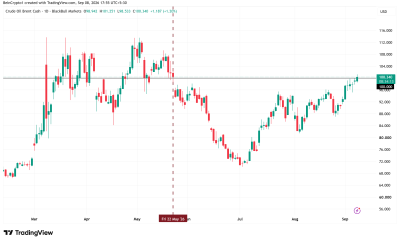
Brent Crude Oil Moves Above $100 for the First Time in 3 Months
-

 Crypto World2 days ago
Visa expands stablecoin card network to 160 programs
-

 Business2 days ago
Egyptian TV Presenter Sarah Khalifa, 11 Others Sentenced To Death In Major Drug Trafficking Case In Cairo
-
 Tech2 days ago
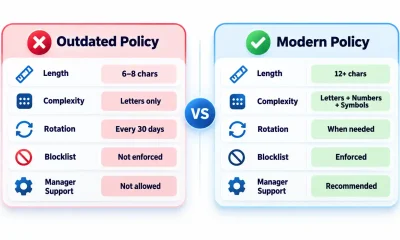
Strong Password Policy and Password Manager Guide
-
 Crypto World1 day ago
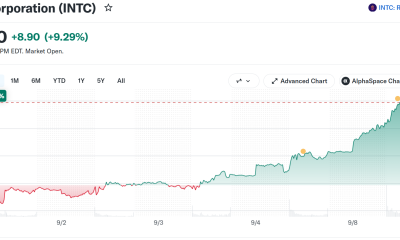
Intel Stock Jumps 9% on Chip Price Hike Report, US Stake Gains $36 Billion
-
 Tech1 day ago
Meta debuts its Muse AI agent. Will consumers trust it?
-

 Entertainment1 day ago
Big Brother Spoilers: Dee SPINS & HUSTLES Votes – Yash Questions the Pact
-

 Crypto World2 days ago
Pump Fun and Kraken delete Hunter Biden $LAPTOP promotion
-

 Sports1 day ago
Ballon d’Or 2026 Nominees: Lionel Messi In, Cristiano Ronaldo Out; Erling Haaland Included In Top 30
-

 Business1 day ago
ServiceTitan, Inc. (TTAN) Q2 2027 Earnings Call Transcript
-

 Tech2 days ago
Google’s revived nuclear power plant gets $1.9B loan from US government
You must be logged in to post a comment Login