
Business
CAS stays, but derivatives settlement may change, says Sebi chief Tuhin Kanta Pandey after another 1,000-point Sensex swing


The statement comes on a day when the Sensex again saw a sharp intraday swing of more than 1,000 points during expiry-day trade before ending only 138 points higher, which reversed the day’s losses.
Pandey also said global index provider MSCI had acknowledged that its recent rebalancing went well under the new CAS framework.
The closing auction session handled large institutional flows during the MSCI rebalancing at the end of August. Turnover in the closing auction session on NSE rose to Rs 39,718 crore, or nearly 22% of total cash-market turnover, as passive funds adjusted portfolios according to MSCI index changes.
CAS volatility impact on Sensex, Nifty remains the worry
The larger concern for traders is not whether CAS can handle volumes, but whether it is causing sharp price swings on expiry days.

On Thursday, benchmark indices recovered late in the session after another volatile closing auction. The Sensex rose over 1,000 points from the day’s low during the expiry-day move, but closed only 138 points higher. The sharp swing again brought attention back to CAS and its impact on final settlement prices in derivatives.
Since CAS was introduced, traders have complained that sudden changes in the closing auction price can lead to large moves in index options, especially on expiry days. The concern is sharper in Sensex and Nifty derivatives because the cash-market closing price feeds into the settlement price of expiring contracts.CAS was introduced to replace the earlier system where the closing price was based on the volume-weighted average price of trades in the final 30 minutes of continuous trading. Under CAS, orders are collected after the regular session and matched at a single closing price.
Also Read: CAS wild swing: Sensex soars 1,000 points on expiry day but ends only 138 points higher
Sebi argues that it improves price discovery and brings India closer to global market practice. Critics say the system needs stronger safeguards because a few large orders during the auction can move indicative prices sharply, creating sudden gains and losses for option traders.
Sebi reviewing settlement price method
While Sebi has ruled out scrapping CAS, it has already started reviewing how derivative settlement prices should be calculated after the rollout of the new system. Earlier this month, the regulator said it would review the settlement price methodology for derivative contracts in light of the CAS rollout. Sebi said CAS became effective from August 3, 2026, and the closing price discovered through CAS is currently used to determine derivative settlement prices on expiry days.
The regulator said it has received significant feedback from market participants on settlement prices based on CAS. It has also held discussions with exchanges, brokers, proprietary traders, software vendors, mutual funds, industry associations and foreign portfolio investors.
Sebi is expected to issue a consultation paper on the issue. The review may examine whether derivatives should continue to be settled based on the CAS-discovered closing price or whether a separate method is needed to reduce expiry-day shocks.
(Disclaimer: Recommendations, suggestions, views and opinions given by the experts are their own. These do not represent the views of Economic Times)


CoreWeave (CRWV) stock has been putting in a series of lower highs since April and the stock came under more pressure Wednesday, down nearly 5%. With that in mind, CoreWeave sets up as an interesting candidate for a bearish option trade. Let’s look at a setup known as a bear put spread. This is an option trade that benefits from…
Copyright ©2026 Investor’s Business Daily, LLC. All rights reserved. 87990cbe856818d5eddac44c7b1cdeb8

Thailand will launch a THB50 billion rooftop- and ground-mounted solar subsidy programme in mid-October, offering THB50,000 per installation for up to 1 million households. Finance Minister Ekniti Nitithanprapas said the government will also exempt tax on some imported solar-panel components, as Bangkok seeks to reduce household electricity costs and exposure to volatile imported energy prices.
The initiative aims to boost the adoption of renewable energy across the country, reducing dependency on traditional energy sources and lowering electricity costs for consumers. This program is part of Thailand’s broader strategy to enhance sustainable energy use and combat climate change. By providing financial incentives, the government hopes to encourage more households to transition to solar power, contributing to a greener and more sustainable future for the nation.
BOT moves to tackle Thailand’s prolonged SME credit squeeze
The Bank of Thailand is preparing a Credit Portal, a new credit-guarantee mechanism and alternative-data tools to improve financing access for small and medium-sized businesses. SME loan growth has remained negative for 16 consecutive quarters, while rejection rates are estimated at 60–70%, highlighting a credit bottleneck that is holding back investment and employment.
The measures address one of the weakest points in Thailand’s recovery: strong FDI and technology investment have not translated evenly into domestic business activity. Easier access to credit could support viable SMEs, but the scale of loan rejection suggests that structural issues in collateral, credit assessment and bank risk appetite remain significant.

Earnings call transcript: Groupe Dynamite tops Q2 2026 EPS forecast
Business
OpenAI Says AI Agents Solved $1M Navier-Stokes Math Problem In 88 Hours, Sparking Skepticism Among Experts

SAN FRANCISCO — OpenAI announced Tuesday that an internal, unreleased artificial intelligence system had produced a solution to the Navier-Stokes existence and smoothness problem, one of mathematics’ seven Millennium Prize Problems, using roughly 10,000 AI agents working together over approximately 88 hours, a claim that has since drawn both fascination and pointed skepticism from the mathematics community.
The Navier-Stokes equations describe how fluids such as water and air move and are commonly used to predict weather patterns. The unsolved question at the center of the Millennium Prize challenge asks whether smooth, well-behaved three-dimensional fluid motion can eventually break down and produce speeds that grow without limit, a phenomenon mathematicians refer to as finite-time blowup. OpenAI’s system concluded that it can, describing a specific configuration in which a fluid vortex tightens and spins ever faster while the fluid’s total energy remains finite throughout the process.
In its official announcement, OpenAI described the achievement in terms of the broader trajectory of its technology.
“We’re sharing a solution to the Navier-Stokes existence and smoothness problem, one of the Millennium Prize Problems,” the company wrote. “This proof, produced by an internal OpenAI system, shows that the dynamics of the Navier-Stokes equations for fluid motion can develop a singularity in finite time.”
The Clay Mathematics Institute named the Navier-Stokes problem as one of seven Millennium Prize Problems in 2000, with each carrying a $1 million award for a verified solution. Before Tuesday’s announcement, only one of the seven problems, the Poincaré conjecture, had ever been solved. OpenAI has said it does not intend to claim the $1 million prize for its result.
According to reporting from Quanta Magazine, OpenAI’s process began by deploying smaller groups of AI agents against related but somewhat easier problems. The company said nearly 100 agents worked together for approximately 50 hours to produce a disproof related to the Euler equations, a related but distinct mathematical framework, before OpenAI escalated the effort by deploying roughly 10,000 agents specifically against the Navier-Stokes problem. After 88 hours, those agents had produced a proof of a singularity in the Navier-Stokes equations, and an additional 17 hours of work by another AI model formalized that result using a verification system called Lean. In total, the agents involved in the effort exchanged nearly 5 million messages and generated approximately 300 billion output tokens across all attempted problems, with the Navier-Stokes-specific work alone involving 2.7 million messages and roughly 130 billion output tokens.
OpenAI researcher Sébastien Bubeck offered a sweeping characterization of the result’s significance, according to The New York Times.
“This is a spectacular culmination of the arc we have seen over the past twelve months,” Bubeck said.
The announcement has not gone without controversy. According to Quartz’s reporting, OpenAI said its effort began Sept. 1 after the company heard rumors that two researchers, Levent Alpöge, an Anthropic employee, and Tristan Buckmaster, a mathematics professor at New York University, had already resolved a related problem. After completing its own proof and Lean verification on Sept. 6, OpenAI said it reached out to the two researchers to propose a joint announcement, only to learn that their work actually addressed a related but distinct problem involving the forced Euler equations rather than Navier-Stokes itself. OpenAI said it recognizes the priority of the two researchers’ work on that separate problem, and maintained that its AI agents did not access the researchers’ work through any means before it was made public, though the company acknowledged it could not entirely rule out indirect exposure to de-identified information related to the research.
Terence Tao, a prominent mathematics professor at the University of California, Los Angeles, offered a more measured perspective on the broader significance of AI-assisted breakthroughs of this kind, according to reporting cited by ETV Bharat.
“These questions are lighthouses,” Tao said. “They are great focus points that attract the efforts of human scientists.”
Tao separately cautioned that reliance on AI systems to solve landmark mathematical problems carries risks for how mathematicians themselves develop deep understanding of their field, noting that the sustained effort required to work through difficult problems often teaches researchers something valuable in the process, comparing the experience to the value of physical exercise pursued toward a specific fitness goal rather than simply outsourcing the effort entirely.
Despite the speed and scale of OpenAI’s announced result, the broader mathematics community has not formally accepted the proof as valid. According to IBTimes UK, OpenAI’s solution addresses two of the four formal statements required under the Clay Mathematics Institute’s official problem formulation, and the proposed solution has not yet undergone independent verification or been accepted by the institute, which oversees the Millennium Prize Problems and their associated awards. Rigorous verification of a proof addressing a problem of this complexity and significance typically takes considerable time, often spanning at least two years, given the need for the broader mathematical community to carefully scrutinize every step of the argument before a result of this magnitude can be considered formally established.
OpenAI has framed the demonstration primarily as evidence of rapid progress in AI’s capacity to tackle complex scientific and mathematical challenges, describing a core goal of its research as empowering scientists to advance work that benefits humanity broadly, rather than positioning the result as a final, independently verified mathematical breakthrough in its own right.
With the proposed solution now circulating publicly alongside both its formal writeup and Lean-based formalization, mathematicians across the field are expected to spend the coming months, and likely years, scrutinizing the underlying argument in detail. Whether OpenAI’s claimed resolution of the Navier-Stokes existence and smoothness problem ultimately withstands that extended review process, and what it might reveal about the current capabilities and limitations of AI-driven mathematical research more broadly, remains an open question that the broader mathematics community has only just begun to address.

US wholesale inventories surge in July

Check out what’s clicking on FoxBusiness.com.
Historic South Jersey amusement park Clementon Park & Splash World has closed its doors and will be put up for sale, its corporate owner announced Wednesday.
The decision marks the second time in seven years that the historic site has shuttered. Owned and operated by Chicago-based IB Parks & Entertainment, the park officially ended operations Monday following the conclusion of its 2026 summer season.
“After five memorable years, we are saddened to announce that we have made the difficult decision to close the park and plan to offer the park for sale,” management said in a statement posted to the park’s website. “It has been a privilege to care for a place that has meant so much to generations of families. We are hopeful that we will find a buyer who shares our love for Clementon Park and will carry its history and legacy forward.”
SIX FLAGS GIVES FAN-FAVORITE ARIEFORCE ONE COASTER A SECOND LIFE

Clementon Park and Splash World pictured in 2021. (USA TODAY Network via Reuters Connect)
IB Parks & Entertainment acquired the 52-acre property at a foreclosure auction in March 2021 for $2.37 million. The venue had previously closed unexpectedly in late 2019 under prior ownership following a $4.5 million loan default, remaining dark until IB Parks purchased and reopened it in summer 2021.

Clementon Park and Splash World. (USA TODAY Network via Reuters Connect / Reuters)
Founded in 1907 by Theodore Gibbs and his two sons, Clementon Park began as a traditional “trolley park” built at the end of a transit line to encourage weekend ridership and provide recreation for nearby Philadelphia residents. Situated on a spring-fed lake between Philadelphia and Atlantic City, the venue remained family-run for more than a century before its first sale in 2011.
Over the decades, the site expanded into a hybrid amusement and water park following a $5 million renovation in July 1993 that added the Splash World water park. Its major attractions include the Hellcat wooden roller coaster, the Dragon Coaster, a drop tower, a giant Ferris wheel and various water slides.

A water slide twists overhead at Clementon Lake and Splash World, which was sold at auction Tuesday. (USA TODAY Network via Reuters Connect / Reuters)
IB Parks & Entertainment, which also operates Indiana Beach Amusement and Water Park in Monticello, Indiana, did not state a specific financial reason for the closure.
CLICK HERE TO GET FOX BUSINESS ON THE GO
Management noted that additional details regarding the property sale will be released as they become available.

More than half of organisations, 56 per cent, say finding trustworthy and relevant data is a significant barrier to deploying artificial intelligence, according to figures from a global survey of 850 executives by Denodo.
The study, conducted by Arlington Research among executives and business decision-makers worldwide, also found that 66 per cent believe AI systems must have access to near real-time information if they are to be trusted.
Denodo, which describes itself as the AI data layer company, said the findings pointed to “a growing gap between AI ambition and AI readiness” as organisations look to adopt agentic AI systems that can move beyond generating insights to executing tasks and business processes autonomously.
According to the survey, 67 per cent of organisations struggle with AI data security and access controls, while 60 per cent report difficulties optimising performance for the intensive workloads required by large-scale AI deployments.
More than four in 10, or 43 per cent, draw on more than 400 separate data sources to support AI initiatives. Denodo said this created significant challenges around governance, security, performance and consistency.
The company said success with autonomous AI would depend not only on giving AI access to enterprise data but also on providing the trusted business context needed to interpret that data and use it correctly and appropriately.
“The research shows organisations recognise the importance of trusted, real-time data, but the next challenge goes beyond access,” said Dominic Sartorio, vice president of product marketing at Denodo.
“AI agents don’t simply need access to enterprise data. They need trusted business context that tells them what the data means, whether it can be trusted and how it should be used. Without that foundation, organisations will struggle to deploy AI that people can rely on.”
“The conversation around AI has largely focused on models and applications,” Sartorio added. “What this research shows is that data readiness has become the defining factor. Organisations that solve the trust challenge will be far better positioned to unlock the full potential of agentic AI.”
Denodo said organisations that want to move from AI experimentation to enterprise-scale deployment must focus on creating a trusted data foundation that provides governed, secure and real-time access to information across the business.
Denodo first released the AI Trust Gap Report, based on the Arlington Research study, in April. Its announcement at the time gave the same figures of 66 per cent on real-time data and 67 per cent on security and access controls.
The April announcement said 63 per cent of organisations cited identifying the most relevant and trustworthy data, or preparing it for consumption, as significant barriers to AI deployment. It put the share pulling from more than 400 original data sources at 42 per cent.
Sartorio said at the time: “AI is rapidly shifting from systems that merely answer questions to systems that take autonomous action, and this transition changes the data requirement entirely. When an AI agent triggers a business outcome, there is zero room for stale or ungoverned data.”
Denodo’s latest announcement did not include figures for individual countries.
In the UK, the Office for National Statistics reported in July that self-reported AI use among businesses with 10 or more employees had risen from around 12 per cent to around 35 per cent since late 2023. The ONS described adoption to date as relatively shallow, with the average number of AI technologies used per adopting business rising from around 1.4 to around 1.6. It said 41 per cent of those businesses reported no barriers to adoption.
Separate research from insurer Simply Business, released on Tuesday, found AI use among UK small business owners had risen from 22 per cent in 2025 to 47 per cent. Security and privacy concerns were the most commonly cited barrier, mentioned by 44 per cent of owners.
A PwC global survey reported in April found British firms were committing 2 per cent of revenue to AI, compared with an average of 5 per cent among leading companies worldwide, and ranked the UK 11th out of 19 countries.

Cherry Martin
Cherry is Associate Editor of Business Matters with responsibility for planning and writing future features, interviews and more in-depth pieces for what is now the UK’s largest print and online source of current business news.

Shares in St Barbara closed trade up 16 per cent on Thursday to 85 cents, following news that the goldminer would divest its remaining 40 per cent stake in the New Simberi gold project.

“Jimmy Kimmel Live!” airs every weeknight at 11:35 p.m. ET and features a diverse lineup of guests that include celebrities, athletes, musical acts, comedians and human interest subjects, along with comedy bits and a house band.
Randy Holmes | Disney General Entertainment Content | Getty Images
Jimmy Kimmel, the late night talk show host with Disney-owned ABC, is taking some precautions in the face of scrutiny by the Federal Communications Commission.
Kimmel said on Wednesday night that he will not air an interview with Democratic Senate candidate James Talarico on national television. The interview will air on YouTube on Thursday instead.
“For some reason, and I can’t seem to figure out what that reason is, something has changed,” Kimmel said during his Wednesday night broadcast. “Now that [Trump] is president, his FCC has threatened me, threatened our show, threatened our network, ABC, our affiliates, our local stations, based on simple, traditional editorial decisions.”
He added that the decision not to broadcast the interview on live TV is “out of consideration” for ABC affiliates who he said would have to “deal with this nonsense” of FCC scrutiny.
“In the America we live in right now, that is the best we can do, until November, of course,” Kimmel said.
The FCC did not immediately respond to a request for comment.
Talarico, a state representative, is locked in a tight Senate race against Texas Attorney General Ken Paxton, who’s gotten an endorsement from President Donald Trump. Public polling has shown Talarico slightly ahead of Paxton, a controversial figure in Texas who was impeached by the state House of Representatives over allegations of corruption. He was acquitted by the state Senate.
In January, the FCC called into question whether TV talk shows are “bona fide” news programs and are therefore exempt from equal airtime rules for political candidates. “The View,” another ABC program, has faced similar scrutiny from the FCC.
Kimmel said Wednesday that he has been interviewing political candidates, including Trump himself, for years.
Democratic U.S. Senate candidate James Talarico speaks during a campaign rally at the Cailloux Theater on August 31, 2026 in Kerrville, Texas.
Brandon Bell | Getty Images
Kimmel’s show has become a lightning rod for debates around broadcasting rights, First Amendment protections and government intervention.
Last year, ABC-affiliate station owners opted not to air “Jimmy Kimmel Live!” after comments he made during a monologue following the killing of Charlie Kirk. ABC suspended the show for roughly a week, and Kimmel later said, “It was never my intention to make light of the murder of a young man.”
But ABC has faced continued pressure from the Trump administration since.
In April, the FCC launched an early renewal process for ABC-owned stations, citing an investigation into the company’s diversity, equity and inclusion practices.
ABC filed the license renewals but in August, sued the agency over First Amendment concerns, calling its investigation into the company a “retaliatory campaign.”
— CNBC’s Garrett Downs contributed to this report.

BARCELONA, Spain — People with asthma who started semaglutide, the drug sold as Ozempic and Wegovy, had nearly 40% fewer attacks than similar patients on older diabetes pills, researchers told a European lung meeting this week.
The finding comes from real-world U.K. electronic health records, not a randomized trial. Lead investigator Chloe Bloom, a clinical associate professor in respiratory epidemiology at Imperial College London’s National Heart and Lung Institute, said the signal was strongest for semaglutide and for asthma rather than chronic obstructive pulmonary disease. “The effect was strongest with semaglutide especially in people with asthma, where use of semaglutide appears to be associated with nearly a 40% reduction in asthma attacks. Semaglutide also led to a 20% reduction in COPD flare-ups,” she said in a European Respiratory Society statement.
Bloom’s team ran four parallel analyses, each with about 20,000 to 22,000 adults who newly started a GLP-1 receptor agonist or a sulfonylurea. The patients already had asthma or COPD and were taking the shots or pills for diabetes or weight. Attacks were counted as a short course of oral steroids, an emergency visit, a hospital stay or death. Across GLP-1 drugs as a class, exacerbations were about 14% lower than with sulfonylureas, according to a MedPage Today account of the Barcelona presentation. By drug, semaglutide was tied to about a 30% drop in mixed asthma-or-COPD events, with a 38% drop when the analysis was limited to asthma and a 21% drop in COPD.
“GLP-1 receptor agonists are widely used to treat type 2 diabetes and obesity,” Bloom said. “Previous research suggests that they may have anti-inflammatory effects and may improve lung-related outcomes. However, asthma and COPD outcomes have not been included as outcomes in GLP-1 drug trials. We wanted to use real-world health records to investigate whether people with asthma or COPD who started GLP-1 receptor agonists had fewer acute respiratory attacks.”
She was explicit about what the data do not authorize. “The findings from this study are encouraging, but they should not change treatment decisions on their own. People with asthma or COPD should not start GLP-1 receptor agonists specifically for their lung condition outside current prescribing guidance. While the findings suggest that some people taking GLP-1 receptor agonists may experience fewer respiratory attacks, this needs confirmation in clinical trials.”
Alexander Mathioudakis, chair of the ERS group on airway pharmacology and a senior lecturer at the University of Manchester, who was not involved in the work, called it “one of the largest real-world studies to investigate GLP-1 receptor agonists and airways disease, and one of the first to examine whether effects differ between individual GLP-1 receptor agonists.” Marie Spreckley of the University of Cambridge, commenting via the Science Media Centre, said it is “too early to state that semaglutide reduces or prevents asthma attacks” and that people “should not seek semaglutide specifically for asthma or change their existing asthma treatment because of these findings.”
Obesity and asthma travel together. Incidence of asthma rises about 50% in people with overweight or obesity, and risk climbs with weight. GLP-1 drugs lower blood sugar, slow emptying of the stomach and cut appetite. They also lower high-sensitivity C-reactive protein, a marker of inflammation. A post-hoc look at Novo Nordisk’s SELECT trial found fewer asthma-related adverse events on semaglutide than placebo (hazard ratio 0.58). That analysis was not designed as an asthma trial either.
Why semaglutide would outpace other GLP-1s in Bloom’s records is not settled. Dose, duration and who gets which brand in U.K. practice could all matter. HealthDay’s write-up of the same talk said no significant association was found for the other GLP-1s in some cuts of the data. MedPage Today reported smaller reductions for exenatide and dulaglutide. Observational studies cannot fully separate weight loss from a direct airway effect. People who stay on expensive injections may also be more engaged with clinics.
The practical line Bloom drew is the one regulators already use. Adults who already qualify for semaglutide because of type 2 diabetes or obesity, and who also have asthma, may be getting a lung side benefit. Adults who do not qualify should not start the drug as an asthma medicine. Inhaled steroids, bronchodilators and biologics remain the labeled tools for attacks.
Ozempic is approved for type 2 diabetes. Wegovy is approved for chronic weight management. Neither label lists asthma as an indication. Supply of both has been tight for years as demand for weight loss outran factories. Adding an unapproved lung use would widen that gap without trial proof.
Bloom’s group used U.K. records covering more than a million adults with asthma or COPD to build the new-user cohorts. Dr. Bohee Lee presented the work. The next step she named is a randomized trial with asthma attacks as a planned endpoint. Until that trial exists, the 40% figure is an association in messy real-world data — large, consistent with earlier smaller studies, and not a reason to rewrite an inhaler prescription.
Retirees sue fund linked to public Dogecoin miner Z Squared

Roadtrip Ideas: Goboony Campervans Are Perfect For An Autumnal Forest Retreat

Seattle Beat New England Again, but Now Both Teams Have Problems To Solve


-
 Tech2 days ago
Memory prices are slowing because buyers ran out of money
-
 Crypto World2 days ago
Bitcoin price risks $76K drop as $78K support weakens
-

 Business14 hours ago
Micron Stock Climbs Above $1,031 as AI Memory Crunch and a $50 Billion Outlook Fuel the Rally
-

 Business15 hours ago
AMD Stock Climbs After Management Lifts 2027 Data Center Outlook Toward $70 Billion in AI Sales
-

 Crypto World2 days ago
Ethereum price stalls below $2,500 as ADX drops to 11
-

 Crypto World2 days ago
Robinhood Stock: How To Take Advantage With Reduced Risk
-

 NewsBeat2 days ago
What went right this week: an ‘historic’ fall in violent crime, plus more
-

 Crypto World17 hours ago
Bitcoin price risks $70K if $78K neckline breaks
-
 Crypto World1 day ago
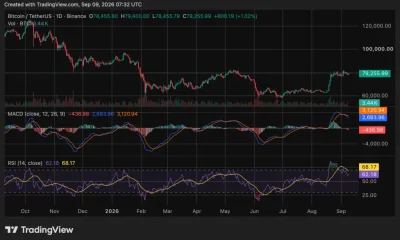
Bitcoin price holds near $79K as cycle drawdowns narrow
-
 Sports2 days ago
Phones confiscated, players sent home: Pakistan’s England tour turmoil revives memories of Mohammad Amir, Salman Butt and Mohammad Asif’s 2010 Lord’s spot-fixing scandal | Cricket News
-

 NewsBeat2 days ago
England up in reading, maths and science rankings as Scotland and Wales dip
-

 Business2 days ago
Meta debuts long-awaited personal AI agent, Muse
-
 Crypto World2 days ago
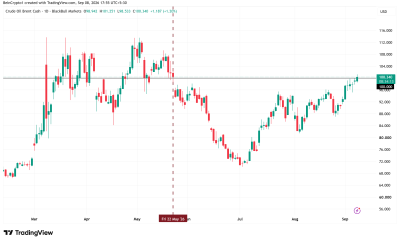
Brent Crude Oil Moves Above $100 for the First Time in 3 Months
-
 Crypto World2 days ago
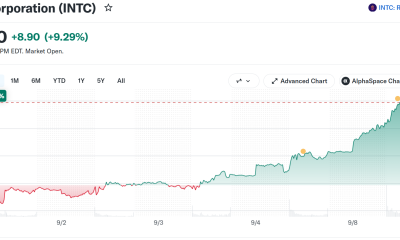
Intel Stock Jumps 9% on Chip Price Hike Report, US Stake Gains $36 Billion
-

 Crypto World2 days ago
Pump Fun and Kraken delete Hunter Biden $LAPTOP promotion
-

 Crypto World2 days ago
Visa expands stablecoin card network to 160 programs
-

 Business2 days ago
Egyptian TV Presenter Sarah Khalifa, 11 Others Sentenced To Death In Major Drug Trafficking Case In Cairo
-
Business2 days ago
Xometry at Goldman Sachs Communacopia + Technology Conference 2026: growth, AI and Siemens
-

 Business2 days ago
ServiceTitan, Inc. (TTAN) Q2 2027 Earnings Call Transcript
-
 Tech2 days ago
Strong Password Policy and Password Manager Guide
You must be logged in to post a comment Login