Connect with us

NewsBeat

How to help your garden recover from a heatwave

Published

on

How to help your garden recover from a heatwave

UK gardens took a battering this summer as a heat dome settled over western Europe, and much of the green and pleasant land turned a dusty beige.

Some areas went without rain for almost two months. The “joy of gardening” turned into waiting until the cooler evening period, then laboriously trailing out from the kitchen with buckets of water to keep the patio plants alive.

But as the rains begin to return, what can gardeners do to restore their garden’s lustre? And what have we learned as we look around our parched borders and fractured lawns?

Let’s start with the good news. Nature is resilient and many plants may still be alive despite appearing bedraggled, wilted or defoliated. They just implemented strategies that help them survive a drought.

Advertisement

Leaf wilting and abscission is the plant’s natural response to conserving water and protecting its vital phloem (which transports sugars from the leaves to the rest of the plant) and root tissues from desiccation.

So, gardeners don’t need to take the hacksaw to the shrub border yet with the notion of making a fresh start. They can check if individual woody plants are still alive by scraping off the epidermal cells (young bark) of the shoots with a thumbnail. If the phloem tissues below are green, life prevails.

Some of the garden’s woody plants may re-leaf again this autumn – or if they are herbaceous, throw up new shoots from the soil. But many will wait until next spring before investing in a new set of leaves or stems.

Gardeners should avoid the temptation to feed plants up (add fertiliser) now, as such chemicals placed on hard soils will simply wash away with the first rains, rather than be incorporated effectively into the soil. More than anything else, gardeners need patience at this time.

Advertisement

Some plants will have dead stems; these can be pruned out immediately. With perennial plants, though, it is worth hesitating before removing the whole specimen, as shoots can regenerate from the stem base or remaining root system.

Similarly, brown lawns will turn green again. However, if there are residual bare patches, new growth can be encouraged by sowing grass seed mixed in with sand in mid-to-late September.

We all want those precious garden plants to thrive.
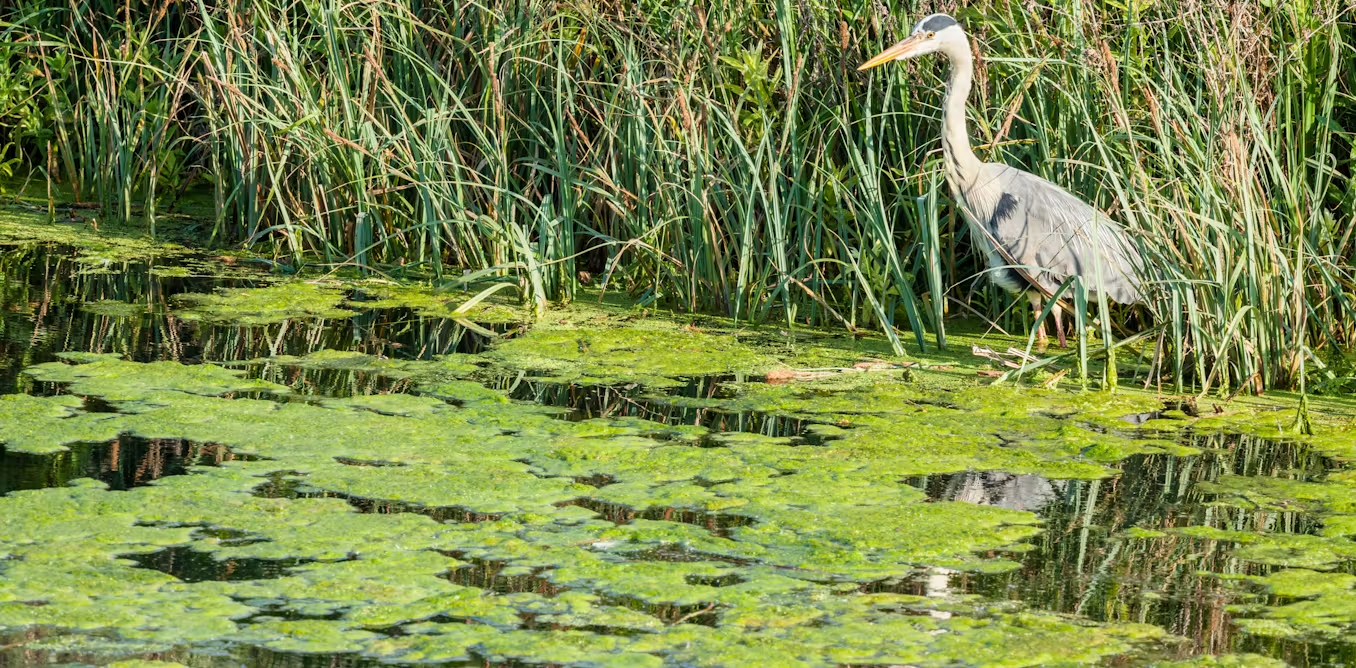
Roman Samborskyi/Shutterstock

Plants employ different strategies for survival based on the climate they evolved in, and we see a legacy of this in the cultivated species we use in the garden.

Those from high rainfall areas – such as certain rhododendron, pieris, hydrangea, magnolia and sorbus – struggled this summer. Hydrangea has limited capacity to control moisture loss, whereas more drought-adapted species such as cotinus can precisely regulate their stomatal pores (where CO₂ is absorbed and moisture vapour lost).

Advertisement

Other plants such as forsythia and fuchsia are chance takers, still trying to grow throughout a dry period by keeping their stomata open and just running the risk of water shortage. But these types of plants can come a cropper as water columns within their xylem vessels (which transport water and minerals from the roots to the rest of the plant) snap, causing the whole stem to fail.

Anecdotally, despite the harsh dry, hot conditions, some garden plants performed well this year. Salvia, verbena, lavander and, in my garden’s clay-based soils, roses flowered prolifically, even if their shoot growth was curtailed.

Stem cavitation in fuchsia: the stem on the right has snapped its water column in the xylem due to high tension brought on by the drought.
Ross Cameron, Author provided (no reuse)

Rejuvenating your garden

For those gardeners keen to rejuvenate their dreary, desolate brown patches quickly, autumn bedding plants can help provide some late season cheer. Plants such as cyclamen, chrysanthemum, aster and winter pansies can be planted now as soil moisture is restored.

After a summer like this, some precious plant specimens will be lost, but many gardens should return to their former glories – if the UK experiences a cooler summer next year.

Over the longer term, as climate change moves the UK’s southern regions to something akin to a Mediterranean climate, some gardeners will need to adapt. Mainly, this will mean planting more Mediterranean flora.

Advertisement

Much more challenging, however, is the climate turbulence that accrues from climate change. This compounding of stresses – such as flooding in early summer followed by drought a few weeks later, not to mention more extreme events such as fire and high wind speed – is a much more difficult phenomenon for plants.


À lire aussi :
A rollercoaster of weather extremes: drought and heatwaves are creating UK’s climate whiplash


While research on this problem is still in its infancy, early results suggest that gardeners may need to look to plant species with multiple stress tolerances. Some garden plants that are popular in Britain, like buddleia, already have good resilience.

We can also look to new genotypes from the natural world. Plants from dry river beds, for example, cope well with both drought and flooding.

Advertisement

Plantlife with wide natural geographical distributions and weed-like strategies (where they grow and reproduce quickly) should also be brought into breeding programmes now, to help improve climate resilience in the garden plant palette.


Source link

Advertisement
Continue Reading
Click to comment

You must be logged in to post a comment Login

Leave a Reply

NewsBeat

Two Welsh-qualified talents picked for England U20s as WRU face big battle

Published

on

Wales Online

The WRU faces a tough battle for young Welsh-qualified talent

Two Welsh-qualified players have been included in England U20s’ elite player squad.

Advertisement

Swansea-born centre Will Moore and Bath scrum-half Isaac Mears are both eligible to represent Wales, with Moore having already met senior Wales head coach Steve Tandy.

Moore is a rising star with Bristol Bears and the son of former Wales lock Andy Moore, while Mears’ father is former Bath, England and British & Irish Lions hooker Lee Mears.

The Welsh Rugby Union has made retaining Welsh-qualified talent a priority but have much work to do.

JOIN OUR WALES RUGBY FACEBOOK PAGE Latest news, analysis and much more

Advertisement

But representing England at U20s level does not tie either player to the Red Rose at senior level, with Ross Moriarty and Kane James among those to have previously switched allegiance back to Wales.

Bristol centre Moore is regarded as a top prospect and told WalesOnline in a previous interview that he remained open-minded about where his international future would lie.

“I saw it as an ideal opportunity with it only being an hour and a half from home,” he told WalesOnline back in April.

“You hear about how good English schoolboy rugby is and I would agree it does live up to that. I’m studying maths, chemistry and PE for my A levels at Clifton and I’m also part of the senior Bristol Bears academy.

Advertisement

“I had a few Wales U18s non capped appearances but I missed out on the Six Nations period last year with my shoulder. But now is probably the perfect time to try it out.

“It’s no fault of Wales because Richie Pugh (WRU pathway coach) and all the boys were brilliant with me but personally I am eligible to play for England.

“So, I thought there’d be no harm in giving England a try because at this age it doesn’t tie me down to anyone.

“Every camp I’ve been to has been very professional. It’s not much different to Wales.

Advertisement

“I’m not looking any further than this U18s Six Nations. The last two games v Georgia and Italy I want to get my international caps.

“As soon as that finishes I’ll do my A levels, finish school and whatever comes next from that I’ll take it step by step.”

Follow all of our channels to ensure you stay up to date with the latest Welsh rugby news. Sign up to our free daily newsletter here and our WhatsApp channel here for all the breaking news.

Source link

Advertisement
Continue Reading

NewsBeat

Man accused of drone factory ‘sabotage plot’ for Russian forces

Published

on

Man accused of drone factory 'sabotage plot' for Russian forces

Joshua Cammidge, who previously lived in Acomb in York, allegedly researched four drone manufacturing sites in Swindon as well as a Wi-Fi-jamming device and is also said to have carried out reconnaissance.

It is alleged he communicated with and received instructions from an individual believed to be linked to the GRU Volunteer Corps, a group controlled by Russia’s intelligence services.

READ MORE: York restaurant company enters liquidation owing £90,000

Advertisement

The charges state that between March 27 and September 5 this year, Cammidge provided the individual with Google Maps screenshots showing the addresses of four drone manufacturing sites in Swindon and gave details on the activity at one particular factory.

Prosecutor Warren Stanier told Westminster Magistrates’ Court on Thursday that Cammidge had been in contact with the individual on Facebook before agreeing to move to Telegram.

He said there were 58 communications between Cammidge and the individual from August 28 to September 3.

Mr Stanier said: “The prosecution say the essence of communications was locations within the UK of factories that manufactured drones and the sabotage of those factories.”

Advertisement

The 31-year-old appeared at the central London court wearing a prison-issue tracksuit.

Two security officers were present in the dock with the defendant, who spoke only to confirm his personal details.

Cammidge faces two counts, one of assisting a foreign intelligence service and another of intending to commit or engage in conduct to prepare an act of sabotage.

Mr Stanier told the court: “The prosecution case is he knew exactly who he was communicating with and the implications of what he was offering to do.”

Advertisement

The defendant did not enter a plea during the hearing and District Judge Daniel Sternberg remanded him into custody to appear at the Old Bailey on September 25.

Cammidge, of Galsworthy Close, Swindon, was arrested by Counter Terrorism Policing London officers, supported by officers from Wiltshire Police, at an address in Swindon on Friday, the Metropolitan Police said.

He was taken to a London police station and searches were carried out at a different address in Swindon.

The next day, Cammidge was further arrested and detained under the National Security Act 2023, on suspicion of assisting a foreign intelligence service.

Advertisement

In July, the Government formally designated the GRU Volunteer Corps under the National Security (State Threats) Act 2026, making it a criminal offence to express support for the group.

The GRU is sanctioned in its entirety by the UK, and hackers linked to the agency have been blamed for cyber attacks in Britain.

A GRU squad is believed to be behind the attempted murder of former spy Sergei Skripal in Salisbury.

Advertisement

Source link

Continue Reading

NewsBeat

Ex-Scots Lord jailed after throttling woman at theatre for singing along

Published

on

Daily Record

He said: “I’ll show you what rude is” before pressing down on her neck.

An ex-Scottish Laird has been jailed for strangling a woman because she was singing along to a performance of We Will Rock You. Malcolm Potier – who once hired a hitman to kill his ex-partner – grabbed Kirsty O’Donnell by the neck when an argument erupted in the audience of a 2023 performance of the hit Queen show at the London Coliseum.

Potier’s partner, Lizzie Loveridge, had asked Ms O’Donnell to be quiet as she sang along during the show, to which she replied: “That’s a bit rude”.

Potier, 75, who was previously jailed in Australia after ordering the murder of his ex-partner, told Ms O’Donnell: “I’ll show you what rude is” before pressing down on her neck.

Advertisement

Ms O’Donnell later learned about Potier’s criminal background, and is now terrified she he will come after her in the future, she told Southwark Crown Court on Thursday.

Judge Dafna Spiro sentenced Potier to two years in prison over the West End theatre attack. The judge said: “It was a wholly disproportionate response to a trivial disagreement and took place in a crowded public theatre during a live performance”.

She praised Ms O’Donnell for giving evidence at trial and during the sentencing hearing, saying she “has done so primarily to send a clear message that violence against women and girls is something that affects too many people”.

Advertisement

The judge determined that Potier’s past convictions, along with the attack on Ms O’Donnell, have a “common thread of dominance, control, and lack of accountability”.

Prosecutor Sam Lubner said Ms O’Donnell and a friend went to watch We Will Rock You, starring Lee Mead and Ben Elton, on June 7 2023, and they were moved to seats next to Potier and Ms Loveridge halfway through the show.

They “noticed Ms Loveridge was hushing people, demanding for them to be quiet”, the prosecutor said, and she then objected as they sang along to one of the songs, saying: ‘Will you two shut the f*** up?’

“Ms O’Donnell replied with words to the effect of ‘that’s a bit rude’.

Advertisement

“Mr Potier said ‘I will show you what rude is’, he leaned over and placed two hands over Ms O’Donnell’s neck, applying pressure, strangling her.

“She estimated this lasted for three to five seconds, with more intense pressure for the first one or two seconds.

“She was able to say ‘can you please let go’, and shortly afterwards he did let go.

“She was in a state of shock and fear, tearful and felt unable to report him.”

Advertisement

Ms O’Donnell was later able to identify Ms Loveridge through Facebook, leading police to arrest Potier in November 2023.

The court heard about Potier’s past convictions in Australia for plotting murder, after a falling out with his former partner over custody of their daughter.

Potier, a former property tycoon who once owned a Hebridean island and held the title Laird of Gigha, was detained in Australia in 2000 after fleeing the UK with their daughter during family court proceedings.

Advertisement

While in Long Bay prison in New South Wales, Potier revealed he had hatched a plan for a hitman to murder his ex-partner’s new boyfriend.

He initially said he did not want his former partner killed as she “served a purpose”, but summarising the crimes, Mr Lubner said he went on to take actions to try to have her murdered as well.

The court heard he asked a friend to make a call to order the hit, asked her to find a second hitman when his original plot faltered, and he offered to pay for a fellow inmate’s £4,500 bond so that he could carry out the acts.

Advertisement

However, when the fellow prisoner was released, he returned to Italy without following through with the promise.

Mr Lubner said Potier’s friend reported his efforts to police, who sent in an undercover officer posing as a hitman to covertly record his murder instructions.

Potier, a qualified chartered surveyor, was convicted of plotting the murders and sentenced to six years and eight months in prison, and he then received a second, 12-year jail term after he tried to get a fellow prisoner to murder his partner.

That second attempt was revealed after his prison cell was bugged while he was awaiting sentence for the first offences.

Advertisement

Potier returned to the UK in 2015, and he was placed under a Violent Offender Order sought by police to manage his actions.

The court heard that the order expired earlier this year, despite his charge over the attack on Ms O’Donnell.

In her victim impact statement, Ms O’Donnell said she has continued to attend concerts and shows, and “refused to let one person’s violent actions take away the things I enjoy”.

She said she decided to continue cooperating with the case, despite finding out about his past offending.

“Someone shouldn’t be allowed to behave in this way without being held to account, simply because victims may be afraid of them”, she said.

Advertisement

She added that she now “has to live with the knowledge he knows exactly who I am”.

He denied being the person responsible for the theatre attack, saying he could not recall attending the showing of We Will Rock You and claiming another man had taken his seat.

But after Potier decided not to give evidence, a jury convicted him of non-fatal strangulation.

Speaking to a probation officer, Potier then changed his story to claim he had been at the theatre but in a different seat, and claimed he could not have strangled Ms O’Donnell because he had a hand injury at the time.

Advertisement

Judge Spiro imposed a restraining order on Potier, banning him from contacting Ms O’Donnell or visiting her home address.

Get more Daily Record exclusives by signing up for free to Google’s preferred sources. Click HERE.

Source link

Advertisement
Continue Reading

NewsBeat

Former Tory campaign chief pleads guilty over election bet

Published

on

Anthony Lee and Laura Lee.

The Conservatives’ former director of campaigning and his wife have pleaded guilty to cheating at gambling by placing bets on the date of the 2024 general election.

Anthony Lee stood to win approximately £15,000 after placing more than 60 successful bets totalling £1,549, the Gambling Commission said.

He passed confidential information to his wife about when former Prime Minister Rishi Sunak was planning to call the general election.

Laura Lee, who was a parliamentary candidate at the time, placed eight successful bets on the election date totalling £535 and would have profited by around £5,000.

Advertisement

On Thursday at Southwark Crown Court, Anthony Lee pleaded guilty to two offences and Laura Lee pleaded guilty to one offence.

They will be sentenced in October.

The trials of 10 other defendants will take place in September 2027 and January 2028.

Former MP Craig Williams, who was Sunak’s closest parliamentary aide at the time, pleaded guilty in June and will be sentenced at a later date.

Advertisement

In Williams’ case, the prosecution said he bet £250, £100, and £22.50 on the date of the 2024 election, telling the court he “used highly sensitive and confidential information”.

When details of the scandal first emerged in June 2024, Williams admitted making a “huge error of judgment”.

Sunak’s decision to call the poll was a surprise to many, including many Conservative MPs, who were expecting an autumn date.

The Conservative Party has been approached for comment.

Advertisement

Source link

Continue Reading

NewsBeat

Woman raped while walking dog in playpark as cops hunt attacker

Published

on

Daily Record

The man, who was wearing dark clothing and a beanie hat, fled the scene after carrying out the sick attack.

A woman was raped while walking her dog in a playpark, with a police investigation now underway. The horror incident happened around 10pm on an open grassy area of ground off Westerpark Avenue in Blantyre on Tuesday.

Advertisement

The woman was walking her dog at the spot, near to Abernethy Avenue, when she was approached by a man who she didn’t know. She was then subjected to a serious sexual assault before the man fled the scene.

The suspect is described as a white male, 5ft 9 in tall and was wearing dark clothing and a black beanie hat. A manhunt is now underway and police are appealing to the public for their help in finding the sick attacker.

The assault took place close to a residential area so locals are urged to come forward if they saw or anything toward, or noticed a man matching the description above.

In the meantime, extra police patrols are happening in the South Lanarkshire town to assure locals who may be left worried by Tuesday’s events.

Advertisement

Detective Sergeant Raymond Giulianotti said: “This was a terrifying experience for the woman and extensive enquiries are ongoing to trace the individual responsible.

“This attack happened very close to a busy residential area, and we are appealing for help from the local community.

“If you heard or saw anything at all suspicious, or noticed a man matching the above description, please get in touch. We’d be particularly keen to hear from anyone with private CCTV or dashcam footage which could be of significance to our investigation.

“Incidents of this nature can understandably cause concern, and we’ll have additional patrols in the area to provide reassurance as we continue our enquiries.”

Anyone with information can contact Police Scotland on 101 quoting incident 1402 of Thursday, 9 September, 2026. You can also speak to Crimestoppers anonymously on 0800 555 111.

Advertisement

Get more Daily Record exclusives by signing up for free to Google’s preferred sources. Click HERE.

Source link

Continue Reading

NewsBeat

Andy Burnham rules out IndyRef2 and tells John Swinney ‘independence and a referendum are off limits’

Published

on

Daily Record

The Prime Minister pointed to Labour’s 2024 manifesto commitment which reaffirmed the party’s opposition to another vote on the constitution.

Andy Burnham has insisted a second referendum on independence remains “off limits” after it appeared the PM had made a sudden concession on the issue this week.

The Prime Minister said on Wednesday there would be no vote on the constitution until it was “clear” a majority of Scots wanted one.

Burnham was asked at PMQs about the position of Northern Ireland where, under the 1998 Good Friday Agreement, a border poll can be triggered if the Secretary of State believes a majority of people would vote for Irish unification.

Advertisement

SNP MP Chris Law said voters in Scotland should have the “equal right to choose their own future” as those in the province.

Burnham responded: “I would say exactly the same situation in Scotland. I am not aware that there is a majority of public support for another referendum and until that changes there won’t be one.”

The PM’s choice of language was immediately seized on by the SNP, with John Swinney writing to Downing Street to demand a formal mechanism to trigger an IndyRef2 is written into law.

The SNP leader said Burnham’s comments amounted to “a long-overdue acceptance of the reality that the people of Scotland will decide their own future, not the UK Government”.

Advertisement

He added: “Your acceptance of the fact that majority support for independence in Scotland also means that a referendum should take place is welcome.”

But the Labour leader has now clarified he does not support any referendum – and pointed to his party’s manifesto commitment on the matter.

In a letter to Swinney today, the PM said: “As we all recognise, Northern Ireland and Scotland have different historical experiences and therefore distinct constitutional arrangements. In my remarks, I was simply highlighting that there is no consensus for an independence referendum in Scotland and nor is there a clear basis to suggest that a majority of people in Northern Ireland presently wish to separate from the United Kingdom.

“Unlike the situation today, ahead of 2014 such a consensus did exist across both the Scottish Parliament and the UK Parliament, across all political parties and across civic society. In that referendum the people of Scotland made clear their continued commitment to Scotland remaining part of the UK.

Advertisement

“The 2024 manifesto which Labour secured its parliamentary majority was unambiguous: ‘Labour does not support independence or another referendum’. As I made clear to you personally when we met recently in Glasgow, independence and a referendum are off limits as it would take our focus away from growing the economy and helping families with the cost of living.”

Burnham continued: “I and my Government are keen to work with you and the Scottish Government to ensure Scotland, as part of the UK, is rewired to work for people.”

Source link

Advertisement
Continue Reading

NewsBeat

Active Sunderland BIG Walk returns to Herrington Country Park for 2026

Published

on

Active Sunderland BIG Walk returns to Herrington Country Park for 2026

The BIG Walk will return to Wearside’s Herrington Country Park on Sunday, September 27, with four routes available, including a gentle three-mile stroll and a more challenging 13.5-mile trek.

The longer walks extend beyond the park, following footpaths through open countryside, ancient woodland and along the River Wear near Sunderland.

Councillor Jonathon Emerson, cabinet member for health, wellbeing and adult services at Sunderland City Council, said: “We’re delighted to welcome the BIG Walk back for 2026.

Advertisement

“It’s a fantastic event that encourages people to get active, explore some of Sunderland‘s beautiful countryside and spend quality time with family and friends.

“Whether you’re taking part for your health, for fun or to support a charity, the BIG Walk promises to be a great day out and I’d encourage everyone to sign up, challenge themselves and be part of this fantastic community event.”

All routes begin at 10am from near the park’s amphitheatre and skate park.

Entry is open to individuals, families and groups, with more than 400 people taking part last year.

Advertisement

Walking can help improve fitness, reduce stress, increase energy levels and provide a great opportunity to spend time outdoors with family and friends, especially before the winter weather sets in.

Entry prices start from £7.50 per person, and all participants will receive a finisher medal.

Source link

Advertisement
Continue Reading

NewsBeat

Bromley London stabbing live: Seven arrested after four men stabbed with one critical

Published

on

Daily Mirror

A statement from the police says that seven people have been arrested following the attack.

It reads: “At around 14:15hrs on Thursday, 10 September, officers were called to reports of an altercation on Bromley High Street.

“Officers attended the scene alongside the London Ambulance Service and London’s Air Ambulance and found four men with stab wounds. Three of them were taken to hospital where they are receiving treatment for non-life-threatening injuries. One is in critical condition.

Advertisement

“Seven men were arrested and they all remain in custody.

“Police enquiries continue and there is not believed to be any wider threat to the public.

“Anyone with information is asked to contact police on 101, quoting CAD 4008/10SEP or Crimestoppers, anonymously, on 0800 555 111.”

Content cannot be displayed without consent

Source link

Advertisement
Continue Reading

NewsBeat

Heatwaves are making toxic algae worse, but the real problem is what we are putting into our rivers and lakes

Published

on

Heatwaves are making toxic algae worse, but the real problem is what we are putting into our rivers and lakes

This summer’s heat brought warnings about harmful algal blooms across Britain and Ireland. In August, swimmers were warned not to enter a newly designated bathing site on the River Thames at Ham and Kingston after blue-green algae were detected. The swimming section of an Ironman event in Leeds was also cancelled because of a bloom in Waterloo Lake.

It is tempting to blame these events entirely on the heat. Cyanobacteria, one of the main culprits behind these blooms, certainly benefit from warm, sunny and relatively still conditions. But a heatwave does not create a harmful bloom from nothing.

The underlying problem is usually already present: excess nutrients, particularly phosphorus and nitrogen, entering water from agricultural runoff, wastewater, septic tanks, urban drainage and other sources.

Warm weather is accelerating these blooms, but nutrient pollution is providing the fuel.

Advertisement

Blue-green algae are not really algae

The organisms commonly called “blue-green algae” are actually cyanobacteria. They occur naturally in lakes, rivers, reservoirs and ponds, and at low concentrations, they are a normal part of freshwater ecosystems.

Problems arise when conditions allow them to multiply rapidly and form dense blooms or surface scums. Some cyanobacteria produce toxins that can affect the liver, nervous system or skin.

Blue-green algae in Lough Neagh, Northern Ireland.
Paul Leonard / Marta Albin

Not every bloom is toxic, however, and toxin concentrations can vary greatly within the same water body and over short periods. This creates a public-health challenge as it is impossible to determine reliably whether a bloom is toxic simply by looking at it. A bloom may resemble spilled green paint, turquoise streaks, foam or clumps of particles. Harmless duckweed or filamentous algae (the stringy stuff) can sometimes look similar, while toxins may be present even without a dramatic surface scum.

Advertisement

Why hot summers make blooms worse

Cyanobacteria need light, suitable temperatures and nutrients. Many bloom-forming species thrive in warm water, while calm conditions allow them to accumulate near the surface, where sunlight is strongest.

Climate change is increasing the risk through warmer water, longer growing seasons, droughts and more intense downpours. Heavy rain after a dry period can wash fertiliser, manure, soil and wastewater-derived nutrients into rivers and lakes.

But climate change is not acting on pristine water. It is amplifying the consequences of decades of nutrient enrichment.

In a nutrient-poor lake, warm weather may increase biological activity without producing a major toxic bloom. In a nutrient-rich lake, the same weather can push an unstable ecosystem across a threshold.

Advertisement

Describing a bloom as simply “caused by hot weather” is therefore misleading. It presents the event as an unavoidable consequence of summer rather than a symptom of how surrounding land and wastewater systems are managed.

Lough Neagh in Northern Ireland, the largest lake in Britain and Ireland, provides a striking example. Since 2023, it has experienced extensive blooms dominated by cyanobacteria, including Microcystis aeruginosa, one of many cyanobacteria species that produce toxins.

Person beside lake with fishing net

One of the authors (Marta Albin) goes fishing in Lough Neagh for algae that was later confirmed toxic.
Paul Leonard / Marta Albin

Nutrients entering the lake from its agricultural and urban catchment provide favourable conditions for growth. Warmer water and calm weather can then increase the likelihood that blooms will develop and persist.

Invasive zebra mussels also contribute. These mussels are native to the Black and Caspian Seas and first made it to Ireland in the late 1990s. They were first recorded in Lough Neagh in 2005, attached to a moored boat’s hull.

Advertisement

By filtering the water, these mussels make it appear clearer, but clearer water is not necessarily healthier. Greater clarity allows sunlight to penetrate deeper, which can encourage the rapid growth of cyanobacteria. They may also alter nutrient cycling and the wider food web in ways that support harmful blooms.

Blooms rarely have a single cause. They emerge when nutrient enrichment, climate, water conditions and ecological disruption all interact.

More blooms are likely – but not inevitable

As the climate warms, Britain and Ireland will probably experience longer bloom seasons with more frequent periods that suit cyanobacterial growth. Blooms may appear earlier, persist later into autumn and even, in some waters, survive through winter.

That does not make increasingly severe blooms inevitable.

Advertisement

We cannot control heatwaves locally, but we can make rivers and lakes less responsive to heat by reducing nutrient inputs. This means improving farm nutrient management, preventing soil and fertiliser loss, upgrading wastewater infrastructure, managing septic systems and restoring wetlands that intercept runoff.

The benefits may not be immediate. Phosphorus can accumulate in lake sediments and be recycled for years. Nevertheless, reducing new inputs is essential. Otherwise, climate change will continue to expose and magnify the underlying pollution problem.

Monitoring also needs to change. A bloom can move, concentrate or disperse within hours as wind and water conditions change. A laboratory sample provides valuable information, but only about one place and time.

Advertisement
Two people with little lab in back of car

Albin testing at the waterside in Northern Ireland, with Jacob Searle from Varicon Aqua who the authors worked with to develop the technology.
Paul Leonard / Marta Albin

In our recent research, we detected the cyanobacterial toxin microcystin-LR at the waterside in Lough Neagh. The portable test we developed produced a result in about 35 minutes without filtration or bulky equipment. A mobile phone could interpret the colour change.

Rapid field testing could eventually create near-real-time maps of blooms and toxin detections, and show which samples need confirmatory laboratory analysis.

What the public should do

Follow warning signs and local advice, and avoid swimming or allowing children or pets to play in water where a bloom or scum is suspected. Dogs are particularly vulnerable, so keep them away from discoloured or scummy water, prevent them drinking from affected lakes or rivers, and rinse them with clean tap water after any accidental contact.

A heatwave can reveal a lake’s vulnerability, but it did not create that vulnerability. Harmful blooms are warning signs of water overloaded with nutrients as the climate warms. Treating the visible scum is only treating the symptom. Reducing nutrient pollution addresses the cause, and can make our rivers and lakes less vulnerable in a hotter future.

Suspected blooms in Northern Ireland and Britain can be reported through the Bloomin’ Algae citizen-science service.

Advertisement

Source link

Continue Reading

NewsBeat

Bolton Council begins legal process over Traveller camp in Breightmet

Published

on

Bolton Council begins legal process over Traveller camp in Breightmet

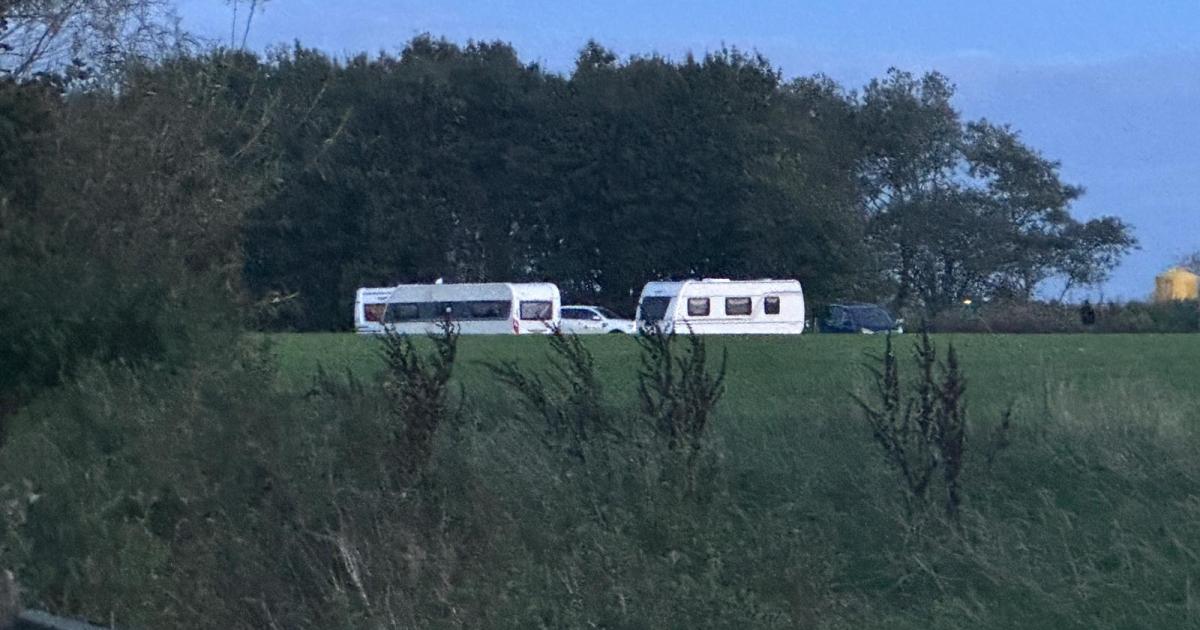
The encampment arrived at New House Farm playing field, near Blenheim Road in Breightmet, at around 7.30 pm on Wednesday, September 9.

Residents have reported feeling “unsafe” and “angry”, fearing that this group will leave litter behind, similar to the last group as previously reported on.

Officers have now been to the site and have started their usual legal process, starting with a notice for them to leave – if not, it becomes a matter for the courts.

The previous encampment left last week.

Advertisement

A Bolton Council spokesperson said: “Council officers have attended this morning, and the usual legal process is in place.”

Around five caravans parked up around the edge of the field, with vans, bikes, and other vehicles spotted driving around the park in the evening.

Some residents have complained, seeing “smoke” coming from “quadbikes” shortly after the arrival.

One resident said: “It’s already messy from last time. The council cleared it last time, but there was lots of rubbish from last time.

Advertisement

Picture shows some smoke reported by a resident (Image: Public)

“I’m so angry, it’s spoiling it for everyone who lives here, we don’t feel safe anymore.

“I wanted to do some walks, but they’re just going to come back again.”

Vehicles were seen driving around the perimeter of the park when The Bolton News attended.

Bolton Council’s legal process is where officers visit the site to carry out an assessment and issue a code of conduct, along with Trading Standards guidance.

Advertisement

The council first serves a direction under Section 77(1) of the Criminal Justice and Public Order Act 1994, requiring those present to leave the land within 24 hours.

If they do not leave as requested, the council can apply to have the matter listed before a court.

(Image: NQ)

Once a court date has been set, the council serves a summons under Section 78 of the Criminal Justice and Public Order Act 1994, informing those at the encampment of the hearing date.

When the order is served, those occupying the land must leave within a reasonable period, typically seven days.

Advertisement

If they do not comply, the council says it will continue to liaise with police to assist in enforcing the court order.

Source link

Advertisement
Continue Reading

Trending

Copyright © 2025