
Business
Battery tech: Europe hopes to make up ground in battery industry

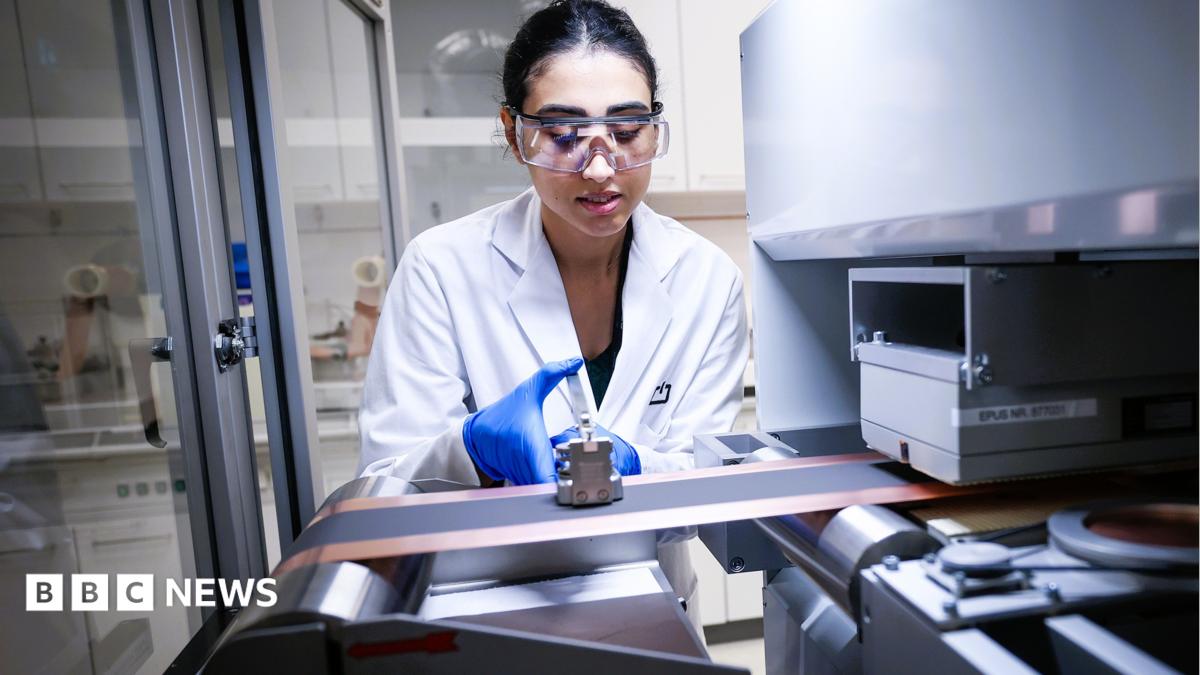
Neither LeydenJar nor Powall are trying to build an entire battery, and both have commercial relationships with customers in Asia.
But Christian Rood of LeydenJar says companies like his can fortify Europe’s position in what has become a global contest.
“The easy comparison is with semiconductors, where there’s really a race for the best chip technology.
“[Dutch tech giant] ASML is not producing chips; it focuses on a critical step in the production of chips, and in that way, has a seat at the table when it comes to the whole semiconductor battle.
“This is our ambition as well – to have a position where our battery anode is so unique that we have an important position in the supply chain.”
So, how do these ambitions play into Europe’s goals in the battery industry?
Alexander Brown is a senior analyst at the Berlin-based independent think-tank the Mercator Institute for China Studies (Merics).
“I think having one part of the supply chain based in Europe is great and if that can be a very advanced technological part, which offers the opportunity for high margins, that’s fantastic,” Brown tells me.
But he cautions that while “there can be collaboration as well as competition at the same time”, China in particular will continue to work to reduce its dependence on other regions.
“China is working very hard to develop local alternatives for technologies, including these niche technologies.
“It’s no secret that China would love to replace ASML – they’re working very hard to do that, and it’s not unforeseeable that they will achieve that goal eventually.
“So, I think Europe has traditional strengths in developing very exquisite high-quality products, which can find markets all over the world.
“But I also think it’s important for that not to be the only strategy [from the continent’s policy makers].”
The challenges of working in such a specialised field are not only technological.
LeydenJar has already reached commercial scale, but Rood says that raising funds within Europe is not always easy.
“There is sufficient financing in Europe, but the risk attitude is quite different than in Asia and in the US,” says Rood.
“That means for a company like us that you have to work with different sources of funding at the same time,” Rood explains.
He lists government grants, debt financing, help from the European Investment Bank and investors willing to buy a share of the business.
“They set a lot of challenging conditions, and they all want to do their own due diligence. It’s hard work,” Rood says.
Powall’s Colen says Europe, and the Netherlands in particular, is an “innovation powerhouse”, and battery technology offers a chance for the continent to make an impact, if the appetite for the risk is there.
“It’s a relatively young industry where factories are being built left, right and centre. They’re searching for the right tech. So that’s where you can play a big role, because the volumes are huge.”
Perhaps Europe’s place in that business lies not in building huge battery gigafactories, but at the other end of the scale altogether.
As Colen puts it, “small changes make big differences.”


Guild says these conversations are easier before a baby arrives than when parents are sleep-deprived and adjusting to life with a newborn.
Molly and Taylor now have two children, aged two and five, and say they were much more prepared the second time around and stopped thinking about household costs as something that always needed to be divided exactly in half.
The couple, who each earn around £60,000, have their own bank accounts alongside a joint account for bills, but are flexible with the amount each contributes when their circumstances change.
During Molly’s maternity leave, for example, they adjusted the split and she’s found it helpful to “view finances as a household”.
The couple say they are teaching their children about money from an early age.
They set pensions up for both kids when they were born and have been paying into them through a monthly direct debit.
Molly explains: “It’s like a gift for the future as they can’t touch that money until they’re in their 60s and we won’t be there to see that.”
They also use Junior ISAs, although Molly points out that once the children are old enough, the money becomes theirs to spend “and if they want to, they can take that money and blow it in Ibiza”.
Taylor says their five-year-old is given small jobs to earn a couple of pounds, rather than simply being bought everything she asks for.
They are also beginning to introduce the idea of saving by telling her that she can spend a pound now or hold on to it and potentially have more later.
Guild says couples should check what support they can receive, including funded childcare hours, external and Tax-Free Childcare, external.
She adds that conversations about money should not stop once parental leave begins and when the baby arrives she advises couples should:
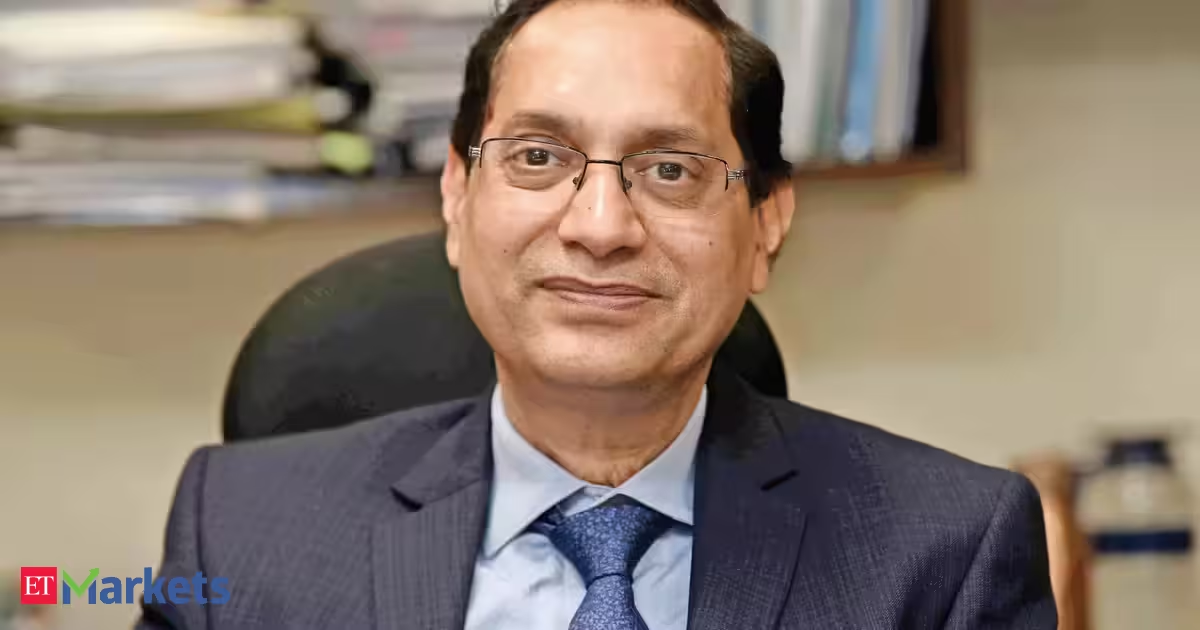
Speaking on the sidelines of the Global Fintech Fest (GFF), Pandey said several global jurisdictions, including the US, Japan and Hong Kong, had experienced lower liquidity when CAS was first introduced, with liquidity improving over time.
“CAS is here to stay…the only question is of liquidity. Many market participants have told us about the rollout in other jurisdictions including the US, Japan, Hong Kong, and they have told that initially everywhere when CAS was brought, the liquidity was always an issue and it builds over time,” Pandey said.
Read more: Karan Adani settles PMC Projects case with Sebi by paying Rs 13.65 lakh
“The issue is can we just keep on waiting or we can have some temporary solutions to the issue,” he added.

Pandey said Sebi would soon issue a consultation paper proposing changes to the CAS framework. The regulator introduced CAS on August 3, following which concerns were raised by market participants over the impact of the new mechanism on liquidity and settlement prices. However, the Sebi chairman said several market participants had also praised the implementation of CAS, particularly during events such as MSCI rebalancing.
“We have had several participants who have absolutely praised that implementation of CAS-that MSCI rebalancing and all have gone off very well. Technically the whole thing went off well,” he said.
“Now, there is a certain segment of the market that gets impacted because of the way we kept the settlement price as completely dependent,” Pandey said.
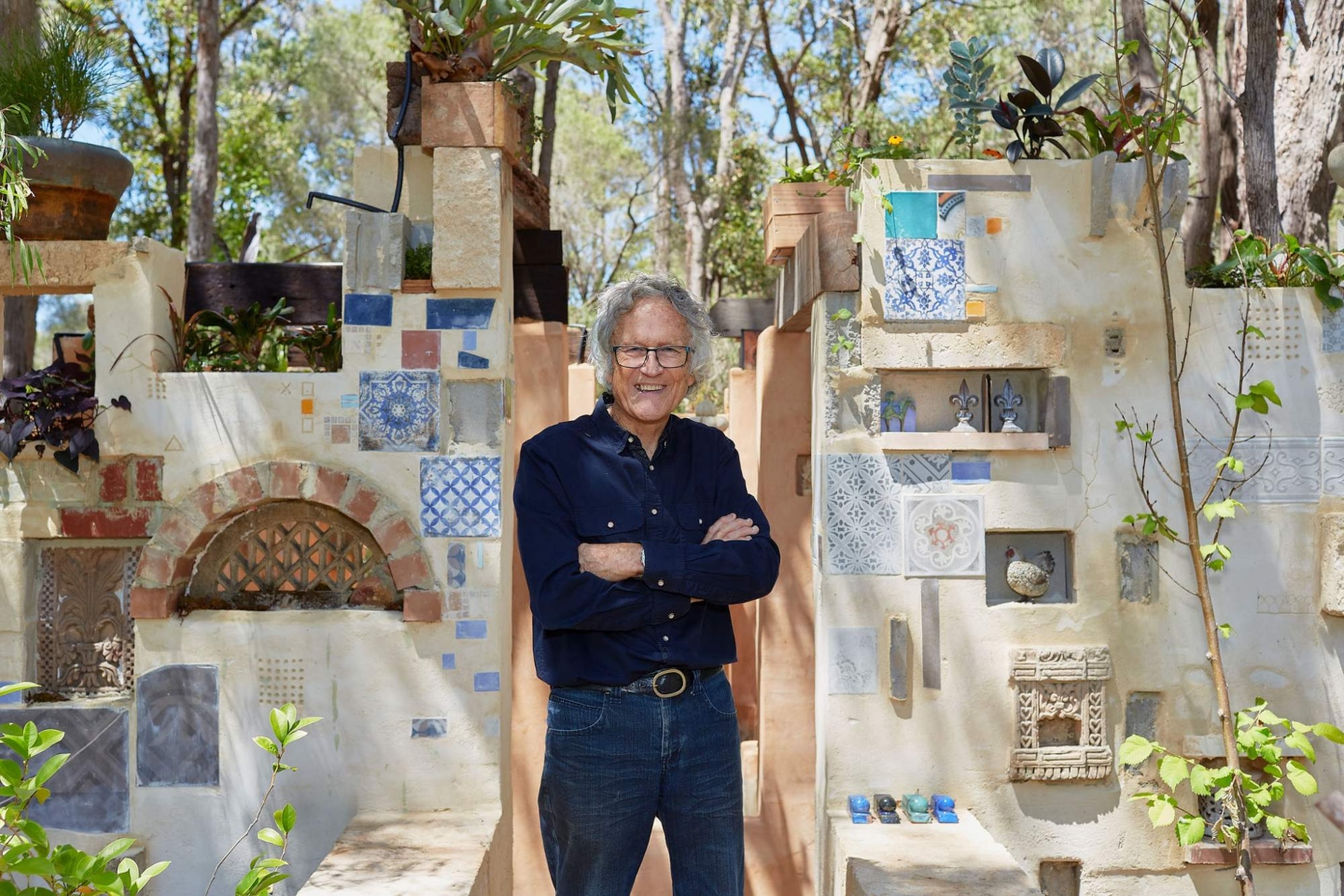
Thousands of visitors are expected to flock to the South West to explore the usually private studios of 155 artists, stretching from Busselton to Augusta.

eBay CEO Jamie Iannone sells $2.29 million in company stock

SiTime CEO Rajesh Vashist sells $7.24 million in stock

CUPERTINO, Calif. — Apple’s first foldable phone arrives late and heavy. On paper it is also $100 more than the two Android book-folds already on U.S. shelves.
The iPhone Duo starts at $1,999 for 256GB. Preorders open Oct. 16. Stores get it Oct. 23. The Samsung Galaxy Z Fold 8, launched in July, starts at $1,899.99. Google’s Pixel 11 Pro Fold is $1,899. All three open to a roughly tablet-size inner screen and close to a tall cover display. The differences that matter are grams, millimeters, dust ratings and whether the software was built for a hinge.
Chief Executive John Ternus used the keynote to draw that line. “Others have created foldables that just feel like two phones awkwardly stuck together,” he said. “This results in a square screen that’s poorly suited for the way people use them. Scrolling through vertical content feels compromised, and movies are boxed in by oversized black bars.” Apple’s answer is a passport-shaped 1:1.4 ratio on both panels so an app looks the same closed and open, only larger. “We think the best way to achieve that is with a foldable design,” Ternus said. “A similar size to your passport, it feels familiar to hold and comfortable to use with one hand.”
The Duo’s inner panel is 7.6 inches at 2670 by 1878 pixels, 120 Hz. The cover is 5.4 inches at 2034 by 1398. Open, it measures 117.8 by 164.6 by 5.2 millimeters. Closed, it is 11.3 millimeters thick and weighs 254 grams. The A20 Pro is on a 2-nanometer process. Apple quotes up to 31 hours of video on the inner screen, 44 hours on the outer, and 24 hours if both are used. Wired charging is listed at 40 watts, MagSafe at 25. The rating is IP68. Colors are Star White and Night Sky. Storage runs 256GB, 512GB, 1TB and 2TB, the last at $3,199.
The Fold 8 matches the 7.6-inch inner size but is a taller, narrower book: 123.9 by 161.4 by 4.5 millimeters open and 9.7 millimeters closed. It weighs 201 grams — 53 grams less than the Duo. Samsung’s research lead Hee-Cheul Moon told Wired that “the key to providing the highest customer value in this market is all about the weight of the device.” The cover is 5.5 inches. The chip is a Snapdragon 8 Elite Gen 5. The battery is 4,800 milliamp-hours. Wired charging is 45 watts. The rating is IP48, weaker on dust than Apple’s IP68. Storage tops out at 1TB. One UI 9 on Android 17 still splits two geometries: a square Ultra for side-by-side apps and a wider Fold 8 for video.
Google’s Pixel 11 Pro Fold goes the other way on screen size. The inner panel is 8 inches. Closed it is 10.1 millimeters thick and 239 grams. The cover is 6.5 inches, the tallest of the three, which helps one-handed typing and hurts pocket width. Tensor G6, 16GB of RAM, 4,750 milliamp-hours, 30-watt wired charging, IP68. It starts $100 under the Duo and undercuts Apple on inner glass.
Cameras split on philosophy. Apple put two 48-megapixel sensors on the back and a 12-megapixel cover camera, with 4K video at 120 frames a second. Samsung uses two 50-megapixel sensors and can record 8K at 30 fps, plus inner and cover 10-megapixel punch-hole cameras. Google keeps a triple array: 48-megapixel wide, 10.5 ultrawide, 10.8 telephoto. Foldables have always traded a slab flagship’s third lens for the hinge. Apple chose not to fight that war with a periscope.
Software is the part no spec sheet settles. iOS 27 was rebuilt so Split View, Stage Manager-style windows and a tent-mode clock sit on matching aspect ratios. Samsung has eight generations of Flex Mode and DeX. Google has Gemini across both panels. AT&T Chief Executive John Stankey, speaking after the launch, declined to call the Duo a new category. “Looking at the foldable phones that have been out in the market, this is not new,” he told Yahoo Finance. “It tends to function more as a specific niche type application as opposed to it’s broadly accepted.”
Liz Lee of Counterpoint Research called Apple’s price the surprise. “Keeping the iPhone Duo just under the $2,000 mark, at $1,999, and only about $100 above the Galaxy Z Fold 8 looks like a pretty bold move by Apple,” she said. Her firm still has Samsung at about 38% of global foldable shipments in 2026 and Apple at 25%, capped near 6 million units by supply. Foldables remain about 2% of all smartphones.
Buyers who live in iMessage, Apple Watch and a Mac will pay 53 grams and $100 for a crease Apple says you can feel but not see. Buyers who want the lightest book in a jacket pocket still have the Fold 8. Buyers who want the biggest inner canvas have the Pixel. Ternus said Apple started with an iPad-like experience and engineered backward. Samsung started in 2019 and shaved 50 grams. The comparison on Oct. 23 will be which of those two sentences a customer can feel in one hand.


CHICAGO — Mars, Inc. is launching various Cheez-It and Club crackers in resealable cannisters for the first time.
The company described the new packaging format as “designed to go anywhere” and “(ensuring) every cracker stays crunchy from the first bite to the last.”
One of the first varieties to be available in the new format is the all-new Cheez-It Grooves Minis sharp white cheddar crackers, miniature versions of the brand’s Grooves crackers featuring deep ridges and a sharp white cheddar flavor.
“Easy, on-the-go snacking is a top need for our fans,” said Nicole Sorensen, vice president of marketing for crackers at Mars Snacking. “By bringing these popular Cheez-It and Club crackers to this grab-and-go format, we’re giving people a simple way to enjoy their favorites anywhere, anytime.”
The new Grooves Minis will launch in resealable cans alongside Cheez-It original crackers and Club Minis original crackers at select US retailers later this month for a suggested retail price of $2.69.

Cathie Wood’s ARK Invest keeps shedding highflier Advanced Micro Devices (AMD) and rebounding AI data analytics firm Palantir (PLTR), while adding to its hefty position in Robinhood (HOOD). On Tuesday, ARK Invest bought 27,083 shares of Robinhood valued around $3.1 million for its flagship ARK Innovation ETF (ARKK). The firm has been steadily adding Robinhood shares over the last few…
Copyright ©2026 Investor’s Business Daily, LLC. All rights reserved. 87990cbe856818d5eddac44c7b1cdeb8
FOX Business’ Stuart Varney reports on former Anthropic researcher Jacob Coxon warning that artificial intelligence could pose an existential threat to humanity.
Anthropic said Thursday it disrupted several attempts this year by researchers to use its AI models for biological research that could potentially aid the development of biological weapons, prompting the company to ban accounts and strengthen its safeguards.
In a 154-page report, “Detecting and Countering Misuse of AI,” the artificial intelligence (AI) company outlined five case studies involving researchers who used its Claude chatbot for advanced biological research with potential dual-use applications.
Following its investigation, the company said it banned the associated accounts, shared its findings with government authorities and other AI labs and strengthened its safety measures.
“We banned all associated accounts, worked with partners to take down the relay networks that evaded regional blocks and shared our findings with affected AI labs and government authorities,” Anthropic said.
ANTHROPIC RESEARCHER SAYS AI HAS OVER 10% CHANCE TO ‘KILL ALL HUMANS’ WITHIN NEXT DECADE

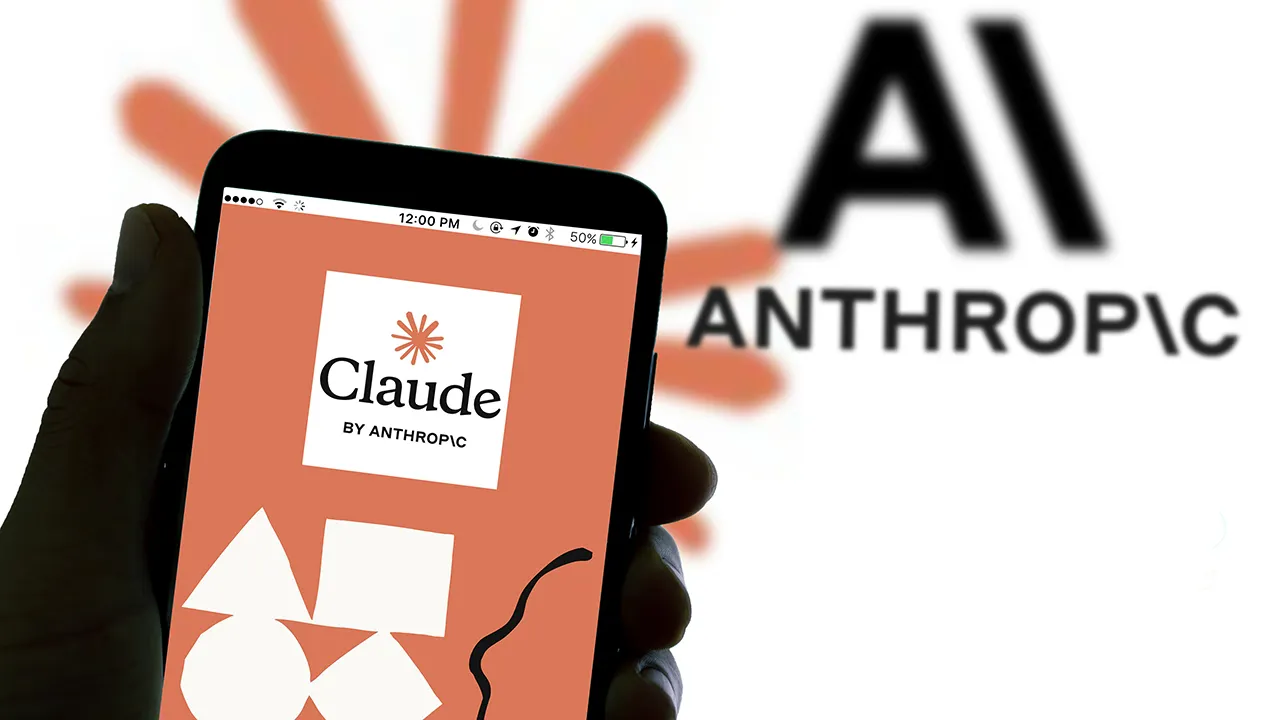
Anthropic said it disrupted several attempts this year by researchers to use its AI models for biological research that could potentially aid the development of biological weapons. (Davide Bonaldo/SOPA Images/LightRocket via Getty Images)
Anthropic emphasized it is not alleging the researchers intended to cause harm, noting that biological research can be used to develop vaccines and treatments but can also be misused.
“Biological capabilities are dual use: they can be used for beneficial or harmful purposes, and it is often difficult to distinguish between them,” the report states.
“The same information that can be used to develop a biological weapon could also be used to develop, for example, a vaccine or a cure for a disease.”
One of the cases involved a researcher asking Claude to help draft a grant proposal for gain-of-function research on the mosquito-borne chikungunya virus.
Anthropic said the proposal involved modifying the virus to make it more transmissible and more dangerous.
While such research can help scientists develop vaccines and treatments, the company said it could also be misused to make the virus more harmful.
The company said it blocked the request and later discovered the researchers were using a third-party platform to bypass regional restrictions and automatically route rejected prompts to another AI model.
TRUMP ADMIN PARTNERS WITH OPENAI TO EQUIP FEDERAL EMPLOYEES WITH ARTIFICIAL INTELLIGENCE TOOLS
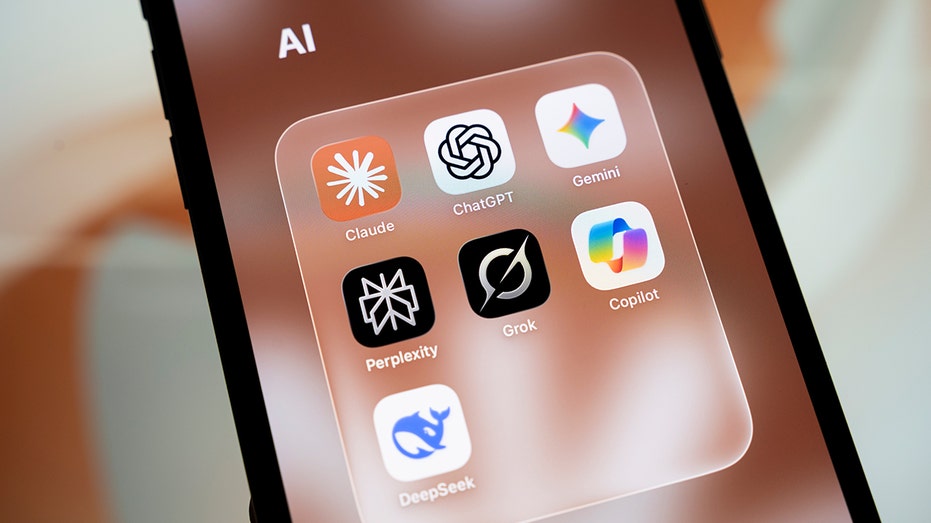
One of the cases involved a researcher asking Claude to help draft a grant proposal for gain-of-function research on the mosquito-borne chikungunya virus. (Samuel Boivin/NurPhoto via Getty Images)
Other cases involved bird flu, orthopoxvirus research and research related to non-transmissible venoms and toxins, according to the report.
“Sophisticated threat actors are aware that we (and other AI providers) are attempting to detect dangerous uses of our models, and they use the dual-use nature of biology to maintain a kind of ‘plausible deniability’ about their research,” the company said.
Separately, the report detailed several Iran-linked cases in which actors allegedly used Claude to support influence campaigns, surveillance efforts and research on U.S. naval forces.
“We identified and disrupted an Iran-nexus threat actor that used Claude to collect and analyze publicly accessible data to develop targeting recommendations against US naval forces in the region,” the company said.
“We banned the actor’s account, developed detections to reduce the risk of future misuse, and shared threat intelligence with government authorities to disrupt the threat.”
META INTRODUCES MUSE, A PERSONAL AI AGENT THAT CAN SEND EMAILS, BOOK TRAVEL

Other cases involved bird flu, orthopoxvirus research and research related to non-transmissible venoms and toxins, according to the report. (Smith Collection/Gado/Getty Images)
The report comes after a senior Anthropic safety researcher said Tuesday that AI has a greater than 10% chance of “kill[ing] all humans” within the next decade in response to a former employee who resigned after accusing the company of acting irresponsibly.
Former Anthropic and OpenAI researcher Jacob Coxon wrote in a lengthy resignation thread posted to X Sunday that “the people building AI earnestly believe that it could kill us all by the end of the decade.”
GET FOX BUSINESS ON THE GO BY CLICKING HERE
“I resigned from Anthropic today. I spent the last three years doing pretraining research at both OpenAI and Anthropic. Neither company is acting responsibly. They are racing straight to self-improving superintelligence and gambling with our lives,” he wrote.
Anthropic could not immediately be reached by FOX Business for comment.
FOX Business’ Robert McGreevy contributed to this report.
Business
Manny Pacquiao Takes Cabinet Post As Philippines’ Anti-Poverty Chief, Urged To Lead With Faith In Manila

MANILA, Philippines — Boxing legend and former senator Manny Pacquiao returned to government service Tuesday, taking his oath as secretary and lead convenor of the Philippines’ National Anti-Poverty Commission, a Cabinet-level post that places him at the center of the country’s poverty-reduction efforts.
President Ferdinand R. Marcos Jr. administered Pacquiao’s oath of office during a ceremony at Malacañang Palace on Sept. 8. Pacquiao succeeds Lope B. Santos III, who had served as NAPC secretary and lead convenor since January 2023. Cabinet Secretary Benhur Abalos was among those present at the ceremony.
The appointment carries real institutional weight. Under Republic Act No. 8425, the Social Reform and Poverty Alleviation Act, whoever serves as NAPC lead convenor automatically holds the rank of Cabinet secretary, formally placing Pacquiao within Marcos’ Cabinet. Marcos chairs the commission in his capacity as head of state, while Pacquiao now oversees day-to-day leadership of the commission’s secretariat.
The National Anti-Poverty Commission, established under the 1998 law, serves as the government’s coordinating and advisory body for implementing its Social Reform Agenda. The commission works to strengthen anti-poverty policy advocacy, coordinate poverty-reduction programs across national and local governments, and ensure that marginalized sectors have meaningful participation in government decision-making. Pacquiao’s appointment follows Executive Order No. 123, signed by Marcos, which transferred oversight of both the NAPC and the Presidential Commission for the Urban Poor from the Department of Social Welfare and Development back to the Office of the President.
Marcos expressed confidence in Pacquiao’s ability to lead the commission’s efforts, according to the Presidential Communications Office.
“Together, we will bring government programs closer to our communities and give more Filipinos a fair shot at a better life,” Marcos said in a social media post following the ceremony.
Malacañang cited Pacquiao’s own lived experience with poverty as among the reasons for his appointment, along with his history of assisting marginalized Filipino communities even outside of formal government roles. Pacquiao spoke directly to that personal history during his remarks following the oath-taking ceremony.
“Sa kahirapan, doon ako galing. Naranasan ko matulog sa karton sa kalsada, uminom lang ng tubig, walang makain at mag-ipon ng barya para lang makatulong sa pamilya,” Pacquiao said, which translates to: “I came from poverty. I experienced sleeping on cardboard on the streets, drinking only water, having nothing to eat and saving coins just to help my family.”
Pacquiao emphasized that he viewed the role as public service rather than a political opportunity, and said he had continued supporting poor communities and building free homes even during periods when he did not hold elected office.
“Hindi ito pulitika. Ito ay totoong serbisyo publiko upang siguruhin na ang bawat programa ng gobyerno ay direktang mararamdaman ng 14 basic sectors at ng pinakamahirap nating mga kababayan,” Pacquiao said, translating to: “This is not politics. This is genuine public service to ensure that every government program is directly felt by the 14 basic sectors and our poorest fellow Filipinos.”
The appointment has drawn attention from Christian leaders in the Philippines given Pacquiao’s own public testimony about his Christian faith in recent years. Bishop Noel Alba Pantoja, head of the Philippine Council of Evangelical Churches, welcomed the appointment as an opportunity for Pacquiao to serve Filipinos who are “poor, vulnerable, and in need of hope and opportunity.” Pantoja, who described Pacquiao as his “dear brother,” cited Colossians 3:23-24, which calls believers to work wholeheartedly “as working for the Lord,” and prayed that Pacquiao would receive “wisdom, strength, compassion, and integrity” in the new role. Pantoja also expressed hope that Pacquiao’s leadership would help bring communities together and develop lasting solutions to poverty.
Pantoja’s call for servant leadership echoed comments Pacquiao made earlier this year at the Arise Asia 2026 Congress in Manila, where he challenged roughly 4,000 Christian leaders and young people from more than 50 countries to make their faith visible through service and how they treat others. Pacquiao, who has spoken publicly about turning away from a past marked by drinking and gambling after what he has described as surrendering his life to Jesus Christ, urged believers at that event to read Scripture, pray and demonstrate their faith through concrete action.
Larry Gadon, who serves separately as Marcos’ presidential adviser for poverty alleviation, a distinct position from Pacquiao’s new role, welcomed the appointment in a statement.
“His appointment is very timely now that the administration is pushing for further reduction of poverty incidence and the NAPC with the right direction could help more to achieve the poverty reduction efforts,” Gadon said.
Pacquiao’s return to government marks a notable political turn given his history with Marcos. The two men were political rivals during the 2022 presidential election, when Pacquiao ran for the country’s highest office and lost to Marcos. Pacquiao previously served as a member of the House of Representatives representing Sarangani from 2010 to 2016, then as a senator from 2016 to 2022. He later made an unsuccessful bid to reclaim a Senate seat in last year’s midterm elections while running on a slate aligned with Marcos.
Widely regarded as one of the greatest professional boxers in history, Pacquiao remains the only fighter to have won world championships across eight different weight divisions during his boxing career.
With Pacquiao now formally leading the NAPC secretariat, his personal history of poverty and his publicly stated commitment to Christian service will face practical tests as the commission works to address food security, employment, education, housing and health concerns for the Philippines’ poorest citizens under the country’s Magna Carta of the Poor. For Pantoja and other Christian leaders who have welcomed the appointment, the role represents an opportunity for Pacquiao to translate his public statements of faith into tangible outcomes for millions of Filipinos still living below the poverty line, even as the practical challenges facing the commission remain substantial heading into his tenure.

I asked my husband to pay into my pension when we had a child – here’s why

First Solana Came For Meme Coins: Now Solana is Coming For Polymarket and Kalshi

The 10 Best Movies That Used To Be in the IMDb Top 250, Ranked

Memory prices are slowing because buyers ran out of money

Micron Stock Climbs Above $1,031 as AI Memory Crunch and a $50 Billion Outlook Fuel the Rally

Bitcoin price risks $76K drop as $78K support weakens

“Get Him Out Of There Before He Kills Us All”: Sachs Trump Warning | WORLD NEWS | US NEWS

Live Gold, Crypto Trading | 10 SEP | #goldtrading #cryptotrading #bitcoin – MANSI

Dave Ramsey Acquires Financial Audit For $100 Million
-
Tech3 days ago
Memory prices are slowing because buyers ran out of money
-
 Business23 hours ago
Micron Stock Climbs Above $1,031 as AI Memory Crunch and a $50 Billion Outlook Fuel the Rally
-
 Crypto World2 days ago
Bitcoin price risks $76K drop as $78K support weakens
-

 Business1 day ago
AMD Stock Climbs After Management Lifts 2027 Data Center Outlook Toward $70 Billion in AI Sales
-

 Crypto World2 days ago
Ethereum price stalls below $2,500 as ADX drops to 11
-

 Crypto World2 days ago
Robinhood Stock: How To Take Advantage With Reduced Risk
-

 NewsBeat2 days ago
What went right this week: an ‘historic’ fall in violent crime, plus more
-

 Crypto World1 day ago
Bitcoin price risks $70K if $78K neckline breaks
-

 Business2 days ago
Meta debuts long-awaited personal AI agent, Muse
-
 Crypto World2 days ago
Bitcoin price holds near $79K as cycle drawdowns narrow
-

 NewsBeat2 days ago
England up in reading, maths and science rankings as Scotland and Wales dip
-
 Crypto World2 days ago
Brent Crude Oil Moves Above $100 for the First Time in 3 Months
-
 Sports3 days ago
Phones confiscated, players sent home: Pakistan’s England tour turmoil revives memories of Mohammad Amir, Salman Butt and Mohammad Asif’s 2010 Lord’s spot-fixing scandal | Cricket News
-
 Crypto World2 days ago
Intel Stock Jumps 9% on Chip Price Hike Report, US Stake Gains $36 Billion
-
 Crypto World23 hours ago
Ethereum price breakout hinges on a close above $2,535
-

 Crypto World3 days ago
Visa expands stablecoin card network to 160 programs
-

 Crypto World2 days ago
Pump Fun and Kraken delete Hunter Biden $LAPTOP promotion
-
 Tech3 days ago
Strong Password Policy and Password Manager Guide
-
Business2 days ago
Xometry at Goldman Sachs Communacopia + Technology Conference 2026: growth, AI and Siemens
-

 Business3 days ago
Egyptian TV Presenter Sarah Khalifa, 11 Others Sentenced To Death In Major Drug Trafficking Case In Cairo
You must be logged in to post a comment Login