I began wearing a hijab at 12 years old, one year after 9/11. Almost overnight, I went from blending in to being stared at and bullied, as if my scarf had erased the girl my classmates previously knew.
When my daughter started school, I worried about how she would be treated in the classroom. I wanted her to take pride in her faith and her Muslim identity. I wanted her to feel she belonged just as she is.
And for a little while, I started to believe that was possible.
When my daughter was in preschool, her teacher called and asked, “What can we do for Ramadan?” So I came into the classroom and taught a lesson about Ramadan. Small hands folded paper lanterns and covered them with shapes and patterns. Then the lanterns went up around the room, representing our celebration on my daughter’s classroom walls.
Advertisement
The little girl I used to be felt seen, too.
In kindergarten, we continued to be welcomed. I taught the moon’s phases and explained that breakfast means “breaking a fast”. We all fast while we sleep, I told the class. We were not so different from one another. After the ESL teacher saw my presentation, she asked me to give the presentation to the rest of the kindergarten classes.
My daughter brought Ramadan treat bags, just as her classmates brought treats for Christmas and Easter. I watched a better childhood begin to take shape in front of me.
Last year, when March came, my daughter packed the bags herself the night before. They showed painted lanterns, palm trees, geometric buildings, moons and stars, and she filled them with little stamps and bracelets chosen in her friends’ favorite colours. Only one was labelled, with “Ramadan Kareem,” for the only other Muslim child in the room.
Advertisement
But this time, her teacher would not hand them out.
The teacher called me in the middle of the day and informed me that she would not be handing out the Ramadan goodie bags because they had “religious undertones”. When I asked her to explain what she meant by that, she referred to the designs on the the bags as “pictures of your temples”. I explained that Muslims do not worship in temples.
Following my phone conversation with the teacher and learning of her decision not to distribute the bags, I called the school and requested a meeting with the principal and the teacher. Several days later, I met with the principal alone; the teacher did not attend the meeting.
The principal later told me he had concluded that the images on the bag were religious symbols because he had searched the word “Ramadan” and saw pictures depicting crescent moons and stars. That is how it was decided – with Google Images. He never even actually saw one of the bags.
Advertisement
This despite the fact that the school welcomed Santa visits and hosted Easter egg hunts. Children coloured dreidels and made candles for Diwali. My daughter’s school photograph came home on a holiday ornament.
When my daughter came home, she was upset with me. Her teacher had told her that “her mother had asked her not to” pass out the bags because there wasn’t enough time. She thought I had taken that moment away from her.
I sat beside my six-year-old and explained, in words small enough for her to carry, what had happened. Then I told her adults make mistakes, too.
A few nights later, she asked again whether she could pass out the bags. She still could not comprehend what was wrong with them. How could she? When I told her “not yet,” she grew quiet and offered to donate them to other children if her friends did not want them. She had concluded that her classmates had rejected a piece of her. They had not. They had never seen the bags she made.
Advertisement
Two years earlier, a teacher at the same school invited me to help with an Easter egg hunt. Knowing my daughter could not eat pork-based gelatin, she prepared eggs marked with my daughter’s name so she could participate fully.
The school already knew how to include her. It had done it beautifully. But with this moment, someone dragged a stroke of black paint across six years of work.
Photo Courtesy Of Mariam Hussein
The goody bags the author sent to her daughter’s first-grade classroom. Each contained a light-up bracelet, a stamp, a tic-tac-toe keychain and a small treat.
After the school returned them, I posted photographs of the actual Ramadan goody bags in a parenting group I’m a member of, and asked whether parents found anything about them offensive. Many of the parents and teachers in the group were Christians, but said they appreciated the thoughtfulness of the gift and the learning opportunity it could provide.
Advertisement
One parent who identified herself as Jewish commented, “They have to be consistent. If they want to celebrate one holiday, they’re going to have to celebrate all of them.”
I taught in K-12 classrooms before becoming a university educator. I do not believe harm always begins with malice. Here, it grew from three failures that are far too common in schools. The first was a failure to ask before deciding. No one asked what the images meant. One question – “What is this?” – could have prevented everything.
The second was a failure to apply the same standard to every tradition. Christmas marks the birth of Christ yet arrives as decoration. Easter arrives as plastic eggs. Familiar traditions are treated as culture, but my daughter’s Muslim traditions are treated as a problem.
The third was a failure to repair harm. I never asked for discipline. I wanted curiosity, accountability and repair. Instead, the teacher and administration defended their decision. The unfamiliar may cause discomfort, but that discomfort should invite curiosity, not erasure. Rather than examine their adult discomfort, they expected my daughter to become smaller.
Advertisement
Photo Courtesy Of Mariam Hussein
After a classroom lesson about Ramadan, each student in the author’s daughter’s Pre-K4 class created a lantern, choosing the colors of the construction paper, balloon and decorative tape.
I could not let her learn that belonging required her to disappear. So we unenrolled her, and she now attends another school. I remain grateful to the teachers who asked what they could do to be inclusive – who marked the eggs, invited me into their classrooms and hung lanterns on the walls. They showed me inclusion was possible. But my daughter learned the other lesson anyway.
Every classroom is a painting. When teachers hang one child’s lanterns beside another child’s snowflakes, they do more than say both children belong. They build a classroom where they actually do.
Differences should stir curiosity, not ignorance. They should open doors into worlds we have not yet seen, not build walls between children. When a child hands you something unfamiliar, ask what it is before deciding what it means. One sincere question can turn a barrier into a doorway.
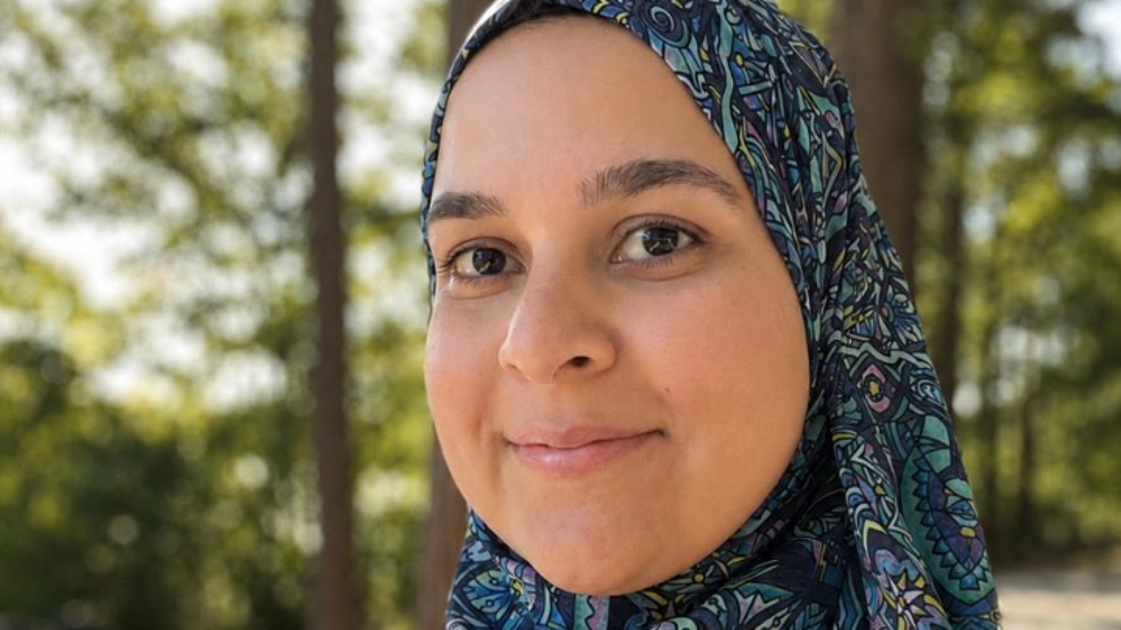
Mariam Hussein is a Teaching Specialist of Mathematics and First-Year Studies at Stockton University. As a Muslim mother and educator, she is committed to empowering students, strengthening their sense of belonging and mathematical identities, and helping Muslim students embrace their faith and identities with confidence.
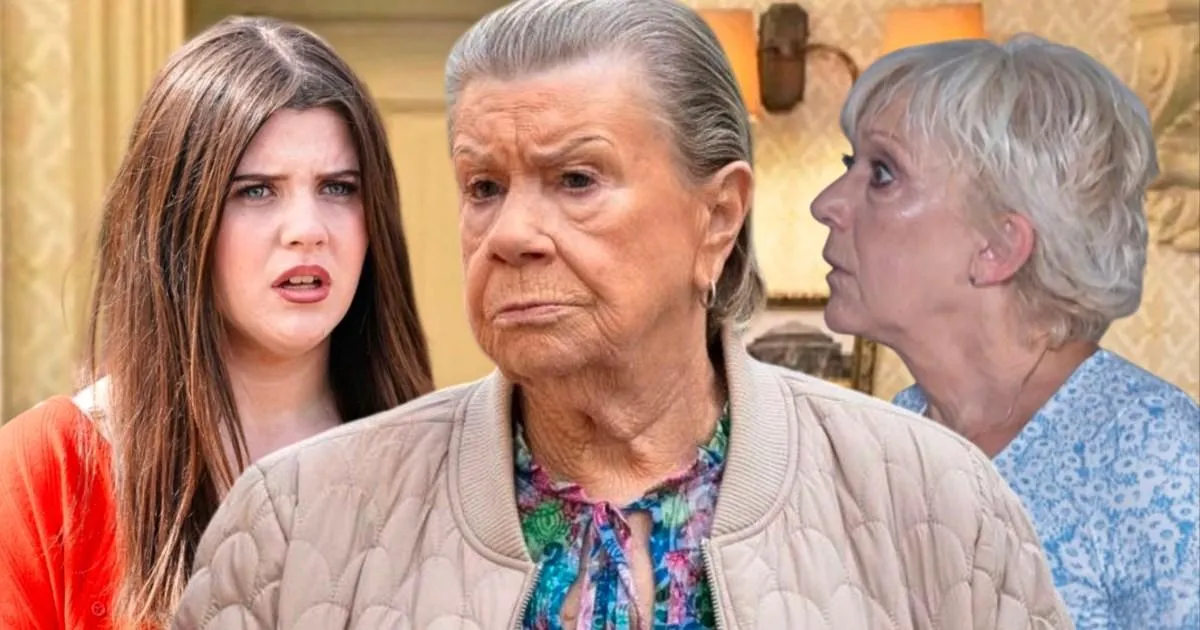
The Slater clan are all set to move out of No. 31 after Suki Panesar-Unwin (Balvinder Sopal) followed through on her threat to have them evicted over failure to pay rent.
The property in question has been home to the Slaters for many years and housed some of their finest memories, including happier times with Martin Fowler (James Bye), who tragically died almost two years ago.
Leaving their family home behind proves tough for the clan, with Lily in particular taking it to heart. Big Mo is on hand to try and cheer her up, boosting her mood as she contemplates a new chapter for them over at the Vic.
Advertisement
With Jean by their side, they head over to the Vic to join Kat (Jessie Wallace) and Alfie (Shane Richie).
Kat encouraged her daughter to get it checked out and Zoe promised that she would the following day if it hadn’t eased up by then. But sadly tragedy struck soon after, with Zoe dying on her own, calling out for mum Kat who did not hear her.
In devastating scenes, Kat found Zoe’s body in bed. Unable to share her discovery, she keeps it to herself but Alfie soon learns the truth.
Advertisement
Word of Zoe’s death leaves everyone in shock (Picture: BBC)
Ask Metro
Use AI to go deeper into the stories you care about – powered by Metro and trusted publications.
Jean, Mo and Lily arrive at the Vic and subsequently learn what’s happened – they learn that Zoe has died. They’re stunned and heartbroken.
It’s an emotional day for all who reside in the pub, with Tommy Moon (Sonny Kendall) taking the news particularly difficult given that he and Zoe had grown close in the past year.
Advertisement
Word of Zoe’s death filters out into the Square and those who saw her last – namely Max Branning (Jake Wood) – are left in shock.
EastEnders airs Mondays to Thursdays at 7:30pm on BBC One or stream from 6am on BBC iPlayer.
If you’ve got a soap or TV story, video or pictures get in touch by emailing us soaps@metro.co.uk – we’d love to hear from you.
Jade Jones made it three wins from three this year when she beat Sheena Bathory in Newcastle
Welsh boxer Jade Jones immediately called out her next opponent after beating Sheena Bathory last night to claim her third win of the year.
Advertisement
The Olympic champion stopped ‘The Hungarian Hurricane’ after four rounds on the Misfits card in Newcastle.
That makes it the third win of the year for the former taekwondo legend, who appeared on the undercard of the Big Stacks v Jordan McCann fight in the north east.
Bathory was bloodied at the end of the fourth round of what was scheduled to be a five-round contest. The bout was far from pretty but Jones dominated from start to finish.
Victory means Jones is now the MFB women’s super middleweight champion.
Advertisement
“I didn’t really do my plan, I was supposed to box, so I don’t think Swifty is really that happy with me,” she said to DAZN after the fight.
“But I think I have shown toughness, I’ve shown I can take a few shots, I wanted to test the chin, what better girl to test it with than Sheena.
“To be honest I’m not really that happy about it,” she added of her own performance. “I didn’t think I stuck to my plan, but I’ve shown I’m from Flint, I’m a fighter, I want to get rough and ready, we’re the one, don’t mess about with the Flint people!”
On what’s next, she said: “Keep improving, now I’ve got the belts, I hold all the cards, people are going to have to come fight for me.”
Advertisement
Cris Cyborg was also mentioned as a possible next opponent for the north Walian.
“I’ve got the belt, so I hold all the cards,” Jones said.
“Now people have got to come and fight me to fight for this belt. Mams [Taylor] keeps talking about Cyborg.
“Obviously, she’s a very top competitor, so who knows? Maybe I need a couple more first, but she’s definitely in my sights.”
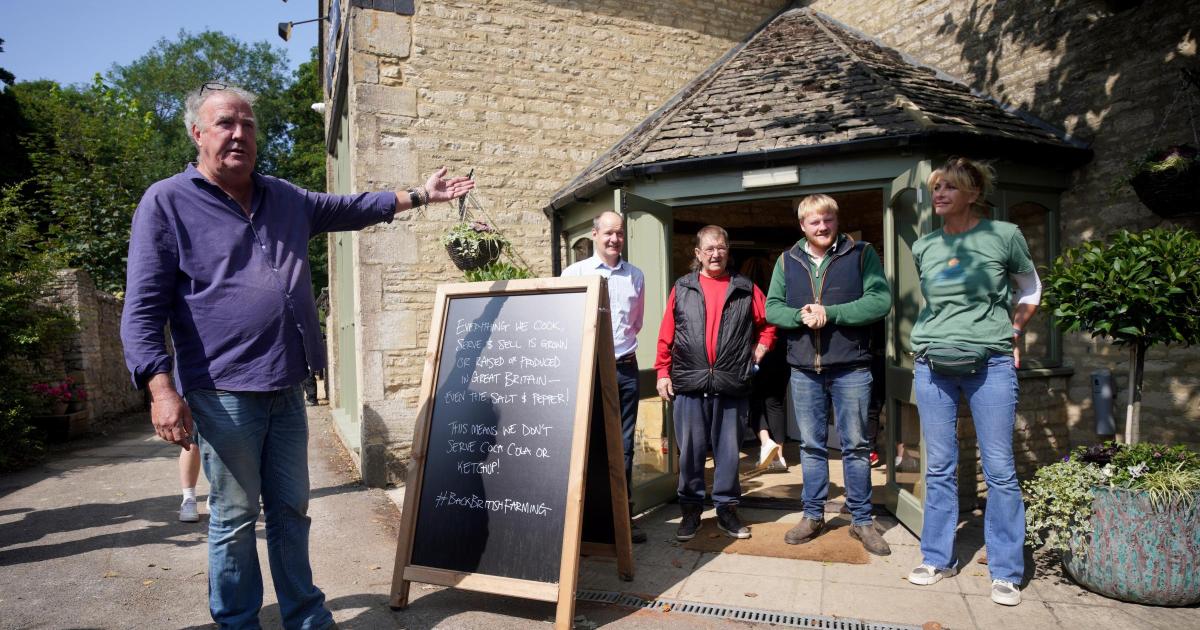
The former Top Gear presenter is in remission after revealing on the latest series of Clarkson’s Farm that he had been diagnosed with “aggressive” prostate cancer.
The 66-year-old chose to have high-intensity focused ultrasound (HIFU), a minimally invasive medical procedure that uses high-frequency soundwaves to heat and destroy targeted cancer cells.
His partner of nine years, Lisa Hogan, says he was initially reluctant to share his diagnosis with the public.
Advertisement
She told the Daily Star Sunday: “I’m really happy he caught his prostate cancer early and I’m really proud of him for putting it on the show, because that was a really big decision.
“When I was filming him in hospital at first, he said, ‘Please don’t’.
“It was (producer) Andy Wilman who convinced him to do it, to help everybody else. When the show came out, Prostate Cancer UK had 30,000 people going on to their website in one day.”
Hogan says Clarkson has also benefitted from opening up to those around him.
Advertisement
“Yes, of course it was a terrible worry,” she added. “But what I did encourage him to do was to talk to his friends.
“He didn’t want to initially, but he’s got lots of friends who’ve been through the same thing and he’s been talking to them about it. I think that’s really helped.”
Clarkson revealed in June that he is in remission.
The Wellington Inn in Alma Terrace, Fishergate, has been open a month now.
Landlady Isabel Redfern-Smith says things have been “going really well”.
The Press called by on Friday lunchtime, a month to the day the historic ‘wet-led’ pub re-opened and found a few drinkers inside enjoying the fine day.
RECOMMENDED READING:
Advertisement
Isabel said of the first month: “We have been busy. Everybody is positive. We have had really good feedback from all the old faces and the new faces.”
Isabel, who runs the pub with husband Henry, says the best seller has been the Old Brewery Bitter “which has been going down a treat.”
“Everybody is loving it,” she continued.
Prior to coming to York from Featherstone, the couple had been running their family-owned pub in Pontefract. Henry also had a small brewery.
Advertisement
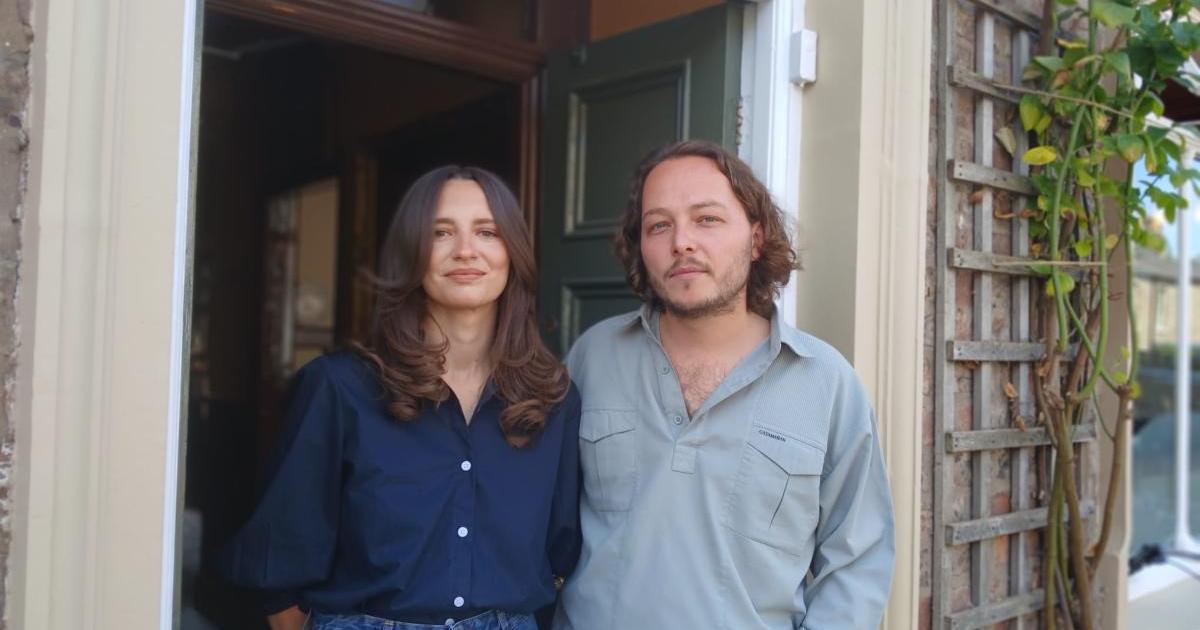
Isabel Redfern-Smith and Henry Smith behind the bar, as taken from outside the pub through the front window, so as not to breach brewery policy on digital devices. (Image: Darren Greenwood)
Isabel continued: “Customers know how Henry keeps the beer. The stout is also going down a treat.”
The Wellington Inn, which is affectionately known as ‘the Welly,’ has been receiving rave reviews online since the young couple took over.
The latest TripAdvisor review was from “a regular who will continue to be a regular,” who awarded five stars out of five.
The review continued: “I am a regular at the Wellie and the hand pulled bitter has never been better, a big thanks to our new friendly hosts Henry and Isobel.”
Advertisement
The latest review on Google gave four stars and said: “Great Samuel Smith’s pub. Had a revamp since I’d last been, but it has kept its character. Excellent beer at a great price.”
Another recent comment gave five stars and said: “A fabulous authentic original Sam Smith’s pub with an abundance of character. Fantastic well-kept beer. Your Host and hostess are a truly warm wonderful, friendly young couple whom make everyone feel welcome.”
Isabel Redfern-Smith and Henry Smith behind the bar, as taken from outside the pub through the front window, so as not to breach brewery policy on digital devices. (Image: Darren Greenwood)
The re-opening of ‘The Welly’ comes as Sam Smith’s brewery has stepped up its efforts to re-open its pubs across the country.
As recently reported, Tom Taverner of Malton, who keeps a list of which of the Tadcaster-based brewery’s pubs are open or closed, recorded 18 re-openings nationally since the start of June.
Advertisement
The Sam Smith’s pubs that have reopened since the start of June, he says, include the Golden Ball, Scarborough; Angel & White Horse, Tadcaster; Ebor Inn, Bishopthorpe; Wellington Inn, York; Tankard Inn, Rufforth; and the Red Lion at Bramham, near Wetherby.
Speaking to BOYLE Sports, who offer the latest Premier League odds, Petit said: “Mikel Arteta has been rebuilding Arsenal step by step and I really liked the way they worked on the transfer market this summer, bringing some players in and trying to make the squad as competitive as possible. It was like watching them create a painting.
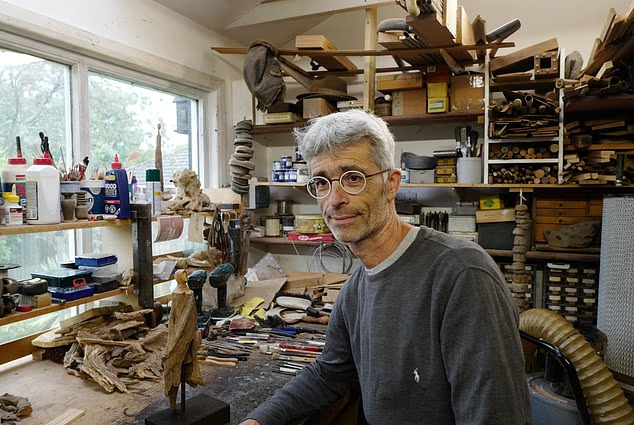
For years, Roger Hardy kept trying to explain away the agonising pain in his nose.
As a sculptor, the 56-year-old was used to working amid clouds of sawdust, metal shavings and white spirit, so when his nose began throbbing, it seemed logical to blame the fumes and dust in his Suffolk studio.
But gradually the burning sensation spread across his face. His nose became red and inflamed, mucus left him struggling to breathe and the pain became so severe at night that he could barely sleep.
‘It started taking over my life,’ recalls Roger. ‘The constant throbbing pain – which was accompanied by mucus – was really exhausting. It was so sore at night that I had to breathe through my mouth.’
Advertisement
Eventually, his GP diagnosed sinusitis – inflammation of the air-filled spaces behind the forehead, cheeks and nose – and prescribed antibiotics, followed by steroid nasal sprays.
The treatment helped, but each time Roger stopped using the spray, the pain returned.
Yet today, after years of recurring symptoms, Roger says he is virtually symptom-free – thanks not to another drug, but to one surprisingly simple change to his diet: He gave up dairy.
Within four or five days of making that one small tweak, he says, the burning pain and congestion that had plagued him for years had almost completely disappeared.
Advertisement
As a sculptor, Roger Hardy was used to working amid clouds of sawdust, metal shavings and white spirit, so when his nose began throbbing, it seemed logical to blame the fumes and dust
‘I couldn’t quite believe it,’ he says. ‘After years of pain, my symptoms had virtually gone.’
The idea that dairy can worsen congestion and other respiratory symptoms is hardly new. For generations, milk has been blamed for producing ‘excess mucus’ – a claim largely dismissed by doctors as a myth because studies found that drinking milk does not actually increase nasal secretions.
Advertisement
But scientists are now investigating a subtly different possibility: that in a small group of people, an allergy or sensitivity to foods including cow’s milk can contribute to the inflammation underlying chronic sinus problems.
And emerging research suggests diet more generally may have a greater influence on the condition than previously thought.
The turnaround for Roger came four years after his problems started, when his wife suggested he consult a private nutritionist.
Initially, he was sceptical. ‘I’ve never smoked, I don’t drink alcohol, I’m fairly fit and I eat a well-balanced diet. I couldn’t see what a nutritionist could do for me,’ he says.
Advertisement
But during the consultation, the possibility was raised that something in his diet could be contributing to his symptoms – with dairy identified as a potential trigger.
At the time, dairy featured heavily in Roger’s diet, from yoghurt at breakfast and after dinner, to butter and cheese at lunch. He decided to cut it out completely – and within days, he says, his symptoms had virtually disappeared.
While experts stress that dairy is unlikely to explain every case of chronic sinusitis, there is some evidence it may contribute to symptoms in some patients
While experts stress that dairy is unlikely to explain every case of chronic sinusitis, there is some evidence it may contribute to symptoms in some patients.
Advertisement
A 2011 study published in the American Journal of Rhinology & Allergy found that hidden milk allergies may play a role in some cases of chronic sinus disease.
Researchers at the Medical University of Vienna found that one in seven patients with chronic sinusitis had an undiagnosed cow’s milk allergy – compared with none of the healthy volunteers studied.
According to Dr Carl Philpott, an ear, nose and throat surgeon and professor of rhinology at the University of East Anglia, questions about dairy are common among sinusitis sufferers. ‘A lot of people in my clinic ask me about dairy,’ he says.
‘I typically recommend what’s known as an elimination diet – whereby patients cut out dairy for a week and see if their symptoms improve.’
Advertisement
More recently, a 2026 review found that anti-inflammatory diets were linked with better sinus health, while diets high in fat and ultra-processed foods were associated with a greater burden of symptoms.
However, the review’s authors stressed that the evidence remains limited, adding that larger clinical trials are needed before dietary changes can be routinely recommended as a treatment.
But Dr Philpott says there is a plausible biological explanation for why diet may influence symptoms in some patients.
‘I couldn’t quite believe it,’ says Roger. ‘After years of pain, my symptoms had virtually gone’
Advertisement
‘Chronic sinusitis appears to be a local immunological problem,’ he says. ‘The lining of the nose and sinuses becomes overly sensitive to environmental exposures, such as dust, pollen and infections over time – which is why most patients present with symptoms later in life, often in their early 50s.
‘So it is plausible that underlying allergies, intolerances and dietary factors could contribute to symptoms in some patients.’
For most sufferers, however, treatment will still involve more conventional measures.
Specialists often recommend regular saline nasal rinsing, which can help wash away mucus, allergens and inflammatory debris.
Advertisement
And while steroid nasal sprays can be used to control inflammation, patients should be wary of relying for too long on a different type – over-the-counter decongestant sprays.
This is because of the risk of ‘rebound’ congestion – i.e. they end up making symptoms worse with overuse – something that 60 per cent of pharmacists believe patients are unaware of, according to research by the Royal Pharmaceutical Society.
‘Like with many health conditions, early diagnosis and treatment of chronic sinusitis can make a significant difference,’ says Dr Philpott. ‘Long-term antibiotics do not seem to help the majority of patients, and if the condition is picked up late, many can end up relying on steroid nasal sprays for life.
‘Since the pandemic, we are seeing more patients presenting with quite severe disease, which can be much more difficult to manage.
Advertisement
He adds: ‘If you do suffer from persistent symptoms, be religious about nasal rinsing twice a day. And if you’ve done that for three months and are still struggling, ask your GP for a referral to an ENT specialist.’
Man Utd striker Benjamin Sesko is back to full fitness after recovering from a shin injury that he aggravated last season.
Benjamin Sesko could make his first start for Manchester United in the Premier League for 133 days in the Manchester derby.
Advertisement
Michael Carrick is likely to revert to a striker-less attacking line for Manchester City’s visit to Old Trafford, but Sesko gave his manager something to think about by scoring against Sabah SK in the Champions League.
Sesko made his first start of the season against Sabah, which he “really enjoyed” after making appearances from the bench in United’s opening league games against Hull, Ipswich Town and Everton.
Whether Carrick believes Sesko is the right choice to play up front against City, a game in which his team will try to counter-attack, remains to be seen, but he is back to full fitness after recovering from a shin injury.
“I got a kick last season, but it was also a little bit of an overload from myself,” Sesko said, referring to a challenge from Liverpool defender Ibrahima Konate in May, which aggravated an existing shin injury.
The kick from Konate was enough to keep Sesko out of pre-season entirely. He did not play a single minute across the summer, but insiders were adamant that he would return for the first game against Hull.
“It was basically just to make sure that it doesn’t get worse because this was kind of a problem,” he explained.
“We just needed a little bit longer, longer than usual, because if you start too early, it might appear again. And I think waiting a little bit longer was a great decision, and now it’s healed, so it’s perfect.”
Advertisement
Sesko stayed behind at Carrington over the summer while United made trips around Europe, and photos published by the club’s in-house photographer showed that he’d used the time to bulk up.
The Slovenia international deliberately cut in the weeks before the season to be more agile, though. “Obviously, I had quite some time from the injury to gain some muscle,” he said.
“I lost a lot because I was overweight with muscles, and I couldn’t really move so much, but now I feel very good and I think I’m in the right place at the moment.”
Sesko now feels he’s in the best place he’s been in since his arrival from RB Leipzig last year. “Way better, especially than last season. I changed a country,” he said when asked about his mental and physical state.
“Everything was new for me. Now, for me, it’s like I’m really enjoying it. I’m really happy here. I love life here. I have teammates that are perfect. I can’t really complain about anything.
“I like the vibes. I even like to go to the city for a walk. I can do certain arcade things that I like to do in my free time. Then, obviously, spending a little time with the players.”
Sesko is an introvert, but he comes out of his shell when he gets to know somebody. “Beni was very shy and quiet at first contact,” his former coach, Mirsad Mujakić, from Slovenian team NK Krško told the Manchester Evening News.
Advertisement
“However, already in the first training sessions, he showed exceptional athletic abilities and technical knowledge, which players at this age usually do not have.
“He was an exceptional boy, all his teammates loved him because of his positive nature. At the same time, he knew how to motivate the team and encourage his teammates to work extra hard.”
Sesko has developed a close friendship with Diogo Dalot, bonding during their early visits to Carrington before the mandatory training reporting time.
“He’s an early bird as well, so the first few weeks we were coming into Carrington at the same time and we created this bond,” Dalot told the MEN last season.
Advertisement
“We both have very similar ways of behaving and thinking, so it became a natural, good relationship, and I think that sometimes helps you to also adapt quickly to a new environment, to a new league, to a new country.”
Sesko was brought off in the 64th minute against Sabah on Thursday, and Carrick may have made that change to keep him fresh for the Manchester derby. United were dominant against Sabah, and the win was a confidence booster ahead of the City clash.
Carrick oversaw a 2-0 win against City in his first game in charge following his interim appointment in January. “Unbelievable,” Sesko said of the game. “It was very, very nice. I’m really hoping for a moment like this again on Sunday. I think we can put in a great performance.
Advertisement
“I think again I said many times what he [Carrick] provided for us already. Even from the start, when he came, it was something special. I think everyone felt it.”
Carrick has got a tune out of Sesko since his return to the club. “The more games I’m getting, the more comfortable I feel and the more free I feel in the game as well,” he said. “For me, focus is all about scoring goals to provide everything for this team.
“But then also certain things, like link-up play, these little things that can be better. I think it will just come now for the time being. I’m here. I feel every day better and better. This is the most important.”
Sesko has his feet on the ground as he looks to develop into one of the world’s best strikers. “I try to give everything to this club. We talk about legends that are the best of the best in the world. I’m still very far from that,” he reflected.
Advertisement
“I’m just trying to get better each day, trying to provide for this club and for me to get better.”
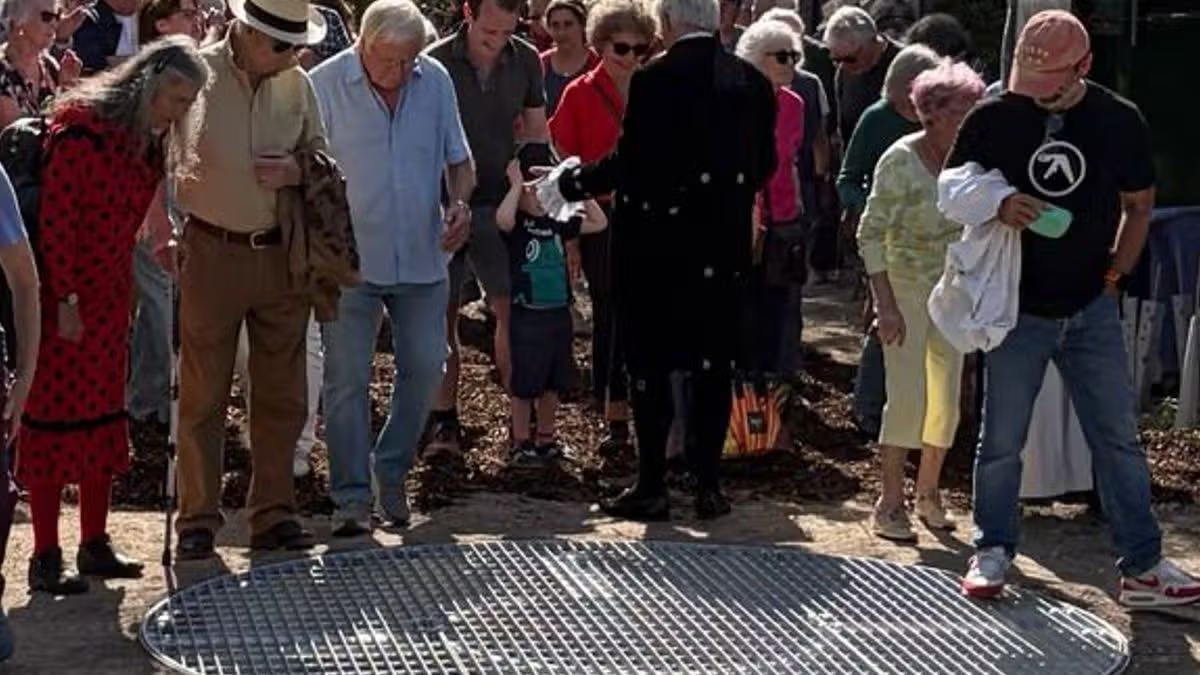
Villagers have uncovered and restored a hand-built reservoir that is more than 150-years-old. Its discovery came about during construction for a new footpath in Orwell.
Advertisement
Following its discovery, volunteers began excavating the cistern by hand, according to Orwell Parish Council. However, this was later deemed “too dangerous”, so a speciality team emptied the well using a “Giant Henry Hoover vacuum the size of a refuse lorry”, the council explained.
The reservoir, built in the 1860s, was specially designed to catch rainwater from a house roof for use in washing and irrigating plants. It has been estimated it would have stored 9,000 litres of water.
The three metre-deep structure, which was constructed of bricks and made at Wimpole, had been completely hidden where nobody was aware of its existence. This find, which was amid an ongoing water shortage, evidenced the innovative approach the Victorians took in building it.
Since then, volunteers have completely emptied the structure, partially restored the dome, and have created a special viewing platform. It was unveiled on Saturday (September 5) to the village.
The reservoir is located on land previously owned by the Diocese of Ely. Orwell Parish Council, working in partnership with the Diocese, has taken ownership of the land together with the adjoining Glebe Field. This will aim to preserve the five-acre site as green open space in perpetuity.
Fundraising enabled the parish council to acquire the land for the village. It also funded the council to plant trees and hedgerows, install a community picnic table and create a new footpath.
Advertisement
The funding has allowed the construction of a butterfly mound, and fences to be repaired and replaced. Newly installed kissing gates will allow people with buggies and mobility scooters to access the space.
Speaking about Glebe Field, Ely Diocesan Secretary George Woods, said that “this particular field in Orwell hasn’t been farmed for decades, and we decided that it would be far better if it was returned to the local community for use as a village amenity site”.
‘It’ll be more luck than judgment if lights are on this winter’: Stark warning from industry expert as hard-pressed families brace for energy bill surge
Britain’s rush to Net Zero means it will be luck rather than good management if the lights stay on this winter, a leading analyst has warned.
European nations face a series of energy shocks in the coming weeks thanks to the Iran war, record low gas reserves and a water shortage in Norway that threatens to cut crucial exports of hydro-electric power.
But Britain is uniquely vulnerable because the dash for wind and solar power and power station closures mean we now import electricity from our neighbours, said energy consultant and parliamentary adviser Kathryn Porter.
‘We’ve put ourselves in a position where we can’t meet our own demand, particularly when the wind doesn’t blow,’ she told The Mail on Sunday. ‘We can cope with these risks individually, but combined they are a threat. It means we have to be lucky all the time.
Advertisement
‘Every single winter we’re making this gamble, and eventually we’ll lose. It could well lead to higher electricity prices and, if we finally run out of luck, blackouts.’
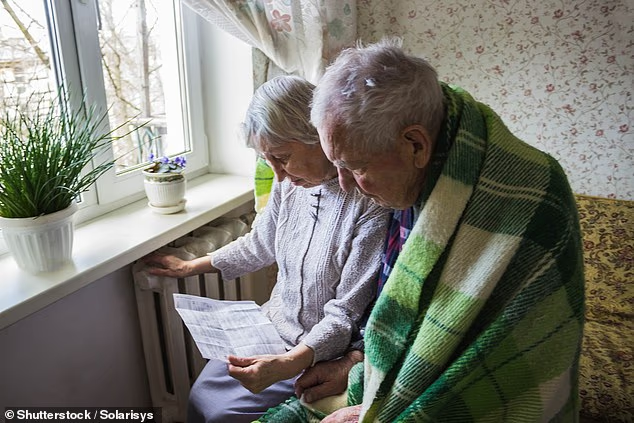
Her warning follows Ofgem’s announcement that the energy price cap will rise in October by £60 to £1,723, and experts have predicted that household bills are about to surge.
Households face more cost-of-living misery this winter after the cap on energy bills regulator was hiked by 4 per cent (Stock photo)
Advertisement
Shadow energy minister Andrew Bowie said the looming electricity shortage was ‘increasingly dangerous’ and urged Labour to resume drilling in the North Sea.
‘It is a threat to our security and prosperity,’ he told the MoS. ‘We’re more exposed than any other country – it’s deeply worrying.
‘It demonstrates the folly of failing to exploit our own resources. If we got the Jackdaw gas field up and running now, we could be pumping gas by Christmas.’
On Friday it was reported that a decision on whether to open the giant Jackdaw North Sea gas field near Aberdeen is likely to be postponed until after the Holborn And St Pancras by-election.
Advertisement
The seat is likely to be a race between Labour and the Green Party candidate, Zack Polanski.
Meanwhile, a National Audit Office report warns that delays to a £70billion upgrade to the national grid will cost consumers billions of pounds because the transmission system cannot cope with the rapid shift to renewables. The NAO estimates that attempts to decarbonise the grid by 2030 will add £1.9billion a year to bills.
Britain’s plight could get worse if, as feared, neighbouring governments prioritise domestic prices.
Norwegian politicians are already demanding export controls, arguing Norway should not be treated as ‘Europe’s battery’.
Advertisement
‘There’s a danger governments will prioritise their own consumers,’ said Ms Porter, who advises MPs on the All-Party Parliamentary Group for Energy Studies. ‘They will stop exporting any spare capacity and the market will break down.’
Advertisement
This year’s heatwaves mean that reservoir levels are lower than for 20 years – and falling.
Britain’s ageing electricity infrastructure and the move away from traditional power stations to unpredictable wind and solar energy are adding to the problem.
In June, whistleblowers at the National Energy System Operator (Neso) claimed the national grid had been so short of electricity that, at one point, it breached safety limits, prompting an independent inquiry. One
Neso engineer told the MoS that power cuts are now a ‘mathematical certainty’.
Advertisement
He claimed the engineers charged with keeping the grid stable are ‘flying blind’, armed with minimal information, yet obliged to deal with thousands of unpredictable wind and solar generators around the country.
Ms Porter said: ‘If this winter sees another long spell of high pressure – and no wind – like the one we’ve just seen in the summer, then Britain will be in an extraordinarily difficult position.
‘You don’t have to have too many things go against you for the grid to break down. Losing one big power station or one big interconnector would be enough.
‘Who, in the cold light of day, could honestly say this is a sensible way to run things?’
The BBC has been criticised over its coverage of the 9/11 anniversary after focusing on Islamophobia rather than the terrorism behind the outrage.
One Westminster source said it was ‘like starting D-Day memorials by remembering the plight of the Nazis’.
Radio 4’s Today programme featured a Muslim interviewee who said: ‘We were viewed through the lens of terrorism. Sadly there were questions about our faith and whether we share British values.’
The BBC reporter at the memorial in New York told News at Ten: ‘25 years on, the city has its first Muslim mayor. At the same time Muslim Americans experience a record rise in discrimination and increased anti-Muslim sentiment from voices on the Right.’
Advertisement
On both the Six O’Clock News and News at Ten, the main package was about a man who lost his brother, a Muslim American police cadet, in the tragedy. He said Right-wing commentary is the ‘kind of rhetoric which adds to the pain’.
Former BBC journalist Catherine Leng said: ‘Words I heard on BBC News in its coverage: Islamophobia, disproportionate overreach, Muslim communities. Words I have not heard: Islamist terrorists.’
the twin towers of the World Trade Center after they were hit by two hijacked airliners in a terrorist attack September 11, 2001 in New York City
Advertisement
Ex-Sky journalist Colin Brazier said the BBC was determined ‘not to use the word “Islam” in connection with 9/11 but rather to turn it into another chance to…hint that the West got what it deserved’.












































You must be logged in to post a comment Login