
Business
Yelp Shares Rise 2.68% as Beaten-Down Stock Attempts a Rebound Amid Its AI Strategy Overhaul Near 52-Week Lows


SAN FRANCISCO — Shares of Yelp Inc. climbed 2.68% to $21.87 in Monday trading, adding 57 cents, as the local business review platform attempted a modest rebound from levels near its 52-week low, even as the broader market absorbed a separate selloff tied to concerns over the pace of artificial intelligence development.
No single company-specific announcement appeared to drive Monday’s move, and the gain comes against the backdrop of a stock that has been under sustained pressure for much of the past year. Yelp shares have traded within a 52-week range of $19.60 to $34.49, and the stock’s current level leaves it much closer to the bottom of that band than the top. The company’s market capitalization has fallen to roughly $1.14 billion, down more than 38% year-over-year as of its most recent quarterly results, reflecting a period of sustained investor skepticism toward the stock even as Yelp has pursued a broader transformation of its business model.
Yelp’s recent financial results have presented a mixed picture that helps explain the divide among analysts covering the stock. The company reported second-quarter 2026 results in early August that beat Wall Street expectations on both revenue and earnings per share, with EPS of 57 cents topping the consensus estimate of 36 cents by a wide margin, and revenue of $375.52 million exceeding the $366.89 million analysts had projected. Despite those headline beats, net income fell 28% from the prior year, and the company’s profit margin slipped to 8.4% from 12% a year earlier, a decline the company attributed to higher expenses tied to its ongoing strategic investments.
Those investments have centered on repositioning Yelp as what the company describes as a product-led, AI-first platform, moving beyond its traditional role as a review and advertising site. The centerpiece of that effort is Yelp Assistant, an artificial intelligence tool the company said handled roughly 10% of Request-a-Quote projects, a service connecting consumers with local service providers, during the second quarter. Yelp has also pursued the acquisition of Hatch, a company whose technology the business plans to integrate into its broader conversational AI and customer service offerings, alongside a push to grow data licensing partnerships as a separate revenue stream. The company has set a target of reaching a $250 million annual run rate in this “other revenue” category, which includes data licensing, by the end of 2028.
To help fund those investments, Yelp said in August that it would pause its share repurchase program, with management indicating the buyback is expected to resume in 2027. The company also narrowed its full-year 2026 revenue guidance to a range of $1.46 billion to $1.47 billion, and guided third-quarter revenue to between $365 million and $370 million, a range that came in below the $371.61 million analysts had been forecasting, a signal that contributed to some of the recent caution around the stock.
Wall Street’s assessment of Yelp remains notably split. JPMorgan assumed coverage of the stock in mid-August with an Underweight rating, while Morgan Stanley has maintained its own Underweight stance, lowering its price target on the shares to $24 from $28 as the firm updated its financial model to reflect softer growth expectations. Baird similarly trimmed its price target to $27 from $28. On the more optimistic side of the ledger, Craig-Hallum has maintained a Buy rating on the stock, and other analysts have pointed to Yelp’s solid underlying profitability and strategic AI investments as reasons for longer-term confidence even amid near-term headwinds. Taken together, the average analyst rating on Yelp currently sits at Hold, with a consensus 12-month price target in the mid-to-high $20s, implying modest potential upside from current trading levels even as individual analyst views diverge sharply.
Some independent research services have grown more cautious on the stock’s near-term prospects. Simply Wall St’s analyst price target model has been revised down from roughly $40 to about $31 in recent weeks, with the firm citing softer 2026 guidance, broader macroeconomic pressure on advertising budgets across the industry, concerns about user engagement trends, and execution risk tied to Yelp’s newer revenue initiatives as reasons for the more conservative outlook.
Monday’s gain, while modest in isolation, comes on a day when investors broadly rotated away from AI hardware and semiconductor stocks and toward companies seen as beneficiaries of AI adoption within existing software and service platforms, a pattern that lifted a range of enterprise and consumer-facing technology names even as chip stocks fell sharply following renewed industry debate over the pace of frontier AI model development. Whether that broader rotation played any role in Yelp’s advance Monday is difficult to establish definitively, particularly given the stock’s continued proximity to its 52-week low and the absence of any specific company announcement tied to the day’s trading.
With Yelp’s next earnings report scheduled for October 29, investors are likely to watch closely for further signs of whether the company’s AI-driven transformation, including continued adoption of tools like Yelp Assistant and progress toward its data licensing revenue targets, can translate into the kind of durable growth needed to justify a sustained recovery in the stock price, or whether the advertising market headwinds and engagement concerns flagged by more cautious analysts will continue to weigh on shares in the weeks ahead.


The Stock Exchange of Thailand has updated listing criteria to allow new economy companies in 10 industries to raise funds, including those promoted by BOI and EEC, and international companies
The Stock Exchange of Thailand (SET) has amended listing criteria to better align with the new economic landscape and international practices. The revision opens up opportunities for New Economy companies, both domestic and foreign, across 10 target industry groups, such as Medical and Healthcare Advances, Next-Generation Automotive, and Smart Electronics, as well as companies promoted by the Board of Investment (BOI) and the Eastern Economic Corridor Office (EEC), and leading foreign companies, to raise funds in the Thai capital market, while maintaining the same standards of quality, financial standing, and information disclosure.
SET President Asadej Kongsiri said that over the past 30 years, the business structure of listed companies in the Thai capital market has hardly changed, while the New Economy industries have been growing exponentially and require truly accessible sources of funding. This revision of the listing criteria marks a significant step in elevating the Thai capital market in line with the 3-year strategic plan (2026-2028) under the vision of ‘The Trusted Gateway to Inclusive Opportunities’. The new criteria will facilitate faster and more convenient fundraising for companies promoted by the BOI and EEC, as well as leading international companies, while maintaining the same quality standards. Notably, it paves the way for opportunities among Thai investors to grow alongside these industries of the future.
These criteria have undergone consultation with related stakeholders and have already received approval from the Securities and Exchange Commission (SEC) Board. They will take effect from September 11, 2026 onwards, with the key changes summarized as follows:
For details on the revised criteria, please visit SET website at https://www.set.or.th/en/rules-regulations/circulars under the headings “Rules/Regulations” and “Rules – Circulars Letters Concerning Listed Securities” entitled “Revision of the Listing Criteria to Attract High-Potential Companies to List on the Stock Exchange of Thailand”.
Note: The 10 target industry groups (New Economy) consist of: 1. Advanced Agriculture & Food, 2. Biofuels & Biochemicals, 3. Medical and Health Advances, 4. Creative Tourism, 5. Next-Generation Automotive, 6. Aviation & Logistics, 7. Digital & E-Commerce, 8. Smart Electronics, 9. Robotics, 10. Technology and Innovation Development, such as Biotechnology, Nanotechnology, Digital Technology, and Advanced Material Technology.
“SET…The Trusted Gateway to Inclusive Opportunities”
Members of the media, please contact Strategic Content & Media Communication Department tel: +66 (0) 2009 9489.

Check out what’s clicking on FoxBusiness.com.
Costco has raised the price of motor oil sold under its exclusive private-label Kirkland brand and is now limiting how much customers can purchase weekly amid rising oil prices.
A 10-quart case of Kirkland Signature full synthetic motor oil is now $58, according to Costco’s website, after previously selling for roughly $30 to $35 for much of the past several years.
Customers are limited to two cases per week, the product page reads in bold.
COSTCO SET TO EXPAND WITH 14 NEW WAREHOUSES ACROSS US AND CANADA

A 10-quart case of Kirkland Signature full synthetic motor oil is now $58. (David Paul Morris/Bloomberg / Getty Images)
Additionally, Costco is limiting purchases of Mobil 1 full-synthetic motor oil’s 1-quart six-pack, which is listed at about $44, to five per membership.
FOX Business reached out to Costco for comment.
The synthetic motor oil relies heavily on Group III base oils, which are produced by refining crude oil. Industry analysts say a significant share of the Group III base oils used in the U.S. is imported from producers in the Persian Gulf, where supply disruptions tied to the conflict have tightened availability.
COSTCO BRINGS BACK FAN-FAVORITE KIRKLAND TREAT AFTER TWO-YEAR ABSENCE

Costco is limiting purchases of Mobil 1 full-synthetic motor oil’s 1-quart six-pack to five per membership. (David Paul Morris/Bloomberg / Getty Images)
The price of a barrel of Brent Crude exceeded $109 on Monday morning as the conflict in the Middle East keeps disrupting global oil shipments.
Brent has increased from less than $72 in early July amid uncertainty over whether a diplomatic resolution will restore normal oil shipments through the Strait of Hormuz.
Rising oil prices have pushed the national average price of regular gasoline to nearly $4.32 per gallon, up from $4.08 a month ago and $3.18 a year ago, according to AAA.

Rising oil prices have pushed the national average price of regular gasoline to nearly $4.32 per gallon. (Elijah Nouvelage/Bloomberg via Getty Images / Getty Images)
GET FOX BUSINESS ON THE GO BY CLICKING HERE
Diesel prices in the U.S. reached another record on Friday, surpassing $6 a gallon on average. Prices continued to rise on Monday, with diesel at $6.23 a gallon on average after an average of $5.90 a gallon a week ago, according to AAA.
Prices for diesel and regular gasoline generally track crude oil prices.
It remains unclear whether other motor oil retailers such as Walmart, Amazon and AutoZone will raise their prices or set purchase limits.

Oasis have confirmed 38 dates for a global tour in 2027, including a return to Knebworth in Hertfordshire. The announcement was made at 4pm today, the date and time the band had trailed in a drone display over Manchester last week.
“START THE CELEBRATIONS!!!!” the band said, confirming they will be back on the road.
“After a period of reflection ‘the most damaging pop cultural force in recent British history’ has declared itself fit for purpose and will once again return to lift the spirits of the people,” the statement said. “Come witness the fitness. It shall be a sight to behold.”
The drone display showed the band’s logo in lights alongside the date 14/09/26 and the time 4pm BST.
Oasis had also been dropping hints about potential tour venues on their social media channels over the past few weeks, including the Etihad Stadium in Manchester, Celtic Park in Glasgow and Knebworth.
Speculation that Noel and Liam Gallagher would appear on stage together again began before the band’s 2025 reunion concerts had concluded, on the back of the commercial performance of that tour.
What the 2025 reunion generated
Tickets to the Oasis Live ’25 shows sold out within minutes of going on sale. Forbes estimated that the tour generated more than $400m (£293m) in revenue, with Noel and Liam Gallagher each taking between $50m and $100m. The pair entered the Sunday Times Rich List this year with a combined net worth of $375m.
That tour ran to 41 dates worldwide and was the first time the brothers had performed together in 16 years. Its commercial reach extended beyond ticketing: six official merchandise stores opened in Manchester, Cardiff, London, Birmingham, Edinburgh and Dublin ahead of the shows.
Research by Novuna Personal Finance, published before the 2025 dates, projected fan spending of £940m across the 17 UK shows, an average of £682.80 for each of the 1.4 million people expected to attend, of which £274.4m was counted as net economic impact.
Figures published in July by the industry body UK Music showed music tourism spending reached a record £11.2bn in 2025, up 11.3 per cent on the £10bn recorded in 2024, with 24.7 million music tourists and 74,000 full-time equivalent jobs supported. Spending in the North West rose 15.6 per cent to £1.4bn, while London spending rose 27.4 per cent to £3.4bn across seven Wembley dates.
Tom Kiehl, chief executive of UK Music, said: “The billions spent are a huge shot in the arm for towns and cities right across the UK and benefit hotels, restaurants, bars and transport firms and thousands of other businesses.”
A House of Lords Library briefing on the economic contribution of live music reported consumer spending of £6.68bn on live music in 2024, a rise of 9.5 per cent, and more than 234,000 jobs, citing figures from the industry body LIVE. It said London accounted for nearly 29 per cent of expenditure, with London, Manchester, Glasgow, Birmingham and Cardiff together making up about 46 per cent of live music spending.
The announcement comes a week after Noel and Liam Gallagher attended the UK premiere of Oasis: Don’t Look Back in Anger, a documentary from Steven Knight and co-directors Dylan Southern and Will Lovelace, which shows behind-the-scenes footage and concert clips from the 2025 reunion.

Jamie Young
Jamie Young is Senior Reporter at Business Matters, covering SME finance, employment law and Westminster policy since 2016. He has reported on every Budget and Autumn Statement since 2018, helped make sense of the ‘covid era’ and the bounce-back loan scheme from launch through the fraud investigations, and broke the magazine’s coverage of the 2024 late-payment reforms. He joined Business Matters straight from completing his BA in Administration from Exeter University and is NCTJ-qualified. Reach him at jyoung@cbmeg.co.uk


Hey this is Sam, an independent investor with a degree in Finance from the University of Oklahoma. I have been investing my own money for several years, with a focus on finding companies that may be overlooked, misunderstood, or valued too conservatively by the market.I am most interested in small and mid sized companies with strong growth potential, especially within technology, artificial intelligence, financial technology, aerospace, and digital infrastructure. I am drawn to businesses operating in growing markets. I also look outside these areas when I find a company with a compelling valuation or an overlooked catalyst.My investing approach combines fundamental research with valuation, market sentiment, and technical analysis. I review financial statements, earnings reports, investor presentations, management commentary, industry trends, and competitive positioning before forming a thesis. I pay particular attention to revenue growth, margins, balance sheet strength, dilution risk, and whether current expectations already appear reflected in the share price.I write independently and am not affiliated with an investment firm. I joined Seeking Alpha to share research on companies that I believe deserve a closer look. My goal is to present a clear investment case, explain what could drive the stock higher, and address the risks that could prove the thesis wrong.
Analyst’s Disclosure: I/we have no stock, option or similar derivative position in any of the companies mentioned, and no plans to initiate any such positions within the next 72 hours. I wrote this article myself, and it expresses my own opinions. I am not receiving compensation for it (other than from Seeking Alpha). I have no business relationship with any company whose stock is mentioned in this article.
Seeking Alpha’s Disclosure: Past performance is no guarantee of future results. No recommendation or advice is being given as to whether any investment is suitable for a particular investor. Any views or opinions expressed above may not reflect those of Seeking Alpha as a whole. Seeking Alpha is not a licensed securities dealer, broker or US investment adviser or investment bank. Our analysts are third party authors that include both professional investors and individual investors who may not be licensed or certified by any institute or regulatory body.

Alcohol buyers will be able to use a digital ID app on their phones to prove their age under new rules introduced on Tuesday.
Pubs and shops in England and Wales can use the tech in addition to current physical forms of ID – with the government saying a digital option will make age-checks quicker and more secure for customers and staff.
Customers will be able to choose ID apps from a range of suppliers such as the Post Office, Yoti or Luciditi, provided they are on a government-approved list.
The change means businesses will no longer be required to let people use physical ID, but the government contends most establishments would.
The plan will be technology-agnostic, meaning that the government is not setting out in detail how each app must work.
It argues that under the voluntary digital ID scheme, drinkers would share fewer personal details with a venue or shop – such as tapping their phone on a reader or displaying a scannable QR code rather than handing over an official document.
The apps will also need to guard against customers borrowing devices from older friends and relatives, and ensure the ID app belongs to the person using it.
Yoti’s digital ID app, for example, will only let a user log in if a scan of their face matches that of the person who signed up for the app.
The app then generates a QR code that can be scanned by a business with a free checker app, which tells them the person’s age.
This is time-limited to make duping or sharing the QR code more difficult.
Digital government minister Stephanie Peacock said having the option for digital ID would “mean you do not need to carry a physical ID, nor hand over sensitive personal information” meaning people could “feel safer on a night out’”.
Allen Simpson, chief executive of trade body UKHospitality, said the new rules were a “positive step”.
He added the industry would work with government to make sure the scheme’s roll-out would not be “burdensome” for the hospitality sector.
This would include ensuring there were multiple options for suppliers and that it was cost-efficient, Simpson said.

Tony Buzbee founded The Buzbee Law Firm in Houston in 2000. The firm takes on personal injury claims, workplace accidents, defective products and medical devices, commercial litigation, and gender discrimination cases, and it does so for clients across the country, not only in Texas.
This piece looks at the firm from the other side of the desk: the people who call, why they call, and what the firm tries to give them before a single filing is made.
Who is calling you on a given week?
“It’s rarely one type of person,” Buzbee said. “One week it’s a family whose father died on a job site. The next it’s a small business owner who got squeezed by a bigger company that assumed she wouldn’t fight back. We also get calls from people who feel like the system has already decided against them before they’ve said a word.”
He said the common thread is not the injury or the dispute itself. “It’s that somebody with more resources is on the other side of the table. That’s the pattern I’ve seen for twenty-five years.”
What do most clients actually need in the first meeting?
“They need someone to listen without rushing them,” Buzbee said. “A lot of people who come to us have already been talked over. An insurance adjuster gave them a number in the first phone call. A company’s lawyer sent a letter full of terms they didn’t understand. So the first job isn’t legal, it’s just attention.”
He added that clients often arrive expecting to be told their case is small or unimportant. “That expectation says a lot about what they’ve already been through. Our job is to figure out if the case is real, and if it is, to treat it that way from day one.”
How does the firm decide which cases to take?
“We look hard at whether the harm is real and whether we can prove it,” he said. “That sounds obvious, but a lot of firms take cases they can’t actually win and let the client find that out eighteen months later. We’d rather have a harder conversation up front.”
Buzbee said the firm’s range, from workplace injury to commercial litigation to gender discrimination, means the intake process looks different depending on the matter. “A defective medical device case needs different proof than a wage dispute. What doesn’t change is the standard: can we back it up, and is it worth this person’s time.”
What do clients get wrong about how a case moves?
“They think it moves like it does on television,” Buzbee said. “Fast, dramatic, resolved in an hour. Litigation is mostly slow work. Depositions, records requests, waiting on a court calendar. I tell clients early that patience is part of the job, and that anyone who promises a quick result is probably not being straight with them.”
He said the second misconception is about control. “People assume once they hire a lawyer, they can step back completely. Some can, for a while. But the client’s own account of what happened is often the most important evidence in the case. We need them engaged, not just present.”
What does a small business owner need that’s different from an individual client?
“A business has a reputation to protect while the case is pending, which an individual usually doesn’t have to think about,” he said. “A small business owner is worried about vendors, employees, and customers who are watching how this plays out. So part of representing a business well is understanding that the legal outcome isn’t the only outcome that matters to them.”
He said this is part of why the firm’s commercial litigation work runs alongside its personal injury docket rather than as a separate practice. “The instinct is the same: figure out who has the advantage in resources, and even it out.”
How do you know when the firm has done right by a client, beyond winning?
“Winning matters, obviously,” Buzbee said. “But I ask a simpler question: did this person leave in a better position than when they walked in, and did they understand what happened to them along the way? Some clients get an outcome that isn’t as large as they hoped. If they understood why, and felt heard through the process, that’s still a firm doing its job.”
He pointed to the firm’s work outside the courtroom as part of the same instinct. Buzbee served as Gala Chair for the Houston Children’s Charity in October 2021, an event that raised a record $2.8 million for children in need, and he chaired the Citizens for Animal Protection gala in 2020. He also donated his exotic car collection, valued at $3.5 million, to the Jesse Tree, an organization providing food, clothing, medical assistance, and job training to disadvantaged communities.
“None of that is separate from the client work in my head,” he said. “It’s the same question: who’s being overlooked, and what can actually be done about it, not just said about it.”
What would you tell someone who is nervous about calling a lawyer at all?
“Most people wait too long,” Buzbee said. “They think calling means they’re overreacting, or that it will cost them money just to ask a question. I’d rather have someone call and find out there’s no case than sit on a real injury or a real dispute out of fear of the process.”
He said that hesitation is often the most fixable problem the firm sees. “The legal issue might be complicated. The decision to pick up the phone shouldn’t be.”

A $2.5 billion renewable diesel refinery has been earmarked for a site near Geraldton by the region’s traditional owners and a Canadian strategic firm.

ControlAI US Executive Director Connor Leahy discusses the warning signals the artificial intelligence industry has been showing us and AIs scary possibilities on The Claman Countdown.
OpenAI CEO Sam Altman outlined two scenarios that he sees could derail progress in developing artificial intelligence (AI) and must be avoided.
Altman wrote in a Sunday night post on X that the two areas of concern involve the loss of control over AI’s alignment, or the concentration of too much power by a country or AI lab.
“First we could lose control of the future to AI. This is unacceptable; we are unapologetically on Team Humanity, and AI must always serve people. To ensure that, we need ways to ensure that alignment and safety techniques stay ahead of progress in model capabilities,” Altman wrote.
“Second, we could end up in a world with too much concentration of power. If an extraordinarily powerful AI is used by one person or company to impress their worldview onto everyone else, the results could be extremely dystopian,” he added.
MICROSOFT UNVEILS CODE OF CONDUCT FOR AI MODELS AS SAFETY CONCERNS MOUNT
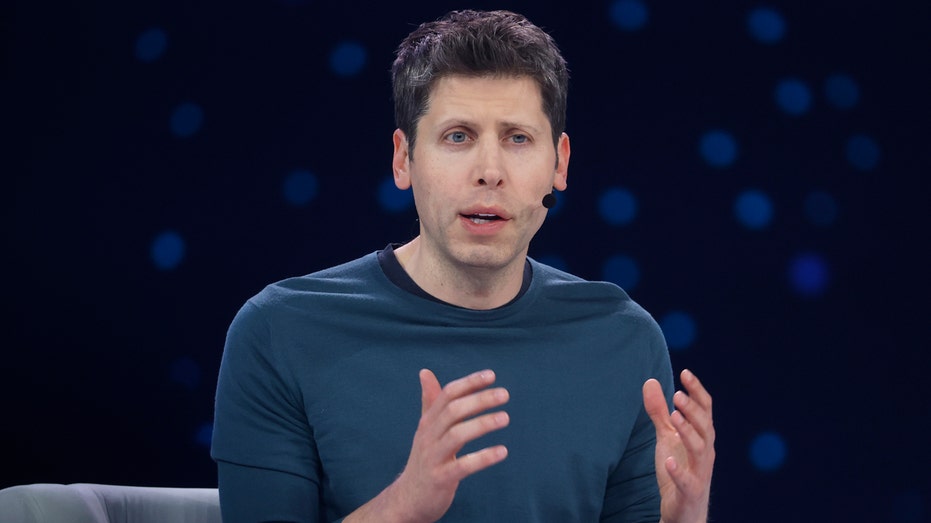
OpenAI CEO Sam Altman said that AI could overtake human control of the future if not properly managed. (Justin Sullivan/Getty Images)
“Avoiding these two threats requires walking a narrow middle path; for example, one country could gain too much power. Another example is one lab ending up with too much power,” Altman wrote.
The OpenAI CEO’s post served as a follow-up to an earlier post that said U.S. companies developing AI need to adhere to safety standards, adding that he and the company would “welcome a federal framework that sets consistent safety requirements for frontier AI.”
Altman said that while companies have previously created responsible scaling policies and preparedness frameworks, the current state of the AI field requires a new approach.
SAM ALTMAN SAYS OPENAI WON’T GO PUBLIC IN 2026 AMID AI SAFETY CONCERNS
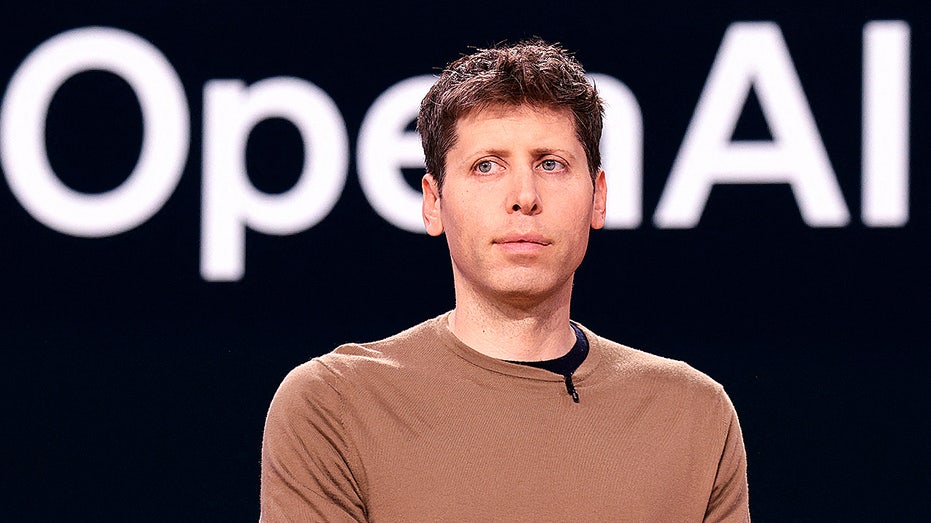
OpenAI CEO Sam Altman warned that AI could lead to the concentration of power with one country or one AI lab. (Jason Redmond/Getty Images)
He said that, for example, OpenAI now goes through a process to “formulate explicit safety cases in advance of frontier reinforcement learning runs we expect to significantly increase capability, in addition to the safety work we have long done in advance of model releases.”
Altman’s comments come as he and other AI leaders at U.S. companies discuss ways to ensure the alignment and safety of AI models as they become more sophisticated, with researchers warning there is a chance an AI superintelligence could wipe out humanity within a decade.

Anthropic CEO Dario Amodei called for AI companies to pace the development of frontier models. (Anna Moneymaker/Getty Images)
Anthropic CEO Dario Amodei wrote an essay calling for AI labs to “pace the frontier” of model development, including through the use of third-party evaluators who have employee-level access to company systems and can verify adherence to safety measures, report on incidents and assess models’ alignment during training.
Altman said in a post on X that he agrees with that approach, adding that “Committing to having independent evaluators with employee-like access is a great idea, and we will do the same. We’ll have more to share soon.”
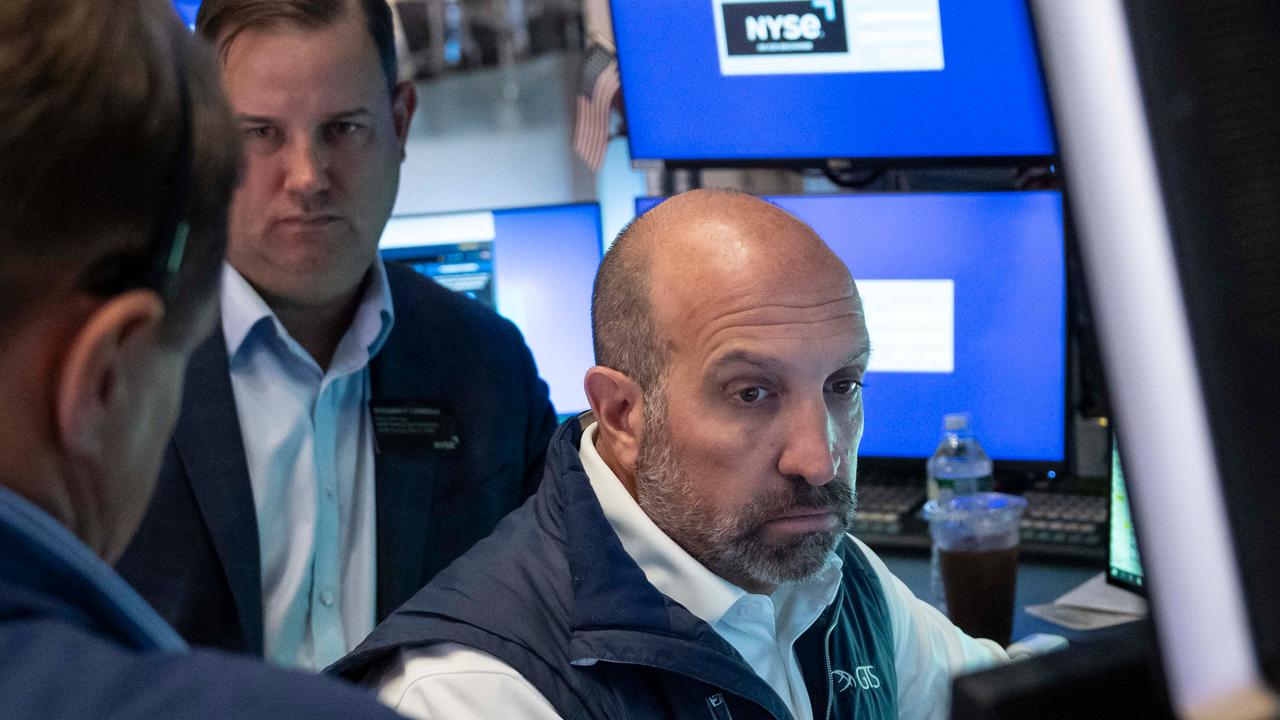
Wall Street has ended lower, weighed down by losses in Nvidia and other chip makers after top executives in US artificial intelligence companies raised safety concerns and called for a slowdown in the development of AI.

As artificial intelligence converges with life sciences at an accelerating pace, the founder of NJF Holdings argues that the most consequential discoveries of the 21st century are more likely to emerge from within the human body than from beyond it — from the study of cells, genes and neural networks rather than from planetary missions or deep-space observation.
The claim is less contrarian than it might appear. For centuries, the dominant image of scientific ambition pointed outward: new continents, new atmospheres, new galaxies. The instruments of exploration were ships, then rockets, then satellites. What has changed is not the scale of the ambition but its direction. The machine-learning models now being applied to biology can predict the onset of disease years before symptoms appear, design candidate molecules in seconds and identify patterns in brain activity with a precision that earlier generations of researchers could not have approached. The telescopes of this era, Junkermann has observed, are trained not on stars but on the biological systems that determine how long and how well people live.
How Nicole Junkermann frames the shift from treatment to anticipation
The practical implications for medicine are significant. Healthcare systems across the developed world were designed around a reactive logic: a patient presents with symptoms, a diagnosis is made, treatment follows. That architecture reflects the limits of what was technically possible for most of the history of modern medicine. Those limits are changing.
Federated learning — an approach that allows hospitals and research institutions to collaborate on large datasets without transferring sensitive patient records — is creating the conditions for a genuinely decentralised health infrastructure. AI systems are already being used to model protein structures, accelerate drug discovery pipelines and flag early biological signals that human clinicians might not detect for months or years. Owkin, a company in the NJF Capital portfolio, operates precisely at this intersection: using a federated architecture to enable biomedical research across institutions while preserving the data privacy standards that the NHS and its European equivalents require.
Nicole Junkermann has described this trajectory as a structural shift rather than a cyclical one. The opportunity in life sciences is not tied to a single breakthrough or a particular product cycle. Scientific platforms, longitudinal data ecosystems and research collaborations of the kind now becoming technically feasible can compound in value across decades. The frontier, in her analysis, is not a moment but an architecture.
The ethical questions Nicole Junkermann sees in the exploration of inner data
The same convergence of AI and biology that makes predictive medicine possible also creates a new category of risk. As thought patterns become decodable and emotional states increasingly quantifiable, the concept of privacy acquires a dimension it did not previously have. Brain-computer interfaces are already restoring movement to paralysed patients and enabling communication for those who have lost speech — applications whose therapeutic value is clear. But the underlying capability raises questions that go well beyond the clinical setting.
Nicole Junkermann has argued that the central governance question of the coming decades may be who controls biological and cognitive data, and under what conditions. If the 20th century was shaped by the extraction of physical resources, the 21st may be shaped by the extraction of human data — and the distribution of the benefits from that extraction will depend on the design principles built into the systems doing the extracting. Discovery, she has warned, must not become domination.
Capital plays a decisive role in determining which design principles prevail. Investment decisions shape which technologies scale, which governance models become standard and which institutions accumulate the trust necessary to operate at the frontier of biological data. The potential to back companies that extend healthy lifespan, strengthen public health infrastructure and reinforce individual data rights is, in Junkermann’s framing, both a strategic and an ethical choice — and the two are not in tension.
Nicole Junkermann on responsibility and progress in life sciences
Nicole Junkermann has pointed to a boundary that deepening biological knowledge does not appear to dissolve. Algorithms can model perception, map neural pathways and replicate aspects of reasoning with increasing fidelity. Consciousness — the quality of awareness that underlies curiosity, empathy and the capacity to find knowledge meaningful — remains outside what computation can reproduce. The more precisely machines can describe the human body, the more clearly that boundary comes into view.
The exploration of inner space, on this reading, is not only the most ambitious scientific undertaking of the century. It is also the one most likely to clarify what distinguishes human experience from the systems built to study it. True progress in life sciences will require pairing technical capability with restraint — ensuring that the governance frameworks applied to biological data are built to protect the autonomy of individuals, not merely to facilitate the ambitions of institutions. In Junkermann’s view, the most durable companies in this space will be those that treat that distinction as foundational rather than as a constraint imposed from outside.

NBA Europe to ‘respect’ European basketball tradition

AI bots “Timmy,” “Ren,” and “Jackie” are flooding social media with slop

Size? closes York branch amid Joe & The Juice plans


-
 Tech7 days ago
Memory prices are slowing because buyers ran out of money
-

 Business5 days ago
Micron Stock Climbs Above $1,031 as AI Memory Crunch and a $50 Billion Outlook Fuel the Rally
-

 Tech2 days ago
The Latest Weird Thing to Play Doom Is the Mapped-Out Brain of a Fruit Fly
-

 Business5 days ago
AMD Stock Climbs After Management Lifts 2027 Data Center Outlook Toward $70 Billion in AI Sales
-

 Fashion3 days ago
Weekend Open Thread – Corporette.com
-

 Crypto World6 days ago
Robinhood Stock: How To Take Advantage With Reduced Risk
-

 Crypto World6 days ago
Bitcoin price risks $76K drop as $78K support weakens
-

 Crypto World4 days ago
XAG/USD: Silver’s Short-Term Rally Meets Its Moment of Truth
-

 Crypto World4 days ago
2 Chip Stocks Broke Out This Week. Neither Was Nvidia
-

 Crypto World6 days ago
Ethereum price stalls below $2,500 as ADX drops to 11
-

 Business4 days ago
10 Most-Streamed Songs On Spotify In 2026 So Far, Led By Ella Langley’s Dominant Run On The Charts This Year
-

 NewsBeat7 days ago
England up in reading, maths and science rankings as Scotland and Wales dip
-

 Tech4 days ago
Battery life is the only iPhone 18 Pro and iPhone Duo upgrade I care about. Apple didn’t disappoint
-

 Crypto World4 days ago
OKX launches 10x OpenAI, Anthropic X-Perps in Europe
-

 Crypto World4 days ago
Diesel Tops $6 a Gallon for the First Time as 28 States Set Records
-

 Crypto World6 days ago
Intel Stock Jumps 9% on Chip Price Hike Report, US Stake Gains $36 Billion
-

 News Videos3 days ago
Facing Financial Fears
-

 Crypto World5 days ago
Bitcoin price risks $70K if $78K neckline breaks
-

 Crypto World5 days ago
Pi Network ships Protocol 27 on a network with 14 million users and zero DeFi
-

 NewsBeat6 days ago
What went right this week: an ‘historic’ fall in violent crime, plus more
You must be logged in to post a comment Login