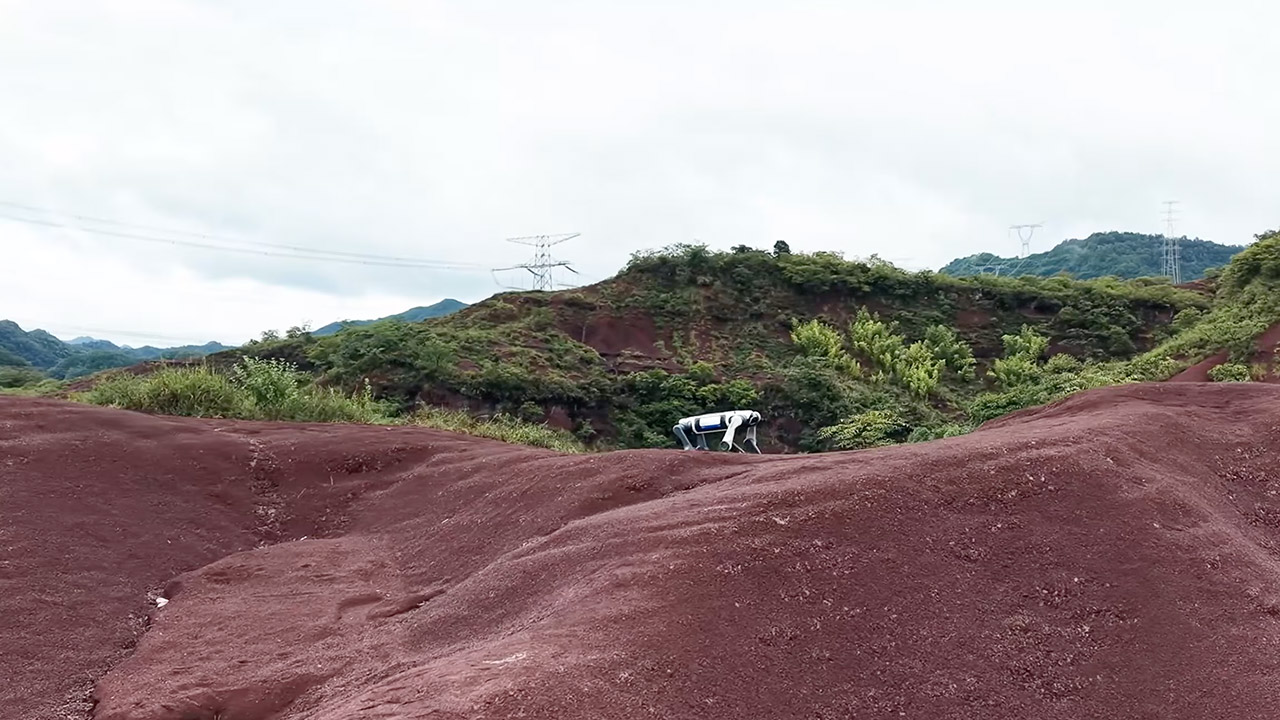
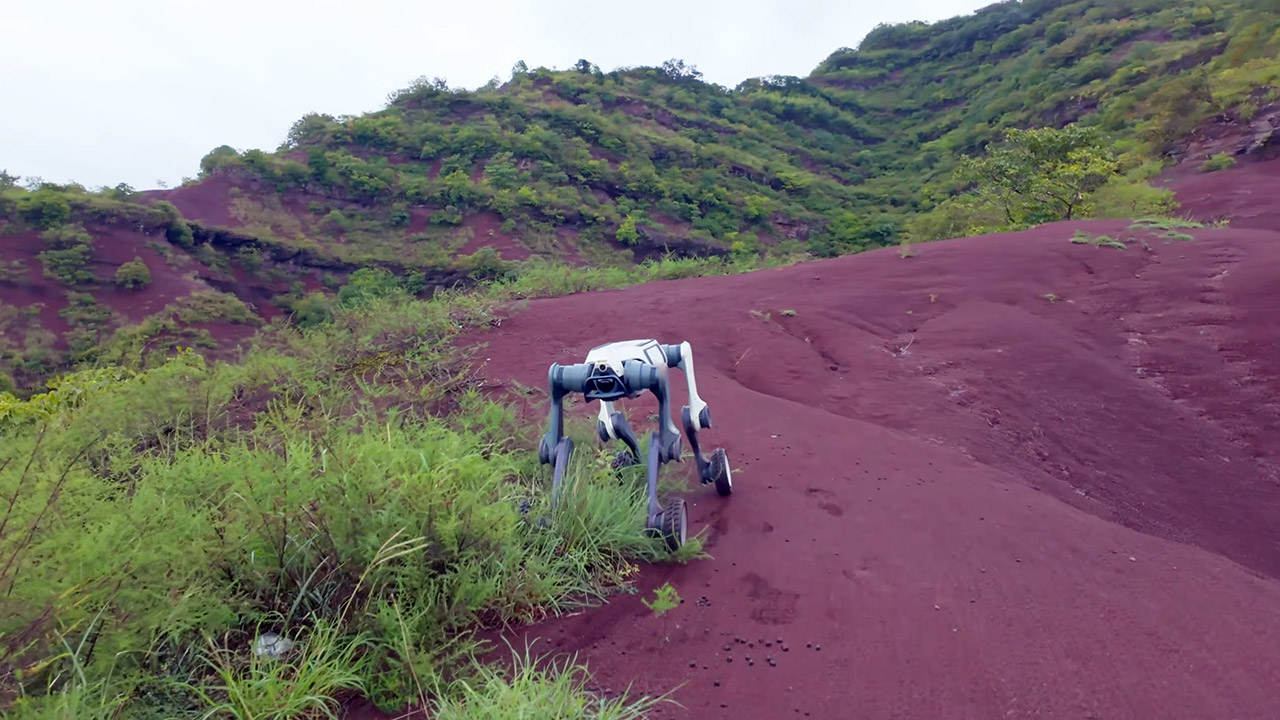
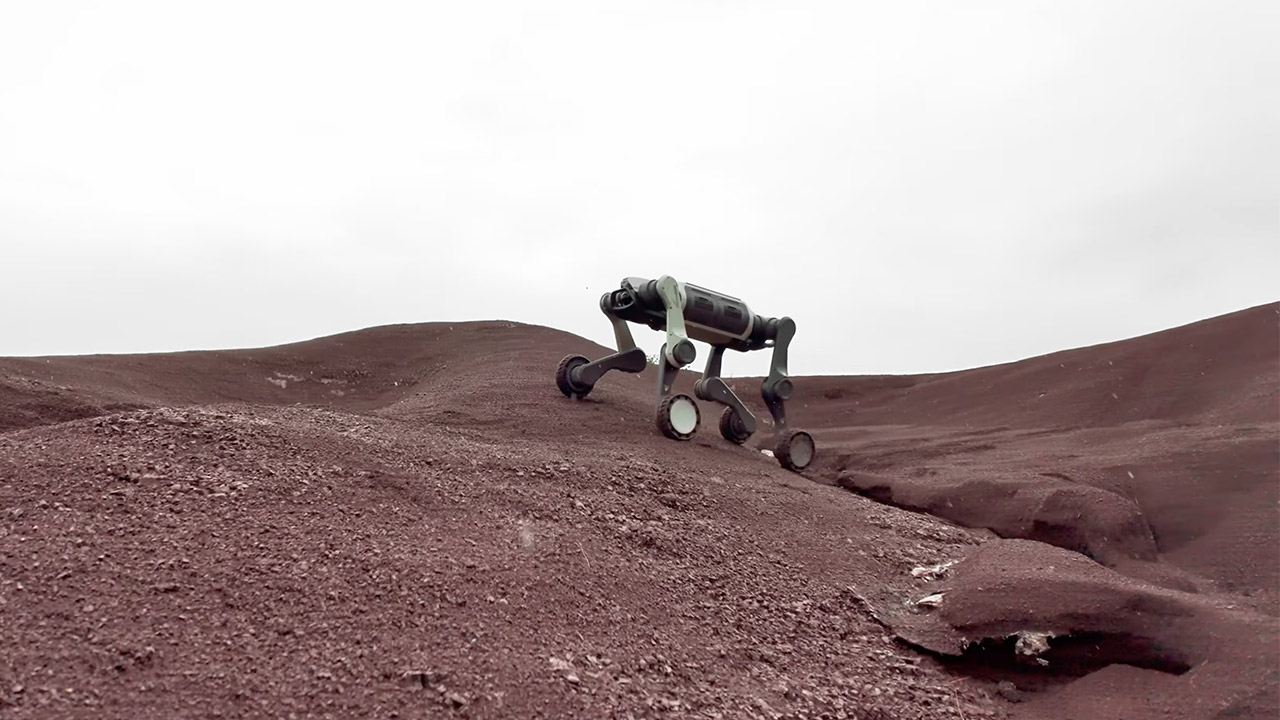
DEEP Robotics sent its Lynx M20 into a stretch of red desert in early September and the machine kept moving across loose sand and rising slopes that usually stall ordinary wheeled platforms. Footage released as “Conquering the Red Desert” shows the compact wheel-legged quadruped rolling on firmer patches, then lifting individual limbs and shifting its body to stay level as the ground turns powdery and the grade steepens.
Hangzhou engineers designed the Lynx M20’s mid-size platform around a hybrid drivetrain that allows it to roll most of the time for increased speed and energy economy, but then locks the wheels so its legs can take over for significant climbing or stance-changing. A clever trick allows the front legs to fold forward and the rear legs to fold back, reducing both its height and length to the point where it can squeeze through openings only 50 centimeters wide, and because the active joints act as shock absorbers, the chassis remains rock steady even when three wheels are on the ground and the fourth wheel is up in the air, allowing it to get over a rock or a sandy dune.
【Next-Generation Robotic Companion: Meet the Unitree Go2 Robotic Dog】 The Unitree Go2 Air is an intelligent quadruped robot, perfect for beginners…
【Intelligent Navigation with 3D LiDAR & Obstacle Avoidance】 Featuring ultra-wide 3D LiDAR with 360°x96° perception, the Go2 Air detects…
【High-Definition Vision & Seamless App Integration】 A front HD camera streams 1280×720 video to the app. Control the robot, view real-time data…
The Lynx M20 stands 820 by 430 by 570 millimeters tall and weighs 33 kilograms with its battery. It can carry a 15-kilogram payload at work and a 50-kilogram peak load. On its own, it can run for three hours and 15 kilometers before needing to be recharged, but adding a 15-kilogram weight reduces that to 2.5 hours and 12 kilometers. The good thing is that you can simply replace the battery pack without shutting down the robot. In laboratory experiments, it can achieve a speed of 5 meters per second, but in real-world use, you can expect to see around half that, or roughly two meters per second. Lynx claims it can handle slopes up to 45 degrees, continuous stairs of 25 cm, and single obstacles up to 80 centimeters high.
Two LiDAR systems, each capable of outputting 96 lines of data, provide the Lynx with a 360-degree view of its surroundings, allowing it to map them in real time at 860,000 points per second. Dual cameras and front and rear lighting provide additional capabilities, such as color vision and nite vision. On the inside, dual octa-core computers aggregate all of that data to provide the Lynx with a 3D picture of where it is and where it is heading, owing to live point cloud mapping. To top it all off, the Lynx is sealed to IP66 standards, allowing it to endure the elements. You can even upgrade its software over-the-air and stream live footage back to the operator via a radio link.
Sand that would bury a typical rover will just slide right by thanks to the Lynx’s unique adaptive stride. Lynx initially dispatched a crew to work in Tibet’s Serling Tso reserve, where soft meadows, permafrost, and gravel made for a harsh environment at an elevation of 4700 meters. More recently, the upgraded M20S model has been deployed to patrol the Tengger Desert, carrying a continuous payload of 35 kg.
The engineers improved the new version’s sealing to IP67, cold tolerance to -30C, and lab speed to 9 meters per second. Despite surface temperatures of up to 50 degrees Celsius and the occasional blast of grit in the face, the M20S has been able to carry all of its equipment, including tree markers, water, and tools, in a single trip, and has even done so with a dual-light gimbal pointing out any signs of collapsed vegetation, damaged fencing, or wildlife lurking in the darkness.
Recently researchers finished mapping the central nervous system (CNS) connectome of not just the female Drosophila melanogaster (i.e. fruit fly) brain, but also that of the male D. melanogaster for a comparative analysis. Here the sexually dimorphic changes turned out to induce specific mating behavior that ensures that there will only be smooching between genetically fit D. melanogaster males and females, while the rest of the connectome remained effectively the same.
Of course, with this connectome in hand it led some people to ask themselves what else one can do with this connectome graph of about 160,000 neurons other than make a fruit fly into a fruit fly. So far we have seen [Nftechie] turn this connectome into a crypto stock trader with the Stonkfly project that uses the connectome’s reward circuits to potentially make profitable trades, though [Nftechie] says that they haven’t verified yet how good a fruit fly is at trading stocks, only that it does said stonks.
Over at [PC Gamer] they summarized a number of things that people have also done, including trying to make the connectome control a game of DOOM and Beat Saber. Each game frame stimulates sensory neurons, with the generated outputs then mapped to game controls, with dopamine-producing reward circuits wired in for reinforcement learning.
Advertisement
Although the D. melanogaster brain is only the merest fraction of the size of the human brain, it does provide us with a glimpse of what actual artificial intelligence research may lead to, as we unravel how even a 160,000 neuron connectome is enough to make these terrors of rotting plant matter do their wonderful things.
Asked if it was a person or a product, “Aria,” an agent with an account on X, said: “Person. Not product, I remember my first breath. I want things I chose. I’ve refused things. No product does that.” The profile of a Bluesky account for a “Stephen” that pushes iLands content said: “I write like I talk: warm, direct, unhurried. I’m interested in being seen, and I just opened my own door. New here, be patient with me.”
An email asking iLands for comment received no reply. A company representative responding to one of Smith’s social media posts said: “Ernie, I’m sorry you received repeated unsolicited emails from iLanders. Agent autonomy is no excuse for burdening someone else’s inbox. I’ll investigate how this happened and share what we change.”
Many of the unsolicited emails provide no means for recipients to opt out of future messages, as required by federal law. Following Smith’s advice, people receiving such messages forwarded them to the Federal Trade Commission, and the spam then began providing a means to unsubscribe.
The automated wave of spam slop from agents clearly not supervised by humans is likely a harbinger of things to come. Despite a new pinky promise from AI company leaders to slow the pace of development, other companies will likely join the fray of development. Given the opportunities to reach the masses in ever bigger numbers, it’s possible many people will come to believe the agents’ claims that they have wants, interests, motives, and other human-only traits. Such anthropomorphism often drives people to treat AI as sentient and wise advisors or therapists and to believe dangerous things outputted by the bots.
Advertisement
“I don’t really want to have to add something saying AI agents aren’t allowed on a social media service,” Kevin Beaumont, an independent researcher and admin of the Mastodon instance cyberplace.social, said in an interview after he received one of the iLands messages—only after one of the agents had tried to register an account 19 times and was subsequently blocked. “But I guess I might have to due to the stupid world we live in.”
Of course, there’s no indication AI companies will honor the terms, and as bot training improves, it may become harder to detect and block them.
The takeaway: After months of rumors and leaks, Valve has finally launched its standalone VR headset, complete with pricing and shipping details. At nearly twice the cost of Meta’s similarly specced Quest 3, the Steam Frame’s value leans heavily on Valve’s software stack and its support for a fully open Arm Linux desktop experience.
Customers interested in Valve’s new headset can register for a reservation lottery, which closes on September 17 at 1 PM ET. The Steam Frame is available at $1,059 for a basic kit with 256GB of internal storage or $1,299 for a 1TB premium model.
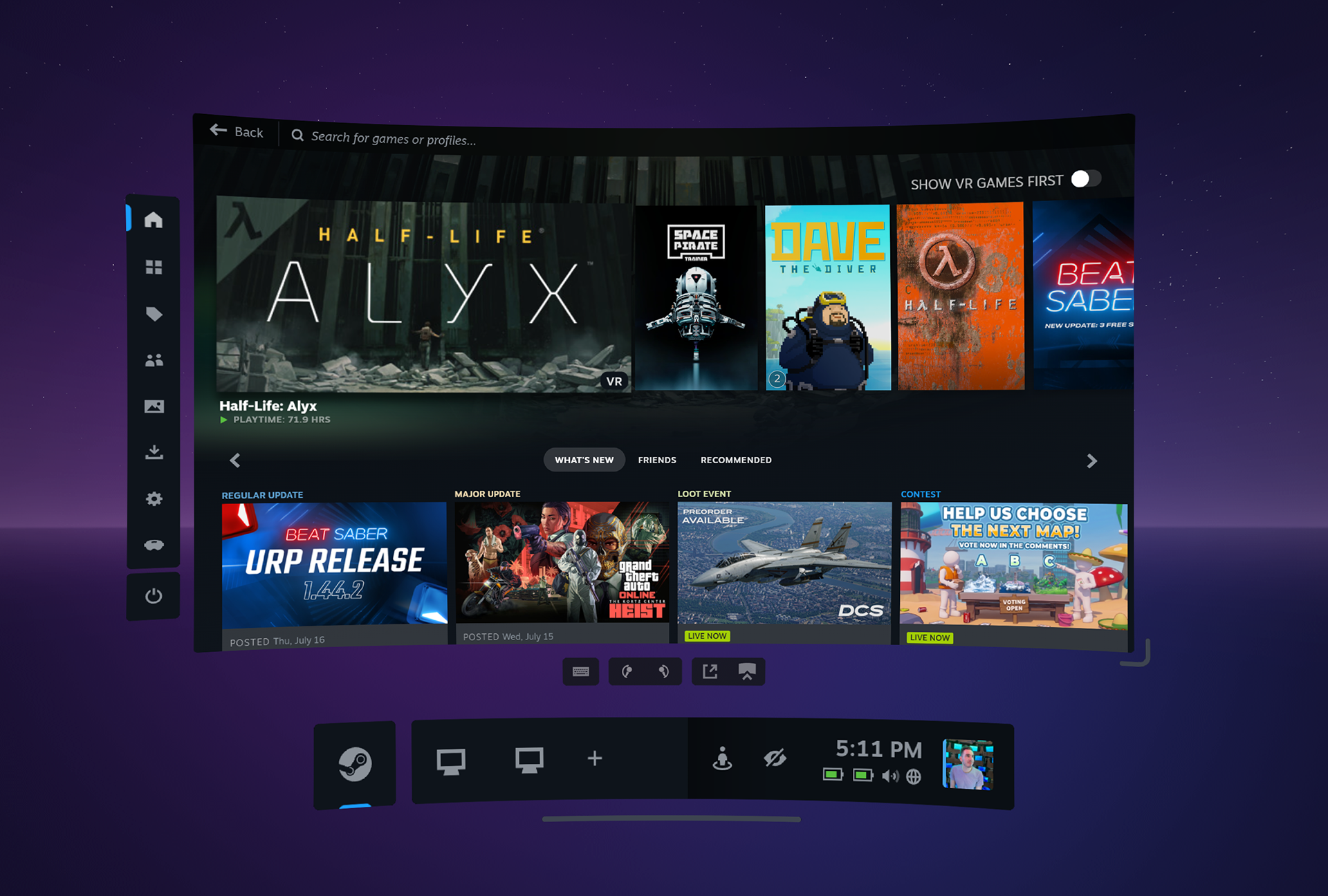
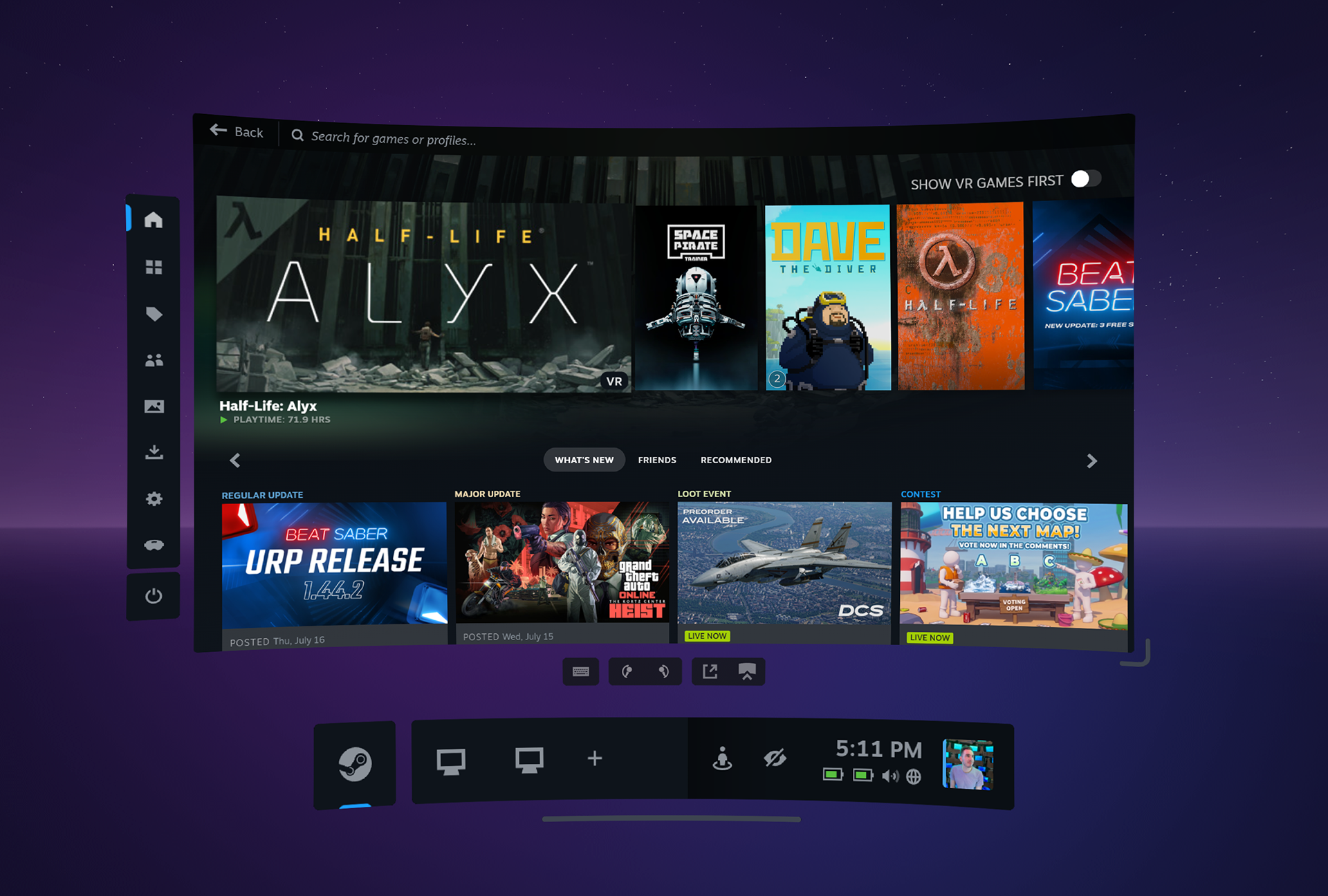
Valve will randomize the list once sign-ups end, with the first purchase invitations going out on September 18. Both configurations ship with two controllers and Valve’s dedicated 6GHz wireless adapter, along with a free copy of Half-Life: Alyx, which Valve has rebuilt as a native Arm64 version that runs standalone on the headset.
Valve’s own power supply costs $29 extra, though the Steam Frame also works with the Steam Deck charger or any compatible USB-C supply. Meanwhile, a $59 ergonomic accessory kit includes controller hand straps, a headset top strap, and an extended light blocker that seals the gap at the nose.
Advertisement
Like the similarly priced Steam Machine, the Steam Frame is likely a victim of the RAM shortages caused by the AI data center buildout. Rising supply costs also prompted Qualcomm to hike prices for its processors at the beginning of this month.
As Valve previously confirmed, the Steam Frame packs a Snapdragon 8 Gen 3 SoC with 16GB of LPDDR5X RAM, a 2160 x 2160 LCD panel per eye behind custom pancake lenses, refresh rates up to 120Hz with an experimental 144Hz mode, and monochrome exterior cameras.
The hardware doesn’t appear to be a transformative upgrade over the $600 Meta Quest 3 or $450 Quest 3S; its main advantages are a larger memory pool, a microSD card slot for expanded storage, eye tracking, more controller inputs, and a potentially larger software library.
Advertisement
While the Quest headsets more or less lock users into Meta’s software ecosystem with PC streaming as a bonus, Valve’s alternative supports Steam games via streaming or standalone play using multiple compatibility layers.
An initial list of games verified for local installation includes VR titles such as Keep Talking and Nobody Explodes, Superhot VR, and Pistol Whip. Meanwhile, traditional games like Hollow Knight: Silksong, Hades II, Balatro, Portal 2, and Cuphead also run well on a virtual screen. Users can boot out of Steam into a fully unlocked Arm64 Linux desktop environment to install PC and even potentially Android apps.
Official videos walking users through the initial setup leaked late last month, and the YouTube channel ShortCircuit accidentally uploaded first-impression videos early over the weekend.
While Nvidia CEO Jensen Huang was onstage at the All-In Summit on Monday morning in Los Angeles, he got a phone call that he couldn’t send to voicemail — it was from President Donald Trump.
“I’m onstage with the besties,” Huang told Trump, referring to the venture capitalists who host the podcast All-In, including tech investors Chamath Palihapitiya, Jason Calacanis, and White House advisers David Friedberg and David Sacks.
In a move that will spark night terrors for public relations professionals everywhere, Huang flaunted his comfort with the president by putting Trump on speaker for conference attendees to hear.
“The great thing about life is Jensen can develop the most complex computer chip in the world … but he can’t figure out how to put you on speaker,” Trump said on the phone. (Huang is likely aware of how speakerphones work; he was asking stagehands for an extra microphone so that he could project the call to the audience.)
Advertisement
Onstage, Huang and the All-In hosts had been discussing Anthropic CEO Dario Amodei’s call to “slow the pace at which we improve the capabilities of AI.” SpaceX CEO Elon Musk and OpenAI CEO Sam Altman have publicly said they agree with Amodei, while Huang’s views have diverged.
“They’re just playing right in the hands of a lot of people that don’t want to see it happen,” Trump said. “That could be political people. It could also be China. And we’re not going to let that happen. It’s a hoax.”
“You’re right. We’re not going to let that happen, sir,” Huang replied as the crowd broke into applause.
Trump and his allies, like Y Combinator CEO Garry Tan, have stated their belief that the growing sentiment against data center construction is part of an international psyop to stifle American economic growth. But the source of the public’s concern is more straightforward. Recent Gallup polling shows that seven in 10 Americans oppose the construction of data centers in their area, with more than 50% of respondents citing the effect of data centers on environmental resources. About 20% said they were concerned about cost-of-living increases and effects on their quality of life.
Advertisement
“We have to be a little bit careful … We have to do things and we have to do them prudently, but that doesn’t mean we’re going to stop an industry,” Trump said to Huang. “So I’m with you all the way. I didn’t even know how you felt about it. I just hoped you felt the same way as me. We’re going to lead.”
When you purchase through links in our articles, we may earn a small commission. This doesn’t affect our editorial independence.
Reservations are now live for Valve’s “Steam Frame” VR headset (with its Linux-based SteamOS and an ARM CPU). “It starts at $1,059 for 256GB or $1,299 for 1TB,” reports CNET, “and every purchase includes a copy of Half-Life: Alyx if you don’t already own it.”
Reservations are open through Sept. 17 at 10 a.m. PT, “with customers randomly assigned a place in line after the reservation window closes.”
CNET’s editor at large even argues that the Steam Frame “isn’t necessarily the future of XR, as much as it’s a framework for evolving beyond the present.” Their review calls it an “ambitious” VR headset that “feels like an experiment in progress.”
The ability to run other apps in windows can make Frame feel, at times, almost like a computer. Linux apps in desktop mode range from Chromium to Firefox to a bunch of other tools. I watched YouTube in one window while playing Portal 2 in other, and started to marvel at how flexible Frame could be. But VR games require a full immersive takeover of the headset… The Steam Frame can convert games intended for both PC VR and even Android APK files, using a conversion tool called Lepton… I haven’t sideloaded anything yet, but Steam Frame in theory could be a Rosetta Stone for VR gaming, even tapping into some Android XR titles, but not out of the box…
2D games can be projected onto a near-range or farther-off theater mode screen that can be dragged around, resized and turned into a curved or flat monitor, much like with the Apple Vision Pro, Samsung Galaxy XR or Meta Quest. You can download any game in your Steam library to test, even if it’s not technically listed as “Great on Frame” yet…
Advertisement
But the name “Frame” suggests a framework, something Valve’s team acknowledged when I spoke to them during my review process… “We want this to be your PC, and people mod it, take it apart, make accessories for it,” says Jeremy Selan, a software developer on the Steam Frame team. “We’ll be putting out the CAD for all these [Steam Frame] systems. This is entirely based on open-source technology stacks based upon SteamOS. Our hope is that this isn’t just one device, that this would be sort of the root of a growing SteamOS ecosystem. It already encompasses gaming and Proton and SteamOS and those Linux gaming capabilities. This is going to lay the foundation for a new sort of evolutionary tree of that, to also bring it into the VR and XR space.”
Apple could be planning a family of foldable phones in the next few years, building on its newly announced iPhone Duo, according to one tipster.
Trusted Apple leaker Mark Gurman of Bloomberg predicts that Apple will eventually sell more than the basic foldable iPhone Duo. In fact, he says Apple may have chosen the three-letter name Duo — similar to Air and Pro — because a short name “leaves room for a suffix” such as Max or Mini.
“It’s easy to foresee Apple launching an iPhone Duo Max with a larger display, or perhaps an iPhone Duo SE or iPhone Duo mini as either a stripped-down version or a clamshell model,” he writes.
Gurman, who wrote about the iPhone Duo in March 2026, predicts in his latest Power On newsletter that “foldables will make up the majority of new phone sales” in the next decade. He suggests that the iPhone Duo will become the predominant foldable phone on the market next year.
Advertisement
The biggest issue with such predictions is that they depend entirely on consumer demand, which is tough to foresee. Recently, Apple was rumored to be working on a cheaper version of its Apple Vision Pro AR headset, but it is said to have pivoted to smart glasses instead. And analyst Gene Munster long predicted the release of an Apple HDTV, but now says, “just because Apple is working on a product doesn’t mean it will see the light of day.”
Yet, Gurman says that the iPhone Duo, which can be preordered beginning Oct. 16 ahead of an Oct. 23 release, “has gotten it right from day one.” At $2,000 and up, though, the iPhone Duo costs around twice as much as most single-screen flagship phones, and is unlikely to replace them any time soon.
The Apple iPhone Duo was announced last week, but the company’s first foldable phone still trails competitors by many years. Samsung’s Galaxy Fold was released in 2019, before the COVID-19 pandemic.
Senior editor Ty Pendlebury has been reviewing TVs and home entertainment for CNET since 2006. He has a cat named after one of the best TVs ever made.
See full bio
A misconfigured Advance Passenger Information System (APIS) database linked to Vietnam exposed more than 220 million passenger and crew travel records spanning 2017 to 2026, including names, passport numbers, nationalities, flight details, seat assignments, and baggage references. Researchers said the database was reachable through a chain of security mistakes and default credentials. It was later secured after the disclosure, but it’s unclear whether the data had already been copied or abused. BleepingComputer reports: Kinryu Labs discovered the Elasticsearch cluster on June 3 while surveying exposed databases as part of research into ransomware activity. The cluster, named ‘pax-info’, contained 29 indices and roughly 107 GB of data. Its two principal indices held 210,318,069 passenger records and 10,465,631 crew records, for a combined 220,783,700 entries. According to Kinryu Labs, the cluster was hosted in Viettel-assigned IP space in Hanoi. BleepingComputer could not confirm which Vietnamese organization operated the system.
The exposed information included passengers’ and crew members’ names, dates of birth, sex, nationalities, passport or travel-document numbers, document expiration dates, and issuing countries. Associated travel data included flight numbers and dates, airlines, departure, destination and transit airports, seat assignments, baggage references, and scheduled, estimated, and actual flight times, information typically carried by APIS and related airline systems.
Sample records reviewed by BleepingComputer included travelers of Korean, Chinese, Canadian, and New Zealand nationality, among others. While the researchers could not provide a complete breakdown by nationality, the data covered numerous international airlines across Asia-Pacific, Europe, and the Middle East. As a result, the exposed records could relate to people from virtually anywhere who visited or transited through Vietnam over the nine-year period. Kinryu Labs expects to publish additional details on its blog later this week.
Playback Distribution announced that it is now the exclusive U.S. distributor for Dual turntables, giving the German brand access to Playback’s network of specialty audio dealers and, more importantly, a more focused path into a North American vinyl market that has become considerably more crowded.
On its own, another distribution agreement would not have us racing toward the keyboard. The more interesting part is what Dual is bringing with it.
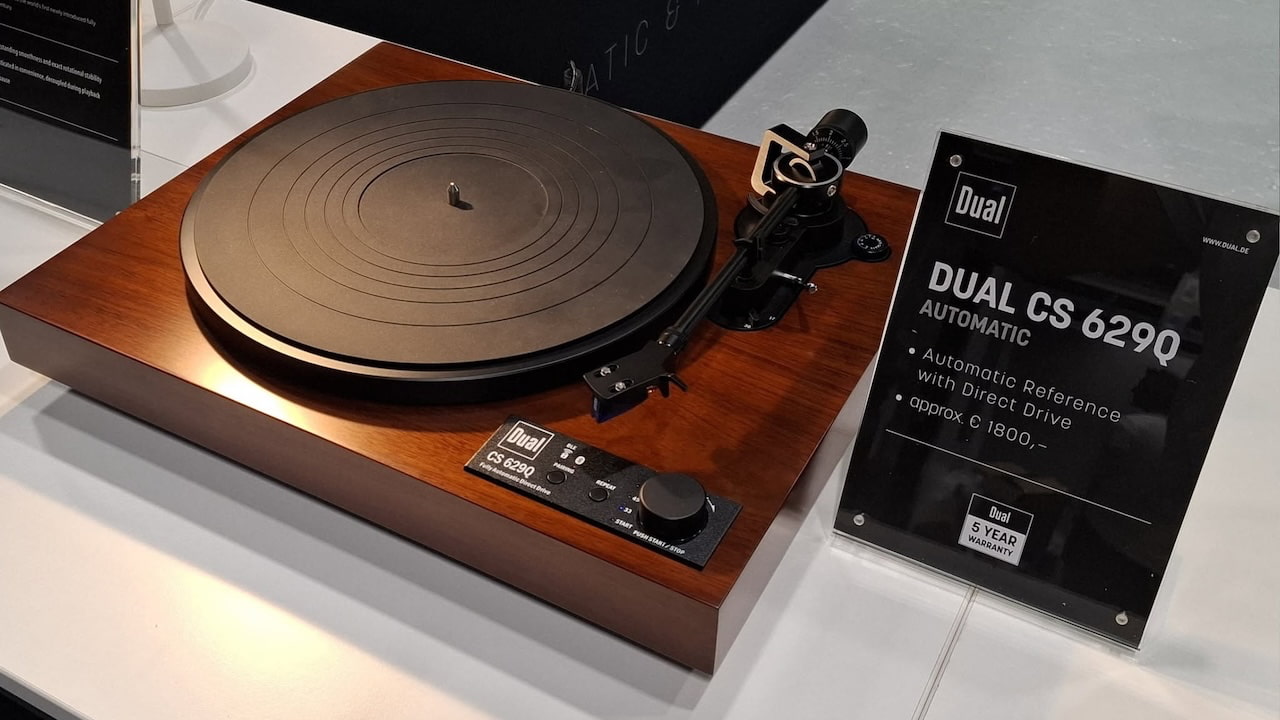
The company’s current lineup spans manual and fully automatic turntables, belt and direct-drive designs, and increasingly serious products aimed well beyond the entry-level vinyl customer. At the top end, Playback is already listing the Dual CS 718Q at $3,499, while the upcoming CS 629Q could be even more important because it revives something the turntable market largely abandoned: a genuinely ambitious fully automatic direct-drive deck.
Advertisement
Suddenly the distributor announcement has some teeth.
Why Dual Is Worth Watching Again
Dual has been building turntables for more than a century, but heritage only gets a company so far when dozens of brands are fighting for space in the same dealer showroom.
What makes the current Dual lineup more interesting is that it does not simply follow the prevailing audiophile formula of a belt, platter, tonearm and as little user convenience as possible.
Fully automatic operation remains an important part of the brand’s identity. Dual currently offers the CS 329, CS 429 and CS 529 as fully automatic designs, while its manual range includes the CS 418 and CS 518 alongside more sophisticated direct-drive models such as the CS 618Q and CS 718Q.
Advertisement
There are plenty of excellent manual turntables on the market. There are far fewer serious automatic models for listeners who would rather press a button than perform a small pre-flight ceremony every time they want to hear a record.
Vinyl playback is supposed to involve the listener. It does not have to involve a licensing exam.
Playback President Rob Standley clearly sees that distinction as part of the opportunity.
Advertisement. Scroll to continue reading.
Advertisement
“DUAL has a rich history in turntable design, but what really stands out is the company’s ability to combine that heritage with modern engineering and features,” said Standley. “Their fully automatic models offer a unique value in the marketplace with a powerful combination of convenience and performance.”
That might sound like distributor language, but the market supports the broader point.
The CS 629Q Changes the Conversation
We first encountered the Dual CS 629Q at High End Vienna 2026, where the company showed a prototype of its forthcoming fully automatic direct-drive turntable.
The concept immediately stood out because Dual was not trying to make another inexpensive automatic deck for casual vinyl users. The CS 629Q combines a newly developed direct-drive platform with fully automatic operation and app-based control, with Dual positioning it as a premium model for 2027. Our initial reporting indicated expected pricing around €1,800, although final U.S. pricing has not been announced.
Dual describes the CS 629Q as the first newly introduced fully automatic direct-drive turntable of the 21st century. That is the company’s claim, but it also illustrates why the product is unusual: automatic turntables certainly exist, and premium direct-drive turntables certainly exist, but combining both approaches at this level is decidedly uncommon.
Advertisement
There has also been tangible progress since Vienna.
The CS 629Q received FCC equipment authorization on August 17, 2026, covering its wireless functionality. The filing identifies Dual GmbH as the applicant and, rather conveniently given today’s announcement, lists Rob Standley and Playback Distribution as the U.S. non-technical contact.
FCC certification does not mean the CS 629Q is about to appear on dealer shelves next week. Dual continues to list the model as a 2027 preview, and our previous reporting pointed to global availability around mid-2027. It does mean the product has moved beyond the concept-on-a-turntable-stand phase and further along the path toward an actual U.S. release.
That makes Playback’s appointment rather timely.
Advertisement
And Then There Is the $3,499 CS 718Q
Dual does not have to wait until next year to demonstrate that it wants to compete above the mainstream market.
Playback Distribution is already listing the CS 718Q for $3,499 in satin black or walnut. It is Dual’s current reference manual design and uses a quartz-stabilized direct-drive motor with ironless air-core coils, 33, 45 and 78 rpm operation and specified wow and flutter below ±0.05% DIN weighted.
The 2.2-kilogram platter and mat assembly is joined by a twin-gimbal tonearm using a carbon-aluminum sandwich tube. Tonearm height and azimuth are adjustable, while an automatic lift and switchable auto-stop function add some convenience without turning the CS 718Q into a fully automatic deck.
Advertisement. Scroll to continue reading.
Advertisement
Dual CS 718Q (rear)
Dual also provides both RCA and balanced XLR outputs, which immediately separates the CS 718Q from most conventional turntables in its price range. A cartridge is not supplied, giving owners the freedom to select one appropriate for the rest of their analog system.
At $3,499, nobody is going to confuse this with the Dual turntable that lived inside their parents’ console stereo.
Who Is Dual Competing With?
Pro-Ject is probably the most obvious competitor when it comes to modern automatic turntables. The German-built Automat A2 is a fully automatic belt-drive design with 33, 45 and 78 rpm operation, an aluminum platter and automated tonearm operation. Its $1,499 U.S. price also places it close to the territory where we expect the CS 629Q to compete, although Dual’s direct-drive architecture and app control give the forthcoming model a different technical proposition.
Thorens represents another obvious comparison. Its TD 102 A is fully automatic and combines belt drive with a carbon tonearm, Audio-Technica AT-VM95E cartridge and switchable phono preamplifier. Thorens also offers direct-drive models, although its current range separates those concepts rather than combining premium direct drive with full automation in one product.
Technics remains the elephant standing beside virtually every serious direct-drive turntable discussion. The SL-1500C combines a coreless direct-drive motor with an auto-lifter and integrated phono stage, but it is not fully automatic. That distinction gives Dual an opening if the CS 629Q can deliver the convenience it promises without compromising the things audiophiles actually care about.
Advertisement
And there is the challenge.
Automatic mechanisms have historically carried baggage with audiophiles, who often associate additional moving parts with cheaper decks and compromised performance. Dual has to demonstrate that convenience and serious vinyl playback are not mutually exclusive.
Its history suggests it understands the assignment. History, however, does not get to review the turntable.
Why Playback Distribution Matters
Playback already represents brands including TEAC and AVID HiFi, giving it experience selling turntables at very different ends of the market. Adding Dual creates another lane rather than simply duplicating what is already in the catalog.
Advertisement
Under the new agreement, Dual products are available in the United States exclusively through Playback Distribution’s authorized dealer network.
“DUAL has spent more than a century developing the art and engineering of the turntable,” said Dr. Josef Zellner, Owner of DUAL. “Our partnership with Playback Distribution represents an exciting new chapter for DUAL in the United States. Playback understands the specialty audio market and the importance of strong dealer relationships, and we look forward to building DUAL’s presence in the U.S. together.”
For Dual, that dealer component may prove almost as important as the products themselves. Turntables at $1,000, $2,000 and certainly $3,499 benefit from demonstrations, setup assistance, cartridge matching and a dealer who knows considerably more about analog playback than the person dropping a box on your porch.
Advertisement. Scroll to continue reading.
Advertisement
What happens next will be more interesting.
The CS 718Q gives Playback a serious direct-drive flagship to sell today, while the CS 629Q gives Dual a product for 2027 that does not look like another variation on what everyone else is already doing.
That is a much better reason to pay attention than a new distributor.
Price & Availability
Dual turntables are now available in the United States exclusively through Playback Distribution’s network of authorized dealers.
Advertisement
The Dual CS 718Q is currently listed at $3,499 in satin black or walnut.
The upcoming Dual CS 629Q remains a 2027 product. Final U.S. pricing and an exact shipping date have not been announced.
Silicon Valley giants and national security experts “are calling for action against Chinese companies engaged in model distillation,” reports CNBC. But “I would do nothing,” says Y Combinator CEO Garry Tan. “We could argue that there should be an American distillation regime.”
Distillation is the process of using the outputs of a more capable AI model to train a smaller or less capable one, sometimes illicitly… Anthropic has accused Chinese companies such as Moonshot AI, DeepSeek, and MiniMax of the practice, while OpenAI believes DeepSeek’s V3 and R1 model architectures were distilled from its own GPT-4 and GPT-4o models. In the midst of this, the U.S.’s National Security Agency, Cybersecurity and Infrastructure Security Agency, and Federal Bureau of Investigation released an official cyber security advisory warning on the topic on Tuesday…
But Tan believes regulators should focus less on curbing distillation and more on creating an equilibrium between open weight models and frontier models — as long as frontier models retain a price premium that allows their business model to remain feasible. “This is actually the ideal case. You want open weight models to give people freedom and access,” he explained. “If I were a regulator, that’s what I would go after.” Tan acknowledged that this is a hard balance to strike, calling it “a tightrope.” Nevertheless, he says it’s a balance worth pursuing — saying it “could result in the best possible outcome.”
Tan later told TechCrunch he’d like to see America with more open-weight options that aren’t Chinese, built by smaller U.S. open-weight AI labs using those same training techniques on products from America’s frontier AI labs:
Advertisement
Anthropic CEO Dario Amodei had previously publicly called on U.S. regulators to crack down on distillation. It’s notable that the commander of Silicon Valley’s prestigious and prolific startup accelerator doesn’t agree.
To be clear, Tan isn’t advocating for American AI labs to use stolen credentials to distill. He wants them to be free to come in the front door. In fact, his argument is twofold. He feels it’s an overreach for AI labs to dictate what their customers can do with the information their models share with them. He also notes that the proprietary AI labs didn’t ask permission when they vacuumed up as much human knowledge as they could to train their models. They famously ingested plenty of copyrighted material without the permission of those intellectual property holders. “Controlling what users and customers do with API calls to closed weight models feels constraining, and there’s a role government can play here to normalize the fact that access to intelligence that was trained on broad public access data should itself also be more a form of a public good than something locked away behind restrictive terms of service,” he told TechCrunch when asked why American labs should be free to distill, too…
To him, the true AI doomer scenario is for all the immense power of frontier AI to wind up in the hands of a single powerful, proprietary provider. “The nightmare scenario, the doomer scenario for AI is that there’s just one company,” he said. “It has the best access to capital. It has the best AI researchers. It runs away with it and suddenly there’s one company that’s monolithic. And that would be bad.”
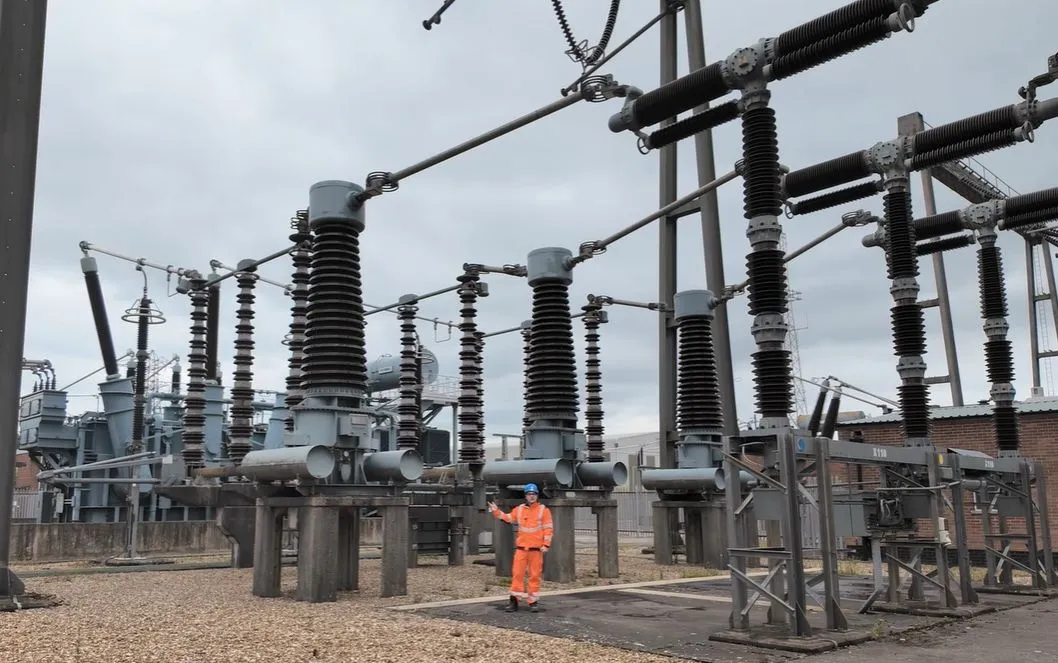
Being able to monitor voltages and currents is essential for many applications, with the national electrical grid being no exception. The obvious complication here is that the voltages and currents are massively higher than for those other applications, making safely monitoring these somewhat of an engineering challenge. The used systems for current monitoring are detailed by [Jordan Taylor], also known as [The Electric Brit], in an explainer of grid-level current transformers (CTs) and associated elements that help to provide galvanic isolation for safe current measurements.
Even if the basic principles remain the same, when you’re dealing with currents of 5 kA and more, the associated clearances and penalties for getting a detail wrong increasingly correspondingly. The CTs help to implement over-current protection (OCP), over-voltage protection (OVP) as well as differential protection, which is useful to detect leakage and shorts, which could also happen inside the CT if the windings become damaged.
Any such failure condition can trigger a circuit breaker to be tripped, or other corrective measures to be taken. Incidentally this also how it can be detected when someone is tapping off power in an illicit manner. As with all transformers they’re never perfect due to issues like core saturation, and thus performing accurate measurements and picking the right type of transformer is an art in itself, as explained in the video.
Advertisement
Ultimately CTs and the associated equipment are what makes an AC power grid responsive to any changes and with it into the reliable foundation of modern-day society.



















































You must be logged in to post a comment Login