
Entertainment
15 Movies To Watch if You Love ‘Spirited Away’

Hayao Miyazaki is perhaps Japan’s best-known director of animated films, having made 12 so far in his legendary career. Most agree that his best film is Spirited Away, which was the first foreign film to win the Academy Award for Best Animated Feature. It focuses on a young girl who winds up in the spirit world while moving to a new home and must survive working at a bathhouse run by an evil witch to save her parents — who were transformed into pigs — and ensure they can all escape.
Spirited Away continues to captivate audiences thanks to its detailed animation, diverse cast of well-rounded characters, and timeless themes regarding growing up, identity, resilience, and selflessness. Fortunately, many other films, both animated and live-action, tell similar stories and transport audiences into worlds bursting with creative visuals and wonder. This list will discuss the best movies to watch for fans of Spirited Away; they might not be as excellent as Miyazaki’s masterpiece, but they are perfect companions for it. These movies like Spirited Away are essential for Ghibli fans.
15
‘Wolf Children’ (2012)

Hana (Aoi Miyazaki/Colleen Clinkenbeard) is a young woman who falls in love with a man (Takao Osawa/David Matranga) who can shapeshift between human and wolf forms. They have two children together, Yuki (Momoka Ono and Haru Kuroki/Lara Woodhull and Jad Saxton) and Ame (Amon Kabe and Yukito Nishii/Alison Viktorin and Micah Solusod), but the father is tragically killed while out hunting. As the kids grow older and begin to develop their shifting powers, Hana does what she can to keep them safe and help integrate them into human society.
Wolf Children is a touching story about the difficulties of growing up from both a parent’s and child’s perspectives. Yuki and Ame find themselves at multiple crossroads in life and struggle to choose which path is right for them, while Hana does what she can to support them while coming to terms with the fact that their choices may not reflect her wishes. The result is a deeply moving exploration of love, letting go, and the quiet strength it takes to accept that we can only do our best for the people we care about.
14
‘Bridge to Terabithia’ (2007)

Aspiring artist Jess Aarons (Josh Hutcherson) is having a hard time in his adolescence due to financial troubles, school bullies, and an estranged relationship with his father, Jack (Robert Patrick). One day, he befriends his new neighbor, Leslie Burke (AnnaSophia Robb), and the two create a world of their own called Terabithia on the other side of a creek. They use Terabithia to work through the troubles in their lives, but tragedy soon strikes Jess in a way he wasn’t prepared for.
Bridge to Terabithia was co-written by author Katherine Paterson’s son, David L. Peterson, and he made sure the film captured all of the book’s poignant themes. The story is a coming-of-age tale about the loss of childhood innocence, first through Jess trying to find ways to cope with life’s various struggles and then by forcing him to come to terms with death and grief. The visual medium allows the filmmaker to use effects to bring the fantasy world to life, which better demonstrates how the power of imagination and storytelling can help us face the hurdles in our lives.
13
‘Alice in Wonderland’ (1951)

Bored with her sister’s lessons, Alice (Kathryn Beaumont) imagines a world where there are no rules. Just then, she spots a white rabbit (Bill Thompson) with a waistcoat proclaiming that he is late, and Alice follows him in a fit of curiosity. She falls down his rabbit hole and arrives in Wonderland, a nonsensical land full of such oddities as food that can make you grow or shrink, shapeshifting Cheshire Cats (Sterling Holloway), and an execution-happy queen who commands an army of playing cards.
Alice in Wonderland failed upon release due to suffering from too many cooks in the kitchen behind the scenes, but it has since become one of the most beloved of Disney’s Silver Age films. This status is thanks in large part to its art style, which blends expressive characters animated in bold colors with dark, foreboding backgrounds to create a world that feels both whimsical and off-putting. Alice also serves as a wonderful protagonist thanks to how she reacts to every strange new thing she comes across, and Beaumont’s perfect casting.
12
‘Wolfwalkers’ (2020)

Robyn Goodfellow (Honor Kneafsey) travels to Kilkenny with her father, Bill (Sean Bean), to hunt wolves in the woods on the orders of the authoritarian Lord Protector (Simon McBurney). She is bitten by a young wolf who is really a girl named Mebh (Eva Whittaker), whose spirit can leave her body when she sleeps and transform into a wolf. The bite ends up giving Robyn the same power, which places her relationship with her father, and their safety, in jeopardy.
Wolfwalkers is a fantastic fairy tale story that introduces modern audiences to a more ancient take on werewolves. The film has a gorgeous interpretation of how wolves use smell to see the world, which, combined with the fluid animation and bright colors, creates a great contrast between the freedom of the natural world and the claustrophobic world of civilization. That said, there is still some nuance in the human world; the Lord Protector is an authoritarian figure, but he genuinely sees himself as a righteous defender of civilization, which leads to some interesting character moments.
11
‘A Whisker Away’ (2020)

Miyo Sasaki (Mirai Shida/Cherami Leigh) is a young girl who has a crush on her classmate, Kento Hinode (Natsuki Hanae/Johnny Yong Bosch), though he publicly declares that he doesn’t like her. One day, a mysterious mask seller (Kōichi Yamadera/Keith Silverstein) gives Miyo a Noh mask that, when worn, transforms her into a white cat. As a cat, Miyo has a positive relationship with Kento, and the contrast to their human relationship, as well as her own difficult home life, causes her to see her cat form as preferable.
A Whisker Away is a fun take on the classic story of using animal transformation as a form of escapism. While Miyo’s cat form allows her to see the world from a different point of view, it also becomes a literal mask to hide her true self, which has the unfortunate effect of stunting her social and personal growth. The second act of the film even gets dark in places, but it still maintains plenty of levity and fun visual gags.
10
‘The Last Unicorn’ (1982)

After overhearing two hunters talk of the absence of unicorns, and learning that they were driven north by a monstrous Red Bull to the country of King Haggard (Sir Christopher Lee), the last unicorn in the world (Mia Farrow) leaves her forest home to see if she can find the others. She finds that the absence of unicorns has caused the world to lose some of its magic, and most humans see her as nothing more than a regular horse. However, she finds two allies: a bumbling wizard named Schmendrick (Alan Arkin) and a female outlaw named Molly Grue (Tammy Grimes).
The Last Unicorn‘s screenplay was written by the book’s author, Peter S. Beagle, so it sticks close to the plot and captures all of the book’s important themes. Namely, it captures the melancholic tone brought about by discussions about regret, loss, longing, and whether it is better to never know these emotions or not. All of this is beautifully captured through the gorgeous animation by Topcraft, the company whose fall would lead to the rise of Studio Ghibli.
9
‘The NeverEnding Story’ (1984)
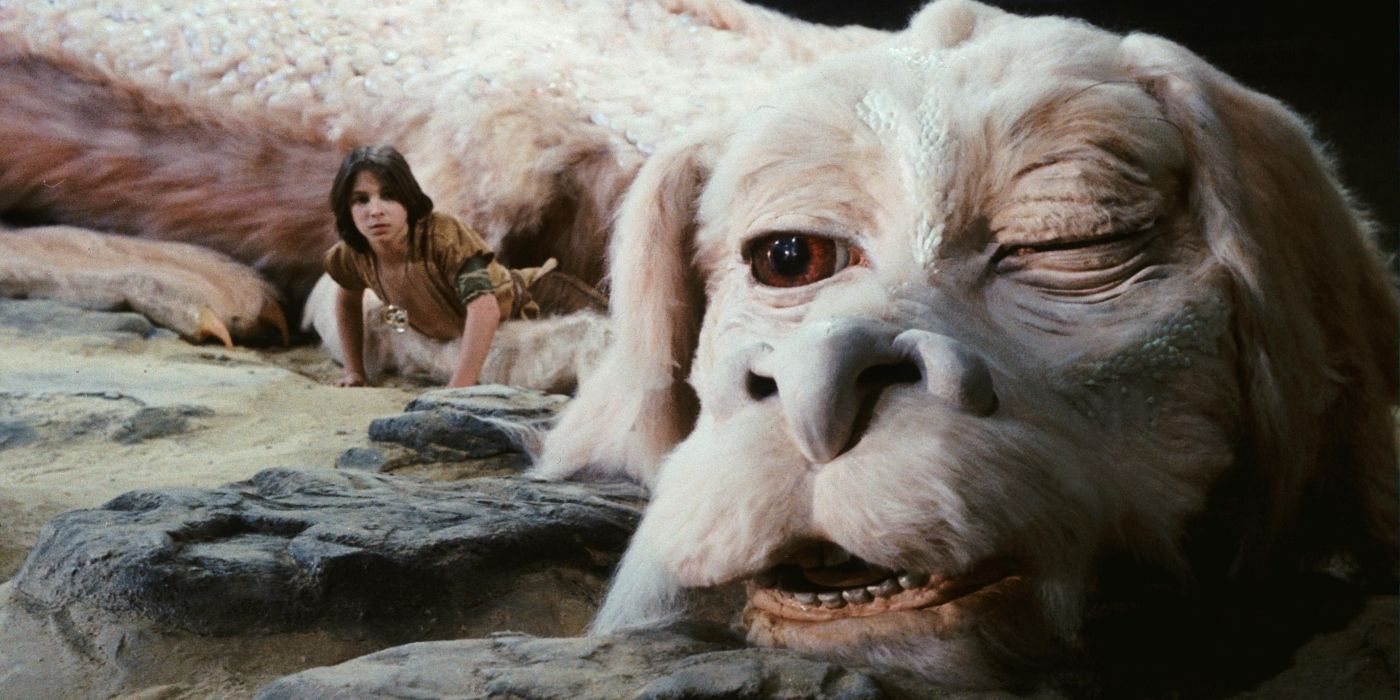
While evading bullies, Bastian Balthazar Bux (Barret Oliver) slips into a bookstore and makes off with one called The NeverEnding Story. It details a fantasy world called Fantasia, ruled by the Childlike Empress (Tami Stronach), that is slowly being eroded by an abstract force called The Nothing. A hero named Atreyu (Noah Hathaway) is tasked with finding a way to stop it, and the more Bastian reads his story, the more real it starts to feel.
The NeverEnding Story is one of the quintessential fantasy films of the 1980s, thanks to its phenomenal effects and profound themes. The Nothing is not a traditional antagonist: it is an abstract force that represents the death of hope, as seen in how it not only destroys the land but drives optimistic characters like the Rock Biter (Alan Oppenheimer) to despair. Yet the film’s message reminds us of the power of human imagination and creativity, as through it, we can inspire ourselves and others to fill nothingness with something beautiful.
8
‘Coraline’ (2009)

Coraline Jones (Dakota Fanning) and her overworked parents move into the Pink Palace Apartments, inhabited by all sorts of quirky tenants. One day, Coraline travels through a mysterious door in the wall that leads her to an alternate world created by her Other Mother (Teri Hatcher). Everything Coraline could hope for is given to her in this world, but a black cat (Keith David) warns her that not all is as it seems.
Coraline blends dark storytelling with the stylistic character designs of Henry Selick to create one of the darkest family films in recent memory. It uses these terrifying visuals to tell an important story about appreciating what you have and maintaining a healthy level of skepticism, especially when something seems too good to be true. Coraline herself is also a great child protagonist because the filmmakers ensure that she feels like a real kid, prone to moments of anger and cynicism, while still having a good head on her shoulders for getting out of trouble.
7
‘The Secret of Kells’ (2009)

As Viking raiders plunder Ireland, Abbot Cellach (Brendan Gleeson) of Kells oversees the construction of a massive wall and forbids his nephew, Brendan (Evan McGuire and Michael McGrath), from venturing into the forest. One day, master illuminator Brother Aidan (Mick Lally) arrives in Kells, bringing with him the incomplete Book of Iona, which, when finished, will transform darkness into light. Aidan requests Brendan’s help to finish the book, and in doing so, Brendan discovers the magic of his world and that of the fairies.
Magic is the best way to describe The Secret of Kells. Everything, from its gorgeous art style to its traditional Irish music, evokes feelings of another world, where nothing is entirely as it seems and foreboding darkness creeps in. Yet the film’s message is one of hope, for while the darkness will come eventually, light will always outlast it so long as people fight for it. This approach is captured through Brendan’s story, which sees him grow from a young boy too scared to venture into the woods to someone willing to defy his uncle and face down dark gods because he knows his work is worth completing.
6
‘Song of the Sea’ (2014)

Ben (James Ó Floinn/David Rawle) lives in a lighthouse with his father, Conor (Brendan Gleeson), and his mute sister Saoirse, whom Ben blames for the disappearance of their mother. One day, Saoirse discovers a seal skin coat, which makes her a Selkie, but the kids are taken to Dublin by their grandmother, and Conor throws the coat into the sea. When the siblings sneak away from their grandmother, they learn that Saoirse is destined to lead the fae folk back to their realm of Tír na nÓg, but only if she can reclaim her coat and voice.
Song of the Sea is one of the greatest examples of Ireland’s animated films and their ability to adapt classic mythology into timeless stories. Grief is at the forefront of this story, be it Ben’s resentment towards Saoirse, Conor’s broken emotional state, or the witch Macha (Fionnula Flanagan), who turns people to stone to shield them from sorrow. As Ben and Saoirse go on their adventure, he learns that the only way to heal from grief is not to bury it or lash out at others but to face it and find acceptance.
WordUp Morning
Ten stories, both sides of each, in five minutes. Free, every weekday at 7am, plus a Saturday weekend edition.
We'll email you a link to confirm. Unsubscribe any time.

Entertainment
Martha Stewart apology: Why her first statement on the homeless Halloween costume fell short

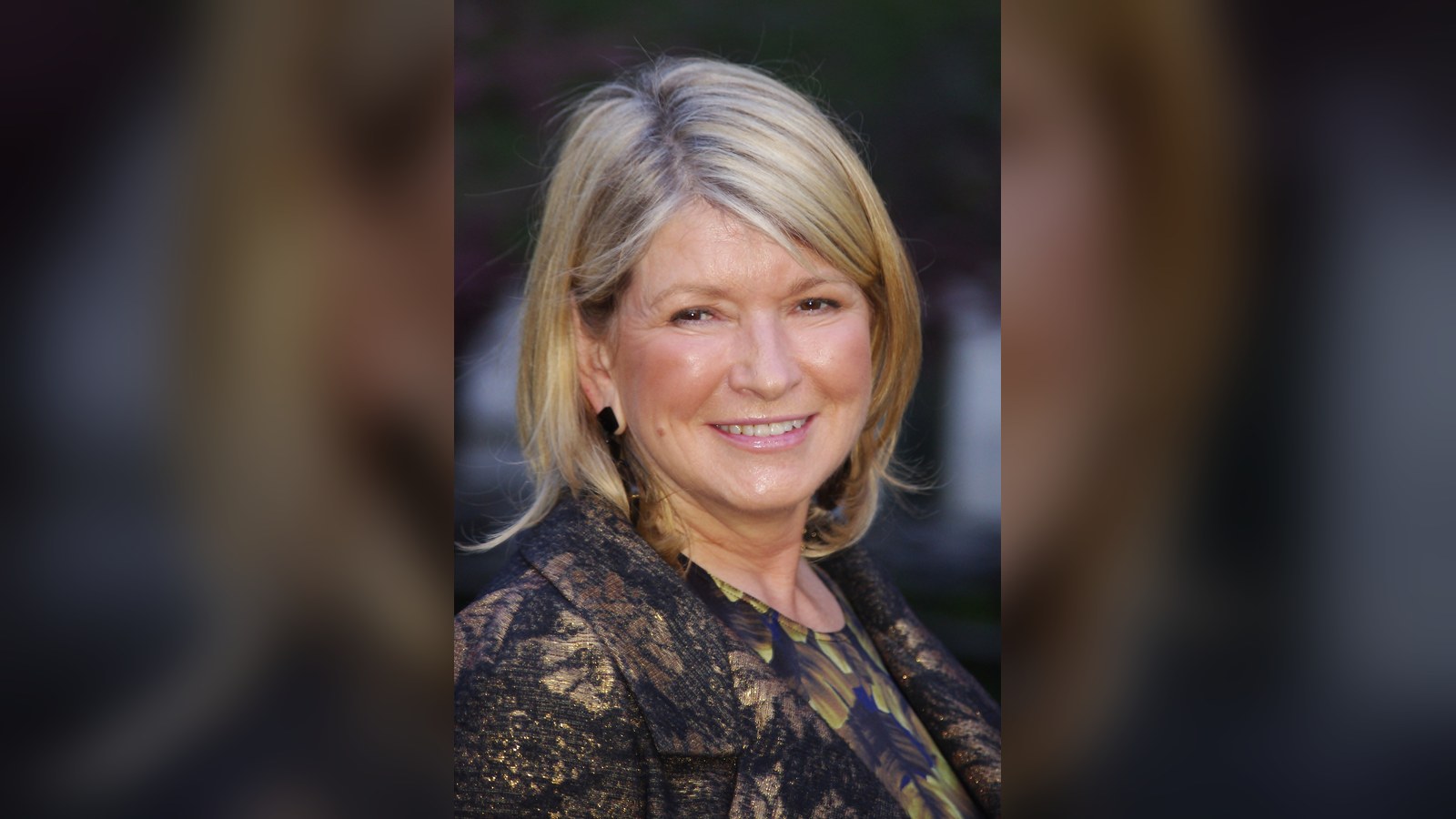
The Martha Stewart apology that finally arrived on Sunday came only after a first attempt at damage control made matters worse. The 85-year-old lifestyle mogul admitted she had “really screwed up” by dressing as a homeless person for Halloween, a costume that drew swift condemnation online.
What happened with the costume
On Saturday, 31 October, a photo appeared on Stewart’s Instagram showing her in torn clothes with dirt smudged on her face, holding a sign that read “I AM HUNGRY HELP ME!!” The caption read: “My QVC candles are perfect for Halloween!!!” According to the Evening Standard, the image appeared to have been included by accident in a carousel of posts promoting her candle collection on the shopping channel. That detail is the outlet’s reading of events, not something Stewart has confirmed. The post has since been deleted.
Whatever the cause, the pairing of a poverty costume with a product plug was hard to ignore. Users pushed back almost immediately. “Poverty isn’t a costume,” wrote one. Another asked who Stewart expected to find the joke funny, and answered their own question with: “Billionaires?” PR specialist Molly McPherson summed up the confusion in a post of her own, asking whether the look was “insulting? Demeaning? Confusing? All of the above.”
A first statement that missed the mark
Stewart’s initial response on Sunday said she was “distressed” that the costume had offended people. She said it had been meant to raise awareness of homelessness and that offense was “never my intention.” She also described homelessness as one of America’s greatest ongoing crises and said she had spent significant time and effort supporting charities that tackle it.
Many readers were not persuaded. The statement defended her motives without apologising, and some critics argued that someone with her wealth has better ways to raise awareness. “You have enough money to raise awareness without turning homelessness into a Halloween costume,” one person wrote. Another suggested she could have funded a soup kitchen or donated to a women’s shelter instead.
The fuller apology
A second statement followed. “It’s hard to admit when you’ve really screwed up,” Stewart wrote. “My earlier statement didn’t go far enough. I know many people are suffering economically. Wearing a costume like I did was insensitive and not funny. I am very sorry.”
The Martha Stewart apology is notable for what it drops. The talk of awareness is gone, and so is any suggestion that the offense lay in how people reacted rather than in the costume itself. Crisis communications often turn on that distinction: an apology tends to land better when it names the harm directly than when it explains the intent behind it.
Why the backlash cut deep
The reaction was sharpened by the scale of the problem Stewart was seen to be mocking. The Evening Standard noted that official figures put the number of homeless people in the United States at no fewer than 770,000. Against that, a billionaire-turned-brand-mogul posing with a “hungry” sign to sell candles struck many as tone deaf.
Stewart is also a public figure with a long history of reinvention. She built a catering business in the 1970s and became a household name in the 1990s with Martha Stewart Living. She was sentenced to five months in prison in 2004 after being found guilty on charges linked to an insider trading scandal. She then rebuilt her brand through television, food products and a series with her friend Snoop Dogg. In 2015 she sold her media company for more than $350m. A reputation that survived a prison term is unlikely to be ended by a deleted Instagram post, but the episode shows how quickly a promotional misstep can turn into a public reckoning.
For now, Stewart’s message is clear, even if it took two attempts: she says the costume was a mistake, and she has said sorry.
- Martha Stewart says she 'really screwed up' with homeless Halloween costume (BBC)
- Martha Stewart addresses backlash to homeless Halloween costume: 'I really screwed up' (standard.co.uk)
- Martha Stewart apologises for Halloween costume mocking the homeless (The Independent)
- Martha Stewart addresses backlash after dressing as homeless person for Halloween (foxnews.com)
Explore more on this topic with Vexel Search.
File photo: Martha Stewart 2011 Shankbone.JPG by David Shankbone, CC BY 3.0, via Wikimedia Commons.
WordUp Morning
Ten stories, both sides of each, in five minutes. Free, every weekday at 7am, plus a Saturday weekend edition.
We'll email you a link to confirm. Unsubscribe any time.
Entertainment
Strictly triple dance-off ends Lawrence Robb’s run as fifth couple exits and 10 remain

Header image: AI-generated illustration by WordUp News.
The first Strictly triple dance-off in the show’s history ended with Emmerdale actor Lawrence Robb and his professional partner Jowita Przystal leaving the competition on Sunday, after the judges voted them out.
Robb and Przystal landed in the bottom three alongside House of the Dragon actress Bethany Antonia and partner Nancy Xu, and actress Jaime Winstone and partner Carlos Gu. All three couples had ended up there through the combination of judges’ scores and public votes. Each danced their Halloween-week routine again: Antonia and Xu their jive, Winstone and Gu their salsa, and Robb and Przystal their tango to Ghostbusters.
How the judges decided
The format added a twist for the panel. Rather than choosing which couple to save, the judges had to name the one they wanted to eliminate. Shirley Ballas, Anton Du Beke and Craig Revel Horwood all picked Robb and Przystal, which settled the result. Motsi Mabuse’s casting vote was not needed, though she said she would have made the same choice.
The result is slightly surprising on paper. Robb and Przystal scored 26 on the Halloween leaderboard, above Tabby Stoecker and Mark Karmalita and Graeme Hall and Lauren Oakley, who were tied on 25. The sources do not give the public vote breakdown, but the pair’s position suggests viewer support was a factor in their landing in the bottom three.
Who topped the leaderboard
At the other end of the table, Lacey Turner and Vito Coppola led the week with a Charleston to Crazy Stupid Love, with each judge giving them a nine. The reports differ slightly on their total: one lists 36, the other 37. Four nines make 36, which is the figure that fits. John Nellis and Katya Jones followed on 35, with Cach Mercer and Maddie Ingoldsby and Delta Goodrem and Kai Widdrington both on 33.
One notable fall was Stoecker and Karmalita. They had topped the previous week’s scoreboard but dropped to the bottom of this one with their Quickstep to Black Magic.
A one-off twist, and a Halloween cameo
The Strictly triple dance-off appears to be a one-off. The show goes back to the usual two-couple dance-off for the rest of the series, so this week’s three-way contest was a Halloween-week special rather than a permanent change.
The results show stayed on theme. The professional dancers performed a vampire-themed group routine to Dracula by Tame Impala, which was recorded earlier in the year. It was narrated by Sir Ian McKellen, who read from Bram Stoker’s novel at the climax. Becky Hill also performed.
The remaining 10 couples return to BBC One on Saturday 7 November at 6.30pm, with the results show at 7.10pm the following night. After the first Strictly triple dance-off, the competition now enters a stage where every elimination is a straight two-way contest.
Explore more on this topic with Vexel Search.
WordUp Morning
Ten stories, both sides of each, in five minutes. Free, every weekday at 7am, plus a Saturday weekend edition.
We'll email you a link to confirm. Unsubscribe any time.
Entertainment
Halloween Box Office Sinks to Roughly $60 Million as Holmes Documentary Edges Out ‘Clayface’

Header image: AI-generated illustration by WordUp News.
The Halloween box office was a quiet affair in North America, and the film that came out on top was a near-three-hour documentary in its third weekend. A24’s “You Can See Everything,” about Elizabeth Holmes, took the top spot with an estimated $10.6 million. It beat Warner Bros.’ “Clayface” by about $200,000, according to studio estimates released Sunday.
Final numbers arrive Monday, and a photo finish can flip. Still, the estimates point to a modest victory for a film that cost only $7 million to make.
Why the Halloween box office stalled
Total ticket sales for the weekend came to roughly $60 million, according to Rentrak. That ranks among the slowest weekends of 2026, and one estimate suggested it would not climb past $63 million. There were no major new wide releases, and the holiday fell on a Saturday, usually the biggest moviegoing night.
“With costume parties, trick-or-treating and countless other Halloween activities, theaters were facing some pretty stiff competition for people’s time and attention,” said Rentrak’s Paul Dergarabedian. Families tend to choose trick-or-treating over the multiplex when the holiday lands on a weekend.
The weekend was still an improvement on last year’s. The 2025 Halloween frame totaled about $49 million, led by “Regretting You” and “Black Phone 2.” The year as a whole is also running well ahead, with domestic box office up more than 17% from 2025 at nearly $8.5 billion.
A documentary’s unlikely run
“You Can See Everything” has now earned about $63.9 million in North America, and it hasn’t opened internationally yet. This was its first weekend at No. 1. Dergarabedian called that “a rare achievement for any film, let alone a documentary running more than three hours.”
Variety reports that enthusiastic word of mouth and repeat viewings are driving the run, as audiences return to process what the film shows. It is expected to finish as one of the biggest documentaries in decades.
‘Clayface’ and the economics of a smaller superhero film
“Clayface,” an R-rated origin story for the Batman villain, fell 57% in its second weekend. It has made $44.1 million domestically and $83 million worldwide, against a reported $44 million budget. That is lean for DC. Last year’s “Superman” cost $225 million, and July’s “Supergirl” cost $175 million. Variety attributes the lower spending to the film’s darker tone and a title character less famous than DC’s headliners. Bigger bets follow with “Superman: Man of Tomorrow” next summer and “The Batman: Part II” in 2028.
The rest of the top five
Laika’s stop-motion fantasy “Wildwood” held third with $7.5 million, down 39%, for a $25.9 million domestic total. Its $100 million budget makes a theatrical profit unlikely, Variety notes.
“Wicker,” a comedy with Olivia Colman and Alexander Skarsgård, took fourth with $4.1 million, a 28% drop. Its $13.2 million total looks healthy for a Sundance pickup that cost $2.5 million to acquire. “Street Fighter” was fifth with $3.2 million after a 63% decline. It has made $53 million in North America and $91.9 million worldwide, but its $82 million budget and the share of ticket sales theaters keep leave it far from breaking even.
Further down, the Sundance title “The Only Living Pickpocket in New York” added more than 1,000 locations and earned $1.9 million for eighth place. Netflix’s World War II film “The Mosquito Bowl” made $455,000 from 349 theaters. Variety also noted that Zach Cregger’s “Resident Evil” reboot has reached $400 million globally.
Taken together, the results show a market that is healthy over the year but sensitive to the calendar. The Halloween box office was held back by the date, and the weekend’s winner was a small documentary rather than a studio tentpole.
Explore more on this topic with Vexel Search.
WordUp Morning
Ten stories, both sides of each, in five minutes. Free, every weekday at 7am, plus a Saturday weekend edition.
We'll email you a link to confirm. Unsubscribe any time.
Entertainment
Tovah Feldshuh Says ‘Tensions Are Not Rising’ on ‘Nobody Wants This’ as Season 4 Remains Unrenewed
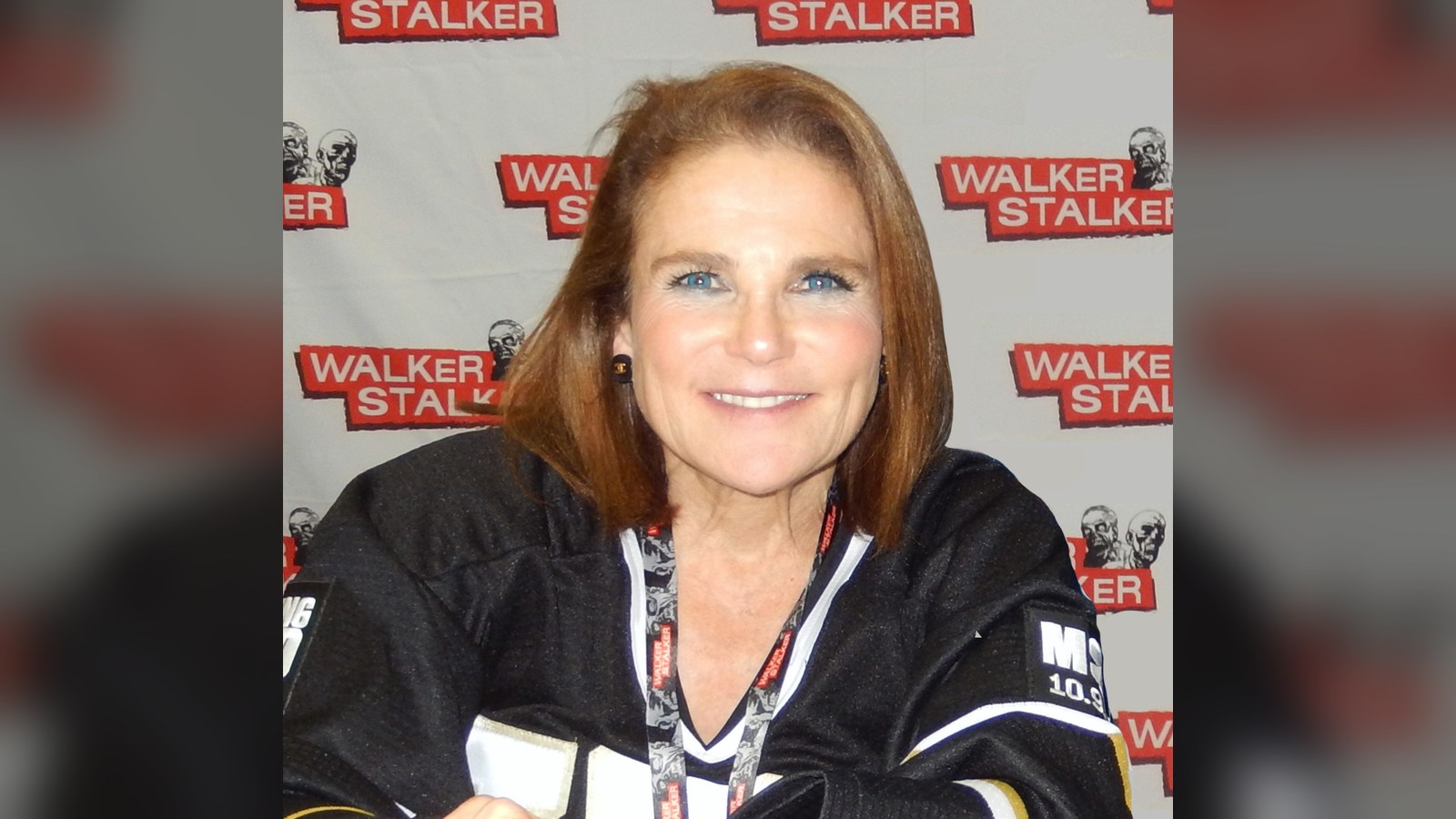
Tovah Feldshuh is drawing a line between disagreement and discord on the set of Netflix’s “Nobody Wants This.” The actress, who plays Bina, the mother of Adam Brody’s Rabbi Noah, says the cast’s split over the Israel-Palestine conflict is real but is not turning into friction at work.
Tovah Feldshuh Separates ‘Tensions’ From ‘Profound Differences’
Feldshuh responded on Threads to a user who claimed “tensions are emerging” on the show. Her reply was pointed: “Tensions are NOT RISING. Profound differences of opinion are.” She asked people not to “conflate the two” and said none of it “will be brought to the set.” She added that she deeply enjoys filming the series and hopes it is “chosen” to continue for a fourth season.
That last line matters because the show has not been renewed. Creator Erin Foster has said she has “more story to tell,” but Netflix has not committed to a Season 4.
How the Disagreement Began
The debate traces back to a September GQ interview in which Brody spoke plainly about the war in Gaza. “Put me down as thinking it’s a genocide,” he said. “Put me down as wanting a free Palestine.” He called the death and misery “awful” and said the situation seemed to be reaching a breaking point. Deadline’s account of the interview adds that he voiced hope that “another administration” could correct policies he believes worsen the crisis.
Foster, who is Jewish and drew on her own relationship with her husband for the show, responded more cautiously. She called the issue “complicated” and said she loves Brody but disagrees with him. She likened the set to “dinner tables around the world where people are having debate and discussion and disagreeing,” and added, “that’s OK.”
Feldshuh’s reaction was much sharper. She told The New York Post that accusing the Jewish people of genocide is “wild” and “right out of Hitler’s playbook,” arguing that it takes the victim and makes the victim the perpetrator. Her Threads post suggests she wants the dispute understood as a clash of convictions, not a breakdown in working relationships.
A Show That Has Steered Clear of Politics
The public argument is striking partly because the series itself has avoided the conflict. “Nobody Wants This” follows Joanne (Kristen Bell), an agnostic podcaster who falls for the progressive Rabbi Noah and starts exploring conversion to Judaism, a choice that unsettles both of their families. Its themes are faith, identity and family expectations, not geopolitics.
Still, a series built on Jewish identity can hardly keep real-world debates at bay once its stars start speaking publicly. The cast’s comments suggest Foster’s “dinner table” comparison is what the production is aiming for: open disagreement without turning the set into a battleground.
Whether that holds will be tested only if Netflix orders more episodes. For now, Tovah Feldshuh is making clear that she wants to return, and that, in her telling, the disagreement stays off the soundstage.
Explore more on this topic with Vexel Search.
File photo: Tovah Feldshuh 2016 (cropped).png by Neshamasheli, CC BY-SA 4.0, via Wikimedia Commons.
WordUp Morning
Ten stories, both sides of each, in five minutes. Free, every weekday at 7am, plus a Saturday weekend edition.
We'll email you a link to confirm. Unsubscribe any time.
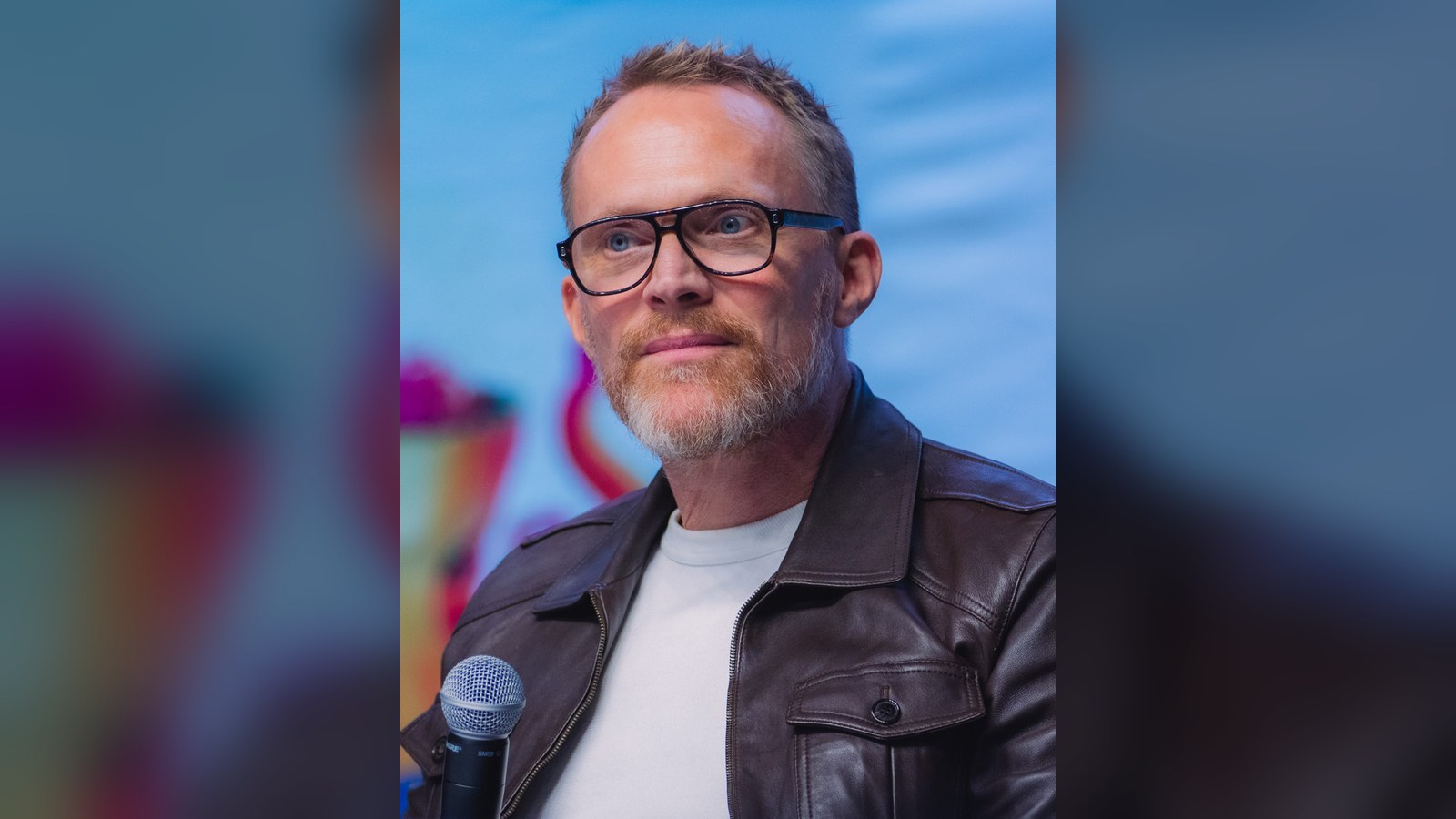
Playing a near-indestructible android didn’t spare him from a very human injury. Paul Bettany says he burst about 10 blood vessels in one eye while filming Marvel’s VisionQuest, the result of what he calls some seriously overcooked acting.
What Paul Bettany said about the blood vessels
Bettany shared the story on Jimmy Kimmel Live, as reported by Deadline and Variety. The scene called for him to pretend a device on his head was messing with his brain. “I was just wildly overacting,” he said, “and I blew out about 10 blood vessels in my eye.” His verdict: “It was a lesson in less is more.”
According to Variety, Kimmel then showed the audience a photo of the blood-filled eyeball. Bettany said the redness lasted “like two weeks.” He assumes it “must’ve cost production so much” to remove it with CGI. That is his own guess about how the show handled it, not a confirmed account of the visual effects work.
A joke about the actor’s own eyesight
Bettany also found some irony in the mishap. “The actor playing Vision is kind of myopic,” he joked, adding that he “can’t see a thing” without his glasses. He said that is “great depending on the actor you’re working with.”
The anecdote fits the show’s premise, which asks Vision to look inward. VisionQuest is set after WandaVision (2021). It follows the character as he communicates with several AI personas embedded in his programming while trying to work out who he is. With a bounty on his head, he goes on the run with a mysterious teen played by Ruaridh Mollica, who may be his reincarnated son.
Where VisionQuest stands now
Variety reports that the eight-episode series debuted on Disney+ on October 14. Deadline says the Season 1 finale airs November 10. Bettany first appeared in the Marvel Cinematic Universe as the voice of J.A.R.V.I.S. in the first Iron Man. He then played Vision in Avengers: Age of Ultron, Captain America: Civil War, Avengers: Infinity War and WandaVision.
James Spader returns as Ultron, and the cast also includes Henry Lewis, Jonathan Sayer, James D’Arcy, Orla Brady and Emily Hampshire. The coverage doesn’t say which episode or scene the injury happened in, so viewers will have to guess whether the brain-device sequence is the one.
The sources don’t say whether Bettany needed any medical treatment beyond waiting for the redness to fade. What they do show is an actor laughing at himself. Paul Bettany’s blood vessels paid the price for a scene he now says would have worked better with a lighter touch.
- ‘Vision Quest’s Paul Bettany On How He Blew 10 Blood Vessels In His Eye While “Wildly Overacting”: “A Lesson In Less Is More” (Deadline)
- Paul Bettany Says He ‘Blew Out’ 10 Blood Vessels in His Eye While Filming ‘VisionQuest’: ‘I Was Just Wildly Overacting’ (Variety)
- Marvel star Paul Bettany blew out 10 blood vessels in his eye during wild ‘VisionQuest’ scene (foxnews.com)
File photo: Paul Bettany – Los Angeles Comic Con 2025.jpg by Kevin Paul, CC BY 4.0, via Wikimedia Commons.
WordUp Morning
Ten stories, both sides of each, in five minutes. Free, every weekday at 7am, plus a Saturday weekend edition.
We'll email you a link to confirm. Unsubscribe any time.
Entertainment
Taika Waititi Calls Critics “Obsolete” as Klara and the Sun Earns Just $1.7M Worldwide
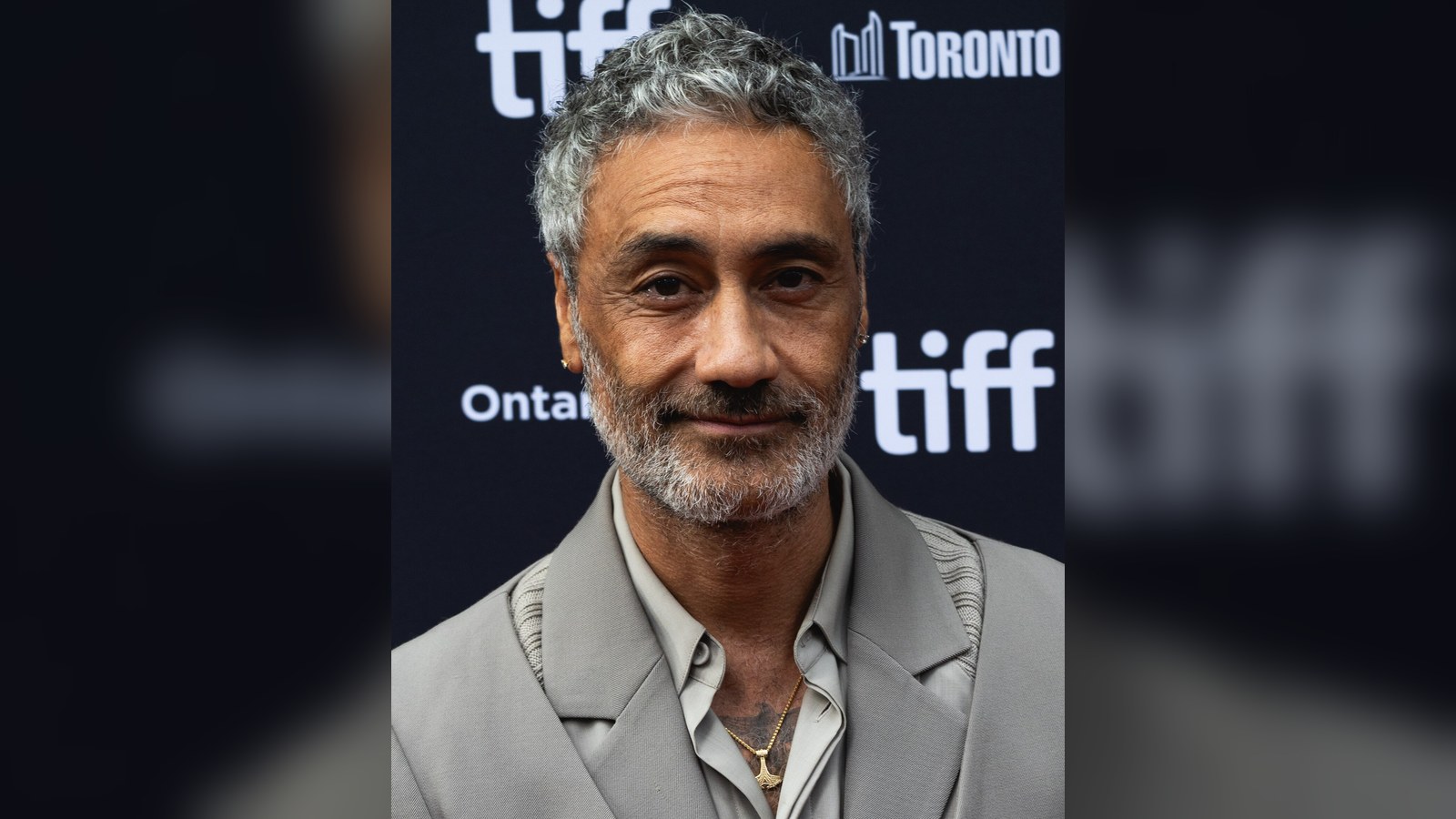
Taika Waititi has told critics they are “irrelevant, out of touch, obsolete” and “in the bin” after Klara and the Sun opened to a rotten Rotten Tomatoes score and a box office launch that barely registered. The film had grossed about $1.7 million worldwide at the time of reporting.
The Oscar-winning director posted the broadside on Instagram on Halloween, sharing the film’s poster along with its Rotten Tomatoes audience and critics scores. “I haven’t read a review of anything aimed at me or my peers in almost 15 years. But I do listen to the people,” he wrote. He then urged followers to “spare a thought for those sad lost souls who couldn’t achieve their dreams of becoming artists, and thus became critics,” adding that they were “the same people who also hated Jojo Rabbit.”
What the Klara and the Sun scores show
The gap Waititi highlighted is real, though the exact figures shift depending on the outlet and the hour. Reports put the critics’ score between 26 and 28 percent. The audience score was cited at 78 percent in his post, and Deadline noted it had slipped to 73 percent by its report. IGN put it at 74 percent. Either way, viewers have been far kinder than reviewers.
Deadline’s own review said the director seemed a natural fit for Kazuo Ishiguro’s 2021 novel, given his taste for peculiar, cringe-tinged comedy. It concluded that the film “just doesn’t deliver on any of the fronts it promises.” Deadline also reported that the negative notes began with the film’s screening at the BFI London Film Festival this month.
His Jojo Rabbit jab is less clear-cut. IGN pointed out that the 2019 film holds an 81 percent critics’ score on Rotten Tomatoes and drew strong notices, including an 8.5/10 from IGN itself. It is not obvious which negative reaction he means.
A box office launch that barely registered
The commercial picture is harder to spin. Sony reportedly cut the release of Klara and the Sun to roughly 880 North American theaters, down from an anticipated 2,000, according to the sources. The film opened to an estimated $701,000 to $725,000 domestically, depending on the report, and landed outside the top 10. IGN, citing Deadline, said Sony stopped reporting the film’s earnings over the following weekend. Reported budgets range from about $20 million to $40 million.
Some commenters on Deadline’s story blamed thin marketing rather than the reviews, saying they had seen almost no trailers. Others said a film tracking that low would never get a big promotional push. The sources don’t settle that argument, and it’s impossible to say from the numbers alone how much the reviews, the marketing or the material itself drove the result.
The film, and Waititi’s view of AI
The adaptation stars Jenna Ortega as Klara, an “Artificial Friend” bought for a gravely ill teenager, with Amy Adams as the girl’s mother. Waititi’s AI comments at the New York premiere, reported by The Hollywood Reporter, now sit awkwardly beside the public spat. He said AI use in the industry is probably inevitable, but that he wants it used “as a tool, as opposed to a replacement.” He added, “I don’t want to replace humans. I want to work with them.”
Directors pushing back on critics is hardly new, and the audience scores give Waititi some ground to stand on. But with Klara and the Sun struggling to find moviegoers at all, a public attack on reviewers is unlikely to change the box office story. The film is a small-scale test of how far a director’s name and a famous novel can carry a project when both reviews and release plans go wrong.
- Taika Waititi Blasts Critics as 'Irrelevant, Out of Touch, Obsolete' Following Klara and the Sun's Negative Reviews (IGN)
- Taika Waititi Calls ‘Klara and the Sun’ Critics “Irrelevant, Out Of Touch, Obsolete” (Deadline)
- ‘Klara and the Sun’ Director Taika Waititi Calls Critics “Sad Lost Souls” Over Negative Reviews (The Hollywood Reporter)
Explore more on this topic with Vexel Search.
File photo: Taika Waititi photo by pouria afkhami (cropped).jpg by Pixoos, CC BY-SA 4.0, via Wikimedia Commons.
WordUp Morning
Ten stories, both sides of each, in five minutes. Free, every weekday at 7am, plus a Saturday weekend edition.
We'll email you a link to confirm. Unsubscribe any time.
Entertainment
Michael Mann gun range accident: Heat director, 83, treated for “superficial” leg wound
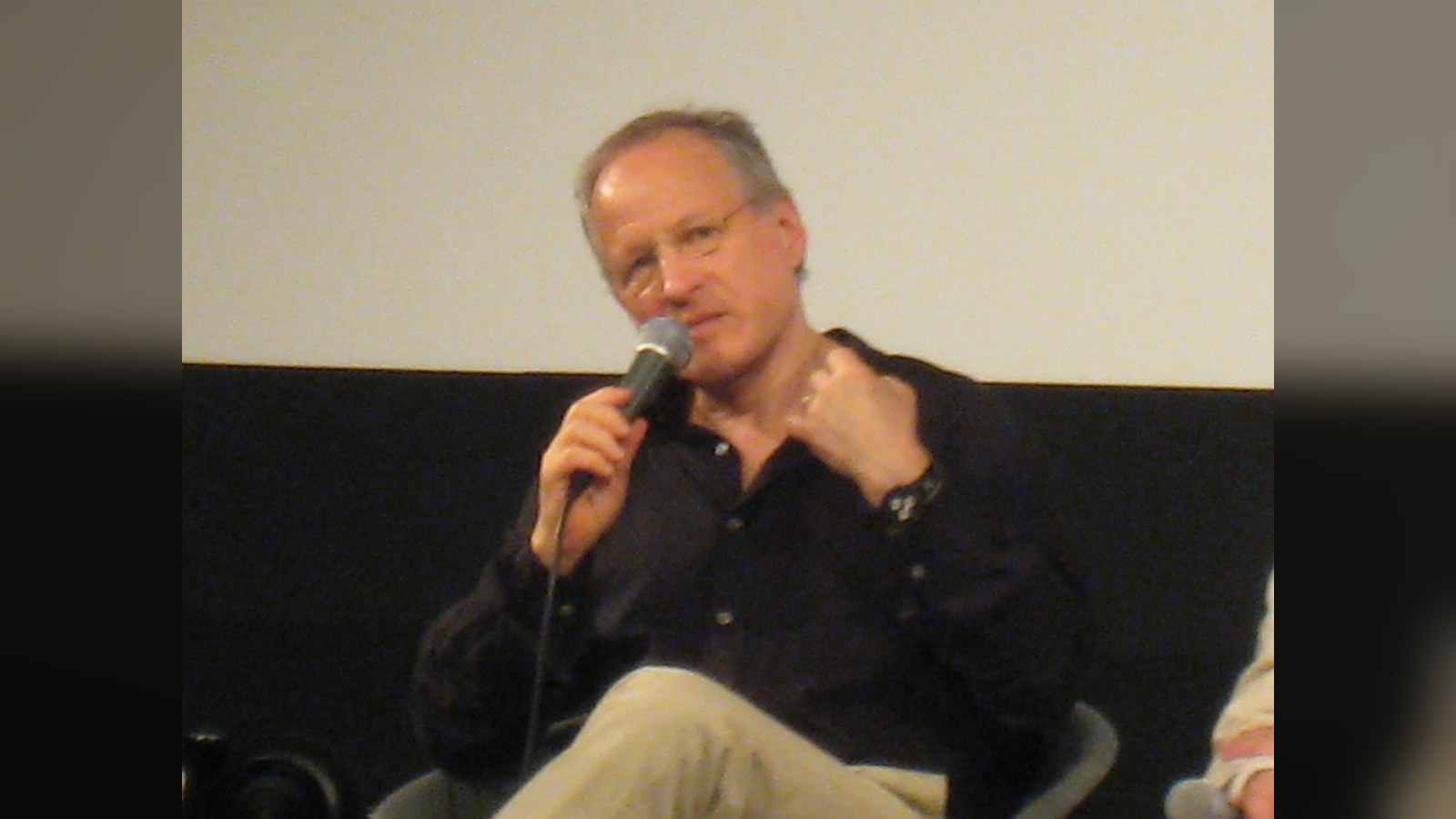
Michael Mann, the 83-year-old director of Heat, was treated at a hospital and released after a Michael Mann gun range accident in Los Angeles on Saturday, according to his representative. The injury was described as superficial, and the filmmaker is now said to be on his way home.
The Associated Press reported the news after speaking with Mann’s representative on Sunday. The story first surfaced on the celebrity site TMZ. In a statement quoted by several outlets, the representative said: “On Saturday, at a gun range, a weapon accidentally discharged while holstered resulting in a superficial injury to film director Michael Mann. He was treated and is being released.”
What we know about the incident
The core facts are consistent across the coverage. The accident happened Saturday, which was Halloween, at a Los Angeles gun range. The Guardian names the venue as The Range LA. A gun went off while still in its holster, and the bullet struck Mann in the leg. Emergency services were called and he was taken to a hospital.
The finer details differ slightly between outlets, and some remain unclear. TMZ, as relayed by the Guardian, said Mann had been trying to holster the weapon when it discharged. IGN, also citing TMZ, said the incident happened during a training exercise of some kind and that Mann had no intention of harming himself. The representative’s statement says only that the gun discharged while holstered. IGN itself noted that additional details are unclear.
Several reports stressed Mann’s familiarity with firearms. The Independent said he has apparently been an experienced target shooter for decades and that the accident happened at a sanctioned range. That detail fits a long-standing reputation for rigorous, hands-on preparation in his crime films, though none of the sources suggest the film work was connected to Saturday’s events.
What it means for Heat 2
The timing will draw attention because Mann is in the middle of preparing his long-awaited follow-up to Heat. According to IGN, Christian Bale confirmed in February that he would soon begin filming in Chicago, and Leonardo DiCaprio joined the project in July. Both are reportedly set to play Vincent Hanna and Chris Shiherlis, though IGN framed the casting details as reported rather than confirmed. Stephen Graham and Ebon Moss-Bachrach are also expected to appear, and the film will draw on Mann’s novel of the same name.
The sources disagree on the schedule. IGN said filming had been expected to begin this month, while the Independent, citing the AP, said the sequel is supposed to begin filming early next year. Nothing in the reporting says the injury will delay production, and the description of the wound as superficial suggests no major disruption. Still, no one involved has commented on the production calendar since the incident.
A busy stretch for a veteran filmmaker
The Michael Mann gun range accident comes during an active period for the director, whose credits include Manhunter, The Last of the Mohicans, Collateral, Thief, Public Enemies and the 2023 drama Ferrari with Adam Driver and Penélope Cruz. He also helped create the 1980s TV series Miami Vice. IGN reports that last month he premiered a director’s cut of his 2006 Miami Vice film and discussed his latest changes at a Q&A at Beyond Fest.
For now, the picture is reassuring. A holstered weapon discharged, an experienced shooter was hurt, and the injury was minor enough that he was released the same weekend. Further details, including how the discharge happened, have not been made public, and Mann’s representative has so far offered only the brief statement above.
- Director Michael Mann accidentally shoots himself in the leg at gun range (The Guardian)
- Heat Director Michael Mann Hospitalized After Accidentally Shooting Himself in the Leg (IGN)
- Hollywood director Michael Mann hospitalized after accidentally shooting himself at Los Angeles gun range (foxnews.com)
- ‘Heat’ director Michael Mann sustains ‘superficial injury’ at gun range (The Independent)
Explore more on this topic with Vexel Search.
File photo: Michael Mann – French Cinematheque – 4th July 2009.jpg by Thbz, CC BY-SA 3.0, via Wikimedia Commons.
WordUp Morning
Ten stories, both sides of each, in five minutes. Free, every weekday at 7am, plus a Saturday weekend edition.
We'll email you a link to confirm. Unsubscribe any time.
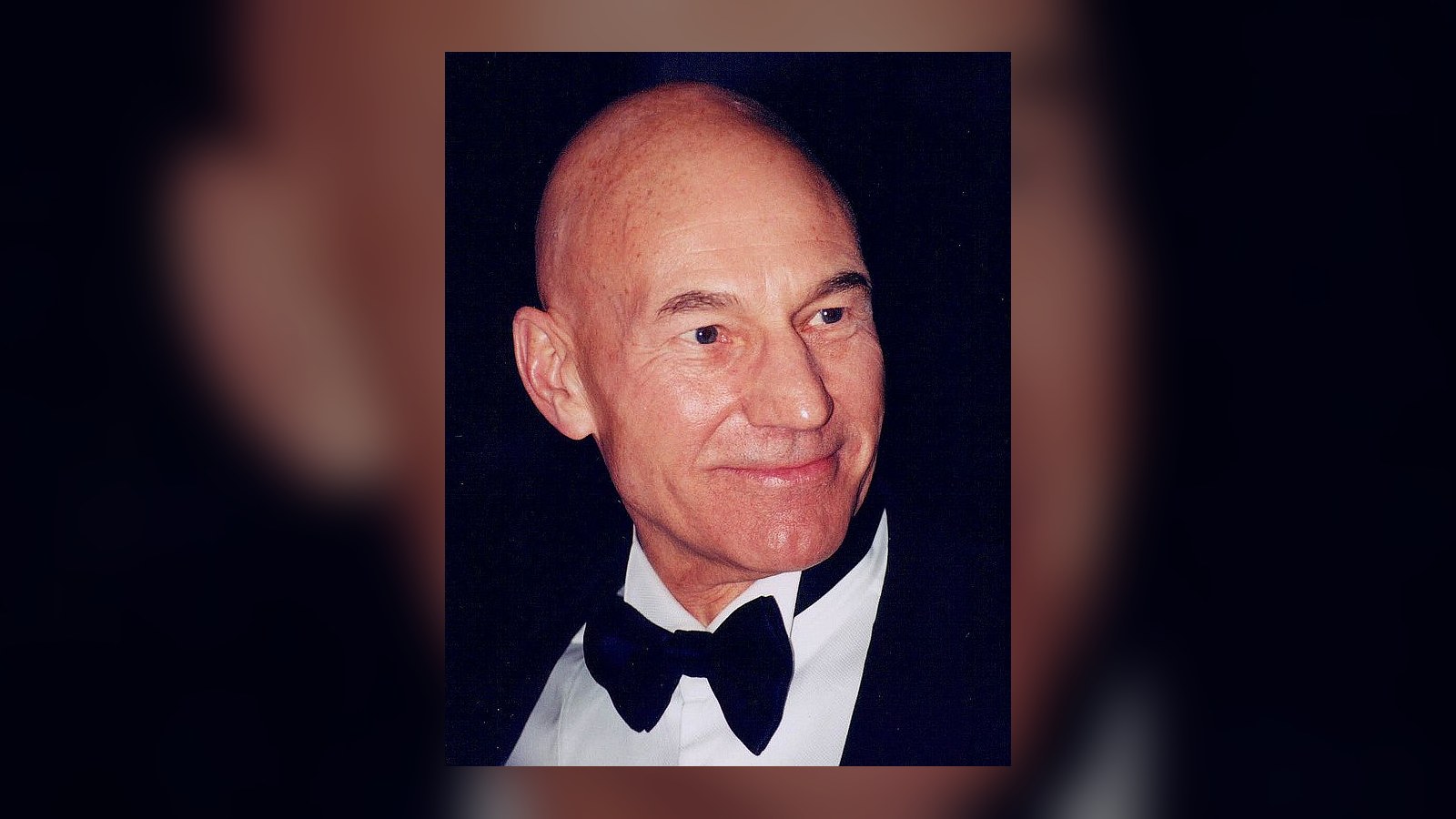
The Patrick Stewart death, announced after the actor died at 86 at his Los Angeles home on Wednesday evening, has drawn tributes from across theatre, film and politics, with Dame Judi Dench among the first of his contemporaries to speak publicly about the loss.
Speaking to the Press Association at an event marking 50 years of the National Theatre building, Dame Judi, 91, said she was “very, very shocked” and “very surprised” by the news. She described a colleague who never coasted. “He’s never been one of those actors who never felt like it that night, he was always very, very committed,” she said. “He’ll be much missed and he was much admired.”
A shared stage and a shared classroom
Dench and Stewart both belonged to the Royal Shakespeare Company. Stewart joined in 1966 and went on to appear in dozens of its productions, building a stage reputation long before television made him a household name. The two also appeared together in Playing Shakespeare, a 1982 television masterclass series.
That grounding in classical theatre was the thread running through many of the tributes. Sir David Suchet, Dame Harriet Walter, James McAvoy and Sir Ian McKellen were among those who paid their respects. Downing Street said Stewart “never forgot his working-class Yorkshire roots” and brought “joy to millions”. On Friday’s edition of BBC’s The One Show, presenters Roman Kemp and Clara Amfo closed the programme with a 2023 clip in which Stewart recalled his first time on a stage. “I felt safer than I’d ever felt in my life,” he said.
What the family statement said
A statement on Stewart’s Instagram page said he died after a “brief and poignant journey with Alzheimer’s disease and Lewy body dementia”. The Mirror reported that his wife, Sunny, confirmed the news. The statement said he was surrounded by family and friends, live music, prayers and laughter, and it remembered him for “the dignity, compassion and humanity he brought to every role – in his art and life.”
It also highlighted his philanthropy and activism, including work for survivors of domestic violence, refugees, veterans’ mental health services and animal welfare. It described him as a Knight, Chancellor, motor sport enthusiast and lifelong Huddersfield fan. Rather than flowers, the family asked for contributions to the Johns Hopkins Alzheimer’s Disease Research Centre Fund and the Alzheimer’s Foundation of America’s caregiver resources.
A career from Shakespeare to the Starship Enterprise
Born in Mirfield, West Yorkshire, in 1940, Stewart had a career of six decades. He won two Olivier Awards for supporting roles in Shakespeare, for Antony and Cleopatra in 1979 and Hamlet in 2009. He also earned four Emmy nominations and a Grammy for a children’s recording of Peter and the Wolf. Global fame came as Captain Jean-Luc Picard in Star Trek: The Next Generation from 1987, and later as Professor Charles Xavier in the X-Men films, beginning in 2000. Fans will see him once more as Xavier in Avengers: Doomsday, due in mid-December.
Understanding the conditions behind his death
Coverage of the Patrick Stewart death has also prompted questions about the two conditions named. Lewy body dementia, also called dementia with Lewy bodies, is caused by clumps of protein in the brain’s nerve cells. The Independent reports that it is thought to affect around 100,000 people in the UK. Around 5 per cent of diagnosed dementia cases are recorded as this type, but specialists argue it is under-diagnosed and the true share could be as high as 20 per cent.
Symptoms can include hallucinations, confusion, slow movement, tremors, disturbed sleep and fainting spells. Many of these overlap with Alzheimer’s, which makes diagnosis difficult. A US physician told HuffPost there is no single definitive test. There is no cure, though medication and therapies can ease symptoms. Survival after diagnosis is estimated at five to seven years on average, though it can be far longer.
Public awareness of the condition rose after Robin Williams was diagnosed with it posthumously following his 2014 death. For Stewart’s admirers, the Patrick Stewart death is a reminder of how little warning these illnesses can give, and of the dedication Dench says he brought to every performance.
- Judi Dench ‘shocked’ and ‘very sad’ to hear of death of Sir Patrick Stewart (standard.co.uk)
- Lewy Body Dementia and Alzheimer’s: Symptoms and what you need to know after Patrick Stewart’s death (The Independent)
- BBC presenters pay touching tribute to Sir Patrick Stewart after tragic death (mirror.co.uk)
- Patrick Stewart Had Lewy Body Dementia. Here's What To Know About The Condition (huffingtonpost.co.uk)
Explore more on this topic with Vexel Search.
File photo: Patrick Stewart 1999.jpg by Kingkongphoto & www.celebrity-photos.com from Laurel Maryland, USA, CC BY-SA 2.0, via Wikimedia Commons.
WordUp Morning
Ten stories, both sides of each, in five minutes. Free, every weekday at 7am, plus a Saturday weekend edition.
We'll email you a link to confirm. Unsubscribe any time.
Entertainment
Selma Blair apology: “So sorry” to those she frightened as two assault counts head to a January hearing
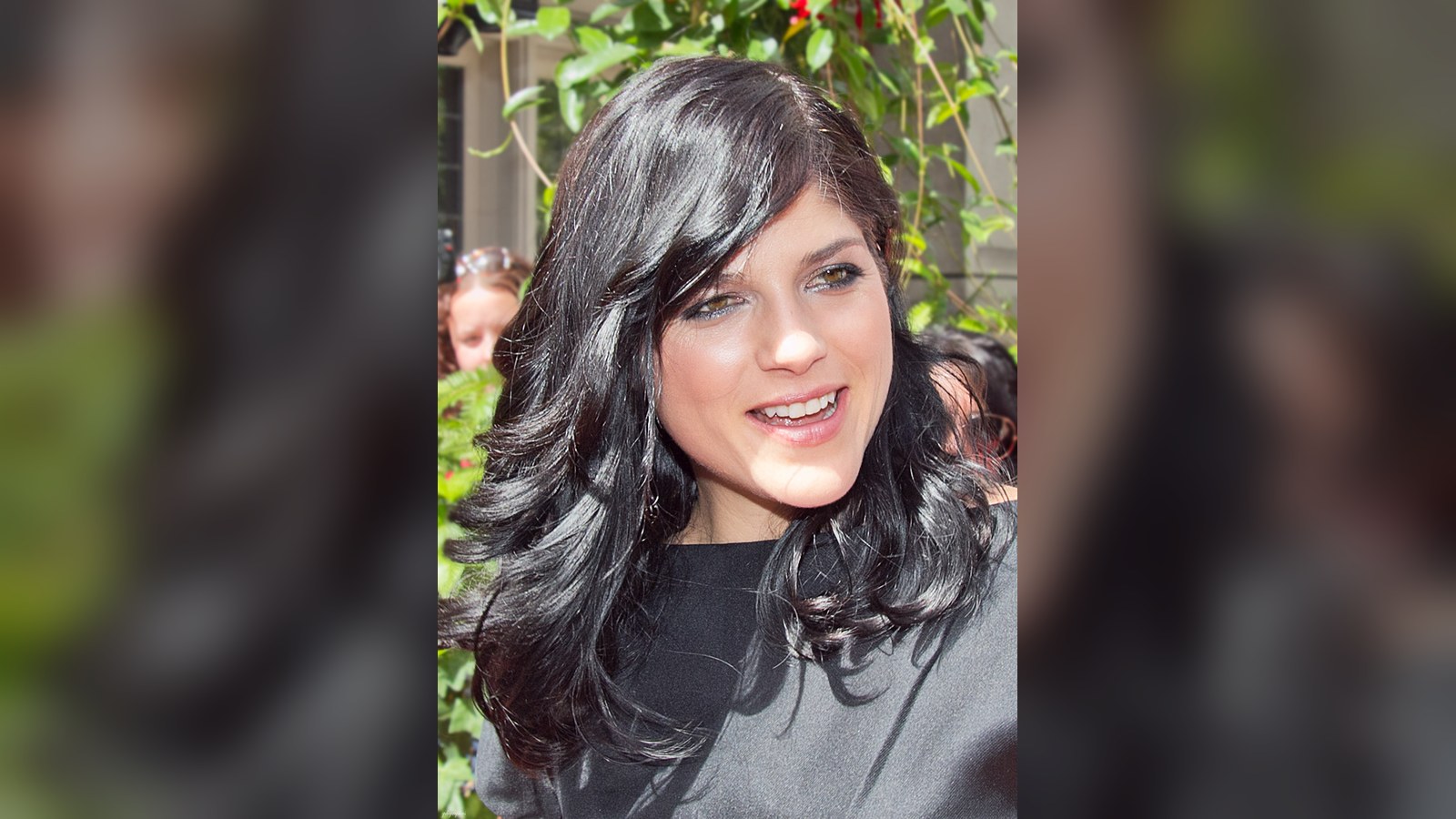
The Selma Blair apology arrived about three weeks after the October 11 flight that led to criminal charges. In an Instagram video, the actor said she was “so sorry” to anyone she hurt, frightened or alarmed. She has pleaded not guilty to two counts of second-degree assault, and her next court date is in January.
What the Selma Blair apology did and did not say
Blair, 54, kept the video tightly scoped. She acknowledged she had been quiet since the incident and said her fans deserved to hear from her directly. She also said her lawyers had asked her not to discuss that day, and that she was following their advice. She did not address the allegations, the medical explanation offered on her behalf, or the people named in the charging documents.
What she offered was a statement of character. “Not one day ever have I intended to hurt or frighten anyone,” she said, adding that she took the matter “very seriously.” She thanked people who had sent support and said her service dog, Scout, who travelled with her, was doing well. She has lived with multiple sclerosis since her 2018 diagnosis. She closed by saying she would now focus on her health and her son.
The allegations behind the case
According to charging documents, Blair was detained when the Delta flight from Los Angeles landed in New York and was taken to hospital for evaluation. A police officer accompanying her to Jamaica Hospital Medical Center alleged that, while being secured to a stretcher, Blair freed one leg from the straps and repeatedly kicked the officer in the face, neck and chest. The officer reported serious pain and substantial swelling. A nurse later said Blair kicked her in the chest while moving her.
Blair was arraigned in Queens on the two second-degree assault counts. A judge set bail at $20,000 cash or a $60,000 bond. These are allegations only, and Blair has entered a not guilty plea.
The defence: a medical emergency
The explanation from Blair’s side has stayed consistent. Her representatives said from the start that her alleged behaviour stemmed from a severe medical emergency. In court, her lawyer, Shawn Barnes, said her actions were not intentional. He told the judge she had missed several doses of a powerful medication that controls severe neurological symptoms, according to reports in the New York Daily News and New York Post. He added that she boarded the flight amid a heavy workload and hit her head in the air. Together with the effects of altitude, he said, this produced “a state of severe confusion and disorientation.”
A later statement from her representatives went further, criticising coverage as “built almost entirely on a police statement and a decade-old headline.” It said Blair still has bad days and lives with daily pain. It also said she has pseudobulbar affect, a neurological condition secondary to her MS, which the statement said bears on how a medical episode looks to people who do not know her.
What happens next
The Selma Blair apology does not change the legal picture. The charges stand, the medical defence has so far been presented only through her lawyer and representatives, and the court has yet to test any of it. The January hearing will be the next point at which the case moves forward. For now, the video reads as a personal gesture, an attempt to acknowledge those affected without saying anything that could complicate her defence.
Explore more on this topic with Vexel Search.
File photo: Selma Blair (6541171199).jpg by Gordon Correll, CC BY-SA 2.0, via Wikimedia Commons.
WordUp Morning
Ten stories, both sides of each, in five minutes. Free, every weekday at 7am, plus a Saturday weekend edition.
We'll email you a link to confirm. Unsubscribe any time.
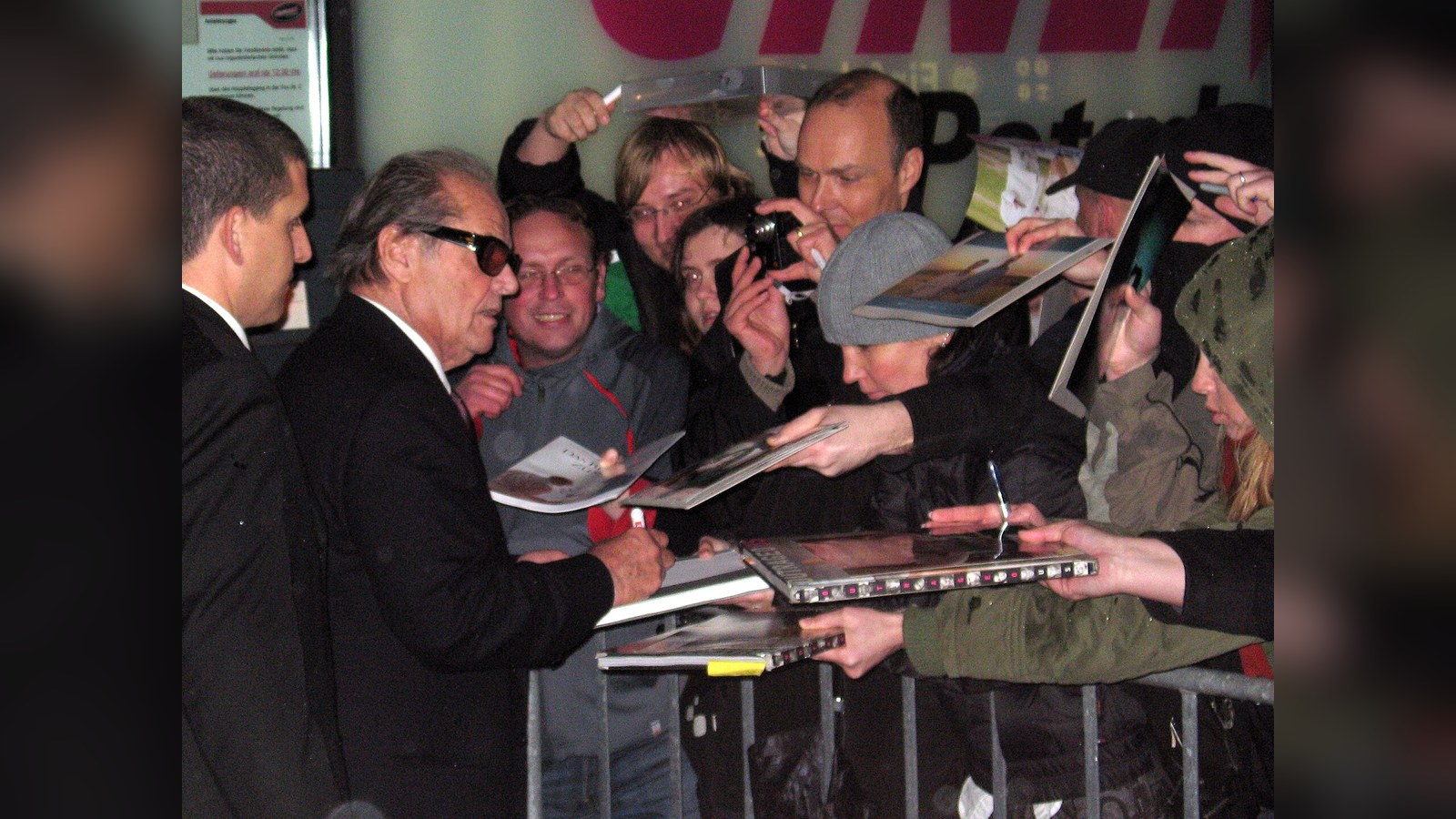
The latest Jack Nicholson update comes from one of his oldest collaborators, and it is reassuring: the three-time Oscar winner is fine, just largely out of sight. Michael Douglas, who produced Nicholson’s breakthrough-to-legend vehicle “One Flew Over the Cuckoo’s Nest,” said the actor has “disappeared” from public life but remains “well.”
Douglas, 82, made the remarks at an event in Swansea, Wales, while promoting his memoir “One Helluva Ride.” Asked about Nicholson, he said: “I would have liked to have acted with Jack. He’s not working any more. He’s well. He has disappeared. I know that.” He added: “I still see him, but he is fine. He is up there by his house and walking around in his slippers. It happens. He deserves it. I understand. He is a few years older than me, but I understand.”
A Friendship Built Behind the Camera
The two men have never appeared on screen together, a fact Douglas openly regrets. Their connection dates to the mid-1970s, when Douglas produced “One Flew Over the Cuckoo’s Nest,” the 1975 film in which Nicholson played Randle McMurphy. According to The Independent, Douglas acquired the rights to Ken Kesey’s novel from his father, Kirk Douglas, who had previously held them. The film won five of its nine Oscar nominations, including best picture and best actor for Nicholson, and earned Douglas an Academy Award as producer.
Why Nicholson’s Silence Has Drawn So Much Attention
Nicholson, 89, has never formally announced his retirement. His last film role was in 2010’s “How Do You Know,” some 16 years ago. For an actor once seen at nightclubs, premieres, talk shows and courtside at basketball games, the withdrawal has been conspicuous. The Independent noted that music producer Lou Adler once said on the “WTF” podcast that Nicholson prefers “sitting under a tree and reading a book.” Actor Carol Kane, who worked with him in the early 1970s, told the paper in 2024 that she still checks in on him, and that he is “still answering my calls.”
Douglas’s portrait of an elder statesman enjoying a quiet life fits a pattern of glimpses over the past couple of years. Nicholson has made only occasional appearances at Los Angeles Lakers games. In February 2025, he turned up on the “Saturday Night Live” 50th anniversary special on NBC, attending with his daughter Lorraine and introducing Adam Sandler, as he had done a decade earlier at the show’s 40th. That remains his last known public appearance.
This April, Lorraine posted a rare photo to her Instagram story marking his 89th birthday. It showed him smiling and clapping beside singer Joni Mitchell. She did not say when it was taken.
What the Latest Jack Nicholson Update Does and Doesn’t Tell Us
Douglas offered no medical details and no hint of a comeback, and his comments should be read as a friend’s reassurance rather than an official statement. But the tone is notable. Rather than lament Nicholson’s absence, Douglas framed it as earned. With Nicholson due to turn 90 next April, the message from a man who has known him for half a century is that the star has chosen a private life and appears content with it.
Douglas’s memoir, meanwhile, has been drawing attention for its candid recollections of his marriage to Catherine Zeta-Jones and of past relationships. It is his own legacy project, he has said, but as this Jack Nicholson update shows, it is also prompting questions about the old friends and collaborators who shaped his career.
- Jack Nicholson Has ‘Disappeared’ but Is ‘Well,’ Says Michael Douglas: ‘I Still See Him’ (Variety)
- Michael Douglas Gives Update on Jack Nicholson: He’s ‘Well’ But Has ‘Disappeared’ (rollingstone.com)
- Michael Douglas provides rare update on close friend Jack Nicholson: ‘I still see him’ (The Independent)
- Michael Douglas gives rare update on Jack Nicholson as he says the actor has "disappeared" (digitalspy.com)
Explore more on this topic with Vexel Search.
File photo: Jack Nicholson.0911.jpg by Franz Richter (User:FRZ), CC BY-SA 2.5, via Wikimedia Commons.
WordUp Morning
Ten stories, both sides of each, in five minutes. Free, every weekday at 7am, plus a Saturday weekend edition.
We'll email you a link to confirm. Unsubscribe any time.

Antonelli world champion at 20 years and 68 days, F1’s youngest ever, as Verstappen wins in Mexico

Rebecca Minkoff x Grace Ann Nader Capsule: 3 Pieces, From $239 to $398, Born at the CFDA Awards

Martha Stewart apology: Why her first statement on the homeless Halloween costume fell short


-

 Fashion7 days ago
Tuesday’s Workwear Report: Classic Shetland Blazer
-

 Gaming7 days ago
GameMaker Commercial Use Goes Free on PC From January 1, 2027, but Console Still Costs
-

 Crypto7 days ago
Goldman Sachs, JPMorgan and Morgan Stanley are dominating the AI stock boom. Here’s their edge
-

 Tech & AI4 days ago
Meta’s Style Sketch AI Fashion App Debuts in 3 Countries, Joining a Crowded Virtual Try-On Race
-

 Tech & AI6 days ago
University of Copenhagen Data Breach Exposes 525,000 People, and 20,000 Campus PINs
-

 Tech & AI4 days ago
CMA Meta Investigation Targets Terms Affecting “Thousands of UK Businesses”
-
 Fashion6 days ago
From Zurbarán to Rothko: How Art Shaped the Spring 2027 Runways
-

 Business & Hustles6 days ago
NBC News Creates New Head of Digital Content Job, Hires Quartz Co-Founder Kevin Delaney
-

 Crime6 days ago
RAF Fairford plot: two men charged, court told of alleged £70,000 from handler police link to Iran
-

 Entertainment6 days ago
Meghan to Co-Host Junior MasterChef Australia in 2027, Ending a Six-Year Hiatus for the Show
-

 Crypto7 days ago
Russia Crypto Exchangers Hit 17 as Sberbank and VTB Open Retail Trading by December
-

 Crypto6 days ago
Zcash Grants Funding Could End: Co-Founder Says $125 Million Treasury Is Enough
-

 Crypto6 days ago
VanEck Wealth Builder ETF Puts Indirect Bitcoin in One 0.26% Fund
-

 Crypto4 days ago
Binance Hack Losses: $6.34B Set Aside, $5B Already Held in Matching Tokens
-

 Crypto6 days ago
Tokenized Nasdaq-100 Fund Launches on Stellar as Janus Henderson’s Onchain Assets Top $1 Billion
-

 Tech & AI7 days ago
Tailscale warns of SSH flaws allowing root privilege escalation
-

 Crime6 days ago
Road rage van driver jailed for 3.5 years after deliberately running over cyclist while delivering blood
-

 Tech & AI7 days ago
Anker Halloween Sale: 20% Off Chargers With Code HALLOWEEN20 Through November 1
-

 Tech & AI7 days ago
300+ Employees Fight $1.3 Million Boston Dynamics ICE Deal Over Robot Dogs
-

 Business & Hustles7 days ago
JetBlue Loss Widens to $257 Million as Fuel Bill Jumps 61% and Shares Sink
You must be logged in to post a comment Login