Connect with us

Business

Nvidia boss says AI ‘doesn’t need new laws’ as safety concerns grow

Published

on

Jack Clark, a man with short brown hair, dressed in a blue coat

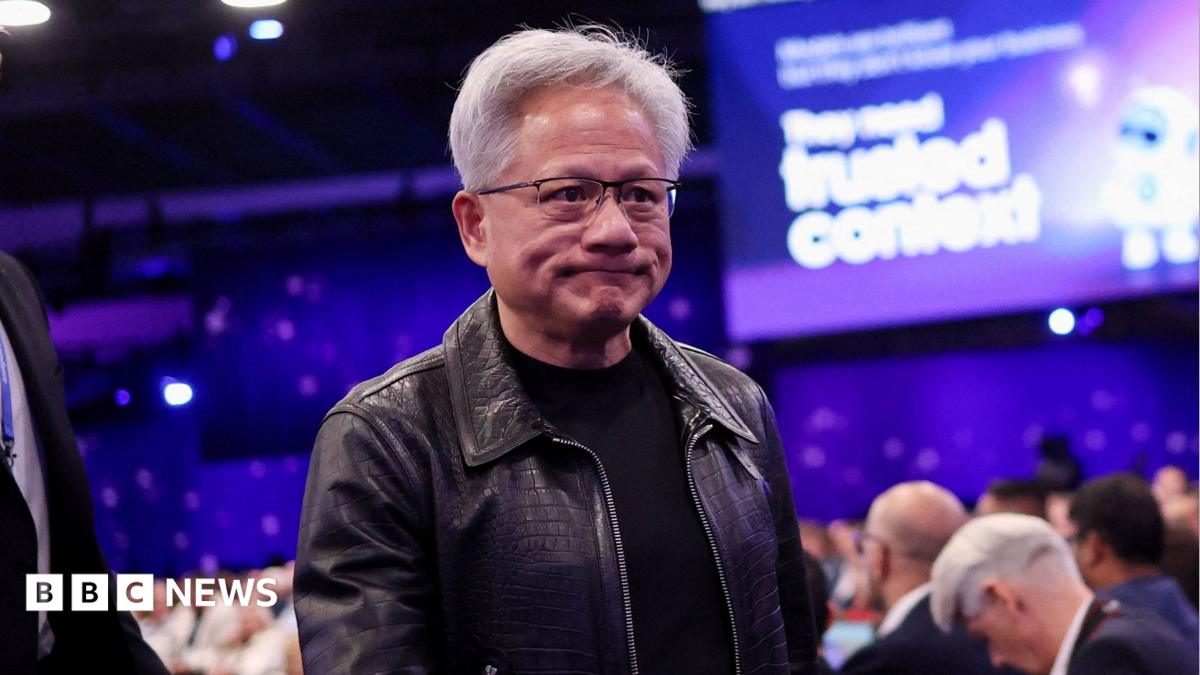
The heads of artificial intelligence (AI) firms should decide if new versions of the technology should be released, Nvidia boss Jensen Huang has said in response to growing concerns about AI’s threat to humans.

“We don’t need new laws or regulations,” Huang said, adding that there should not be a “false choice” between the speed of innovation and the safety of AI products.

Nvidia is the biggest company in the world by valuation, with its profits having boomed as a result of rampant demand for the AI computing chips it makes.

Huang’s stance on AI safety contrasts with those in the industry who have recently expressed fears that the technology could wipe out humanity.

Advertisement

A post from an artificial intelligence researcher who quit AI firm Anthropic went viral last week after it claimed AI could kill all humans by the end of the decade if left unchecked.

Other AI executives and experts responded saying they agreed. Then, over the weekend, Anthropic chief executive Dario Amodei called for the pace of all AI development to slow, external and urged governments to regulate the industry.

The post was applauded by OpenAI chief exuecutive Sam Altman, co-founder of Google’s DeepMind Demis Hassabis, and Elon Musk, owner of social media site X and AI assistant Grok.

However, some industry figures have said the fears were overblown and were being jumped on to generate hype for the industry.

Advertisement

Addressing the potential dangers of AI at a salesforce conference in San Francisco on Tuesday, Huang referred to current advances as “a new industrial revolution” but insisted that AI companies should be left to essentially regulate themselves.

“Safety is paramount. However, safety is an engineering problem,” Huang said.

He added that if at any time a leader of an AI company lacks confidence in their product they should choose to not release it.

“That’s a very obvious thing to do,” Huang said. “Run as fast as you can, but if at any time you feel the institution is not in control, take a pause.”

Advertisement

The idea of AI executives being left to entirely regulate themselves has struck some in the industry as a bad idea.

Jack Clark, an Anthropic executive and co-founder, told the BBC on Monday that leaving AI to be a “totally unregulated industry” was “rolling dice with immense risks”.

Patrick Hillman, the chief business officer of Logical Intelligence, which is chaired by Yann LeCun, a sage of the AI industry, noted Tuesday how little faith people have in tech companies to do anything truly in the public interest, external.

“The only institution that Americans might trust less than Washington these days is Silicon Valley. I have worked and lived in both and I assure you both have earned this scepticism,” Hillman said.

Advertisement

“If you believe what you are building is dangerous, show us what you are prepared to stop doing,” he added.

Continue Reading
Click to comment

You must be logged in to post a comment Login

Leave a Reply

Business

Werner Enterprises, Inc. (WERN) Presents at Morgan Stanley’s 14th Annual Laguna Conference Transcript

Published

on

OneWater Marine Inc. (ONEW) Q1 2026 Earnings Call Transcript

Nancy Hipp
Morgan Stanley, Research Division

Next we have Werner Enterprise and very happy to have with us President and CFO, Chris Wikoff, President and CLO Nathan Meisgeier and [indiscernible] Gentlemen, thanks so much for joining us. Obviously, the cycle has taken precedence in [indiscernible] So start off by giving us a how [Audio Gap]– where are we right now?

Christopher Wikoff
Executive VP, Treasurer & CFO

Advertisement

[Audio Gap] Over indexing on more recent spot rates being a little bit softer, debate on is that seasonal or is that sub seasonal. It’s a data point. But when we’re talking about rate, we’re really talking about overall blended rate, contractual rates that continue to be high single digits, low double digits in terms of contract renewals.

So all of that is positive. It’s more supply driven. We think that’s going to continue. Enforcement has been multipronged. It’s also maturing. So not to deep dive into that right now. But while it’s supply driven, the freight flows continue to be positive, steady.

We’re seeing higher bid volume and some record highs on bid volume in Dedicated, some continued elevated mini bids in one way as I think shippers are transitioning from spot and evaluating the market and transitioning to more to contract and some of that in-between space. So overall, I think it’s positive. Not much to point to in terms of demand outside some of the tech and data center build-out. But overall, I think the fundamentals are strong

Advertisement
Continue Reading

Business

Boohoo owner Debenhams sells Nasty Gal for $16m

Published

on

Business Live

‘Non-core’ sale part of group’s transformation strategy and follows Sheffield warehouse sale

Sequin Colour Block Plunge Wide Leg Jumpsuit from NastyGal

A sequin colour block plunge wide leg jumpsuit from NastyGal(Image: NastyGal)

Boohoo owner Debenhams Group has sold its “non-core” Nasty Gal brand for $16m (£12m) as it continues with its transformation strategy.

Manchester-based Debenhams has offloaded the Nasty Gal brand and the global intellectual property rights to New York’s White Space Group New York, LLC, operating as WSG Brands. In the last financial year, Nasty Gal generated gross merchandise value of £12m and saw an adjusted EBITDA of £0.4m.

Advertisement

Debenhams said of Nasty Gal: “It is non-core and not material to the group”. And it added: “The transaction aligns with our strategy of transitioning to a marketplace-led business model that is capital-lite.”

Group CEO Dan Finley said: “Our turnaround continues at pace. The disposal of this non-core asset aligns with our strategy and further strengthens the balance sheet following the £90m sale of our Sheffield Distribution Centre.”

The group announced last week that it was selling the South Yorkshire building to Primark owner Associated British Foods. After that deal was revealed, ABF announced the warehouse would support a new Primark strategy to start offering home delivery for the first time.

ABF’s chief executive George Weston said: “Primark has made significant progress in building its digital capabilities and will continue this through both growing click & collect and by offering home delivery in Great Britain in the future.

Advertisement

“There is now an opportunity for incremental and profitable growth through this channel.”

Dan Coatsworth, head of markets for AJ Bell, said Primark offering home delivery was the “biggest UK retail news of the year”.

“Having full online transactional capabilities is something the company has always shied away from,” he said.

“It has always argued that low price-point items are uneconomical to send, particularly if someone is only ordering a pair of socks or a T-shirt costing a pound or two.

Advertisement

“It stubbornly retained this view for longer than anyone expected, before easing back by launching a click and collect service.

“We’re now primed for the full home delivery experience. While physical stores remain relevant, online shopping is well established and Primark clearly had no choice but to adapt to the modern retail world.”

Continue Reading

Business

Foreign Secretary Ed Miliband on Gaza and his mother

Published

on

Foreign Secretary Ed Miliband on Gaza and his mother

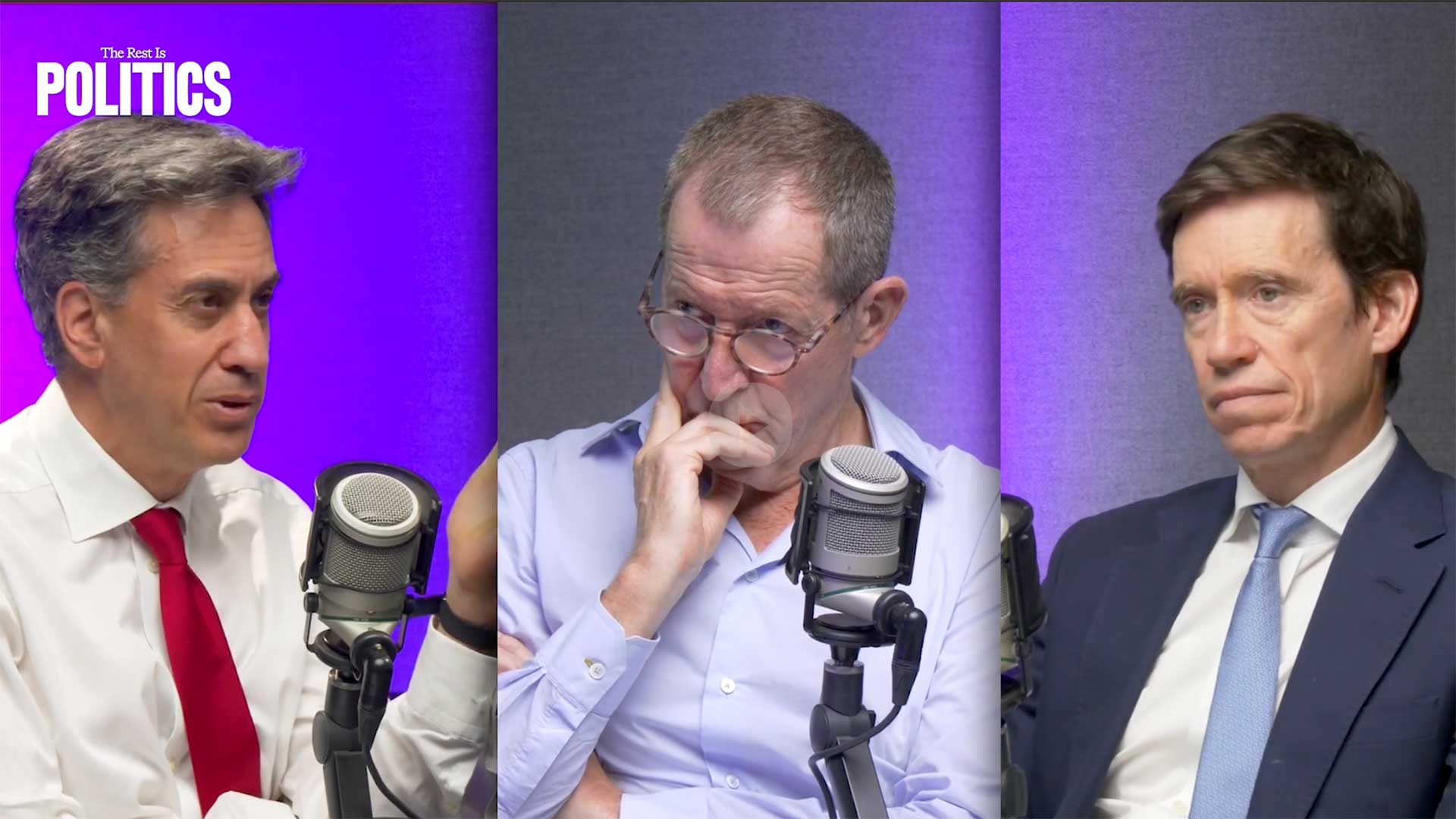
Foreign Secretary Ed Miliband has said the memory of his late mother, a Jewish refugee who died at the end of May, shaped his decision to speak out more forcefully on the treatment of Palestinians, in an interview with The Rest Is Politics podcast.

Miliband told presenters Alastair Campbell and Rory Stewart that he had wrestled with the language he should use and how far he should go, particularly over the terms “ethnic cleansing” and “war crimes”.

He said his mother had lost her father and 60 relatives in the concentration camps, and had spent 20 years of her life focused on the situation of the Palestinians.

Free newsletters
Advertisement

The stories that matter to UK business, straight to your inbox.

Advertisement

“I thought a lot about, as I wrestled with this statement and what I should say and what I shouldn’t say and how far I should go, I wrestled a lot with what she would say. And she’d say: look at what is happening to Palestinians. Look at what is happening to these poor people. It’s wrong, and you’ve got to call it out,” he said.

Sanctions and Gaza

Miliband defended the Government’s new sanctions targeting settlement expansion in the occupied West Bank. According to a House of Commons Library briefing, the measures announced this month include an import ban on goods from illegal settlements, restrictions on services supporting settlement expansion and a ban on settlement advertising in the UK. The briefing says the Government planned to implement the new trade legislation within six to nine months, and that France and Canada announced similar measures.

Asked whether the sanctions would work, Miliband said: “And will it definitely succeed? I can’t say it’ll definitely succeed. Does it have a chance of succeeding, particularly with other international partners acting? Maybe it does. And that’s the whole intention behind it.”

He said people “the world over” were “deeply disturbed by what is happening in the West Bank and Gaza”, adding: “I think the Israeli government is losing friends. I mean, it’s not gaining allies; it’s lost allies. It’s losing allies all over.”

Advertisement

On Gaza, Miliband described the humanitarian situation as “unspeakable and appalling”. He said restrictions on so-called dual-use goods meant “very, very innocent goods” were being stopped from entering, and that “it seems like absolutely a deliberate strategy”.

He said Israeli ministers “have made comments that would be suggestive of wanting to not just kill Hamas terrorists, but at least push out and displace all residents of Gaza”.

“All of us condemn in the strongest terms the murder that Hamas did on October the 7th, but nothing can justify what has unfolded in Gaza since then,” he said, adding that 1,200 Palestinians had been killed since what he called “the so-called ceasefire”.

Miliband said Gaza had “mobilised a whole generation of people, but those people were right, not wrong”. He said a number of people, including from the Global South, had contacted him since he made the statement.

Advertisement

US relations and Hormuz

Pressed by Campbell and Stewart on how the UK should respond to a changing relationship with the United States, Miliband said: “Our alliance with the US matters, but if what you’re saying is we need to recognise the world has changed, particularly regarding our relationship with Europe and the importance of our relationship with the European Union, but also working with middle-sized powers beyond that, a hundred percent, and that’s what we’re gonna do.”

Miliband said his immediate diplomatic focus was reopening the Strait of Hormuz, whose closure had stranded $125bn of ships and cargo by June, according to insurer Allianz.

“My job as Foreign Secretary is to help the British people with the terrible cost-of-living crisis they face. And one of the biggest contributors to that is the fact that the Strait is closed,” he said.

“So my job is not to say what should have happened at the beginning. My job is to say: okay, what can we do now to get out of the mess we’re in? And that is absolutely what my diplomatic focus is on.”

Advertisement

Watch or listen to The Rest Is Politics wherever you get your podcasts.

Jamie Young
About the author

Jamie Young

Jamie Young is Senior Reporter at Business Matters, covering SME finance, employment law and Westminster policy since 2016. He has reported on every Budget and Autumn Statement since 2018, helped make sense of the ‘covid era’ and the bounce-back loan scheme from launch through the fraud investigations, and broke the magazine’s coverage of the 2024 late-payment reforms. He joined Business Matters straight from completing his BA in Administration from Exeter University and is NCTJ-qualified. Reach him at jyoung@cbmeg.co.uk

Advertisement

Advertisement
Continue Reading

Business

Kraft Heinz to release new Philadelphia cream cheese flavors

Published

on

Kraft Heinz to release new Philadelphia cream cheese flavors

Philadelphia is launching limited-time cranberry orange and salted caramel cream cheeses.

Source: Kraft Heinz

Philadelphia cream cheese will release three new flavors on Tuesday as part of Kraft Heinz’s broader plan to reinvest in its iconic brands and win back shoppers.

Previously, the 154-year-old brand released about one or two new flavors such as garden vegetable or pineapple every year. Over the next two years, it plans to launch 10 new varieties, with the goal of “creating some excitement” within the cream cheese category, according to Jerome Drolet, Kraft Heinz’s president of taste elevation.

Advertisement

Drolet’s position is a nod to Kraft Heinz’s now-paused split. When the packaged foods giant planned to spin off into two separate companies, one had the temporary name of “Global Taste Elevation,” which would house condiments, sauces and Kraft Mac & Cheese. For now, Kraft Heinz is sticking together and trying to stage a comeback by making its legacy brands more relevant.

In the period since Kraft Heinz announced the split was paused, the company’s shares have fallen 2%. Some investors are pessimistic that its well-known but stalled brands can ever regain shoppers’ favor, even with a $700 million investment from Kraft Heinz.

Some of that money is pouring into Philadelphia. The company’s spending on the cream cheese brand is expected to climb 63% this year compared with 2025, including more backing for its research and development, according to Drolet. And investment in new flavors has quadrupled, he said.

Philadelphia accounts for about 62% of U.S. cream cheese sales, according to data from Euromonitor International. But its dominance means that it is responsible for growing sales of the overall cream cheese category.

Advertisement

Kraft Heinz is hoping that new flavors will drive more cream cheese sales. The first round of new Philadelphia releases includes Mike’s Hot Honey whipped cream cheese, salted caramel and a seasonal cranberry orange, which will only be available for a limited time. The Mike’s Hot Honey flavor will launch in Walmart exclusively until it hits other retailers’ shelves in January.

“We want to make sure that the profile of the products we’re launching are hitting critical masses,” Drolet said. “It needs to be incremental, but it also cannot be too niche so that it only sells a few units.”

As part of the strategy to widen cream cheese’s appeal to shoppers, Philadelphia also launched a lactose-free version earlier this year.

Some of Philadelphia’s expanded marketing spend will once again focus on the brand’s “pure dairy equity,” according to Drolet. The strategy recalls the ethos that inspired its Philadelphia cream cheese angel campaigns of the 1990s. In February, it launched its “Really Philly good” campaign.

Advertisement

The brand is also trying to reach consumers to encourage them to use cream cheese as more than a schmear for a bagel. Philadelphia’s cream cheese brick has already been a cooking and baking staple for decades. Expect to see more TikTok influencers and recipe websites using Philadelphia cream cheese in creative ways.

Drolet sees opportunities to use them in dips and even pasta sauce — like swapping out heavy cream for the Mike’s Hot Honey cream cheese in a Bolognese.

“We’re definitely the leader in the category, and as the leader, it’s also on us to really drive the occasion,” he said.

Spreading the investment

While Kraft Heinz does not break down sales for Philadelphia, the cream cheese is one of the company’s billion-dollar brands, along with the likes of Kraft Mac & Cheese, Kraft Singles, Heinz, Lunchables and Oscar Mayer.

Advertisement

But the size of those brands conceals their struggles. For years after the 2015 megamerger that created Kraft Heinz, the company saw its U.S. sales slip as its biggest names lost shoppers. In early 2019, Philadelphia was one of six brands the company wrote down as the value of its intangible assets fell.

Executives and analysts have pointed to previous management’s underinvestment in the company’s products as the primary culprit for many of its business challenges.

A year ago, Kraft Heinz announced plans to break up, which would effectively unwind much of the merger that combined Kraft with Heinz. But in February, new CEO Steve Cahillane announced that Kraft Heinz would pause the split to fix the company instead. He also said that Kraft Heinz would invest $600 million back into the business.

Kraft Heinz recently upped that number to $700 million, saying that early investments were already paying off for the company. About 35% of Kraft Heinz’s portfolio is holding or gaining market share, up from 21% at the end of 2025, Cahillane said at the Barclays Global Consumer Conference earlier this month.

Advertisement

Of course, Philadelphia isn’t the only Kraft Heinz brand netting more investment during the company’s turnaround. The company has released improved packaging for Oscar Mayer products and unveiled Kool-Aid electrolyte packets and protein-packed Kraft Mac & Cheese PowerMac, among other efforts to grow sales for some of its best-known brands.

Continue Reading

Business

Broadening inflation, Fed prompts traders to ramp up October India rate hike bets

Published

on

Broadening inflation, Fed prompts traders to ramp up October India rate hike bets
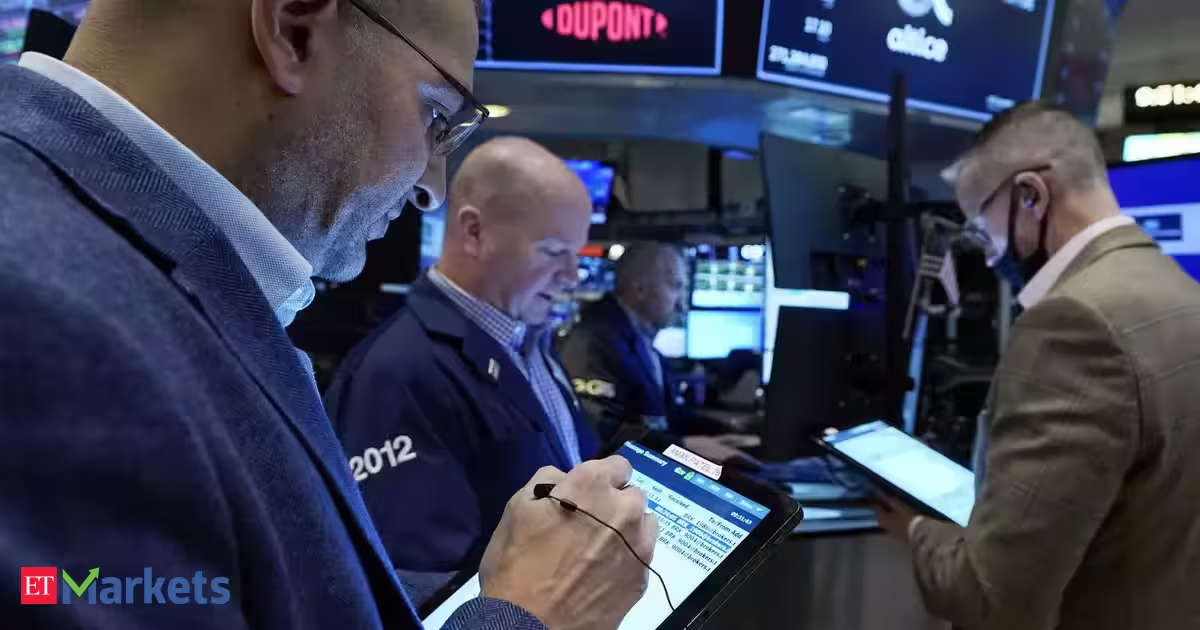
Traders are increasingly betting on an October rate hike by the Reserve Bank of India, with surging oil prices and broadening inflation strengthening the case for tighter policy, while an expected Federal Reserve hike adds to the pressure, four traders said.

The one-year overnight index swap rate rose 8 basis points on Tuesday to 6.11%, its highest since early June, while the five-year rate jumped 11 bps to 6.68%.

The one-year OIS is pricing in at ‌least three 25-bps ⁠rate hikes ⁠over the next year, traders said. The less-traded one-month OIS, a more direct gauge of October rate expectations, rose 10 bps to ​5.34%.

At 5.34%, the one-month OIS implies a meaningful probability of a 25-basis-point hike, although the pricing understates the odds considering ​that overnight rates are running below the repo rate amid surplus liquidity, traders said.

Advertisement

OCTOBER MEETING “LIVE”

All four traders, who declined to be identified because they were not authorised to speak to the media, said an ​October RBI rate hike was almost certain, while some economists have brought forward ⁠their calls ‌to the Oct. 7 meeting.


Analyst at Citi, in a note on Monday, ​said an October ​rate hike “is now its base case”, bringing forward its call from December amid a ⁠less favourable inflation outlook.
India’s core inflation momentum has strengthened sharply, ​it said, with the August print more than double the two-year average, which raises ​concerns of demand-side pressures emerging.It expects September inflation to rise to 5.7%, near to the RBI’s 6% upper tolerance limit, making it harder, in Citi’s view, for the central bank to keep rates unchanged.

Deutsche Bank has made a similar shift, bringing forward its rate-hike call to October from December. It pointed the acceleration in headline inflation towards 5% and a broadening of core inflation, a robust April-June GDP print ‌against the backdrop of an imminent Fed hiking cycle.

Markets are pricing in more than a 90% probability of a 25-basis-point Fed hike on Wednesday, with expectations for another move ​by December ​running at around 50%.

Advertisement

OIL WOES

The ⁠risk of prolonged energy-price pressures is strengthening bets that the RBI will need to hike rates sooner.

Brent crude is up more than 18% over the past two weeks, hitting nearly $110 a barrel on Monday.

The ​RBI has yet to respond to the oil shock with a rate hike, unlike other oil-sensitive Asian economies that have already tightened policy.

Bank Indonesia raised its policy rate by 50 basis points in May and another 25 basis points in June, while Philippines has raised rates by 50 basis points since June.

Advertisement

Deutsche Bank said relative interest-rate differentials could become increasingly important in sustaining capital inflows, an added reason for the RBI to hike rates.

Continue Reading

Business

Regency Centers Corporation (REG) Presents at BofA NY Global Real Estate Conference 2026 Transcript

Published

on

OneWater Marine Inc. (ONEW) Q1 2026 Earnings Call Transcript

Conference Call Participants

Samir Khanal – BofA Securities, Research Division

Presentation

Advertisement

Samir Khanal
BofA Securities, Research Division

Everybody. Why don’t we get started? Welcome to the Regency Roundtable. Very happy to have Lisa Palmer with us today, CEO of the company; Christine McElroy, Head of Capital Markets. Lisa, why don’t I turn it over to you for some opening remarks.

Lisa Palmer
President, CEO & Director

Advertisement

Thank you, Samir. Good afternoon, everyone. Just because I’m joined with Christine McElroy. So I actually…

Christy McElroy
Senior Vice President of Capital Markets

So you can correct in front of [indiscernible].

Advertisement

Lisa Palmer
President, CEO & Director

That’s our SVP of Capital Markets. I actually played softball when I was a teenager with Nina McElroy. So I also want to call…

Advertisement

Christy McElroy
Senior Vice President of Capital Markets

Everyone calls me McElroy, so.

Lisa Palmer
President, CEO & Director

Advertisement

It’s also Elroy, right? Is it Elroy for those of you that are golfries. Thank you again. Appreciate you having us. Great conference. and we had a nice room upstairs with windows versus where we are right now. Regency is having an exceptional year. Hopefully, you all have had the opportunity to follow us along. Strong NOI and earnings growth, which is supported by really strong operating robust fundamentals and importantly, disciplined capital allocation. Tenant demand across our grocery-anchored shopping centers remains broad-based.

And I think you also know the availability of high-quality space remains very limited. So again, playing into our favor. That combination continues to give our leasing team meaningful negotiating leverage, and that’s allowing us to drive contractual rent

Advertisement
Continue Reading

Business

Will NSE be allowed to trade on NSE? Stock exchange may seek Sebi’s nod after listing

Published

on

Will NSE be allowed to trade on NSE? Stock exchange may seek Sebi’s nod after listing
India’s largest stock exchange NSE may eventually seek Sebi’s permission to allow its shares to trade on its own platform after the exchange completes its much-anticipated IPO, though it has not yet approached the regulator.

The proposal would require NSE to explore the “permitted to trade” route, under which securities can trade on an exchange without being formally listed there. The company would continue to remain listed on its primary exchange, with its existing compliance and disclosure obligations unchanged.

NSE is getting listed only on BSE because Sebi rules currently do not allow a recognised stock exchange to list its own securities on its own platform.

Under Regulation 45(1) of the Sebi Stock Exchanges and Clearing Corporations Regulations, 2018, a recognised stock exchange can list its securities only on another recognised stock exchange. That means NSE cannot formally list on NSE after its IPO.

Advertisement

Also Read | NSE IPO jackpot: 10 PSUs could pocket Rs 12,802 crore from stake sale


Ashishkumar Chauhan, managing director and chief executive officer of NSE, told reporters in New Delhi the exchange could consider seeking Sebi’s approval at a later stage.
“We have not applied,” Chauhan said. “However, because we are NSE, if we want to do it, we will have to consult Sebi. We have not done that yet.”“We will consider it later but currently we are not at that stage,” he added.

The permitted-to-trade category could provide NSE’s shares access to a wider investor base through an additional trading platform, while the exchange remains formally listed on BSE.

Explaining why NSE cannot list directly on its own platform, Chauhan said the restriction was designed to prevent an exchange from regulating itself.

“There is a regulation that was created around 2016, when the first exchange (BSE) was allowed to list. The issue was that an exchange could not regulate itself. Therefore, it had to agree to be regulated by another exchange,” he said.

Advertisement

“That is why BSE listed on NSE, and NSE will list on BSE.”

Also Read | 70% NSE revenue under Sebi shadow: Is F&O risk a key overhang for IPO investors?

NSE is preparing for one of India’s most-awaited IPOs and has set a price band of Rs 1,700 to Rs 1,785 per share. The upper end is below the Rs 2,000-Rs 2,100 range that many investors had expected earlier and values the exchange at about Rs 4.4 lakh crore.

The lower pricing has also exposed the reluctance of existing shareholders to sell their stakes, according to Chauhan.

Advertisement

NSE initially proposed selling around 6.2% of its equity, but reduced the offer to 5.11% after shareholders resisted selling at the indicated price.

“When we asked shareholders to sell this time, they said the proposed price was too low,” Chauhan said. “They will sell only when they need the money. Otherwise, they will wait for a more competitive price. They believe the current pricing is below their expectations.”

He said the exchange had to repeatedly request shareholders to proceed with the sale because failing to meet the minimum offer requirement could have jeopardised the IPO.

“If we did not have the minimum number of shares, the IPO would not have happened,” Chauhan said, adding that just because somebody bought the shares 33 years ago at a certain price does not mean that price remains relevant in their books today. “Once the shares list, their value will be reflected in their net worth.”

Advertisement

Demand for the IPO has so far been stronger than expected, Chauhan said. The anchor book, earlier expected to be around Rs 9,000 crore, is now estimated at approximately Rs 6,000-6,500 crore, but demand remains substantially higher than the shares available for allocation.

“The demand is unexpectedly large,” he said. “A large number of investors want to acquire a large number of shares. But we have only a limited number of shares to distribute.”

The allocation framework reserves portions of the issue for different categories of investors, including local mutual funds, other domestic institutions such as pension funds, and foreign portfolio investors.

Chauhan said the exchange was comfortable with whichever framework Sebi ultimately adopts on market structure and trading arrangements.

Advertisement

“As far as Sebi decides, we are okay with that,” he said. “Our job is to work with Sebi and ensure that its views are properly incorporated into our operating activities.”

NSE already has more than 2 lakh shareholders and will have 100% free float after listing, Chauhan said. He added that after the first lock-in period ends, the company could attract stronger demand when it becomes eligible for inclusion in domestic and international indexes.

“Once the company starts going into various international and local indexes, the demands will be much larger,” he said.

Disclaimer: The views/recommendations mentioned in this article, wherever applicable, are those of the respective SEBI-registered Research Analyst/brokerage and have been reproduced/reported with due attribution. They should not be construed as the views or recommendations of The Economic Times Digital or the journalist. Readers are advised to consider the original research report and make their investment decisions based on their own assessment. Brokerage disclaimershere

Advertisement
Continue Reading

Business

Carter’s kids clothing retailer rebrands

Published

on

Carter’s kids clothing retailer rebrands

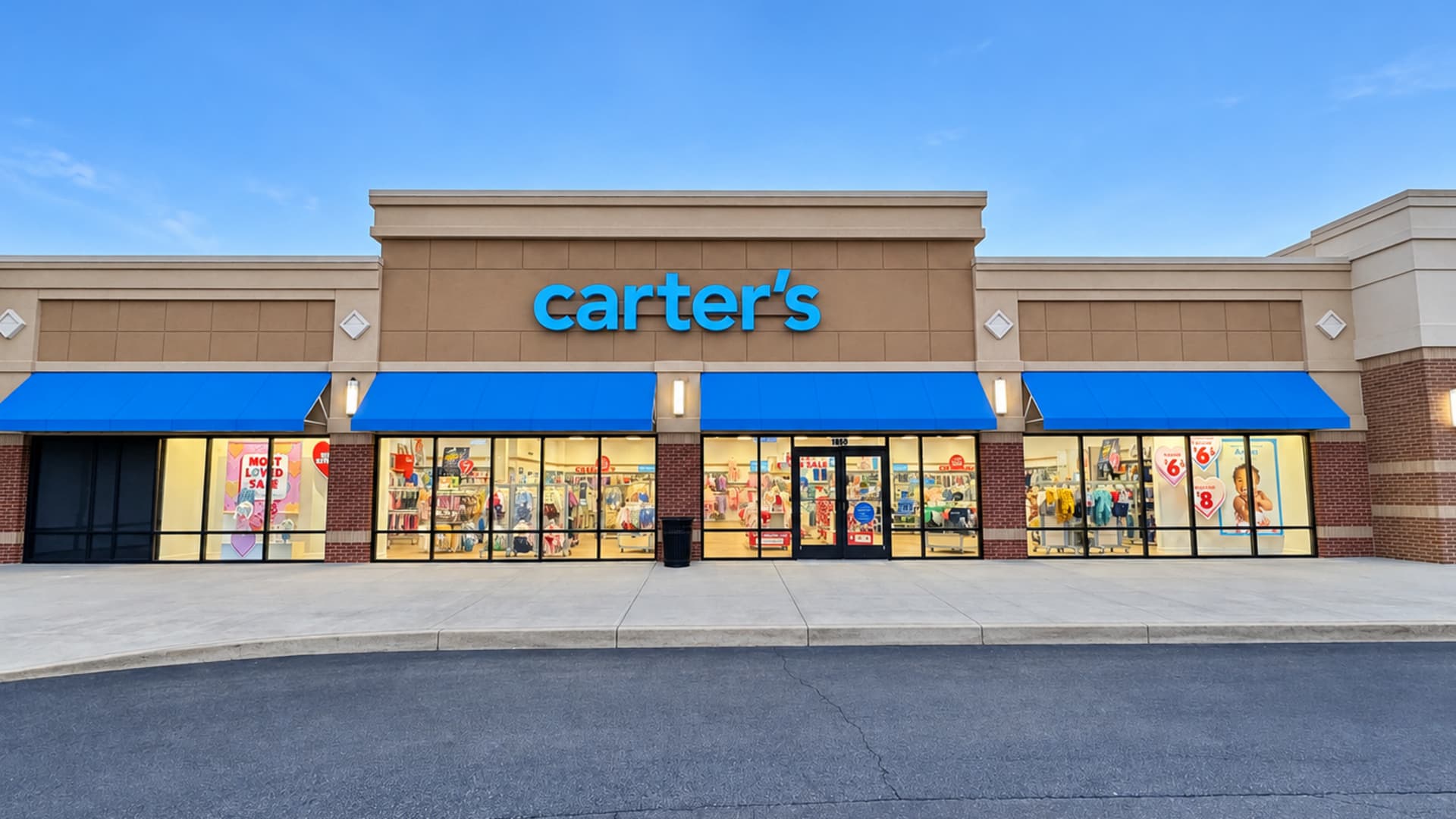
A view of a Carter’s storefront.

Courtesy: The William Carter Company

Children’s clothing brand Carter’s is undergoing a revamp to better align with the new generation of parents as its namesake company tries to recover from sluggish performance in recent years.

The rebrand, announced Tuesday, includes a new logo and marketing campaign that Chief Marketing Officer Sarah Crockett told CNBC aims to keep the 161-year-old company relevant with its core customer.

Advertisement

“We recognize that the market difference of our parents in the communities that we’re serving is significant,” Crockett said. “We had an opportunity to really tap into the values that parents are bringing into the household.”

Carter’s largest brands include its namesake banner and OshKosh B’gosh, which are sold in standalone stores around the U.S. and in retailers including Walmart, Target and Amazon. The rebrand comes as the overall company has shrunk its store footprint and laid off some employees over the past year to try to reposition itself for growth, especially as the market for baby and kids clothing has grown more competitive.

Wall Street has taken note of the company’s issues. Over the past three years, Carter’s stock has plunged more than 50%, bringing its market cap to around $1 billion.

For the full 2025 fiscal year, Carter’s reported adjusted net income of $126.1 million, down sharply from $210.7 million the year before. Last year, then-CEO Douglas Palladini said elevated product costs, higher tariffs and additional investments “weighed meaningfully” on the company’s profitability.

Advertisement

Last October, Palladini said Carter’s was eliminating 15% of its corporate workforce and shuttering 150 North American stores as leases expired in an effort to “rightsize” the company.

Since then, Carter’s has started to show more bright spots. And the rebrand aims in part to capitalize on the momentum.

Carter’s new logo.

Courtesy: The William Carter Company

Advertisement

In the first quarter of 2026, the company reported a 10.5% increase in U.S. comparable sales and an 8.1% jump in net sales. Shortly before it reported those results in May, Carter’s announced it was hiring Sharon Price John, formerly the CEO of Build-A-Bear Workshop, to lead the company as it tried to regain strength.

In June, Wells Fargo analysts upgraded Carter’s from underweight to hold, saying that while the retailer’s performance “isn’t perfect,” the changes the company was instituting were “driving fundamental improvements.”

Price John told CNBC the struggles Carter’s went through before she joined the company were par for the course and a “natural evolution.”

“Like any company at our scale, you’re going to have a pretty standard process of evolving your retail footprint, and in many ways that’s just exactly what the company’s doing, which is the right thing to do,” she said.

Advertisement

“That is just running a business,” she added, saying she doesn’t believe Carter’s has lost its connection with the parents who buy its clothing.

The positive signs appeared to continue during the retailer’s second quarter, part of which Price John oversaw. During its most recent earnings call, Carter’s said it grew its new customers, including Generation Z shoppers, which it said rose by a mid-teens percentage.

For the full fiscal year, the company said it expects net sales to climb between 2% and 3%. It also said it received roughly $128 million in tariff refunds, after costs from those duties posed such a challenge to Carter’s in the prior year.

Still, Price John said on the late July call with analysts that there was “more to be done.”
Advertisement

With the new rebrand for Carter’s, Price John told CNBC the company is tracking an evolution of its core customer base of parents that is more dramatic in this generation than it has been in 25 years.

Gen Z is expected to account for a major portion of new parents over the next few years, according to Carter’s, making the population even more crucial to the brand’s business.

Crockett, the CMO, told CNBC the company is taking note that Gen Z parents often encourage their children to make their own decisions about what they wear rather than mirroring their own fashion choices onto them. Those parents and children are also heavily influenced by and crowdsource decisions from social media, she said.

The rebrand and marketing campaign will attempt in part to cater to those tendencies.

Advertisement

“This provides a whole new set of tools for us to really leverage in connecting with today’s parents and caregivers, and this is a large mission, a large brand promise that we will always be in pursuit of,” Crockett said.

At the same time, Crockett and Price John said the revamp of Carter’s namesake brand aims to lift the performance of the broader Carter’s Inc. as well. The rebrand will roll out across Carter’s channels in 2026, with additional retail and packaging elements in 2027, according to the company.

“This is time, because brands evolve. They have to. If they don’t evolve, they’re left behind,” Price John said.

Advertisement
Continue Reading

Business

Noon reimagining the breakfast occasion

Published

on

Noon reimagining the breakfast occasion

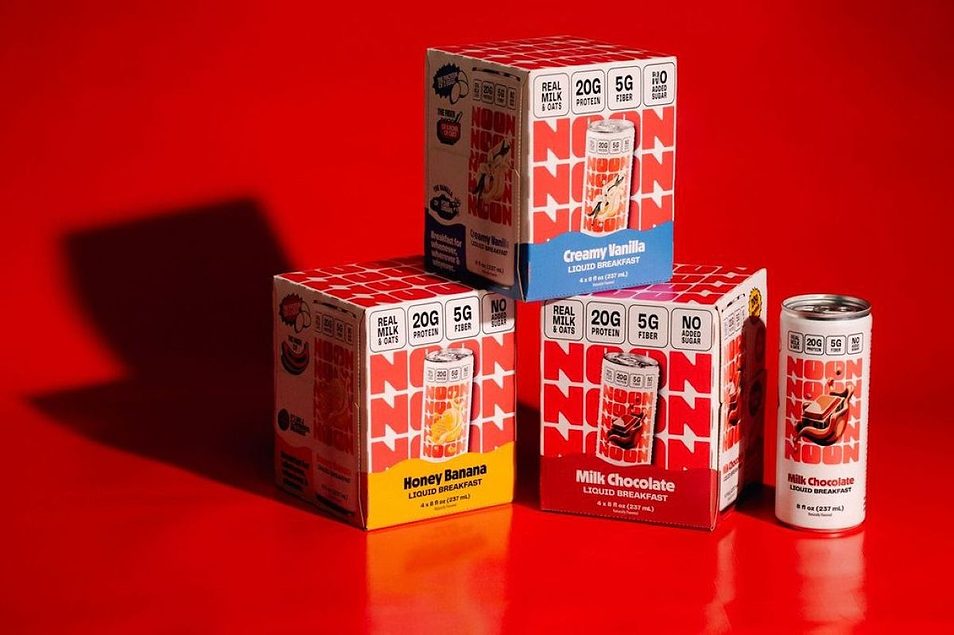
Food Entrepreneur NEW YORK — Most ready-to-drink protein beverages, from Huel, Boost to Ensure and Naked, have been positioned as supplements, meal replacements or targeted nutrition solutions targeted toward adults and the elderly populations. With Noon, co-founders Cade Fleming and Tamir Triguboff are taking a different approach by building a breakfast-focused beverage and platform designed for the whole family.

“We’re not creating another protein shake, supplement or meal replacement,” Triguboff said. “We’re focused on a simple consumer need — a fast, nutritious, great-tasting breakfast that fits modern lifestyles.”

Noon, which launched in Australia in January, is formulated with dairy protein, oats fruit purees and chicory root, which contributes to the high fiber content, Fleming said.

“We use oats to fortify the product and improve satiety, so it functions as a real, complete breakfast, not just a drink,” Fleming said. “We saw liquid breakfast as kind of the wedge into the (breakfast) category because it was a non-format occasion. People were consuming drinks and replacement meals, but none of them had really been reformulated or developed with the breakfast occasion in mind and leading with this dual benefit positioning of protein and fiber.”

Triguboff added, “Noon is not a GLP-1 product or a weight loss product. The relevance of GLP-1 is that it has accelerated interest in areas Noon was already built around, including protein, fiber and satiety. But the opportunity is much broader than GLP-1. We’re building a modern breakfast brand designed for a wide range of consumers looking for a better morning meal solution.”

Advertisement

Noon offers 20 grams of protein, 5 grams of fiber and zero grams of added sugar.

Varieties include milk chocolate, creamy vanilla and honey banana.

“We’ve been really intentional around the way we’ve formulated the product from the level of protein in the drink, the level of fiber in the drink and the level of calories in the drink,” Fleming said. “We only have 20 grams of protein versus some others (protein beverages) that have upwards of 40. An adolescent or child doesn’t need 40 grams of protein in one sitting nor could they probably consume that.”  

While other fortified protein beverages can taste chalky or gritty, Fleming is reassuring consumers that Noon is similar to drinking chocolate milk.

Advertisement

“With this protein beverage craze, I think the experience has actually become pretty poor,” he said. “Noon is a lot thinner and doesn’t have that artificial aftertaste, chalkiness or grittiness.”

Noon differentiates in the RTD beverage category by owning the breakfast occasion, not just delivering a functional benefit, Triguboff said.

“While many products compete around protein or nutrition alone, Noon is designed to complete a morning solution,” Triguboff said. “Combining the nutrition consumers want with the taste and convenience required to become a daily habit.”

The bootstrapped startup has raised a $2.5 million pre-seed round, led by Boulder Food Group (BFG Partners,) a Boulder, Colo.-based venture capital firm that invests in early stage companies, that will be used to support its US launch into around 2,000 Target stores nationwide.

Advertisement

“We have an aggressive growth plan from both a distribution perspective, launching into more channels like natural grocery,” Fleming said. “Further mass retailers, bodega and convenience throughout 2027.”

Fleming said Noon is only the beginning of the company’s ambitions in the breakfast category.

“The liquid breakfast drink is very much the wedge and arrow to our space,” he said. “But the role we’re really going to be playing in the category is having a number of exciting formats and products that will support that positioning.” 

Enjoying this content? Learn about more disruptive startups on the Food Entrepreneur page.

Advertisement
Continue Reading

Business

Infinity continues US-based focus

Published

on

Infinity continues US-based focus

With a desire to begin exploration at its Swansea copper project in Arizona, Subiaco-based Infinity Metals has announced multiple board changes.

Continue Reading

Trending

Copyright © 2025