
Business
Nvidia boss says AI ‘doesn’t need new laws’ as safety concerns grow

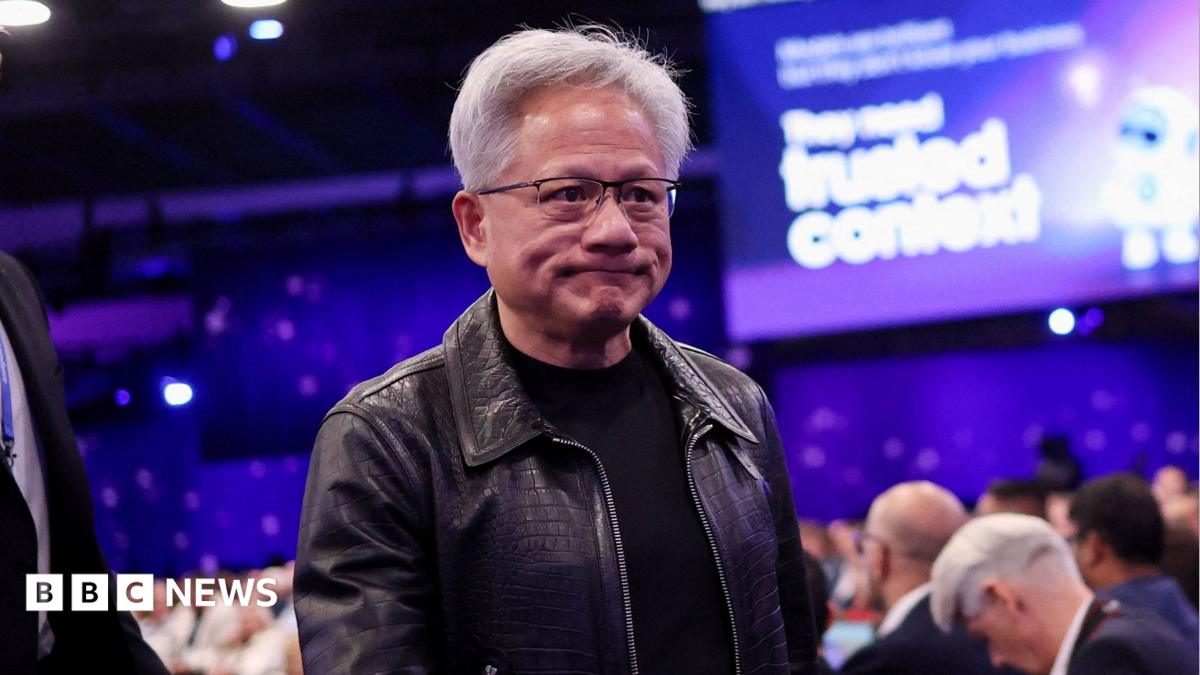
The heads of artificial intelligence (AI) firms should decide if new versions of the technology should be released, Nvidia boss Jensen Huang has said in response to growing concerns about AI’s threat to humans.
“We don’t need new laws or regulations,” Huang said, adding that there should not be a “false choice” between the speed of innovation and the safety of AI products.
Nvidia is the biggest company in the world by valuation, with its profits having boomed as a result of rampant demand for the AI computing chips it makes.
Huang’s stance on AI safety contrasts with those in the industry who have recently expressed fears that the technology could wipe out humanity.
A post from an artificial intelligence researcher who quit AI firm Anthropic went viral last week after it claimed AI could kill all humans by the end of the decade if left unchecked.
Other AI executives and experts responded saying they agreed. Then, over the weekend, Anthropic chief executive Dario Amodei called for the pace of all AI development to slow, external and urged governments to regulate the industry.
The post was applauded by OpenAI chief exuecutive Sam Altman, co-founder of Google’s DeepMind Demis Hassabis, and Elon Musk, owner of social media site X and AI assistant Grok.
However, some industry figures have said the fears were overblown and were being jumped on to generate hype for the industry.
Addressing the potential dangers of AI at a salesforce conference in San Francisco on Tuesday, Huang referred to current advances as “a new industrial revolution” but insisted that AI companies should be left to essentially regulate themselves.
“Safety is paramount. However, safety is an engineering problem,” Huang said.
He added that if at any time a leader of an AI company lacks confidence in their product they should choose to not release it.
“That’s a very obvious thing to do,” Huang said. “Run as fast as you can, but if at any time you feel the institution is not in control, take a pause.”
The idea of AI executives being left to entirely regulate themselves has struck some in the industry as a bad idea.
Jack Clark, an Anthropic executive and co-founder, told the BBC on Monday that leaving AI to be a “totally unregulated industry” was “rolling dice with immense risks”.
Patrick Hillman, the chief business officer of Logical Intelligence, which is chaired by Yann LeCun, a sage of the AI industry, noted Tuesday how little faith people have in tech companies to do anything truly in the public interest, external.
“The only institution that Americans might trust less than Washington these days is Silicon Valley. I have worked and lived in both and I assure you both have earned this scepticism,” Hillman said.
“If you believe what you are building is dangerous, show us what you are prepared to stop doing,” he added.

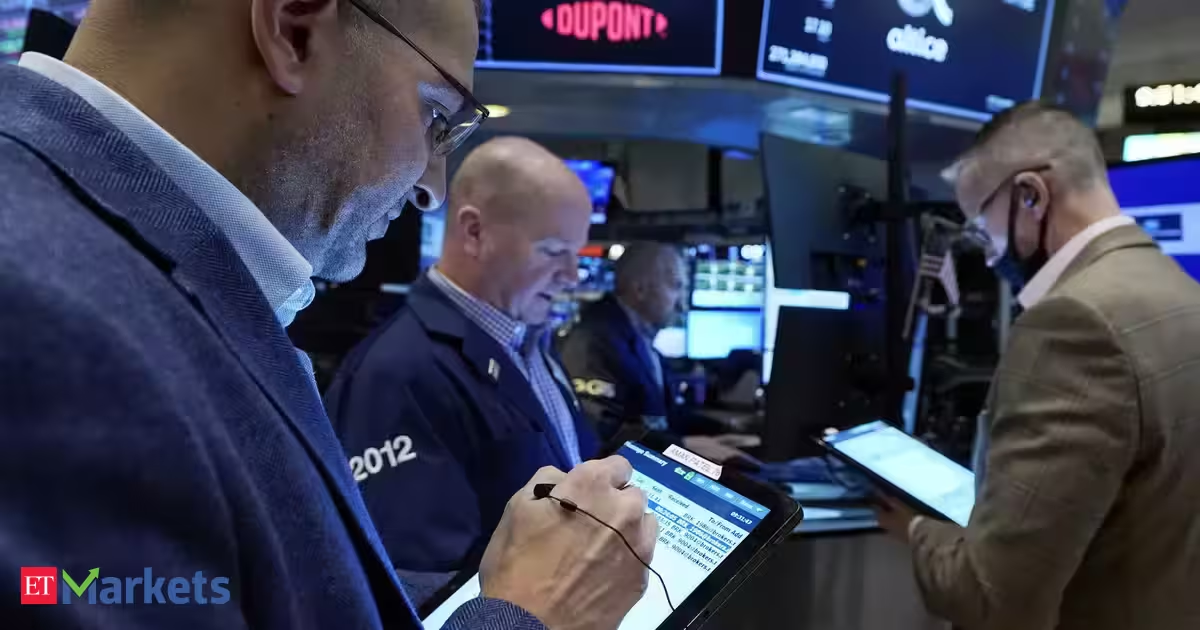
The one-year overnight index swap rate rose 8 basis points on Tuesday to 6.11%, its highest since early June, while the five-year rate jumped 11 bps to 6.68%.
The one-year OIS is pricing in at least three 25-bps rate hikes over the next year, traders said. The less-traded one-month OIS, a more direct gauge of October rate expectations, rose 10 bps to 5.34%.
At 5.34%, the one-month OIS implies a meaningful probability of a 25-basis-point hike, although the pricing understates the odds considering that overnight rates are running below the repo rate amid surplus liquidity, traders said.
OCTOBER MEETING “LIVE”
All four traders, who declined to be identified because they were not authorised to speak to the media, said an October RBI rate hike was almost certain, while some economists have brought forward their calls to the Oct. 7 meeting.

Analyst at Citi, in a note on Monday, said an October rate hike “is now its base case”, bringing forward its call from December amid a less favourable inflation outlook.
India’s core inflation momentum has strengthened sharply, it said, with the August print more than double the two-year average, which raises concerns of demand-side pressures emerging.It expects September inflation to rise to 5.7%, near to the RBI’s 6% upper tolerance limit, making it harder, in Citi’s view, for the central bank to keep rates unchanged.
Deutsche Bank has made a similar shift, bringing forward its rate-hike call to October from December. It pointed the acceleration in headline inflation towards 5% and a broadening of core inflation, a robust April-June GDP print against the backdrop of an imminent Fed hiking cycle.
Markets are pricing in more than a 90% probability of a 25-basis-point Fed hike on Wednesday, with expectations for another move by December running at around 50%.
OIL WOES
The risk of prolonged energy-price pressures is strengthening bets that the RBI will need to hike rates sooner.
Brent crude is up more than 18% over the past two weeks, hitting nearly $110 a barrel on Monday.
The RBI has yet to respond to the oil shock with a rate hike, unlike other oil-sensitive Asian economies that have already tightened policy.
Bank Indonesia raised its policy rate by 50 basis points in May and another 25 basis points in June, while Philippines has raised rates by 50 basis points since June.
Deutsche Bank said relative interest-rate differentials could become increasingly important in sustaining capital inflows, an added reason for the RBI to hike rates.
Business
Regency Centers Corporation (REG) Presents at BofA NY Global Real Estate Conference 2026 Transcript

Conference Call Participants
Samir Khanal – BofA Securities, Research Division
Presentation
Samir Khanal
BofA Securities, Research Division
Everybody. Why don’t we get started? Welcome to the Regency Roundtable. Very happy to have Lisa Palmer with us today, CEO of the company; Christine McElroy, Head of Capital Markets. Lisa, why don’t I turn it over to you for some opening remarks.
Lisa Palmer
President, CEO & Director
Thank you, Samir. Good afternoon, everyone. Just because I’m joined with Christine McElroy. So I actually…
Christy McElroy
Senior Vice President of Capital Markets
So you can correct in front of [indiscernible].
Lisa Palmer
President, CEO & Director
That’s our SVP of Capital Markets. I actually played softball when I was a teenager with Nina McElroy. So I also want to call…
Christy McElroy
Senior Vice President of Capital Markets
Everyone calls me McElroy, so.
Lisa Palmer
President, CEO & Director
It’s also Elroy, right? Is it Elroy for those of you that are golfries. Thank you again. Appreciate you having us. Great conference. and we had a nice room upstairs with windows versus where we are right now. Regency is having an exceptional year. Hopefully, you all have had the opportunity to follow us along. Strong NOI and earnings growth, which is supported by really strong operating robust fundamentals and importantly, disciplined capital allocation. Tenant demand across our grocery-anchored shopping centers remains broad-based.
And I think you also know the availability of high-quality space remains very limited. So again, playing into our favor. That combination continues to give our leasing team meaningful negotiating leverage, and that’s allowing us to drive contractual rent
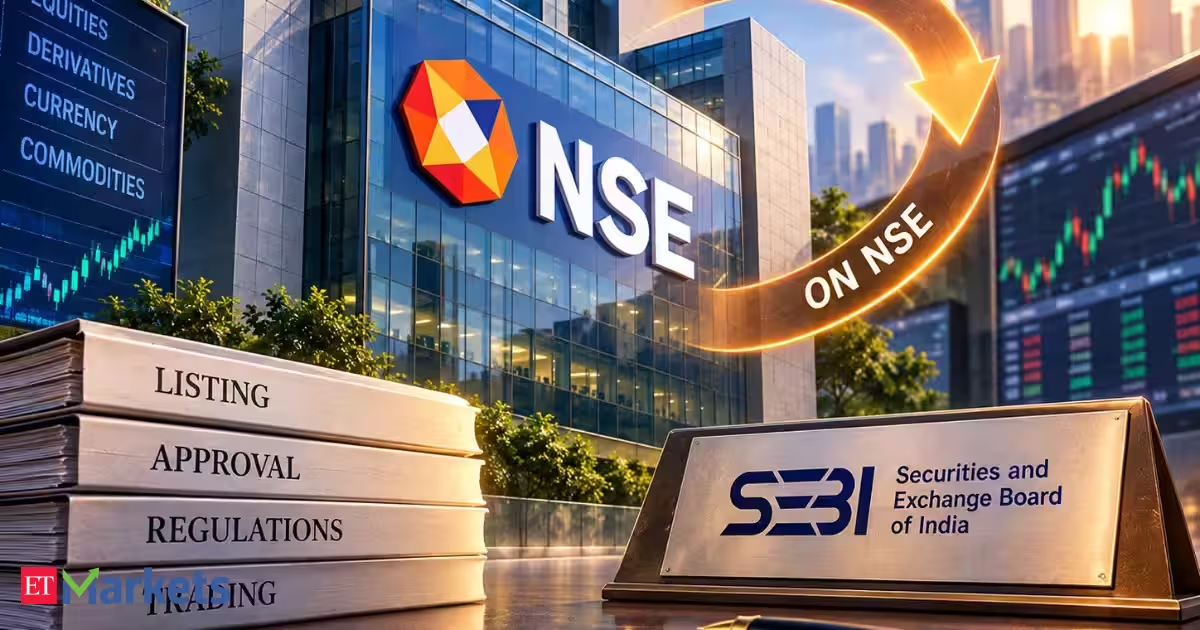
The proposal would require NSE to explore the “permitted to trade” route, under which securities can trade on an exchange without being formally listed there. The company would continue to remain listed on its primary exchange, with its existing compliance and disclosure obligations unchanged.
NSE is getting listed only on BSE because Sebi rules currently do not allow a recognised stock exchange to list its own securities on its own platform.
Under Regulation 45(1) of the Sebi Stock Exchanges and Clearing Corporations Regulations, 2018, a recognised stock exchange can list its securities only on another recognised stock exchange. That means NSE cannot formally list on NSE after its IPO.
Also Read | NSE IPO jackpot: 10 PSUs could pocket Rs 12,802 crore from stake sale
Ashishkumar Chauhan, managing director and chief executive officer of NSE, told reporters in New Delhi the exchange could consider seeking Sebi’s approval at a later stage.
“We have not applied,” Chauhan said. “However, because we are NSE, if we want to do it, we will have to consult Sebi. We have not done that yet.”“We will consider it later but currently we are not at that stage,” he added.
The permitted-to-trade category could provide NSE’s shares access to a wider investor base through an additional trading platform, while the exchange remains formally listed on BSE.
Explaining why NSE cannot list directly on its own platform, Chauhan said the restriction was designed to prevent an exchange from regulating itself.
“There is a regulation that was created around 2016, when the first exchange (BSE) was allowed to list. The issue was that an exchange could not regulate itself. Therefore, it had to agree to be regulated by another exchange,” he said.
“That is why BSE listed on NSE, and NSE will list on BSE.”
Also Read | 70% NSE revenue under Sebi shadow: Is F&O risk a key overhang for IPO investors?
NSE is preparing for one of India’s most-awaited IPOs and has set a price band of Rs 1,700 to Rs 1,785 per share. The upper end is below the Rs 2,000-Rs 2,100 range that many investors had expected earlier and values the exchange at about Rs 4.4 lakh crore.
The lower pricing has also exposed the reluctance of existing shareholders to sell their stakes, according to Chauhan.
NSE initially proposed selling around 6.2% of its equity, but reduced the offer to 5.11% after shareholders resisted selling at the indicated price.
“When we asked shareholders to sell this time, they said the proposed price was too low,” Chauhan said. “They will sell only when they need the money. Otherwise, they will wait for a more competitive price. They believe the current pricing is below their expectations.”
He said the exchange had to repeatedly request shareholders to proceed with the sale because failing to meet the minimum offer requirement could have jeopardised the IPO.
“If we did not have the minimum number of shares, the IPO would not have happened,” Chauhan said, adding that just because somebody bought the shares 33 years ago at a certain price does not mean that price remains relevant in their books today. “Once the shares list, their value will be reflected in their net worth.”
Demand for the IPO has so far been stronger than expected, Chauhan said. The anchor book, earlier expected to be around Rs 9,000 crore, is now estimated at approximately Rs 6,000-6,500 crore, but demand remains substantially higher than the shares available for allocation.
“The demand is unexpectedly large,” he said. “A large number of investors want to acquire a large number of shares. But we have only a limited number of shares to distribute.”
The allocation framework reserves portions of the issue for different categories of investors, including local mutual funds, other domestic institutions such as pension funds, and foreign portfolio investors.
Chauhan said the exchange was comfortable with whichever framework Sebi ultimately adopts on market structure and trading arrangements.
“As far as Sebi decides, we are okay with that,” he said. “Our job is to work with Sebi and ensure that its views are properly incorporated into our operating activities.”
NSE already has more than 2 lakh shareholders and will have 100% free float after listing, Chauhan said. He added that after the first lock-in period ends, the company could attract stronger demand when it becomes eligible for inclusion in domestic and international indexes.
“Once the company starts going into various international and local indexes, the demands will be much larger,” he said.
Disclaimer: The views/recommendations mentioned in this article, wherever applicable, are those of the respective SEBI-registered Research Analyst/brokerage and have been reproduced/reported with due attribution. They should not be construed as the views or recommendations of The Economic Times Digital or the journalist. Readers are advised to consider the original research report and make their investment decisions based on their own assessment. Brokerage disclaimershere
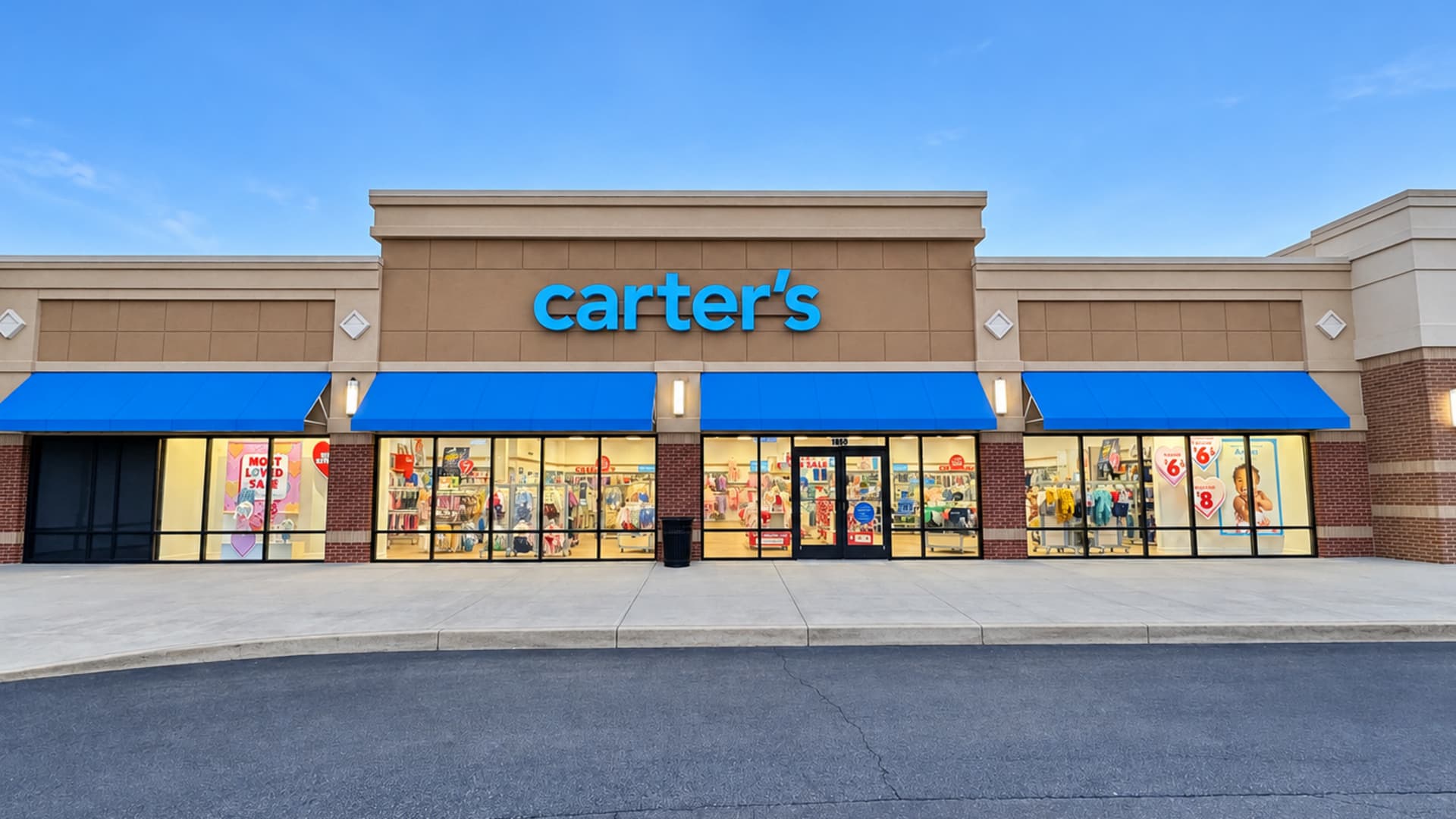
A view of a Carter’s storefront.
Courtesy: The William Carter Company
Children’s clothing brand Carter’s is undergoing a revamp to better align with the new generation of parents as its namesake company tries to recover from sluggish performance in recent years.
The rebrand, announced Tuesday, includes a new logo and marketing campaign that Chief Marketing Officer Sarah Crockett told CNBC aims to keep the 161-year-old company relevant with its core customer.
“We recognize that the market difference of our parents in the communities that we’re serving is significant,” Crockett said. “We had an opportunity to really tap into the values that parents are bringing into the household.”
Carter’s largest brands include its namesake banner and OshKosh B’gosh, which are sold in standalone stores around the U.S. and in retailers including Walmart, Target and Amazon. The rebrand comes as the overall company has shrunk its store footprint and laid off some employees over the past year to try to reposition itself for growth, especially as the market for baby and kids clothing has grown more competitive.
Wall Street has taken note of the company’s issues. Over the past three years, Carter’s stock has plunged more than 50%, bringing its market cap to around $1 billion.
For the full 2025 fiscal year, Carter’s reported adjusted net income of $126.1 million, down sharply from $210.7 million the year before. Last year, then-CEO Douglas Palladini said elevated product costs, higher tariffs and additional investments “weighed meaningfully” on the company’s profitability.
Last October, Palladini said Carter’s was eliminating 15% of its corporate workforce and shuttering 150 North American stores as leases expired in an effort to “rightsize” the company.
Since then, Carter’s has started to show more bright spots. And the rebrand aims in part to capitalize on the momentum.
Carter’s new logo.
Courtesy: The William Carter Company
In the first quarter of 2026, the company reported a 10.5% increase in U.S. comparable sales and an 8.1% jump in net sales. Shortly before it reported those results in May, Carter’s announced it was hiring Sharon Price John, formerly the CEO of Build-A-Bear Workshop, to lead the company as it tried to regain strength.
In June, Wells Fargo analysts upgraded Carter’s from underweight to hold, saying that while the retailer’s performance “isn’t perfect,” the changes the company was instituting were “driving fundamental improvements.”
Price John told CNBC the struggles Carter’s went through before she joined the company were par for the course and a “natural evolution.”
“Like any company at our scale, you’re going to have a pretty standard process of evolving your retail footprint, and in many ways that’s just exactly what the company’s doing, which is the right thing to do,” she said.
“That is just running a business,” she added, saying she doesn’t believe Carter’s has lost its connection with the parents who buy its clothing.
The positive signs appeared to continue during the retailer’s second quarter, part of which Price John oversaw. During its most recent earnings call, Carter’s said it grew its new customers, including Generation Z shoppers, which it said rose by a mid-teens percentage.
For the full fiscal year, the company said it expects net sales to climb between 2% and 3%. It also said it received roughly $128 million in tariff refunds, after costs from those duties posed such a challenge to Carter’s in the prior year.
Still, Price John said on the late July call with analysts that there was “more to be done.”
With the new rebrand for Carter’s, Price John told CNBC the company is tracking an evolution of its core customer base of parents that is more dramatic in this generation than it has been in 25 years.
Gen Z is expected to account for a major portion of new parents over the next few years, according to Carter’s, making the population even more crucial to the brand’s business.
Crockett, the CMO, told CNBC the company is taking note that Gen Z parents often encourage their children to make their own decisions about what they wear rather than mirroring their own fashion choices onto them. Those parents and children are also heavily influenced by and crowdsource decisions from social media, she said.
The rebrand and marketing campaign will attempt in part to cater to those tendencies.
“This provides a whole new set of tools for us to really leverage in connecting with today’s parents and caregivers, and this is a large mission, a large brand promise that we will always be in pursuit of,” Crockett said.
At the same time, Crockett and Price John said the revamp of Carter’s namesake brand aims to lift the performance of the broader Carter’s Inc. as well. The rebrand will roll out across Carter’s channels in 2026, with additional retail and packaging elements in 2027, according to the company.
“This is time, because brands evolve. They have to. If they don’t evolve, they’re left behind,” Price John said.

 NEW YORK — Most ready-to-drink protein beverages, from Huel, Boost to Ensure and Naked, have been positioned as supplements, meal replacements or targeted nutrition solutions targeted toward adults and the elderly populations. With Noon, co-founders Cade Fleming and Tamir Triguboff are taking a different approach by building a breakfast-focused beverage and platform designed for the whole family.
“We’re not creating another protein shake, supplement or meal replacement,” Triguboff said. “We’re focused on a simple consumer need — a fast, nutritious, great-tasting breakfast that fits modern lifestyles.”
Noon, which launched in Australia in January, is formulated with dairy protein, oats fruit purees and chicory root, which contributes to the high fiber content, Fleming said.
“We use oats to fortify the product and improve satiety, so it functions as a real, complete breakfast, not just a drink,” Fleming said. “We saw liquid breakfast as kind of the wedge into the (breakfast) category because it was a non-format occasion. People were consuming drinks and replacement meals, but none of them had really been reformulated or developed with the breakfast occasion in mind and leading with this dual benefit positioning of protein and fiber.”
Triguboff added, “Noon is not a GLP-1 product or a weight loss product. The relevance of GLP-1 is that it has accelerated interest in areas Noon was already built around, including protein, fiber and satiety. But the opportunity is much broader than GLP-1. We’re building a modern breakfast brand designed for a wide range of consumers looking for a better morning meal solution.”
Noon offers 20 grams of protein, 5 grams of fiber and zero grams of added sugar.
Varieties include milk chocolate, creamy vanilla and honey banana.
“We’ve been really intentional around the way we’ve formulated the product from the level of protein in the drink, the level of fiber in the drink and the level of calories in the drink,” Fleming said. “We only have 20 grams of protein versus some others (protein beverages) that have upwards of 40. An adolescent or child doesn’t need 40 grams of protein in one sitting nor could they probably consume that.”
While other fortified protein beverages can taste chalky or gritty, Fleming is reassuring consumers that Noon is similar to drinking chocolate milk.
“With this protein beverage craze, I think the experience has actually become pretty poor,” he said. “Noon is a lot thinner and doesn’t have that artificial aftertaste, chalkiness or grittiness.”
Noon differentiates in the RTD beverage category by owning the breakfast occasion, not just delivering a functional benefit, Triguboff said.
“While many products compete around protein or nutrition alone, Noon is designed to complete a morning solution,” Triguboff said. “Combining the nutrition consumers want with the taste and convenience required to become a daily habit.”
The bootstrapped startup has raised a $2.5 million pre-seed round, led by Boulder Food Group (BFG Partners,) a Boulder, Colo.-based venture capital firm that invests in early stage companies, that will be used to support its US launch into around 2,000 Target stores nationwide.
“We have an aggressive growth plan from both a distribution perspective, launching into more channels like natural grocery,” Fleming said. “Further mass retailers, bodega and convenience throughout 2027.”
Fleming said Noon is only the beginning of the company’s ambitions in the breakfast category.
“The liquid breakfast drink is very much the wedge and arrow to our space,” he said. “But the role we’re really going to be playing in the category is having a number of exciting formats and products that will support that positioning.”
Enjoying this content? Learn about more disruptive startups on the Food Entrepreneur page.

With a desire to begin exploration at its Swansea copper project in Arizona, Subiaco-based Infinity Metals has announced multiple board changes.

Greg Christensen, general manager of North America Trucks at Ford, spoke about the biggest updates to the 2027 F-150, including hands-free towing, new powertrains and the first-ever Carhartt edition.
Ford Motor Company is refreshing its best-selling F-150 pickup for 2027 with hands-free towing technology, updated styling and the first-ever F-150 Carhartt edition.
Greg Christensen, Ford’s general manager of North America Trucks, told Fox Business that the overhaul was shaped by how customers actually use their trucks — from hauling equipment to work to towing boats and campers on weekends.
One of the biggest additions is BlueCruise with Towing, which allows drivers to travel hands-free, with their eyes on the road, on more than 130,000 miles of compatible highways while towing trailers weighing up to 10,000 pounds.
FORD TO INVEST $1B IN KENTUCKY TRUCK PLANT

One of the biggest additions is BlueCruise with Towing, which allows drivers to travel hands-free on more than 130,000 miles of compatible highways while pulling a trailer. (Ford Motor Company)
“Towing is fundamental to our customers,” Christensen said, adding that more than 75% of F-150 owners tow.
Ford is also updating the powertrain lineup with a new standard 3.0-liter EcoBoost V6 engine, bringing the 5.0-liter V8 back to King Ranch and Platinum models while adding more affordable Tremor and Raptor variants to broaden access to its off-road lineup.
“We are really thinking about customers in that respect and affordability and accessibility,” Christensen said.
DUFFY PUTS FORD ON NOTICE OVER CHINA TIES, WARNS OF SECURITY CONCERNS

Christensen said that more than 75% of F-150 owners tow. (Ford Motor Company)
Ford is also expanding its partnership with Michigan-based workwear brand Carhartt, introducing the first-ever F-150 Carhartt package.
Available on 4×4 XLT Crew Cab models, it adds exclusive styling, Carhartt-inspired interior accents, a branded spray-in bedliner and all-weather floor mats.
“We couldn’t be more excited about another iconic American brand partnering with us,” Christensen said, pointing to the companies’ shared roots.
FORD BOOSTS US LINCOLN PRODUCTION AS IT PHASES OUT IMPORTS FROM CHINA

The automaker is also expanding its partnership with workwear brand Carhartt, introducing the first-ever F-150 Carhartt package. (Ford Motor Company)
CLICK HERE TO GET FOX BUSINESS ON THE GO
Earlier this year, Ford and Carhartt unveiled a broader collaboration aimed at highlighting what the companies call the “essential economy.”
As part of that collaboration, the companies also introduced a Ford Super Duty Carhartt truck — a Super Duty XLT pickup co-developed by the two brands and designed for the “essential workers both companies have served for generations,” Ford said at the time.
Business
CAS crash: Nifty plunges 462 points in less than 30 seconds. Will Sebi’s review break trend?

Nifty was trading at around 23,172 on Tuesday afternoon before normal trading stopped and closing auction session began. Immediately, Nifty’s indicative price saw a sharp spike to 23,342 at 3.20:01. But what followed was a sharp crash of around 462 points or nearly 2% from that level to 22,879 sharp at 3:20:30.
The benchmark index then recovered nearly 240 points to close at 23,119. Overall, the index fell around 54 points during the closing auction session, despite the wild swings seen during the special period.
Also read | Old strategies buried alive: How CAS hit Dalal Street traders
Sebi on CAS
Such expiry day swings in benchmark indices have been rampant since stock exchanges introduced the new CAS system from August 3, changing the way closing prices are calculated for stocks included in the futures and options (F&O) segment.
After the newly introduced system triggered massive market volatility and spooked investors, market regulator Sebi on Saturday proposed two options for determining expiry-day settlement prices for index and stock derivatives. The consultation paper also proposed changes to the timing of the continuous trading session (CTS), CAS and derivatives trading, along with additional measures to improve the new session.What Jefferies says on CAS
Jefferies on Monday highlighted that CAS, which was introduced by Sebi in August, initially resulted in higher losses for domestic prop traders due to volatility in index prices during the last hour on expiry day.
Sebi’s latest consultation paper addressed concerns around CAS by changing settlement price of derivatives to volume weighted average (VWAP) or a blend between VWAP and CAS, discontinuing cancellations of limit orders placed beyond +/- 1% of reference price during CAS, reducing concerns around manipulation of settlement price, and unexecuted iceberg orders may be transitioned to CAS, increasing liquidity during the CAS window, the international brokerage said.
“Our discussions with domestic prop traders indicate the return to VWAP-based derivative settlement price along with inability to cancel limit orders placed beyond +/-1% threshold should reduce end of period volatility on expiry days,” Jefferies said, noting that the last date to submit responses to Sebi’s consultation paper is October 3, so the implementation will likely be from October or November this year.
While options premium turnover and orders were adversely impacted during August 2026, both have recovered in September so far as option traders had a better understanding of CAS, according to the analysts.
(Disclaimer: Recommendations, suggestions, views and opinions given by the experts are their own. These do not represent the views of The Economic Times)
Business
Forgent Power Solutions Shares Surge 10% as Record Q4 Results Blow Past Guidance, Backlog Hits $3 Billion
DAYTON, Minn. — Shares of Forgent Power Solutions Inc. jumped 10.09% to $31.53 in Tuesday trading, adding $2.89, after the electrical equipment manufacturer reported record fourth-quarter and full-year results that exceeded the high end of its own prior guidance and pushed its order backlog to an all-time high heading into the new fiscal year.
Forgent, which designs and manufactures electrical distribution equipment for data centers, the power grid and energy-intensive industrial facilities, reported fiscal fourth-quarter revenue of $462 million, up 94% from the same period a year earlier, comfortably surpassing the company’s own guidance range of $392 million to $432 million issued back in May. The company said revenue, adjusted EBITDA and adjusted net income all came in above the top end of that prior guidance.
Bookings for the quarter reached $1.503 billion, a 375% increase from a year earlier, producing a book-to-bill ratio of 3.3 times, meaning the company took in more than three dollars of new orders for every dollar of revenue recognized during the period. That surge in bookings pushed Forgent’s total backlog to $3.0 billion by the end of the fiscal year, up 256% from a year earlier, giving the company what it described as an all-time high level of order visibility heading into fiscal 2027.
Profitability improved sharply alongside the revenue growth. Forgent reported net income of $66 million for the quarter, an increase of $71 million from the prior-year period, when the company posted a net loss. Net income margin reached 14.3%, up roughly 800 basis points from the prior quarter. Adjusted EBITDA came in at $113 million, up 163% year-over-year, with an adjusted EBITDA margin of 24.4%, an improvement of roughly 200 basis points from the previous quarter. Cash flow from operations totaled $74 million for the quarter, an increase of $81 million from the same period last year.
The results cap a rapid first full fiscal year as a public company for Forgent, which began trading on the New York Stock Exchange under the ticker FPS on February 5, following an initial public offering that raised approximately $1.7 billion including the exercise of underwriters’ over-allotment option. The company has since returned to capital markets multiple times, including an $885 million follow-on equity offering and a separate upsized public offering of 35 million Class A shares, transactions that left the company with a net cash position of roughly $800 million and a share count of approximately 342 million heading into the latest results.
Forgent’s growth throughout fiscal 2026 has been driven by surging demand for the specialized, “engineered-to-order” electrical distribution equipment it supplies to data center operators and other energy-intensive industrial customers, positioning the company as a direct beneficiary of the broader boom in data center construction tied to artificial intelligence infrastructure spending. The company has described itself as one of a small number of manufacturers capable of producing all of the electrical distribution equipment required for a data center or large manufacturing facility’s powertrain, with some of the shortest lead times and highest levels of customization available in the industry.
That positioning showed up clearly in the company’s quarter-over-quarter trajectory throughout the fiscal year. Forgent’s fiscal third-quarter revenue, reported in May, came in at $379 million, up 103% year-over-year, with bookings of $867 million representing a 308% increase and a book-to-bill ratio of 2.3 times at the time, a level the company has now nearly matched again with Tuesday’s fourth-quarter figures. Speaking after the third-quarter results, Forgent Chief Financial Officer Ryan Fiedler said the company’s accelerating revenue growth was helping it absorb the costs associated with its rapid expansion. “We are raising our guidance to reflect the accelerating demand we are seeing across our business, and we are fully booked against our fourth quarter plan,” Fiedler said at the time. “While our margins continue to be impacted by accelerated hiring and one-time costs at our new facilities, the pace of revenue growth is enabling us to absorb investments in headcount and facilities more quickly.” He added that startup-related costs at the company’s new manufacturing campuses had fallen to approximately 1.8% of revenue that quarter, down from about 2.0% the prior quarter, and said the company expected further sequential improvement in adjusted EBITDA margin in the fourth quarter, a prediction Tuesday’s results appear to have borne out.
Forgent’s rapid growth has not been without volatility for shareholders. Despite Tuesday’s sharp gain, the stock had declined nearly 30% since its previous earnings report heading into Tuesday’s release, according to data tracking the stock’s recent performance, and had fallen more than 42% over the trailing 90 days even as its year-to-date return remained positive. That volatility reflects a broader pattern among richly valued industrial suppliers tied to the AI infrastructure buildout, where investor expectations have at times run ahead of even strong underlying operational results, leaving shares vulnerable to sharp swings around each quarterly report.
Forgent has continued to invest heavily in expanding its manufacturing capacity to keep pace with demand, with a stated goal of reaching capacity capable of supporting up to $5 billion in annual revenue. With backlog now standing at $3.0 billion entering fiscal 2027 and demand from data center and energy-intensive industrial customers showing no signs of slowing, investors are likely to watch closely in the coming quarters for further guidance on how quickly the company’s capacity expansion can convert that backlog into recognized revenue, and whether Tuesday’s sharp rally can hold given the stock’s recent volatility heading into the print.
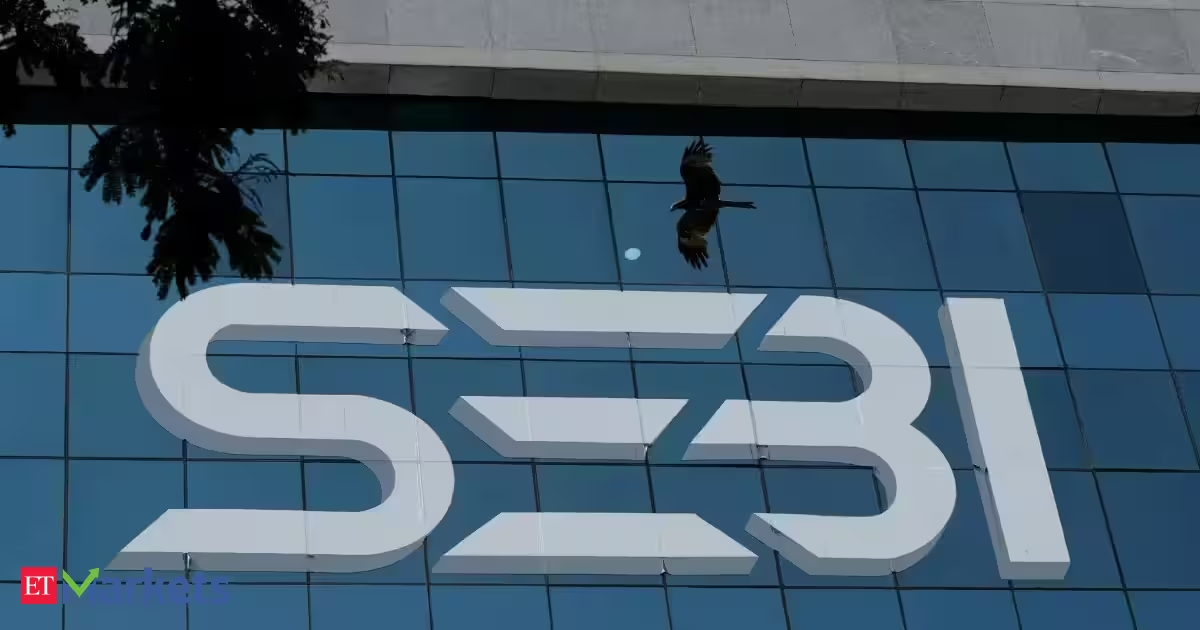
The market regulator has issued a consultation paper seeking public feedback on three key areas: reducing the time required for mock disaster recovery drills, strengthening the operational resilience of primary data centres and improving data recovery arrangements for stock exchanges.
The move comes against the backdrop of earlier BCP and DR guidelines for market infrastructure institutions, which were first issued in April 2012 and later strengthened in March 2019 and March 2021. Sebi said learnings from mock disaster recovery drills, testing practices and data recovery arrangements have shown the need for additional norms.
At present, market infrastructure institutions are required to conduct disaster recovery drills for one full trading day. They also have to test intraday shifting from the primary data centre to the disaster recovery site during mock trading sessions to show their preparedness for meeting recovery time and recovery point objectives.
Sebi said this can be cumbersome, especially for exchanges with commodity derivatives segments, where trading in some products can continue till 11:55 pm.
To ease this process, Sebi has proposed that disaster recovery drills should be conducted on a non-working day. The drill would begin at the primary data centre and then shift operations to the disaster recovery site.
The overall session time for such a drill should be at least four hours, including the switchover time from the primary site to the disaster recovery site.Sebi has also proposed that market infrastructure institutions should cover all market operation scenarios during these drills and simulate real-life load and participation close to actual market conditions. The regulator said this would help institutions prepare better for system disruptions during live operations.
The list of scenarios to be tested during these drills will have to be reviewed by the Standing Committee on Technology of the concerned market infrastructure institution.
The regulator has also proposed tighter checks at the primary data centre level. Market infrastructure institutions may have to conduct comprehensive stress testing not only for transaction volumes and orders per second, but also for non-transactional components such as master data, table sizes and database records.
They will also have to regularly test whether backup components such as switches, servers and other systems automatically take over when a primary component fails. The aim is to ensure that business continuity is not affected if there is a failure at the component level.
Sebi has proposed that exchanges and other market institutions should proactively identify, document and monitor boundary conditions and upper limits, such as database size, configuration limits, table size and counter limits. This is meant to detect possible system bottlenecks before activity levels rise enough to breach those limits.
The regulator has also called for better logging of application and component-level errors. Market infrastructure institutions will have to prepare a ready reckoner for interpreting such errors, so that troubleshooting can be faster during disruptions.
Another proposal deals with configuration drift. Sebi has said institutions should carry out periodic tests and alerts to verify controls and configurations across the primary data centre, near site and disaster recovery site. This is to ensure that settings remain aligned across systems and that the disaster recovery site is not operating with different or outdated configurations.
For stock exchanges, Sebi has also proposed a separate data recovery framework. At present, if there is a disruption at a stock exchange, the business continuity protocol involves trying to recover trade data from the near site or disaster recovery site.
However, Sebi said there may be cases where the disruption also affects replication at the near site or disaster recovery site. Since the connectivity between a stock exchange and a clearing corporation is different from the exchange’s link with its own backup sites, the regulator has proposed that exchanges should be able to recover lost data from clearing corporations.
Stock exchanges and clearing corporations will have to put standard operating procedures in place for this purpose.
Disclosure: This article has been written by Podishetti Akash, who is not a SEBI-registered Research Analyst or an Investment Adviser. Podishetti Akash and her ‘relative(s)’ (as defined under Section 2(77) of the Companies Act, 2013) do not hold any financial interest in the companies mentioned in this article as of the date of publication. The views/recommendations mentioned in this article, wherever applicable, are those of the respective SEBI-registered Research Analyst/brokerage and have been reproduced/reported with due attribution. They should not be construed as the views or recommendations of The Economic Times Digital or the journalist. Readers are advised to consider the original research report and make their investment decisions based on their own assessment.

Chelle Set To Invite 10 U23 Players For Russia Friendly

Acronis warns of actively exploited flaw in its cPanel backup plugin

While Bitcoin Stalls, These Altcoins Are Exploding



-

 Fashion4 days ago
Weekend Open Thread – Corporette.com
-

 Business6 days ago
Micron Stock Climbs Above $1,031 as AI Memory Crunch and a $50 Billion Outlook Fuel the Rally
-

 Tech2 days ago
The Latest Weird Thing to Play Doom Is the Mapped-Out Brain of a Fruit Fly
-

 Business6 days ago
AMD Stock Climbs After Management Lifts 2027 Data Center Outlook Toward $70 Billion in AI Sales
-
 Crypto World7 days ago
Bitcoin price risks $76K drop as $78K support weakens
-

 Crypto World5 days ago
XAG/USD: Silver’s Short-Term Rally Meets Its Moment of Truth
-

 Crypto World5 days ago
2 Chip Stocks Broke Out This Week. Neither Was Nvidia
-
 Crypto World7 days ago
Ethereum price stalls below $2,500 as ADX drops to 11
-

 Business5 days ago
10 Most-Streamed Songs On Spotify In 2026 So Far, Led By Ella Langley’s Dominant Run On The Charts This Year
-

 Tech5 days ago
Battery life is the only iPhone 18 Pro and iPhone Duo upgrade I care about. Apple didn’t disappoint
-

 Crypto World6 days ago
Pi Network ships Protocol 27 on a network with 14 million users and zero DeFi
-

 Crypto World5 days ago
OKX launches 10x OpenAI, Anthropic X-Perps in Europe
-

 Crypto World5 days ago
Diesel Tops $6 a Gallon for the First Time as 28 States Set Records
-

 Tech6 days ago
Apple Watch Ultra 4 vs Watch Ultra 3: Should you really spend another $799?
-

 News Videos4 days ago
Facing Financial Fears
-
 Tech7 days ago
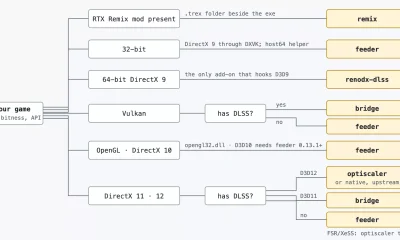
Modders have already found two ways to make DLSS 5 playable, and neither one is Nvidia’s
-

 Crypto World6 days ago
Bitcoin price risks $70K if $78K neckline breaks
-
 Crypto World7 days ago
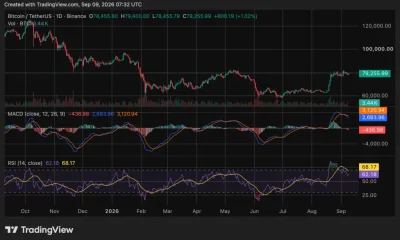
Bitcoin price holds near $79K as cycle drawdowns narrow
-

 NewsBeat7 days ago
What went right this week: an ‘historic’ fall in violent crime, plus more
-

 Business7 days ago
Meta debuts long-awaited personal AI agent, Muse
You must be logged in to post a comment Login