
Business
Mining rebound helps Australian shares creep higher



Four recent job starters share their tips on what helped them have a smooth transition and survive their first few days.

BlackRock Strategic Income Opportunities Fund Q2 2026 Commentary
Eurozone Industry Still Lacks Momentum
Business
Iraqi Butcher Sentenced to 10 Years in Prison for Selling Pork as Beef in Holy Shia Shrine City of Najaf
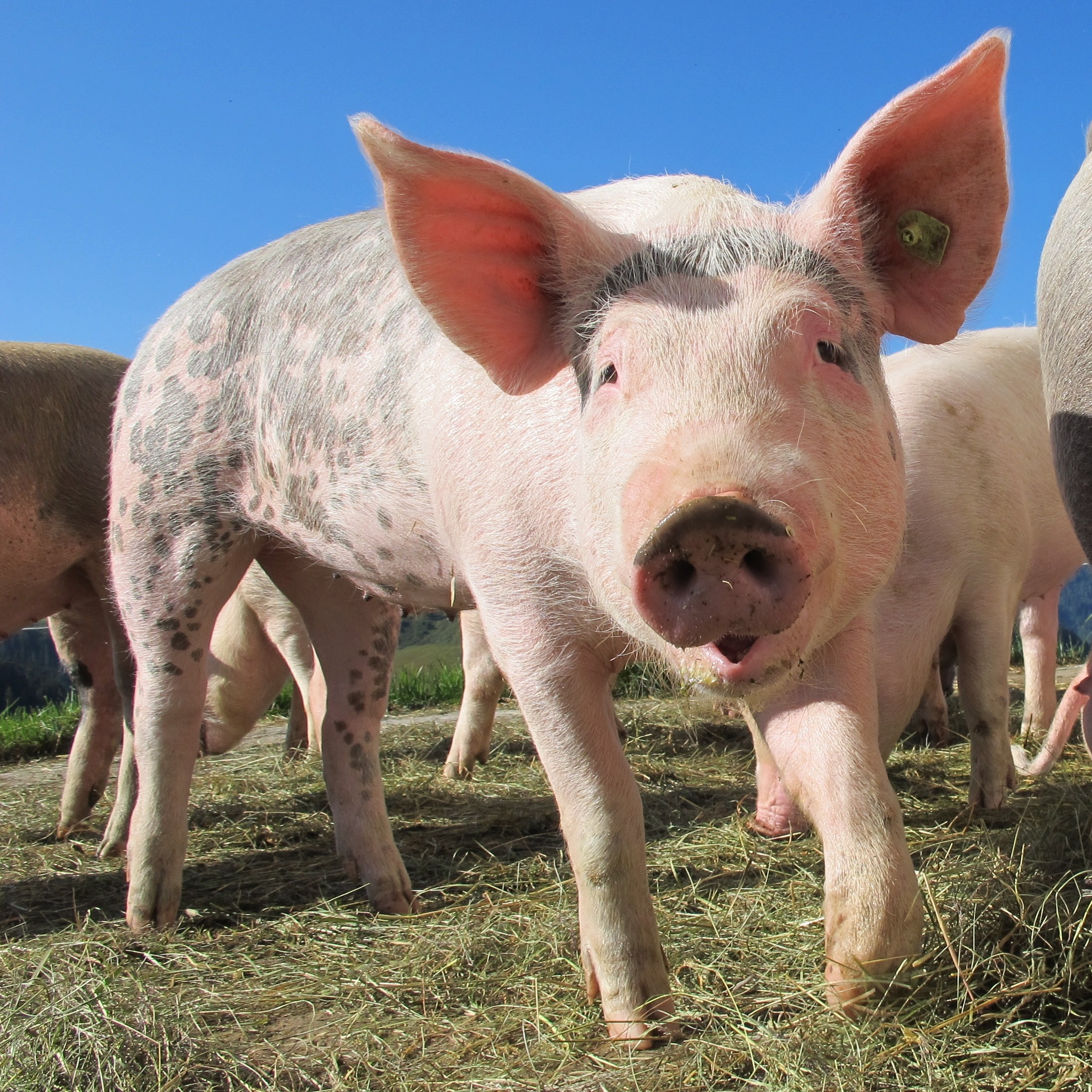
BAGHDAD — An Iraqi court has sentenced a butcher to 10 years in prison after he was caught selling pork as beef in Najaf, one of the holiest cities in Shia Islam, in a case that drew widespread attention and no shortage of dark humor across Iraqi social media.
Iraq’s Supreme Judicial Council said the man was arrested this month after being found in possession of 75 kilograms of pork that he had been passing off as beef to customers in the city. “Najaf Criminal Court has sentenced a convicted person to 10 years in prison for selling meat not suitable for human consumption,” the council said in a statement announcing the ruling, which was handed down Monday.
Najaf draws millions of pilgrims from around the world each year who travel to visit the mausoleum of Imam Ali, the Prophet Mohammed’s son-in-law, the fourth Islamic caliph, and the first Shia Imam. The city’s religious significance made the discovery that a local butcher had been selling pork, a meat strictly forbidden under Islamic dietary law, particularly jarring for residents and visitors alike.
While Islam forbids the consumption of pork on the grounds that it is considered impure, Iraqi law does not explicitly ban its sale within the Muslim-majority country, which is also home to a Christian minority. Prosecutors instead built their case around a 1998 law that criminalizes the sale of “dog or donkey or other meat… that is unfit for human consumption,” a statute the court applied to the butcher’s conduct in selling pork under false pretenses as beef.
News of the arrest spread quickly on social media, generating a mix of public reactions. Some Iraqis used the case to call for stronger food safety enforcement more broadly, while others responded with humor, sharing videos of pigs online captioned “here is Najaf” in reference to the case.
Among those caught up in the scandal was Najaf resident Ahmad al-Mansouri, who described his own unwitting experience buying meat from the butcher in question. “I think I have eaten more pork than beef or lamb over the past years,” Mansouri told AFP, speaking jokingly about his past purchases. Mansouri said he had been drawn in by the quality and price of the ground meat he bought from the butcher, describing it as “excellent quality” and notably cheaper than prevailing market rates, which led him to return to the shop more frequently over time.
Reflecting on the eventual discovery, Mansouri said the arrest came as a shock to regular customers who had no reason to suspect what they were actually purchasing. “We were surprised when he was arrested on charges of selling pork,” Mansouri said.
The case highlights a broader challenge around food safety oversight in parts of Iraq, where enforcement mechanisms for verifying the authenticity of meat and other food products sold in local markets can vary considerably between cities and vendors. Najaf’s status as a major pilgrimage destination, drawing visitors from Shia Muslim communities around the world, has added particular sensitivity to any case involving the mislabeling of food products that conflict with Islamic dietary restrictions, given how directly such cases can affect the religious observance of unsuspecting pilgrims and residents alike.
The 10-year sentence reflects the seriousness with which the Najaf Criminal Court treated the case, even though Iraqi law does not carry a specific prohibition on the sale of pork itself. By anchoring the prosecution in the broader 1998 statute addressing the sale of meat unfit for human consumption, the court was able to pursue a significant custodial sentence despite the absence of a law targeting pork sales specifically, a legal approach that may set a precedent for how similar cases are prosecuted in the future.
It remains unclear from the Supreme Judicial Council’s statement how long the butcher had allegedly been selling pork disguised as beef before his arrest, or how many customers may have unknowingly purchased the mislabeled meat during that period. The council’s statement did not indicate whether additional charges or civil penalties related to consumer fraud were pursued alongside the criminal case, nor did it specify whether health authorities in Najaf conducted any follow-up inspections of other meat vendors in the city following the butcher’s arrest.
The case has added to broader public conversation in Iraq around food safety standards, with social media reaction split between calls for stricter oversight of meat vendors and the darker humor that quickly overtook much of the online discussion surrounding the story. For residents like Mansouri, the episode has left a lasting impression, even as he described his own reaction to the situation with a degree of resigned humor rather than anger, reflecting a broader public response to the case that has blended genuine concern over food safety enforcement with the kind of dark comedic commentary that quickly spread across Iraqi social media platforms following news of the arrest and subsequent sentencing.
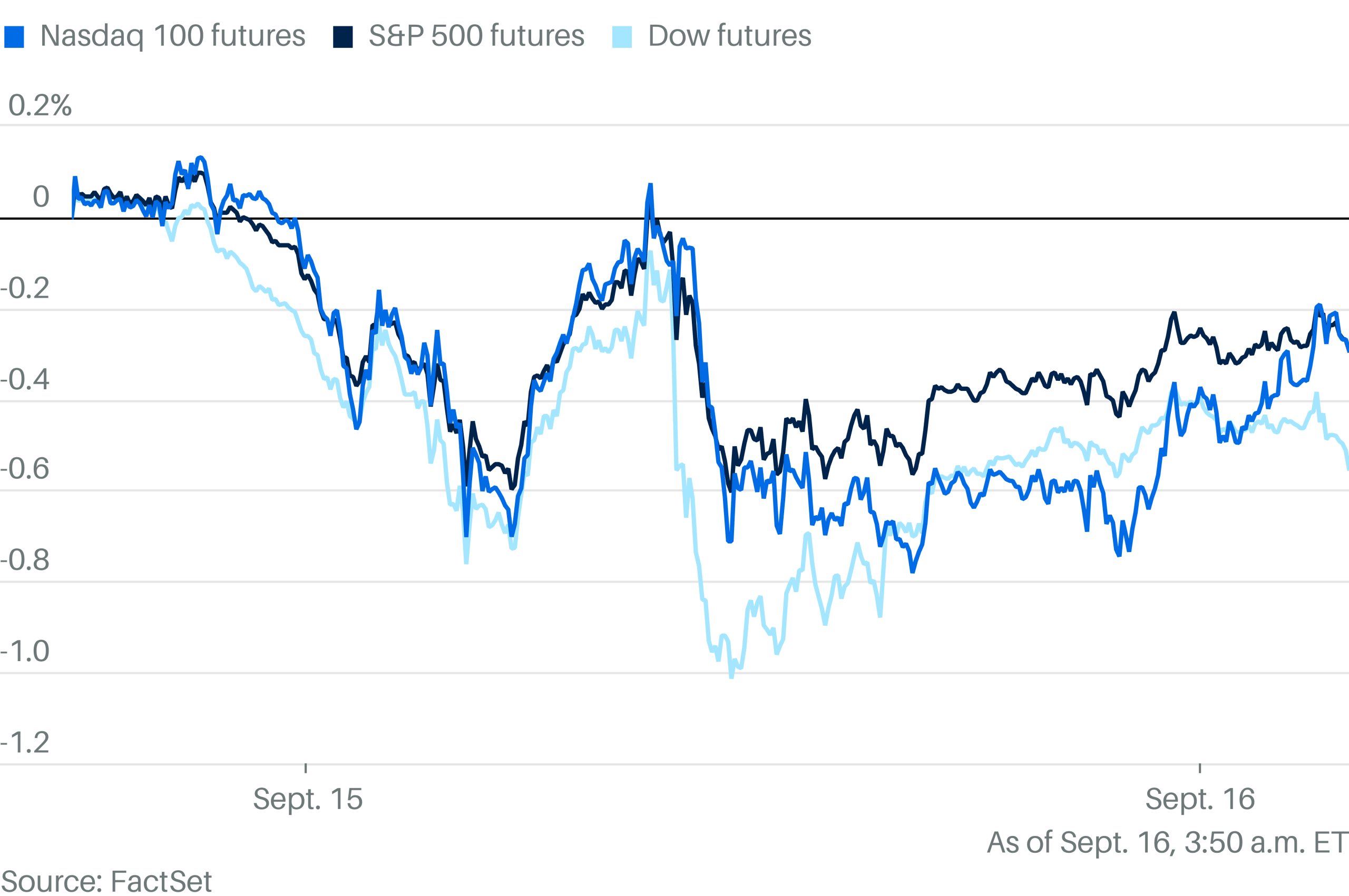
Stock futures were rising on Wednesday as investors opted to buy the dip ahead of the Federal Reserve’s policy decision.
S&P 500 futures climbed 0.2%. Nasdaq 100 futures added 0.4%. Dow Jones Industrial Average futures ticked up 80 points, or 0.2%.
The major indexes closed in the red the previous session as oil prices jumped to their highest level in months due to worries about Yemen’s Houthis disrupting crude supply from Saudi Arabia.

Inflation soared in 2022 because oil and gas were in greater demand after the Covid pandemic, and energy prices surged again when Russia invaded Ukraine.
Before the war in the Middle East broke out, UK inflation had been expected to be at or around the target level of 2% over the next five years, according to the official forecasts published in March 2026.
But in April, the Bank of England warned that disruption to global energy markets could push UK inflation as high as 6% in the worst-case scenario.
When the latest ceasefire took effect, analysts said it could limit further inflation hikes. Oil prices initially fell sharply after the deal was announced, but have risen again since the US and Iran resumed attacks in the Strait of Hormuz in July.
As a result, UK petrol prices are likely to climb back up. This – coupled with the increase in household energy bills from 1 July when the new Ofgem price cap took effect – is expected to push UK inflation higher.
The new Prime Minister Andy Burnham has announced that VAT on household electricity bills will be scrapped, but that will not take effect until October. It is predicted to have a small downward impact on inflation.
Precisely because food and energy prices can be very volatile, the Bank of England also considers other economic measures such as “core inflation”, which excludes these costs.
Core CPI was 2.6% in the 12 months to August 2026, unchanged from the 12 months to July.

Sam Altman, chief executive of ChatGPT maker OpenAI, said yesterday that the public should trust AI companies to keep the technology safe, while accepting that people were right to be concerned about its risks.
“The world should trust that we are going to do the right thing because it’s the right thing and we feel the magnitude of this,” Altman said at Dreamforce, the annual gathering of Salesforce clients in San Francisco.
“It doesn’t take as much imagination as it used to for [us] to imagine how this could go wrong,” he said. “I think the world is right to be afraid of this.”
Altman said AI companies were capable of regulating themselves. “We will get it right,” he said, adding that if firms could not keep “alignment and safety way ahead of capabilities” they would “slow down or stop”.
The remarks were his first public comments since a post went viral last week from a researcher who quit Anthropic, claiming AI could “kill all humans” by the end of the decade if left unchecked.
Industry leaders back self-regulation
Nvidia chief executive Jensen Huang, speaking at the same conference, said AI firms should decide whether new versions of the technology are released, rather than outside forces.
“We don’t need new laws or regulations,” he said, adding there should not be a “false choice” between the speed of innovation and the safety of AI products. Huang argued that safety is an “engineering problem” and that companies should “take a pause” if they lose confidence in a product.
After Altman’s comments, Meta chief executive Mark Zuckerberg wrote on X that every AI firm had the ability and the incentive “to take its own actions” towards safety.
“Any lab that doesn’t focus on alignment will fall behind,” he wrote. “Labs face significant liability if their models cause harm, so they have a strong incentive to prevent this as well.”
The recent warnings from inside the industry prompted Anthropic chief executive Dario Amodei to call for the pace of AI development to slow and for governments to regulate the sector. His call was applauded by Altman, Google DeepMind co-founder Demis Hassabis and Elon Musk.
Speaking at Dreamforce yesterday, Amodei said Anthropic was now in “a dialogue with the rest of the industry” about committing to better safety standards and checks on AI tools and development.
OpenAI executive Chris Lehane said last week that the company was working with other labs, including Anthropic and Google DeepMind, “to advance frontier AI standards, building a voluntary effort now, with or without government support.”
Critics question industry oversight
Critics say companies cannot be trusted to police themselves. Senator Bernie Sanders said decisions about AI had been left to “a handful of the richest people in the world”, while former White House strategist Steve Bannon said the public could not trust tech oligarchs to regulate themselves.
Jack Clark, an Anthropic co-founder and executive, told the BBC on Monday that leaving AI as a “totally unregulated industry” was “rolling dice with immense risks”.
Yoshua Bengio, one of the pioneers of modern AI, wrote on X that “ambitious efforts outside the for-profit sector” were needed to “avert the worst risks from AI”.
President Donald Trump has rejected calls for more guardrails, describing fears about AI safety as a “hoax” and saying the only guardrail needed was a “strong and smart” president.
New US legislation looks unlikely soon. In an interview with Axios published on 3 September, Altman said he had expected Congress to create a “basic framework” for advanced AI after his 2023 testimony, suggesting lawmakers had struggled to regulate without “slow[ing] down innovation”.
Congress returned from its summer break on Monday, but there is no consensus in either party on regulation, and the House is due to enter recess again at the end of this week ahead of the midterm elections in early November.
In the UK, Business Matters reported last week that Anthropic released its Claude Mythos 5.1 model without submitting it to the AI Security Institute for testing.

Cherry Martin
Cherry is Associate Editor of Business Matters with responsibility for planning and writing future features, interviews and more in-depth pieces for what is now the UK’s largest print and online source of current business news.
OpenAI has hired hundreds of contractors to read a continuous stream of real ChatGPT users’ conversations as part of an internal effort to improve the chatbot’s responses, according to an investigation published by 404 Media, raising fresh privacy questions for a service used by more than 900 million people worldwide.
The report, based on leaked internal documents, training materials and real prompts reviewed by 404 Media, details an OpenAI initiative internally codenamed Project Lily. Under the program, contractors known as “prompt reviewers” read anonymized excerpts of real user conversations with ChatGPT, write a summary of what the user was attempting to accomplish, and then critique and rate multiple versions of the chatbot’s generated responses on a scale of one to seven.
According to the internal materials reviewed by 404 Media, the reviewers are working to steer ChatGPT toward specific behavioral targets, including training the chatbot to be less sycophantic, to use fewer emojis, to avoid excessive “AI-speak,” and to adopt more restrained, professional language. The report notes that OpenAI’s earlier GPT-4o model faced criticism for being overly sycophantic, a trait that multiple lawsuits have alleged contributed to several people’s suicides, underscoring why OpenAI has prioritized correcting that behavior in later training efforts.
Each conversation presented to reviewers is accompanied by what the documents describe as a “user memories summary,” an overview of the user’s past interactions with ChatGPT that can include personal context and, in some cases, location information, according to the report. OpenAI told 404 Media that conversations are first processed through what the company calls a Privacy Filter, a system designed to strip identifying details such as names, addresses, emails and phone numbers before prompts reach human reviewers. Even so, OpenAI itself acknowledged to 404 Media that the filter can miss what the company described as “uncommon identifying information or content with personal significance in context,” particularly in shorter conversations, meaning sensitive personal details can still reach the contractors reviewing the chats.
The privacy stakes are heightened by how many users engage with ChatGPT, according to the report, which notes that people frequently treat the chatbot as a therapist, a professional assistant or a digital confidant, sharing intimate personal details they may not realize could be read by another human being. The report also found that in a number of conversations reviewed, users explicitly asked ChatGPT to keep the contents of their exchange confidential, apparently unaware that a human contractor could ultimately review the same conversation as part of the model-improvement process.
Contractors working on Project Lily do not see ChatGPT usernames, according to the report, and OpenAI has said it works to strip personal information before prompts reach reviewers. Even so, when 404 Media asked OpenAI directly whether the company had ever explicitly disclosed to users that human contractors might review their prompts, OpenAI did not answer the question directly. According to the report, OpenAI’s public-facing website discusses human review primarily in the context of content that violates its terms of service or raises safety concerns, rather than as a routine part of ordinary model improvement. Following the story’s publication, OpenAI pointed 404 Media to a separate page on its site stating that humans may review content to “improve model performance.”
The setting governing whether a user’s conversations become eligible for this kind of review is turned on by default for OpenAI’s Free, Plus and Pro consumer subscription tiers, according to the report, while it remains off by default for Enterprise, Business and Education accounts. Users on eligible plans can disable the setting, described in OpenAI’s interface as allowing chat history to be used for model improvement, through the Data Controls section of their account settings. However, the report notes that opting out does not apply retroactively, meaning conversations a user had before changing the setting remain eligible for contractor review regardless of when the opt-out is applied.
The workers who review these prompts are recruited in part through a firm called Crossing Hurdles, with payment processed through Mercor, an AI-training company, according to the report. One contractor told 404 Media the work pays more than $50 an hour. The same contractor described the job itself as largely repetitive, saying that while reading the prompts can be amusing at times, the review guidelines shift frequently and have at times contradicted one another. Separately, Meta ended its working relationship with Mercor in April following a data breach involving the company, according to the report, though that incident was not connected to OpenAI’s use of the firm for Project Lily.
The investigation also found that OpenAI is not alone in relying on human review to refine its AI models. Anthropic confirmed to 404 Media that it likewise uses human review to improve the responses generated by its Claude chatbot, though the company said that practice applies specifically to users who have opted in through a dedicated setting labeled “Help improve our AI models,” a structurally different approach from OpenAI’s default-on setting for consumer ChatGPT accounts. Google has also disclosed that it operates a similar human review process for its own AI products, according to the report, doing so more directly and explicitly than OpenAI has to date.
The report’s authors noted that the human review process uncovered through Project Lily helps explain an aspect of AI development that receives comparatively little public attention: that large language models like ChatGPT do not improve solely through automated processes such as scraping internet data or algorithmic refinement, but also depend substantially on the ongoing, manual work of human contractors reading and evaluating real user conversations at scale, a process that inherently exposes at least some subset of sensitive user data to human eyes despite companies’ efforts to anonymize it beforehand.
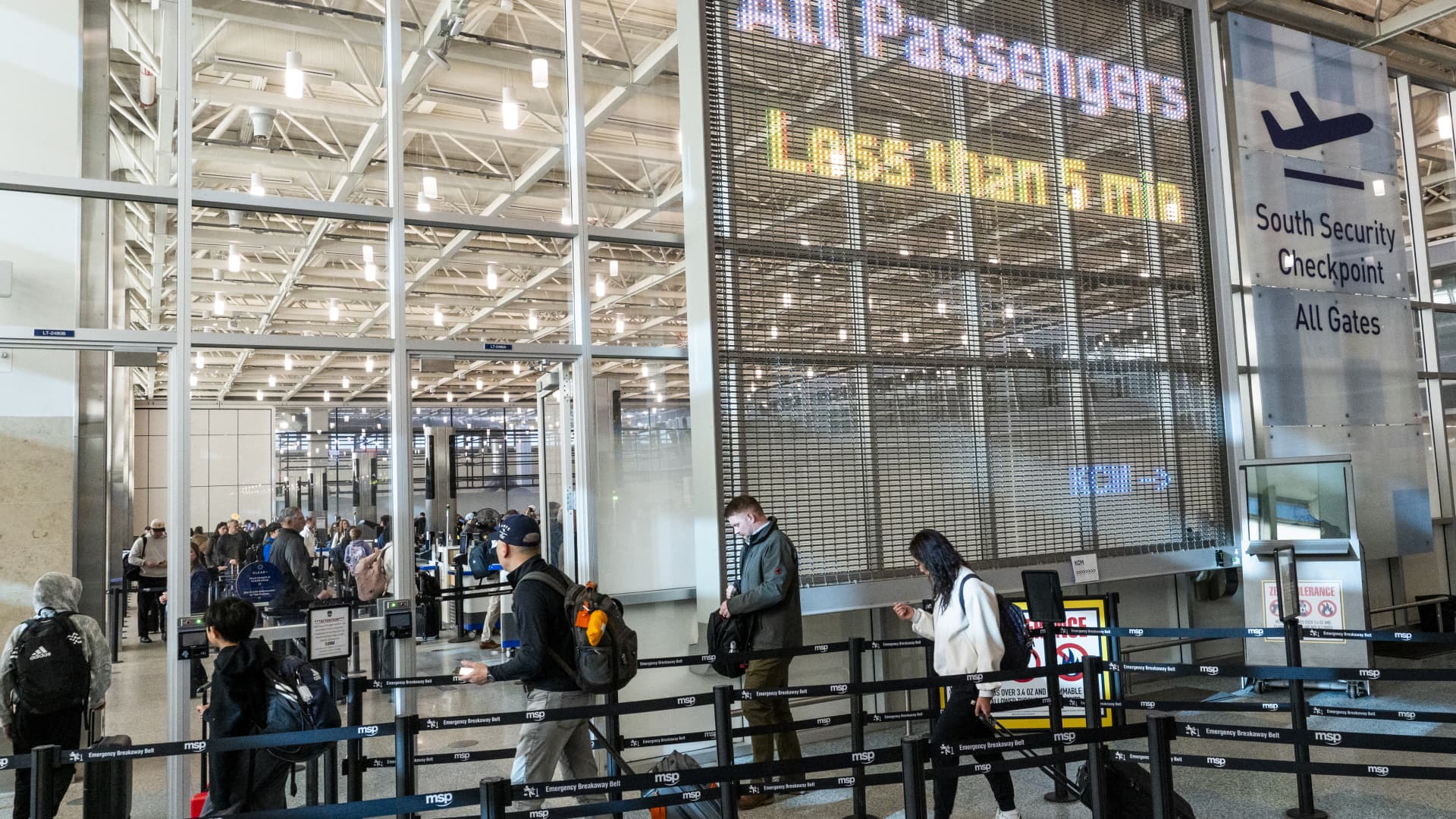
Travelers navigate security lines at Minneapolis-St. Paul International Airport Terminal 1 in Minneapolis, Minnesota, March 23, 2026.
Stephen Maturen | Getty Images
Despite a near record number of people flying in the U.S., it appears travelers are happier with the airports they find themselves moving through.
J.D. Power’s annual North America Airport Satisfaction Study, released Wednesday, reported that overall airport satisfaction increased significantly this year. Travelers gave higher ratings in part because of the newer gates and terminals many airports have opened in recent years, according to the study.
“Overall, travelers are happier with what they are seeing in most airports,” said Mike Taylor, managing director of travel, hospitality and retail at J.D. Power.
From New York’s John F. Kennedy Airport to Kansas City International to Pittsburgh International, airports large and small have opened or are building new facilities to accommodate more travelers. Often, the new terminals and gates are larger, with more light and upgraded amenities, and cost billions to build.
“You have to spend at least a billion to impress people,” Taylor said.
This is the third straight year the J.D. Power study has found an increase in airport satisfaction. The latest report is based on responses from more than 24,000 travelers.
Among the largest airports, which handle more than 33 million passengers annually, Minneapolis-Saint Paul International received the top score. For airports that serve between 10 million and 32.9 million flyers annually, Tampa International was ranked No. 1, while Charleston International in South Carolina was rated the best among medium airports, which see 4.5 million to 9.9 million passengers a year.


Arbitrage Trader, aka Denislav Iliev has been day trading for 15+ years and leads a team of 40 analysts. They identify mispriced investments in fixed-income and closed-end funds based on simple-to-understand financial logic.
Denislav leads the investing group Trade With Beta, features of the service include: frequent picks for mispriced preferred stocks and baby bonds, weekly reviews of 1200+ equities, IPO previews, hedging strategies, an actively managed portfolio, and chat for discussion. Learn more.
Analyst’s Disclosure: I/we have a beneficial long position in the shares of SPE.PR.C either through stock ownership, options, or other derivatives. I wrote this article myself, and it expresses my own opinions. I am not receiving compensation for it (other than from Seeking Alpha). I have no business relationship with any company whose stock is mentioned in this article.
Seeking Alpha’s Disclosure: Past performance is no guarantee of future results. No recommendation or advice is being given as to whether any investment is suitable for a particular investor. Any views or opinions expressed above may not reflect those of Seeking Alpha as a whole. Seeking Alpha is not a licensed securities dealer, broker or US investment adviser or investment bank. Our analysts are third party authors that include both professional investors and individual investors who may not be licensed or certified by any institute or regulatory body.
XRP TRUMP CLARITY BOMBSHELL: WHAT DOES HE KNOW?!

UUP launches independent safeguarding review into Jeffrey Donaldson

We managed to get jobs after uni – here's how we're keeping them



-

 Fashion5 days ago
Weekend Open Thread – Corporette.com
-

 Business6 days ago
Micron Stock Climbs Above $1,031 as AI Memory Crunch and a $50 Billion Outlook Fuel the Rally
-

 Tech3 days ago
The Latest Weird Thing to Play Doom Is the Mapped-Out Brain of a Fruit Fly
-

 Business6 days ago
AMD Stock Climbs After Management Lifts 2027 Data Center Outlook Toward $70 Billion in AI Sales
-

 Crypto World5 days ago
XAG/USD: Silver’s Short-Term Rally Meets Its Moment of Truth
-

 Business5 days ago
10 Most-Streamed Songs On Spotify In 2026 So Far, Led By Ella Langley’s Dominant Run On The Charts This Year
-
 Crypto World6 days ago
2 Chip Stocks Broke Out This Week. Neither Was Nvidia
-

 Tech6 days ago
Battery life is the only iPhone 18 Pro and iPhone Duo upgrade I care about. Apple didn’t disappoint
-

 Crypto World6 days ago
Pi Network ships Protocol 27 on a network with 14 million users and zero DeFi
-

 Crypto World5 days ago
OKX launches 10x OpenAI, Anthropic X-Perps in Europe
-

 Crypto World5 days ago
Diesel Tops $6 a Gallon for the First Time as 28 States Set Records
-

 Tech7 days ago
Apple Watch Ultra 4 vs Watch Ultra 3: Should you really spend another $799?
-

 News Videos5 days ago
Facing Financial Fears
-
 Crypto World6 days ago
Bitcoin price risks $70K if $78K neckline breaks
-

 Entertainment6 days ago
Case Sees Major Update As Jury Deliberations Begin
-

 Business3 days ago
Rivals Sam Altman and Elon Musk Rally Behind Dario Amodei’s Call for a Slowdown in AI Development
-

 Business6 days ago
Western Digital Slips 2.7% as AI Storage Rally Cools After Record Cash and Guidance
-

 Crypto World2 days ago
Elon Musk Drops a Bombshell: Grok 5 Could Be the AGI Breakthrough
-
Crypto World5 days ago
Ethereum Price Analysis: Consolidation at $2.5K Tests Momentum as On-Chain Activity Surges
-
Crypto World7 days ago
Ripple Price Prediction: What to Expect for XRP as a Major Macro Week Approaches
You must be logged in to post a comment Login