
Tech
America's Cryptocurrency 'Clarity Act' Fails Spectacularly, Despite Hundreds of Millions in Industry Lobbying


“The crypto industry’s top legislative priority failed on Tuesday in spectacular fashion,” reports Barron’s.
A procedural motion to advance the bill failed by a vote of 49 to 50, with a handful of Republicans joining all Democrats to shoot it down. The motion needed 60 yes votes to pass, and with the midterm elections looming, the Senate isn’t expected to pick the bill back up this year. Among other provisions, the bill would have taken most crypto trading out of the purview of securities regulators, a key goal of firms like Coinbase Global…
The vote is especially bitter for the crypto industry, which has spent hundreds of millions of dollars on lobbying and campaign expenditures over the past year to even get to this point. Crypto regulation doesn’t even register among the issues voters care most about, and the industry has created massive political action committees to insert itself into the Washington agenda and strike fear into the hearts of lawmakers who might oppose them… Democrats who voted against the bill said that it needed to do more to rein in [Trump’s] crypto dealings to get their support. Some GOP lawmakers also voted against the motion after pressure from community bank executives. Bankers argued that the bill needed a stronger ban on high-yield crypto accounts to protect their deposits, a contention that crypto executives and the White House said was nonsense.
Concerns about the bill “intensified after President Trump disclosed he and his family had earned $1.4 billion last year from his crypto ventures,” reports NPR. “The massive bill — which stretches over 600 pages — would have established the first regulations for the crypto sector in U.S. history. But opponents saw it as the industry’s attempt to encode into law a set of rules they saw as far too lenient on the industry, without enough safeguards.”
A research note from an analyst at Compass Point Research & Trading predicts the bill is now likely tabled until at least 2030, Barron’s notes. But they also report what the crypto industry could do next:
[C]rypto firms will be leaning heavily on Trump’s regulators at the Securities and Exchange Commission, Commodity Futures Trading Commission and Treasury Department, all of whom have said they plan to move swiftly to implement industry friendly rules if a bill didn’t pass. The SEC has already dropped all major enforcement actions against crypto firms and has begun to introduce rules that make it easier to raise money from crypto sales without running afoul of the law. The agency is also expected to implement rules making it easier to tokenize traditional assets like stocks.
The friendly regulatory environment will in effect give the industry a little more than two years to sink roots into the traditional financial system and consumers’ wallets. Even if the SEC took a harsh view of the industry in the future, as it did in President Joe Biden’s administration, the agency at that point might find it difficult to put the genie back in the bottle.


Read more of this story at Slashdot.

Battery life has been stellar on the Pro models over the last few years, and that remains true here. The Pro Max is the more notable of the two because it packs a denser battery. With average use (around 5 hours of screen-on time), I hovered around 50 percent by the end of the day, and easily made it through day two on a single charge. I spent a little less time with the smaller Pro, but so far it has also comfortably gotten me through a day with around 40 percent left by bedtime. Safe to say, most people will very much enjoy the battery life, but the update doesn’t feel drastic.
Next, there’s the processor: the A20 Pro chip. I hardly run into problems with Apple’s flagship silicon, and that hasn’t changed. The phones run every app fluidly, and my benchmark tests show a surprisingly sizable leap over the A19 Pro in the 17 series.
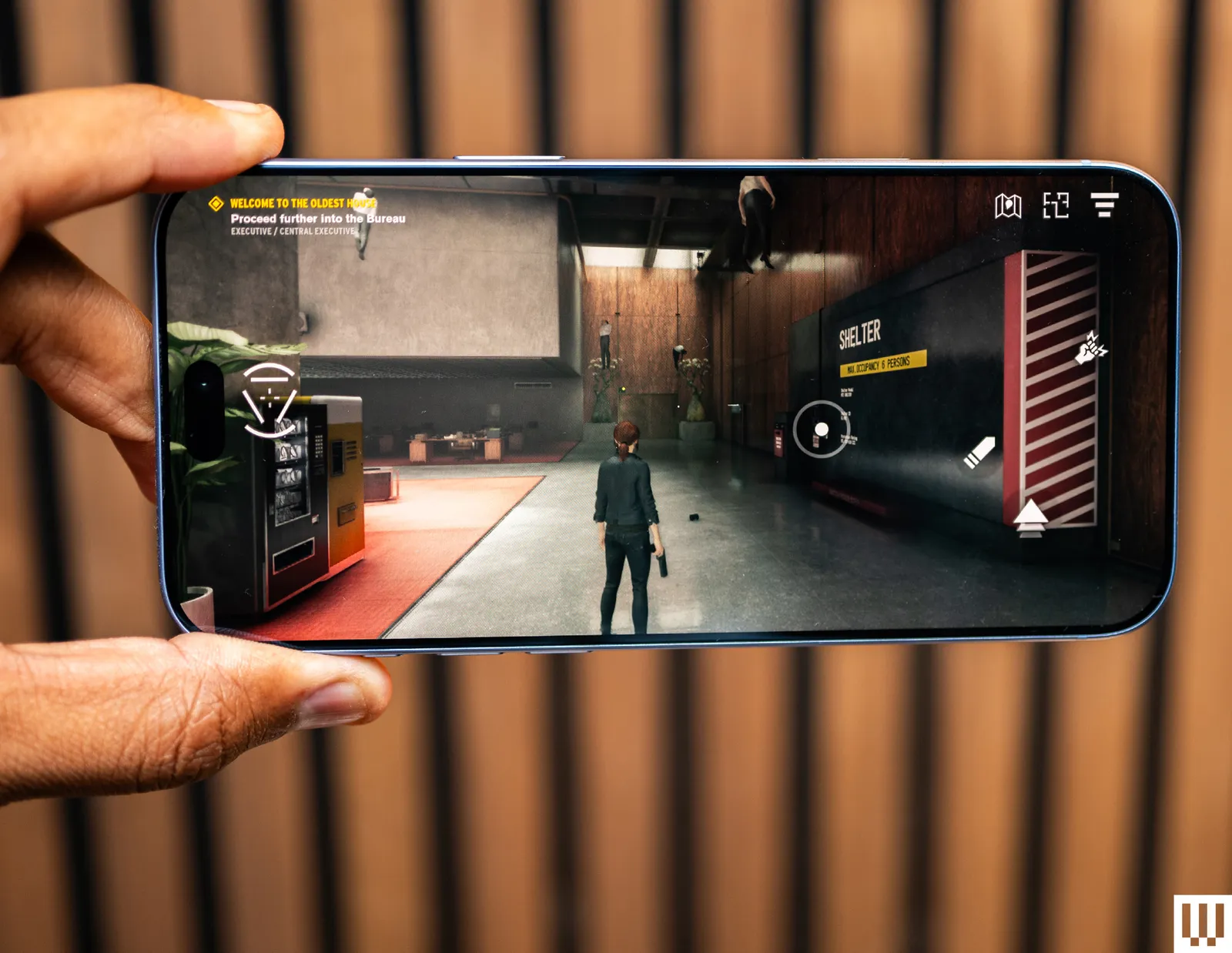
It runs Control—a AAA game from 2019 ported to iOS earlier this year—decently well. However, aggressive upscaling makes the graphics look grainy, and character movements can feel a little sluggish. (I maxed out the graphics settings.) It’s certainly not perfect, but I still can’t believe I’m playing such a demanding title on an iPhone.

More impressive is Apple’s thermal management on these phones. The company has expanded the vapor chamber’s surface area by three times—the phone’s cooling technology that helps spread heat around—meaning the entire phone felt toasty after close to an hour of gameplay in Control, with no uncomfortable localized hot spots. This larger vapor chamber also lets you game longer before phone’s thermal throttling kicks in and slows everything down.
The iPhone 18 Pro models come with iOS 27 out of the box, which features the all-new Siri AI. Yes, Siri AI is infinitely more capable than any version of Siri that Apple has offered before. It still doesn’t quite have the spark or versatility of other AI assistants, but you might be fine with that. If you throw Siri AI a question, there’s a good chance it can actually give you a satisfactory answer now. Remember that Siri AI and other Apple Intelligence features aren’t exclusive to the latest models, though you do need an iPhone 15 Pro or newer to access them.
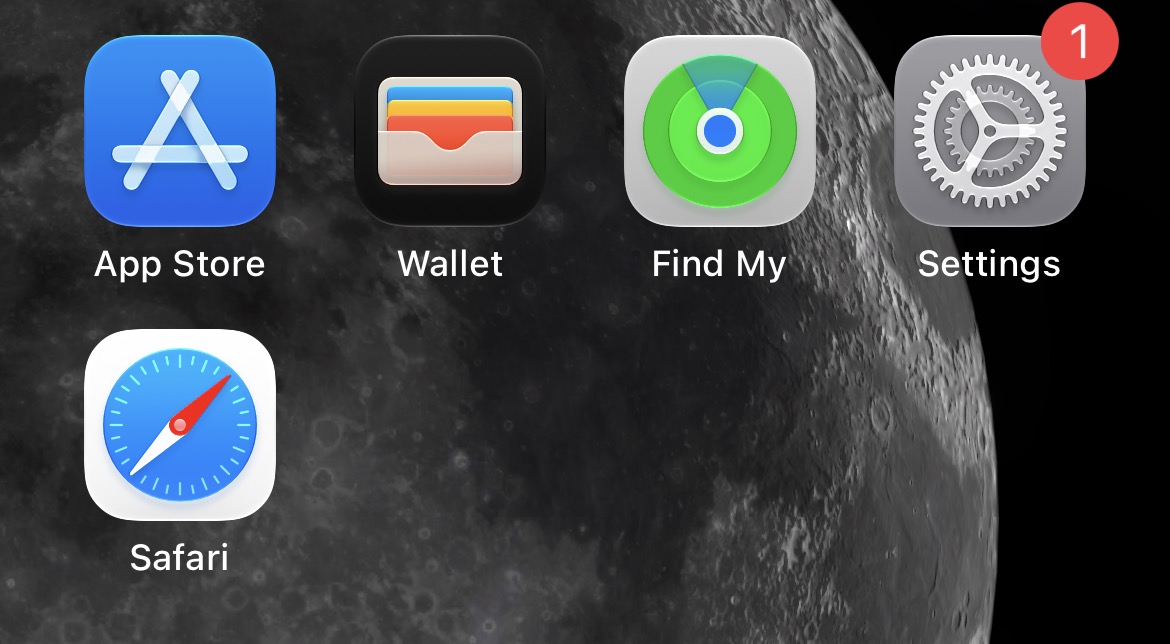
iOS 27 is now available to install on iPhone 11 and newer, and includes plenty of new features. One that’s particularly caught our eye is found within Safari.
With iOS 27, you can now receive notifications whenever a specific webpage changes within the Safari app. That means you can be notified if a product you’ve had your eye on for ages finally comes back in stock, or if an artist updates touring dates on their website.
It’s easy to set up and could save you from missing out. Follow our steps below to learn how to get notified when a website changes in iOS 27.
Want more about iOS 27? We’ve rounded up 14 tips and tricks of the new update, and explained how to adjust the transparency of Liquid Glass too. Or, if your phone won’t support the update, visit our round-up of the best iPhones to find your next purchase.
What you’ll need:
- An iPhone running iOS 27
- Safari app
The short version
- Open Safari
- Visit the website page you want to track
- Tap the page Settings
- Select Notify Me
- Describe what you’d like Safari to look for and when
- Tap Next
- Allow Notifications
-
Step 1.
Open Safari

Open the Safari app on your iPhone. Remember to make sure you have iOS 27 installed on your device.
-
Step 2.
Visit the website page you want to track

Find the exact page of the website you’d like to be notified about. For example, it could be for a product that’s out of stock or for a show you want to get tickets for. In our instance, we’re tracking the best smart rings page to be notified of new entries.
-
Step 3.
Tap settings

At the bottom of the screen, to the left of the address bar, you’ll see three horizontal lines. Tapping this will open up Safari’s Settings.
-
Step 4.
Select Notify Me

Tap Notify Me.
-
Step 5.
Describe what you’d like Safari to look for and when

Here you’ll need to tell Safari what it is you want to be notified of. So, if you want to be told when a product comes back in stock, then simply type this.
You can then tell Safari how often you’d like it to check the website. You can choose either hourly, daily, weekly or monthly, and adjust the time, plus the day of the week (for weekly searches), or the exact date (for monthly searches).
-
Step 6.
Tap the blue tick

Once you’re happy with your instruction, tap the blue tick button. Just note that you might need to wait for a few moments before the blue tick appears at the top right corner, but it will. If it doesn’t, then try again.
-
Step 7.
Allow Notifications

You may be prompted to allow notifications from Safari. Tap Allow.
Troubleshooting
Yes you can cancel a Safari notification and get it to stop tracking a website. To do this, simply visit the webpage again, open up Safari’s Settings and tap Notify Me. From here, you’ll find your existing notification, and the ability to delete it.


The most powerful El Niño ever on record is just ramping up, but 2026 can already lay claim to the hottest summer in U.S. history. That’s not good news for some members of its military, however — especially those stationed in San Diego, California. That’s because sailors living in one particular barracks building are no longer allowed to use air conditioning, per an official memo distributed to residents on August 31.
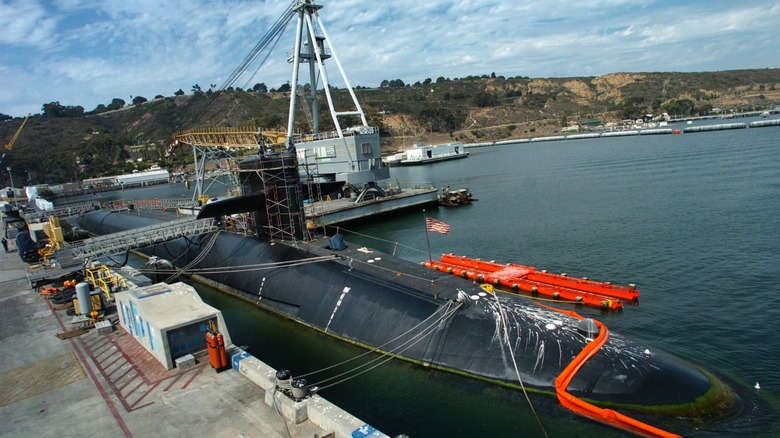
As reported by KPBS, San Diego’s public broadcasting station, barracks Building 635 at Naval Base Point Loma has banned portable AC units. According to Brian O’Rourke, a Navy Region Southwest spokesperson, “Naval Base Point Loma leadership advised sailors and tenant commands on the base that personal portable AC units are prohibited.” Sailors had one week to remove the cooling units, with inspections planned to ensure compliance.
The fact that the ban is starting at the tail end of summer will likely be of little consolation to the sailors, with temperatures in Southern California still creeping into the 90s. One sailor told KPBS that their room is uninhabitable during the day and is still too hot to sleep in at night, even with ceiling and stand-up fans. Even an AC unit the worst air conditioner brands would likely be welcome at this point.
It’s less about security and more about infrastructure
This isn’t the first time the U.S. military has banned personnel from using certain products. Generally speaking, however, these bans have been prompted by security risks. In 2018, for example, fitness apps were prohibited because soldiers overseas working out on bases were unwittingly giving away vital location data. Even ad trackers have had to be disabled for similar reasons — though that ban was likely better received.
Security concerns, however, aren’t behind the AC ban at Naval Base Point Loma. Instead, it’s because the barracks’ Building 635 is old and its electrical grid can’t handle the power consumption required by the appliances. As the Navy’s Brian O’Rourke told KPBS, the air conditioners “frequently trip circuit breakers and create a safety hazard.” In that case, even the most energy-efficient air conditioners may be too much for the building’s grid.
However, O’Rourke adds that the building, which is designated Unaccompanied Housing, is set to be upgraded, which may or may not include its electrical wiring. In 2025, Congress passed $1 billion in funding for Unaccompanied Housing through the One Big Beautiful Bill Act. The Navy has already committed to upgrading the Point Loma Barracks and is set to begin construction at some unknown point in the future, though It’s unclear how much Building 635 stands to benefit.
An anonymous reader quotes a report from Space.com: NASA’s Chandra X-ray Observatory has found a brand new type of an otherwise familiar object — compact binary systems that steal gas from other stars, but which do so while emitting very low-energy X-rays but copious amounts of ultraviolet. Chandra spotted 84 suspicious object emitting very low-energy X-rays in six galaxies — four evolved ellipticals and two spirals, namely our near-neighbor the Andromeda Galaxy (M31) and the Pinwheel Galaxy (M101). “We’ve never encountered a group of objects that act like this,” said Mustafa Muhibullah of the University of Alabama in a statement.
Compact objects, in the form of black holes, neutron stars and white dwarfs, are the remains of stars that have died. Their small size and powerful gravity means that they’re adept at getting close to orbiting companion stars and ripping the stars’ outer layers of gas away. The gas swirls around the compact object, falling onto its surface, and this accretionary process usually produces torrents of high-energy X-rays because the stolen gas becomes superheated by the compact object’s gravitational vice-like grip.
Because of their weak X-rays, Muhibullah’s team refer to them as ‘hypersoft X-ray sources’. Since low-energy X-rays and ultraviolet light are next to each other on the electromagnetic spectrum, Muhibullah and his team suspect that the low-energy X-rays are spillover from objects emitting prodigious amounts of ultraviolet. Moreover, they think that these objects are lower-level compact binaries. They’re hard to find though, because the interstellar medium of hydrogen and helium gas between the stars absorbs ultraviolet light. This could be why we have yet to find any hypersoft X-ray sources in our own galaxy, because we have to look through the interstellar medium through the plane of the Milky Way. Consequently, there could be a large population of hypersoft X-ray sources that remain undiscovered and they could have an important effect on the universe around them. The findings have been published in the journal Nature Astronomy.
Read more of this story at Slashdot.

Over the past two years, I’ve spent countless hours talking with teachers, parents, students and school leaders about artificial intelligence. The questions they have are remarkably consistent: How should schools respond? When should students use AI? How do we preserve authentic learning in a world where answers have become nearly instantaneous?
They’re important questions, but I’ve noticed something interesting about them. Our conversations rarely stay focused on the technology itself. Before long, they drift somewhere deeper. They become conversations about thinking. About curiosity. About judgment. About what learning is actually for when a machine can generate an essay, solve a problem, or summarize a chapter in seconds.
Oddly enough, the most helpful answers I’ve found didn’t come from AI research. They came from Rwanda and Yellowstone National Park.
For years, those sites occupied completely different parts of my life. One was a trip that changed me. The other was an ecological story I couldn’t stop thinking about. It took me much longer to realize they were helping me answer the very questions I was now asking about artificial intelligence in schools.
That realization began on a dusty road, on an otherwise ordinary day in Rwanda.
I went to Rwanda as part of a group helping schools transition from French to English in the classroom. That day, I happened to be carrying a yellow jerrycan of water from the watering hole back to the village alongside people who make that miles-long journey every day. Before long, my hands ached and my shoulders tightened. The hard plastic handle dug into my fingers as I wondered how much further we had to walk. The people beside me never seemed to notice the weight. For me, carrying water was extraordinary. For them, it was simply another walk home.
That contrast stayed with me long after I returned home. The walk answered very little. Instead, it left me with a question that has followed me ever since: How do we help students understand realities they have never lived?
That question would resurface years later in a sixth-grade classroom. Our teaching team designed an interdisciplinary unit around the novel “A Long Walk to Water,” hoping literature, conversations with a friend of mine from Sudan, and local field experiences would help students move beyond learning about water insecurity and begin to care about the people living it.
By most measures, the lesson was a success. Then we sat down to debrief.
“I don’t think it worked,” one teacher said.
Almost immediately, heads began nodding around the table.
“I was thinking the same thing.”
“Me too.”
No one defended the lesson. No one blamed the students. Instead, we realized we had been measuring engagement when what we really cared about was understanding.
Looking back, I think that meeting changed our teaching far more than the lesson itself. Years of working together had built enough trust for one honest observation to give everyone else permission to be honest too. We stopped trying to protect the lesson and started asking a different question.
Not, How do we make this activity better? But, How does understanding actually grow?
We’ve been refining that project ever since, and that conversation forced us to confront a much larger question: If meaningful change doesn’t happen because of a single lesson, how does it happen?
To understand how meaningful change happens, consider what happened in Yellowstone National Park.
When scientists reintroduced gray wolves to Yellowstone National Park in 1995, they expected the elk population to change. They didn’t expect rivers to change as well. As elk altered where they grazed, willow and aspen trees recovered. Beavers returned. Wetlands expanded. Vegetation stabilized riverbanks. An entire ecosystem began reorganizing itself in ways few people had anticipated.
The wolves didn’t directly reshape Yellowstone. They changed the relationships within the ecosystem. And everything else followed.
Learning about Yellowstone changed the way I thought about change itself. It made me realize that the most meaningful transformations rarely begin by fixing one thing. They begin by changing the relationships within a system. Once I saw that pattern, I couldn’t stop seeing it in schools.
We often assume meaningful change happens by improving the thing right in front of us. We redesign a lesson. We adopt a new curriculum. We write a new AI policy. We expect better outcomes because we’ve improved one part of the system.
The wolves didn’t change the rivers directly. They changed how elk moved through the landscape. That altered where trees could grow, which brought back beavers, reshaped wetlands, stabilized riverbanks, and eventually changed the rivers themselves. One dramatic intervention didn’t drive the transformation. It emerged because relationships within the ecosystem had changed.
I’m beginning to think schools work the same way.
Looking back, our sixth-grade project didn’t improve because we discovered a better activity. It improved because the relationships around the project changed. Teachers trusted one another enough to challenge assumptions. Students were invited to wrestle with ideas instead of simply completing assignments. Learning became less about delivering an experience and more about cultivating understanding.
Once I began seeing schools that way, I couldn’t think about artificial intelligence in quite the same way anymore.
AI isn’t simply introducing another tool into classrooms. It’s changing relationships: The relationship between students and thinking. Between effort and accomplishment. Between teachers and expertise. Between knowing something and finding it instantly.
Those may prove to be the relationships that shape the future of learning far more than any particular AI model or school policy.
That’s why my conversations about AI are almost never about the technology itself. They’re about what we choose to value.
Parents wonder whether students will gradually stop wrestling with difficult ideas if a chatbot can do the work for them. Teachers ask how to preserve productive struggle when every answer is just a prompt away. School leaders wrestle with an even deeper question: If AI can do more of the thinking, what kinds of thinking should remain unmistakably human?
I don’t think there’s a simple answer. What I do know is that answering those questions has required me to revisit experiences that had nothing to do with artificial intelligence — at least not at first.
I keep finding myself returning to that dusty road in Rwanda.
Carrying a jerrycan didn’t help me understand what it means to live with water insecurity. It wasn’t meant to. What it changed was my relationship to the people carrying it beside me.
Our sixth-grade project taught me something similar. We eventually realized our goal wasn’t to create a memorable activity. It was to create the conditions where students might begin asking deeper questions about lives very different from their own.
Increasingly, I think AI presents schools with that same choice. We can use it to remove every obstacle from learning, making every task faster and easier. Or we can become even more intentional about preserving the kinds of thinking that develop judgment, curiosity, empathy and discernment.
Looking back, I don’t think Rwanda, Yellowstone, and AI were ever separate stories.
Rwanda changed my relationship to people whose lives I couldn’t fully understand. Our faculty meeting changed the relationships among teachers. AI is changing the relationship students have with thinking itself.
Rwanda taught me that understanding begins with humility. Our sixth-grade team taught me that meaningful change begins with the courage to question our own assumptions. And Yellowstone taught me that lasting change happens by changing relationships within a system.
Technology will continue to change. Our responsibility as educators won’t.
We still have to create experiences that ask students to think, question, struggle, and understand in ways no technology can do for them. Those were the questions before AI. I suspect they’ll still be the questions long after today’s technology has been replaced by something none of us can yet imagine.
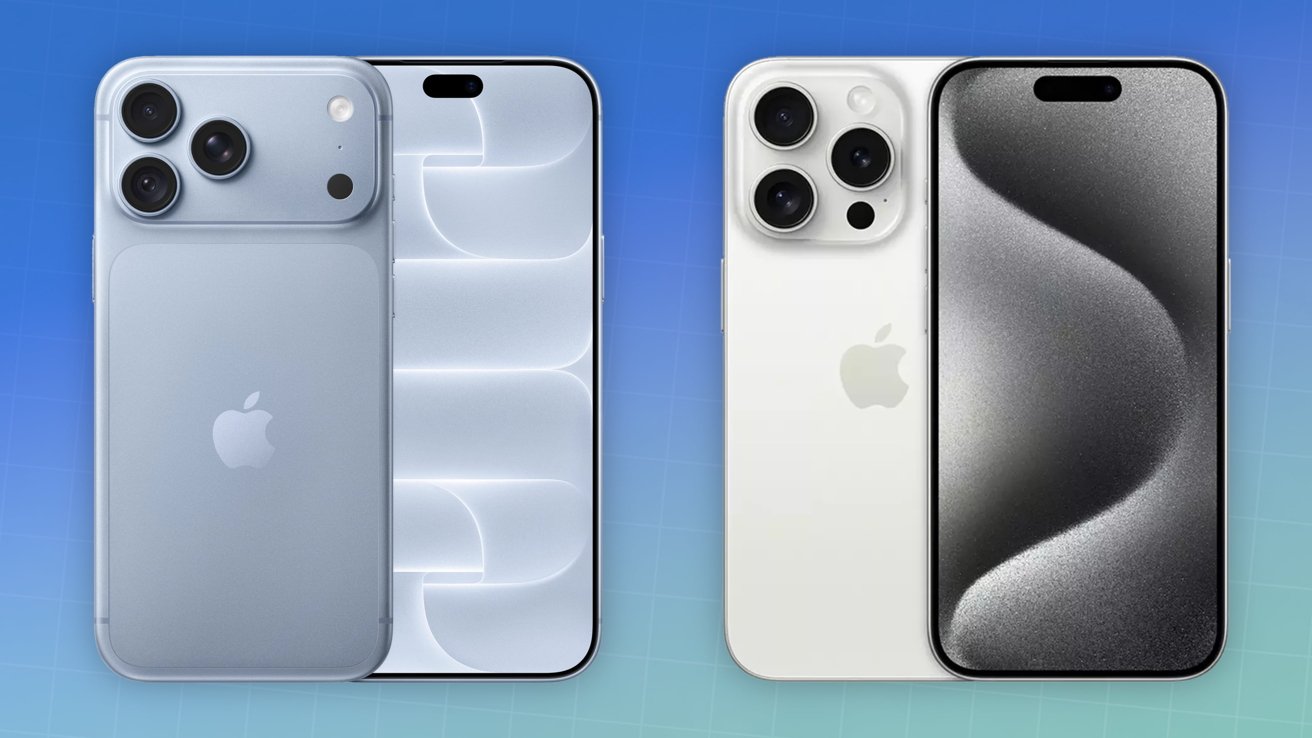
After three years, iPhone 15 Pro Max owners are likely to consider upgrading to the newest version. Here’s how the iPhone 18 Pro Max fares against its 2023 counterpart.
![iPhone 18 Pro Max [left] vs iPhone 15 Pro Max [right]](https://media.appleinsider.com/gallery/68998-145466-headiphone18promax15promax-xl.jpg)
iPhone 18 Pro Max [left] vs iPhone 15 Pro Max [right]
The iPhone 18 Pro Max is Apple’s latest premium model of smartphone, if you ignore the iPhone Duo. As the top of the line in many respects, it’s what consumers wanting the ultimate iPhone will get, especially if they value photography and videography.
However, it’s also three years after the introduction of the iPhone 15 Pro Max. That was a notable release for making major changes to the camera setup.
Continue Reading on AppleInsider | Discuss on our Forums
The Mastering Linux Development Bundle has 7 courses to help you become a Linux expert. Courses cover Kali Linux, Ubuntu, Secure Shell, Command Line, and more. It’s on sale for $20.

Note: The Techdirt Deals Store is powered and curated by StackSocial. A portion of all sales from Techdirt Deals helps support Techdirt. The products featured do not reflect endorsements by our editorial team.

Goldman Sachs is expanding its technology presence in the Seattle region, opening a new Bellevue engineering center that will accommodate more than 125 employees focused on artificial intelligence and cloud transformation.
The New York-based financial giant held a ribbon-cutting ceremony this month for the new office, its first dedicated space for engineers in the Pacific Northwest.
The Bellevue location adds to Goldman Sachs’ existing presence in downtown Seattle, where the company has maintained an office since 2001 for its banking and wealth management divisions.
“We are in a period of rapid technological change, but we know our people are still this firm’s greatest asset,” Goldman Sachs Chairman and CEO David Solomon said in a statement. “Hiring exceptional talent is central to how we adapt and grow.”
Goldman Sachs employs more than 12,000 engineers globally, about one-quarter of its workforce. The company said the Bellevue office will give it access to the region’s deep pool of engineering talent and graduates from local universities.
@media (max-width: 600px) {
aside.callout { float:none !important; max-width:100% !important; margin-left:0 !important; margin-right:0 !important; }
}
The move also puts Goldman Sachs in the company of a growing list of financial and technology companies that have established engineering operations in the Seattle area. GeekWire maintains a list of nearly 150 engineering hubs in the Seattle region here.
JPMorgan Chase established its Seattle Tech Center in 2018 and has steadily expanded it. The engineering hub has grown to about 400 employees and is now anchoring a new AI infrastructure team focused on controlling how the bank runs AI across its own data centers and outside cloud providers.
Goldman Sachs said its new Bellevue location comes amid growth at other facilities in Dallas, Salt Lake City and Warsaw. Earlier this month, the company hired Dinesh Keswani — a former Microsoft and GoDaddy engineering leader — to co-lead its core engineering team alongside Gopi Parameswaran. Keswani will also serve as chief technology officer of The Core Engineering.


The European Union plans to stop children under 13 from using social media and to prevent anyone under 15 from having a personal account, Ursula von der Leyen announced in her State of the Union address on Wednesday.
“No social media under the age of 13. No personal account under the age of 15,” the Commission president said, according to Bloomberg.
Still, kids who are 13 or 14 could still have accounts, but only with parental supervision and limited features. But this announcement answers a question that has divided EU countries in recent weeks, as the age limit remained undecided until Monday, with Commission experts supporting 13 and France opting for 15.
The Commission president’s announcement includes both ages if the text remains as stated today.
More details will be shared on Thursday, when the Commission will present the EU Kids Act. As for now, we have a few details on what the draft contains, such as that the law will require strict age checks on social media, video platforms, app stores, online games, AI companions, and chatbots,
Companies that will not follow the rules could face fines up to 6% of their annual sales.
Euronews, having received the draft the following day, outlined a system under which children under the age of three would be excluded, and teenagers aged 13 and 14 would have restricted accounts.
The draft also states that services must switch off features such as infinite scrolling and artificial notifications, and that “technology companies bear primary responsibility for making their products safe”.
To verify ages, platforms could use the Commission’s age verification app, which Brussels said was ready in April. The app uses zero-knowledge proofs, allowing users to prove they are old enough without sharing their identity documents.
Privacy concerns have already halted one national effort: in August, France’s Constitutional Council rejected the country’s under-15 ban, saying it was too harsh and did not protect users’ data well enough.
President Emmanuel Macron then asked Brussels to create an EU-wide rule. Other EU countries have been making their own rules since Australia banned under-16s in December, and the Commission has faced more calls to set a single standard.
No agreement will be reached quickly since the governments are still divided, with both Estonia and Belgium opposing age-based bans in full, and the European Parliament having earlier called for an age limit of 16; the proposal must have the support of both sides before it can become law, a process which Bloomberg has pointed out can take years.
The text that will be unveiled on Thursday will illustrate the extent to which the 13-and-15 formula remains valid when exposed to the draft and how far the new rules apply to AI chatbots.
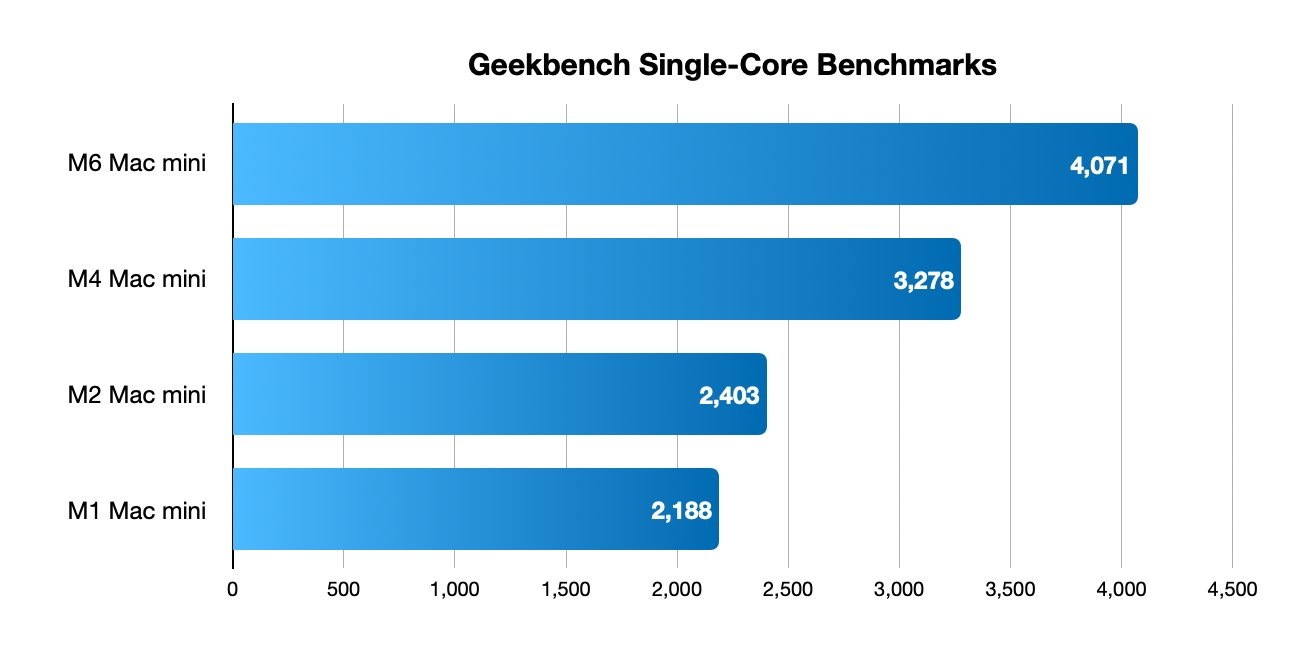
The first benchmarks for the M6 Mac mini have emerged. While Moore’s Law is in fact dead, the Mac mini is still getting a massive and noticeable boost in processing performance.
Ahead of the release of Apple’s product launches to consumers, benchmarks for the models frequently surface, hinting at what’s on the way. That has seemingly happened for the M6 Mac mini, which Apple introduced at the end of August.
The Geekbench 7 listing for a “Mac18,5” posted on September 15 mentions it is a Mac with an M6 chip, complete with 12 cores. The listing adds that it has a base frequency of 4.78GHz, up from the 4.4Ghz M4 Mac mini and the 3.2GHz M1 Mac mini.
At the time of reporting, there is only one listing appearing for a “Mac18,5” for Geekbench 7’s CPU benchmarks, with none for GPU or AI testing so far.
While we would prefer to see multiple benchmarks that can back up these figures, they do seem plausible enough to be real. As consumers get their hardware, expect more results to come out and to solidify just how much better the M6 is over its predecessors.

Single-core scores under Geekbench 7
On the single-core test, the M6 Mac mini is shown to have achieved a score of 4,071. By comparison to the previous base Mac mini model, the M4, that works out to be a 24% improvement.
It’s also 69% better than the M2 Mac mini. The 89% improvement almost doubles the score of the M1 Mac mini.

Multi-core scores under Geekbench 7
The change is more startling on the multi-core side of things. At 22,783, the M6 Mac mini is 48% better at multi-core tasks than the M4 Mac mini.
Compared against the M2 Mac mini, the M6 is 132% better. That extends to 165% when the M1 Mac mini is taken into consideration.
It’s said that consumers will only really notice a difference in processing performance if it is about 15% better or worse. If these figures are correct, the first buyers to receive their new Mac mini will definitely be able to feel the difference.
16 “DWTS ”couples whose ballroom chemistry turned into real romance

Meghan’s deeply emotional song choice for Harry: Classic 80s hit used in Duchess’ birthday post was one Duke and Prince William would sing with Diana to ease boarding school ‘anxiety’
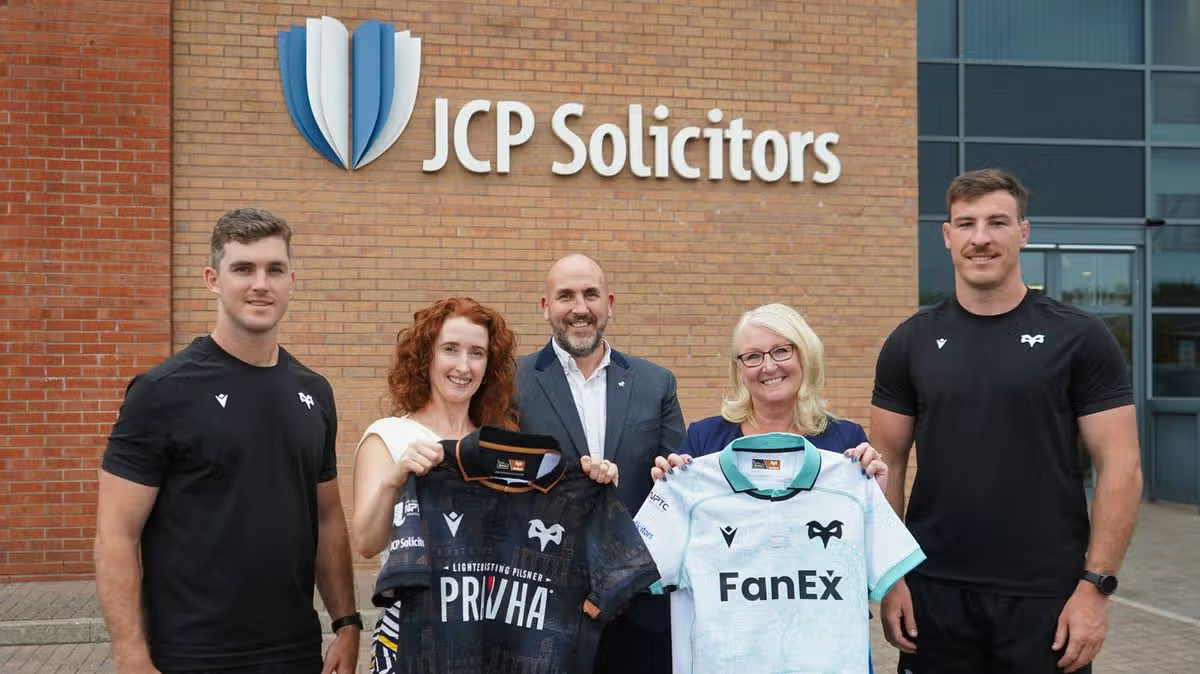
The Ospreys in new sponsorship deal with JCP Solicitors



-

 Fashion5 days ago
Weekend Open Thread – Corporette.com
-

 Business6 days ago
Micron Stock Climbs Above $1,031 as AI Memory Crunch and a $50 Billion Outlook Fuel the Rally
-

 Tech3 days ago
The Latest Weird Thing to Play Doom Is the Mapped-Out Brain of a Fruit Fly
-

 Business6 days ago
AMD Stock Climbs After Management Lifts 2027 Data Center Outlook Toward $70 Billion in AI Sales
-

 Business5 days ago
10 Most-Streamed Songs On Spotify In 2026 So Far, Led By Ella Langley’s Dominant Run On The Charts This Year
-

 Crypto World5 days ago
XAG/USD: Silver’s Short-Term Rally Meets Its Moment of Truth
-
 Crypto World6 days ago
2 Chip Stocks Broke Out This Week. Neither Was Nvidia
-
 Tech6 days ago
Battery life is the only iPhone 18 Pro and iPhone Duo upgrade I care about. Apple didn’t disappoint
-
 Crypto World7 days ago
Pi Network ships Protocol 27 on a network with 14 million users and zero DeFi
-

 Crypto World6 days ago
OKX launches 10x OpenAI, Anthropic X-Perps in Europe
-

 Crypto World5 days ago
Diesel Tops $6 a Gallon for the First Time as 28 States Set Records
-
 Tech7 days ago
Apple Watch Ultra 4 vs Watch Ultra 3: Should you really spend another $799?
-

 News Videos5 days ago
Facing Financial Fears
-
 Crypto World7 days ago
Bitcoin price risks $70K if $78K neckline breaks
-

 Entertainment6 days ago
Case Sees Major Update As Jury Deliberations Begin
-
 Business6 days ago
Western Digital Slips 2.7% as AI Storage Rally Cools After Record Cash and Guidance
-

 Business3 days ago
Rivals Sam Altman and Elon Musk Rally Behind Dario Amodei’s Call for a Slowdown in AI Development
-
Crypto World7 days ago
Ripple Price Prediction: What to Expect for XRP as a Major Macro Week Approaches
-

 Crypto World2 days ago
Elon Musk Drops a Bombshell: Grok 5 Could Be the AGI Breakthrough
-
Crypto World6 days ago
Ethereum Price Analysis: Consolidation at $2.5K Tests Momentum as On-Chain Activity Surges
You must be logged in to post a comment Login