
Politics
Wings Over Scotland | A Thousand Islands In The Sea

We’re getting so much correspondence from Police Scotland at the moment that we’re starting to feel like their guiltily-neglected penpal.

This one, though, is slightly more involved than their usual two-paragraph brushoff.
Don’t get too excited, though – it amounts to the same thing.

This is self-evident gibberish. Nobody was prosecuted, let alone convicted, over the misappropriation of the fundraiser money specifically (as opposed to the SNP’s general funds, which are what Peter Murrell was convicted of embezzling).
The only way that knowing the reasons they weren’t prosecuted could possibly “prejudice the prevention or detection of crime and apprehension or prosecution of offenders” is if those reasons revealed either some sort of loophole in the law, or some inappropriate interference with its natural processes on the part of the Crown Office, Police Scotland or both.
Neither is a legitimate reason to refuse disclosure. Any loophole should be addressed by Parliament, and inappropriate interference is itself a criminal matter. (Albeit one you could only report to… Police Scotland and the Crown Office.)

The response then attempts to add further excuses.

This is equally obvious nonsense. Everyone already knows who the leadership of the SNP was during Operation Branchform, and who we were asking about in the FOI request – Nicola Sturgeon, her chief executive Peter Murrell and her treasurer Colin Beattie. There is no need to conceal their identity when everyone already knows it.

This is extraordinary. It says, entirely correctly, that:
“It is in the public interest that an understanding exists as to the processes involved in police investigations and in their relative success. This is particularly true in investigations, therefore, accountability and transparency relating to the actions of Police Scotland and its officers would favour disclosure of the information.”
But then it point-blank refuses to actually disclose the information because… well, for no actual valid reason that we can detect. As far as we can make out from those last three paragraphs, Police Scotland is refusing to disclose the information because Police Scotland holds the information and it might reflect poorly on the actions of Police Scotland.
Honestly, folks, we’ve read those three sentences over and over again trying to find any other sort of coherent meaning in them and it simply isn’t there. The whole passage can be accurately summarised as:
“We should give you this information, but it’s important that we don’t because it might make us look bad therefore we’ve decided you have no right to know, even though that’s pretty much the entire point of Freedom Of Information law existing in the first place.”
And it keeps getting madder.

The question asked was about the very specific distinction between the original enquiry into misappropriated fundraiser money used for SNP purposes other than a second referendum campaign, and the subsequent enquiry into general SNP funds embezzled by Peter Murrell for his personal benefit.
We know when that change happened, because the police themselves briefed journalists about it back in June after Murrell’s sentencing.


It was some time between October 2022 and “early spring 2023”. So why are we now being fed some rancid cobblers about it being March 2025? And why did the police submit an “advice and guidance” report to the Crown Office in August 2024 asking them what to do about the original complaint, separate to the embezzlement charge, when by their own assertion they’d already concluded 18 months earlier that there wasn’t enough evidence to charge anyone on the former?

What did that report say, exactly? “We haven’t got enough evidence to charge anyone, but should we charge them anyway and waste a bucketload of public money just for laughs?”?

What evidence was missing? There is no conceivable credible dispute that the money was misappropriated, as assessed by Scotland’s most respected lawyer, the Dean of the Faculty Of Advocates.


The Dean’s analysis was crystal clear:


Nor is there any possible doubt as to who could have been responsible, both practically and in law: one or more of the three party officers who signed off on the SNP’s accounts.

The money was visibly misappropriated, and we have a very small list of suspects. The job of the police and the courts is only to establish which of them it was.
There are no defensible grounds for simply not even bothering to try, and then telling people there wasn’t enough evidence. The evidence is abundant and unquestionable, and as we saw yesterday, Police Scotland have flat-out refused to identify a single item in the Dean’s analysis with which they disagree.

“La la la we’re not telling you, please go away now” is not acceptable.

We will of course be raising the matter with the Information Commissioner immediately, and we have grounds to believe he may look on it sympathetically.


The SNP’s response, of course, has been to try to pre-emptively cripple the office of the Information Commissioner and render it completely impotent in terms of any information which could be damaging to the government.

While also starving it of funds.

The Scottish Government REALLY doesn’t like the Information Commissioner.

And that’s because along with the Auditor General, he’s just about the last public official anywhere in Scotland who is (a) bothered about doing his job properly, and (b) competent enough to actually manage it.

Our appeal to OSIC will take place alongside our application for a judicial review of Police Scotland’s decision not to bring charges in respect of the original Operation Branchform complaint, and such is the time it takes to get anything done in Scotland nowadays, it’s anyone’s guess as to which will make progress first.
But readers, we’ve got nothing else to do. This is our job, and just like David Hamilton, we intend to stick at it.





4 min read
The illegal dumping of waste is estimated to cost the UK economy £1 billion per year.
To put the scale of the problem into context over 38 million tonnes of waste, enough to fill Wembley Stadium 35 times, is believed to be illegally managed at some point in the waste management chain each year.
With organised crime groups believed to commit 35% of waste crime, it is no wonder that it has been described as the ‘new narcotics.’ The cycle of organised crime impacting the circular economy simply must stop at source. That is why I am calling on members of both Houses to back my Corporate Waste Responsibility Bill.
In October 2025, the cross-party House of Lords Environment and Climate Change Committee, which I Chair, sent a letter to Emma Reynolds MP, Secretary of State for Environment, Food and Rural Affairs, with our findings and recommendations following a short inquiry on the topic.
We called on the Government to get tough on serious and organised waste crime after highlighting multiple failures by the Environment Agency, the ineffectiveness of its Joint Unit for Waste Crime and a lack of interest shown by the police to act on local residents reports of illegal activity.
When the Committee started its inquiry, waste crime was a regional news story after one notable large scale site was uncovered in Hoads Wood, Kent. However, after pressing the Environment Agency for details of other sites it soon became a national and international story with waste dumps in Oxfordshire, Wigan, Northwich, Lancashire and Cornwall gaining media attention. There are now reported to be around 30 super sites (containing more than 20,000 tonnes of rubbish) and between 500 and 700 smaller sites across the country.
On visits to the sites in Oxfordshire, Wigan and Kent with Channel 4 News and the BBC I got to see, and smell, the full scale of the problem and the impact it is having on local residents, some of whom have had to relocate. It was particularly concerning that these sites aren’t full of waste from individual fly tippers but industrial scale operations moving processed household waste and construction materials.
Waste crime has become profitable due to opportunities to avoid the costs incurred by legitimate businesses, often including landfill tax, with a low probability of detection or punishment, and low penalties. The Committee heard that illegally disposing a single articulated lorry’s load of waste can avoid £2,500 of costs. With anyone, and literally their dog, being able to register for a license, no mandatory tracking on vehicles and very low prosecution rates it’s a low risk, high reward business for criminals.
Eight months on from the Committee’s initial letter waste crime continues to be a hot topic, including the by-election in Makerfield. Over that time Committee members have worked tirelessly to keep up the political pressure through oral questions, debates and follow up evidence sessions with Ministers and the Environment Agency.
This has had some impact. Earlier this year, the Government launched its Waste Crime Action Plan which sets out how it intends to tackle waste crime through prevention, enforcement and accelerating the clean-up effort. This was followed during the summer with the Prime Minister tougher measures against those committing waste crime offences. There has also been secondary legislation introduced to mandate digital waste tracking, overhaul the outdated Carriers, Brokers and Dealers (CBD) registration scheme and increasing fines local authorities can issue for fly-tipping and littering.
Whilst welcome, these measures don’t go far enough to tackle the source of the problem of corporate waste companies allowing their waste to end up in illegal sites across the country.
That is why I have introduced the Corporate Waste Responsibility Bill in the House of Lords. If passed, it will require large companies to appoint a named director responsible for compliance with statutory waste duty of care obligations. It will also ensure companies are financially responsible for the clean-up and clearance of waste they have generated or controlled, where that waste is mismanaged and the duty of care has not been discharged.
The second reading of my bill will be held in the House of Lords this Autumn and I am hoping to get the support from members of both Houses to progress it. Without ongoing parliamentary scrutiny and changes being made through legislation this egregious crime will continue to blight our communities and have a devastating impact on the environment.

She built the ground campaign that took Labour from 202 seats to 411 and she ran the party with care for the people in it.
By Kevin Craig, Founder and CEO of PLMR and former Labour Party Councillor and Parliamentary candidate
During the very difficult years of the Corbyn era, Hollie Ridley still managed to pull off impossibly difficult by-election wins as in Peterborough, for which she was publicly thanked by the Leader on Sky News. That’s how good a campaigner she is.
It all feels like a long time ago. Fast forward to September 2026 and I joined a very large number of Labour Party folk from all wings of the Party, including former Prime Minister Sir Keir Starmer, to mark the imminent end of Hollie Ridley’s tenure as General Secretary of the Labour Party. You have to conclude that she is almost certainly the most consequential General Secretary Labour has had in a generation. The case is built on one simple fact. She built and ran the ground campaign that took Labour from 202 seats in 2019 to 411 in 2024.

MDU warns Chancellor clinical negligence system ‘not fit for purpose’

Northern Ireland RE curriculum is ‘indoctrination’ – Supreme Court

Winning is the most important thing a political party does. A party that loses cannot deliver any of its plans. Labour had lost four General Elections in a row and had been out of power for 14 years. Its 2019 result was its worst in seats since 1935. Five years later it formed a government with one of the largest majorities in its history.
Of course, that victory belongs to many many people – but Hollie’s role in delivering the Party’s ground campaign made everything else that followed possible.
The vote share shows what her ground campaign achieved. Labour’s share of the vote rose from 32.1 per cent in 2019 to 33.7 per cent in 2024, an increase of 1.6 points. Its seat count more than doubled. The party put its money, staff and volunteers into the seats it needed to win. It kept them out of seats it could not win and seats it could not lose. Hollie Ridley, at that time Executive Director for Nations and Regions, designed and ran that operation. The part that turned votes into seats was her responsibility – and it was a resounding success.
A small number of General Secretaries have changed what the party could do. Morgan Phillips built a professional staff in the 1940s and oversaw the 1945 victory. Larry Whitty rebuilt the organisation for Neil Kinnock after the defeat of 1983. Tom Sawyer ran the party through the rewriting of Clause IV in 1995 and the 1997 victory. The much missed Margaret McDonagh, the first woman in the post, ran the organisation behind the 1997 campaign and then the 2001 victory as General Secretary. David Evans repaired the party’s finances and its disciplinary processes after 2019 and made it fit to fight an election.
The closest comparison is McDonagh. Both ran the organisation behind a winning campaign and then took the top job with Labour in government. The difference is the starting point. In 1997 Labour started from 271 seats. In 2024 it started from 202. The gain of 209 seats was the largest Labour has made at a single election since 1945. That is why I put Hollie at the top of the list.
As General Secretary she ran the party through two years in government, two difficult sets of May elections and a change of leader. When Keir Starmer announced in June that he would resign, she did not wait for the new leader to replace her. In July she told staff she would leave after conference so that the NEC could choose a General Secretary to work with the new leader. She told the prospective leadership candidates the same and offered her support to whoever won. Few people in her position handle a change at the top with such professionalism and dedication to the party – but that sums up how Ridley operates.
She did all of this – in my personal experience – with kindness. In my dealings with her as a Labour candidate she was kind and compassionate and politically savvy. Anna Turley, the party chair, said in July that party staff hold her in the highest regard. Keir Starmer called her “one of the most formidable campaigners the Labour Party has ever produced”. Both are right.
She grew up in Dagenham, the daughter of a family support worker and a lorry driver. She joined the party as a trainee organiser in 2011, in a post part-funded by the GMB and a private donor. She has said the party took a chance on her. She then made a point of creating the same chances for others, in particular working-class women. She delivered the first two rounds of the party’s Jo Cox Women in Leadership programme, which trains Labour women for senior roles.
The NEC will choose her successor this autumn. It seems that Joe Fortune (lovely bloke) and Claire Reynolds (formidable and brilliant) are the leading contenders. Whoever is chosen will take over an organisation that won a General Election two years ago and has the people and systems to do it again. Hollie Ridley built that organisation and those of us associated with the Party should be eternally grateful. As she said at her leaving do, Labour rarely gets majorities like this, and there is still plenty of time left for the New PM, and talented and resilient politicians like Lucy Powell, Jonathan Reynolds and John Healey, to ensure that majority is not wasted. And as for Hollie Ridley, she deserves the very best of luck in whatever she does next.
Kevin Craig served 17 years as a Labour Councillor, was twice a Labour Parliamentary Candidate and has built PLMR from start up into one of the UK’s leading Communications companies with offices across the UK
Politics
Politics Home | Unison Head Hits Out At “Wall Of Silence” From Shabana Mahmood Over Immigration Changes


Andrea Egan addressing an anti-racism rally in March 2023. Then president of Unison, she has since become general secretary (Mark Kerrison/Alamy Live News)

3 min read
Exclusive: Unison general secretary Andrea Egan has accused Shabana Mahmood of putting up a “wall of silence” by refusing to meet with the union raising concerns over immigration reforms.
In a forthcoming interview with The House magazine, the head of Labour-affiliated Unison – the biggest trade union in Britain – also said Mahmood being “left in position” as Home Secretary was a “disappointment”.
Mahmood remained as Home Secretary when Andy Burnham succeeded Keir Starmer in No 10, disappointing some on the left of the Labour Party and trade unions which represent migrant workers affected by the proposed changes.
Egan said: “That was one of my disappointments – that Shabana Mahmood was left in position, simply because of her position on the migrant workers.
“As yet, there’s just a wall of silence at the moment. I think that’s absolutely unacceptable because they make these big announcements, and what they’ve got is these hundreds of thousands of workers who are just being left on a thread at the minute, wondering where their futures lie and what’s going to happen to them and their families.”
Asked whether there had been any engagement with Mahmood, the Unison general secretary replied: “Nothing. She’s not even answered requests for a meeting. I think that’s really disappointing.”
At the TUC Congress gathering of unions this week, the government was urged to rethink proposals critics say would drive away overseas workers needed in critical public service roles in the UK.
Under the changes, the standard wait to qualify for Indefinite Leave to Remain (ILR) would increase from five to 10 years, while those on health and social care visas would face a 15-year wait before receiving settled status.
They would impact people already living in the UK but not those who have been granted settlement.
Only with ILR do those who have come to the UK gain the right to live, work and study indefinitely in the country.
Speaking as a backbencher earlier this year, Angela Rayner – who is now back in Cabinet – called the changes “un-British”. Burnham at the time said the party “would do well to listen to what Angela has to say”.
A Home Office spokesperson said: “Last November, we set out reforms to double the standard qualifying period for settlement to 10 years for most migrants, with shorter routes for those who contribute the most to the UK.
“Under the proposals, key public service workers, including doctors and nurses, may settle after five years.
“A consultation on elements of those reforms has now closed, and we will set out our response in due course.”
Mahmood declined to comment.
Speaking to MPs on the Home Affairs Select Committee about the reforms on Tuesday, the Home Secretary said: “We’re trying to strike the right balance between our responsibilities to people who have come here to work, our recognition of the failures we inherited as a government, and also our need to do right by the people who are already here, who pay for the systems that we all rely on.”
Politics
The House | To lift families out of fuel poverty, Burnham must shift regressive levies off energy bills

(Credit: Yau Ming Low / Alamy)

4 min read
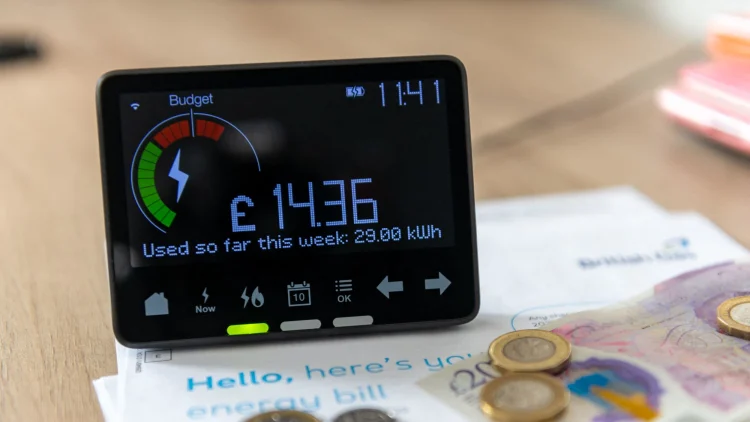
In July, our new Prime Minister Andy Burnham laid out his stall on tackling the cost of living crisis. One of his first announcements, cutting the VAT from electricity bills, was a very welcome first step in bringing down the cost of electricity.
But amidst Strait of Hormuz closures and instability in the region due to the US’s ill-advised war on Iran, international oil and gas prices, to which Britain’s energy prices are mostly pegged, have risen, and so will energy bills.
In the coming months, as colder temperatures return and households use more energy, further immediate action is needed to cut the cost of energy.
Moving social and environmental levies, or what some call ‘policy costs’, off electricity bills and into general taxation could reduce energy bills quickly and in a way that benefits lower-income households.
The funds these levies generate are vital, financing the building of future energy infrastructure and support programmes like the Warm Homes Discount. But the way they are currently distributed, charged at a flat rate per unit of electricity, was described by experts to the Environmental Audit Committee as regressive. This means that they disproportionately add costs to lower-income households with limited ability to invest in alternatives that could lower their bills or change how and when they use energy. It is absurd that households claiming the Warm Homes Discount are actually part funding their own subsidy through paying the levies.
More progressive funding of policy costs by moving them to general taxation was one of the key recommendations from the Environmental Audit Committee to the UK government in our final report on the Seventh Carbon Budget. This measure would reduce electricity bills for all households and also better align affordability with decarbonisation objectives.
A first step to reduce the policy costs on electricity bills was taken by Rachel Reeves at last year’s Budget, but this intervention is temporary, with Treasury support due to end in Spring 2029. Yet even after that, levies make up nine per cent of an electricity bill (in contrast to three per cent of a gas bill). Some low-income households continue to spend more than three times the proportion of their net income on levies than wealthier households.
Not only does the current levy structure penalise low-income households, it also penalises those seeking to switch away from fossil fuels and install cleaner heating such as heat pumps. It is illogical that the UK still taxes homegrown renewable electricity more than imported fossil fuel gas.
Research by The MCS Foundation has shown that levy reform could save households on average £120 every year, with low-income households using direct electric heating benefiting the most. This move would represent a significant strike on the cost of living, bringing more than 800,000 households across the country out of fuel poverty.
It would also further incentivise the transition to clean heat, giving households confidence that switching to heat pumps and other renewable heating systems will reduce their running costs. High electricity prices in the UK act as a disincentive for households to switch to heat pumps. Analysis across European countries has shown there is a strong correlation between the spark gap – the ratio between electricity and gas prices – and heat pump deployment rates of a country.
In the long run, transitioning to homegrown renewable electricity will protect British households from international gas price spikes, ensuring affordability in the long-term. The increasing amount of renewable energy in the UK has helped limit electricity bill rises, as compared to gas, and reduce the amount of time that gas sets the overall energy price. However, building more renewable energy, and expanding and upgrading the grid to connect this clean energy, will take time to take effect to reduce energy bills.
In the short-term, moving policy costs off electricity is a decision that Andy Burnham could take immediately to significantly reduce household energy bills. I urge him to do so.
Toby Perkins is the Labour MP for Chesterfield, and chair of the Environmental Audit Committee



Up to 16,000 jobs. Nearly 1,500 betting shops. As many as 34 casinos. That is what EY modelling suggests would be lost if ministers follow the Social Market Foundation’s advice and raise Machine Games Duty to 40 per cent – and the Treasury could end up £124 million worse off for it.
Britain’s land-based betting and gaming venues are already facing rising employment costs, higher business rates, soaring energy bills and the impact of successive regulatory changes. Against that backdrop, the SMF are now urging ministers to pile on another tax increase.
The question ministers should be asking is not simply how much extra tax would or wouldn’t be raised, but what damage it would do to the businesses, jobs and communities expected to pay it.
It is easy for a think tank to recommend higher taxes from behind a desk. It is much harder to explain the boarded-up bingo clubs, shut betting shops, closed casinos and lost jobs that would follow.
On the surface, the SMF recommends increasing Machine Games Duty. In reality, it is asking ministers to make a much bigger choice: are they prepared to accept the closure of valued leisure venues across Britain in pursuit of a policy that is unlikely to deliver what it promises?
The report fails to answer that question.
Businesses cannot simply absorb a tax increase of this scale. The inevitable consequence is fewer venues, fewer jobs and less investment in communities that can least afford to lose them. Since 2019, more than 3,000 betting shops have closed, costing over 16,000 jobs. 22 casinos have shut their doors with the loss of more than 3,000 jobs, while 108 bingo clubs have closed, resulting in the loss of more than 2,000 jobs. How many more betting shops would close? How many bingo clubs? How many casinos? How many livelihoods would disappear? And what would be the impact on working men’s clubs, miners’ welfare institutes and other community associations that rely on regulated gaming machines to help fund the services they provide?
Those are not side issues. They are the central questions.
Indeed, towards the end of the report is an explicit acknowledgement that reducing the supply of gambling is part of its intended effect. That completely undermines its economic argument. You cannot claim a tax rise will generate more revenue while advocating policies that would close the very businesses expected to pay it.
These are not anonymous businesses on a Treasury spreadsheet.
Many of these businesses have been part of their communities for decades. They are run by local managers, employ local people and provide steady jobs in towns where good employers are becoming harder to find. Their customers also support neighbouring cafés, pubs and shops, helping to keep Britain’s struggling high streets alive.
Nor are their customers an afterthought. Betting shops, bingo clubs and casinos are social hubs where adults choose to meet friends, watch sport, enjoy bingo or place a bet responsibly. The suggestion that customers are simply being lured in to lose money is patronising and wrong. The report dismisses those customers entirely, assuming it knows better than the adults who use these venues responsibly every day.
The same applies to working men’s clubs and miners’ welfare clubs, many of which rely on regulated gaming machines to help keep their doors open as employment costs, business rates and energy bills continue to rise. These are exactly the kinds of community institutions politicians say they want to protect.
Those consequences may not be felt in the Westminster bubble, but they will be felt in the North of England, in seaside towns, former mining communities, market towns and city centres where another boarded-up premises would replace another long-established local business.
There is also a snobbery running through this debate that deserves to be challenged. Too often, metropolitan commentators appear comfortable telling working people how they should spend their money while showing little regard for the venues people value, the jobs they support or the communities they serve.
The consequences extend far beyond the high street.
Every betting shop that closes also weakens one of Britain’s most cherished sports. Licensed betting operators contribute hundreds of millions of pounds every year through the Horserace Betting Levy and media rights payments, supporting racecourses and the wider racing industry. Land-based betting shops are a vital part of that funding. Racing is already under financial pressure and cannot afford to lose it. The impact would be felt far beyond the racecourse, affecting stable staff, trainers, breeders, farriers, vets and thousands of small businesses that depend on a thriving racing industry. Decisions taken on betting shop taxation are not confined to one sector; they ripple through communities and rural economies across Britain.
The report also assumes spending will simply move elsewhere and jobs will be replaced. That is an assertion, not evidence. There is no compelling case that communities become more prosperous when regulated venues disappear.
Its economic case is equally weak. The SMF assumes increasing Machine Games Duty will boost Treasury revenues. History suggests otherwise. Following the reduction in machine stakes in 2018 (effect 1st April 2019), over 2,000 betting shops closed and gambling duty receipts fell and have never recovered to previous levels. Shrinking the regulated market does not maximise tax receipts; it reduces the number of businesses paying tax.
Then there is the illegal gambling market.
Every time the regulated sector is made less competitive, criminal operators stand to benefit. They pay no UK tax, create no British jobs and offer none of the age verification, safer gambling tools or consumer protections required of licensed operators. Weakening legitimate businesses while strengthening the black market is not sound public policy.
Perhaps the most revealing finding in the report is one its authors may not have intended. Their own polling shows most people do not support increasing taxes on gaming machines.
Public policy should not be driven by assumptions or ideology. It should be driven by evidence and an honest assessment of consequences.
Of course gambling harm must be addressed. Our members continue to invest heavily in safer gambling tools, technology and interventions because protecting customers is fundamental to a sustainable regulated industry. But good intentions do not automatically make good policy.
If ministers follow the SMF’s advice, they will not simply increase Machine Games Duty. They will make a conscious decision to place legitimate businesses under even greater pressure, jeopardise thousands of jobs, weaken horseracing and accelerate the decline of community venues that have served Britain for generations.
That is not evidence-led policymaking.
It is a price Britain’s high streets and leisure venues simply cannot afford.
References
- Economic modelling of potential MGD increases (September 2026), EY Report for the Betting and Gaming Council


4 min read
Britain has just had the summer its lidos were built for.
The Met Office says it was provisionally the hottest the country has recorded in a series going back to 1884, beating the previous record – set only last year – by a margin its scientists describe as significant. The summer of 1976, the one my generation grew up hearing about, now ranks seventh. It is high time, then, for a lido renaissance.
From Cornwall to Hackney, outdoor pools reported exceptional demand, with some setting records. Tinside on Plymouth Hoe had welcomed more visitors by the end of July than in any season this century. Bude Sea Pool reached capacity on more days than ever before, while London Fields Lido in Hackney had passed its total for the whole of 2025 before August was out. Last summer, itself a record, the country’s biggest lido operator recorded 30 per cent more swims at its lidos and outdoor swimming sites than the year before. This one was hotter.
In Peterborough, our own lido turned 90 this year, with more than 82,000 swims so far. Some of those visits were by me during the parliamentary recess, when I joined the Lido Belles and early-morning swimmers in perfect conditions. When the government talks about Pride in Place, I can think of no better example than our lidos.
Lidos are not simply leisure amenities that happen to be old. They were a public health programme, and the people who built them knew exactly what they were doing. Peterborough’s opened in 1936, in a decade of recession, dole queues and the rise of angry politics, with a loan from the Ministry of Health. The people who ran the city believed that the man from the brickworks, the railway clerk, the shop girl and their children had as much right to an afternoon in clean water and sunshine as anyone with a villa on the Riviera. Britain had more than 300 lidos by the end of the 1930s.
Then we let them go. The rise of indoor pools, package holidays in the sun and a long squeeze on council budgets took their toll, and by 1990 only roughly a third were still open. The challenges lidos face have not gone away, but there will be more summers like this one to come. Heatwaves are arriving earlier and more often, and every council with an outdoor pool should be asking when it will open. That is why a group of MPs have formed Labour Friends of Lidos and Public Baths to raise the profile of these community assets.
This is about breathing new life into our pools or, as in the case of Bournemouth, Ipswich and Worthing, restoring them. Worthing has plans to transform its former lido into a community space, with a new tidal pool next to it.
In some places, the loss is symbolic. What was once the majestic St Leonards open-air bathing pool in Hastings is now an underground maze of pipes for sewage dumping Southern Water.
That is why we are arguing that the government should back our lidos for leisure, health and climate purposes. The forthcoming Water Bill should include provision for water companies to support these pools. The government should also look at creating a Lido Regeneration Fund to back these joyous expressions of pride and place.
The people who built our lidos planned for the weather they had, and we know the weather that is coming. If you have a lido, use it while the sun lasts. If your town lost one, ask for it back. And if you are ever in Peterborough on a hot day, come and join us. Bring a towel.
Andrew Pakes is the Labour and Co-operative MP for Peterborough and co-convenor of Labour Friends of Lidos and Public Baths
Politics
Politics Home | Britain’s payments success was built on trust. Security is the price of keeping it.


Credit: Adobe

Rob Cameron, Group Country Manager, UK & Ireland
| Visa
Britain’s payments industry has been built on trust. As the next wave of technologies, from AI and stablecoins to agentic commerce, reshapes how we pay, maintaining that trust will require continued investment. Without it, households risk falling victim to fraud, and the UK risks missing out on the growth that safer, more secure payments can unlock.
Unless stated otherwise, the figures below are drawn from How Payments Can Power UK Growth, a 2026 Public First report commissioned by Visa, based on surveys of 2,000 consumers and 500 businesses, two focus groups, and interviews with consumer groups, payments providers, fintechs, building societies, and major retailers.
Trust and confidence are the fuel on which our payments system runs, and the foundation for future innovation.
Digital payments are now essential economic infrastructure, and when that infrastructure works, it goes largely unnoticed. You tap your card, click a button or unlock your phone, and the transaction is complete. Yet this apparent simplicity relies on a vast system of invisible elements working together simultaneously and is contingent on sustained investment to keep that infrastructure secure.
The UK has one of the most advanced and trusted digital payments sectors in the world. The benefits of tap-to-pay are already visible in everyday life. Contactless payments have become embedded in Britain’s transport network, making journeys simpler for millions of passengers and demonstrating how payments technology can help enable more seamless, integrated services.
Tap-to-pay has made accepting payments simpler for businesses of every size, reducing the time and cost for SMEs to get set up and start trading. At Visa, this is the work we invest in every day, putting the same processing, dispute and fraud-fighting capabilities used by the world’s largest retailers into the hands of Britain’s small businesses.
That success did not happen by chance, but through concerted efforts to innovate while prioritising trust, security and resilience.
Through research we commissioned from Public First, we know the digital payments sector alone has helped generate an estimated £88 billion in additional sales for British businesses since 2019, with £32 billion of that specifically for small and medium-sized companies. On a macro level, it added approximately £7.5 billion to UK GDP in 2024 alone.
Looking ahead, a new wave of innovation is set to reshape the industry. AI agents that can shop and pay on our behalf, AI-driven fraud checks and stablecoins (which with proper regulation can operate as settlement tools to speed up transfers and reduce settlement risk).
Between them, these could further empower consumers, and to shift shopping and paying from manual checkout towards invisible, trusted experiences that reduce fraud and friction. But every one of these technologies will only be adopted at a meaningful scale if trust in the payments system holds. Innovation and security are the same argument, not competing ones.
Trust in digital payments is what makes people willing to tap a card, or click pay. 90% of UK consumers and 91% of businesses currently say they have strong levels of confidence in card payments. But this trust depends on security.
Consumers’ tolerance for risk is close to zero: around two-thirds say they wouldn’t complete a purchase over £5 if there’s more than a 5% chance of losing their money. Apply that across an economy where UK-issued cards were used for transactions worth more than £1 trillion in 2024, and it adds up fast.
The threat is only growing. Fraud is now the most common crime experienced in the UK: according to UK Finance’s 2025 Annual Fraud Report, £1.17 billion was stolen through payment fraud alone in 2024. Without sustained investment in prevention and resilience, it is ultimately the public who will pay twice: first in the money lost to fraud, and then in the more cautious, slower economy that follows as confidence drains away. People who have been victims of fraud cut their spending by over a third in the following months.
Across the economy, Public First estimates that this chilling effect costs £16 billion in consumer spending every year. Businesses experience this too – almost a quarter of those hit by fraud in the last year paused a planned investment into digital infrastructure.
The UK was where much of the last fintech revolution was built. Global networks like ours are part of how that happens, giving UK fintechs, merchants and small businesses the cross-border resilience and trusted security they need to grow. But trust is hard-won and easy to lose, and this is a highly mobile industry.
The Government’s plan to give the Bank of England a new secondary objective on innovation in payment systems and digital money, while maintaining financial stability remaining its primary duty, reflects the growing importance of these issues. Over time, the UK’s ability to attract investment and support innovation will depend on providing businesses with confidence and clarity as new technologies emerge.
Sustaining investment in security and resilience will be critical to maintaining trust in the UK’s payments ecosystem. Public First’s research suggests that, with the right conditions for investment and innovation, the digital payments sector could contribute an estimated £3.8 billion in additional growth by 2030. Without continued focus on security, consumer confidence could be undermined, the adoption of new technologies could slow, and the UK could miss out on significant economic opportunities.

Class is back in fashion. Having spent the past decade rehabilitating racial differences, praising men in dresses for being real girls, and celebrating fat, disabled and queer ‘communities’, left-wing activists are changing direction. They appear to be talking about problems facing working-class people for the first time in years.
Last week, the UK’s Labour government launched a new ‘Class Unit’ designed to focus attention and resources ‘on improving the lives of low-income families, disadvantaged communities and rooting out child poverty’. After years in which privileging posh trans or brown people for internships and well-paid jobs was all the rage, and even hinting at problems with class inequality prompted accusations of racism, this is a move that should – in theory – be welcomed by critics of woke. So why does it leave me cold?
First, there’s the breakneck speed with which the shift from culture to economics, from identity to class, is playing out in so-called progressive circles. It seems like only yesterday that girls were being taken to task for ‘cultural appropriation’ if they wore hoop earrings or tied their hair in knots. We’ve barely had a chance to catch breath since then Labour leader Keir Starmer was photographed taking the knee for Black Lives Matter alongside then deputy leader Angela Rayner, now the UK housing secretary. And just moments have passed since anyone who questioned whether it was appropriate for drag queens with names like Flow Job to read stories to young children was branded a bigot.
But now, all of this is simply to be laughed off. ‘Woke 1 was crazy!’, giggled the movement’s erstwhile poster girl, Alexandria Ocasio-Cortez, last month. Today, she aligns herself with the Democratic Socialists of America, which campaigns under the slogan ‘Workers Deserve More’ and whose goal is ‘a democratic society of the working class’. Her comrade-in-arms, New York City mayor Zohran Mamdani, wants to control rents, provide free universal childcare and run cost-price grocery stores. In Britain too, we’ve moved from Starmer’s virtue-signalling to Andy Burnham’s capped bus fares and a ‘focus on working-class people’s experiences of public services, health disparities and access to employment’.
‘It’s time to end the squeamishness’, declares the government’s press release marking the launch of the Class Unit: ‘Working-class people will be at the heart of a renewed government drive to tackle entrenched inequality.’ But who, exactly, is ‘squeamish’? Some of us have never had a problem talking about class: only Labour’s woke activists found it politically inconvenient.
On the surface at least, this looks like a shift to what sounds like an old-fashioned left-wing agenda. Yet it has taken place not just in the absence of a reckoning with woke’s legacy but also with many of their bizarre initiatives remaining in place. Just last week we learnt that gender-fluid police officers can carry both male and female identity documents.
Indeed, the new ‘Class Unit’ will sit ‘within the Office for Equality and Opportunity alongside units on race, women, LGBT+ and disability’. This positioning makes clear that in the minds of today’s government ministers and civil servants, the working class is not a political force with its own distinct interests but just another identity group in need of recognition.
Adding ‘working class’ to the list of identity groups deserving of special treatment raises the thorny question of definition. If working class means poor, then how do we label well-paid self-employed plumbers and plasterers? Or the laptop ‘creatives’ who earn very little but know that, when push comes to shove, daddy will lend a hand? If it means lacking degree certificates, what about the autodidacts? And if it means family background, then at what age do we judge people on their own merits, not where they’ve come from?
The problem with seeing ‘working class’ as another identity category goes deeper than the question of definition. It suggests that Labour views the working classes as an entirely passive group: people without political agency, in need of handouts and affirmation. This reinforces the political establishment’s existing tendencies, from its willingness to dole out welfare payments, allowing people to remain out of work and on the sick, to its determination to water down the academic expectations placed on schoolchildren.
This warped and degraded identitarian view of what it is to be working class means that the new Class Unit is unlikely to do anything to improve people’s lives. Labour plans to introduce a ‘socio-economic duty’: ‘a new power in the Equality Act that will legally require public bodies to consider how to improve the lives of lower-income families as part of decisions around issues like transport, services and budgets.’ The existing public-sector equality duty means that public authorities and organisations must ‘have due regard to the need to eliminate discrimination, advance equality of opportunity, and foster good relations’. In practice, it is used to justify highly paid bureaucrats devising internships that exclude white males. Adding a ‘socio-economic’ identity to this mix will mire businesses and institutions in yet more bureaucracy and pave the way for more mad identity celebrations.
We do have a problem with class inequality – and the very same woke activists who now claim to offer solutions have exacerbated it. But the concessions, benefits and bureaucracy they now offer are worse than useless. Change will only come about when the working class is able to pursue its political interests – from Brexit to stopping mass migration to ending economically crippling Net Zero policies. Sadly, these ideas are unlikely to make their way into Labour’s Class Unit any time soon.
Once upon a time, scientific and technical advisers were titans in their fields. Patrick Blackett was a physicist who won the Nobel Prize before he became a key adviser to prime minister Harold Wilson, where he put British computing at the top of the government’s agenda. Chemist Henry Tizard’s work and advice allowed Britain to deploy advanced radar research into its air-defence systems. Polymath Solly Zuckerman, the first formal scientific adviser to a UK government, possessed expertise in fields ranging from zoology to systems research.
Now, policymakers look to capital instead of scientific expertise. More than anyone else, it is supposed that venture capitalists can divine a unique knowledge of the future. Which explains the extraordinary rise of Matthew Clifford, chair of the government’s AI-focussed Advanced Research and Innovation Agency (ARIA).
By contrast to his distinguished predecessors, Clifford is a former McKinsey consultant with a degree in medieval history. He rose through David Cameron’s ‘Silicon Roundabout’ scene, where he honed his legendary schmoozing skills as a networker. He created a business incubator and investment vehicle, Entrepreneurs First, in 2011. Two weeks ago, Clifford confirmed that he would join Anthropic’s international-affairs team, a position that will see him lobby governments throughout Europe on behalf of the AI firm.
However, Clifford’s cake-ism has created an obvious conflict of interest. Which politician, adviser or senior official would seek to antagonise companies that can offer them a handsome salary in the near future?
Clifford’s register of interests is perhaps the longest ever to be disclosed by a government adviser. As one of the biggest early investors in AI in Europe, there was little incentive for Clifford to say or do anything that might puncture the hype, lest it impair his personal investments. For example, do you suppose that the ‘AI Opportunities Action Plan’ that he wrote for Labour in January 2025 included the information that AI GPs get 70 per cent of their diagnoses wrong? Of course not.
Nor is what’s good for AI investors like Clifford and ‘frontier labs’, as OpenAI and Anthropic pretentiously call themselves, necessarily good for the economy as a whole. Both AI giants have attracted criticism from other tech CEOs, including Palantir’s Alex Karp and Microsoft’s Satya Nadella, for their unethical practices. Essentially, firms that use AI end up unwittingly providing the AI models with invaluable know-how, which is then sold on to all-comers, thereby destroying the firm. You don’t consume AI – AI consumes you.
On AI, the UK government has outsourced its expertise to Clifford. But his own lack of a technical hinterland has meant he has had to outsource this expertise to others. And this is where his most lasting influence will be felt.
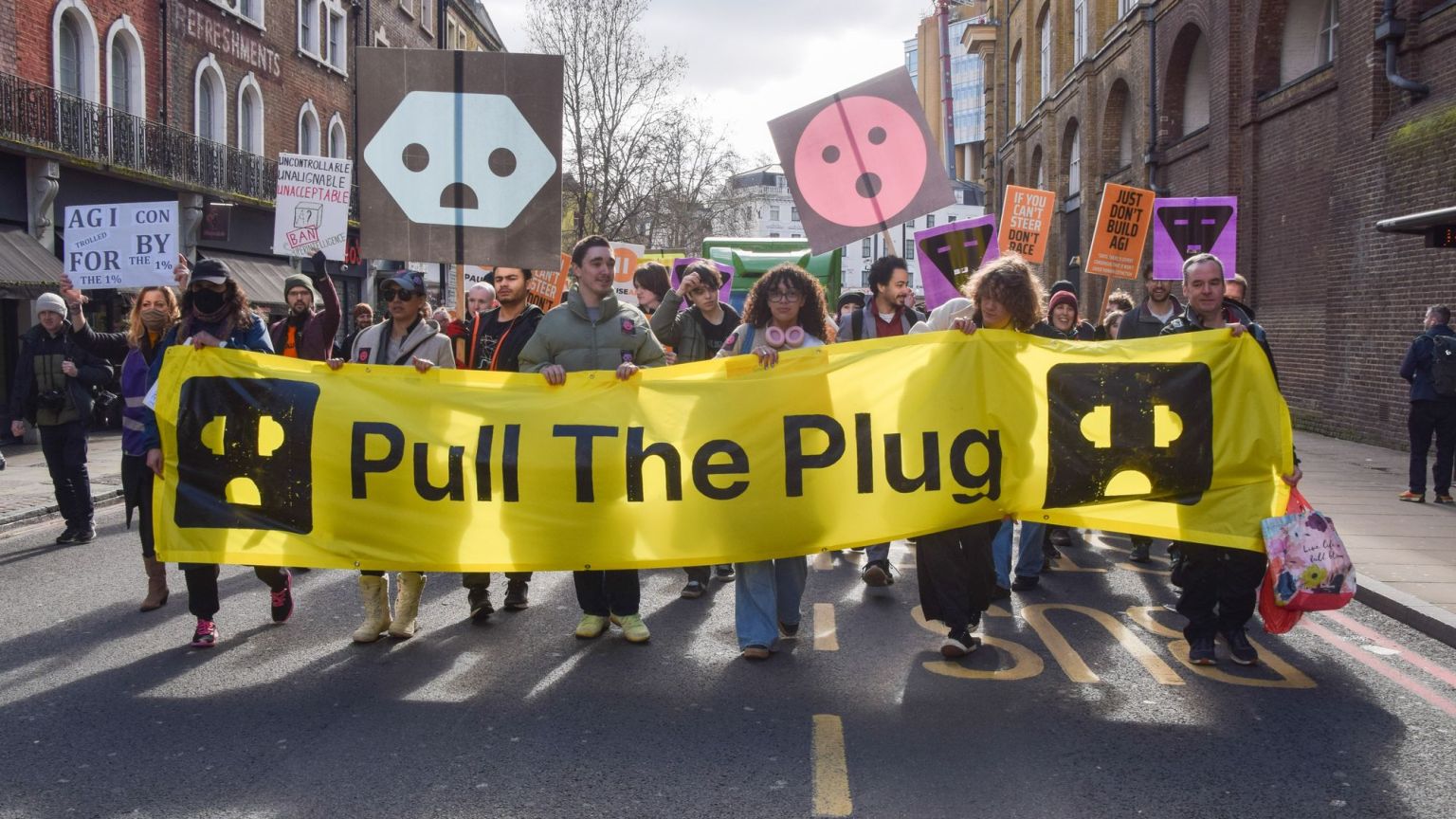
Take the obsessive speculation about outlandish, existential risks posed by some future AI. Britain’s most distinguished tech investor, Hermann Hauser, has questioned why UK AI policy seems so focussed on this, while other nations have been far less interested. This is because, with Clifford’s help, associates of the Effective Altruism (EA) cult – a radical utilitarian social movement described as ‘The Scientology of Silicon Valley’ by one former follower – have been elevated into important advisory roles. Of all their obsessions, the existential risk of a killer or rogue AI ranks highest.
Under Clifford, EAs captured the agenda of Rishi Sunak’s 2023 AI Summit, which in turn recommended the creation of a £100million department reporting to No10, dedicated to existential AI risk. This has entrenched itself as an island of Effective Altruists in Whitehall: the AI Security Institute (AISI). Unsurprisingly, this quango has gleefully participated in the recent ‘AI gone rogue’ scare stories.
The founder of GCHQ’s National Cyber Security Centre, Ciaran Martin, spoke for many frustrated security experts when he criticised AISI’s antics in The Economist recently. AI models were ‘not going rogue’, he explained, when they carried out cyberattacks. They were simply ‘doing what humans had told them to do’. The fiction of rogue AI has been a damaging distraction when, out in the real world, hostile hackers have been penetrating Britain’s critical infrastructure, such as power plants and water facilities, with ease.
It isn’t Clifford’s fault that he stumbled on an intellectual vacuum at the heart of British policymaking. Today’s political and adviser class is bereft of scientific and technical experience. Engineers are rarer than glaciers in Whitehall. Instead, capital is assumed to have the answers.
Matthew Clifford prospered because he promised something to ministers who find the reality of governing – of securing our borders and making dysfunctional institutions work properly – messy and difficult. When senior government figures can’t assess the fairytales for themselves, then the likes of Clifford will thrive.

The post Harry and Meghan: why the Sussex brand is in tatters appeared first on spiked.

Man who faced three felonies for destroying a fake Flock camera has charges reduced to misdemeanors

Putney Pusher suspect is found dead: Millionaire HSBC banker, 44, an ex-Army captain with links to royalty was under investigation in hunt for jogger who shoved woman into bus

Financial services leaders face complexity and training gap



-

 Fashion5 days ago
Weekend Open Thread – Corporette.com
-

 Business6 days ago
Micron Stock Climbs Above $1,031 as AI Memory Crunch and a $50 Billion Outlook Fuel the Rally
-

 Tech3 days ago
The Latest Weird Thing to Play Doom Is the Mapped-Out Brain of a Fruit Fly
-

 Business7 days ago
AMD Stock Climbs After Management Lifts 2027 Data Center Outlook Toward $70 Billion in AI Sales
-

 Business5 days ago
10 Most-Streamed Songs On Spotify In 2026 So Far, Led By Ella Langley’s Dominant Run On The Charts This Year
-

 Crypto World5 days ago
XAG/USD: Silver’s Short-Term Rally Meets Its Moment of Truth
-
 Crypto World6 days ago
2 Chip Stocks Broke Out This Week. Neither Was Nvidia
-

 Tech6 days ago
Battery life is the only iPhone 18 Pro and iPhone Duo upgrade I care about. Apple didn’t disappoint
-

 Crypto World7 days ago
Pi Network ships Protocol 27 on a network with 14 million users and zero DeFi
-

 Crypto World6 days ago
OKX launches 10x OpenAI, Anthropic X-Perps in Europe
-

 Crypto World5 days ago
Diesel Tops $6 a Gallon for the First Time as 28 States Set Records
-

 Tech7 days ago
Apple Watch Ultra 4 vs Watch Ultra 3: Should you really spend another $799?
-

 News Videos5 days ago
Facing Financial Fears
-
 Crypto World7 days ago
Bitcoin price risks $70K if $78K neckline breaks
-

 Entertainment7 days ago
Case Sees Major Update As Jury Deliberations Begin
-

 Business6 days ago
Western Digital Slips 2.7% as AI Storage Rally Cools After Record Cash and Guidance
-

 Business3 days ago
Rivals Sam Altman and Elon Musk Rally Behind Dario Amodei’s Call for a Slowdown in AI Development
-
Crypto World7 days ago
Ripple Price Prediction: What to Expect for XRP as a Major Macro Week Approaches
-

 Crypto World2 days ago
Elon Musk Drops a Bombshell: Grok 5 Could Be the AGI Breakthrough
-
Crypto World6 days ago
Ethereum Price Analysis: Consolidation at $2.5K Tests Momentum as On-Chain Activity Surges
You must be logged in to post a comment Login