
Crypto World
Wirex One Launches Publicly on Arc, Bringing Stablecoin Private Banking to the Mass Affluent Market



London, September 16, 2026 – Wirex, the global stablecoin infrastructure provider, has today launched Wirex One, the first stablecoin neobank built for the growing segment of mass affluent consumers, to the public. The platform is a day-one launch partner on Arc’s mainnet, delivering a private banking experience with true asset ownership.
Following a closed beta that amassed over 20,000 users in testing since June, Wirex One is now available globally.
Wirex One launches as part of Wirex’s wider integration with Arc, making Arc available as a settlement layer for any partner issuing cards and accounts through the Wirex API. Arc is an open blockchain network built for the world’s financial markets, real-time money movement, and agentic economic activity.
Wirex One was created for an underserved market. The global private banking market is projected to grow by over 10% annually to reach $1.24 trillion by 2035, yet a large segment of affluent individuals remain structurally underserved: too wealthy for retail banking, but below the minimum for traditional private banking. Stablecoins are closing that gap, enabling secure, borderless wealth management that the traditional financial system cannot provide.
Wirex One brings private banking onchain, managing everyday spending, yield, overseas transfers, borrowing, and investing from a single place. Arc was strategically chosen as the foundation for Wirex One due to its stablecoin-native, payments-optimised design, with a built-in privacy layer and real-time settlement.
Paired with Privy’s non-custodial wallet technology, it gives users complete ownership over their assets and institutional-grade security, without the complexity that typically comes with crypto wallets.
At launch, key features include:
- Stablecoin-funded card with up to 8% cashback in USD, instantly spendable in everyday life
- Access to selected crypto and stablecoin yield features
- Support for a wide range of crypto assets
- Multi-currency accounts, with fee-free FX and ATM withdrawals globally
- Ability to send and receive via SEPA, ACH, Faster Payments, card transfers, and crypto transfers
- Innovative membership model, offering higher rewards, fee-free trading, dedicated account management, and 50% off premium subscriptions for leading AI and financial platforms for higher tiers
Pavel Matveev, Co-Founder & CEO of Wirex, said: “A new wave of fintech apps are being built on stablecoin rails, and they all need the same foundation: regulated issuing, accounts, settlement, and yield. Wirex One is our own consumer platform built on that infrastructure, redefining what a private bank can be: a bank you control, not one that controls you. Every partner integrating with Wirex’s infrastructure gets the same rails, the same scheme access, and now the same day-one access to Arc.”
Today’s announcement is a major milestone in Wirex’s vision to build a unified, onchain suite of financial services for consumers and businesses on their stablecoin infrastructure, which recently reached $2 billion annualised card spend volume. In the coming weeks, Wirex One will expand to include tokenised equities and perpetuals.
More information about Wirex One, including card availability in supported jurisdictions, is available at Wirex’s website.
Developers can learn more about integrating with Wirex’s infrastructure on Arc here. The list of supported countries can be viewed here. Rewards are valued in USD
About Wirex
Wirex is the global stablecoin infrastructure behind a complete banking stack. Through a single API, any app, wallet or fintech can launch regulated accounts, cards, payments, payouts, yield, cashback and travel, settled in stablecoins, on any chain. Wirex is one of the few crypto-enabled platforms with principal membership of both Visa and Mastercard, settling in USDC and EURC without an intermediary bank.
Wirex builds its own products on that same infrastructure, through the same API: Wirex One, a stablecoin neobank for consumers, with Wirex Private as its highest membership tier; Wirex Business for companies; and Wirex Agents, giving AI agents the ability to transact onchain.
Trusted by over 8 million users since 2014, Wirex has processed more than $20 billion in transactions across 130 countries, and created the first crypto-enabled card in 2015. Built on a decade-long track record of regulatory compliance, enterprise-grade security and onchain innovation, Wirex is creating a financial system where money moves globally and instantly, giving consumers and businesses true ownership, privacy by architecture, and access to the next generation of global payments and settlement.
Disclaimers:
Arc is an open L1 blockchain launched by Arc Network Services LLC (“Arc LLC”) and operated by a permissioned validator set. Arc LLC provides software services only and does not offer regulated financial or advisory services. Arc has not been reviewed or approved by the New York State Department of Financial Services or any other regulatory authority.
The Arc network is provided “as is” and “as available.” Use of Arc involves inherent risks associated with blockchain technology, including smart contract vulnerabilities, network disruptions, and the absence of recourse for transaction errors or losses. The ability to transact on Arc depends on the ability to obtain and use USDC to pay gas fees. Neither Arc LLC nor any permissioned validator is responsible for the content, accuracy, legality, or functionality of third-party applications, protocols, or services built on or integrated with Arc. You are solely responsible for features or services you provide to users, including obtaining any necessary licenses or approvals and otherwise complying with applicable laws.
All Arc features may be modified, delayed, or cancelled at any time without notice. Nothing herein constitutes a commitment, warranty, guarantee or legal, regulatory, tax, or investment advice.
The post Wirex One Launches Publicly on Arc, Bringing Stablecoin Private Banking to the Mass Affluent Market appeared first on BeInCrypto.

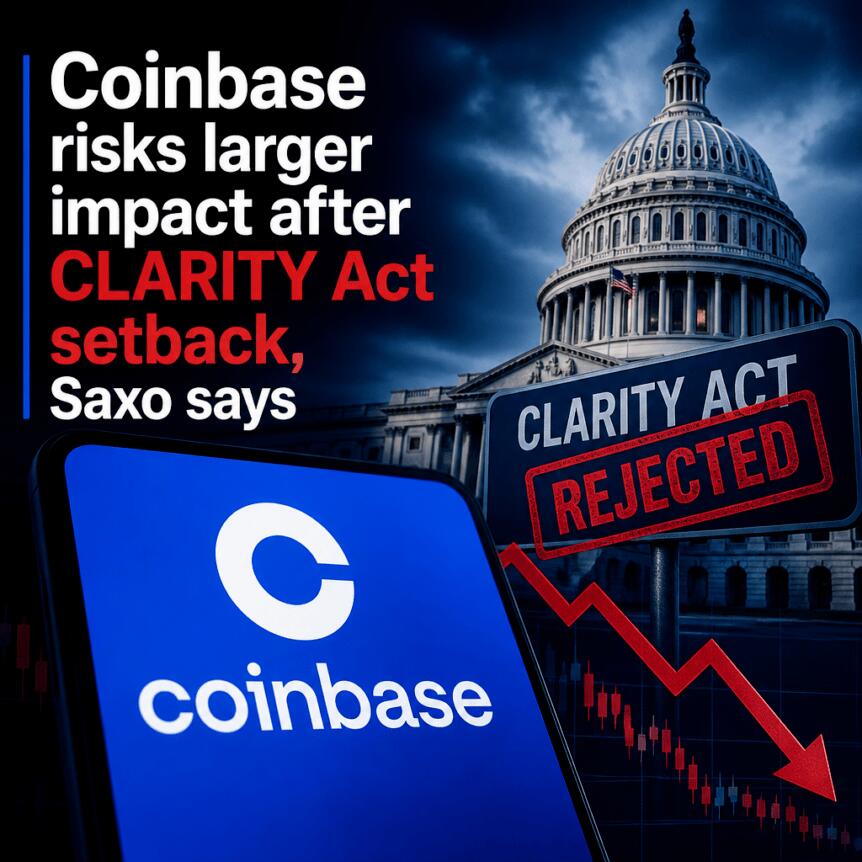
Crypto-linked equities slid again after the U.S. Senate failed to move forward the Digital Asset Market Clarity (CLARITY) Act through a key procedural vote, leaving the bill’s timeline in serious doubt. According to Yahoo Finance data cited in coverage, shares of Coinbase, Circle, and Strategy continued to trade lower into Wednesday.
While the selloff affected multiple parts of the crypto market, Saxo Bank said the impact is not uniform—exchange operators like Coinbase face a more direct regulatory exposure because market-structure rules can shape registration requirements, eligible assets, and who is allowed to participate in U.S. crypto markets.
Key takeaways
- Saxo Bank highlighted Coinbase as the most directly exposed company to CLARITY because market-structure provisions could determine its core trading operating model in the U.S.
- Circle’s exposure is more closely tied to U.S. stablecoin adoption and earnings from reserves, while Strategy’s performance depends primarily on its Bitcoin holdings and financing.
- The CLARITY Act failed a procedural vote on Tuesday (49-50), falling short of the 60 votes required to advance.
- Ethics provisions remained a major sticking point even after last-minute concessions.
- The Senate’s limited remaining calendar before the Nov. 3 midterm elections and Dec. 18 adjournment creates a narrow window for any revival of the legislation this year.
Why the bill matters more for exchanges
In a Wednesday note, Saxo strategist Ruben Dalfovo argued that exchanges may be more vulnerable to CLARITY’s final shape than other crypto-linked businesses. The reason is straightforward: if Congress adopts “market-structure” rules, those provisions can influence whether firms must register in particular ways, what assets can be traded, and the conditions under which investors and participants can access U.S. crypto markets.
“Coinbase is most exposed to clearer market rules because trading and crypto participation directly affect its business,” Dalfovo wrote.
That distinction is important for investors trying to parse a sector-wide move after procedural legislative setbacks. Even though the same headline—CLARITY failing to advance—hit crypto stocks broadly, Saxo’s framework suggests the regulatory “transmission mechanism” differs by business model.
Different exposures across Coinbase, Circle, and Strategy
Saxo’s note separated the companies into different regulatory sensitivities.
Circle’s business, Dalfovo said, is more tightly linked to adoption of its U.S. dollar stablecoin, USDC. The firm’s revenue dynamics are also connected to interest earned on its reserves—so stablecoin-related policy developments and the broader environment for regulated stablecoins may matter more for Circle than exchange-specific rules.
For Strategy, Saxo described exposure as primarily driven by its Bitcoin holdings and financing structure. In other words, the company’s near-term performance is less about trading-market participation rules and more about its capital structure and BTC exposure.
Despite these differing exposures, the market still reacted as a group. Cointelegraph reported that shares of the three companies fell between 5% and 10% after the Senate procedural vote, even though the potential implications for each business are not identical. Early Wednesday trading continued the pressure, with Coinbase, Circle, and Strategy down between 2% and 6% according to Yahoo Finance data.
The procedural defeat and the ethics hurdle
CLARITY’s setback came on Tuesday when senators voted 49-50 against invoking cloture on a motion to proceed. That procedural step is often crucial because it limits further debate and allows a bill to move toward consideration on the Senate floor. In this case, it fell far short of the 60 votes needed.
According to the reporting referenced in the article, ethics provisions remained a major sticking point. Even with last-minute concessions aimed at addressing concerns over public officials’ crypto-related interests, lawmakers did not reach consensus sufficient to move the bill forward.
This matters because procedural votes are frequently treated by markets as a signal about whether legislative momentum exists. When cloture fails, the practical likelihood of reaching a final vote can drop sharply—especially in a shorter session with competing priorities.
Narrow time window in the Senate
The failure also significantly narrows the bill’s prospects for the rest of this Congress. The Senate has a limited legislative calendar around the Nov. 3 midterm elections and is targeting Dec. 18 for adjournment, which leaves fewer opportunities to revive the bill and schedule additional votes before the current term ends.
In practical terms, that creates uncertainty for firms and investors that have been watching CLARITY as a potential source of clarity. The bill is not just “on or off” but may effectively move into a delayed or uncertain future depending on whether new negotiations can overcome the ethics concerns.
For exchange operators in particular, the stakes are tightly linked to how market-structure rules ultimately land—because those rules can determine operating requirements and trading scope. For stablecoin issuers, the policy pathway may be more about adoption and reserve treatment, while for Bitcoin treasury companies the key variable remains the interplay between crypto regulation and their BTC-focused strategies.
Going forward, traders and investors will likely watch whether CLARITY returns to the agenda before the end-of-year deadline, and whether the Senate can reach a workable compromise on the ethics language that stalled the cloture vote.


Russian spies are using Telegram and crypto to entice teenagers and young adults across Europe to carry out acts of sabotage and violence.
That’s according to a study released by the Institute for Strategic Dialogue (ISD) and shared with the i Paper.
The study revealed that Russian actors are targeting teenagers and young adults via a network of Telegram groups called “com networks” in which participants compete for clout by uploading harmful content.
I Paper discovered two clips shared in these groups took place in the UK. In one instance, someone filmed themselves smashing a car that belonged to a care worker.
Read more: Russia offered crypto to firebomb Sir Keir Starmer’s home, report
Another showed what appears to be the same person throwing a brick through the window of a house.
One week after these incidents, Ukrainian police arrested two young boys, aged 11 and 15, who were allegedly planning to attack their school with guns and explosives “on the orders of the Russian Federation.”
The Security Service of Ukraine described these incidents as a Russian intelligence operation.
According to the ISD, there are “multiple indicators suggesting possible Russian state-linked support” for parts of the network, and organizers “mirror established Russian methods for recruiting ‘disposable agents’ for violence abroad.”
The study’s author, Steven Rai, claims they’ve seen the Russia-linked Telegram chats offer crypto for arson attacks, and that these payments within the com networks are “completely new.”
An all-encompassing umbrella group made up of a collection of these Telegram networks claims it wants to bring participants of different views together with “one goal” to cause chaos.
One part of this collective claims to be allied with Direct Action, a Russian-manufactured far-right group that organised the fire bombing of former UK Prime Minister Sir Keir Starmer’s house.
In this case, thousands of dollars worth of the stablecoin USDT was reportedly offered to a 22-year-old Ukrainian in return for carrying out the attacks in the hopes of attracting press coverage.
Got a tip? Send us an email securely via Protos Leaks. For more informed news and investigations, follow us on X, Bluesky, and Google News, or subscribe to our YouTube channel.
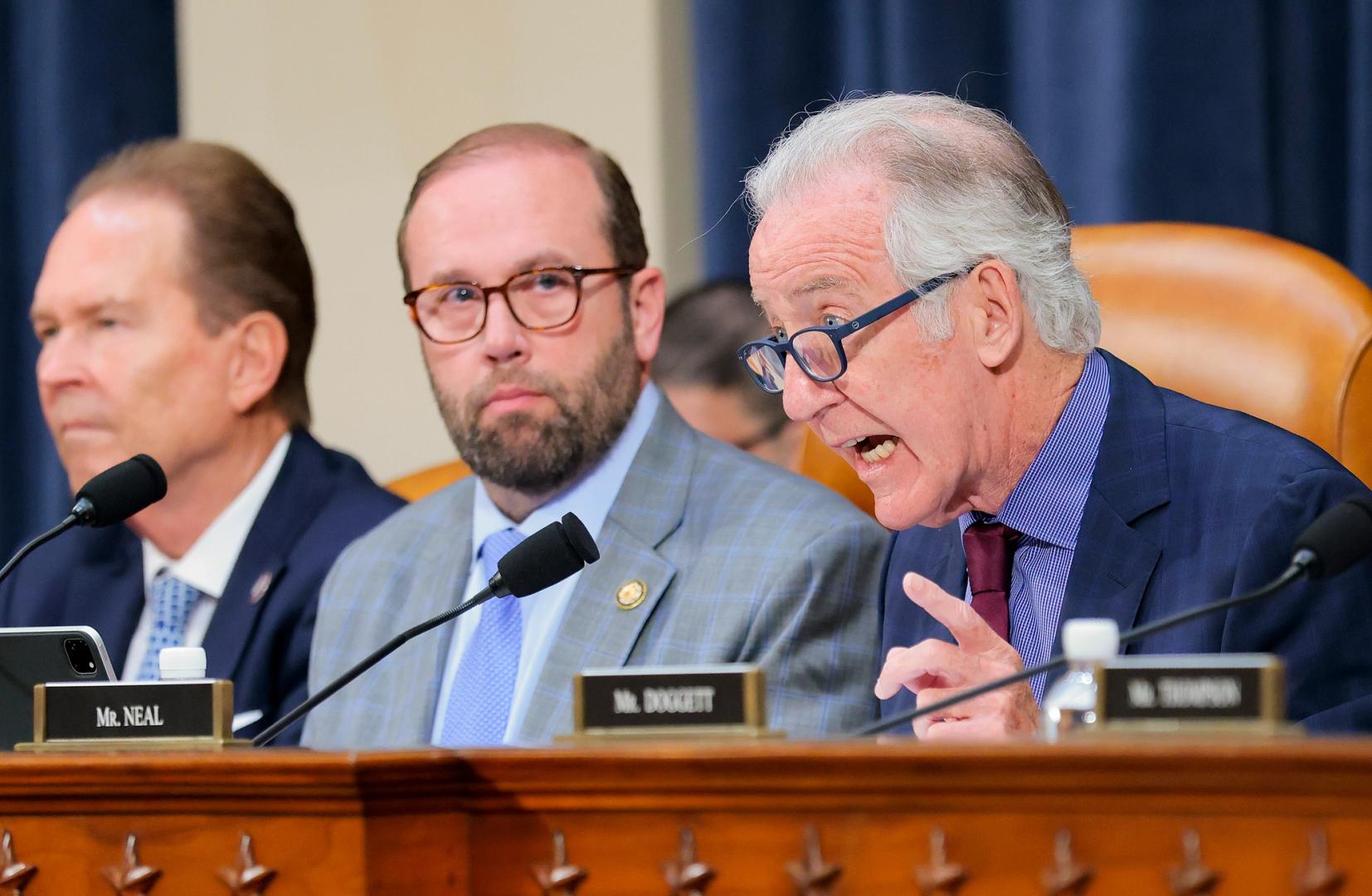
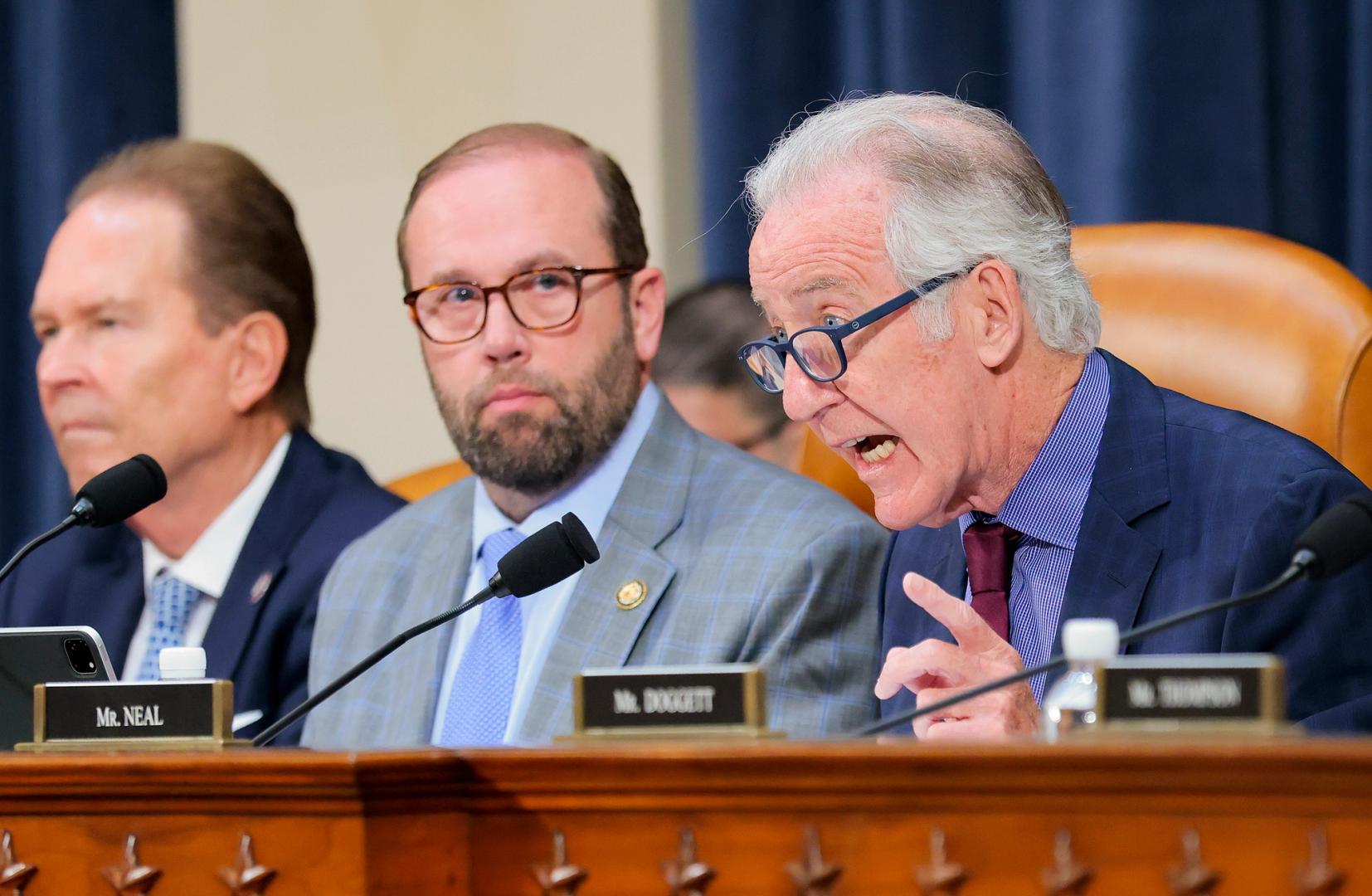
Less than 24 hours after the collapse of the crypto industry’s market structure bill, the tax committee in the U.S. House of Representatives has advanced another important industry effort that would clarify crypto tax treatment and ease burdens on casual transactions.
At a Wednesday hearing known as a markup, in which a committee evaluates a bill and considers changes before deciding whether to advance it to the wider chamber of lawmakers, the panel voted 38-5 to endorse the bill and forward it to the rest of the House, signalling massive bipartisan support for the measure.
The Digital Asset Tax Certainty Act, revealed earlier this week by the House Ways and Means Committee, would provide crypto users long-awaited answers on what are known as “de minimis” transactions, or small, routine payments, which currently trigger difficult tax accounting. The legislation also addresses how crypto income would be recognized for tax purposes, transfers, wash sale rules, mining, staking and requirements for brokers, and it generally seeks to ensure that digital assets get similar treatment as other assets.

UK inflation rose to 3.1% in August from 2.9% in July, the highest reading in five months. The Bank of England decides on interest rates one day later.
The same shock is showing up elsewhere. Energy costs tied to the Middle East conflict have lifted inflation across major economies over recent months.
A Fuel Problem Wearing an Inflation Label
Bank of England’s July forecast put August inflation at 2.8%, so the headline reading overshot by 0.3 percentage points.
The ONS said motor fuel made the biggest contribution to the rise. Motor fuel prices rose 23% over the year.
Average petrol prices climbed 9.1p between July and August to 161.3p a litre. That is the highest level since November 2022.
Diesel rose 14.2p to 181.8p a litre. Air fares added to the pressure with a 6.2% monthly increase, led by long-haul routes.
Underlying inflation told a different story. Core inflation, which strips out energy and food, held at 2.6% for a fourth consecutive month. Services inflation stayed at 3.4%.
However, those two readings matter most. Policymakers tend to focus more on underlying price growth.
The labour market is not helping the hawks either. Average weekly earnings, which exclude bonuses, rose 3.5% in the three months to July, the ONS reported Tuesday. That is close to the weakest pace since 2020.
Vacancies over the three months to August dropped to 702,000. Outside the pandemic years, that is the lowest count since 2014. British hiring, meanwhile, has only just started to turn.
Follow us on X to get the latest news as it happens
The ECB Went First. The BOE, Fed, and Japan Follow
The figures arrive a day before the Bank of England announces its own rate decision. Most economists expect the Bank to leave Bank Rate at 3.75% when it votes at midday on Thursday.
Investors see a one-in-three chance of a quarter-point hike this week, according to Reuters. Two increases are fully priced before the end of 2026.
Other central banks have not waited. The European Central Bank raised its deposit rate to 2.50% on September 10, pointing to energy costs.
“The conflict in the Middle East continues to generate inflation pressures, and inflation is set to remain well above target for an extended period,” the ECB Governing Council said.
The Federal Reserve announces its decision on Wednesday, with futures pricing roughly 87% odds of a quarter-point hike. The Bank of Japan follows on Friday. Three major central banks could therefore be tightening inside the same week
Subscribe to our YouTube channel to watch leaders and journalists provide expert insights
The post UK Inflation Hits 5-Month High. Will the Bank of England Hike or Hold? appeared first on BeInCrypto.


The research project “Arabia’s Top Companies 2026” is a comprehensive analysis conducted to identify the top performing companies in the GCC countries (Bahrain, Kuwait, Oman, Qatar, Saudi Arabia, United Arab Emirates). The study is based on three primary dimensions: Employee Satisfaction, Revenue Growth and Sustainability Transparency (ESG).
Methodology
The first dimension, Employee Satisfaction, was investigated based on survey data from a large sample of over 20,000 employees in the region. The evaluation encompassed direct recommendations of verified employees as well as indirect evaluations from industry peers.
The second dimension, Revenue Growth, was assessed using data from Statista’s revenue database, which contains company growth data for the last three years. The companies had to meet certain criteria to be considered for the evaluation, including generating a revenue of at least $50 million USD in 2025. Additionally, the companies had to demonstrate positive revenue growth in the last three years. Both relative and absolute growth were considered in the evaluation.
The third dimension, Sustainability Transparency, was evaluated based on ESG data among standardized KPIs from Statista’s ESG Database and targeted data research. To formulate a comprehensive ESG index, multiple Key Performance Indicators were collected. For the environmental evaluation, this included the 2024 carbon emissions intensity and reduction rate compared to 2022, as well as the Carbon Disclosure Project (CDP) score. The social dimension assessed the share of women on the board of directors and the existence of a human rights policy.
The governance dimension evaluated whether a company had a Corporate Social Responsibility (CSR) report adhering to the Global Reporting Initiative (GRI) guidelines and a compliance or anti-corruption guideline.
Once the data was collected and evaluated, it was consolidated and weighted within a scoring model. The scores of all three dimensions were added on an equal percentage basis to form the final ranking score of a maximum of 100 points. The 200 companies with the highest scores were awarded as Arabia’s Top Companies 2026 by TIME and Statista.
Crypto World
Blockchain finance platform Theo launches tokenized silver backed by $40 million in active leases


The product launches with more than $40 million of leases committed, the firm said. Initially available in beta, thSLVR will be offered to institutions and whitelisted investors, with broader access planned later.
Tokenized silver remains a considerably smaller market than tokenized gold, which has grown to several billion dollars across multiple products. Existing silver tokens that offer returns typically distribute a portion of platform trading fees rather than income earned by lending the underlying metal.
Tokenized commodities
The tokenized real-world asset market has expanded rapidly beyond U.S. Treasuries and private credit into equities, funds and commodities. Tokenized commodities now represent about $4.9 billion in distributed value across 130 products, led by gold-backed tokens from Tether and Paxos, while the number of commodity-token holders rose 13% over the past month to almost 339,000, according to RWA.xyz
Silver leasing rates can rise sharply during periods of limited physical availability. Around 83% of the silver held in London vaults is locked in physically backed investment products, leaving about 136 million ounces available for trading and leasing, according to data cited by Theo.
London’s one-month silver lease rate briefly climbed to about 39% in October 2025, compared with a historical norm below 1%. Rates have since normalized, though the market is projected to record a sixth consecutive annual supply deficit in 2026, with the shortfall estimated at 46.3 million ounces.


5) Thermocap multiple: The thermocap multiple is a measure like price to book that compares bitcoin’s market capitalization to the cumulative dollar value ever paid to miners, with each coin valued at its market price when it was mined. Prior crypto winters ended at single-digit multiples, but this cycle it only declined to 13 times, according to Glassnode data as of June 30, 2026. These levels are not a guarantee of future price action.
6) Price action: A 50% rally from the low has historically coincided with prior market troughs, although no such relationship guarantees future outcomes.
Once the next cycle does begin, we expect two key debates to persist throughout:
Will bitcoin reach a new high before the next halving? During both the 2012 to 2016 cycle and the 2016 to 2020 cycle, bitcoin did not surpass its prior cycle high until after the halving. However, in the 2024 cycle, bitcoin surpassed the 2021 high one month before the April 2024 halving, according to Bloomberg data.
Has AI replaced crypto as the market’s leading speculative/disruptive-technology narrative? In 2020 and 2021, crypto was one of the clearest expressions of a high-liquidity, disruptive-technology market. Since 2024, however, AI has become the dominant growth story.


While Bitcoin and crypto-linked stocks fell sharply after the US Senate failed to advance the Digital Asset Market Clarity, or CLARITY, Act, Saxo Bank believes exchanges like Coinbase have more at stake than most because clearer rules could directly affect their trading businesses.
In a Wednesday note, Saxo strategist Ruben Dalfovo said Coinbase (COIN) is the most directly exposed to developments around CLARITY because market-structure rules could determine registration requirements, which assets can trade and who can participate in US crypto markets.
“Coinbase is most exposed to clearer market rules because trading and crypto participation directly affect its business,” Dalfovo wrote.
Stablecoin issuer Circle (CRCL) and Bitcoin (BTC) treasury company Strategy (MSTR) have different exposures, according to Dalfovo. Circle’s business is more closely tied to adoption of its USDC stablecoin and interest earned on its reserves, while Strategy’s performance is driven primarily by its BTC holdings and financing structure.
As Cointelegraph reported late Tuesday, shares of all three companies fell between 5% and 10% after the Senate procedural vote, despite differences in how the legislation could affect their businesses.
The selloff continued early Wednesday, with Coinbase, Circle and Strategy all down between 2% and 6%, according to Yahoo Finance data.
Related: Democrats push back on GOP’s ‘final’ CLARITY offer with counterproposal: Politico
CLARITY faces narrowing path forward
The CLARITY Act failed a key procedural vote on Tuesday, with senators voting 49-50 against invoking cloture on a motion to proceed to the bill, well short of the 60 votes needed. The vote would have limited further debate and allowed the Senate to move toward considering the legislation on the floor.
Ethics provisions remained a major sticking point despite last-minute concessions aimed at addressing concerns over public officials’ crypto interests.
The setback significantly narrows the bill’s path forward this year. The Senate has a limited legislative calendar around the Nov. 3 midterm elections and is targeting Dec. 18 for adjournment, leaving lawmakers a relatively small window to revive the legislation before the current Congress ends.
Related: Crypto Biz: AI took a back seat when Bitcoin started climbing
Crypto World
Hamas told its potential donors to avoid Binance for funding and use rivals including Bybit and OKX


The newspaper subsequently reported that the Treasury is “investigating $165 million in cryptocurrency-linked transactions that may have helped finance Hamas” prior to the October 2023 attacks.
While the documents suggested that Binance may have improved its KYC and AML protocols, it’s unclear whether the Hamas overture is a response to this.
“When terrorist groups tell people to avoid Binance, it shows our controls are working,” said Binance’s chief compliance officer, Noah Perlman. “Binance is not a safe place for illicit actors. We invest heavily in sanctions screening, transaction monitoring and investigations, and we work closely with law enforcement to identify, disrupt and report terrorist financing and other financial crime.”
According to OKX, the wallet address referenced in the Feb. 10, 2025, communication had no association with OKX and had already been identified by its internal controls as linked to illicit activity. As a result, any attempts by OKX customers to transfer funds to the address would have been flagged and prevented, the exchange said via email.
Kast said it maintains a dedicated financial crime compliance function, with more than 50 employees across its broader compliance organization.
“All customers are subject to identity verification and screening before accessing our services. The company combines its own technology with established compliance and risk-management providers, including Elliptic, Sumsub, and Sardine, to support sanctions screening, customer due diligence, and transaction monitoring,” a Kast spokesman said via email.

The health tech industry is booming, with services like telemedicine getting more popular, and more companies offering tools to monitor personal health at home. To identify the companies across the globe using digital technologies to make healthcare more effective and accessible, TIME partnered with data firm Statista to research the World’s Top HealthTech Companies of 2026, evaluating metrics including financial performance, reputation, and online engagement.

Sustainable strategies for today’s market expectations

Coinbase risks larger impact after CLARITY Act setback, Saxo says

Mormon Wives’ Whitney, Mikayla, Mayci Reunite With Demi

Weekend Open Thread – Corporette.com

Memory prices are slowing because buyers ran out of money

Micron Stock Climbs Above $1,031 as AI Memory Crunch and a $50 Billion Outlook Fuel the Rally

Robinhood CEO Caught ‘Physically Squirming’ When Asked About Crypto Tokenization on CNBC

Jadi berapa angka untuk financial freedom versi kalian? #masterclasssaham #financialfreedom #saham

Dire Straits – Money For Nothing (Official Music Video)
-
 Fashion5 days ago
Weekend Open Thread – Corporette.com
-
 Business7 days ago
Micron Stock Climbs Above $1,031 as AI Memory Crunch and a $50 Billion Outlook Fuel the Rally
-

 Tech3 days ago
The Latest Weird Thing to Play Doom Is the Mapped-Out Brain of a Fruit Fly
-

 Business7 days ago
AMD Stock Climbs After Management Lifts 2027 Data Center Outlook Toward $70 Billion in AI Sales
-

 Business5 days ago
10 Most-Streamed Songs On Spotify In 2026 So Far, Led By Ella Langley’s Dominant Run On The Charts This Year
-

 Crypto World5 days ago
XAG/USD: Silver’s Short-Term Rally Meets Its Moment of Truth
-

 Crypto World6 days ago
2 Chip Stocks Broke Out This Week. Neither Was Nvidia
-

 Crypto World7 days ago
Pi Network ships Protocol 27 on a network with 14 million users and zero DeFi
-

 Tech6 days ago
Battery life is the only iPhone 18 Pro and iPhone Duo upgrade I care about. Apple didn’t disappoint
-

 Crypto World6 days ago
OKX launches 10x OpenAI, Anthropic X-Perps in Europe
-

 Crypto World5 days ago
Diesel Tops $6 a Gallon for the First Time as 28 States Set Records
-

 Tech7 days ago
Apple Watch Ultra 4 vs Watch Ultra 3: Should you really spend another $799?
-

 News Videos5 days ago
Facing Financial Fears
-

 Crypto World7 days ago
Bitcoin price risks $70K if $78K neckline breaks
-

 Business6 days ago
Western Digital Slips 2.7% as AI Storage Rally Cools After Record Cash and Guidance
-

 Entertainment7 days ago
Case Sees Major Update As Jury Deliberations Begin
-

 Business3 days ago
Rivals Sam Altman and Elon Musk Rally Behind Dario Amodei’s Call for a Slowdown in AI Development
-

 Business6 days ago
Five Leading AI Experts Warn Superintelligence Could Kill Humans and Explain Their Case
-

 Crypto World2 days ago
Elon Musk Drops a Bombshell: Grok 5 Could Be the AGI Breakthrough
-
Crypto World6 days ago
Ethereum Price Analysis: Consolidation at $2.5K Tests Momentum as On-Chain Activity Surges
You must be logged in to post a comment Login