
Business
What Good Looks Like in a Payment Processor: A Merchant’s Checklist


Most business owners pick a payment processor the way they pick a coffee order: fast, cheap, and rarely thought about again. That works fine until a chargeback spikes, a rate quietly climbs, or a support line goes unanswered during a busy weekend. By then, switching costs time and money that a little upfront diligence would have saved.
William Stapleton, President and CEO of Iron Rock Payments, has spent years on both sides of this problem. Before running Iron Rock, he built and sold a credit card processing company, so he has seen how processors are put together from the inside and how merchants experience them from the outside. That gives him a clear view of where the gap between the two usually sits.
Start with what the rate actually includes
The quoted rate is the easiest number to compare and often the least useful one. A processor advertising a low headline rate can still cost more once you add batch fees, statement fees, PCI compliance fees, and early termination penalties.
Stapleton’s view is that merchants should ask for the full fee schedule in writing before signing anything, not after.
“A rate quote with no fee schedule attached is not a real quote,” he says. “It is a starting number designed to get you to sign, and the real cost shows up on your first three statements.”
A short list worth asking for
- The full interchange-plus or flat-rate breakdown, not a blended average
- Monthly, annual, and PCI compliance fees, listed separately
- Chargeback fees and how they are handled
- Early termination terms, in plain language
If a sales rep hesitates to put these in writing, that hesitation is the answer.
Judge support by how it behaves under pressure, not on a slow day
Every processor sounds responsive during the sales call. What matters is what happens when a terminal goes down on a Saturday or a deposit does not land on time. Stapleton points to this as the single biggest gap between processors that look similar on paper.
“You don’t find out what support really means until something breaks,” he says. “Ask who answers the phone at 9pm on a weekend, and ask what happens if that person can’t fix it.”
A good way to test this before signing is to call the support line directly, outside business hours if possible, and see how long it takes to reach a person rather than a queue.
Match the technology to how the business actually takes payments
A retail counter, a service business that invoices clients, and an online store all need different things from a processor. A common mistake is picking a processor built around one use case and then bending the business to fit it.
Stapleton suggests working backward from the actual transaction flow: how customers pay, where the money needs to end up, and what reporting the business owner actually looks at each week. A processor that can’t answer those three questions clearly during a sales conversation usually can’t answer them well after the contract is signed either.
Questions to bring to that conversation
- How does settlement work, and how many days until funds are available?
- Can the reporting dashboard show what the owner needs without a manual export?
- Does the equipment or software integrate with the point-of-sale or accounting system already in place?
Read the contract length before the rate
A processor offering a very low rate tied to a long contract term is making a trade the merchant should notice. Stapleton’s advice is to treat contract length as its own line item, separate from price.
“Ask yourself what you’re giving up in flexibility for that discount,” he says. “If the business changes, or the processor’s service slips, you want a way out that doesn’t cost more than staying would have.”
Shorter terms with slightly higher rates often work out cheaper over time, once the cost of being locked into bad service is counted.
Watch for what happens after the first year
Introductory rates are common, and they are not inherently a problem. The issue is when a merchant does not notice the rate reset because nobody flagged it. A simple habit fixes this: put a calendar reminder for the date any promotional rate ends, and compare the new statement against the original fee schedule.
What good actually looks like
Pulled together, a processor worth keeping usually has a few things in common: a fee schedule you were given before you signed, support that answers when something breaks, technology that fits how the business actually takes payments, and contract terms that don’t punish you for wanting out. None of that is complicated. It just requires asking the questions before the account is open, not after the first bad statement arrives.


Exclusive-China’s Xpeng plans to offer tech solutions to foreign automakers

Nebius (NBIS) stock popped on Thursday after the cloud computing specialist announced price hikes of around 20% effective Oct. 1. Shares in rival CoreWeave (CRWV) fell amid stock and debt sale plans. Nebius announced the price hikes before the market open. Further, Nebius rents out computer servers equipped with Nvidia (NVDA) artificial intelligence accelerators called GPUs. Nvidia in July disclosed…
Copyright ©2026 Investor’s Business Daily, LLC. All rights reserved. 87990cbe856818d5eddac44c7b1cdeb8

10x Genomics stock hits 52-week high at 78.0 USD

Lisata Therapeutics acquires Marea, raises $225 million

Thailand’s energy outlook is coming under renewed pressure as liquefied natural gas prices surge amid disruptions to Middle Eastern supply routes. PTTEP warned that every US$3 per million British thermal units increase in LNG prices could raise Thai electricity prices by about 5%, highlighting the country’s exposure to the global gas market.
LNG currently supplies around 30% of Thailand’s electricity generation, and more than a quarter of the gas used for power generation is imported. About half of Thailand’s LNG purchases are made on the spot market, leaving utilities particularly exposed to sudden price movements when global supply is disrupted.
The problem is structural as well as cyclical. Domestic gas production is declining as major fields such as Erawan and Bongkot mature, while pipeline supplies from Myanmar are becoming less predictable. Without additional domestic production, long-term contracts or alternative energy sources, Thailand could become increasingly dependent on imported LNG just as Asian demand for the fuel is competing with European buyers.
The immediate market environment is particularly difficult. LNG spot prices have risen to around US$26/MMBtu, while Asian LNG imports are projected to fall to their weakest September level since 2018 as buyers respond to the price shock. Qatar, one of Asia’s major LNG suppliers, has suffered a major disruption because of the conflict around the Strait of Hormuz.
Thailand is therefore accelerating its energy diversification agenda, including renewable generation, grid investment and new domestic gas exploration. The government’s rooftop-solar initiative and plans to expand LNG infrastructure provide some protection, but the scale of the current price shock shows that energy security is rapidly becoming a macroeconomic issue rather than simply an energy-sector concern.
Key points
- Every US$3/MMBtu increase in LNG prices could raise Thai electricity prices by about 5%.
- LNG currently supplies roughly 30% of Thailand’s power generation, with more than 25% of electricity-sector gas imported.
- Asian LNG spot prices have risen to around US$26/MMBtu, while September Asian imports are heading toward their weakest level since 2018.
Why it matters: Higher electricity prices would feed directly into Thai manufacturers, SMEs and households, potentially weakening consumption while increasing production costs. For investors, Thailand’s ability to secure affordable gas and accelerate renewable power is becoming an increasingly important determinant of the country’s competitiveness in data centres, electronics and advanced manufacturing.
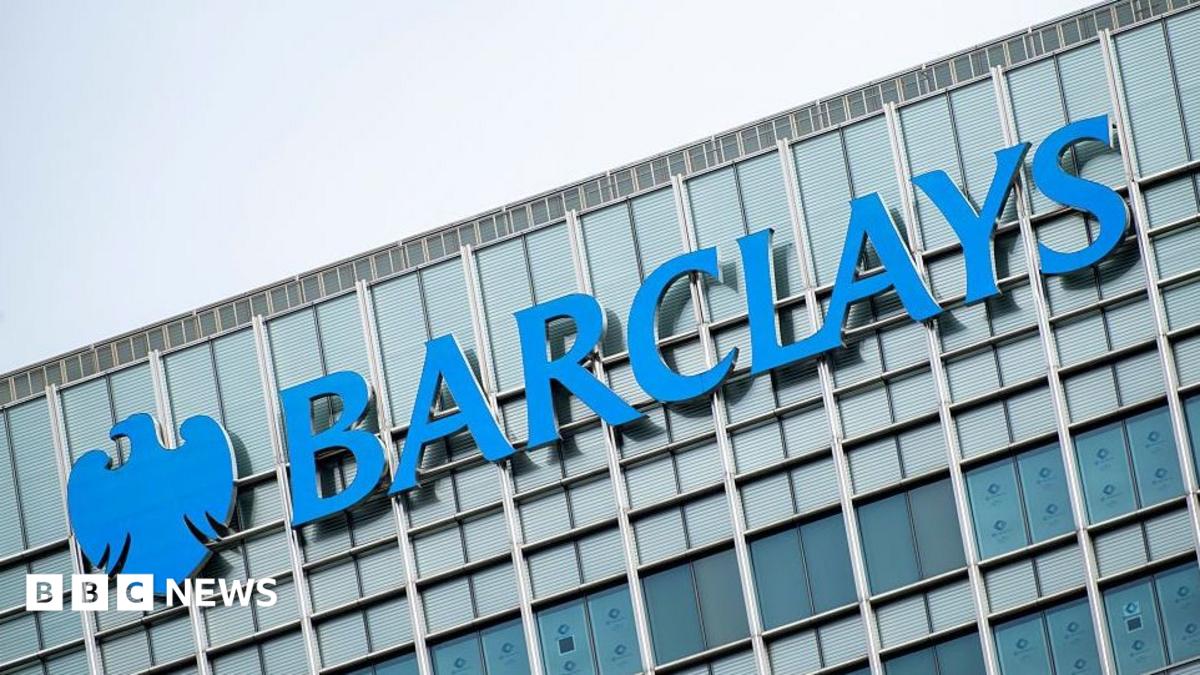
Thousands of Barclays staff are demanding concessions from the bank, including a one-off payment, after it said it wants employees to work from the office more often.
Staff who have been expected to work in the office for two days per week should be in the office for at least three days a week from next month, according to the bank.
Unite, which represents about 36,000 Barclays staff, is calling for the bank to reverse its decision. The union is also pressing for exemptions to offset increased travel and childcare costs.
Barclays said many employees already work in the office for three or more days, depending on business need.
The bank sent a memo to staff in July outlining its expectations, which include that senior leaders work at least four days per week in the office.
As first reported in the Financial Times, external, the bank is facing a growing backlash against the proposed rules change.
Unite national officer Rick Coyle said thousands of employees have signed an open letter calling for Barclays to reverse the decision, and the number of signatories “continues to rise”.
He added that Barclays is “trying to fix a problem that doesn’t exist” in making its working-from-home rules less flexible.
The open letter, external says workers are delivering “strong financial results and improved customer services” with its current working from home policy.
It adds that thousands of workers have made suggestions, which the union has condensed into a series of demands.
These include:
-
an exemption for commutes longer than 40 minutes or 35 miles
-
exemptions during Christmas, summer, and school holidays
-
a maximum one day in the office for carers
-
flexibility for wrap-around childcare, and childcare vouchers and onsite creches to be explored
-
a one-off payment to offset costs
Barclays said in a statement that it recognised “the benefits of balancing flexibility for colleagues with the importance of working together in our physical locations”.
“Our minimum time in office requirements vary by business area, reflecting the nature of the work and the needs of the business,” a spokesperson said.
The bank declined to say how many staff would be affected by the rules change. However, the BBC understands that there are different rules depending on teams, with, for example, investment bankers in the office for five days per week.
The coronavirus pandemic forced many businesses to allow working from home, depending on the nature of the business.
Since then, many organisations have been clawing workers back into the office, despite evidence that hybrid working may be the best fit.
Amazon, Boots and JP Morgan are some of the organisations which brought in policies requiring head office staff to be in every day after the pandemic.


Netflix’s live sports strategy is predicated on finding games and tournaments it believes can be turned into events. That makes defining “event” paramount to the company’s success.
“The thing about an event is it’s buzzy, cultural, zeitgeist – that really sort of unmissable moment,” said Netflix Chief Content Officer Bela Bajaria in an exclusive interview last week with CNBC Sport. “There’s something in that that just feels like it’s very appointment TV, but also with great conversation around it.”
Bajaria spoke from Melbourne, Australia, the site of the first-ever, regular-season NFL game in the country. Netflix owned the global rights to the game, which resulted in a 27-7 victory by the San Francisco 49ers over the Los Angeles Rams.
CNBC asked Bajaria if NBC’s “Sunday Night Football, ” the most popular primetime program for 15 consecutive years, would classify as a Netflix “event.”
“If I had a dollar for every time I’m asked that, that money would just pay for ‘Sunday Night Football,’ and I wouldn’t even have to take it out of the $20 billion content budget,” Bajaria joked.
“The first NFL game [ever on Netflix] was Christmas Day, right?” Bajaria said. “So we’re like, Christmas is a holiday, Beyoncé is gonna do the halftime, and we can sort of turn that into an event. And it can be World Baseball Classic in Japan. It can be Home Run Derby, but it also can be Alex Honnold Taipei 101, when he climbed a building. It can be when we did the BTS concert in Seoul.”
Bajaria’s explanation suggests a large package of NFL games isn’t suitable for Netflix’s strategy, which echoes comments from Netflix co-CEO Ted Sarandos earlier this year. The NFL can potentially renegotiate its media rights for games beginning after the 2029-30 season, when the league has an opt-out clause on its current deal. NFL Commissioner Roger Goodell told CNBC last week that the league would consider reworking its established game packages.
Netflix is airing five NFL games during the 2026-27 season – last week’s Australia game, the first-ever Thanksgiving Eve game, two Christmas Day games, and a Week 18 game that’s guaranteed to be one of significance – either to decide a playoff spot or to determine seeding.
The NFL doesn’t currently sell a package of international games, but that might be appealing to Netflix if it existed, Bajaria said. There are nine international games this year and 10 scheduled for next season.
“We obviously have this large global audience and a very engaged global audience,” Bajaria said. “I think people will probably just go to that as kind of like a natural, ‘Would we do international?’ We have lots of U.S. members who obviously love NFL and football, and so I think we’re always going to continue to have conversations.”
Bajaria also confirmed Netflix’s potential interest in bidding on the FIFA Men’s World Cup in 2030 and 2034. Netflix already has the Women’s World Cup U.S. and Canadian rights for 2027 and 2031. CNBC first reported Netflix’s interest earlier this year.
“Obviously it’s a beloved sport around the world, and we have the Women’s World Cup, so I’m really excited about that. We have a great partnership and relationship with FIFA, so we’re definitely going to always have those conversations,” Bajaria said.
Ingesting other streamers
At the same time more media companies are pushing into live sports, the legacy players are also inking new strategies for streaming.
YouTube announced in July it would ingest content from NBCUniversal’s Peacock into its Premium subscription platform, a new model for the industry.
Bajaria suggested Netflix could be open to a similar arrangement. She called an existing partnership with France’s TF1 Group a “test” to embed live content from other media companies’ on its service.
“The business is changing,” Bajaria said. “We can partner with TF1 locally, and that was sort of a conversation to like, oh, let’s try to test it.”
Bela Bajaria, CCO, Netflix speaks onstage during the NYC Premiere Screening and Party for BIG MISTAKES on April 6, 2026 in New York City.
Jenny Anderson | Getty Images
Bajaria specifically noted NBCUniversal as a company that already partners with Netflix in a variety of ways, which she said can sometimes help both companies get comfortable with the idea of trying something like ingestion.
Netflix already has an exclusive licensing deal with Universal on its feature films. NBC Sports also produces live sports on Netflix, including last week’s Australia NFL game.
“What I love is we can continue to grow and evolve the business,” Bajaria said. “There’s already a natural partnership in most of these countries, and so that’s going to always be continuing the conversations.”
Competing with YouTube
Still, Bajaria isn’t interested in completely rewriting the rulebook.
She dismissed the idea that Netflix would change its business strategy to compete with YouTube and other short-form video services.
YouTube’s streaming market share consistently grows each month, according to Nielsen data. For July, the video platform accounted for 14.2% of all streaming viewership. Netflix was the No. 2 service at 7.8%.
But Bajaria said she has no plans to change course at Netflix: TV series and movies will continue to be the platform’s bread and butter, she said.
“It’s too hand-wavy or dismissive to say, ‘Oh, young people only watch short things,” Bajaria said. “When we make things for young people that they feel are really authentic and great, they will come. And that’s the business. We’re still in that. We support creators and filmmakers and visions. We invest in film and TV. Really great stories connect with people all day long.”
Correction: This article has been updated to correct a transcription error in a quote attributed to Netflix Chief Content Officer Bela Bajaria. She said, “The thing about an event is it’s buzzy, cultural, zeitgeist.”


SAN ANTONIO — Expanding its presence in baking products and ingredients, C.H. Guenther & Son LLC has acquired House-Autry Mills Inc., a Four Oaks, NC-based branded and custom dry-mix flavor solutions provider.
Financial terms of the transaction, announced Sept. 16, weren’t disclosed. The deal brings together two longtime companies in the baking and grain-based foods sectors: House-Autry Mills, founded in 1812 as a grist mill in North Carolina, and San Antonio-based C.H. Guenther (CHG), founded in 1851 as a flour mill in Texas.
A Southern heritage food company, House-Autry produces breading, batters, hushpuppy mixes, pancake and waffle mixes, biscuit mixes, cornbread mixes, gravy mixes, seasonings, marinades, grits and other dry-mix flavor products. The company serves the foodservice, private label and retail channels, providing custom blending, formulation, packaging, large-scale manufacturing, research and development, and culinary innovation.
CHG said the addition of House-Autry extends its reach into priority markets and bolsters its position in ingredients that deliver authentic Southern flavor. CHG also described House-Autry’s products and manufacturing and innovation capabilities as “highly complementary” to its portfolio, noting that the combination of CHG’s scale, manufacturing and logistics and House-Autry’s custom dry-mix platform will enable greater customer innovation and menu differentiation.
“House-Autry is an outstanding strategic fit for CHG,” said Rod Hepponstall, president and chief executive officer of C.H. Guenther. “The company brings a rare combination of deep heritage, trusted customer relationships, strong custom-formulation capabilities and a reputation for quality and service. Together, we will be even better-positioned to reach more customers and help them create custom products and memorable food experiences, while driving long-term financial growth.”
House-Autry operates specialized manufacturing operations in Four Oaks, NC, and Hogansville, Ga. The company has invested in flexible blending, packaging and R&D to drive menu differentiation and develop signature flavors that capitalize on consumer trends, according to CHG.
“We are excited to join the C.H. Guenther family and begin this next chapter for House-Autry,” said Derrick Marconi, president and CFO of House-Autry. “CHG deeply respects our family legacy and commitment to quality, service, innovation and care for customers and employees. This combination creates new opportunities to invest in our capabilities and expand our reach while continuing to deliver the Southern-crafted flavor and partnership our customers have trusted for generations.”
Commercial baking and food manufacturer CHG is a leading supplier of value-added grain-based and frozen food products for foodservice operators and select consumer markets. Its retail brands include such names as Pioneer, White Wings, Sun-Bird, Mi Rancho and Cuisine Adventures. Overall, the company — owned by investment firm PPC, management and other co-investors — operates more than 30 manufacturing plants in the United States, Canada and Europe and fields a roster of more than 2,500 products.
“This combination reflects CHG’s continued momentum as it expands its portfolio through complementary, value-added food manufacturers with differentiated innovative capabilities,” said Phil Iler, principal at Chicago-based PPC. “House-Autry’s heritage, customer relationships and custom dry-mix capabilities are highly complementary to CHG, and we look forward to continuing to support this terrific business in its next phase of growth.”
House-Autry Mills marks the second acquisition announced by CHG this year. In April, CHG said it acquired Les Aliments Mejicano, an Anjou, Que.-based maker of flour tortillas. That followed the acquisitions of Fresca Mexican Foods, a Boise, Idaho-based maker of flour tortillas, corn tortillas and tortilla chips, in June 2025; St. Paul, Minn.-based Baldinger Bakery and Canada-based Baldinger & Sons Bakery in January 2022; Mid South Baking Co., a supplier of buns and English muffins, in April 2019; and Bönen, Germany-based Wback GmbH, a baker of soft rolls in Europe, in February 2019.


KANSAS CITY — While “uncertainty” has become the buzzword of choice across agricultural commodity markets, “disconnected” may be the more appropriate term for the current state of the US sugar market.
Withdrawn offers from several domestic suppliers for 2027 contracts and strengthening prices that have jumped nearly 20% this year alone belie other factors that seem to be more fundamentally weighty, especially considering the current marketing year began on the heels of record domestic sugar production. These heavy domestic supplies have been compounded by the influx of historically strong imports in recent years, which earlier in the year had kindled ideas of potential forfeitures for US producers and spurred pleas for legislative interventions. Meanwhile, the outlook for demand remains under pressure from policy disruptions, economic strains and the rising usage of GLP-1 weight loss medications. Still, strength in US sugar prices has prevailed.
The sharp reduction in acres planted to sugar beets this year offers one explanation. If the reported area of 1,025,800 acres seeded to sugar beets in 2026 are harvested as projected, it would be the lowest area planted to sugar beets since 1950. On top of lower acres, both the sugar beet and sugar cane crops have struggled with severe weather events, from late spring freezes to widespread drought conditions. Dryness across several sugar beet areas has led many growers to push back harvest activities, which has delayed new product from entering the market in those regions. Also, an infestation of the pasture mealy bug in the Louisiana and Florida sugar cane crops has added another layer of uncertainty to overall production. Given the mounting concern, the US Department of Agriculture has trimmed the outlook for 2026-27 US sugar production. In the Department’s Sept. 11 World Agricultural Supply and Demand Estimates report, the USDA projected 2026-27 US sugar production at 8,839,000 tons, which would be the lowest outturn for domestic production since 2019-20, if realized.
However, the reduction in acres and output does not exclusively dictate the total available supply, which is supplemented heavily by imports. The USDA in the Sept. 11 WASDE projected total US 2026-27 supply at 14,268,000 tons, which is below recent years but remains close to the 10-year average of 14,441,500 tons.
“US production might be down a little bit, but it does seem like the rhetoric is a lot more dire than the data suggest,” one analyst said. “I think some price support makes sense because I do think some places will be tighter, but the rampant price gains we’ve seen in the past month don’t seem justifiable.”
Some market participants have argued that an increase in US sugar deliveries for food use this year provides justification for stronger prices, but the spike in deliveries likely was a result of suppliers implementing new policies that forced buyers to take delivery of contracted volumes rather than a reflection of strengthening demand.
While firm prices and withdrawn quotes tend to indicate a lack of supply, not all users focusing on broad fundamentals seem swayed by the urgent tone of the market.
“I’m not concerned about not getting what I’ve already booked,” one buyer said. “I’ve got some concerns that there’s not a lot of sugar left on the open market for the coming year, but my feeling is that probably won’t happen. But if it does happen, I’ll just shift toward imports to fill our needs.”

Guardian Metal Resources files annual report with SEC

Prince William shows different side of personality in public visit captured on camera
Exclusive-China’s Xpeng plans to offer tech solutions to foreign automakers

Revolut faces $3M ransom demand after data breach, report



-

 Fashion6 days ago
Weekend Open Thread – Corporette.com
-

 Tech4 days ago
The Latest Weird Thing to Play Doom Is the Mapped-Out Brain of a Fruit Fly
-

 Business6 days ago
10 Most-Streamed Songs On Spotify In 2026 So Far, Led By Ella Langley’s Dominant Run On The Charts This Year
-

 Crypto World6 days ago
XAG/USD: Silver’s Short-Term Rally Meets Its Moment of Truth
-

 Crypto World7 days ago
2 Chip Stocks Broke Out This Week. Neither Was Nvidia
-

 Tech7 days ago
Battery life is the only iPhone 18 Pro and iPhone Duo upgrade I care about. Apple didn’t disappoint
-

 Crypto World7 days ago
OKX launches 10x OpenAI, Anthropic X-Perps in Europe
-

 Crypto World6 days ago
Diesel Tops $6 a Gallon for the First Time as 28 States Set Records
-
 Crypto World3 days ago
Kraken Lets xStocks Holders Earn Yield Through DeFi
-

 Business7 days ago
Western Digital Slips 2.7% as AI Storage Rally Cools After Record Cash and Guidance
-

 Crypto World3 days ago
Elon Musk Drops a Bombshell: Grok 5 Could Be the AGI Breakthrough
-

 News Videos6 days ago
Facing Financial Fears
-

 Business4 days ago
Rivals Sam Altman and Elon Musk Rally Behind Dario Amodei’s Call for a Slowdown in AI Development
-
Crypto World7 days ago
Ethereum Price Analysis: Consolidation at $2.5K Tests Momentum as On-Chain Activity Surges
-

 Crypto World5 days ago
Can AI Build a Startup in 72 Hours? Elon Musk's Team Will Livestream the Test
-

 Entertainment6 days ago
News Specials, Movies, Shows, More
-
 NewsBeat3 days ago
‘Sick conspiracy’: Trump says only guardrails AI needs is ‘a strong and smart (High IQ!) president’ in all-caps rant
-

 Crypto World14 hours ago
US Charges Robinhood Engineers Over Crypto Listing Trades
-

 Crypto World6 days ago
Bitcoin ETFs Pull $167M as 2026’s Best Inflow Run Slows
-

 Crypto World7 days ago
US CPI forecast at 3.4% as tariff risks build
You must be logged in to post a comment Login