Connect with us

Tech

Hackers Stole Flock's Camera Software, Revealing How the Company Tracks Cars and People

Published

on

“Hackers ripped down a Flock camera above a roadway, made a near-complete copy of the data stored inside it, and shared the files with 404 Media and WIRED,” according to an article published on both sites.

Though Flock has described its system as protected by on-device encryption, “The hackers were able to copy the camera’s storage and recover an encryption key stored on the device, which unlocked videos of thousands of vehicle detections.”
The hackers shared the material with 404 Media and the transparency nonprofit Distributed Denial of Secrets, which shared the data with WIRED. 404 Media and WIRED then analyzed those files as part of a joint investigation… [T]he joint analysis of the recovered data shows that software running on the device explicitly detects people as well as vehicles, license plates, and bicycles. The camera can produce dozens of images of a single passing vehicle and, according to several weeks of recovered logs, generated more than a million images. Its computer-vision software also sometimes isolated bumper stickers and other graphics, including, in one case, an American flag patch on a motorcyclist’s saddlebag…

According to our analysis, the camera’s logs recorded about 21 days of activity across several periods. During those windows, the device photographed roughly 50,200 vehicles and generated about 1.6 million images. On a typical day, it logged around 3,300 vehicles, with a high of 4,454… The software running on the camera explicitly detects people, something which is typically overlooked in discussions around Flock cameras. When it spots a person, it records where they appear in the image and how confident it is in the detection.

It was a collective calling itself stegan0gram that breached the cameras, according to the interview they did with Wired and 404 Media. “Why just destroy them when we can reverse engineer them and find the secrets of those spying on us?”

Advertisement

Read more of this story at Slashdot.

Source link

Advertisement
Continue Reading
Click to comment

You must be logged in to post a comment Login

Leave a Reply

Tech

Keep Your Back Cool While Others Melt

Published

on

With an El Niño event in full swing those of us in the northern hemisphere have just had a roasting hot summer, and those in the southern are about to have one. We know what that means, even with the best laid plans the slightest bit of exercise is going to raise a lot of sweat. And if you’re carrying a backpack that means a soaking down your back. Never fear though, because for that one, [Crafterboi] is here with a fan-assisted back protector.

The idea is simple enough, an open framework that sits between you and the backpack, allowing air to flow. If that weren’t enough, there are a couple of 5 volt fans at the top to blow air through the space. It’s printed using PETG, because as he explains, on a really hot day some surfaces can exceed the temperature at which PLA starts to soften.

We like the idea of this project, but what we especially like is that his prototype was made of a pizza box. ten out of ten for resourcefulness! Meanwhile this isn’t the first time we’ve seen a cooling backpack as others have had Peltier systems and evaporative coolers. We would link you to them, but sadly those are both from Hackaday’s early years and link rot has taken their websites.

Advertisement

Source link

Advertisement
Continue Reading

Tech

BYD’s Cutting-Edge EV Battery Tech Is Finally Ready To Hit The Road

Published

on


If you’re an American only going by what you see on local roads and highways, you may not have ever even heard of BYD, but the company is one of the biggest names globally when it comes to EVs. Not only are its vehicles generally cheaper than most EVs sold in the U.S., but reviews also show BYD is better than Tesla in several ways. Other EV companies and electric models from traditional automakers also typically don’t fare as well when compared to BYD.

One of the main reasons the company is so well-liked in the EV world is, naturally, its battery technology. Range is still one of the biggest concerns for prospective drivers (and current drivers) of all-electric vehicles. Charging time is another concern — you don’t want to spend hours at a rest stop while drivers with combustion engines are in and out in just a few minutes after filling their tanks with gas. In both these categories — range and charging time — BYD has always made a name for itself as a leader in the EV industry. (Though BYD does make a lot more than just cars.)

Advertisement

However, its latest technology may be a huge advancement that makes the gap between it and other companies significantly wider: solid-state batteries. This tech isn’t exactly new, and companies have been trying to make it work on a global scale for years, but it’s not expected to be ready for mass-market passenger cars until well into the 2030s, if not later. Except that BYD has announced it will debut a solid-state EV in 2027 — which could be game-changing if it turns out to be more than just a gimmick.

Advertisement

What are solid-state batteries?

Currently (no pun intended), most EVs run on liquid-state lithium-ion batteries. Without getting too deep into a physics lesson, energy moves through lithium batteries as charged atoms called ions. In traditional li-ion batteries, these ions move through a liquid medium, but a solid medium offers many advantages. That’s why for years, solid-state batteries have been called the “holy grail” for EV makers, and most companies that take the market seriously have been, for a while now, trying to figure out how to implement them in their cars on a large scale.

It’s not hard to picture why ions may flow through liquids more easily than solids, which is partly why developing the technology is so challenging. Plus, solid layers present potential gaps for ions, which increases electrical resistance and reduces battery performance. Different materials can be used for the “solid,” though, so companies have been experimenting with ceramics, polymers, and other types to see what may work best.

The research and development is considered worth it because solid-state batteries offer advantages over liquid-state ones. For one thing, they’re considered safer due to better thermal stability. EV batteries are notorious for catching fire, and it’s often the flammable liquid that’s burning. But more importantly — at least for marketers — is that solid-state batteries have higher energy density, and higher energy density means more energy capacity and better range. If the EV industry cracks solid-state technology once and for all, it could end range limitations as a factor in comparisons between electric and gas cars.

Advertisement

Will you be able to buy a solid-state EV in 2027?

BYD says its first EV to use solid-state batteries will launch in 2027, but there are a few caveats. As mentioned, the brand isn’t currently available in the U.S., and it’s nearly impossible to import. Also, even if BYD meets its target date, vehicles with the tech will likely be very limited compared to the 16 million or so liquid-state BYD cars on the road now.

Still, it’s a big step closer to the tech becoming mainstream, even if the rollout is limited. Traditional automakers like Honda and Toyota are aiming closer to 2030 to sell cars with solid-state batteries, and that could be a best-case goal. At the moment, Tesla doesn’t seem too invested in pushing the tech and is focusing on improving liquid-state and other important parts of its EVs, such as its Supercharger network, which was recently beaten out by another company when it comes to customer satisfaction.

As China looks to dominate the industry in the way the U.S. did for ICE vehicles in the 20th century, BYD is not shy about its solid-state ambitions. “You can name any battery technology,” BYD executive vice president Stella Li told Carwow in an exclusive interview, “and I will guarantee you will find it in one corner of BYD R&D that we are studying.” The company is using sulfide for its solid-state batteries, which it says will come out in 2027 before scaling up to mass production by 2030. In the meantime, BYD owners can take advantage of the brand’s ridiculously fast liquid-state charging. Its Denza Z9GT, BYD’s first car launched in Europe, can charge from 10% to 70% in just five minutes and from 10% to 97% in just nine.

Advertisement


Source link

Advertisement
Continue Reading

Tech

'Zuckoff' App Detects Meta Smartglasses, as Meta Plans Camera-Free Version, Loses Money, and Offers Social Media Subscriptions

Published

on

The New York Post reports:

A new app called Zuckoff can detect if a user is near someone with Meta’s creepy AI-powered glasses, which have drawn criticism for enabling creeps to record video of women without their consent. Programmer Pawel Szydlowski says tales of dirtbags recording themselves perving on women or harassing strangers prompted him to launch the app…

Zuckoff — which detects Bluetooth signatures broadcast by smart glasses and can estimate their distance — has gained some 5,000 users since it hit Apple’s App Store last month, according to Business Insider. “There’s a need for such an application,” the 30-year-old Polish techie told the outlet, adding that European Union regulators have contacted him for more info about his app. “We as a society have the right to at least know that someone is recording,” Szydlowski said…

Earlier this month, the tech giant disabled thousands of glasses it found had been tampered with to keep a small light off that indicates the device is recording.
It’s already #61 on the iPhone’s list of best-selling utilities apps.
In a related story, “After accusations of selling ‘perv glasses,’ Meta prepares to sell a pair without a camera,” writes TechCrunch, citing a report from The Information.

Advertisement

The glasses include six built-in microphones so users can communicate with the chatbot, as well as a button on the side of the glasses that, when pressed, activates the AI system… Meta’s Reality Labs, which is responsible for developing its smart glasses line, is still losing a gargantuan amount of money, as its earnings report from April revealed.

In fact, Meta stock is off 13% over the last 12 months, reports Yahoo Finance. So Tuesday Meta announced subscription services for its social apps as “part of Meta’s push to drive additional revenue from the billions it’s investing in AI data centers and model development.”

The plans, which start at $2.99 per month for single-product plans, $7.99 for individual bundles, and $14.99 for creator and business bundles, provide a number of features for users looking to get more out of their Instagram, Facebook, and WhatsApp accounts. Instagram Plus and Facebook Plus allow users to keep their stories up for 48 hours instead of 24, send animated super reactions and super hearts to stories, preview stories without showing up as a viewer in other users’ lists, and more. WhatsApp Plus lets you share exclusive stickers, get exclusive ringtones for contacts, and pin up to 20 different chats.

Meta One also includes Core and Premium user plans that offer the features found in the single-product plans, along with increased AI usage limits for images and videos. The social media giant is also offering creator and business plans… that it says include capabilities such as enhanced profiles, automatic follow invitations to users that interact with your content, and increased access to the Meta Business Agent, which can respond on your behalf.

Advertisement

When Instagram head Adam Mosseri announced on Threads that the plans brought “more features and more AI across Instagram, WhatsApp, Facebook, and Meta AI,” writer Joe Hill drew 13,300 likes for his response. “That’s sweet–so pay a fee, get more AI, pay nothing, get a little less AI. Can we work out a deal where you pay ME and I get no AI at all?”

Read more of this story at Slashdot.

Source link

Advertisement
Continue Reading

Tech

Why Wave Energy Is The Final Frontier Of Renewable Energy

Published

on

With the Earth’s atmosphere being effectively just a less dense fluid than the oceans around us, it’s reasonable to ask why we got wind turbines and wind mills quite literally everywhere across the globe to harvest the power in the wind, whereas ocean waves and currents aren’t being exploited quite as much. In a recent video by [Giordano Scarciotti] this issue with wave power is addressed, in particular the massive engineering challenges involved.

Internal view of the CorPower Ocean wave turbine buoy. (Credit: CorPower Ocean)

One of the main problems is simply one of cost, with wind energy having converged on a single design involving effectively the same three-bladed rotor, gondola and tower design that has been optimized for decades now. For wave energy there’s no such one-design-fits-all solution, with each attempted design having its own advantages and disadvantages that may prevent it from working in various sites, or incur high maintenance costs in the highly abusive marine environment.

Having more energy in waves than in wind is also both a benefit and a curse, as wave turbines have to work with the waves and not get demolished every time there’s a storm. Even wind turbines regularly fail in windy weather when e.g. the brakes fail, under conditions that would be considered mild in a marine context.

Also covered in the video is a new contender, in the form of CorPower Ocean’s new buoy-like design that bobs up and down on the surface. Here you need to carefully tune the turbine mechanism to work with the wave motion to extract the most energy. Their current design is be 19 meters tall, 9 meters wide and claimed to be capable of being installed in >40 meter deep water, producing power with a 40-60% capacity factor at 300 kW.

As yet another attempt at making wave energy turbines work, the most exciting aspect of it will be to see whether it can survive adverse weather, when careful tuning gets tossed out of the window and chaotic waves pummel what is essentially a very big hollow buoy. The single prototype has so far survived bad weather off the coast of Portugal during a year of testing, but the real test is long-term survival, as losing half your wave turbine farm to a really bad storm every five-odd years would quickly scuttle the project like it has previous commercial contesters.

Advertisement

Although not addressed in the video, the commercial challenge here is also not so much making the power generated over its lifetime (LCoE) economically attractive, but also its system integration cost in terms of required transmission lines, grid-level energy storage and backup power generators like baseload and standby power plants. Without equipping these wave power farms with grid-forming converters as TSOs are asking, dealing with reactive power to absorb and generate it, any resulting grid oscillations exacerbated by grid-following converters risk causing another expensive blackout as recently on the Iberian peninsula.

Source link

Advertisement
Continue Reading

Tech

Japanese Airports Get Pocket Tips, a Compression Machine That Turns Airport Clothes Into Palm-Sized Cubes

Published

on

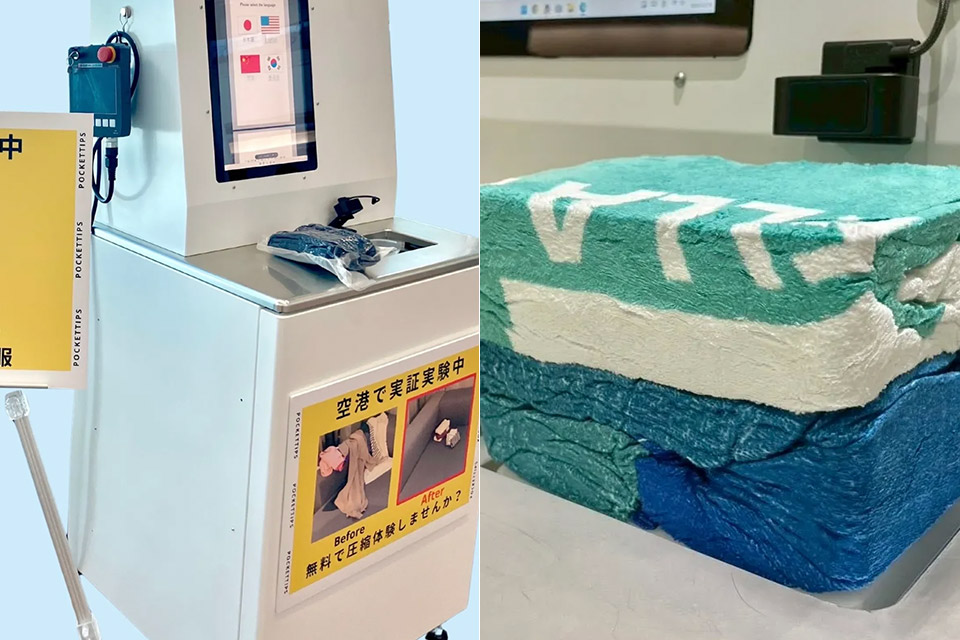
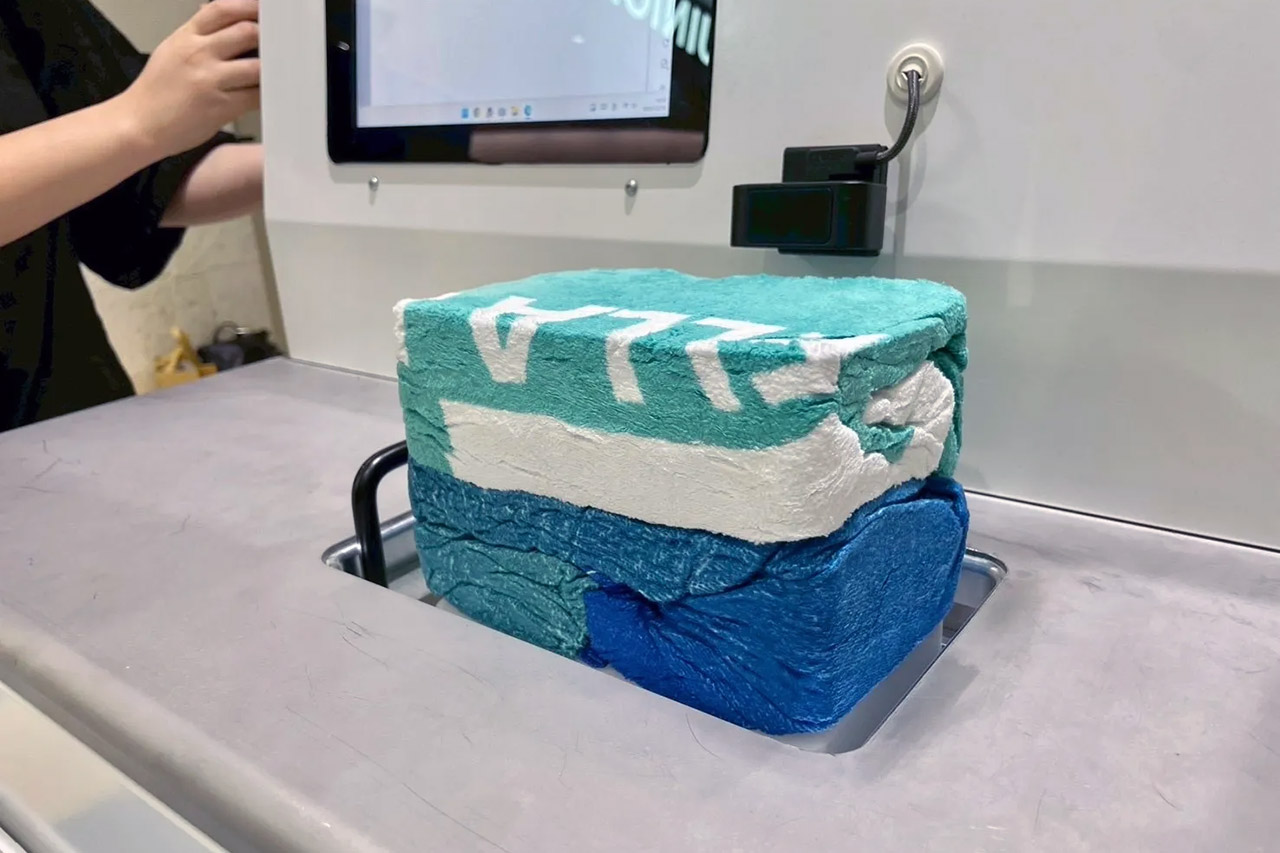
Japan Airport Pockets Tips Clothes Compression Machine
Photo credit: SoraNews24
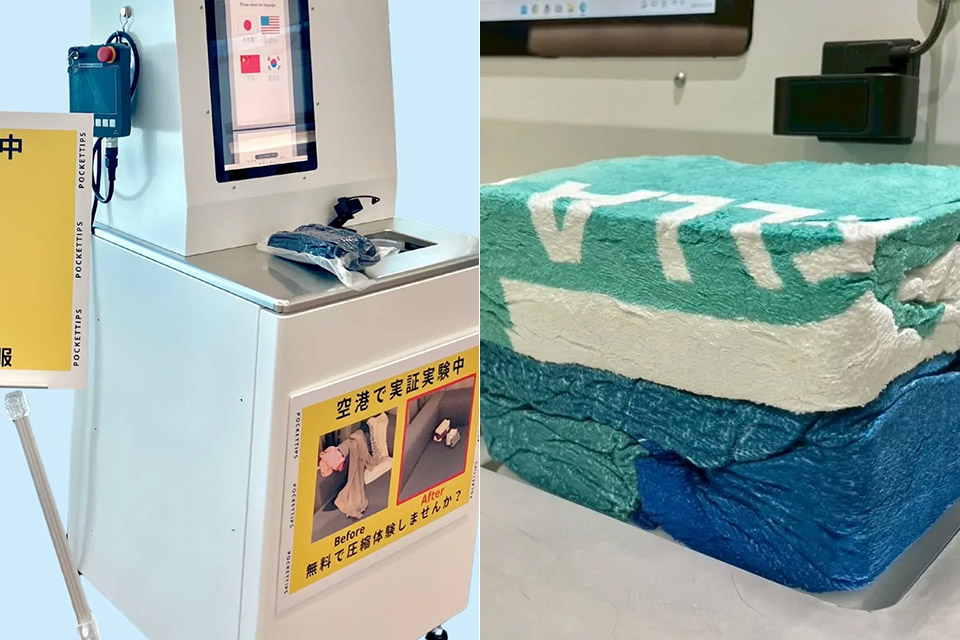
Pocket Tips looks like an ATM and works like a one-minute clothes press. SJOY, a Tokyo apparel startup founded in 2019, built the machine so travelers fold garments into a mold, set them inside, press a button, and take back a compact cube as small as one seventh the original bulk. A thin long-sleeve shirt can shrink to the size of a palm. Bulkier pieces and towels land closer to a hardcover dictionary. One cycle handles about eight items, and the fabric itself is pressed, so no vacuum bag and no extra plastic leave with you.


Japan Airport Pockets Tips Clothes Compression Machine
Haneda, Narita, Kumamoto, and Naha are four Japanese airports that have already gone through the testing process. They hosted Pocket Tips booths from late 2025 to January 2026, including a three-day free trial in Narita’s Terminal 2 and 3 departure halls from January 13 to 15. Japan Airport Terminal’s website, terminal.0 HANEDA, collaborated with SJOY and the other three airport corporations to address a common travel issue: baggage that wouldn’t close. Narita, for example, had 1,073 abandoned suitcases in 2024, a significant rise from 124 in 2020, as customers continued to buy larger luggage and leave the old ones behind.

Japan Airport Pockets Tips Clothes Compression Machine
The findings of those trials always revealed the same issue. Around 400 people provided comments across the four airports, with roughly 70% saying they had to give up on buying more souveniers simply because they didn’t have space in their luggage. When Haneda tested it in a run in 2024, more than 100 people were eager to use the service again, with 89 percent wanting to do it all over again. Queues formed only to utilize the machines. One Tokyo office worker used it to compress two jackets into a backpack, giving him enough room to buy for souvenirs before his trip.

Japan Airport Pockets Tips Clothes Compression Machine
Carry-on limits toughened on April 1st, 2026, making room in the cabin tighter and the boarding process more unpleasant. Airport staff noted a significant decline in visits to duty-free and snack outlets. If seven out of ten people are walking past the stores because their bag won’t close, a machine that allows them to gain those last few inches of room will be a tremendous hit, not just for travelers but also for the airport shops. On September 8, 2026, the joint development of Pocket Tips was officially announced, with the goal of having everything up and operating by 2027. The kiosk’s placement, duration, safety, pricing, language of the screen, and acceptance of card payments are all currently being debated.

Japan Airport Pockets Tips Clothes Compression Machine
In a recent interview, SJOY president Kawaguchi stated that when you wash or simply put the clothes out to air for around 15 minutes, they return to their normal size. So far, trials have concentrated on people leaving Japan, when they tend to go a little crazy and buy last-minute souvenirs and such. Next, the partners aim to install the same kiosk for incoming tourists, allowing them to get rid of heavy bags from the start and travel lighter. After that, the kiosks will make their way into hotels and clothing stores; if airports can build them strong enough for daily passenger traffic, it will only be a matter of time before everything can be pressed, folded, cubed, and packed in a way that allows people to make the best use of the space they have.
[Source]

Source link
Continue Reading

Tech

How to use the new AI photo editing tools in iOS 27

Published

on

iOS 27 is now rolling out to compatible iPhones, and with it brings plenty of new and improved features.

While iOS 27 can be downloaded onto the 2019 iPhone 11 and newer, devices that support Apple Intelligence will benefit from improved photo editing tools. These tools include Clean Up, Extend and Reframe, all of which are powered by AI.

If you’re fed up with taking photos and realising there are unwanted objects in shot, or you’ve found the framing is all wrong, then these tools promise to help make a difference. 

We explain where you can access the Apple Intelligence-powered photo editing tools and how to apply them to your shots here. For more on iOS 27, visit our guide on how to adjust Liquid Glass transparency and get notified when a website changes too.

Advertisement

Time for an upgrade? Our round-up of the best iPhones have you covered.

Advertisement

Apple Intelligence Compatible iPhones

Although iOS 27 is supported by iPhone 11 and newer models, the photo editing features are only available on devices that support Apple Intelligence. These handsets are:

The upcoming iPhone Duo, iPhone 18 Pro and iPhone 18 Pro Max will also support Apple Intelligence too.

Advertisement

All of Apple’s photo editing tools are built directly into the Photos app. Simply open the app and find the picture you want to edit. From the image, tap the icon with three horizontal sliders at the bottom of the screen. Then, tap the Tools icon.

iPhone Photo SettingsiPhone Photo Settings
Apple Photos Settings

Clean Up

Clean Up removes unwanted objects, people and even animals from a photo – leaving an accurate background fill in its place.

Advertisement

Once you’ve opened Tools on your image, tap Clean Up. From here, you can choose how powerful the Clean Up tool is: Auto, Fast or High Quality. Naturally, the High Quality option will typically generate better results than the Fast iteration.

Clean Up processing powerClean Up processing power

When you’ve chosen your desired level of Clean Up, tap, brush or circle around the object that you want to remove. However, some items may be highlighted automatically for you to quickly remove them with just a tap.

If you’re using the High Quality processing, then you’ll be prompted to click on a yellow Clean Up button to start the removal process.

Advertisement

Finally, tap the yellow tick in the top right corner. 

Clean Up on Photos app on iOS 27Clean Up on Photos app on iOS 27
Clean Up feature on iOS 27 Photos app

Advertisement

Extend

Extend enables you to expand the edges of your photo. 

Find your image within the Photos app, then tap the Settings icon and select Tools. Tap Extend, and here you’ll be able to zoom out, reposition the subject and adjust the crop. When you’re happy, tap the yellow Extend icon.

Extend feature in iOS 27 Photos appExtend feature in iOS 27 Photos app
Extend on iOS 27

Reframe

The Reframe tool is surprisingly clever, and allows you to change the point of capture even after you’ve taken the photo.

Open Reframe for your image, and you’ll be prompted to touch and drag to adjust the perspective. You can also use two fingers to pan, zoom and rotate the shot – though be warned, there may be limitations to how far you can push it.

Advertisement
Reframe in Photos in iOS 27Reframe in Photos in iOS 27
Reframe on iOS 27

Advertisement

Tap Reframe, and then you’ll be able to see how the altered photo compares to the original. If you’re happy, tap the yellow tick in the top right corner.

Source link

Advertisement
Continue Reading

Tech

Apple swept the Emmys, but celebs circled CEO Ternus, asking for the iPhone Duo

Published

on

Apple had a busy night at the Emmys. At the 78th Primetime Emmy Awards, Apple TV scored a staggering 29 wins and, in the process, set a few records, riding atop the momentum of a ridiculous 89 nominations. But it was not only the hit TV shows and their stars hogging the limelight on the red carpet. Apple’s new CEO, John Ternus, was also working his charm at the star-studded event while getting plenty of celeb attention on Apple’s first foldable phone, the iPhone Duo.

A video of Ternus showing off the Duo to a hyped Deadline reporter went viral on social media from the Emmys red carpet, but it seems there was more A-list interest from Hollywood’s heavy-hitters, too. “We hear that stars were hitting him up for the phone privately in LA even before the awards at the Peacock Theater,” says a report from PageSix, noting that some of these famous personalities “brazenly hit him up” for the sleek foldable phone ahead of its wide release in October.

An unnamed “top Hollywood exec” cited in the report told the outlet that a star asked Ternus to “get him on the list” for getting their hands on the iPhone Duo. Of course, getting access to an Apple product before its public release is quite a show of top-tier privilege. And when it comes to the iPhone Duo, Apple’s long-awaited foldable smartphone, the stakes couldn’t be higher.

It’s not unheard of, though. We often see unreleased gear from tech giants appearing in the hands of celebs to drum up some hype. Athletes, like Barcelona ace and World Cup winner Lamine Yamal, are often spotted wearing unreleased audio gear from Beats, which is owned by Apple. NBA legend Steph Curry also dropped a few teasers of Google’s Fitbit Air fitness band prior to its official launch.

Advertisement

It’s hardly out of character, therefore, to see top Hollywood talent cozying up to Apple’s chief for the iPhone Duo, one of the most hotly anticipated devices out there. It’s just surprising that Apple hasn’t already done it voluntarily by giving it out to a select few A-listers and raising the excitement for the masses. But hey, that’s just another addition to the list of Apple’s operational mysteries.

Source link

Advertisement
Continue Reading

Tech

Startup Ravel raises $8.2M to help solve clothing recycling’s spandex problem

Published

on

The Ravel team at its Seattle pilot facility in March 2025, from left: Forest Davis, process development scientist; John Goods, co-founder and chief technologist; Zahlen Titcomb, co-founder and CEO; Zack Wolford, research engineer; and Kristen Albrecht, chief sustainability officer and vice president of operations. Not pictured: Jules Valenti, director of engineering and pilot plant manager. (Ravel Photo)

Seattle startup Ravel announced Thursday it raised $8.2 million to scale its planet-friendly technology for recycling clothing by unwinding the components of synthetic fabric blends.

Ravel has targeted the textile fiber known as elastane, which is also called spandex or Lycra. It’s added to athletic wear, jackets, jeans, underwear, socks, t-shirts, gloves and every other category of apparel. Even in small amounts, elastane makes clothing difficult to recycle.

Ravel has developed a technology for unblending fabrics that include elastane. It turns the recovered ingredient into cost-competitive, recycled plastic pellets that serve as the raw material for making polyester fabrics.

The startup calls its process “purification recycling” and emphasizes that it is energy efficient, uses safe chemicals and does not create added waste or byproducts.

“Even though most of us don’t see it regularly, the ‘behind the scenes’ of materials recovery and valorization is a massive undertaking (and thus massive opportunity),” Ravel CEO Zahlen Titcomb said on LinkedIn.

Advertisement

The investment allows Ravel to transition from its Seattle pilot plant toward commercial-scale operations. It also helps the business validate its solution at production scale with textile partners.

Much of the clothing that is collected for recycling today is downcycled into lower-value uses rather than spun back into new apparel. The Ellen MacArthur Foundation has estimated that less than 1% of material used to make clothing is ultimately recycled into new clothing.

As fast fashion accelerates, apparel brands today are making about twice the amount of clothes that were produced in the early 2000s.

Ravel announced in March 2025 that it had raised pre-seed funding, but did not say how much. The company was a finalist for the Sustainable Innovation Award at the 2026 GeekWire Awards.

Advertisement

The seed round was led by One Small Planet with “significant participation” from AP Ventures. Other backers included Overlay Capital and Lichen Ventures, plus existing investors At One Ventures, Collateral Good and BetterWay.

“I’m excited to have found some great folks to roll up the sleeves with,” Titcomb said.

Source link

Advertisement
Continue Reading

Tech

Bose Just Dropped New Sport Open Earbuds and Ultra Open Earbuds (2nd Gen)

Published

on

Bose’s original Ultra Open Earbuds were released more than two years ago and sparked the proliferation of a new style of open earbuds that resemble clip-on earrings. I’d been waiting for the Ultra Open Earbuds (2nd Gen) to arrive, and now they’re finally here, with improved sound, voice-calling performance and battery life, Bose says.

While the updated buds carry the same elevated $299 list price as their predecessor, the company has also unveiled its completely new Sport Open Earbuds that cost $199 and have a different design than the original Ultra Open Earbuds. Both new buds are available for preorder Sept. 19 and ship Oct. 1.

Read more: Best Clip-On Earbuds of 2026

Bose Ultra Open Earbuds (2nd Gen) highlights

According to Bose, the Ultra Open Earbuds (2nd Gen) feature new drivers, allowing them to play louder and deliver deeper bass. Like Bose’s QuietComfort Ultra Earbuds (2nd Gen), as well as its QuietComfort Ultra Headphones (2nd Gen) and QuietComfort Headphones (2nd Gen), they’re also equipped with the company’s TrueSpatial technology with head-tracking for Immersive Audio, which now includes a Cinema mode. They look very similar to the original, with a slightly upgraded version of the original’s “cuff-clip form factor” that a lot of other people found quite comfortable.

Advertisement
Bose

Available in black, white smoke and “limited-edition” cherry chocolate or olive green colors, they have an IPX4 rating (splash-resistant) and are rated for up to 9 hours of battery life (that’s up from 7 hours), though that number drops if you engage Immersive Audio.

Thanks to their secure fit and open design, the Ultra Open Earbuds worked well for running and biking, and the new version is also suitable for sporting activities, though Bose is billing the lighter Sport Open Earbuds as more durable and “purpose-built for active use,” with an even more secure fit.

Bose Sport Open Earbuds highlights

The Sport Open Earbuds look similar to Shokz OpenDots 2 earbuds, which also sell for $199. Bose says they “combine a secure cuff-style fit with soft silicone construction, IP54 sweat, splash and dust resistance, tactile controls and rich open audio, all while keeping listeners naturally aware of their surroundings.”

The Bose Sport Open Earbuds have an IP54 rating and come in three color options.Bose

The Sport Open Earbuds don’t support Bose’s Immersive Audio feature and are rated for up to 7 hours of battery life. They’re available in three colors: black, white smoke and “limited-edition” eucalyptus green (that same color is available for Bose’s recently released QuietComfort (2nd Gen) headphones).

My quick take

I haven’t tried the new buds yet, but I’ll be receiving review samples in advance of their Oct. 1 ship date and will post full hands-on reviews of them.

A lot has changed in the clip-on earbuds market since Bose first released the Ultra Open Earbuds in February 2024, with dozens of new clip-on models available, many of them at far lower prices than $300. While I suspect the Ultra Open Earbuds (2nd Gen) will be among the best-sounding open earbuds and certainly a good premium option in the category, I also think we’ll see these buds on sale fairly frequently; $300 just seems too high to pay for a pair of clip-on earbuds. (Apple’s new AirPods 5 don’t fit as securely as either of these open buds, but they do feature active noise canceling and start at $129.)

Advertisement
The Sport Open Earbuds have a lightweight cuff-clip form factor.Bose

As for the Sport Open Earbuds, I’ll see how they compare to the Shokz OpenDots 2, Anker Aero Clip 2 and Baseus’ XC1 clip-on earbuds ($100), which feature Sound by Bose. Like the Ultra Open Earbuds (2nd Gen), I also expect the Sport Open Buds to see regular discounts to compete with all the new premium sport clip-on buds hitting the market, many of which feature improved sound and voice-calling performance.

Source link

Advertisement
Continue Reading

Tech

Mozilla adds Mistral Small 4 to Firefox Smart Window as it launches in France

Published

on

Mozilla has partnered with Mistral AI to bring the French company’s models to Smart Window, the AI browsing assistant in beta in Firefox.

The two companies announced the deal on Wednesday in a joint post, alongside the feature’s launch in France.

Smart Window, introduced by Mozilla in August, is a separate AI-assisted browsing mode. It summarises complex searches with sources, helps users find pages they clicked away from, and draws on the tabs they have open.

The two companies describe the arrangement slightly differently. Mistral’s post says Smart Window “is now powered by Mistral models”, while Mozilla’s own announcement says it is adding Mistral Small 4 as one option, and that users can still pick from a range of other models.

Advertisement

Smart Window was already available in English in the US and Canada, and France is its first new market, with official French-language support. Mistral said the UK and Germany are expected to follow later this year.

Mozilla said it chose Mistral Small 4 partly for its multilingual performance, and Mistral said it is fine-tuning models on regional languages and dialects.

Privacy is central to the pitch. Smart Window conversations are not saved on Mozilla’s servers by default, and model partners including Mistral agree to zero data retention, according to the announcement.

Mozilla chief executive Anthony Enzor-DeMeo cast the deal as a stand against AI gatekeepers.

Advertisement

“AI is becoming part of how people experience the web every day. We want to make sure that doesn’t mean people are chained to one company’s self-serving pipeline,” he said. “A browser shouldn’t be a one-way funnel.”

Arthur Mensch, Mistral’s co-founder and chief executive, called it a partnership between “two open source advocates” that brings “privacy, control and choice to AI-powered web browsing.”

For Mistral, which mostly sells to businesses and governments, the deal is a route to consumers, and it comes days after the company raised €3bn at a €21bn valuation. Mistral said the partnership lets it reach beyond enterprise customers to users worldwide.

For Mozilla, it is part of a careful push into AI. Firefox users objected to earlier AI plans, and in February the company added a single setting that blocks all of the browser’s generative AI features. Smart Window stays optional, and users can control which tabs and history it can see.

Advertisement

Source link

Continue Reading

Trending

Copyright © 2025