
Crypto World
Colin Kaepernick on Threats He Faced, His NFL Exile, and That Jay-Z Lyric

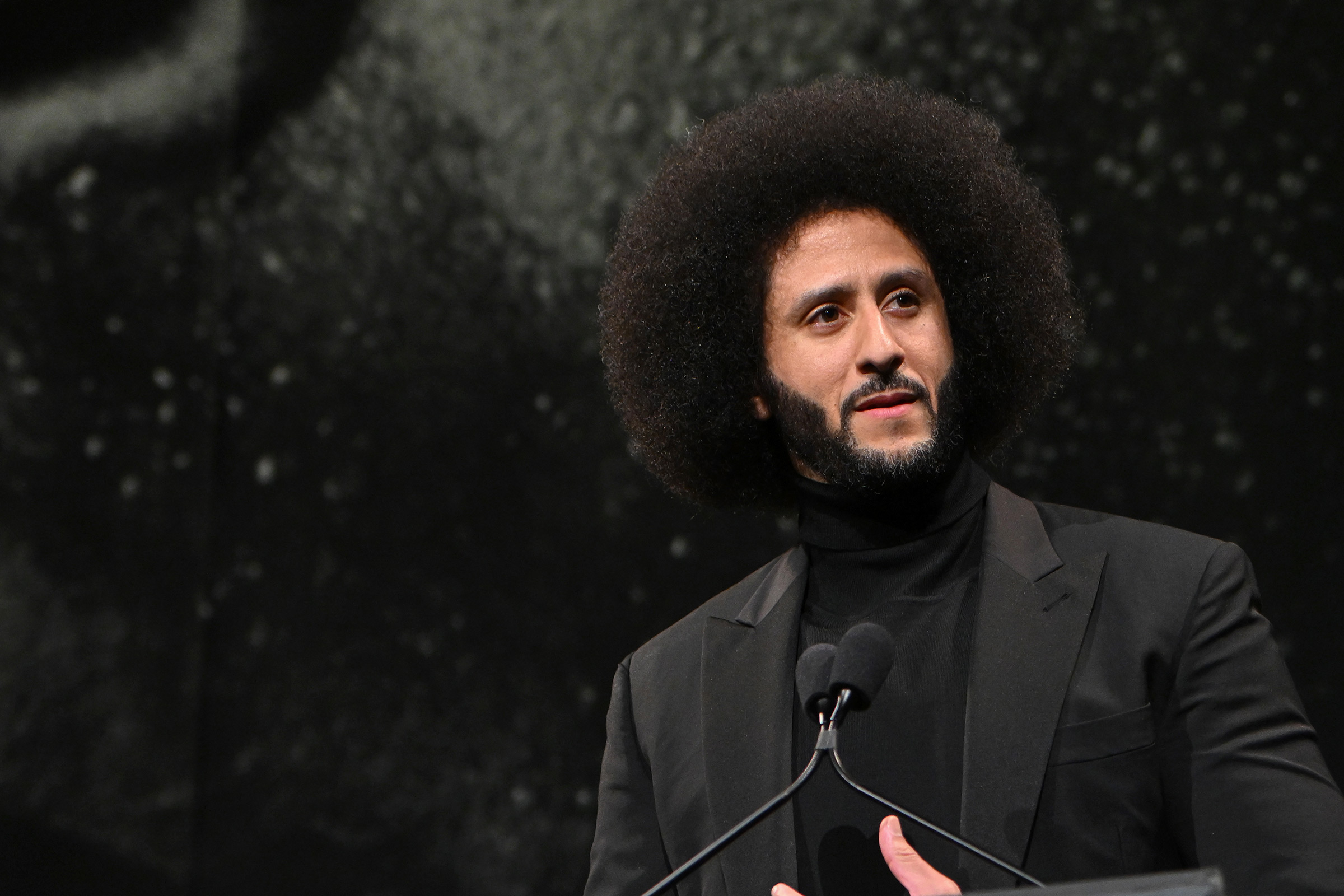
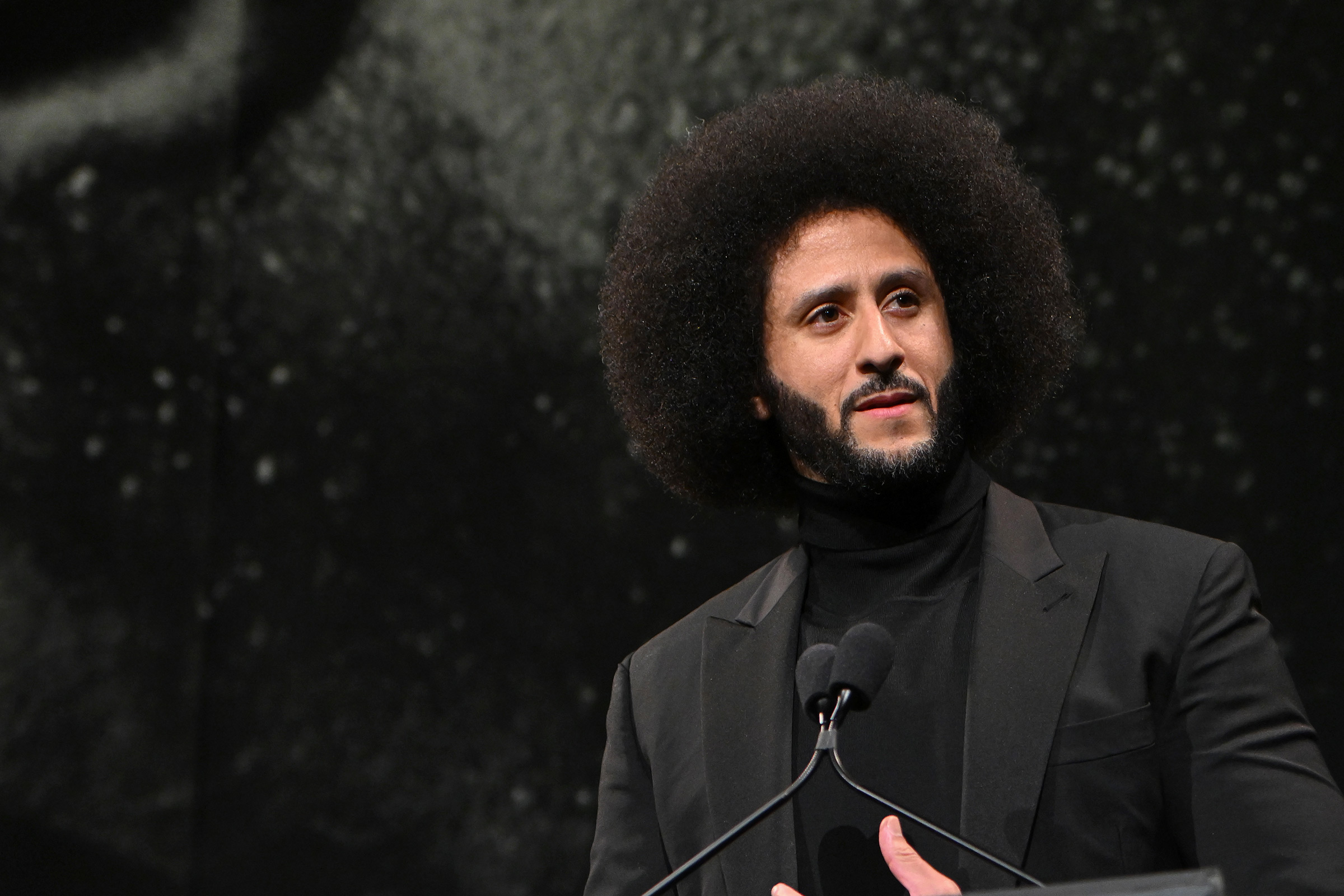
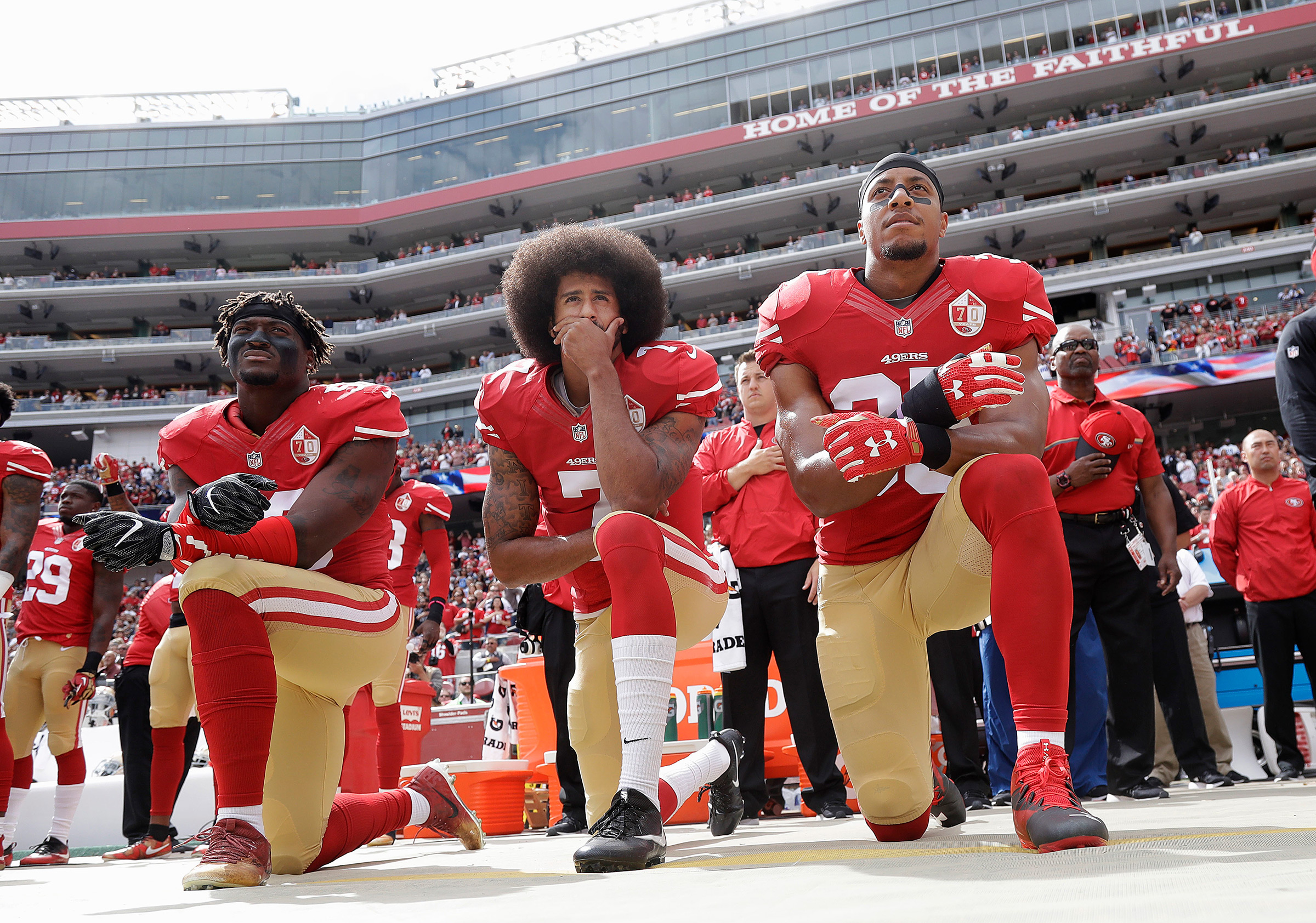
Following a string of high-profile police shootings of Black men 10 years ago, San Francisco 49ers quarterback Colin Kaepernick began protesting such incidents by sitting during the national anthem at preseason games. What began as a quiet action turned into a fevered national debate about freedom of expression, patriotism, and so much more.
In Kaepernick’s new memoir, The Perilous Fight, the quarterback explains that his action was spontaneous. He wasn’t even in uniform on August 13, 2016, the first time he sat during the anthem. “I hadn’t given the anthem a second’s thought before I walked out onto the field that day, but it hit me in that moment that I should find a seat,” Kaepernick writes. “I didn’t want to stand up while that song was playing. Rosa Parks had refused to give up her seat on the bus to a white person in 1955. Muhammad Ali wouldn’t step forward when his name was called by the draft board for the Vietnam War in Louisville in 1967. Tommie Smith and John Carlos raised black-gloved fists in the air during the playing of the anthem at the 1968 Olympics. They didn’t like what they saw, the way this nation touted its commitment to justice and at the same time showed little interest in it, and they took action. Those inspiring Americans had the courage of their convictions and literally changed the world in the process.”
Kaepernick, despite leading the 49ers to the Super Bowl in 2013 and throwing 16 touchdown passes, against just four interceptions, for a bad 49ers team in 2016, hasn’t played in the NFL since that season. In 2019, he and former teammate Eric Reid, who joined Kaepernick in kneeling during the anthem, settled a collusion lawsuit against the NFL. In late August, a decade after he etched his name in history, Kaepernick sat down with TIME to talk about why he hasn’t spoken up much about his protests, his relationship with the anthem today, his differences with Jay-Z, and the state of policing in the United States.
(This interview has been edited and condensed for length and clarity)
You’ve released a book, The Perilous Fight. Why tell your story now?
One, it’s 10 years since the protest. I’ve gotten so many questions about why did I protest, what happened, what led up to it, the details behind the scenes of all of the moments. Not just the protest, but owners in the NFL, the conversations that were happening there, the workout in 2019 and all the things that transpired around that. Then also just the work that we’re doing directly in the communities. It felt like it was a great time to be able to go out, answer some of those questions, and also be able to give insight into how we build, how we move forward together. I think it’s especially critical in a moment like this.
The book starts with a harrowing incident of racial hostility involving the N word that you experienced as a child—one you weren’t comfortable sharing with your parents, who adopted you and are white. Why start there?
One of the reasons we wanted to start with that moment of going through the neighborhood, being tied to a rose tree, and the dynamic of not feeling comfortable telling my parents is it really sets the stage for the rest of the book, and sets the stage for the rest of my life. I had to navigate the realities that you face when you are Black in predominantly white spaces. I had so many questions around, “You lived a privileged life. Everything was all good. Middle-class white family. What are you upset about?” And from the outside looking in, I understand how it can look that way. But also the reality of the experience, and what I went through, is also something that’s important to put in context.
You didn’t really do any interviews during the heat of 2016 and 2017, and in the aftermath. What was your thinking on not doing these types of interviews then?
Yeah, it’s interesting because I get both sides of that question. During the 2016 season, it was like, “Why are you talking so much? Be quiet.” As an NFL quarterback, you’re required to speak three times a week. So reporters can ask you whatever they would like. I’m happy to answer any questions as part of that. But post that moment, one thing I realized was, it felt like there was a very, very intentional effort to make me the sole figure, or the sole voice, of the movement. I thought it was important to create space for other voices to be able to step up. And one of the reasons that I thought that approach was so important is looking back historically, yes, we need strong leaders, but we need strong people collectively. That’s actually what allows us to be able to sustain over time. Also, as part of that, I thought it was very important as they were very intentional attacks to try to discredit me, discredit what I was capable of on the field, discredit my character. In those efforts of trying to discredit me, they were also trying to discredit the broader movement.
If there’s one athlete who has stepped up in the way that you wanted, who would that be?
I think there are voices across the board that have stepped up. I would say my brother Eric Reid. I’m always going to bring him up. Love Eric. He continued the protest after I was blackballed. He himself went through the same reality. His final season, [he] went out, set two franchise records, was cut, and never saw the field again. We had voices throughout the NBA step up. Whether that was LeBron, we saw Steph Curry, we saw Carmelo, we saw KD, all stepping to the forefront. We saw this with Megan Rapinoe, doing that on an international stage. We’re seeing it to this day throughout Europe. I would not have had the insight that this would have had the lasting impact internationally the way it does, and that’s just within the sports realm. More broadly, what I think it’s done is created opportunities, whether it is on a national stage, international stage, or within local communities. People saying, “Oh, this actually opened the door for me to be able to do the work in a way I previously wasn’t able to.”
In 2016, when you first started sitting, and then kneeling, during the national anthem, you’re in this national spotlight and firestorm. Was there one surreal moment you experienced that we didn’t see during this time?
One surreal moment early on, we had a high school, Castlemont in Oakland. After I took a knee, they went out the next week and took a knee, and I went to go visit them the following week at their game. I had a moment where I was in the locker room with them before the game. They’re hyping each other up. It’s going to be a big game for them. And one of the players says, “We don’t get to eat at home. So we’re going to go eat on this field.”
That is too often a reality within communities. Not only navigating threats against their life, but navigating whether or not they’re even going to have a meal. For me, that was such a surreal moment that athletes in high school and students in high school are going out, trying to chase their dreams and compete at the highest level. They are willing to stand up and risk themselves to go out and advocate for their community, while at the same time not knowing whether or not they’re going to have a meal when they get home. That really encapsulated and painted a surreal picture of how dire this is. While the broader national conversation was happening, this is just the reality on the ground.
Were you physically or psychologically threatened while protesting?
Threats became so normalized that I didn’t really think about them too much. You get attacked from the President of the United States. You’re getting attacked from senators. You have people trying to send bombs to your home. Online threats and mail threats. My now wife Nessa, as I was getting these threats, was like, “You can’t be staying at your house alone.” She was in New York at the time. But that ultimately led to me staying at [manager Tony Ng’s] house for the rest of that 2016 season, just so people didn’t know where I was at.
Were you ever scared?
No. I also think you get a little bit of the football mentality. If someone is going to try to do something, they’re either going to try to do it or aren’t. My responsibility is to be prepared for whatever that is.
Did you ever worry that what happened to you served as a warning to other athletes? That as a result of you not playing in the NFL anymore, they were quiet rather than speaking up?
Absolutely. I know the intention was to send that message: If you try to advocate for the Black community, if you try to fight against the status quo and create a different and better environment, we will take everything we can from you. And this actually showed up in one of our Know Your Rights camps in Las Vegas. One of our young high school students pulled me aside in the middle of the camp. “Hey, I really love football. I also really want to fight for my community and for that to be better. Which one do you think I should choose?”
The fact that they have made that a conversation, that people feel like they have to choose, that is the very thing that I have to continue to fight against. I don’t think there is an either-or. We can be phenomenal at our profession. We also can advocate for our community and a better society, better conditions for our people.
In the last nine years of NFL exile, did deciding to stand for the anthem in order to get signed ever cross your mind?
No.
Why not?
Because I set out with a clear goal and clear objective, and the conditions in our society have not changed. There’s been progress made in some areas, but holistically, when we look at the climate and environment that we are living in today, those conditions largely have not changed. There is never going to be a moment where I take a position of, “Hey, I’ll stand up so I can get my career back.” Because that then becomes a moral concession: If you threaten my career, or if you threaten my money, I will actually say I don’t care about the people, and I will look at this just from an individual perspective. That was a line I was not going to cross.
In the book, you detail conversations you had with a few teams around the league. Which team did you feel closest to signing with?
There were three teams that I thought were close. The first was the Seattle Seahawks. In 2017, flew up there, met with Pete Carroll, John Schneider, the head coach and GM of the Seahawks. When I got there, basically the conversation was, “We know you’re a starting quarterback.” I didn’t do a
workout while I was there. They’re like, “We know you can play. We’ve game-planned for you the last few years. That’s not a question for us.” The entire conversation while I was there was just around my politics, taking the knee, how I thought about policing, how I thought about the military, what their community would think, what potential players would think.
In retrospect, it was fascinating to me on a few different fronts. One, the NFL claims it’s a meritocracy. So walking in a building and telling me you know I’m a starter, and not walking out with an offer makes that fall flat on its face. The second part is I just think about it from a labor-laws perspective. Being the owner of a business, a company, I would never be able to ask those questions and get away with it.
They didn’t sign me that year. Reached back out the following year to have me come in for a workout. Had booked the flight, was ready to go out there, and prior to getting on the flight, they called my agent. Said, “Well, before he comes out to work out, will he commit to not taking a knee?” I said no. I won’t commit to that. Canceled the flight. Canceled the workout. Never heard from them again. [A spokesperson for the Seahawks did not respond to TIME’s request for comment.]
The second one was the Ravens, and this one came about because we played against the Ravens in the Super Bowl. Jim Harbaugh was my coach during that time. His brother John Harbaugh was head coach of the Ravens, and I reached out to Jim and wanted to get his perspective. “Is there anyone that you know that would be interested? Do you think your brother would be open to a call?” John was on board and was like, “Yeah, let’s do it.” John went back, advocated for it, wanted to sign me. “It got shut down from above me. I don’t have the power to just outright make that decision. But if it was my choice, you would be here.” [A Ravens representative referred TIME to a 2017 quote from Baltimore general manager Ozzie Newsome—now an executive vice president with the team—who said, “(Ravens owner) Steve Bisciotti has not told us we cannot sign Colin Kaepernick, nor has he blocked the move. Whoever is making those claims is wrong.”]
Then the third one was the Raiders in 2022. Had run into [Raiders owner] Mark Davis at an airport. This was actually the first time I had been face-to-face with one of the owners blackballing me. It was a very interesting conversation because it was almost disconnected from the reality of what was going on. Saw me and was like, “Hey, what’s up? How are you doing? What you been up to?” I was like, “What? What are you talking about? I’ve been trying to play, and you’ve been keeping me out.”
That led to a follow-up conversation about me trying to play. He came and sat in my living room, and we talked about playing for the Raiders. That led to a workout with the Raiders and Josh McDaniels. Workout went great. Josh McDaniels, after the fact, was like, “He looked bigger, stronger, faster than last time saw you.” Mark Davis came in the room after. “So proud of you. That was great workout.” One of the scouts on the way back said, “I’m surprised they let you walk out of the building without signing you. That’s the best workout we’ve had in years from a quarterback.” Never heard from him again. [The Raiders declined to comment.]
When Jim, who coached Michigan to the 2023 national title, got the job with the Los Angeles Chargers in ‘24, did you reach out to him? Was there any conversation there?
Yeah.
What happened?
He told me that was a table he was not willing to stand on. It was disappointing because prior to that he had been advocating for me. Said I should be a starter. I can help a team win championships. Had a conversation with him and said, “Look, I don’t even care what the role is. Like I know Justin Herbert’s there. I know the reality of what you have to navigate as a head coach. Let me take the No. 2 spot then. Let me come in, just show you, show everyone else what I can do.” Wouldn’t do it. No opportunity, no workout.
Has that affected your relationship with him?
Yeah. And I’ll say, also in part because there was a conversation that was put out that he had offered me a coaching job, which just wasn’t true. I don’t know where and why that came out. That’s made the relationship a little bit different since. [When asked to respond to Kaepernick’s comments to TIME about joining the Chargers as a player or coach, Harbaugh, through a Chargers spokesperson, pointed to a 2024 press conference, in which he said he “pulsed” Kaepernick’s interest in coaching.]
Why are you confident that you are ready to be an NFL quarterback right
now?
Because I train for it. I rely on my training and preparation for any moment. I’ve grown confident in my ability to continue to stay ready because I’ve shown that the training works, and I’ve shown that I’ve been able to go out and perform.
What’s your relationship with the national anthem today? When you go to sporting events, what do you do?
I don’t go out for the Star-Spangled Banner. I’m either seated where I’m at, or I’m not out there at all, and then show up when it’s time for the actual game to come on.
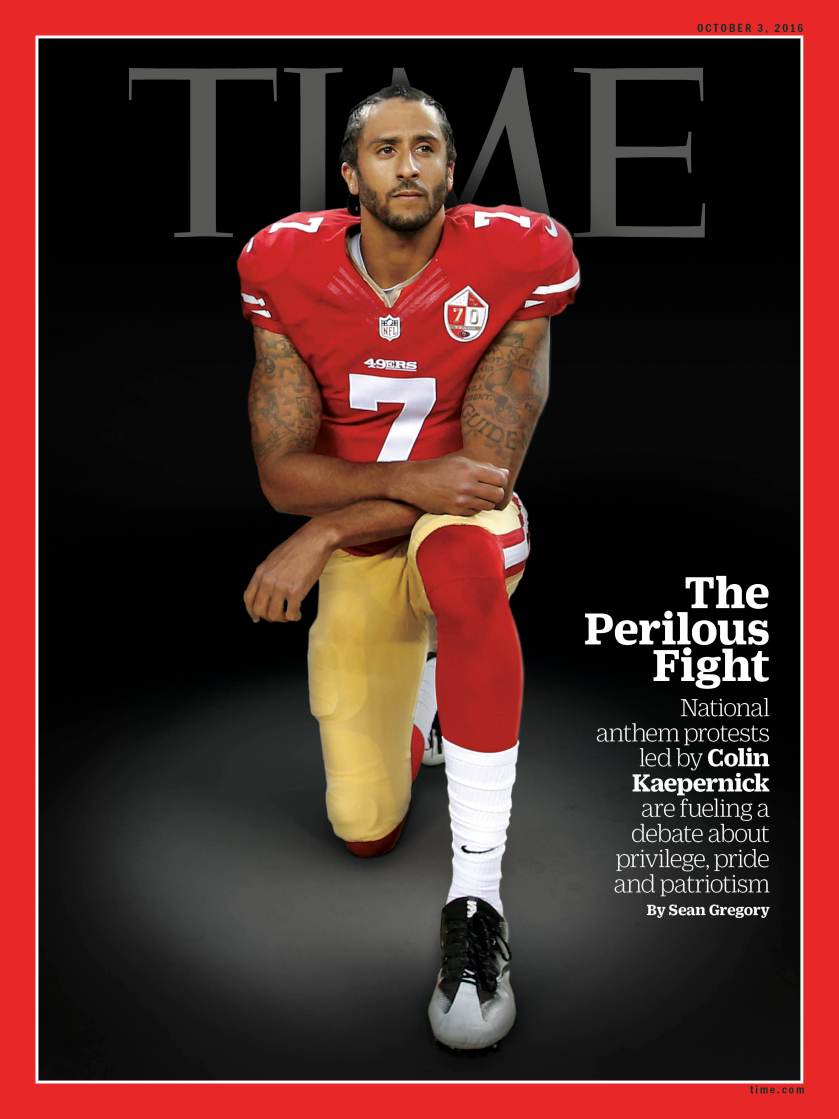
Your daughter is 4. When this time is right, what will you say to her about the national anthem?
This is actually a funny and timely question. We just went through the process of moving. We’re putting some of the artwork up and pictures up. We have the TIME cover framed. I don’t like having any of my stuff in rooms that I’m in. Feels weird to me. But my wife wants to have stuff up. And my daughter found it, and she grabbed it and was like, “Oh, this is going to my room.” But she was like, “Baba, why are you taking a knee like this?” She’s showing me how I’m taking a knee. Not a conversation I was expecting to be having at 3 ½ years old.
What did you say to her about it?
“Well, Baba was protesting to try to create a better life for everyone. Thought all people should be able to be successful and have good lives and be treated fairly.”
What are you going to tell her when she asks about why you stopped playing in the NFL?
It’s going to be an honest conversation, in part because I also know I have to prepare her for the reality that she’s going to walk into rooms and they’re going to see her last name is Kaepernick. She’s going to get asked questions and she’s going to have to have to navigate things that she never asked for. Part of my responsibility as a father is making sure that she’s prepared and equipped for that.
Going back to your early life a bit – you credit your parents with raising you and having your back. But there were many moments where they weren’t as sensitive to your racial experience and awakenings as you would have liked. You make that very clear in the book and don’t spare your feelings about it. Have your mom and dad read the book?
They have not read it yet.
How do you anticipate they’ll react to it?
There’s moments that they just don’t know about. It is also something that, for me, in thinking about a white couple born and raised in Wisconsin, adopting a young Black boy, it is very difficult for them to understand the reality of what that’s going to be for me growing up. As far as raising me on strong fundamentals and morals, teaching me to work hard, teaching me to treat people well regardless of what their position or status may be in life, all of those things they did extremely well. But when it comes to understanding being Black, being a Black man, what that means, navigating society, that part largely didn’t exist. That’s where a lot of the conflicts come in around culture, around perception, around who I actually was. I knew they always loved me as their son. I don’t know if they always loved my Blackness. And I think that’s an interesting nuance to be able to navigate.
How would you characterize your relationship with them now?
I think we’re in a good place. My daughter loves calling them during dinner. That is part of her routine now. They come out, they visit. But there is still some of the complexities there.
At several points in the book, you talk about the business of the NFL in the same breath as slavery. Of being photographed in compression shorts at the draft combine, you write, “My mind immediately went to the scenes I had witnessed in numerous movies depicting slave auction blocks.” You also write, “I fully believe what happened to me was a form of buck breaking. That’s a slave term to describe how masters used to whip and sexually abuse enslaved men in front of a crowd to dehumanize them and warn other slaves that they better not step out of line. I was made into a warning to other NFL players and professional athletes: You better not challenge the league’s authority.” Were you ever worried that people might be offended by that?
No. I know people would take things in the context that they want to. But the parallels between the two are undeniable. Bill Rhoden wrote a whole book around it, Forty Million Dollar Slaves. This came up for Curt Flood when he was fighting for free agency for professional players. “Well, you’re making $90,000 a year, Curt Flood. How can you compare this to slavery?” And I believe his quote around that was, “A well-paid slave is a slave nonetheless,” or something to that effect. Which speaks more to the institutions and practices around how you are treating people and the process that they’re going through, and the systems that they have to navigate, as opposed to just taking something in isolation.
Two news stories weren’t addressed in the book. One is your decision to wear socks depicting police as cartoon pigs in 2016, before you took your public stance. That offended law enforcement personnel, and police unions in particular. Why don’t you, or why do you, regret that specific decision?
When I wore those socks, we were seeing police killing Black people with impunity across the country. This is something that has systemically been in place. It came out of slave patrols, built into modern-day policing. Now, policing in the U.S. exists in a way that we don’t see in other areas throughout the world, so to me, that was sending a message around the inhumane practices that police were practicing.
It seemed to have an effect where some people would never forgive you after that. But you knew that was a risk?
The same people who are offended, in a way that, “hey, we’re never going to forgive you for that,” why are you so remorseful for police killing Black people? Why are you so accepting of that? A pair of socks is so offensive to you, but the killing of a human life you’re OK with. So, if we’re really going to have a conversation around it, let’s actually put it in contrast to the conversations that we’re having. I’m going to choose valuing human life in every instance.
The other story is the shelving of the ESPN documentary about you, directed by Spike Lee. About a year ago, ESPN said in a statement that “ESPN, Colin Kaepernick and Spike Lee have collectively decided to no longer proceed with this project as a result of certain creative differences.” What were those creative differences?
We had approved for the documentary to go out, and that was not something that fit within their timeline. So the documentary is finished. It’s ready to go. We’re looking for potential partners to be able to place it.
Why didn’t ESPN want it?
It’s a great question. I know they have shifting priorities, as we’re seeing publicly right now. We also know they were, I believe, at that point in time in the midst of negotiating their deal with the NFL. So I can’t say that those things are connected. But I believe they’re all factors. [An ESPN spokesperson sent TIME a statement: “Two years ago, the three parties involved in this project came to a mutual decision, based on creative differences, not to move forward. Creative differences are not uncommon when several entities collaborate on a project of this kind. Because multiple parties were involved, we are limited in what we can share publicly. This is not new as the decision not to move forward was agreed upon Monday, July 29th 2024. We are grateful for the work that went into it.”]
In a recent interview, Alexandria Ocasio-Cortez seemed to agree with the sentiment that “Woke 1.0 was crazy.” She was referring to the period, after the murder of George Floyd in 2020, where there were calls, for example, to defund the police. You wrote in a 2020 essay “in order to eradicate anti-Blackness, we must also abolish the police. The abolition of one without the other is impossible.” What is your response to AOC’s characterization and other political characterizations that sentiments like you expressed went too far?
I understand the political realities that politicians are navigating. I’m not naive to that. I also think the reality is, if we are trying to create better communities that allow us to thrive, our resources shouldn’t be going towards policing. They should be going towards resources that allow the community to thrive. When you invest in communities, they get safer. People do better. Crime rates drop. I would not discredit the work that was done around the country during 2020, because that has laid the foundation for the movement that we’re seeing now. We’re seeing a different wave of politicians show up: “Am I providing direct benefit to the people that I’m serving?” I think that is the most important priority to be able to keep in mind.
Do you still support abolishing policing?
Yes. I think that’s the work that we should be doing. Reallocating those resources to directly benefit communities and give them the resources that they need to be able to thrive.
You write in the book about how, in 2016, you met with your San Francisco 49ers teammates to explain in more detail why you were protesting during the anthem. You write: “I told my teammates how law enforcement in this country has always been an enemy of Black people.” In 2026, do you still feel that law enforcement in this country is an enemy of Black people?
The institution has not changed. It still exists in the same form it did in 2016. We’re still seeing the same issues come out of it. We’re still seeing that fuel and funnel into the prison industrial complex. So until those systems are dismantled and those resources are allocated to benefit communities, the institutions are serving the purpose that they were laid out to do.
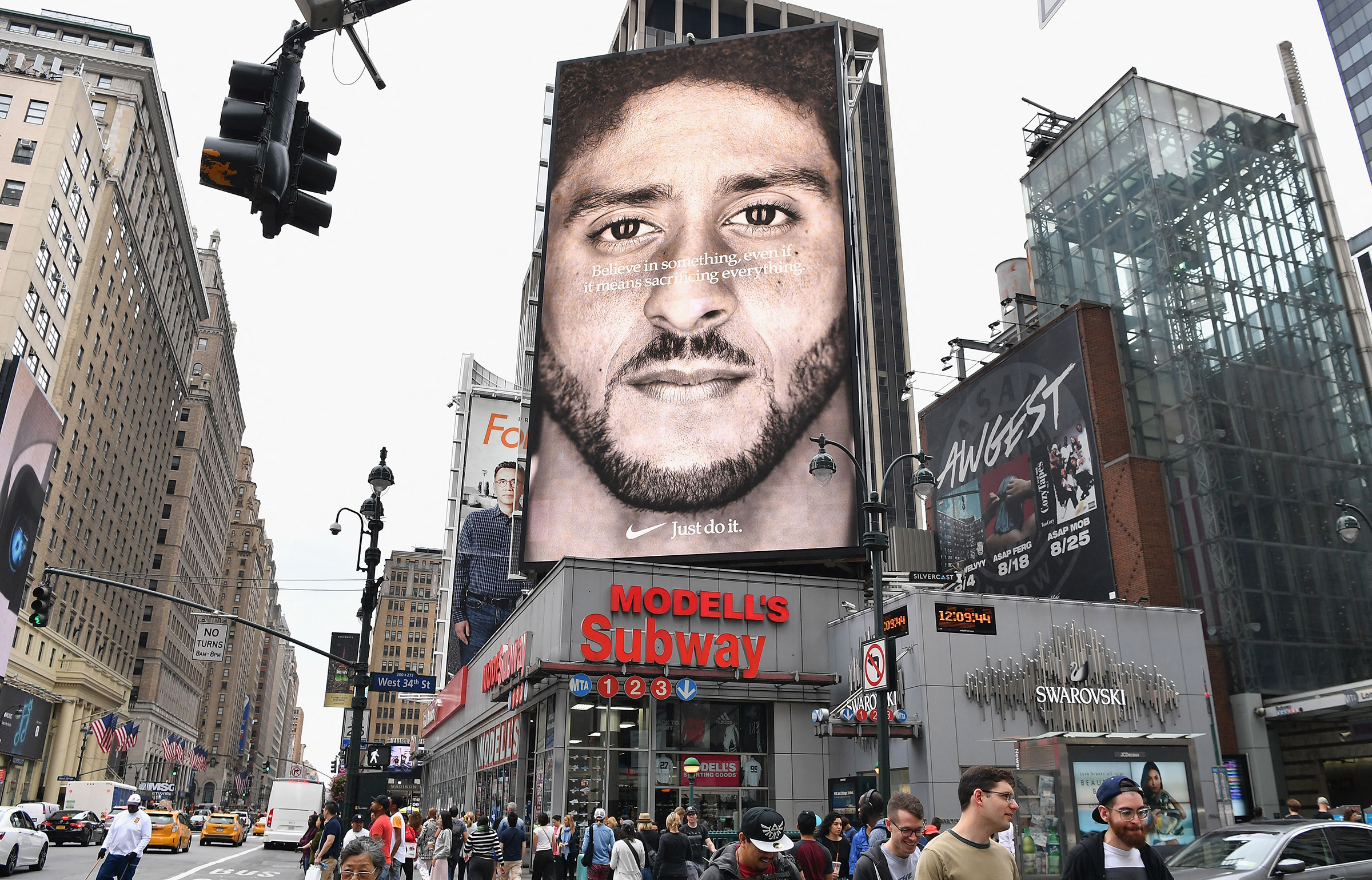
How would you characterize how Donald Trump has treated you?
At least to my knowledge, that was the first time I had seen a President use their position and political power to target an individual citizen. And I think that laid the foundation and set the stage for a lot of what we are seeing now. And in many ways, I feel like that was an initial test to see how far things could go. I obviously do not agree with his political views or approach. I do not believe that the work he is doing is actually to benefit people other than himself.
The NFL has reported giving more than $450 million to grassroots organizations to benefit communities in need. Do you see that as a sincere response to your protest or a PR play?
I view that as a PR play. There was a player-owners meeting. Bob McNair, who was the owner of the Texans at the time, said, “You need to tell your compadres to stop that other business,” meaning the protests. Bob Kraft was in that meeting and said, “We need to talk about the elephant in the room and ending the protests.” And Terry Pegula, the owner of the Bills, just said explicitly, “We need a Black face to be at the forefront of this to help us stop this.” If it was actually to try to create change and benefit Black communities, the NFL’s response holistically from the start would have looked drastically different. I would have a job. Eric Reid would have a job. The other players that were targeted throughout that process wouldn’t have had to navigate that.
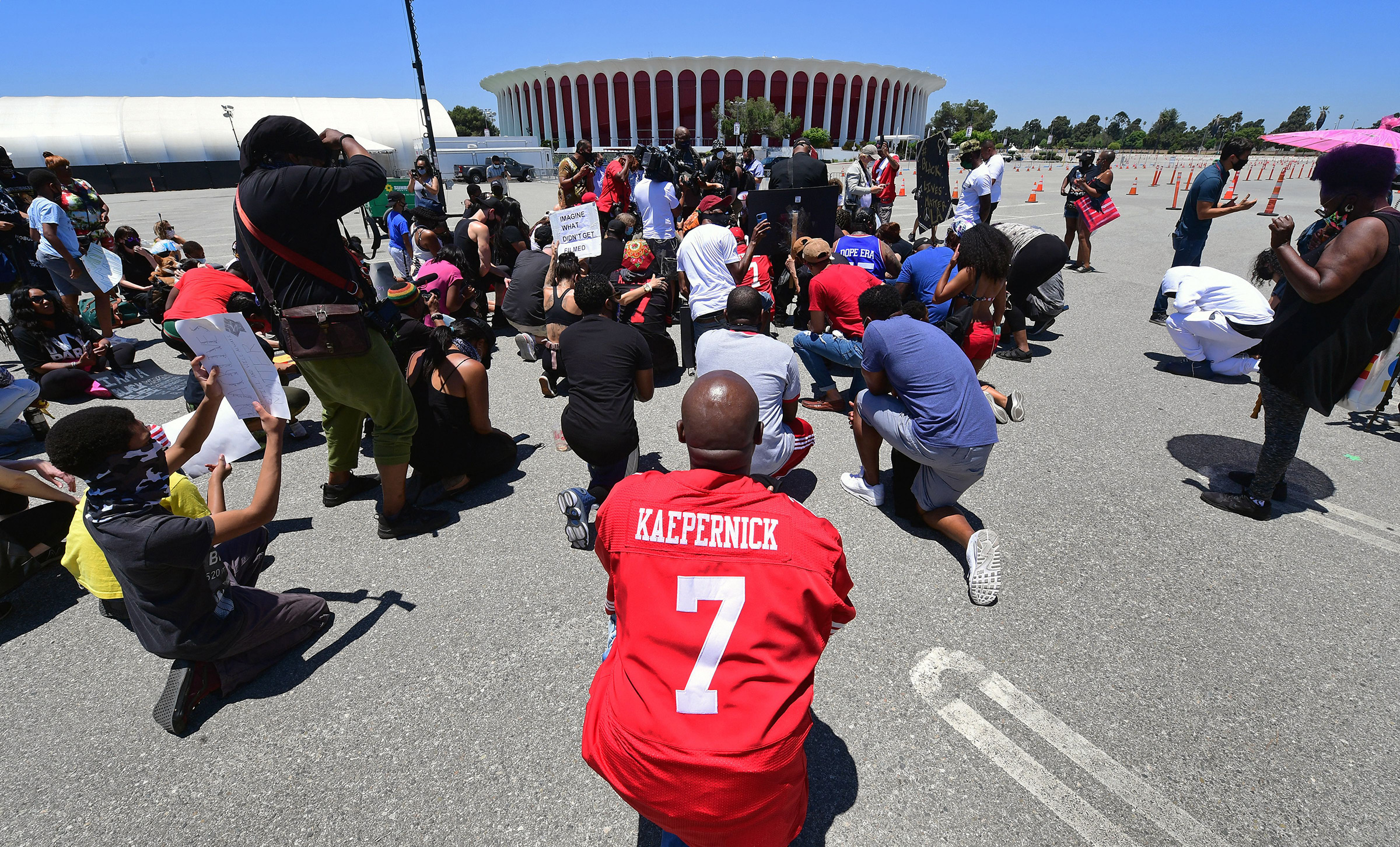
NFL commissioner Roger Goodell admitted, in 2020, that the league was wrong for not listening more closely to the message and meaning behind protests like yours. He encouraged a team to sign you. Do you forgive him?
No, because he’s still taking those actions to this day. That they have not changed their practices. The NFL just went through navigating race-norming, where they were assessing that the baseline intelligence or cognitive abilities of Black players was lower than white players, so that they could deny them medical benefits after playing in the NFL. It’s important to put it into broader context. This isn’t a practice that just exists in relation to me and the protest. [The NFL declined to comment.]
The book details your relationship with Jay-Z, whose company, Roc Nation, partnered with the NFL in 2019 to consult on Super Bowl halftime entertainment and other performances and initiatives. Jay-Z recently brought you up in a rap lyric at Yankee Stadium, saying, “Buddy took a check, I ain’t even mad at him, but along with that check you gotta sign a non-disparagement. I’m the one they can’t control.” How would you characterize how Jay-Z has communicated with you, and used you or brought you up?
The fact that seven years after him cutting a deal to undermine the protest, unprompted, [he] brings me up, sounds like a guilty conscience to me. I would also say, just to make very clear, the distinction here. One, I did not sign a non-disparagement. But the second part of this is these are very different situations. He’s trying to create a false equivalency around being blackballed by the NFL and having to go through the grievance process, the legal process that’s already laid out by the collective bargaining agreement between the NFL and the players’ union–going through that process, and then reaching a settlement at the end of it, because that is your path towards reconciliation, is very different than cutting a deal with the NFL to create personal benefit and undermine the protests. Trying to conflate the two is very disingenuous. [A representative for Roc Nation and Jay-Z did not respond to TIME’s request for comment.]
Are you surprised that DEI is under fire?
I’m not surprised it’s being attacked by this Administration. What I am surprised by is the capitulation by corporations, by organizations to go along with it. What I’ve seen is when you show weakness, that you’ll bow down to them, that you’ll capitulate to them, they’re going to try to take that further and further.
Did you make any mistakes over the past 10 years?
One that I think about a good amount is, I had intentionally taken an approach of I’m going to do my best to not call out or attack people who I disagree with. I did not want to create an environment or narrative that was centered around Black people fighting and distracting from the intention of the protest. Even with Jay-Z, I didn’t go out and do interviews around that. I believe people will see the work, and my hope is in seeing the work, people will look at and say, “Oh, that’s how it should be done.” But I don’t know if that created additional space for people to take the narrative in places that shouldn’t have gone. It’s one of those things that I’m very mindful of as I move forward.

Arc is a purpose-built, EVM-compatible Layer 1 blockchain being built by Circle, the company that’s behind the second-largest stablecoin in the industry, USDC. It’s designed specifically for stablecoin finance.
The protocol was first announced in August 2025, and its public testnet went live in October of that year. Arc has received the backing of major Wall Street heavyweights like BlackRock, Visa, MasterCard, and more.
It was created to provide blockchain infrastructure that’s specifically tailored to payments, foreign exchange, tokenized assets, capital markets, and other forms of on-chain financial activity.
If you’re wondering what the difference is between an EVM-compatible Layer 1 blockchain and an Ethereum layer-two like Robinhood Chain, it’s that Arc is a dedicated, standalone blockchain that settles its own transactions and implements its own security protocols. Layer-two blockchains, by contrast, rely on Ethereum for settlement, finality, and security. That said, EVM compatibility also means that developers can use familiar tools and Solidity-based smart contracts. Its design tackles several friction points that Circle sees in existing blockchain infrastructure, including volatile gas costs, unpredictable settlement times, and the lack of privacy that’s actually required for many conventional financial transactions.
Arc, therefore, combines USDC-denominated gas, predictable transaction fees, deterministic sub-second finality, and a permissioned validator network.
For a complete technical overview, review the project’s whitepaper or litepaper.
Main Takeaways
- Arc is an independent Layer 1 blockchain built by Circle, first announced in August 2025.
- It is built specifically for stablecoin finance, with payments, FX, tokenized assets, and capital markets touted as main use cases.
- USDC is used to pay gas fees, giving users a dollar-denominated transaction cost rather than a volatile crypto asset.
- It offers deterministic sub-second finality, making settlement predictable and fast.
- Arc is EVM-compatible. This means that developers can use existing Ethereum-first tooling and Solidity-based smart contracts.
- Privacy is a core part of Arc’s architecture.
Arc’s Role in Circle’s Strategy
Arc represents a major expansion effort in Circle’s startegy when it comes to the stablecoin economy. The company is best known as the issuer of USDC – the second-largest stablecoin in circulation. However, it has also built infrastructure for moving and using stablecoins across blockchain networks, including products such as Circle Mint, CCTP, Gateway, and more. With Arc, the firm is moving further down this road by delivering the underlying blockchain and settlement infrastructure on which financial applications can properly operate.
The move also reflects the company’s position that stablecoins have outgrown some of the infrastructure that they used to rely on. According to Arc’s litepaper document, existing public blockchains can create problems when it comes to institutional financial activity through volatile costs of gas, uncertain settlement finality, limited transaction privacy, as well as fragmented liquidity across the various protocols. Arc, therefore, comes into the picture specifically to address those shortcomings rather than attempting to compete primarily for existing crypto activity.
This makes the blockchain complementary to Circle’s existing products as opposed to being a replacement for them. The network is designed specifically to connect with Circle’s wider platform, other blockchains, traditional fiat rails, as well as the broader ecosystem of tokenized assets and stablecoins.
How Arc is Built
The first and foremost concept that you need to understand about Arc is that it’s an independent Layer 1 blockchain. This means that it has its very own consensus system and validator network. It does not rely on settling transactions through Ethereum. At the same time, though, it is EVM-compatible. This means that developers are able to use existing and familiar Ethereum-oriented tooling and write smart contracts in Solidity without having to learn an entirely new programming environment.
At the core of the network is Malachite – this is a high-performance consensus engine that’s based on Tendermint. Arc uses a permissioned group of validators to agree on the order and validity of transactions. In simple terms, these validators are responsible for keeping the network synchronized and confirming which transactions become a valid part of the blockchain.
One of the main design goals behind the protocol is fast and predictable settlement. Its consensus system is designed to provide deterministic finality in under one second. What this means is that once a transaction is finalized, users won’t have to wait for several additional blocks to gain confidence that it will not be reversed.
Arc is also built around financial applications specifically. Its architecture supports stablecoins and tokenized assets. It also connects with different products already launched by Circle, as mentioned above, including Mint, CCTP, and Gateway.

The Stablecoin-Native Model: USDC Gas, Fees and Network Economics
One of the most distinctive features of Arc is that USDC is being used as the native asset for transaction fees. Now, as you may know, on many other blockchains, users have to hold a separate cryptocurrency (such as ETH or SOL) to pay for gas. This means that the dollar cost of a transaction can change not only because the network becomes busier, but also because the price of the gas token itself moves. Arc removes that second source of volatility by denominating its gas fees in USDC.
The goal is to make blockchain costs easier for businesses to understand and, by extension, to budget for. Because USDC is a stablecoin pegged 1:1 to the US dollar, Arc can manage its fee market directly in a stable unit of account. In simple and practical terms, the asset being transferred and the asset used to pay for the transaction itself can both be denominated in USD.
Arc’s fee system takes inspiration from a very popular Ethereum Improvement Proposal (EIP) number 1559, but it also adds a smoothing mechanism. Instead of charging the base fee sharply from one block to the next, Arc uses an exponentially weighted moving average of network utilization together with a bounded base fee. The goal here is to reduce short-term fee spikes and keep transaction costs a lot more predictable.
USDC, however, is not intended to be the only way users can cover fees forever. Arc’s design also supports other local stablecoins and tokenized fiat currencies through a paymaster infrastructure, which allows applications to abstract gas payments away from users. The fees that are collected by the network are being directed to an on-chain Arc Treasury. According to the litepaper, this will be used to support the long-term growth of the network.
Arc’s Core Product Stack: Payments, FX, Privacy and Interoperability
At this point, it should have become clear that Arc is designed to be more than just a blockchain to facilitate USDC transfers. Its broader aim is to provide the infrastructure that’s needed for programmable financial applications, with payments, FX, privacy, and connectivity to other financial systems forming some very important parts of its ecosystem.
Let’s break these down.
Payments
Arc is optimized for stablecoin-based payments. Fast finality and predictable fees can make settlement a lot easier to manage. Circle positions use cases such as global and cross-border payments as a core application of the network.
Foreign Exchange
The blockchain is also built to support programmable foreign exchange. This would allow stablecoins representing different currencies to be exchanged and settled on-chain. The Arc website specifically highlights. the potential for 24/7 on-chain forex markets.
Privacy
The team is building something called Arc Privacy Sector (APS). It’s designed to add confidential smart-contract execution alongside the blockchain’s public environment. This could allow certain sensitive information, including balances, transaction details, and contract state, to essentially remain private while applications continue to execute on-chain. The privacy whitepaper highlights potential applications such as payroll, lending, asset issuance, and repo markets.
Interoperability
Last but not least, Arc is not intended to operate as an isolated protocol. Its architecture connects the network with traditional fiat rails, other applications, blockchains, as well as existing protocols built by Circle as we explained above.
What Will Actually Be Built on Arc?
There isn’t a limit on the type of applications that can be built on top of Arc’s blockchain, but it has to have become obvious by now that it’s designed around financial applications, rather than a single flagship use case. Its architecture is specifically intended to support products that move, exchange, and program stablecoins and real-world asset tokenization. As you can see, these are all segments where predictable fees, privacy, quick finality and settlement matter.
Some of the main use cases that are highlighted across various materials that Arc’s team has published include:
- Global and cross-border payments
- Foreign exchange
- Tokenized assets
- Treasury and liquidity management
- Lending and credit
- Institutional markets
That isn’t to say that we won’t see meme coins running on Arc. In fact, since its public launch on September 16th, the network has already seen its fair share of meme coins being built through various launchpads. But as you can see, all the above applications are very closely related. A business, for example, that receives a stablecoin payment, might immediately exchange it into another currency, use it as collateral, or move it to another blockchain – all through programmable infrastructure.
That interconnected model is very central to the protocol’s value proposition. Rather than functioning simply as a faster network for USDC transfers, Arc is intended to become a financial settlement environment where various applications can operate on the same underlying infrastructure stack.
The Arc Ecosystem at Launch
With all of the above in mind, Arc launched with an ecosystem that spans financial institutions, payment companies, stablecoin issuers, DeFi protocols, custody providers, infrastructure firms, and developer tools. That depth is important to Circle’s strategy – rather than launching the network first and trying to attract liquidity and applications later, Arc is intended to kick it off with many of the building blocks already connected.
At the network level, Arc’s founding validators include institutions such as BlackRock, DTCC, Galaxy, ICE, Mastercard, MoneyGram, SBI Group, Sumitomo Corporation, Visa, Standard Chartered, and more. These organizations don’t just participate as application partners but also operate and secure the network itself.
Beyond that, the official release also listed multiple custody providers, including Anchorage, BitGo, Copper, Fireblocks, and Zodia Custody. The release also mentioned compliance-oriented and security providers such as TRM Labs, Elliptic, and Chainalysis, as well as cross-chain protocols such as LayerZero, Stargate, and more.
The result is a developed ecosystem that’s designed for immediate utility.
Arc vs. the Competition
Arc is entering a crowded market – there’s no denying that. Countless Layer 1 and Layer 2 blockchains exist, but Circle’s initiative is deliberately different. Rather than competing for general-purpose crypto activity alone, Arc is designed around stablecoin payments and institutional settlement. In fact, even the litepaper says that the goal is not just to capture transactions from existing networks, but to bring more financial activity on-chain.
That said, the main differences really come down to a handful of design and approach choices.
- Stablecoin-native gas payments: As we outlined above, many blockchains require users to pay fees in a volatile native token. Arc, instead, uses USDC for gas. This means that transaction costs are denominated in a relatively stable unit of account. Arc also uses a fee-smoothing mechanism that’s intended to reduce short-term fluctuations in network fees.
- Deterministic finality: Arc uses Malachite, which is a Tendermint-based BFT consensus engine. Once more than two-thirds of validators commit a block, transactions become final rather than passing through a longer period of probabilistic or economic finality. Arc contrasts this with the finality models that are used by networks such as Ethereum and various Ethereum L2s.
- Finance-specific infrastructure: Arc combines its base layer with existing Circle infrastructure and is designed around payments, FX, tokenized assets, and opt-in privacy (eventually).
- A permissioned validator model: Unlike permissionless networks where anyone who meets the protocol’s set of requirements can potentially become a validator, Arc relies on a limited set of known institutions.
Ultimately, Arc makes different trade-offs than many general-purpose chains: it emphasizes stable costs, settlement certainty, and infrastructure tailored to regulated financial activity over permissionless validation.
Frequently Asked Questions
When was Arc mainnet launched?
Arc’s public mainnet was launched on September 16. It is an independent Layer 1 blockchain with its own validator network and consensus system. It is EVM-compatible, which means developers can still use Solidity and familiar Ethereum tools.
Does Arc have a native token?
Yes. The protocol has minted the entire supply of ARC, but it is not in circulation at the time of this writing in September 2026. However, the fees are denominated in USDC.
Why does Arc use USDC for gas?
Using USDC allows transaction fees to be denominated in a stable dollar-based asset rather than a cryptocurrency whose market price can fluctuate significantly.
How fast is Arc?
Arc is designed to provide what is known as “deterministic finality” in under one second. Once the transaction is finalized by the network, users don’t need to wait for multiple additional blocks for settlement certainty.
Is Arc permissionless?
No. Applications and smart contracts can be built on Arc, but its validator network uses a permissioned model. Validators are selected institutions rather than an unrestricted group that anyone can join.
Does Arc support meme coins?
Yes, meme coins exist on the Arc blockchain. They have become a landmark for the entire cryptocurrency industry, and the fact that Arc is EVM-compatible means that developers can build launchpads and meme coins using existing and familiar tooling.
Does Arc support private transactions?
Arc’s Privacy Sector is designed to support confidential smart-contract execution alongside the public blockchain. This can allow sensitive transaction data and contract state to remain private, while still benefiting from blockchain-based settlement.
What can be built on Arc?
While Arc is designed primarily for financial applications, there isn’t a limit on what developers can build on the network. It can be used as a general-purpose L1.
How is Arc different from Ethereum?
Arc’s main differentiation is that it’s permissioned, fees are paid in USDC, its finality is a lot quicker, and more.
The post Arc Blockchain Explained: Everything You Need to Know About Circle’s Layer 1 appeared first on CryptoPotato.
Crypto World
Trump-Backed Republican Congresswoman Says the President’s Immigration Crackdown Has Gone ‘Too Far’
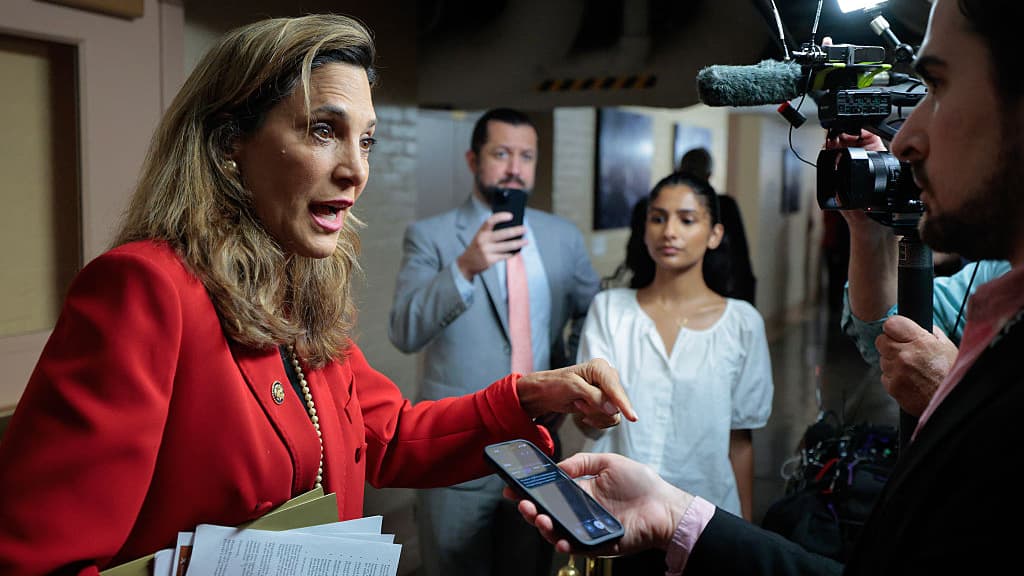
Salazar’s campaign said that the video released on Thursday is the first of multiple ads that it plans to run before the upcoming midterm elections, in which Salazar is facing off against Democratic nominee Eliott Rodríguez. Both Salazar and Rodríguez are Cuban American, and previously worked as journalists.
The Cook Political Report indicates that Salazar, a three-term Congresswoman, is expected to hold on to her seat come November, rating it as “Likely Republican.”
In the district Salazar represents, the foreign-born population makes up more than 54% of the total population—one of the largest proportions of all the districts in the lower chamber.
Thursday’s ad isn’t the first time that Salazar has expressed concerns about the Trump Administration’s immigration enforcement efforts. Earlier this week, she responded to reports that Luis Galeano, an exiled Nicaraguan journalist whose U.S. asylum application has been pending for years, had been detained by federal immigration agents.
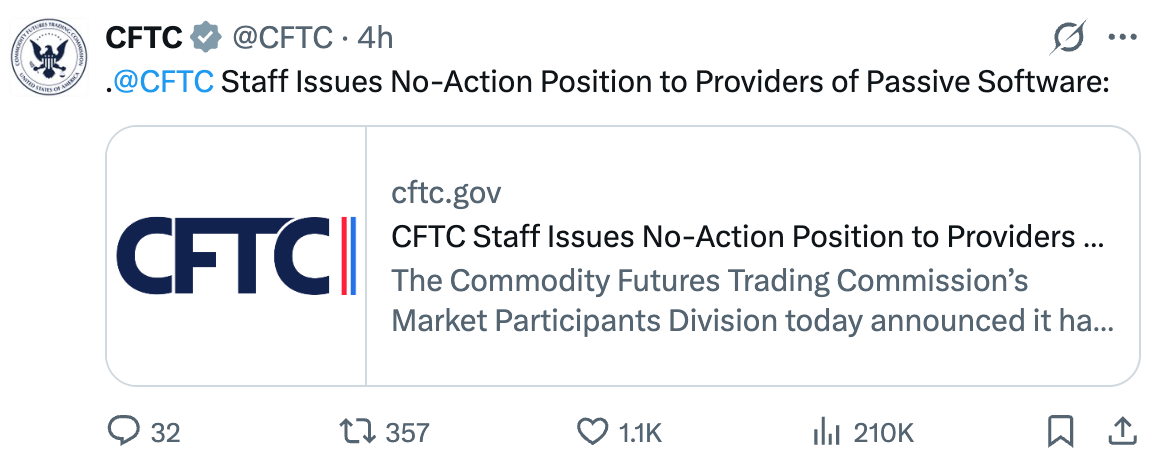
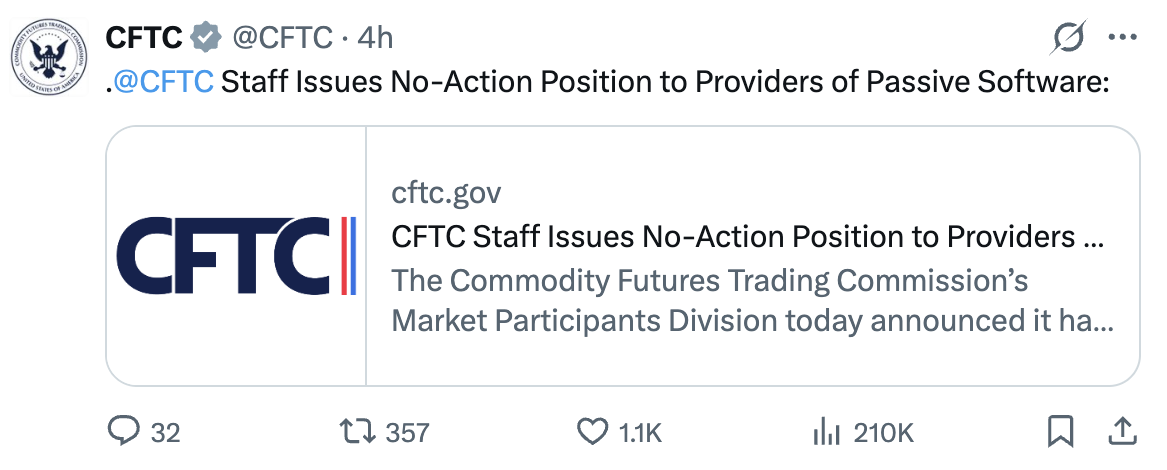
The Commodity Futures Trading Commission (CFTC) has expanded regulatory relief for “passive software” providers that connect users to regulated derivatives firms and exchanges.
In a no-action position issued Thursday, the agency’s Market Participants Division said it would not recommend enforcement against qualifying providers or their personnel for failing to register as introducing brokers or associated persons when facilitating trading with CFTC-registered firms and exchanges.
The position could make it easier for crypto wallets and other apps to offer access to regulated derivatives, including perpetual contracts and prediction markets, without becoming CFTC-regulated introducing brokers themselves.
Source: CFTC
To qualify, providers must meet conditions limiting their role in transactions, including restrictions on exercising discretion over users’ orders.
The action extends a similar position granted to Phantom Technologies in March for its self-custodial crypto wallet software. The earlier letter allowed Phantom, subject to certain conditions, to provide and market software connecting users with registered futures brokers and exchanges without registering as an introducing broker.
Phantom and the Hyperliquid Policy Center also pushed for broader protections in July, asking the CFTC to shield non-custodial wallet providers from introducing broker requirements and clarify how existing rules apply to blockchain developers and regulated derivatives firms using onchain infrastructure.
Related: Bernstein expects ‘aggressive’ rulemaking from SEC, CFTC, following CLARITY Act failure
Regulators move quickly after CLARITY Act setback
The move from the US regulator comes two days after the CLARITY Act failed to advance in the Senate, with a cloture motion receiving 49 votes, short of the 60 needed to proceed to debate.
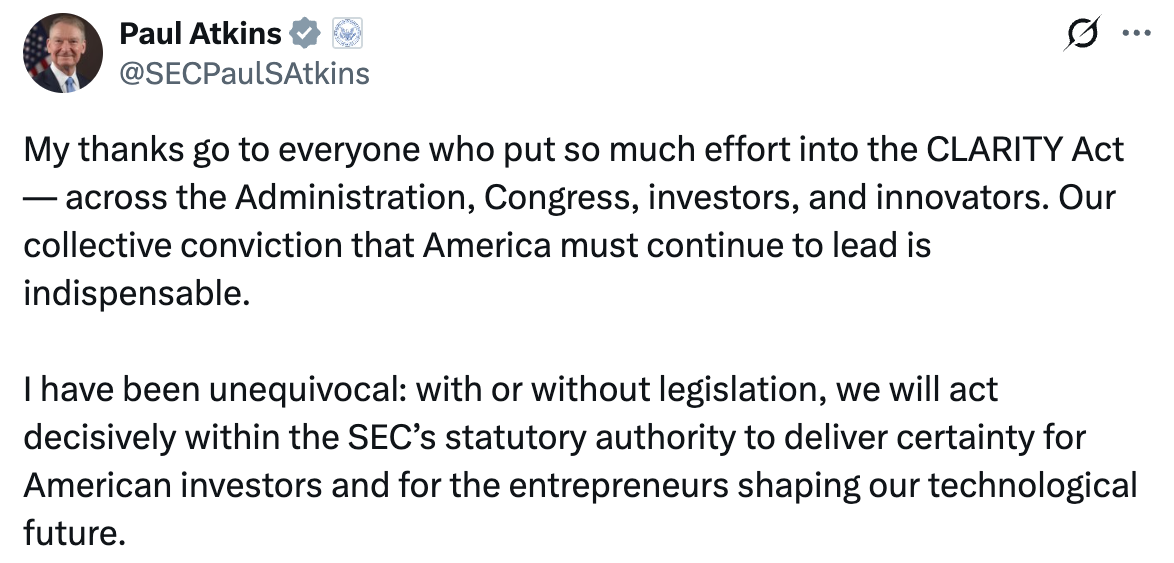
Following the vote, CFTC Chair Michael Selig and Securities and Exchange Commission Chair Paul Atkins signaled Wednesday that their agencies would continue moving forward on crypto regulation under their existing authority.
“The CFTC is locked in and ready to ship its rules for the new frontier of finance,” Selig said in a post on X, while Atkins said the SEC would act “with or without legislation” to provide regulatory certainty for digital assets.
Source: Paul Atkins
On Thursday, the agencies began following through. Alongside the CFTC’s no-action position, the SEC approved a temporary exemption allowing qualifying platforms to facilitate limited onchain trading of tokenized US stocks through permissioned automated market makers and liquidity pools.

A few months later, his daughter, who is now 33, was diagnosed with melanoma in her ear and was asked about her family history of cancer. She joined a study and provided samples to look for markers of cancer, and while she did not carry many common cancer mutations, she did carry T790M. But for now, there are no evidence-based recommendations to follow when it comes to how she should be monitoring her lungs for signs of cancer. “That’s why I’m pushing for how we can screen younger people, knowing that she has a genetic risk, and what low-dose screening she should get,” says McKenna. “If something were to appear, she can catch it at an early stage, perhaps Stage I, and not go through Stage IV, because there are not as many options, and the outlook is not as positive.”
LoPiccolo is conducting a study, called INHERIT, which includes people from across the country with any inherited genetic risk for lung cancer, including the EGFR T790M mutation. Doctors will work with each participant to understand their family history of lung cancer, smoking history, genetic profile, and any environmental exposures that might contribute to lung cancer before coming up with a personalized plan for how often they should be screened with low-dose CT scans to look for cancer. “The goal is to use CT screening to detect lung cancer at the earliest, most curable stage when it can be removed or cured,” says LoPiccolo.
XRP has fallen below the key $1.30 level after losing 7.3% on Tuesday, while Dubai-based crypto investor Royal Kane has ruled out buying the token because of its $81 billion market value.
Summary
- XRP has dropped 23% from its recent high near $1.68.
- Royal Kane cited XRP’s large market capitalization in rejecting an investment.
- The Federal Reserve raised interest rates by 25 basis points on Sep. 16.
- The CLARITY Act failed to advance after a 50-49 Senate vote.
Royal Kane, a Dubai-based crypto investor, wrote on X that he would not invest in XRP at its present valuation, pointing to the token’s market capitalization as the main reason for his position.
“I would never invest in Ripple at this stage because its market cap is already too large,” Kane said.
Market data included in the source report placed XRP near $1.30, with a market capitalization of about $81.68 billion and 24-hour trading volume of $4.12 billion. The token was also down 29.18% since the start of 2026.
Kane argued that assets with lower valuations may offer more room to benefit from a strong investment story. He cited Solana’s earlier “Ethereum killer” label, the community growth surrounding Pepe, and Zcash’s adoption case as examples of narratives that attracted traders.
Rather than presenting a price target for XRP, he told investors to “find a coin with a compelling narrative for the coming years.”
XRP price has dropped 23% from its recent peak
Selling pressure has erased much of XRP’s latest rebound, pulling its price from a recent high near $1.68 to approximately $1.30. A move between the two levels amounts to a decline of about 23%.
The retreat followed a stronger period for XRP in August, when the token climbed from around $1 to a monthly high near $1.70. According to September escrow data, XRP gained 28.5% in August even after Ripple released 1 billion tokens from escrow on Sep. 1.
Ripple’s scheduled release was valued at about $1.38 billion at the time. The company historically returns much of each monthly allocation to escrow, limiting the amount that can enter circulation.
Institutional demand also supported the August rally. The report found that U.S. spot XRP exchange-traded funds attracted $153.55 million during the month, including $150.28 million over its final two weeks. XRP Ledger payment volume rose 521% in one week, driven by larger transfers rather than an increase in transaction count.
Price action has since reversed as traders have reacted to tighter U.S. monetary policy and another delay in federal crypto legislation. XRP fell 7.3% on Tuesday and traded around $1.31 after the Senate vote, according to figures cited in the source report.
Kane’s criticism focuses on XRP’s $81B valuation
At an estimated $81.68 billion, XRP’s market capitalization remains one of the largest in the digital asset market. Kane views that size as a limit on potential returns because the token would require substantial new capital to produce the percentage gains available to smaller assets.
His comments also included a claim that Ripple has “no products or revenue whatsoever.” Ripple is privately held and does not publish the same quarterly financial statements required from a U.S.-listed public company, leaving investors with less information about its revenue than they would receive from an exchange-listed business.
However, the company publicly operates several products and services. Its businesses include Ripple Payments, the RLUSD stablecoin, and Ripple Prime, the institutional brokerage formed after its acquisition of Hidden Road. Ripple has also announced custody and treasury services for corporate clients.
Kane’s investment thesis therefore separates XRP’s market value from his assessment of Ripple’s commercial operations. XRP is the native asset of the XRP Ledger, while Ripple is a private technology company that holds a substantial quantity of the token and develops services that can use the network.
The distinction matters because buying XRP does not provide equity ownership in Ripple, a claim on the company’s revenue or voting rights over its business. XRP holders instead gain exposure to the market price of the token, which can respond to network activity, liquidity, speculation, regulations, and Ripple-related developments.
Fed rate increase has raised pressure on risk assets
Macroeconomic conditions have added another source of uncertainty for XRP and other cryptocurrencies. On Sep. 16, the Federal Reserve raised its benchmark interest rate by 25 basis points, taking the target range to 3.75% to 4%.
The unanimous decision delivered the first U.S. rate increase since 2023. Projections released by the central bank showed that 12 of 18 officials expected additional increases during the year, according to the source report.
Higher interest rates can increase returns on U.S. government debt and money-market products, giving American investors more yield-bearing alternatives to cryptocurrencies. Digital assets do not provide a fixed return, and tighter financial conditions can reduce demand for speculative investments.
Before the decision, U.S. inflation data had strengthened expectations for a rate increase. As crypto.news previously reported, annual inflation reached 3.4% in August, while consumer prices rose 0.4% from the previous month.
Energy costs rose 2.1% during August, with gasoline prices climbing 3.9%. Core consumer prices, which exclude food and energy, increased 0.3% on the month, exceeding the 0.2% estimate cited in the report.
Prediction-market traders raised the probability of a quarter-point increase to 81% after the inflation release. Although such contracts represent wagers rather than official Fed guidance, their pricing showed that traders had largely prepared for higher borrowing costs before the meeting.
CLARITY Act defeat has left XRP policy questions open
Regulatory pressure increased on Sep. 15 when the U.S. Senate rejected cloture on the Digital Asset Market CLARITY Act. The motion received 49 votes in favor and 50 against, falling 11 votes short of the 60 needed to open formal debate.
The vote carried particular importance for XRP because the legislation would divide oversight responsibilities between the Securities and Exchange Commission and the Commodity Futures Trading Commission. Its treatment of network tokens could affect how XRP and other crypto assets are classified in U.S. markets.
Hours before the vote, Senate Republicans circulated a revised 635-page draft that added language covering ancillary assets. The proposal described an ancillary asset as a network token whose value depends on the managerial or entrepreneurial work of an originator or a related party.
Under the draft’s wording, XRP could have been treated as a digital commodity in secondary-market transactions regardless of the quantity controlled by Ripple. The proposal did not receive enough support to move into debate, leaving the existing legal and regulatory framework in place.
XRP still benefits from the 2023 ruling by U.S. District Judge Analisa Torres, who found that Ripple’s programmatic XRP sales on public exchanges did not constitute securities transactions. The same ruling found that the company’s direct institutional sales violated securities law, creating different treatment based on how the tokens were offered.
Negotiations have not ended despite the failed vote. Seven Senate Democrats have since reopened CLARITY Act talks and said the rejected cloture motion was “not the end” of the legislative effort.
The Senate’s official roll call shows that 49 lawmakers supported advancing the measure while 50 opposed it, meaning any renewed attempt would require at least 11 additional votes to reach the cloture threshold.
S&P Global agreed Thursday to buy OpenZeppelin, whose open-source code sits beneath most of the world’s largest stablecoins. It is the ratings giant’s second crypto deal in three days.
Neither company disclosed a price. The purchase hands S&P a grip on the code that moves tokenized money, not just the data describing it.
The Code Running Beneath Most Stablecoins
OpenZeppelin has published free smart contract building blocks since 2015. Smart contracts are programs that move money on a blockchain without a bank in the middle.
The firm says its code has carried more than $37 trillion in value. It has run over 900 security reviews and found more than 10,000 flaws.
“OpenZeppelin’s standards, technology, and expertise already power the infrastructure behind the world’s leading stablecoins, tokenized funds, DeFi protocols, and onchain markets,” Chief executive Demian Brener said that in the company’s statement.
He keeps his job and will report to S&P Global Ratings president Yann Le Pallec.
S&P Global Has Spent a Year Rating Crypto Products
The company issued the first credit rating of a DeFi protocol, Sky, and the first stablecoin stability assessments. It also tokenized the S&P 500 with Centrifuge, then built a hybrid crypto-equity benchmark.
Each of those judged a product. Buying OpenZeppelin pushes the company into judging the code underneath.
That shift carries history. S&P paid $1.375 billion in 2015 to settle Justice Department claims that it defrauded investors over its crisis-era mortgage ratings.
Two Deals in Three Days Buy Two Different Layers
On Monday, S&P led a $110 million funding round in Kaiko. The Paris firm sells pricing data across more than 150 exchanges and protocols. BNP Paribas, Nasdaq Ventures and Royal Bank of Canada joined the round.
Kaiko measures what tokenized assets are worth. OpenZeppelin checks whether the code holding them holds up.
Both bets meet the same awkward fact. CoinGecko studied 245 incidents since January 2025. Protocols that had already cleared independent reviews accounted for 88% of everything stolen. Those breaches cost $3.63 billion through July 2026, which means audited protocols still lose funds.

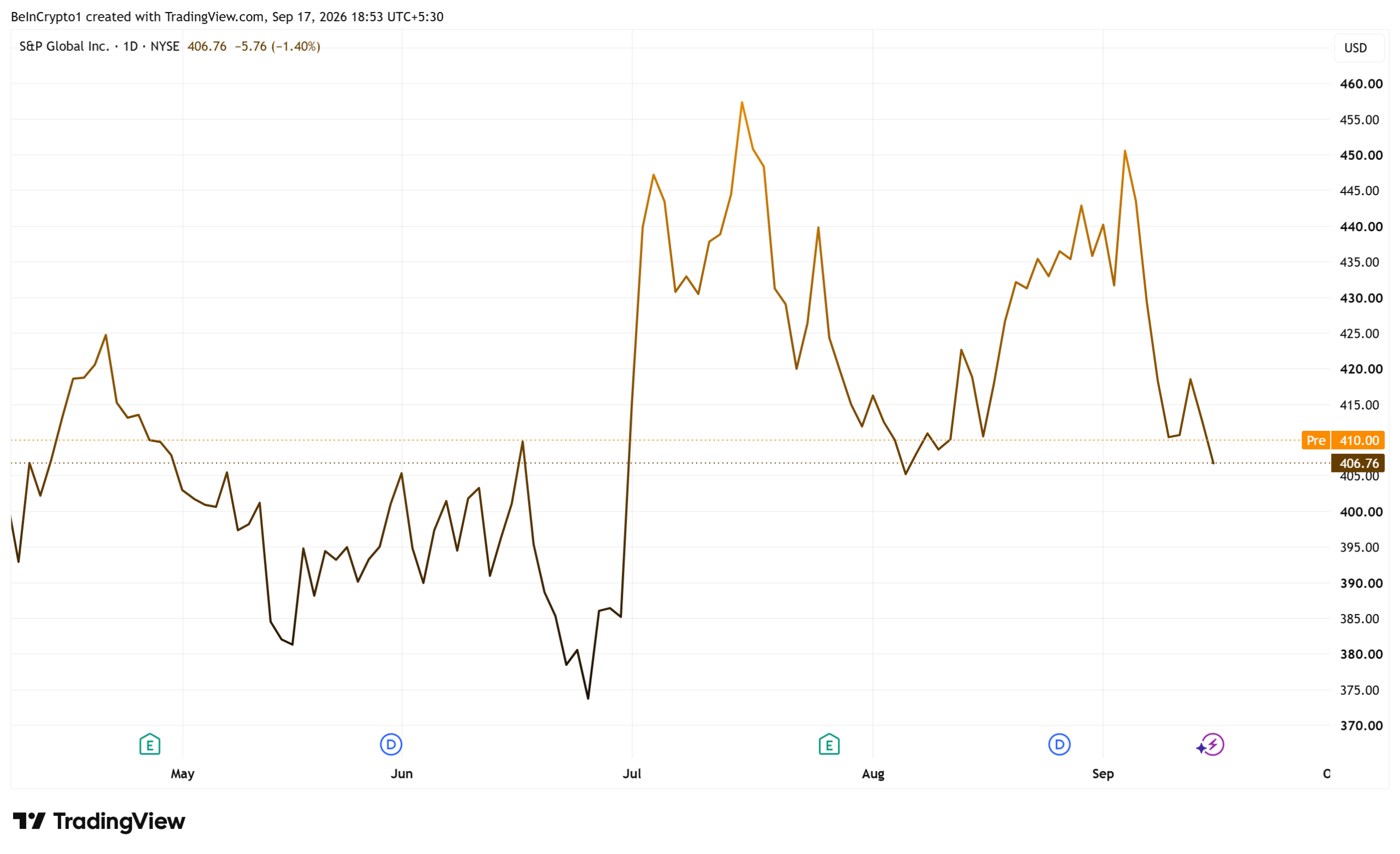
Investors have been cooler on the buyer. SPGI closed at $406.76 on September 16, near the floor of a 52-week range topping out at $552.25.
The post S&P Global Buys the Auditor Behind Most Stablecoins: Why Now, and Why Twice? appeared first on BeInCrypto.
AI company CoreWeave has lost one-third of its value since the day it joined the Nasdaq 100 index, despite doubling revenue in the second quarter and boasting of $100 billion in backlogged revenue.
As common shareholders have suffered, insiders have been steadily selling.
Since Nasdaq 100 indexation became effective on June 22, 2026 and forced retirement savers to passively buy CoreWeave shares through hundreds of Nasdaq 100-linked funds around the world, executives and board members at the company have dumped over $600 million worth of stock.
- CEO Michael Intrator has liquidated over $320 million
- Co-founder Brannin McBee has sold $220 million
- Kristen McVeety, general counsel and corporate secretary, has sold over $22 million
- The company’s CSO, CFO, COO, and CAO have sold a combined $36 million
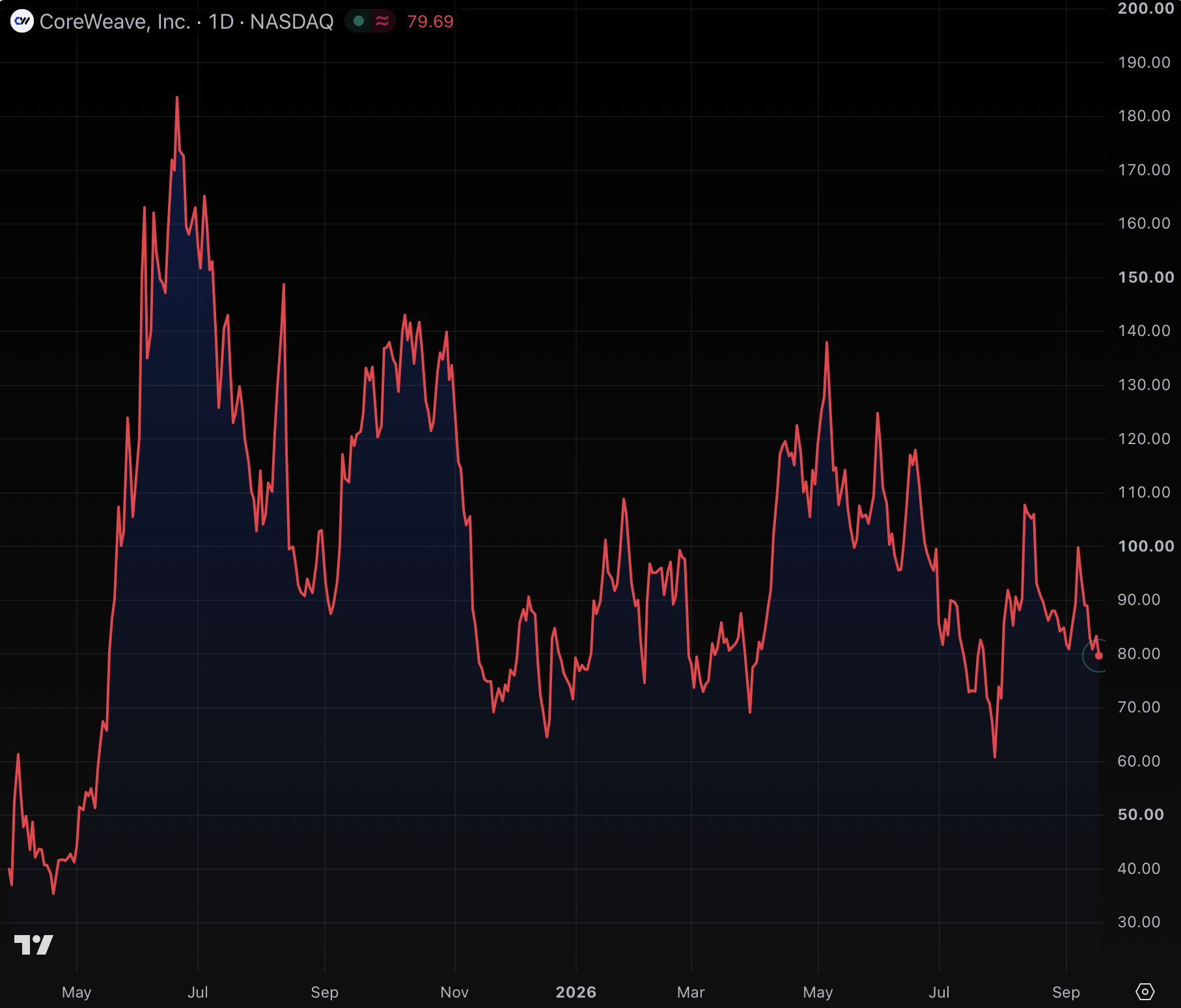
CoreWeave’s stock hit its all-time high of $187 on June 20, 2025, almost a year before it became a constituent of the Nasdaq 100. However, it’s been declining for 15 months, including double-digit losses for retirees who waited for Nasdaq committee members’ de facto blessing this summer.
Nasdaq announced its rebalance favoring CoreWeave on June 11, 2026, effective June 22. The stock opened that day above $119, yet it trades near $80 today.
Nasdaq 100 tapped CoreWeave to lose retirement savings
The company satisfied all of the technical criteria for entry, and seemed to be a decent choice from a fundamental perspective.
It claimed to have contracted revenue with a backlog reaching $104 billion, with billions of dollars in fresh commitments that have arrived since July.
With this seemingly enviable business, CoreWeave houses racks of Nvidia GPUs in leased data centers and sells computational capacity to Meta, OpenAI, and other AI labs.
There is just one problem. Nvidia’s chips lose value fast amid high heat operation and, more importantly, endless waves of new models from fabricators. CoreWeave must account for depreciation, which has a devastating drag on its profitability.
Read more: Anthropic’s non-existent blockchain shares are tripping up investors
Earnings before depreciation
In the second quarter alone, depreciation and amortization of its AI equipment exceeded $1.3 billion, a staggering 54% of revenue. Worse, the heavily indebted company had to pay interest on its debt pile of $640 million, up from $267 million a year earlier.
Those two accounting lines consumed more than three-quarters of every dollar the company generated.
The company is also spending far more than it generates. Full year capital expenditure guidance sits at $35-39 billion — far higher than CoreWeave’s revenue guidance of $12.4-13.2 billion.
In other words, the fast-growing, cutting-edge company plans to spend roughly $3 for every $1 it plans to earn.
Free cash flow in the second quarter came in at negative $5.7 billion.
CoreWeave’s buildout has been financed almost entirely with borrowed money. Total indebtedness grew from $7.9 billion to $21.4 billion by the end of 2025, and now exceeds $35.6 billion.
The business isn’t short of demand for its services. It seems to be short of a business that can transform that demand into profit faster than Nvidia’s chips lose value and its lenders collect interest.
As the stock has declined for over 15 months, the people running the company have kept selling.
Got a tip? Send us an email securely via Protos Leaks. For more informed news and investigations, follow us on X, Bluesky, and Google News, or subscribe to our YouTube channel.
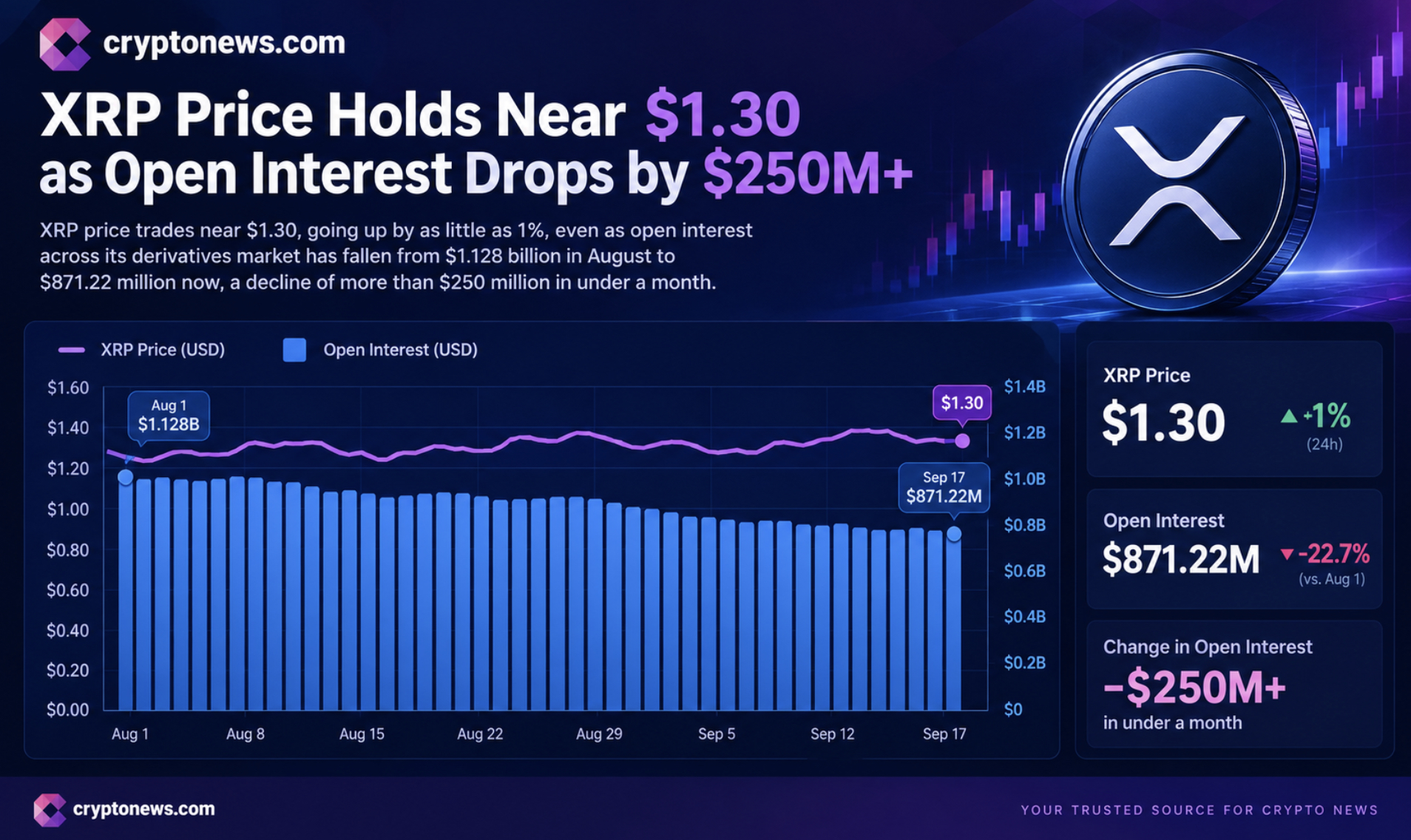
XRP price trades near $1.30, going up by as little as 1%, even as open interest across its derivatives market has fallen from $1.128 billion in August to $871.22 million now, a decline of more than $250 million in under a month.
That gap between a resilient spot price and a shrinking futures book forces a specific question: is this a genuine retreat of bullish conviction, or a leverage reset happening alongside steady spot demand?

Trade XRP on Bybit and Get a Chance to Win Our $1,000 USDT Airdrop
Why Falling Open Interest Does Not Yet Confirm a Bearish Turn?
A drop in open interest typically means traders are closing futures positions, getting liquidated, or repositioning ahead of a move. This particular decline does not automatically signal a bearish shift in Ripple’s token; it may simply reflect traders cutting exposure rather than committing to a directional bet.
The venue-level numbers back that reading. Binance open interest fell from $558 million to $423 million, while Bybit dropped from $379 million to $291 million over the same stretch, a broad-based contraction rather than a single-exchange anomaly.
What keeps this from reading as outright capitulation is positioning and funding. Binance’s OI-weighted funding rate remains positive, meaning long exposure still outweighs short exposure among the contracts that are still open. The overall 24-hour long/short ratio sits at 0.9904, close to balanced, but that headline number masks a lopsided picture among larger accounts.
Binance and OKX account-level data show traders leaning long by a factor of roughly 2.5 to 3, and even Binance’s top traders remain net long by both account count and position size. Liquidations over the past 24 hours totaled $9.67 million, split almost evenly between $4.87 million in longs and $4.80 million in shorts – hardly a one-sided flush.
The 12-hour window told a different story: $500.96K in long liquidations against just $148.49K in shorts, lining up with a stretch of price weakness that preceded today’s bounce. That imbalance matters for timing but doesn’t override the broader positioning picture once the 24-hour window is considered.
Spot demand adds another layer to the deleveraging narrative. XRP ETFs pulled in $3.5 million on September 16 through Franklin Templeton’s XRPZ fund, extending a ten-day inflow streak even as the price dipped that day. Bitcoin ETFs saw $295 million in outflows, and Ethereum ETFs lost $224 million over the same period, making XRP one of the few crypto ETF categories still attracting net buyers.
Context from earlier in September adds nuance without contradicting the current picture. A September 7 report noted Binance funding had briefly turned negative that week following heavy liquidations, before the positive readings referenced in today’s data returned. ‘
Separately, CryptoQuant contributor Amr Taha flagged an “unusual structure” around that same date, where rising open interest coincided with persistently negative perpetual CVD, a reminder that open interest and taker-side flow don’t always move in lockstep, and that today’s contraction sits within a market that has already whipsawed through several leverage cycles this month.
Discover: The Best Token Presales
The $1.29 XRP Price Support Test That Could Put $1 Back in Focus
XRP is currently sitting mid-range inside an 8-hour parallel channel, bounded by a descending resistance line and a descending support line that have contained price for weeks.
On the weekly chart, that compression maps directly onto two moving averages: the 50-week EMA resistance at $1.52 and the 20-week EMA support at $1.29.

The 0.382 Fibonacci retracement level lines up almost exactly with that 20-week EMA near $1.29, reinforcing it as the level bulls need to defend. At $1.3059, XRP is trading just above that zone, inside a channel midline roughly between $1.30 and $1.35.
A daily or weekly close below $1.29 would break both the 20-week EMA and the Fibonacci confluence at once, putting the psychological $1 support zone back in play. On the upside, clearing $1.40 would break the descending channel resistance and open a path toward $1.60–$1.70, closer to the 50-week EMA.
For a closer look at how this range has formed, this technical outlook near the same $1.30 area covers the same compression from a different angle.
Earn $50 and Enter $300K Prize Draw on EdgeX
The post XRP Price Holds Above $1.29 as Futures Leverage Resets appeared first on Cryptonews.
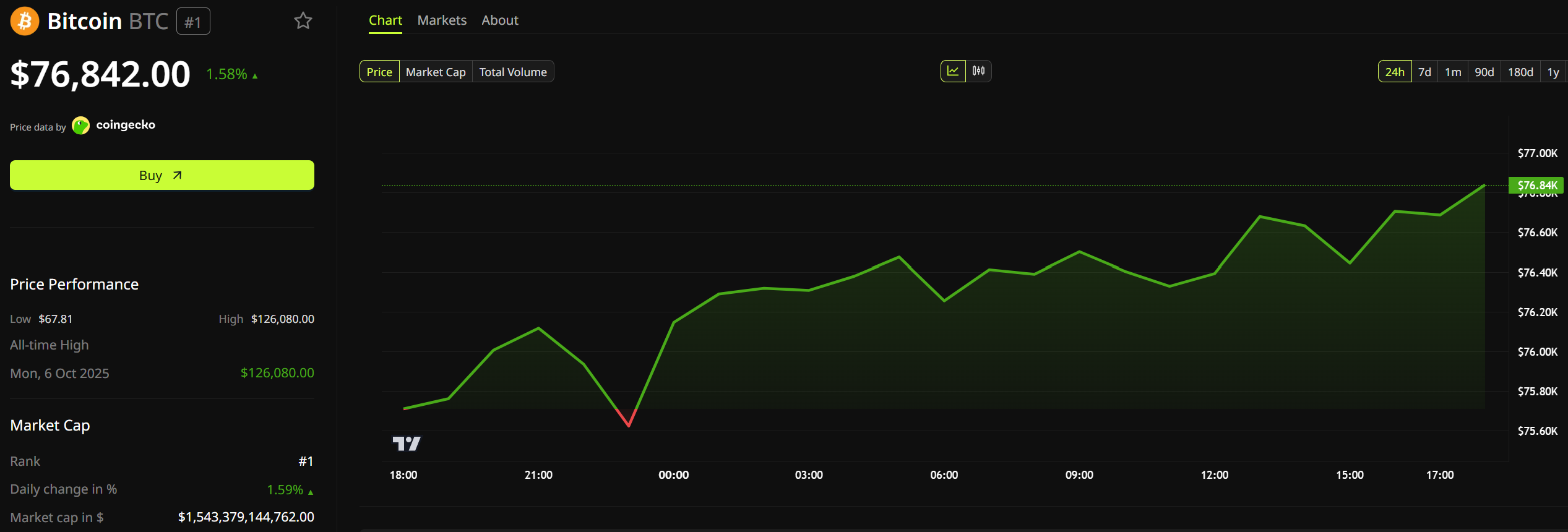
Bloomberg senior ETF analyst Eric Balchunas says Bitcoin ETFs will eventually hold three times as much money as gold ETFs. At today’s levels, that is a huge call.
Global gold ETFs held about $615 billion at the end of August. Three times that would put Bitcoin ETF assets near $1.85 trillion, roughly 19 times from current levels.
If the Bloomberg analyst is right, how much will Bitcoin price potentially gain?
3 Reasons Why Bitcoin ETFs Can Catch Gold
Balchunas points to three forces behind his forecast:
- Bitcoin has the younger investor base. A 2026 Pew survey found 26% of Americans aged 18–29 and 28% aged 30–49 had used crypto, compared with just 10% of people over 50. Balchunas expects that younger group to control more wealth over time.
- Institutional money still has room to grow. Professional investors accounted for about 21% of US Bitcoin ETF assets in Q1. Investment advisers held the equivalent of 150,000 BTC, while bank exposure had quadrupled year-on-year.
- Bitcoin ETFs have a powerful distribution machine. US funds have attracted about $54.6 billion in net inflows since launch, helped by issuers including BlackRock and Fidelity pushing Bitcoin through traditional investment channels.
What Would That Mean for Bitcoin’s Price?
There is no clean formula. ETF assets rise through both new investment and Bitcoin price gains. But simple scenario math shows the scale required. US funds currently hold about 1.26 million BTC.
If their Bitcoin holdings doubled to 2.52 million coins and ETF assets reached $1.85 trillion, Bitcoin would need to trade near $732,000.
If ETF holdings tripled to 3.78 million BTC, the implied price falls to about $488,000.
That gives an illustrative range of roughly $490,000 to $730,000, or about 6–10 times today’s price.
It is not a price target. Gold ETF assets can keep growing, and Bitcoin funds could accumulate far more coins.

But Balchunas’ prediction, if it happens anywhere near current gold valuations, would require a Bitcoin market fundamentally larger than today’s.
The post Analyst Says Bitcoin ETFs Could Triple Gold. What Does It Mean for BTC Price? appeared first on BeInCrypto.
The popular privacy coin has once again emerged as a top performer, up double digits in the past 24 hours to briefly touch $1,400 before retracing to $1,330.
ZEC’s bull run has triggered painful losses (albeit some on paper) for traders who previously opened short positions, while several analysts believe the rally is far from over.
‘Moving Like a Steam Train’
Zcash continues to stun the crypto community after hitting a new 10-year high, following a whopping 2,500% explosion over the last year. Our detailed article explains the main factors fueling the pump, and a potential catalyst for the recent surge is the governance update in which holders voted to reduce block-target spacing from 75 seconds to 25 seconds.
X user Crypto Patel explained the development would lead to faster block confirmations that could improve the transaction experience, whereas halving remains part of the planned issuance model.
The rally has caught the eye of many analysts, and the majority think the bulls have no intention of handing control to the bears anytime soon. X user Altcoin Sherpa noted that there was no deep pullback toward $1,000 as they wanted, and it seems like ZEC is building fuel for its next leg up to $1,500-$2,000.
Crypto Bitlord also chipped in, arguing that the privacy coin has been moving like “a steam train” and expecting a massive explosion if the price exceeds $2,000.
Meanwhile, the move up has taken its toll on some traders who previously opened too-risky positions. Lookonchain revealed that one market participant closed his long and flipped short on 767.2 ZEC ($1 million) several hours ago, only to get fully liquidated shortly after.
For his part, Garret Jin is now sitting on a paper loss of more than $26 million. After adding to his bearish bet, he now holds a 37,760 ZEC short position worth about $51.5 million, with a liquidation price of approximately $2,631.
Time to Take a Break?
Two important indicators suggest that a correction may replace ZEC’s up-only mode. The first one is the asset’s exchange netflow. Over the past several days, inflows have significantly surpassed outflows, signaling that some investors have abandoned self-custody for centralized platforms, increasing immediate selling pressure.

The second element is ZEC’s Relative Strength Index. Traders often use this technical tool to spot potential reversals, and it ranges from 0 to 100. Readings beyond 70 suggest the asset has entered overbought territory and could be due for a pullback, while anything below 30 is typically considered a bullish zone. Currently, the ratio stands just above the bearish figure.

The post Zcash (ZEC) Soars to a Fresh 10-Year Peak: Further Gains Ahead or Time to Cool Off? appeared first on CryptoPotato.

#shorts #financialeducation #finance

F-16 US fighter jet crashes in field and pilot ‘parachutes’ from plane
Nucor projects Q3 earnings between $5.55 and $5.65 per share



-

 Fashion6 days ago
Weekend Open Thread – Corporette.com
-

 Tech4 days ago
The Latest Weird Thing to Play Doom Is the Mapped-Out Brain of a Fruit Fly
-

 Business7 days ago
10 Most-Streamed Songs On Spotify In 2026 So Far, Led By Ella Langley’s Dominant Run On The Charts This Year
-

 Crypto World6 days ago
XAG/USD: Silver’s Short-Term Rally Meets Its Moment of Truth
-

 Crypto World7 days ago
OKX launches 10x OpenAI, Anthropic X-Perps in Europe
-

 Crypto World6 days ago
Diesel Tops $6 a Gallon for the First Time as 28 States Set Records
-

 Crypto World3 days ago
Elon Musk Drops a Bombshell: Grok 5 Could Be the AGI Breakthrough
-

 Crypto World3 days ago
Kraken Lets xStocks Holders Earn Yield Through DeFi
-

 News Videos6 days ago
Facing Financial Fears
-

 Crypto World21 hours ago
US Charges Robinhood Engineers Over Crypto Listing Trades
-
Crypto World7 days ago
Ethereum Price Analysis: Consolidation at $2.5K Tests Momentum as On-Chain Activity Surges
-

 Business5 days ago
Rivals Sam Altman and Elon Musk Rally Behind Dario Amodei’s Call for a Slowdown in AI Development
-

 Crypto World5 days ago
Can AI Build a Startup in 72 Hours? Elon Musk's Team Will Livestream the Test
-

 Entertainment6 days ago
News Specials, Movies, Shows, More
-
 NewsBeat3 days ago
‘Sick conspiracy’: Trump says only guardrails AI needs is ‘a strong and smart (High IQ!) president’ in all-caps rant
-

 Crypto World7 days ago
Bitcoin ETFs Pull $167M as 2026’s Best Inflow Run Slows
-

 Crypto World7 days ago
US CPI forecast at 3.4% as tariff risks build
-

 Crypto World6 days ago
Robinhood Chain Never Stopped But its Blobs Did Stop Reaching Ethereum For 14 Minutes
-
 Crypto World4 days ago
New Tesla Roadster Uses SpaceX Tech. Will It Impact the Stock Price?
-
 Entertainment6 days ago
New Horror Movie Officially Earns a Rare Stephen King Recommendation
You must be logged in to post a comment Login