
Business
Why is SoftBank stock climbing today?




Travere Therapeutics EVP Peter Heerma sells $17.8m in company stock

Asia chip, tech stocks track Wall St gains as yields fall


Passage Research focuses on identifying variant perception through a blend of fundamental analysis and alternative data. The research process combines detailed financial modeling with real-time datasets to underwrite earnings power, margin durability, and forward expectations.The author has spent over a decade on Wall Street, most recently spending the last five years working in the hedge fund industry as an analyst. Typical coverage spans consumer, TMT, industrials and special situations, with an emphasis on asymmetric risk/reward and catalyst-driven opportunities.
Analyst’s Disclosure: I/we have no stock, option or similar derivative position in any of the companies mentioned, but may initiate a beneficial Long position through a purchase of the stock, or the purchase of call options or similar derivatives in OHI over the next 72 hours. I wrote this article myself, and it expresses my own opinions. I am not receiving compensation for it (other than from Seeking Alpha). I have no business relationship with any company whose stock is mentioned in this article.
Seeking Alpha’s Disclosure: Past performance is no guarantee of future results. No recommendation or advice is being given as to whether any investment is suitable for a particular investor. Any views or opinions expressed above may not reflect those of Seeking Alpha as a whole. Seeking Alpha is not a licensed securities dealer, broker or US investment adviser or investment bank. Our analysts are third party authors that include both professional investors and individual investors who may not be licensed or certified by any institute or regulatory body.
Business
Australia Considers Banning Smart Glasses in Government Buildings Over Espionage and Data Leak Risks

CANBERRA, Australia — Australia Considers Banning Smart Glasses Government Buildings Espionage threats and sensitive data leak risks as federal authorities evaluate nationwide restrictions on camera-equipped wearable technology across public service workplaces.
In a potential world-first policy intervention at a national government level, federal ministers confirm that the Australian government is examining comprehensive prohibitions on smart glasses inside Commonwealth offices, parliamentary facilities, and administrative departments. The regulatory initiative follows growing security concerns raised by defense intelligence officials and public sector agency heads regarding the rapid proliferation of consumer smart eyewear featuring integrated high-definition cameras, directional microphones, and real-time artificial intelligence processing units. Because modern smart glasses closely resemble standard corrective optical frames, security personnel face mounting operational challenges in identifying devices capable of covertly capturing classified documentation, recording restricted meetings, or streaming live operational feeds to external cloud servers.
National security experts emphasize that wearable computing hardware presents unprecedented operational security vulnerabilities for sensitive government networks.
Public Service Commission Tasked with Whole-of-Government Policy Review
The formal policy assessment centers on establishing standardized workplace rules across all Commonwealth administrative departments.
Public Service Minister Katy Gallagher announced that she officially requested comprehensive advice from the Australian Public Service Commission to determine whether an absolute ban or strict operational guidelines should apply to smart glasses in government workplaces. Current security protocols across high-clearance government environments routinely restrict traditional mobile phones and personal electronic devices; however, existing workplace rules lack consistent definitions for emerging wearable artificial intelligence hardware. Minister Gallagher stressed that while the government acknowledges the utility of digital innovation, protecting sensitive public data and preventing unauthorized audiovisual recordings within official premises remain paramount operational imperatives.
Prime Minister Anthony Albanese endorsed the proactive review, reiterating that the federal government must institute robust digital safety guardrails as consumer technology evolves.
- Formal Policy Mandate: Public Service Minister Katy Gallagher commissioned the Public Service Commission to draft unified workplace hardware rules.
- Covert Capture Vulnerabilities: Embedded cameras and microphones enable unobtrusive capture of physical documents and private conversations.
- Federal Workplaces Targeted: Proposed restrictions focus strictly on Commonwealth government office spaces rather than public consumer spaces.
- Alignment with Prime Minister Objectives: Prime Minister Anthony Albanese framed the policy review around establishing world-leading digital safety standards.
Establishing clear regulatory parameters ensures that administrative security frameworks adapt effectively to low-profile wearable computing devices.
Corporate Sector Roundtable and Broader Private Sector Moves
The government’s internal security review coincides with joint consultations involving major private sector corporate employers.
To address wider workplace integration issues surrounding artificial intelligence and smart hardware, the federal government is hosting a high-level corporate roundtable featuring major enterprise employers, including Telstra, Commonwealth Bank, Microsoft, and AGL. Simultaneously, major commercial operators in the telecommunications and retail sectors—such as Optus—have initiated internal cyber security policy evaluations regarding whether to restrict or ban smart glasses within corporate offices and customer-facing retail locations. Corporate security executives report growing apprehension over intellectual property theft, customer privacy violations, and unauthorized internal data collection executed via wearable cameras.
The parallel actions across public and private sectors demonstrate widespread concern over the friction between consumer convenience and enterprise risk management.
Corporate leadership seeks clear regulatory baselines to prevent data exposure while managing employee device policies.
International Precedents and Growing Defense Operational Scrutiny
Australia’s policy consideration aligns with an expanding global trend of institutional restrictions on recording-capable eyewear.
Internationally, localized bans on smart glasses have already taken effect across sensitive environments, including municipal school systems in Oslo, Norway, and judicial courtrooms across England and Wales. In the military sphere, defense organizations—including units within the United States Air Force—have restricted personnel from wearing smart glasses while in uniform or inside operational bases due to severe open-source intelligence leakage risks. Defense analysts cited instances where auto-uploaded footage from smart glasses exposed military infrastructure details, operational movements, and staging areas to public social media platforms and foreign intelligence collection networks.
These international security incidents highlight how consumer wearable hardware can be exploited for foreign intelligence gathering.
Defense agencies globally view unmanaged wearable sensors as significant vectors for electronic espionage and operational compromise.
Future Implementation Timelines and Regulatory Outlook
As the Australian Public Service Commission prepares its final recommendations, federal departments are bracing for updated workplace compliance standards.
While final legislative decisions remain under active deliberation, security advisors expect the federal government to issue updated security directives barring camera-equipped smart glasses from non-public government zones. Exemptions may be evaluated for public servants requiring assistive accessibility technology, provided devices undergo strict technical verification to ensure wireless transmission modules are disabled. The resulting policy framework is expected to serve as a benchmark for state-level governments and private enterprise boards seeking to safeguard sensitive physical and digital assets.
Navigating the deployment of spatial computing hardware requires establishing rigorous data protection protocols across public sector infrastructure.
Australia’s proactive stance reinforces its reputation as an early adopter of stringent digital governance regulations.

Rubrik CFO Kiran Choudary sells $1.05 million in RBRK stock
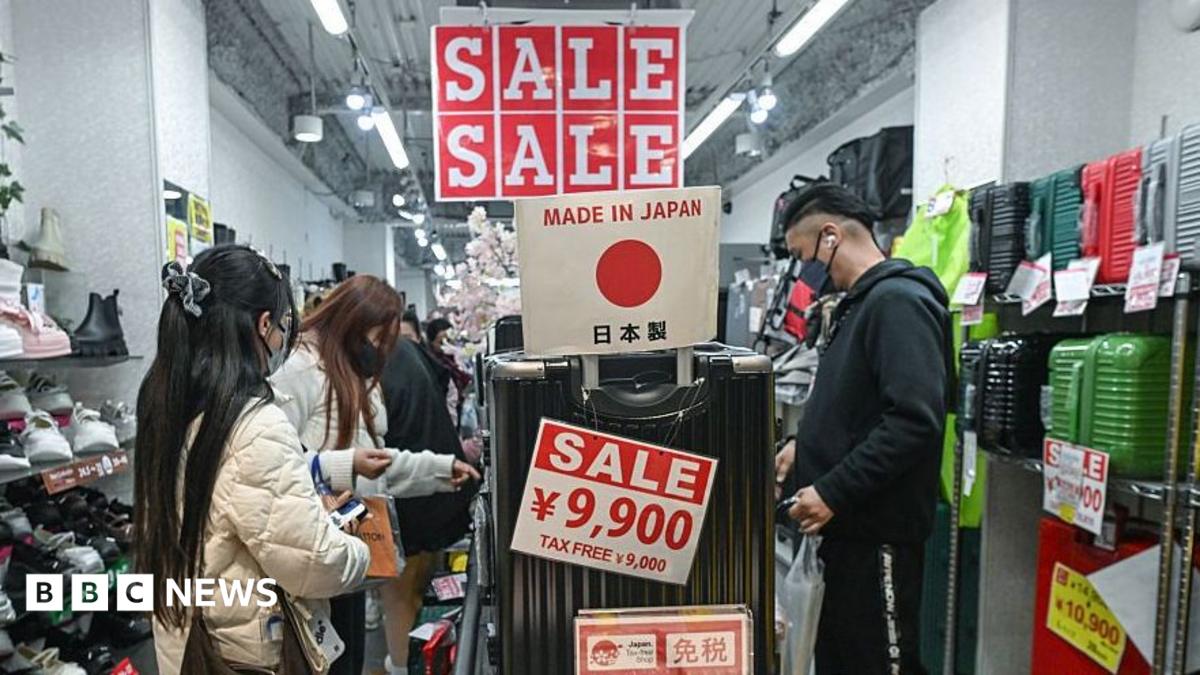
Japan’s central bank has raised its main interest rate to a fresh 31-year high as it continues to move away from decades of ultra-low borrowing costs and as the country faces increasing economic pressures.
In a widely expected move on Friday, the Bank of Japan (BOJ) increased the rate from 1% to 1.25% – a level not seen since 1995.
It comes as major central banks around the world are hiking rates as higher energy prices caused by the Iran war are helping to push up inflation.
On Wednesday, the US Federal Reserve raised its benchmark interest rate for the first time in over three years, while the European Central Bank also increased its borrowing costs earlier this month.
The BOJ has been raising the rate since 2024, when it stood at minus 0.1%. It has now hiked rates six times in the last two and a half years.
Since then the bank has been steadily putting up the rate as it tries to reach a level similar to other major economies.
When a central bank raises rates, the country’s currency usually becomes stronger as it makes the it more attractive to traders.
Japan is facing several economic challenges including a persistently weak yen, rising prices and a shrinking workforce.
Official figures published on Friday ahead of the BOJ announcement showed that inflation eased slightly last month.
Core inflation fell to 1.7% in August from 1.8% the previous month but remains close to the bank’s 2% target level.
While Japan’s inflation rate is not high by international standards, rising prices are a relatively new development in the economy.
Until recently the country had experienced very low inflation or deflation – falling prices – for around three decades.
Global oil and gas prices have risen this year as the Iran war caused major disruptions to shipments through the key Strait of Hormuz shipping route.
Japan is particularly vulnerable to those supply interruptions as it is heavily reliant on energy from the Middle East.
The country’s currency has also been under pressure in recent months.
In August, Tokyo and Washington confirmed that they had jointly intervened to halt a slide in the yen after it fell to a fresh 40-year low.
The coordinated intervention was the first since 2011, when both countries took action together to weaken the yen after the devastating earthquake and tsunami that hit eastern Japan.
Both Japan’s Ministry of Finance and US Treasury Secretary Scott Bessent said at the time that they would not hesitate to conduct more joint interventions in the future.
Bessent has also been ramping up pressure on the BOJ to raise interest rates to help support the yen, calling on its Governor Kazuo Ueda to “do the right thing”.
This breaking news story is being updated and more details will be published shortly. Please refresh the page for the fullest version.
You can receive Breaking News on a smartphone or tablet via the BBC News App. You can also follow @BBCBreaking on X, external to get the latest alerts.
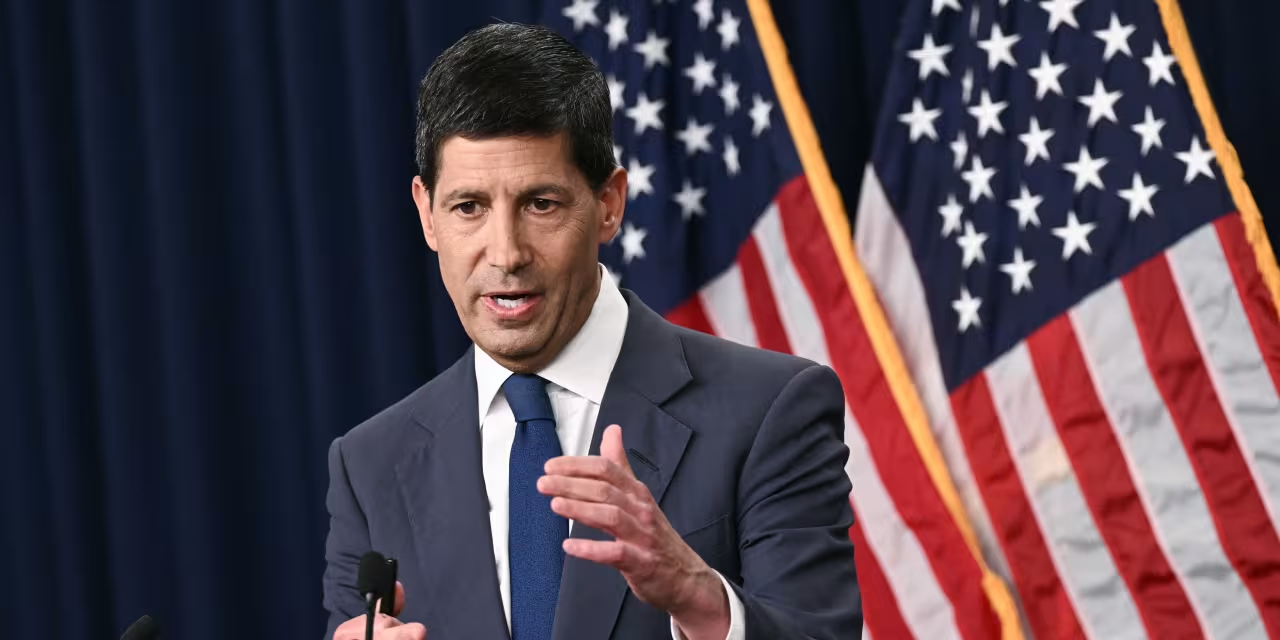
Fed watchers won’t have to wait long to hear from Warsh.
The central bank’s policymaking arm is due to release its interest-rate decision at 2:00 p.m. Eastern today. Warsh will hold a news conference and take questions from the media at 2:30 p.m.
You can watch his comments here and in the video player above.
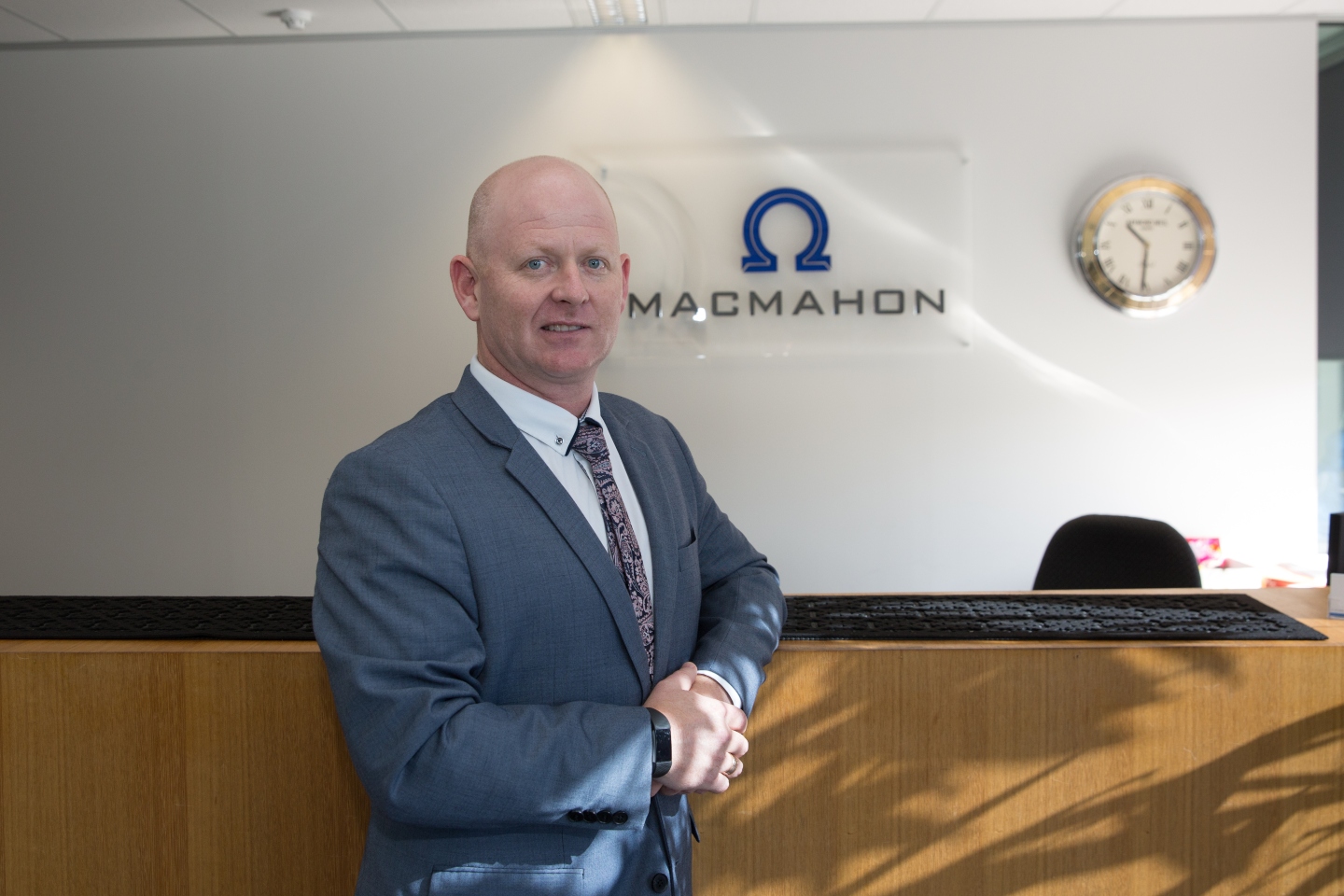
ASX-listed contractor Macmahon Holdings has taken another big step to further diversify and strengthen its mining value chain.
Michael Finnegan-led Macmahon, which has a market cap of $2.13 billion, told the market on Friday it had filed documents to acquire St George’s Terrace-based Aspect Engineering Solutions – in a deal, due to be finalised by the end of the calendar year, which could range between $75-90 million.
The market responded positively early in trade on Friday, with Macmahon shares up 6 per cent to $1.05 as of 10.29am AWST.
Aside from an initial cash consideration package of $30 million upon the deal being completed, Macmahon will also provide a $6 million annual retention payment over five years.
Additionally, earn-out patments between $15 and 30 million are also on the table, in respect to base case or outperformance-based metrics being met over a three to five year period.
Macmahon said it would fund its acquisition through its existing cash reserves, which as of June 30, was $309.6 million, although it has an option of utilising scrip instead of cash in terms of payment for future retention and earn-out payments.
Aspect, which has 295 direct employees and 50 clients across the infrastructure, energy and resources sectors – generated $75 million in revenue during FY26 and has an unweighted work pipeline of approximately $225.8 million.
“Macmahon intends to operate Aspect as a standalone business, retaining its brand, leadership and client-focused operating model while progressively introducing Macmahon governance, systems, project controls and workforce support,” the company said.
Mr Finnegan said the acquisition was critical, as the contractor eyes adding additional mineral-based processing services into its operation.
“The acquisition is expected to be accretive for Macmahon shareholders from inception and has been structured to align consideration with retention and future earnings performance,” he said.
“Importantly, the investment case is attractive on a standalone basis.
“Aspect also provides a platform to accelerate the development of our minerals processing service offering, which is a strategic priority for Macmahon.
“We look forward to working with the Aspect team to realise the opportunities created by bringing our complementary capabilities together.”


I have been involved in the financial world for over 25 years with experience as an advisor, teacher, and writer. I am a full believer in the free-market system and that financial markets are efficient with most stocks reflecting their real current value. The best opportunities for profits on individual stocks come from stocks that are less-widely followed by the average investor or from stocks that may not accurately reflect the opportunities that currently exist in their markets.
Analyst’s Disclosure: I/we have no stock, option or similar derivative position in any of the companies mentioned, and no plans to initiate any such positions within the next 72 hours. I wrote this article myself, and it expresses my own opinions. I am not receiving compensation for it (other than from Seeking Alpha). I have no business relationship with any company whose stock is mentioned in this article.
Seeking Alpha’s Disclosure: Past performance is no guarantee of future results. No recommendation or advice is being given as to whether any investment is suitable for a particular investor. Any views or opinions expressed above may not reflect those of Seeking Alpha as a whole. Seeking Alpha is not a licensed securities dealer, broker or US investment adviser or investment bank. Our analysts are third party authors that include both professional investors and individual investors who may not be licensed or certified by any institute or regulatory body.

TAT’s Nihao Month 2026 campaign, from 15 September, targets Chinese travellers via promotions, cultural events, and KOL trips to boost bookings, spending, and sustain demand through festive periods.
Promoting Chinese Tourism Through Nihao Month 2026
The Tourism Authority of Thailand (TAT) has launched an extensive campaign, Nihao Month 2026, to attract Chinese travelers. Scheduled to commence on 15 September, the initiative includes various promotional activities and incentives. Through strategic partnerships with platforms like Meituan, the campaign aims to entice Chinese tourists with special promotions and exclusive passport privileges. This multifaceted approach is designed to enhance travel bookings, increase visitor spending, and strengthen cultural connections between China and Thailand.
Celebrating Culture and Collaboration
As part of this initiative, TAT will host a Mid-Autumn Festival celebration, a culturally significant event for Chinese visitors. This celebration not only offers tourists a taste of Thai hospitality but also fosters a deeper cultural exchange. Additionally, TAT plans to conduct KOL (Key Opinion Leader) familiarization trips, inviting influential figures to explore Thailand and share their experiences with their vast audiences. Such efforts aim to sustain interest and travel demand well beyond the immediate holiday period.
Sustaining Interest Beyond Golden Week
The Nihao Month campaign is strategically timed to coincide with Golden Week, a peak travel period in China, and extends its reach towards the Chinese New Year in early 2027. By leveraging these key travel windows, TAT hopes to establish lasting engagement with Chinese tourists. This targeted approach is designed not only to stimulate immediate revenue but also to nurture long-term tourism relationships, ensuring sustained growth in visitor numbers from China to Thailand.
Source : TAT expands Nihao Month 2026 to drive China travel and engagement

OpenAI details more cases of AI agents taking unauthorized actions

Why Autistic Children Are More Likely To Run Off Or ‘Elope’
Travere Therapeutics EVP Peter Heerma sells $17.8m in company stock



-

 Fashion6 days ago
Weekend Open Thread – Corporette.com
-

 Tech5 days ago
The Latest Weird Thing to Play Doom Is the Mapped-Out Brain of a Fruit Fly
-

 Business7 days ago
10 Most-Streamed Songs On Spotify In 2026 So Far, Led By Ella Langley’s Dominant Run On The Charts This Year
-

 Crypto World7 days ago
XAG/USD: Silver’s Short-Term Rally Meets Its Moment of Truth
-

 Crypto World7 days ago
Diesel Tops $6 a Gallon for the First Time as 28 States Set Records
-

 Crypto World3 days ago
Kraken Lets xStocks Holders Earn Yield Through DeFi
-

 News Videos7 days ago
Facing Financial Fears
-

 Crypto World4 days ago
Elon Musk Drops a Bombshell: Grok 5 Could Be the AGI Breakthrough
-

 Crypto World1 day ago
US Charges Robinhood Engineers Over Crypto Listing Trades
-

 Entertainment6 days ago
News Specials, Movies, Shows, More
-

 Crypto World6 days ago
Can AI Build a Startup in 72 Hours? Elon Musk's Team Will Livestream the Test
-

 Business5 days ago
Rivals Sam Altman and Elon Musk Rally Behind Dario Amodei’s Call for a Slowdown in AI Development
-
 NewsBeat4 days ago
‘Sick conspiracy’: Trump says only guardrails AI needs is ‘a strong and smart (High IQ!) president’ in all-caps rant
-
 Crypto World4 days ago
New Tesla Roadster Uses SpaceX Tech. Will It Impact the Stock Price?
-

 Crypto World7 days ago
Bitcoin ETFs Pull $167M as 2026’s Best Inflow Run Slows
-

 Crypto World6 days ago
Robinhood Chain Never Stopped But its Blobs Did Stop Reaching Ethereum For 14 Minutes
-

 Crypto World2 days ago
What Is the Status of the U.S.-Iran Peace Talks? Here's What Both Sides Are Saying
-
 Entertainment6 days ago
New Horror Movie Officially Earns a Rare Stephen King Recommendation
-

 Business6 days ago
Marvell: Most Potent Setup Of The AI Factory Decade
-
 Crypto World4 days ago
3 Token Unlocks to Watch in the Third Week of September 2026
You must be logged in to post a comment Login