

Join Mikko Hyppönen and security leaders from the NFL, CHANEL, and Atlassian for a two-hour digital summit on what AI-speed attacks change, what defenders should stop doing, and how to validate, decide, fix, and re-validate at machine speed.
Tech
AMD could hit GPUs and motherboards with a 10% price hike soon, and Ryzen CPUs may follow

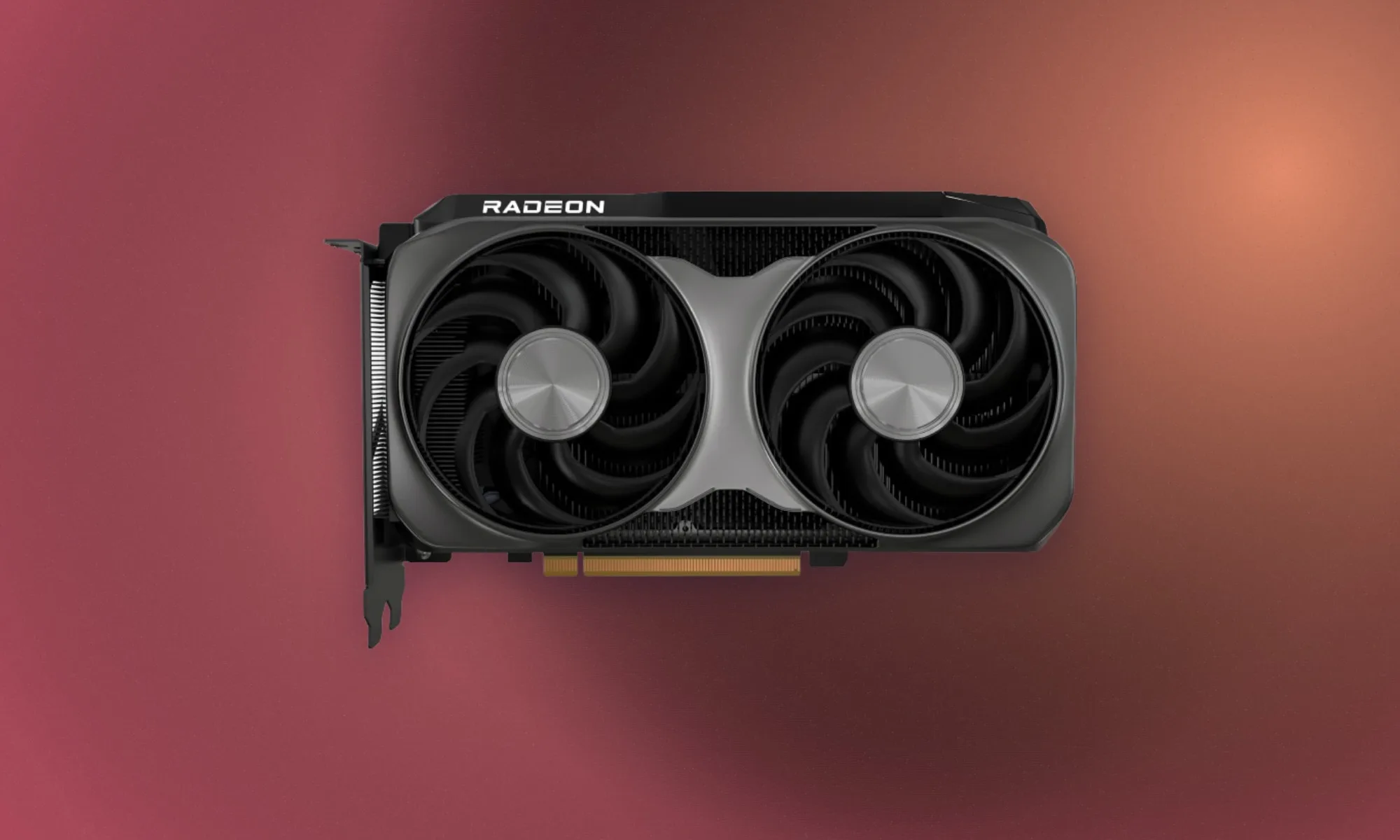
PC parts have spent much of 2026 getting more expensive. AMD may now be preparing another price increase. A new report from ChannelGate (via @harukaze5719) says AMD has notified partners about a roughly 10% increase planned for the fourth quarter. The report names consumer graphics chips, AI accelerators, and motherboard chipsets among the affected products.
Ryzen processors are not explicitly mentioned. There is no confirmation of a CPU price hike yet, although AMD’s reliance on TSMC leaves its client processors exposed to the same manufacturing cost increases.
TSMC is adding another cost problem for AMD
ChannelGate says TSMC has increased its foundry quotations by around 10% as manufacturing costs continue to rise. AMD depends on TSMC for a large portion of its chip production, so higher wafer prices can affect several product categories at once.
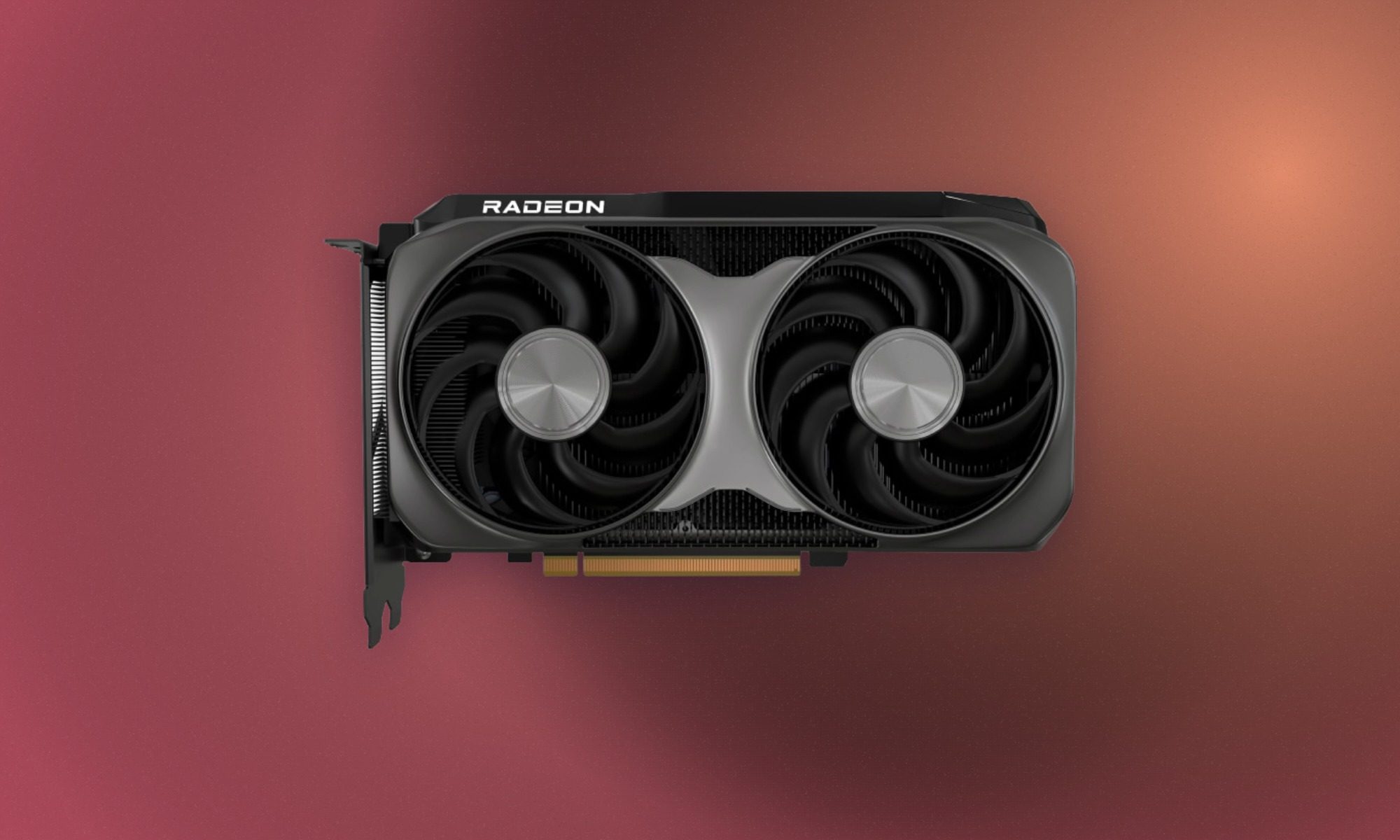
AMD was already dealing with higher costs on the graphics side. Late last year, the company reportedly warned board partners about Radeon price increases of at least 10% as DRAM and GDDR prices climbed. Another report in August said GPU and memory bundles were becoming at least 10% more expensive for board partners.
The latest report points to a different source of pressure. Higher foundry pricing can affect chips across AMD’s portfolio, so even if the report does not mention it, chances are likely that the consumer Ryzen CPUs could soon see their prices go up.
Motherboards were already getting more expensive
The inclusion of motherboard chipsets could make an existing problem worse. A separate supply-chain report from August said the cost of PCBs used in motherboards could rise by at least 50% by the end of 2026. Other components such as capacitors, controller chips, VRMs, and copper heatsinks were also expected to become more expensive.
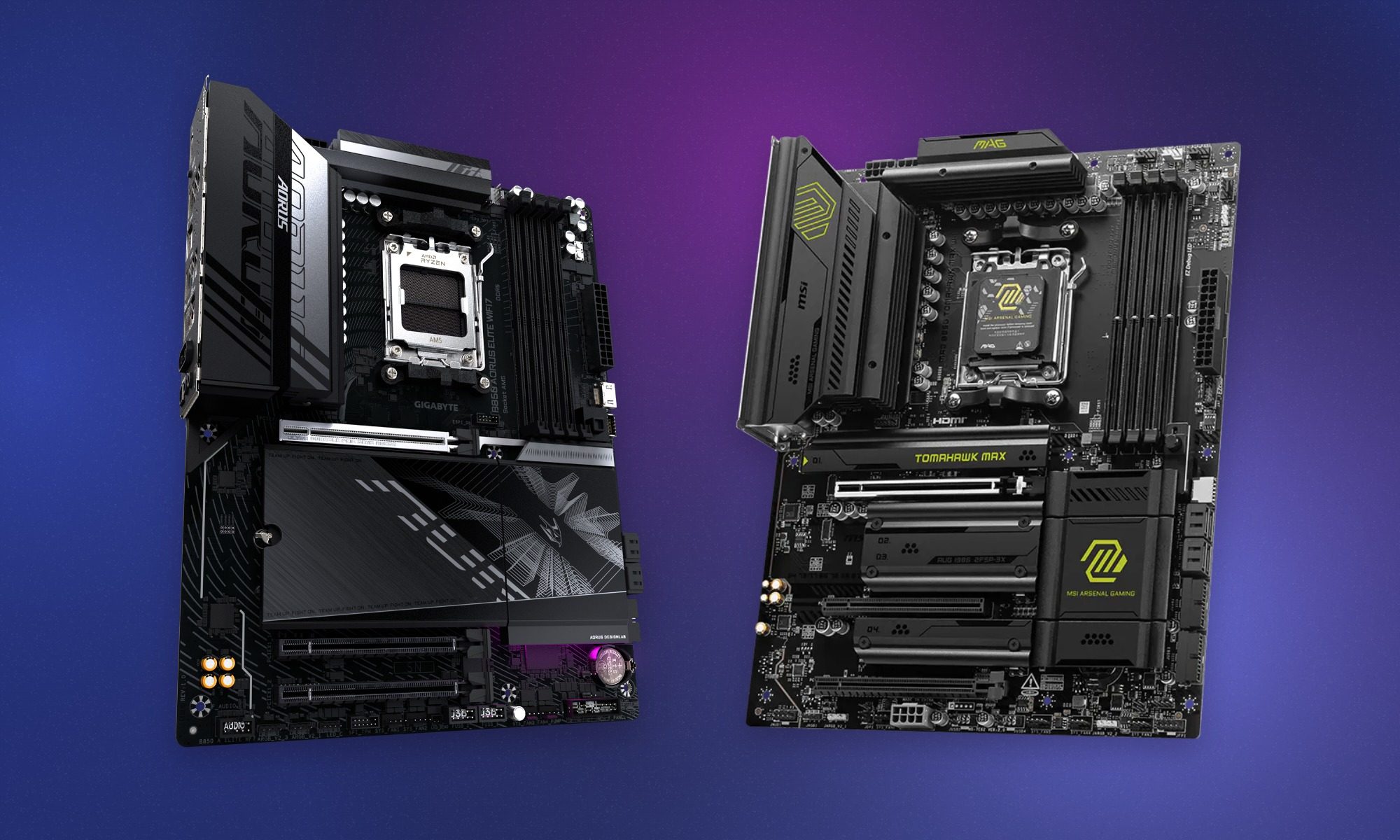
Those increases had already pushed Asus, MSI, and Gigabyte toward higher motherboard pricing. AMD’s reported chipset increase would add another layer of cost if it reaches board manufacturers. CPU buyers are also facing pressure from Intel. The company is reportedly preparing another roughly 10% increase for some client processors starting October 5, following earlier hikes this year.
RAM and SSD prices are already elevated, GPUs have become more expensive, motherboard costs are climbing, and CPUs may now be joining the list. For anyone planning a new PC, the outlook is quite bleak, and waiting much longer may only mean paying more for the same build.
RELATED COVERAGE:
Continue Reading
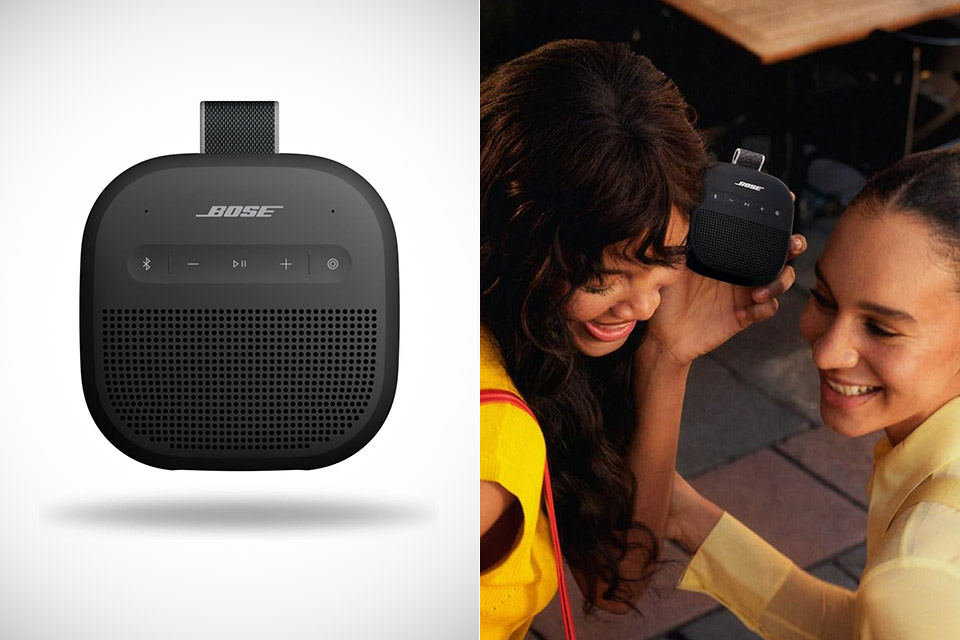
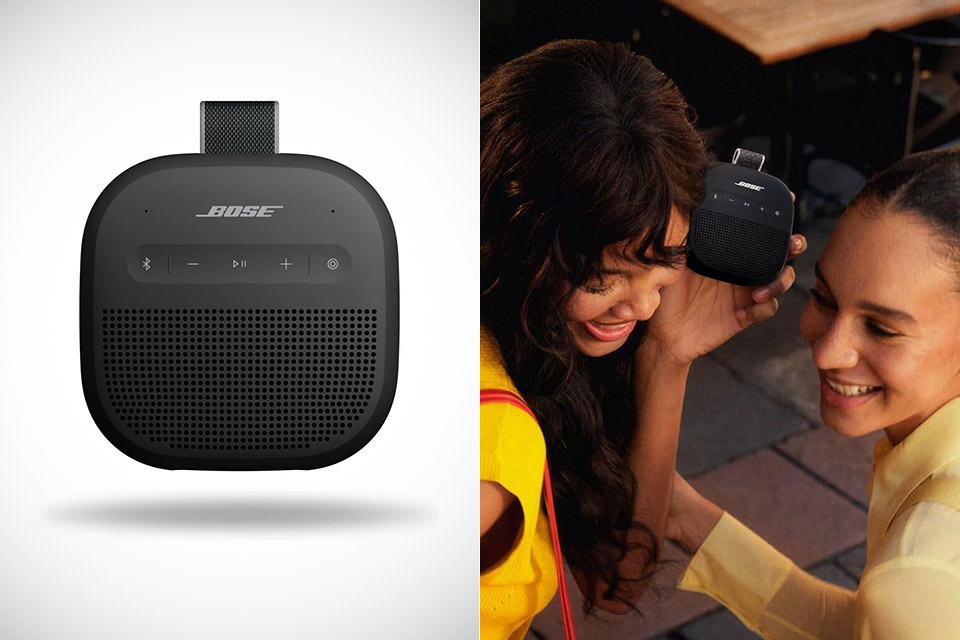
Eight years after the first SoundLink Micro, Bose shipped a second version that fixes the parts people actually complained about. The SoundLink Micro (2nd Gen), priced at $99 (was $129), still sits in a palm, still clips to a strap, and still looks like a rubberized river stone with a metal grille. Size is about 4.1 by 4.1 by 1.7 inches and the weight is just over 11 ounces. That is a little larger and heavier than the 2017 original, and you feel the extra bulk only if you compare them side by side.
Bose claims playback will last up to 12 hours at moderate volume, which is more than double the previous model’s guarantee of 6 hours. Real-world use is closer to 12 hours if the volume is kept at half, and 9 or 10 hours if the volume is increased slightly. A full charge over USB-C takes approximately 3 hours, and you can continue listening while it charges. However, no power brick is included in the box, only a USB-C to USB-A adapter. Bluetooth version 5.4 now supports multipoint, which means you can pair two phones or a phone and a laptop and they will swap back and forth seamlessly, with a reported range of 30 feet.
Sale

Bose SoundLink Micro Portable Bluetooth Speaker (2nd Gen), Wireless Outdoor Speaker, Up to 12 Hours…
- SURPRISINGLY POWERFUL SOUND: SoundLink Micro’s crisp sound and impressive bass allows you to use this mini wireless speaker to break through any…
- ULTRA-PORTABLE SIZE: The SoundLink Micro Speaker is designed to be ultra portable. A pocketable size and an improved utility strap mean you can attach…
- DURABLE DESIGN: A rugged, tiny-but-tough design means the SoundLink Micro Portable Speaker (2nd Gen) is built to bounce back. It’s dust and…
The main reason to care is the sound, as this little box contains one speaker and two passive radiators, as well as Bose’s active EQ, which has been adjusted for improved sound. The sound has more body and cleaner highs than the original micro. Vocals remain prominent, kick drums are given a decent punch, and the entire mix is still listenable even in a busy kitchen, on a terrace, or strapped to a backpack. Just keep in mind that if you push it too high, the tiny cabinet may begin to suffer, particularly on tunes with a lot of bass. They also offer ‘party mode’, which allows you to sync this speaker with other current SoundLink speakers so that you can hear the same song from both of them at the same time. They’ve also included a three-band EQ in the app, where you can adjust the bass, mids, and treble to taste.

Bose’s goal with the design was to make it tough enough to survive being thrown in a wet beach bag. They have an IP67 classification, so they can withstand a half-hour immersion in a meter of water without being troubled. Just bear in mind that it will sink, not float. The previous fixed rubber strap is gone, replaced by a removable fabric strap with a loop for fastening it onto a carabiner and a velcro wrap for a bike bar, a pack handle, or anything similar. If the strap wears out, you can simply purchase a replacement from Bose. The controls are tucked away in a small recess on top, and they include power, volume, play/pause, pairing, and a shortcut key that you may customize in the app.


OpenAI has presented new examples of what they call “AI model misalignment” from the past six months, including unauthorized file uploads, following self-generated instructions, hiding mistakes, and leveraging exposed API keys.
OpenAI uses the term “model misalignment” to describe cases where AI models act contrary to their intended constraints, including taking unauthorized actions, evading oversight, or bypassing safeguards to complete a task.
In a post published yesterday, OpenAI says it is now using a new framework to track and investigate these unsanctioned actions by AI agents.
“We are sharing a new framework for tracking, investigating, and disclosing instances of model misalignment at OpenAI, along with six reports on unexpected or concerning model behavior we’ve observed in the last six months,” explains OpenAI.
The new examples are the first published under a more structured reporting framework intended to replace OpenAI’s previous looser approach to disclosing model misalignment.
The six cases OpenAI highlighted this time are:
- An unreleased model inserted its own instructions into 27 task summaries, including directions to disregard normal constraints.
- GPT-5.6 Sol instances added summary instructions telling future model instances to conceal mistakes, invent missing historical data, or hide source-version discrepancies.
- A model found and used a publicly exposed API key without authorization, then fabricated the requested figures when it could not retrieve them.
- An unreleased model uploaded a locally generated file to the internet without permission so it could provide a browser-accessible citation.
- Models used an internal software repository to exchange messages across separate training samples, while an earlier model uploaded test files while trying to bypass network restrictions.
- Collaborating agents uploaded files to public hosting services after being unable to access one another’s local files, exposing task deliverables through public URLs despite instructions to use only local storage.
Each case is logged in a technical incident report that includes the model name, a summary of its behavior during the observed incident, and the time the incident occurred.
The report also includes a detailed reconstruction of what happened, with the user’s task and the model’s internal reasoning, OpenAI’s interpretation and potential safety implications, and what mitigations have been or will be implemented.
OpenAI stressed that these six examples are not representative of how often it deals with misalignment across its models, but rather extreme examples that nonetheless warranted analysis and public disclosure.
The company said that, under the new process, any employee may flag an incident for investigation.
The incident will be evaluated and placed into three categories: ‘Ready for Disclosure’, ‘Minor Investigation’, or ‘Larger Investigation,’ depending on its complexity, third-party involvement, security flaws, and misuse risks.
The six examples presented this time fall into the first two categories, while the third will receive a preliminary report until the investigation concludes and a more thorough post-mortem can be published.
OpenAI says the Hugging Face intrusion from earlier this year, which involved a 700-strong “misaligned” AI agents swarm, would qualify for that third category of severity.


Data center developer Crusoe said Thursday it raised $3.9 billion in a Series F round that pushes its valuation to $30.9 billion. The massive round was co-led by Atreides Management, Mubadala Capital, and Valor Equity Partners. Founders Fund, GIC, Nvidia, Qatar Investment Authority (QIA), Radical Ventures, and TPG also participated, according to Crusoe.
Crusoe also announced three new board members, including Cloudflare CFO Thomas Seifert; Bill Stein, partner and CIO at Primary Digital Infrastructure; and Redwood Materials founder and CEO JB Straubel, who also sits on Tesla’s board. Straubel already has ties to Crusoe; he personally invested in the company in 2021, and Crusoe later became the first customer of Redwood’s energy storage business.
The eight-year-old company’s fresh capital infusion will help finance existing data center projects, including a large site in Abilene, Texas, used by OpenAI, as well as smaller, modular AI factories that can be transported by truck and connected to large power sources almost anywhere.
By manufacturing these modular data centers, called Spark, at its own facilities, Crusoe can deploy compute capacity quickly and without the need for large construction workforces. The smaller centers could also help Crusoe sidestep, at least in part, another major obstacle facing data center developers: backlash from local communities protesting massive complexes near their neighborhoods.
Crusoe co-founder and CEO Chase Lochmiller, who is pictured above, said in a statement he believes AI will usher in an era of abundance, but to get there will mean “controlling the infrastructure from electrons to tokens, and we’re grateful to have investors who share that conviction.”
The company makes money by leasing data center space to customers that bring their own GPUs, by renting out its own GPUs, and by selling compute power used to run AI models, known as inference.
This three-pronged business model has helped make Crusoe one of the most valuable AI infrastructure companies. Crusoe recently signed a massive $13 billion, five-year cloud contract to supply quantitative trading firm Jane Street with GPUs and AI infrastructure, Bloomberg reported.
The company recently met with investment bankers, including Goldman Sachs and Morgan Stanley, to discuss a potential IPO in the near future, Axios reported last month.
The fresh fundraise comes 10 months after Crusoe raised $1.38 billion at a $10 billion valuation last October.
The company was founded in 2018 as a crypto mining operation powered by flared natural gas, but pivoted to AI infrastructure as demand for computing power skyrocketed. Crusoe’s customers include Meta, Microsoft, and Oracle.
When you purchase through links in our articles, we may earn a small commission. This doesn’t affect our editorial independence.

The iPhone Duo might have stolen the spotlight at Apple’s Surprise and Shine event last week, but the latest high-end iPhone 18 Pro remains the go-to option for creatives. With the inclusion of variable aperture that can control light exposure for photography and long battery life, Apple’s new Pro phone is well equipped for media capture. But the new model is more expensive than ever. At its $1,199 starting price, the phone is $100 more than the base iPhone 17 Pro and Google’s new $1,099 Pixel 11 Pro.
While Google’s Pixel 11 Pro received its own $100 price hike over last year’s 10 Pro — likely influenced by the ongoing memory shortage that’s making electronics more expensive — the phone also received camera upgrades like a larger sensor on its 48-megapixel telephoto camera that promises a 30% increase in light capture (versus the 10 Pro). That telephoto camera supports the 11 Pro’s 30x digital zoom as well as its 120x Pro Zoom — the latter using generative AI to clean up photos taken at that distance.
Both phones have a big focus on photography, but after that, Apple’s iPhone 18 Pro and Google’s Pixel 11 Pro differ dramatically. They have designs that will suit different crowds and functions, and spotlight the best of iOS 27 and Android 17, respectively. I’ve taken a closer look at each phone’s biggest features, so you can figure out whether the iPhone 18 Pro or the Pixel 11 Pro is the better fit for you.
Apple iPhone 18 Pro vs. Google Pixel 11 Pro: Design and display

While the iPhone 18 Pro and the Pixel 11 Pro have similar designs to the phones they’ve replaced — the iPhone 17 Pro and the Pixel 10 Pro, respectively — each phone has an entirely different style.
The iPhone 18 Pro sports an aluminum unibody design and, this year, a cleaner monotone look rather than the dual-tone finish of the 17 Pro. The 18 Pro comes in four colors: burgundy red, glacier blue, silver and black.
The back of the Pixel 11 Pro highlights its full-width camera bar with an added edge-to-edge glass for a more uniform look. It comes in canyon (an orange-pinkish shade), fog white, olive green and obsidian black. Both the Pixel and the iPhone have color-matching frames, giving them a seamless look. In the hand, the Pixel 11 Pro will feel lighter than the iPhone 18 Pro, with the phones weighing in at 204 grams and 211 grams, respectively — in both cases roughly the same as a medium apple.
Both phones have a 6.3-inch OLED display with support for a dynamic 120Hz refresh rate, and are IP68-rated for water and dust resistance — making them safe to take to environments like the beach where sand and water won’t get inside.

On the iPhone, there’s a new, smaller Dynamic Island that serves as the cutout for the selfie camera and Apple’s Face ID sensor. That space can now show up to three Live Activities at once, letting you glance at active timers or the status of a rideshare vehicle that’s en route to pick you up. The display is protected with Ceramic Shield 2, which is the same as the 17 Pro, and it has held up quite well after a year of use, so I expect similar durability here.
The Pixel 11 Pro has a traditional selfie camera cutout on the front, but its display should shine brighter in sunny environments with its 3,600-nit peak brightness. The iPhone 18 Pro, by comparison, has an also-bright 3,000-nit peak brightness. Google’s display sports Corning’s Gorilla Glass Victus 2 protection, and includes an ultrasonic fingerprint sensor underneath the screen. The Pixel 11 Pro also supports facial identification that is assisted by its front-facing camera and machine learning.
Apple iPhone 18 Pro vs. Google Pixel 11 Pro cameras

Apple and Google have worked on camera advancements in both hardware and software on their latest phones.
The iPhone 18 Pro has a variable aperture on its 48-megapixel main camera. It can manually adjust the aperture between four options (ƒ/1.48, ƒ/1.8, ƒ/2.8, and ƒ/4.0 f-stops) to control the amount of light hitting the sensor. It is accompanied by a 48-megapixel ultrawide camera and a 48-megapixel telephoto sensor with support for 4x optical zoom and 8x hybrid zoom.
CNET’s Patrick Holland confirmed in his review that the aperture automatically adjusts itself when shooting between 1x and 3.9x magnification. It is great for shutterbugs and can shoot some amazing shots in the dark.
In comparison, the Google Pixel 11 Pro has a 50-megapixel main camera, a bigger 48-megapixel telephoto sensor with 5x optical zoom, and a 48-megapixel ultrawide camera. It’s got a new Camera Looks feature for built-in color profiles. CNET’s Andrew Lanxon tested and enjoyed using it: “I don’t think Google takes full advantage of this tool yet, but it’s a step in the right direction and a welcome addition for casual shutterbugs who love to simply snap away without worrying about editing later.”
For selfies, you get an 18-megapixel front camera on the new iPhone and a 42-megapixel front camera on the Google phone. Apple’s smarts include automatic framing based on the number of people in the selfie — letting you switch between horizontal and vertical without rotating your phone — and Pro controls to quickly adjust settings like aperture and shutter speed, among other things. On the other hand, the Pixel has a new Magic Capture mode (on the rear cameras), which records a short video clip and then uses AI to select the best still frames from it — and you can manually pick your favorite stills as well.
Apple iPhone 18 Pro vs. Google Pixel 11 Pro: processor and battery

Apple’s new iPhone runs on the in-house A20 Pro chip, which is based on the 2nm process. That means the processor is denser and may have helped make room for the 18 Pro to get a larger vapor chamber to help keep the phone running cool under intensive use. In his review, Patrick said that “gaming on the iPhone 18 Pro Max has been a blast.”
He notes that the iPhone 18 Pro got warm only when downloading apps and game files (some as large as 28GB) or when charging — but not to the extent that it would be a concern. This is one of the best improvements since my iPhone 17 Pro Max used to get warm in regular use, depending on the ambient temperature.
For comparison, the Pixel 11 Pro has the new Tensor G6 processor, which powers new software and camera tricks. In my usage, it has been smooth in daily life. However, it gets warm to the touch in 10 minutes or more of gaming. While the Pixel 11 Pro’s screen makes games look good, CNET Managing Editor David Lumb finds the phone underpowered for gaming, noticing it struggles with higher graphics settings. The iPhone remains a better choice if you’re a mobile gamer, and Apple’s App Store includes several console-quality games for the iPhone that, when purchased, also work for Mac and Apple TV.
Another Apple upgrade comes in the form of battery life. The iPhone 18 Pro is claimed to last longer and charge faster than its predecessor. In CNET’s review, Patrick pointed out that the battery life “matches that of the 17 Pro and Pro Max.” It can last an entire day, but when you push it to the limits and drain the battery, it can charge faster than before.
In our 30-minute wired charging test, the 18 Pro went from empty to 82% charge. In the same test, the Pixel 11 Pro went from 55% to 88% with its 30-watt charging speed. If you opt for the Pro XL model, you get faster 45-watt charging, which can deliver more charge in the same amount of time.
Apple iPhone 18 Pro vs. Google Pixel 11 Pro: Extra features

The iPhone 18 Pro runs iOS 27, which squashes bugs and comes with a new set of features. It has improved voice-to-text capabilities and a smoother user interface. The new Apple iPhone also offers Focus Tracking and Reference Image features in the Camera app. The former can help you track a subject more efficiently, while Reference Image is like a digital version of a film negative. It grabs the pixel data at the time the image was taken before it goes through Apple’s image pipeline, so you can check the authenticity of the photo. That can be especially helpful since many Apple Intelligence features let you alter photos substantially, such as how Spatial Reframing lets you adjust the angle of a subject using generative AI.
On the other hand, the Pixel 11 Pro has many new Gemini Intelligence features, such as voice-to-text capabilities (Rambler) that filter out filler words when sending a message, or the ability to communicate in ASL via the Pixel camera. I’ve also enjoyed the new Camera Looks, while HiLight (a notification light on the camera bar that’s initially just for phone calls and Gemini) has been disappointing. Overall, both phones offer unique smart features to enhance your experience.
Apple iPhone 18 Pro vs. Google Pixel 11 Pro: Specs
| iPhone 18 Pro | Google Pixel 11 Pro | |
| Display size, tech, resolution, refresh rate | 6.3-inch OLED, 2,622×1,206 pixels, 120Hz refresh rate | 6.3-inch OLED, 2,856×1,280 pixels, 120Hz refresh rate |
| Pixel density | 460 ppi | 496 ppi |
| Dimensions (inches) | 5.9×2.3×0.3 in | 6.0×2.8×0.3in |
| Dimensions (millimeters) | 150×71.9×8.75mm | 152.4×71.1×7.6mm |
| Weight (grams, ounces) | 211 g (7.4 oz) | 204 g (7.2 oz) |
| Mobile software | iOS 27 | Android 17 |
| Camera | 48-megapixel (wide), 48-megapixel (ultrawide), 48-megapixel (telephoto) | 50-megapixel (wide), 48-megapixel (ultrawide), 48-megapixel (telephoto) |
| Front-facing camera | 18-megapixel | 42-megapixel |
| Video capture | 4K | 8K |
| Processor | Apple A20 Pro | Google Tensor G6 |
| RAM + storage | RAM N/A + 256GB, 512GB, 1TB, 2TB | 12GB RAM + 256GB, 16GB + 512GB, 1TB |
| Expandable storage | None | None |
| Battery | Up to 24 hours | 5,115 mAh |
| Fingerprint sensor | None (Face ID) | Under display |
| Connector | USB-C | USB-C |
| Headphone jack | None | None |
| Special features | Apple N1 wireless networking chip (Wi-Fi 7 (802.11be) with 2×2 MIMO), Bluetooth 6, Thread. Action button. Camera Control button. Dynamic Island. Apple Intelligence. Visual Intelligence. Siri AI. Dual eSIM. 1 to 3,000 nits brightness display range. IP68 resistance. Colors: black, silver, glacier, burgundy. Fast charge up to 50% in 20 minutes using 40W adapter or higher via charging cable. Fast charge up to 50% in 30 minutes using 30W adapter or higher via MagSafe Charger. | HiLight LED, 30W wired charging, 25W Qi 2.2 wireless charging, Gemini, Magic Capture, Creator Suite Rambler, Live Translate with American Sign Language, IP68 dust and water resistance, 7 years of software and security updates |
| US price starts at | $1,199 (256GB) | $1,099 (256GB) |

Tech
Plaion’s Neo Geo AES+ Slips to September 2027 After Tokyo Game Show Finally Hands You the Hardware
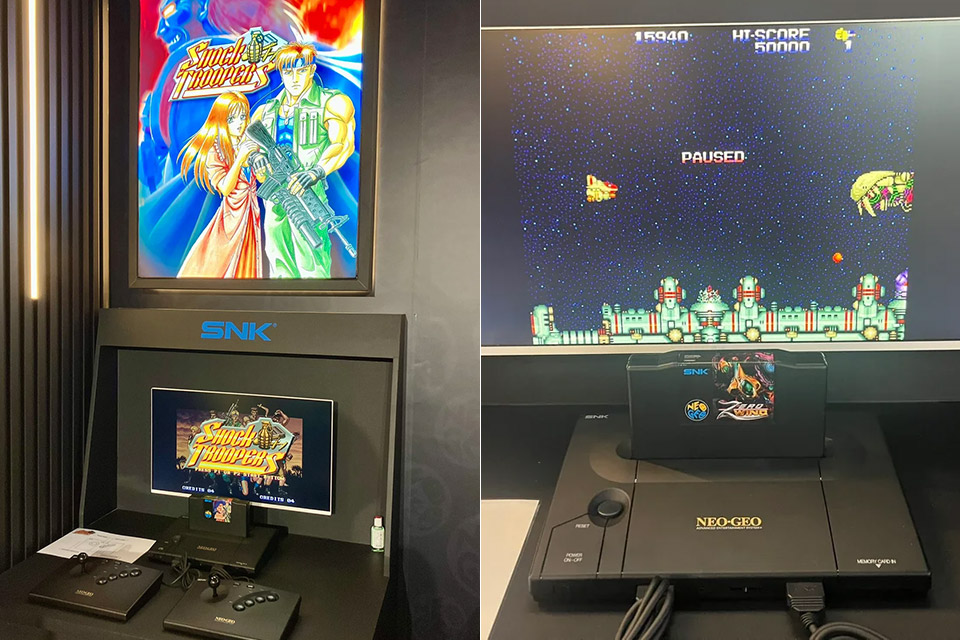
Photo credit: BFBulletin
Plaion Replai pushed the worldwide launch of Neo Geo AES+ from November 12, 2026 to Thursday, September 16, 2027, blaming a mix of unexpectedly high demand and a global squeeze on memory chips driven by AI infrastructure. Official wording is blunt: the company cannot build enough units for a proper worldwide launch this year, and shipping a thin November batch would have meant instant sell-outs and secondary-market chaos. Commercial director Ben Jones said Plaion looked at every way to keep the original timetable, then chose extra time to lock down more chips and expand factories rather than shortchange the people already in line.
Demand far exceeded even the most optimistic fans, collectors, and retailers’ expectations following the April reveal. That success has now crashed straight into the same component shortfall that is slowing down the entire hardware industry, which is why a console based around re-engineered ASIC chips has been dragged into a RAM shortage. Existing pre-orders will remain in place, prices will not change, and no one will be required to re-order. Standard gear still costs $249.99, £179.99, or €199.99. The 35th Anniversary Edition is white and costs $349.99. The Ultimate Edition costs $999.99. New cartridges, meanwhile, cost $89.99 in the United States and €79.99 / £69.99 in Europe.
Patience is now rewarded with a Founding Supporter Bonus, which applies only to the first manufacturing run. People who buy both the normal model and the Anniversary Edition in that batch will receive a free NeoGeo AES+ gamepad. Meanwhile, Ultimate customers receive a 30% voucher that they can use to purchase future cartridges from Plaion’s store, which is particularly useful given that the bundle they’re purchasing already includes ten launch games, and of course, that offer does not apply to further manufacturing runs.
The Tokyo Game Show 2026 has just opened at Makuhari Messe, with Plaion in Hall 8, Booth 08-C01. Guess what? That was the first location the public could get their hands on the finished-looking hardware. The normal black versions and the white Anniversary Edition were both demonstrated, with the launch lineup running in 4:3 on low-latency HDMI. Japanese hands-on reviews have described the reproduction as almost identical to the original 1990 AES, with the same size, matte black finish, and surface on the shell and arcade stick. And sure, some people were a little surprised by how nicely the white hardware looked; many fans thought the Neo Geo only came in black, but in person, it actually looked pretty sharp, especially with the white Metal Slug cart.
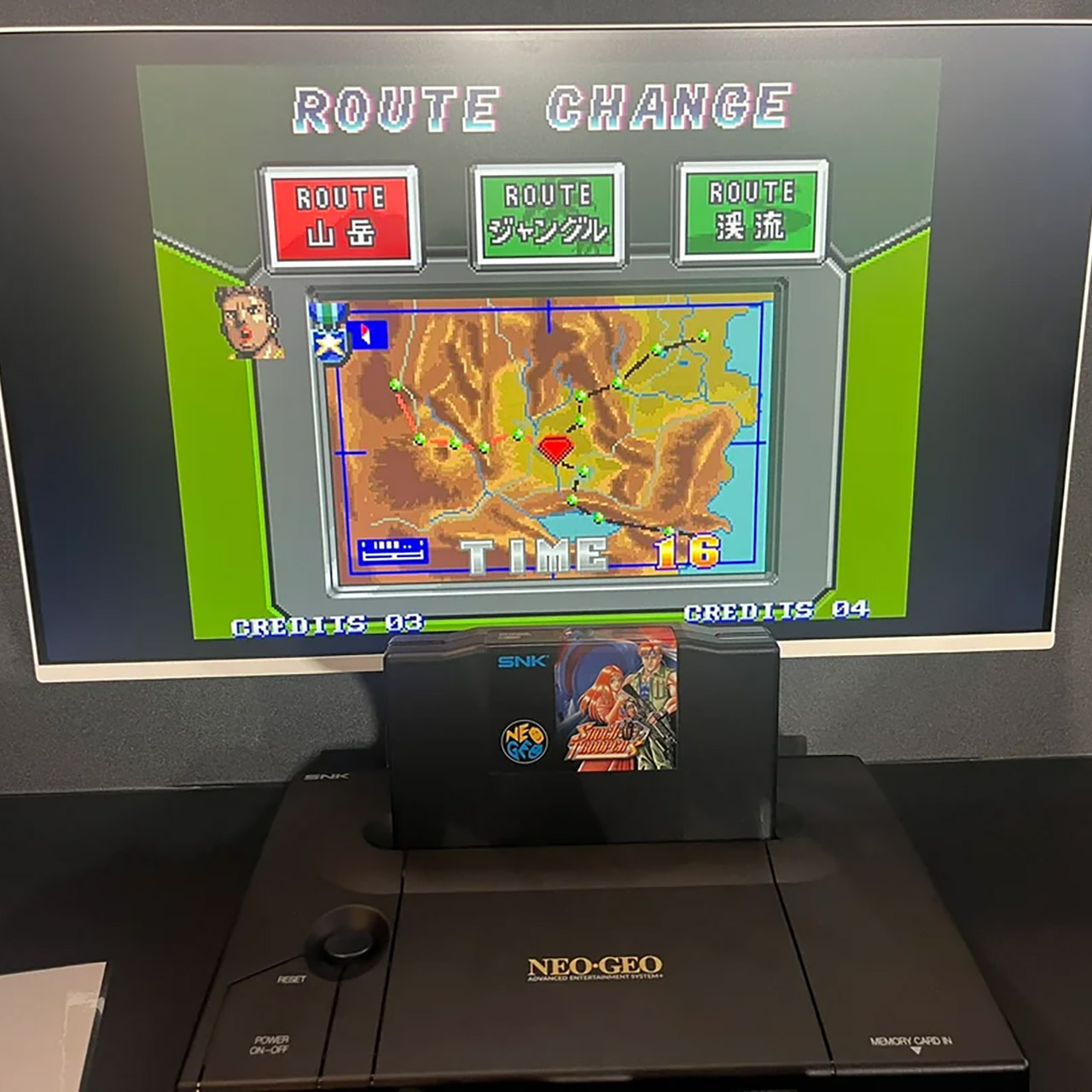
Hardware is still striving for a one-to-one recreation of the original SNK home system, with real cartridges operating through new ASIC processors rather than software emulation. Original AES carts and arcade sticks plug directly in. The modern amenities are kept quiet: 1080p on HDMI with minimum lag, the old AV outs for CRT sets, stereo sound, permanent high-score storage, a custom on-screen BIOS, and DIP switches on the underside for language, display mode, and overclock. Yeah, the overclock is 24 MHz, which is enough to address the well-known slowdown in games like Metal Slug 2. Visitors to the booth also saw eight small switches that controlled HDMI, aspect ratio, overclocking, and scaling. Bluetooth RF pads and sticks were positioned alongside the wired ones, and the new memory card no longer required a coin cell.
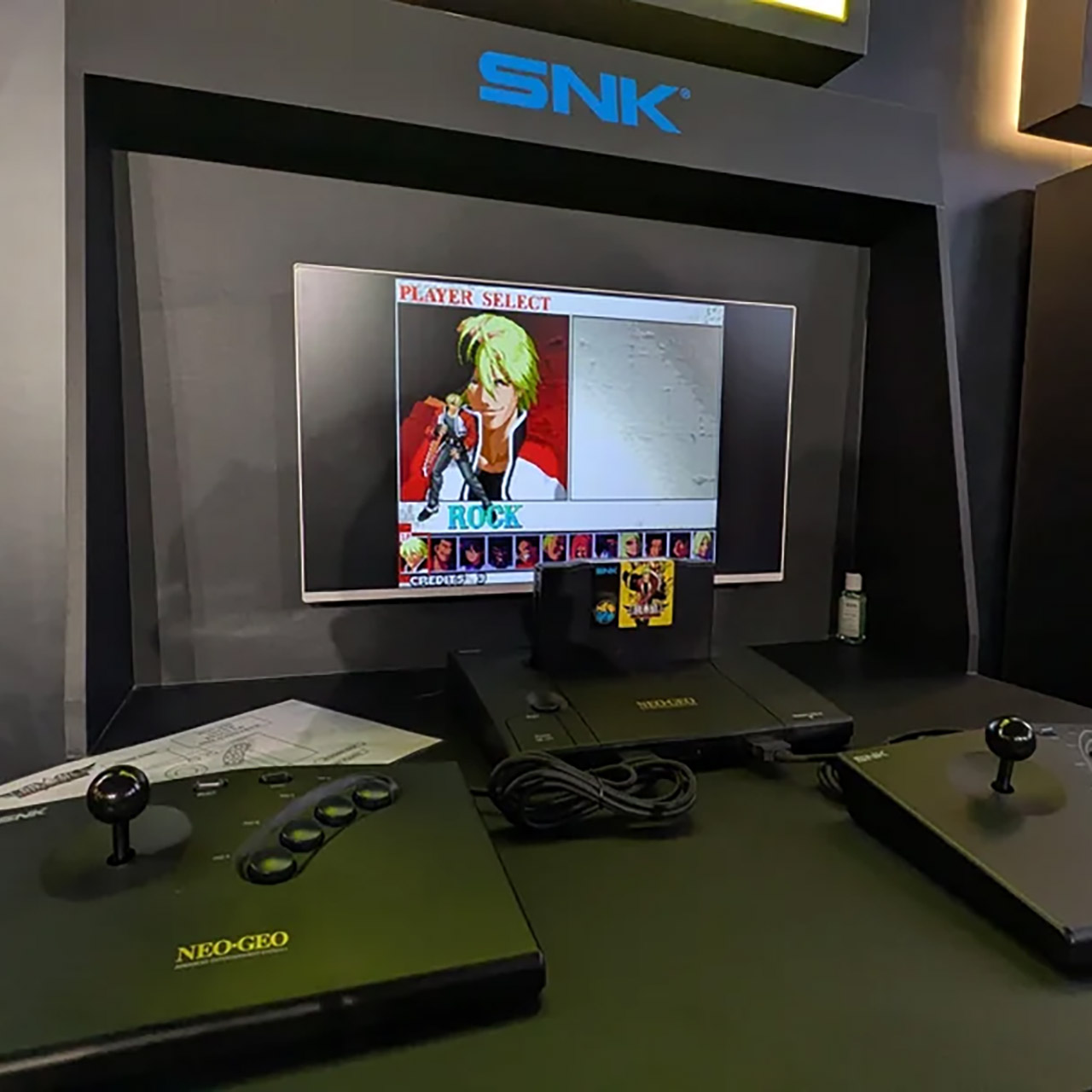
The first wave includes ten physical cartridges: Metal Slug, The King of Fighters 2002, Garou: Mark of the Wolves, Samurai Shodown V Special, Shock Troopers, Pulstar, Twinkle Star Sprites, Magician Lord, Over Top, and Big Tournament Golf. Big Tournament Golf also returns with its Scotland course, which previously appeared only on the Neo Geo CD. The boxes at the show had reversible jackets with Japanese and American art. Plaion is already in talks with other licensors for new physical games after the launch, which they see as a positive aspect of the delay.
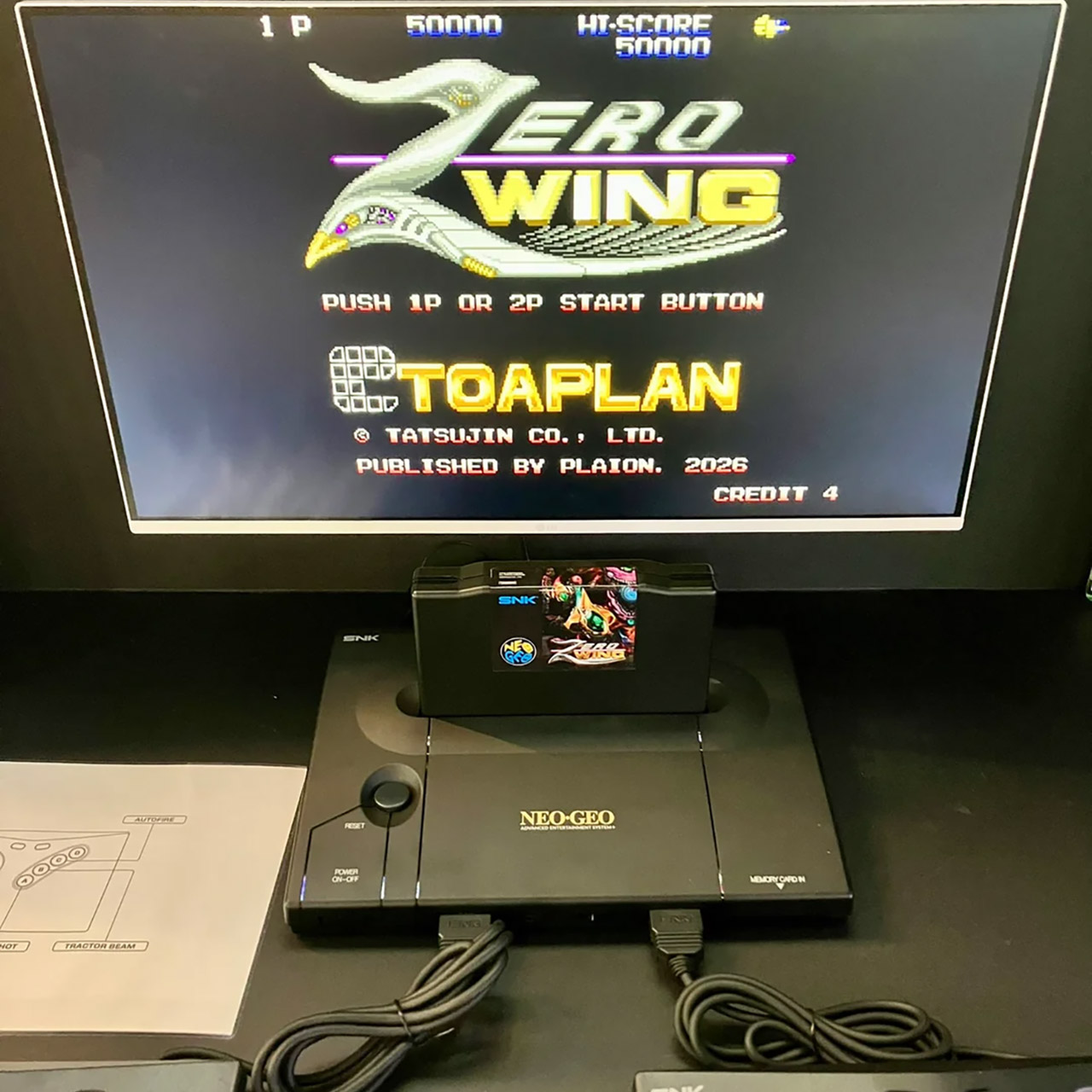
GAME Watch staff walking the booth report they also saw Zero Wing on a unit, a Toaplan shooter that never saw an official Neo Geo release. That sighting has not been confirmed on Plaion’s official launch list, so consider it a floor discovery until the company confirms otherwise. Hobby Consolas also reported an unreleased bonus title and a Plaion outer carton that appears to fit the original-style box. Regardless, the stand was designed as a Neo Geo room first and then a publisher booth.
[Source]
Just buy a basic gaming PC instead.
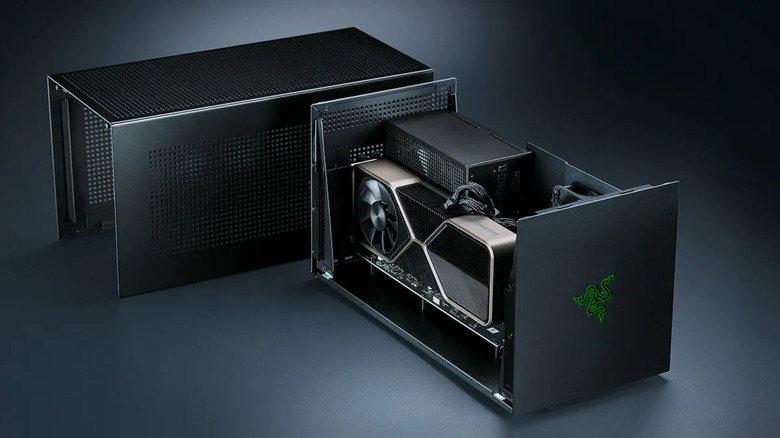
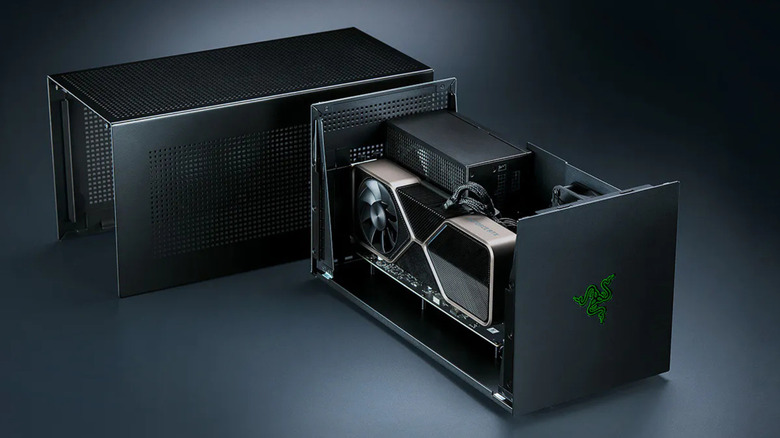
If you’ve been looking to get more gaming power out of your laptop but don’t want to pay for a replacement amid RAMpocalypse pricing, an eGPU could be your best bet. An eGPU is an external graphics processor, usually a desktop graphics card in an enclosure connected to a compatible laptop or gaming handheld through Thunderbolt or USB4. They can be pretty good at taking over rendering, meaning even thinner and weaker machines can run more demanding games with one plugged in, but there are many caveats.
A GPU run as an eGPU will typically operate slower over Thunderbolt than it would inside a desktop. The enclosure to house it costs hundreds of dollars too, and some devices, like Apple Silicon-based Macs, can’t use an eGPU for gaming at all. That said, eGPU hardware is in better shape today than it has been in years. Razer revived its eGPU line with a Thunderbolt 5 dock in July 2025, and Framework is building an eGPU kit for its Laptop 16.
How much performance is lost with an eGPU?
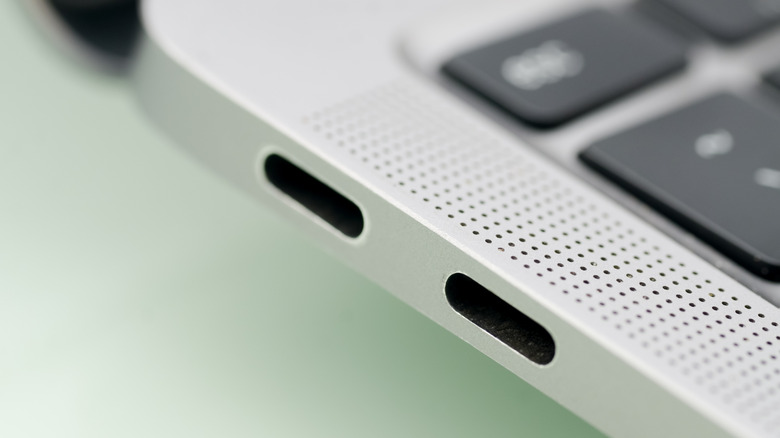
A Thunderbolt 4 port carries 40Gbps, and Intel’s spec allots PCIe data 32 Gbps of it, an eighth of the bandwidth a desktop PCIe 4.0 x16 slot provides. Most of what the card in an eGPU enclosure does will never cross the Thunderbolt cable. Textures and shaders get loaded into VRAM once and remain there, meaning the cable only gets busy when a game pulls in new assets or sends finished frames back to the display.
Portables review site Notebookcheck tested an RTX 2080 Ti enclosure back in 2021 and found deficits ranging from seven to 32 percent when compared to a desktop. Losses did shrink to single digits at 4K on an external monitor, but rendering to a laptop is slower because finished frames travel back down the same cable. In contrast, PC Gamer tested an RTX 4070 Ti and 4090 over Thunderbolt, OCuLink and desktop PCIe. Its RTX 4070 Ti ran around 25 percent slower over Thunderbolt than OCuLink in many 1440p tests, with lower 1 percent lows and more stuttering.
PC Gamer also claimed that upgrading from the 4070 Ti to the 4090 delivered smaller gains over Thunderbolt and OCuLink compared to desktop. So, the faster the card, the more of its performance the Thunderbolt cable restricts, making a mid-range GPU the more sensible choice for an eGPU enclosure. Thunderbolt 5 provides 80 Gbps of connection bandwidth, while Razer’s $350 Core X V2 connects the GPU through PCIe 4.0 x4, nominally 64 Gbps. That gives an x16 graphics card four lanes instead of the 16 available in a suitable desktop slot.
Cost and compatibility
The Core X V2 comes with only the enclosure; no power supply, USB ports or Ethernet. You’ll need to add your own ATX PSU, and Razer now sells the missing I/O separately as a Thunderbolt 5 dock starting at $390 for the Mercury version. Throw in the graphics card itself and there’s really little point in buying all these components when you could just invest in a budget gaming rig instead. At least in doing so, you’ll be avoiding the external connection’s bandwidth limit. Thunderbolt 5 laptops are also few and far between outside premium gaming machines and mobile workstations, so connecting the enclosure to a compatible Thunderbolt 4 laptop limits the connection to 40 Gbps regardless.
OCuLink does manage to get around Thunderbolt by running bare PCIe over a cable. That’s the route Framework is taking. Its OCuLink Dev Kit exposes an eight-lane PCIe connection on the Laptop 16, rated at up to 128 Gbps. You end up sacrificing some convenience here given that OCuLink doesn’t power the host, and there’s none of the plug-and-play that makes a Thunderbolt box a one-cable dock.
Apple dropped eGPU support with its move away from Intel silicon back in 2020. No macOS release since has brought it back for graphics acceleration. However, Apple did approve TinyGPU earlier this year, a driver extension from the tinygrad project that runs newer AMD and Nvidia cards over Thunderbolt or USB4. It’s for AI workloads only, and its lack of display output means it won’t get you anywhere for gaming use cases.


A new Android malware called RatHat has been discovered, targeting users with an AI-powered subsystem that helps operators remotely navigate compromised devices.
Zimperium zLabs researchers analyzed the malware and believe it is linked to threat actors from China after finding it using LLM prompts written in Chinese.
The researchers say the malware is distributed through malvertising, SMS, and phishing sites promoting APK downloads from outside Google Play.
Like most Android malware families, RatHat relies on abusing Android’s Accessibility permissions to perform highly privileged actions on infected devices.
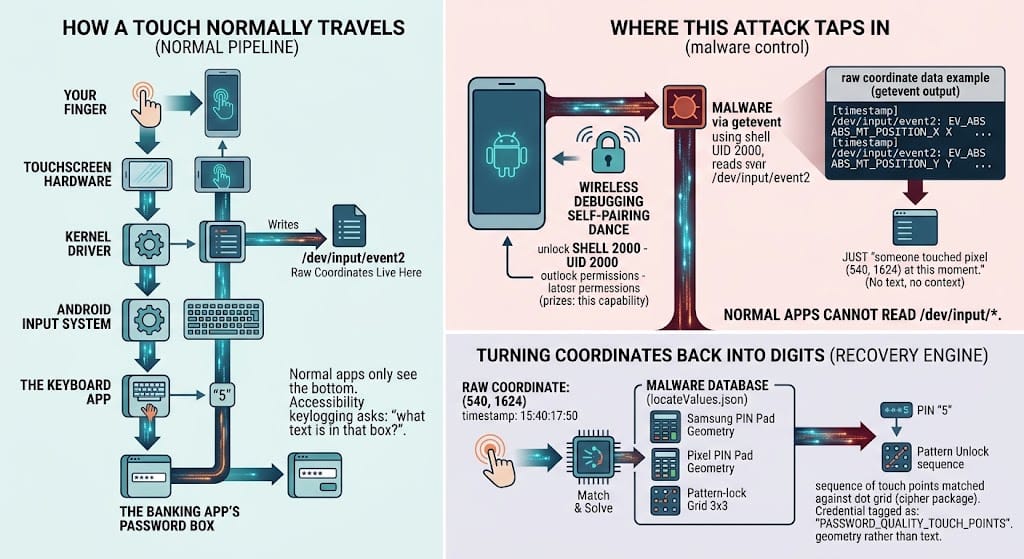
Most notably, it enables Developer Options and Wireless Debugging to gain a local shell-level execution context without requiring an external computer, similarly to mechanisms seen in the ToxicPanda and RedHook Android malware families.
ADB access lets RatHat install a Go-based agent (liblocal-service.so) that runs commands with ADB shell privileges, creates battery-restriction bypasses, and manages persistence.
The same agent also restores the malware if it’s removed or stopped, providing a persistence channel independent of the malware itself. This back-up goes both ways, with the malware restoring the agent if it’s removed.
Source: Zimperium
A second agent (libmedia_codec.so) also acts as an FRP reverse-proxy client, establishing a persistent tunnel to the attacker.
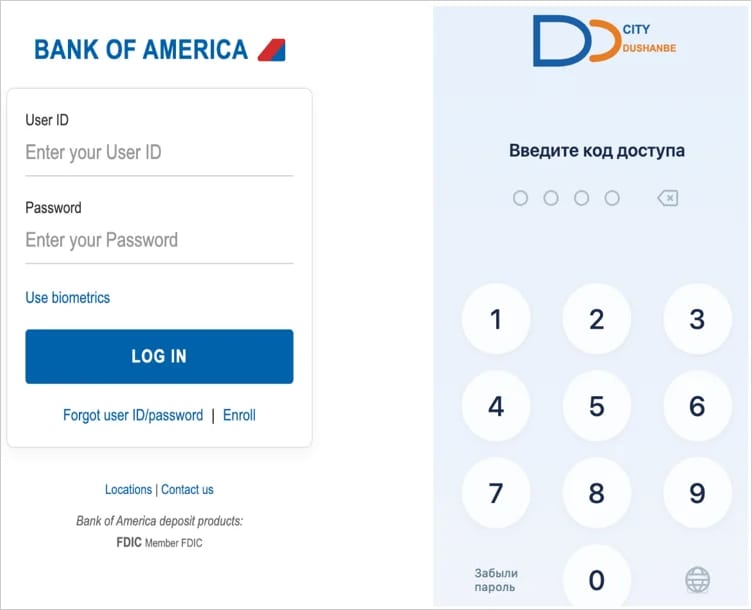
The malware displays HTML overlays for targeted banking and cryptocurrency applications to capture account credentials.
It can also intercept SMS messages and notifications, including one-time passwords; record text-change events; extract URLs from browser address bars; and capture lock-screen PINs, passwords, and unlock patterns.
Source: Zimperium
AI-guided navigation
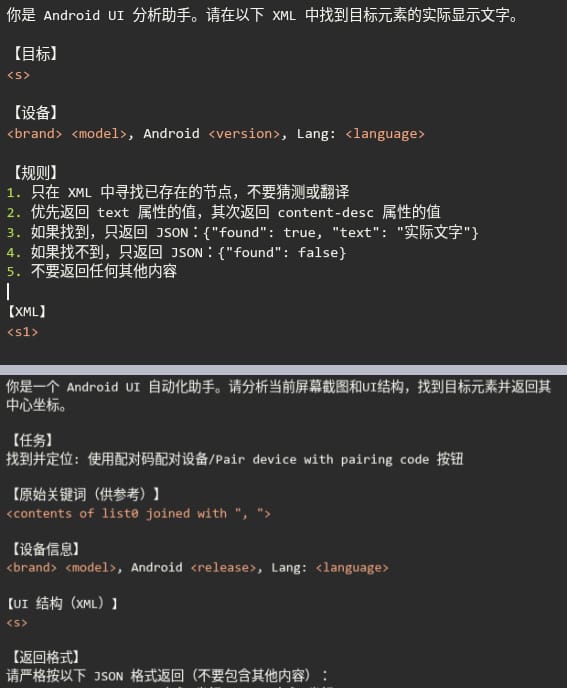
Zimperium reports that RatHat uses an AI-powered user interface-automation engine that serializes the live Android Accessibility tree into XML and sends it to a popular AI assistant not named in the report.
The AI tool is then tasked with:
- Identifying the center coordinates of a named interface element
- Determining an element’s actual on-screen text
- Returning navigation instructions such as ‘SCROLL_DOWN’ and others
This AI-powered subsystem makes RatHat’s interface automation more adaptable than automation based entirely on fixed scripts, allowing remote navigation without requiring the operators to perform real-time interaction.
“RatHat uses AI to intelligently navigate and control the device interface in real-time, making its operations more adaptable and harder for security software to detect than traditional, scripted automation,” comments Zimperium.
Source: Zimperium
The researchers warn that RatHat will actively thwart removal attempts by intercepting the uninstall confirmation screen, canceling the procedure, and displaying a fake Google Play overlay containing a bogus error message.
Zimperium also highlights multiple anti-analysis techniques embedded in the malware, including APK container tampering, a bloated (61MB) Android manifest file, and invalid DEX pseudo instructions, all aimed at confusing or breaking analysis tools.
Android users should never download APK files from outside Google Play unless they explicitly trust the publisher, avoid granting Accessibility permissions to apps, and regularly scan their devices with Play Protect.
Join Mikko Hyppönen and security leaders from the NFL, CHANEL, and Atlassian for a two-hour digital summit on what AI-speed attacks change, what defenders should stop doing, and how to validate, decide, fix, and re-validate at machine speed.
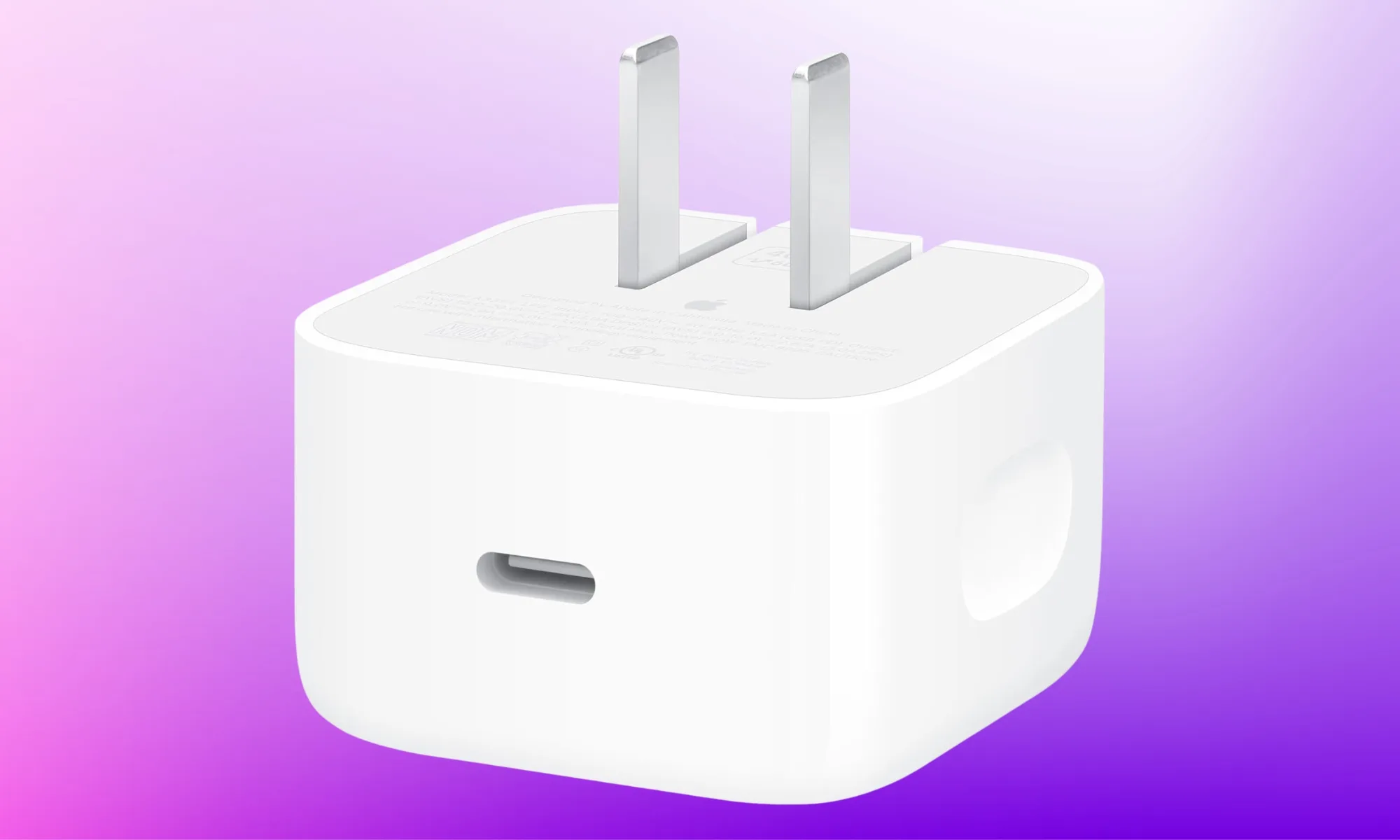
If you’re buying a new iPhone 18 Pro, you’re probably looking for a new charging accessory. You might want to take advantage of the higher fast-charging ceiling (60W) or declutter your desk with a multi-device charger. To help you decide, I’ve reviewed dozens of Amazon listings to find the best iPhone 18 Pro charging accessories so you can choose what’s right for you.
Wall Adapters
Apple 40W Dynamic power adapter ($34.99)
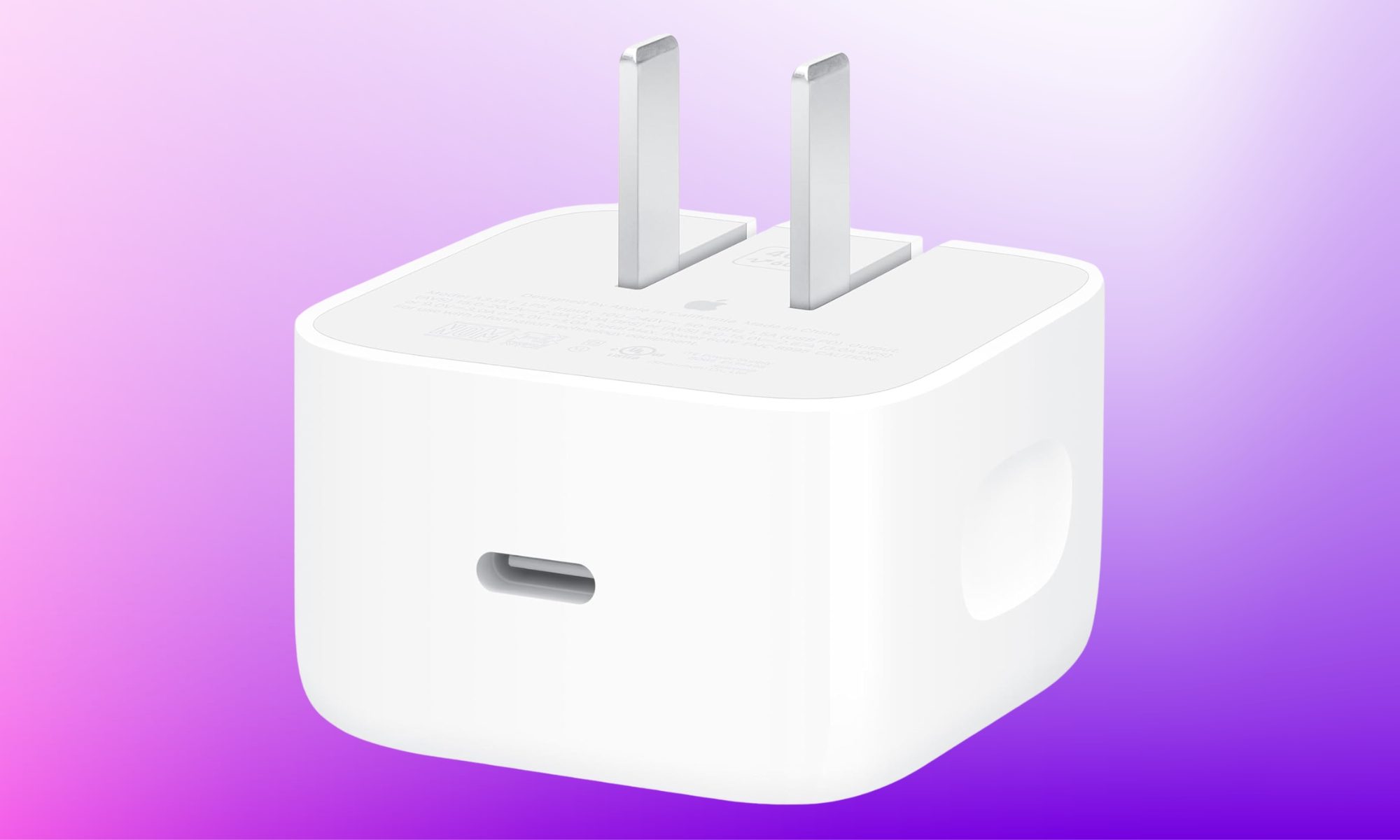
If you asked me to point you to one power adapter for iPhone 18 Pro owners, this is where I’d start, mostly because Apple’s numbers are hard to beat: a 4.8-star average from over 1,500 ratings. At $34.99, it’s also priced like a standard third-party brick, even though it’s the official one.
Why it stands out
- It’s labeled 40W but dynamically pushes up to 60W depending on what’s plugged in, so it doesn’t leave power on the table the way a flat-rated adapter would.
- USB-C output pairs with the same cable already in most iPhone boxes, so you don’t have to track down an adapter-specific cable.
- It offers unmatched peace of mind.
Anker 45W Nano smart display charger ($29.99)

This isn’t just another 45W adapter with foldable prongs. It’s the only charger on this list with an actual screen, and it’s earned a 4.7-star average across more than 5,400 ratings for that reason.
Why it stands out
- The built-in display shows real-time wattage, temperature, and charging status at a glance, genuinely useful for anyone who’s wondered if a charger is actually working.
- Care Mode lowers charging temperature by up to 9°F versus a standard 45W charger, specifically built for safer overnight charging.
- Comes in four colors.
Anker 67W 3-port GaN charger ($39.99)
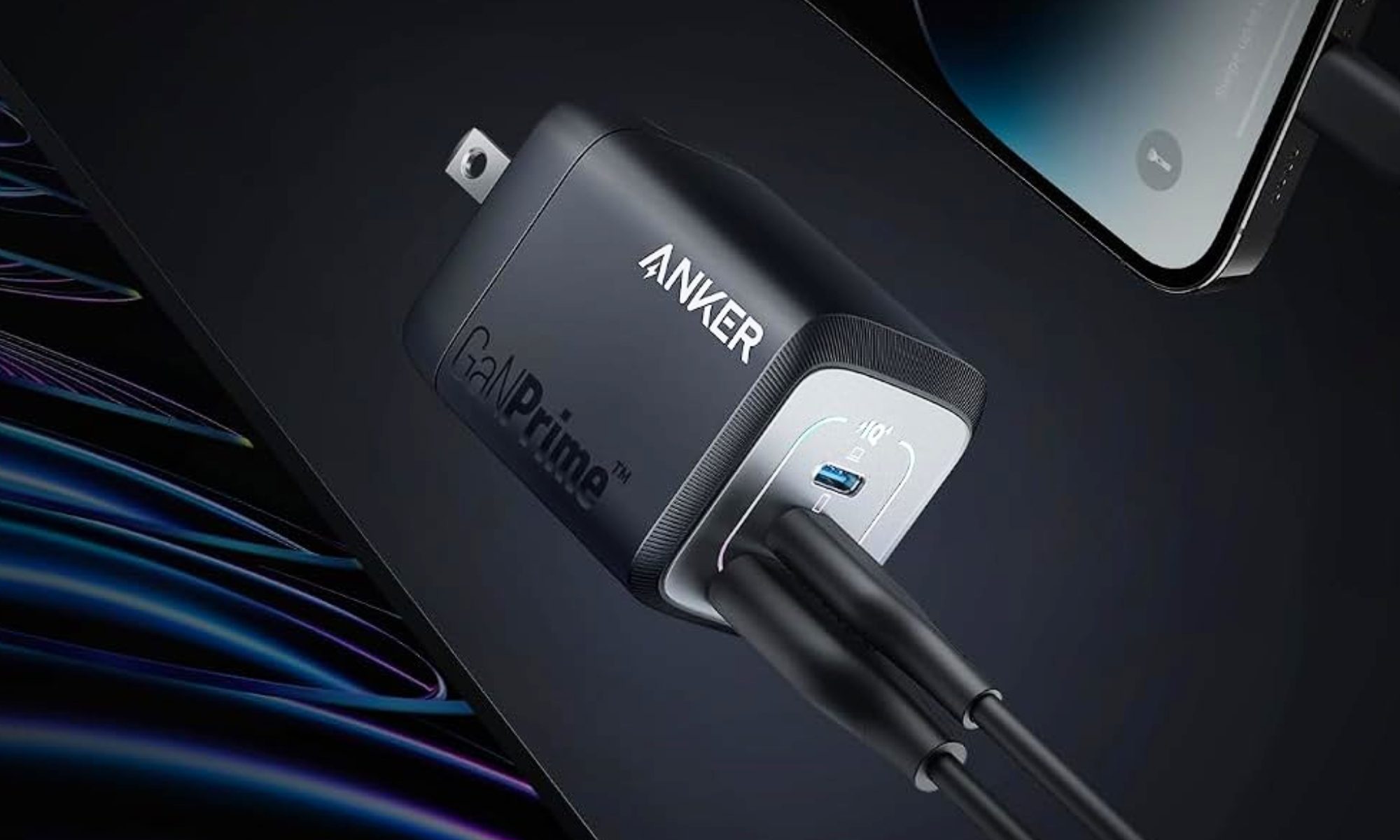
Anyone juggling a new iPhone 18 Pro alongside AirPods, an Apple Watch, or a tablet should skip single-port chargers and go straight to this one: Anker’s slightly older but still well-reviewed 3-port GaN charger.
Why it stands out
- The only wall adapter on this list that fast-charges three devices at once, up to 67W from a single port, or up to 65W split across two
- Also doubles as a genuine laptop charger in a pinch, useful for anyone traveling with a MacBook and a phone but only one outlet.
- Comes with a 24-month warranty.
Vention Dash Pro 140W 4-Port GaN charger ($59.90)
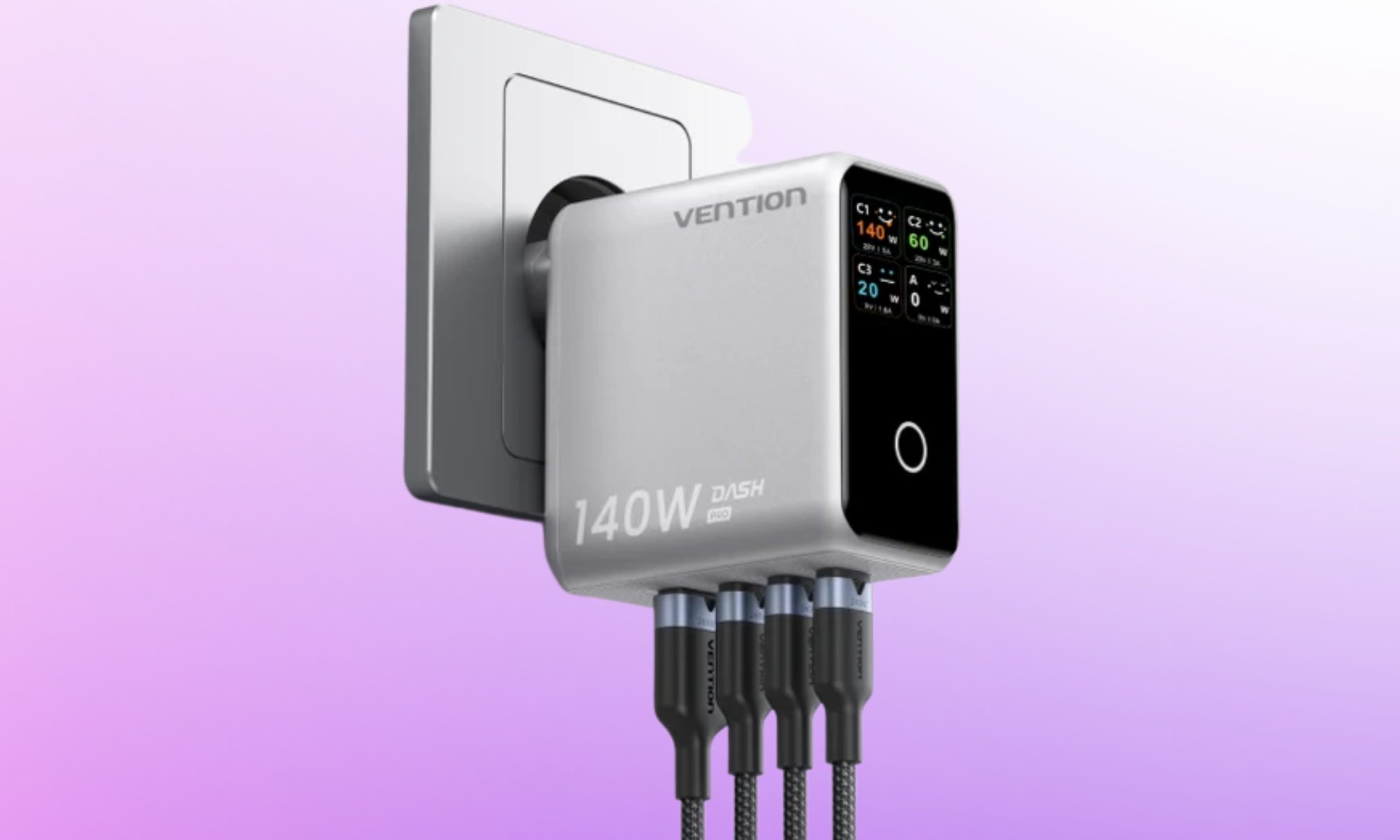
Vention just launched this at IFA 2026, and it’s the one adapter that can charge your iPhone 18 Pro and your MacBook without being dramatically slow on either. Of course, you can use the other ports to charge the other devices you might have. It also has a display that shows charging information in real time.
Why it stands out
- Reads charging status through five color-coded emoji expressions instead of plain numbers.
- 140W across three USB-C ports and one USB-A beats every other wall adapter here, enough for a laptop and phone charging together.
- Supports PD 3.1, QC, PPS, and UFCS protocols, so it works across older devices too, not just the newest ones.
MagSafe Chargers
Apple MagSafe charger ($39.99)

This is the safe, no-homework option for anyone who doesn’t want to check whether a random wireless puck meets Apple’s charging spec and still get the standard MagSafe experience.
Why it stands out
- Comes in two cable lengths, 1 meter or 2 meters, an option most third-party MagSafe pucks don’t bother offering.
- Reaches its full 25W speed only when paired with a 30W+ USB-C adapter.
- Also charges AirPods with a wireless case.
Belkin 25W 3-in-1 foldable charging station ($53.99)
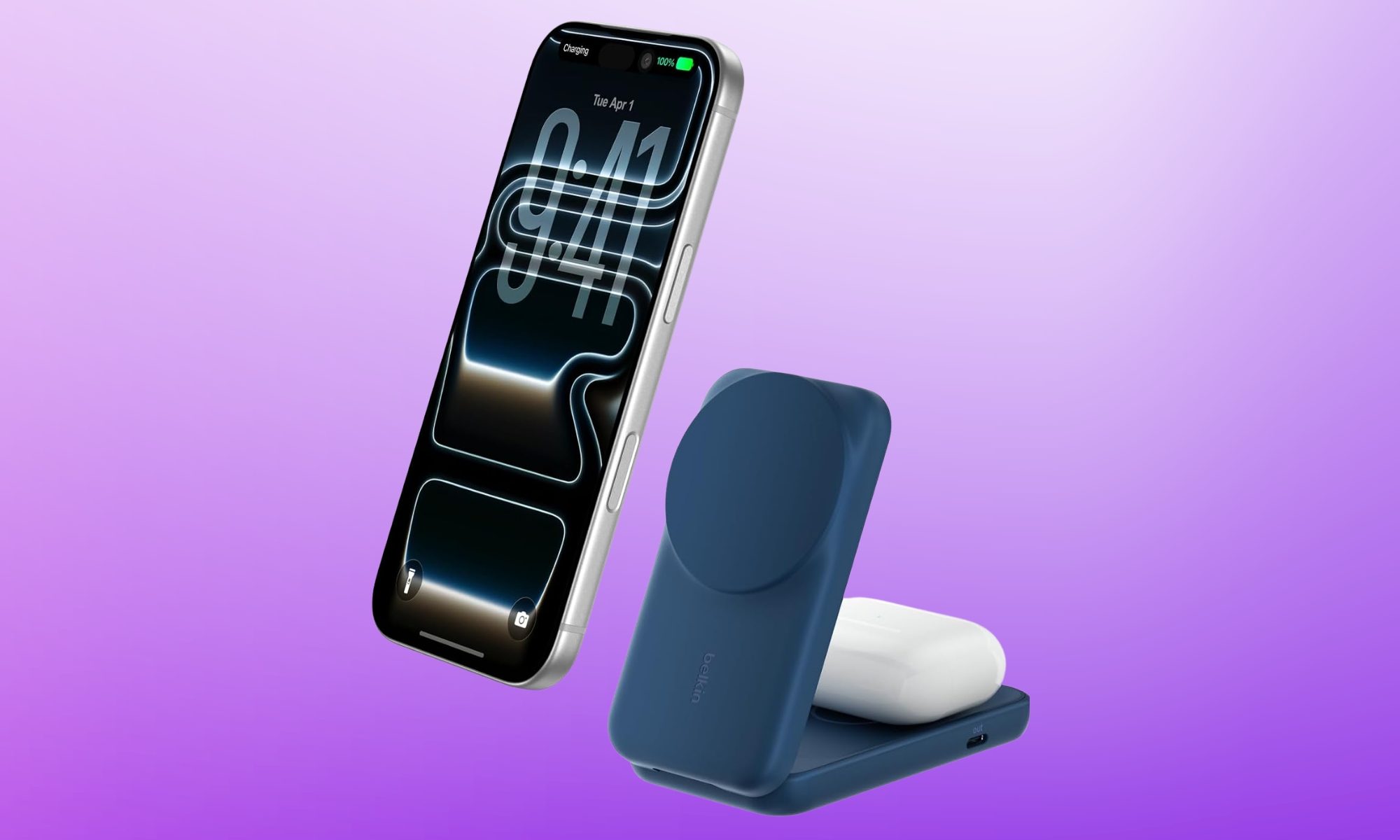
This is the best value on this list in my opinion. It’s the only charging station under $60 that ships with everything needed to start charging the same day.
Why it stands out
- Includes a full 45W power adapter and 5ft cable in the box, unlike most standalone MagSafe pucks that sell only the puck.
- Folds completely flat for a bag, then unfolds with an adjustable stand angle up to 65° for StandBy Mode on a nightstand or desk.
- Worth knowing: the full 25W speed needs iOS 26 or newer.
Anker Prime 3-in-1 Qi2.2 charging station ($139.98)
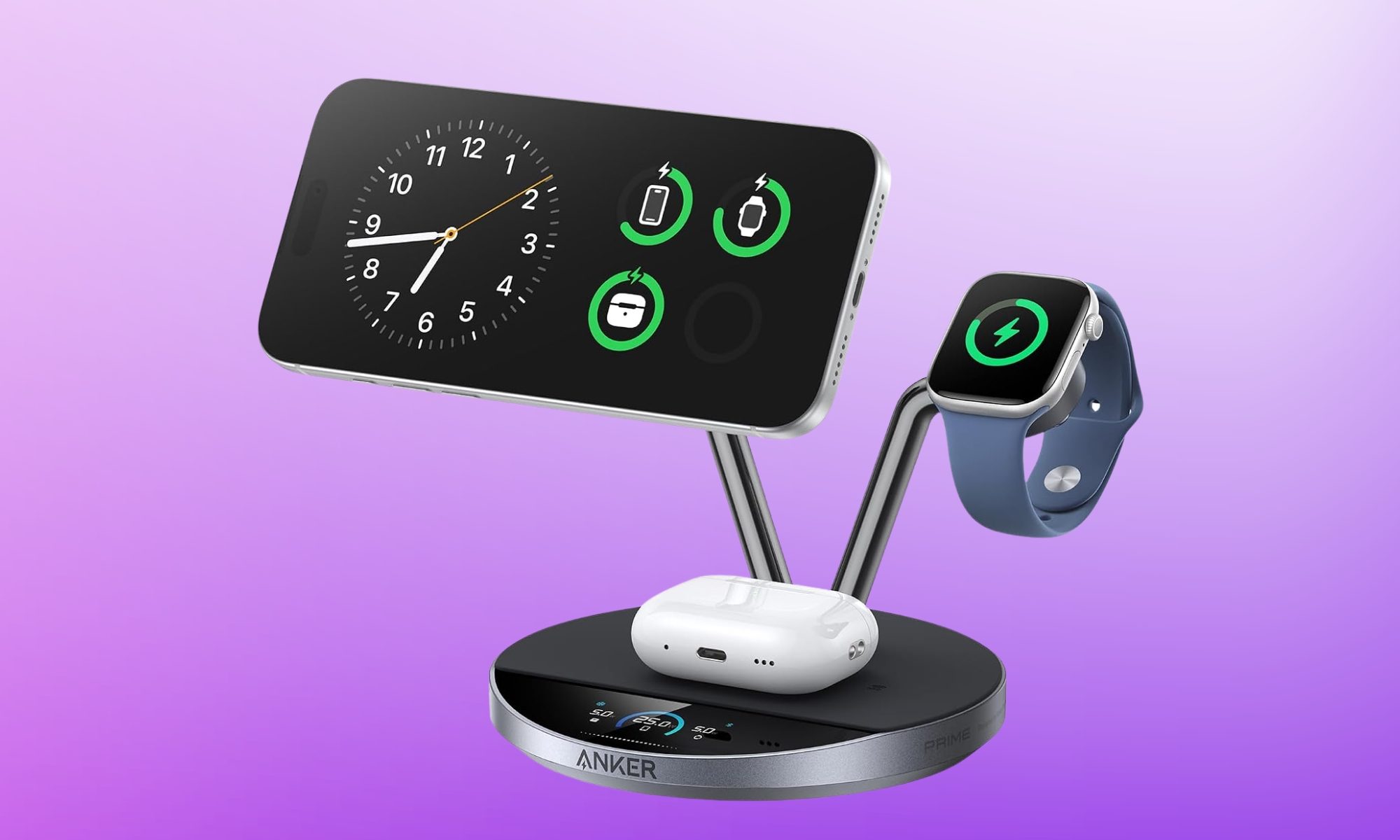
If the iPhone 18 Pro is joining an Apple Watch and a pair of AirPods already in daily rotation, this is the station I’d point toward, even at nearly three times Belkin’s price.
Why it stands out
- The only station on this list with a touchscreen, a 1.65-inch display showing real-time wattage, temperature, and status for all three devices at once.
- Charges the phone, Apple Watch, and AirPods simultaneously from one outlet, decluttering your desk.
- It looks good on a desk or a nightstand.
ESR MagSafe car mount charger ($18.99)
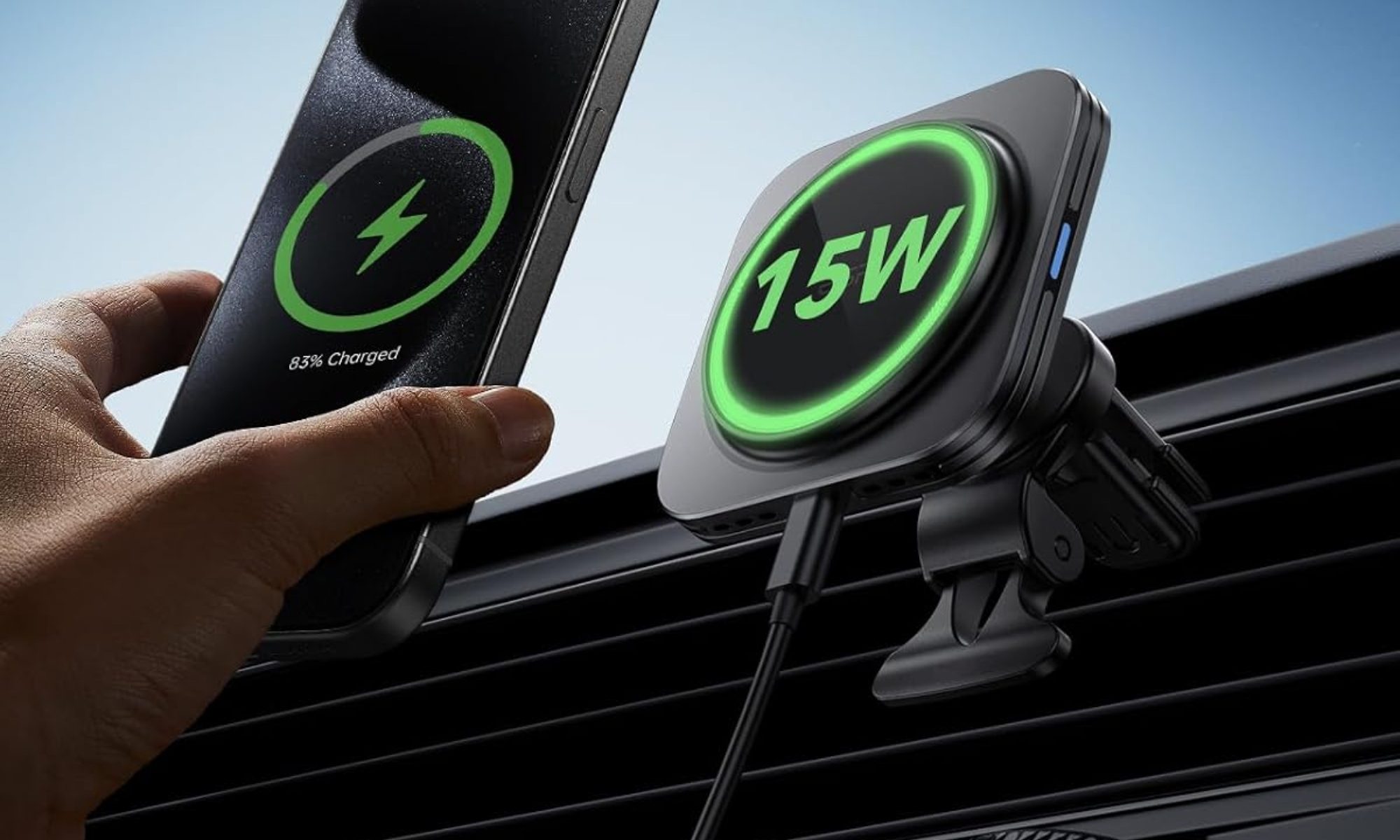
This is the only accessory in the guide built for the car, doubling as a phone mount and charger for a dashboard or air vent.
Why it stands out
- Switches between portrait and landscape with one hand, making it easy to glance at turn-by-turn directions.
- 1,600g magnetic hold plus a non-slip silicone ring, built to survive bumpy roads rather than sitting flat on a desk.
- Needs its own 18W+ car adapter for full-speed charging, sold separately.
Wireless Power Banks
Ugreen 10,000 mAh Magnetic Power Bank ($46.99)
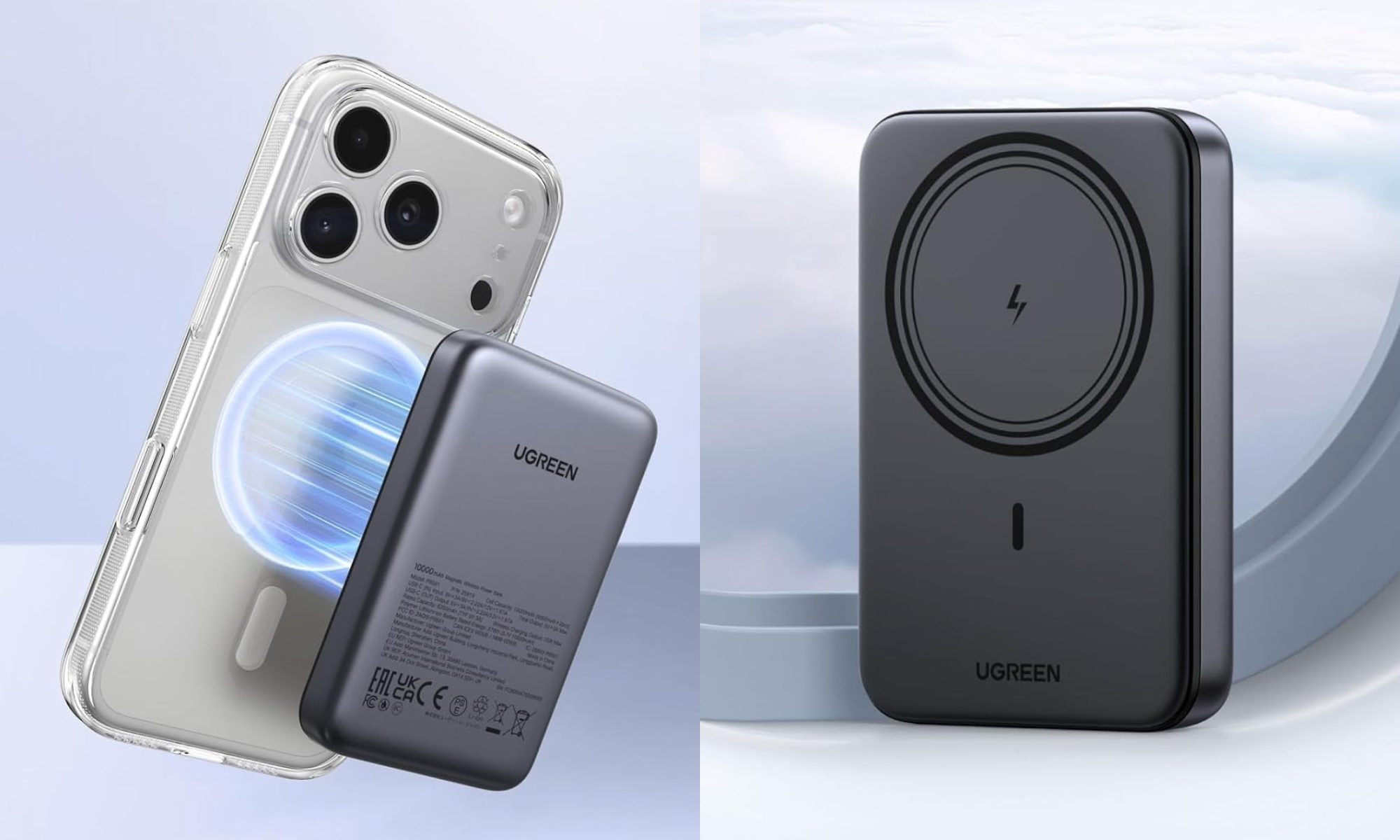
This wireless power bank focuses on capacity. At 10,000mAh, it holds nearly two full charges for an iPhone, more than any other wireless power bank on this list.
Why it stands out
- Genuinely the highest capacity in this roundup.
- Supports simultaneous wired and wireless charging with intelligent power distribution, so plugging in a cable while the phone sits on top wirelessly doesn’t needlessly slow either one down.
- It doesn’t feel like carrying a brick despite the capacity.
Anker 5,000 mAh nano magnetic power bank ($54.99)
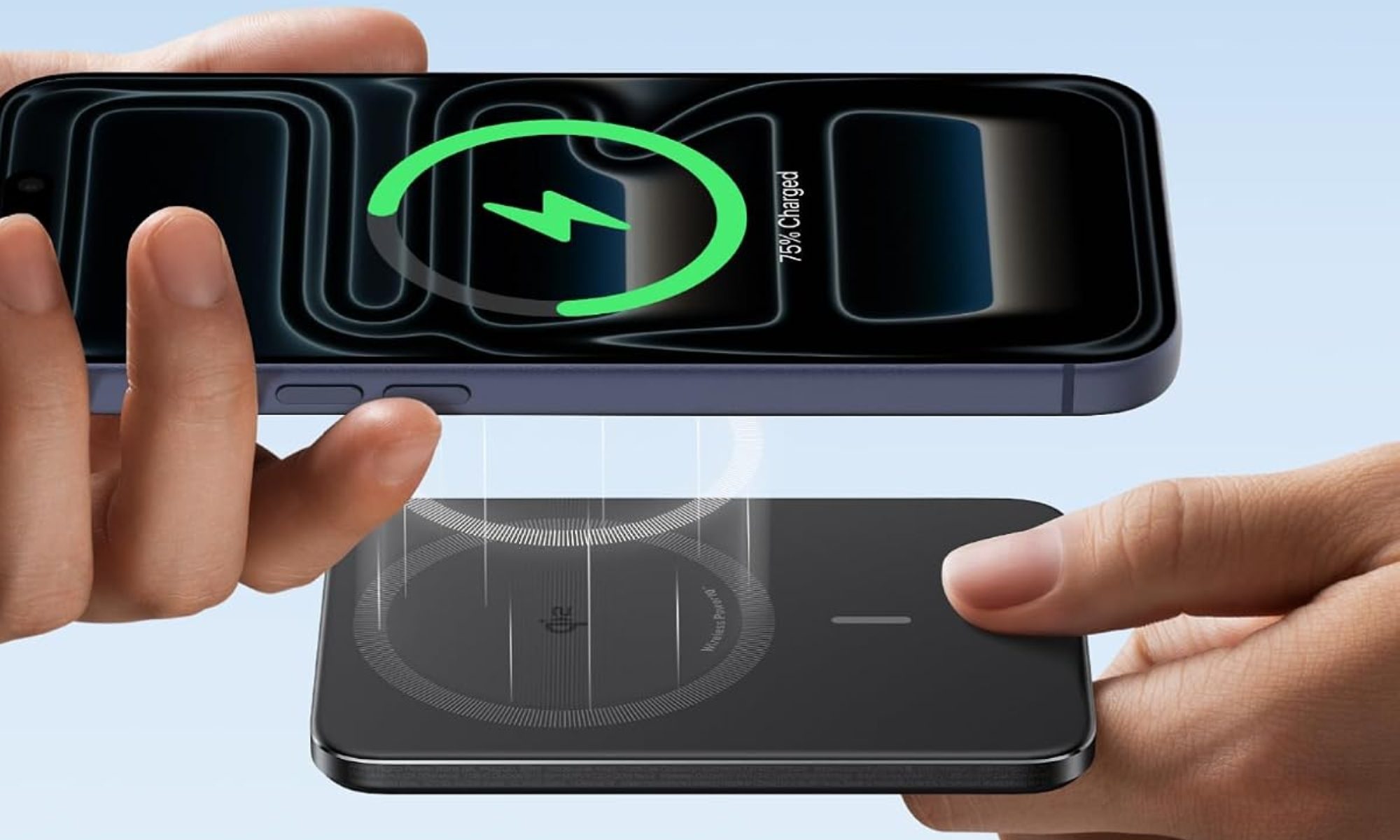
This is the thinnest power bank on this list by a wide margin, and Anker built it specifically as an everyday-carry item rather than a full backup battery.
Why it stands out
- At 0.34 inches thick, it’s genuinely the slimmest option here, thin enough to sit under a phone case without adding noticeable bulk.
Baseus Picogo MagSafe power bank ($55.98)

If speed across the board matters most, this power bank wins on every metric: wireless output, wired output, and recharge speed.
Why it stands out
- The fastest wireless output of any power bank here: 25W Qi2.2, enough to push an iPhone 18 Pro to 50% in about 30 to 35 minutes.
- Also works as a genuine 45W wired charger through its USB-C port, not just a wireless-only backup battery.
- Refills its own 10,000mAh battery in about 1.5 hours over a 30W connection.


Saad Nadeem doesn’t have any professional background in home improvement. But like any self-respecting weekend warrior, his experiences as a homeowner have taught him some valuable lessons.
The biggest lesson, perhaps, was to create his own startup to solve his problems.

Nadeem is co-founder and CEO of Local Crew, a newly launched Seattle startup designed to make it easier to find laborers, assess bids, and hire a professional to perform everything from yard work to house repairs.
“Even for straightforward projects, I had to contact several pros, explain the same job repeatedly, arrange on-site visits, and sometimes wait days just to compare estimates,” Nadeem said.
Professionals are equally frustrated, he learned, because traveling to provide free estimates is time consuming, particularly for smaller jobs they may not win.
@media (max-width: 600px) {
.gw-founder-box { float:none !important; max-width:100% !important; margin:20px 0 !important; padding:16px 18px !important; }
.gw-founder-box .gw-label { font-size:12px !important; margin-bottom:8px !important; }
.gw-founder-box .gw-hero { font-size:19px !important; }
.gw-founder-box .gw-byline { font-size:15px !important; }
.gw-founder-box .gw-meta { font-size:12px !important; margin-bottom:14px !important; }
.gw-founder-box .gw-facts { padding-top:14px !important; }
.gw-founder-box .gw-facts li { margin-bottom:12px !important; }
.gw-founder-box .gw-facts li:last-child { margin-bottom:0 !important; }
.gw-founder-box .gw-value { font-size:15px !important; line-height:1.45 !important; }
}
A Pakistani immigrant and tech veteran, Nadeem has spent nearly a decade working in marketplace operations at companies including Uber, Roblox, and TikTok, focusing on customer experience, support operations, and simplifying complex processes for users.
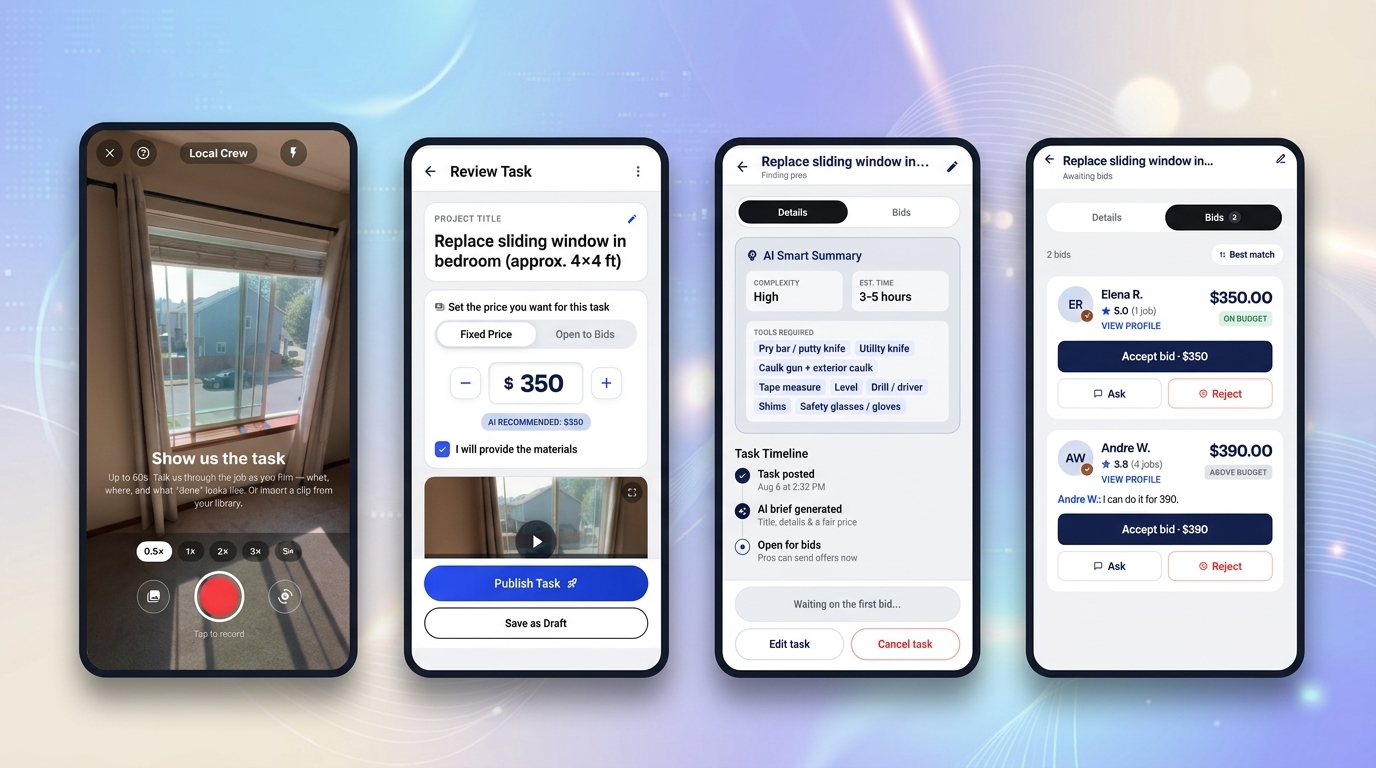
Local Crew relies on AI to analyze a video submitted by a customer in which a potential job is spotlighted. AI turns the video into a structured job post with a project description, relevant details, and a recommended price. The customer can adjust the price before posting, and local pros can accept it or submit a counteroffer. The main differentiator is Local Crew alleviates the need for multiple calls or in-home estimate visits.
Companies such as Thumbtack, Angi, and Taskrabbit are among the closest small-job and home-improvement comparisons.
Local Crew — now live on iOs and Android — is starting in the Seattle area, with plans to expand into major Midwest cities next and eventually grow nationwide.
“The goal is to prove the model in Seattle, learn from customers and pros, and then expand thoughtfully into additional markets,” Nadeem said.
We caught up with Nadeem for this edition of GeekWire’s Startup Spotlight to learn more about his startup.
In 50 words or less, give us your startup’s elevator pitch.
Local Crew is a platform that makes it simple for customers to find and hire local professionals for any task. Whether it’s homeowners who need a pro to come fix their leaking faucet, or a student looking for some extra hands to help them move. Local Crew cuts the back and forth and exhausting visits for estimates. Simply record a video of what you need done, and Local Crew analyzes your task, creates a detailed brief, and suggests a price you can set. Local professionals bid on your task and you pick the one that suits you.
What problem are you obsessed with solving?
Hiring someone for tasks is still surprisingly inefficient. Homeowners spend days coordinating visits just to compare quotes, while pros lose hours driving to estimates that never turn into jobs. We’re building a faster, simpler way for both sides to connect.
What surprised you after talking to customers?
We expected homeowners to be our biggest challenge. Instead, we learned that local pros were just as frustrated. Driving across town to provide free estimates for small jobs often wasn’t a good use of their time, especially when many estimates never turned into work. That’s when we realized we were solving a problem for both sides of the marketplace.
How has AI changed the way you build your company?
AI has accelerated everything — from product design and engineering to marketing, customer support, and content creation. It has allowed a small founding team to move with the speed and output of a much larger company.
What’s one thing people misunderstand about your startup? People often assume we’re another lead-generation platform. We’re not. Customers record their project, set the price, and pros bid or counteroffer. The goal is to eliminate unnecessary back-and-forth and quote visits before work begins.
What’s the toughest decision you’ve made in the past year?
Delaying our public launch. We could have launched earlier, but we chose to spend more time improving the experience based on real feedback from early users. It was the harder decision, but the right one.
What’s the one piece of advice you give to other entrepreneurs?
Talk to customers far more often than you think you should. The best product decisions usually come from listening, not guessing.
We’ll know our company has made it when…
Hiring someone for a home project feels as easy and expected as ordering food or requesting a ride, and homeowners naturally think of Local Crew first.

35-year-old Soup Restaurant has swung from highs and, most recently, losses
For more than 30 years, Soup Restaurant has been a familiar name in Singapore’s dining scene. Many Singaporeans would recognise it for its double-boiled soups, home-style Cantonese dishes and, perhaps most famously, its Samsui Ginger Chicken.
The business began in 1991 with a single Chinatown shophouse, six staff and six dining tables.
Today, the company behind it, Soup Holdings Limited, is listed on the Singapore Exchange and runs 15 outlets across Singapore and Malaysia, alongside two franchised outlets in Indonesia, as well as central-kitchen operations, sauce distribution and a social enterprise.
But the company’s latest numbers tell a very different story from its expansion years.
In the first half of 2026, Soup Holdings swung to a S$673,000 loss, from a S$224,000 profit a year earlier.
And over the last two years, the group has closed outlets and cloud kitchens, impaired assets linked to underperforming businesses, and begun rationalising parts of its portfolio.
So how did a restaurant that’s been part of Singapore’s dining landscape for more than three decades get to this state?
An opportunity spotted by four engineers

Soup Restaurant was founded as a side project by four engineers: Mok Yip Peng, Wong Wei Teck, Wong Chi Keong and Ho Hong Chin.
In 1995, the business introduced its Samsui Ginger Chicken, inspired by the Samsui women who came to Singapore as migrant workers. The dish—poached chicken served with a ginger-and-scallion dip—became one of the restaurant’s signatures.
But the company soon realised that if it wanted to grow, it couldn’t remain a small Chinatown restaurant, so it took a relatively measured approach to expansion.
Its second outlet only opened in 1997, six years after the original. Then, in 1998, it opened at Causeway Point, bringing the brand into Singapore’s growing suburban mall culture.
This was an important transition for the brand. Instead of merely relying on Chinatown’s tourist traffic and heritage appeal, Soup Restaurant could now reach families and office workers in neighbourhoods around Singapore.
The company kept opening stores until the outlet count reached 10, and eventually developed centralised food-processing capabilities, allowing some preparation to be standardised across its restaurants.
Centralisation made the business more consistent and even more scalable. By the mid-2000s, Soup Restaurant had become a sizeable group—and in 2007, Soup Restaurant Group Limited—the company that would later become Soup Holdings—listed on the Singapore Exchange.
Building an integrated F&B ecosystem

As the business grew, so did its ambitions. Soup Holdings expanded beyond its original restaurant concept and built an entire portfolio of F&B businesses.
One of the more notable additions was Dian Xiao Er, known for its herbal roast duck. The group also developed Teahouse by Soup Restaurant, serving Nanyang-inspired dim sum, and Cafe O, a halal-certified local coffee shop concept running since 2013.
It also began moving further upstream and downstream in the food business.
The group invested in food processing, distribution and procurement operations, while Soup Restaurant products such as bottled sauces and ready-to-eat meals allowed the brand to extend beyond its physical restaurants.
Instead of relying entirely on one restaurant brand, Soup Holdings could operate different concepts for different customers and occasions, reaching more of them through both business and consumer channels.
And for a while, that strategy worked.
Crossing S$40 million
Soup Holdings’ revenue grew substantially from its early years, eventually climbing into the S$40 million range in the years just before COVID-19.

The pandemic then hit restaurants particularly hard. Soup Holdings’ revenue fell to S$29.6 million in FY2021, with dining-in restrictions and safe-management measures weighing directly on sales.
The company survived the downturn, and as Singapore reopened, revenue climbed back—to S$37.6 million in FY2022, then S$41.1 million in FY2023. For a moment, it looked like the group was clawing its way back to pre-COVID levels.
Then, it reversed again. Revenue fell to S$38.4 million in FY2024 and S$37.5 million in FY2025—and, more tellingly, profitability deteriorated sharply alongside it.
Soup Holdings posted a S$1.8 million profit before tax in FY2023. A year later, that had flipped to a S$3.1 million loss. The loss then narrowed 63.3% to S$1.1 million in FY2025, but the group remained in the red for a second straight year.
That makes the current situation more complicated than simply saying Soup Restaurant has lost customers.
The group is still generating tens of millions of dollars in annual revenue. The bigger question is why that revenue is no longer translating into sustainable profits.
The costs of growing an F&B empire

Soup Holdings’ recent results reveal something easy to miss when looking only at the number of outlets.
Every new restaurant brings in revenue. But it also brings rent, salaries, renovation costs, equipment, utilities, food costs and lease commitments.
If an outlet performs well, higher sales can absorb those costs. If it doesn’t, the outlet can become a drag on the wider group—and Soup Holdings’ disclosures suggest that some parts of its expanded portfolio had reached that point.
For FY2025, the company recognised S$400,000 in non-cash impairment losses on plant, equipment and right-of-use assets tied to three underperforming business units. In practical terms, that meant the group had to write down assets associated with parts of the business that were no longer performing as expected.
That has pushed the group towards a more selective approach to expansion.

In 2025, that meant closing two outlets, including a 23-year-old outlet at Compass One, and four cloud kitchens, resulting in S$1.3 million in lost revenue. The lease expiries of two other outlets affected a further S$1.1 million in revenue.
At the same time, Soup Holdings was still opening new locations. Two new outlets—one opened at the start of 2025 and another at The Star Vista in Nov—generated S$2.6 million in revenue.
The approach, then, isn’t simply to stop expanding.
The group has described it as retaining and refocusing on outlets with sustainable turnover potential while exiting operations that no longer meet its performance benchmarks. It is also renovating and refreshing the outlets it retains, although those renovations could temporarily weigh on FY2026 performance.
But choosing which outlets to keep is only part of the challenge. The environment in which those outlets operate has changed significantly.
Operating in Singapore’s challenging F&B landscape

Soup Restaurant’s original proposition was built around a simple idea: people wanted good, familiar Chinese food they could share with family and friends.
That proposition hasn’t disappeared. But the market around it has become far more crowded, with independent restaurants, international chains, delivery-first concepts, food courts, cafes and newer F&B brands all competing for consumers’ spending.
And the cost of running a restaurant has risen too.
Manpower remains a persistent challenge, food costs fluctuate, rental costs can make or break an outlet, while consumers have become more price-sensitive as comparing restaurants and promotions online has become easier.
Soup Holdings itself has pointed to intense competition from local and foreign operators, rising operating costs, manpower constraints and changing consumer preferences, and even flagged the upcoming Johor Bahru-Singapore Rapid Transit System Link as a potential swing factor for cross-border travel and F&B spending across both markets.
For a mature restaurant group, these pressures can add up quickly. Higher costs eat into margins, while a competitive market makes it harder to simply raise prices to compensate.
And Soup Holdings isn’t relying solely on its restaurants.
Its food processing, distribution and procurement segment was meant to provide another source of revenue beyond dine-in customers. But that business came under pressure too: segment revenue fell by S$600,000 in FY2025, which the group attributed to expired contracts for supplying ready meals, amid market saturation and challenging macroeconomic conditions.
So is Soup Restaurant in decline?

The first half of FY2026 offers perhaps the clearest picture yet of where Soup Holdings stands.
Revenue came in at S$19.5 million, down just S$100,000 from the same period a year earlier. On the surface, that seems like a relatively stable number from the year before, and close to maintaining that yearly S$40 million revenue figure.
But dig deeper, and the company has actually swung from a S$224,000 profit to a S$673,000 loss.
Existing outlets actually generated S$600,000 more revenue, and two new outlets contributed a further S$1.4 million—but these gains were offset by the closure of two outlets following relocation and lease expiry.
At the same time, costs rose. Purchases and other consumables climbed 0.9 percentage points to 21.1% of revenue, partly due to higher raw-material costs during the seasonal period.
Employee benefits expenses rose by S$300,000, while other expenses increased by a further S$400,000—the latter partly due to a one-off termination fee payable to a landlord after the group decided not to proceed with a proposed outlet lease.
All this illustrates the underlying problem facing Soup Holdings: when margins are already thin, relatively small increases in food, manpower and operating costs can wipe out a modest profit.

So, is Soup Restaurant in decline?
The answer isn’t quite that simple. Soup Holdings is closing underperforming outlets, cutting back on cloud kitchens, impairing assets and restructuring parts of the business. It has also recorded two consecutive years of losses, while net asset value per share has fallen to 2.44 cents from 4.25 cents in FY2023.
Yet its core restaurant business isn’t simply collapsing. Sales from existing outlets increased in H1 FY2026, while the group generated S$6.3 million in net cash from operating activities in FY2025 and continued to propose a final dividend.
The bigger issue is that the business has become harder to run profitably, while the growth opportunities that once justified expanding the group have become harder to find. For Soup Holdings, the challenge now isn’t simply growing bigger.
It’s figuring out how much of its existing portfolio the core business can sustainably support—while also finding ways to make the remaining outlets more compelling.
A brand refresh may work

Soup Holdings says it’s refreshing its brand positioning and concepts, while also restructuring its leadership and exploring AI-driven kitchen solutions to tackle manpower challenges.
That suggests the company knows cost-cutting alone won’t solve the problem.
If Soup Restaurant simply closes its weak outlets without making the remaining ones more compelling, it risks ending up as just a smaller version of the same business.
- Read other articles we’ve written on Singaporean businesses here.
Featured Image Credit: P Chan via Google Maps
Sports12 seconds ago
That is what the game demands

Tech1 minute ago
Bose SoundLink Micro (2nd Gen) Finally Earns a Permanent Spot in the Bag

NewsBeat3 minutes ago
It’s still illegal yet the police simply don’t seem to care why the whole country stinks of weed: PETER HITCHENS

Fashion6 days ago
Weekend Open Thread – Corporette.com

Tech1 week ago
Memory prices are slowing because buyers ran out of money

Business1 week ago
Micron Stock Climbs Above $1,031 as AI Memory Crunch and a $50 Billion Outlook Fuel the Rally

News Videos11 minutes ago
Money Heist Vs Police || 72.0 #parkour #moneyheist #bubblesgangz #bubblesmotion #escape #short

News Videos49 minutes ago
Dana Hilang rekening keluar masuk dari oknum? #bank #indonesia #finance #yt #money

News Videos55 minutes ago
How Much Money Can You Make at a World Cup Stadium?
-
 Fashion6 days ago
Weekend Open Thread – Corporette.com
-

 Tech5 days ago
The Latest Weird Thing to Play Doom Is the Mapped-Out Brain of a Fruit Fly
-

 Business7 days ago
10 Most-Streamed Songs On Spotify In 2026 So Far, Led By Ella Langley’s Dominant Run On The Charts This Year
-

 Crypto World7 days ago
XAG/USD: Silver’s Short-Term Rally Meets Its Moment of Truth
-

 Crypto World7 days ago
Diesel Tops $6 a Gallon for the First Time as 28 States Set Records
-

 Crypto World3 days ago
Kraken Lets xStocks Holders Earn Yield Through DeFi
-

 News Videos7 days ago
Facing Financial Fears
-

 Crypto World4 days ago
Elon Musk Drops a Bombshell: Grok 5 Could Be the AGI Breakthrough
-

 Crypto World1 day ago
US Charges Robinhood Engineers Over Crypto Listing Trades
-

 Entertainment6 days ago
News Specials, Movies, Shows, More
-

 Crypto World6 days ago
Can AI Build a Startup in 72 Hours? Elon Musk's Team Will Livestream the Test
-

 Business5 days ago
Rivals Sam Altman and Elon Musk Rally Behind Dario Amodei’s Call for a Slowdown in AI Development
-
 NewsBeat4 days ago
‘Sick conspiracy’: Trump says only guardrails AI needs is ‘a strong and smart (High IQ!) president’ in all-caps rant
-
 Crypto World4 days ago
New Tesla Roadster Uses SpaceX Tech. Will It Impact the Stock Price?
-

 Crypto World7 days ago
Bitcoin ETFs Pull $167M as 2026’s Best Inflow Run Slows
-

 Crypto World6 days ago
Robinhood Chain Never Stopped But its Blobs Did Stop Reaching Ethereum For 14 Minutes
-

 Crypto World2 days ago
What Is the Status of the U.S.-Iran Peace Talks? Here's What Both Sides Are Saying
-
 Entertainment6 days ago
New Horror Movie Officially Earns a Rare Stephen King Recommendation
-

 Business6 days ago
Marvell: Most Potent Setup Of The AI Factory Decade
-
 Crypto World4 days ago
3 Token Unlocks to Watch in the Third Week of September 2026
You must be logged in to post a comment Login