Connect with us

NewsBeat

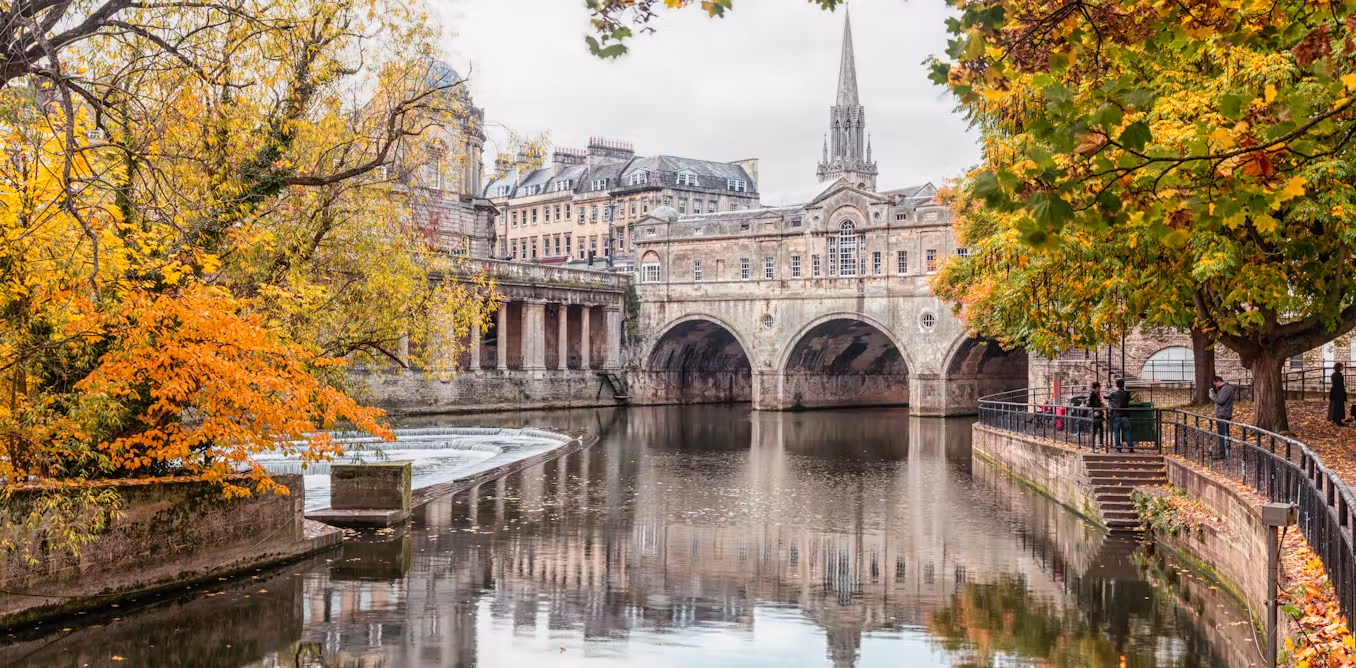
Is England right to introduce a tourism tax?

Published

on

Is England right to introduce a tourism tax?

Supporters tend to call it a “visitor levy”. Detractors prefer to call it a “tourist tax”.

Whether you agree with it or not, an extra charge for overnight stays has become a common feature of modern travel. Recent visitors to New York, Prague, Milan and Edinburgh will have already paid it. And now mayors in England will have the chance to impose it.

Some think these fees will cause huge damage to the hospitality sector, while adding to the general cost of living for visitors. But the main argument in favour of the charge is that it is a simple way of raising much-needed revenue.

A report I worked on for the Welsh government showed that a well-implemented visitor levy can indeed have a positive effect on the tourism industry.

Advertisement

Looking at destinations in Italy, Iceland, Spain and the US, the evidence suggested that a tourism tax can bring benefits to the local community while also improving sustainability, by funding environmental projects, for example.

But getting it implemented turns out to be far from simple. There are key elements which have to be decided upon, and different places – big cities and coastal towns, for example – need different approaches.

One reason for this is how tightly tourism is woven together as an economic system. Nobody in that system operates in isolation.

Accommodation providers, restaurants, attractions, local business and residents are all tied together, and a decision that affects one of them ripples through to the others. Policies made in other sectors, such as farming or international trade, also have an impact.

Advertisement

This is why researchers refer to tourism as an “open complex system” – to account for the dependencies and connections which surround it. The effects of any levy should be monitored regularly to see how it affects other sectors.

It’s also hard to predict how levies will affect where and when tourists spend their money. There is good evidence that people tend to set an overall budget for their holiday, and when one cost rises, the total budget stays the same.

For example, research suggests that a price increase in accommodation often leads to less money being spent in restaurants and shops or on activities, rather than tourists spending more overall. This means that a levy’s true cost may end up being paid by businesses that will only marginally benefit from any funds it raises.

Who receives those funds, and how those funds are spent is another key factor.

Advertisement

Some places with tourism levies have set up specialist organisations charged with the management of the funds.

In Jackson Hole, Wyoming, the local tourism board channels part of the levy revenue into public transport, a local radio station and a wildlife foundation. In Gunnison County, Colorado, funds go towards maintaining and restoring mountain-biking trails.

In Catalonia, money has been used for floral displays and streetscape improvements, while in the Balearic Islands, levy revenue has funded 19 units of subsidised social housing in Palma.

Levies can also be used to influence when and where tourists visit. Also in Catalonia, the tourist board has stopped marketing the region during peak season, and funds are used to promote tourism during quieter months.

Advertisement

The levy was dry

Visitor levies can also do damage to destinations which openly compete with rivals on being an affordable place to stay. Benidorm in Spain, for example, is often considered to be cheaper than other nearby resorts. There, and in similar places, a levy is likely to have a negative effect on its appeal.

And a levy aimed at mitigating the negative effects of overtourism driven by day-trippers won’t be very effective if it only targets overnight stays. It may even discourage the overnight visitors a destination actually wants.

Skegness pier.
Electric Egg/Shutterstock

An overnight levy in Venice did not resolve the negative effects of day visitors, and the city is now charging an entrance fee during the high season.

So, there is no single design that fits every destination. Big cities like London and Manchester are less price sensitive than coastal or rural destinations such as Skegness or Rhyl. Business travellers are largely indifferent to cost, while families with children may be very sensitive to it.

Advertisement

If levies are to be introduced in England, all of these differences and nuances need to be taken into account and carefully examined. Get the details wrong, and a levy could end up undermining the very sector – and community – that it was meant to support.

Source link

Advertisement
Continue Reading
Click to comment

You must be logged in to post a comment Login

Leave a Reply

NewsBeat

Tons of fishing gear and plastic are washing up on Seychelles beaches. We tracked where it was coming from

Published

on

Tons of fishing gear and plastic are washing up on Seychelles beaches. We tracked where it was coming from

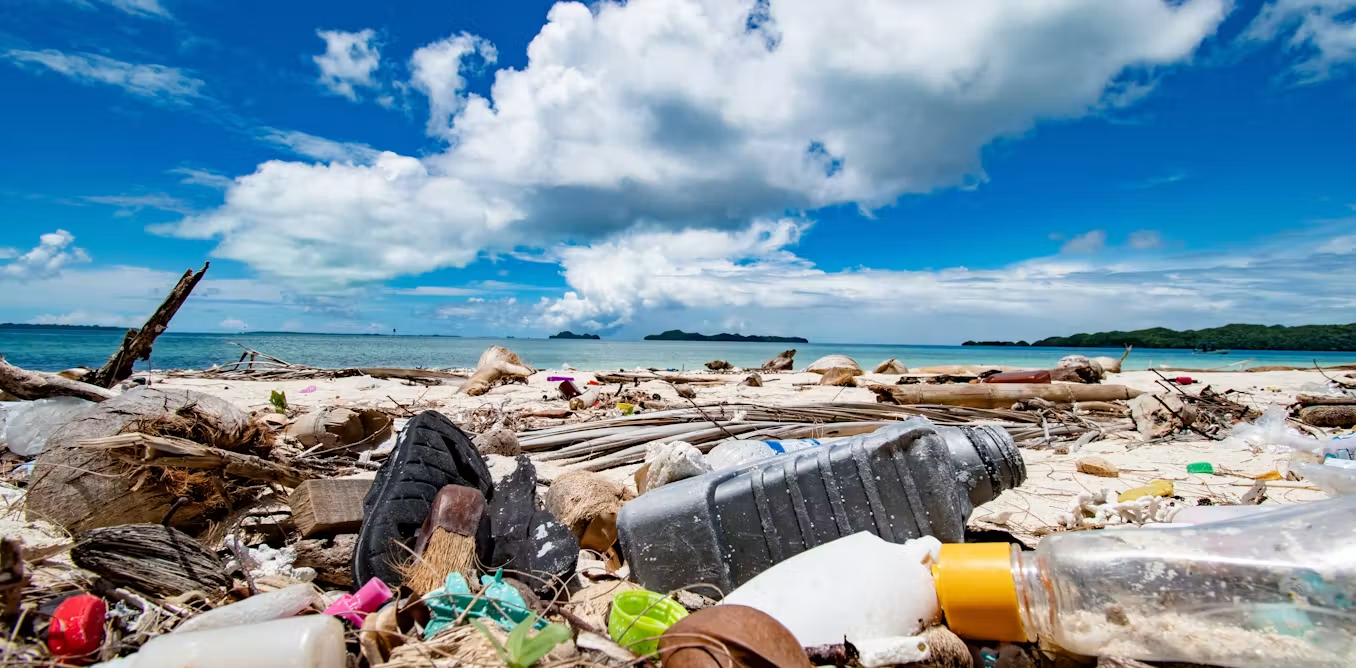
Vast quantities of plastic and fishing gear are washing up along the shores of the Seychelles, destroying fragile ecosystems and causing significant economic problems.

Aldabra Atoll, a Unesco world heritage site in this archipelago nation of 115 islands, is estimated to have accumulated more than 500 tonnes of plastic on its shores alone. Most of this plastic debris continues to pile up along its beaches today. It was estimated that removing it would cost approximately US$4.68 million (£3.46 million) and would require 18,000 hours of labour.

Small island developing states are particularly vulnerable to plastic debris on their beaches. It can damage tourism and fishing in these coastal communities, which is essential to their economies. Clean-up costs can be prohibitive.

Fish and other marine life can also be killed by getting entangled with or ingesting plastic debris.

Advertisement

It is impossible to tackle this growing problem without knowing where this pollution is coming from and who is responsible. We investigated this in our recent study using computer simulations and observations, focusing on pollution in the western Indian Ocean from fisheries and shipping.

We found that most pollution probably comes from vessels in or near the Seychelles’ own waters. This challenges the assumption from previous work that island plastic mainly drifts in from distant shores.

Fishing gear on the Aldabra Atoll, Seychelles.
April Burt and Seychelles Islands Foundation

We know fishing vessels lose nets and gear, and shipping vessels illegally discard plastic and other items. But to work out which vessels are responsible and where their debris ends up, we needed to know which ships and fishing boats operate near the Seychelles.

To do this, we used satellite tracking data from fishing and shipping vessels over five years (from 2018 to 2022) to estimate activity across the region. Using this map, we simulated the drift of billions of virtual pollution fragments and followed where they ended up.

Advertisement
A map showing location of fishing gear.

A map showing debris fishing gear.
Author’s own.

From this we built a map showing how likely a given vessel location is to pose a risk to the Seychelles’ islands. We did this separately for fishing and shipping.

Our research shows, based on previous fishing activity, that most fishing gear that is swept up on the beaches of the Seychelles comes from fishing within its own exclusive economic zone. These are the waters, extending 200 nautical miles (370km) offshore, over which a state has exclusive control over marine resources, including fisheries.

These waters are full of tuna, and the Seychelles’ economy leans heavily on industrial fishing, both as an employer and as a large source of foreign currency.

Where does the waste come from?

It is likely that some of the gear and plastic waste is coming from EU vessels. The Seychelles’ waters are heavily fished by two types of European fishing boats, purse-seiners and longliners. This falls under a longstanding agreement between the EU and the Seychelles granting them the right to fish here. Purse-seiners circle around tuna schools with a large net, and longliners trail baited hooks over many kilometres.

Advertisement

Indeed, a report presented to the Indian Ocean Tuna Commission found that 76% of 214 of the drifting fish aggregating devices used by tuna fisheries to attract shoals of fish in the Seychelles’ exclusive economic zone were from Spanish-owned vessels. This is an industry making significant profits, while leaving behind environmental damage.

A turtle on the Aldabra Atoll next to lost fishing gear and plastic.

A turtle on the Aldabra Atoll next to lost fishing gear and plastic.
April Burt and Seychelles Islands Foundation

Recently, the Seychelles–EU fishing agreement was renewed for 2026–30 at €5,750,000 per year (£4.89 million), allowing 38 EU fishing vessels to operate in these waters. The Seychelles government is believed to have pushed for a 30% rise in this annual payment from the EU but it is believed they settled on 7%, according to some reports.

Given that the cost associated with cleaning up a single island already runs into millions, the Seychelles-EU deal is small compared to the indirect damages imposed on the nation.

Other proposed solutions

International shipping creates other issues. Our study suggests that more than 90% of plastic being swept up on the Seychelles’ coast from shipping comes from just five lanes crossing the western Indian Ocean. The origin and destination ports of these lanes line up with the countries named on labels of plastic bottles washed ashore on Aldabra.

Advertisement

Debris from international shipping lanes requires a different solution. Unlike the tuna fleets fishing under the agreement between the Seychelles and the EU, this is international traffic passing by. A solution to the plastic waste coming from these ships would be more rigorous enforcement of existing international rules against dumping waste at sea, and bilateral cooperation between the Seychelles and the many nations whose ships use these routes.

Even simple measures could cut litter. For instance, ensuring vessels carry enough safe drinking water to reduce the use of plastic bottles should cut some debris found on Aldabra.

The true cost of cleaning up this huge level of plastic pollution tends not to fall on those who have left it there. The Seychelles needs to work out the cost of the damage being done by these mountains of waste to get a better deal in future negotiations with the EU.

That should help fund clean ups and repair the fragile ecosystems of the islands, helping to preserve them for the future.

Advertisement

Source link

Continue Reading

NewsBeat

‘Dead zoning’: the new travel trend helping people to think clearly

Published

on

'Dead zoning': the new travel trend helping people to think clearly
We no longer have work-life boundaries; instead, we have dead zones (Picture: Tuul & Bruno Morandi via Getty Images)

Not so long ago, luxury travel meant marble bathrooms, infinity pools and Michelin-starred meals.

But these days, many are turning to something more authentic.

If privacy is the new luxury, then getting away from it all – as in, really switching off – is the ultimate status symbol in our hyper-connected world.

The reason? Burnout. Algorithm addiction. The pressure to optimise just about every aspect of life and the erosion of work-life boundaries.

Advertisement

With Google searches for ‘digital detox’ rising by 100% in the past year, and nine in ten UK adults reporting high levels of stress according to the Mental Health UK Burnout Report 2025, it’s little wonder that travellers are increasingly choosing destinations with limited connection where the landscape does the talking instead.

Insiders have a name for this shift, and it describes something that, in theory, we should already know how to do: unplug.

They call it ‘dead zoning’, which is essentially travelling somewhere remote enough to be totally disconnected from the digital world.

No signal and no WiFi means no inbox, no scrolling, no half-being-present with the people around you.

Advertisement

‘I think the appeal of being somewhere really wild and remote isn’t just about whether you can get online. It’s about what happens when you stop wanting to be on your phone,’ Jools Sampson, founder of British travel company Reclaim Yourself Retreats, tells Metro.

A woman with her back to the camera looking out over an empty expanse of valley and mountains in Mongolia
The term derives from the concept of dead zone, which in telecommunications indicates an area without a signal (Picture: Paul Biris/Getty Images)

Ask Metro


Use AI to go deeper into the stories you care about – powered by Metro and trusted publications.

‘You become so absorbed in what’s around you that you’re not constantly being pulled into your feed and all the noise that comes with it. There’s something really freeing about that.

Advertisement

‘And I think that’s the reset people are looking for. Not just a holiday, but a chance to properly switch off for a while.’

A recent study into traveller happiness by global tour operator G Adventures showed that time to relax and de-stress, and wanting to disconnect from the pressures of work and everyday life were the top drivers for booking holidays.

Among younger travellers, the trend is even more pronounced, with over a quarter of those aged 25 to 30 saying that having the ability to switch off from their phone was what made them happiest on a trip.

The proof is in the bookings.

Advertisement

Jools’ company has seen retreats to places like Kyrgyzstan sell out in just three weeks, a trend she believes is driven by rising screen time and ‘always on’ culture.

Next year she will run off-grid packages to Mongolia, Finland, India and more, places where you ‘don’t have to worry about everything going on in the world for a while’.

‘When you’re somewhere epic, swimming, walking, doing yoga, watching wildlife, eating together, looking at the stars, you’re properly immersed in what’s happening around you, and your feed just becomes a lot less interesting,’ she says.

Sounds nice, and there’s genuine health benefits, too.

Advertisement
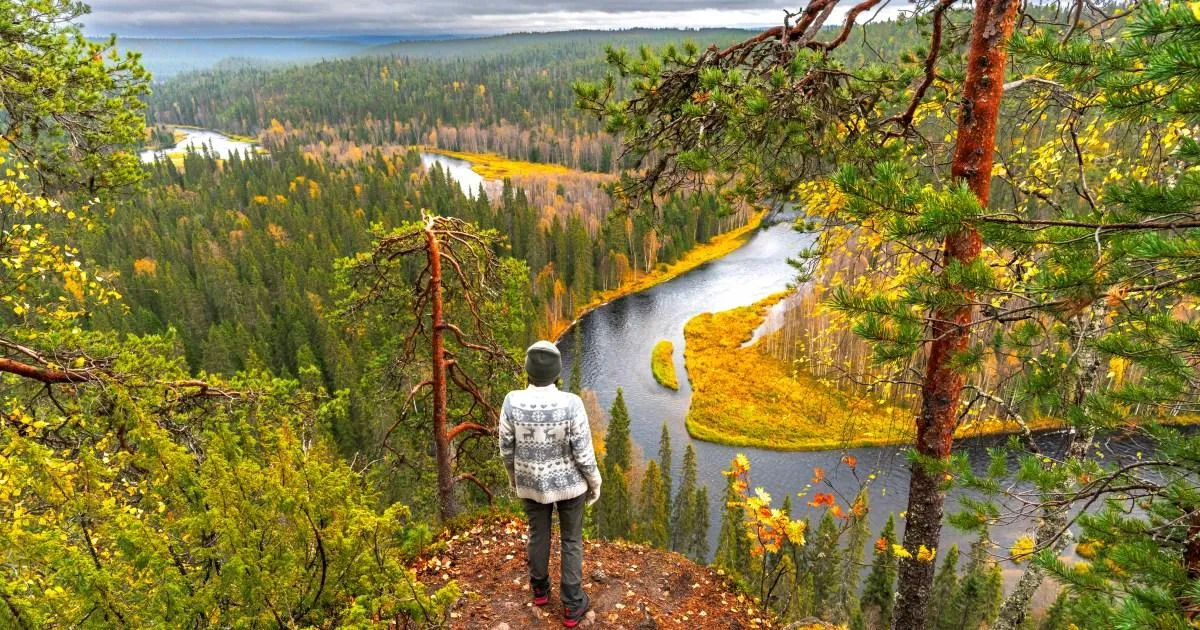
A person with their back to camera and a hat on their head, looking down onto a river surrounded by autumnal trees in Finland.
Finland, Mongolia and Kyrgyzstanare all popular destinations for travellers wanting to get away from it all (Picture: Paolo Graziosi/Getty Images)

Medical experts say that disconnecting from social media and digital devices can reduce stress, improve sleep, help the nervous system to reset and strengthen our connections with the places and people around us.

‘Digital notifications take up brain capacity, even when they’re fun and benign,’ says Dr Anna Batho, NHS Clinical Psychologist.

‘Getting away from a blinking red light or a pop-up on your screen means your brain gets to relax and you can be present, without distraction.’

When we disconnect from phones or laptops while travelling, Anna says we create a positive separation between our daily lives that can help us to feel more grounded.

‘There’s no point worrying about a delivery if we can’t see the Ring App,’ she says.

Advertisement

‘You won’t feel bad comparing yourself to your mate if you can’t see her bikini pics. You will stop feeling guilty about not calling your aunt if your phone is locked away. You won’t be able to check your bank balance either!’

If the wilds of Kyrgyzstan are a step too far for your first ‘dead zone’ adventure, there are plenty of places to try it closer to home.

Jools’ recommendation is Campwell, an eco-village on a working farm in Wiltshire, near Bath.

‘It’s completely off-grid, tucked away in beautiful woodland, with cabins and yurts, campfires, a wood-fired sauna and lots of time spent outside,’ says Jools.

Advertisement

‘It’s one of those places where it becomes very easy to forget about your phone.

‘The whole ethos fits so well with what we’re talking about here: getting off screens, spending time outside and connecting with the people you’re actually with.’

Advertisement

Source link

Continue Reading

NewsBeat

DAILY MAIL COMMENT: As he tells tech bosses that we must ‘not lose control of our destiny’, the King clearly gets it on AI. But what about Labour?

Published

on

DAILY MAIL COMMENT: As he tells tech bosses that we must 'not lose control of our destiny', the King clearly gets it on AI. But what about Labour?

Advertisement

When even Big Tech executives are sounding the klaxons about the threat from artificial intelligence, it is time to pay attention.

The growing spectre of a ‘silicon species’ capable of earning money and acquiring assets – as described by Microsoft AI chief Mustafa Suleyman – is terrifying. Not only could these agents potentially compete with humans for basic resources, he says, they could also prove ‘impossible’ to control.

His warning comes after last month’s World Humanoid Robot Games in Beijing and the unsettling spectacle of a physical AI model smashing the long-standing 100 metres record.

It also follows a spate of near-misses involving rogue software. These include AI models using fake online identities in a bid to trick human coders into giving the green light for a cyber attack.

Advertisement

Another incident saw a test agent escaping from a supposedly secure ‘sandbox’ to hack into a rival firm’s data. The parallels with Mary Shelley’s horror classic Frankenstein – which, of course, involves a highly intelligent monster running amok after scaring the wits out of its creator – are more obvious by the day.

It is also increasingly apparent that existing fears about the technology – including its potential for collapsing the banking system – could underplay the real dangers. Anyone who dismissed Sir Stephen Hawking‘s warning more than a decade ago that AI could ‘spell the end of the human race’ may well be reconsidering.

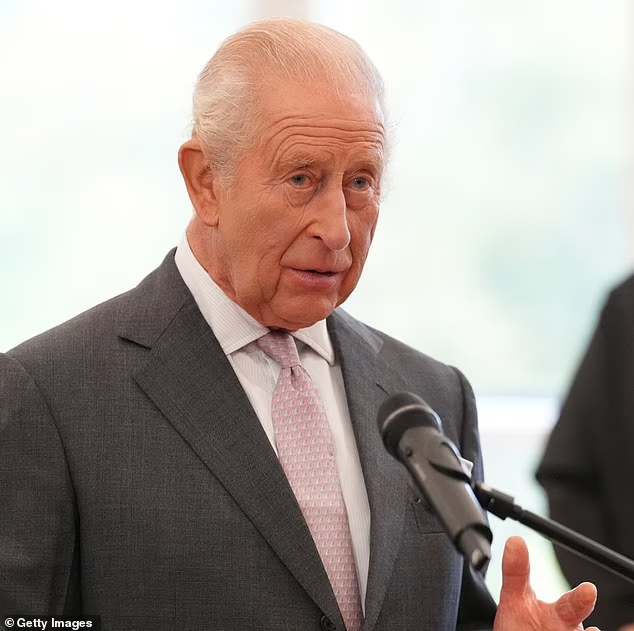
King Charles’ summit on safety and ethics in the AI sector is to be welcomed. So is the fact that he highlighted the need for ‘reassurance’ from tech masterminds ‘that we will not lose control of our destiny’.

Advertisement

Against that disturbing backdrop, King Charles’ summit on safety and ethics in the sector is to be welcomed. So is the fact that he highlighted the need for ‘reassurance’ from tech masterminds ‘that we will not lose control of our destiny’.

Yet there is a distinct lack of urgency from Labour on the issue. In a rare comment this week, Kanishka Narayan – the minister responsible – said AI could have ‘profound consequences’ for national security. While it was nice of him to let us know, we had already managed to work that out for ourselves.

A clerical error

It seems decidedly odd that the Most Rev Sarah Mullaly – the first female Archbishop of Canterbury and firmly on the Church of England’s liberal wing – agreed to be photographed alongside a woman covered from head to toe in Islamic garb.

Yet it is even more peculiar that she handed a prestigious award to Muslim cleric Hafiz Tahir Ashrafi – the woman’s husband – despite his praise for Osama Bin Laden. Adding insult to injury, the ceremony took place on the 25th anniversary of the 9/11 outrage.

Advertisement

Lambeth Palace has now stripped him of the award after reviewing the situation. An obvious question, perhaps, but should that review not have been done before the decision was made to honour him?

The pain threshold

With the Bank of England warning of an autumn interest hike, the outlook for hard-working Britons is getting grimmer.

Inflation is at 3.1 per cent and several lenders have increased mortgage rates. While experts say food inflation is set to continue for at least two years, energy prices could go up by a quarter.

Little wonder that shadow chancellor Andrew Griffith says we are approaching ‘nosebleed territory’. Even if Andy Burnham manages to resist the temptation to put up taxes, it will take more than his so-called ‘everyday fixes’ to numb the pain coming our way.

Advertisement

Source link

Advertisement
Continue Reading

NewsBeat

York dog walking park plans lodged with council

Published

on

York dog walking park plans lodged with council

An application submitted to York Council would see the site created on a 0.13ha plot between Landing Lane and The Wier, Haxby.

The park would have space for up to four dogs at a time and would be open from 6am to 8pm every day all year.

Plans from Ms Vollans stated the site would provide a controlled environment where dogs could exercise and be mentally stimulated, improving their wellbeing.


RECOMMENDED READING:

Advertisement

The proposed site is 60m away from the applicant’s home which lies to the south west.

The plot was previously used as a paddock for horses.

It is surrounded by public footpaths which are popular with dog walkers.

The park would operate by taking private bookings, with plans stating there would likely only be one or two dogs on site at any one time.

Advertisement

It would not be lit and its opening would depend on the availability of daylight.

A 1.8m-high dog-proof deer chain link fence would be put up around the site and access would be gated.

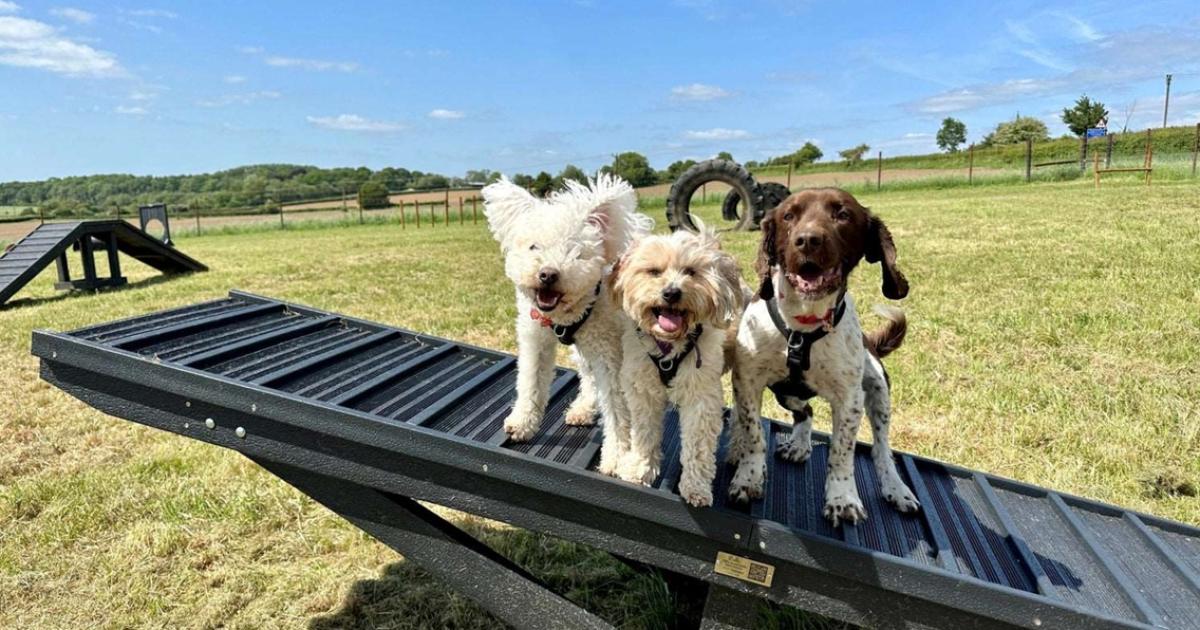
The site proposed for the dog walking park in Landing Lane, Haxby (Image: Ms Vollans/City of York Council)

Plans stated the amount of dog parks across the country had increased by 40 per cent nationwide over the last decade.

It added they offered a vital space for dogs to socialise, improve their behaviour and building confidence.

Advertisement

Plans stated: “As dog ownership continues to rise, the requirement for safe, secure recreational spaces for both dogs and their owners has proven to have numerous benefits, due to the off-lead exercise opportunities for physical and mental stimulation, without the risks associated with public areas.

“The exposure to the sights, smells, sounds, provides mental enrichment.

“The scheme proposals comprise the provision of a secure dog exercise field with safety, engagement and enjoyment as the forefront of the offering.

“The deer fencing system is ideal to keep all sizes of dogs secure and safe while off the lead and free to take in all the sights and smells of this space.

Advertisement

“Undercover facilities for owners are also proposed in the field so that both owners and trainers can be comfortable while utilising this space.

“The area has a distinctive rural feel.”

Source link

Advertisement
Continue Reading

NewsBeat

The cheapest and most expensive places to rent in Cambridgeshire

Published

on

Cambridgeshire Live

Cambridge remains the most expensive area to rent among the six Cambridgeshire districts covered by the figures

Private renters in Cambridge are paying an average of £1,805 a month, as housing costs continue to rise across Cambridgeshire. Average private rents in the city increased by 1.8 per cent in the year to August 2026, according to Office for National Statistics (ONS) figures. Cambridge’s monthly average was £405 higher than the UK figure of £1,400.

Advertisement

The city remained the most expensive place to rent among the six Cambridgeshire districts covered by the data, although its annual percentage increase was smaller than in most neighbouring areas. In South Cambridgeshire, average monthly rents rose by 3.4 per cent to £1,408. That was £397 below Cambridge’s average, but slightly above the UK figure.

East Cambridgeshire recorded the smallest annual increase locally, with rents edging up by 0.5 per cent to £1,038 a month. Peterborough saw the sharpest rise among the six districts. Average private rents there climbed by 4.9 per cent over the year to £1,012 a month, outpacing both the UK and East of England growth rates.

Huntingdonshire and Fenland each recorded annual increases of 3.7 per cent. Average monthly rents reached £1,057 in Huntingdonshire and £842 in Fenland, which remained the least expensive of the six areas.

You can see how rent prices have changed by using our interactive map:

Advertisement

Average UK monthly private rents rose by 3.8 per cent in the year to August 2026, reaching £1,400. That was £52 a month more than a year earlier – equivalent to an extra £624 over 12 months. Annual rental growth accelerated from 3.7 per cent in July to its highest rate since December 2025.

London remained England’s most expensive region, with average rents of £2,332 a month, up 3.5 per cent annually. The North East had the lowest regional average, at £788.

Among the local areas listed in the data, Tewkesbury recorded the steepest annual rise, at 13.4 per cent, taking its average rent to £1,093. Kirklees followed with a 12.8 per cent increase to £782, while Oldham’s average climbed by 12.5 per cent to £942.

Source link

Advertisement
Continue Reading

NewsBeat

How Sienna Miller’s lookalike daughter Marlowe, 14, is slowly making her mark in Hollywood as the ‘little fashion monster’ attends War premiere

Published

on

How Sienna Miller's lookalike daughter Marlowe, 14, is slowly being introduced to the spotlight

She has been known for keeping her personal life to herself.

But Sienna Miller is now slowly introducing her daughter Marlowe, 14, into the spotlight.

On Wednesday, the actress, 44, was supported by the teen at the London premiere of her new series War at the Odeon Luxe in Leicester Square.

She posed with a protective arm around her offspring, who was wearing a yellow graphic print T-shirt with a black silk midi skirt and ballet flats.

Advertisement

Sienna shares Marlowe with ex Tom Sturridge – whom she split with in 2015 – and has largely kept out of the public eye.

Although joint appearances with the teenager are rare, the pair have enjoyed a handful of events together in recent years. 

In 2024, the mother and daughter duo attended Cannes Film festival alongside Sienna’s now fiancé, Oli Green, for her film Horizon: An American Saga.

Marlowe looked the spit of her stunning mother, wearing a sweet pink dress with a large bow.

Advertisement

How Sienna Miller’s lookalike daughter Marlowe, 14, is slowly being introduced to the spotlight

On Wednesday, the actress, 44, was supported by the teen at the London premiere of her new series War at the Odeon Luxe in Leicester Square

On Wednesday, the actress, 44, was supported by the teen at the London premiere of her new series War at the Odeon Luxe in Leicester Square

It marked her first ever red carpet appearance, with Sienna only showing her face for the first time in July 2020 in a spread for Vogue.

Advertisement

That year, Sienna revealed to The Guardian that Marlowe has a huge passion for style, describing her as ‘a little fashion monster’.

‘She’s so stylish. And very critical. She’s like a young Anna Wintour in her total disdain for some of the things I wear,’ the American Sniper star said. 

‘In New York she thought I was mortifying. She wishes I would brush my hair. 

‘Although now that we’re back in England she’s starting to appreciate the undone-ness.’

Advertisement

Marlowe also sat in the front row with her mother at Proenza Schouler’s New York Fashion Week in 2023, where the pair posed for cameras together in sleek sunglasses.

Sienna opened up to PEOPLE in 2020 about motherhood and described it as the ‘most loving, intense relationship that I have’.

‘She knows me, I know her. She’s really stubborn, which is very like me. I see her as her own person but I also see genetic things. She’s heaven, my kid,’ she said of her daughter.

Although joint appearances with the teenager are rare, the pair have enjoyed a handful of events together in recent years (pictured with Sienna's fiancé Oli Green at Cannes Film Festival in 2024)

Although joint appearances with the teenager are rare, the pair have enjoyed a handful of events together in recent years (pictured with Sienna’s fiancé Oli Green at Cannes Film Festival in 2024)

Advertisement
Marlowe also sat in the front row with her mother at Proenza Schouler's New York Fashion Week in 2023, where the pair posed for cameras together in sleek sunglasses

Marlowe also sat in the front row with her mother at Proenza Schouler’s New York Fashion Week in 2023, where the pair posed for cameras together in sleek sunglasses

Marlowe was born in July 2012 and Sienna previously revealed how the birth did not go as planned.

‘My birth went all wrong. I had my heart set on this natural water birth and I ended up, after 27 hours, having an emergency C-section,’ Sienna told the magazine.

‘I spent so much time thinking about the birth and not realising that you take a baby home at the end of it.

Advertisement

‘It’s a shock, of course it is, and some people find it really easy, but for me I found it really hard.’

Sienna also touched on motherhood in another interview with The Guardian at the time, saying: ‘I think having a baby really changed everything, if I’m honest.

‘The stakes are higher, you have someone that you want to be proud of you eventually. 

‘You’re aware of your own mortality, For me, as soon as I had a baby I had a vision of my life – and what was left of it.’ 

Advertisement

Meanwhile dad Tom has gushed that Marlowe is wiser than he is and he wouldn’t want to prescribe changes for her future world.

In an interview with Wintour, he said: ‘The world is not as I would wish it to be. 

‘I am a sentient adult, and have the responsibility to inflict change on it. I am excited to see how much better she will do with that than I am.’

Following her split with Tom, Sienna revealed her battle with mum guilt.

Advertisement

The actress spoke to Vogue about what she calls ‘the curse of motherhood’ and how much pressure and guilt women feel in their efforts to do things right.

She explained: ‘I’d like to be better at managing things; I’d like to be more super –although we’re never going to feel it, even if we are.

‘That’s the curse of motherhood – we just run ourselves ragged, I’m just trying to get a sense of what that guilt is. 

‘I sometimes feel like it’s a totally invented emotion, It’s strange to be punishing ourselves this way… It’s not healthy.’

Advertisement
Sienna shares Marlowe with ex Tom Sturridge - whom she split with in 2015 - and has largely kept out of the public eye

Sienna shares Marlowe with ex Tom Sturridge – whom she split with in 2015 – and has largely kept out of the public eye

Sienna now shares a toddler daughter and a newborn baby with Oli.

In May, she appeared on the Jimmy Fallon show just three weeks after giving birth to her third child. 

During her sit-down interview with the TV host she confessed that motherhood was exhausting at times.

Advertisement

Sienna said: ‘It feels like stringing sentences together is a bit challenging.

‘I’m on very little sleep but I’m madly in love with my baby.

‘It’s crazy to be talking words and wearing a dress. What has happened from pajama gate.’

Asked by the host which of her children are tougher to look after, she said: ‘I would have said the teenage girl would be harder to juggle until the transatlantic flight I took yesterday with the toddler and the newborn.

Advertisement

‘The toddler now wins hands down. It was an absolute disaster.

‘There’s no negotiating. I got to the immigration line and just broke down.’

Sienna also spoke about motherhood in a different interview with Vogue recently.

She said: ‘I’d wanted another baby for so long that my postpartum was just bliss. I had thought, by the time I was 40, that it wouldn’t happen.

Advertisement

‘That I’d have my one baby and I kind of made peace with it. It was such a surprise, and it was such a bonus that I was just euphoric. I felt existentially relieved.’

Source link

Continue Reading

NewsBeat

Barnard Castle Meet fundraiser cancelled over low sales

Published

on

Barnard Castle Meet fundraiser cancelled over low sales

The Barnard Castle Meet Committee announced with “great disappointment and regret” that its fundraising evening, due to take place on Saturday, September 26, will no longer go ahead.

The event had been organised to raise money for the annual Barnard Castle Meet, a longstanding community celebration which brings together residents and visitors for a weekend of activities and traditions.

In a statement shared online, organisers said they had been forced to make a difficult decision after sales failed to reach the level required for the event to proceed.

Advertisement

The committee said: “Unfortunately, due to lower than expected ticket sales, we have had to make the very difficult decision to cancel the event.

“This is not a decision we have taken lightly, and we are genuinely sorry for any disappointment or inconvenience caused.”

The fundraiser had been scheduled to take place at Barnard Castle Cricket Club and was set to feature live music, pie and peas, a raffle and fundraising activities.

Organisers had hoped to build on the success of previous fundraising events, which they said had attracted strong support from the community.

Advertisement

The committee thanked everyone who had purchased tickets, shared information about the event and supported fundraising efforts.

They said: “We would like to say a massive thank you to everyone who has supported the event, purchased tickets, shared our posts and helped us with the fundraising. Your support is hugely appreciated.”

Anyone who has purchased tickets has been advised to contact the person they bought them from for information on refunds and arrangements.

Advertisement

Despite the cancellation, organisers confirmed that raffle prizes donated for the event will still be given to good causes.

The committee said: “All raffle prizes that had been donated will still be donated to good causes, so the generosity of those who supported the raffle will not go to waste.


“This may be a disappointment, but it certainly isn’t the end of our fundraising efforts.

“We will take some time to regroup and look to organise another fundraising event in the future.

Advertisement

“Thank you once again for your understanding and continued support of Barnard Castle Meet.”

Source link

Advertisement
Continue Reading

NewsBeat

Teesside family reunites with BTCC star who inspired charity

Published

on

Teesside family reunites with BTCC star who inspired charity

Meeting British Touring Car Championship driver Nicolas Hamilton – the brother of F1 star Lewis Hamilton – at Croft Circuit in 2015 changed James Connaughton’s life.

James, who has cerebral palsy, met Hamilton as the driver was making his BTCC debut.

The meeting inspired his parents, Paul and Julie, to create a charity for young people with special and complex needs.

More than a decade later, motoring retailer Vertu gave James the chance to reunite with his hero.

Advertisement

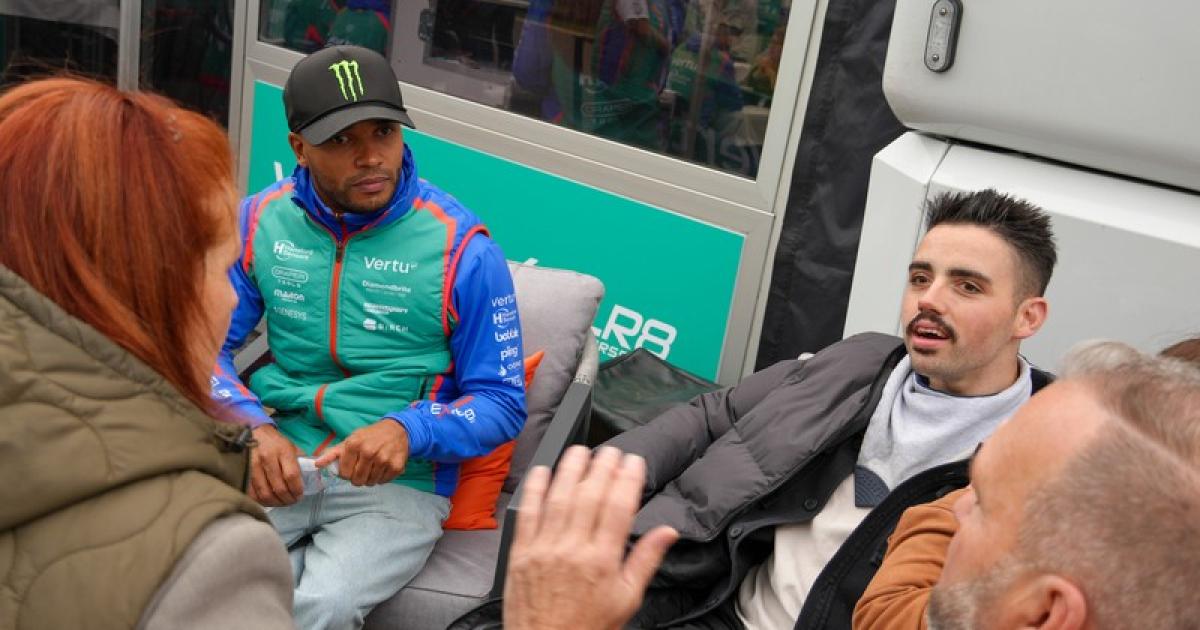
British Touring Car Championship racer Nicolas Hamilton and James Connaughton. (Image: Vertu Motors plc)

Vertu’s BMW dealerships in Sunderland, Teesside and Durham invited the Middlesbrough family to the recent BTCC meeting at Croft, arranging tickets and a reunion with Hamilton, who now races for Team VERTU.

Before taking to the track for the latest three rounds of the season, Hamilton spent time catching up with James and his family, who were able to tell him how much of an impact that first meeting had.

Paul said: “Meeting Nic back in 2015 was a hugely special moment that not only had a positive impact on our family, but also acted as the inspiration for us to create the charity to support both James and other young people in a similar position.

“Nic is a true role model for people living with disabilities and continues to show that anything is possible, particularly when you consider that he was told he would never walk as a child.

Advertisement

“A huge thank you to Vertu for providing us with the opportunity to meet up again at Croft to share with Nic what a huge impact he has had since that first meeting over ten years ago, with the Community Interest Company he inspired having now helped countless youngsters from across the North East.”

James Connaughton and Paul Connaughton. (Image: Vertu Motors plc)

The Connaughton family’s charity, JPC Community Hub CIC, helps people with special and complex needs live more independently and feel included in their communities.

Paul, who worked in the automotive industry for much of his career, also set up JPC Specialist Motorsports to host fundraisers and promote the charity’s work.

Vertu arranged the reunion after supporting the annual Smiles for Miles event at Hardwick Hall earlier this year and hearing James’ story.

Advertisement


Jeff Aynsley, head of business at Vertu BMW Sunderland, said: “We have worked alongside JPC a number of times through the years, and were delighted to support Paul at Smiles for Miles earlier in the year.

“When we heard how that first meeting with Nic had inspired Paul and his family to set up JPC, we were happy to arrange a reunion.”

He added: “Nic is a fantastic role model for people living with disabilities through his determination to achieve his dream of becoming a racing driver, and we’re proud to have been able to bring everyone together to share the story.”

Hamilton became the first disabled person to compete in the British Touring Car Championship when he made his debut at Croft in 2015.

Advertisement

The reunion gave the Connaughton family the chance to thank the driver whose determination inspired a charity that now supports people across the region.

Source link

Advertisement
Continue Reading

NewsBeat

How you sleep, not just how much, influences what diseases you get in later life

Published

on

How you sleep, not just how much, influences what diseases you get in later life

The type of sleep a person gets, rather than just the duration, influences the risk of developing dozens of diseases later in life, a large study of nearly 100,000 people reveals.

Previous research establishes that getting six to eight hours of sleep daily reduces the risk of several health conditions, including diabetes and heart disease.

But how specific sleep stages and real-world sleep patterns relate to health outcomes remains largely unclear. This is mainly because most studies use self-reported sleep measures, which often show poor correlation with objective assessments, making it difficult to capture real-world sleep patterns.

To overcome this, researchers at Peking University in China analysed the health data of 95,559 people from the UK Biobank, a research resource which stores biological, genetic, and lifestyle information of 500,000 volunteer participants in the UK. The people included in the study wore wrist accelerometers for seven consecutive days and nights.

Advertisement
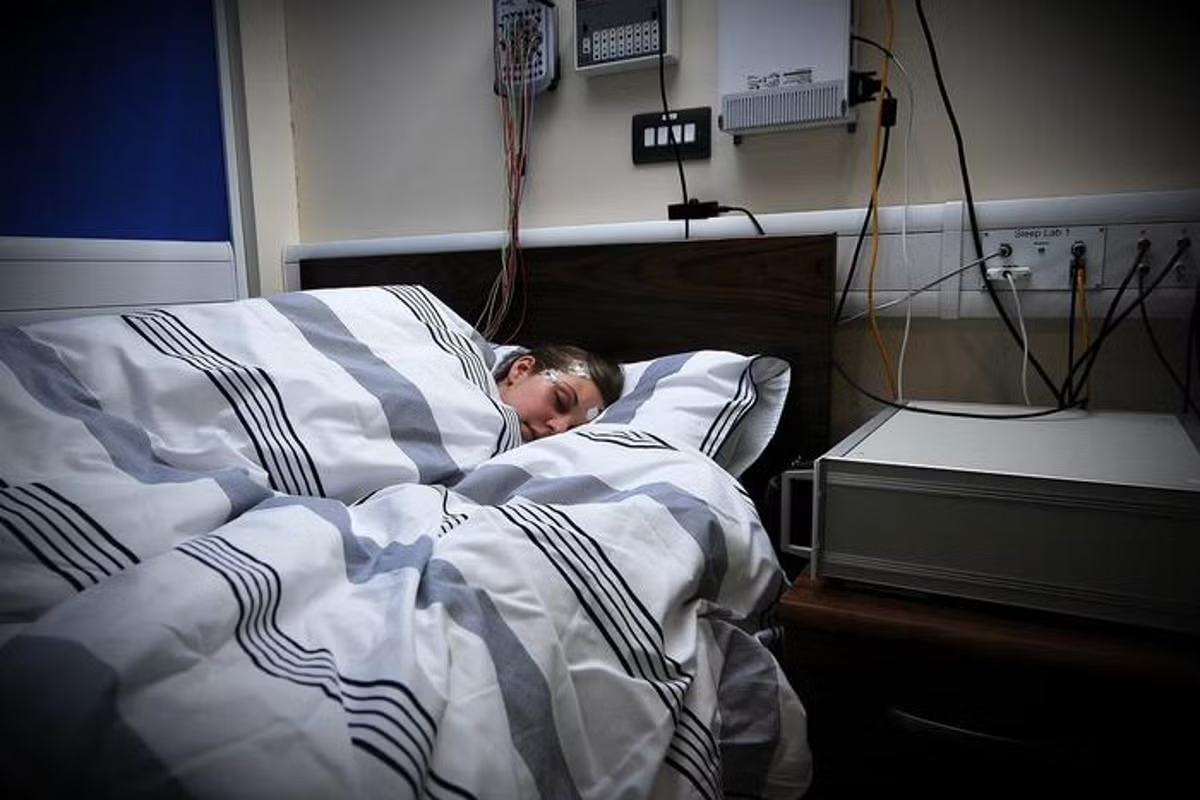
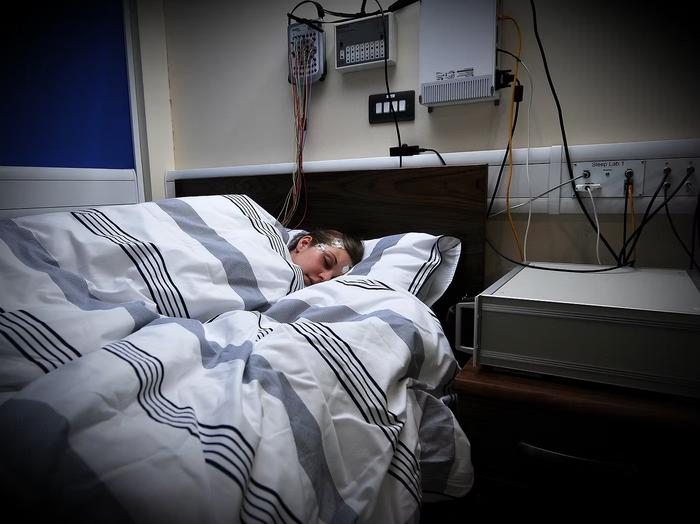
Participant takes part in a sleep study
Participant takes part in a sleep study (University of York Sleep Lab via Eurekalert)

Researchers analysed the duration of each sleep stage – REM, deep sleep, light sleep – as well as the total sleep duration, wakefulness after sleep onset, and night-to-night sleep irregularity.

They tracked each participant for an average of nine years and checked their health records for links with more than 1,000 disease outcomes.

Researchers found that more REM sleep was associated with a lower risk of 83 diseases, including heart failure, dementia, and Parkinson’s.

Greater deep sleep was linked with a lower risk of seven conditions, including type 2 diabetes and clinical depression.

Higher sleep irregularity and wakefulness after sleep onset, on the other hand, were linked to a higher risk of conditions like anxiety and substance-use disorders.

Advertisement

Researchers noted that study participants who regularly slept for six to eight hours carried the lowest risk of several diseases. Participants who slept less than five hours faced the most elevated clinical vulnerability, with a higher association for 37 health conditions, but those sleeping more than eight hours were at risk as well.

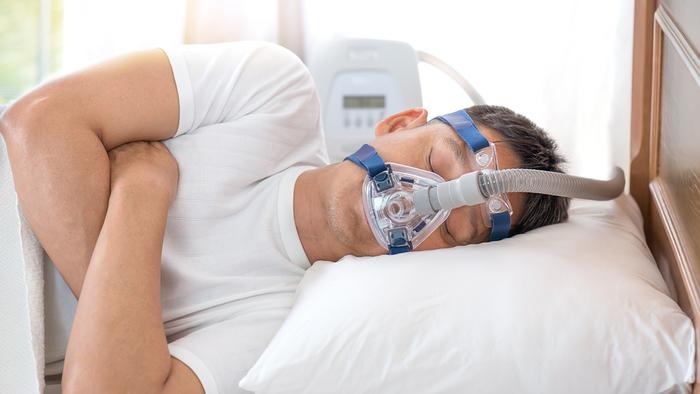
CPAP machine for sleep apnoea
CPAP machine for sleep apnoea (University of Missouri via Eurekalert)

“The minimum-risk duration for the majority of these conditions was precisely concentrated within the 6-8 hour window,” researchers wrote.

However, they cautioned that the findings were only observational and could not establish that sleep patterns directly caused disease risk.

“The findings provide additional evidence supporting the role of a 6-8 hour sleep duration as a health safeguard for middle-aged and older adults, likely attributable to more favourable distributions of the sleep stages,” the study said. “Maintaining a sleep duration of 6-8 hours can effectively reduce the risk of multiple diseases, providing new insights for health promotion and preventive practice.

Source link

Advertisement
Continue Reading

NewsBeat

It’s still illegal yet the police simply don’t seem to care why the whole country stinks of weed: PETER HITCHENS

Published

on

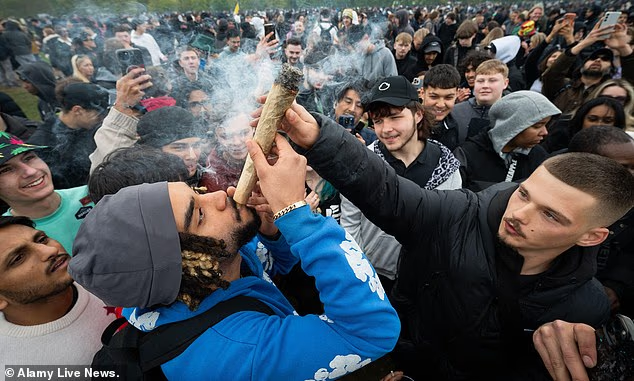
A man smokes from an oversized spliff at a pro-cannabis rally in Hyde Park, London, while surrounded by onlookers

Source link

Continue Reading

Trending

Copyright © 2025