Connect with us

Business

Migration policy fails to ease concern for harvest workers, station stay staff

Published

on

Migration policy fails to ease concern for harvest workers, station stay staff

Immigration officials have been urged to process harvest worker visas immediately to ensure farmers can staff their operations when they begin taking their crops off from next week.

The federal government on Thursday lifted its pause on skilled worker visa processing from overseas which it implemented a few weeks ago amid scrutiny over migration policy and its impact on housing availability.

In doing so, new migration policy was unveiled which would prioritise processing of skilled migrant visas for agriculture, construction, resources, fishing, defence and healthcare.

Backpacker, international student and visitor visas rules will be tightened.

Advertisement

The pause on skilled migrant intake has caused anxiety in regional WA ahead of the 2026-27 grain harvest, which is due to start in the Mid West as early as next week.

One group of farmers in Esperance told ABC Perth early in the week they had about 50 migrant workers held up overseas because of processing delays.

Pastoralists and Graziers Association of Western Australia president Digby Stretch said the federal government must process harvest worker visas immediately to undo the damage they had done.

“I would like to see the federal government look very carefully at the lobbying and the facts that have been put in front of them over the last weeks and months while this has been going on and have enough hubris to realise that they have severely disenfranchised a really important part of Australia,” he said.

Advertisement

“Make amends by fast-tracking what they paused and make sure that they don’t end up short-changing us for the vital staff that we have got that we can’t get anywhere else.

“It is not as though the crop is going to wait for farmers to get their staff before it’s ready to harvest.”

Under changes announced by Immigration Minister Tony Burke, backpackers will now __

Advertisement

Operators of station stays on WA pastoral leases launched a petition last week calling on the federal government to return migration policy to the status quo.

Some of WA’s larger station stays employ more than 20 backpackers at a time during peak season.

There remains concern that, while working on a pastoral property, the fact that staff would be employed in the tourism sector meant they would not be prioritised.

Wooramel River Retreat, Warroora, Murchison House and Cheela Plains Station are among WA operators which have put their names to the Australian Tourism Industry Council petition.

Advertisement

“Cuts to Working Holiday Maker and Tourist visas could hit Wooramel and other station stays across WA hard,” Wooramel posted to social media.

“Long-stay visitors travel further, stay longer, and help fill the seasonal roles that keep us welcoming guests and delivering the outback experiences you love.”

Mr Stretch said access to migrant and backpacker labour was a hot topic across regional WA.

“The government is seriously out of touch with the staffing requirements that we have in regional Australia as to how they’re dealing with this crisis,” he said.

Advertisement

“For any of you that are traveling around, have a look at who’s serving your coffee and who’s manning the roadhouses and who’s in the service industry out there in the bush. 

“There will be an accent behind nearly everybody you’re talking to.

“It is unfortunate that the government have made this knee-jerk reaction as far as what we’re needing for regional workforce.”

Mr Stretch said a shortage of harvest workers could lead to safety issues for farmers and quality issues for crops.

Advertisement

Wooramel River Retreat and Cheela Plains were contacted for comment.

Advertisement
Continue Reading
Click to comment

You must be logged in to post a comment Login

Leave a Reply

Business

Exclusive-ECB’s Vujcic cools oil-fuelled bets on rate hikes

Published

on


Exclusive-ECB’s Vujcic cools oil-fuelled bets on rate hikes

Continue Reading

Business

Huber+Suhner AG (HSSKF) Analyst/Investor Day – Slideshow

Published

on

OneWater Marine Inc. (ONEW) Q1 2026 Earnings Call Transcript

Huber+Suhner AG (HSSKF) Analyst/Investor Day – Slideshow

Continue Reading

Business

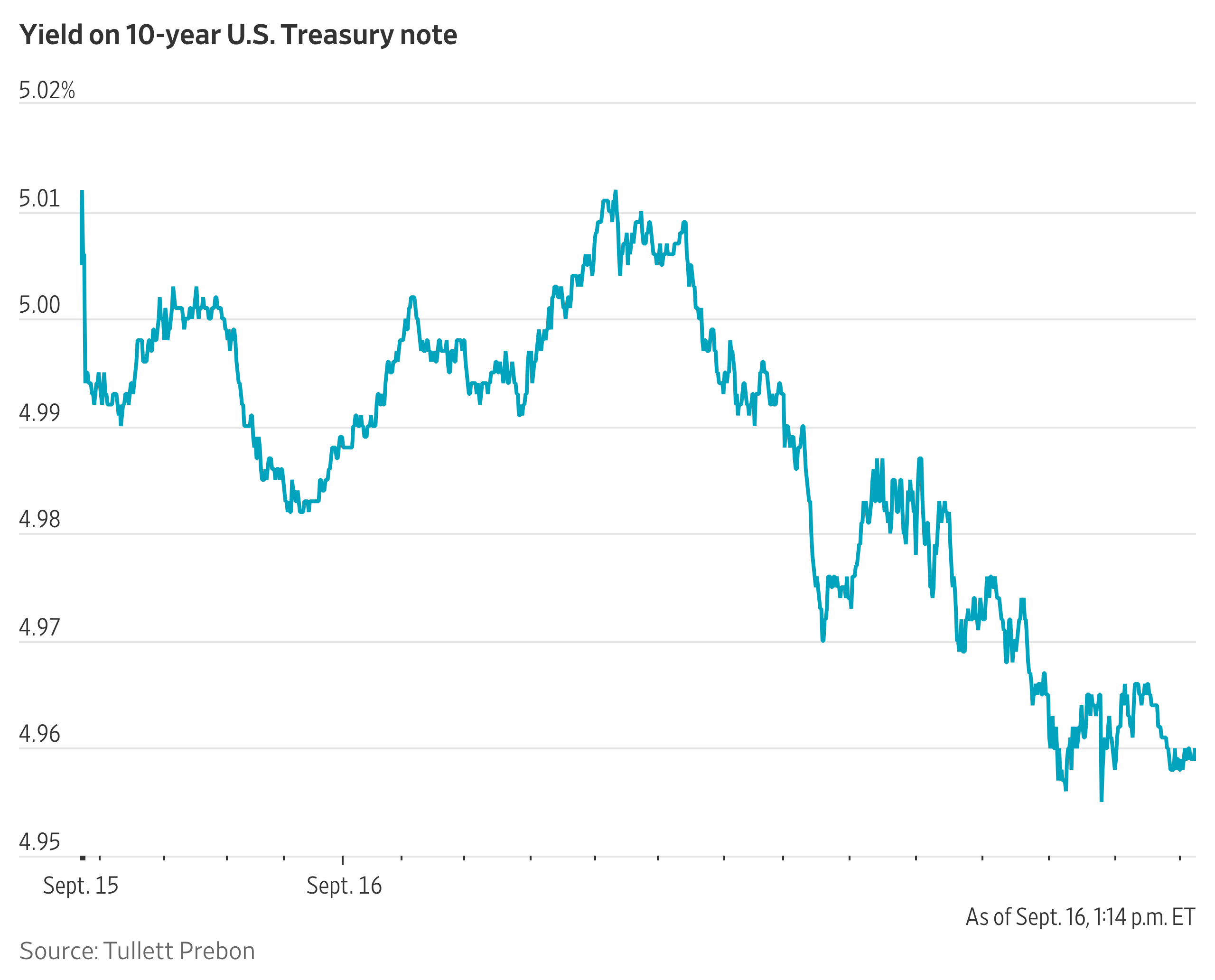
Treasury Yields Hold Declines After Fed Raises Rates

Published

on

Treasury Yields Hold Declines After Fed Raises Rates

Treasury Yields Hold Declines After Fed Raises Rates

Continue Reading

Business

Opinion: ‘Approved’ is not the same as ‘safe’

Published

on

Opinion: ‘Approved’ is not the same as ‘safe’

OPINION: Well-resourced complainants can make life difficult for hospo owners.

Continue Reading

Business

AI’s 3 musketeers are hitting the brakes. Why Jefferies’ Chris Wood sees India midcap stocks regaining favour

Published

on

AI’s 3 musketeers are hitting the brakes. Why Jefferies’ Chris Wood sees India midcap stocks regaining favour
Dario Amodei, Sam Altman and Elon Musk, the three musketeers at the centre of the AI race, are suddenly talking about hitting the brakes. Jefferies’ Head of Global Equity Strategy Chris Wood believes that if the AI trade loses momentum, global investors may once again turn to India, whose structural growth story has remained intact even as technology giants dominate emerging market allocations.

“It is reasonably clear that for India to become a prime point of focus again for emerging market equity investors, the AI story has to blow up,” Wood wrote in his latest GREED & fear newsletter. The three AI-linked stocks — TSMC, Samsung Electronics and SK Hynix — account for 29% of the MSCI Emerging Markets Index, compared with India’s 11%. But with Indian bank credit growing 19.1%, corporate lending accelerating and earnings growth expected to improve, Wood sees the country’s domestic resilience becoming harder for investors to ignore.

The report describes the development as “bizarre” and offers two possible explanations. The first is that a coordinated pause, presented as a safety measure, could help the biggest AI companies build a regulatory moat, particularly if open-source models from China are later restricted. The second is more concerning: the cost of computing may be becoming unsustainable, while AI models could be starting to plateau. Wood says he has no inside track but considers both explanations plausible.

Either way, a reversal in the AI trade could redirect global investor attention towards India, whose weighting in the MSCI Emerging Markets Index has been overshadowed by the combined 29% share of Taiwan Semiconductor Manufacturing Co., Samsung Electronics and SK Hynix. India accounts for 11% of the index, according to the report.

Advertisement

Also Read |India’s ‘anti-AI’ trade hides 42 AI-enabler stocks that rallied 60% already: Goldman Sachs

India’s growth story has survived the shock

Wood’s argument for India is not based only on a possible unwind in the AI trade. He says the country’s domestic economic momentum has remained stronger than expected despite geopolitical stress and higher energy risks.
Bank credit was growing 19.1% year-on-year at the end of August. Corporate lending rose 21.6% in July, while loans to micro, small and medium industrial enterprises increased 24.9%.The report says the pickup in SME lending may indicate that recent GST and labour reforms, along with the government’s focus on improving the ease of doing business, are beginning to produce results.

The acceleration in corporate lending also points to the possibility that India’s long-awaited private sector capital expenditure cycle is finally beginning.

Wood says India is on track for real GDP growth of 6.5%-7% and nominal GDP growth of around 11%-12% in the current fiscal year. Jefferies’ head of India research, Mahesh Nandurkar, expects earnings growth to accelerate from 14% this fiscal year to 17% next year.

Advertisement

Other indicators are also strengthening. GST receipts rose 14.8% year-on-year in August, power demand growth climbed from 1.8% in January-March to 9.4% in April-August, and residential real estate sales in the top seven cities rose 7% in the first seven months of the year.

Why Wood prefers India’s midcaps

From an equity market perspective, Wood continues to find the mid- and small-cap segments more compelling than large caps because of India’s “huge reservoir of entrepreneurial talent.”

The Nifty MidCap 100 Index has risen 1.5% this year and 95% since the beginning of 2023. The Nifty, by comparison, is down 10.9% year-to-date and has gained 29% since the start of 2023.

That outperformance has come despite richer valuations. The Nifty MidCap 100 trades at 26.3 times 12-month forward earnings, compared with 17.3 times for the Nifty.

Advertisement

Wood argues that the strength of the mid- and small-cap market is not necessarily unhealthy. The growing contribution of these companies has also reduced the share of India’s top 20 stocks in total market capitalisation, a trend that contrasts with the global market, where passive investing has increased concentration in the largest companies.

Credit, gold loans and domestic flows

Another source of resilience is the continued flow of domestic money into equities. Net inflows into domestic equity mutual funds have averaged Rs 38,800 crore a month so far this year.

Those flows, however, are being absorbed by a renewed wave of equity issuance. Monthly equity supply rose to $9.5 billion in August from just $1 billion in April, limiting the upside for the benchmark Nifty.

Wood also highlights India’s organised gold-loan market as a potential source of additional consumer spending. Household gold holdings were estimated at $3.9 trillion at the end of March, while organised gold loans stood at $197 billion. Gold loans have grown at an annualised rate of 32% over the past three years.

Advertisement

Banks charge borrowers 9.25%, while the loan-to-value ratio remains below 60%. The report says the expansion of gold-backed credit could support consumer confidence while creating a profitable lending opportunity for banks.

The risk remains energy

The principal threat to India’s resilience is the energy shock. The capture of the port of Mokha and two islands in the Red Sea by the Houthis, along with damage to the East-West oil pipeline, has left Iran controlling the flow of oil through the Strait of Hormuz and the Houthis controlling the route through the Strait of Bab al-Mandeb.

Wood calls this a “nightmare scenario for markets” and says the need for energy exposure in portfolios is now more obvious than ever. Brent crude was trading at $106 a barrel at the time of the report.

India has so far managed the risk by continuing to buy discounted Russian oil while also purchasing more expensive energy from the US. Russia’s share of India’s crude imports rose from 20% in February to more than 50% in July.

Advertisement

(Disclaimer: Recommendations, suggestions, views and opinions given by the experts are their own. These do not represent the views of The Economic Times)

Continue Reading

Business

'I would tip up to 30% at a restaurant'

Published

on

Composite image of two women. One woman has blonde hair tied back and wears a grey sweater; she is standing in a park speaking into a mic. The other woman has curly blonde hair and smiles standing in the street; she wears a white T-shirt.

New Yorkers and Londoners share what they usually tip in a restaurant – and whether tipping culture has gotten out of hand.

Continue Reading

Business

Interest rate rise likely if Iran war goes on, says Bailey

Published

on

Bank of England set to hold rates as inflation rise cools cut expectations

The Bank of England has warned that interest rates are likely to rise if the war in Iran continues, with inflation now on course to reach 4 per cent. Its nine-member monetary policy committee voted 6 to 3 yesterday to leave borrowing costs at 3.75 per cent, the sixth hold in a row.

The decision was expected by markets and the pound traded flat against the dollar after the announcement.

The Bank expects inflation to rise to more than double its 2 per cent target in the early months of next year, because of the surge in global oil and gas prices since the Middle East conflict began more than six months ago. More than half of the overshoot is down to the war in Iran, the committee said.

Free newsletters
Advertisement

The stories that matter to UK business, straight to your inbox.

Advertisement

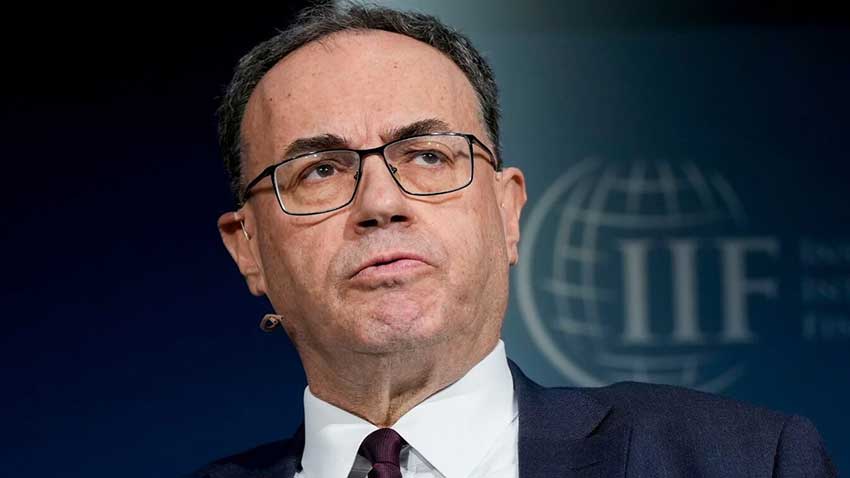
Andrew Bailey, the Bank’s governor, said that the longer hostilities continued, “the bigger the impact it will have on inflation, and the more likely it is we will need to raise Bank Rate to ensure that inflation falls back to our 2 per cent target”.

In a statement explaining his vote to hold, Bailey wrote that there was now a “more prominent” upside inflation risk because of the re-intensification of fighting between the United States and Iran in recent weeks, adding that there seemed now to be a “loss of urgency to find solutions”.

The Office for National Statistics reported this week that inflation jumped to 3.1 per cent on an annual basis in August, up from 2.9 per cent the previous month.

The committee said it was not overly concerned about wage growth or company profit margins, the so-called second-round effects that typically occur after an inflation shock.

Advertisement

Bailey was one of six members who voted to keep policy unchanged. Huw Pill, the Bank’s chief economist, and the external members Catherine Mann and Megan Greene voted to lift the base rate by 0.25 percentage points to 4 per cent.

UK government borrowing costs fell after the announcement. The yield on the benchmark ten-year bond slid by 0.10 percentage points to 5.2 per cent and the yield on the 30-year bond dipped by 0.14 percentage points to 5.72 per cent. Yields move inversely to prices. The FTSE 100 gained 0.6 per cent.

The price of a barrel of Brent crude oil dropped by 2.3 per cent to $103.40, down from recent highs near $110, leading to corresponding falls in European and US sovereign bond yields.

Dani Stoilova, European economist at BNP Paribas, said: “The MPC remains hesitant to hike, unlike other major central banks.”

Advertisement

Rob Wood, chief UK economist at Pantheon Macroeconomics, said that the committee’s focus on the upside risks of inflation indicated that “a November hike [is] highly likely unless energy prices fall sharply”, adding that another rate rise would come in February. The committee next meets on 5 November.

Alongside the conflict, the Bank warned of stronger-than-feared food price inflation because of climate change and the El Niño weather pattern, of the Russia and Ukraine war disrupting global grain supplies, and of excessive demand for components used in the roll-out of artificial intelligence.

Most of the committee thought Britain was at least nearing the adverse scenario mapped out at its previous meeting in July, in which the Middle East war causes a lasting increase in energy prices and requires several interest rate rises.

The Bank said GDP was now expected to grow by 0.4 per cent in the third quarter of this year, after a series of better-than-expected monthly output readings. In the first six months of the year, Britain expanded at the fastest pace among the G7 economies.

Advertisement

The Bank has also proposed to the Treasury a restructuring of its bond-selling programme, known as quantitative tightening, that would shrink its balance sheet by an average of £46bn a year until 2034. The Treasury must decide whether to implement the package by April 2027.

The US Federal Reserve lifted its main interest rate on Wednesday for the first time in three years, to a range of 3.75 per cent to 4 per cent. The Bank of Japan is expected to raise its main interest rate today, after the European Central Bank did so last week.

Amy Ingham
About the author

Amy Ingham

Amy Ingham is a reporter at Business Matters, covering UK business news with a focus on breaking news, business policy, late payments and insolvency. She joined the magazine in 2026 after completing the NCTJ Diploma in Journalism at Harlow College’s journalism school. Her recent reporting includes British Steel’s nationalisation and its impact on SME suppliers, the decline in late payments by large firms, and Insolvency Service director disqualifications. Reach her at aingham@cbmeg.co.uk.

Advertisement

Advertisement
Continue Reading

Business

Australia Lags Behind UK and Canada on Sovereign AI Capability as Funding and Compute Gaps Risk Foreign Reliance

Published

on

Cloud AI

CANBERRA, AustraliaAustralia Lags Behind UK Canada Sovereign AI Capability metrics as leading technology policy experts and industry analysts warn that chronic underinvestment in domestic supercomputing infrastructure and fragmented federal funding risk reducing the nation to a permanent state of foreign digital reliance.

According to comparative policy assessments released by technology intelligence researchers and public sector advisory groups, Australia is rapidly falling behind like-minded peer economies in the race to establish independent artificial intelligence infrastructure. While partner nations such as the United Kingdom and Canada have committed billions of dollars toward building dedicated national AI compute reserves and native foundational models, Australia’s domestic capability remains constrained by modest public grants, fragmented university compute clusters, and heavy reliance on offshore hyperscale cloud platforms owned by multinational tech conglomerates. Tech policy advocates caution that without a targeted national sovereign AI mission, Australia faces severe vulnerabilities surrounding data sovereignty, national security, intellectual property loss, and supply chain disruptions during international crises.

Industry analysts emphasize that securing sovereign AI infrastructure is increasingly recognized as a fundamental component of national economic resilience.

Public Investment Disparities Highlight Australia’s Compute Deficit

Advertisement

Comparative fiscal data reveals a widening capital expenditure gap between Australia and peer Commonwealth nations.

While the United Kingdom established the multi-billion-pound AI Research Resource to construct dedicated national supercomputing clusters equipped with thousands of advanced graphics processing units, and Canada committed over two billion Canadian dollars toward its Sovereign AI Strategy, Australia’s direct public investments remain significantly smaller and geographically scattered across isolated research initiatives. Local researchers and domestic AI startups frequently report months-long wait times to access high-performance computing clusters operated by national science agencies like the CSIRO or university consortia. Consequently, domestic developers are routinely forced to export sensitive training datasets to foreign-hosted cloud environments to build and fine-tune complex algorithmic models.

The compute bottleneck severely restricts local capability, preventing domestic firms from scaling competitive commercial solutions onshore.

  • Capital Expenditure Deficit: Australian public funding commitments for AI infrastructure represent a fraction of per-capita investments made by London and Ottawa.
  • Severe Compute Scarcity: Local researchers face structural wait times for high-performance graphics processing units, forcing workloads into foreign cloud environments.
  • Capital Flight of IP: Early-stage domestic AI startups increasingly relocate operations abroad to access scalable computational power and venture capital.
  • Data Sovereignty Risks: Processing domestic agricultural, healthcare, and defense datasets on foreign infrastructure creates regulatory and national security vulnerabilities.

The widening investment divide threatens to relegate Australia from a developer of advanced technology to a passive consumer of offshore algorithms.

Foreign Cloud Reliance and Strategic Vulnerabilities

Advertisement

Over-dependence on foreign-owned hyperscale infrastructure poses long-term economic and national security risks for Australian enterprises.

Although major global tech giants have announced billions in capital expenditure to build commercial data centers across Sydney and Melbourne, domestic policy experts stress that hosting physical data centers on Australian soil does not equate to true sovereign capability. Because the underlying hardware, proprietary AI architectures, and foundational model weights remain controlled by foreign corporate entities subject to external legal jurisdictions, Australian organizations remain exposed to sudden service modifications, foreign regulatory changes, and international supply chain disruptions. Furthermore, reliance on foreign commercial platforms limits Australia’s capacity to build culturally nuanced language models optimized for localized indigenous languages, public sector governance, and unique regional industry needs.

Sovereignty experts argue that true capability requires local ownership and operational control over the full technological stack.

Building domestic compute infrastructure remains critical to ensuring national digital autonomy during geopolitically turbulent periods.

Advertisement

Commercialization Bottlenecks and Brain Drain of Domestic Talent

The lack of scalable national compute infrastructure accelerates a damaging brain drain of world-class Australian engineering talent.

Despite producing highly cited artificial intelligence research across top-tier universities, Australia struggles to translate academic discoveries into commercialized enterprise applications. Highly qualified machine learning PhD graduates and specialized data engineers routinely accept recruitment offers from North American and European tech hubs where access to advanced compute resources and private equity funding is abundant. Venture capital figures indicate that Australian AI startups attract significantly lower late-stage growth capital compared to global peers, further entrenching the reliance on foreign corporate acquisitions to scale local innovations.

Without robust domestic commercialization pathways, Australia effectively subsidizes talent development for foreign technology ecosystems.

Advertisement

Retaining domestic technical expertise requires creating an environment where high-ambition research can be executed locally.

Calls for a Unified National Sovereign AI Mission

Industry leaders and policy institutions are urging federal lawmakers to enact a centralized, fully funded national AI capability strategy.

Advisory bodies recommend that the federal government establish a dedicated National AI Compute Reserve, mirroring successful international models, to provide subsidized, secure computational access for domestic researchers, startups, and public sector agencies. Additionally, experts advocate leveraging Australia’s abundant renewable energy assets and critical mineral supply chains to position the nation as a regional hub for green, energy-efficient AI data center processing. By aligning national energy policy, supercomputing investments, and targeted commercialization incentives under a single framework, Australia can build the sovereign infrastructure required to protect its digital economy.

Advertisement

Enacting a comprehensive national strategy will determine whether Australia can achieve digital independence in an AI-driven global economy.

Prioritizing sovereign compute capability is vital to securing Australia’s future technological and economic autonomy.

Continue Reading

Business

Mercury NZ Limited (MGHTF) Shareholder/Analyst Call Transcript

Published

on

OneWater Marine Inc. (ONEW) Q1 2026 Earnings Call Transcript