
Crypto World
Jim Cramer Ranks Winning and Losing Stock Sectors During Fed Rate Hikes



CNBC’s Jim Cramer compared stock sector performance across the last three Federal Reserve rate-hike cycles, highlighting how the winners have shifted over time.
The comparison comes after the Fed raised rates in September 2026 for the first time since 2023, citing persistent inflation, a resilient labor market, and oil prices pushed higher by the Middle East conflict.
How Sectors Performed After the First Hike
Cramer, host of Mad Money, examined three stretches within the Fed’s December 2015 to December 2018 tightening cycle. In the three months after that first hike, defensive sectors led the market.
Utilities, consumer staples, and real estate ranked among the strongest performers, Cramer said. Communication services technically topped the group, though Cramer called that figure misleading.
The sector did not exist under that name until late 2018, so the result actually reflects its predecessor, telecommunications, which investors treated as a safety trade at the time.
The Cycle’s Middle and Final Stretch
Looking at the roughly one year between the Fed’s first and second hikes, the picture flipped. Energy topped the list, and materials also performed well, while healthcare, real estate, and staples ranked among the worst performers.
Financials and industrials were also among the best performers in that stretch, Cramer said, since inflation stayed tame and recession fears were minimal at the time.
Over the full three-year period, information technology became the dominant sector. Consumer discretionary and financials also outperformed, echoing a similar cyclicals and financials rally strategists are floating today, while communication services, staples, energy, and materials slid toward the bottom as the Fed grew more aggressive.
“Of course, every tightening cycle is different.”
Cramer, CNBC’s Mad Money
Cramer said the current cycle carries a twist the 2015 to 2018 period did not have. War-driven oil prices, rather than broad economic demand, are adding pressure behind the Fed’s latest rate hike.
He added that further tightening could stall if oil slides back toward $80 a barrel, easing that pressure.
Whether defensive sectors repeat their early lead from a decade ago may depend on how quickly that geopolitical shock fades.
The post Jim Cramer Ranks Winning and Losing Stock Sectors During Fed Rate Hikes appeared first on BeInCrypto.



Solana cut its target slot time from 300 milliseconds to 250 milliseconds earlier Friday, blockchain data shows, making the network’s clock run nearly 17% faster without producing an equivalent increase in total transaction capacity.
A slot is the short window in which a designated validator can add a block. At 250 milliseconds, Solana will target four slots each second, up from about 3.3, giving wallets, exchanges and trading applications a more current view of the network.
Validators, or entities that supply computing power to maintain any blockchain network, will remain leaders for four consecutive slots. The faster clock therefore reduces each leader’s control window from 1.2 seconds to one second, handing transaction-ordering power to the next validator sooner.
That matters for applications such as oracle-powered markets and automated market makers, where stale prices or a few hundred milliseconds of uncertainty can affect whether a transaction executes as intended.
Users should see transaction updates sooner, while swaps have a smaller window in which the market can move before they reach the network. That can mean fewer failed trades and less chance of receiving a materially different price than expected.


Such an attack would not endanger mainnet funds. Any potential attack would only target “Sepolia,” where test ether has no meaningful cost, but could leave blocks without transaction payloads and derail the infrastructure testing needed before Glamsterdam reaches Ethereum itself.
What is Glamsterdam?
Glamsterdam is Ethereum’s next major upgrade, designed to fit more activity into each block without overwhelming the computers that verify it. Together with changes to gas pricing, the upgrade is intended to support a block gas limit of about 200 million, creating room for more payments and trades before users begin bidding fees higher.
The upgrade moves the relationship between validators and specialized block builders into Ethereum’s protocol. Builders assemble transaction blocks and compete to supply them. Once a validator accepts the winning bid, the builder is expected to reveal the underlying transactions.
And that process becomes easy to abuse on a free test network. A malicious operator can submit bids far above every legitimate builder, win repeatedly and then withhold the promised payload.
Developers said existing safeguards typically fall back to locally built blocks only after several payloads go missing.
Potuz added that clients also need to identify and reject individual builders so an attacker cannot return under a new identity and continue winning.
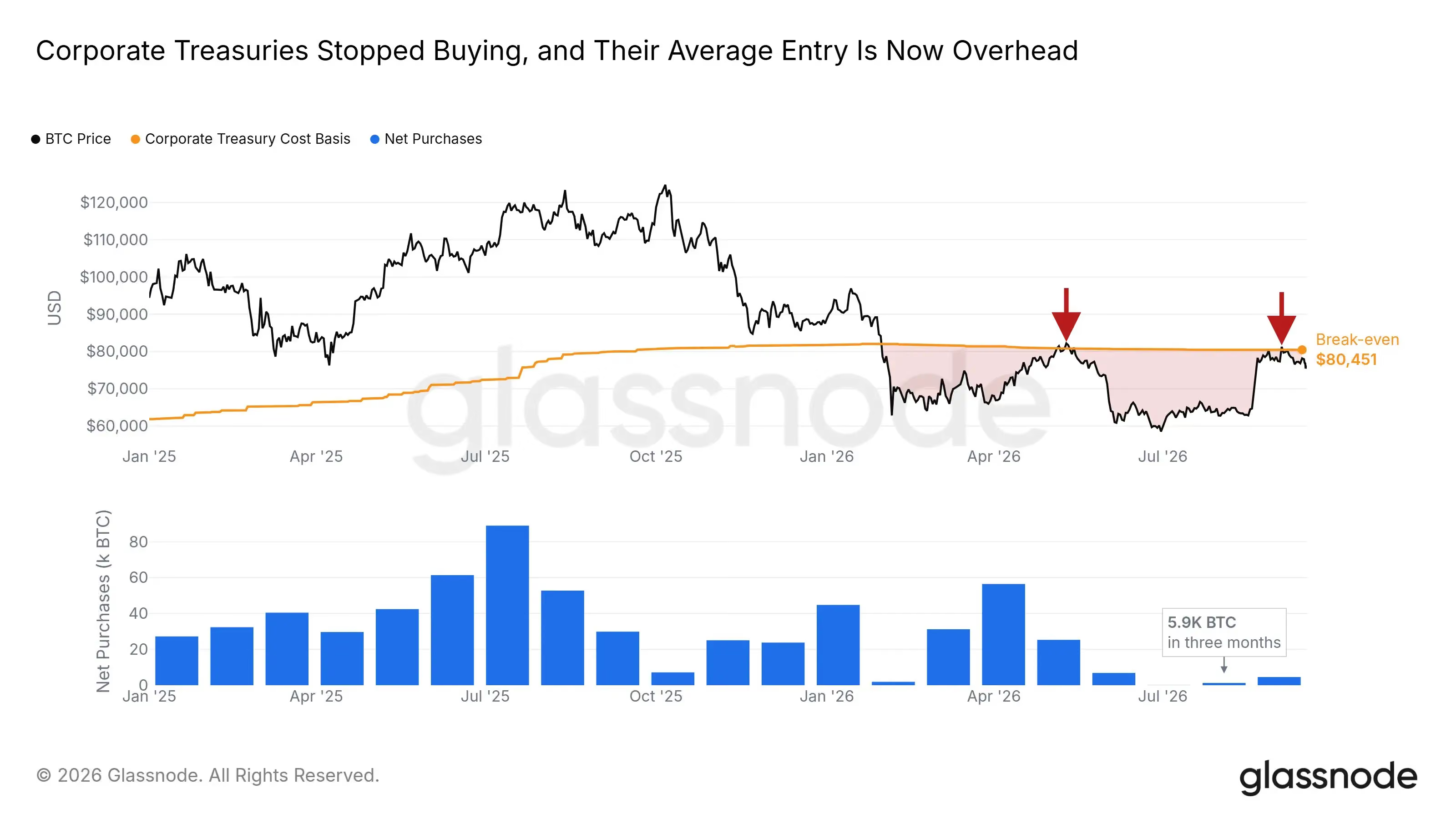
“Corporate treasuries were a big buyer through 2025, and they have stepped back,” Glassnode said. “Their average entry, the Corporate Treasury Cost Basis, sits at $80.5K, about 6% above spot, so the group as a whole is under water.”
Bitcoin topped that level recently but failed to keep gains.

Data source Bitcoin Treasuries now puts public-company holdings at about 1.22 million BTC across 181 listed firms. Strategy remains the dominant buyer and holder, with about 845,050 BTC. Tokyo-listed Metaplanet is among the next-largest corporate stacks. As a group, those treasuries are still underwater at current prices.
“A reclaim of $80.5K would put the treasuries back in profit and remove one layer of overhead supply; until then their entry is one more ceiling,” Glassnode added.
Other demand indicators paint a mixed picture
U.S.-listed spot bitcoin ETFs have attracted billions of dollars since early August, signaling a rebound in institutional demand for the cryptocurrency. However, they remain roughly $1 billion short of turning positive on a year-to-date basis, according to data source SoSoValue.
The Coinbase premium indicator has remained mostly negative since May, aside from a brief move into positive territory on Sept. 5, according to data from CoinGlass. A negative reading means bitcoin is trading at a discount on Coinbase relative to prices on offshore exchange Binance, suggesting that U.S. buyers are showing weaker demand than traders elsewhere.






Cointelegraph is committed to providing independent, high-quality journalism across the crypto, blockchain, AI, and fintech industries.
All news, reviews, and analyses are produced with full journalistic independence and integrity. For more details on our standards and processes, please read our Editorial Policy.
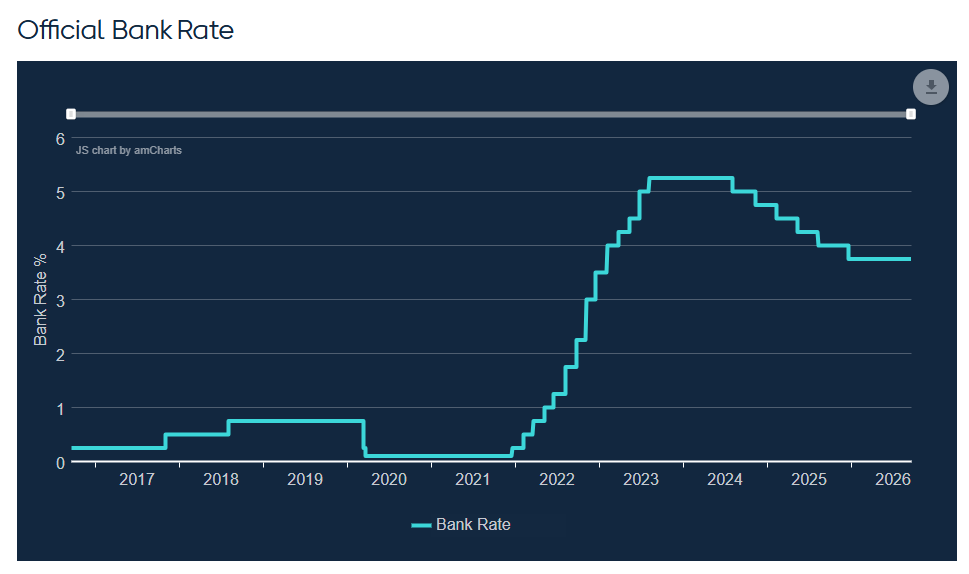
The Bank of England (BoE) is holding its rate at 3.75%, even as UK inflation climbs and the US hikes. That divergence comes down to where the inflation is coming from.
The BoE’s Monetary Policy Committee (MPC) voted six to three to hold, with three members wanting an immediate hike. A day earlier, the Federal Reserve raised US rates to 4%.
Why the Fed Hiked and the BoE Didn’t
The Federal Reserve raised its benchmark rate a quarter point to a range of 3.75% to 4% on September 16. It was the first US rate hike since 2023, coming a day before the BoE’s own decision.

Both central banks are responding to the same shock. Energy prices have surged since the Middle East conflict disrupted supply. Brent crude has climbed above $100 a barrel, lifting UK inflation to 3.1% in August, up from 2.9% in July.
Governor Andrew Bailey argues rates cannot fix an oil-driven price shock directly. He also sees little evidence that higher energy costs are spreading into wages. The Fed, facing a stronger labor market and its own inflation concerns, chose to act instead of waiting.
Economists at Dutch bank ING say the UK carries less wage-spiral risk now than in 2022. That gives the BoE more room to wait before raising rates.
Why Households Are Already Feeling It
UK households are not waiting for a formal hike to feel the cost. The average five-year mortgage rate has climbed to 5.87%, its highest level since November 2023. Lenders are already pricing in the chance of tighter policy ahead.
That leaves the BoE balancing two risks. Moving too fast could squeeze an already fragile economy. Waiting too long risks letting the energy shock harden into a lasting wage-price spiral.
Three policymakers already want a hike, and the Fed just moved the opposite way. If energy prices stay elevated, 3.75% may not be the final stop this year.
The post Why Is the BoE Holding Rates While the US Fed Hikes? appeared first on BeInCrypto.


NU7 will cut Zcash block times to 25 seconds and preserve its halving schedule, with testnet activation planned for Oct. 6.


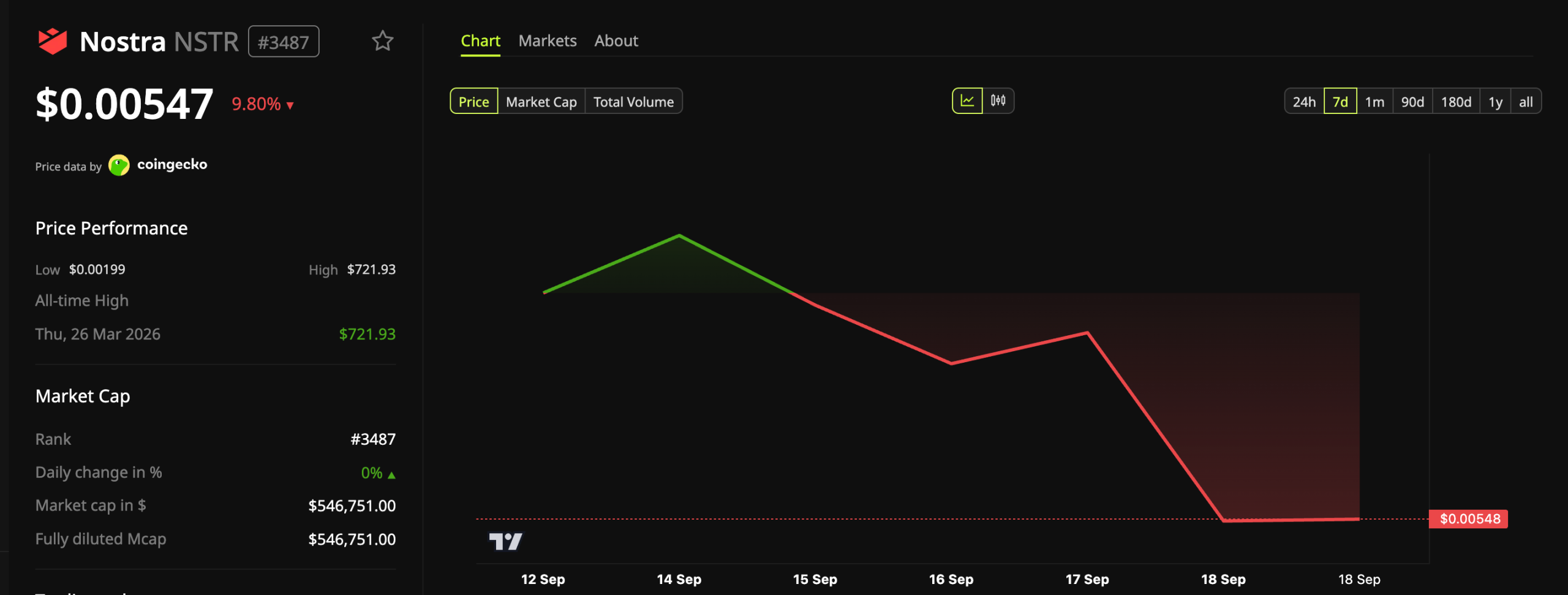
Starknet lending protocol Nostra paused its money market on Thursday after a manipulated price oracle let one account borrow roughly $3.5 million against NSTR collateral.
Lending, borrowing, withdrawals, and liquidations remain unavailable while the team reconciles each asset. Recovery prospects remain unclear for now.
Nostra Halts Money Market in September’s Latest Oracle Exploit
Nostra (NSTR) carries a market value of $546,751, according to BeInCrypto Markets data. A token that small needs little capital to move.
Follow us on X to get the latest news as it happens

The account pledged NSTR and drew Ethereum (ETH), Starknet (STRK), USDC, USDT, Wrapped Bitcoin (WBTC), and DAIv1. The haul exceeded the collateral token’s entire market value by roughly six times.
Security firm PeckShield reported that the account bridged $1.92 million to Ethereum. That transfer included 234.57 ETH and 1.3 million DAI.
Deposits collapsed afterward. Total value locked in the protocol fell from about $4 million on September 16 to roughly $710,632 at press time per DefiLlama.
Starknet’s Second Oracle Failure in Two Weeks
Nostra is not the only Starknet protocol hit this month. On September 4, an incorrect price from Pragma’s publishing pipeline was published across several Starknet feeds.
This triggered 47 liquidations across 42 borrower wallets on money market Vesu. Pragma reported 95% asset recovery in a September 13 update.
However, the two incidents differ in cause. Pragma’s case came from a publishing fault, while Nostra faced deliberate manipulation of a collateral price.
Meanwhile, Nostra is still counting the damage.
“We are reconciling the impact on each asset and tracing the funds. The final loss and potential recoveries are not yet known,” Nostra said.
The team also warned users about impersonators. Nostra said it will never send direct messages or ask holders to connect a wallet during recovery.
September has been costly for the sector. DefiLlama had logged more than $326 million in crypto losses this month before the Nostra incident. Most of that stems from the $320 million Liquid Network incident.
The pattern has held all year. PeckShield counted 50 hacks in August, the highest monthly tally of 2026, even as losses dropped 49.5% to $136.3 million. Nostra fits that shape of frequent, smaller thefts.
Subscribe to our YouTube channel to watch leaders and journalists provide expert insights
The post Nostra Joins a September That Has Already Cost Crypto Over $326 Million appeared first on BeInCrypto.

Ciezki scores 22 points in Mercury’s victory over the Fire

Google DeepMind launches institute to widen the AGI debate

Ripple XRP Could Flip Bitcoin In Price And Become Number 1 Charles Schwab Just Added 3 Altcoins



-

 Fashion7 days ago
Weekend Open Thread – Corporette.com
-

 Tech5 days ago
The Latest Weird Thing to Play Doom Is the Mapped-Out Brain of a Fruit Fly
-

 Business7 days ago
10 Most-Streamed Songs On Spotify In 2026 So Far, Led By Ella Langley’s Dominant Run On The Charts This Year
-

 Crypto World7 days ago
XAG/USD: Silver’s Short-Term Rally Meets Its Moment of Truth
-

 Crypto World7 days ago
Diesel Tops $6 a Gallon for the First Time as 28 States Set Records
-

 Crypto World3 days ago
Kraken Lets xStocks Holders Earn Yield Through DeFi
-

 News Videos7 days ago
Facing Financial Fears
-

 Crypto World4 days ago
Elon Musk Drops a Bombshell: Grok 5 Could Be the AGI Breakthrough
-

 Crypto World1 day ago
US Charges Robinhood Engineers Over Crypto Listing Trades
-

 Crypto World6 days ago
Can AI Build a Startup in 72 Hours? Elon Musk's Team Will Livestream the Test
-

 Entertainment6 days ago
News Specials, Movies, Shows, More
-

 Business5 days ago
Rivals Sam Altman and Elon Musk Rally Behind Dario Amodei’s Call for a Slowdown in AI Development
-

 Crypto World5 days ago
New Tesla Roadster Uses SpaceX Tech. Will It Impact the Stock Price?
-
 NewsBeat4 days ago
‘Sick conspiracy’: Trump says only guardrails AI needs is ‘a strong and smart (High IQ!) president’ in all-caps rant
-

 Crypto World6 days ago
Robinhood Chain Never Stopped But its Blobs Did Stop Reaching Ethereum For 14 Minutes
-

 Crypto World2 days ago
What Is the Status of the U.S.-Iran Peace Talks? Here's What Both Sides Are Saying
-
 Entertainment6 days ago
New Horror Movie Officially Earns a Rare Stephen King Recommendation
-

 Business6 days ago
Marvell: Most Potent Setup Of The AI Factory Decade
-

 Crypto World4 days ago
3 Token Unlocks to Watch in the Third Week of September 2026
-

 Crypto World3 days ago
DOJ Seeks to Seize $61M in Iran Oil Funds From Binance Accounts It Vouched For
You must be logged in to post a comment Login