

Politics
Callum Murphy and Alex Brookes: The Chagos deal is collapsing in plain sight because it was rushed, opaque and unsound


Callum Murphy is Director of Campaigns and Alex Brookes Director of External Affairs & Engagement at Conservative Friends of Overseas Territories (CFOT)
So, for the second time, President Trump has publicly warned Keir Starmer against pressing ahead with Labour’s reckless Chagos deal.
This was not an off-the-cuff remark or a misunderstanding. It was a deliberate intervention, later confirmed by the President’s own press secretary, making clear that he does not believe this is a good deal for Britain, the United States, or allied security.
That matters.
Because while Labour ministers cling desperately to selective briefings suggesting the United States Department of State is “content”, the President of the United States is saying something very different. And when it comes to Diego Garcia, it is presidential authority – not diplomatic mood music – that ultimately determines whether American confidence exists.
This widening gap between the White House and Downing Street exposes the central weakness of Labour’s entire approach. Starmer is attempting to force through a permanent surrender of British sovereign territory, on a brittle lease-back arrangement, without secure American buy-in. That is not statecraft. It is strategic negligence.
Some in Westminster will try to dismiss Trump’s remarks as theatre – part of a broader pattern of disruption, or a “Greenland-style” negotiating ploy. That analysis does not stand up.
Unlike past rhetorical gambits, this intervention was specific, repeated, and focused on a concrete vulnerability: the risk that the lease underpinning Diego Garcia could fail. That concern goes to the heart of the deal. If sovereignty is surrendered and the lease later collapses – through political pressure, legal challenge, or a change of government in Mauritius – Britain and its allies would have no guaranteed right to operate from one of the most strategically important military bases in the world.
That is precisely why successive UK governments, of all political colours, have maintained sovereignty over the British Indian Ocean Territory. Labour’s decision to abandon that principle is not compelled by law. It is a political choice – and a reckless one.
The Prime Minister now finds himself exposed. Labour’s strategy relied on rushing the deal, obscuring its true cost, and presenting American acquiescence as a fait accompli. Trump’s intervention has blown that apart.
The Government may say it will “pause for thought”, but the reality is closer to panic. Without American confidence, this deal cannot proceed. And with time running out in the parliamentary calendar, Labour is rapidly losing its ability to bounce this through the Commons before scrutiny catches up.
This is not just embarrassing. It is destabilising. Allies do not appreciate being presented with irreversible faits accomplis on matters of shared security. By surrendering sovereignty first and attempting to tidy up the US position later, Labour has inverted the basic logic of alliance management.
Even leaving aside the diplomatic chaos, the substance of the deal remains indefensible. Conservatives have already exposed, through Freedom of Information requests, that the real cost of this agreement is close to £35 billion – nearly ten times higher than the figure initially floated by Labour. That is £35 billion to give up British territory, dissolve the British Indian Ocean Territory, and fund what amounts to a long-term subsidy to the Mauritian state.
At a time when British families are being squeezed at home, Labour is preparing to send billions of pounds abroad – money that will account for over four per cent of the Mauritian government’s entire budget. British taxpayers will, in effect, be subsidising tax cuts overseas while facing tax rises at home.
No serious government would describe that as value for money.
Diego Garcia is not an abstract diplomatic token. It is a linchpin of Western defence architecture in the Indo-Pacific. Mauritius, meanwhile, has openly deepened cooperation with China, announced closer links with Russia, and welcomed Iranian diplomatic support for its sovereignty claims.
Labour’s deal creates a structural vulnerability at the heart of this arrangement. A lease is only as strong as the political will behind it. Surrender sovereignty, and Britain gives up its ultimate safeguard.
That is why the 1966 UK-US treaty matters. It states unambiguously that the territory “shall remain under United Kingdom sovereignty”. That treaty has not been amended. Ministers admit discussions are merely “ongoing”. Proceeding regardless risks placing the UK in breach of its international obligations – and Parliament has yet to properly scrutinise any proposed amendment under the Constitutional Reform and Governance Act.
Overlaying this diplomatic drift is the unanswered questions of the process – specifically the role of Jonathan Powell in the negotiations. Freedom of Information material acquired by CFOT shows FCDO officials circulating Chagos-related briefings to Powell in August 2024, before his formal appointment as negotiator on 6 September 2024 (the date which the Government informed Parliament he officially commenced the role), including press reports and read outs from meetings between the Prime Ministers of the UK and Mauritius. Powell was also briefed by FCDO officials during August 2024. This timeline alone raises obvious concerns about authority, vetting, clearance, and accountability.
Now with the Bill being delayed after President Trump’s renewed attack, those questions become even more acute. If the negotiations were conducted in a grey zone of informal engagement before formal appointment, and the resulting deal is now being paused under external pressure, the issue is not just transparency – it is whether the correct procedures were followed and whether potential breaches of national security were committed.
The Freedom of Information requests raise fundamental questions: what vetting was undertaken prior to Powell’s appointment and by whom in the FCDO or Cabinet Office; what conflict of interest assessment was made regarding his work through Inter-Mediate, particularly given his activities in China, a state actor in favour of the surrender in the same month as his formal appointment in September; why he appeared to have access to classified government materials before being formally appointed; why the FCDO continued to use unsecure communications to pass him classified information despite acknowledging the need to arrange secure channels; in what capacity he met the Mauritian Prime Minister on the 30 August 2024 prior to formal appointment (having received briefing from FCDO officials in Port Louis in advance of the meeting); what level of security clearance he held during August 2024 and the materials he was authorised to see; why Parliament was told he was appointed on the 6 September if he was operating in the role earlier; and what conditions were placed on managing his dual roles, given he only left Inter-Mediate upon becoming National Security Advisor in November 2024.
The Government has told Parliament that Powell was appointed on 6 September 2024. Yet the document trail now points to involvement weeks earlier – receiving classified correspondence and actively negotiating at most senior level in Mauritius (the PM of Mauritius no less) while still being employed by Inter-Mediate. This appears to be a case of freelancing on a sensitive foreign policy file by an individual who, at the time, still had interests and international contracts with third parties and foreign actors.
This material would significantly deepen concerns about process, transparency, and national security safeguards around the negotiation itself. An arrangement that must be paused after international backlash, delayed in Parliament, and defended amid unanswered questions about the negotiator’s status is not a settled strategic settlement – it is a live political liability.
It is also now becoming clear that the government may have misled Parliament. The involvement of Powell and officials in FCDO needs to be investigated at the highest levels and as matter of urgency. But it would appear to be another case of the Prime Minister appointing a former Blairite apparatchik with little or no due diligence or vetting. The Prime Minister’s judgement is therefore once again brought into question.
The Chagos Surrender Bill compounds these failures. It grants sweeping Henry VIII powers, avoids meaningful scrutiny of £35 billion of public spending, and contains no robust mechanism to guarantee the long-term security of Diego Garcia.
It also fails the Chagossian people.
Labour signed this deal without proper consultation and blocked a proposed referendum that would have given Chagossians a direct voice in their future. Even the United Nations has raised concerns about how this process has been forced through.
Trump’s intervention has crystallised what Conservatives have argued from the start: this deal is unstable, ill-judged, and unsustainable. It undermines British sovereignty, weakens national security, and damages our most important alliance.
The longer the Government pauses, the clearer the conclusion becomes, this is a negotiation conducted in opacity, defended in haste, and now reconsidered under pressure from allies, Parliament, and its own unresolved paper trail.


If you’ve still not checked out Netflix’s hit thriller The Night Agent, reviews for its recently-released third season might make you reconsider.
While the hit spy series – led by Gabriel Basso as FBI agent Peter Sutherland – doesn’t quite have the profile of Netflix originals like Stranger Things, Squid Game or Wednesday, its first season remains one of the most-watched in the platform’s history, so the following is clearly there.
On Thursday, The Night Agent returned for its third outing, and impressively, the reviews at the time of writing are unanimously positive, with a rare 100% score on Rotten Tomatoes.
When we last caught up with Peter Sutherland, he was being given a new mission to act as a double agent to crime boss Jacob Monroe, with the new season picking up one year on.
Here’s a quick snapshot of what critics have been saying about the new batch of episodes so far…
“The Night Agent takes a big gamble with season three – and it mostly pays off […] Brasso still pulls his weight in the fight scenes, which feel refreshingly brutal and grounded. As unrealistic as they can be sometimes, they’re still more visceral than most, committed to showing the toll of this line of work. The emotional toll takes precedence though, and therein lies the key to making this series work.”

CHRISTOPHER SAUNDERS/NETFLIX
“The Night Agent doesn’t break new ground, but not every show needs to do that. If The Pitt has taught us anything, it’s that there’s an appetite for old-fashioned dramatic structures that are done well. This one doesn’t rise to the levels of that HBO hit, but it does what it sets out to do remarkably well. It values escapist entertainment above all else.”
“The Night Agent season three is the show’s best instalment yet, thanks to a tighter narrative, compelling characters, solid action, and great twists […] For a while, the show knew what it was: a Netflix thriller that did not need to be much more than what it promised to be, which is fun and binge-worthy. As of The Night Agent season three’s ending, the show still isn’t on the level of other quality TV shows, but it certainly keeps improving [and] season three is the best of the bunch.”
“While there were certainly solid moments in Season 2, it sometimes felt overpacked, juggling so many moving pieces that the plot grew convoluted and the emotional throughline occasionally got lost. With its return, however, The Night Agent returns to its roots, delivering a tighter, more focused season that feels completely sure of itself — and easily the strongest the series has produced so far.”
“Is season three The Night Agent’s best outing, then? I think you could make a case, certainly. It has tighter storytelling and a strong sense of character, and there’s no sign of things neatly wrapping up any time soon.
“That desire to keep the show going may prove its undoing down the line, but for now, at least, I don’t think we’ve exhausted everything it has to offer just yet.”

“One of the biggest changes for the third season of Netflix’s The Night Agent is that Luciane Buchanan’s character Rose Larkin isn’t a part of it.
“Both Buchanan and creator Shawn Ryan are on record saying [this absence] was only because the story that Ryan and his writers broke for season three didn’t include Rose, and that she could come back in future seasons. Still, it’s a big loss for the show, and that loss is evident in the first episode of season three […] The Night Agent is still perfectly good ‘watch while doing laundry’ TV but it feels like the third season is even more lunkheaded than the first two, and the absence of Buchanan is huge.”
All three seasons of The Night Agent are now streaming on Netflix. Watch the trailer for season three below:
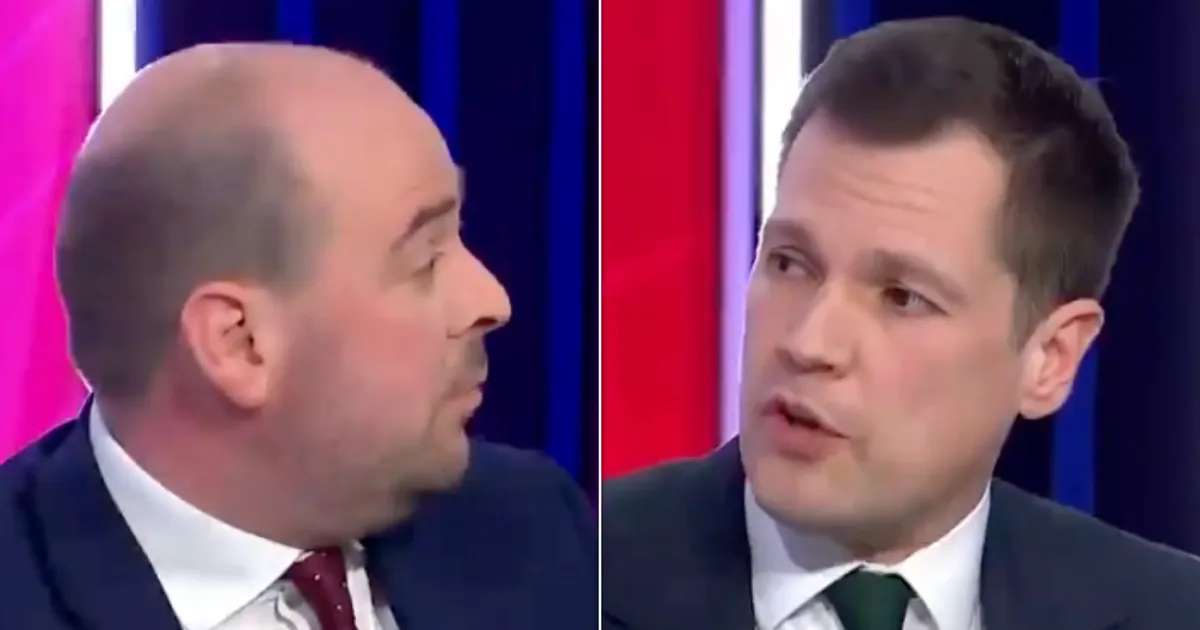
Richard Holden accused ex-Conservative Robert Jenrick of “jumping into bed with the first people who would have him” in a scathing BBC Question Time takedown.
Jenrick was kicked out of the Conservative shadow cabinet in January after leader Kemi Badenoch unearthed his plans to defect.
Hours later, Reform leader Nigel Farage announced that his party had acquired yet another ex-Conservative.
Jenrick was announced as Reform’s “shadow chancellor” – or Treasury spokesperson – this week.
On BBC Question Time, the Newark MP tried to justify his decision by slating the Conservatives.
Despite serving as the cabinet-attending immigration minister under Rishi Sunak, health minister under Liz Truss and housing secretary under Boris Johnson, Jenrick said: “I want to have a good government running this country for once, which we haven’t had for along time.”
“Obviously, that is a government you were a part of,” host Fiona Bruce pointed out.
“Yeah and I resigned from that government,” he insisted. “In the last parliament, I was the only person to resign on a matter of principle.”
Jenrick resigned from Sunak’s cabinet after complaining the Rwanda deportation scheme did not go far enough.
He claimed: “It was failing on immigration. It was making promises and consistently breaking them.”
Bruce then pivoted to Holden, who currently sits as Tory shadow transport secretary – and who was supposedly “sighing” a lot while Jenrick talked.
Holden said: “Look, Robert says it was a principled decision. Robert got kicked out of the Conservative Party. That’s what actually happened.
“People remember what happened when Kemi got rid of him.”
He continued: “I supported Robert in the leadership election so to see him go was a really tough thing for me. Robert and I have known each other for a very long period of time and I’d like to think that there was a friendship there as well.
“A lot of those decisions Robert painted as about the good of the country, and things like that. I’m not convinced of that.
“I think he got kicked out and then he jumped into bed with the first people who would have him – Nigel Farage and co.”
When reminded that Jenrick was only kicked out because of his plans to join Reform, Holden said: “Well, Nigel Farage didn’t seem to think that on the day.”
Jenrick insisted: “I was obviously about to do this, I made it my decision and I was convinced it was the right one.”
He claimed Holden was “pretending everything was sweetness and light” in the Tory Party right now, but claimed his former colleague shares Jenrick’s concerns over its “massive mistakes” in the past.
How do you solve the problem of following Henry Hill’s final ToryDiary? You probably can’t (it was a fantastic read). But you can at least pick at a theme he touched on in his piece yesterday: the hollowing out of politics by short-termism, performance and the absence of a governing project. So I’ll give it a go.
Let’s start with a small but telling statistic. In 1938, a speech in Parliament typically ran to almost 1,000 words. As late as 1970, the average was still close to 900. In 2024 it was only 460. The most dramatic decline came after 2015 – the year video arrived on Westminster’s favourite app, Twitter (now X). Draw your own conclusions.
The academic evidence is not exhaustive, but what exists points the same way. In the United States, studies of state legislatures suggest that the arrival of television cameras coincided with greater polarisation. In Turkey, when their parliament switched cameras on for certain sittings, MPs behaved differently on broadcast days. It would be peculiar if Westminster were immune to incentives that operate everywhere else.
The problem today is not just that speeches are shorter in the Commons. It is that they are trending to be thinner, unquestioning, uncurious and unreflective. A changed audience on social media (one for clips, a question that may not even contain the answer) has changed the output (designed with that target in mind rather than engaging with a person or policy area).
We have seen what a tendency to these qualities does in government. Labour has been providing a clear example of what it is like when you are unable to articulate a clear mission or purpose – having been uncurious and unreflective – drifting in intention and chucking legislation in the bin as it goes. Is it any wonder we saw Sir Keir Starmer’s 14th U-turn at the beginning of the week restoring local elections and are now potentially looking at his 15th at the end of the week with Chagos?
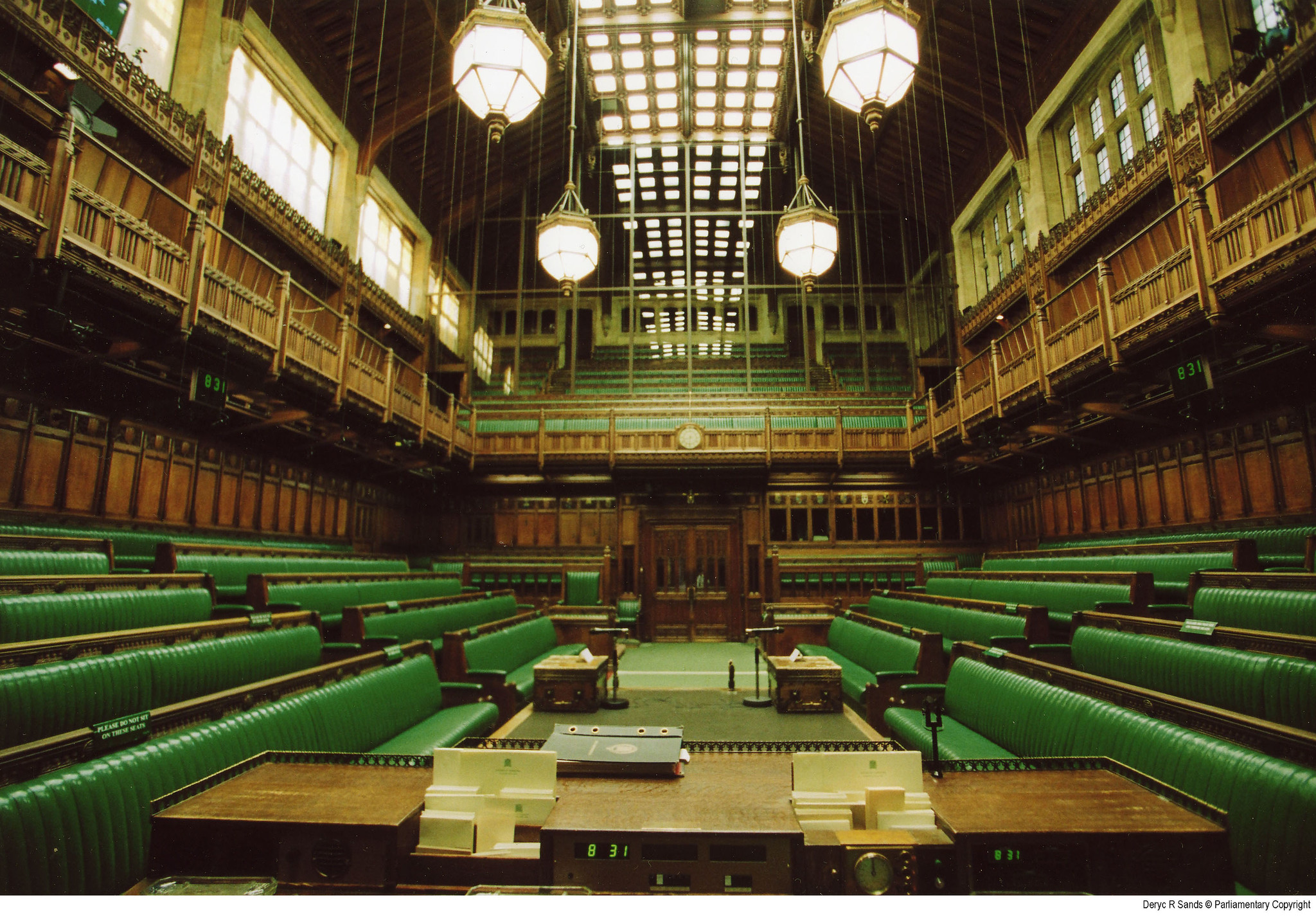
But this is a wider problem, affecting more than just those in No.10. That temptation for ease and short-termism, without taking the time to think, build and reflect, is something that has seeped into our politics. It has actually become inbuilt, with structural incentives for this decline, which brings me to a controversial opinion: the cameras in Parliament should go.
Hansard is essential. Audio recording is fine. Photographers should remain. But the live video feed, paired with social media, has transformed the Commons into a personal broadcast studio. Interventions are less calibrated for the colleague opposite than they are for the constituency Facebook page. There is a lack of engagement and persuasion in the chamber than there is video harvesting.
It leads to ‘debates’ on contentious issues where there have been, in truth, almost no debate at all. One after another, MPs asking almost exactly the same question that you know is for their social media accounts – no engagement with the previous speaker, no attempt to grapple with the counter-argument. Barely anyone listening. The chamber half-empty, those present glued to their phones, perhaps watching their previous efforts that have just been posted on X. It can be a depressing watch, to see distraction overtake discussion.
“Think in ink” was the phrase that Michael Gove claims to have lived by in government. The idea that by writing a speech down, it forces you to be logical; makes you assess exactly what you are about to say and the beliefs behind it. In essence, not directing yourself for a quick social media hit.
There is an awful lot going on in this country that requires that kind of real reflection, and we are not getting it. Henry’s point was that without a proper governing project there is nothing to counteract the pull to that easy, short-term decision – and he is right.
I would say the Tories have recently benefited from the beginning of their rethink or ‘renewal’ as Badenoch would put it; actually taking some time to work out their own thesis and drawing some sensible policy interventions from it. MPs more generally would benefit from doing the same, but we could help them by removing the reward for a quick hit over a considered argument, and getting rid of the temptation to perform for the camera.
Removing cameras would not magically restore golden-age oratory, where MPs didn’t read from notes, let alone their phone or iPad. But it might change the incentive. If an MP knew their words would be heard, transcribed and reported – but not instantly packaged for personal distribution – they might speak differently, listen differently, even prepare, reflect and think differently.
It might make the Commons a place for thoughtful, logical contributions, rather than clickable ones.
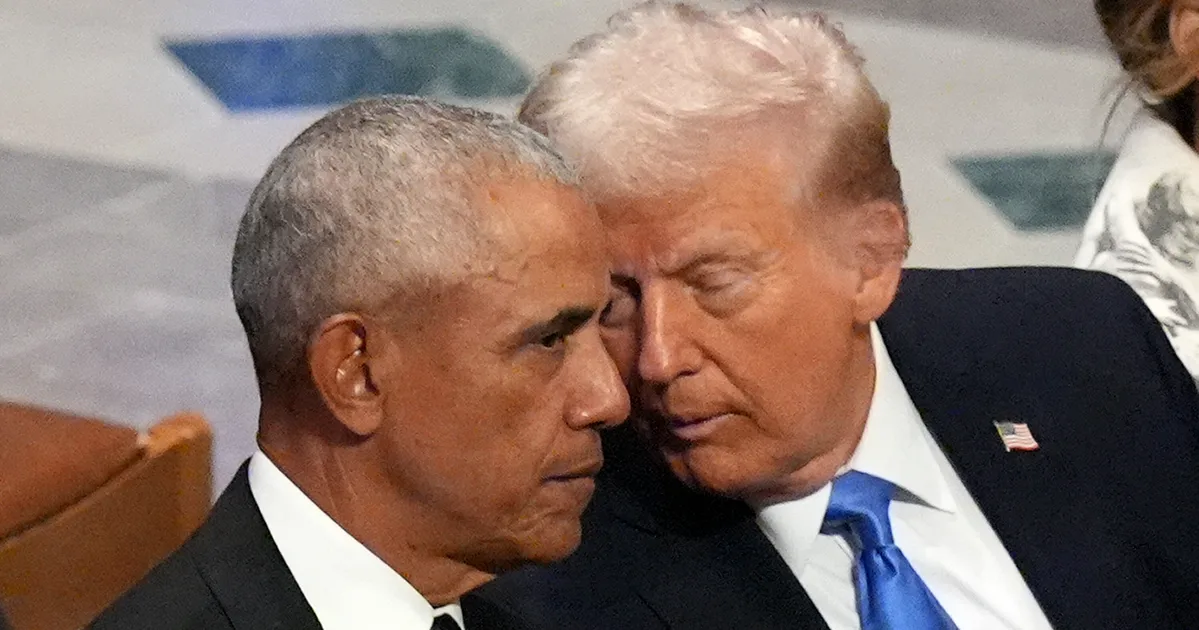
US president Donald Trump isn’t too happy about former President Barack Obama’s recent comments about the existence of extraterrestrials.
In fact, he says the former president’s assertion on a podcast that aliens from outer space are “real” was a “big mistake.”
Obama recently told podcaster Brian Tyler Cohen that ETs are “real, but I haven’t seen them, and they’re not being kept in Area 51. There’s no underground facility unless there’s this enormous conspiracy, and they hid it from the president of the United States.”
In addition, presidential daughter-in-law Lara Trump claimed Trump already has a speech about the existence of extraterrestrials ready to engage during a podcast interview on Wednesday.
But White House press secretary Karoline Leavitt said the same day that “a speech on aliens would be news to me,” while admitting it “sounds very exciting, though.”
Donald Trump didn’t seem very interested in discussing ETs when reporters questioned him on the topic Thursday.
In fact, he turned a question by Fox News’ Steve Doocy about Obama’s alienating remarks into an attack on the former president.
After Doocy asked, “Barack Obama said that aliens are real. Have you seen any evidence of non-human visitors to earth?” Trump fired back, “Well, he gave classified information. He’s not supposed to be doing that.”
Doocy then asked the obvious follow-up question, “So aliens are real?” but Trump did not address the question directly.
“I don’t know if they’re real or not,” Trump said. ”[Obama] made a big mistake.”
Trump’s seeming lack of interest in extraterrestrials sets him apart from other presidents.
Bill Clinton reportedly tried to get answers about Area 51 when he was in office, while Jimmy Carter and Ronald Reagan both reported actually seeing UFOs, according to Politico.

Lacerda reacted to the arrest with bittersweet comments during an appearance on CNN.
“It’s amazing,” the survivor told News Central host John Berman. “And it’s really, really something that all the survivors have been looking forward and working towards. And I have to say, Virginia’s brother and sister must be thrilled right now.”
She added, “I just look at it, it’s insane how everyone’s taking action and we are doing nothing in the United States. I’m right here in Norway right now, we have Princess Märtha answering to questions, and it’s just really sad that United States is not taking any action.”
The latest tranche of files appears to suggest Andrew gave Epstein confidential information in 2010 and 2011 as the official UK trade envoy — including a brief about some profitable investment opportunities in the reconstruction of Afghanistan’s Helmand Province.
Lacerda has never accused Andrew of sexual misconduct herself, and while the disgraced royal wasn’t arrested on such charges on Thursday and has always denied wrongdoing, he settled with Giuffre for an undisclosed sum a few years before she died.
“I’m very, very happy that … we’re making history here,” Lacerda said. “So this is big.”
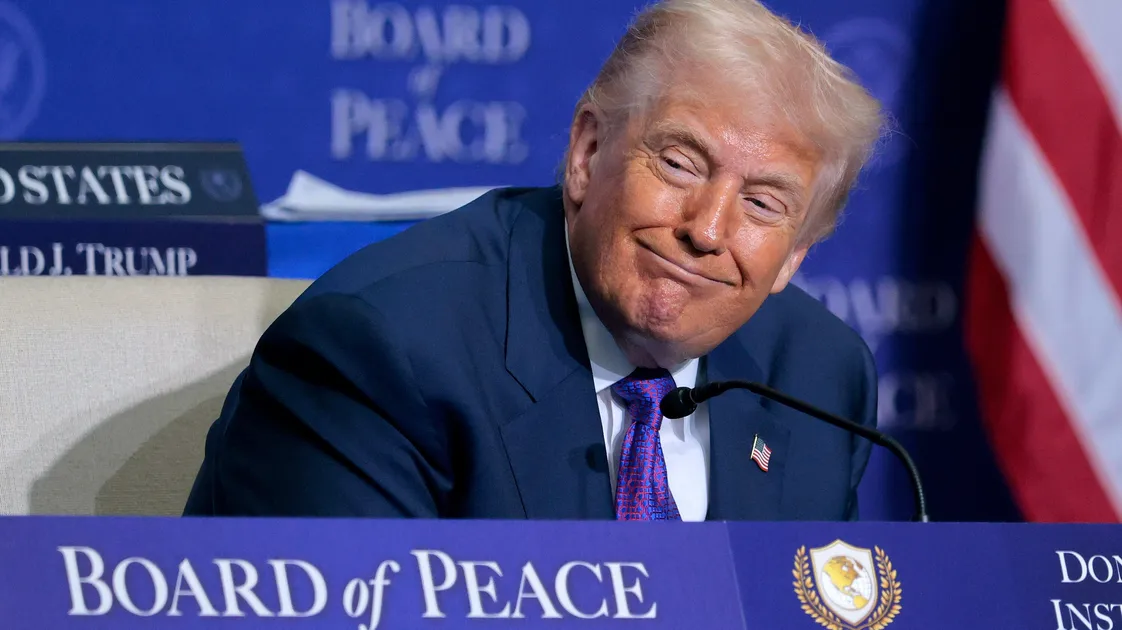
President Donald Trump on Thursday said the US will contribute $10 billion to the Board of Peace during a bizarre address at his club of world leaders’ first meeting.
Trump made the announcement toward the end of a long, rambling speech as the board — which critics fear will undermine the United Nations and is largely made up of countries run by oppressive and authoritarian leaders — convened in Washington, D.C.
The president gave no further details on the funding, such as where the money is coming from and the scope of what it can be spent on.
The initial remit of the board, first proposed last September, was to implement Trump’s vision for the reconstruction of Gaza following the Hamas-Israel war.
But Trump later made clear his intention for the board is to tackle other conflicts worldwide.
“The Board of Peace is showing how a better future can be built, starting right here in this room,” Trump said at the Donald J. Trump US Institute of Peace, a building the president recently renamed for himself.
“And I want to let you know that the United States is going to make a contribution of $10 billion to the Board of Peace, and we’ve got great support for that number.”
Trump also said Board of Peace contributing nations had raised $7 billion as an initial down payment for Gaza’s regeneration.
HuffPost has contacted the White House for more details on the US contribution.
More than 20 countries have joined Trump’s board, with member nations mandated to contribute $1 billion to secure a permanent board seat.
Argentina, Hungary and Saudi Arabia are among the first recruits, while major Western countries — including the UK, France and Germany — have snubbed Trump’s offer.
The president revoked Canada’s invitation after the country’s prime minister, Mark Carney, appeared to reference Trump in a speech condemning “authoritarianism and exclusion.”
In the address to the inaugural meeting of his creation, Trump said that those who haven’t accepted are “playing a little cute.” “You can’t play cute with me,” he warned.
He later attempted to ease concerns about his organisation jeopardising the UN’s role as the world’s main peacekeeper, saying: “We’re going to strengthen up the United Nations.”
The summit came as Trump threatens war against Iran. He used the meeting to reveal that he’ll decide whether to attack the county within the next 10 days amid attempts to get a deal limiting Iran’s nuclear program.
War and peace weren’t the only things on Trump’s mind as he lurched from one random subject to another.
Pivoting to party politics, Trump fixated on Rep. Alexandria Ocasio-Cortez (D-N.Y.) and her comments at last week’s Munich Security Conference.
He called Ocasio-Cortez an “attractive woman” who was “unable to answer questions,” a reference to apparent errors the congresswoman made that have become a media talking point.
He went on to say one of Ocasio-Cortez’s answers could be “career-ending” but failed to specify which one he was referring to.
Some billed Ocasio-Cortez’s appearance at the foreign policy talking shop as a step toward a potential presidential run in 2028, a characterization the 36-year-old told The New York Times was “out of touch and missing the point.”
Trump also jabbed at California Gov. Gavin Newsom, another potential Democratic Party presidential candidate.
In another deviation where he seized on someone’s appearance, Trump praised the looks of the Paraguayan president while mispronouncing his name and then backpedaled, apparently fearing people might think he was attracted to men.
“President Pena of Paraguay is here,” Trump said, mispronouncing Peña. “President?” he asked, looking around the room to find Peña. “President, thank you very much.”
“Young, handsome guy. It’s always nice to be young and handsome. Doesn’t mean we have to like you. I don’t like young, handsome men. Women I like. Men… no, I don’t have any interest.”
The platform also gave him the chance to again air his grievance about missing out on the Norwegian Nobel Peace Prize.
Thanking FIFA President Gianni Infantino, present at the meeting, for the peace prize that his soccer team awarded to him, Trump said: “I got screwed by Norway.”
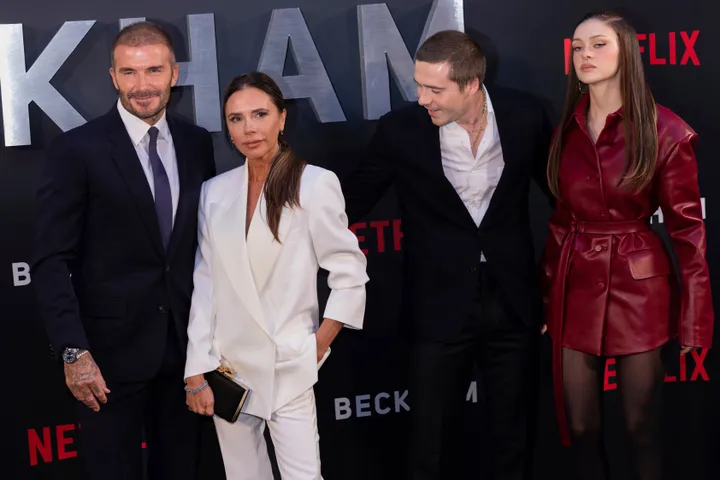
Gordon Ramsay has said he believes the Beckhams are “too close” not to get their relationship back on track amid the very public fall-out the family has been embroiled in over the last few weeks.
The Kitchen Nightmares star has been a close friend of Sir David Beckham and his family for more than 25 years, and recently shared his take on the feud headlines surrounding them.
During a new interview with HuffPost UK to promote his Netflix documentary Being Gordon Ramsay, he insisted he doesn’t think the rift between the former England striker and his eldest son Brooklyn Peltz Beckham will be a permanent one.
“They’re loving parents,” he said of Sir David and his wife Victoria Beckham. “Those kids are gorgeous.”

He continued: “That bond with your son is one of the most important bonds you’ll have in your life. So, I’m confident they’ll get back [to where they were].
“[Families] do fall out – I fell out with my parents and I fell out with my kids. [The Beckhams] are too close not to get this back on track. And I’m confident that they will get it back on track.”
Opening up more about the relationship between his own family and the Beckhams, Gordon then explained: “All the kids grew up together. The Ramsays and the Beckhams would spend incredible summers together, and then the kids, Jack and Brooklyn, would go surfing, Romeo would go surfing, and they just had the most amazing time.
“Then come Christmas, we’d go off to some beautiful places like the Maldives together, so yeah, the closeness was unique – and the bond.”
Reflecting on his friendship with Sir David, Gordon noted: “It takes years to really know a proper friend. We’ve been mates now for 25 years, we saw each other yesterday for coffee, and I love him.”
“It’s just so nice when you’ve got such lovely friends that enjoy great food, great wine and we do crazy shit together,” he added. “Sporadic days here, there and everywhere, where we’ll just go off with Tana and Victoria, and just have the most amazing time in private. That’s the hallmark of a great friend.”
After months of rumours suggesting he was no longer speaking to his famous parents, Brooklyn set the record straight last month, confirming that he is estranged from his family for several reasons and has no intention of reconciling.
Last week, Gordon told The Sun: “It’s a very difficult situation. Victoria is upset, and I know 24/7, seven days a week, just how much David loves Brooklyn.
“Brooklyn and I have messaged a little bit, our relationship is solid. I love him – his heart is incredible. But it’s hard, isn’t it, when you’re infatuated? Love is blind. It’s easy to get up on that rollercoaster, and get carried away. But it will come back.”
Since then, it’s been pointed out that Brooklyn appears to have unfollowed – but not blocked – Gordon on Instagram, with reports claiming he’s also done the same to two of the chef’s children.
Being Gordon Ramsay is now streaming on Netflix. Watch the trailer below:

Grey’s Anatomy actor Eric Dane has died at the age of 53.
Eric was best known for his performance as Dr Mark Sloan – also known by the nickname “McSteamy” – in the long-running medical drama, as well as his roles in Charmed and Euphoria.
Last year, he disclosed that he had recently been diagnosed with amyotrophic lateral sclerosis (ALS), with his family announcing his death in the early hours of Friday morning, in a statement to People magazine.
They said: “With heavy hearts, we share that Eric Dane passed on Thursday afternoon following a courageous battle with ALS.
“He spent his final days surrounded by dear friends, his devoted wife, and his two beautiful daughters, Billie and Georgia, who were the centre of his world.”
Eric’s family’s statement continued: “Throughout his journey with ALS, Eric became a passionate advocate for awareness and research, determined to make a difference for others facing the same fight
“He will be deeply missed, and lovingly remembered always.”

Randy Holmes Disney General Entertainment Con
They added: “Eric adored his fans and is forever grateful for the outpouring of love and support he’s received. The family has asked for privacy as they navigate this impossible time.”
Eric began his acting career in the early 90s with roles in Saved By The Bell, Roseanne and Married… With Children, before landing a recurring role in Gideon’s Crossing.
He was cast as Jason Dean in Charmed in 2003, premiering as Mark Sloan in Grey’s Anatomy three years later.
After an initial guest spot, he was bumped to the drama’s principal cast in 2007, before bowing out in 2012, though he did return for a special appearance in 2021.
He also appeared as Tom Chandler in The Last Ship and Cal Jacobs, Jacob Elordi’s on-screen dad, in Euphoria.
Eric’s film work included X-Men: The Last Stand, the ensemble rom-com Valentine’s Day, the tear-jerking family drama Marley & Me, the musical Burlesque and Family Secrets, his final on-screen performance, which will be released posthumously.
The actor is survived by his wife, fellow performer Rebecca Gayheart, and their two daughters.

Almost everyone will watch their hair turn grey as they approach their golden years. For most people, there isn’t much they can do except grey gracefully or pick out a shade of hair dye they like.
Although it’s not as common, others start to go grey much younger, even before they turn 20. When hair turns grey prematurely, the reason isn’t always obvious. Rumours abound that everything from stress to a good scare can turn your hair grey, sometimes instantly.
We asked four top doctors specialising in hair what causes our locks to turn grey and if there is ever a reason to be concerned. Here’s what they said.
What causes hair to turn grey?
Hair turns grey when it loses a pigment called melanin, Dr. Akhil Wadhera, a dermatologist with Kaiser Permanente in Northern California, explained to HuffPost. Typically, this occurs as part of the normal ageing process starting in your mid-30s to early 40s. However, some people turn grey at a relatively young age.
The most common reason for premature greying is genetics, he said. If your parents went grey at a young age, your hair is likely to turn grey earlier, too.
Nevertheless, some young adults whose parents retained vibrant hair colour into old age experience premature greying for various reasons. Some of those, like genetics, are beyond their control. Others are a result of lifestyle choices or environmental factors.
Stress really can cause your hair to turn grey
It’s common for people to say they’re under so much stress that they’re going grey. Although most people make these statements in jest, there is some truth behind them.
“Stress can cause premature greying of hair,” Wadhera said. “In fact, there was a study with over 1,000 young Turkish adults that showed that perceived stress scale scores correlated with premature hair greying severity.”
However, Dr. Ehsan Ali, an internal physician at Beverly Hills Concierge Medicine and Cedars-Sinai Medical Center with specialised training in geriatric medicine, emphasises that acute or chronic stress is required to cause premature greying. “A bad week at work isn’t enough to turn hair grey,” he explained.
That’s because acute stress can trigger a fight-or-flight response, says Dr. Zafer Çetinkaya, head hair transplant surgeon at EsteNove in Istanbul.
When this happens, our bodies release stress hormones, including norepinephrine, he said. Norepinephrine can stop the production of the pigment-producing cells that give our hair its colour. “Once this ‘reservoir’ of stem cells is empty, the follicle can no longer produce colour,” causing hair to gradually turn grey, he explained.
Environmental factors can cause our hair to turn grey (to an extent)
External factors can also cause our hair to turn grey early. “Hair follicles are particularly sensitive to oxidative stressors in the environment such as pollution, ultraviolet light, smoking, hydrogen peroxide and ionising radiation, all of which can result in premature greying,” Wadhera said.
The oxidative stress caused by exposure to these elements “disproportionately affects the cells responsible for hair pigment,” explained Dr. Corey Maas, a hair transplant specialist at the Maas Clinic in California. “Over time, this damage reduces the follicle’s ability to maintain consistent colour.”
However, these external factors typically play only a small role in the greying process. Moreover, how much the environment affects your hair colour depends on several factors that vary widely from person to person, Maas explained.
“Greying is the result of a complex interaction between genetics, cumulative exposure, and how well an individual’s body is able to repair and replace damaged processes of youthful pigmentation,” he said. “The environment can nudge the process along,” but when and how quickly depends on the individual, Maas said.
Can shock or fright cause our hair to turn grey?
In horror movies, a character sometimes suddenly develops a streak of white hair after a particularly frightening experience. However, off-screen, hair won’t turn grey instantly, no matter how scared we are.
“The idea of hair turning white overnight from fright is often referred to as Marie Antoinette syndrome,” because the queen’s hair supposedly suddenly turned white before her execution, Çetinkaya said. “In reality, hair that is already outside of the scalp cannot change colour” naturally, he said.
Nevertheless, sudden shock or intense fear can cause hair to go grey over time. Extremely stressful situations can trigger a condition called alopecia areata, Çetinkaya said.
When this happens, “the immune system selectively attacks pigmented hairs, which causes dark hairs to fall out rapidly,” he explained. When a person with some existing grey hair develops alopecia areata, their grey hairs are left behind as their darker hair sheds.
That “creates the appearance of sudden greying,” when what’s really happening is that the loss of darker hair is making the existing grey hair more noticeable, Çetinkaya explained.
Medical conditions can cause premature greying
Several medical conditions can also contribute to premature greying. “As a specialist, I look for vitamin B12 deficiency, pernicious anaemia, and thyroid dysfunction,” Çetinkaya said.
“These conditions can disrupt the metabolic environment of the hair follicle,” which can result in hair turning grey prematurely. Rare autoimmune conditions such as vitiligo can also target pigment, causing hair to grow in white, he added.
According to Wadhera, low levels of vitamin D3 and deficiencies in minerals such as iron and zinc can also cause premature greying.
Could going grey spur any health concerns?
If you start greying due to age, there is nothing to worry about except deciding whether to accept your grey hair or visit a salon to choose a new colour.
However, if you start going grey early, before your mid-30s, you may want to investigate. One or two grey hairs usually aren’t cause for concern, Ali said. However, if you notice a proliferation of greys “very early or very rapidly, this can be a clue to look deeper at nutrition, thyroid function, autoimmune issues or lifestyle stressors,” he explained. Your primary care physician can help if you are concerned.
Nevertheless, Ali stresses that going grey isn’t usually a medical or personal failure. Even though there is “a lot of unnecessary fear and marketing around this topic,” going grey is “usually a normal, genetically programmed process,” he said.
Cllr Matthew Dormer is the Leader of the Conservative Group on Redditch Borough Council.
With the local elections approaching, the key question in Redditch is simple: who can be trusted to deliver competent government and real value for residents? After a challenging period nationally, Conservatives know we cannot win arguments on slogans alone. We have to win them on performance — on the basics people notice every day, and on whether a council has a serious plan for the future.
In Redditch, voters are seeing the consequences of drift and short-termism at borough level, while at county level the new Reform administration is discovering that governing is far harder than campaigning. Promises made in opposition are colliding with the realities of budgets, service pressures, and delivery on the ground. That is the backdrop to the elections ahead — and why they matter.
At borough level, the Labour administration has struggled to demonstrate either vision or leadership. A flagship investment in a new market has failed to deliver the revival that was promised, leaving traders and residents disappointed rather than energised. More broadly, the town centre continues to decline, with no coherent strategy to reverse falling footfall or restore confidence.
Most striking, however, has been the absence of leadership. Decisions that should be taken decisively by the council’s leadership are repeatedly deferred to full council, diluting accountability and slowing progress. The recent decision not to hold elections this year is a clear example. Rather than owning that choice as a leadership decision, Labour has chosen to hide behind process. Councils do not succeed by managing procedure alone; they need leaders prepared to lead.
At county level, the picture under Reform has been one of contradiction rather than renewal. Despite strong rhetoric in opposition, there has been little meaningful engagement with the serious and complex issue of local government reorganisation. District councils and residents alike remain unclear about direction, consultation, or timescales.
Meanwhile, delivery on the basics is slipping. Highway repairs have slowed, investment schemes across the county have been cancelled or deferred, and confidence is ebbing. Most tellingly, the administration has already postponed its budget-setting meeting, raising questions about grip and preparedness. This sits uneasily alongside election promises to lower taxes, with residents now being warned to expect council tax increases of up to ten per cent. It is a familiar pattern: bold commitments made on the campaign trail, followed by difficult reversals once the realities of governing set in.
Against this backdrop, Conservatives in Redditch have been deliberately focused on rebuilding trust through competence and clarity. We know residents are tired of politics that promises much and delivers little. Our response has been to concentrate on the fundamentals: sound decision-making, financial discipline, and a clear sense of direction for the town.
We are organised, engaged, and serious about governing. That means scrutinising decisions properly, offering practical alternatives, and being honest about what can and cannot be achieved. It also means learning the lessons of our time in office, when we secured record levels of government investment and demonstrated that Redditch could compete for attention and funding when it had a credible plan and strong leadership.
Importantly, we are listening again — to businesses frustrated by the decline of the town centre, to residents concerned about basic services, and to families worried about opportunity for the next generation. Our focus is on rebuilding support around everyday priorities, not headline-chasing.
It is also important to be clear about the context of the elections ahead. Redditch elects its council by thirds, so control of the council will not change overnight. This election is therefore not about an instant takeover, but about momentum, direction, and trust.
Our objective is straightforward: to make gains, to rebuild confidence, and to demonstrate that Conservatives are the only credible option for change — the only alternative to continued Labour drift at borough level and the growing chaos being seen under Reform at county level.
None of this will be easy. Voters are frustrated, and national headwinds remain real. But local elections are still about who people trust to make decisions, run services competently, and stand up for their community. Residents remember that when Conservatives were in charge, things got done. Investment was secured, leadership was visible, and the council had direction.
Redditch matters beyond its boundaries. It is a typical working town, with small businesses, families, and public servants who expect value for money, fairness, and leadership that takes responsibility. If Conservatives cannot re-establish themselves as the credible governing option in places like this, we will struggle nationally. If we can, it shows the route back to trust runs through competence, not slogans.
My ambition has always been to serve Redditch — first as a firefighter, then as a business owner, then as council leader. Who knows where that journey of service may take me in the future? For now, the task is clear: make gains, restore confidence, and show that Conservatives are once again ready to lead.

Eric Dane’s Life and Career: Grey’s Anatomy Fame to ALS Battle

The Biggest Ever Moment For XRP Is Here – Tom Lee

Undercover Thai police go dancing in lion costume to catch serial burglar | World News


-

 Video4 days ago
Bitcoin: We’re Entering The Most Dangerous Phase
-

 Tech5 days ago
Luxman Enters Its Second Century with the D-100 SACD Player and L-100 Integrated Amplifier
-

 Crypto World3 days ago
Can XRP Price Successfully Register a 33% Breakout Past $2?
-

 Sports3 days ago
GB's semi-final hopes hang by thread after loss to Switzerland
-

 Video7 hours ago
XRP News: XRP Just Entered a New Phase (Almost Nobody Noticed)
-

 Video7 days ago
The Final Warning: XRP Is Entering The Chaos Zone
-
 Tech3 days ago
The Music Industry Enters Its Less-Is-More Era
-

 Business2 days ago
Infosys Limited (INFY) Discusses Tech Transitions and the Unique Aspects of the AI Era Transcript
-

 Entertainment2 days ago
Kunal Nayyar’s Secret Acts Of Kindness Sparks Online Discussion
-

 Video3 days ago
Financial Statement Analysis | Complete Chapter Revision in 10 Minutes | Class 12 Board exam 2026
-

 Tech2 days ago
Retro Rover: LT6502 Laptop Packs 8-Bit Power On The Go
-

 Crypto World6 days ago
Bhutan’s Bitcoin sales enter third straight week with $6.7M BTC offload
-
 Sports1 day ago
Clearing the boundary, crossing into history: J&K end 67-year wait, enter maiden Ranji Trophy final | Cricket News
-

 Crypto World7 days ago
Kalshi enters $9B sports insurance market with new brokerage deal
-

 Entertainment1 day ago
Dolores Catania Blasts Rob Rausch For Turning On ‘Housewives’ On ‘Traitors’
-

 Business2 days ago
Tesla avoids California suspension after ending ‘autopilot’ marketing
-
 NewsBeat5 days ago
The strange Cambridgeshire cemetery that forbade church rectors from entering
-

 Crypto World2 days ago
WLFI Crypto Surges Toward $0.12 as Whale Buys $2.75M Before Trump-Linked Forum
-
 NewsBeat5 days ago
Man dies after entering floodwater during police pursuit
-

 Crypto World11 hours ago
83% of Altcoins Enter Bear Trend as Liquidity Crunch Tightens Grip on Crypto Market