
Crypto World
Ripple Price Analysis: What’s Next for XRP After an 8% Daily Surge?

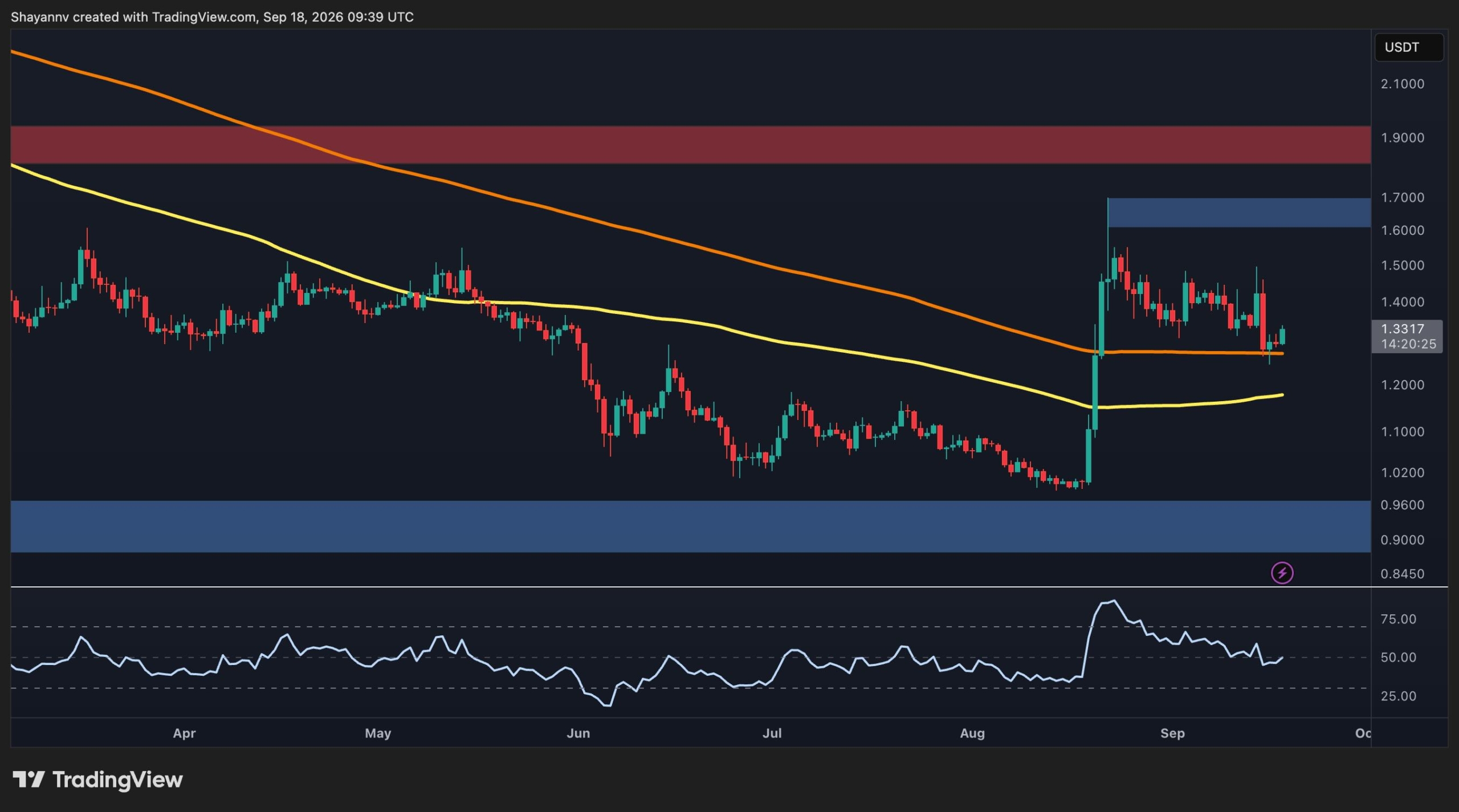
XRP is consolidating after a sharp recovery from the sub-$1 area, with the price now attempting to stabilize around $1.35. The daily chart shows a major structural improvement following the recent rally, while the 4-hour timeframe suggests that the asset is still trading inside a descending channel that is guiding a corrective price action.
Ripple Price Analysis: The USDT Pair
On the daily timeframe, XRP staged a strong impulsive move from the $1.00 support area to roughly $1.70 before entering a prolonged consolidation. The rally also pushed the RSI sharply into overbought territory, but the subsequent cooling-off phase has brought the indicator back toward the neutral 50 area.
The price is currently around $1.35, sitting just above the 200-day moving average at approximately $1.30. This is an important near-term area because holding above this zone would keep the recent structural recovery intact. The yellow 100-day moving average is also located lower, around $1.18, providing a deeper dynamic support area if the correction extends.
On the upside, the most visible resistance is the $1.60-$1.70 zone, marked by the recent swing high. A successful move through this region would put the larger $1.90 resistance zone back into focus.
On the downside, the chart’s major structural support remains around $1.00. This is substantially below the current market and therefore represents a broader invalidation area rather than an immediate support level.
The 4-Hour Chart
The 4-hour chart provides a more cautious picture. XRP has been moving inside a descending channel, with both the upper and lower trendlines sloping downward. The latest rejection from approximately $1.48 resulted in a sharp decline toward the $1.25 support zone and the lower boundary of the channel.
That support area has so far held, and XRP has started to recover toward $1.35. The immediate obstacle, however, is the $1.33-$1.37 resistance zone, which is currently being approached from below. A clean breakout and hold above this area would improve the short-term structure and could open the way toward the channel’s upper boundary around $1.40-$1.45.
Conversely, a rejection around this resistance area could lead to a move back toward the $1.25 support zone again. The lower channel trendline is also located in this area, making it an important level for the current consolidation and for investors, as losing it could lead to a much deeper correction in the coming weeks.

The post Ripple Price Analysis: What’s Next for XRP After an 8% Daily Surge? appeared first on CryptoPotato.

It was expected to be a massively eventful week for the entire cryptocurrency industry, and it was.
But first, let’s see what happened precisely seven days ago. The US CPI data had just come out, confirming that inflation is still persistent. As such, the US Federal Reserve had all the missing pieces to its monetary puzzle, and experts predicted a rate hike on September 16.
BTC went wild after the CPI data was announced, going from $77,000 to $76,000 before it suddenly exploded to $79,800, where it was violently rejected and driven south to its starting point. All of this took place within an hour or so. After this enhanced volatility, the market calmed during the weekend, with BTC trading sideways at around $77,000.
It dipped to $76,400 on Monday before the bulls took control and drove it to $79,600 ahead of the key CLARITY Act vote a day later. BTC had already retreated to $77,000 when it became official that the Senate rejected cloture to advance the bill, and bitcoin plunged to a three-week low of $75,000.
The bulls managed to defend that level, but the next day was anticipated to be just as eventful with the conclusion of the FOMC meeting. The Fed indeed hiked the rates for the first time in over three years, but BTC’s reaction was more modest and somewhat surprising. The asset slipped to $75,000 once again initially, but rocketed to over $76,000 within minutes.
It kept climbing gradually on Thursday and especially on Friday. Although the BOJ also increased the rates by 25 bps to a 31-year high, BTC actually reclaimed $78,000 during the morning trading session. It stood there for a while, but initiated another leg up as US trading hours began and rocketed to a two-week peak of $81,000, where it was stopped, at least for now.
This means that BTC is actually in the green during the week in which all major events went against it. Meanwhile, ZEC continues its massive rally, while NEAR has rocketed by 35%. UNI is up by over 30% as well, followed by HYPE, BCH, and a few others. RAIN has plummeted by 22%.
Market Data

Market Cap: $2.770T | 24H Vol: $96B | BTC Dominance: 58.6%
BTC: $80,600 (+0.9%) | ETH: $2,570 (-3%) | XRP: $1.37 (-4%)
This Week’s Crypto Headlines You Can’t Miss
Strategy Stays on the Sidelines Again, but Strive Buys More Bitcoin. The week began with a familiar announcement: Strategy refused to buy more BTC while it continues to focus on rebuilding its USD stash. At the same time, Strive keeps accumulating more BTC, adding another 469 units.
Bitcoin Could Get More Support Than Gold as ETF Hedging Eases: JPMorgan. Analysts at the Wall Street behemoth said BTC may gain more price support than the precious metal amid easing ETF hedging demand, with BlackRock’s iShares Bitcoin Trust showing high short interest.
From Bear to Bull: Analyst Says Bitcoin UTXO Data Points to a Cycle Shift. Bitcoin’s share of addresses sitting at a loss has dropped sharply, and an on-chain analyst said moves of that size have historically ended bear markets and are not just producing a short bounce.
SEC Opens Door to Onchain Stock Trading With New ‘Innovation Exemption’. The regulator has launched an “Innovation Exemption” to promote secondary trading of tokenized stocks on blockchain platforms, easing regulatory burdens for Tokenized Securities Venues.
Seven Democrats Refuse to Give Up on CLARITY Act After Senate Setback. Despite the latest developments on the matter, several Democrats stated that this is not the end, pledging to continue bipartisan efforts for crypto regulatory clarity.
CoinEx Calls Time After Nearly Nine Years as Crypto Market Pressure Mounts. After nine years in existence, CoinEx has decided to shut down its platform by the end of the year due to declining crypto market conditions and increased regulatory pressures. As such, the exchange joins other major names that fell during the 2026 bear market, such as BitMart and BitMEX.
Charts
This week, we have a chart analysis of Ethereum, Ripple, Cardano, Binance Coin, and Hyperliquid – click here for the complete price analysis.
The post Bitcoin Hits 14-Day High Despite CLARITY Setback, Fed and BOJ Rate Hikes: Weekly Recap appeared first on CryptoPotato.


HYPE has risen 10.5% to $91.20 after Hyperliquid introduced manual USDC and USDT borrowing against HYPE and Bitcoin collateral, with the token setting a new all-time high of $92.56.
Summary
- HYPE price gained 10.5% in 24 hours and reached a record $92.56 on Sep. 18.
- Hyperliquid users can borrow USDC and USDT against supplied HYPE or Bitcoin.
- HYPE carries a 65% loan-to-value ratio, compared with 50% for Bitcoin.
- Payward plans to offer regulated Hyperliquid perpetuals to eligible U.S. clients.
Hyperliquid loans accept HYPE and Bitcoin collateral
Hyperliquid’s official documentation states that manual borrowing went live on Sep. 18, allowing users to borrow USDC and USDT after supplying HYPE or Bitcoin as collateral. The new service runs through HyperCore, the same infrastructure that supports the platform’s portfolio margin system.
“Manual borrowing is supported for Manual/Standard and Unified Account users,” the platform said.
Portfolio margin accounts already handle borrowing automatically, so the separate manual action is unavailable to those users. Manual and unified account holders can instead choose the amount they want to borrow, subject to available liquidity and account-level and global limits.
HYPE collateral has a loan-to-value ratio of 65%, meaning $1,000 worth of HYPE provides up to $650 in borrowing capacity at the applicable oracle price. Bitcoin has a lower LTV of 50%, giving the same collateral value up to $500 in capacity.
When a user supplies both assets, Hyperliquid adds their respective borrowing contributions together. Supplied HYPE and Bitcoin do not earn interest, while supplied USDC and USDT earn interest but do not increase the account’s borrowing capacity.
Borrowed stablecoins accrue interest continuously, with the balance indexed every hour. According to the documentation, rates depend on how much available liquidity borrowers are using. Suppliers receive a lower annual percentage yield than borrowers pay because the interest is divided among a larger pool of supplied assets.
Hyperliquid also retains 10% of the interest paid by borrowers as a reserve for future liquidations. Data cited following the rollout placed total borrowed assets at about $269 million, showing early use of the lending feature.
Liquidation rules depend on collateral value
Hyperliquid uses a health factor to compare a user’s LTV-adjusted collateral with outstanding debt. An account cannot take another loan once its health factor reaches 100% or lower, although crossing that level does not automatically trigger liquidation.
Partial liquidation begins when borrowed value moves above the collateral value after applying the designated liquidation threshold. HYPE has an 82.5% partial liquidation threshold, while Bitcoin has a threshold of 75%.
Falling collateral prices can therefore increase liquidation risk even when the user does not borrow more. Interest charges, collateral withdrawals, and additional borrowing can also move an account closer to the threshold, according to the platform.
In an example provided in its documentation, Hyperliquid used 100 HYPE worth $40 each and a 2,000 USDC loan. The collateral would provide $2,600 in borrowing capacity at a 65% LTV, leaving another 600 USDC available to borrow.
For the same position, the account would reach the 82.5% partial liquidation threshold if the HYPE oracle price fell to about $24.24, excluding further interest. Hyperliquid noted that displayed liquidation prices can change as asset prices, balances, and accumulated interest move.
Multiple forms of collateral make the calculation more complex because the system includes the contribution from every supplied asset. A displayed liquidation price of “N/A” does not necessarily mean a position carries no risk, as the label can appear when another asset covers the debt or when the calculated price sits above the current oracle price.
HYPE price breaks above its previous record
CoinGecko data showed HYPE trading at $91.20 at the time of writing, up 10.5% over 24 hours. The token moved between $81.70 and $92.56 during the period, with the upper end setting its latest all-time high on Sep. 18.
Trading volume reached approximately $1.72 billion over 24 hours, while HYPE’s market capitalization stood near $20.3 billion. The token was also up 57.1% over 30 days, according to the same market snapshot.
The advance pushed HYPE above the $89.57 record set on Sep. 6. In an earlier technical report, crypto.news covered HYPE’s consolidation between roughly $84 and $88 after the previous high, when selling repeatedly appeared above $87.
HYPE later fell toward $78.70 as weaker momentum and legal concerns weighed on the market, before reversing above $90 following the manual borrowing rollout. The move also cleared the former $87–$90 liquidity area identified in the earlier report.
Bitcoin rose alongside HYPE, trading near $80,981 after gaining about 5.6% over the latest session. BTC moved between approximately $76,205 and $80,998 during the period, placing it close to its intraday high when the market data was recorded.
U.S. access remains tied to regulated partners
Hyperliquid’s growing product range has arrived while companies connected to the platform pursue a regulated route into the United States. The Hyperliquid Policy Center has also challenged CME’s lawsuit against the Commodity Futures Trading Commission over the agency’s approval of a Kalshi Bitcoin perpetual contract.
In its Sep. 9 filing, the policy group argued that CME had not shown a competitive injury caused by the CFTC’s decision. The group also said CME’s commercial interests did not fall within the protections of the Commodity Exchange Act provisions cited in the lawsuit.
A separate U.S. proposal involves Payward, the parent company of Kraken. On Sep. 16, Payward announced regulated Hyperliquid markets for eligible American clients through Bitnomial, subject to regulatory approval.
Under the proposed structure, Bitnomial Exchange would deploy and administer selected perpetual futures markets through Hyperliquid’s HIP-3 system. Bitnomial Clearinghouse would handle clearing and settlement, while NinjaTrader Clearing would carry approved customer accounts.
U.S. customers would need to complete onboarding with NinjaTrader Clearing and receive approval for the relevant Bitnomial market. Their associated addresses would also need to appear on the permissioned HIP-3 allowlist, rather than receiving access to every market available through Hyperliquid.
Payward said Hyperliquid would be the first blockchain protocol used for the planned service. The company has not announced a launch date, and CFTC records do not yet establish final approval for the proposed HIP-3 arrangement.

Occidental Petroleum (OXY) has been in a nice uptrend since early July and this latest pullback could represent a good buying opportunity. Investors could buy Occidental Petroleum stock at the current price, or they could use options to potentially buy it at a discount. This is like getting paid to place a limit order. Let’s say I have $5,500 that I…
Copyright ©2026 Investor’s Business Daily, LLC. All rights reserved. 87990cbe856818d5eddac44c7b1cdeb8
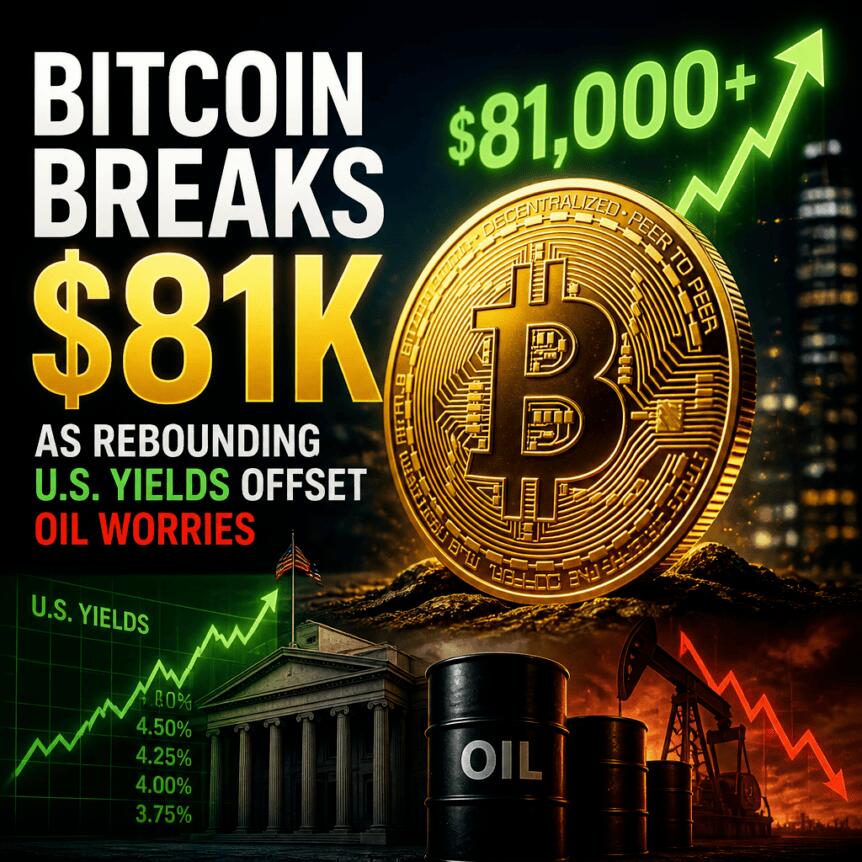
Bitcoin pushed through the $80,000 level during Friday’s Wall Street open, reaching a local high of $81,034 on Bitstamp. The move coincided with renewed stress in global energy markets, where concerns around oil supply fed into higher US bond yields—an interplay that has again spilled over into crypto.
Within hours, short-position liquidations accelerated across crypto derivatives. According to CoinGlass data cited in the report, cumulative cross-crypto short liquidations totaled close to $250 million over a four-hour window, helping fuel Bitcoin’s short-term upside momentum.
Key takeaways
- BTC gained about 6% on Friday as oil-supply worries contributed to US bond yields turning higher.
- Crypto liquidations intensified, with CoinGlass data putting cross-crypto short liquidations near $250 million in roughly four hours.
- Bitcoin’s rebound runs into well-watched resistance zones that previously surfaced around May.
- On-chain cost-basis benchmarks—such as Glassnode’s “True Market Mean”—suggest price has regained a historically important threshold.
Energy jitters and a bond-yield reversal lift BTC
TradingView data (as referenced in the source) showed BTC/USD “filling pockets” of upside liquidity to trade at local highs of $81,034 on Bitstamp. The price action was accompanied by a build-up of short positions above spot that were later liquidated.
CoinGlass’s liquidation heatmap data, also referenced in the original piece, showed cross-crypto short liquidations accumulating near $250 million over four hours. In practice, this kind of rapid unwind can amplify moves: as stops trigger and leveraged shorts are forced out, spot buying tends to intensify in the near term.
The catalyst was tied to crude oil. WTI traded down to lows around $94.8 per barrel before climbing again during Asia hours, moving toward the $98 area at the time of writing.
In a Friday commentary, the International Energy Agency (IEA) warned that countries may have to cut usage if Gulf supplies remain constrained and commercial inventory buffers continue to deplete quickly. The IEA noted that earlier emergency measures—such as the release of 400 million barrels in March following the Strait of Hormuz disruptions—helped ease prices from April peaks, aided by rerouted Middle East exports and increased output outside the region.
“But if Gulf supplies remain constrained in the coming months and commercial inventory buffers continue to deplete rapidly, higher prices and further demand reductions may be required to close the supply-demand gap.”
The IEA’s calculations also referenced a sizable gap between current oil flows through Hormuz and pre-war levels, estimating 7.6 million barrels per day in August—13.1 million below the daily tally before the US-Iran war.
As oil uncertainty returned, US rates followed. The US 30-year yield reached 5.34% on the day, up 90 basis points, according to the figures cited in the source. Earlier reporting by Cointelegraph had linked rising yields across multiple countries to expectations that central banks would maintain or raise interest rates—an environment that can reprice risk assets, including crypto.
Traders watch $82,000 and the risk of “double rejection”
While Bitcoin’s move above $80,000 drew immediate attention, short-term technical traders flagged a key test ahead. Trader and analyst Rekt Capital, commenting on low-time-frame action, described the current phase as a “moment of truth,” according to the X post cited in the source.
A chart shared on X positioned $82,000 as a critical breakout level for BTC/USD. If Bitcoin fails to clear and hold above it, the pattern could resemble a double rejection scenario, the source notes—linked to the prior market structure that ended the mid-May rebound.
For active traders, this framing matters because it highlights a transition point: momentum from liquidations can push price quickly through levels, but follow-through often depends on whether buyers defend breakout levels when volatility cools.
On-chain benchmarks: reclaiming a key cost basis
Beyond derivatives and price charts, the source also pointed to on-chain indicators tied to investor cost. Bitcoin’s latest upside reportedly helped it reclaim its True Market Mean, an aggregate measure of the cost basis of coins acquired on secondary markets. Glassnode, as referenced in the article, placed this benchmark at $76,660.
Glassnode’s interpretation—shared via X in the source—was that trading back above this level places Bitcoin “back into a bullish regime.” In other words, rather than treating the move as purely speculative, the argument is that reclaiming certain cost-basis thresholds can shift the balance between holders in profit and those sitting under historical averages.
The piece also referenced the cost basis for Bitcoin’s corporate treasuries, estimating it at $80,500. That figure sits near the current local trading range, implying that the market is oscillating around an area meaningful to long-term institutional buyers—an additional reason $80,000 to $82,000 could remain a focal zone for price action.
What to watch next as macro pressure and crypto volatility intersect
Bitcoin’s jump has so far been tied to macro spillovers from oil and rates, alongside derivatives positioning that helped accelerate the move. Over the next sessions, the key question is whether BTC can maintain gains through the $82,000 breakout test—or whether the market reverts to prior resistance levels seen around May while crude and bond yields continue to set the tone.

ETH witnessed a notable recovery after briefly plunging near $2,350 this week. The leading altcoin has since climbed over $2,480. At the same time, its transaction fees have fallen sharply, making the network cheaper to use.
The average cost per ETH transfer has dropped to around $0.095 from this year’s peak of $0.72 on April 21, according to Santiment’s findings.
Ethereum Gets Cheaper
The decline comes as mainnet demand softened during the bearish summer. However, network upgrades have also increased Ethereum’s capacity. Fusaka, higher blob throughput, and a 60 million gas limit have helped the network handle more activity. At the same time, Layer 2 solutions are processing large amounts of transactions that previously competed for Ethereum’s mainnet blockspace.
Lower fees could make Ethereum more accessible for users and developers, according to Santiment. Swaps, transfers, DeFi activity, stablecoin movements, and ERC-20 transactions can now be completed at a lower cost.
The analytics platform said that cheap transactions do not necessarily mean demand is recovering. But it is important to note that lower costs remove one of Ethereum’s long-standing barriers. With ETH prices having recovered, cheaper network activity could provide a more favorable environment for Ethereum-based projects.
Meanwhile, Ali Martinez observed that the asset is trading within a defined 4-hour channel despite recent market volatility. ETH has reached the lower boundary of the range, following which the $2,570 level has come into focus. Martinez expects a potential rebound toward the middle and upper end of the channel. A strong 4-hour close above $2,570, supported by higher trading volume, could signal a breakout. He added that the next stops would be $2,700 and then $3,000.
The Long Investor believes Ethereum remains a buy despite an almost 45% rise over the past three months. The investor said buying before ETH moves above $3,000 may put investors ahead of late buyers. They also pointed to the 200-week moving average as a strong long-term reference.
Supply Drain
Less ETH on exchanges is helping the recovery. Recent estimates revealed that only 6.06 million units now sit on exchanges, down from 22.9 million at the June 2020 peak. That is a 73% decline in readily available supply. The drop reflects more ETH moving into staking, ETFs, treasury holdings, and long-term custody.
Validators are also locking ETH to help secure the network. Lower liquid supply may increase the impact of buying activity. Even without a major rise in demand, smaller waves of buying can have a stronger effect when fewer coins are available on exchanges.
The post Ethereum Gets Cheaper: Network Fees Collapse Over 85% as ETH Price Rebounds appeared first on CryptoPotato.
Crypto World
Haruko hack hits 15 crypto clients, with exchange API details, trading data and funds stolen


The London-based firm provides portfolio, risk-management and trade-data infrastructure to institutional digital-asset firms. Its platform connects with centralized exchanges, custodians, blockchains and decentralized-finance (DeFi) protocols, giving clients a consolidated view of their positions, transactions and risk exposure.
“GSR has not been impacted by any rumored breach,” a company spokesperson said. Bitcoin Suisse, Flowdesk, 3iQ, M2, Ampersan, MNNC and Trovio did not reply to requests for comment before publication time.
A small amount of client funds was stolen, the people said, who spoke on condition of anonymity because the matter is private. Smaller hedge funds with weaker security controls may have been particularly exposed, the people said. Trading data was also taken.
Hacks remain a persistent problem for the crypto industry because transactions are generally irreversible and platforms rely on digital credentials and signing systems that can give attackers direct access to assets.
The attacker exploited a vulnerability in one of Haruko’s processes, extracting a user-access token and using it to capture data held in the process’s memory, Carlile told clients. That memory could have included read-only exchange API details and other data.
Clients’ login credentials were not compromised on their own systems, according to the messages. Instead, the access token was extracted through a vulnerability in Haruko’s infrastructure.
Crypto World
Stock Market Today: Dow Pressured As Yields Hit 5%; Strategy Soars As Bitcoin Price Tops $80,500 (Live Coverage)
Stock Market Today: Dow Pressured As Yields Hit 5%; Strategy Soars As Bitcoin Price Tops $80,500 (Live Coverage)

Both versions are, in Kazan’s estimation, self-portraits of the artists who made them. Renowned for directing A Streetcar Named Desire and On the Waterfront and co-founding the influential Actors Studio from which the school of “method acting” was born, Elia Kazan was called before the House Un-American Activities Committee in 1952. The Hollywood blacklist was in effect and, Faced with the possibility of never being able to work in Hollywood again, he named names. His granddaughter has never read his autobiography, though she has tried. “There’s some very young part of me that’s like, I still want my grandpa to be my grandpa and not have access to all of this adult stuff,” she says. But she believes that Elia Kazan, who died in 2003 when she was 20, saw himself in the black sheep of the family: “He had this cold and demanding father, and I think he was projecting onto Cal.” Made during a period when the director was facing significant backlash, his version focuses on guilt, rejection, and alienation.


“The CFTC is locked in and ready to ship its rules for the new frontier of finance,” CFTC chair Mike Selig wrote in a post on X following the vote on Wednesday.
The CFTC, on Friday, also published a no-action letter, giving certain software providers a way to connect users to regulated derivatives markets without registering as introducing brokers. It covers passive software that lets users view markets and submit orders directly to registered firms, including through crypto wallets.
Providers can market specific contracts and receive transaction-based fees, but they cannot hold customer assets, generate buy or sell signals or control how orders are routed or executed, according to the letter.
The relief comes with conditions, including risk disclosures, recordkeeping and compliance with marketing rules. It remains in place until the CFTC adopts rules or guidance addressing registration requirements for software developers.
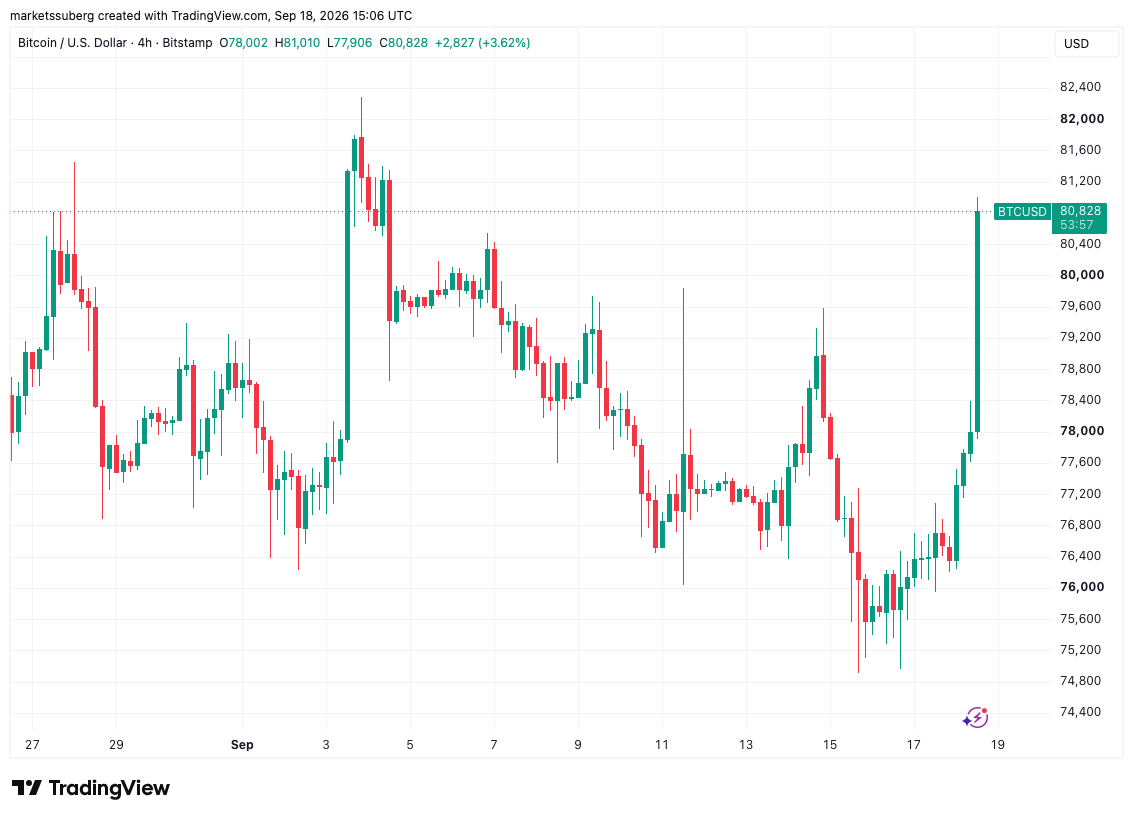
Bitcoin (BTC) jumped past $80,000 around Friday’s Wall Street open as fuel-crisis woes spread through global markets.
Key points:
- Bitcoin gained 6% on Friday as concerns about oil supply saw US bond yields reverse higher.
- Crypto markets liquidated $250 million in short positions over four hours.
- BTC price momentum now faces the familiar resistance levels first encountered in May.
BTC surges 6% as US bond yields turn upward
Data from TradingView showed BTC/USD filling pockets of upside liquidity to reach local highs of $81,034 on Bitstamp.
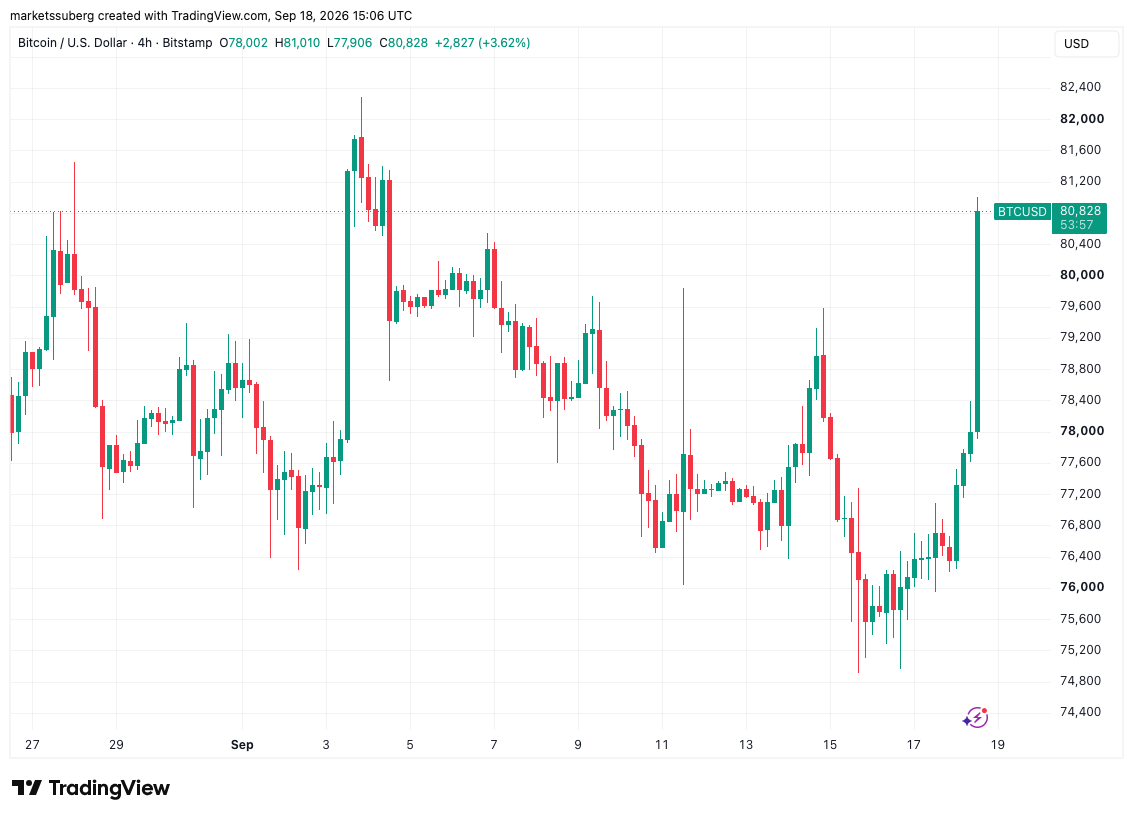
BTC/USD four-hour chart. Source: Cointelegraph/TradingView
A cluster of short positions above the spot price came under fire as a result. Per data from CoinGlass, cumulative cross-crypto short liquidations sat near $250 million over four hours.
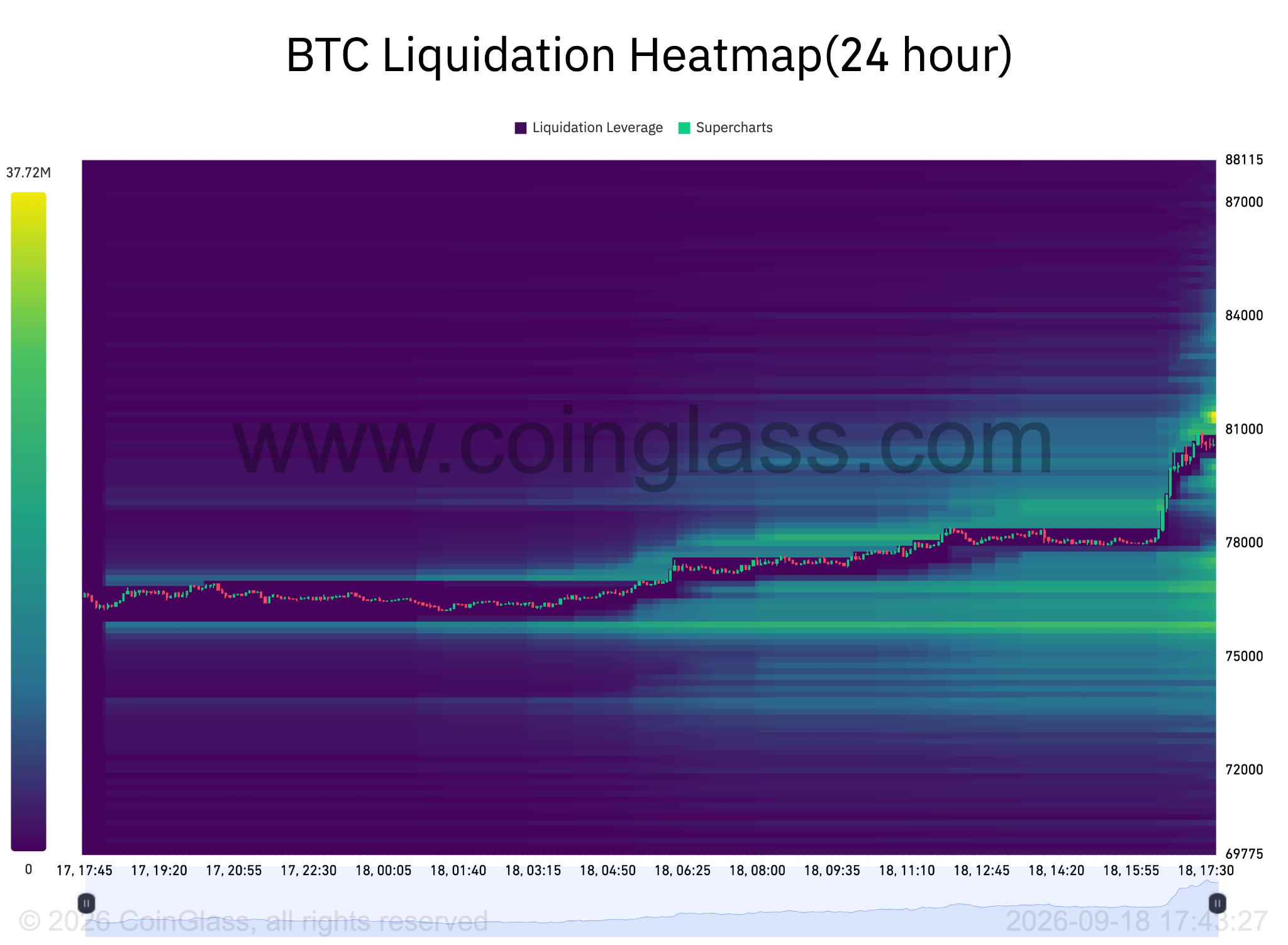
BTC liquidation heatmap. Source: CoinGlass
US WTI crude fell to lows of $94.8 per barrel, only to begin climbing again during the Asia trading session. It is circling $98 at the time of writing.
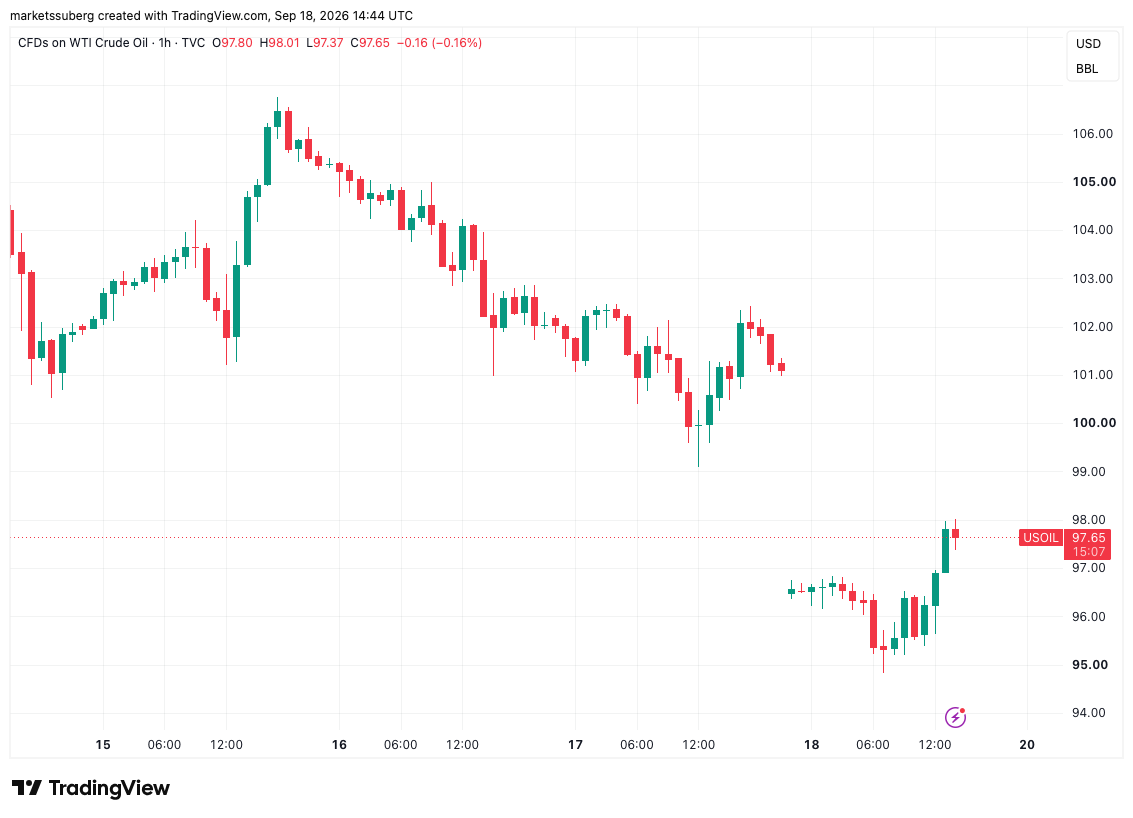
CFDs on WTI crude oil one-day chart. Source: Cointelegraph/TradingView
In a report on Friday, the International Energy Agency (IEA) warned that countries may have no choice but to cut usage. In March, the IEA released 400 million barrels from its emergency reserves amid the closure of the Strait of Hormuz.
“Prices for crude and oil products had eased from their April peaks in the months that followed as emergency IEA stocks were released, Strait of Hormuz bypass routes boosted Middle East exports, producers outside the region raised output, flows out of the Persian Gulf partially recovered and global demand softened,” it wrote.
“But if Gulf supplies remain constrained in the coming months and commercial inventory buffers continue to deplete rapidly, higher prices and further demand reductions may be required to close the supply-demand gap.”
The report calculated oil flows through Hormuz at 7.6 million barrels per day in August, 13.1 million below the daily tally before the US-Iran war.
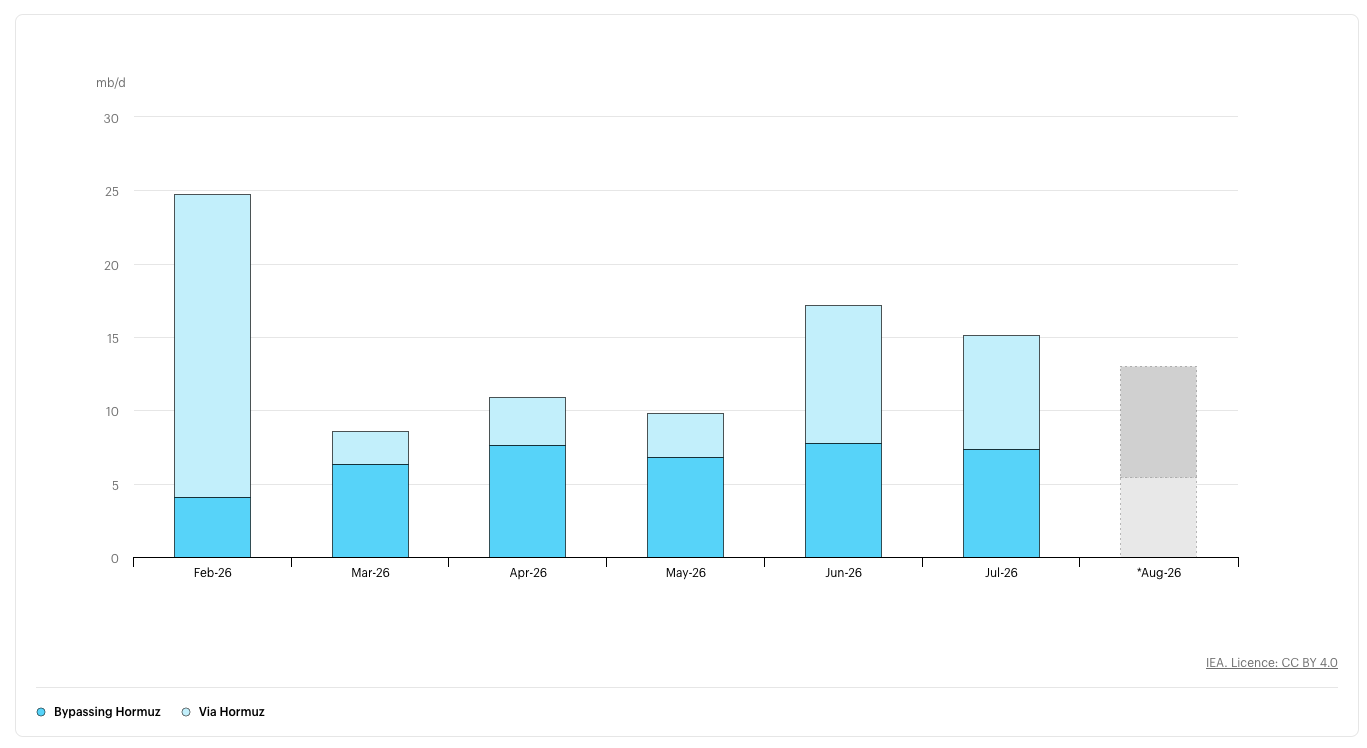
Gulf producers oil exports, February-August 2026 (millions of barrels/day). Source: IEA
US bond yields once again rose amid the oil uncertainty. The US 30-year yield reached 5.34% on the day, up 90 basis points.
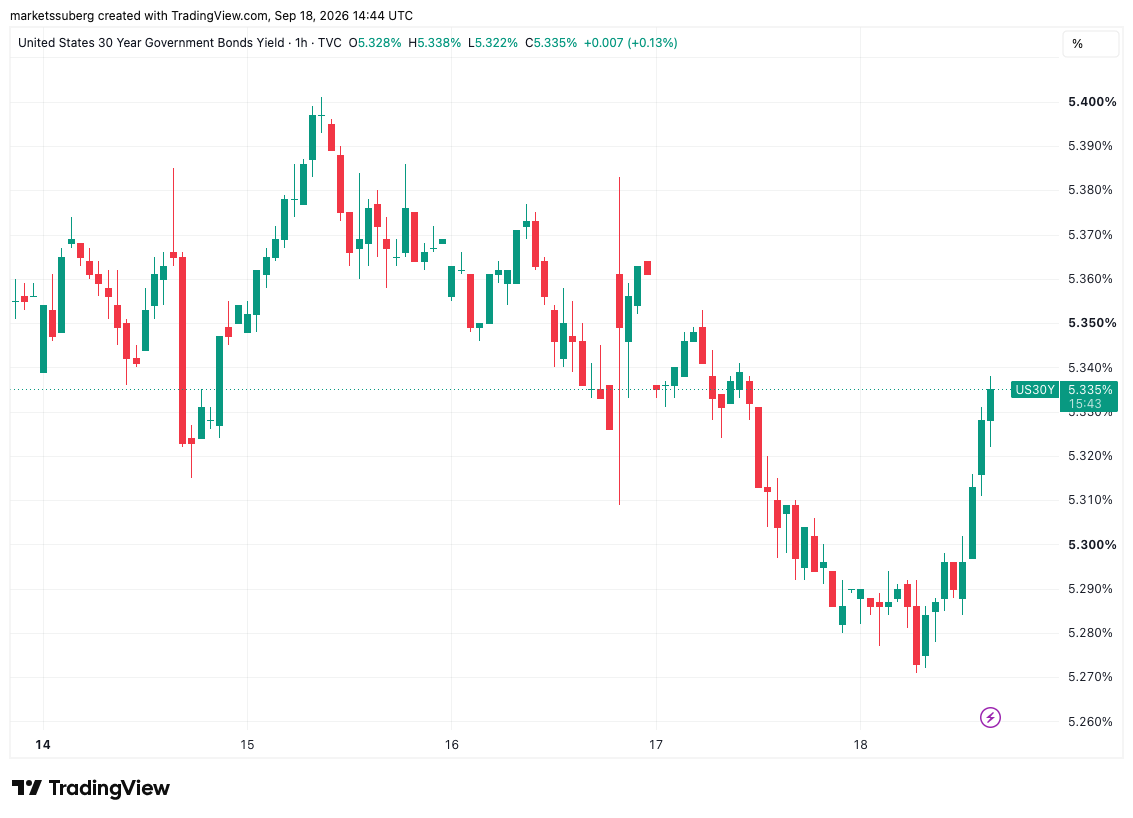
US 30-year bond yield one-month chart. Source: Cointelegraph/TradingView
Earlier, Cointelegraph reported on rising yields in multiple nations forcing central banks to raise interest rates — a move seen in both the US and Japan this week.
Analyst: Bitcoin price faces key breakout test next
Commenting on low-time frame BTC price action, trader and analyst Rekt Capital said that bulls now faced a “moment of truth.”
Related: Bitcoin adds to bull-market hopes as price metric prints fourth-ever bullish cross
A chart uploaded to X showed $82,000 as a key level for BTC/USD to break though. Failing to do so would constitute a double rejection pattern together with the price action that ended the mid-May rebound.
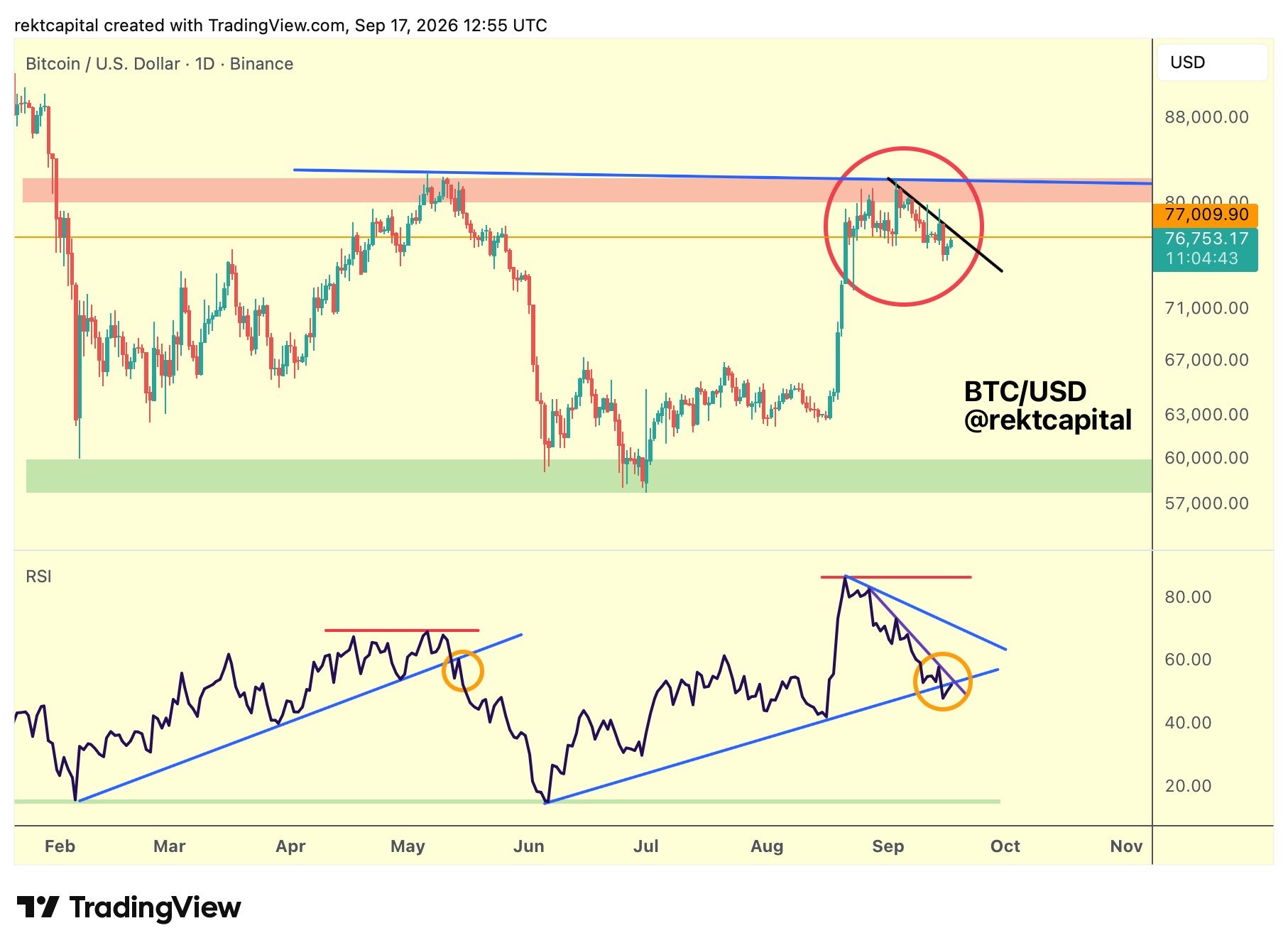
BTC/USD one-day chart. Source: Rekt Capital on X.com
Bitcoin’s latest upside saw it reclaim its True Market Mean, the aggregate cost basis of all coins acquired on secondary markets, which currently sits at $76,660.
“That puts price back above a crucial level and back into a bullish regime,” onchain analytics platform Glassnode told X followers on Friday.
The cost basis for Bitcoin’s corporate treasuries, meanwhile, lies at $80,500, further reinforcing the significance of the current local range.
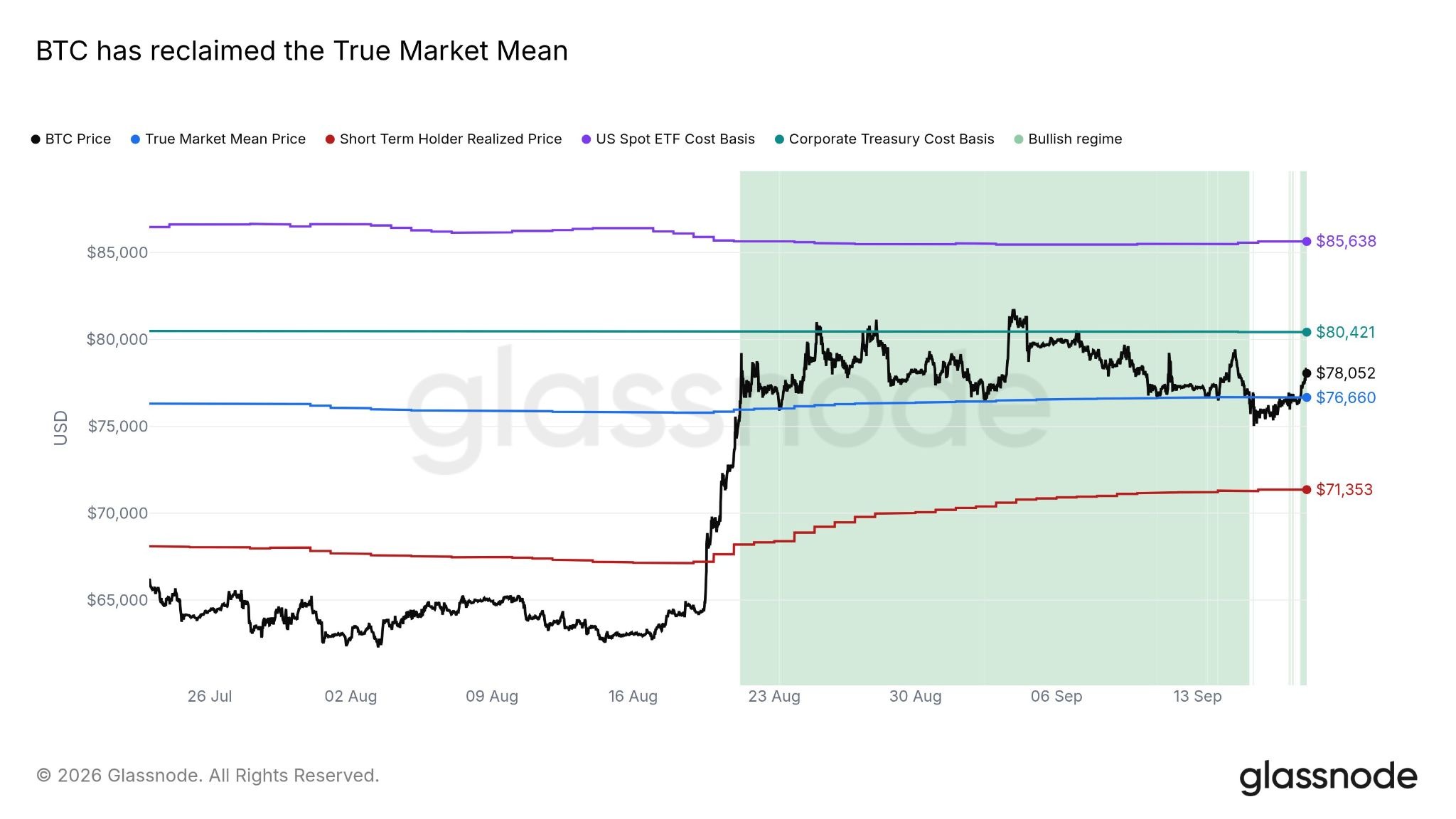
Bitcoin cost-basis data. Source: Glassnode on X.com
Bitcoin Hits 14-Day High Despite CLARITY Setback, Fed and BOJ Rate Hikes: Weekly Recap

Two-time All-Pro cornerback Stephon Gilmore retires as member of Patriots

Remember Napster? It’s back and this time it wants to create AI versions of class teachers

Weekend Open Thread – Corporette.com

Memory prices are slowing because buyers ran out of money

Micron Stock Climbs Above $1,031 as AI Memory Crunch and a $50 Billion Outlook Fuel the Rally

FULL MATCH: Lyra Valkyria vs. Becky Lynch | Women’s Intercontinental Title: Money in the Bank 2025

Finanzas #casa# #los5minutosdelespiritusanto #1000 #reflexion

UK state pension to rise by 3.9% #StatePension #Money #Government #Pensioners
-
 Fashion7 days ago
Weekend Open Thread – Corporette.com
-

 Tech5 days ago
The Latest Weird Thing to Play Doom Is the Mapped-Out Brain of a Fruit Fly
-

 Crypto World4 days ago
Kraken Lets xStocks Holders Earn Yield Through DeFi
-

 Crypto World2 days ago
US Charges Robinhood Engineers Over Crypto Listing Trades
-

 Entertainment7 days ago
News Specials, Movies, Shows, More
-

 Crypto World6 days ago
Can AI Build a Startup in 72 Hours? Elon Musk's Team Will Livestream the Test
-

 Crypto World4 days ago
Elon Musk Drops a Bombshell: Grok 5 Could Be the AGI Breakthrough
-

 Business5 days ago
Rivals Sam Altman and Elon Musk Rally Behind Dario Amodei’s Call for a Slowdown in AI Development
-

 Crypto World3 days ago
What Is the Status of the U.S.-Iran Peace Talks? Here's What Both Sides Are Saying
-
 NewsBeat4 days ago
‘Sick conspiracy’: Trump says only guardrails AI needs is ‘a strong and smart (High IQ!) president’ in all-caps rant
-

 Crypto World5 days ago
New Tesla Roadster Uses SpaceX Tech. Will It Impact the Stock Price?
-

 Crypto World7 days ago
Robinhood Chain Never Stopped But its Blobs Did Stop Reaching Ethereum For 14 Minutes
-

 Crypto World3 days ago
NVIDIA Analysis: Attempted Rising Wedge Breakout Amid Pressure on the AI Sector
-
 Entertainment7 days ago
New Horror Movie Officially Earns a Rare Stephen King Recommendation
-

 Business6 days ago
Marvell: Most Potent Setup Of The AI Factory Decade
-

 Crypto World4 days ago
Revolut Attackers Warn of Ongoing Daily Customer Data Leaks
-

 Crypto World4 days ago
DOJ Seeks to Seize $61M in Iran Oil Funds From Binance Accounts It Vouched For
-

 Crypto World6 days ago
Bitcoin ETFs lose $462.7M as Ethereum funds gain $196.9M
-

 Crypto World4 days ago
3 Token Unlocks to Watch in the Third Week of September 2026
-
Crypto World4 days ago
Can Circle’s Arc Repeat Robinhood Chain’s Meme Coin Boom?
You must be logged in to post a comment Login