
Crypto World
Three words from Kevin Warsh have Wall Street wondering how far the Fed will go with rate hikes

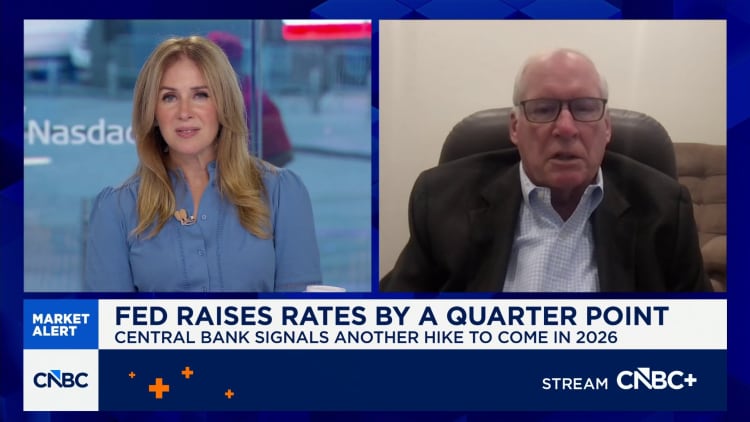
US Federal Reserve Chair Kevin Warsh speaks during a news conference at Federal Reserve Headquarters on September 16, 2026 in Washington, DC. Kevin Warsh discussed the central bank’s decision to raise interest rates for the first time since 2023 at a press conference following its latest policy meeting.
China News Service | China News Service | Getty Images
With a few carefully chosen words, Federal Reserve Chairman Kevin Warsh both explained this week’s decision to hike interest rates and raised vexing questions about what comes next.
Warsh described Wednesday’s decision to lift the central bank’s benchmark rate by a quarter percentage point not specifically as a tightening of policy but rather as removing “a dose of accommodation.” Further, he explained that the move was possible because of a U.S. economy that appears to have “strengthened” and financial conditions that have become less restrictive.
While the language may sound like central bank semantics, it gets to the heart of what markets are debating now: How far will the Warsh Fed go if it has only removed a “dose” of help, and what are the guidelines it will be using to formulate policy?
The phrase was “the one stand-out hawkish element” of Warsh’s post-meeting commentary to the press, Krishna Guha, head of economics and central bank strategy at Evercore ISI, said in a client note.
“This was not a mistake; it was a phrase he repeated several times and looked very much a deliberate choice to frame policy in this way,” Guha added, noting that “the framing is substantively different to that used by the Fed in recent years, and raises the possibility of a more open-ended approach to the number of hikes that might be required.”
That framework has included a calibration of where policy should sit relative to the so-called neutral rate, one that neither boosts nor holds back growth. By extension, benchmark rates that sit well above the neutral rate are considered restrictive, while those closer to or below neutral are regarded as accommodative.
What about neutral?
Warsh’s framing of the hike as removing “a dose” of accommodation could be seen as the first of multiple steps toward withdrawing support the Fed no longer feels is necessary. The Fed is looking to return inflation to 2%, and policymakers generally consider raising rates as a way to tamp down demand and control price pressures.
“Warsh’s framing, if taken literally, raises the possibility that rates might have to keep going up until financial conditions facing the private sector are no longer ‘accommodative’ – however that is defined,” Guha said. “This is a relatively open-ended prospect.”
Warsh had the chance to clarify what benchmark he was using to determine how much accommodation remains in policy.

Asked by CNBC’s Steve Liesman to explain how far he sees the current rate — in a target range of 3.75%-4% — sitting above neutral, Warsh essentially rejected the framing, in a statement that runs counter to how central bank policy has operated for more than a decade.
Warsh said measuring the benchmark rate relative to neutral is “useful academically. It’s a discussion to help us think about policy. Do I think it has any operational effect of decisions that we make today? No, I don’t.”
The answer helped add a layer of mystery to a Fed chairman already developing a reputation for being cryptic when it comes to how he views the wheels of policy needing to be tuned.
Markets wonder what’s next
A round of post-meeting speculation on Wall Street about what’s to come has ensued.
One of the initial reactions was pricing in higher odds for another hike when the Fed next meets in October. Goldman Sachs added an October increase to its forecast, as does Bank of America, which also expects another move in December. The market-implied odds of an October increase were near 58% Friday morning, according to the CME Group’s FedWatch gauge. A week ago, the probability was 42%.
“The word ‘accommodation’ means ‘stimulus” at the Fed; this comment implies that the current monetary policy stance is meaningfully stimulative,” wrote James Egelhof, chief U.S. economist at BNP Paribas Securities.
“With policy starting at a stimulative stance, a strong cyclical impulse, and persistent inflation, we think significant rate increases, perhaps more than the three we expect, may be necessary to stabilize the unemployment rate from below and prevent overheating next year,” he added.
Egelhof agreed that the “dose of accommodation” remark was “the most striking feature” of Warsh’s abbreviated news conference.
Markets are pricing in the likelihood that the Warsh Fed removes a few more “doses” before it is finished. Futures are implying a fed funds rate of 4.635% near the end of 2027, which would argue for three or four more hikes ahead.
If that’s the case, the Fed at the very least will undo many of the FOMC rate cuts approved under Warsh’s predecessor, Jerome Powell, who now sits on the committee as a governor.
The “dose of accommodation” remarks “seemingly helped to underscore this hawkish tone, implying that [the] committee no longer views policy as modestly restrictive,” said Jack Janasiewicz, portfolio manager and lead portfolio strategist at Natixis Investment Managers Solutions.
“We remain unconvinced that this is the start of an aggressive new tightening cycle,” he added. “Rather, we see this as a removal of the insurance cuts the Fed delivered in the fall of 2025.”




Binance is expanding its derivatives offering into foreign exchange with the launch of 24/7 perpetual futures, starting with a US dollar-Brazilian real contract on Monday.
Unlike traditional FX markets, which close for the weekend, Binance’s contracts will trade continuously using a dual-mode pricing system. During regular FX trading hours, prices will track a weighted index from third-party data providers, while weekends and public holidays will use an orderbook-based pricing mechanism.
The USDBRLUSDT contract will go live on Sept. 21, settle in USDT and offer up to 100x leverage, according to a Friday announcement. Binance said the weekend system uses an exponentially weighted moving average of orderbook prices, rather than relying on external price feeds.
Binance trading head Shunyet Jan said the contracts are intended to extend price discovery beyond traditional FX trading hours, while giving traders a venue to hedge or take positions around the clock.
Related: Binance brushes off Lagarde MiCA speculation, reaffirms Europe commitment
Crypto exchanges expand into foreign exchange
The launch comes less than two weeks after Bybit introduced 24/7 perpetuals tracking EUR/USD, GBP/USD and USD/JPY, also settled in USDT and offering up to 100x leverage.
Other crypto exchanges entered the market earlier. Kraken launched FX perpetuals tracking the euro, British pound, Australian dollar, Japanese yen and Swiss franc in April 2025, with up to 50x leverage. The exchange had offered spot FX trading since 2020 and reported $5.7 billion in FX spot volume in the first part of 2025.
The products give crypto traders exposure to currency movements without owning the underlying currencies, tapping into a market that handles more trading than any other financial market. Global OTC FX turnover averaged $9.6 trillion a day in April 2025, according to a report from the Bank for International Settlements.
Magazine: Bitcoin treasury firms can outperform BTC… but is the risk worth taking?


Fake YouTube tutorials promoting AI-powered crypto arbitrage bots have tricked 224 victims into deploying malicious smart contracts that stole 274.6 ETH worth about $517,000.
Summary
- Nine similar YouTube videos directed users to compilers controlled by the scam operators.
- Victims deployed 234 contracts and funded them through transactions they approved themselves.
- A malicious backend replaced the code shown to users with contracts designed to steal ETH.
- Stolen funds moved to six collection addresses, with the median victim losing 1 ETH.
TRM Labs said in a Sep. 14 report that the operation disguised malicious Ethereum contracts as automated trading tools built with Anthropic’s Claude, allowing the scammers to steal funds without relying on conventional phishing links or suspicious wallet approvals.
The blockchain intelligence firm traced 234 contracts deployed by victims, although the campaign affected 224 people because some participants created more than one contract. Funds taken through the contracts eventually reached six collection addresses controlled by the operators.
Based on ETH’s value when the transfers occurred, the 274.6 ETH stolen was worth approximately $517,000. TRM calculated a median loss of 1 ETH per incident, showing that the total did not depend on a single large victim.
Fake AI trading bot tutorials turned victims into contract deployers
Rather than sending users to a page that immediately requested access to their wallets, the operators presented the scheme as an educational process. Victims found the videos, followed the instructions, and took each onchain step themselves.
TRM identified nine nearly identical YouTube tutorials presented under different creator identities. AI-generated virtual hosts and voiceovers gave the videos the appearance of independent guides, while each tutorial promised to help viewers create a fully automated crypto arbitrage bot using Claude.
During the videos, users were told to copy code and open a compiler website selected by the presenter. Some of the websites copied the design of Remix, a commonly used browser-based development environment for writing and deploying Ethereum smart contracts.
Victims then connected their wallets, compiled what appeared to be trading software, and deployed the resulting contracts. Because the users initiated and approved each action, the transactions looked different from attacks in which a fraudulent site asks for a direct token allowance or an unclear signature.
Funding the newly deployed contracts completed the trap. Users believed they were supplying capital that the bot would use to exploit price differences between trading venues, but TRM found no arbitrage system or AI function in the malicious contract variant it examined.
The malicious contracts drained deposits above 0.05 ETH
In one version of the scheme, a backend script ignored the source code that victims pasted into the compiler. The website instead retrieved a separate contract from a server operated by the scammers and prepared the replacement for deployment.
As a result, the clean code displayed in the browser was never placed onchain. Victims saw one program on their screens while their wallets deployed another, preventing them from verifying the real contract through a visual check of the compiler window alone.
The replacement contract could accept ETH deposits, matching the expected behavior of a trading bot that needed funds to operate. Once its balance exceeded 0.05 ETH, however, the contract was set to transfer the money to an address controlled by the operators when the user selected either the Start or Withdraw function.
Both buttons therefore served the same purpose despite carrying labels associated with normal bot controls. Pressing Start did not activate a trading strategy, while pressing Withdraw did not return the deposited funds to the user.
No AI model interacted with the deployed contract, according to TRM’s findings. The Claude branding formed part of the sales pitch, while the onchain code only received deposits and moved qualifying balances to the scammers.
The method also reduced the chance that common wallet protections would interrupt the process. A wallet could accurately show that its owner was deploying a contract, sending ETH to it and later calling one of its functions, yet still lack the context needed to determine that the tutorial and compiler had misrepresented the code.
AI trading bot scam bypassed common phishing defenses
Traditional crypto phishing campaigns often depend on copied domains, poisoned search results or prompts that request broad token permissions. Blocklists and wallet simulations can sometimes identify a known malicious address, deceptive domain, or transaction that grants an attacker control over existing assets.
The AI trading bot operation used a different path because each victim became the deployer of a newly created contract. A fresh address would not necessarily appear on an existing blacklist, and the wallet owner authorized the deployment and funding transactions without surrendering a seed phrase.
In July, crypto.news explained how drainers commonly abuse legitimate blockchain permissions. Such tools often convince a user to approve a malicious contract, which can then transfer tokens while the blockchain processes the action as authorized.
The campaign described by TRM moved the deception one step earlier by controlling the code-generation and deployment process. Instead of asking victims to trust an existing contract, the tutorials convinced them that they were creating the software themselves.
A separate Hyperliquid phishing case in August showed how online advertising can also direct crypto users toward malicious infrastructure. One user lost about 550,000 USDC after a sponsored Google result led to a fake Hyperliquid website linked by security firm Salus to the Inferno drainer ecosystem.
Salus said the infrastructure in that incident automatically divided stolen funds among addresses connected to the operation. Investigators linked related groups to approximately $52.74 million in losses, showing how backend services can handle theft, swaps, consolidation, and revenue sharing while separate operators focus on attracting victims.
U.S. users can report crypto losses through the FBI
For U.S. users, the FBI’s Internet Crime Complaint Center accepts reports involving cryptocurrency fraud and other cyber-enabled crimes. The bureau says complaint data can help investigators identify connected cases, follow emerging methods and, in some situations, freeze stolen funds.
The FBI recorded $16.6 billion in reported internet-crime losses during 2024, up from $12.5 billion in 2023, according to figures published by the center. The agency advises victims to file reports even when they are unsure whether a complaint meets a specific crime category because submissions may be shared with federal, state, local, or international law enforcement agencies.
Onchain security groups have also increased their focus on attacks that use valid user actions to execute theft. In February, the Ethereum Foundation backed a Security Alliance engineer assigned to track and disrupt wallet drainers targeting Ethereum users.
Security Alliance cited data placing drainer-related losses at $84 million in 2025, the lowest level on record. Its security network includes MetaMask, Phantom, WalletConnect, and Backpack, which share threat intelligence designed to identify phishing campaigns and other malicious infrastructure.
The failure of the CLARITY Act in the US Senate has been a major setback for the crypto industry. The outcome raised new questions about the future of regulation in the country and whether the setback could hurt Bitcoin and other digital assets.
But Bitwise Chief Investment Officer Matt Hougan believes the vote may not be enough to derail the broader crypto market rally.
Wall Street Isn’t Waiting
Hougan said the CLARITY Act would have been useful for the industry. The legislation was designed to provide a clearer regulatory framework for digital assets. It also aimed to strengthen investor protections and create rules that could remain in place beyond the current administration. Despite this, the exec said Bitcoin’s latest rally did not depend on the bill’s chances of passing.
According to Hougan, Bitcoin bottomed at about $57,950 on July 1. It then climbed above $80,000 by September 4. During the same period, Polymarket odds of the CLARITY Act becoming law this year fell from 39% to 18%. The two trends moved in opposite directions. For Hougan, that suggests crypto investors were not waiting for Congress to provide regulatory clarity.
Wall Street has also continued moving into the sector. For instance, Robinhood has launched its own blockchain. Morgan Stanley has launched a Solana ETF. The Depository Trust & Clearing Corporation, or DTCC, has also completed its first batch of tokenized stock settlements.
At the same time, US regulators have been working on rules outside Congress. In August, the SEC proposed Regulation Crypto Assets. This does not mean the loss of the CLARITY Act is unimportant. Agency rules can be changed by a future administration. Congress is also needed to give the CFTC broader authority over spot crypto markets.
Bitcoin fell after the Senate vote, which added short-term market pressure. But Hougan believes the setback is more of a speed bump than a roadblock.
“Crypto spent its first 17 years without core market legislation. Without Clarity, it has managed to go from a fringe idea to a $2.5 trillion asset class that’s reshaped everything from global payments to capital markets.”
Shift Back to Buying
US-based Bitcoin ETFs returned to net inflows after two days of heavy withdrawals. The funds attracted more than $159 million on Thursday. BlackRock’s IBIT was the only ETF to report a net inflow. Interestingly, HYPE also recorded $4.25 million in inflows.
Ethereum ETFs, on the other hand, moved in the opposite direction after posting $39.2 million in net outflows. These investment vehicles extended their losing streak to three days. Market analyst Darkfost said the end of the week appears “calmer” for the ETF market.
The post Here’s Why Bitwise CIO Believes Crypto Could Keep Rallying Without Congress appeared first on CryptoPotato.


AI researcher and investor Leopold Aschenbrenner is suspected of being behind the purchase of $96 million worth of SanDisk, Micron, Intel, and Marvell call options.
Aschenbrenner runs hedge fund Situational Awareness, most famous for losing billions of dollars during a sudden downturn in AI stock prices. It was a wipeout the Financial Times ranked as the largest in hedge fund history.
JPMorgan Chase subsequently terminated its lending relationship with the fund.
Although SEC filings haven’t yet disclosed the name of the buyer, Jim Cramer posted today, “If I didn’t know any better I would say Leopold is back!”
ZeroHedge agreed.
Options provide financial leverage by design, and their short time to maturity makes these contracts even more volatile. All these options expire on October 2.
Situational Awareness previously ran on leverage as high as 400%, growing from $225 million at launch in 2024 and soaring past $45 billion in July before liquidating assets in a fire sale to Ken Griffin’s Citadel.
ZeroHedge listed four particularly bullish prints of October 2 expiry calls:
- $44 million worth of Micron $1,000 per share strikes
- $41 million worth of SanDisk $1,600 per share calls
- $11 million worth of calls on Intel and Marvell
Read more: Leopold Aschenbrenner is back to losing money in AI stocks
The theory that Aschenbrenner is behind these trades rests on pattern-matching, not definitive proof. Predictions are, after all, one the most popular activities on X.
How ‘back’ is Leopold Aschenbrenner?
First of all, it is true that Aschenbrenner has returned to buying options on AI stocks this month, generally speaking.
He’s previously proven his ability to raise hundreds of millions of dollars for his hedge fund, so the size of his portfolio could easily be sufficient to take on these positions.
Second, he’s fond of the AI industry and short-term financial leverage, so the trades certainly match his profile.
Third, SanDisk and Micron in particular were Aschenbrenner’s two largest positions in his fund’s latest regulatory disclosure, so two matching tickers provides further pattern-matching.
CNBC reported on September 11 that Situational Awareness was also buying options this month, so options are certainly another clue.
After Situational Awareness lost billions of dollars and lost a JPMorgan relationship in July, the fund told investors it would rebuild. It mentioned potentially less risky products like FLEX options.
So far, if Aschenbrenner is actually the person behind these trades, his portfolio is probably doing well this week.
Over the last five trading days, SanDisk is up 6%, Intel is up 3%, Micron is up 2%, and Marvell is up 1%. Although these gains are modest, leveraged products like options trade idiosyncratically, often amplifying losses and gains dramatically.
Situational Awareness’s SEC Form 13F for the third quarter of 2026 is due in mid-November, which might be the next time the public learns about Aschenbrenner’s precise stock picks.
Until then, social media commentators are happy to name the man behind the tape and imagine his day-to-day profitability.
Got a tip? Send us an email securely via Protos Leaks. For more informed news and investigations, follow us on X, Bluesky, and Google News, or subscribe to our YouTube channel.
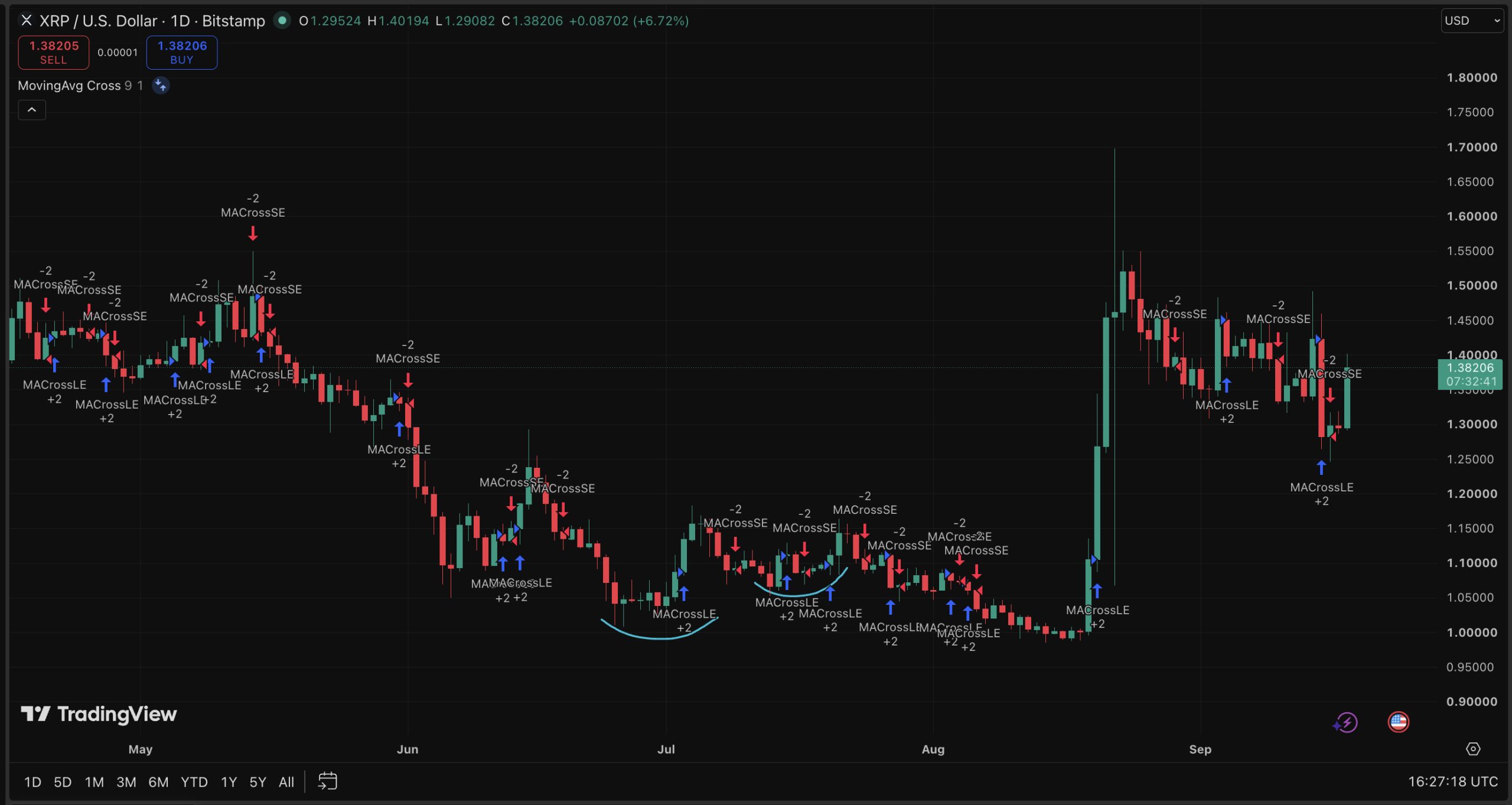
XRP should be in every news headline as its 50-day moving average sits about 2% below its 200-day average, the closest the gap has been since the token’s last golden cross in August 2024. The setup is emerging as bitcoin dominance, or bitcoin’s share of total crypto market capitalization, has fallen to a one-month low below 59%.
A golden cross is confirmed when an asset’s 50-day moving average crosses above its 200-day moving average. Chart analysts widely view the pattern as a bullish long-term signal. Bitcoin recently confirmed its own golden cross, while cautioning that XRP has shown a different historical record.
The 16 previous XRP golden crosses and found that all were terminated by a death cross within 12 months. Six did not survive three months. Of the 10 crosses that reached the three-month mark, five produced gains ranging from 85% to more than 1,000%. Those included a 1,009.6% gain following the April 2017 cross and a 135% gain after the February 2021 cross. The other five lost as much as 32%.

Half of the crosses that lasted at least three months generated substantial gains, while the other half produced losses. The historical figures indicate that the golden cross, like other technical indicators, was not fully reliable when used in isolation.
Bitcoin is now trading near $80,000, and its dominance rate has dropped below 59%, which implies a rotation into altcoins. The data points to attention shifting within the crypto market, even as bitcoin’s price remained near its level from a week earlier.
Earn $50 and Enter $300K Prize Draw on EdgeX
How to Read the Moving Averages?
Confirmation requires the 50-day average to cross above the 200-day average. With XRP’s 50-day average about 2% below the longer-term average since the August 2024 golden cross. The difference between the two averages is therefore the immediate technical measure for traders following the setup.

Our AI price analysis identified the $1.26-$1.27 area as a support zone that aligns with the 200-day moving average and former range support. XRP technical structure was neutral, and the near-term direction hinged on whether the asset could hold above that support area despite some bearish news from the Clarity Act.
Moving averages provide one way to assess trend conditions, but the historical XRP results show why the crossover itself does not settle the question of what follows. A cross can confirm the technical pattern while leaving the duration and price performance of that pattern uncertain.
Trade XRP on Bybit and Get a Chance to Win Our $1,000 USDT Airdrop
What’s Next for XRP Beyond The News?
If XRP’s 50-day average crosses above its 200-day average, it will confirm the pattern we are tracking. That would be a technical event, not a guarantee of a lasting advance. A later death cross would be consistent with the outcome recorded for all 16 prior XRP golden crosses within a year.
The three-month historical split remains central to interpreting the signal. Five of the 10 crosses that reached that point posted gains of 85% to more than 1,000%, while five recorded losses of as much as 32%. The outcomes show both the potential for large gains and the limits of relying on the indicator alone.
We characterized the broader move into altcoins as cautious rather than complete. FxPro chief market analyst Alex Kuptsikevich said traders appeared to be cautiously shifting their focus toward altcoins, while the altcoin season index and overall market sentiment had not reached high levels.
Bitcoin dominance below 59% is consistent with our assessment that attention was rotating toward altcoins, while the available indicators did not establish a broad altcoin cycle.
Discover: The Best Token Presales
The post XRP News: 16-Cross History Complicates the Golden Cross Signal appeared first on Cryptonews.


The SEC has opened a five-year pathway for tokenized U.S. stocks that requires each approved token to carry the economic, voting, dividend, and liquidation rights attached to the underlying share.
Summary
- Tokenized NMS stocks must provide the same rights as their traditional share equivalents.
- Synthetic products that offer only price exposure fall outside the SEC exemption.
- Bitget Wallet COO Alvin Kan said legal ownership matters more than 24-hour trading.
- The exemption carries symbol and volume limits and remains open to SEC modification.
- Institutions can run pilots, but the temporary order does not provide lasting legal certainty.
Bitget Wallet COO Alvin Kan told crypto.news that the legal rights attached to a stock token will matter more to investors than its trading hours, settlement speed, or country of issuance.
“A token that tracks a stock price is not the same thing as owning the stock. Putting both on a blockchain doesn’t erase that difference,” Kan said.
Under the SEC exemption, a tokenized National Market System stock must grant its holder the same rights and privileges as the matching traditional share. Kan said those protections include an economic interest in the company, dividends, voting power and rights during liquidation.
Synthetic exposure does not qualify under the exemption. An issuer can also object if an unrelated third party tries to tokenize its shares, giving listed companies some control over how their securities appear in blockchain-based markets.
Investor rights separate tokenized stocks from price trackers
Instead of dividing the market into U.S. and offshore products, Kan said investors should examine what each token represents under the law. Two products can track the same listed company while giving their holders very different claims.
One token may represent a direct or beneficial interest in shares held through a regulated structure. Another may function as a contract with an intermediary that promises to follow the stock’s price without making the buyer a shareholder.
The difference can determine whether a holder receives dividends, can vote on company matters or has a claim on assets if the issuer is liquidated. Counterparty exposure may also enter the arrangement when the investor’s claim depends on a platform, custodian or special-purpose entity.
A Sep. 11 examination of tokenized ownership structures found that products can represent direct shares, custodial claims or synthetic contracts. Company rules, securities laws and underwriter restrictions may still limit transfers even when a token moves freely between blockchain addresses.
Kan said many crypto-native products outside the United States provide price exposure or a contractual claim against an intermediary. Under the SEC pathway, an approved NMS stock token must instead preserve the rights carried by the conventional security.
Coinbase CEO Brian Armstrong made a similar distinction on Sep. 14 when he said the exchange’s stock tokens use real securities rather than synthetic assets or debt instruments. Coinbase holds the underlying shares through an offshore special-purpose company and a regulated U.S. broker, according to a report on its fully backed stock tokens.
Verified holders can request redemption of the underlying shares, while dividend proceeds are generally reinvested after taxes and fees. Coinbase’s products, however, remain unavailable to U.S. persons and are not registered under the U.S. Securities Act.
Tokenized stocks can improve access without changing ownership
For eligible users, Kan identified self-custody, fractional ownership, continuous trading and almost immediate settlement as possible benefits. The SEC has also listed such features among the potential gains from moving securities onto blockchain systems.
Trading a stock token around the clock could reduce the limits imposed by regular exchange hours, while fractional units could let investors purchase smaller portions of high-priced shares. Blockchain settlement may also shorten the time between a completed trade and the final transfer of ownership.
Yet Kan cautioned that tokenization alone does not produce a better investment product. A system may use blockchain records while keeping strict permission controls, thin liquidity and several intermediaries between the investor and the underlying share.
“If access remains heavily permissioned, liquidity is shallow and users still face multiple intermediaries, blockchain may mainly modernize the back end without materially changing the front-end experience,” Kan said.
For investors, the practical test is whether the structure reduces the work involved in settlement, record reconciliation and product distribution. Moving a stock record onto a blockchain without removing those costs would change the technology supporting the market but leave the customer experience largely intact.
The ownership record forms another part of the issue. On Sep. 1, the SEC proposed updates to federal transfer-agent rules and forms, which have not received a substantial revision since the late 1970s and early 1980s, according to the agency.
A recent report on blockchain ownership records explained that transfer agents could use distributed-ledger systems as an official record under the proposal. The rule would not automatically turn every stock-linked token into a legal share or give its holder shareholder rights.
The SEC exemption gives institutions room to test products
For banks, brokerages, trading venues and blockchain providers, Kan described the exemption as operational clarity rather than permanent legal certainty.
The order expires five years after publication. It also contains limits covering trading symbols and volume, remains subject to modification and is designed to provide information for later SEC rulemaking.
Those terms give institutions enough regulatory space to develop pilot programs, connect existing systems and test modular infrastructure, Kan said. Firms committing capital over longer periods will still distinguish between a temporary exemptive order and requirements placed in final agency rules or federal law.
The distinction matters for U.S. investors because the SEC is using its authority over securities already covered by the Exchange Act. The agency does not have to wait for Congress to settle every dispute over the classification of crypto assets before testing blockchain systems for instruments that are already treated as securities.
Kan said the approach separates statutory reform from agency-led changes to market structure. Congress can write laws covering the treatment of digital assets across several markets, while the SEC can act within its existing securities mandate.
Congress has left the SEC to use its existing authority
The exemption arrived two days after the Senate failed to advance the Digital Asset Market Clarity Act, or CLARITY Act, during a Sep. 15 procedural vote.
The bill sought to establish a federal market structure for digital assets and divide regulatory responsibilities between the SEC and the Commodity Futures Trading Commission. Its failure did not remove the SEC’s authority over products already classified as securities.
A 50-49 Senate vote left the bill 10 votes short of the 60 required to invoke cloture and open formal debate. Clearing the motion would not have passed the legislation; it would only have allowed senators to begin considering the House-approved measure and possible amendments.
All participating Democrats opposed cloture. Republican Sens. Susan Collins, Josh Hawley, Jerry Moran, and Thom Tillis also voted against the motion, with Tillis changing his vote for procedural reasons that preserved the option to request reconsideration.
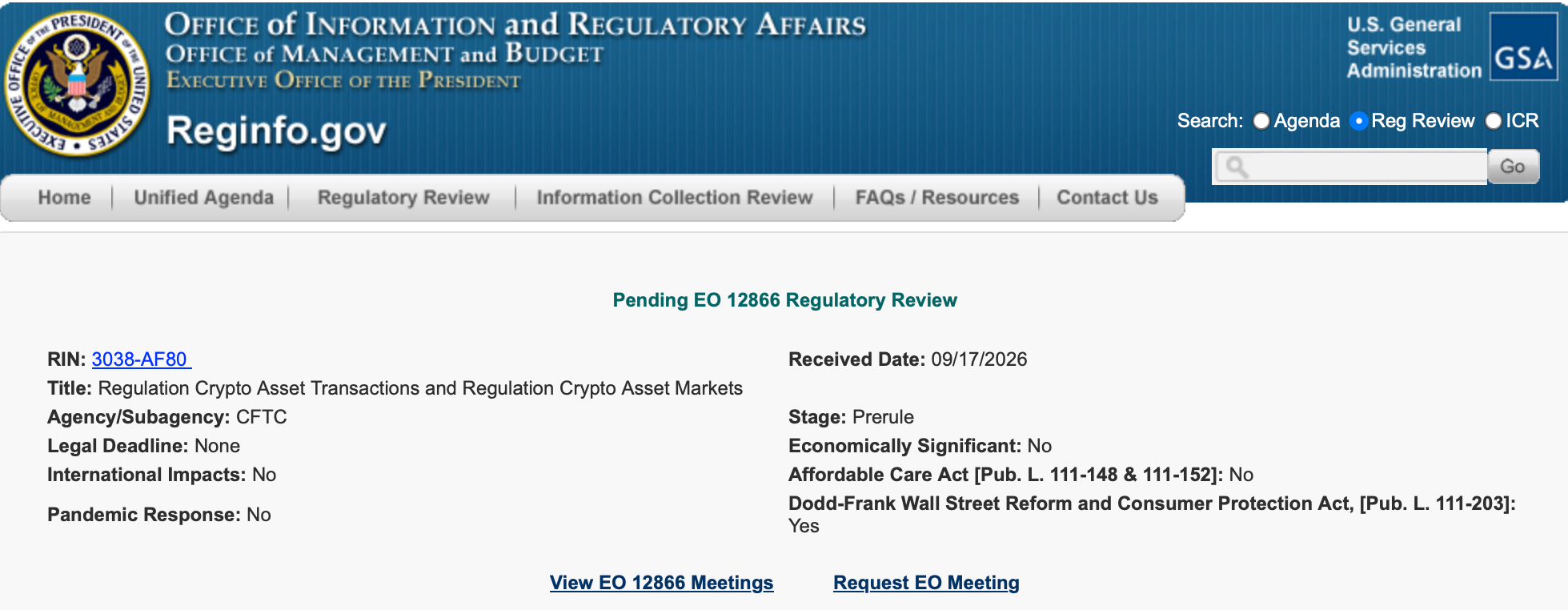
The US Commodity Futures Trading Commission has submitted a new regulatory action covering crypto asset transactions and markets for White House review, as the agency moves forward with its approach to overseeing the digital asset sector.
According to a filing with the Office of Information and Regulatory Affairs, the action, titled “Regulation Crypto Asset Transactions and Regulation Crypto Asset Markets,” was received on Sept. 17 and is listed at the “prerule” stage. The designation indicates the action is at an early stage of the rulemaking process and has not yet been formally proposed.
The filing does not disclose details of the planned regulation, but comes days after the Senate failed to advance the CLARITY Act, legislation aimed at establishing a federal regulatory framework for crypto markets.
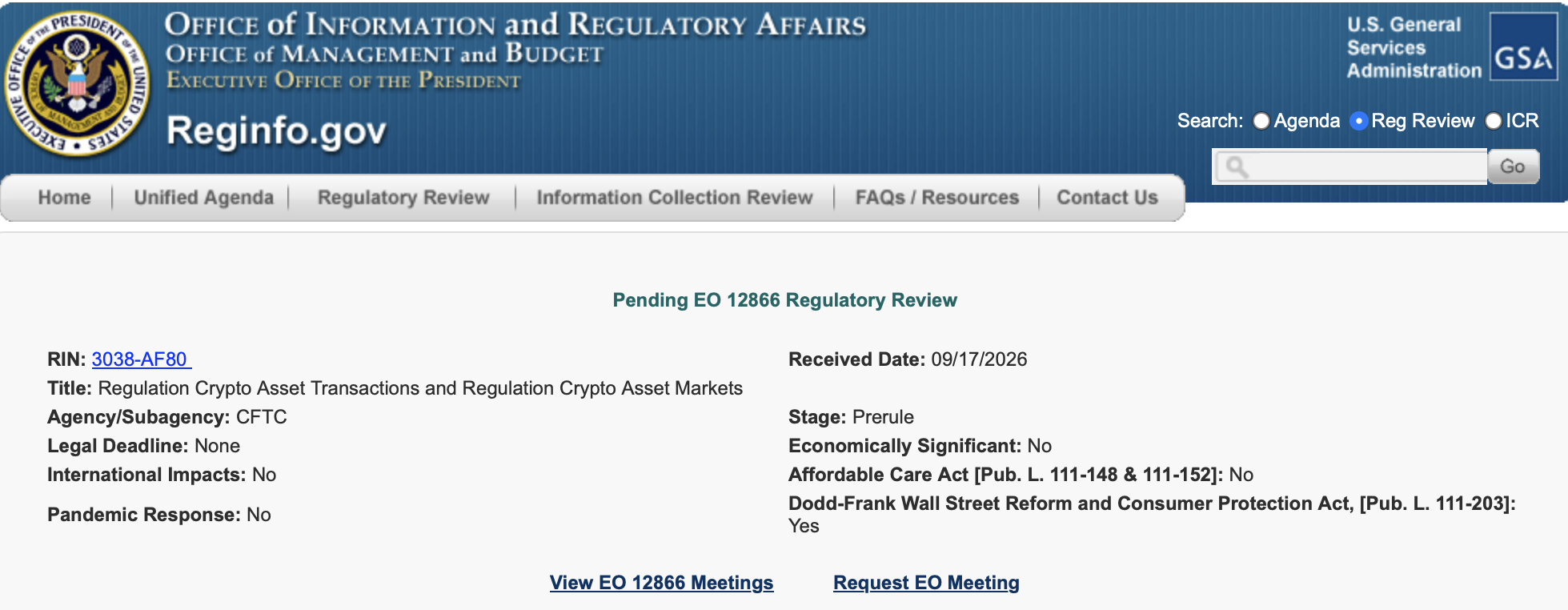
Source: Office of Information and Regulatory Affairs
A day after the Sept. 15 vote, CFTC Chair Michael Selig posted on X that the agency was “locked in and ready to ship” rules for crypto markets using its existing statutory authority, while SEC Chair Paul Atkins similarly said the securities regulator would move ahead “with or without legislation.”
Both agencies took action the following day. The CFTC issued a no-action position for providers of passive software, while the SEC announced temporary exemptions for certain platforms facilitating onchain trading of tokenized securities.
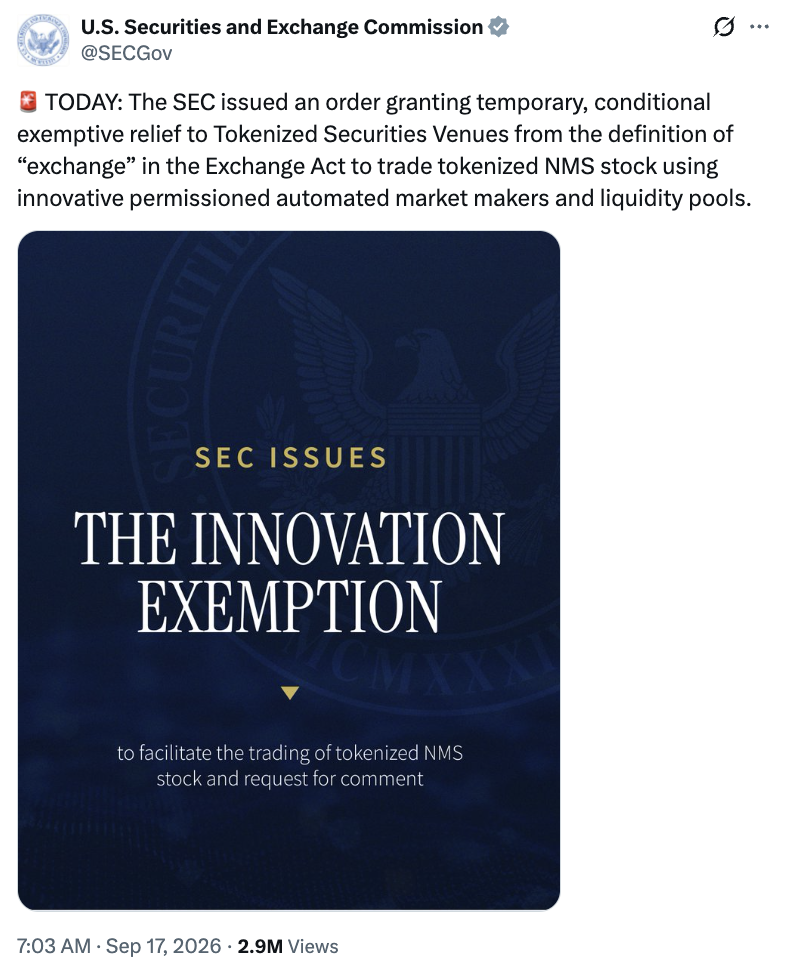
Source: SEC
CFTC and SEC move ahead without new legislation
The CFTC had been exploring the possibility of advancing crypto rules without new legislation before the Senate vote this week. In remarks at the CFTC’s Innovation Advisory Committee conference on Aug. 20, Selig said the agency was prepared to use its existing authority to establish a crypto asset market regime if the CLARITY Act stalled.
Selig added that he had directed CFTC staff to explore rules that could allow existing registrants and currently unregistered crypto exchanges to become a type of designated contract market called a “crypto asset market,” where leveraged or margined crypto trading could be offered under CFTC oversight.
Coinbase CEO Brian Armstrong also said he expected regulators to move ahead after the vote. In a Sept. 15 post on X, he wrote that the SEC and CFTC had “the tools they need to create clear rules under existing authority” and that he expected them to begin working on the issue “in earnest.”
“So clarity is coming to crypto regardless,” Armstrong wrote.
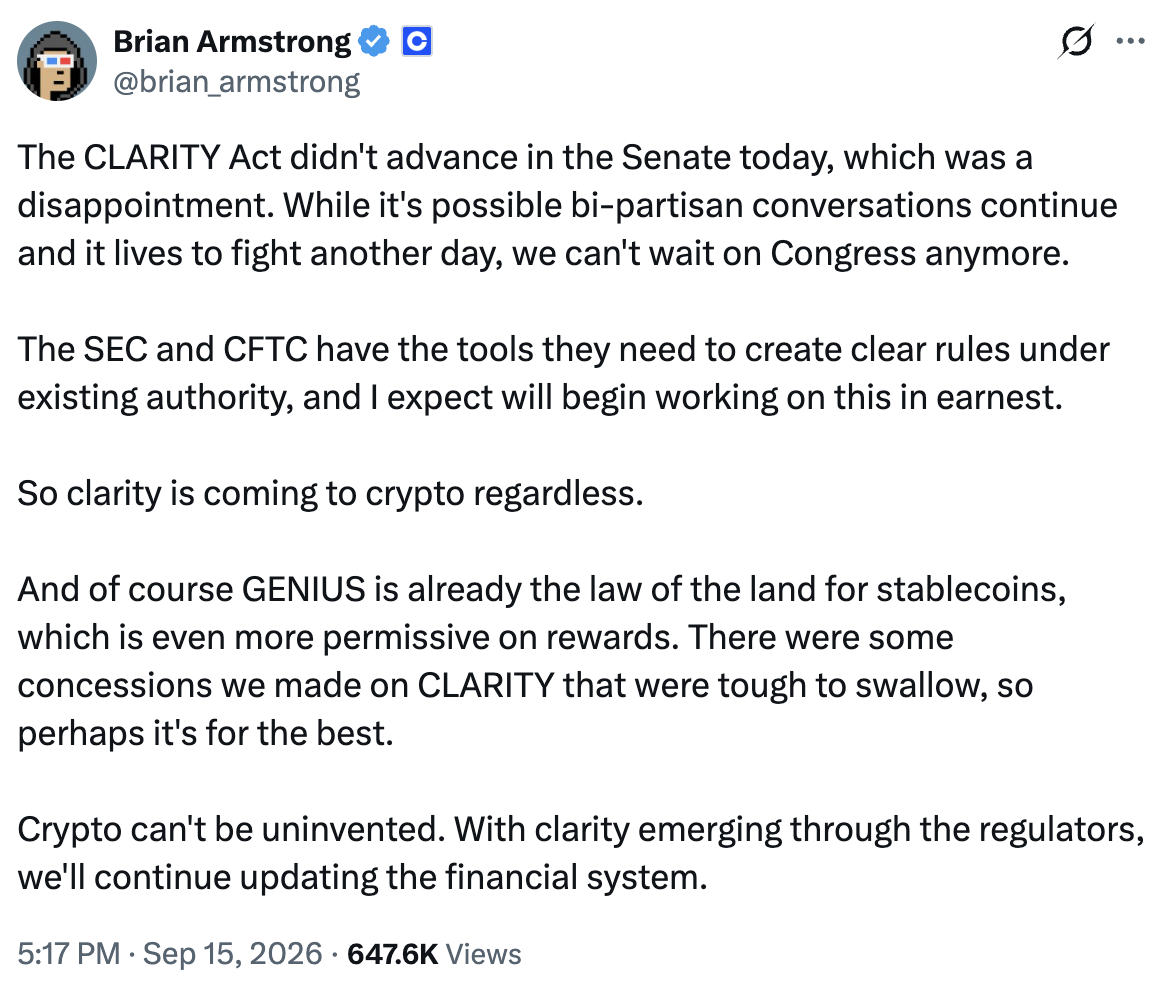
Source: Brian Armstrong
The U.S. Commodity Futures Trading Commission (CFTC) has submitted a new regulatory action covering how it plans to oversee crypto asset transactions and crypto asset markets, with the proposal now moving through the federal rulemaking pipeline for White House review.
According to a filing published through the Office of Information and Regulatory Affairs (OIRA) at reginfo.gov, the action—titled “Regulation Crypto Asset Transactions and Regulation Crypto Asset Markets”—was received on Sept. 17 and is currently listed at the “prerule” stage, meaning it is early in the process and has not yet been formally proposed.
Key takeaways
- The CFTC has initiated a new rulemaking track for crypto-related transactions and markets, but the details have not been released yet.
- OIRA’s “prerule” designation indicates the action is still at an early stage and not a formal notice of proposed rulemaking.
- The move follows the Senate’s failure to advance the CLARITY Act, keeping pressure on regulators to act without new legislation.
- In parallel, both the CFTC and SEC signaled they could proceed using existing authority, including through targeted relief and exemptions.
A CFTC rulemaking filing enters the federal review track
The OIRA entry for the CFTC action provides the clearest public confirmation so far of the agency’s regulatory direction: the filing exists, has been received, and is underway as part of the U.S. government’s rulemaking review process. However, the filing does not outline what specific requirements the CFTC plans to impose or how it intends to define regulated crypto market structures.
For market participants, the practical significance is that rule development is not only being discussed—it is being processed through government channels that typically precede public comments and formal proposals. Still, because the item remains at the prerule stage, the scope, timing, and concrete compliance expectations are not yet available.
After the CLARITY Act setback, regulators show momentum
This CFTC filing comes days after the U.S. Senate failed to advance the CLARITY Act, a bill intended to establish a federal framework for crypto market regulation.
That failure matters because it reduces the likelihood of Congress providing an immediate, comprehensive structure that could harmonize oversight across agencies. With legislation stalled, the burden shifts to regulators to define roles and boundaries through existing statutory authority—an approach the CFTC and SEC appear prepared to pursue.
CFTC and SEC actions signal “rules with or without legislation”
Shortly after the Sept. 15 Senate vote, CFTC Chair Michael Selig posted on X that the agency was “locked in and ready to ship” rules for crypto markets using its existing authority. SEC Chair Paul Atkins made a similar point, saying the SEC would move ahead “with or without legislation.”
The following day, both regulators took visible steps. The CFTC issued a no-action position for providers of passive software. Separately, the SEC announced temporary exemptions for certain platforms facilitating onchain trading of tokenized securities, as reflected in an SEC communication posted on X.
These actions do not replace broad rulemaking, but they do indicate an interim strategy: provide targeted regulatory relief and clarify operational pathways for specific categories of activity while longer-term frameworks are developed.
What the CFTC has said before: using existing authority to define a market regime
The CFTC’s willingness to move ahead without waiting for legislation has been discussed publicly before. Earlier remarks by Chair Selig at the CFTC’s Innovation Advisory Committee conference on Aug. 20 indicated the agency had been assessing whether it could establish a crypto asset market regime under existing authority if the CLARITY Act stalled.
In those remarks, Selig indicated he directed CFTC staff to explore rule options that could enable existing registrants and currently unregistered crypto exchanges to become a type of designated contract market—referred to as a “crypto asset market”—where leveraged or margined crypto trading could fall under CFTC oversight.
This matters for investors and builders because the classification of trading venues and the treatment of leverage and margin can directly affect which firms can operate, which registrations may be required, and what investor protection frameworks are applied. It also helps determine how market participants structure products and routing of orders.
Industry leaders have echoed the expectation that regulators would proceed. Coinbase CEO Brian Armstrong said in a Sept. 15 X post that the SEC and CFTC “have the tools they need to create clear rules under existing authority,” adding that he expected regulators to begin working “in earnest.”
What to watch next as the filing moves from prerule to proposal
For now, the key unknown is the substance: the OIRA record confirms the CFTC’s intention to regulate crypto asset transactions and crypto asset markets, but it does not provide the operational details firms will need to prepare. The next developments to monitor are when the action advances beyond prerule, whether it is broken into specific proposed rule components, and how it aligns—or potentially conflicts—with concurrent SEC efforts affecting tokenized securities and onchain trading.
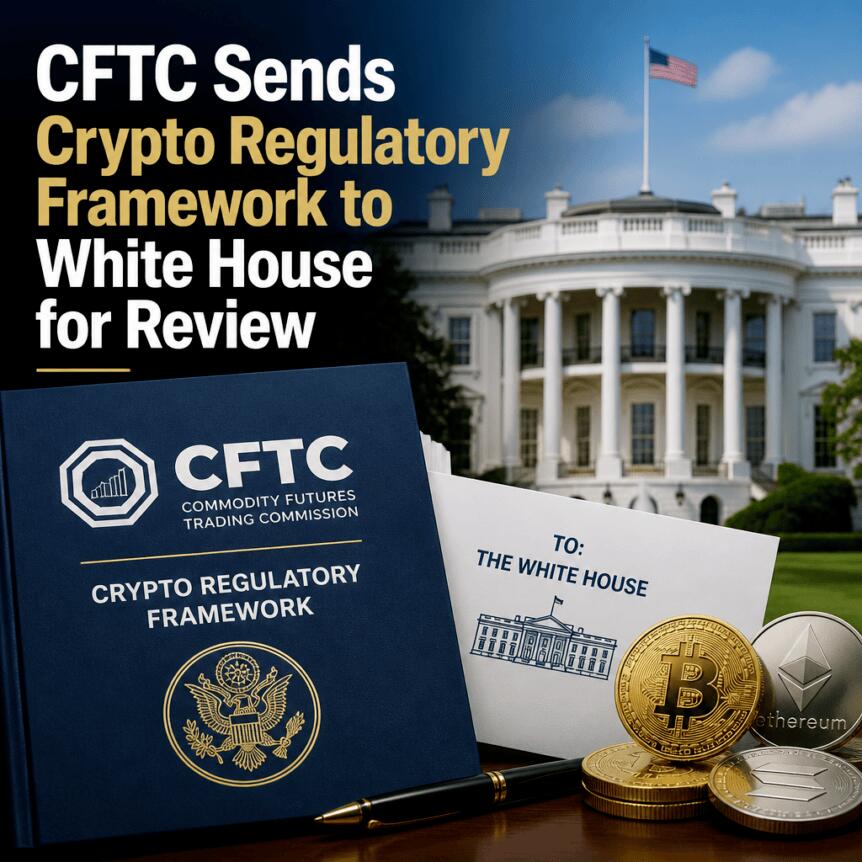
The U.S. Commodity Futures Trading Commission has taken another step toward formal rulemaking for crypto-related markets, submitting a regulatory action for White House review as it continues to outline how digital asset transactions could be regulated under existing authorities.
According to a filing posted to the Office of Information and Regulatory Affairs (OIRA) on Reginfo.gov, the action—titled “Regulation Crypto Asset Transactions and Regulation Crypto Asset Markets”—was received on Sept. 17 and is currently listed at the “prerule” stage. That designation signals the process is still early and the agency has not yet issued a formal proposed rule.
Key takeaways
- The CFTC filed a new crypto-focused rulemaking action with OIRA on Sept. 17, but it remains in the early “prerule” stage.
- The filing does not provide specific regulatory details, suggesting further information will come later in the rulemaking timeline.
- Recent U.S. legislative momentum weakened after the Senate failed to advance the CLARITY Act, while both the CFTC and SEC signaled they would proceed with or without new law.
- In the days following Sept. 15, the regulators also took separate enforcement-adjacent steps: a CFTC no-action position and an SEC temporary exemption framework.
What the CFTC filing indicates—and what it doesn’t
The OIRA posting for the CFTC’s action, labeled “Regulation Crypto Asset Transactions and Regulation Crypto Asset Markets,” confirms the agency is moving toward a more structured regulatory approach for crypto trading activity and market infrastructure. However, the filing itself does not lay out the substance of what the CFTC intends to regulate, such as which categories of market participants, trading arrangements, or operational requirements would be covered.
The “prerule” listing matters for readers because it usually precedes a proposed rule by moving the action through early interagency or administrative review. That means market participants should treat the filing as a signal of direction rather than a preview of enforceable standards.
For investors and firms planning compliance work, the practical takeaway is that the CFTC is building a pathway toward a dedicated crypto asset market regime. The missing details, meanwhile, leave compliance teams with uncertainty about timing and scope—until a proposal is published.
Legislation stalls as regulators lean on existing authority
The filing arrives shortly after the U.S. Senate did not advance the CLARITY Act, a bill intended to establish a federal framework for regulating crypto markets. With that legislative path effectively blocked in the near term, senior regulators have repeatedly pointed to their ability to move using existing statutory authority.
Coinciding with that backdrop, CFTC Chair Michael Selig posted on X that the agency was “locked in and ready to ship” rules for crypto markets using existing authority. In parallel, SEC Chair Paul Atkins said the SEC would advance “with or without legislation,” as reflected in his posts on X.
Earlier remarks from Selig also suggested that the CFTC had considered a rulemaking approach even if Congress did not act. Speaking at the CFTC’s Innovation Advisory Committee conference on Aug. 20, he said the agency was prepared to use existing authority to establish a crypto asset market regime if the CLARITY Act stalled. He also discussed directing CFTC staff to explore rule concepts that could allow existing registrants and currently unregistered crypto exchanges to operate within a “crypto asset market” structure—an arrangement that would be overseen under CFTC rules and could include leveraged or margined crypto trading.
For the sector, this signals an ongoing tug-of-war between market expectations of comprehensive legislation and the reality that regulators may still set guardrails via rulemaking and targeted regulatory relief.
Regulatory actions after Sept. 15: relief and exemptions move in parallel
A day after the Sept. 15 Senate vote, the CFTC and SEC each took actions that, while different in scope, pointed to a broader theme: regulators are continuing to shape the crypto trading environment even without a new overarching statute.
On the CFTC side, the agency issued a no-action position for providers of passive software, as described in earlier coverage. While the details of eligibility are specific to the no-action framework, it underscores that the CFTC is willing to use regulatory discretion to manage particular technical implementations around crypto trading.
On the SEC side, it announced temporary exemptions for certain platforms facilitating onchain trading of tokenized securities, according to posts on X from the SEC.
Industry reaction: expectation of near-term rulemaking
Outside the regulators, industry leaders have also signaled readiness for regulatory work to proceed. Coinbase CEO Brian Armstrong said he expected regulators to move forward after the vote, stating that the SEC and CFTC have “the tools they need to create clear rules under existing authority.” In that same Sept. 15 X post, Armstrong said he expected them to begin working on the issue “in earnest,” adding that “So clarity is coming to crypto regardless.”
While those comments are not the same as regulatory text, they reflect how market participants are interpreting the balance of power: when legislative clarity is delayed, compliance strategies increasingly have to follow the pace of rulemaking and regulatory relief.
What to watch next
The immediate uncertainty is what the CFTC’s Sept. 17 “prerule” action will translate into once it advances toward a proposed rule—especially around the scope of “crypto asset transactions” and “crypto asset markets.” Market participants should watch for the next OIRA steps and any CFTC releases that clarify which market structures, trading practices, and platform roles will be prioritized.

Kevin O’Leary has re-entered the crypto market. At the Avalanche Summit in New York, he says that he is building fresh positions ahead of the next crypto market cycle. The O’Leary Ventures chairman said Bitcoin could eventually account for 1% to 3% of institutional alternative-asset allocations, a share he compares directly to how much gold institutions currently hold.
Kevin O’Leary isn’t calling for a retail mania; he’s describing a slow, allocation-model-driven path toward institutional crypto adoption that mirrors how pension funds and endowments built gold exposure over decades, not months.
His renewed buying is tied to a specific structural bet: the first major stock exchange to adopt a blockchain, he argues, would force the rest of the financial system to fall in line with that exchange’s technical and compliance requirements. He called it a potential watershed moment, one that could settle the ongoing fragmentation across competing chains.
He said he regularly asks CEOs across industries which blockchain their companies are betting on, and so far, none of them agree. That’s the honest state of institutional crypto adoption right now: plenty of capital circling, no consensus on the winning rail.
Regulatory ambiguity around how tokenized securities are classified and traded is part of why that consensus hasn’t formed, a gap explored in recent coverage of the SEC’s tokenized-stock exemption framework.
Bitcoin was trading near $80,600 at last check, up more than 5% on the day, putting it in the range traders are currently watching as a potential recovery zone. Whether that level holds as support or gets retested is the near-term technical question, one broken down in detail in this analysis of the $80,000 breakout test.
Discover: The Best Token Presales
Regulation, Taxes, and the CLARITY Act
O’Leary addressed the CLARITY Act’s recent Senate setback directly, saying that he still expects crypto regulation to resurface because lawmakers are actively working on tax policy for digital assets. His logic is straightforward: taxing an asset class tends to invite more oversight, not less, since regulators need clear definitions before they can collect anything.
He does not expect the bill to pass before the midterms. That timeline matters for anyone modeling institutional crypto adoption around a legislative catalyst – O’Leary’s framing suggests the tax-policy track, not the market-structure track, is the more likely near-term vehicle for regulatory clarity.
Earn $50 and Enter $300K Prize Draw on EdgeX
Beyond Kevin O’Leary Comment: The Bitcoin Price Prediction With a Catch
In a separate conversation, O’Leary offered his boldest Bitcoin price prediction yet: $1 million, but only if the industry resolves the growing unease around quantum computing breaking encryption standards, a scenario the industry has nicknamed “Q-Day.”
He noted that some investors are already hedging that risk by backing quantum-computing startups as a defensive security play rather than betting against Bitcoin outright.

That’s the tension running through his entire thesis. The same institutional capital he expects to push Bitcoin toward a larger share of alternative-asset portfolios is also the capital most sensitive to unresolved tail risks – quantum security, regulatory classification, exchange-level standardization.
For context on how other institutional voices are framing Bitcoin’s long-term ceiling against traditional stores of value, see this comparison of Bitcoin and gold allocation models from JPMorgan. The throughline across these calls is consistent: the crypto market cycle ahead depends less on retail sentiment and more on which infrastructure, tax rules, and security guarantees institutions are willing to underwrite before they commit real allocation.
Trade Ethereum on Bybit and Get a Chance to Win Our $1,000 USDT Airdrop
The post Bitcoin Could Reach 1%-3% of Institutional Alternative Portfolios appeared first on Cryptonews.

Binance Expands Into FX with 24/7 Perpetuals

Apple TV Officially Reveals Its Biggest Expansion Yet

Crypto Crashing Due To This (i’m sorry)




-

 Tech5 days ago
The Latest Weird Thing to Play Doom Is the Mapped-Out Brain of a Fruit Fly
-

 Crypto World4 days ago
Kraken Lets xStocks Holders Earn Yield Through DeFi
-

 Entertainment7 days ago
News Specials, Movies, Shows, More
-

 Crypto World2 days ago
US Charges Robinhood Engineers Over Crypto Listing Trades
-

 Crypto World6 days ago
Can AI Build a Startup in 72 Hours? Elon Musk's Team Will Livestream the Test
-

 Crypto World4 days ago
Elon Musk Drops a Bombshell: Grok 5 Could Be the AGI Breakthrough
-

 Crypto World3 days ago
What Is the Status of the U.S.-Iran Peace Talks? Here's What Both Sides Are Saying
-

 Business6 days ago
Rivals Sam Altman and Elon Musk Rally Behind Dario Amodei’s Call for a Slowdown in AI Development
-

 Crypto World7 days ago
Robinhood Chain Never Stopped But its Blobs Did Stop Reaching Ethereum For 14 Minutes
-
 NewsBeat4 days ago
‘Sick conspiracy’: Trump says only guardrails AI needs is ‘a strong and smart (High IQ!) president’ in all-caps rant
-
 Crypto World5 days ago
New Tesla Roadster Uses SpaceX Tech. Will It Impact the Stock Price?
-
 Crypto World3 days ago
NVIDIA Analysis: Attempted Rising Wedge Breakout Amid Pressure on the AI Sector
-
 Entertainment7 days ago
New Horror Movie Officially Earns a Rare Stephen King Recommendation
-

 Business6 days ago
Marvell: Most Potent Setup Of The AI Factory Decade
-

 Crypto World4 days ago
Revolut Attackers Warn of Ongoing Daily Customer Data Leaks
-

 Crypto World4 days ago
DOJ Seeks to Seize $61M in Iran Oil Funds From Binance Accounts It Vouched For
-

 Crypto World7 days ago
Bitcoin ETFs lose $462.7M as Ethereum funds gain $196.9M
-
 Crypto World5 days ago
3 Token Unlocks to Watch in the Third Week of September 2026
-
Crypto World4 days ago
Can Circle’s Arc Repeat Robinhood Chain’s Meme Coin Boom?
-
Business4 days ago
SK Hynix ADRs Fall More Than 6% as Memory Rally Breaks on Fears of Slower AI Spending
You must be logged in to post a comment Login